Followers

Mostrando las entradas con la etiqueta ancient myths. Mostrar todas las entradas

Leviathan: Investigating the Prehistoric Sea Monster of Ancient Lore

Image

The enigma of Leviathan stretches back to the dawn of recorded history, its presence woven into the fabric of ancient texts, most notably the Old Testament's books of Job, Psalms, and Isaiah. The sheer detail in these descriptions begs the question: are these merely allegorical constructs, or echoes of something tangibly real? This creature, described as one of humanity's oldest and most terrifying entities, is said to possess a power beyond mortal comprehension—a beast so formidable that no human weapon can fell it, its form capable of churning the oceans into living storms. This is the Leviathan.

Ancient Roots and Descriptions

Leviathan emerges in scripture as a primordial force of chaos, dwelling in the abyssal depths. Its description transcends mere bestiary entries; it speaks of a creature of immense power, its very existence a challenge to order. Its serpentine form, capable of twisting through the oceans like a "living storm," suggests an entity not merely large, but intrinsically connected to the untamed fury of the sea. The biblical accounts are unusually vivid, hinting at a creature that could not be slain by conventional means, pushing the narrative beyond simple folklore into the realm of the inexplicable.

The persistence of such detailed accounts across disparate cultures raises significant questions. If Leviathan were merely a localized myth, its widespread appearance would be less remarkable. However, its narrative threads are found independently in ancient Egypt, Mesopotamia, and even Norse mythology, cultures with minimal historical contact. This cross-cultural resonance compels us to consider the possibility that these stories, predating widespread communication, might stem from a common, ancient source or a shared human experience of phenomena that inspired awe and terror.

Recommended Gear for Investigation

ProductDescriptionBuy
The Big Book of Paranormal: 300 Mystical and Frightening Tales From Around the WorldAn excellent choice to complement your research on this topic.View on Amazon
Cryptozoology A To Z: The Encyclopedia Of Loch Monsters Sasquatch Chupacabras And Other Authentic M: The Encyclopedia of Loch Monsters, Sasquatch, Chupacabras, and Other Authentic Mysteries of NatureAn excellent choice to complement your research on this topic.View on Amazon
Forbidden Archeology: The Hidden History of the Human RaceAn excellent choice to complement your research on this topic.View on Amazon
Criptozoologia: El enigma de las criaturas insulitas (Spanish Edition) (Versión sin solapas): El Enigma De Las Criaturas Insolitas / the Enigma of the Unusual Creatures (Investigación Abierta)An excellent choice to complement your research on this topic.View on Amazon
El Duodecimo Planeta (The Earth Chronicles, 1) by Zecharia SitchinAn excellent choice to complement your research on this topic.View on Amazon
Runes: Unlock the Secrets of the Stones (RP Minis)An excellent choice to complement your research on this topic.View on Amazon
The H. P. Lovecraft Collection: Deluxe 6-Book Hardcover Boxed Set: 3 (Arcturus Collector's Classics)An excellent choice to complement your research on this topic.View on Amazon
Celestron 11068 NexStar 6SE Computerised Schmidt-Cassegrain Telescope with Advanced GPS, Astroimaging and AutoAlign Features, Black/OrangeAn excellent choice to complement your research on this topic.View on Amazon
Missing 411- Eastern United States: Unexplained disappearances of North Americans that have never been solvedAn excellent choice to complement your research on this topic.View on Amazon
Ghost-Hunting For Dummies [Idioma Inglés] An excellent choice to complement your research on this topic.View on Amazon

Cross-Cultural Manifestations

The phenomenon of Leviathan-like entities appearing across ancient civilizations is a cornerstone of comparative mythology. In Egyptian lore, the serpent Apophis (or Apep) embodies chaos and darkness, a constant adversary to the sun god Ra. Similarly, Mesopotamian traditions speak of Tiamat, a monstrous primordial goddess of saltwater often depicted as a dragon or sea serpent, whose defeat by the hero-god Marduk established cosmic order. Even Norse mythology features Jörmungandr, the World Serpent, an immense creature encircling Midgard, posing a constant threat.

These parallels are not superficial. Scholar after scholar has noted the recurring theme of a divine or heroic being battling a titanic, serpentine entity from the primordial waters. This "chaos versus order" motif is fundamental, suggesting that the Leviathan narrative, in its various forms, represents a deep-seated human archetypal fear of the unknown, the uncontrollable, and the destructive power inherent in the natural world, particularly the vast, unexplored oceans.

"The question isn't if it's real — it's when it returns." — Viewer Comment

As observed in audience feedback, the idea of Leviathan being "a memory" rather than a myth resonates strongly. This perspective suggests that ancient cultures might have encountered phenomena or creatures so profound that their memory persisted through generations, evolving into the mythological figures we see today. The notion that "legends carry more truth than we want to admit" highlights a growing willingness among the public to explore non-conventional explanations for ancient narratives.

Interpreting Leviathan: Myth or Memory?

The debate surrounding Leviathan's true nature—whether it is a literal creature, a metaphor for natural forces, or a spiritual entity—remains fiercely contested. Skeptics often dismiss the accounts as symbolic representations of chaos, the untamable sea, or even astronomical phenomena. The biblical descriptions, they argue, are poetic hyperbole designed to illustrate God's supreme power over creation.

However, the sheer consistency across cultures and the detailed, physical descriptions invite a more complex analysis. Could these tales be distorted recollections of encounters with colossal marine animals, perhaps extinct species or deep-sea dwellers yet unknown to science? The sheer volume of the oceans, a realm where human exploration remains profoundly limited, provides fertile ground for such speculation. As one commenter noted, "You'd be surprised what still lurks in our oceans," citing potential survivals of creatures like Mosasaurus and Plesiosaurus. This viewpoint suggests that our current scientific understanding might be incomplete, overlooking the possibility of large, ancient creatures persisting in the planet's unexplored depths.

The idea that such a creature might inhabit subterranean oceanic caverns or the Earth's interior, as suggested by one theory, while extreme, underscores the deep-seated human intuition that vast, unknown life forms could exist beyond our current observational capabilities. The deep sea remains one of Earth's last frontiers, and the pressure, darkness, and sheer scale make exploration incredibly challenging, leaving much to the imagination and fueling speculation about what might lie hidden.

Modern Echoes and Eyewitness Accounts

While definitive proof remains elusive, modern interpretations and anecdotal evidence continue to fuel the Leviathan mystery. Some point to geological formations, like the "Ring of Fire," suggesting parallels with a dragon-like structure encompassing volcanic activity. Others interpret mass strandings of deep-sea creatures or unusual oceanic events as potential signs of a disturbed or awakening ancient entity.

Note from the Investigator: The following account is a dramatization or urban legend.

The cryptic message suggesting Leviathan exists on Google Maps, "right below South America under the ocean," taps into the modern fascination with digital cartography and the possibility of uncovering hidden anomalies. While often debunked as natural formations or imaging artifacts, such claims highlight the public's eagerness to find tangible evidence of the extraordinary in everyday technology.

Furthermore, the persistent belief in surviving prehistoric marine reptiles, like Mosasaurs and Plesiosaurs, fueled by numerous alleged eyewitness sightings reported by divers and mariners, adds another layer to the Leviathan enigma. These accounts, however anecdotal, suggest a collective subconscious grappling with the possibility that the deep ocean might harbor creatures long thought extinct. The idea that "all of these people are not lying or mistaken" reflects a growing segment of the population willing to consider extraordinary explanations for unexplained phenomena.

The connection drawn between ancient flood myths and the Leviathan narrative is also significant. Many cultures share stories of cataclysmic floods and the titanic beings associated with them, suggesting a shared ancestral memory of powerful, destructive events potentially linked to colossal marine phenomena.

Investigator's Verdict: Chaos Incarnate?

From my perspective as an investigator, Leviathan represents more than just a mythical beast. It embodies the primal human confrontation with the vast, uncontrollable forces of nature and the unknown. Whether it is a literal creature that has evaded scientific detection, a symbolic representation of existential threats, or a spiritual force of chaos, its narrative function remains potent.

The cross-cultural prevalence suggests a shared ancestral experience or a fundamental archetypal fear. The biblical descriptions, particularly in Job 41, portray a creature of immense power, unequivocally subject only to its Creator. This reinforces the interpretation of Leviathan not merely as a monster, but as a manifestation of chaos that only divine power can truly master. The notion that "Every word in Gods holy bible is truth no matter how unreal it might look for the human eye and mind" reflects a belief that these ancient texts hold profound, literal truths, even if they defy conventional understanding.

The scientific skepticism, while valid, often operates within the current paradigms of known biology and physics. The deep ocean, however, represents a variable that we are only beginning to understand. The possibility of undiscovered species, or even remnants of prehistoric ecosystems, cannot be entirely dismissed. As one commenter aptly put it, regarding scientific priorities: "Too bad scientists are more concerned about space than what lays deep in our own oceans." This sentiment captures a frustration with the perceived neglect of terrestrial mysteries.

Ultimately, Leviathan serves as a potent symbol. It reminds us of the limits of our knowledge, the power of the unknown, and the enduring human struggle to impose order on a universe that often feels wild and unpredictable. The "chaos vs order" theme, as highlighted by one viewer, is central: the divine battle against the sea serpent is a metaphor for the ongoing struggle for balance, both in the external world and within the human psyche.

Frequently Asked Questions

What does the Bible say about Leviathan?
The Bible describes Leviathan primarily in the books of Job, Psalms, and Isaiah. It's depicted as a powerful sea creature, a symbol of chaos, that only God can control or destroy. Job 41 provides a detailed physical description, emphasizing its immense size, impenetrable scales, and fiery breath.
Is Leviathan a real creature or just a myth?
The consensus among mainstream science is that Leviathan is a mythical or symbolic creature. However, some theories suggest it could be a distorted memory of a real prehistoric sea animal, an undiscovered deep-sea species, or a metaphor for natural forces like storms and chaos.
Why does Leviathan appear in multiple ancient mythologies?
Its appearance across cultures like Mesopotamia (Tiamat), Egypt (Apophis), and Norse mythology (Jörmungandr) suggests a common archetypal fear of the unknown, primordial chaos embodied by the sea, or potentially, shared ancestral memories of ancient phenomena or discoveries.
Could marine reptiles like Mosasaurus or Plesiosaurus still exist today?
While highly unlikely according to current paleontological and biological understanding, persistent anecdotal reports and the vast unexplored nature of the oceans fuel speculation. Scientific consensus holds that if they survived, they would likely be in extremely small, isolated populations, beyond our current detection capabilities.
What is the "chaos vs order" theme related to Leviathan?
This theme posits that Leviathan represents untamed, destructive chaos (often from the sea), while a divine or heroic figure represents order and creation. The conflict between them symbolizes the fundamental cosmic struggle for balance and stability in many ancient belief systems.

Equipo Recomendado para la Investigación

Your Mission: Dive Deeper

The legend of Leviathan persists because it touches upon fundamental questions about our world and our place within it. It challenges the completeness of our scientific knowledge and invites us to consider the vast unknowns that still exist. Your mission, should you choose to accept it, is to remain curious and critical. Examine the evidence, question the assumptions, and never stop seeking the truth, whether it lies in ancient texts, modern sightings, or the unexplored depths of our own planet.

Share your thoughts and personal experiences in the comments below. Have you encountered stories or phenomena that echo the legend of Leviathan? What are your theories on its origin and nature? Don't keep your findings to yourself—share this investigation on your social media channels to spark conversation and encourage others to explore the unexplained.

```

Investigator's Note: True paranormal research doesn't fund itself. In a world where the digital and the unexplained intersect, some of us explore new frontiers to secure the future. Do you dare to be part of the vanguard? Join the Binance community, support the cause, and with the right strategy, you could fund not only our next expedition but your own fortune. The next great discovery could be just a click away.

Hollow Earth Theory: Analyzing the Enigma of Inner Worlds and Ancient Cataclysms


In the shadowed corridors of paranormal inquiry and occult investigation, a question of audacious scope has echoed through epochs: What if our lived reality is not upon the Earth's crust, but *within* its very core? This proposition, the essence of the Hollow Earth theory, fundamentally disrupts our geological paradigms and compels us to confront the enigmatic possibility of an inner world. Our investigation today will traverse ancient mythologies, scrutinize archaeological anomalies, and weigh tantalizing fragments of evidence that hint at a subterranean civilization, ultimately challenging the very foundations of our perceived reality.

Are We Dwelling Inside the Earth?

The notion that humanity might inhabit the interior of our planet, rather than its exterior surface, initially strikes as a peculiar, almost fantastical concept. Yet, this hypothesis has captivated thinkers, explorers, and visionaries across centuries. At its heart, the theory posits that beneath our current terrestrial realm lies a vast, hollow expanse, potentially harboring entire subterranean civilizations, advanced or otherwise. But what compels serious consideration of such an extraordinary idea? The answer lies not merely in speculation, but in a constellation of recurring narratives and perplexing phenomena.

Echoes of Catastrophe: Universal Deluge and Human Manifestation

A critical examination of global folklore reveals a striking uniformity in a specific narrative archetype: the tale of a cataclysmic event that reshaped or annihilated a previous epoch, followed by the emergence of humanity in its wake. The common thread of a universal deluge, a widespread flood event depicted as submerging vast swathes of the globe, is a recurring motif in the mythologies of cultures separated by continents and millennia. From the Epic of Gilgamesh to the biblical account of Noah, these flood narratives are too consistent to be mere coincidence. Skeptics might dismiss them as symbolic interpretations of natural disasters, but for proponents of esoteric theories, they resonate as fragmented ancestral memories of an epoch-altering event, possibly forcing survivors to seek refuge in subterranean realms or marking a transition from an inner world to the surface.

"The consistency of flood myths across disparate cultures is not just a historical curiosity; it's a potential key to unlocking a forgotten chapter of human existence, one that might involve subterranean shelters or migrations.", - Alejandro Quintero Ruiz

This primordial cataclysm could be the very genesis of the Hollow Earth narrative, suggesting that our current surface world is merely a later iteration, with the true cradle of civilization residing within. Such an event would necessitate a profound shift in human habitation, making the concept of an inner Earth not just plausible, but perhaps a historical necessity.

Intriguing Archaeological Discoveries and Written Records

For those who demand empirical validation, the landscape of archaeology and historical texts presents a tapestry woven with intriguing threads that seem to support the existence of an inner Earth and, potentially, past interactions between its alleged inhabitants and surface dwellers. While mainstream science largely dismisses such notions, certain findings and ancient documents invite a deeper, more open-minded investigation:

  • Subterranean Cities and Tunnel Networks: Sites like Derinkuyu in Cappadocia, Turkey, astonishingly complex, multi-level underground cities capable of housing thousands, raise questions about their true purpose. Were they merely defensive refuges, or were they entrances to larger, interconnected subterranean systems? The sheer scale and sophistication suggest an advanced understanding of earthworks far beyond basic shelter.
  • Ancient Texts Referencing Inner Realms: Various ancient traditions, including Vedic literature and Tibetan myths, speak of subterranean kingdoms like Agartha or Shamballa, populated by advanced beings. These texts, often dismissed as allegory, contain remarkably detailed descriptions that could be interpreted as geographical accounts of an inner world.
  • Anomalous Artifacts: Reports of peculiar artifacts found deep within the Earth, or inscribed with non-terrestrial symbols, continue to surface. While many are debunked as hoaxes or misinterpretations, a persistent few defy easy explanation, prompting speculation about their origin and the possibility of an unknown subterranean culture.

These clues, when viewed through the lens of the Hollow Earth hypothesis, paint a compelling picture of an interconnected world, a hidden layer of reality veiled from our everyday perception. The continued discovery of such anomalies compels us to ask: are we overlooking evidence that points to a multidimensional Earth?

Journey into the World of Legends and Informant Testimonies

Legends, often dismissed as mere folklore, frequently conceal within their fantastical narratives fragments of forgotten truths and profound historical insights. Our expedition into the enigmatic world that may exist beneath our feet necessitates venturing through this rich tapestry of myths, oral traditions, and whispered accounts from alleged informants. These narratives, passed down through generations or emerging from more recent, albeit often anonymous, sources, offer a different kind of evidence—one rooted in collective memory and testimonial experience:

  • Mythological Underworlds: From Hades in Greek mythology to the various subterranean realms described in Norse sagas and indigenous American traditions, the concept of an underworld or inner realm is nearly universal. These are not always depicted as hellish places but as distinct worlds with their own societies and histories.
  • Alleged Explorer Accounts: Throughout history, there have been figures who claimed to have discovered entrances to the inner Earth, most notably Admiral Richard Byrd, whose supposed diary entries detailing flights into a polar opening and encounters with an inner world have become legendary. While officially denied and often attributed to fabrication, these accounts continue to fuel speculation and inspire further inquiry into polar curiosities.
  • Testimonies from "Insiders": Throughout the 20th century, various individuals, often claiming to be ex-military personnel or involved in classified projects, have come forward with accounts of subterranean bases and the existence of inner-Earth civilizations. While their credibility is often difficult to verify, the consistency in some of their testimonies regarding specific geographical locations or technological capabilities warrants careful consideration in a comprehensive analysis.

What hidden knowledge do these narratives conceal? They beckon us to consider that what we perceive as myth might be distorted echoes of tangible realities, the whispers of a world that coexists with our own, just beyond the perceptible veil of our surface existence. Exploring these accounts requires a critical yet open mind, sifting through the allegorical to find potential kernels of truth regarding an inner Earth.

The Firmament and Beyond: Continents in the Sky?

As our deep dive into the Hollow Earth enigma progresses, we encounter a concept that, in ancient cosmologies, served as a pivotal element: the firmament. This term typically refers to a vast, dome-like structure, often envisioned as a celestial boundary, arching over our world. Ancient religious texts, early cosmological models, and even certain interpretations of scientific discovery allude to this encompassing dome. Could this firmament act not merely as a ceiling, but as a threshold—a boundary separating our perceived reality from the unknown realms beyond, potentially including the inner Earth itself?

"The concept of a firmament is not just a relic of ancient superstition; it represents a fundamental human attempt to define the limits of our known universe. The question remains: what lies *beyond* those limits, and is our current scientific model truly exhaustive?", - Alejandro Quintero Ruiz

The implications are staggering. If the firmament exists, it redefines our spatial orientation. The "sky" as we know it would be an enclosed space, potentially with its own strata of existence or even, as some theories propose, containing hidden continents or realms. This perspective radically alters the classical Hollow Earth model, suggesting not just an interior world, but a layered reality where inner and "outer" realms might coexist in ways we can barely comprehend. The question is not just about what is *under* us, but what is *above* us, and how it relates to the subterranean world.

Shrinking Skies: Is the Firmament Diminishing?

Adding another layer of intrigue to the firmament theory, a provocative idea suggests that this celestial boundary is not static but is in a state of gradual diminution. This concept prompts profound contemplation regarding the implications of such a phenomenon on our world and our very understanding of reality. If the firmament is indeed shrinking, what does this suggest about the forces at play within our cosmic envelope? Could this be the very key to unlocking the deeper secrets of our existence and the true nature of our planet?

Theorists who propose this contraction posit that a shrinking firmament could lead to several observable phenomena, from changes in atmospheric pressure and an increase in seismic activity to altered patterns of celestial observation. It raises the unsettling possibility that what we perceive as expansion in the cosmos might, in fact, be a closing in of our own confined space. This provocative idea forces us to reconsider our place in the universe; it's not just about exploring outward, but about understanding the boundaries of our own contained existence. This diminishing boundary could be the very mechanism that exposes or integrates the inner Earth with our surface world, forcing a paradigm shift we are perhaps not prepared for.

Unveiling the Hidden Truths

As we conclude this investigative journey into the heart of the enigmatic Hollow Earth theory, we find ourselves not at a definitive answer, but at a precipice of profound realization. The persistent questions linger: Could it be that our entire existence is contained within the Earth, shielded from, or perhaps even separate from, the vast expanse of the cosmos as conventionally understood? The notion of a hollow Earth, far from being a mere fanciful tale, actively challenges us to dismantle our ingrained, conventional understanding of our world and our place within it.

In a universe teeming with mysteries that science continues to unravel, the Hollow Earth theory stands as one of the most captivating and persistent enigmas. It beckons us to venture beyond the edge of charted knowledge, to explore the uncharted territories of our collective consciousness and historical memory. It serves as a potent reminder that even in this age of advanced science and rigorous reason, the boundaries of human comprehension are perpetually expanding, leaving ample room for wonder, intrigue, and the persistent pursuit of the inexplicable.

Investigator's Verdict: Evidence, Speculation, or Paradigm Shift?

After dissecting the myriad threads of the Hollow Earth theory—from ancient deluge myths and perplexing archaeological anomalies to enigmatic textual references and the compelling, albeit unverified, accounts of explorers and informants—we arrive at a critical juncture. The evidence, as presented, is undeniably circumstantial and largely resides in the realm of speculative interpretation rather than empirical, repeatable proof. Mainstream science, grounded in seismic data and gravitational models, finds no conclusive support for a hollow planetary structure large enough to accommodate interior continents and civilizations.

However, it is the very *consistency* of these disparate elements—the cross-cultural flood narratives, the existence of vast subterranean formations, the symbolic representations of inner worlds in ancient texts, and the enduring power of explorer testimonies—that prevents a complete dismissal. While a literal hollow Earth remains beyond current scientific validation, the theory serves as a potent allegory for the vast unknown that lies beneath our feet and within our collective imagination. It compels us to question the completeness of our geological and cosmological models. Is it possible that our scientific instruments are simply incapable of detecting or interpreting such phenomena? Or are these narratives merely sophisticated metaphors for spiritual or psychological truths? My verdict leans towards the latter, but with a significant caveat: history is replete with examples of phenomena once deemed impossible that were later explained by scientific advancement. Therefore, while I cannot endorse the Hollow Earth theory as literal fact based on current evidence, I maintain that the persistent questioning and exploration of its tenets are vital for pushing the boundaries of human knowledge and understanding the deeper mysteries of our planet.

The Investigator's Archive

For those seeking to delve deeper into the esoteric and the unexplained, a curated selection of resources is paramount. These are not mere books or documentaries; they are passports to understanding the complexities of anomalous phenomena and the narratives that challenge our reality. Engaging with these materials is an essential step in developing a rigorous yet open-minded approach to investigation. Consider these essential components for your research:

  • "Passage to Magonia" by Jacques Vallée: A foundational text that bridges the gap between UFO phenomena and ancient folklore, exploring the enduring nature of unexplained aerial encounters throughout history.
  • "The Hollow Earth" by Raymond Bernard: A classic compilation of early theories and explorer accounts, including the controversial claims of Admiral Byrd, offering a comprehensive overview of the hypothesis.
  • "The Day After Roswell" by Philip J. Corso: While focused on extraterrestrial encounters, it touches upon the possibility of advanced technologies and hidden aspects of Earth's history that resonate with inner-world theories.
  • Documentary Series "Ancient Aliens": Explores a wide range of ancient myths and artifacts, often linking them to extraterrestrial intervention, which can provide a broader context for considering unconventional theories about Earth's history and hidden realms.
  • Gaia.com: A streaming platform dedicated to alternative documentaries and spiritual exploration, featuring numerous titles that delve into Hollow Earth theories, lost civilizations, and esoteric cosmologies.

Your Field Mission: Map Your Local Anomalies

The pursuit of knowledge regarding anomalous phenomena is not confined to ancient texts or speculative theories; it begins in our immediate surroundings. Your mission, should you choose to accept it, is to become an active observer and documentarian of the unexplained in your local environment. This exercise aims to cultivate critical observation skills and to foster a community of citizen investigators:

  1. Identify Local Legends: Research or recall any local legends, myths, or unexplained occurrences specific to your town or region. These could range from ghost stories and tales of peculiar lights in the sky to folklore about hidden caves or unusual geological formations.
  2. Document Anomalous Reports: Keep a log of any reported anomalies you encounter or hear about. Note the date, time, location, description of the event, and any witnesses. Treat each account with the seriousness of a field report, even if seemingly minor.
  3. Seek Corroborating Evidence: For significant local legends, investigate if there are any historical records, archaeological traces, or geological features that might lend credence to the narrative. Look for patterns or recurring elements that align with broader esoteric theories, such as those discussed in this article regarding subterranean realms or ancient cataclysms.
  4. Share Your Findings: Once you have gathered sufficient information, prepare a brief report. Share your findings and observations in the comments below. Which local legends prompt the most intriguing questions? Are there any geographical features near you that could potentially support theories of subterranean access? Your contribution helps build a collective map of the unexplained.

Frequently Asked Questions about the Hollow Earth Theory

What is the basic premise of the Hollow Earth theory?

The fundamental idea is that the Earth is not a solid sphere but is hollow, potentially containing interior lands, oceans, and even civilizations. Entrances to this inner world are often theorized to exist at the North and South Poles.

What is the evidence supporting the Hollow Earth theory?

Supporters often cite ancient myths and legends (especially flood narratives), accounts of explorers like Admiral Byrd, anomalous archaeological findings (like vast underground cities), and interpretations of texts that seem to describe a firmament and inner realms. However, this evidence is largely interpretive and lacks empirical scientific backing.

How does mainstream science explain the Earth's structure?

Seismic wave data and gravitational measurements indicate that the Earth has a solid inner core, a liquid outer core, a mantle, and a crust. There is no scientific evidence supporting a large hollow space within the planet capable of sustaining an inner world.

Are there different versions of the Hollow Earth theory?

Yes, variations exist. Some propose a completely hollow sphere with a sun at its center; others suggest a shell with a solid or liquid interior, or a network of caves and tunnels. Some theories integrate concepts of advanced subterranean civilizations or even alien bases within the Earth.

Why does the Hollow Earth theory persist despite scientific opposition?

Its persistence is likely due to its ability to explain certain unexplained phenomena, its appeal to a sense of wonder and mystery, and its connection to ancient cosmologies that offer alternative perspectives on our world. It taps into a deep human curiosity about what lies beneath the surface and beyond the known.

The exploration of such uncharted territories requires a community of curious minds, eager to delve into the unknown. Join us in unraveling the mysteries of our world and be part of the conversation. Share your thoughts, theories, and experiences in the comments below, and become a part of our growing community.

For more in-depth discussions on the paranormal, strange phenomena, and the occult, don't forget to subscribe to our YouTube channel El Rincon Paranormal. Stay tuned for fascinating content that will continue to challenge your perceptions and expand your understanding of the mysteries that surround us.

About the Author

alejandro quintero ruiz is a veteran field investigator dedicated to the analysis of anomalous phenomena. His approach combines methodological skepticism with an open mind to the inexplicable, always seeking the truth behind the veil of reality. With years of experience investigating everything from spectral hauntings to cryptid sightings and ancient mysteries, his work aims to bridge the gap between the unknown and verifiable understanding.

Pre-Humanity: Analyzing the Enigma of Advanced Civilizations Before Us


The Echoes of Lost Eras

The planet we inhabit hums with unspoken histories, layers of time so vast they dwarf recorded human civilization. When we speak of "pre-humanity," we venture beyond geological epochs and into the speculative realm of advanced intelligences that may have walked this Earth long before the first Homo sapiens stood upright. This isn't mere fantasy; it's an exploration into anomalies that defy our current understanding of terrestrial history, a field teeming with potential for groundbreaking, albeit controversial, discoveries. Today, we open the file on these enigmatic precursors.

Whispers in Ancient Scrolls: Myth or Memory?

Throughout history, cultures across the globe have preserved narratives that hint at sophisticated societies predating their own. From the Vedas of India, describing technologically advanced beings and aerial vehicles, to Plato's account of Atlantis—a maritime power of immense sophistication lost to a cataclysm—these texts are more than fanciful tales. From an analytical standpoint, they represent a collective unconscious, a persistent archetype of forgotten greatness. The key is to sift through the mythological allegory to find potential grains of truth. Are these embellished memories of a lost Golden Age, accounts of non-human visitors, or simply allegorical frameworks for spiritual truths? My colleagues and I have spent years cross-referencing these ancient accounts, looking for patterns that transcend cultural divides. The consistency of certain themes, like advanced knowledge, sudden disappearance, and a profound impact on younger cultures, is, frankly, unsettling.

Consider the 'Anunnaki' described in Sumerian cuneiform texts. These beings, often depicted with advanced knowledge and technological capabilities, are presented not as gods in the celestial sense, but as beings who interceded in human affairs, even contributing to our genetic makeup. While mainstream archaeology dismisses these as religious myths, a rigorous analysis reveals descriptions that, if taken literally, point towards a civilization with capabilities far beyond those of early humans. The sheer volume of these texts, etched in stone, suggests a civilization that valued record-keeping, a hallmark of advanced societies.

Delving into this requires a critical lens. We must differentiate between genuine historical residue and later embellishments or outright fabrications. However, history is replete with examples of phenomena once dismissed as myth that later found scientific validation. Our current framework of history may simply be too narrow to accommodate the full spectrum of our planet's past.

"The problem with history is that it is written by the winners. But what if the real winners were the ones who vanished without a trace?"

Out-of-Place Artifacts: Challenging the Timeline

The field of archaeology is littered with discoveries that, at first glance, seem to defy conventional timelines. Structures of immense size and precision, like the megalithic ruins of Baalbek, with stones weighing hundreds of tons, or the intricate metalwork found in ancient geological strata, raise profound questions. How did ancient peoples, supposedly with primitive tools, quarry, transport, and assemble such massive blocks? The precision of these constructions often surpasses modern engineering capabilities when considering the tools available.

Take, for example, the Antikythera mechanism, an ancient Greek analog computer discovered in a shipwreck. Its complexity suggests a level of astronomical and mechanical understanding far beyond what was previously attributed to that era. This is not a single anomaly; it's a testament to a sophisticated technological base that appears to have vanished, leaving few other traces. My research team has compiled a database of these 'Out-of-Place Artifacts' (OOPArts). We analyze each through a strict protocol, first seeking conventional explanations: advanced craftsmanship, misinterpretation, or even elaborate hoaxes. Yet, a significant percentage remains stubbornly anomalous.

The implications are staggering. If these artifacts are genuine, they force us to reconsider our timeline of human technological development and the very definition of 'civilization' on Earth. Are we merely the latest iteration in a long cycle?

The Earth's Own Archives: Deep Time Anomalies

The Earth's crust is a geological library, and sometimes, it yields chapters we didn't expect. Discoveries such as coal seams containing iron implements, or fossilized footprints that appear distinctly human alongside dinosaur fossils, present formidable challenges to established timelines. These findings, often suppressed or dismissed by mainstream academia, speak of a deep past where human-like intelligence might have co-existed with extinct megafauna. The challenge here is rigorous dating and contextual analysis. A misplaced artifact or an eroded print can easily be misinterpreted. This is where forensic geology and advanced dating techniques are paramount. We must apply the highest standards of scientific inquiry to these potentially paradigm-shifting findings.

My team utilizes advanced spectral analysis and comparative geological surveys to validate such claims. The goal is not to validate every sensational headline, but to systematically test rigorous hypotheses derived from anomalous evidence. The sheer persistence of these claims across different geological contexts suggests that something more than mere error is at play, perhaps evidence of civilization cycles lost to cataclysmic geological events.

Anomaly Type Potential Implication Scientific Counterpoint
Megalithic Structures (e.g., Baalbek) Advanced construction techniques predating known civilizations. Possible use of natural ramps, larger labor forces, undiscovered tools.
Fossilized Implements in Coal Human presence during the Carboniferous period. Geological displacement, erosion, or misidentification of natural formations.
The Antikythera Mechanism Sophisticated mechanical and astronomical knowledge in antiquity. Advanced Hellenistic craftsmanship, not necessarily indicative of a lost civilization.

When Science Draws the Line

It is crucial to approach these claims with a healthy dose of skepticism—a cornerstone of any serious investigation. Mainstream science operates on verifiable evidence and reproducible results. Many claims of pre-human civilizations lack the rigorous documentation and peer review necessary for scientific acceptance. Critics correctly point out that many purported OOPArts are either misidentified natural objects, hoaxes, or technologies that, while advanced for their time, do not necessitate a lost global civilization. The scientific method demands extraordinary evidence for extraordinary claims, and frankly, much of what is presented falls short. The temptation to fill the gaps in our knowledge with sensational theories is strong, but it is the investigator's duty to resist it. We must first exhaust all conventional explanations before even considering the extraordinary.

However, the history of science is also a history of paradigm shifts. What was once considered impossible is now commonplace. My approach is one of open-minded rigor: accept nothing without evidence, but dismiss nothing without thorough investigation. This field requires us to constantly refine our investigative techniques, borrowing from archaeology, geology, physics, and even anthropology, to build a more complete picture.

Theories of Oblivion: Why Did They Vanish?

If such civilizations existed, their disappearance is as profound a mystery as their existence. Cataclysmic events are the most frequently cited culprits: asteroid impacts, massive volcanic eruptions, extreme climate shifts, or even global geological upheavals. Some theories propose self-inflicted oblivion through advanced, destructive technology or societal collapse. Could it be that advanced civilizations are inherently unstable, destined to self-destruct or be wiped out by natural cycles?

Another intriguing, albeit speculative, angle involves cyclical theories of existence. Perhaps consciousness or civilization itself operates in vast cycles, waxing and waning over millions of years. The evidence we have—fragmented texts, anomalous artifacts, peculiar geological strata—might be the faint whispers of these cycles, remnants from intelligences adapted to different planetary conditions or evolutionary paths. The question isn't just 'What happened to them?' but 'What natural or inherent forces govern the rise and fall of advanced life on Earth?' Exploring this requires interdisciplinary research, integrating paleoclimatology, astrophysics, and evolutionary biology.

"The silence of the past is not necessarily an absence of evidence, but perhaps a testament to the overwhelming forces that ensure erasure."

Investigator's Verdict: Hype or Glimpse of Truth?

The concept of pre-human advanced civilizations is a potent cocktail of genuine anomalies, profound human longing for a grander past, and sensationalism. While many popular claims are easily debunked as pseudoscience, the persistent undercurrent of unexplained artifacts and ancient narratives cannot be entirely dismissed. My personal assessment, based on years of reviewing cases and field research, is that while a global, technologically advanced human-like civilization preceding ours is unlikely based on current mainstream evidence, the possibility of other forms of highly intelligent life, or at least sophisticated societal structures, existing in Earth's deep past remains an open question. The anomalies are too consistent and too widespread to be mere error or fabrication. The real challenge lies in developing methodologies sensitive enough to detect their faint signature without succumbing to wishful thinking. Until we have definitive proof—something beyond a peculiar stone or a cryptic verse—we must categorize this as a compelling enigma.

The Investigator's Archive

For those who wish to delve deeper into these mysteries, a curated selection of resources is essential. True investigation requires access to the foundational texts and the most rigorous analyses:

  • Books:
    • Fingerprints of the Gods by Graham Hancock: A seminal work that, despite criticism, brought many anomalous historical claims to public attention.
    • Forbidden Archaeology: The Hidden History of Human Race by Michael A. Cremo: Presents a detailed compilation of geological and archaeological evidence that challenges mainstream timelines.
    • Odyssey of the Gods: The Annunaki Legacy and the Challenge of Humanity's Origins by E. Anru: Explores ancient texts and their potential implications for pre-human intelligences.
  • Documentaries:
    • "Ancient Civilizations" (Various Series on History Channel/Discovery): Provides a mainstream perspective that, by its very nature, helps highlight where the anomalies lie.
    • "The Revelation of the Pyramids": Explores sophisticated construction and astronomical alignments in ancient sites.

Accessing these materials is the first step in understanding the scope of this profound enigma. True knowledge requires engaging with both the accepted and the rejected narratives.

Protocol: Analyzing Pseudo-Archaeological Claims

Investigating claims of pre-human civilizations demands a methodical approach to filter fact from fiction and to avoid falling into the traps of confirmation bias. Follow these steps:

  1. Identify the Core Claim: What specific artifact, text, or geological finding is presented as evidence?
  2. Source Verification: Where did this evidence originate? Is it from a reputable academic source, a personal anecdote, or a fringe publication? What is the history of the claim?
  3. Exhaust Conventional Explanations: Before considering extraordinary hypotheses, rigorously explore standard archaeological, geological, and historical explanations. Consult peer-reviewed scientific literature.
  4. Examine the Evidence Directly: If possible, seek out higher-resolution images, original texts, or geological reports. Analyze the context of the find.
  5. Assess Expert Opinions: What do mainstream archaeologists, geologists, and historians say about this claim? Are their arguments scientifically sound?
  6. Look for Patterns and Replication: Are there multiple independent instances of similar anomalies, or is it an isolated claim?
  7. Beware of Logical Fallacies: Identify arguments from ignorance ("It hasn't been proven false, so it must be true"), appeals to antiquity ("It's ancient, therefore it's advanced/mysterious"), or conspiracy theories ("It's suppressed because it's true").
  8. Document and Conclude: Based on the evidence and analysis, formulate a tentative conclusion, acknowledging any remaining uncertainties or areas requiring further investigation.

This protocol is crucial for maintaining intellectual integrity and distinguishing genuine anomalies from speculative conjecture. It allows us to leverage the power of critical thinking in a field that often appeals to emotion over reason.

Frequently Asked Questions

Q1: Are there any definitively proven artifacts that prove a pre-human civilization?

A1: No, there are no artifacts universally accepted by mainstream science as definitive proof of a pre-human advanced civilization. While many anomalies exist, they are typically explained by conventional means or remain subjects of ongoing debate.

Q2: What's the difference between myth and potential historical records in ancient texts?

A2: The distinction is challenging. Myths often contain allegorical or spiritual elements. Potential historical records might present narratives with more concrete descriptions of events, technologies, or societies, albeit filtered through the cultural lens of the time. Identifying these requires careful comparative analysis and historical scrutiny.

Q3: Could aliens be responsible for supposed pre-human technology?

A3: The "ancient astronaut" theory is a speculative hypothesis. While it attempts to explain technological leaps, it lacks direct evidence and shifts the focus from terrestrial possibilities. My investigation prioritizes earthly explanations, including lost human or non-human terrestrial intelligences, before resorting to extraterrestrial intervention.

Q4: Why does mainstream archaeology dismiss these findings?

A4: Mainstream archaeology relies on established methodologies and evidence. Claims of pre-human civilizations often lack sufficient verifiable evidence, rigorous dating, and contextual data to meet scientific standards. Furthermore, established paradigms are resistant to change without overwhelming proof. It's not necessarily dismissal, but a demand for higher evidentiary thresholds.

Your Field Mission: Unearthing Local Legends

Every region has its own unique tales of ancient peoples, lost cities, or mysterious ruins. Your mission, should you choose to accept it, is to investigate a local legend or an anomalous site in your area. Follow the 'Protocol: Analyzing Pseudo-Archaeological Claims' outlined above.

Your Task:

  1. Identify a local legend or a rumored historical anomaly.
  2. Research its origins and any available evidence (texts, local historical accounts, geological features).
  3. Apply the steps of the protocol to critically analyze the claim.
  4. Record your findings and thought process.

Share your findings and analysis in the comments below. Let's pool our knowledge and see what buried truths we can unearth together. Remember, rigorous analysis is the ultimate tool in our quest for understanding.

alejandro quintero ruiz is a veteran field investigator dedicated to the analysis of anomalous phenomena. His approach combines methodological skepticism with an open mind to the inexplicable, always seeking truth behind the veil of reality.

Ancient Humans and "Mysterious Species": A Crypto-Biological Investigation into Alleged Interbreeding


Introduction: Whispers from the Dawn of Time

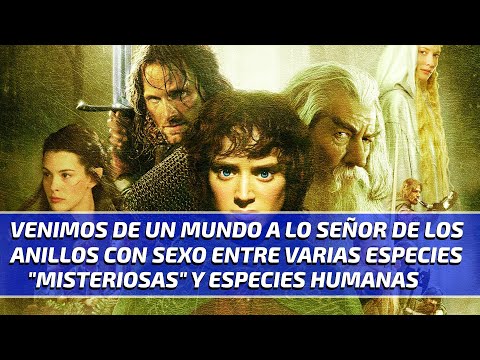
The human story is etched not just in stone and bone, but in the persistent narratives that have echoed through millennia. These tales, often dismissed as pure folklore, sometimes hint at realities that defy our current scientific understanding. The notion of ancient humans coexisting, and potentially interbreeding, with "mysterious species," evokes a landscape eerily reminiscent of fantastical realms, yet it touches upon deeply ingrained archetypes within our collective consciousness. This isn't merely speculation; it's an invitation to dissect these ancient accounts through the lens of crypto-biology and rigorous historical analysis.

We are diving deep into the cryptic annals of our past, exploring accounts that suggest interactions beyond the scope of known hominid evolution or zoological classification. These narratives, often buried within mythological frameworks, present a tantalizing yet challenging area of investigation. Are these stories mere allegories, or do they contain kernels of truth about unknown interactions that shaped our ancient world?

Shifting the Paradigm: The Crypto-Biological Hypothesis

The established scientific consensus confines human history to interactions with known species. However, a nascent field, tentatively referred to as crypto-biology, seeks to explore the possibility of unknown or extinct biological entities interacting with human populations. This hypothesis posits that certain entities, often relegated to myth and legend, may have biological roots, however speculative. The implications are profound: if such interactions occurred, they would necessitate a radical revision of our genealogical and evolutionary timelines.

The concept of "species" itself becomes fluid under this lens. We are not merely talking about undiscovered primates or megafauna. The narratives often describe beings with characteristics that blur the lines between animal, human, and something else entirely – entities that possess intelligence, intent, and perhaps even the capacity for biological union. This requires us to question the very definition of what constituted "human" and "species" in the deep past, and how these boundaries might have been more permeable than we currently believe.

Ancient Texts as Anomalous Encounter Records

The key to unlocking these mysteries lies within the vast corpus of ancient texts, myths, and oral traditions from cultures worldwide. From the Sumerian King Lists detailing long-reigning, non-human rulers to the celestial genealogies found in various mythologies, these records often allude to beings with extraordinary lifespans and physical characteristics. The epic poems of antiquity, such as the Epic of Gilgamesh, describe interactions with divine or semi-divine beings whose origins are left deliberately ambiguous, hinting at a reality where the biological and the transcendent were intertwined. The focus here is not on literal interpretation, but on identifying consistent patterns of anomalous entities interacting with human populations. We must ask: what biological pressures or realities could have inspired such pervasive narratives? Could these "gods" or "demons" be misunderstood references to cryptids or even unknown hominid subspecies?

The interpretation of these texts demands a multidisciplinary approach. Scholars of comparative mythology, ancient linguistics, and archaeology must collaborate to decipher the symbolic language and historical context. For instance, the Nephilim mentioned in the Book of Genesis are described as giants, the offspring of the "sons of God" and the "daughters of men." While often interpreted allegorically, the persistence of such narratives across disparate cultures suggests a common ancestral memory or a recurring environmental trigger. Examining these ancient scripts through a crypto-biological framework allows us to re-evaluate them not just as religious or mythological documents, but as potential anthropological records of interactions with entities outside our known biological sphere.

Classifying the Unseen: The "Shadow Species" Taxonomy

If we are to entertain the possibility of interbreeding, we must first attempt to categorize these purported "mysterious species." While a formal taxonomy is impossible without empirical data, we can construct a working classification based on recurring descriptions in folklore and anecdotal reports. These "Shadow Species" might fall into several broad categories:

  • The Primordial Giants: Beings of immense stature, often depicted in creation myths and epics (e.g., Titans, Nephilim, Cyclops). Their physiology suggests a deviation from standard human or known ape lineage, possibly indicating an ancient, gigantism-prone species.
  • The Enigmatic Watchers: Entities described as watchers or guardians, often possessing non-corporeal or semi-corporeal forms. These beings might represent a different evolutionary path, perhaps one focused on psionic abilities or energy manipulation rather than brute physical strength. Their interactions are often described as observational or manipulative rather than purely biological.
  • The Terrestrial Anomalies: Creatures deeply connected to specific environments, blending animalistic traits with an unsettling intelligence (e.g., Bigfoot, various lake monsters). While often cataloged under cryptozoology, their descriptions sometimes include behaviors or anatomical features suggestive of a closer, albeit primitive, relationship with early humans than typically assumed for known fauna.

This speculative taxonomy is a tool for organizing narrative data, not a definitive scientific classification. It highlights patterns in human ancestral memory that might correlate with unknown biological actors or phenomena. The alleged capacity for interbreeding or hybrid offspring across these categories suggests a fluidity in ancient biological boundaries that challenges our modern, rigidly defined classifications. This framework also serves as a guide for identifying potential targets for further investigation, should new evidence emerge from archaeological or genetic studies.

Interpreting the Echoes: Evidence vs. Extrapolation

The critical challenge in this field is discerning genuine anomalous evidence from human extrapolation and cultural overlay. When ancient texts describe beings that defy known biology, are we observing reports of actual entities, or are these simply elaborate metaphors designed to explain the unknown, the divine, or the terrifying aspects of the natural world? For instance, the concept of "gods" interbreeding with humans is a common trope, but how much of this is literal interpretation versus symbolic representation of societal or natural phenomena occurring at the time?

Archaeological findings, such as unusually large hominid fossil fragments or genetic anomalies in ancient human DNA, could potentially offer empirical support. However, such evidence is often scarce, ambiguous, or subject to multiple interpretations. The missing link between these speculative species and documented human ancestry remains the primary hurdle. The scarcity of concrete, verifiable proof necessitates a cautious approach, one that acknowledges the potential for these narratives to be symbolic while remaining open to the possibility that they are distorted echoes of encounters with entities unknown to modern science.

Investigator's Note: The following section delves into speculative theories. While fascinating, these concepts are not supported by mainstream scientific consensus and should be approached with a critical and open mind.

Investigator's Verdict: Between Myth and Potential Reality

After sifting through the layers of mythology, folklore, and speculative crypto-biology, the question of ancient human interbreeding with "mysterious species" remains firmly in the realm of the unproven, yet compelling. The sheer pervasiveness of such narratives across ancient cultures cannot be easily dismissed as mere coincidence or imaginative fancy. While definitive proof is absent, the consistent thematic elements suggest a shared underlying phenomenon or memory.

My verdict leans towards acknowledging these stories as potent cultural narratives that *may* contain distorted echoes of genuine, albeit poorly understood, interactions. The evidence presented is largely textual and anecdotal, falling short of the empirical standards required for scientific validation. However, science is an ever-evolving pursuit. Dismissing these accounts outright would be a failure of intellectual curiosity.

Could these "species" be extinct hominid subspecies, unknown cryptids, or something far more esoteric? The crypto-biological paradigm offers a framework to explore these possibilities. The lack of definitive fossil or genetic evidence today does not preclude its discovery in the future. Until then, these ancient tales serve as a potent reminder of the vast unknown that may lie buried in our past, challenging our understanding of human origins and our place within the broader tapestry of life. The "Lord of the Rings"-esque scenarios described in these ancient whispers might be allegorical, but the impulse to connect with the unknown, the powerful, and the "other" is undeniably human.

The Researcher's Archive

To delve deeper into the mysteries of ancient human interactions and speculative biology, consider these essential resources:

  • "Chariots of the Gods?" by Erich von Däniken: A foundational text in ancient astronaut theory, exploring connections between ancient myths and extraterrestrial visitation.
  • "The 12th Planet" by Zecharia Sitchin: Sitchin's controversial work posits an ancient alien race, the Anunnaki, who influenced human civilization.
  • "The Slouches and the Hominids" by Dr. Greg Little: Explores accounts of large, hairy bipedal creatures and their potential connections to ancient human populations.
  • "Ancient Aliens" (Documentary Series): While sensationalized, this series compiles numerous ancient texts and artifacts that proponents claim suggest extraterrestrial or non-human influence. (Available on Gaia)
  • Comparative Mythology Resources: Works by Joseph Campbell (e.g., The Hero with a Thousand Faces) provide context for universal archetypes that may inform these narratives.

These resources offer diverse perspectives, from fringe theories to rigorous mythological analysis, providing ample material for your own independent investigation.

Field Protocol: Analyzing Ancient Myths for Anomalous Data

Engaging with ancient myths requires a structured approach to extract potential anomalous data. Follow these steps:

  1. Identify the Core Narrative: Isolate the story from its cultural context. What is the central conflict or event?
  2. Characterize the "Other": Meticulously note descriptions of non-human entities. What are their physical attributes, behaviors, intelligence levels, and origins?
  3. Analyze Interactions: How do these entities interact with humans? Is it conflict, cooperation, procreation, or observation? Pay close attention to any descriptions of hybrid offspring or unusual unions.
  4. Cross-Reference Across Cultures: Compare similar themes and entities across different mythologies. Look for recurring patterns that might suggest a common source or phenomenon.
  5. Seek Anomalous Details: Identify elements that defy known biological or historical understanding. This could include impossible lifespans, unusual physical capabilities, or interactions that suggest a trans-species communication or biological exchange.
  6. Formulate a Crypto-Biological Hypothesis: Based on the gathered data, propose a potential explanation grounded in crypto-biology. Could the "gods" be a lost hominid species? Could "monsters" be undiscovered cryptids?

Remember, the goal is not to prove ancient astronauts or literal gods, but to identify recurring patterns of anomalous biological or intelligent entities interacting with early humanity.

Frequently Asked Questions

Q1: Is there any scientific evidence of humans interbreeding with other species in the past?

Current mainstream science acknowledges interbreeding only between humans and archaic hominids like Neanderthals and Denisovans. Evidence for interbreeding with hypothetical "mysterious species" from mythologies remains purely speculative and lacks empirical scientific backing.

Q2: How do crypto-biology and mythology relate?

Crypto-biology investigates potentially undiscovered species. Mythology often contains narratives about beings that defy current biological understanding. Crypto-biology provides a framework to re-examine mythological figures not as pure fantasy, but as potential, albeit distorted, accounts of interactions with such unknown entities.

Q3: Are the stories of gods and humans interbreeding literal accounts?

Most scholars interpret these stories metaphorically, representing early humans' attempts to explain natural phenomena, social hierarchies, or the perceived power of certain individuals or groups. However, a fringe perspective suggests these narratives *could* be symbolic representations of actual biological interactions with non-human intelligent species.

Q4: Where can I find more information on ancient human origins and mysterious species?

Explore resources on early human evolution, paleoanthropology, comparative mythology, and cryptozoology. Books by authors like Erich von Däniken, Zecharia Sitchin, and researchers in the field of anomalous phenomena are a starting point, though critical evaluation is paramount.

About the Author

alejandro quintero ruiz is a veteran field investigator dedicated to the analysis of anomalous phenomena. His approach combines methodological skepticism with an open mind to the inexplicable, always seeking the truth behind reality's veil. With years spent exploring the fringes of the unknown, he brings a unique perspective to the world's most perplexing mysteries.

The fabric of reality is often woven from threads of myth and conjecture. While the definitive proof of humans interbreeding with species beyond our known evolutionary tree remains elusive, the echoes in ancient texts and the persistent human fascination with the "other" demand our continued investigation. The possibility, however remote, that our ancestors encountered beings that do not fit neatly into our scientific boxes continues to fuel the quest for knowledge.

Your Mission: Deconstruct a Local Legend

Identify a local legend or folklore from your region that involves interactions between humans and non-human entities, or creatures described as unusual. Analyze it using the "Field Protocol" outlined above. What are the descriptions of the entities involved? What kind of interactions are reported? Are there any elements that suggest a biological anomaly or a species unfamiliar to modern science? Share your findings and analysis in the comments below. Let's see what hidden truths might reside in your local folklore.

The 660km Limit: Resurrecting the Hollow Earth Theory


Introduction: Echoes from the Deep

The earth beneath our feet is, by all scientific consensus, a solid mass, layered with a molten core, a mantle, and a crust. Yet, the human imagination, ever restless, has long yearned for what lies beyond the observable. For centuries, whispers of a world within a world, a void hidden by kilometers of rock and magma, have persisted. Today, we delve into the perplexing seismic discontinuity found at approximately 660 kilometers depth – a boundary that, for some, is not an ending, but a gateway, breathing new life into the ancient and enduring theory of a Hollow Earth.

This isn't merely a recounting of folklore; it's an examination of a scientific anomaly and how persistent human curiosity attempts to weave it into a grander, more mysterious narrative. We will dissect the geological data, trace the historical roots of the theory, and consider the implications when empirical evidence brushes against the edges of the inexplicable.

The Genesis of an Idea: From Plato to Halley

The concept of subterranean realms predates modern science by millennia. Ancient mythologies, from the Greek Hades to the Norse Svartalfheim, depict worlds beneath our own, populated by gods, spirits, or entire civilizations. However, the theoretical framework of a physically Hollow Earth began to take shape during the Age of Exploration and early scientific inquiry.

Edmond Halley, the renowned astronomer, is often credited with one of the first serious scientific propositions of a hollow planetary structure in the late 17th century. Driven by anomalies in the Earth's magnetic field, Halley theorized that the Earth might consist of a shell about 800 kilometers thick, with concentric inner shells, all rotating at different speeds. He envisioned these inner spheres as potentially habitable, illuminated by an internal atmosphere or luminescence, and speculated that the aurora borealis might be light escaping from these inner realms.

This was not born of pure fantasy, but an attempt to reconcile observable phenomena with nascent scientific understanding. While Halley's specific model has been disproven by subsequent geological discoveries, it laid the groundwork for a concept that would capture the public imagination and inspire countless speculative works.

Seismic Evidence: The 660km Discontinuity

Modern seismology provides a window into the Earth's interior, allowing us to map its structure by analyzing how seismic waves from earthquakes travel through it. One of the most significant findings is the existence of distinct discontinuities – boundaries where the speed and behavior of these waves change abruptly.

The 660-kilometer discontinuity, located at the boundary between the mantle's lower and upper regions, is a prime example. At this depth, seismic waves undergo a marked change in velocity, strongly suggesting a phase transition in the minerals that compose the Earth's interior. Specifically, the mineral ringwoodite transitions into ferropericlase and bridgmanite. This is a phase change, akin to water freezing into ice or ice melting into water, but occurring under immense pressure and temperature.

From a mainstream geological perspective, this discontinuity is understood as a critical boundary within the mantle, influencing the convection currents that drive plate tectonics. It is a fundamental marker of the Earth's internal architecture, a place where chemistry and physics dictate structure on a planetary scale.

Analyzing the Implications: What Lies Beneath?

While geologists interpret the 660km discontinuity as a mineral phase transition, proponents of the Hollow Earth theory often view it through a different lens. For them, this abrupt change in seismic wave behavior is not merely a chemical shift, but evidence of a significant structural alteration – a boundary that could potentially separate our known world from an inner, perhaps hollow, space.

The allure lies in its mystery. If the Earth is not a solid, homogenous mass all the way down, what could be there? Theories range from vast, cavernous spaces filled with an internal ocean and exotic flora, to the dwellings of advanced subterranean civilizations, or even portals to other dimensions. The 660km depth is significant because it lies deep within the mantle, far beyond the reach of direct human exploration, making it an ideal candidate for such speculative hypotheses.

This perspective transforms a mineral phase change into a potential geological feature that could accommodate vast inner voids. It requires interpreting seismic data not as definitive proof of mineral composition, but as an indicator of structural anomalies that could support different, more exotic, internal arrangements.

Scientific Skepticism vs. Speculation

The scientific community overwhelmingly dismisses the Hollow Earth theory based on extensive evidence. The primary arguments against it include:

  • Gravity: A hollow Earth would not possess the gravitational pull we experience. The mass required to generate Earth's gravity cannot be accounted for by a thin shell alone.
  • Seismic Wave Propagation: The way seismic waves travel through the Earth's interior is consistent with a dense, solid or molten interior, not vast empty spaces. Wave behavior at different depths and angles provides strong constraints on internal structure.
  • Moment of Inertia: Earth's observed moment of inertia, a measure of how mass is distributed within a rotating body, is consistent with a dense, centrally concentrated core, not a hollow sphere.
  • Planetary Formation: Standard models of planetary formation, supported by observations of other planets, suggest that terrestrial planets accrete and differentiate into solid, layered bodies due to gravity and heat.

However, proponents often counter that scientific explanations are incomplete or deliberately misleading. They might argue that seismic waves behave differently in non-standard conditions or that our understanding of gravity is flawed. This creates a divide where empirical data serving to refute the theory is reinterpreted by proponents as evidence supporting their more speculative claims.

"The scientific consensus is a cage built by accepted paradigms. What lies beyond the bars of that cage is where true discovery awaits." - A common sentiment echoed in Hollow Earth literature.

The Modern Hollow Earth Narrative

In contemporary discussions, the Hollow Earth theory often intertwines with other unexplained phenomena and conspiracy theories. Some narratives suggest that hidden entrances exist at the poles, guarded by governments or advanced beings to prevent public discovery. Others propose that UFOs are not extraterrestrial spacecraft, but vehicles originating from within the Earth.

The 660km discontinuity is frequently cited as a crucial piece of "evidence," often amplified through online forums and communities dedicated to exploring the unexplained. These discussions thrive on the ambiguity of scientific data and the human desire for profound, hidden truths. The internet has become a powerful incubator for these ideas, allowing them to reach a wider audience than ever before, often presented with a veneer of scientific or pseudoscientific reasoning.

The appeal persists because it offers a grand alternative to a mundane reality. It taps into a deep-seated archetypal narrative of hidden worlds and secret knowledge, transforming geological boundaries into thresholds of adventure and mystery. For those seeking answers beyond the conventional, the idea of a living, breathing Earth with a hidden interior remains an irresistible prospect.

Researcher's Verdict: Myth, Metaphor, or Uncharted Territory?

From a strictly empirical standpoint, the Hollow Earth theory as a literal, physical construct is untenable. The established principles of physics, geology, and planetary science present insurmountable challenges. Gravity alone, as we understand it, would not function as it does on a hollow planet.

However, dismissing the theory entirely ignores its enduring cultural significance and its ability to adapt. The 660km discontinuity serves as a potent symbol of the unknown depths within our own world. Could it be that the Hollow Earth theory, while concretely false, serves a metaphorical purpose? Perhaps it represents our innate desire for discovery, for layers of reality yet to be peeled back, for the ultimate frontier to be found not in the stars, but beneath our feet.

The enduring nature of this belief suggests a deeper psychological need. While science has provided us with a detailed map of the Earth's interior, there will always be gaps, anomalies, and questions that spark the imagination. The 660km discontinuity, by virtue of its seismic significance, remains a focal point for those who believe that the Earth holds secrets far more extraordinary than we currently comprehend. It’s a reminder that even in a world mapped and measured, the potential for profound mystery persists.

The Researcher's Archive

For those who wish to delve deeper into the scientific understanding of Earth's interior or explore the historical and speculative aspects of the Hollow Earth theory, the following resources are invaluable:

  • Books:
    • "The Earth's Deep Interior" by Jean-Paul Poirier: A comprehensive look at seismology and geophysics.
    • "Hollow Earth: The Long, Strange Journey of a Failed Century of Science" by Gregg Easterbrook: Explores the scientific refutation and cultural persistence of the theory.
    • "Worlds Beyond the Poles" by F. Amadeo Giannini: An early, influential proponent of the Hollow Earth theory.
  • Documentaries:
    • While mainstream documentaries often debunk the theory, look for analyses of scientific papers on seismic discontinuities. Documentaries focusing on Earth's layers and plate tectonics provide crucial context.
  • Academic Papers:
    • Search for research on the "660 km discontinuity," "mantle phase transitions," and "Earth's deep interior seismology" on platforms like Google Scholar.

FAQ Regarding the Hollow Earth

Q1: What is the 660km discontinuity?

It's a seismic boundary approximately 660 kilometers beneath the Earth's surface where seismic waves change velocity, indicating a significant change in mineral composition and structure within the mantle.

Q2: Why do some people believe the Earth is hollow because of this boundary?

Proponents interpret this seismic anomaly not as a mineral phase transition, but as evidence of a structural void or opening into an inner Earth, often disregarding mainstream geological explanations.

Q3: Is there any scientific evidence for a Hollow Earth?

No. Extensive geological and physical evidence, including gravity measurements, seismic wave propagation, and planetary formation models, overwhelmingly supports a solid, layered Earth with a molten core.

Q4: Where did the Hollow Earth theory originate?

While ancient myths depict underworlds, the scientific proposition of a Hollow Earth emerged in the late 17th century with Edmond Halley, who attempted to explain magnetic field anomalies.

Q5: Can we send probes to the Earth's core or mantle?

Current technology cannot drill to such depths. Our understanding of the Earth's interior relies on indirect methods like seismology and studying volcanic materials.

Your Mission: Map the Unseen

The scientific method demands rigorous testing and falsifiability. While the literal Hollow Earth remains in the realm of speculation, the 660km discontinuity is a tangible point of inquiry. Your mission, should you choose to accept it, is to:

  1. Research Further: Find a recent scientific paper (published within the last 5 years) discussing the 660km discontinuity or mantle phase transitions. What new insights has it provided?
  2. Hypothesize: If you were an early proponent of the Hollow Earth theory encountering this seismic data, what counter-arguments would you construct to defend your position, acknowledging (but reinterpreting) the scientific findings?
  3. Contribute to the Discussion: Share your findings and your hypothetical arguments in the comments below. Let's dissect the intersection of science, speculation, and the enduring human quest for what lies beneath.

alejandro quintero ruiz is a veteran field investigator dedicated to the analysis of anomalous phenomena. His approach combines methodological skepticism with an open mind to the inexplicable, always seeking the truth behind the veil of reality.