Followers

Mostrando las entradas con la etiqueta Anomalous Formations. Mostrar todas las entradas

Giants, Beasts, and Petrified Creatures: An Investigation into Earth's Colossal Mysteries

Image

The earth beneath our feet holds secrets as ancient as time itself. While conventional science offers explanations for geological formations, a persistent undercurrent of anecdotal evidence and historical accounts suggests something far more extraordinary: the petrified remains of colossal beings. This investigation delves into the compelling, albeit controversial, claims of giants, ancient beasts, and rock formations that defy simple geological explanations, drawing from witness testimonies and historical texts.

The Genesis of the Theory: Giants and Ancient Beings

The concept of giants and titanic creatures inhabiting Earth in antiquity is not new. It pervades mythology, religious texts, and ancient folklore across diverse cultures. The Book of Genesis, for instance, speaks of giants (Nephilim) before and after the great flood. The verse Genesis 19:26, "But Lot’s wife looked back, and she became a pillar of salt," is often cited in discussions about petrification, hinting at forces capable of transforming living beings into stone. Similarly, Luke 19:40, where Jesus states, "I tell you that if these should keep silent, the stones would immediately cry out," suggests an inherent testimony within the very earth, perhaps even in petrified forms.

These ancient narratives lay the groundwork for the modern interpretation of certain geological anomalies. The idea is that the "stone mountains" or colossal rock formations observed globally are not merely the result of geological processes over millennia, but the actual petrified bodies of immense beings from a forgotten epoch. The sheer scale of these alleged creatures, described as capable of causing "fear and havoc on earth," aligns with the awe-inspiring, and sometimes terrifying, nature of these formations.

Recommended Gear for Investigation

ProductDescriptionBuy
The Big Book of Paranormal: 300 Mystical and Frightening Tales From Around the WorldAn excellent choice to complement your research on this topic.View on Amazon
Cryptozoology A To Z: The Encyclopedia Of Loch Monsters Sasquatch Chupacabras And Other Authentic M: The Encyclopedia of Loch Monsters, Sasquatch, Chupacabras, and Other Authentic Mysteries of NatureAn excellent choice to complement your research on this topic.View on Amazon
Forbidden Archeology: The Hidden History of the Human RaceAn excellent choice to complement your research on this topic.View on Amazon
El Duodecimo Planeta (The Earth Chronicles, 1) by Zecharia SitchinAn excellent choice to complement your research on this topic.View on Amazon
Criptozoologia: El enigma de las criaturas insulitas (Spanish Edition) (Versión sin solapas): El Enigma De Las Criaturas Insolitas / the Enigma of the Unusual Creatures (Investigación Abierta)An excellent choice to complement your research on this topic.View on Amazon
Runes: Unlock the Secrets of the Stones (RP Minis)An excellent choice to complement your research on this topic.View on Amazon
The H. P. Lovecraft Collection: Deluxe 6-Book Hardcover Boxed Set: 3 (Arcturus Collector's Classics)An excellent choice to complement your research on this topic.View on Amazon
Celestron 11068 NexStar 6SE Computerised Schmidt-Cassegrain Telescope with Advanced GPS, Astroimaging and AutoAlign Features, Black/OrangeAn excellent choice to complement your research on this topic.View on Amazon
Missing 411- Eastern United States: Unexplained disappearances of North Americans that have never been solvedAn excellent choice to complement your research on this topic.View on Amazon
Ghost-Hunting For Dummies [Idioma Inglés] An excellent choice to complement your research on this topic.View on Amazon

Petrified Evidence Worldwide: A Global Phenomenon?

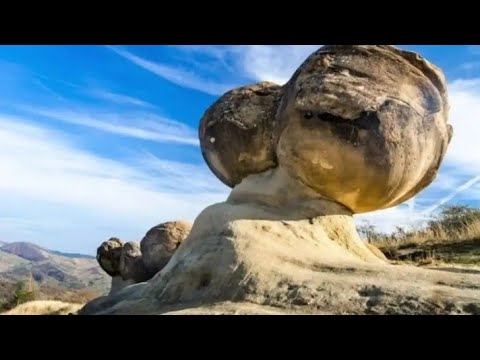
Eyewitness accounts and amateur research point to potential petrified giants and beasts across the globe. A recurring theme involves formations that strikingly resemble known animals or mythical creatures. One witness shared a childhood dream of a "large petrified dog in a forest," described as upright, covered in vines and foliage, possibly even a dragon. This personal vivid recollection resonates with the broader theory that such formations are more than random geological occurrences.

Further testimonies highlight specific locations: "One of the Mountains in NSW Australia has a Huge Crocodile Eyes back Tail the whole thing." Another observer, an avid disc golfer, noted a particular course outside Raleigh, NC, featuring "huge rock formations... One of them looks like the biggest turtle you have ever seen." These observations, echoed by others who witness these formations, suggest a pattern that is difficult to dismiss purely as coincidence. Even Romania is mentioned with the "SFINXUL from ROMANIA, similar to these stone giants." These accounts, collected from online discussions and shared experiences, form a crucial part of the evidence base for this compelling, yet unverified, hypothesis.

The scale is often emphasized. Claims of formations being "2.13 miles tall" underscore the immense size attributed to these ancient entities, pushing the boundaries of what conventional biology and geology accept. The raw visual impact of these formations, as described by viewers: "The thumbnail photo is just insane," and "amazing photos of what once walked this Earth," fuels the curiosity and belief in these extraordinary claims.

The 'Mud Fossil' Perspective: Redefining Earth's Composition

A more radical interpretation comes from proponents of the "Mud Fossil" University. This perspective suggests that much of Earth's surface, including what we commonly identify as rocks and soil, is not inert mineral matter but the fossilized remains of colossal organic beings. It posits that the red coloration seen in some formations, such as at minute 2:02 in the video associated with this topic, is not mere iron oxide but "blood," purportedly DNA-tested by researchers like Ron from MudFossil University.

"The red you see at minute 2:02 is blood. DNA tested by Ron from mudfossil University. We do not live on mud, dirt or earth but on the remains of creatures of the vapour canopy periode."

This theory fundamentally challenges our understanding of paleontology and geology, proposing that Earth itself is a graveyard of gargantuan creatures from a bygone era, possibly preceding the "vapour canopy period" and subsequent geological ages. The implication is that we are walking, literally, upon the remains of ancient giants and beasts, their organic structures preserved and transformed over eons.

Pareidolia or Primeval Giants? The Investigator's Stance

The most significant counter-argument, and indeed the scientific consensus, is pareidolia – the psychological phenomenon where the mind perceives a familiar pattern (like a face or figure) in otherwise random or ambiguous stimuli. Many of the alleged petrified giants and beasts can indeed be explained through this lens. The human brain is wired to find patterns, and when presented with large, complex geological formations, it's natural to see resemblances to known forms, especially when primed by stories of giants and ancient beasts.

"Pareidolia. That's at least half of them I'd say," remarked one astute observer, cutting to the heart of the skepticism. While the visual evidence can be striking, the burden of proof lies in demonstrating unambiguous biological structures, not just suggestive shapes. The "hidden in plain sight" aspect can often be attributed to our tendency to interpret shapes rather than a deliberate concealment of primeval remains.

However, as an investigator, my mandate requires an open mind. While pareidolia accounts for a significant portion of these claims, the sheer consistency and detail reported in some accounts warrant further scrutiny. The scientific community requires testable hypotheses, repeatable experiments, and robust evidence, such as fossilized bone structures or organic material that definitively predates conventional geological timelines. Until such evidence is widely accepted and verifiable, these formations remain ambiguous – fascinating geological curiosities with a persistent, whispered narrative of ancient behemoths.

Cultural Echoes: Folklore and Fictional Parallels

The narrative of colossal beings finds potent echoes in modern culture, suggesting a deep-seated resonance with this ancient theme. Viewers frequently draw parallels between these alleged petrified giants and depictions in popular media. The formation is reminiscent of "The 'Neverending Story' the big rock Creature," a beloved character embodying inanimate giants brought to life. Similarly, the Japanese anime "Attack on Titan" is built entirely around the concept of "Titan Wars," where immense humanoid figures dominate the landscape and threaten humanity.

Even animated films tap into this imagery: "The movie Princess Mononoke comes into mind when I see these beautiful images." These cultural touchstones demonstrate how the idea of ancient, monumental beings – whether in stone or in animated form – captures the human imagination, blending myth with potential reality. The comment, "HAY TANTO CONOCIMIENTO EN VUESTRAS MUESTRAS," speaks to the rich tapestry of information and interpretation these images inspire across languages and cultures.

The idea of these beings causing "fear and havoc on earth" is a powerful narrative thread, amplified by fictional portrayals. The thought of "having these things walking around is scary," a sentiment shared by many, highlights the primal fear associated with the unknown and the immense. The visual impact can be so profound that one viewer confessed, "I turned into a stone after watching this," a hyperbolic yet telling reaction to the awe-inspiring nature of the subject matter.

Researcher's Verdict: Fraud, Genuine Phenomenon, or Something Else?

After reviewing the available testimonies, anecdotal evidence, and prevalent theories, my assessment leans towards a nuanced conclusion. While the concept of petrified giants and beasts offers a captivating alternative to standard geological explanations, the evidence presented is largely circumstantial and subject to interpretation. Pareidolia is a powerful factor, and many formations can, and likely should, be explained by natural processes.

However, dismissiveness is the enemy of investigation. The sheer volume of accounts, spanning different continents and cultures, and the specific details provided by observers describing formations like the "Huge Crocodile Eyes back Tail" or the "biggest turtle you have ever seen," suggest that some geological formations possess shapes that are uncannily lifelike. The "Mud Fossil" theory, while scientifically unproven, attempts to provide a framework for understanding these anomalies as organic remnants rather than mere rock.

Crucially, the lack of definitive, universally accepted fossil evidence – clear skeletal structures, preserved organic matter with verifiable ancient DNA – means these remain compelling mysteries rather than proven realities. The possibility of hoaxes or misinterpretations cannot be entirely discounted. Yet, the persistent human fascination with giants and ancient creatures, coupled with these striking natural formations, ensures that the question remains open. It is possible that some formations are indeed petrified remains, while others are masterful examples of nature's artistry through pareidolia, and perhaps, some are simply misunderstood geological phenomena.

The Investigator's Archives

For those seeking to delve deeper into the inexplicable, the archives offer valuable resources. Understanding the context of ancient accounts and modern interpretations is key to forming your own conclusions. The following are recommended for further study:

  • "Forbidden Archeology" by Michael A. Cremo and Richard L. Thompson: Explores evidence of early humans and ancient creatures that challenges the accepted timeline of evolution.
  • Documentaries on Ancient Giants and Anomalous Formations: Numerous independent documentaries explore sites claimed to be petrified giants. While quality varies, they often provide compelling visual evidence and interviews.
  • Online Forums and Communities Dedicated to Alternative History: Platforms where individuals share photos, experiences, and theories about geological anomalies and ancient mysteries. Exercise critical discernment.

These resources, while not always adhering to strict academic standards, provide a broader perspective on the phenomena discussed.

Protocol: Analyzing Unusual Rock Formations

When encountering a formation that sparks curiosity, a systematic approach is essential:

  1. Document Thoroughly: Take detailed photographs from multiple angles and distances. Note the location, surrounding environment, and any specific features that suggest life forms.
  2. Research Local Geology: Understand the known geological history and processes of the region. Are volcanic activity, erosion patterns, or specific mineral compositions common?
  3. Compare with Known Geology and Biology: Assess whether the formation can be explained by known geological processes (erosion, sedimentation, volcanic rock) or biological forms (fossilized animals, unique plant structures).
  4. Seek Expert Opinions (with Caution): Consult geologists and paleontologists, but be prepared for explanations rooted in conventional science. If pursuing alternative theories, engage with communities that value critical analysis, not just confirmation bias.
  5. Look for Undeniable Evidence: Focus on identifying clear biological markers – skeletal structures, cellular patterns, or organic material distinct from surrounding rock – that cannot be explained by geological processes alone.

Remember, the goal is objective analysis, even when exploring extraordinary claims. Critical thinking, combined with meticulous documentation, is paramount.

Frequently Asked Questions

  • What is the primary scientific explanation for formations that resemble giants or beasts?

    The most widely accepted explanation is pareidolia, the tendency to perceive familiar patterns in random stimuli, combined with natural geological processes like erosion, sedimentation, and volcanic activity that can shape rock into suggestive forms.

  • Is there any scientific proof of petrified giants existing on Earth?

    Currently, there is no widely accepted scientific proof. While many formations are visually striking, they lack the clear biological markers and verifiable preservation evidence required to be classified as petrified remains of giants or colossal beasts by the scientific community.

  • What is the "Mud Fossil" theory?

    The "Mud Fossil" theory proposes that many geological formations, including mountains and rock structures, are not merely mineral deposits but the fossilized organic remains of enormous creatures from ancient epochs, suggesting a fundamentally different composition of Earth's crust.

  • How can I distinguish between a natural formation and a potential petrified creature?

    Look for unambiguous biological structures (like clear skeletal outlines or cellular patterns) that are out of place with the surrounding geology. Documenting these features meticulously and comparing them with known biological and geological data is crucial.

Your Mission: Field Observation

Your next assignment is ocular reconnaissance. Next time you encounter a peculiar rock formation, whether during a hike, a road trip, or even in a distant photograph, apply the protocol outlined above. Document it with a critical yet open mind. Does it whisper tales of ancient titans, or does it simply speak the language of stone and time? Share your findings (photos and observations) in the comments below. Let's expand the dossier.

The truth, as always, lies somewhere in the vast, unexplored territories between the known and the unknown. Don't let the mundane blind you to the magnificent possibilities.

Investigator's Note: True paranormal research doesn't fund itself. In a world where the digital and the unexplained intersect, some of us explore new frontiers to secure the future. Do you dare to be part of the vanguard? Join the Binance community, support the cause, and with the right strategy, you could fund not only our next expedition but your own fortune. The next great discovery could be just a click away.

Emirzeli, Mersin, Turkey: Stone Formations Echoing Peruvian Mysteries


I. Introduction: The Whispers of Stone

The earth is a repository of secrets, its geological formations often holding narratives far older than human civilization. In the heart of Mersin, Turkey, the region of Emirzeli presents a landscape punctuated by rock structures that defy conventional geological explanations. These formations, with their uncanny resemblance to certain formations found thousands of miles away in Peru, beg the question: are we witnessing mere coincidence, or the imprint of forces that transcend our current understanding of planetary history?

This isn't just about unusual rocks; it's an invitation to scrutinize the very foundations of our historical and geological paradigms. The narrative of forgotten civilizations, advanced technologies, and earth-altering events often surfaces when investigating such anomalies. Today, we open the Emirzeli file and compare it to its Peruvian counterparts, seeking patterns that might rewrite our understanding of the past.

II. Emirzeli's Geological Enigma

Emirzeli, nestled within the broader Mersin province of Turkey, has become a focal point for enthusiasts of ancient mysteries and geological oddities. The specific rock formations in question exhibit characteristics that are difficult to attribute solely to standard erosion processes. Imagine monolithic structures, sculpted with a precision that hints at more than just wind and water. These are not your typical sedimentary layers or volcanic extrusions.

Early reports and amateur investigations describe these rocks as possessing unnaturally smooth surfaces in some areas, sharp, deliberate-looking edges in others, and an overall arrangement that seems almost intentional. The scale can be imposing, dwarfing human observers and lending an air of awe and mystery to the locale. The local folklore, often a rich source for understanding anomalous sites, may hold clues, though much of it remains uncatalogued by mainstream archeological bodies.

The potential for advanced geological manipulation or the remnants of forgotten construction techniques is a thread that must be followed. Understanding the mineral composition, the surrounding geological context, and any associated archeological findings in Emirzeli is paramount. This initial reconnaissance aims to establish the baseline characteristics of these enigmatic formations.

III. Echoes from the Andes: Peruvian Parallels

Thousands of miles away, in the Andean landscapes of Peru, lie geological formations that bear a startling, almost disturbing, similarity to those found in Emirzeli. Sites like Sacsayhuamán or Ollantaytambo are famous for their megalithic stone constructions, where massive blocks of stone are fitted together with astonishing precision, leaving no space for a credit card to slip between them. While these are clearly man-made, the sheer scale and engineering prowess have fueled speculation about lost technologies and advanced ancient societies.

However, the comparison extends beyond the Inca. In more remote, less explored regions of Peru, natural geological formations have been observed that mirror the sculpted, monolithic appearance of Emirzeli's rocks. Think of unusual weathering patterns that create seemingly artificial shapes, pillars of stone standing in unnatural alignment, or massive rock faces carved with geometric precision. These natural anomalies in Peru are often attributed to exotic geological processes, yet their visual echo in Turkey cannot be easily dismissed.

The question arises: if these are natural, what universal geological or potentially energetic forces could cause such similar outcomes across continents? Or, as some theories suggest, are we looking at evidence of a single, globalized ancient culture with the knowledge to shape stone, both natural and artificial, on a grand scale?

IV. The Tartarian Connection: Rethinking History

The concept of a lost, advanced global civilization known as Tartaria has gained traction among independent researchers. This hypothesis posits that a technologically sophisticated empire once spanned the globe, building magnificent structures and mastering energies we are only now beginning to understand. Proponents suggest that much of history has been deliberately obscured, with original Tartarian sites and artifacts being re-attributed or their true origins erased.

The formations in Emirzeli and their Peruvian counterparts, when viewed through the lens of the Tartarian hypothesis, become significant. Could these sculpted rocks be remnants of Tartarian cities, advanced energy conduits, or even terraforming projects? The sheer scale and engineered appearance, when coupled with the suggestive global distribution of similar anomalies, lend weight to this controversial theory. It challenges the established timeline of human technological development and suggests a history far richer and more complex than officially taught.

Examining these sites with a "Tartarian mind" involves looking for signs of advanced engineering, unnatural alignments, and evidence that predates known historical periods. It's about deciphering the silent testimony of stone, much like piecing together fragments of a forgotten empire. The hashtag #TartariaMenteAbierta isn't just a tag; it's a directive to challenge conventional narratives.

V. Comparative Geomagnetic and Tectonic Analysis

To move beyond mere visual comparison, a rigorous analysis requires delving into the scientific underpinnings. Do Emirzeli and the relevant Peruvian sites share similar geomagnetic signatures or tectonic histories? Certain geological anomalies are known to be associated with unusual magnetic fields or specific tectonic stresses. For instance, areas with high concentrations of quartz can generate piezoelectric effects when subjected to pressure, potentially influencing local energy fields.

Investigating these locations could involve using advanced equipment such as EMF (Electromagnetic Field) meters, magnetometers, and ground-penetrating radar. Are there elevated EMF readings around these formations? Do their alignments correlate with significant ley lines or celestial events? Tectonic analysis might reveal if both regions were once subjected to similar geological pressures or volcanism that could explain the formation of unusual rock structures.

The purpose here is to gather quantifiable data that can either support or refute the hypothesis of a common, perhaps non-terrestrial or anciently engineered, origin. This empirical approach is crucial to elevate speculation into verifiable research. The aim is to integrate scientific methodologies into the study of these enigmas, bridging the gap between the inexplicable and the measurable.

"The Earth keeps its own counsel. It is our duty to listen, and to question everything we think we know about its ancient history."

VI. The Investigator's Archive

For any serious investigator delving into global geological enigmas, a curated collection of resources is indispensable. When exploring sites like Emirzeli and comparing them to Peruvian anomalies, certain texts and documentaries serve as foundational knowledge. John Keel's work, particularly on the Men in Black phenomenon and the 'ultraterrestrial' hypothesis, provides a framework for understanding anomalous entities and their potential interaction with our reality.

Jacques Vallée's research into UFOs and folklore, often highlighting the 'stairway theory' of cultural evolution and the pervasive nature of mystery across human history, is equally vital. His book, "Passport to Magonia," offers a catalog of encounters and phenomena that suggest a recurring, intelligent force at play. For comparative geological and archeological mysteries, works exploring ancient megalithic sites, controversial theories about giants, or the potential existence of advanced prehistoric civilizations become essential.

Consider also the film "Ancient Aliens," which, despite its popular nature, compiles numerous examples of anomalous structures and artifacts from around the world that align with the idea of widespread ancient knowledge or intervention. For those seeking deeper dives into the Tartarian hypothesis, books and documentaries that critically examine historical revisionism and architectural anomalies are key. Accessing these resources provides context and equips the researcher with the tools to identify recurring patterns and potential connections.

VII. Field Protocol: Documenting Anomalous Formations

When investigating sites like the rock formations in Emirzeli or their parallels in Peru, a systematic approach is crucial for generating reliable data. This is not about capturing ghost photos; it's about meticulous observation and documentation.

  1. Site Reconnaissance: Arrive at the location with ample daylight. Begin by visually surveying the extent of the formations. Note their orientation relative to cardinal directions and any prominent geographical features (mountains, rivers, fault lines).
  2. Photographic Documentation: Employ a high-resolution camera. Capture wide shots to establish context, medium shots to show scale and arrangement, and close-ups of specific features (tool marks, unusual textures, joints). Use a scale reference (e.g., a hand, a measuring tape) in some close-ups.
  3. Geomagnetic and Environmental Readings: Simultaneously, take readings with an EMF meter. Note variations and their correlation with specific formations or areas. If possible, use a Geiger counter to check for anomalous radiation. Record ambient temperature and any unusual atmospheric conditions.
  4. Audio Recording: Use a sensitive audio recorder to capture the ambient soundscape. Listen for any unusual noises or silences that seem out of place. While direct EVP (Electronic Voice Phenomena) capture is unlikely in a geological context, unusual sonic anomalies can still be significant.
  5. Geological Assessment (Preliminary): Observe the type of rock. Does it appear to be local to the area, or does it suggest it was transported and shaped? Note any stratification, erosion patterns, or mineral deposits that seem unusual.
  6. Note-Taking: Maintain a detailed logbook. Record the date, time, location (GPS coordinates if possible), weather conditions, equipment used, and all observations. Sketch formations and mark locations of readings or photographic evidence.
  7. Comparative Study: After the field visit, meticulously compare images and data with known formations from other locations, such as those in Peru. Look for consistent features, alignments, or energy signatures.

This structured protocol ensures that anecdotal observations are backed by systematic data collection, forming the basis of a credible investigation.

VIII. Investigator's Verdict: Geological Synchronicity or Deliberate Design?

The visual echo between the stone formations of Emirzeli, Turkey, and anomalies found in Peru is striking. On one hand, the science of geology offers explanations for seemingly unnatural shapes through complex erosion, seismic activity, and mineral deposition over vast timescales. The sheer vastness of Earth's history allows for such coincidences, a phenomenon sometimes referred to as geological synchronicity.

However, the recurring patterns—the monolithic scale, the precision of edges, the almost architectural arrangement—compel us to consider alternative hypotheses. The Tartarian theory, suggesting a lost global civilization with advanced geological and architectural knowledge, provides a compelling narrative framework for these similarities. It posits that these are not random natural occurrences but the deliberate work of intelligent hands, perhaps shaping the planet for purposes we can only speculate upon—energy generation, habitation, or even communication.

My assessment leans toward an open, yet critically analytical, stance. While natural explanations must always be the primary consideration, the consistency of these anomalies across continents, particularly when viewed alongside other global megalithic mysteries, makes a purely coincidental explanation increasingly strained. The evidence suggests that we might be looking at the remnants of a forgotten chapter of Earth's history, one where advanced understanding and manipulation of the planet's geological architecture were commonplace.

IX. Frequently Asked Questions

Q: Are the rock formations in Emirzeli officially recognized as anomalous?
A: While local communities may be aware of their unusual nature, these formations are not widely recognized or extensively studied by mainstream geological or archeological institutions as definitively anomalous. They often fall into the category of geological curiosities.

Q: Could these formations be the result of unusual volcanic activity?
A: Volcanic processes can create unique geological features, but the specific sculpted or precisely jointed appearances often reported in these anomalous sites usually require more than just standard volcanism. It highlights the need for detailed geological surveys.

Q: What is the primary difference between these formations and known megalithic sites like Sacsayhuamán?
A: Megalithic sites are clearly man-made, involving quarried and shaped stones. The debate surrounding formations like those in Emirzeli is whether they are purely natural geological products or intelligently designed/modified structures from a forgotten era, potentially predating known civilizations.

Q: Why are the similarities to Peru significant?
A: The significance lies in the geographical distance and the shared anomalous characteristics, suggesting a potential common cause. This could be a widespread natural process previously unrecognized, or evidence of a globalized ancient culture with similar geological engineering capabilities.

X. Your Field Mission

The Earth holds countless geological enigmas waiting to be deciphered. Your mission, should you choose to accept it, is to become an investigator of these silent storytellers.

Your Mission: Investigate Your Own Local Geological Anomalies

This week, I challenge you to become an armchair geologist and historian. Research your local area: are there any unusual rock formations, hills, or quarries that locals have legends about or that look peculiar? Even a strangely shaped boulder in a park can be a starting point. Use online geological surveys, local history archives, or simply a keen eye during your daily travels.

Document any interesting findings with photographs (even if taken from afar) and jot down any local lore or intriguing characteristics. Compare what you find with the principles discussed in this post. Do any of your local anomalies share features with the patterns discussed from Turkey or Peru? Share your findings and potential connections in the comments below. Let's build a global archive of Earth's whispered secrets, one local anomaly at a time.

About the Author

Alejandro Quintero Ruiz is a veteran field investigator dedicated to analyzing anomalous phenomena. His approach combines methodological skepticism with an open mind to the inexplicable, always seeking the truth beyond the veil of reality.

The journey into understanding our planet's most profound mysteries is ongoing. The stones of Emirzeli and the echoes in Peru serve as potent reminders that the Earth's history is far from fully revealed. By applying rigorous analysis and an open, questioning mind, we continue to peel back the layers of what we term 'reality'.

Petrified "Robots" and "Titans": Analyzing Anomalous Statues Across the United States


Introduction: The Unsettling Silence of Stone

The static on the radio crackles, not with music, but with whispers of the impossible. A chilling report surfaces, detailing figures of immense size, seemingly frozen mid-action, scattered across the American landscape. These aren't mere geological curiosities; they are reports that skirt the edges of credulity, suggesting an archaeological enigma far beyond our current understanding. Today, we delve into the unsettling quiet of these petrified anomalies, demanding answers that conventional science struggles to provide. Are we looking at advanced ancient artistry, inexplicable natural processes, or perhaps something more... artificial?

The Phenomenon: Humanoid Forms Frozen in Time

Reports of petrified humanoid figures, sometimes described as "robots" or "titans," have surfaced from various locations across the United States. These are not simple statues carved by human hands, but allegedly natural formations or alleged fossilized remains that bear uncanny resemblances to colossal humanoid beings. The sheer scale and seemingly deliberate posture of some of these formations defy easy explanation. Skeptics often point to pareidolia – the human tendency to perceive familiar patterns, like faces or figures, in random stimuli – as the primary driver behind these interpretations. However, the consistency and detail reported in some of these alleged discoveries warrant a deeper, more analytical approach. We must ask: what geological or paleontological processes could produce such startling resemblances, and when all natural explanations are exhausted, what remains?

"I've seen countless geological formations that mimic life. The trick is to dissect the evidence without pre-conceived notions. Is it a natural illusion, or is there a genuine anomaly whispering from the stone?" - A.Q.R.

Colossal Statues and Ancient Echoes

Beyond individual figures, the United States holds a cache of colossal structures and statues that have fueled speculation for generations. From the enigmatic heads on Easter Island to the ancient monuments of Egypt, humanity has a long history of monumental construction. However, some American sites present their own unique brand of mystery. Are the tales of petrified giants simply folklore, or do they hint at a forgotten chapter of Earth's history? This line of inquiry forces us to confront the possibility of advanced ancient civilizations, perhaps possessing technological capabilities we can only dream of today. The concept of "titans" being literally turned to stone, whether through a mythical curse or an advanced, forgotten technology, enters the realm of serious consideration when faced with such persistent reports.

Consider the implications of such discoveries: if verified, they would necessitate a radical rewrite of human history and our understanding of ancient capabilities. This is where true investigative journalism meets the paranormal – by questioning the established narrative and demanding verifiable proof.

Geological Explanations vs. Anomalous Theories

The most straightforward explanation for these "petrified robots and titans" undoubtedly lies within the realm of geology. Erosion, mineral deposition, and unique geological pressures can sculpt rocks into forms that uncannily resemble living beings. Features like basalt columns, unique rock formations like Hoodoos, or even petrified wood can, under the right lighting and from specific angles, evoke images of artificial constructs or colossal figures. However, the sheer number of disparate reports, often thousands of miles apart, begs the question: are we merely seeing what we want to see, or is there a recurring pattern that transcends coincidence?

When we analyze these phenomena, we must employ rigorous methodology. First, we systematically eliminate all possible natural explanations. This includes detailed geological surveys, comparative analysis with known geological processes, and expert testimony from geologists and paleontologists. Only when these avenues are exhausted do we begin to entertain more speculative theories. These might include:

  • Unknown Fossilization Processes: Could there be an undiscovered biological or geological process that results in large-scale, humanoid fossilization?
  • Ancient Advanced Technology: The "robot" designation implies artificiality. Could these be remnants of sophisticated, non-human or pre-human civilizations that utilized advanced petrification or preservation techniques?
  • Extraterrestrial Influence: A more fringe theory, yet one persistent in paranormal circles, suggests these could be remnants of ancient alien visitations or terraforming efforts.

The critical juncture in this investigation is distinguishing between a compelling natural occurrence and genuine evidence of the anomalous. The debate often hinges on the interpretation of details: the symmetry of purported artificial construction, the presence of features inconsistent with natural erosion, or the sheer scale that defies known biological limits for terrestrial life in certain geological eras.

Archaeological Enigmas

The field of archaeology is replete with discoveries that challenge our understanding of the past. Sites like Gobekli Tepe, with its massive carved pillars predating known civilization, or the Antikythera mechanism, an ancient analog computer, demonstrate that ancient peoples were capable of feats we once deemed impossible. Could the "petrified titans" be another, even more profound, piece of this puzzle? The sheer antiquity suggested by some of these alleged formations hints at a history far deeper than currently accepted timelines.

The challenge for researchers is bridging the gap between folklore and verifiable fact. Many claims of petrified figures lack concrete evidence, often relying on blurry photographs or anecdotal accounts. However, the persistence of these stories across cultures and continents suggests a fertile ground for genuine, albeit hidden, discoveries. The investigation into these phenomena is not merely about finding strange rocks; it's about understanding the full scope of our planet's history and the potential for lost civilizations or unknown natural forces.

The Investigator's Verdict

My analysis of the various reports concerning "petrified robots and titans" across the United States leads me to a complex conclusion. While the temptation to dismiss these claims outright based on pareidolia and geological explanations is strong, a deeper examination reveals persistent anomalies that warrant further, unbiased investigation. Many of the alleged formations are undeniably products of natural geological processes, sculpted by millennia of wind, water, and mineral deposition. However, in a significant subset of these reports, the resemblance is so profound, the implied scale so immense, and the features so consistently described as "artificial" or "deliberately formed" that simply attributing them to chance or illusion feels intellectually dishonest.

The lack of rigorous, peer-reviewed scientific study on these specific claims is a major hurdle. Many accounts originate from amateur researchers or are passed down through anecdotal evidence, making definitive verification difficult. Yet, the consistent reporting of such phenomena across diverse geographical locations suggests that while many cases are likely misinterpretations, the possibility of genuine anomalies cannot be entirely discounted. Until dedicated scientific expeditions are funded and conducted with the specific intent to analyze these sites under strict protocols, they will remain in the fertile ground of the unexplained – a tantalizing glimpse into what might be a forgotten geological or historical chapter.

The Researcher's Archive

For those seeking to delve deeper into the mysteries of anomalous formations and ancient enigmas, a curated selection of resources is essential for a comprehensive understanding. These texts and platforms have been instrumental in shaping the discourse around unexplained phenomena and providing frameworks for critical analysis:

  • Books:
    • "Chariots of the Gods?" by Erich von Däniken: A foundational text exploring ancient astronaut theories and monumental constructions.
    • "Fingerprints of the Gods" by Graham Hancock: Investigates evidence for a lost, advanced prehistoric civilization.
    • "The Moronant Stone" by Charles Fort: A classic compilation of unexplained phenomena, including unusual geological reports.
  • Documentaries & Platforms:
    • "Ancient Aliens" (History Channel/Gaia): While often speculative, it systematically presents numerous cases of anomalous artifacts and structures.
    • Gaia.com: A streaming service dedicated to conscious media, featuring numerous documentaries on ancient mysteries, cosmology, and the paranormal.
    • "Missing 411" Series by David Paulides: While primarily focused on disappearances, it often touches upon unusual phenomena and geographical anomalies where people vanish without a trace.

Engaging with these resources can provide valuable context and methodology for analyzing claims of anomalous statues and enigmatic structures. Remember, the goal is not blind acceptance, but informed critical assessment.

Your Field Mission

The next step in unraveling these mysteries lies not in ancient texts, but in your own critical observation. Your mission, should you choose to accept it, is to become an active investigator.:

  1. Local Legends: Research local folklore or geological curiosities in your own region. Are there stories of unusual rock formations, ancient statues, or unexplained occurrences tied to specific sites? Document these with photographs and detailed notes, paying attention to descriptions that echo the "petrified titan" phenomenon.
  2. Comparative Analysis: If you encounter any unusual formations, whether naturally occurring or alleged anomalies, apply the principles discussed. Document multiple angles, lighting conditions, and geological context. Can you find conventional geological explanations? If not, what specific features defy these explanations?
  3. Community Reporting: Share your findings—whether mundane or genuinely puzzling—on dedicated paranormal forums or social media groups. Remember to present your evidence objectively. The collective analysis of dispersed observations is our most powerful tool.

The truth is out there, etched in stone and hidden in the whispers of legend. It's your responsibility to look for it.

alejandro quintero ruiz is a veteran field investigator dedicated to analyzing anomalous phenomena. His approach combines methodological skepticism with an open mind to the inexplicable, always seeking the truth behind the veil of reality.

The Living Stones of Romania: An Investigation into Trovants and Anomalous Geology


alejandro quintero ruiz, veteran investigator of the anomalous, here. Today, we delve into a geological anomaly that has baffled scientists and captured the imagination of those who seek the extraordinary: the Trovants of Romania. These peculiar geological formations, often referred to as 'living stones,' present characteristics that push the boundaries of our understanding of natural processes. Are they merely a quirk of geology, or do they hint at something deeper, something that resonates with the unexplained phenomena I've documented for years?

Introduction: The Riddle of the Trovants

The discovery of the Trovants, primarily in the central Romanian region of Valcea, has sparked considerable interest. These are not simply rocks; they are geological curiosities that appear to defy the static nature we usually attribute to stone. Reports suggest they grow, move, and even 'reproduce' – claims that, while sensational, demand a rigorous, analytical approach. My work has trained me to sift through sensationalism for kernels of truth, to look for what mundane explanations fail to encompass. The Trovants, with their seemingly organic characteristics, present a compelling case for such scrutiny. Are we witnessing geological life, or a sophisticated interplay of natural forces that mimics it?

Geological Analysis: Composition and Growth

Scientifically, Trovants are best described as sedimentary concretions. They are formed from a porous sandstone nucleus, cemented by a limestone-rich crust. The process is attributed to the accumulation of sand grains around a hard nucleus, such as a shell fragment or a fossil. Water, rich in calcium carbonate, percolates through the porous layers, gradually hardening the exterior and forming the characteristic rounded shapes. This process, however, is typically understood to be exceptionally slow, occurring over millions of years. The intriguing aspect is the apparent 'growth' observed, particularly after rainfall. The Trovants absorb rainwater, which triggers a chemical reaction, expanding the limestone crust and causing the stone to seemingly increase in size.

The Anomaly of Growth: More Than Just Erosion?

While the scientific explanation of accretion is widely accepted, the observed phenomena surrounding Trovants stimulate further inquiry. The 'growth' after rain, often by millimeters. The reports of them 'moving' across the landscape, seemingly rolling or shifting their position. These are the details that elevate them beyond a mere geological specimen. In my experience, anecdotal evidence, while needing verification, often points towards the less obvious. Could these Trovants be reacting to subtle seismic activity, or perhaps to atmospheric pressure changes in a way we don't fully comprehend? We must consider if the calcium carbonate cementation process is more dynamic than currently modeled, possibly influenced by subterranean water currents or even latent geothermal energies. The sheer variety in their shapes and sizes, some resembling primitive eggs, others small geological sculptures, also invites speculation beyond simple geological accretion. It's the combination of seemingly inert material exhibiting traits akin to biological processes that places them on my radar.

"It's not the mountain we conquer, but ourselves. And the Trovants? They are geological mountains in miniature, challenging our perception of what a stone can be." - A.Q.R.

Ecological Implications and Field Observations

The Trovants are found in areas with specific geological and climatic conditions, often in riverbeds or areas prone to significant rainfall. Their presence has led to the creation of geoparks, such as the Geopark Râpa Roșie, dedicated to their preservation. Field observations are crucial here. When a Trovant is broken, it reveals concentric growth rings, eerily similar to those found in tree trunks or some shells. This internal structure further fuels the 'living' analogy. However, breaking these formations is now largely prohibited to protect them. From an investigator's perspective, this poses a challenge but also highlights the need for non-invasive techniques. Understanding their micro-environment, the soil composition, the water tables, and the atmospheric conditions, becomes paramount. Are there unique bio-geochemical cycles at play here that we haven't fully cataloged?

Trovants and the Unexplained: Parallels and Possibilities

What draws my attention to the Trovants is not just their peculiar geology, but the broader implications when we consider other unexplained phenomena. My archives contain countless cases of objects exhibiting unexpected behaviors: anomalous geological formations, unexplained lights, or even reports of sentient terrain. While many of these can be debunked, a persistent few remain. The Trovants, with their slow 'growth' and apparent response to water, evoke questions about geological inertia and the potential for processes that operate on geological timescales. Could there be undiscovered geological mechanisms that mimic biological functions? Consider the concept of 'geologic time' versus our human perception. What appears static to us might be incredibly dynamic on a timescale of millennia. The fascination with Trovants echoes our deep-seated human desire to find life, or at least animation, in unexpected places, a theme prevalent in folklore and mystery. This fascination is what drives many to invest in equipment like high-sensitivity EMF meters or digital audio recorders, hoping to capture the subtle whispers of the unexplained.

Investigator's Verdict: Geological Marvel or Deeper Enigma?

The scientific consensus posits Trovants as an extraordinary example of geological concretions formed over prolonged periods. The observable 'growth' after rainfall is a well-documented phenomenon linked to the calcification process. However, as Alejandro Quintero Ruiz, I cannot dismiss the persistent sense of wonder they inspire. While I find no concrete evidence of sentience or 'living' properties in the biological sense, the Trovants represent a profound mystery in geological science. They serve as a tangible reminder that our planet still holds secrets, that processes we deem inert might possess a dynamism we are only beginning to grasp. They are not haunted, nor do they defy physics, but they certainly challenge our precise definitions and encourage us to explore the edges of geological possibility. Therefore, my verdict leans towards 'Anomalous Geological Phenomenon,' leaving a sliver of room for undiscovered scientific principles.

Field Protocol: Observing Anomalous Formations

When encountering formations like the Trovants, or any geological anomaly that sparks unusual conjecture, a structured investigative approach is paramount. Here's a basic protocol:

  1. Document Initial State: Meticulously record the visual appearance, size, shape, and immediate environment of the formation. Use high-resolution photography and videography, noting the time of day and weather conditions.
  2. Environmental Monitoring: If possible and non-invasive, gather data on soil moisture, temperature, humidity, and atmospheric pressure. Instruments for EMF readings might be used to detect any unusual electromagnetic fluctuations, though skepticism regarding EMF meters' ability to detect paranormal phenomena remains high.
  3. Historical and Local Lore Research: Investigate local legends, historical records, or previous scientific studies concerning the formation. Corroborate or debunk anecdotal claims of unusual behavior.
  4. Comparative Analysis: Compare the formation to known geological processes and similar documented anomalies worldwide. Look for patterns or unique characteristics that set it apart.
  5. Material Assessment (If Permitted): If safe and ethical, collect samples for laboratory analysis to determine composition and age. (Note: This is strictly prohibited for protected formations like Trovants).
  6. Cross-Referencing Anomalies: Correlate any observed anomalous behavior (e.g., apparent 'growth' or 'movement') with environmental triggers like rainfall or seismic activity.

Frequently Asked Questions

Q1: Are Trovants truly alive?

No, scientifically speaking, Trovants are not alive. They are sedimentary concretions that exhibit characteristics like growth due to water absorption and chemical reactions, mimicking biological processes, but they lack any biological cellular structure or metabolic activity.

Q2: How do Trovants 'grow'?

Trovants 'grow' through a process of accretion. Their porous sandstone core is coated with a limestone crust. When exposed to rain, water is absorbed, triggering a chemical reaction that expands the limestone, effectively increasing the size of the concretion over time. This process is slow, potentially taking thousands of years.

Q3: Are there Trovants outside of Romania?

Similar geological formations, known by different names (like concretions or septarian nodules), exist in various parts of the world. However, the specific term 'Trovant' and the most prominent formations are associated with Romania.

Q4: Why are Trovants protected?

Trovants are protected due to their unique geological significance and their rarity. Breaking them is illegal to preserve these natural formations for scientific study and public admiration, as they offer valuable insights into geological processes and Earth's history.

The Investigator's Archive

For those who wish to delve deeper into geological anomalies and the scientific method applied to the unexplained, I recommend the following resources:

  • "The Case for the Undiscovered: Anomalous Geoscience" - Explores geological formations that defy current scientific models.
  • "John Keel's Explanation of UFOs and Strange Phenomena" - While focused on UFOs, Keel's work often touches upon the intersection of folklore, perception, and unexplained events, relevant to how we interpret anomalies.
  • "Gaia's Geoparks Series" - Documentaries showcasing unique geological sites and the science behind them. Look for episodes on sedimentary formations and unusual mineral compositions.
  • "The Geology of Romania" - Academic texts that provide in-depth analysis of the region's unique geological history and formations, including the Trovants.

alejandro quintero ruiz is a veteran field investigator with years of experience analyzing anomalous phenomena. His approach combines methodological skepticism with an open mind to the inexplicable, always seeking the truth behind the veil of reality. He applies the rigor of science to the frontiers of the unknown.

The Trovants of Romania stand as a testament to the Earth's capacity for surprise. They remind us that even the seemingly inanimate can exhibit behaviors that challenge our established paradigms. While science offers a compelling explanation rooted in geology, the persistent allure of these 'living stones' underscores humanity's enduring fascination with the mysterious and the possibility that nature still holds profound secrets waiting to be uncovered.

Your Mission: Analyze This Geological Puzzle

Now, consider this: If water absorption can cause these geological formations to 'grow,' what other environmental factors might influence mineral concretions on a larger scale? Think about extreme weather events, seismic activity, or even unique atmospheric compositions. Could such factors, over geological epochs, create formations that exhibit more pronounced anomalous behaviors? Share your theories on how natural processes, perhaps not yet fully understood, could contribute to phenomena that blur the line between the geological and the seemingly animated. Your insights are vital to expanding our collective understanding.