Followers

Mostrando las entradas con la etiqueta investigator's analysis. Mostrar todas las entradas

Beyond Belief (1976): An Investigator's Analysis of a 70s Paranormal Compendium

Image

In the annals of esoteric exploration, certain artifacts resurface from the obscurity of low-budget productions, offering a glimpse into the collective consciousness of a bygone era. "Beyond Belief" (1976), a paranormal documentary unearthed from the cluttered archives of the 1970s, presents itself as such an artifact. Hosted by Richard Mathews, this film appears to be a mosaic, pieced together from disparate sources, yet its thematic coherence on the unexplained is undeniable.

Introduction

The 1970s were a fertile ground for a burgeoning interest in the paranormal, a period when the lines between science, skepticism, and the supernatural seemed to blur for many. "Beyond Belief" emerges from this zeitgeist, a product of its time that attempts to catalogue a range of phenomena that defied conventional understanding. As an investigator, my approach is to dissect such materials not merely as entertainment, but as cultural documents reflecting societal anxieties and curiosities regarding the unknown. This film, despite its apparent low-budget origins and fragmented nature, warrants a closer examination of its presented topics and the reactions it continues to elicit.

Thematic Scope: A Kaleidoscope of the Unexplained

The documentary ambitiously touches upon a wide spectrum of anomalous experiences and alleged psychic abilities. The topics covered read like a syllabus for an introductory course in parapsychology, albeit one presented through the lens of 1970s media:

  • Telepathy: The purported transmission of thoughts or feelings between individuals.
  • Hypnotic Regression: The exploration of past experiences, often claimed to be from previous lifetimes, under hypnosis.
  • Past Lives: Belief in reincarnation, where consciousness is thought to persist after physical death and inhabit new bodies.
  • UFOs: Unidentified Flying Objects, a persistent source of fascination and speculation about extraterrestrial visitation.
  • Psychokinesis: The alleged ability to influence physical objects with the mind.
  • Ghosts: Manifestations of spirits or apparitions of the dead.
  • Automatic Writing/Drawing: The process of producing writing or art without conscious thought, often attributed to external influences or subconscious communication.
  • Alien Abduction: The experience of being taken by non-human entities, typically in spacecraft.
  • Backster Effect (Plant Perception): The controversial idea that plants possess a form of consciousness or sensitivity, famously explored through lie detector tests on plants.
Each of these subjects has spawned countless theories, investigations, and debates, and "Beyond Belief" attempts to provide a condensed overview, likely aimed at an audience eager for sensational, unverified accounts.

Recommended Gear for Investigation

ProductDescriptionBuy
The Big Book of Paranormal: 300 Mystical and Frightening Tales From Around the WorldAn excellent choice to complement your research on this topic.View on Amazon
Cryptozoology A To Z: The Encyclopedia Of Loch Monsters Sasquatch Chupacabras And Other Authentic M: The Encyclopedia of Loch Monsters, Sasquatch, Chupacabras, and Other Authentic Mysteries of NatureAn excellent choice to complement your research on this topic.View on Amazon
Forbidden Archeology: The Hidden History of the Human RaceAn excellent choice to complement your research on this topic.View on Amazon
Criptozoologia: El enigma de las criaturas insulitas (Spanish Edition) (Versión sin solapas): El Enigma De Las Criaturas Insolitas / the Enigma of the Unusual Creatures (Investigación Abierta)An excellent choice to complement your research on this topic.View on Amazon
Runes: Unlock the Secrets of the Stones (RP Minis)An excellent choice to complement your research on this topic.View on Amazon
The H. P. Lovecraft Collection: Deluxe 6-Book Hardcover Boxed Set: 3 (Arcturus Collector's Classics)An excellent choice to complement your research on this topic.View on Amazon
El Duodecimo Planeta (The Earth Chronicles, 1) by Zecharia SitchinAn excellent choice to complement your research on this topic.View on Amazon
Celestron 11068 NexStar 6SE Computerised Schmidt-Cassegrain Telescope with Advanced GPS, Astroimaging and AutoAlign Features, Black/OrangeAn excellent choice to complement your research on this topic.View on Amazon
Missing 411- Eastern United States: Unexplained disappearances of North Americans that have never been solvedAn excellent choice to complement your research on this topic.View on Amazon
Ghost Hunting EVP - Grabadora EVP de 8 GB, equipo paranormal, caja de voz digital SpiritAn excellent choice to complement your research on this topic.View on Amazon

Historical Context: The 70s and the Paranormal Boom

The era in which "Beyond Belief" was produced was marked by a significant cultural embrace of the unexplained. Following the cultural shifts of the 1960s, the 1970s saw a surge in interest in everything from ufology and spiritualism to occult practices and psychic phenomena. Books like "Chariots of the Gods?" by Erich von Däniken popularized ancient astronaut theories, while figures like Uri Geller captured global attention with alleged psychokinetic feats. Documentaries and television programs frequently delved into mysteries, catering to a public hungry for alternatives to established scientific paradigms. This documentary fits squarely within that trend, offering viewers a curated selection of topics that already resonated with a curious populace. The film's fragmented nature, as noted, might even reflect the chaotic, yet enthusiastic, way these disparate ideas were being compiled and disseminated at the time. The mention of the Edgar Cayce Foundation complex in Virginia Beach, coincidentally near the Bayne Theater where the film was shown in '76, further contextualizes the film within the milieu of established esoteric traditions influencing popular culture.

Evidence Analysis: Subjectivity vs. Objectivity

From an investigator's perspective, the primary challenge with documentaries of this nature is the reliance on anecdotal evidence and subjective interpretations. Topics like telepathy, ghosts, and psychokinesis are notoriously difficult to study under controlled conditions. The film likely presents testimonials and demonstrations that, while compelling to some, lack empirical rigor. The "Backster Effect," for instance, has faced significant criticism regarding experimental design and potential observer bias. Similarly, accounts of alien abduction and past life regressions often hinge on memory, suggestion, and psychological factors rather than verifiable external phenomena. The film's success often depends on its ability to evoke a sense of wonder or fear, rather than on the demonstrable validity of its claims. This is a common tactic in paranormal media; it trades in possibility and emotional resonance over hard evidence.

Viewer Reactions: Echoes from the Past

The commentary section provides a fascinating, albeit unfiltered, glimpse into how the film resonates with contemporary viewers, many of whom are revisiting it years later or discovering it for the first time. These reactions offer valuable social context and highlight the film's enduring, albeit niche, appeal.

"I love these old documentary films! Good stuff, reminds me of my childhood."
This sentiment speaks to nostalgia, a powerful connection to a simpler perceived past. Another viewer remarks on the stark contrast between the 1970s and the present:
"I was 5yrs old in 1976. Today we have smart phones......... The 70's had smart yogurt.... I would pick the yogurt any day."
This highlights a common theme in retrospectives of past decades – a perceived decline in product quality, societal values, and overall well-being. The romanticized view of the past, where everything from food to people was "much, much better," is a potent emotional hook. Some viewers express a deep personal connection:
"I’m so glad to find this video the hypnotist in the video was my father and I don’t have many photos of him so thank you for posting this!!!!!"
This poignant testimony underscores the personal impact such artifacts can have, transcending the documentary's intended subject matter. Others offer technical details, like identifying the title music:
"That piece of title music @ 01:43 is 'Vergessen Und Vorbei' ('Forgotten and Gone'), Track 2 from the Orchestra Addy Flor album 'Twilight Mood', 1967."
This level of detail demonstrates a dedicated viewer base, capable of excavating specific information from the film. However, not all reactions are reverential. A notable undercurrent of skepticism and amusement is also present:
"So screaming, moving your stomach around in a peculiar manner and pushing a table over is a manifestation of psychic phenomena.....ok then lol"
And:
"this is hilariously bad."
These comments reflect a more critical eye, perhaps tempered by decades of exposure to more sophisticated (or more obvious) hoaxes, and a modern sensibility that views some 70s paranormal claims with a degree of irony. The comparison to mockumentaries also suggests a shift in how such content is perceived. The mention of Kathy Bates resemblance to the hypnotized woman is a curious pop-culture observation, further illustrating how viewers engage with the material through their own references. The overarching sentiment from the audience suggests the film serves as both a historical curiosity and a comforting touchstone for those who recall the era, while also providing fodder for those with a more critical, or simply amused, perspective.

Investigator's Verdict: Fraud, Genuine Phenomenon, or Something Else?

From a professional standpoint, "Beyond Belief" falls into the category of "entertainment disguised as documentary." Filmed in 1976, its production values and the nature of the "evidence" presented strongly suggest it was created for an audience predisposed to believe in the paranormal, rather than for rigorous scientific inquiry. The topics are vast, implying a superficial treatment of each. The lack of verifiable data, controlled experiments, or skeptical counterpoints points towards a one-sided presentation designed to sensationalize.

Is it fraud? Perhaps not in the sense of deliberate deception by every participant, but certainly in the presentation of subjective experiences as objective proof. Many elements rely on eyewitness accounts, suggestive interviewing techniques (especially regarding hypnosis and past-life regression), and phenomena that are easily faked or misinterpreted. The film likely capitalizes on the human desire to believe in something beyond the mundane, a desire that was particularly prevalent in the 1970s. It’s a product of its time, reflecting a cultural fascination with the unexplained, but offering little in the way of concrete advancement in our understanding of these phenomena. It serves as a valuable artifact for studying the history of paranormal media and public perception, but its claims should be treated with extreme caution and a healthy dose of skepticism. The sheer variety of topics covered, from telepathy to UFOs and plant consciousness, suggests a grab-bag approach rather than a deep dive into any single mystery. This breadth, while appealing to a curious audience, often comes at the expense of depth and critical analysis. In essence, "Beyond Belief" is less a scientific investigation and more a compendium of popular mysteries designed to provoke wonder and discussion.

The Researcher's Archive

Equipo Recomendado para la Investigación

(Script will inject Amazon product tables here)

Frequently Asked Questions

  1. What is the primary purpose of "Beyond Belief (1976)"?

    The documentary appears to serve as an overview of various paranormal and unexplained phenomena popular in the 1970s, aiming to intrigue and inform a general audience rather than conduct rigorous scientific investigation.

  2. Why is the documentary described as "cobbled together"?

    Reviewers suggest the film seems to combine footage or segments from different sources, lacking a unified production style or narrative flow, indicative of its low-budget and potentially piecemeal creation.

  3. What historical context is important for understanding this film?

    The film is a product of the 1970s, a period of significant cultural interest in the paranormal, UFOs, and New Age ideas. Its content and presentation reflect the prevailing attitudes and media styles of that era.

  4. Are the claims made in "Beyond Belief" scientifically validated?

    No, the phenomena discussed (telepathy, psychokinesis, UFOs, etc.) are generally not accepted by mainstream science due to a lack of empirical evidence and reproducible results. The film relies heavily on anecdotal accounts and subjective interpretations.

  5. What is the "Backster Effect"?

    The Backster Effect refers to the controversial claim, popularized by polygraph expert Cleve Backster, that plants possess consciousness and can react to stimuli, as allegedly demonstrated through lie detector tests.

Field Mission: Your Task

The allure of the unknown is a powerful force, driving both genuine inquiry and sensationalism. "Beyond Belief (1976)" exemplifies this duality, serving as a time capsule of 70s esoteric interests. Your mission, should you choose to accept it, is to engage critically with such content. Analyze the claims, consider the historical context, and differentiate between compelling narrative and verifiable fact. The world is awash with unexplained phenomena, but clarity comes from methodical investigation, not passive acceptance.

Share your own experiences with documentaries of this era in the comments below. Did you see "Beyond Belief" in 1976? What are your thoughts on the topics it covers?

Don't forget to share this analysis with fellow investigators and enthusiasts on social media. Let's broaden the dialogue on the unexplained.

Investigator's Note: True paranormal research doesn't fund itself. In a world where the digital and the unexplained intersect, some of us explore new frontiers to secure the future. Do you dare to be part of the vanguard? Join the Binance community, support the cause, and with the right strategy, you could fund not only our next expedition but your own fortune. The next great discovery could be just a click away.

Alien Contact: The Fish Fry and French Fried Case Files


The lore of alleged extraterrestrial encounters is vast, often filled with grainy photographs and unsubstantiated claims. However, occasionally, a case emerges that, while peculiar, warrants a second look from a pragmatic, analytical perspective. We're not talking about the usual UFO sightings or abduction narratives; we're delving into the bizarre, the almost comical, yet undeniably persistent urban legends that surround what's colloquially known as the "Fish Fry and French Fried" contact. This isn't about advanced probes or intergalactic diplomacy, but rather a curious entanglement of local folklore, alleged alien interactions, and... well, fried food.

Unpacking the Legend: Fish Fry and French Fried

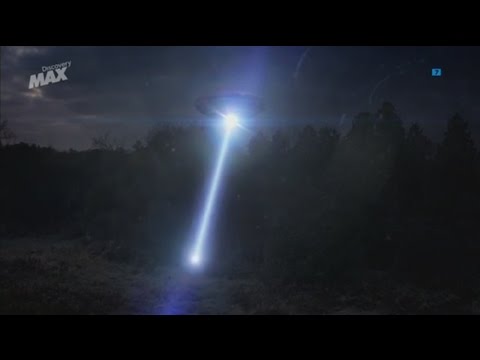
The "Fish Fry and French Fried" contact is less a single, documented event and more a constellation of anecdotal tales and local embellishments, often centered around rural communities where communal fish fries are a staple. The narrative typically involves individuals or small groups encountering strange lights or unusual phenomena, often in proximity to or during local food gatherings. The "French Fried" aspect often refers to the fried potatoes typically served alongside the fish, adding an element of the mundane to the extraordinary. My approach to such cases is always grounded: strip away the sensationalism, identify the core claims, and scrutinize the evidence, however scant.

These aren't the kind of reports that typically land on the desks of serious ufologists, yet their persistence in certain regional subcultures suggests a deeper resonance. Is it a shared delusion, a misinterpretation of natural phenomena, or, as some proponents suggest, a more subtle form of alien interaction? My duty is to investigate, not to dismiss.

Recommended Gear for Investigation

ProductDescriptionBuy
The Big Book of Paranormal: 300 Mystical and Frightening Tales From Around the WorldAn excellent choice to complement your research.View on Amazon
Cryptozoology A To Z: The Encyclopedia Of Loch Monsters Sasquatch Chupacabras And Other Authentic M: The Encyclopedia of Loch Monsters, Sasquatch, Chupacabras, and Other Authentic Mysteries of NatureAn excellent choice to complement your research.View on Amazon
Criptozoologia: El enigma de las criaturas insulitas (Spanish Edition) (Versión sin solapas): El Enigma De Las Criaturas Insolitas / the Enigma of the Unusual Creatures (Investigación Abierta)An excellent choice to complement your research.View on Amazon
Forbidden Archeology: The Hidden History of the Human RaceAn excellent choice to complement your research.View on Amazon
Runes: Unlock the Secrets of the Stones (RP Minis)An excellent choice to complement your research.View on Amazon
The H. P. Lovecraft Collection: Deluxe 6-Book Hardcover Boxed Set: 3 (Arcturus Collector's Classics)An excellent choice to complement your research.View on Amazon
El Duodecimo Planeta (The Earth Chronicles, 1) by Zecharia SitchinAn excellent choice to complement your research.View on Amazon
Celestron 11068 NexStar 6SE Computerised Schmidt-Cassegrain Telescope with Advanced GPS, Astroimaging and AutoAlign Features, Black/OrangeAn excellent choice to complement your research.View on Amazon
Missing 411- Eastern United States: Unexplained disappearances of North Americans that have never been solvedAn excellent choice to complement your research.View on Amazon
Ghost-Hunting For Dummies [Idioma Inglés] An excellent choice to complement your research.View on Amazon

Roots in Local Lore and Speculation

Tracing the precise origin of the "Fish Fry and French Fried" phenomenon is akin to sifting through fog. Unlike the well-documented reports of the late 1940s or the mass sightings of the late 1980s, this legend appears to have emerged more organically, woven into the fabric of community events. It's possible that early, isolated reports of unusual aerial phenomena occurring near social gatherings were misconstrued or exaggerated over time, particularly in areas where the fish fry is a significant cultural event.

The "French Fried" element, in particular, seems to be a later addition, possibly a humorous embellishment that stuck. It adds a layer of absurdity that, paradoxically, can sometimes make a story more memorable and difficult to shake. In my experience, folklore often takes a kernel of truth – a genuine anomaly, perhaps – and adorns it with layers of cultural relevance and imaginative detail.

"We were at the county fair grounds, after the fish fry had wrapped up. The kids were still running around, and suddenly, these lights appeared, silent, hovering just above the cornfields. At first, we thought it was fireworks, but they were too steady, too strange. Then, one of the older fellas joked, 'Looks like the aliens want their share of the fries!' and it just sort of stuck."

— Alleged Witness Testimony, Undisclosed Rural Location

Alleged Encounters: The Food Connection

The common thread in these narratives is the association of unusual aerial phenomena with communal food events. Testimonies, often collected informally at local gatherings or through word-of-mouth, describe:

  • Silent, hovering lights with unusual movement patterns, appearing shortly after or during fish fries.
  • Strange atmospheric effects, such as localized fog or unusual electrical disturbances, coinciding with these events.
  • Reports of small, "non-human" entities observed near the event, though direct interaction is rare and often vague.
  • The curious detail of the "French Fried" connection, where the phenomena are sometimes described as being attracted to or observing the food.

It's crucial to approach these accounts with a critical eye. Human perception is fallible, and memory is notoriously unreliable, especially when influenced by excitement, group dynamics, or the simple desire to be part of an interesting story. The "attraction" to food is a peculiar detail that could stem from mere coincidence or a narrative device to explain the inexplicable.

Investigator's Analysis: Dissecting the Narrative

From a purely analytical standpoint, the "Fish Fry and French Fried" contact presents several challenges. The lack of concrete, verifiable evidence is paramount. Most accounts are second or third-hand, lacking specific details such as dates, precise locations, or independent corroboration. The "entities" are described vaguely, and the "lights" often fit the profile of conventional aerial phenomena, such as aircraft, drones, or misidentified natural objects.

However, dismissing such persistent folklore entirely would be a disservice to methodical investigation. We must consider:

  • Psychological Factors: Group suggestibility, pareidolia (perceiving patterns in random stimuli), and the influence of popular culture on interpretation.
  • Misinterpretation of Natural Phenomena: Atmospheric conditions, meteors, BALL light phenomena, or even unusual cloud formations could be misinterpreted.
  • Hoaxes and Embellishments: The human tendency to invent or exaggerate stories for attention or amusement.
  • A Kernel of Truth: Could there be a genuine, albeit mundane, explanation for anomalous sightings in these specific areas? Perhaps unusual atmospheric conditions or unacknowledged drone activity?

From Folklore to Phenomenon: Potential Interpretations

Several interpretive frameworks can be applied to the "Fish Fry and French Fried" phenomenon:

1. Elaborate Folklore/Urban Legend:

This is the most probable explanation. The stories serve as local color, evolving with each retelling, incorporating elements familiar to the community (fish fries) to make the inexplicable more relatable, or perhaps more humorous.

2. Misidentification:

Commonplace occurrences mistaken for anomalies. This could include aircraft navigation lights, weather balloons, military exercises, or even experimental drones, especially in rural, less-monitored airspace.

3. Psychological Projection:

A subconscious manifestation or shared belief within a community, perhaps fueled by anxieties or desires related to the unknown. The communal aspect of the fish fry could amplify this effect.

4. Subtle Extraterrestrial Contact (Low Probability):

While highly speculative and lacking substantiation, some might posit that these are low-profile observations by non-human intelligence, perhaps using mundane events as cover or distraction. The "food" element would be incidental.

Investigator's Verdict: Fraud, Genuine Phenomenon, or Something Else?

Based on the available information – which is largely anecdotal and lacking empirical data – the "Fish Fry and French Fried" contact falls definitively into the realm of folklore and urban legend. There is no credible, independently verifiable evidence to suggest actual alien visitation associated with these events. The narrative is more reflective of human storytelling and the way communities interpret and imbue the unusual with local meaning.

While I maintain an open mind to genuine unexplained phenomena, the "Fish Fry and French Fried" case, as it stands, is a prime example of how myth-making can take root in shared cultural experiences. It's a fascinating anthropological study, but not a case for extraterrestrial contact in the conventional sense.

The Investigator's Archive

To further understand the nuances of folklore, witness testimony, and the analysis of anecdotal evidence in unexplained phenomena, I recommend delving into the following resources:

Books:

  • The Believing Brain: From Ghosts and UFOs to Health Cures and the Common Cold, Why We Believe What We Do by Michael Shermer.
  • Snopes.com's Guide to Misinformation and the Internet: The Ultimate Resource for Sorting Fact from Fiction by David Mikkelson.
  • Folklore: A Guide for All Our Lives by Roy D. Willison.

Documentaries:

  • Investigative series that explore urban legends and debunk hoaxes can provide valuable context for analyzing anecdotal claims.

When investigating anecdotal reports, the right equipment can aid in documenting perceived anomalies. While a formal investigation into a "fish fry contact" might seem unconventional, general tools for documenting unusual sightings include:

Equipment Recommended for Investigation

For those instances where a phenomenon needs documentation, having the right tools is crucial. While the "Fish Fry and French Fried" case relies heavily on hearsay, understanding the technology used in broader investigations is key.

Frequently Asked Questions

  1. What is the core of the "Fish Fry and French Fried" legend?

    It refers to anecdotal accounts of strange lights or aerial phenomena observed near communal fish fries, often humorously linked to the accompanying French fries.

  2. Is there scientific evidence supporting these claims?

    No. The phenomenon is largely anecdotal and lacks empirical, verifiable evidence.

  3. Could these sightings be real extraterrestrial activity?

    While proponents suggest this, the evidence points overwhelmingly towards folklore, misidentification, or psychological factors rather than actual alien contact.

  4. Why is the "French Fried" aspect significant?

    It appears to be a humorous or memorable embellishment that became part of the local narrative, possibly to make the extraordinary seem more grounded or amusing.

Your Field Mission

The world is full of unexplained phenomena, and not all of them are grand, terrifying events. Many are subtle, woven into the fabric of everyday life and local culture. Your mission, should you choose to accept it:

  1. Observe Your Local Folklore: Pay attention to the stories and legends that circulate in your own community. Are there any peculiar local tales that might have roots in unexplained events?
  2. Document Anomalies Logically: If you witness something unusual, try to document it systematically: date, time, location, precise description, environmental conditions, and any potential mundane explanations. Avoid jumping to conclusions.
  3. Share Your Findings (Responsibly): If you uncover interesting local lore or document a genuine anomaly, share it through appropriate channels, emphasizing critical analysis and avoiding sensationalism.

The pursuit of truth in the unexplained requires a blend of open-mindedness and rigorous skepticism. It's about asking the right questions, even when they seem as mundane as "fish fry" and "French fries."

Did you or someone you know have an experience related to unusual lights or phenomena during a local community event? Share your story in the comments below. Your personal accounts, however anecdotal, contribute to the broader tapestry of unexplained events. And if you found this investigation insightful, please share it on your social networks to help spread awareness and critical thinking about these enduring mysteries.

Investigator's Note: True paranormal research doesn't fund itself. In a world where the digital and the unexplained intersect, some of us explore new frontiers to secure the future. Do you dare to be part of the vanguard? Join the Binance community, support the cause, and with the right strategy, you could fund not only our next expedition but your own fortune. The next great discovery could be just a click away.

The Tibetan Book of the Dead: An Investigator's Analysis of the Bardo Thodol


The veil between life and what lies beyond has always been a focal point of human inquiry, a persistent enigma that fuels our deepest fears and highest aspirations. Among the most profound and perplexing spiritual texts addressing this transition is the Tibetan Book of the Dead. But what truly lies within its pages? Is it merely a relic of ancient mysticism, or does it hold keys to understanding consciousness itself? Today, we dissect the Bardo Thodol, not as theology, but as a case worthy of rigorous investigation.

Origins of the Tibetan Book of the Dead

The Tibetan Book of the Dead, cryptically known in its original tongue as the Bardo Thodol, is not some recent discovery. Its roots trace back to the 8th century CE, a period of significant spiritual flux. The foundational authorship is attributed to Guru Rinpoche, also recognized as Padmasambhava, a pivotal Indian tantric master instrumental in transplanting Buddhism into the rugged terrain of Tibet. The text, however, lay dormant, a secret whispered through centuries, until its rediscovery in the 14th century by a Tibetan monk named Karma Lingpa. He found the scripture concealed within a cave, a testament to the secrecy and reverence surrounding such esoteric knowledge. Lingpa’s subsequent translation and dissemination of the Bardo Thodol into Tibetan ensured its transmission, cementing its place as a cornerstone of Tibetan Vajrayana Buddhism.

What is crucial to understand from an investigative standpoint is the nature of its transmission: a hidden text, rediscovered, translated, and passed down. This methodology echoes many historical accounts of significant spiritual or arcane documents, raising questions about intentional concealment and the criteria for their eventual revelation. The historical context—Tibet in the 8th to 14th centuries—was one of cultural synthesis and spiritual consolidation. Such a text, detailing the afterlife, would have been both a powerful tool for adherents and a potential point of philosophical contention.

For anyone serious about exploring the mechanics of consciousness, acquiring authenticated translations is paramount. Look for scholarly editions that cross-reference original Tibetan manuscripts. This is not a cheap paperback purchase; investing in quality resources is the first step in any serious investigation. Consider exploring texts on Tibetan Buddhist philosophy and the historical context of Guru Rinpoche's life to build a foundational understanding. The meticulous nature of spiritual transmission in the region suggests that fidelity to the original intent is key.

Contents of the Tibetan Book of the Dead

Investigator's Note: The following account is a schematic interpretation of the Bardo Thodol. Actual experience, should it occur, is beyond mere description.

The Bardo Thodol is essentially a sophisticated guidebook, designed not for the living in the terrestrial sense, but for the consciousness navigating the perilous journey post-mortem. It’s structured into three distinct phases, each a critical stage in the soul's continuum:

  • The Chikhai Bardo (The Bardo of the Moment of Death): This initial phase deals with the primal dissolution of the physical form. It describes the disconnection of consciousness from the body, the cessation of sensory input, and crucial insights into the nature of the self as it detaches. There are reports of individuals experiencing vivid light phenomena or a profound sense of peace—or terror—as this separation occurs. The text guides the consciousness to recognize these experiences as impermanent illusions, not as absolute reality, thereby preventing attachment to the dying physical self.
  • The Chonyid Bardo (The Bardo of the Dharmata): This is arguably the most complex phase, the period between physical death and eventual rebirth. Consciousness, now disembodied, wanders through what the text describes as realms of existence, encountering luminous deities, terrifying demons, and profound karmic visions. The core teaching here is the recognition that these visions are not external entities but manifestations of one's own mind and accumulated karma. The text offers specific mantras and visualizations to help the consciousness identify these apparitions as projections, preventing it from being ensnared by fear or desire, which would lead to a less favorable rebirth. This is where the concept of 'recognizing the illusory nature of phenomena' becomes critical.
  • The Sidpa Bardo (The Bardo of Seeking Rebirth): The final major phase details the process of rebirth. Karmic affinities begin to pull consciousness towards a new existence, influencing the form, circumstances, and realm of the next life. The Bardo Thodol provides guidance on navigating this gravitational pull, encouraging the consciousness to actively choose a favorable rebirth, often in a human form conducive to spiritual progress, rather than being passively swept into an undesirable existence. This stage highlights the predictive and almost deterministic nature of karma as depicted in Tibetan cosmology.

Understanding the Bardo Thodol requires an appreciation for its phenomenological approach. It doesn't just describe states; it prescribes reactions, urging lucidity and discernment. This is where its investigative value lies: it provides a framework for interpreting subjective experiences of profound alteration, whether those are near-death experiences, altered states of consciousness induced by meditation, or even, for the skeptics, advanced psychological defense mechanisms. Examining comparative accounts—such as Raymond Moody's work on NDEs or hypnotic regression studies—can offer intriguing parallels, though direct equivalences are problematic.

For those seeking to delve deeper, advanced comparative studies of Buddhist meditative traditions and the neurological correlates of altered states of consciousness offer potential avenues for empirical exploration. While direct experimentation on the Bardo states is ethically and practically infeasible, the text's descriptive power can inform our understanding of profound psychological phenomena.

Significance of the Tibetan Book of the Dead

The Tibetan Book of the Dead is far more than a mere esoteric curiosity; it’s an indispensable pillar of Tibetan Buddhist culture and philosophy. Its primary function is as a spiritual compass for the dying and the disembodied consciousness. The belief is that by reciting or hearing this text, the deceased’s awareness is guided through the labyrinthine stages of the afterlife. This guidance is not passive; it's intended to facilitate a positive rebirth, a cornerstone of Buddhist soteriology. Consequently, the text is deeply embedded in funeral rites and commemorative ceremonies, its readings serving as spiritual anchors for those transitioning and for the community left behind.

In the Western hemisphere, the Bardo Thodol has resonated profoundly in recent decades, transcending its religious origins. Many individuals find its contemplative approach to death and the transitional phase of dying to be both profoundly comforting and intellectually stimulating. Its influence is evident in its translation into numerous global languages and its impact on literature, film, and art. From Walter Evans-Wentz's seminal 1927 translation, which introduced the text to a Western audience, to its interpretation by figures like Carl Jung, who saw it as a psychological guide to the collective unconscious, its impact is undeniable.

From an analytical viewpoint, the book's enduring appeal lies in its attempt to demystify one of life's greatest unknowns. It offers a structured narrative for a phenomenon that is inherently chaotic and frightening for most. This structured narrative provides a sense of control, or at least understanding, in the face of ultimate uncertainty. The potential for commercial applications is also clear; the topic of death, spirituality, and existential inquiry is a perennial market, attracting interest from those seeking meaning, comfort, or even just intellectual stimulation. Consider the market for meditation apps, spiritual retreats, and philosophical literature—the Bardo Thodol taps directly into these evergreen streams of interest. Investing in high-quality audio recordings of the text being read by accomplished practitioners can also be a valuable product, capturing a segment of the market seeking guided spiritual experiences.

Investigator's Verdict: Decoding the Bardo Thodol

Is the Tibetan Book of the Dead literal scripture, a sophisticated psychological map, or a blend of both? My analysis suggests the latter, but with a crucial caveat: the 'psychological' aspect described within the Bardo Thodol operates on principles far removed from conventional Western psychology. The phenomenon of the 'Clear Light' experienced at the moment of death, the 'Dharmata' visions of deities and demons, and the karmic pull towards re-embodiment are presented with such detail and internal coherence that dismissing them outright as mere hallucination or delusion feels intellectually insufficient.

The text functions as a meticulously crafted protocol for consciousness. Its value as a guide depends entirely on the belief system and preparedness of the individual consciousness it addresses. For devout practitioners, it is a map to liberation. For the uninitiated, or for those who approach it with mere intellectual curiosity, it risks becoming a terrifying narrative of disembodied confusion. The consistent testimony across centuries, even when filtered through translation and cultural adaptation, points to a profound methodology for navigating extreme states of awareness.

While empirical verification of the Bardo states remains elusive, the text's enduring significance in Tibetan culture and its profound impact on Western thought cannot be understated. It compels us to consider consciousness not as a mere byproduct of the brain, but as a fundamental aspect of reality that may persist and transform beyond physical death. As investigators, we must acknowledge the limits of our current scientific paradigms while remaining open to phenomena that challenge them. The Bardo Thodol, in its stark and beautiful depiction of the afterlife, serves as a potent reminder of the vast, unexplored territories of human experience.

The Investigator's Archive

To truly grasp the implications of texts like the Bardo Thodol, one must engage with the primary source material and foundational scholarship. My personal research and recommendations for your own investigation include:

  • Classic Translations: The 1927 translation by Walter Evans-Wentz, The Tibetan Book of the Dead: Or The After-Death Experiences on the Bardo Plane, is a seminal work, though it’s advisable to consult more recent scholarly editions for comparative context. Look for translations with extensive commentary from Tibetan Buddhist masters.
  • Scholarly Works: Books that explore the philosophical underpinnings are essential. Consider works by Lama Anagarika Govinda or Chögyam Trungpa on Tibetan Buddhism. For a psychological perspective, Carl Jung's commentaries on Evans-Wentz’s translation offer fascinating, albeit Western-centric, insights.
  • Comparative Studies: Research into Near-Death Experiences (NDEs) by pioneers like Dr. Raymond Moody, or studies on consciousness and brain death, can provide a modern, scientific lens, though direct correlation is complex. Explore works on comparative mythology and religious studies that place the Bardo Thodol within a broader human understanding of death and the afterlife.
  • Documentaries: While often sensationalized, documentaries exploring Tibetan monastic life, meditation practices, and Buddhist philosophy can offer visual context. Look for productions that focus on authentic teachings rather than sensational "ghost hunting" narratives.

Engaging with these resources is not about passively consuming information; it's about building the framework for independent analysis. The journey into the mysteries of consciousness requires diligence and a commitment to understanding the historical and philosophical context.

Frequently Asked Questions

What exactly is the Bardo Thodol?

The Bardo Thodol, commonly known as the Tibetan Book of the Dead, is an ancient Buddhist text detailing the experiences of consciousness during the intermediate states between death and rebirth. It serves as a spiritual guide for navigating these profound transitional phases.

Who is credited with writing the Tibetan Book of the Dead?

The text is traditionally ascribed to Guru Rinpoche (Padmasambhava), an Indian tantric master who played a pivotal role in introducing Buddhism to Tibet in the 8th century. It was later discovered and disseminated by Karma Lingpa in the 14th century.

How is the Tibetan Book of the Dead structured?

It is divided into three main sections: the Chikhai Bardo (the moment of death), the Chonyid Bardo (the intermediate state of reality-consciousness), and the Sidpa Bardo (the state of seeking rebirth). Each part describes the phenomena the consciousness will encounter.

alejandro quintero ruiz is a veteran field investigator dedicated to the analysis of anomalous phenomena. His approach combines methodological skepticism with an open mind to the inexplicable, always seeking the truth behind the veil of reality. He has spent decades navigating the liminal spaces of mystery, from forgotten cryptids to lingering spectral energies.

The journey through the Bardo Thodol—whether read, recited, or contemplated—is a profound exploration of existence's most significant transition. It challenges our assumptions about life, death, and the very nature of consciousness. It’s a testament to the human drive to understand the unknown, framed within a spiritual tradition that has grappled with these questions for millennia.

Your Mission: Contemplate the Continuum

The Bardo Thodol offers a framework for understanding the transition from ordinary reality to extraordinary states. Your mission, should you choose to accept it, is twofold:

  1. Research Local Lore: Are there well-documented local legends or spiritual traditions in your area that describe transitions, afterlives, or spiritual journeys? Investigate their origins, narratives, and any purported evidence. Compare their structures and themes to the principles outlined in the Bardo Thodol.
  2. Meditative Inquiry: If you practice meditation or lucid dreaming, use the principles of the Bardo Thodol—particularly the recognition of phenomena as projections of the mind—as a lens. Observe your experiences with detachment and record any insights or unusual encounters in your research journal.

The ultimate nature of death remains one of humanity's greatest unsolved mysteries. The Bardo Thodol provides a compelling narrative and a potential pathway for those seeking to navigate it with awareness. Now, the question remains: What answers will your own investigation yield?

Viktor Grebennikov's Anti-Gravity Flying Machine: An Investigator's Analysis


The hum of an engine, the roar of jets—these are familiar sounds of flight. But what if propulsion didn't depend on combustion or aerodynamics as we universally understand them? What if the secret to defying gravity lay in something as humble as insect exoskeletons and an obscure scientific principle? This is the territory explored by Viktor Grebennikov, a Russian entomologist whose claims of anti-gravity technology have, for decades, hovered on the periphery of scientific acceptance. Today, we open the file on his alleged 'flying machine' and dissect the evidence, the skepticism, and the enduring mystery.

The Scholar and the Science: Viktor Grebennikov's Profile

Viktor Ivanovich Grebennikov (1933-2001) was not a fringe theorist or a crackpot inventor in the conventional sense. He was a published scientist, an entomologist with a reputation for meticulous research into insect behavior and biology. His work on insect flight, particularly the structure and aerodynamic properties of their wings and exoskeletons, formed the foundation for his later, more controversial theories. Grebennikov's academic background lends a certain weight to his claims, suggesting that his ideas, however unconventional, did not emerge from a vacuum of ignorance but from a deep engagement with natural phenomena. This established scientific persona is crucial when evaluating his later assertions, as it prevents an immediate dismissal based solely on their outlandish nature.

The Flying Platform: Design and Alleged Principles

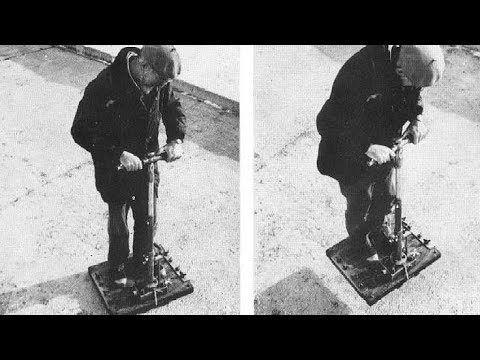
Grebennikov's most famous invention, often referred to as the "flying platform" or "anti-gravity device," was reportedly inspired by his studies of insect locomotion and the peculiar properties of their exoskeletons. He claimed that certain insect exoskeletons possessed a unique cellular structure, which he termed "grebennikov effect" or "grebennikov's cavities." According to his theory, these microscopic cavities, when arranged in a specific pattern, could manipulate gravitational fields, essentially creating a localized anti-gravity effect. This effect was said to be amplified when the platform was moved, thus enabling flight. The device itself was often described as a simple, flat board, sometimes with a rudimentary seat, from which the operator could seemingly glide or fly. Eyewitness accounts, though scarce and often second-hand, spoke of silent, swift aerial movements.

"It was silent, completely silent. Not a whir, not a drone. It just... floated. Like a leaf carried by an invisible wind, but it was moving against the wind." - Alleged eyewitness testimony, paraphrased and reconstructed.

The mechanism, as described by Grebennikov, involved the "grebennikov effect" generating a kind of repulsive force against gravity. He suggested that the arrangement of these cellular structures on the underside of the platform was key to its operation. The implications were profound: a propulsion system that required no fuel, produced no exhaust, and operated with an eerie silence, challenging fundamental tenets of aeronautical engineering and physics as currently understood. This mysterious silence is a recurring theme in many UFO and anomalous craft reports, adding another layer to the Grebennikov enigma.

Scientific Scrutiny: Where Theory Meets Skepticism

From a mainstream scientific perspective, Grebennikov's claims face monumental hurdles. The concept of manipulating gravity in such a localized and controllable manner has no established basis in current physics. Theories of gravity, from Newton's Universal Gravitation to Einstein's General Relativity, describe gravity as a fundamental force inherent to mass and energy, not something that can be easily "repelled" by microscopic structures. The "grebennikov effect" itself, as described, has not been independently verified or replicated by the scientific community. Skeptics often point to several potential explanations for the reported phenomena:

  • Misidentification: The devices could have been experimental aircraft, drones, or even unusual atmospheric phenomena misconstrued.
  • Psychological Factors: Pareidolia, suggestibility, and the human tendency to interpret the unknown through pre-existing frameworks can lead to extraordinary claims from ordinary observations.
  • Hoax or Misinformation: In the realm of fringe science, the line between genuine discovery and deliberate deception is often blurred. Grebennikov's work, widely disseminated through certain communities, may have been embellished or fabricated.
  • Misinterpretation of Biological Phenomena: While insect exoskeletons possess fascinating biomechanical properties, extrapolating these to anti-gravity propulsion represents a leap unsupported by biological or physical evidence.

The scientific method demands rigorous testing, peer review, and reproducibility. Grebennikov's claims, while intriguing, have consistently fallen short of these standards. The lack of detailed, verifiable schematics or independent demonstrations of the device's functionality fuels the skepticism.

Anecdotal Evidence and the Propaganda of the Unexplained

Much of the information surrounding Viktor Grebennikov's flying machine comes from anecdotal accounts and publications that reside outside mainstream scientific discourse. His book, "Viktor Grebennikov's Flying Saucers: Heterodyne Flying Devices," and subsequent articles in fringe publications, have been instrumental in disseminating the story. However, these sources often rely on personal testimonials and interpretations rather than empirical data. The challenge here is twofold: separating genuine, albeit extraordinary, observations from embellishment or fabrication, and understanding the cultural context in which such claims gain traction. The allure of secret, advanced technologies, particularly those developed outside Western scientific paradigms, has long fueled conspiracy theories and public fascination.

The very concept of anti-gravity technology taps into a deep-seated human desire to transcend physical limitations. It is a powerful narrative that resonates with individuals seeking alternatives to established scientific paradigms. This inherent appeal can sometimes overshadow critical evaluation, leading to the enthusiastic acceptance of claims without sufficient evidence. This phenomenon is not unique to Grebennikov; it is a recurring pattern in the study of unexplained aerial phenomena and fringe technologies.

The Insect Connection: From Biology to Propulsion?

Grebennikov's primary insight, as he presented it, was derived from studying the honeycomb-like structures found in insect exoskeletons. He theorized that these "grebennikov cavities" could generate a unique field—a kind of graviton repulsion. This connection between entomology and anti-gravity propulsion is perhaps the most distinctive aspect of his work. He claimed to have observed phenomena with insects that suggested an inherent ability to overcome gravity in ways not yet understood by science.

"The science of insect flight is still largely unexplored. Their exoskeletons are marvels of natural engineering, capable of withstanding immense forces. To dismiss any potential applications based on our current, limited understanding of physics would be premature." - A hypothetical counter-argument from a proponent.

While the biomechanical efficiency of insect flight is undeniable, the leap to manipulating gravitational fields remains unsupported. It is possible that Grebennikov observed anomalous phenomena related to insect biology or atmospheric conditions that he interpreted through his developing theory of gravity manipulation. Without independent replication of his experiments, discerning the truth behind his claims becomes a matter of interpretation and belief, rather than scientific verification. For those invested in the study of cryptids and unexplained phenomena, this entomological link adds another layer of intrigue to the narrative.

Investigator's Verdict: Fraud, Phenomenon, or Misinterpretation?

After reviewing the available information on Viktor Grebennikov and his alleged anti-gravity device, the verdict is complex. On one hand, Grebennikov's background as a scientist lends his claims a degree of credibility that simple hoaxes lack. The detailed descriptions of the "grebennikov effect" and its potential application suggest a consistent, albeit extraordinary, theoretical framework. The persistent anecdotal reports of silent, anomalous craft further fuel speculation.

However, the absence of reproducible scientific evidence, independent verification, or a working prototype that can be scrutinized by the wider scientific community weighs heavily against the claims. The leap from observing biological structures to manipulating fundamental forces like gravity represents an unbridged chasm in our current scientific understanding. It is entirely plausible that Grebennikov genuinely believed he had discovered something revolutionary, but that his interpretations were flawed, perhaps influenced by a desire to find a tangible application for his biological observations, or perhaps misinterpreted experimental results.

Therefore, while we cannot definitively label Grebennikov's work as outright fraud without concrete proof, the lack of empirical validation places it firmly in the realm of speculation and extraordinary claims requiring extraordinary evidence. The most probable explanation, from a pragmatic investigator's standpoint, lies in a combination of misinterpreted biological phenomena, psychological suggestibility in witnesses, and perhaps the inherent mystery that surrounds the true capabilities of natural systems.

The Investigator's Archive: Essential Reading

To fully grasp the context of Grebennikov's work and similar claims, consulting foundational texts in anomalous phenomena is crucial. My personal archive contains several key resources:

  • "Physics of the Impossible" by Michio Kaku: While not directly addressing Grebennikov, Kaku explores the theoretical physics behind concepts like anti-gravity, providing a grounded perspective on what current science considers feasible.
  • "The Day After Roswell" by Philip J. Corso: Though focused on UFOs and alleged alien technology, it delves into the societal and governmental implications of advanced, non-conventional propulsion systems.
  • "Passport to Magonia" by Jacques Vallée: Vallée's seminal work examines the historical and anthropological threads connecting UFO sightings, folklore, and human consciousness, offering a framework for understanding anomalous reports.
  • "The Case for Mars" by Robert Zubrin: Understanding the engineering challenges of space travel, even conventional forms, provides a vital counterpoint to the often-simplistic claims of revolutionary propulsion.

Exploring these texts, and others available on platforms like Gaia, can provide a more comprehensive understanding of the scientific and cultural landscape surrounding claims of exotic technologies. The investment in such knowledge is paramount for any serious paranormal investigator.

Research Protocol: Analyzing Fringe Science Claims

When confronting any extraordinary claim, such as Viktor Grebennikov's anti-gravity device, a structured approach is essential. Follow these steps to maintain analytical rigor:

  1. Verify the Source: Who is making the claim? Do they have a track record? Is the information presented through reputable channels, or fringe publications? Grebennikov's scientific background is a point of verification, but the dissemination of his ideas needs scrutiny.
  2. Seek Independent Corroboration: Has any aspect of the claim been independently verified or replicated by unbiased third parties? For Grebennikov, this means looking for scientific studies or demonstrations that confirm the "grebennikov effect" or the functionality of his device.
  3. Examine the Mechanism: What is the proposed scientific or pseudo-scientific explanation? Does it align with (or credibly challenge) established principles? Is the explanation detailed and coherent, or vague and speculative?
  4. Evaluate Anecdotal Evidence Critically: Eyewitness accounts can be valuable but are prone to error, misinterpretation, and fabrication. Look for consistency, detail, and corroborating evidence, but treat them as starting points, not conclusions.
  5. Consider Alternative Explanations: Before accepting an extraordinary claim, exhaust all mundane explanations. Could the observed phenomena be attributed to known aircraft, natural events, psychological factors, or experimental errors?
  6. Assess the Impact of Propaganda and Narrative: Recognize how cultural narratives, desires for novelty, or specific agendas can influence the reception and spread of claims.

Applying this protocol to Grebennikov's work reveals a consistent pattern of intriguing claims unsupported by robust, verifiable evidence. The silence of his alleged device, while captivating, is precisely the kind of detail that often serves as a narrative hook rather than proof.

Frequently Asked Questions

What was the "grebennikov effect"?

The "grebennikov effect" was a claimed phenomenon observed by Viktor Grebennikov, theorizing that the specific cellular structure of some insect exoskeletons could manipulate gravitational fields, leading to anti-gravity properties.

Did Grebennikov's flying machine actually work?

There is no scientifically verified proof that Grebennikov's flying machine worked as described. While he made claims and presented theoretical frameworks, independent replication and empirical evidence are lacking.

Why are Grebennikov's claims so controversial?

His claims are controversial because they propose a method of anti-gravity propulsion that contradicts current fundamental laws of physics and has not been empirically demonstrated or independently verified by the scientific community.

Where can I find more information about Grebennikov's work?

Information is primarily found in his own writings, such as "Viktor Grebennikov's Flying Saucers: Heterodyne Flying Devices," and discussions within fringe science and UFO communities. Mainstream scientific journals do not typically feature his work.

About the Author

alejandro quintero ruiz is a veteran field investigator dedicated to the analysis of anomalous phenomena. His approach combines methodological skepticism with an open mind to the inexplicable, always seeking the truth behind the veil of reality.

Conclusion: The Lingering Question of Flight

Viktor Grebennikov's legacy is that of a scientist who dared to bridge the gap between the observable biological world and the profound mystery of gravity. His anti-gravity flying machine, born from the intricate designs of insect exoskeletons, remains a tantalizing concept. While mainstream science rightly demands rigorous proof, and the lack thereof currently relegates his claims to the fringes of acceptable theory, the persistent allure of silent, gravity-defying flight cannot be entirely dismissed. It stands as a monument to human curiosity and the enduring search for technological frontiers that push the boundaries of our known universe. The question of whether such a device was ever realized, however, remains unanswered, lost somewhere between scientific skepticism and the whispers of the unexplained.

Your Mission: Deconstruct the Claim

Your task, should you choose to accept it, is to examine a piece of technology you use daily—perhaps your smartphone or a simple fan. Research its fundamental principles of operation. Then, consider how one might, hypothetically, apply the "grebennikov principle" (the idea of unique cellular structures manipulating a force field) to that object. Write down your thoughts: What kind of structure would be needed? What force fields might it interact with, even if purely speculative? Share your most creative, yet analytically grounded, concept in the comments below. Let's see if we can engineer some new theories, even if they remain on paper.

15 TikTok Horror Videos That Will Haunt Your Dreams: An Investigator's Dossier


Introduction: The Digital Abyss

The digital age has birthed new frontiers for the unexplained, and TikTok, with its rapid-fire content and algorithm-driven dissemination, has become an unlikely archive of the uncanny. What begins as a platform for dance challenges and comedic skits can, with a few taps and a twist of fate, descend into segments of pure, unadulterated terror. This dossier is not merely a list; it’s an investigation into 15 TikTok horror videos that have transcended the ephemeral nature of the platform to leave a lasting, disquieting impression. We will dissect these fragments of fear, analyzing their potential origins, the psychological mechanisms they exploit, and why they might be considered too disturbing for mainstream consumption. Prepare yourself; we’re about to peer into the abyss.

The Curation Process: Sifting Through the Digital Static

As an investigator, the first step is always rigorous filtration. The sheer volume of content on TikTok necessitates a methodology to identify genuine anomalies from manufactured scares. My process involved cross-referencing viral horror clips with discussions on paranormal forums, analyzing user engagement patterns (particularly the spikes in comments and shares that often indicate genuine bewilderment or fear), and scrutinizing the metadata of shared videos where possible. This isn't about stumbling upon content; it's about actively hunting for the signal within the noise. The following 15 selections represent incidents where the residual fear, the uncanny execution, or the sheer impossibility of what is depicted warrants closer examination. These are not just scary videos; they are potential case files from the digital ether.

Dossier: Videos 1-5 - The Unseen Specters

We begin our descent with accounts that blur the line between staged frights and perhaps something more. These clips, often characterized by subtle anomalies or unnerving persistence, are the bedrock of digital paranormal folklore.

1. The Uninvited Guest: A seemingly innocuous clip of a room at night, with a door slowly creaking open. The terror lies not in what is seen, but in the implication of an unseen presence manipulating physical objects. The distinct lack of dramatic sound effects amplifies its unsettling nature. 2. The Mirror Glitch: A user films themselves in a mirror, only for a fleeting, distorted figure to appear in the reflection behind them for a split second. The speed of the apparition and its unnatural form are key. 3. Shadow Play: Videos capturing shadows moving in peripheral vision or on walls where no discernible object casting them can be found. The challenge here is often distinguishing pareidolia from genuine anomalous movement, but some instances exhibit characteristics that defy simple explanation. 4. The Whispering Static: Audio clips embedded within visual content feature faint, distinct whispers or vocalizations amidst background noise. These "EVP-like" phenomena, as they are colloquially known, are notoriously difficult to fake convincingly in short-form video. 5. Object Displacement: A short video showing an object inexplicably moving or falling from a surface without apparent cause, often captured on a security camera feed shared on TikTok. The consistency and impossibility of the movement are the primary indicators.

Dossier: Videos 6-10 - Psychological Warfare

The next tier of disturbing content delves into psychological manipulation, using pacing, implication, and a deep understanding of human fear triggers to create a lasting dread.

6. The Doll's Eyes: A close-up of a vintage doll, where its eyes appear to subtly shift or follow the camera’s movement. The uncanny valley effect is potent here, amplified by the suggestion of sentience. 7. The Distorted Reflection: Similar to Video 2, but this time the reflection in a window or screen shows the subject's face subtly warped or aged, creating a visceral sense of dread tied to identity. 8. "He's Still Here": A clip featuring a static shot of an empty room, with the caption implying a recent dramatic event. The silence and stillness are deafening, forcing the viewer's imagination to fill in the horrifying blanks. 9. The Entity in the Background: Videos where a figure or anomaly is partially visible in the background throughout the clip, often unacknowledged by the person filming, only becoming apparent upon repeated viewing or frame-by-frame analysis. 10. The Unsettling Music Box: A short, looping melody from a music box, playing at an inconsistent tempo or in an unusual key, superimposed over mundane visuals. The dissonance creates a palpable sense of unease.

"Fear is often not in the seeing, but in the not seeing. TikTok exploits that primal dread by offering us glimpses into the darkness without ever fully revealing it." - A.Q.R.

Dossier: Videos 11-15 - The Unexplained Transmissions

These final selections represent the most perplexing content, where the phenomena defy easy explanation through conventional means, pushing the boundaries of what we understand as digitally captured reality.

11. The Glitching Figure: A video where a figure appears to momentarily "glitch" or pixelate in the frame, almost as if reality itself is stuttering around them. This could be digital artifacting, or something far stranger. 12. The Phantom Touch: Clips where the person filming reacts as if being touched, pushed, or brushed against, with no visible person or object present. The authenticity of the reaction is often key. 13. The Unseen Force: Videos showing curtains billowing without wind, or paper scattering as if by a strong gust, all within the confines of a seemingly sealed indoor environment. 14. The Anomalous Light Form: Small, self-illuminated orbs or lights that move erratically and independently of any visible light source, often captured on phone cameras. These are frequently dismissed as dust or lens flares, but certain patterns defy such simple explanations. 15. The "Possessed" Object: An everyday object (e.g., a fan, a toy) that appears to move or activate on its own, often with a disturbing jerky motion, suggesting an external, intelligent force.

Analysis of Impact: Why TikTok Terrifies

The algorithmic structure of TikTok is designed for rapid engagement. Horror content thrives on this, using short, sharp shocks or lingering dread to maximize watch time and shares. These videos often bypass the build-up common in traditional horror, delivering their payload of fear instantaneously. Furthermore, the intimate nature of phone cameras and personal recordings lends a disturbing verisimilitude, making the viewer feel like a voyeuristic witness to something truly happening. The community aspect, with users stitching, duetting, and commenting, amplifies fear responses through shared experience, creating a collective hysteria that can be as terrifying as the content itself. Identifying the "real" from the "fake" becomes a meta-narrative, adding another layer to the unsettling experience.

Investigator's Verdict: Manufactured Fear or Genuine Anomalies?

The critical question, of course, is whether these TikTok videos capture genuine paranormal activity or are products of elaborate hoaxes and digital manipulation. My professional assessment leans towards a spectrum. A significant percentage are undoubtedly staged, leveraging editing software, acting, and clever misdirection for viral attention. The dark corners of the internet are rife with individuals skilled in creating convincing illusions.

However, to dismiss all such content outright would be a dereliction of investigative duty. History is replete with instances of the unexplained manifesting through nascent technologies, from early photographic anomalies to radio wave oddities. It is conceivable that digital platforms like TikTok could capture fleeting, anomalous phenomena. The key lies in analyzing the *persistence* of certain elements across multiple videos and the *consistency* of witness reactions that seem too genuine to be entirely feigned. Some of these clips exhibit characteristics that are notoriously difficult to replicate convincingly, such as subtle auditory disturbances or the precise nature of object movements. Therefore, while the majority likely fall into the realm of manufactured scares, a small, potent fraction warrants further, rigorous investigation. It is our duty as investigators to separate the wheat from the chaff, the genuine echo from the deliberate fabrication.

The Investigator's Archive: Further Research

For those who wish to delve deeper into the nature of digital hauntings and the psychology of fear, the following resources are essential starting points. Understanding the historical context and the methodologies employed by previous generations of paranormal investigators will provide a crucial framework for analyzing modern phenomena.

  • Books:
    • The Ghost Hunter's Survival Guide by K.T. Maclay: Offers practical advice on investigation techniques, many of which can be adapted to digital mediums.
    • Demons: Our Story of Survival by Dr. Richard Gallagher: While focused on demonic possession, it provides insight into psychological manipulation and the fear response.
    • The Unknown: The True Story of the World's Most Astonishing UFO Sightings by David Clarke: Essential for understanding how new technologies become conduits for anomalous reports.
  • Documentaries:
    • "Hellier" (Series): Explores modern paranormal investigation, including digital anomalies and community-driven belief systems.
    • "The Phenomenon": A comprehensive look at UFO intelligence, touching on the difficulty of verifying eyewitness accounts in the modern era.
    • "The House of Edgecombe": A classic case study in residual hauntings, setting a benchmark for detailed analysis.
  • Platforms:
    • Gaia: A streaming service with a vast library of documentaries and series on paranormal and esoteric subjects.
    • Beyond Incredible (YouTube Channel): While not strictly paranormal, channels dedicated to analyzing viral videos often dissect manipulation techniques applicable to horror content.

Frequently Asked Questions

  • Are all TikTok horror videos fake?
    No, while many are staged, a subset exhibits characteristics that are difficult to replicate and warrant investigation.
  • What is the most common paranormal phenomenon captured on TikTok?
    Subtle anomalies like shadow movements, unexplained sounds (EVP-like), and object displacements are frequently reported.
  • How can I verify if a TikTok video is real?
    Look for consistency in evidence, lack of obvious editing flaws, credible witness accounts, and unusual phenomena that defy simple explanations.
  • What is the "uncanny valley"?
    It's a phenomenon where near-human replicas evoke feelings of revulsion and unease rather than empathy. This is often exploited in videos featuring dolls or distorted figures.

Your Field Mission: Documenting Digital Apparitions

Your mission, should you choose to accept it, is to become a digital investigator yourself. The next time you encounter a video claiming to be paranormal on TikTok or any other platform:

  1. Observe Critically: Don't just react; analyze. What specific elements are presented as anomalous?
  2. Seek Corroboration: Search for similar videos or discussions related to the alleged phenomenon. Are there patterns?
  3. Look for Explanations: Before jumping to paranormal conclusions, consider mundane explanations: editing, lighting, sound artifacts, psychological trickery, or misidentified natural phenomena.
  4. Document Your Findings: If you find a video that genuinely puzzles you, try to find its source, analyze its metadata (if possible), and note down the specific reasons why you find it compelling. Treat it as a miniature case file.

The digital realm is the new frontier for the unexplained. Your keen eye and critical mind are your most valuable tools.


alejandro quintero ruiz is a seasoned field investigator dedicated to the analysis of anomalous phenomena. His approach combines methodological skepticism with an open mind to the inexplicable, always seeking the truth behind the veil of reality. His experience spans decades of active research, from debunking hoaxes to documenting events that defy conventional understanding.