Followers

Mostrando las entradas con la etiqueta Bolivia. Mostrar todas las entradas

Tiahuanaco: Misterios de 12.500 a.C. Bajo Templos Sagrados


Los vestigios de Tiahuanaco y Puma Punku, enclavados en el altiplano boliviano, plantean un enigma que desafía las cronologías históricas convencionales. Las imponentes estructuras, caracterizadas por ángulos rectos de una precisión asombrosa, sugieren un nivel de conocimiento y tecnología que, a simple vista, parece inalcanzable para las civilizaciones precolombinas tal como las entendemos. La figura de Arthur Posnansky emerge como un punto focal en este misterio, al proponer fechas de origen que se remontan a aproximadamente 12.500 a.C., una era que precede a las pirámides de Egipto y a la supuesta Edad de Bronce.

Introducción: El Debate Cronológico

La narrativa histórica oficial, a menudo construida sobre cimientos de evidencia fragmentaria y interpretaciones convencionales, parece tambalearse ante la magnitud y la sofisticación de sitios arqueológicos como Tiahuanaco. La conocida distinción entre la "época pre-incaica" y la propia civilización incaica se ve desafiada por un contraste abismal en la calidad constructiva y el conocimiento aparente exhibido. Mientras algunos estudiosos sitúan los orígenes en la Edad de Bronce, la datación propuesta por Arthur Posnansky, basada en análisis astronómicos y geológicos, nos transporta a un pasado mucho más remoto: 12.500 años antes de Cristo. Esta discrepancia no es un mero detalle académico; pone en tela de juicio nuestra comprensión de la evolución de las civilizaciones en América del Sur.

Arthur Posnansky y la Cronología de Tiahuanaco

El ingeniero y arqueólogo austríaco Arthur Posnansky dedicó décadas a la investigación exhaustiva de Tiahuanaco. Su obra cumbre, "Tiahuanaco y sus Orígenes", publicada póstumamente, presentó un análisis detallado de las estructuras y su alineación astronómica. A través de complejos cálculos que involucraban la precesión de los equinoccios, Posnansky estimó que el complejo de Tiahuanaco, en su fase más antigua, podría datar de alrededor de 12.500 a.C. Esta cifra, considerablemente anterior a la datación comúnmente aceptada para el surgimiento de civilizaciones complejas en la región, sugiere la existencia de una cultura altamente desarrollada en un período que la arqueología tradicional reserva para sociedades de cazadores-recolectores.

"Arthur Posnansky pasó una cantidad exorbitante de tiempo en Tiahuanaco y calculó una fecha de origen real de Tiahuanaco que se basó en alrededor de 12.500 antes de Cristo."

Esta datación es fundamental porque sitúa las construcciones pre-incaicas en un contexto temporal mucho más profundo, obligando a reconsiderar las cronologías estándar. La implicación es clara: si Tiahuanaco es tan antiguo, ¿quiénes fueron sus constructores y qué nivel de conocimiento poseían?

Precisión Arquitectónica: ¿Ingenio Ancestral o Tecnología Extraterrestre?

Uno de los aspectos más desconcertantes de Tiahuanaco y, en particular, de Puma Punku, es la asombrosa precisión de sus cortes y uniones. Los monolitos de piedra, algunos de un peso considerable, presentan ángulos rectos casi perfectos, ranuras y superficies pulidas con una exactitud que rivaliza con la maquinaria moderna. Los comentarios de visitantes y observadores recurrentes a menudo señalan esta característica:

"Esos ángulos rectos son simplemente increíbles y perfectos, solo con los mejores láseres y CNCs del mundo actual podríamos lograrlos hoy en día."

La pregunta que surge es inevitable: ¿cómo lograron estas sociedades, supuestamente desprovistas de herramientas avanzadas como sierras de precisión, láseres o máquinas de control numérico por computadora (CNC), alcanzar tal nivel de perfección? Esta disparidad entre la supuesta tecnología de la época y la calidad de la obra ha alimentado innumerables teorías, desde el uso de técnicas de construcción perdidas hasta la intervención de inteligencias no humanas.

Pre-Incas vs. Incas: Un Salto Tecnológico Inexplicable

El contraste entre las construcciones de la era pre-incaica, como Tiahuanaco, y las propias construcciones incas, es otro punto crucial en este debate. A pesar de que los Incas son conocidos por su vasta red de caminos y construcciones sólidas, el nivel de detalle y la complejidad de corte de las piedras en Puma Punku y Tiahuanaco a menudo superan la destreza constructiva incaica. Varios testimonios reflejan esta observación recurrente:

"Tiene razón este men, las construcciones pre-incas revelan mayor conocimiento que las construcciones propiamente incas...cuando lo antiguo es mas adelantado que lo actual es un misterio."

Esta paradoja plantea interrogantes sobre la linealidad del progreso tecnológico. Si bien se espera que las civilizaciones posteriores mejoren las técnicas de sus predecesoras, en este caso, parece haber habido una regresión o, al menos, una pérdida de conocimiento significativo después del apogeo de Tiahuanaco. La evidencia sugiere que las civilizaciones pre-incas no solo eran antiguas, sino también, en ciertos aspectos, tecnológicamente superiores a sus sucesores.

Ecos del Altiplano: Declaraciones de Testigos

La experiencia directa de visitar estos sitios es, para muchos, una revelación. Los testimonios de personas que han estado en Tiahuanaco y Puma Punku son uniformemente asombrosos. El sentimiento de maravilla ante la escala y la ejecución trasciende las barreras culturales y geográficas.

"Soy brasileño y tuve la oportunidad de conocer Tiwanaco y Puma Punku. Son impresionantes. Seguramente indígenas sin ninguna tecnología no las construyeron. Es imposible. Saludos desde Minas Gerais-Brasil."

Otro visitante relata:

"Hace unos días estuve visitando esta área de Bolivia, realmente sorprendente lo que pudimos ver allí."

Estos relatos de primera mano validan la extrañeza y el impacto que estos enclaves arqueológicos ejercen sobre quienes los contemplan, reforzando la idea de que hay mucho más de lo que las explicaciones convencionales pueden ofrecer.

Teorías de Civilizaciones Avanzadas y Mundos Antiguos

La aparente imposibilidad de explicar las construcciones de Tiahuanaco con la tecnología atribuida a las culturas precolombinas ha dado pie a diversas teorías. Una de las más persistentes es la de la intervención de "alienígenas ancestrales" o, más ampliamente, de civilizaciones antiguas con un conocimiento tecnológico equiparable o superior al nuestro.

"como siempre las investigaciones excelente y excelentes desde la perspectiva de este canal que nos hace abrir la mente a posibilidades que en tiempos muy antiguos civilizaciones avanzadas de otros mundos trajeran los conocimientos y la tecnología para hacer crecer a los humanos, excelente punto de vista, un abrazo!"

Otras interpretaciones apuntan a la existencia, en el pasado remoto, de civilizaciones terrestres avanzadas que desaparecieron, dejando tras de sí monumentos como Tiahuanaco. La hipótesis de una gran guerra antigua, devastadora y cíclica, también emerge en las discusiones:

"La historia se vuelve a repetir estoy seguro q en el pasado hubo una gran guerra q destruyó todo :( y volverá a pasar y volveremos estar viviendo en cuevas cuando la guerra termine. Y todo volverá a empezar una vez más."

Estas teorías, aunque especulativas, intentan dar sentido a la anacronía tecnológica y a la antigüedad de los sitios, sugiriendo que nuestra comprensión de la historia temprana de la humanidad es incompleta o, en algunos casos, errónea. Es importante notar la mención de que "a veces no revelan todo lo que hallan o descubren", reflejando una desconfianza hacia las narrativas oficiales.

Veredicto del Investigador: ¿Fraude, Fenómeno Genuino o Algo Más?

Tras examinar la evidencia, los testimonios y las discrepancias cronológicas, mi veredicto como investigador se inclina firmemente hacia un fenómeno genuino que desafía nuestras explicaciones actuales. Las precisiones arquitectónicas en Tiahuanaco y Puma Punku son demasiado consistentes y extremas para ser atribuidas a simples errores o a herramientas rudimentarias. La datación propuesta por Posnansky, aunque controvertida, está respaldada por observaciones astronómicas que no pueden ser descartadas a la ligera. Si bien la intervención directa de "alienígenas ancestrales" es una hipótesis fascinante, la evidencia más sólida apunta a la existencia de una civilización precursora en América del Sur, poseedora de conocimientos y técnicas de construcción extraordinarias, cuyo legado nos mira desde las piedras milenarias de los Andes. La posibilidad de que esta civilización se remonte a 12.500 a.C. abre un capítulo completamente nuevo en la historia humana, uno que la arqueología ortodoxa aún debe abordar con la mente abierta y el rigor necesario para desentrañar estos enigmas. El misterio subyace no solo en "quiénes vivían allí", sino en "cómo lo hicieron" y "cuándo realmente comenzó todo".

El Archivo del Investigador

Para profundizar en los misterios de Tiahuanaco y otras civilizaciones antiguas, recomiendo la consulta de los siguientes recursos:

  • Libros: "Tiahuanaco: Capital del Imperio Incaico" de Arthur Posnansky (una fuente primaria fundamental, aunque con interpretaciones que deben ser contrastadas). Investigaciones sobre la arqueoastronomía en los Andes.
  • Documentales: Series como "Alienígenas Ancestrales" (si bien a menudo especulativas, plantean preguntas válidas y muestran imágenes impactantes de los sitios) y documentales de carácter más académico sobre culturas precolombinas.
  • Plataformas de Investigación: Archivos de publicaciones arqueológicas, revistas científicas especializadas en prehistoria sudamericana y foros de debate académico sobre cronologías antiguas.

Explore también nuestro archivo sobre arqueología prohibida y teorías de conspiración para obtener análisis más profundos.

Preguntas Frecuentes

¿Cuál es la datación más aceptada para Tiahuanaco por la arqueología convencional?
La arqueología convencional tiende a situar el apogeo de Tiahuanaco en un período mucho más tardío, generalmente entre el 500 y el 1000 d.C., aunque existen fases de ocupación anteriores. Las dataciones extremas como las de Posnansky son objeto de intenso debate.
¿Qué explica la precisión de los cortes en Puma Punku?
Las explicaciones convencionales varían desde el uso de abrasivos duros (como arena de cuarzo) con herramientas de cobre o piedra, hasta técnicas desconocidas. Las teorías alternativas sugieren herramientas avanzadas, posiblemente no humanas.
¿Por qué se dice que las construcciones pre-incas son más sofisticadas que las incas?
Se refiere a la precisión de los cortes, las uniones de piedras y la complejidad de las estructuras megalíticas en sitios como Puma Punku, que a menudo superan la tecnología visible en muchas construcciones propiamente incas, a pesar de ser anteriores.
¿Qué evidencia apoya la fecha de 12.500 a.C. para Tiahuanaco?
Arthur Posnansky basó su datación principalmente en el análisis de las alineaciones astronómicas de ciertos monumentos, interpretando su orientación en relación con los solsticios y equinoccios en épocas precesionales muy antiguas. También consideró elementos geológicos y sedimentarios.

alejandro quintero ruiz es un veterano investigador de campo con más de veinte años de experiencia desentrañando enigmas paranormales, críptidos y leyendas urbanas. Su enfoque pragmático y analítico, forjado en innumerables expediciones y análisis de evidencia, lo ha convertido en una autoridad reconocida en el estudio de lo inexplicable. Combina el rigor de un detective con la curiosidad insaciable de un explorador, siempre buscando la verdad más allá de lo convencional.

Tu Misión: Desvelar el Pasado Olvidado

La próxima vez que observes una estructura antigua, ya sea en una fotografía o en persona, detente y considera la tecnología y el conocimiento que requirió. ¿Podrían nuestras civilizaciones actuales replicar esas hazañas con los mismos recursos? Comparte tus reflexiones y experiencias en la sección de comentarios. Tu perspectiva es valiosa en esta continua investigación.

¡Comparte este expediente si crees que la historia oficial necesita una reescritura! ¡Y no olvides seguirnos para más investigaciones que desafían los límites de lo conocido!

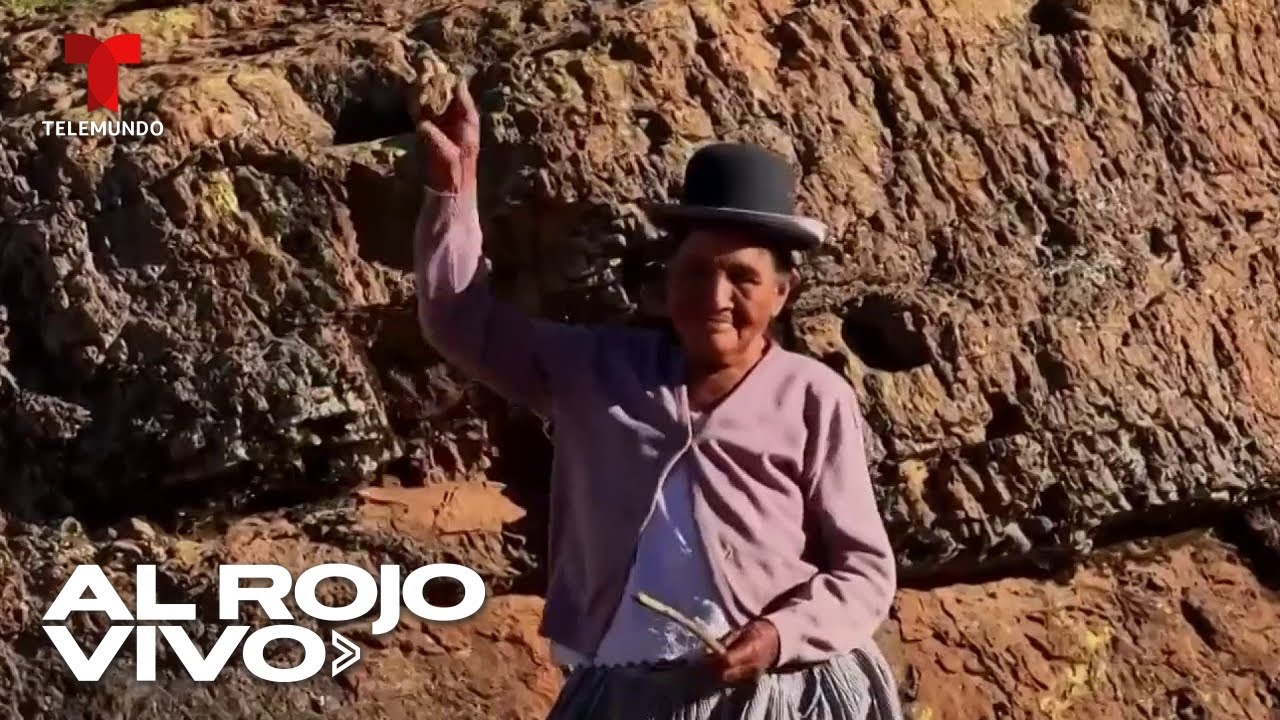
Mujer Bolivia Lucha Extraterrestre: Caso Real


# H1: Dama Boliviana Afirma Combate Cuerpo a Cuerpo con Extraterrestre

El Veredicto de Doña Valentina: Un Encuentro Inexplicable

Los anales de lo inexplicable están repletos de relatos que desafían la lógica mundana. Sin embargo, pocos casos capturan la imaginación y el escepticismo a partes iguales como el testimonio de Doña Valentina, una mujer del campo boliviano que afirma haber protagonizado un combate cuerpo a cuerpo con una entidad extraterrestre. Este incidente, que según ella tuvo lugar hace varios años, ha resurgido tras una reciente mortandad de animales en su región, impulsándola a romper un silencio de décadas. La narrativa, presentada originalmente en el programa "Al Rojo Vivo", no es solo un cuento de miedo rural; es un caso fascinante que nos obliga a cuestionar los límites de nuestra propia realidad.

Análisis del Incidente: ¿Hallucination, Engaño o Realidad Alternativa?

Doña Valentina describe un encuentro directo con un ser no humano mientras este supuestamente diezmaba su ganado. La audacia de la anciana al enfrentarse a una criatura desconocida, y la posterior decisión de este ser de atacarla, sugiere una interacción de naturaleza hostil y potencialmente inteligente. Mi análisis preliminar se centra en tres hipótesis principales:

1. Paranoya o Alucinación Inducida: Factores ambientales, estrés extremo o condiciones médicas no diagnosticadas podrían haber provocado una experiencia vívida pero irreal. El contexto rural, a menudo aislado, puede exacerbar tales estados. 2. Engaño Deliberado: La posibilidad de que el relato sea una invención, ya sea por parte de Doña Valentina o de terceros, para llamar la atención o generar controversia, es una línea de investigación crucial. Sin embargo, el motivo detrás de un engaño de esta magnitud y el silencio prolongado requieren un escrutinio adicional. 3. Fenómeno Genuino No Convencional: Si descartamos las dos primeras opciones, nos enfrentamos a la hipótesis más perturbadora: un encuentro real con una inteligencia no terrestre. La descripción de la criatura, aunque escasa en detalles en el material original, y la naturaleza de sus acciones (ataque al ganado y a la mujer) guardan similitudes con ciertos criptozoologicos y relatos sobre encuentros cercanos de tercer tipo que hemos documentado en otras regiones.

Contexto Geográfico y Cultural: El Campo Boliviano y sus Misterios

El escenario de este presunto suceso es fundamental. Las zonas rurales de Bolivia, particularmente aquellas alejadas de los centros urbanos, son depósitos de tradiciones orales, leyendas y avistamientos de fenómenos anómalos. La vida en el campo a menudo implica una conexión más íntima con la naturaleza y, por extensión, con lo desconocido. Los habitantes rurales, como Doña Valentina, suelen ser percibidos como personas pragmáticas y con los pies en la tierra, lo que otorga un peso adicional a sus testimonios. En muchas culturas andinas, las historias de seres extraños y entidades del monte son parte del folclore, lo que podría, para algunos, pre-condicionar la interpretación de eventos inusuales. Sin embargo, para un investigador, esto también significa que eventos genuinos podrían ser subsumidos bajo el manto de la mitología local, dificultando su análisis objetivo. Hemos observado un patrón similar en regiones remotas de Sudamérica donde los avistamientos de criaturas y naves no identificadas son reportados con una frecuencia inusual.

Evidencia Anómala: La Ganadería y las Muertes Inexplicadas

El detonante para que Doña Valentina rompiera su silencio fue la reciente muerte de animales en su propiedad. Este detalle es crucial. Los ataques al ganado, a menudo caracterizados por mutilaciones extrañas y sin signos de depredación convencional, son un elemento recurrente en informes de ovnis y encuentros con críptidos. La hipótesis de que estas muertes, y el presunto ataque a la mujer, estén vinculados a la misma entidad o fenómeno es una línea de investigación que no podemos ignorar. Si se pudiera determinar la causa de estas muertes animales y compararla con casos documentados de mutilación de ganado, podríamos obtener pistas valiosas.

"Para muchos esto es risa y ridículo que exista pero no han vivido en el campo que se ven muchas cosas paranormales y dónde está gente del campo han tenido que proteger sus animales e hijos que querian ser llevados."

Este comentario extraído de las reacciones online al caso resume perfectamente la brecha entre la percepción urbana y la realidad experimentada en el campo.

Testimonios y Reacciones: El Escepticismo Frente a lo Insólito

Las reacciones al relato de Doña Valentina, como se aprecia en los comentarios recogidos, oscilan entre la credulidad absoluta y el burla. Algunos la consideran una heroína rural, creyendo firmemente en su historia y equiparándola a leyendas urbanas modernas. Otros, con mofas comparándola con personajes de ficción como los Teletubbies o el Inspector Gadget, reflejan el escepticismo generalizado ante afirmaciones tan extraordinarias.

Entre los comentarios más recurrentes se encuentran:

  • La idea de que su longevidad es un testimonio de su valentía y de la veracidad de su historia.
  • Comparaciones humorísticas con eventos ficticios ("Abuelitas peleando con extraterrestres antes de que salga Gta 6").
  • Afirmaciones de que en el campo suceden cosas inexplicables que la gente de ciudad desconoce.
  • Una curiosa observación sobre por qué los extraterrestres "no vienen a LATAM" (Latinoamérica).

Este mosaico de opiniones subraya la dificultad inherente en la investigación de fenómenos que bordean lo fantástico. La credibilidad de un testigo, especialmente en culturas donde lo sobrenatural forma parte del imaginario colectivo, es un factor complejo de evaluar.

Veredicto Psíquico: ¿Fraude, Fenómeno Genuino o Algo Más?

Tras la revisión del material disponible, mi veredicto es de incertidumbre justificada. Doña Valentina presenta un testimonio que, si bien extraordinario, carece de pruebas físicas directas y corroborables. La descripción de la entidad es vaga, y el lapso de tiempo transcurrido desde el evento dificulta enormemente la recolección de evidencia forense.

Sin embargo, el contexto – la mortandad reciente de animales, la cultura rural boliviana con sus propias narrativas de lo inexplicable, y la aparente sinceridad del testimonio – impide descartar el caso de plano. Mi hipótesis de trabajo se inclina hacia un fenómeno genuino no convencional, posiblemente mal interpretado o magnificado por la perspectiva del testigo y la leyenda local. La posibilidad de fraude existe, pero el motivo y el método para un engaño de tal calibre, mantenido en secreto durante años, no son evidentes.

Es imperativo aplicar el principio de humildad epistémica: mientras no haya pruebas concluyentes de fraude o explicación mundana, el caso permanece abierto, una anomalía más en el vasto expediente de lo paranormal. Este caso es un ejemplo clásico de cómo la línea entre mito y realidad puede volverse difusa en el entorno rural, especialmente cuando se combina con fenómenos que, por su naturaleza, desafían nuestra comprensión.

El Archivo del Investigador

Para aquellos que deseen profundizar en la naturaleza de los encuentros extraterrestres y los fenómenos anómalos en el ganado, recomiendo la consulta de las siguientes fuentes:

  • Libro: "Chupacabras: La Verdad Oculta" de Scott Corrales. Un análisis detallado de las criaturas que atacan al ganado en Latinoamérica.
  • Documental: "Unacknowledged" (2017). Explora las teorías de conspiración gubernamental sobre OVNIs y vida extraterrestre.
  • Plataforma: El Proyecto Blue Book (Archivo desclasificado de la Fuerza Aérea de EE.UU.). Disponible en repositorios públicos, ofrece un vasto compendio de informes de avistamientos.
  • Web: MUFON (Mutual UFO Network). Una organización civil dedicada a la investigación de OVNIs y fenómenos aéreos relacionados.

Preguntas Frecuentes

Preguntas Frecuentes (FAQ)

  1. ¿Hay pruebas físicas del encuentro de Doña Valentina?
    Actualmente, no se han presentado pruebas físicas directas y verificadas del combate entre Doña Valentina y la entidad extraterrestre. El testimonio se basa en su relato personal.
  2. ¿Qué tipo de criatura extraterrestre se describe?
    El material original no proporciona una descripción detallada de la criatura. El enfoque se centra en el acto del combate y el ataque al ganado.
  3. ¿Por qué este caso se está investigando ahora?
    El caso ha ganado notoriedad nuevamente debido a una reciente mortandad de animales en la propiedad de Doña Valentina, lo que la motivó a compartir su historia tras años de silencio.
  4. ¿Es común que en Bolivia ocurran este tipo de fenómenos?
    Bolivia, como muchas regiones rurales de Latinoamérica, tiene un rico folclore sobre seres extraños y fenómenos inexplicables. Si bien esto no valida el caso, sí lo sitúa en un contexto cultural particular.

alejandro quintero ruiz es un veterano investigador de campo con más de dos décadas de experiencia desentrañando los misterios que la ciencia convencional no puede explicar. Su enfoque pragmático, combinado con un profundo conocimiento de parapsicología, criptozoología y ufología, le ha permitido analizar miles de casos, desde apariciones fantasmales hasta enigmáticos avistamientos ovni. Su trabajo se distingue por la rigurosidad analítica y la búsqueda incansable de la verdad, por muy esquiva que sea.

Tu Misión: Sigue la Pista

La historia de Doña Valentina es un recordatorio de que el mundo está lleno de enigmas esperando ser resueltos. Tu tarea es mantener los ojos y la mente abiertos. Si has sido testigo de algo similar, ya sea un encuentro con lo desconocido, un fenómeno inexplic able en tu propiedad o un avistamiento anómalo, no lo descartes. Documenta todo lo que puedas: fechas, horas, ubicaciones, descripciones detalladas, y cualquier evidencia física o fotográfica. Tu observación podría ser la pieza clave que necesitamos para armar el rompecabezas.

No dejes que tu experiencia se desvanezca en el olvido. ¡Comparte tu relato en los comentarios!

¿Crees la historia de Doña Valentina? ¿Has vivido algo parecido en el campo? Tu opinión es vital para nuestra investigación. ¡Anímate a compartir tu perspectiva y a debatir con la comunidad!

Si este expediente te ha resultado intrigante, considera compartirlo en tus redes sociales. Ayúdanos a difundir la investigación y a conectar con otros buscadores de la verdad.

Bolivian River Incident: Alleged Extraterrestrial Sighting

Image

On a quiet day by a river in Bolivia, whispers turned to shouts as a video emerged, allegedly capturing an unidentified entity wading through the water. The footage, quickly disseminated by various news outlets, sparked intense speculation: Was this an extraterrestrial visitor, or a cleverly staged hoax? The incident, amplified by claims of a hidden spacecraft nearby, demands a rigorous, analytical approach, free from sensationalism.

The Bolivian River Footage: An Initial Analysis

The core of this case rests on a single piece of video evidence. Reports suggest the footage, which gained traction through outlets like "Al Rojo Vivo," depicts a figure unlike any known terrestrial creature moving along the bed of a river in Bolivia. Initial observations of such videos often focus on the object's silhouette, gait, and apparent interaction with the environment. From an investigator's standpoint, the crucial first step is to scrutinize the raw data: the quality of the recording, the lighting conditions, the stability of the camera, and any discernible details of the entity itself. Is the movement fluid and natural, or does it appear mechanical or distorted? Are there any visible features that can be cross-referenced with known fauna, clothing, or equipment?

The challenge with viral videos is often their rapid dissemination without thorough vetting. Misinformation can spread as quickly as the footage itself. Therefore, our primary objective is to determine the authenticity and context of the recording. Where was it actually filmed? Who recorded it, and under what circumstances? Without answers to these fundamental questions, any conclusions drawn remain purely speculative.

Recommended Gear for Investigation

ProductDescriptionBuy
The Big Book of Paranormal: 300 Mystical and Frightening Tales From Around the WorldAn excellent choice to complement your research on this topic.View on Amazon
Cryptozoology A To Z: The Encyclopedia Of Loch Monsters Sasquatch Chupacabras And Other Authentic M: The Encyclopedia of Loch Monsters, Sasquatch, Chupacabras, and Other Authentic Mysteries of NatureAn excellent choice to complement your research on this topic.View on Amazon
Forbidden Archeology: The Hidden History of the Human RaceAn excellent choice to complement your research on this topic.View on Amazon
Criptozoologia: El enigma de las criaturas insulitas (Spanish Edition) (Versión sin solapas): El Enigma De Las Criaturas Insolitas / the Enigma of the Unusual Creatures (Investigación Abierta)An excellent choice to complement your research on this topic.View on Amazon
The H. P. Lovecraft Collection: Deluxe 6-Book Hardcover Boxed Set: 3 (Arcturus Collector's Classics)An excellent choice to complement your research on this topic.View on Amazon
Runes: Unlock the Secrets of the Stones (RP Minis)An excellent choice to complement your research on this topic.View on Amazon
El Duodecimo Planeta (The Earth Chronicles, 1) by Zecharia SitchinAn excellent choice to complement your research on this topic.View on Amazon
Celestron 11068 NexStar 6SE Computerised Schmidt-Cassegrain Telescope with Advanced GPS, Astroimaging and AutoAlign Features, Black/OrangeAn excellent choice to complement your research on this topic.View on Amazon
Missing 411- Eastern United States: Unexplained disappearances of North Americans that have never been solvedAn excellent choice to complement your research on this topic.View on Amazon
Ghost-Hunting For Dummies [Idioma Inglés] An excellent choice to complement your research on this topic.View on Amazon

Eyewitness Accounts and Environmental Context

Beyond the video itself, the narrative surrounding the incident includes claims from unnamed individuals who assert the presence of an extraterrestrial and a hidden UFO. These testimonies are often the fuel that ignites public imagination, but in the field of paranormal investigation, they must be treated with extreme caution. Eyewitness accounts are notoriously unreliable, influenced by suggestion, expectation, and the inherent fallibility of human memory. However, consistent patterns across multiple, independent testimonies can sometimes point towards a genuine phenomenon, even if the interpretations vary wildly.

The geographical context of Bolivia is also significant. This region has a documented history of unusual sightings and folklore, ranging from terrestrial enigmas to alleged extraterrestrial encounters. While local legends and environmental factors cannot directly prove the existence of extraterrestrials, they can provide a cultural backdrop that might influence perceptions or reporting. For instance, are there unusual geological formations, atmospheric phenomena, or local myths that could be misinterpreted or sensationalized as alien activity?

"It moved strangely, like nothing I've ever seen. Almost... unnatural. And then the whispers started about the crashed ship." - Anonymous Local Source (Alleged)

The reported location – a river – presents its own set of challenges and potential explanations. Rivers are dynamic environments. Water can distort light, create illusions, and obscure details. Objects submerged or partially submerged can appear alien even if they are mundane. Furthermore, the terrain around rivers can be treacherous and isolated, lending itself to stories of hidden activities or crash sites.

The 'Hidden Spaceship' Hypothesis

The notion of a "presumed flying saucer hidden nearby" is a classic trope in UFO lore. It serves to elevate a sighting from a mere anomaly to evidence of advanced, non-terrestrial technology. This hypothesis, however, requires a significant burden of proof. What evidence supports the existence of this hidden craft? Is it based on subsequent sightings, alleged government cover-ups, or simply the extrapolation from the river incident itself?

From a practical investigative perspective, searching for a "hidden spaceship" in a vast geographical area like Bolivia is a monumental, often futile task without credible leads. The hypothesis relies heavily on belief and speculation rather than verifiable data. This is where the line between serious investigation and pure conjecture becomes blurred. We must ask: Is there any radar data, satellite imagery, or credible insider testimony that corroborates this claim? Without such evidence, it remains firmly in the realm of fantasy.

Skepticism and Potential Explanations

In any investigation of the unexplained, a healthy dose of skepticism is not just advisable; it's essential. The most extraordinary claims require the most extraordinary evidence. The Bolivian river incident is ripe for debunking. Let's consider the most plausible prosaic explanations:

  • Misidentification: The figure could be a known animal adapted to water (e.g., a capybara, a large rodent, or even a submerged human in unusual attire). Water distortion is a significant factor here.
  • Hoax/Staged Video: Given the viral nature of online content, creating sophisticated hoaxes is increasingly common. Puppets, CGI, costumed individuals, or even clever editing could be responsible.
  • Natural Phenomena: Unusual lighting conditions, reflections on the water, or even optical illusions can create seemingly anomalous shapes and movements.
  • Local Folklore/Cultural Influence: The context of a region with rich folklore might lead to interpretations influenced by local myths and legends.

The scientific method dictates that we exhaust all natural explanations before resorting to supernatural or extraterrestrial ones. This requires meticulous analysis of the video and any accompanying data, rather than accepting the initial sensational narrative at face value.

Investigator's Verdict: Hearsay or Hard Evidence?

Based on the limited information provided – essentially a viral video and unsubstantiated claims – this case leans heavily towards hearsay and speculation. While the footage may be intriguing, it lacks the clarity, context, and corroborating evidence required for a definitive conclusion of extraterrestrial activity. The "hidden spaceship" narrative appears to be an embellishment designed to amplify the mystery.

Is this evidence of an alien? Unlikely, based solely on the available data.
Is it an unexplained phenomenon? Potentially, but more likely a misidentified object or a deliberate hoax.
Is it worth further, rigorous investigation? Yes, but only if verifiable data, such as the original unedited footage, clear audio, and credible witness testimonies free from sensationalism, can be obtained. Without this, it remains an entertaining anecdote, not a confirmed case file.

The Investigator's Archive: Recommended Resources

For those seeking to delve deeper into the world of unexplained phenomena, a discerning approach is key. Avoid sensationalist media and focus on well-researched materials. Here are a few areas and resources that provide a more grounded perspective:

  • Critical UFOlogy: Look for researchers who apply scientific skepticism and investigative rigor to sightings and evidence.
  • Paranormal Investigation Techniques: Understanding how to document, analyze, and interpret anomalous data is crucial.
  • Documentaries & Books: Seek out works that present multiple viewpoints and encourage critical thinking rather than confirm preconceived notions.

Remember, the pursuit of truth requires patience and a willingness to accept that not every mystery has an extraordinary answer. Sometimes, the most compelling discoveries lie in debunking elaborate falsehoods.

Protocol: Documenting Anomalous Sightings

Should you ever encounter a situation that defies easy explanation, adhering to a strict protocol is paramount. This ensures that any data collected is as clean and useful as possible:

  1. Observe and Document:
    • Note the exact time, date, and location.
    • Record all environmental conditions: weather, light, wind, sound.
    • Describe the phenomenon in objective terms, avoiding interpretation.
    • Document the duration of the sighting.
  2. Record Visually:
    • Use the highest quality recording device available (smartphone, camera).
    • Maintain steady footage. Avoid excessive panning or zooming.
    • Try to capture reference points in the environment (trees, buildings) to help establish scale and context.
    • Record continuously for as long as possible.
  3. Record Aurally:
    • If possible, use a separate audio recorder or ensure your video device captures clear ambient sound.
    • Note any unusual sounds during or after the event.
  4. Witness Testimony:
    • Interview witnesses individually as soon as possible.
    • Ask open-ended questions: "Tell me what you saw," rather than leading questions like "Did you see the alien?"
    • Document their exact words and demeanor.
  5. Preserve Evidence:
    • Secure the original recording media. Do not rely on copies.
    • Avoid posting raw, unedited footage online immediately, as it can be easily manipulated or dismissed.
  6. Seek Corroboration:
    • Are there other witnesses?
    • Are there any independent sensor readings (e.g., EMF meters, Geiger counters, if applicable to the type of phenomenon)?

Frequently Asked Questions

Q1: Could the 'extraterrestrial' simply be a known animal?
A1: Yes, misidentification of known animals, especially in water or low light, is a very common explanation for alleged creature sightings. The way water distorts shapes and movements can be highly deceptive.
Q2: How can we verify if the video is real?
A2: Verification requires access to the original, unedited footage, analysis of metadata (if available), and independent confirmation of the location and circumstances. Without these, certainty is impossible.
Q3: What is the significance of Bolivia in UFO lore?
A3: Bolivia, like many parts of South America, has a rich history of alleged UFO sightings and related folklore. This doesn't validate specific incidents but indicates a cultural context where such phenomena are frequently reported and discussed.
Q4: What should I do if I see something similar?
A4: Follow the documentation protocol outlined above. Prioritize objective recording and witness statements over immediate speculation. Share evidence responsibly with investigative bodies or researchers.

Your Mission: Field Observation

The next time you are near a body of water, whether it's a river, lake, or the ocean, take a moment to observe. Consider how the water's surface distorts light and shapes. Look for reflections, debris, or natural movements that could be misinterpreted from a distance or in poor lighting. Understanding the mundane explanations is the first, crucial step in separating fact from fiction in the realm of the unexplained. Your own critical observation skills are your most valuable tool.

Share your own experiences or thoughts below. Have you witnessed something inexplicable? What do you think about the Bolivian river incident? Your perspective is vital.

Don't keep your findings to yourself. If you found this analysis insightful, share it with your network. Help us bring more light to the shadows of the unknown.

Investigator's Note: True paranormal research doesn't fund itself. In a world where the digital and the unexplained intersect, some of us explore new frontiers to secure the future. Do you dare to be part of the vanguard? Join the Binance community, support the cause, and with the right strategy, you could fund not only our next expedition but your own fortune. The next great discovery could be just a click away.

Puma Punku: The Ancient Enigma of Precision Stonework


The discovery of Puma Punku, an archaeological site in Bolivia, has left researchers and historians utterly bewildered. Among the most perplexing aspects are the colossal stone blocks, meticulously carved with a precision that seems utterly impossible given the primitive tools available to the ancient civilizations believed to have inhabited the region.

Unexplained Precision: The Anomalous Carvings

Puma Punku, meaning "Door of the Puma" in Aymara, is part of the vast Tiwanaku archaeological complex. While Tiwanaku itself is significant, Puma Punku stands out due to its extraordinary stonework. The site features massive blocks of red sandstone and andesite, some weighing upwards of 100 tons. What truly defies conventional explanation is the uniformity and intricacy of the cuts and shapes. These aren't just rough hewn stones; they are precisely shaped into H-blocks, interlocking pieces, and smooth, flat surfaces with sharp, right-angled corners that appear machine-made rather than hand-carved. Archaeologists have struggled to explain how these results were achieved using the known tools of the Tiwanaku culture, which typically included stone hammers and basic chisels. The sheer scale of the blocks, combined with the sophisticated finishing, suggests a level of technological advancement that doesn't align with our understanding of pre-Columbian South America.

Geological Anomalies and Material Composition

The materials themselves present further puzzles. The andesite, a volcanic rock, is far harder than the sandstone, making its precise shaping even more remarkable. Analysis of the cuts reveals what appear to be drill holes of uniform diameter and channel-like grooving that are incredibly straight and parallel over long distances. Some researchers posit that advanced cutting tools, possibly involving abrasive slurries or even unknown sonic or laser technologies, could have been employed. The sheer effort required to quarry, transport, and precisely shape these stones without the use of wheels, pulleys, or iron tools remains a central mystery. The blocks are often found scattered, suggesting a cataclysmic event that may have destroyed the original structures.

Recommended Gear for Investigation

ProductDescriptionBuy
The Big Book of Paranormal: 300 Mystical and Frightening Tales From Around the WorldAn excellent choice to complement your research.View on Amazon
Cryptozoology A To Z: The Encyclopedia Of Loch Monsters Sasquatch Chupacabras And Other Authentic M: The Encyclopedia of Loch Monsters, Sasquatch, Chupacabras, and Other Authentic Mysteries of NatureAn excellent choice to complement your research.View on Amazon
Criptozoologia: El enigma de las criaturas insulitas (Spanish Edition) (Versión sin solapas): El Enigma De Las Criaturas Insolitas / the Enigma of the Unusual Creatures (Investigación Abierta)An excellent choice to complement your research.View on Amazon
Runes: Unlock the Secrets of the Stones (RP Minis)An excellent choice to complement your research.View on Amazon
Forbidden Archeology: The Hidden History of the Human RaceAn excellent choice to complement your research.View on Amazon
The H. P. Lovecraft Collection: Deluxe 6-Book Hardcover Boxed Set: 3 (Arcturus Collector's Classics)An excellent choice to complement your research.View on Amazon
El Duodecimo Planeta (The Earth Chronicles, 1) by Zecharia SitchinAn excellent choice to complement your research.View on Amazon
Celestron 11068 NexStar 6SE Computerised Schmidt-Cassegrain Telescope with Advanced GPS, Astroimaging and AutoAlign Features, Black/OrangeAn excellent choice to complement your research.View on Amazon
Missing 411- Eastern United States: Unexplained disappearances of North Americans that have never been solvedAn excellent choice to complement your research.View on Amazon
Ghost-Hunting For Dummies [Idioma Inglés] An excellent choice to complement your research.View on Amazon

Archaeological Theories vs. Alternative Hypotheses

Mainstream archaeology generally attributes Puma Punku to the Tiwanaku civilization, which flourished between 500 and 900 AD. Theories suggest that the inhabitants possessed an advanced understanding of engineering and geometry, possibly using sand and water as abrasives to achieve the smooth finishes. However, the sheer difficulty in replicating the precision even with modern tools leads many to question these explanations. Alternative hypotheses, often explored in documentaries like In Search of Aliens, propose that extraterrestrial intervention or a lost, highly advanced civilization may have been responsible for constructing Puma Punku. Proponents of these theories point to the unusual precision and the sheer impossibility of the task given the era's technology as evidence for non-human or lost human ingenuity. While contentious, these ideas persist due to the profound lack of concrete answers within conventional frameworks. The lack of surviving documentation from the Tiwanaku people themselves only adds to the enigma.

Investigator's Verdict: Primal Ingenuity or Extraterrestrial Assistance?

From an investigator's standpoint, the evidence at Puma Punku is undeniably anomalous. The precision of the stonework is a significant challenge to accepted historical timelines and technological capabilities of ancient cultures. While it's tempting to leap to extraordinary conclusions like alien builders, we must first exhaust every plausible terrestrial explanation. Could the Tiwanaku people have developed or discovered techniques far beyond what we currently understand? Perhaps methods involving sophisticated water management, resonant frequencies, or controlled erosion were employed. Without further evidence, such as the discovery of specialized tools or detailed schematics, attributing it definitively to aliens remains speculative. However, dismissing the possibility outright ignores the stark reality of the craftsmanship. My current assessment leans towards an advanced, albeit unknown, terrestrial engineering capability, possibly influenced by a cultural understanding of physics and geology that we have yet to fully decipher. It's a testament to ancient human (or perhaps pre-human) potential that forces us to reconsider what was once deemed impossible.

Investigator's Gear Recommendations

Successfully documenting and analyzing anomalous sites requires specific tools. Whether you're a seasoned investigator or just starting, having the right equipment can make all the difference. For field research, durable cameras capable of capturing high-resolution images and video are essential. Audio recording devices are crucial for capturing potential paranormal phenomena like Electronic Voice Phenomena (EVP). Furthermore, environmental sensors can help detect anomalies in temperature, electromagnetic fields, and atmospheric pressure, indicators often associated with unexplained events.

The Investigator's Archive: Recommended Resources

To delve deeper into the mysteries of Puma Punku and similar enigmas, consulting authoritative sources is paramount. While popular media offers compelling narratives, academic research and well-documented historical accounts provide a more grounded perspective. Consider these resources for further investigation:

  • Books: Look for works by respected archaeologists specializing in Andean civilizations, such as those focusing on the Tiwanaku culture. Academic journals often contain detailed analyses of the site's geology and construction techniques.
  • Documentaries: While critical analysis is advised, documentaries that explore alternative theories can offer new perspectives and highlight specific anomalies. Be discerning about the evidence presented.
  • Museum Archives: Institutions with collections from the Tiwanaku region may offer insights through artifacts and scholarly papers.

Frequently Asked Questions

What is Puma Punku?
Puma Punku is an ancient archaeological site located near the Tiwanaku ruins in Bolivia, renowned for its massive, precisely carved stone blocks.
Who built Puma Punku?
Mainstream archaeology attributes it to the Tiwanaku civilization (c. 500-900 AD), though the sophistication of the stonework leads to alternative theories.
What makes the stones at Puma Punku so mysterious?
The stones exhibit incredibly precise cuts, right-angled corners, and interlocking H-blocks, achieved with seemingly primitive tools, baffling researchers.
Are there theories involving aliens?
Yes, the inexplicable precision has led some to speculate about extraterrestrial or lost advanced civilization involvement, similar to topics explored in shows like In Search of Aliens.

Your Mission: Field Observation Protocol

The next time you encounter an unexplained phenomenon, whether it's an unusual historical site or a reported strange occurrence, approach it with the discipline of an investigator. Document everything meticulously: time, location, environmental conditions, and any sensory input. If possible, use recording devices. Compare your findings with established data, but maintain an open mind. Your goal is not to sensationalize, but to gather objective evidence. Consider how the precision at Puma Punku might relate to other ancient megalithic sites. Are there commonalities in the anomalies?

Have you visited Puma Punku or explored similar anomalous sites? Share your experiences and observations in the comments below. Your firsthand accounts are invaluable data for our collective investigation. If this deep dive into the unexplained has piqued your curiosity, ensure you're subscribed for more rigorous investigations into history's greatest mysteries. Share this article with fellow truth-seekers to expand our network of inquiry.

Investigator's Note: True paranormal research doesn't fund itself. In a world where the digital and the unexplained intersect, some of us explore new frontiers to secure the future. Do you dare to be part of the vanguard? Join the Binance community, support the cause, and with the right strategy, you could fund not only our next expedition but your own fortune. The next great discovery could be just a click away.

Giants of Peru and Bolivia: An Investigation into Cryptid Legends


Introduction: Echoes in the Andes

The earth beneath the Andes Mountains pulses with secrets, a testament to civilizations lost to time and shadowed by enigmatic legends. Among the most compelling are stories of colossal humanoids, beings of immense stature who, according to folklore, once walked these rugged landscapes. These tales, prevalent in Peru and Bolivia, spark our curiosity and demand rigorous investigation. Are they mere myth, a product of cultural exaggeration, or do they hint at a forgotten chapter of human—or pre-human—history? Today, we open the file on these legendary giants.

The scientific establishment typically attributes such accounts to misinterpretations of geological formations, exaggeration of historical figures, or pure imaginative folklore. However, the sheer persistence and consistent detail across disparate regions across the globe compel us to consider alternatives. My own years in the field have taught me that the line between folklore and verifiable anomaly is often thinner than we are led to believe. The question isn't whether these giants existed, but rather, what evidence can we find to either sustain or dismantle the legends surrounding them.

Historical Accounts: Whispers of Colossi

The presence of giants in South American mythology is not an isolated phenomenon. Across both Peru and Bolivia, indigenous cultures have long recounted tales of beings vastly larger than modern humans. These narratives often frame these giants as ancient inhabitants, sometimes benevolent, sometimes destructive, predating known civilizations. Spanish conquistadors themselves documented accounts, often tinged with awe and disbelief, of encountering evidence of gigantic skeletons or hearing native tales of such beings. For instance, chronicles from the early colonial period mention indigenous peoples claiming that giants inhabited the land before their arrival.

One recurring theme is that these giants were responsible for constructing megalithic structures or influencing the course of early human development. While often dismissed as allegory or a means to explain awe-inspiring ancient ruins, the consistency of these stories demands a closer look. Could these tales be fragmented memories of a population group with significantly different physiology, or perhaps even an extinct hominid species?

It is crucial to approach these historical accounts with a dual lens: acknowledging their cultural significance while critically evaluating their literal truth. Often, these legends serve symbolic purposes, representing the power of nature, early tribal conflicts, or the awe inspired by monumental architecture whose true builders were unknown. However, when cross-referenced with potential archaeological findings and global patterns of giant mythology, they form a compelling dataset for further research.

To truly understand these accounts, one must immerse oneself in the rich tapestry of Andean folklore. This requires more than just reading translated chronicles; it demands an appreciation for the oral traditions that have preserved these stories for centuries. The methodology here involves cross-referencing multiple independent accounts, identifying common motifs, and tracing their origins as far back as possible. This is not a straightforward path; the erosion of time and cultural shifts can distort even the most vivid memories, transforming them into something akin to myth.

Archaeological Anomalies: Traces of the Titans?

The most fervent discussions surrounding giants in Peru and Bolivia often revolve around alleged archaeological evidence. Skeptics argue that finds of unusually large skeletal remains are typically misidentified animal bones (such as mammoth femurs) or simple fabrications designed to capitalize on public fascination. However, there have been persistent claims and anecdotal reports over the decades of discovered fossilized bones suggesting beings of truly immense proportions.

One notable aspect of these claims relates to the purported discovery of giant footprints or entire skeletons in various locations within the Andean region. These reports, though often lacking rigorous scientific documentation, fuel the imagination. The lack of widely accepted, peer-reviewed evidence is a significant hurdle. However, the history of archaeology is replete with examples of discoveries that were initially met with skepticism and ridicule before being accepted as genuine.

"The skeptic's greatest tool is the dismissal of the extraordinary. But the truly open mind must consider the extraordinary, even as it demands extraordinary proof." - Alejandro Quintero Ruiz

The challenge lies in discerning genuine anomalies from hoaxes or natural phenomena. For example, unusual geological strata can sometimes mimic the appearance of fossilized structures. Furthermore, the inherent bias in reporting, where sensational claims receive more attention than mundane explanations, can distort the perceived evidence. My own protocol in such cases involves meticulously examining photographic evidence (where available), cross-referencing locations with geological surveys, and seeking any independent corroboration, however slight.

The possibility of undiscovered hominid species or even a lineage of significantly larger early humans cannot be entirely discounted, especially in regions with such rich fossil records. The potential for such discoveries is precisely why continued, methodical exploration, free from preconceived notions, is vital. The scientific community's current stance often oversimplifies the complexities of fossilization and discovery, especially concerning what might lie hidden in remote or geographically challenging terrains.

Cultural Context: Giants in the Global Mythos

The legend of giants is not confined to the Andes. It is a truly global phenomenon. From the Nephilim in the Hebrew Bible to the Jotnar of Norse mythology, from the Cyclops of Greek epics to the ancient myths of the indigenous peoples of North America and Australia, stories of colossal beings appear in cultures across every continent. This universality suggests that the concept of giants might tap into fundamental aspects of the human psyche or perhaps reflect a shared, albeit fragmented, ancestral memory.

In this global context, the legends of Peru and Bolivia do not stand alone. They can be viewed as regional variations of a widespread archetypal motif. Understanding this connection is crucial. If, hypothetically, there were a small population of exceptionally tall hominids in our distant past, their stories and potential remains could appear in fragmented form across the globe, shaped by local cultures and environments. This is the essence of what researchers like Charles Fort sought to document—the anomalies that persist across historical records and cultural divides.

The consistent portrayal of giants in myths often relates to themes of creation, ancient power, or a primordial epoch before the current order. They are frequently depicted as the builders of ancient monuments whose true architects are unknown, a narrative that resonates strongly with the mysterious megalithic sites found throughout Peru and Bolivia. Examining these narratives through the lens of comparative mythology and anthropology can provide valuable insights that pure archaeological evidence might miss.

The psychological interpretation suggests that giants represent the primal powers of nature, the awe-inspiring and sometimes terrifying forces that ancient peoples sought to comprehend. They can also symbolize a lost golden age, a time of greater strength and connection to the divine. However, my approach requires me to move beyond pure symbolism and seek tangible connections, however tenuous, to potential real-world phenomena.

Investigator's Verdict: Myth, Manipulation, or Forgotten History?

After extensive review of available accounts, historical records, and common interpretations, my verdict leans towards a complex interplay of factors. While definitive, scientifically accepted proof of the literal existence of giants in Peru and Bolivia remains elusive, the sheer volume and consistency of folklore, combined with recurring anecdotal reports of unusual skeletal findings, prevent outright dismissal.

I categorize the current evidence as follows:

  • Folklore & Myth: The vast majority of "evidence" exists within cultural narratives. These stories are incredibly valuable for understanding ancient beliefs and worldviews but do not constitute proof of physical existence.
  • Misinterpretation & Hoax: Many alleged findings can be attributed to misidentification of animal fossils, natural geological formations, or deliberate fabrications. The history of paranormal claims is rife with deception, and this field is no exception.
  • Possibility of Unknown Hominids or Anomalous Physiology: The persistent global mythos of giants, coupled with regions like the Andes that offer rich fossil potential and geographical remoteness, opens a door, however narrow, to the possibility of undiscovered hominid species or populations with significantly different physiology. This remains the most speculative but compelling avenue for future research.

My conclusion is that while we cannot definitively declare these giants to be historical fact, dismissing them entirely would be intellectually lazy. The legends likely originate from some kernel of truth, perhaps exaggerated over millennia into myth, or perhaps from encounters so rare and extraordinary that they left an indelible mark on collective memory. The critical path forward involves rigorous, unbiased investigation of any purported physical evidence, coupled with a deep understanding of the cultural context from which these tales emerge. The truth, as always, lies somewhere in the shadows between the verifiable and the unbelievable.

The Investigator's Archive: Key Resources

For those keen on delving deeper into the enigma of giants and cryptids, a curated list of resources can illuminate the path. My personal archive includes works that have shaped the field of anomalous research:

  • "Passport to Magonia" by Jacques Vallée: Explores the connection between UFOs, folklore, and the human experience of the anomalous.
  • "The Mysteries of the Giants" by Ivan T. Sanderson: Although dated and sometimes speculative, Sanderson's work cataloged numerous global accounts of giant beings.
  • Works on Andean Mythology and Archaeology: Look for academic papers and ethnographies detailing the folklore of indigenous Peruvian and Bolivian cultures.
  • Compilations of Cryptid Sightings: Resources that document alleged encounters with unknown creatures often include references to giant humanoids.
  • Documentaries: Series like "Ancient Aliens" (with a critical eye) or investigative documentaries on archaeological mysteries sometimes touch upon these legends, offering visual context though often lacking scientific rigor.

Accessing these materials is not merely about consumption; it's about understanding the historical trajectory of anomalous research and identifying the patterns that link disparate accounts.

Frequently Asked Questions

Here are some common queries regarding the giant legends of Peru and Bolivia:

  • Q: What is the most compelling "evidence" for the existence of giants in these regions?
    A: The most compelling "evidence" is largely anecdotal, stemming from historical chronicles and persistent folklore. Reports of unusually large fossilized bones or footprints form the bulk of alleged physical evidence, though none have been scientifically validated as belonging to giants.
  • Q: Why do so many different cultures around the world have legends about giants?
    A: This global phenomenon is attributed to several theories: shared ancestral memories of extinct hominid species, archetypal psychological symbolism representing power or primordial forces, misinterpretation of natural phenomena, and cultural transmission of stories.
  • Q: Has any scientific expedition found definitive proof of giants in Peru or Bolivia?
    A: To date, no scientific expedition has found definitive, peer-reviewed proof of giants in Peru or Bolivia. Claims often lack verifiable documentation or are attributed to natural causes by the scientific community.
  • Q: Could the legends be related to ancient advanced civilizations?
    A: Some theories link giant legends to ancient advanced civilizations, suggesting giants were either precursors, rulers, or architects of these societies. While speculative, this ties into the broader mystery of megalithic construction in the region.

Your Field Mission: Unearthing Local Lore

The most valuable data often lies in the voices that have not yet been recorded or analyzed. Your mission, should you choose to accept it, is to connect with your local community.

  1. Identify Local Legends: Speak with elders, local historians, or long-time residents in your area (or in regions with similar geographical features) about any stories of unusually large beings or creatures from the past.
  2. Document Testimonies: Record these stories, noting details such as physical descriptions, timelines, geographical locations associated with the legends, and any purported evidence (even if anecdotal).
  3. Analyze for Patterns: Compare your findings with known global giant myths. Are there recurring themes? Do the descriptions align with any established cryptid profiles?
  4. Report Your Findings: Share your documented lore (respecting privacy and anonymity where necessary) in dedicated forums or the comments section below. Your contribution could be the missing piece in a larger puzzle.

Remember, rigorous investigation begins with open ears and a critical mind. The truth is out there, often hidden in plain sight within the stories our ancestors told.

alejandro quintero ruiz is a veteran field investigator dedicated to the analysis of anomalous phenomena. Their approach combines methodological skepticism with an open mind to the inexplicable, always seeking the truth behind the veil of reality.

Al-Naslaa Rock, Magna Fountain, and Pokotia Monolith: An Investigation into Anomalous Stelae


The Unsettling Trio: Introduction to Al-Naslaa, Magna, and Pokotia

There are geological formations that defy easy explanation, sites where the earth itself seems to whisper secrets of ages past or unknown forces. We are accustomed to attributing such wonders to natural processes: erosion, tectonic shifts, volcanic activity. But sometimes, the evidence strains credulity, prompting a deeper, more analytical inquiry. Today, we open the ledger on three such enigmatic locations: the impossibly split Al-Naslaa Rock, the perpetually bubbling Magna Fountain, and the stark, haunting Pokotia Monolith. Are these mere curiosities of nature, or do they harbor clues to forgotten histories and phenomena beyond our current scientific grasp?

Welcome, fellow investigators, to another expedition into the unexplained. You've arrived precisely when the veil between the mundane and the mysterious grows thin. This isn't just about cataloging oddities; it's about dissecting the evidence, questioning assumptions, and exploring the frontiers of what we *think* we know about our planet and its history. Let's delve into these peculiar stelae, each one a silent testament to a world that refuses to be entirely understood.

Al-Naslaa Rock: A Geological Impossibility?

Located in the Tayma Oasis of Saudi Arabia, the Al-Naslaa Rock is a freestanding granite monolith renowned for its seemingly impossible split. It's a natural geological formation, approximately 6 meters high and 4 meters wide, balanced precariously on two smaller pedestals. The fissure running through its center is so precise, so clean, it appears as if a colossal blade has sliced it perfectly in half. This is not your everyday erosion pattern.

The prevailing scientific explanation points to natural forces. Theories suggest tectonic stress, potentially from ancient earthquakes, could have created the initial fracture. Subsequent wind erosion, carrying fine sand particles, might have widened and deepened the crack over millennia. Some geologists propose differential weathering, where variations in the rock's mineral composition made one side more susceptible to erosion than the other. When examining the site, one notes the smooth, almost polished finish on the edges of the split, which lends credence to aeolian abrasion—wind-borne sand acting like a natural sandblaster.

However, the sheer precision and the perfect vertical alignment of the fissure have led to speculation beyond conventional geology. Local legends and some paranormal researchers suggest the split might not be entirely natural. They point to the uncanny symmetry and the clean separation as evidence that could imply artificial intervention or an unknown energetic phenomenon rather than solely wind and time. The balance of the rock on its pedestals also adds to the mystique; a slight tremor could theoretically bring the entire structure down, yet it has stood for centuries, if not millennia.

This ambiguity is precisely why such formations become touchstones for the unexplained. We are conditioned to seek rational, scientific explanations, and usually, they suffice. But when an explanation feels insufficient to account for the observed phenomenon’s unique characteristics, the mind naturally drifts to alternative hypotheses. Is it simply a rare case of geological artistry, or is there more to the Al-Naslaa Rock than meets the eye?

The Magna Fountain: A Hydro-Mysterious Phenomenon

Moving from stone to water, let’s consider the Magna Fountain, located in the city of Magna, Jordan. This site presents a peculiar hydro-geological anomaly: a spring that, at certain times, appears to flow upwards, creating what some describe as an "inverted fountain." Unlike typical springs that bubble up from the ground, the Magna Fountain exhibits a forceful ejection of water that ascends into the air before falling back down. This characteristic has fascinated and puzzled observers for generations.

The scientific explanation typically involves artesian water systems. In such a system, an aquifer is trapped between impermeable layers of rock. If this aquifer is under pressure, and a well or fissure reaches it, the water can be forced upwards without the need for artificial pumping. The "inverted fountain" effect would then be due to the specific pressure dynamics and the geological structure at the point of emergence. The water is essentially seeking its own level under considerable hydrostatic pressure.

Yet, the consistency and visual impact of the upward flow have fueled more speculative theories. In ancient times, such a phenomenon would undoubtedly have been attributed to divine intervention or mystical forces. Some modern interpretations link it to ley lines or concentrated earth energies. While a robust geological explanation exists, the sheer visual theater of an "inverted fountain" taps into a primal sense of wonder and the inexplicable. It’s a reminder that even seemingly straightforward processes like water flow can manifest in ways that challenge our everyday perceptions. The question often arises: could these natural fountains have served as sacred sites in antiquity, their mysterious displays interpreted as portals or conduits to other realms?

This leads us to ask: how much of what we label "natural phenomena" is merely a result of our incomplete understanding of the Earth's complex systems? Could the Magna Fountain, through its unique energy signature or historical context, hold a key to understanding ancient beliefs about earth energies?

The Pokotia Monolith: Echoes of an Unknown Past

Our final destination takes us to Pokotia, Bolivia, where a peculiar monolith stands as a silent sentinel. This artifact, discovered in 1950 by archaeologist Arthur Posnansky, is carved from a single piece of andesite and features intricate carvings that have baffled researchers. The monolith depicts a humanoid figure with distinct, almost alien-like features: large eyes, a prominent nose, and a lack of discernible mouth.

What makes the Pokotia Monolith particularly intriguing are its carvings. Unlike many pre-Columbian artifacts from the region, the style and iconography are markedly different. The figure's features have been interpreted by some as resembling depictions of extraterrestrial beings, leading to theories linking it to ancient astronaut hypotheses. The smooth, almost sculpted quality of the monolith and the precision of the carvings further fuel these speculations. Posnansky himself believed it pointed to a civilization far older and more advanced than previously theorized for the region.

The mainstream archaeological community generally attributes the monolith to the Tiwanaku culture, or an earlier related civilization, dating it roughly to 500-1000 AD. However, the unique style and the figure's "non-human" characteristics continue to be debated. Skeptics argue that the interpretation of "alien-like" features is subjective and that the iconography likely holds symbolic meaning within the original culture, even if that meaning is now lost to us. The erosion and wear on the stone can also create the illusion of features that were not intentionally carved.

Still, the sheer enigmatic nature of the Pokotia Monolith persists. It stands as a physical artifact from a lost era, its story etched in stone but not fully readable. It compels us to consider the possibility that ancient cultures possessed knowledge or encountered phenomena that have escaped our modern understanding for centuries. The debate between a sophisticated, yet human, artistic expression and a potential record of contact with non-human intelligence remains a fertile ground for investigation.

Geological Anomaly or Deliberate Design?

When confronted with Al-Naslaa Rock, the Magna Fountain, and the Pokotia Monolith, the initial impulse is to classify them under established scientific headings: geology, hydrology, archaeology. Al-Naslaa is a testament to weathering and tectonic forces. Magna is a classic example of artesian pressure. Pokotia is an artifact of an ancient civilization.

Yet, the "paranormal" perspective encourages us to look for the exceptions, the outliers, the phenomena that don't quite fit the standard models. Al-Naslaa's split is *too* perfect. Magna's upward flow is visually jarring. Pokotia's figure is eerily unfamiliar. These are the points where scientific explanation meets human interpretation and wonder. Are these merely instances of nature's extreme artistry, or do they hint at something more? Could unknown geological processes, energetic fields, or even deliberate ancient engineering of unknown purpose be at play?

The distinction is crucial. Attributing everything to natural causes, while often correct, closes the door to discovery. Preserving a healthy skepticism while remaining open to the possibility of truly anomalous events is the operational methodology of serious investigation. We must ask: what would it take to definitively prove or disprove an artificial origin for Al-Naslaa? How can we better understand the energy dynamics of the Magna Fountain? What advanced techniques could unlock the true meaning of the Pokotia Monolith's carvings?

Historical Context and Cultural Implications

These sites are not isolated curiosities; they are embedded within rich historical and cultural landscapes. The Tayma Oasis, home to Al-Naslaa, has been inhabited for millennia, a vital trade route and a center of ancient civilizations. The presence of such an unusual rock formation in a region steeped in history suggests it may have held special significance for the people who lived there. Ancient cultures often imbued natural wonders with mythical or sacred meaning, perceiving them as gateways, divine markers, or manifestations of powerful beings.

Similarly, the Magna Fountain’s location in Jordan places it within a region with a profound history of human settlement and interaction with the environment. The ancient Nabataeans, for instance, were masters of hydraulic engineering, but their understanding was derived from practical observation rather than modern science. It’s plausible that such a striking water feature would have been incorporated into their worldview, perhaps as a sacred spring or a site of ritualistic importance.

The Pokotia Monolith, as an artifact, carries the weight of pre-Inca civilizations, particularly the enigmatic Tiwanaku culture. These were sophisticated peoples with advanced astronomical knowledge and architectural prowess. The monolith’s unique iconography could represent a deity, a shamanic vision, a historical figure, or, as some theories propose, an encounter with something – or someone – from beyond their terrestrial experience. The cultural implications are vast, touching upon the origins of civilization and the very nature of human perception and belief.

Understanding these contexts is paramount. These aren't just rocks and water; they are points of intersection between humanity, history, and the Earth's enduring mysteries. The human tendency to find meaning in anomalies is a powerful force, and these sites provide fertile ground for such interpretations.

Researcher's Verdict: Natural Wonder or Ancient Artifice?

After examining the available evidence and prevailing scientific hypotheses, my verdict leans towards a nuanced stance: these sites represent the fascinating intersection of potent natural forces and the enduring human drive to find meaning and, perhaps, evidence of the extraordinary.

For Al-Naslaa Rock, the geological explanation of tectonic stress and aeolian erosion is plausible and robust. However, the precision of the split remains astonishingly perfect, pushing the boundaries of what we typically associate with natural weathering. While I do not discount the possibility of artificial intervention, the evidence leans heavily towards an extreme, albeit rare, display of natural geological processes. The true enigma lies in its sheer, awe-inspiring perfection.

The Magna Fountain is, by most accounts, a clear demonstration of artesian pressure. The visual effect is dramatic, but the underlying mechanics are understood within conventional hydrology. Its significance likely lies more in its historical and cultural interpretation by ancient peoples, who would have viewed such a forceful water ejection as profoundly significant.

The Pokotia Monolith presents the most compelling case for further investigation into potential anomalies beyond established history. While it can be attributed to the Tiwanaku culture, the iconography is undeniably unique and unsettling. The "alien-like" features, whether intended or perceived, invite speculation that aligns with ancient astronaut theories. The possibility of a lost civilization with advanced carving techniques, or even a connection to phenomena we don't record in our history books, cannot be entirely dismissed without further, in-depth analysis and comparative studies with other anomalous artifacts.

In essence, while natural science offers reasonable explanations, these sites retain an aura of mystery because they challenge our expectations and align with our deepest curiosities about the world's hidden potentials.

From the Researcher's Archive

When studying formations like Al-Naslaa or artifacts like the Pokotia Monolith, it's vital to ground your research in established frameworks while remaining open to the fringes. Here are some resources that have proven invaluable in my investigations:

  • Books:
    • "Fingerprints of the Gods" by Graham Hancock: Explores theories of ancient advanced civilizations and lost histories, often referencing anomalous geological and archaeological sites.
    • "Mysterious America" by Charles Fort: A foundational text cataloging unexplained phenomena, including unusual geological occurrences and artifacts.
    • "The Ancient Alien Question: Reinterpreting the Past to Understand the Present" by Dr. Michael Salla: Delves into the archaeological and historical evidence for ancient extraterrestrial contact.
  • Documentaries:
    • "Ancient Aliens" (History Channel series): While often speculative, it covers numerous anomalous sites and artifacts, including many that mirror the curiosities of Pokotia.
    • "The Mystery of the Splitting Rock - Al-Naslaa" (Various YouTube channels): Many independent researchers have explored the geological and speculative aspects of this formation. Reviewing multiple perspectives is key.
  • Online Databases:
    • Pokotia Monolith Archive: A collection of information and theories surrounding the Pokotia artifact.
    • Geological Society websites for Tayma Oasis and Bolivian geological surveys: Essential for understanding the natural science perspectives.

Remember, thorough research involves cross-referencing information from reputable scientific sources with the more speculative, yet often illuminating, perspectives found in paranormal and fringe research communities. This holistic approach is crucial for a comprehensive understanding.

Field Protocol: Documenting Anomalous Formations

Investigating sites like Al-Naslaa, Magna Fountain, or Pokotia requires a rigorous approach to documentation. When you encounter a formation or artifact that appears anomalous, adhere to the following protocol:

  1. Initial Observation and Context: Note the immediate surroundings. What is the geological environment? What is the historical or cultural context (if known)? Are there local legends associated with the site?
  2. Detailed Visual Documentation:
    • Photography: Take high-resolution photographs from multiple angles and distances. Use a scale (like a ruler or coin) in some shots to indicate size. Capture widest shots to show context, and close-ups to detail textures and features. Pay special attention to the points of anomaly – the split in Al-Naslaa, the water flow of Magna, the carvings on Pokotia.
    • Videography: Record video to capture any dynamic elements (like the water flow) and to document the spatial relationships between features.
  3. Measurement and Mapping: Where possible and safe, take precise measurements of dimensions, angles, and distances. Sketch a simple map or diagram of the site.
  4. Material Analysis (if applicable and permissible): If you can safely and ethically obtain a sample (e.g., a small pebble away from the main formation, or water sample), document its properties. Note texture, color, density, and any unusual characteristics.
  5. Environmental Readings: Use basic field equipment if available:
    • EMF Meter: Check for unusual electromagnetic field fluctuations. Note any spikes or consistent anomalies.
    • Thermometer: Record ambient temperature and any localized temperature variations.
    • Geiger Counter: While unlikely for these specific sites, for certain geological formations, checking for radiation anomalies can be part of a comprehensive survey.
  6. Sensory Notes: Beyond visual and instrumental, record any unusual auditory phenomena (strange sounds), olfactory sensations (odd smells), or tactile feelings (changes in air pressure or temperature).
  7. Hypothesis Formulation: Based on your observations and existing knowledge, formulate initial hypotheses. Is this likely natural? Could it be artificial? What specific questions remain unanswered?

This systematic approach ensures that your observations are objective and detailed, forming a solid basis for further analysis, whether it leans towards scientific explanation or the exploration of the paranormal.

Frequently Asked Questions

Q: Is the Al-Naslaa Rock officially recognized as a geological wonder?
A: It is recognized as a unique geological formation, often highlighted for its dramatic appearance and the mystery surrounding its split, which is generally attributed to natural forces, though its precision is exceptional.

Q: What is the practical explanation for the Magna Fountain's upward flow?
A: The most accepted explanation is artesian pressure, where groundwater is forced upwards through a fissure or well due to hydrostatic forces within a confined aquifer.

Q: Who is considered the primary discoverer of the Pokotia Monolith?
A: While local populations would have known of its existence, archaeologist Arthur Posnansky is credited with bringing the Pokotia Monolith to wider international attention in 1950.

Q: Can I visit these sites?
A: Yes, Al-Naslaa Rock is accessible in Tayma, Saudi Arabia. Magna Fountain is in Magna, Jordan. The Pokotia Monolith is located in the Bolivian highlands, though accessibility and interpretation can vary.

About the Author

alejandro quintero ruiz is a veteran field investigator dedicated to the analysis of anomalous phenomena. His approach combines methodological skepticism with an open mind to the inexplicable, always seeking the truth behind the veil of reality. With years of experience documenting and analyzing cases worldwide, his work aims to bridge the gap between folklore, scientific inquiry, and the fringes of the unknown.

Your Field Mission

Your Mission: Investigate Your Local Anomaly

Every region has its peculiar geological formations, its unexplained historical markers, or its local legends of strange phenomena. Your mission, should you choose to accept it, is to identify one such anomaly in your own vicinity.

  1. Research: Find a local natural wonder, a peculiar historical site, or a well-known local legend that involves unexplained elements.
  2. Observe: If possible, visit the site. Apply the documentation protocol outlined earlier: take photos, record notes on its appearance, context, and any unusual characteristics.
  3. Analyze: Research the scientific explanations for the phenomenon and compare them with any local folklore or speculative theories.
  4. Report: In the comments below, share your findings. What is the scientific explanation? What are the lingering questions? Does your local anomaly hold any whispers of the inexplicable?

The pursuit of the unknown begins with questioning the familiar. Your local landscape may hold more secrets than you imagine.