Followers

Mostrando las entradas con la etiqueta Extraterrestrial Theories. Mostrar todas las entradas

Peru Gold Mines: Ancient Mysteries & Alien Theories Explored


# The Lost Gold Mines Of Peru: Unearthing Ancient Mysteries

In the heart of the Andes, a question echoes through the mists of time: was gold merely a symbol of status for ancient Peruvian civilizations, or did it hold a deeper, perhaps even cosmic, significance? This expedition delves into the enigmatic allure of Peru’s ancient gold, exploring not just the mines, but the sacred beliefs and unique properties that may have elevated this precious metal beyond mere earthly wealth. We examine the evidence, from the intricate workings of ancient mines to the possibility that gold's very nature was understood by our ancestors in ways we are only beginning to comprehend.

I. The Ancient Allure: Peru as the Land of Gold

Peru has long been synonymous with gold, its very name whispered in histories as the "Land of Gold." This moniker wasn't bestowed lightly. For millennia, the Incas and their predecessors adorned themselves with this lustrous metal, a tangible manifestation of their power and connection to the divine. When the Spanish conquistadors arrived in the 16th century, their greed was ignited by tales of unimaginable riches, leading to the systematic plunder of Incan treasures and their subsequent shipment across the Atlantic to Spain. This historical wave of extraction underscores the immense value placed upon gold, not just by the native populations but by the burgeoning European empires.

II. Gold: More Than a Status Symbol?

Historically, gold's value has been intrinsically linked to its rarity and malleability. Its ease of transformation into intricate jewelry and standardized coinage made it a practical medium for adornment and exchange. For cultures like the ancient Incas, gold served as a potent status symbol, clearly delineating social hierarchies and the privileges of the elite. However, the narrative rarely stops there. The sheer dedication to extracting and working this metal suggests a reverence that transcends simple economic or social utility. Was gold merely a marker of earthly power, or did it represent something more profound to those who wielded it?

III. Sacred Beliefs and Divine Origins

Many ancient cultures, including those in Peru, held the belief that gold originated directly from the gods. It was often considered a sacred substance, imbued with celestial energy and purity. This perspective elevates gold from a mere commodity to a divine gift, a tangible link between the mortal realm and the heavens. The intense labor involved in mining and crafting gold artifacts can be seen not just as an economic pursuit but as a form of religious devotion, a way to honor the divine by working with one of its most precious earthly manifestations. The metal’s perceived purity mirrored the perceived purity of the gods themselves.

IV. The Engineering Behind the Myth: Ancient Mining Operations

The extraction of gold from the rugged Andean landscape required sophisticated knowledge of geology and engineering. While often overshadowed by the mystique of the metal itself, the methods employed by ancient miners are a testament to their ingenuity. Theories abound regarding the purpose of the numerous holes found in these ancient sites. Some propose they were integral to the mining process itself, perhaps used for ventilation or as part of a water collection system essential for extracting gold, especially in arid regions.

One compelling theory suggests that these holes were designed to collect water, serving dual purposes: for drinking and for transforming arid lands into fertile territory. This highlights an advanced understanding of resource management and terraforming. Another perspective links these structures to geological phenomena, proposing that if a glacier once existed in the area, the terrain could have acted as a natural sluice box, concentrating gold deposits. The idea of "superconductor bandits" adds a layer of speculative intrigue, hinting at advanced technology perhaps misunderstood or repurposed.

"The holes are used to collect water, to drink & change a desert into useful land."
Audience Theorist
"if there was a glacier at one time. This would act as a sluice box for gold."
Audience Theorist

V. Unraveling the Metal's Unique Properties and Fringe Theories

Beyond its aesthetic appeal and historical significance, gold possesses unique physical and chemical properties that have fueled speculation. Its high conductivity, resistance to corrosion, and perceived "purity" have led some to wonder if ancient civilizations recognized these traits and utilized them in ways far beyond simple ornamentation.

Fringe theories, often explored in the context of extraterrestrial visitation, suggest that gold's properties may have been understood by advanced civilizations, potentially non-human ones, for purposes related to technology or energy. The idea that these ancient holes might have been used to "charge the ground" or interact with unknown energies aligns with these speculative frameworks.

Adding to the tapestry of mystery, stories like that of Silas Orven, who claims to be a time traveler with uncanny predictions about aliens, time travel, and our reality, intersect with the broader discourse surrounding ancient mysteries. While often dismissed as fantasy, such narratives tap into a collective fascination with the unknown and the possibility of advanced knowledge existing outside conventional historical records. The tale of miners trapped in a flooded cavern in Laos, while a tragic contemporary event, serves as a stark reminder of the enduring dangers and mysteries associated with resource extraction, even in modern times.

"When your in the sky... Can u see the Freemason symbol?"
Audience Commentator
"Some king found a treasure map and had his peasants systematically dig in the "X" spot until treasure was found, is a possible theory"
Audience Theorist

VI. Researcher's Verdict: The Extraterrestrial Hypothesis

While conventional archaeology points to gold's role as a status symbol and a material reflecting wealth and religious devotion, the persistent questions surrounding the scale and sophistication of ancient Peruvian mining operations invite deeper investigation. The "Ancient Aliens" perspective posits that certain advanced technologies or knowledge, potentially integral to understanding gold's true significance, may have been introduced by extraterrestrial visitors.

Could the Incas and other ancient peoples have recognized gold's unique properties—its conductivity, its resonance—and used it in conjunction with technologies or rituals we can no longer comprehend? The theory suggests that gold may have been valued not just for its beauty, but for its potential role in energy transmission, communication, or even as a component in otherworldly devices. The sheer effort invested in uncovering and working this metal across vast, challenging terrains hints at a purpose that transcends simple adornment. From this viewpoint, the "lost gold mines" are not just relics of ancient industry but potential keys to understanding a forgotten chapter of human history, one perhaps influenced by visitors from the stars.

VII. The Researcher's Archive

For those seeking to delve deeper into the Enigmas of ancient civilizations and the possibilities of extraterrestrial influence, the following resources offer invaluable insights:

  • "Chariots of the Gods?" by Erich von Däniken: A foundational text exploring ancient astronaut theories, with significant focus on South American civilizations.
  • "Ancient Aliens" Official Website: For episode guides, behind-the-scenes content, and further exploration of topics discussed in the series.
  • Documentaries on Incan Civilization: Numerous historical documentaries offer comprehensive looks at Incan society, technology, and beliefs, providing a crucial baseline for understanding the context of gold's importance.
  • Geological Studies on Andean Mineral Deposits: Scientific papers detailing the formation and extraction of gold in Peru can offer a grounding perspective on the physical realities of mining.

VIII. Frequently Asked Questions

1. What was the primary historical use of gold in ancient Peru? Historically, gold in ancient Peru was primarily used as a status symbol by rulers and elites, and as a sacred material in religious ceremonies, believed to be a gift from the gods.

2. Were the ancient mining techniques in Peru advanced? Yes, ancient Peruvian civilizations employed sophisticated mining techniques, including evidence of water management systems and a deep understanding of the terrain for extraction, showcasing considerable engineering prowess.

3. What is the "Ancient Aliens" theory regarding Peru's gold? The "Ancient Aliens" theory suggests that extraterrestrial visitors may have influenced ancient Peruvian civilizations, introducing advanced knowledge about gold's unique properties and its potential use in technology or energy systems beyond simple adornment.

4. How did the Spanish conquest impact Peru's gold legacy? The Spanish conquest led to the systematic plunder of vast amounts of gold, dramatically altering the cultural and economic landscape of Peru and enriching Spain, while also contributing to the loss of much indigenous knowledge and artifacts.

---

Alejandro Quintero Ruiz is a seasoned paranormal investigator with over two decades of field experience. His pragmatic approach, honed in the crucible of unexplained phenomena, combines rigorous analytical methods with an unyielding pursuit of truth. He has documented countless anomalies, from spectral apparitions to cryptid encounters, always seeking the rational explanation while remaining open to the truly extraordinary. His work aims to bridge the gap between the inexplicable and the observable, providing readers with meticulously researched insights into the world's greatest mysteries.

Your Mission: The Andean Enigma

The allure of Peru's gold is undeniable, woven into the fabric of history, religion, and human ambition. But what lies beneath the surface? Your mission, should you choose to accept it, is to look beyond the glint of metal. Consider the evidence presented: the engineering feats, the sacred beliefs, the unique properties of gold, and the provocative theories that suggest a connection to something beyond our world. Do you believe ancient Peruvians simply revered gold for its earthly value, or could their understanding have been far more profound? Share your hypotheses and any personal experiences or knowledge related to ancient South American civilizations and their relationship with gold in the comments below. Let’s continue the investigation.

What are your thoughts on the theories surrounding Peru's ancient gold? Did the Incas understand properties of gold that modern science is only now rediscovering, or is this purely speculation? Share your insights and theories in the comments below!

Found this expedition into Peru's past illuminating? Hit the share button and send this investigation to your fellow truth-seekers on social media. Don't let these mysteries remain buried!

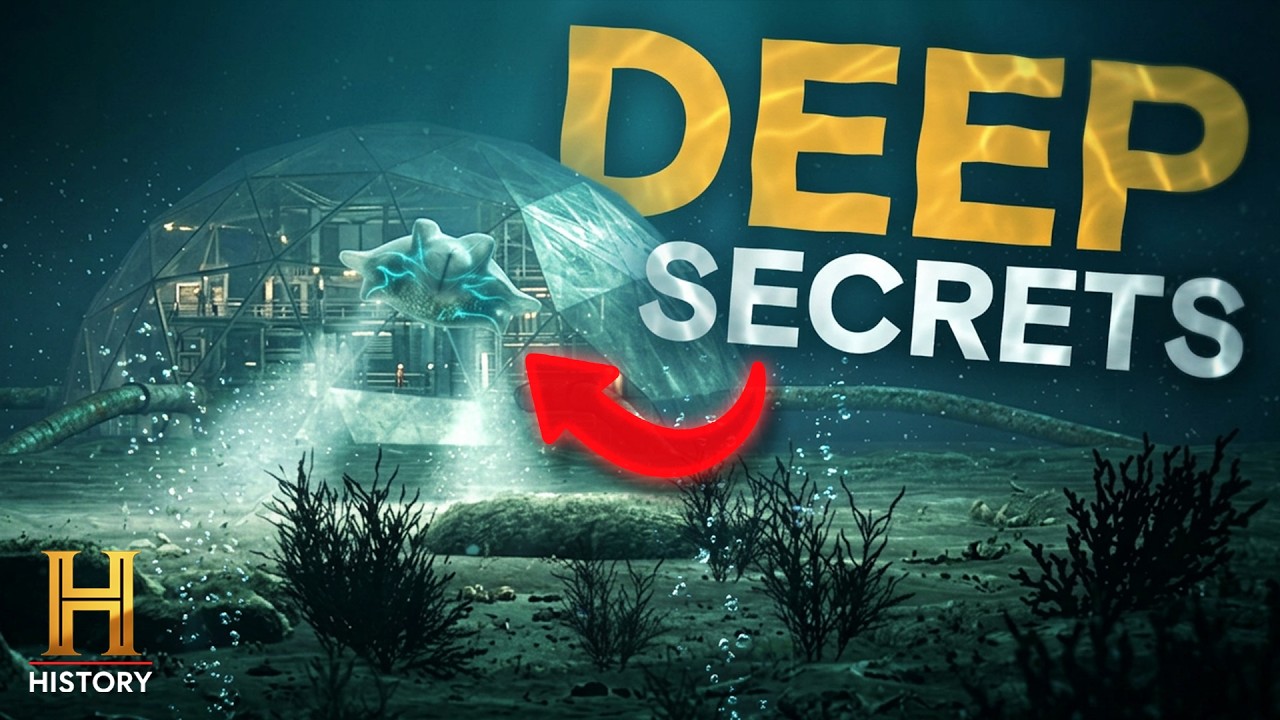
Secrets of the Deep Sea | Ancient Aliens


# Ancient Aliens: Deep Sea Secrets and Extraterrestrial Theories

Introduction: The Abyss of the Unknown

The vast, dark expanse of Earth's oceans, covering over 70% of our planet, remains one of the last great frontiers. While we've mapped the surface of the Moon and sent probes to distant planets, much of our own underwater world remains a mystery. This inherent unknown has always been fertile ground for speculation, and few topics captivate the imagination like the possibility that these depths might hold secrets far older and more alien than we can comprehend. The theory of Ancient Astronauts, often focusing on terrestrial monuments and ancient texts, frequently overlooks the most extensive and enigmatic environment on Earth: the deep sea. Could the silence of the abyss be hiding evidence of an extraterrestrial presence that has interacted with our planet for millennia, long before the pyramids were built or the first cities rose? This expediente delves into the compelling, albeit speculative, connections between deep-sea mysteries and the enduring paradigm of extraterrestrial influence.

Historical Context: Ancient Mariners and Unexplained Phenomena

For as long as humanity has sailed, tales of the sea have been intertwined with the wondrous and the terrifying. Ancient mariners, navigating by stars and instinct, were intimately familiar with the ocean's power and its capacity to conceal. Myths and legends from cultures worldwide speak of mysterious voyages, strange lights beneath the waves, and encounters with beings not of this earth. These narratives, dismissed by many as folklore, can be re-examined through the lens of potential extraterrestrial interaction.

Consider the ancient texts that describe flying machines or celestial visitors. While often linked to terrestrial sites, what if some of these descriptions were inspired by phenomena observed not in the sky, but in the water? The deep sea, with its bioluminescent creatures and crushing pressures, is a realm that has always defied easy explanation. Early human cultures, lacking scientific instruments, would have perceived these unusual events as manifestations of the divine or the otherworldly. It is plausible that some of these ancient accounts, when stripped of religious interpretation, might point to observations of advanced, non-human technology operating within our oceans.

Deep Sea Anomalies: Echoes from the Deep

Modern oceanography has cataloged an array of phenomena that defy conventional scientific explanation. Sonar anomalies, unexplained acoustic signals, and peculiar patterns of activity in the deepest trenches hint at something more than just geological processes or known marine life.

One persistent area of interest is the existence of unexplained acoustic signals originating from the ocean depths. The "Bloop," a sound detected in 1997, was so powerful and unlike any known biological or geological source that it initially fueled speculation about massive, undiscovered sea creatures. While later attributed to icequakes, the intensity and unique characteristics of such sounds continue to puzzle researchers. Could these signals be remnants of advanced propulsion systems, communication networks, or even territorial markers left by non-terrestrial intelligences that utilize Earth's oceans as a base or transit zone?

Furthermore, deep-sea exploration has revealed hydrothermal vents teeming with life, pushing the boundaries of our understanding of habitability. Some theories propose that advanced extraterrestrial civilizations might have seeded life on Earth, and that the deepest oceanic trenches, with their extreme conditions, could serve as ecological niches or even preserved remnants of ancient, non-terrestrial biological experiments.

Underwater Structures: Artificial or Natural Illusions?

Perhaps the most tantalizing evidence, often cited in discussions of Ancient Astronauts, involves purported underwater structures. From the Yonaguni Monument off the coast of Japan to alleged formations in the Bimini Road, these geological features have sparked debate: are they natural geological processes, or do they represent the architectural remains of lost civilizations, possibly influenced by or created by extraterrestrial visitors?

The Yonaguni Monument, in particular, has been a focal point. This massive, multi-tiered formation features sharp angles and flat surfaces that some argue are too regular to be natural. While geologists largely classify it as a natural rock formation, the debate persists. Proponents of the Ancient Astronaut theory suggest it could be a submerged megalithic structure, dating back thousands of years, perhaps constructed by a civilization that predates known history – a civilization that may have had extraterrestrial contact.

Similarly, other underwater sites around the globe have yielded findings that are difficult to reconcile with purely natural explanations. If these are indeed artificial structures, their sheer age and submerged state raise profound questions about Earth's history and the civilizations that may have once inhabited it, potentially with the aid or guidance of extraterrestrial entities.

Cryptids and Encounters: Life in the Uncharted Depths

The deep sea is home to creatures so bizarre they often seem like something from another world. From the colossal squid to the anglerfish with its bioluminescent lure, nature’s imagination in the abyss is boundless. This environment also serves as a backdrop for numerous cryptid sightings and unexplained encounters.

Legends of mermaids and sea serpents, while often relegated to myth, could be distorted accounts of something more. Some researchers posit that these tales might stem from encounters with advanced aquatic beings, or even extraterrestrial species that have adapted to or engineered life for Earth’s oceans. The sheer scale and pressure of the deep sea make it an ideal hiding place for entities that would prefer to remain unobserved by surface dwellers.

Consider the concept of "aquatic aliens" – species from other planets that might favor watery environments, similar to how many Earth species are adapted to water. If extraterrestrials have been visiting Earth for eons, it stands to reason they might have established bases or monitoring stations in our vast oceans, potentially interacting with or observing the indigenous marine life, and perhaps even creating new forms of life. The possibility of intelligent non-human life, whether indigenous or alien, residing in the deep sea continues to fuel intriguing, if unproven, hypotheses.

Ancient Astronaut Implications: An Extraterrestrial Oceanography?

The core of the Ancient Astronaut theory suggests that extraterrestrial beings have influenced human civilization throughout history. When applied to the deep sea, this expands the scope of potential interaction dramatically. If these visitors were not merely observers or occasional visitors to land, but established a significant presence, then the oceans would be a logical place for such activity.

Imagine extraterrestrials utilizing Earth’s oceans as a strategic vantage point, a resource hub, or even a terraforming project. Their technology, far beyond our comprehension, could operate unimpeded by the immense pressure and darkness. This perspective reframes many oceanic mysteries: are unusual energy signatures the result of unknown geological phenomena, or are they the byproduct of advanced alien technology? Are unexplained disappearances at sea merely tragic accidents, or are they evidence of deliberate interference?

The theory posits that ancient coastal civilizations might have had more direct contact with these underwater alien presence than inland cultures. Coastal peoples were the first to witness strange lights emerging from the sea, or unusual visitors arriving on their shores, potentially shaping their myths and beliefs about the gods from the water. This integrated view suggests that any comprehensive study of Ancient Astronauts must acknowledge the profound role Earth's oceans may have played in this millennia-long narrative.

Researcher's Verdict: Drowning in Speculation or Diving for Truth?

From a pragmatic standpoint, the hypothesis that Earth's oceans are a staging ground for extraterrestrial activity remains firmly in the realm of speculation. The evidence presented – be it sonar anomalies, purported underwater structures, or ancient myths – can, in most cases, be explained by known geological, biological, or psychological phenomena. The human tendency to seek patterns and assign meaning to the unknown is a powerful force, especially when confronted with the sheer mystery of the deep sea.

However, the investigator's duty is not to dismiss the unexplainable, but to investigate it. The persistent anomalies detected in our oceans, the enigmatic nature of certain underwater formations, and the enduring human fascination with the unknown warrant continued scientific inquiry. While extraordinary claims require extraordinary evidence, and the Ancient Astronaut theory thrives on circumstantial links, the possibility that something extraordinary resides in our planet's depths cannot be entirely discounted. The ocean floor is a treasure trove of geological history; it is not beyond the realm of possibility, however remote, that it also holds clues to visitors from beyond our world. The lack of definitive proof does not equate to definitive absence.

Field Notes: Further Investigation

The exploration of deep-sea phenomena and their potential connection to extraterrestrial theories requires a multidisciplinary approach. Scientists continue to deploy advanced sonar and submersible technology to map and understand the ocean floor. Researchers in the field of parapsychology and ufology can contribute by analyzing historical records, witness testimonies, and exploring anecdotal evidence that might otherwise be overlooked.

Key areas for future investigation include:

  • Advanced Acoustic Analysis: Thoroughly re-examine historical and ongoing acoustic data from the oceans, employing AI and advanced pattern recognition to distinguish between natural and potentially artificial signals.
  • Geological and Archaeological Surveys: Conduct more rigorous surveys of purported underwater structures, employing state-of-the-art remote sensing and employing archaeological methodologies to assess their origins.
  • Historical Textual Analysis: Re-evaluate ancient seafaring myths and legends across diverse cultures, looking for common motifs or descriptions that might align with advanced technology or non-human intelligences.
  • Biomimicry and Exobiology: Study the extremophiles of the deep sea as potential models for extraterrestrial life adapted to harsh environments.

The challenge lies in separating genuine mysteries from imaginative interpretations. My protocol dictates a rigorous process of elimination, seeking the most parsimonious explanation first. Yet, I remain open to the possibility that some anomalies may indeed point towards an agenda far grander and more ancient than terrestrial history alone can explain.

"The ocean is a mirror to the cosmos, reflecting depths we are only beginning to fathom. What lies beneath the crushing dark might be more alien than any star."

Frequently Asked Questions

  • What is the main argument connecting the deep sea to Ancient Astronaut theories?

The argument suggests that the vast, unexplored nature of Earth's oceans provides an ideal environment for ancient extraterrestrial visitors to establish bases, conduct operations, or leave behind evidence without direct human observation. This includes purported underwater structures and unexplained acoustic phenomena.
  • What are some examples of alleged underwater structures linked to extraterrestrials?

The Yonaguni Monument off the coast of Japan and the Bimini Road in the Bahamas are frequently cited examples. While geological explanations exist, proponents argue their regularity suggests artificial origins, potentially from lost ancient civilizations influenced by aliens.
  • How do unexplained deep-sea sounds relate to this theory?

Mysterious and powerful acoustic signals, like the historical "Bloop," are sometimes interpreted as evidence of large, unknown entities or advanced underwater technology, possibly of extraterrestrial origin, operating in the deep sea.
  • Are there any scientific theories about aquatic alien life?

While speculative, the field of astrobiology considers the possibility of life evolving in water-rich environments on other planets. Some theorize that if aliens visited Earth, they might have possessed aquatic capabilities or engineered life suited for our oceans.

alejandro quintero ruiz is a seasoned investigator with decades of experience dissecting anomalous phenomena. His pragmatic approach, honed by countless fieldwork expeditions and rigorous analysis, has led him to explore the fringes of the known world. He specializes in ufology, cryptozoology, and the intersection of ancient history with potential extraterrestrial influence. His work aims to bridge the gap between skepticism and the possibility of the unexplained, always seeking verifiable evidence. He is the author of several influential reports and a frequent consultant on cases deemed too unusual for conventional study.

Your Mission: A Descent into the Unknown

The next time you gaze out at the ocean, remember that its surface is merely a thin veil. The true mystery lies miles below. Your mission, should you choose to accept it, is to remain curious. Seek out reputable documentaries, read critically about oceanographic discoveries, and ponder the possibilities. Do you believe our oceans harbor secrets beyond mere marine biology, secrets that might connect to the stars?

Share your thoughts and any personal experiences with unexplained phenomena related to water or the sea in the comments below. Let this investigation serve as a catalyst for your own explorations.

Don't let these mysteries remain submerged. Share this expediente on your social networks and join the conversation. Subscribe to our channel for more deep dives into the unexplained.

Puma Punku: The Ancient Enigma of Precision Stonework


The discovery of Puma Punku, an archaeological site in Bolivia, has left researchers and historians utterly bewildered. Among the most perplexing aspects are the colossal stone blocks, meticulously carved with a precision that seems utterly impossible given the primitive tools available to the ancient civilizations believed to have inhabited the region.

Unexplained Precision: The Anomalous Carvings

Puma Punku, meaning "Door of the Puma" in Aymara, is part of the vast Tiwanaku archaeological complex. While Tiwanaku itself is significant, Puma Punku stands out due to its extraordinary stonework. The site features massive blocks of red sandstone and andesite, some weighing upwards of 100 tons. What truly defies conventional explanation is the uniformity and intricacy of the cuts and shapes. These aren't just rough hewn stones; they are precisely shaped into H-blocks, interlocking pieces, and smooth, flat surfaces with sharp, right-angled corners that appear machine-made rather than hand-carved. Archaeologists have struggled to explain how these results were achieved using the known tools of the Tiwanaku culture, which typically included stone hammers and basic chisels. The sheer scale of the blocks, combined with the sophisticated finishing, suggests a level of technological advancement that doesn't align with our understanding of pre-Columbian South America.

Geological Anomalies and Material Composition

The materials themselves present further puzzles. The andesite, a volcanic rock, is far harder than the sandstone, making its precise shaping even more remarkable. Analysis of the cuts reveals what appear to be drill holes of uniform diameter and channel-like grooving that are incredibly straight and parallel over long distances. Some researchers posit that advanced cutting tools, possibly involving abrasive slurries or even unknown sonic or laser technologies, could have been employed. The sheer effort required to quarry, transport, and precisely shape these stones without the use of wheels, pulleys, or iron tools remains a central mystery. The blocks are often found scattered, suggesting a cataclysmic event that may have destroyed the original structures.

Recommended Gear for Investigation

ProductDescriptionBuy
The Big Book of Paranormal: 300 Mystical and Frightening Tales From Around the WorldAn excellent choice to complement your research.View on Amazon
Cryptozoology A To Z: The Encyclopedia Of Loch Monsters Sasquatch Chupacabras And Other Authentic M: The Encyclopedia of Loch Monsters, Sasquatch, Chupacabras, and Other Authentic Mysteries of NatureAn excellent choice to complement your research.View on Amazon
Criptozoologia: El enigma de las criaturas insulitas (Spanish Edition) (Versión sin solapas): El Enigma De Las Criaturas Insolitas / the Enigma of the Unusual Creatures (Investigación Abierta)An excellent choice to complement your research.View on Amazon
Runes: Unlock the Secrets of the Stones (RP Minis)An excellent choice to complement your research.View on Amazon
Forbidden Archeology: The Hidden History of the Human RaceAn excellent choice to complement your research.View on Amazon
The H. P. Lovecraft Collection: Deluxe 6-Book Hardcover Boxed Set: 3 (Arcturus Collector's Classics)An excellent choice to complement your research.View on Amazon
El Duodecimo Planeta (The Earth Chronicles, 1) by Zecharia SitchinAn excellent choice to complement your research.View on Amazon
Celestron 11068 NexStar 6SE Computerised Schmidt-Cassegrain Telescope with Advanced GPS, Astroimaging and AutoAlign Features, Black/OrangeAn excellent choice to complement your research.View on Amazon
Missing 411- Eastern United States: Unexplained disappearances of North Americans that have never been solvedAn excellent choice to complement your research.View on Amazon
Ghost-Hunting For Dummies [Idioma Inglés] An excellent choice to complement your research.View on Amazon

Archaeological Theories vs. Alternative Hypotheses

Mainstream archaeology generally attributes Puma Punku to the Tiwanaku civilization, which flourished between 500 and 900 AD. Theories suggest that the inhabitants possessed an advanced understanding of engineering and geometry, possibly using sand and water as abrasives to achieve the smooth finishes. However, the sheer difficulty in replicating the precision even with modern tools leads many to question these explanations. Alternative hypotheses, often explored in documentaries like In Search of Aliens, propose that extraterrestrial intervention or a lost, highly advanced civilization may have been responsible for constructing Puma Punku. Proponents of these theories point to the unusual precision and the sheer impossibility of the task given the era's technology as evidence for non-human or lost human ingenuity. While contentious, these ideas persist due to the profound lack of concrete answers within conventional frameworks. The lack of surviving documentation from the Tiwanaku people themselves only adds to the enigma.

Investigator's Verdict: Primal Ingenuity or Extraterrestrial Assistance?

From an investigator's standpoint, the evidence at Puma Punku is undeniably anomalous. The precision of the stonework is a significant challenge to accepted historical timelines and technological capabilities of ancient cultures. While it's tempting to leap to extraordinary conclusions like alien builders, we must first exhaust every plausible terrestrial explanation. Could the Tiwanaku people have developed or discovered techniques far beyond what we currently understand? Perhaps methods involving sophisticated water management, resonant frequencies, or controlled erosion were employed. Without further evidence, such as the discovery of specialized tools or detailed schematics, attributing it definitively to aliens remains speculative. However, dismissing the possibility outright ignores the stark reality of the craftsmanship. My current assessment leans towards an advanced, albeit unknown, terrestrial engineering capability, possibly influenced by a cultural understanding of physics and geology that we have yet to fully decipher. It's a testament to ancient human (or perhaps pre-human) potential that forces us to reconsider what was once deemed impossible.

Investigator's Gear Recommendations

Successfully documenting and analyzing anomalous sites requires specific tools. Whether you're a seasoned investigator or just starting, having the right equipment can make all the difference. For field research, durable cameras capable of capturing high-resolution images and video are essential. Audio recording devices are crucial for capturing potential paranormal phenomena like Electronic Voice Phenomena (EVP). Furthermore, environmental sensors can help detect anomalies in temperature, electromagnetic fields, and atmospheric pressure, indicators often associated with unexplained events.

The Investigator's Archive: Recommended Resources

To delve deeper into the mysteries of Puma Punku and similar enigmas, consulting authoritative sources is paramount. While popular media offers compelling narratives, academic research and well-documented historical accounts provide a more grounded perspective. Consider these resources for further investigation:

  • Books: Look for works by respected archaeologists specializing in Andean civilizations, such as those focusing on the Tiwanaku culture. Academic journals often contain detailed analyses of the site's geology and construction techniques.
  • Documentaries: While critical analysis is advised, documentaries that explore alternative theories can offer new perspectives and highlight specific anomalies. Be discerning about the evidence presented.
  • Museum Archives: Institutions with collections from the Tiwanaku region may offer insights through artifacts and scholarly papers.

Frequently Asked Questions

What is Puma Punku?
Puma Punku is an ancient archaeological site located near the Tiwanaku ruins in Bolivia, renowned for its massive, precisely carved stone blocks.
Who built Puma Punku?
Mainstream archaeology attributes it to the Tiwanaku civilization (c. 500-900 AD), though the sophistication of the stonework leads to alternative theories.
What makes the stones at Puma Punku so mysterious?
The stones exhibit incredibly precise cuts, right-angled corners, and interlocking H-blocks, achieved with seemingly primitive tools, baffling researchers.
Are there theories involving aliens?
Yes, the inexplicable precision has led some to speculate about extraterrestrial or lost advanced civilization involvement, similar to topics explored in shows like In Search of Aliens.

Your Mission: Field Observation Protocol

The next time you encounter an unexplained phenomenon, whether it's an unusual historical site or a reported strange occurrence, approach it with the discipline of an investigator. Document everything meticulously: time, location, environmental conditions, and any sensory input. If possible, use recording devices. Compare your findings with established data, but maintain an open mind. Your goal is not to sensationalize, but to gather objective evidence. Consider how the precision at Puma Punku might relate to other ancient megalithic sites. Are there commonalities in the anomalies?

Have you visited Puma Punku or explored similar anomalous sites? Share your experiences and observations in the comments below. Your firsthand accounts are invaluable data for our collective investigation. If this deep dive into the unexplained has piqued your curiosity, ensure you're subscribed for more rigorous investigations into history's greatest mysteries. Share this article with fellow truth-seekers to expand our network of inquiry.

Investigator's Note: True paranormal research doesn't fund itself. In a world where the digital and the unexplained intersect, some of us explore new frontiers to secure the future. Do you dare to be part of the vanguard? Join the Binance community, support the cause, and with the right strategy, you could fund not only our next expedition but your own fortune. The next great discovery could be just a click away.

Ancient Aliens: Investigating the Top 4 Mysteries of Atlantis


Introduction: Echoes from a Lost Civilization

The legend of Atlantis persists through millennia, a siren song of a civilization lost to the depths. Plato's dialogues ignited a firestorm of speculation, but what if the whispers of advanced technology, cosmic connections, and a catastrophic end hold more than just myth? In this investigative report, we dissect the core mysteries of Atlantis, moving beyond mere speculation to analyze the evidence and theories that continue to fuel our fascination. This isn't about fairy tales; it's about interrogating the persistent anomalies within human history and folklore. We're not just exploring a legend; we're performing an autopsy on a potential reality.

Mystery 1: The Technological Marvels of an Advanced Society

The Atlantean narrative is consistently interwoven with descriptions of sophisticated technology far beyond what was believed possible for ancient cultures. Plato spoke of intricate canal systems, advanced metallurgy, and a powerful crystal or energy source at the heart of their civilization. Ancient Aliens, in particular, has championed the idea that these were not mere allegories but echoes of a genuine, technologically superior society, possibly influenced by or directly connected to extraterrestrial visitors. The question arises: could such advanced knowledge have originated solely from human ingenuity at that time, or does it point towards external assistance?

"The discovery of advanced engineering and architectural feats attributed to Atlantean legends challenges our linear perception of historical progress. These weren't simple stone structures; they were complex systems."

Consider the sheer scale of construction attributed to them, as well as the rumored energy sources. When we analyze the geological evidence for rapid submergence and the archaeological vacuum that exists for such a grand civilization, we must ask ourselves: are we overlooking tangible proof hidden beneath the waves, or are these accounts symbolic representations of forgotten human achievements? The cost of dismissing these narratives outright might be ignoring a crucial piece of our pre-history. For those seeking to replicate or understand such potential ancient technologies, specialized historical texts and even advanced engineering simulations might offer insights, though the practical acquisition of such knowledge today often requires significant investment in specialized academic resources.

Exploring ancient technological theories requires rigorous comparison with known archaeological findings and a healthy dose of skepticism.

Mystery 2: The Cataclysmic Downfall

The abrupt and dramatic end of Atlantis is as central to its legend as its perceived grandeur. Whether through a single, cataclysmic event – a massive earthquake, a volcanic eruption, or a geological upheaval – or a series of escalating disasters, the consensus is that the civilization was submerged and vanished from the face of the Earth. The precise nature and timing of this destruction are points of fervent debate, with theories ranging from sudden seismic activity to biblical flood narratives. From a forensic perspective, reconstructing such an event requires correlating geological data with mythical accounts, a task fraught with challenges.

Examining the potential scientific explanations for a rapid continental collapse or submergence, such as tectonic plate shifts or massive tsunamis, provides a framework for understanding how a civilization could disappear. However, the consistency across various ancient cultures of a similar cataclysmic narrative, often involving sudden watery oblivion, demands further analysis. Could these disparate tales be fragmented memories of a singular global event, or are they independent cultural interpretations of natural disasters? Understanding the potential scale of such an event often leads researchers to consult geological surveys and historical records of past cataclysms, accessible through academic databases and specialized publications. The pursuit of this knowledge often necessitates acquiring specialized software for geological modeling or deep-sea sonar analysis, tools typically found in institutional settings rather than individual research kits.

The allure of Atlantis is amplified by the chilling finality of its disappearance. It serves as a potent historical and cultural marker, reminding us of the ephemeral nature of even the most advanced societies. This narrative compels us to consider the fragility of our own civilizations in the face of natural forces. The study of historical geological events, such as major geological shifts during the Holocene epoch, offers context, but the specific details of Atlantis remain elusive.

Mystery 3: The Extraterrestrial Connection Theories

Perhaps the most sensational aspect of the Atlantean myth, heavily popularized by shows like Ancient Aliens, is the theory of an extraterrestrial connection. Proponents posit that Atlanteans possessed knowledge and technology gifted to them by visiting aliens, or were perhaps even descendants of alien races themselves. This theory attempts to bridge the gap between the seemingly impossible advancements described in the legends and the historical timelines of human development. It suggests that Atlantis wasn't just an advanced human civilization, but a hub where human and non-human intelligence converged.

"When we encounter technological leaps that defy conventional historical explanations, the extraterrestrial hypothesis becomes a logical, albeit speculative, path of inquiry."

Analyzing this theory requires us to consider the possibility of ancient astronaut intervention, a concept that challenges established paradigms of human history. Is it plausible that extraterrestrial beings could have visited Earth in antiquity and shared their knowledge, influencing or even founding advanced civilizations like Atlantis? While lacking direct empirical evidence, this hypothesis attempts to reconcile anomalies in our historical record. For those intrigued by the extraterrestrial angle, delving into works by authors like Erich von Däniken or fringe archaeological theories is often a starting point. However, a rigorous approach demands cross-referencing these claims with scientific methodologies and acknowledging the significant speculative leaps involved. Accessing detailed analyses of ancient alien sightings often requires subscriptions to specialized journals or niche documentary platforms.

The integration of alien technology or guidance into the Atlantean narrative provides a compelling, albeit controversial, explanation for their purported superiority. It’s an angle that speaks to our enduring desire to believe we are not alone in the cosmos and that ancient mysteries might hold cosmic keys.

Mystery 4: The Legacy of Atlantis

Even if Atlantis itself is deemed purely mythical, its enduring legacy cannot be understated. The idea of a lost, advanced civilization has inspired countless works of fiction, philosophical discourse, and, crucially, ongoing investigations into unexplained phenomena. Does the persistence of the Atlantis myth reflect a collective unconscious yearning for a golden age, or are these tales echoes of actual historical events that have been submerged by time and geological shifts? The investigation into Atlantis, real or imagined, has undeniably spurred advancements in fields like archaeology, geology, and the exploration of the deep sea, pushing the boundaries of our understanding of Earth's history.

Discussions surrounding the "legacy" of Atlantis often lead to the exploration of what researchers term lost technologies or even ancient advanced civilizations. These concepts, while speculative, drive further research and inspire new hypotheses. For the aspiring researcher, understanding the foundational texts, such as Plato's dialogues, is paramount. Beyond that, exploring academic papers on underwater archaeology and historical geology can provide scientific context.

"Atlanta's myth is a mirror reflecting our own hopes and fears about civilization, progress, and our place in the universe. Its true legacy might be the questions it forces us to ask."

The cultural impact of Atlantis is undeniable, shaping our perception of ancient capabilities and fueling the debate on what humanity might have achieved in its distant past. This persistence makes it a fertile ground for continued paranormal investigation and historical conjecture.

Investigator's Verdict: Fact, Fiction, or Fragmented Truth?

After meticulously sifting through philosophical accounts, popular interpretations, and the scant geological and archaeological data, my verdict on Atlantis remains complex. While Plato's narrative has undeniable literary and philosophical merit, the sheer persistence of the legend across cultures and the specific details concerning advanced technology and a cataclysmic end suggest more than just a simple allegory. The lack of definitive archaeological proof is a significant hurdle, yet the consistent thematic elements across diverse traditions hint at a possible ancient historical event or a deeply ingrained collective memory. Could it be a garbled account of a real, advanced civilization, possibly influenced by extraterrestrial contact, that met a catastrophic end? Or is it a powerful myth that speaks to our innate human fascination with lost utopias and the unknown depths of our own history? The truth likely lies somewhere in a liminal space between documented history and enduring myth, an area perpetually requiring more rigorous investigation, perhaps with the aid of advanced underwater exploration technology, which can be quite costly.

The Investigator's Archive

For those dedicated to unraveling the enigmatic threads of human history and the unexplained, a curated selection of resources is indispensable. The journey into the mysteries of Atlantis, and similar phenomena, is significantly enriched by consulting primary sources and seminal works in the field:

  • Plato's Dialogues: Timaeus and Critias. These are the foundational texts, essential for understanding the original accounts.
  • Books on Ancient Civilizations and Lost Technologies:
    • "Atlantis: The Lost Continent" by Ignatius Donnelly. A classic that popularized many modern theories.
    • "Fingerprints of the Gods" by Graham Hancock. Explores theories of ancient advanced civilizations and their potential global impact.
    • "The Orion Mystery" by Robert Bauval and Adrian Gilbert. Though focused on Egypt, it addresses theories of ancient astronomical alignments and sophisticated knowledge.
  • Documentaries:
    • "Ancient Aliens: The Complete Series" (History Channel). Provides numerous speculative episodes on Atlantis. Access often requires a subscription to platforms like Amazon Prime Video or Gaia.
    • "Finding Atlantis" or similar deep-sea exploration documentaries. These offer scientific perspectives on potential underwater discoveries.
  • Academic Journals: Publications focusing on Archaeology, Geology, and Oceanography. Access typically requires institutional affiliation or subscriptions.

These resources are not mere reading material; they are gateways to deeper understanding and essential tools for any serious investigator. Investing in such foundational knowledge is the first step in transforming curiosity into expertise.

Your Field Mission

The legend of Atlantis compels us to look beyond the known and question the impossible. Your mission, should you choose to accept it, is twofold:

  1. Local Legend Analysis: Research local legends or historical anomalies in your region that speak of lost settlements, unusual geological events, or unexplained phenomena. Do any parallels emerge with the Atlantean narrative? Document your findings and share them in the comments below, specifying your location.
  2. Myth vs. Science Debate: Based on the information presented, formulate your primary hypothesis regarding Atlantis. Was it a historical reality, a symbolic myth, or something else entirely? Prepare to defend your position with logical reasoning, referencing either Plato's original texts or scientific principles discussed here.

The goal is not to find definitive answers, but to practice analytical thinking and engage with the process of historical and paranormal investigation. Documenting and sharing your findings makes your research a valuable contribution to our collective understanding.

Frequently Asked Questions

Q1: Is there any real archaeological evidence for Atlantis?

A1: Despite extensive searches, no definitive archaeological evidence correlating with Plato's descriptions of Atlantis has been unequivocally found. Various locations have been proposed, but none have yielded conclusive proof.

Q2: What is the most accepted scientific explanation for Plato's story?

A2: The most common scientific view is that Plato's story was an allegory or a philosophical construct, possibly inspired by real events like the destruction of Minoan civilization on Thera (Santorini) or other historical cataclysms, but not a literal historical account of a sunken continent.

Q3: If Atlantis didn't exist, why is the story so persistent?

A3: The endurance of the Atlantis myth speaks to its power as a symbol of lost utopia, advanced knowledge, and the enduring human fascination with the unknown and the "what if" of our past. It taps into deep psychological archetypes.

Q4: Can advanced technology from Atlantis be replicated today?

A4: Since the existence and nature of Atlantean technology are speculative, replication is not currently possible. Theories about their "Atlantean crystal" or energy sources remain in the realm of conjecture, though they inspire research into novel energy technologies.

About the Investigator

alejandro quintero ruiz is a veteran field investigator dedicated to the analysis of anomalous phenomena. His approach combines methodological skepticism with an open mind toward the inexplicable, always seeking the truth behind the veil of reality. With years spent meticulously documenting cases, from spectral encounters to alleged alien visitations, his work aims to bridge the gap between folklore, personal testimony, and empirical investigation.

The quest for Atlantis, whether a historical reality or a potent myth, continues to capture our imagination. It challenges us to reconsider the limits of ancient capabilities and the potential influence of forces beyond our current understanding. The echoes of this lost civilization resonate through history, urging us to keep searching, keep questioning, and keep exploring the vast, uncharted territories of the possible.

The Veeranarayana Temple of Belavadi: Architectonics, Celestial Alignments, and Unconventional Theories


There are whispers in the stones of Belavadi, echoes of a time when the line between the divine and the technological blurred. The Veeranarayana temple, a structure largely overlooked by the mainstream archaeological community, stands as a silent testament to forgotten knowledge. Today, we don't just visit a temple; we dissect an enigma, peeling back layers of antiquity to confront questions that challenge our understanding of human history. What secrets lie buried within this ancient edifice, secrets that were perhaps never meant for modern eyes?

Unique Architecture and Celestial Alignment

Upon initial entry, the temple's layout immediately defies conventional design principles. Unlike most sanctuaries that shield their inner sanctums, the Veeranarayana temple is constructed in a direct visual line from its outermost entrance to the innermost chamber, revealing the primary idol almost instantaneously. This seemingly simple linearity is punctuated by a solitary flag post. What makes this alignment extraordinary is the presence of seven meticulously aligned doorways positioned between the entrance and the idol. This deliberate architectural choice begs a critical question: was this mere aesthetic preference, or a functional necessity rooted in a deeper, perhaps cosmic, purpose?

"Ancient architects did everything for a reason, so there must have been a specific reason for this design."

The priest's revelation sheds a stark light on this architectural peculiarity. The precise alignment isn't just for visual effect; it's a celestial calendar. Every year, on March 23rd, the very first rays of the rising sun are channeled through this intricate series of seven doorways. The intervening flag post, far from being an obstruction, acts as a critical component, a carefully placed obstacle ensuring the sun's initial trajectory doesn't strike the idol's face directly. Instead, it redirects this primordial light specifically onto the fingernails of the Veeranarayana idol.

The March 23rd Solar Alignment

This annual solar event is more than just a beautiful spectacle; it hints at an advanced understanding of astronomy and engineering. The idol itself is striking, depicted with hands raised, claws extended, reminiscent of a tiger's posture. Some interpretations suggest this pose is meant to mimic the auspiciousness of tiger claws, renowned for their brilliance in sunlight. Indeed, the reflected light from these carved nails is said to display seven distinct colors during the alignment. This phenomenon, occurring on a specific date, compels us to question the motivations behind such elaborate construction. Why dedicate such immense effort to orchestrate a fleeting solar display upon an idol's extremities? The answer, if we are to believe the principles of ancient architecture, lies not in religious dogma alone, but in a profound connection between the earthly structure and cosmic movements.

An Architectural Masterpiece of Ancient India

Viewing the Veeranarayana temple from an aerial perspective reveals its true genius. Designated as an architectural masterpiece of ancient India, its existence remains surprisingly obscure to the general populace. The design is not only complex but also aesthetically breathtaking. It shares a temporal proximity with renowned structures like the Hoysaleswara and Chennakeshava temples. However, unlike its contemporaries, the Veeranarayana temple boasts three distinct towers, a feature that sets it apart. Internally, a labyrinth of interconnected chambers is accessible through numerous doorways, creating a spatial complexity that continues to puzzle modern observers. The sheer scale and intricate planning suggest a civilization with sophisticated knowledge of engineering and surveying.

The Shiniest Lathe-Turned Pillars in the World

Archeologists are particularly astounded by the temple's lathe-turned pillars. These pillars are described as the "shiniest in the world," possessing a lustrous quality that makes them appear almost glass-like. Close inspection allows one to see their own reflections in the polished surfaces, a testament to the incredible craftsmanship involved. Supporting this marvel are 108 pillars, a number holding significant spiritual weight in Hinduism, symbolizing the cyclical nature of existence and the foundation of life itself. The precise numerical and material choices underscore a philosophy deeply integrated into the very fabric of the temple's construction.

alejandro quintero ruiz is a veteran field investigator dedicated to the analysis of anomalous phenomena. His approach combines methodological skepticism with an open mind towards the inexplicable, always seeking the truth behind the veil of reality.

Unconventional Theories: Advanced Technology and Extraterrestrial Influence

The temple's most provocative aspects lie in carvings that defy simple categorization. The presence of what appear to be complex gears, reminiscent of mechanical clockwork, suggests a level of technological sophistication far beyond what is typically attributed to the era. Some have posited the existence of ancient wingsuits, based on certain carved motifs, implying a mastery of flight or aerial dynamics. Perhaps most controversial are the depictions interpreted as astronauts, one notably showing a foot held in a posture resembling "carved astronaut's foot holds." Furthermore, carvings of what seem to be ancient flamethrowers and even "arc reactors on ceilings" have ignited speculation about advanced weaponry or energy generation systems. These interpretations, while debated, force us to confront the possibility that ancient civilizations possessed knowledge and technology far exceeding our current assumptions. Some researchers, like Praveen Mohan whose work this analysis is based upon, suggest that these complex designs could be evidence of extraterrestrial intervention or knowledge transfer from advanced beings.

Investigator's Verdict: Evidence, Interpretation, and Cosmic Echoes

The Veeranarayana Temple of Belavadi presents a fascinating case study where meticulous architectural design intersects with celestial observation and potentially advanced technological concepts. The solar alignment on March 23rd is a demonstrable phenomenon, showcasing sophisticated astronomical calculations. The lathe-turned pillars and the sheer complexity of the structure point to unparalleled craftsmanship. However, the interpretations of carvings as "arc reactors," "wingsuits," or "astronauts" tread into speculative territory. While the principle of "ancient astronauts" offers a compelling narrative, it remains largely unsubstantiated by conventional archaeology. The temple’s design strongly suggests an advanced understanding of physics, astronomy, and engineering within the context of its time. Whether this advanced knowledge originated solely from human ingenuity or was influenced by external factors remains the core of its enduring mystery. Dismissing these anomalies outright would be intellectually negligent, yet embracing them without rigorous scrutiny risks succumbing to conjecture. The true value of this site lies in its ability to provoke critical thought about our past and the potential hidden within ancient human endeavors.

The Investigator's Archive

To delve deeper into the mysteries of ancient architecture and anomalous artifacts, consider these resources:

  • "Chariots of the Gods?" by Erich von Däniken: A foundational text exploring the extraterrestrial hypothesis in ancient civilizations.
  • "The Ancient Alien Question: Reinterpreting the Past" (Documentary Series): Explores various sites and artifacts through the lens of ancient astronaut theory.
  • Journals of Archaeological Science: For a counterpoint, consult peer-reviewed research on traditional interpretations of ancient Indian temple architecture.
  • Praveen Mohan's Channel: For direct exploration of sites like the Veeranarayana Temple and detailed visual evidence supporting unconventional theories.

Research Protocol: Analyzing Anomalous Ancient Sites

Investigating sites like the Veeranarayana Temple requires a structured approach:

  1. Document Everything: Meticulously record all architectural details, carvings, and environmental observations. Utilize high-resolution photography and videography, paying attention to light and shadow.
  2. Contextualize Findings: Research the historical, cultural, and religious significance of the site. Corroborate claims with established archaeological and historical records.
  3. Analyze Alignments and Phenomena: If celestial alignments are reported, verify them with astronomical data and historical records.
  4. Evaluate Carvings Critically: Investigate the iconography. Compare findings with known artistic styles and symbology of the period. Consider pareidolia and misinterpretation.
  5. Consult Multiple Perspectives: Engage with both mainstream archaeological viewpoints and alternative theories, critically assessing the evidence presented by each.
  6. Identify Anomalies: Note any elements that genuinely defy conventional explanation within the established historical and technological context.

Frequently Asked Questions

What is the significance of the 108 pillars in Hinduism?
The number 108 is considered sacred in Hinduism, representing totality, the cycle of life, and the universe. It appears in various contexts, including mala beads, sacred sites, and deities.
Are there other temples with similar solar alignments?
Yes, several ancient temples across the globe are known for their precise solar and astronomical alignments, such as Stonehenge, Goseck Circle, and the temples of Angkor Wat, though the specific mechanism and purpose can vary greatly.
What is the mainstream archaeological view on the advanced technology theories for this temple?
Mainstream archaeology generally attributes the temple's features to advanced human craftsmanship, mathematical knowledge, and astronomical understanding of the period, without recourse to extraterrestrial intervention or technology far beyond historical capabilities.
When was the Veeranarayana Temple built?
The temple is believed to have been constructed around the same period as the Hoysaleswara and Chennakeshava temples, placing its origin in the 12th or 13th century.

Your Field Mission

The Veeranarayana Temple challenges us to look beyond the surface. Your mission, should you choose to accept it, is to investigate a local legend or an unusual piece of ancient architecture within your own region. Document its features, research its history, and critically assess any unconventional theories associated with it. Apply the principles of analysis and skepticism discussed herein. Share your findings and your own verdict in the comments below. What forgotten knowledge might your local history hold?