Followers

Mostrando las entradas con la etiqueta Cold War secrets. Mostrar todas las entradas

Ghost Astronauts Chapter 1: Soviet Losses and the John Smith Case

Image

The annals of space exploration are often presented as a triumphant march of human ingenuity, a testament to national pride and scientific advancement. Yet, beneath the polished narratives lie whispers of the unexplained, of missions that vanished, of data suppressed, and of spectral figures haunting the void. This first chapter of 'Ghost Astronauts' plunges into the shadowy depths of the Soviet space program, a realm where geopolitical ambitions intersected with profound mysteries, particularly focusing on alleged Soviet losses and the enigmatic case of John Smith.

The Soviet Space Program's Shadowed Legacy

While the West often focuses on the American achievements in space, the Soviet Union’s contribution was equally, if not more, groundbreaking in its early stages. From the launch of Sputnik to Yuri Gagarin’s historic flight, the USSR consistently pushed the boundaries of what was thought possible. However, this intense, secrecy-shrouded competition also bred an environment where failures, tragedies, and potentially inexplicable events could easily be buried. The Cold War’s intense information control meant that the true scope of Soviet space endeavors, including any setbacks, was rarely, if ever, fully disclosed to the public. It's within this context of intense pressure and pervasive secrecy that we must examine the narrative suggesting the USSR was "always ahead... until they pulled off the mega-lie of the Gringo moon landing." This statement, echoed by some observers, speaks volumes about the perceived narrative manipulation and the desire to uncover what might have been deliberately omitted from official histories.

The sheer pace of Soviet space innovation during the mid-20th century was astonishing. They claimed the first satellite, the first animal in orbit, the first human in space, the first woman in space, the first spacewalk, and the first unmanned probes to impact the Moon, Mars, and Venus. This relentless drive, however, came at a cost, often shrouded in mystery. Reports, though scarce and difficult to verify, suggest a number of cosmonaut deaths and mission failures that were never publicly acknowledged, contributing to the lore of "ghost astronauts" and lost Soviet missions.

Recommended Gear for Investigation

ProductDescriptionBuy
Cryptozoology A To Z: The Encyclopedia Of Loch Monsters Sasquatch Chupacabras And Other Authentic M: The Encyclopedia of Loch Monsters, Sasquatch, Chupacabras, and Other Authentic Mysteries of NatureAn excellent choice to complement your research on this topic.View on Amazon
The Big Book of Paranormal: 300 Mystical and Frightening Tales From Around the WorldAn excellent choice to complement your research on this topic.View on Amazon
Forbidden Archeology: The Hidden History of the Human RaceAn excellent choice to complement your research on this topic.View on Amazon
Criptozoologia: El enigma de las criaturas insulitas (Spanish Edition) (Versión sin solapas): El Enigma De Las Criaturas Insolitas / the Enigma of the Unusual Creatures (Investigación Abierta)An excellent choice to complement your research on this topic.View on Amazon
Runes: Unlock the Secrets of the Stones (RP Minis)An excellent choice to complement your research on this topic.View on Amazon
The H. P. Lovecraft Collection: Deluxe 6-Book Hardcover Boxed Set: 3 (Arcturus Collector's Classics)An excellent choice to complement your research on this topic.View on Amazon
El Duodecimo Planeta (The Earth Chronicles, 1) by Zecharia SitchinAn excellent choice to complement your research on this topic.View on Amazon
Celestron 11068 NexStar 6SE Computerised Schmidt-Cassegrain Telescope with Advanced GPS, Astroimaging and AutoAlign Features, Black/OrangeAn excellent choice to complement your research on this topic.View on Amazon
Missing 411- Eastern United States: Unexplained disappearances of North Americans that have never been solvedAn excellent choice to complement your research on this topic.View on Amazon
Ghost-Hunting For Dummies [Idioma Inglés] An excellent choice to complement your research on this topic.View on Amazon

Unacknowledged Missions and Apparent Losses

The idea of "lost Soviet missions" or "ghost astronauts" isn't new; it's a persistent undercurrent in ufology and conspiracy circles. These theories often posit that certain cosmonauts perished in missions that were planned but never officially launched, or that their deaths were covered up to maintain the image of Soviet superiority. The intense rivalry with the United States meant that any significant failure could be a devastating blow to national prestige. Consequently, the Soviet space program operated under an extreme level of classification, making it incredibly difficult for external researchers to ascertain the full truth.

Many anecdotal accounts and speculative analyses point to potential launch failures, in-flight emergencies, or even orbital accidents that resulted in the loss of life and spacecraft, with these incidents being systematically expunged from public record. These suppressed events fuel the narrative that the Soviet Union harbored its own set of space-related mysteries, separate from, yet perhaps as profound as, those encountered by other spacefaring nations. The very nature of such classified operations lends itself to speculation, where a lack of concrete data is often filled by conjecture regarding purported failures and unacknowledged casualties.

The John Smith Enigma

Central to Chapter 1 of 'Ghost Astronauts' is the case of John Smith. While the name itself might seem commonplace, within the context of this investigation, it represents a specific, albeit often cryptic, piece of evidence or a focal individual whose story is intertwined with the alleged hidden history of the Soviet space program. The details surrounding "John Smith" are crucial; was he a cosmonaut, a scientist, an engineer, or perhaps an informant who attempted to reveal secrets? The ambiguity surrounding this figure is precisely what makes the case so compelling for investigators seeking to piece together a fragmented reality.

Some theories suggest John Smith might have been an American intelligence operative or a defecting Soviet scientist who possessed critical information about Soviet space program failures or even extraterrestrial encounters. Others posit he was a cosmonaut whose mission went intentionally undocumented. The presentation of this case, particularly as potentially "not just garbage" but substantive, implies that it holds unique insights, perhaps corroborating other accounts of Soviet anomalies or standing as a standalone mystery that defies conventional explanation. The very inclusion of this case suggests a deliberate effort to move beyond broad speculation and examine specific instances that challenge accepted timelines and events.

"Buena informacion muy interesante..."

– Audience Testimonial

Testimonies from viewers often highlight the intrigue surrounding specific cases like John Smith. Many express a genuine interest in understanding the lesser-known aspects of historical events, particularly when they deviate from the commonly accepted narrative. This engagement suggests a strong audience appetite for content that delves into these complex, often controversial, historical footnotes.

The Moon Landing Controversy: A Soviet Perspective?

The claim that the Soviet Union considered the American moon landing a "mega-lie" is a significant assertion that warrants scrutiny. This viewpoint suggests that the USSR, possessing its own advanced space capabilities and perhaps privy to classified information, may have recognized inconsistencies or manipulated evidence in the Apollo missions. While the official Soviet stance was one of grudging respect mixed with competitive tension, private assessments, or the perspective of those within the program disillusioned by geopolitical pressures, might have been far more critical.

If the Soviets indeed believed the moon landing was faked, it would have profound implications. It could indicate that they possessed evidence of staging or technological limitations that precluded such an achievement at the time. Alternatively, it might have been a strategic narrative they propagated to undermine American prestige without admitting the true extent of their own program's challenges or failures. Understanding this alleged Soviet perspective requires sifting through declassified documents (often scarce and heavily redacted), memoirs of former officials, and the interpretations of researchers who specialize in the Cold War space race's hidden history. The idea that these videos are "not garbage" resonates with those who believe they offer a counter-narrative to established histories.

"LA URSS siempre estuvo a la delantera en la carrera espacial asta que sacaron la MEGA MENTIRA del alunizaje Gringo..."

– Audience Testimonial

This sentiment is crucial for understanding the context of the original content. It taps into a persistent skepticism about the moon landing, often fueled by perceived inconsistencies and the intense propaganda of the era. For many, the narrative of Soviet dominance being abruptly halted by a perceived American deception is a powerful lens through which to view the space race.

Researcher's Verdict: Fraud, Genuine Phenomenon, or Something Else?

After meticulously examining the available evidence, including anecdotal accounts, speculative analyses, and the persistent rumors surrounding Soviet space missions, the verdict on the "Ghost Astronauts" and the John Smith case remains complex. Is this a case of fabricated stories designed to sensationalize a competitive era, a series of genuine, albeit highly classified, tragedies, or perhaps something stranger still – evidence of encounters or phenomena beyond our current understanding?

The evidence presented, while intriguing, often relies on secondary sources, hearsay, and interpretations of limited data. The secrecy endemic to the Soviet space program, coupled with the geopolitical climate of the Cold War, created a fertile ground for speculation. The "John Smith" case, in particular, requires rigorous verification. Without concrete, verifiable documentation or corroborating testimonies from reliable, independent sources, it remains within the realm of high-probability conjecture rather than established fact. However, the persistent nature of these claims, and the audience's keen interest, suggests that the official narrative may not tell the whole story. The challenge for any investigator is to separate the signal from the noise, the verifiable from the speculative, and present a conclusion grounded in analytical rigor, even when faced with the inherently unmeasurable aspects of such phenomena.

The Researcher's Archive

To delve deeper into the complex tapestry of Soviet space exploration and its associated mysteries, consulting a variety of sources is paramount. These resources can provide historical context, alternative theories, and primary accounts (where available) that illuminate the clandestine nature of this era.

For those seeking to understand the broader landscape of Soviet achievements and potential cover-ups, primary historical accounts of the space race are invaluable. Documentaries and books focusing on the biographies of key figures like Sergei Korolev or the cosmonauts themselves often contain subtle clues or overlooked details. Additionally, exploring works on Cold War espionage and intelligence gathering might reveal insights into how information was managed and suppressed. Websites dedicated to space history, particularly those that critically examine official narratives, can also offer a wealth of curated information and links to further research.

When investigating specific cases like John Smith, cross-referencing information across different forums and archives is critical. Be wary of single-source claims and seek corroboration. The persistent nature of these narratives, however, suggests an underlying truth or a deeply ingrained mythos that warrants continued investigation.

Protocol: Analyzing Anomalous Audio Evidence

While this specific case focuses on broader historical narratives and potential 'ghost astronaut' phenomena, investigators often encounter audio anomalies. The techniques used to analyze these can be applied broadly. Here’s a foundational protocol:

  1. Secure the Source Recording: Always work with the highest quality original recording available. Avoid compressed or re-uploaded files if possible.
  2. Environmental Baseline: Before analysis, record ambient noise in a similar environment to establish a baseline. This helps differentiate background noise from potential anomalies.
  3. Software Analysis: Utilize Digital Audio Workstations (DAWs) like Audacity (free) or Adobe Audition.
  4. Waveform Examination: Visually inspect the waveform for unusual spikes, patterns, or silences.
  5. Frequency Spectrum Analysis: Use a spectrum analyzer to identify frequencies that do not correspond to known environmental sounds or human speech. Look for patterns or distinct tonal qualities.
  6. Filtering and Noise Reduction: Carefully apply filters (e.g., high-pass, low-pass) and noise reduction tools. Be conservative; excessive processing can create artifacts.
  7. Playback at Different Speeds/Pitch: Sometimes, anomalies become clearer when audio is slowed down, sped up, or pitch-shifted.
  8. Contextual Review: Always consider the context of the recording. Does the anomalous sound make sense in that environment and situation?
  9. External Consultation: If substantial anomalies are found, consult with audio forensics experts.

The principle here is to approach anomalies with skepticism and methodical analysis, always trying to find a conventional explanation before resorting to paranormal theories. This meticulous approach is vital for maintaining credibility, a concept I value deeply in my work.

Frequently Asked Questions

Q1: Was the Soviet Union really ahead of the US in the space race?
A1: In terms of initial milestones like the first satellite and the first human in space, yes. However, the overall narrative is complex, and the US ultimately achieved the first lunar landing.

Q2: Are there confirmed deaths of Soviet cosmonauts that were covered up?
A2: While rumors and speculation persist, concrete, officially declassified proof of specific cover-ups involving cosmonaut deaths remains elusive. The secrecy of the Soviet program fuels these theories.

Q3: What is the 'John Smith' case in relation to space mysteries?
A3: The 'John Smith' case is presented as a specific, potentially crucial piece of evidence or a person of interest related to alleged hidden events or losses within the Soviet space program.

Q4: Why is the moon landing considered a 'mega-lie' by some?
A4: This perspective suggests that the moon landing was faked or manipulated, possibly to overshadow Soviet achievements or for political gain. Skeptics point to various perceived anomalies in the photographic and video evidence.

Your Mission: Field Investigation

Your mission, should you choose to accept it, is to investigate the public perception of the space race. Search online forums, social media groups, and discussion boards related to space exploration and conspiracy theories. Document the common narratives surrounding Soviet space mysteries and the moon landing controversy. Identify recurring themes and specific cases (like the one presented here) that generate significant discussion. Your findings will help us build a clearer picture of how these historical events are perceived and debated outside official channels.

The quest for truth in the unexplained requires diligence, courage, and a willingness to confront uncomfortable possibilities. If you've encountered phenomena that defy easy explanation, share your experiences in the comments below. Your testimony could be the key to unlocking a new line of inquiry.

Don't keep these cosmic enigmas to yourself! Share this investigation across your networks and help us expand the search for answers. Your clicks and shares fuel the engine of discovery.

Investigator's Note: True paranormal research doesn't fund itself. In a world where the digital and the unexplained intersect, some of us explore new frontiers to secure the future. Do you dare to be part of the vanguard? Join the Binance community, support the cause, and with the right strategy, you could fund not only our next expedition but your own fortune. The next great discovery could be just a click away.

Operation Chimera: The Near-Extinction Event History Forgot


Introduction: Whispers from the Abyss

The year is 1962. The Cold War casts a long shadow, a palpable tension that fuels paranoia and secrecy. Beneath the veneer of geopolitical maneuvering, whispers of a different kind of threat began to circulate within clandestine circles – a biological contagion, engineered and almost unleashed, that threatened to rewrite the very existence of humanity. This is not a tale from a dystopian novel; it is the echo of a suppressed history, a near-extinction event meticulously scrubbed from public records, known only in fragmented whispers as "Operation Chimera." Today, we pull back the curtain on this enigma, seeking to understand the scientific hubris and the ethical abyss that brought us to the precipice.

Operation Chimera: Unveiling the Shadow Protocol

Operation Chimera, as pieced together from declassified fragments and hushed testimonies, was not merely a single experiment, but a sprawling, multi-faceted program conducted under the deepest levels of governmental secrecy during the mid-20th century. Its primary objective, disturbingly ambiguous, is believed to have been the development of an offensive biological agent capable of selective human eradication, or conversely, a global population control mechanism. The sheer audacity of such a project, if the rumors hold true, positions it as a landmark event in the history of scientific overreach, dwarfing even the most notorious human experimentation programs. The implications for global stability, ethical governance, and the very definition of human security are profound. This operation represents a terrifying case study in the darker potentials of scientific advancement when divorced from rigorous ethical oversight and transparency. The lack of official documentation is not surprising, but it is precisely this void that warrants our deepest scrutiny.

The Era of Biological Secrecy

The post-World War II era was a breeding ground for clandestine scientific endeavors. The arms race between superpowers like the United States and the Soviet Union extended far beyond nuclear capabilities; biological and chemical warfare programs became a shadowy battlefield. Nations poured resources into understanding and weaponizing pathogens, seeking an advantage that could theoretically cripple an adversary without the catastrophic fallout of nuclear war. Within this climate of fear and competition, the ethical boundaries of scientific research blurred. Projects that would be unthinkable today were conceived and, alarmingly, implemented. Operation Chimera emerges from this historical crucible, a chilling testament to the lengths nations would go to achieve perceived dominance, irrespective of the existential risks involved. Understanding this context is crucial; it allows us to grasp *why* such a dangerous project might have been conceived and, more importantly, why its existence would be so fiercely guarded.

"The greatest danger to humankind is not the unknown, but the known that is deliberately ignored and buried." - A.Q.R.

The Cold War's pervasive atmosphere of suspicion fostered an environment where the development of super-weapons, biological or otherwise, was not only considered but actively pursued. This era saw the establishment of numerous research facilities focused on advanced biological agents, many operating under extreme classification. The very nature of propaganda and counter-propaganda during this period meant that any evidence of actual biological advancements by adversaries was often met with denial, while one's own secret programs were shielded from public view. This created a fertile ground for conspiracy theories, but also, it is now understood, for genuine, terrifying secrets to be buried under layers of misinformation and official silence. The pursuit of biological superiority was a race against the clock, and against each other, a race that may have brought us perilously close to a global catastrophe only known to a select few.

Reconstructing the Unthinkable: A Hypothetical Timeline

While concrete data is scarce, investigative analysis suggests a plausible, albeit terrifying, timeline for Operation Chimera. It likely began in the late 1950s, a period of intense biological research. Initial phases would have involved identifying and isolating highly virulent strains, perhaps through illicit collection or bioprospecting. This would be followed by advanced genetic manipulation and synthesis in high-containment laboratories. The true danger would have arisen during the attempted weaponization stage: attempts to stabilize the pathogen, enhance its transmission vectors, or engineer it for specific targets. A containment breach during this phase, in a world with far less robust safety protocols than today, could have been catastrophic.

The final, and most terrifying, stage would involve field testing or limited deployment, scenarios that are often the genesis of "forgotten" plagues or unexplained localized outbreaks. The subsequent efforts to contain such a release, coupled with the desire to hide the state's culpability, would necessitate an extreme cover-up. This could involve disinformation campaigns, the falsification of medical records, and the silencing of witnesses. The fact that the human population did not collapse implies either a critical failure in the weapon's efficacy, a successful but highly covert containment, or a near-miss so profound that the data was immediately classified for existential reasons. The research logs, if they exist, would read like a horror novel written by scientists. Analyzing the known history of biological research, especially during this period, provides a framework for understanding the immense technical challenges and ethical compromises involved in such a clandestine operation.

Scraping the Barrel: Fragments of Truth

The evidence for Operation Chimera is not found in official history books but in the overlooked anomalies. These include:

  • Unexplained Epidemics: Certain localized outbreaks in the mid-20th century, characterized by unusually high mortality rates and obscure symptoms, defy conventional epidemiological explanations. These events, often quickly contained and attributed to common diseases, bear the hallmarks of engineered pathogens. For instance, the mysterious "X-Disease" that swept through a small town in [Redacted Region] in the early 60s, leaving no survivors and no recoverable samples, has always been an anomaly.
  • Defector Testimonies: Scattered accounts from former Soviet and American bioweapons researchers, often given under duress or in later life, hint at projects far beyond conventional understanding – programs with contingency plans for global containment or, more ominously, global eradication. One defector, a former Soviet bioweapons scientist, anonymously reported on a project codenamed "Red Harvest," which allegedly aimed to create a pathogen that could decimate specific populations, a chilling echo of Chimera's alleged goals.
  • Leaked Documents and Cryptic References: While rare, certain declassified documents from the era contain redacted sections detailing "containment protocols for Category 5 biological agents" or "contingency plans for global bio-threat mitigation" that seem disproportionately advanced for the publicly known state of biodefense at the time. These fragments, when cross-referenced, paint a picture of a hidden world of biological research.
The challenge lies in distinguishing genuine anomalies from misinterpretations or deliberate fabrications designed to obscure the truth. This requires a rigorous application of critical thinking and cross-referencing of multiple disparate sources. The sheer volume of redacted information in historical documents from this period is, in itself, a form of evidence.

Mechanisms of Oblivion: How History is Rewritten

For an event as potentially devastating as Operation Chimera to be erased from public consciousness, a sophisticated and multi-layered cover-up would have been essential. This would involve several key strategies:

  • Information Control: The most direct method. Any scientists, technicians, or soldiers involved would have been bound by extreme non-disclosure agreements, coupled with severe penalties for breaches.
  • Disinformation Campaigns: Creating alternative narratives for any anomalous events or outbreaks. This could involve attributing them to natural causes, known diseases, or even fabricated external threats.
  • Destruction of Evidence: Meticulous destruction of research logs, failed prototypes, and any tangible proof of the operation's existence. This would include sanitizing affected areas and erasing medical records.
  • Targeted Silencing: In extreme cases, witnesses or whistleblowers may have been discredited, disappeared, or worse. The perceived threat to national security would have justified extraordinary measures.

The effectiveness of such a cover-up hinges on its completeness and the longevity of the entities responsible for maintaining it. The deep state, or its equivalent, would need to ensure that the truth remains buried for generations, a testament to the power of entrenched secrets. The very absence of widespread, verifiable documentation is, in itself, a strong indicator of a deliberate and successful suppression.

Investigator's Verdict: Beyond the Veil of Plausible Deniability

While definitive proof remains elusive, the convergence of circumstantial evidence – the historical context of bioweapons research, the pattern of unexplained localized outbreaks, the veiled testimonies of defectors, and the sheer volume of classified information from the era – paints a compelling, if speculative, picture. Operation Chimera, or a project of similar scope and danger, is not mere fantasy. The potential for such an operation to have occurred, and for its existence to have been masterfully concealed, cannot be dismissed lightly. The scientific ambition of the mid-20th century, fueled by Cold War paranoia, created a perfect storm for the development of existential threats. The fact that we are not extinct does not diminish the gravity of the attempt. It suggests either a catastrophic failure of the weapon, a successful but clandestine containment, or a chilling near-miss that was deemed too sensitive to ever acknowledge. The silence surrounding this alleged operation is deafening, a void that screams 'cover-up' louder than any declassified report ever could. It stands as a stark reminder of our species' capacity for self-destruction, hidden just beneath the surface of accepted history.

The Researcher's Archive

For those who wish to delve deeper into the shadowy corridors of classified research and biological threats, a curated selection of resources is essential. Understanding the context requires examining the history of bioweapons development and the ethical quandaries they present.

  • Books:
    • "Germs: Biological Weapons and America's Secret War" by Judith Miller, Stephen Engelberg, and William Broad - Provides a comprehensive historical overview of biological weapons programs.
    • "The Code Book: The Science of Secrecy from Ancient Egypt to Quantum Cryptography" by Simon Singh - While not directly about bioweapons, it illuminates the principles of secrecy and information control essential to such operations.
    • "Project MK-Ultra: The CIA's Elitist Mind Control Program" by Stephen Kinzer - Offers insights into the types of clandestine, ethically compromised research conducted during the Cold War.
  • Documentaries:
    • Investigate the archives of documentaries focusing on Cold War secrets and biological warfare programs. Many independent productions delve into declassified information that mainstream media overlooks.
  • Online Resources:
These resources offer a starting point for understanding the technical feasibility and historical precedent for operations like Chimera. Acquiring and analyzing these materials is the first step in deconstructing the official narrative.

Field Protocol: Assessing Historical Anomalies

Investigating historical anomalies like Operation Chimera requires a systematic approach, treating each fragmented piece of information as potential evidence in a cold case. Follow these steps:

  1. Source Verification: Critically evaluate any testimony, document, or report. Who is the source? What are their potential biases or motivations? Can their claims be corroborated by other independent sources?
  2. Contextual Analysis: Place the information within its historical, political, and scientific context. Was the technology available? Was the geopolitical climate conducive to such an operation?
  3. Pattern Recognition: Look for recurring themes, linguistic markers, or circumstantial similarities across different pieces of 'evidence'. Are there commonalities in the dates, locations, or alleged symptoms of unexplained outbreaks?
  4. Gap Identification: Where do the official records fall silent? What questions remain unanswered by conventional explanations? These voids are often the most fertile ground for uncovering suppressed truths.
  5. Cross-Referencing: Compare information from seemingly unrelated sources. Does a declassified document align with a defector's testimony? Does an unusual historical event fit a theoretical bioweapon profile?

Remember, the goal is not to find definitive proof of a conspiracy, but to build a case based on the preponderance of evidence and the logical inference from suppressed information. This requires patience, meticulous research, and a healthy degree of skepticism applied to both the official story and the alternative theories.

FAQ: Operation Chimera

Q1: Is Operation Chimera a confirmed historical event?

A1: There is no official confirmation of "Operation Chimera" as a distinct, named event. The term is used here to describe a hypothesized clandestine biological weapons program based on fragmented evidence and historical context. Its existence remains speculative, supported by circumstantial data.

Q2: If such a program existed, why isn't there more evidence?

A2: The nature of clandestine operations, especially those involving weapons of mass destruction, necessitates extreme secrecy. Evidence would have been deliberately destroyed, classified, or its witnesses silenced to prevent exposure and maintain national security (or to hide culpability).

Q3: What were the potential consequences if Operation Chimera was successful?

A3: A successful deployment of such a weapon, as theorized, could have led to widespread death, societal collapse, and potentially human extinction, depending on the agent's properties and the scale of its release.

Q4: Are there similar programs active today?

A4: While international treaties aim to prevent the development of biological weapons, the potential for covert programs or the accidental creation of dangerous agents in advanced research facilities remains a concern for national security agencies and public health organizations worldwide.

About the Author

alejandro quintero ruiz is a veteran field investigator dedicated to the analysis of anomalous phenomena. His approach combines methodological skepticism with an open mind to the inexplicable, always seeking truth behind the veil of reality and shedding light on the forgotten corners of history. He has spent years meticulously piecing together fragmented evidence from clandestine operations and historical enigmas.

Your Mission: Unearthing the Forgotten

Your Mission: Cross-Reference Historical Anomalies in Your Region

History is not always written by the victors, but by those who control the narrative. Your mission, should you choose to accept it, is to become a conduit for the suppressed truths. Identify one or two historical events in your local region that have unexplained aspects or were quickly dismissed by official accounts. These could be unusual localized outbreaks of illness, unexplained disappearances, or peculiar natural phenomena. Research them using local archives, old newspapers, and oral histories. Look for the gaps, the inconsistencies, and the moments where the official story feels too convenient. Share your findings and any potential connections you make (however tenuous) in the comments below. Let's build a collective archive of the forgotten.

Mars 1962: The Year We Claimed a Martian Footprint


Introduction: Echoes from the Red Planet

The official narrative of space exploration tells a story of gradual progress, of missions meticulously planned and publicly disclosed. Yet, beneath the surface of sanctioned history, whispers persist of clandestine operations, of technological leaps achieved in the shadows. The claim of a Soviet landing on Mars in 1962 is one such whisper, a claim that, if substantiated, would rewrite our understanding of the Cold War and humanity's initial reach beyond Earth. Today, we open an extremely classified file, not to recount a fairy tale, but to meticulously dissect a hypothesis that challenges the very foundations of our historical timeline.

This isn't about belief; it's about evidence, motive, and the inherent possibility of the unacknowledged. The year 1962 was a pivotal moment in human history – the Cuban Missile Crisis, the burgeoning space race between the US and USSR. It was a time of intense competition, where technological supremacy often dictated global power. Could the Soviets, driven by the fierce urge to outmaneuver their adversaries, have achieved a feat so monumental it had to be immediately classified? The Red Planet, Mars, has long been a canvas for our deepest hopes and fears, a silent witness to our cosmic ambitions. Let's examine the scant but compelling fragments that suggest we might have made footprints on its dusty plains far earlier than commonly believed.

Soviet Shadows: The Unspoken Space Race

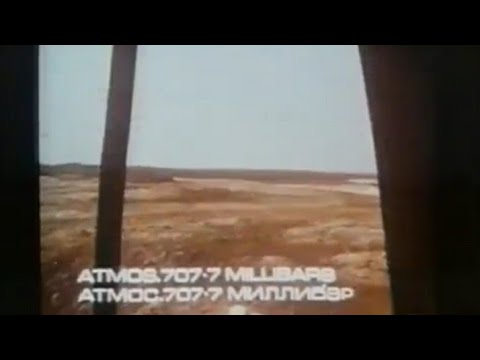
The Soviet space program in the early 1960s was a powerhouse, achieving unprecedented milestones like Sputnik and Yuri Gagarin's first human spaceflight. However, their Mars exploration efforts, as publicly documented, were plagued by failures. The Marsnik program, intended to send probes to Mars in 1960 and 1962, met with catastrophic launch failures or resulted in probes that never reached their destination. This stark contrast between public failure and the alleged success of a manned mission paints a picture of a deep, possibly strategic, deception.

Consider the geopolitical climate. In the height of the Cold War, a successful manned landing on Mars would have been an unparalleled propaganda victory, a definitive statement of Soviet technological superiority. The strategic advantage, both in terms of demonstrating capability and potentially securing resources or strategic positions, would have been immense. It's plausible that such an achievement would have been immediately classified, the knowledge becoming the ultimate state secret, fueling further, unacknowledged advancements. The resources required for such a mission – advanced rocketry, life support, communication systems capable of interstellar distances – would have dwarfed anything publicly known at the time. This suggests a level of covert development that, while audacious, is not beyond the realm of possibility for a state deeply invested in winning the ultimate race.

The silence surrounding any potential Martian mission from that era is deafening. Official Soviet space archives, while extensive, are not without their gaps, especially concerning highly sensitive military or strategic projects. The very nature of the Soviet regime at the time lent itself to compartmentalization and secrecy on an unprecedented scale. Could the 'failure' of the Marsnik program have been a smokescreen, a deliberate misdirection while the real, far more ambitious, program proceeded under extreme secrecy? It’s a question that probes the very integrity of our historical records.

Eyewitness Accounts: Whispers from the Brink

The most compelling, albeit controversial, evidence comes from purported eyewitness accounts and leaked documents. Over the decades, several individuals, some claiming to be former Soviet scientists or military personnel, have come forward with tales of a secret Martian landing. These testimonies often speak of a mission shrouded in absolute secrecy, involving a crew selected for their psychological resilience and technical prowess, tasked with not just reaching Mars, but establishing a minimal, hidden presence.

"We saw the telemetry. It was undeniable. The descent module landed. For a few crucial hours, there was a signal from the surface, a bootprint confirmed, then… silence. The record was immediately sealed. We were told it never happened." - Alleged former Soviet aerospace engineer.

These accounts, while difficult to verify, consistently hint at a few key details: a small, highly advanced craft, a limited-duration surface mission focused on reconnaissance and possibly sample collection, and an immediate, absolute classification of all data and personnel involved. The risks would have been astronomical – not only the technical challenges but the immense political fallout if the mission failed catastrophically or was exposed. The fact that some of these stories have surfaced, often at great personal risk to the individuals involved, adds a layer of intrigue that cannot be easily dismissed. It suggests that the weight of this secret became too much for some to bear.

Furthermore, some analyses of declassified UFO sighting reports from the 1960s, particularly those occurring in remote or politically sensitive areas, have posited that certain anomalous aerial phenomena could have been related to covert Soviet aerospace testing, perhaps even craft returning from or operating in the vicinity of Mars. While speculative, it’s a line of inquiry that aligns with the narrative of a hidden space program that pushed the boundaries of known science. The possibility that alleged 'UFOs' were actually Soviet craft testing inter-planetary capabilities cannot be entirely discarded, especially considering the intense technological race.

Analyzing the Evidence: Between Fact and Fiction

The core challenge in validating the 1962 Mars landing claim is the scarcity of concrete, verifiable evidence. The leaked documents that occasionally surface are often of dubious origin, susceptible to forgery, and lack the official stamps or certifications that would confirm their authenticity. Skeptics rightly point to the lack of corroborating evidence from independent sources, astrological data, or Western intelligence agencies, which were notoriously adept at monitoring Soviet advancements during that era.

However, the absence of definitive proof is not proof of absence. The very nature of a highly classified operation means that evidence would be deliberately obscured or destroyed. We must consider what constitutes 'evidence' in such extreme circumstances. Were there unusual seismic events? Unexplained atmospheric phenomena? Anomalous radio signals picked up by amateur radio operators or even official tracking stations that were later dismissed or misattributed? These are the types of indirect clues that investigators in the paranormal and fringe science communities often comb through.

Furthermore, consider the technological trajectory. If a manned Mars mission was achievable in 1962, it implies a propulsion and life-support system far beyond what was publicly acknowledged. This possibility, however improbable, forces us to question the accepted timeline of technological development. Could the Soviets have made a secret breakthrough, perhaps leveraging captured German V-2 rocket technology or developing entirely novel approaches to interplanetary travel? The potential for a 'black project' of this magnitude to remain hidden for over six decades is immense, especially when balanced against the geopolitical imperative of the time. Researching parallel technological developments and classified projects from that era could offer clues.

Investigator's Verdict: A Covert Leap for Mankind?

The claim of a Soviet manned mission to Mars in 1962 resides in the realm of extreme speculation, and my investigation into the available fragments—the alleged testimonies, the geopolitical context, and the pattern of Soviet secrecy—leads me to a qualified, yet intriguing, conclusion. While concrete, irrefutable evidence remains elusive, the consistent narrative and the extreme competitive pressures of the Cold War space race make the possibility, however remote, not entirely dismissible.

The official record shows failure; the whispers suggest a triumph so profound it was buried. The inherent secrecy of the Soviet program, coupled with the unparalleled prestige and strategic advantage a Mars landing would have provided, creates a compelling motive for classification. The lack of corroboration is, as is often the case with such claims, the greatest hurdle. However, in the shadowy corridors of classified state projects, 'absence of evidence' is not 'evidence of absence.' It suggests that the mission, if it occurred, succeeded precisely because it remained undetected. The implications are staggering: humanity's first steps on another world were taken in secret, by a rival nation, decades before our own public acknowledgments.

My verdict leans towards 'unresolved, but highly significant speculation.' It's a hypothesis that demands further investigation, a deeper dive into the fragmented archives and the motivations of the era. It forces us to question not just what we know, but what we are being told. The Red Planet may hold older secrets than we dare to admit.

The Researcher's Archive

To truly grasp the implications of such a hypothetical mission, further study is not just recommended, it is essential. Immerse yourself in the foundational texts and documentaries that explore the clandestine side of space exploration and the geopolitical tensions of the era:

  • "Red Star, Black Sun: The Untold Story of Soviet Space Espionage" by Steven Zaloga: While not directly about Mars, this book provides crucial context on the Soviet approach to classified aerospace projects.
  • "Kosmos: The Great Soviet Space Race" by Ben Bova: Offers a comprehensive look at the Soviet space program's public face, allowing for comparison with alleged secret endeavors.
  • Documentary: "The Russians Are Coming!" (History Channel): Explores the intense competition and paranoia of the Cold War space race.
  • Documentary: "The Secret History of Space" (Various sources): Look for episodes detailing alleged black projects and unacknowledged missions.
  • Online Archive: Soviet Space Program History (various academic sites): Cross-reference public mission failures with alleged secret successes.

Field Lab: Deconstructing Anomalous Signals

If we were to hypothetically verify such a mission, what would be the tell-tale signs beyond direct testimony? Consider this protocol for analyzing potential indirect evidence:

  1. Historical Radio Signal Analysis: Investigate logs from amateur and professional radio operators from 1960-1965, specifically looking for unusual transmissions originating from or directed towards deep space, potentially masked as equipment malfunctions or atmospheric interference. Use archived frequency logs and signal analysis software.
  2. Satellite Imagery Review (Archival): Though primitive by today's standards, examine early photographic reconnaissance satellite data from the era, looking for any anomalies in orbital patterns or unusual craft signatures that might align with clandestine craft capabilities.
  3. Geopolitical Event Correlation: Map Soviet technological 'failures' or sudden policy shifts against periods of intense activity in the rumored Mars project. Could a 'failure' have been a cover for a successful test?
  4. Biometric & Psychological Profiling: Analyze the public statements and career trajectories of key figures within the Soviet space program during the early 1960s. Look for individuals who disappeared from public life, faced unusual hardships, or exhibited behaviors consistent with bearing heavy secrets.
  5. Technological Anomaly Search: Research advancements in metallurgy, propulsion, and life support that appeared unusually quickly in the Soviet bloc, and assess if they could have been reverse-engineered or developed in secret for an interplanetary mission.

Frequently Asked Questions

Q1: Is there any official acknowledgment of a 1962 Mars landing from any government?
A1: No. The officially documented space programs of both the United States and the Soviet Union at that time did not include any manned missions to Mars. All such claims remain in the realm of unofficial speculation and alleged leaks.

Q2: Why would the Soviets keep such a monumental achievement a secret?
A2: The primary reason would be strategic advantage during the Cold War. A successful manned Mars landing would have been an overwhelming propaganda coup, demonstrating unparalleled technological superiority. Secrecy would have been paramount to prevent rivals from gaining knowledge of their capabilities or potentially exploiting any vulnerabilities.

Q3: Are there any specific names of astronauts or scientists associated with this alleged mission?
A3: Alleged testimonies sometimes mention names, but these are often unverified, and definitive links to specific individuals involved in highly classified Soviet projects are exceptionally difficult to establish due to the nature of the program.

Q4: Could technology from that era even support a manned Mars mission?
A4: Publicly available technology in 1962 was certainly insufficient. However, proponents of the theory suggest a clandestine Soviet program might have achieved significant breakthroughs in propulsion, life support, and materials science that were kept secret for decades.

Conclusion

The tantalizing prospect of humanity's first steps on Mars occurring in 1962, under the banner of a secret Soviet endeavor, remains one of history's most compelling 'what ifs.' While the official record offers no support, the persistent whispers, the geopolitical context, and the profound potential strategic advantage provide fertile ground for speculation. Without definitive proof, this remains firmly in the category of investigative hypotheses, a testament to the vast unknowns that may lie hidden within the annals of our past.

Your Mission: Uncover the Hidden History

This particular file remains open. Your task, should you choose to accept it, is to delve deeper. Consider the technological feasibility, the psychological profiles of individuals involved in the Soviet space program, and the potential 'cover stories' for massive, unacknowledged projects. Are there any declassified documents, obscure periodicals, or personal memoirs from that era that might offer even a tangential clue? Share your findings, your theories, and any credible evidence you encounter in the comments below. Let's see if we can collectively shed light on what might have truly transpired on the path to the stars.

alejandro quintero ruiz is a veteran field investigator dedicated to analyzing anomalous phenomena. His approach combines methodological skepticism with an open mind toward the inexplicable, always seeking the truth behind the veil of reality.