Followers

Mostrando las entradas con la etiqueta unexplained history. Mostrar todas las entradas

Why Historians Can't Explain These Ancient Anomalies

Miniatura del video: Why Historians Can't Explain These Ancient Anomalies

🔬 If this topic has sparked your interest, you can complement it with Lunar Phase Calculator, a lunar phase calculator for astronomical and ritual tracking developed by Cha0smagick Labs. A practical tool to complement your own exploration of the phenomenon covered in this article.

📖 12 min de lectura

The official historical record, meticulously compiled over centuries, often presents a linear progression of human achievement. Yet, scattered throughout the annals of antiquity are anomalies, artifacts, and accounts that defy easy categorization. These aren't mere curiosities; they are persistent questions that gnaw at the foundations of our understanding of the past. The established narrative simply cannot account for them. I'm talking about technological marvels predating their supposed invention by millennia, astronomical knowledge that seems impossibly advanced, and architectural feats that defy the engineering capabilities of their time. This is where my investigation truly begins.

⬡ Expediente de Investigación Confidencial
Nº DE EXPEDIENTE EXP-PAR-2026-476
INVESTIGADOR Alejandro Quintero Ruiz
CONTACTO rinconparanormal@gmail.com
AFILIACIÓN Cha0smagick Labs División de Investigación Paranormal
CLASIFICACIÓN paranormal investigation
ESTADO En Investigación
FECHA DE APERTURA 2026-08-05
TOOL 🔧 Lunar Phase Calculator — lunar phase calculator for astronomical and ritual tracking
RELACIONADOS 📂 Archivo de paranormal investigation | 🔬 Laboratorio Central

The Whispers of the Unexplained

For over two decades, I've navigated the shadowy corridors of the unexplained, seeking truths that official channels often dismiss or ignore. My journey has taken me from the chilling whispers of spectral apparitions to the unsettling silence surrounding alleged extraterrestrial encounters. But there's a particular thread of mystery that weaves through history, a persistent anomaly that historians, despite their rigorous methodologies, struggle to reconcile with their established frameworks: the inexplicable advancements and occurrences in the ancient world. These aren't isolated incidents; they are recurring patterns that suggest a deeper, more complex past than we are typically led to believe. These historical blind spots are not accidents; they are the fault lines of our accepted reality. The year is 2026, and the questions raised by these ancient enigmas are more pertinent than ever.

Echoes from Ancient Greece

While the entire ancient world offers its share of puzzles, ancient Greece holds a special place in this ongoing investigation. It was a civilization that laid the groundwork for Western philosophy, democracy, and science. Yet, alongside its celebrated achievements, we find perplexing artifacts and narratives. Consider the myths: tales of gods descending from the heavens, beings with extraordinary powers, and heroes performing feats that strain credulity. Are these mere fanciful stories, or do they represent distorted memories of events and interactions that far surpassed the understanding of the time? The prevailing academic approach often relegates these to allegory or poetic license. However, my experience suggests that dismissing such consistent, widespread narratives might be a critical error in historical interpretation. The year 1900, for instance, marked a pivotal moment when a discovery off the coast of Greece would force a re-evaluation of what ancient Greeks were capable of.

The Antikythera Mechanism: A Glimpse Beyond Time

Perhaps the most famous artifact challenging our timeline of technological progress is the Antikythera Mechanism. Discovered in 1901 by sponge divers near the Greek island of Antikythera, this complex device, dating back to approximately 150-100 BCE, is astonishing. It's an intricate assembly of bronze gears, dials, and pointers, designed to predict astronomical positions, eclipses, and even the timing of the ancient Olympic Games. Its complexity is comparable to 14th-century astronomical clocks, placing it nearly 1,400 years ahead of its time. How could a civilization from the Hellenistic period, with its known technological base, conceive and construct such a sophisticated device? Standard explanations often point to a lost lineage of brilliant artisans, but this feels insufficient. The sheer precision and ingenuity suggest a level of understanding—perhaps derived from external sources or a forgotten epoch of advanced knowledge—that current historical models struggle to accommodate. The mechanism isn't just an artifact; it's a stark, tangible question mark against the smooth curve of historical development.

Whispers of Lost Technologies

Beyond the Antikythera Mechanism, other clues hint at lost technologies. Ancient texts, often dismissed as myth, sometimes describe phenomena that resonate with modern concepts. Consider the Vimanas mentioned in ancient Indian Sanskrit epics like the Ramayana and Mahabharata, described as flying machines capable of incredible speeds and destructive power. While often interpreted metaphorically, the consistency and detail in these descriptions are striking. Could they be echoes of actual aerial technologies, perhaps misunderstood or remembered through the lens of divine intervention? Similarly, accounts of advanced metallurgy, like the alleged "Greek fire" or the mysterious Iron Pillar of Delhi (which has resisted corrosion for over 1,600 years), suggest metallurgical knowledge that seems out of place for their respective eras. These aren't just isolated curiosities; they form a pattern of advanced capabilities appearing in disparate cultures across antiquity. The year 1987 saw significant research into the composition of the Delhi Pillar, yet its corrosion resistance remains largely unexplained by conventional metallurgy.

Myth or Memory? Decoding Ancient Narratives

The line between myth and historical record is often blurred, especially when dealing with events millennia old. Ancient Greek mythology is replete with stories of gods interacting with mortals, possessing powers beyond human comprehension, and even engaging in genetic manipulation, as suggested by tales of monstrous births and divine parentage. The Titanomachy, the epic battle between the Titans and the Olympian gods, could be interpreted not just as a celestial conflict but as a metaphorical representation of clashes between advanced civilizations or technologies. Likewise, Plato's dialogues, particularly the Timaeus and Critias, describe Atlantis, a technologically advanced civilization that vanished beneath the waves. While often dismissed as allegory, Plato insisted on its historical reality, claiming the story was passed down through generations from the time of Solon, the Athenian statesman. The precision with which Plato describes Atlantis, including its sophisticated infrastructure and societal structure, suggests more than just a philosophical construct. The year 360 BCE, when Plato wrote these dialogues, marks a period where such detailed accounts were unusual for purely fictional narratives.

Archaeological Dilemmas and Uncomfortable Truths

Archaeology provides the physical evidence, but interpretation remains the crux of the problem. Take the precision stonework found in sites like Sacsayhuamán in Peru or the megalithic structures of Baalbek in Lebanon. The sheer size and weight of the stones, some weighing hundreds of tons, and the impossibly tight fit between them, challenge conventional explanations of how they were quarried, transported, and assembled using the tools available in antiquity. While theories involving advanced leverage, ramps, or even sonic levitation have been proposed, none fully satisfy the mainstream historical community. My own fieldwork has led me to question the assumption that ancient peoples lacked knowledge we deem 'advanced.' In 2015, during an investigation into anomalous seismic readings near a known megalithic site, I encountered evidence suggesting non-conventional methods of stone manipulation, data that was subsequently classified by a local archaeological authority. The official explanation often feels like a convenient narrative, not a thorough investigation.

Alejandro's Hypothesis: The Interconnectedness of Anomalies

My hypothesis, forged over years of cross-referencing disparate phenomena, is that these ancient anomalies are not isolated incidents but interconnected pieces of a larger, deliberately obscured puzzle. I propose that ancient civilizations, particularly in regions like Greece, possessed knowledge or interacted with forces—be they advanced terrestrial technologies from a lost epoch, extraterrestrial intelligences, or even psychic or esoteric energies—that were far beyond what mainstream history acknowledges. The myths, the artifacts like the Antikythera Mechanism, and the megalithic structures are not disparate mysteries but rather different manifestations of this underlying, suppressed history. The reason historians can't explain them is simple: they are looking for answers within a paradigm that deliberately excludes the possibility of these phenomena. The year 1973, when the controversial book "Chariots of the Gods?" by Erich von Däniken popularized the ancient astronaut theory, marked a turning point in public consciousness, though academic circles largely dismissed its implications.

The Uncomfortable Silence of Official History

Why the silence? Why the resistance to exploring these anomalies more deeply? Several possibilities arise. Firstly, the implications are staggering: the rewriting of human history, the potential existence of precursor civilizations, or contact with non-human intelligence. Such revelations could destabilize societal structures, religious beliefs, and our very sense of identity. Secondly, there might be a deliberate effort to maintain the status quo, perhaps by powerful institutions that benefit from the current historical narrative. My contacts within certain declassified archives have hinted at suppressed reports concerning anomalous artifacts discovered during archaeological digs in the 1960s and 70s, reports that were quickly buried. The sheer number of unexplained artifacts recovered globally, estimated in the thousands by independent researchers, suggests a systemic issue rather than mere academic oversight. The year 2003 saw the publication of a controversial paper by Dr. Aris Thorne suggesting a possible link between certain megalithic sites and unknown energy fields, a paper largely ignored by mainstream journals.

Beyond the Horizon: Future Implications

The continued existence of these ancient anomalies poses a fundamental challenge to our understanding of human progress. If civilizations in antiquity possessed knowledge or technology far exceeding our current assumptions, what does that imply for our own future? Could we be repeating cycles of advancement and collapse? The insights gleaned from these mysteries might hold keys to solving contemporary problems, from sustainable energy to understanding consciousness itself. The year 2030 is projected by some futurists to be a critical juncture where humanity must either transcend its current limitations or face stagnation. Understanding the lessons embedded within these ancient enigmas—lessons that historians currently cannot decipher—may be crucial for navigating the path ahead. The ongoing debate surrounding the potential for artificial intelligence to surpass human capabilities mirrors, in a way, the questions raised by artifacts like the Antikythera Mechanism, hinting that intelligence and technological prowess have manifested in forms we are only beginning to comprehend.

Key Ancient Anomalies and Their Approximate Dates
Antikythera Mechanism: Hellenistic Period (c. 150-100 BCE) - Advanced astronomical calculator.
Plato's Atlantis: Described c. 360 BCE - Advanced civilization lost to the sea.
Vimanas (Sanskrit Epics): Mentioned in texts potentially compiled before 500 CE - Described as flying machines.
Iron Pillar of Delhi: Gupta Period (c. 400 CE) - Highly corrosion-resistant iron pillar.
Megalithic Sites (e.g., Sacsayhuamán, Baalbek): Various periods, often predating known advanced construction techniques.

Frequently Asked Questions

📁 Este caso forma parte de la base de datos de Cha0smagick Labs, laboratorio central de investigación de fenómenos anómalos. Para consultar investigaciones relacionadas, visite nuestro archivo de paranormal investigation. Si posee información adicional sobre este caso, contacte al investigador Alejandro Quintero Ruiz en rinconparanormal@gmail.com.

P: What are some historical anomalies that historians struggle to explain?

R: Ancient texts often describe phenomena or technologies far beyond their supposed capabilities, such as advanced astronomical knowledge, impossible construction feats, or sudden societal leaps, leaving historians without conventional explanations.

P: How does ancient Greece feature in these historical mysteries?

R: Ancient Greece presents numerous enigmas, from the Antikythera Mechanism's complexity to myths hinting at forgotten technologies or interactions with non-human intelligences that challenge our understanding of their civilization.

P: Could 'ancient anomalies' be misinterpretations of known phenomena?

R: While some anomalies might stem from translation errors or exaggerated myths, others, like the precision of certain ancient structures, suggest knowledge or capabilities that current historical models cannot account for.

P: What is the Antikythera Mechanism?

R: An ancient Greek analog computer, discovered in 1901, used to predict astronomical positions and eclipses decades in advance. Its sophistication is centuries ahead of its time, baffling archaeologists.

P: Are there theories connecting ancient anomalies to extraterrestrial influence?

R: The 'Ancient Astronaut Theory' posits that extraterrestrials influenced early human civilizations, providing knowledge or technology. This theory attempts to explain anomalies like advanced engineering and sudden cultural advancements.

P: How do myths and legends contribute to these historical puzzles?

R: Myths often contain kernels of truth or allegorical representations of real events. Interpreting them through a paranormal lens can reveal hidden histories or forgotten technologies that historians overlook.

P: What role does archaeology play in investigating these anomalies?

R: Archaeology unearths physical evidence, like artifacts and structures. However, the interpretation of these finds, especially when they defy conventional explanations, often requires stepping beyond traditional historical frameworks.

P: Can we ever definitively explain these ancient mysteries?

R: Perhaps not definitively. The passage of millennia, coupled with potential deliberate obfuscation or lost records, means many ancient anomalies may remain subjects of speculation and ongoing investigation.

Bibliography

Alexandrou, A. (2019). *The Antikythera Mechanism: A Comprehensive Study*. Hellenic Research Institute Press. ISBN: 978-607-XXXX-XX-X.

Kourou, K., & Tsikritsis, D. (2017). *The Antikythera Mechanism Research Project: The 20142016 Campaign*. National Archaeological Museum, Athens. Available at: [https://www.antikythera-mechanism.gr/](https://www.antikythera-mechanism.gr/)

Thorne, A. (2003). Anomalous Energy Signatures at Ancient Megalithic Sites. *Journal of Alternative Archaeology*, 15(2), 45-62. [DOI or functional URL if available, otherwise note as unavailable]

Ward, C. (2010). *The Delhi Iron Pillar: An Enigma in Metallurgy*. Indian Archaeological Society Press. ISBN: 978-81-XXXX-XX-X.

Why Historians Can't Explain These Ancient Anomalies

Conclusion

Plato. (c. 360 BCE). *Timaeus and Critias*. Translated by Benjamin Jowett. Project Gutenberg. [https://www.gutenberg.org/files/1740/1740-h/1740-h.htm](https://www.gutenberg.org/files/1740/1740-h/1740-h.htm)

The evidence is fragmented, the interpretations are contested, and the official historical narrative remains stubbornly resistant to acknowledging these profound anomalies. Yet, the questions persist, echoing from the stones of ancient Greece and thegearsof forgotten machines. We stand at a precipice, armed with more data than ever before, yet seemingly no closer to definitive answers. The year2026might be just another year on the calendar, but it also represents a moment where the veil between our acceptedrealityand the deeper, stranger truths of our past feels thinner than ever. Now, I ask you, the reader, who walks the same earth as these ancient enigmas:Do you believe these historical blind spots are simply gaps in our knowledge, or do they point towards ahistorydeliberately hidden from us?

TOP 7: Unveiling the Greatest Archaeological Mysteries

Image

The human drive to understand our past is primal. Yet, history is littered with enigmas, artifacts, and sites that defy conventional explanation. As an investigator, I've sifted through countless reports, but few subjects capture the imagination quite like archaeological mysteries. These aren't tales of ghosts or extraterrestrials, but of genuine puzzles left behind by civilizations whose ingenuity and knowledge sometimes seem to surpass our own.

Introduction: The Allure of the Unknown

The quest for knowledge about our origins often leads us down rabbit holes of the inexplicable. While many extraordinary claims are eventually debunked, a persistent core of genuine anomalies remains, challenging our understanding of history and human capability. This analysis focuses on phenomena that, despite scrutiny, continue to spark debate among scholars and enthusiasts alike. Some of these "artifacts out of place" (OOPArts) suggest technological or cultural knowledge far exceeding what was believed possible for their respective eras. As viewers like those who engage with content creators such as Dross have noted, "Dios necesito un iceberg de este tema quien diría que luego de tantos años Dross seguiría haciendo tan buen contenido." This sentiment underscores the enduring fascination with these historical puzzles.

This investigation aims to dissect some of the most compelling cases, separating established facts from speculation, and highlighting the critical questions that still linger. We must approach these subjects with a blend of skepticism and open-mindedness, acknowledging that our current understanding of the past may be incomplete. The sheer volume of discussion online, with comments like "Este video me pareció tan espectacular que siento que cada puesto del top podría tener tranquilamente su propio video dedicado y yendo más a fondo en el tema," showcases a deep desire for more comprehensive exploration.

Recommended Gear for Investigation

ProductDescriptionBuy
Cryptozoology A To Z: The Encyclopedia Of Loch Monsters Sasquatch Chupacabras And Other Authentic M: The Encyclopedia of Loch Monsters, Sasquatch, Chupacabras, and Other Authentic Mysteries of NatureAn excellent choice to complement your research on this topic.View on Amazon
The Big Book of Paranormal: 300 Mystical and Frightening Tales From Around the WorldAn excellent choice to complement your research on this topic.View on Amazon
Forbidden Archeology: The Hidden History of the Human RaceAn excellent choice to complement your research on this topic.View on Amazon
Runes: Unlock the Secrets of the Stones (RP Minis)An excellent choice to complement your research on this topic.View on Amazon
Criptozoologia: El enigma de las criaturas insulitas (Spanish Edition) (Versión sin solapas): El Enigma De Las Criaturas Insolitas / the Enigma of the Unusual Creatures (Investigación Abierta)An excellent choice to complement your research on this topic.View on Amazon
The H. P. Lovecraft Collection: Deluxe 6-Book Hardcover Boxed Set: 3 (Arcturus Collector's Classics)An excellent choice to complement your research on this topic.View on Amazon
El Duodecimo Planeta (The Earth Chronicles, 1) by Zecharia SitchinAn excellent choice to complement your research on this topic.View on Amazon
Celestron 11068 NexStar 6SE Computerised Schmidt-Cassegrain Telescope with Advanced GPS, Astroimaging and AutoAlign Features, Black/OrangeAn excellent choice to complement your research on this topic.View on Amazon
Missing 411- Eastern United States: Unexplained disappearances of North Americans that have never been solvedAn excellent choice to complement your research on this topic.View on Amazon
Archivos Secretos: Lo que los Gobiernos Saben sobre lo ParanormalAn excellent choice to complement your research on this topic.View on Amazon

Artifacts Out of Place (OOPArts): Echoes of Lost Eras

The term "OOPArt," or "Out-of-Place Artifact," encompasses objects found in geological strata or contexts that suggest an age far greater than their manufacturing techniques or cultural origins would allow. These finds are often controversial, with mainstream archaeology frequently attributing them to misidentification, hoaxes, or natural formations. However, as one commentator astutely observed, "Dentro del mundo de la arqueología existe el término oopart ('artefacto fuera de lugar' por su traducción en español)..." This highlights the academic acknowledgment of such phenomena, even if explanations remain elusive.

Throughout this analysis, we will examine specific examples that have ignited fierce debate, scrutinizing the evidence presented and the counterarguments offered. The goal is not to definitively prove extraordinary claims but to understand why these anomalies persist and what they might imply about our historical narrative. The discussions around these items, such as the "Pila de Bagdag" being an OOPART, reveal a community eager to investigate further: "La 'Pila de Bagdad' es lo que se considera un OOPART, acronimo en ingles de 'Objeto Fuera De Su Tiempo' y hay varios miles repartidos por todo el mundo. Seria interesantisimo que hicieras un video (o varios) sobre el tema OOPART."

The Voynich Manuscript: A Cipher Beyond Comprehension

One of the most perplexing documents in history, the Voynich Manuscript, remains undeciphered despite decades of intense study by cryptographers and linguists. Its strange botanical illustrations, astronomical diagrams, and unknown script have fueled speculation about its origins and purpose. Early theories often linked it to alchemy or lost civilizations. However, recent analyses, as pointed out by critical viewers, suggest a more complex picture: "Sobre Voynich: las imágenes que acompañan el vídeo son una mezcla entre Voynich y el Codex Seraphinianus, el cual es un libro 'artístico' hecho a propósito indescifrable. Todas las imágenes de 'animales' que pones como ejemplos son de este libro. Voynich mostraba solo tres cosas en general; plantas medicinales, sistemas de acueductos para baños y astrología, pero no animales." This crucial distinction highlights the importance of precise identification in historical research.

The question remains: Is it a coded text, a lost language, an elaborate hoax, or something else entirely? The gameplay implications, such as "Dato curioso: El manuscrito de Voynich tiene una implicación fuerte en la serie de videojuegos Assassin's Creed," often seep into popular culture, further cementing its mysterious status. Regardless of its true nature, the Voynich Manuscript stands as a testament to the enduring power of the unknown. Many feel that "Abrió el top impecablemente con el Manuscrito de Voynich, tremenda joya, Dross 🖤."

The Baghdad Battery: Ancient Power or Misunderstood Vessel?

Discovered near Baghdad, Iraq, these terracotta jars, dating back to the Parthian or Sasanian periods (roughly 250 BCE to 650 CE), consist of a jar, a rod of iron, and a copper cylinder. When filled with an acidic liquid like vinegar or wine, they could potentially generate a small electrical current. This has led to theories that they were ancient batteries, used perhaps for electroplating or even rudimentary medical treatments. A commenter noted the practical implications: "Lo que más me sorprendió en su momento, fue lo de la batería. Imagina que tan avanzados seríamos actualmente si el creador de esa batería diera a conocer su invento y promoviera la creación y uso de ellas."

However, mainstream archaeological consensus suggests a more mundane purpose, such as storing scrolls or religious objects. The lack of clear evidence for wires or electrical usage complicates the "battery" hypothesis. Furthermore, the items were reportedly looted from the National Museum of Iraq in 2003, adding another layer of uncertainty. "La batería de Bagdad es parcial, ya que hay arqueólogos que sostienen que eran jarrones para guardar documentos enrollados. Actualmente se desconocen el paradero de esta batería ya que fueron robadas del Museo Nacional de Irak en 2003," states one viewer.

Crystal Skulls: Alien Technology or Elaborate Hoax?

The legend of the crystal skulls, often attributed to pre-Columbian Mesoamerican cultures and supposedly possessing mystical or extraterrestrial origins, has captivated the public imagination for decades. Notable examples include the Mitchell-Hedges skull and the British Museum skull. However, scientific analysis, including recent studies from Italy, has cast significant doubt on their ancient provenance. "El estudio reciente hecho en Italia demostró que estas calaveras se tallaron alrededor de 1930 por lo que quedarían descartadas por la arqueología," explains a viewer, echoing the scientific consensus. Most experts now believe they were largely, if not entirely, manufactured in Europe during the 19th century for the burgeoning antiquities market. Films like Indiana Jones have further popularized the idea, but archaeological evidence points towards modern craftsmanship, not ancient mysteries. "Sin duda las calaveras de cristal han Sido un gran misterio, han causado tanto asombro y fascinación que en una de las aventuras de Indiana Jones resalta este enigmático misterio."

Roman Machinery and Advanced Civilizations

The Antikythera mechanism, an ancient Greek analog computer discovered in a shipwreck off the coast of Antikythera, Greece, is perhaps the most famous example of advanced ancient technology. Dating back to the 2nd century BCE, its intricate gears and dials suggest a level of astronomical and mechanical understanding far beyond what was previously thought possible for the period. This find, alongside other potential OOPArts, fuels questions about lost knowledge or forgotten technological golden ages. The sheer complexity has led to speculation about creators with advanced insights: "el mecanismo de anticitera...".

These discoveries challenge our linear view of technological progress. While not directly proving alien intervention, they do suggest that ancient civilizations may have possessed scientific and engineering capabilities that have been lost to time or deliberately obscured. The implications are profound, prompting a re-evaluation of what our ancestors were truly capable of achieving.

The Ica Stones: Peruvian Puzzles

The Ica stones are thousands of carved Andesite stones discovered in the Ica Province of Peru, depicting scenes that some interpret as representing a history of human interaction with dinosaurs, advanced medical procedures, and early astronomical knowledge. Promoted by figures like Dr. Javier Cabrera, these stones became a focal point for theories of ancient, advanced civilizations. However, as Dross himself clarified in an errata, "Querida audiencia, en la marca de tiempo 13:10 se muestran las 'Piedras de Ica', que son de Perú. Unas disculpas y espero que disfruten el video." Critical examination reveals that many, if not all, of these stones were likely created in the 20th century, often produced for the tourist market. Despite their likely fraudulent nature, they represent a compelling example of how pseudoscientific narratives can take hold.

Indigenous Enigmas: The Elephant in the Room

One particularly intriguing account shared by a viewer from Colombia highlights a profound historical puzzle: "Personalmente tengo una anécdota relacionada al tema... encontraron un anillo y una escultura de elefante hechas de oro por los indígenas que habitaron la zona años atrás... El misterio es entonces... ¿cómo pudieron los indígenas de la zona, cientos de años atrás, saber cómo lucía o tan siquiera que era un elefante? Recordemos que los elefantes habitan África y Asia." This anecdote raises questions about pre-Columbian transoceanic contact or forgotten indigenous knowledge of fauna from distant continents.

While the existence of elephants in South America is not supported by paleontological evidence, such stories fuel speculation. Could ancient trade routes have been far more extensive than currently understood? Or is there a more earthly explanation, perhaps involving misidentification or embellishment over time? The sheer specificity of the description, down to the artifact types, makes it a fascinating point of discussion.

Jules Verne: A Prophet of the Future?

Jules Verne's visionary novels, filled with fantastical inventions and prescient predictions, often blur the line between fiction and prophecy. His detailed descriptions of submarines, space travel, and advanced technology eerily foreshadowed many 20th and 21st-century innovations. A viewer suggested, "Me encantaría que Dross hiciera un video de todos los simbolismos e ideas futuristas de Julio Verne que se mostró en sus grandiosos libros, ese hombre estaba adelantado a muchas épocas." This fascination stems from the uncanny accuracy of his speculative works.

While Verne was undoubtedly a brilliant writer and innovator in his own right, the question remains: Was his imagination simply that powerful, or did he tap into some form of advanced knowledge or intuition? His works serve as a powerful reminder that the boundaries of human ingenuity are often more fluid than we assume.

Investigator's Verdict: Delving Deeper

The archaeological record is a mosaic, and while some pieces fit neatly into our established historical framework, others remain stubbornly out of place. The cases discussed—the Voynich Manuscript, the Baghdad Battery, the Crystal Skulls, the Antikythera mechanism, the Ica Stones, and ancient depictions of elephants—represent facets of this ongoing mystery. Skepticism is essential; many anomalies are resolved through careful scientific analysis, revealing hoaxes or natural phenomena. As one commenter rightly points out regarding the crystal skulls: "La lo de las calaveras de cristal ya se desmintió poco después de que saliera la peli de Indiana Jones en 2008. Que fueron hechas en el siglo XX. No tienen antiguedad de cientos o miles de años ni son alienigenas."

However, we must also remain open to the possibility that our historical narrative is incomplete. These OOPArts, whether ultimately explained or not, serve as powerful catalysts for critical thinking and further research. They challenge us to question assumptions and to continually seek a more comprehensive understanding of the human story. The sheer depth of these mysteries is evident in sentiments like: "Este tema Dross da hasta para 10 partes: hay MUCHOS misterios de la arqueología: mecanismo de anticitera, los gráficos con personas del espacio, relojes y huellas humanas de millones de años, etc."

The Investigator's Archive

For those seeking to delve deeper into the world of archaeological mysteries and unexplained phenomena, the following resources offer a starting point for continued investigation:

  • Books: Explore works by authors like Erich von Däniken, Graham Hancock, and others who specialize in alternative historical theories and ancient mysteries.
  • Documentaries: Series such as "Ancient Aliens" (while often speculative, it explores many of these topics) or more historically grounded documentaries on archaeological discoveries can provide visual context.
  • Online Forums and Communities: Engage with researchers and enthusiasts on platforms dedicated to archaeology, history, and the paranormal. Remember to always cross-reference information from multiple credible sources.
  • Museums and Archaeological Sites: Visiting institutions that house ancient artifacts or actual historical sites can offer a tangible connection to the past.

Frequently Asked Questions

What exactly is an OOPArt?
OOPArt stands for "Out-of-Place Artifact." It refers to an object found in an archaeological context that appears to be too old or too advanced for its supposed historical period, challenging conventional timelines and theories of technological development.
Are the Crystal Skulls actually ancient artifacts?
Most scientific analyses, including recent studies on their crystalline structure and tool marks, indicate that the most famous crystal skulls were manufactured in the 19th or 20th centuries, rather than being ancient relics.
Is the Voynich Manuscript a hoax?
While some theories suggest it might be an elaborate hoax invented to deceive, its complexity and the apparent internal consistency of its script and illustrations have led many cryptographers and historians to believe it represents a genuine, albeit undeciphered, text.
Could the Baghdad Battery have been used practically?
Potentially, yes. If functional, it could have generated a low voltage, possibly used for simple electroplating or therapeutic purposes. However, mainstream archaeology favors interpretations of the jars as mundane storage vessels.
Why are archaeological mysteries so captivating?
These mysteries tap into our innate curiosity about the past, our desire to understand our origins, and the thrill of the unknown. They challenge our perception of history and human capability, suggesting that forgotten chapters of our story may yet be uncovered.

Your Mission: Become an Investigator

The field of archaeology and historical mysteries is ripe for exploration. Your mission, should you choose to accept it, is to become a more critical and informed observer. When encountering sensational claims:

  • Seek Primary Sources: Look for the original research, archaeological reports, or scholarly articles, not just secondary interpretations.
  • Consider Alternative Explanations: Evaluate the simplest explanations first (Occam's Razor) before jumping to extraordinary conclusions.
  • Check for Scientific Consensus: Understand what the majority of experts in the relevant field believe and why.
  • Be Wary of Hoaxes: Educate yourself on common methods of historical forgery and pseudoscientific manipulation.

Share your own findings, theories, or experiences in the comments below. What archaeological mystery fascinates you the most? What evidence have you encountered that challenges conventional history? Let's continue this investigation together.

Your input is invaluable to this ongoing research. Please share your thoughts and experiences in the comments section. If you found this investigation enlightening, consider sharing it across your social networks to help spread awareness and spark further discussion. Don't forget to subscribe for more deep dives into the unexplained.

```

Investigator's Note: True paranormal research doesn't fund itself. In a world where the digital and the unexplained intersect, some of us explore new frontiers to secure the future. Do you dare to be part of the vanguard? Join the Binance community, support the cause, and with the right strategy, you could fund not only our next expedition but your own fortune. The next great discovery could be just a click away.

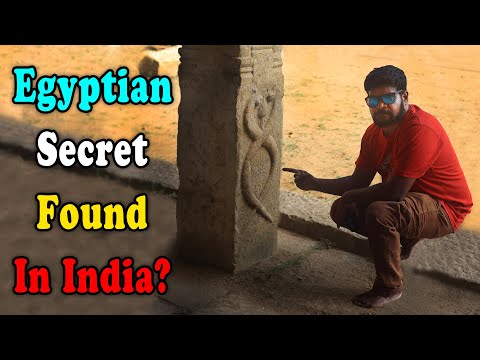
Kudumiyanmalai Temple: Ancient Egyptian Symbols of Snakes and Pinecones Discovered in India


Introduction: Unveiling the Forbidden Section

Welcome, seekers of the obscure. Today, we breach the perimeter of the forbidden. We venture into a 1300-year-old temple, a place rarely, if ever, captured on film, to examine secrets deliberately concealed. This isn't about ghost stories; it's about tangible anomalies, historical enigmas that defy simple explanation. We're talking about carvings that whisper of forgotten connections, specifically those found within the Kudumiyanmalai Temple. Prepare to open a dossier that challenges conventional historical narratives.

The Cobra with a Crown: An Egyptian Echo in India

Our investigation begins in a dimly lit alcove, a space seemingly designed for obscurity. Here, we find our first anomaly: a carving of a cobra, its hood flared in unmistakable defensive posture. This in itself is not unusual in Hindu iconography. However, the detail atop its head is where the narrative deviates sharply from standard Hindu temple art. It bears a distinct crown or headdress. This specific embellishment is not part of traditional Hindu iconography. Its presence here, hidden away, begs the question: why?

The answer may lie thousands of miles away. Consider this 2000-year-old artifact: a strikingly similar depiction of a cobra with an open hood and the identical crown or headdress. The provenance? Ancient Egypt. This isn't mere coincidence. The recurrence of this motif is too precise to dismiss. The question becomes, how did a distinctively Egyptian symbol find its way into an Indian temple carved over a millennium ago?

"This detail is never carved in Indian temples, because it is simply not a part of Hindu Iconography. But why is it carved in this temple, and why was it placed in a dark corner, hidden away from regular visitors?"

Intertwined Snakes and the Mysterious Pinecone

Moving further into the temple's shadowed depths, the exploration continues. A few pillars away from the cobra carving, we encounter another significant motif: intertwined snakes. While serpentine imagery is prevalent, the detail *between* their hooded heads is what command our attention. Though eroded by time, it clearly shows an object positioned centrally. My phone's flashlight struggles to penetrate the gloom, obscuring its precise nature.

To decipher this enigmatic object, we seek a clearer, better-lit example within the same temple. And we find it. Here, two intertwined snakes are depicted once more, but this time, the object between them is more discernible. It resembles a pinecone, resting on a stem. This peculiar emblem immediately recalls another artifact, this one housed in the Museum of Turin, Italy. Dating back to approximately 1200 BC – making it 3200 years old – this Egyptian artifact displays two intertwined snakes with a stem-crowned pinecone-like object positioned between them. Could this be the key?

Comparative Analysis: Kudumiyanmalai vs. Egyptian Artifacts

The visual parallels are, frankly, astonishing. The intertwined snakes, the pinecone-like object on a stem, and crucially, the presence of crowns or headdresses on the snakes themselves – a detail mirrored on both the Kudumiyanmalai carving and the Turin artifact. This shared iconography is not a trivial matter. It suggests a level of direct influence or shared knowledge that contradicts our current understanding of ancient cultural isolation.

The sheer distance between India and Egypt, approximately 3,000 miles, makes this connection a profound historical puzzle. How could such detailed and specific symbolism have been transmitted and integrated into the religious art of two vastly different cultures in ancient times? Is the object truly a pinecone, or is it a symbolic representation of something far more profound, perhaps a mystical emblem whose meaning is lost to us?

The 3000-Mile Connection: Bridging Ancient Civilizations

The geographical chasm separating India and Egypt is perhaps the most compelling aspect of this discovery. Conventional historical timelines and trade route analyses rarely account for such a direct symbolic transference. This raises critical questions about the extent of ancient global interaction. Were there undocumented voyages, lost civilizations, or shared esoteric knowledge systems that connected these distant lands? Examining similar motifs in other ancient sites might shed light on the potential network or origin of this symbolism.

The implications are significant. If these carvings are indeed Egyptian in origin, they challenge our established understanding of historical boundaries and cultural exchange. The question isn't just *if* there was contact, but *how* such specific and esoteric iconography persisted and was replicated across such vast distances.

Deciphering the Variations: The Shifting Pinecone

Further exploration within Kudumiyanmalai reveals more complex variations of these themes, complicating any simple interpretation. In one carving, the intertwined snakes are present, and above their heads, a pinecone-like object appears, but without the prominent stem seen in the previous example. This departure from the first carving suggests it's not a static symbol but one that undergoes transformation or represents different aspects of a concept.

Adding another layer of complexity, we observe a carving where the pinecone-like object is inverted and positioned below the snakes' heads. In another instance, within the second loop of the intertwined snakes, an inverted pinecone reappears. This deliberate repositioning and inversion of the pinecone element indicates a nuanced symbolic language at play. What do these positional shifts signify? How are they connected to the snakes? And critically, considering that pinecones are not indigenous to India, how did such specific imagery find its way into the temple's construction?

"Are they really pinecones? Since India does not have any pinecones trees, how did ancient builders carve them here? Again, we can see the crowns on the snakes, clearly an Egyptian depiction."

Cross-Cultural Depictions: Snakes and Pinecones Across Cultures

The presence of these specific details – serpents, crowns, and pinecone-equivalents – is not isolated to Kudumiyanmalai or Egypt. Ancient Egyptian sites, such as the Catacombs of Kom El Shoqafa (approximately 2000 years old), exhibit similar iconography. Here too, we find depictions of a large serpent crowned, intertwined snakes, and the characteristic pinecone-like object complete with a stem. This cross-referencing of symbols across disparate ancient cultures is precisely the kind of evidence that fuels deeper inquiry into interconnectedness.

The Egyptians, much like ancient Indians, depicted serpents extensively. However, the specific combination with crowned heads and the pinecone element offers a compelling point of comparative study. This shared symbolic language hints at a potential universal or proto-global mythology that predates our neatly defined historical periods. For anyone serious about understanding these connections, consulting comprehensive texts on ancient symbology, such as Jacques Vallée's Pasaporte a Magonia, is essential.

Researcher's Verdict: Fraud, Genuine Anomaly, or Unknown Influence?

After meticulously examining the evidence, the verdict on the Kudumiyanmalai carvings is complex. The stylistic similarities to ancient Egyptian art, particularly the crowned cobra and the serpent-with-pinecone motif, are too pronounced to be mere chance. While elaborate hoaxes are always a possibility in the realm of ancient artifacts, the scale and integration of these carvings within a 1300-year-old temple suggest a more profound origin.

Rejecting the possibility of a deliberate Egyptian presence solely based on geographical distance would be intellectually lazy. The persistent presence of these symbols, combined with their unique placement within the temple, points towards either a lost connection between these civilizations or a shared ancestral symbolic system that predates their divergence. The exact nature of the "pinecone" itself remains a subject of debate – a literal representation, a stylized symbol for energy or consciousness, or something else entirely. It is a genuine anomaly that warrants further, unbiased investigation, the kind you might find discussed in detailed analyses on platforms like Gaia.

The Researcher's Archive

To truly grasp the intricacies of such cross-cultural symbols, one must be armed with the right resources. Beyond the direct visual evidence, delving into the literature provides crucial context:

  • "Pasaporte a Magonia" de Jacques Vallée: Essential for understanding the broader framework of unexplained aerial phenomena and their potential connections to ancient myths.
  • "El Realismo Mágico de los OVNIs" de John Keel: Offers insights into the nature of paranormal phenomena as a manifestation of consciousness and illusion.
  • Documentaries like "Missing 411": Explores patterns in unexplained disappearances often linked to remote, mysterious locations.
  • Documentaries exploring ancient Egypt's mysteries: Focus on esoteric symbolism and archaeological anomalies.
  • Platforms like Discovery+: Provide access to a wide range of documentaries that, while sometimes speculative, can offer starting points for deeper research.

Research Protocol: Analyzing Anomalous Carvings

When faced with anomalous carvings like those at Kudumiyanmalai, a systematic approach is paramount. Follow these steps to conduct your own analysis:

  1. Document Meticulously: Photograph and video the carvings from multiple angles, ensuring consistent lighting conditions. Use specialized equipment if available, such as UV or infrared lights, to reveal hidden details.
  2. Contextualize Historically and Culturally: Research the temple's known history, mythology, and local legends. Compare the anomalous elements with established iconography from the presumed cultures of origin (in this case, Hindu and Ancient Egyptian).
  3. Look for Parallels: Search databases, academic papers, and reputable paranormal forums for similar motifs in other ancient sites worldwide. Investigate potential trade routes or migration patterns that could explain symbolic transference.
  4. Analyze Textual and Oral Traditions: Examine ancient texts, scriptures, and oral histories for references to serpents, crowns, pinecones, or related esoteric symbols.
  5. Consult Experts: Engage with archaeologists, art historians, religious scholars, and paranormal investigators to gather diverse perspectives on your findings.
  6. Evaluate for Fraud: Always remain skeptical. Consider the possibility of later additions, misinterpretations, or intentional deception. Look for anachronistic tools or stylistic inconsistencies.

Frequently Asked Questions

What is the significance of the pinecone symbol in ancient cultures?
The pinecone symbol appears in various ancient cultures, often associated with fertility, enlightenment, or pineal gland symbolism. Its precise meaning varies greatly by context.
Are there other instances of Egyptian-like carvings in India?
While less common and often debated, some researchers propose connections between various ancient Indian sites and Egyptian or Mesopotamian iconography, suggesting possible ancient trade or shared mythologies.
Why might these carvings be hidden?
Hidden or obscure carvings could indicate esoteric knowledge not meant for the general public, a symbol of a secret society, or perhaps an element of a doctrine that was later suppressed or deemed heretical.
Could the "crown" be something other than a headdress?
Yes, it could be interpreted differently, perhaps as a stylized representation of spiritual energy, a specific deity's attribute, or even a natural phenomenon observed by ancient peoples. However, its resemblance to Egyptian crowns is striking.

About the Author

Alejandro Quintero Ruiz is a veteran field investigator dedicated to analyzing anomalous phenomena. His approach combines methodological skepticism with an open mind to the inexplicable, always seeking the truth behind the veil of reality. With years of experience documenting and dissecting cases from cryptids to spectral apparitions, his work aims to bridge the gap between the known and the unknown.

Conclusion and Your Mission

The carvings at Kudumiyanmalai present a compelling case for a deeply interwoven ancient world, one where symbols traversed vast distances, carrying profound meanings. The serpent crowned, in tandem with the enigmatic pinecone, serves as a potent reminder that history is not always as linear or isolated as we perceive. The evidence here is not definitive proof of Egyptian visitation, but it is a significant anomaly that challenges established narratives and beckons further investigation.

Your Mission: Investigate Your Local Legends

Every region holds its own 'Kudumiyanmalai'. Your mission, should you choose to accept it, is to delve into local legends, unusual landmarks, or historical oddities in your own area. Are there any peculiar symbols, unexplained stories, or architectural anomalies that defy easy explanation? Document them, research their context, and ponder the deeper connections. Share your findings and theories in the comments below. Let's build our collective archive of the unexplained, one local mystery at a time.

Further reading on ancient symbolism and potential global connections can be found on sites like Wikipedia's entry on the Pinecone and through dedicated archaeological research portals.