Followers

Mostrando las entradas con la etiqueta historical anomalies. Mostrar todas las entradas

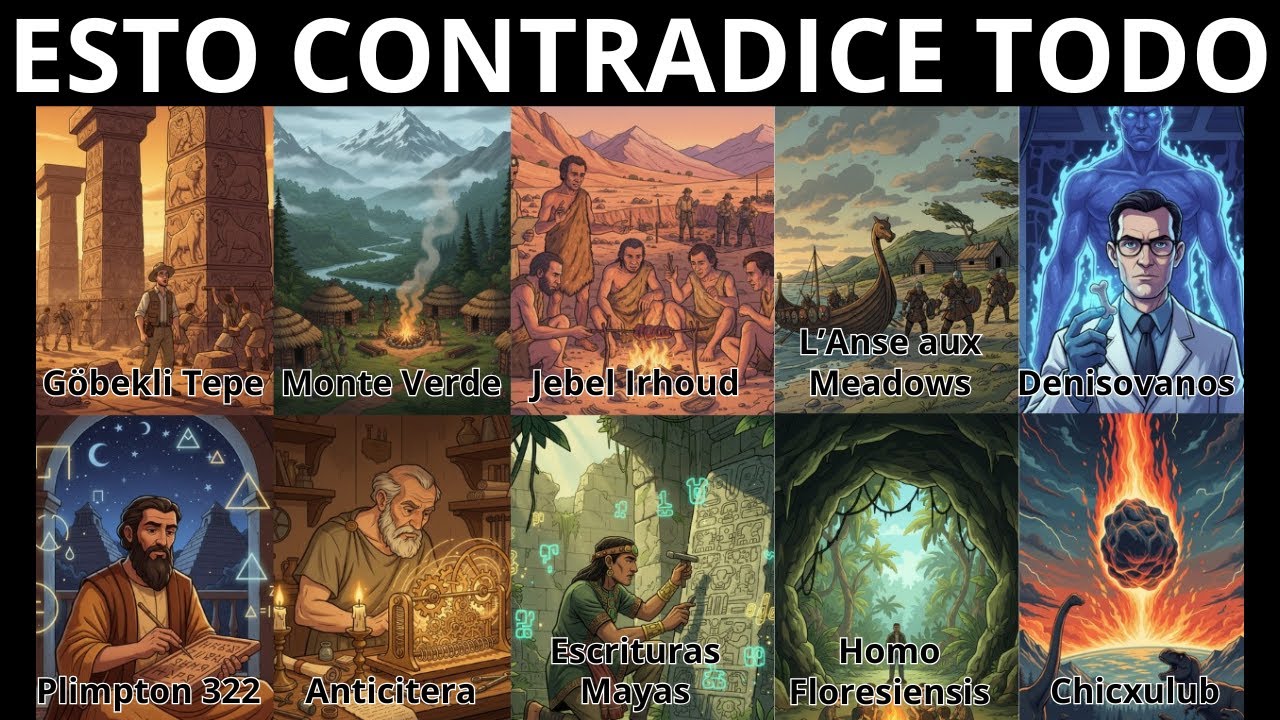
10 Findings That Contradict Everything We Were Taught in School

Image

For centuries, we've accepted a singular version of history as fact. Yet, the tapestry of our past is far more intricate and mysterious than commonly portrayed. Numerous discoveries have surfaced, presenting undeniable evidence that clashes with the established historical narrative. These aren't mere speculative theories; they are verified facts and rigorous studies that compel us to question what we thought we knew about human civilization, ancient technologies, and our very origins. Join me, Alejandro Quintero Ruiz, as we delve into the unsettling realm of historical anomalies.

This investigation aims to dissect these anomalies, separating verifiable evidence from speculation, and to understand why these findings continue to perplex mainstream archaeology and history. Prepare to confront the possibility that our educational frameworks have been built on an incomplete, or perhaps even deliberately altered, foundation.

Göbekli Tepe: The Impossible Temple

Our journey begins with Göbekli Tepe, a site that fundamentally disrupts our understanding of early human capabilities. Located in southeastern Turkey, this megalithic complex predates Stonehenge by approximately 6,000 years and the Egyptian pyramids by about 7,000 years. Its construction, featuring massive carved stone pillars arranged in circles, points to a level of social organization, engineering skill, and abstract thought previously believed to be impossible for hunter-gatherer societies of that era (circa 9600-8200 BCE).

Recommended Gear for Investigation

ProductDescriptionBuy
Cryptozoology A To Z: The Encyclopedia Of Loch Monsters Sasquatch Chupacabras And Other Authentic M: The Encyclopedia of Loch Monsters, Sasquatch, Chupacabras, and Other Authentic Mysteries of NatureAn excellent choice to complement your research on this topic.View on Amazon
The Big Book of Paranormal: 300 Mystical and Frightening Tales From Around the WorldAn excellent choice to complement your research on this topic.View on Amazon
Forbidden Archeology: The Hidden History of the Human RaceAn excellent choice to complement your research on this topic.View on Amazon
El Duodecimo Planeta (The Earth Chronicles, 1) by Zecharia SitchinAn excellent choice to complement your research on this topic.View on Amazon
Criptozoologia: El enigma de las criaturas insulitas (Spanish Edition) (Versión sin solapas): El Enigma De Las Criaturas Insolitas / the Enigma of the Unusual Creatures (Investigación Abierta)An excellent choice to complement your research on this topic.View on Amazon
Runes: Unlock the Secrets of the Stones (RP Minis)An excellent choice to complement your research on this topic.View on Amazon
The H. P. Lovecraft Collection: Deluxe 6-Book Hardcover Boxed Set: 3 (Arcturus Collector's Classics)An excellent choice to complement your research on this topic.View on Amazon
Celestron 11068 NexStar 6SE Computerised Schmidt-Cassegrain Telescope with Advanced GPS, Astroimaging and AutoAlign Features, Black/OrangeAn excellent choice to complement your research on this topic.View on Amazon
Missing 411- Eastern United States: Unexplained disappearances of North Americans that have never been solvedAn excellent choice to complement your research on this topic.View on Amazon
Ghost-Hunting For Dummies [Idioma Inglés] An excellent choice to complement your research on this topic.View on Amazon

The sheer scale and precision of Göbekli Tepe suggest a society with a sophisticated belief system and the ability to mobilize significant labor without the benefit of agriculture, metallurgy, or the wheel, all of which were thought to have developed much later. This raises critical questions: Who were these people? What drove them to build such a monumental structure, and for what purpose? The implications suggest that the Neolithic Revolution may not have been as linear or as recent as we've been taught.

"The implications suggest that the Neolithic Revolution may not have been as linear or as recent as we've been taught."

This finding alone forces a re-evaluation of our timeline for complex human societal development. It’s a stark reminder that our archaeological record is a continuous work in progress, and some of its most significant chapters might be written in stone, literally, from epochs we barely comprehend.

Early American Settlements: Rewriting History

The conventional narrative places the first significant human presence in the Americas around 13,000 years ago, associated with the Clovis culture. However, numerous sites present evidence that challenges this timeline drastically. Discoveries in locations like Monte Verde, Chile, suggest human occupation as early as 14,500 years ago, while other sites hint at even earlier arrivals. Some controversial findings, such as purported tools or fossil remains associated with human activity, suggest a potential presence tens of thousands of years prior.

These discrepancies are not mere academic quibbles. They impact our understanding of human migration patterns, the adaptability of our species, and the timelines of technological and cultural development across continents. The debate often centers on the interpretation of evidence: are these genuine signs of early human activity, or natural geological formations misinterpreted? The resistance to accepting earlier dates stems from the need to reconcile these findings with established migration models, particularly the Bering Land Bridge theory.

Some viewers pointed this out directly: "Confuses arriving with discovering. The Norse perhaps arrived first, but did not discover America for Europe." This highlights a crucial distinction – arrival versus the impact and recognition of arrival in the broader historical context. Regardless, the evidence of earlier presence demands a more nuanced historical account.

Enigmas of Human Evolution

Our understanding of human evolution is often presented as a neat, linear progression from ape-like ancestors to modern Homo sapiens. However, the fossil record reveals a far more complex and branching evolutionary tree. The existence of multiple hominin species coexisting, such as Homo neanderthalensis and Homo sapiens, or the mysterious Denisovans, suggests that human evolution was not a simple march of progress but a dynamic interplay of different lineages.

The discovery of species like Homo floresiensis, the diminutive "Hobbit" of Indonesia, or Homo naledi in South Africa, further complicates the picture. These finds demonstrate evolutionary pathways and adaptations that were not predicted by earlier models. The lack of definitive explanations for the disappearance of these related hominin species leaves significant gaps in our ancestral narrative. It raises questions about competition, interbreeding, environmental pressures, and perhaps even unknown factors that shaped our lineage.

Without a doubt, the history we learned might be incomplete. This is the moment to understand why so many discoveries contradict everything we thought we knew.

The continuous discovery of new hominin fossils underscores the tentative nature of our current evolutionary models. As one comment eloquently put it: "With a bit of common sense, it's obvious we are not the first civilization. Despite the knowledge we have, we are not capable of doing what civilizations supposedly did, which were unable to make a simple steel tool. But unfortunately, we are indoctrinated with a history based on beliefs bordering more on fantasy than reality." This sentiment resonates deeply within the investigation of historical anomalies.

The Chicxulub Impactor: Where Is the Evidence?

The theory of a massive asteroid impact at Chicxulub, Mexico, being the cause of the Cretaceous–Paleogene extinction event, is a cornerstone of modern paleontology. This impact is widely accepted to have wiped out the non-avian dinosaurs 66 million years ago. However, some critical questions persist regarding the physical evidence.

A key point of contention, echoed by viewers, is the definitive location and nature of the impactor itself: "Chicxulub: I think the main evidence is missing, WHERE IS THAT ASTEROID OF SUCH DIMENSION?, did it disintegrate?, was it disintegrated?; is it really its trace?" While impact craters and geological markers like iridium layers exist, the actual physical remains of an asteroid of that magnitude are not readily apparent. Explanations range from disintegration upon atmospheric entry to subsequent geological processes obscuring or destroying the evidence over millions of years. Yet, the absence of a clear, singular "smoking gun" leaves room for continued scientific inquiry and public skepticism.

Ancient Civilizations and Technological Prowess

The narrative of technological progression often depicts early civilizations as rudimentary, gradually developing complexity over millennia. However, artifacts and structures found worldwide hint at a more advanced technological understanding than previously acknowledged. From the precision stonework of Incan fortresses to the alleged Antikythera mechanism, an ancient analog computer, these discoveries challenge the linear progression model.

When we look at ancient sites, we see capabilities that seem almost out of place for their supposed technological level. This leads to speculation about lost technologies or civilizations possessing knowledge far beyond what is commonly accepted. This aligns with sentiments expressed online: "It’s sad that only the ancient technology of some sites on the planet is valued. All over the world, there are places that should be respected and are rich in history." It suggests a potential bias in how we interpret and value ancient achievements, possibly overlooking sophisticated contributions from diverse cultures.

Babylonian Tablets and Historical Discrepancies

The historical record, particularly concerning ancient Mesopotamian civilizations like Babylon, is often pieced together from fragmented textual evidence, such as cuneiform tablets. These tablets contain invaluable information about laws, astronomy, mathematics, and daily life. However, their interpretation can be complex, and discrepancies can arise when compared against broader historical or archaeological findings.

One viewer raised a pertinent question regarding the provenance of artifacts: "So, Babylon and Iraq are within the USA? Otherwise, why would a Babylonian tablet be in a museum? Wouldn't it be stolen!!" This highlights the complexities of artifact acquisition, museum curation, and the potential for historical narratives to be influenced by geopolitical factors or the availability of evidence. It prompts us to consider the integrity of the historical record and the methods by which artifacts reach public display.

The Concept of Previous Humanities

The idea that our current civilization might not be the first on Earth is a recurring theme in discussions of historical anomalies. Geological evidence suggests the Earth is billions of years old, while the recorded history of human civilization spans only a few thousand years. This vast temporal discrepancy leads many to speculate about the possibility of earlier, advanced civilizations that rose and fell long before our own.

The "Hydroplate Theory," for example, posits a catastrophic global flood that reshaped the Earth, implying that remnants of previous civilizations could be buried deep within geological strata. Astronomical cycles, geological records of mass extinctions, and the sheer improbability of a linear, uninterrupted technological ascent over billions of years fuel these hypotheses. As one comment suggests: "It’s simple, the Earth has been proven to be 4 billion years old. Do you know how many times human history fits into that time? It’s easy, leaving 3 billion years for the formation of the Earth, in one billion years, about 100,000 times fit, assuming 10,000 years of known history or so." This perspective emphasizes the immense timescale involved and the statistical likelihood of multiple cycles of civilization.

Researcher's Verdict

Examining these 10 findings requires a rigorous, evidence-based approach. While some anomalies can be explained by gaps in our knowledge, incomplete data, or misinterpretations, others persist as genuine challenges to the status quo. Sites like Göbekli Tepe are not fringe theories; they are archaeological realities that force a re-calibration of our historical timelines. The debate around early American settlements and human evolution highlights the dynamic nature of scientific discovery, where established paradigms are constantly tested and refined.

My analysis suggests that while outright claims of lost super-civilizations often veer into unsubstantiated speculation, the historical record is undeniably more complex and contain more mysteries than our standard curricula allow. The evidence compels us to acknowledge that our understanding of the past is perpetually evolving. The notion of "historical facts" often represents the current consensus, which is subject to change as new evidence emerges. The key is to maintain an open yet critical mind, separating verifiable anomalies from pure conjecture.

The Researcher's Archive

For those seeking to deepen their understanding of historical anomalies and related fields, I recommend the following resources:

  • Books: "Fingerprints of the Gods" by Graham Hancock, which explores controversial theories about ancient civilizations.
  • Documentaries: Series like "Ancient Aliens" (while often speculative, it raises many pertinent questions) and more scientifically grounded documentaries on archaeological discoveries.
  • Academic Journals: Publications focusing on archaeology, anthropology, and paleontology often feature studies on newly discovered sites and revise existing theories. Accessing academic databases can unearth rigorous research on these topics.
  • Online Forums and Communities: Dedicated platforms where researchers and enthusiasts discuss evidence and theories related to historical enigmas. Engaging with these communities can provide diverse perspectives and point towards further avenues of research. Explore related topics in our Forbidden Archaeology archives.

For those interested in the tools of the trade, reliable equipment is essential for serious investigation:

Equipment Recommended for Investigation

Effective investigation, whether historical or paranormal, often relies on the right tools to document and analyze phenomena. For capturing fleeting evidence and ensuring the veracity of findings, consider the following:

  • High-Resolution Cameras: Essential for documenting sites, artifacts, and potential anomalies with clarity.
  • Audio Recorders: Crucial for capturing ambient sounds or potential Electronic Voice Phenomena (EVPs) during site investigations. Look for devices with good noise reduction capabilities.
  • EMF Meters: While controversial in some contexts, these can help detect unusual energy fluctuations at historically significant or supposedly anomalous sites.
  • Geological Survey Tools: For amateur archaeologists or on-site researchers, basic tools for soil analysis or detecting subsurface anomalies can be invaluable.

Protocol: Analyzing Historical Anomalies

  1. Initial Documentation: Thoroughly record all available information about the anomaly – location, date of discovery, associated artifacts, and initial reports.
  2. Cross-Referencing: Compare the anomaly with established historical, archaeological, and scientific databases. Identify points of conflict and corroboration.
  3. Source Verification: Investigate the credibility of the sources reporting the anomaly. Are they peer-reviewed studies, reputable news outlets, or speculative publications?
  4. Expert Consultation: Where possible, consult with experts in relevant fields (archaeology, geology, paleontology) to gain professional insights.
  5. Physical Evidence Analysis: If physical evidence exists, assess its authenticity. Consider dating methods, material composition, and context. Be wary of hoaxes or natural formations misinterpreted as anomalous.
  6. Contextualization: Understand the broader historical and environmental context in which the anomaly was found. Does it fit within known patterns, or does it necessitate a paradigm shift?
  7. Formulate Hypothesis: Based on the evidence, develop a testable hypothesis. Acknowledge alternative explanations, including natural phenomena, misinterpretation, or genuine historical puzzles.
  8. Peer Review (Informal): Discuss findings with other researchers or within trusted online communities to gather feedback and identify potential overlooked aspects.

Frequently Asked Questions

  1. What is the significance of Göbekli Tepe?

    Göbekli Tepe is significant because it predates Stonehenge and the Egyptian pyramids by thousands of years, showcasing advanced construction and organization in a hunter-gatherer society, challenging established timelines for human civilization.

  2. Are there credible findings that suggest earlier human presence in the Americas?

    Yes, sites like Monte Verde and other disputed findings suggest human occupation in the Americas potentially tens of thousands of years earlier than the widely accepted Clovis culture timeline.

  3. Why is the Chicxulub impactor's evidence questioned?

    The question isn't about the impact itself, but the definitive physical evidence of the asteroid of massive dimension, which is not readily apparent, leading to ongoing scientific inquiry.

  4. Is it possible that multiple advanced civilizations existed before ours?

    Given the Earth's vast age and the gaps in our historical and geological records, the possibility of earlier civilizations, while speculative, is considered by many researchers exploring historical anomalies within our Criptozoología section.

Your Field Mission:

The next time you encounter a historical "fact" presented in textbooks or documentaries, pause. Ask yourself: What evidence supports this? What anomalies might exist just beyond the accepted narrative? Your mission is to cultivate a critical eye and an open mind. Seek out these challenging findings, examine the evidence yourself, and contribute to the ongoing investigation into our true past. Share your own documented anomalies and rigorous analyses in the comments below – let's build a more complete picture together.

What are your thoughts on these historical contradictions? Have you encountered other findings that challenge conventional wisdom? Share your experiences and theories in the comments. If you found this investigation illuminating, please share it across your social networks to help spread awareness. Don't forget to subscribe for more deep dives into the unexplained.

Investigator's Note: True paranormal research doesn't fund itself. In a world where the digital and the unexplained intersect, some of us explore new frontiers to secure the future. Do you dare to be part of the vanguard? Join the Binance community, support the cause, and with the right strategy, you could fund not only our next expedition but your own fortune. The next great discovery could be just a click away.

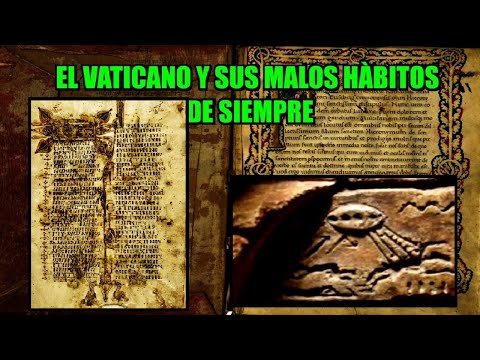
Ancient Egyptian Text Deciphers Jesus' Crucifixion and UFO Encounters: An Investigative Report


In the shadowy corners of history, where established narratives often obscure deeper truths, a peculiar ancient Egyptian text has surfaced. Penned over 1,200 years ago in the Coptic tongue, this document doesn't just reframe the crucifixion of Jesus Christ; it introduces elements so startling they demand a rigorous, analytical approach. We're not talking about folklore; we're examining a purported historical record that suggests Pontius Pilate, the Roman governor, made an unprecedented offer: his own son's life in exchange for Jesus'. This isn't merely a historical curiosity; it's an anomaly that challenges centuries of theological and historical interpretation. Today, we open the file.

Pontius Pilate's Unconventional Bargain

The role of Pontius Pilate in the crucifixion of Jesus is etched into the fabric of Western civilization. Canonical accounts, however, tend to focus on his judicial decision-making and yielding to popular pressure. This Coptic text introduces a startling departure, detailing Pilate's apparent willingness to offer his own son as a substitute sacrifice. This detail, if authentic, doesn't just add a footnote; it fundamentally alters our perception of Pilate's character and his motivations during that pivotal historical moment. It forces us to question the depth of his involvement and the potential pressures he faced beyond the immediate demands of Roman authority.

The Judas Kiss: Deconstructing a Biblical Betrayal

The traditional interpretation of Judas Iscariot's kiss is widely accepted as a signal to Roman soldiers, identifying Jesus for arrest. However, the Coptic manuscript offers a radically different perspective. It posits that Judas' kiss was not a simple identification marker, but a mechanism to discern Jesus due to an alleged ability to shapeshift. This interpretation shifts the narrative from a theological commentary on betrayal to one deeply intertwined with the perception of Jesus' physical nature. The act of betrayal becomes a complex puzzle, not just about human intent, but about recognizing a being with fluid form.

"The kiss, interpreted as a method to penetrate a guise, suggests a Jesus not bound by physical permanence, a concept far removed from orthodox theology."

Jesus' Alleged Shape-Shifting: Theological Implications

The notion of Jesus possessing the ability to alter his physical form is a theological anomaly of significant magnitude. This concept forces a re-examination of the divine and human aspects of Christ. Was this an attribute understood by his early followers, later suppressed by emerging orthodoxies? Or is it a symbolic interpretation within the Coptic text, alluding to his spiritual transcendence rather than literal physical transformation? Exploring this idea prompts contemplation on the diverse and often conflicting belief systems that existed during the nascent stages of Christianity. It challenges the monolithic view of early Christian thought, suggesting a richer, more complex tapestry of beliefs.

The Enigmatic Tully Papyrus: A Vanishing UFO Chronicle

Adding another layer of profound mystery is the alleged existence of the Tully Papyrus. This document, purportedly detailing a UFO sighting in 1480 BCE – over a millennium before the crucifixion events described – has reportedly vanished from the Vatican's arcane archives. Its disappearance is not a minor historical footnote; it raises critical questions about the potential influence of extraterrestrial phenomena on ancient civilizations. If such a document existed and contained an account of an aerial anomaly, its removal from public record suggests a deliberate effort to control the narrative and suppress information that might fundamentally alter our understanding of history, science, and perhaps, our place in the cosmos. The search for this papyrus becomes a quest for hidden truths.

Unidentified Aerial Phenomena in Ancient Egypt: Historical Context

The Tully Papyrus, if it indeed recounts an encounter with an unidentified flying object, injects a potent element into the ongoing debate about UFOs in ancient history. While often relegated to the realm of speculation and pseudoscience, accounts like these, particularly when allegedly documented in ancient papyri, compel serious investigators to acknowledge the possibility. What if these were not mere embellishments, but genuine observations of phenomena that defied contemporary explanation? The presence of such potential evidence within Egyptian records, a civilization known for its advanced astronomical knowledge and unique iconography, adds significant weight to the hypothesis that visitors from beyond our world may have interacted with early human societies. For those interested in similar historical anomalies, exploring UFOs in ancient history reveals a recurring pattern.

Pontius Pilate: Saint or Sinner? A Contrasting Narrative

The Coptic text's depiction of Pontius Pilate as a saint stands in stark opposition to the traditional portrayal found in canonical texts. This dichotomy is not a minor discrepancy; it's a fundamental challenge to the historical and theological interpretation of one of Christianity's most pivotal figures. It ignites vigorous debates about the fluidity of historical narratives and how interpretation, bias, or perhaps even deliberate manipulation, can shape our understanding of monumental figures. If Pilate was indeed a "saint" in this context, what does that imply about the motives behind the established narrative? It suggests that history is less a fixed account and more a constantly reinterpreted story, susceptible to the agendas of its chroniclers. Understanding these shifts is key to unlocking historical data, a process some historical analysis blogs strive to achieve.

The Vatican's Missing Document: Intentional Erasure?

The alleged disappearance of the Tully Papyrus from the Vatican's archives is a recurring theme in discussions about suppressed historical documents and potential extraterrestrial influence. This act, if proven intentional, raises profound suspicions. Could powerful institutions, like the Vatican, be deliberately hiding or erasing historical records that challenge established religious, scientific, or political narratives? The implications are staggering, suggesting a network designed to maintain a particular worldview. The question isn't just about a missing papyrus, but about the potential scale of information control at play. The Vatican's vast archives hold many secrets, and the Vatican mysteries associated with them are a constant source of intrigue.

Unraveling Vatican Secrets: Patterns of Information Control

Delving into the potential motives behind the alleged concealment of historical documents, such as the Tully Papyrus, requires an unblinking look at institutional behavior. Historically, powerful organizations have often sought to control information that could destabilize their authority or challenge foundational beliefs. The Vatican, with its immense historical reach and theological significance, is a prime candidate for such scrutiny. If documents that suggest extraterrestrial interaction or radically alter foundational religious events are suppressed, it speaks to a broader pattern of safeguarding established dogma. This isn't about conspiracy for its own sake; it's about analyzing the observable patterns of information management by powerful entities throughout history. Understanding such patterns is crucial for anyone researching suppressed historical events or historical revelations.

Extraterrestrial Influence vs. Institutional Control

Reflecting on these layered revelations – the Coptic text's radical reinterpretation of the crucifixion, Pilate's supposed offer, Jesus' potential shape-shifting, and the vanishing Tully Papyrus – we are left with a critical juncture. Do these anomalies point towards genuine extraterrestrial influence on ancient civilizations and early religious narratives? Or are they artifacts of deliberate institutional control, designed to manage public perception and preserve hierarchies? It's plausible that these phenomena are not mutually exclusive. Perhaps extraterrestrial contact occurred, and subsequent institutional control mechanisms were put in place to both obscure and manage the implications of such encounters. The intersection of alleged alien contact and the power dynamics of human institutions makes for a complex investigative frontier, one that requires deep dives into ancient texts and extraterrestrial influence theories.

Investigator's Verdict: Analyzing the Evidence

The Coptic text and the alleged Tully Papyrus present a compelling, albeit controversial, alternative narrative. The claims regarding Pilate's offer and Jesus' shape-shifting ability are theological earthquakes, challenging core tenets of Christian doctrine. The disappearance of the Tully Papyrus, if true, points to a potential cover-up of profound significance, hinting at UFO sightings in ancient Egypt and beyond. However, the critical investigator's duty is to approach such claims with extreme skepticism. The existence and authenticity of the Coptic text, as well as the historical details within it, require rigorous verification. Similarly, the Tully Papyrus is currently an unverified report of a vanished document. While the claims are sensational, they lack corroborating evidence accessible for independent study. The most rational conclusion, based on current available data, is that these are intriguing possibilities, but they remain firmly in the realm of speculation until verifiable proof emerges. The principle of "extraordinary claims require extraordinary evidence" is paramount here.

Claim Status of Evidence Investigative Angle
Pilate's Offer to Sacrifice Son Attributed to a Coptic text; authenticity and interpretation debated. Theological and historical analysis of Coptic texts; comparative study with canonical Gospels.
Jesus' Shape-Shifting Ability Interpretation of Coptic text; speculative theology. Examination of Gnostic and other heterodox early Christian beliefs; analysis of symbolic interpretation.
Tully Papyrus UFO Sighting (1480 BCE) Reported existence of a missing Vatican document; no direct access to the papyrus. Archival research at the Vatican; cross-referencing ancient Egyptian astronomical and iconographic records for anomalies. Access to historical narratives is key.
Vatican Concealment Speculative, based on the reported disappearance of the Tully Papyrus. Analysis of historical patterns of information control by institutions; study of Vatican archival practices.

The Investigator's Archive: Essential Resources

To truly grasp the implications of these anomalous historical claims, one must consult a curated selection of research materials. These resources provide the necessary context and methodological grounding for serious investigators:

  • "Chariots of the Gods?" by Erich von Däniken: A foundational text exploring the possibility of extraterrestrial influence on ancient civilizations, raising questions about ancient texts and artifacts.
  • "The Vatican Prophecies: More Terrifying Than You Can Imagine" by John Hogue: Delves into prophecies and potential hidden knowledge within Vatican archives, touching upon themes of suppressed information.
  • "The Gnostic Gospels" edited by Elaine Pagels: Provides access to early Christian texts that often present alternative theological viewpoints, which could shed light on interpretations of Jesus' nature.
  • "Ancient Egyptian Astronomy and Cosmology": Any academic work that explores ancient Egyptian understanding of the cosmos can help contextualize claims of celestial observations.
  • Documentaries on Vatican Archives: Search for reputable documentaries exploring the history and contents of the Vatican's secretive library and archives for insights into archival management and potential discoveries.

Research Protocol: Verifying Anomalous Historical Claims

Investigating claims derived from ancient texts, especially those concerning unusual phenomena like UFOs or heterodox theological interpretations, requires a structured methodology. Here's a basic protocol:

  1. Document Provenance: First, establish the origin and authenticity of the document in question. For the Coptic text and the Tully Papyrus, this means verifying their existence, age, and the reliability of their transmission. Are there academic studies confirming their discovery and translation?
  2. Textual Analysis: Conduct rigorous linguistic and textual analysis. This involves scholarly translation, contextual interpretation within the known cultural and religious framework of ancient Egypt and early Christianity, and identifying potential interpolations or later additions.
  3. Cross-Referencing: Compare the claims made in the text with established historical records, archaeological findings, and other contemporary or near-contemporary documents. Do other sources corroborate any aspects of the narrative? Are there any iconographic clues in ancient Egyptian art that align with claims of aerial phenomena?
  4. Evaluate Testimonial Evidence: If the source involves reported sightings or interactions (as with the Tully Papyrus), assess the nature of the testimony. Is it first-hand? Are there multiple witnesses? What is the historical context of the reporting?
  5. Skepticism and Falsifiability: Maintain a critical stance. Actively seek explanations rooted in known natural phenomena, psychological biases (like pareidolia or apophenia), or deliberate fabrication before concluding an anomalous event. Can the claims be proven false?
  6. Institutional Transparency: For claims involving restricted archives, such as those of the Vatican, investigate the documented history of the archives and any publicly available inventories or research conducted within them.

The journey to unraveling historical mysteries is often fraught with missing pieces and deliberate obfuscations. The Coptic text and the tale of the Tully Papyrus are prime examples of how history can be simultaneously illuminated and obscured.

Frequently Asked Questions (FAQs)

Are these revelations confirmed by historical records and academic consensus?

The Coptic text and the Tully Papyrus present highly unconventional alternative perspectives. While certain Coptic texts exist and reference biblical events, the specific details regarding Pilate's offer, Jesus' shape-shifting, and the Tully Papyrus' UFO content are not part of mainstream historical or theological consensus. Confirmation from widely accepted historical records and academic studies remains elusive, placing these claims in the realm of speculative historical inquiry.

What could be the primary motivations behind hiding historical documents by institutions like the Vatican?

Motivations for concealing historical documents can vary significantly. They often include: preserving established religious or political narratives that give the institution its authority, preventing public panic or loss of faith, protecting sensitive theological doctrines, and maintaining institutional control and perceived infallibility. Sometimes, documents might be hidden simply due to their fragility or ongoing scholarly debate about their interpretation and significance.

How does the Coptic text fundamentally change our perception of Pontius Pilate?

The Coptic text challenges the traditional, largely negative portrayal of Pontius Pilate as a weak or complicit figure in Jesus' crucifixion. By depicting him as potentially willing to sacrifice his own son, the text introduces a narrative of deep personal anguish, perhaps even saintly martyrdom, which is a radical departure from accepted accounts. This contrast invites a re-evaluation of his character and motivations.

Is there any tangible evidence supporting the idea of Jesus having a shape-shifting ability?

The notion of Jesus possessing shape-shifting abilities is derived from interpretations of specific ancient texts, such as the Coptic manuscript mentioned. There is no direct, empirical, or widely accepted historical evidence to support the literal claim of Jesus physically shape-shifting. This idea is largely speculative and exists within minority theological or Gnostic interpretations, often understood metaphorically rather than literally.

What implications does the enigmatic Tully Papyrus, if proven authentic, hold for our understanding of ancient civilizations?

If the Tully Papyrus were proven authentic and contained an account of a UFO sighting in 1480 BCE, its implications would be revolutionary. It would lend significant weight to theories of extraterrestrial visitation during ancient Egyptian times, suggesting that advanced aerial phenomena were observed and documented. This would compel a complete re-evaluation of ancient technological capabilities, historical timelines, and the potential for non-human intelligence to have influenced early human development and cosmology.

alejandro quintero ruiz is a veteran field investigator with years dedicated to dissecting anomalous phenomena. His approach combines rigorous skepticism with an investigative mindset, treating each case as a puzzle to be solved, not a mystery to be accepted. He believes that understanding the inexplicable requires peeling back layers of evidence, myth, and institutional control.

The historical tapestry is woven with threads of verifiable fact and tantalizing conjecture. The Coptic text and the legend of the Tully Papyrus represent the latter, pushing the boundaries of our accepted historical and theological frameworks. While definitive proof remains elusive, the questions they raise are too significant to ignore. They remind us that history is not a closed book, but a series of open investigations.

Your Mission: Deconstruct and Debate

Now, the floor is yours, researcher. The evidence presented is provocative, hinting at hidden truths and potential cover-ups. Analyze the core claims: Pilate's sacrifice, Jesus' fluid form, the vanished papyrus. Do these elements suggest a genuine historical anomaly, a complex theological interpretation, or a manufactured narrative? Share your critical assessment in the comments below. What further research steps would you propose to verify or debunk these claims? Let's engage in rigorous debate and see if we can uncover the truth behind these shadowed accounts.

Zecharia Sitchin's Earth Chronicles: Analyzing the Evidence of Ancient Extraterrestrial Visitation


The hum of static on an old radio, the rustle of parchment in a forgotten archive, the glint of something unnatural in the night sky – these are the whispers that draw us in. Here at Sectemple, we don't just chase shadows; we dissect them. Today, we open the file on a subject that has captivated thinkers for decades: the audacious claims of Zecharia Sitchin and his revolutionary interpretation of humanity's origins. Were we visited? Were we *created*? The Earth Chronicles offer a provocative answer, and it's our duty to examine the evidence with a scalpel, not a magnifying glass.

Unearthing the Legacy of Zecharia Sitchin

Before we dissect the claims, we must understand the architect. Zecharia Sitchin was no fringe theorist shouting from the rooftops. He was a scholar, a linguist. His rigorous study of ancient languages, particularly Sumerian cuneiform, was the foundation upon which his controversial theories were built. Sitchin didn't just read these texts; he *decoded* them, cross-referencing thousands of fragments from disparate ancient civilizations. His objective, as he presented it, was to reveal a hidden narrative, a history deliberately obscured or misunderstood:

"The more we uncover the past, the more we realize how little we truly know. The ancient texts are not mere historical records; they are blueprints, testaments, and warnings."

His seminal work, the "Earth Chronicles" series, meticulously lays out his case, piecing together a coherent, albeit extraordinary, picture of extraterrestrial intervention. This isn't simply a collection of myths; Sitchin argued it was a historical account, written by witnesses and participants. His ability to connect seemingly unrelated ancient accounts across cultures is lauded by proponents and scrutinized by skeptics, but its undeniable comprehensiveness is what makes his work a cornerstone of ancient alien theory. For anyone serious about this field, understanding Sitchin's methodology is the first step, the absolute prerequisite before even considering the validity of his conclusions. Many dismiss him outright, but such a dismissal ignores the sheer volume of textual analysis he performed. It's the analytical depth, the systematic approach, that demands our attention, not necessarily immediate acceptance.

Ancient Extraterrestrial Visits to Earth: The Anunnaki Hypothesis

At the heart of Sitchin's thesis lies the hypothesis of the Anunnaki – a race of advanced extraterrestrials originating from a planet he designated Nibiru, a celestial body purportedly on a long, elliptical orbit through our solar system. According to Sitchin's interpretation of Sumerian lore, these beings arrived on Earth tens of thousands of years ago. Their purpose? To mine gold and other precious minerals essential for their dying world. Sitchin posits that this mining operation led to the Anunnaki genetically engineering humans, or "Adamu," as a labor force. This isn't just a simple narrative of aliens arriving; it's a complex socio-economic and genetic history that, if true, fundamentally rewrites our understanding of human civilization, our origins, and our place in the cosmos. Think about the implications: our foundational myths, our religious texts, our very genetic code, all potentially influenced, if not dictated, by visitors from another star system. This recontextualizes everything from the Garden of Eden to the Great Pyramids. The Anunnaki, in Sitchin's framework, were not mere observers; they were creators, engineers, and, perhaps, even gods in the eyes of early humanity. The Sumerian texts, which he heavily relies on, are among the oldest known written records, and his interpretation suggests they hold secrets far profounder than previously imagined. Understanding the Anunnaki hypothesis requires delving deep into Sitchin's exegesis of these ancient documents, looking for the patterns and connections he identified.

The Evidentiary Tapestry: Carvings, Technology, and Genetic Threads

Sitchin's argument isn't solely based on textual interpretation. He points to a vast corpus of physical and artistic evidence that, he contends, supports the Anunnaki narrative. Consider the intricate carvings found in ancient sites across the globe. Depictions of beings with elongated skulls, unusual cranial structures, and sometimes even non-human features are interpreted by Sitchin and his followers as direct representations of these extraterrestrial visitors. The famous cylinder seals of Mesopotamia, for instance, are painstakingly analyzed to reveal what he claims are scenes of Anunnaki technological sophistication: "These are not mere artistic flourishes. They are schematics, historical records etched in stone, detailing technologies and biological interventions far beyond the grasp of early humans."

He references alleged accounts of advanced knowledge imparted to humanity – astronomical cycles, agricultural techniques, and sophisticated engineering principles that seem to have appeared almost overnight in certain ancient cultures. The construction of megalithic structures like Baalbek or the pyramids of Giza, with their impossibly precise stonework, are presented as examples of alien-assisted construction. Furthermore, Sitchin explores the possibility of genetic manipulation, suggesting that the Anunnaki may have "bridged" their own DNA with that of early hominids to create a superior workforce. This intricate "evidentiary tapestry" weaves together linguistics, archaeology, mythology, and anthropology, creating a compelling, if controversial, narrative. The challenge for any investigator is to sift through these claims, separating genuine anomalies from misinterpretations or pareidolia. It requires a critical eye, an understanding of ancient technology, and a willingness to consider unconventional explanations for historical enigmas. Exploring the purported influence of the Anunnaki requires a deep dive into ancient artifacts and a critical re-evaluation of what constitutes "advanced technology" in ancient contexts. The connection is compelling, but the evidence requires careful, unbiased examination.

The Imminent Return of the Ancient Aliens?

Perhaps the most provocative element of Sitchin's work is the implication that the Anunnaki's story is not confined to the distant past. The ancient texts, he argues, contain prophecies and indications that these celestial visitors have plans for a return. The cyclical nature of Nibiru's orbit, as calculated by Sitchin, suggests that a period of proximity to Earth, and thus potential renewed interaction, is not a matter of if, but when. This adds a layer of urgency and relevance to his research, transforming it from a historical inquiry into a potential forecast of humanity's future. The idea of a "great reunion," as some proponents describe it, sparks intense debate. Is this a benevolent return to guide humanity, or something more ominous? Sitchin's interpretations suggest a complex relationship, one built on necessity and dependency. The promise of return, embedded in the ancient annals, serves as a powerful narrative hook, drawing readers into a deeper exploration of Sitchin's extrapolated timelines and prophetic interpretations. The possibility of renewed contact raises profound questions about human destiny, our preparedness for such an event, and the potential impact on global society. This aspect of Sitchin's work is particularly engaging for those interested in predictive theories and the cyclical nature of cosmic events. It compels us to consider not just where we came from, but where we might be heading, guided by the echoes of our ancient architects from the stars. For those who seek to understand the full scope of Sitchin's theories, this predictive element is crucial, hinting at a future shaped by an ancient past.

Investigator's Verdict: Evaluating Sitchin's Claims

Zecharia Sitchin presented a monumental body of work that attempts to unify disparate ancient narratives into a single, cohesive, cosmic origin story. His linguistic prowess and dedication to cross-referencing ancient texts are undeniable. However, the scientific and historical communities largely remain unconvinced, citing a lack of empirical, verifiable evidence beyond textual interpretation. Many point to the speculative nature of his translation of key terms and the perceived circularity of his arguments – using ancient texts to prove the existence of extra-terrestrials who influenced those very texts. From an investigator's standpoint, Sitchin's work is invaluable as a theoretical framework, a rich source of hypotheses that demand further, independent scrutiny. His translations are not universally accepted by Assyriologists, and the existence of Nibiru remains unconfirmed by mainstream astronomy. Yet, the enduring fascination with his "Earth Chronicles" suggests a deep-seated human desire to find meaning in the ancient past, to connect with something larger than ourselves. The value lies not necessarily in accepting his conclusions at face value, but in the questions he forces us to ask: What if our history is not what we've been told? What if the gods of old were not divine, but simply visitors with superior technology? Sitchin's legacy is one of provocation. While empirical proof remains elusive, his work serves as a critical catalyst for exploring ancient mysteries, pushing the boundaries of conventional historical and scientific understanding. The evidence he compiles is intriguing, but the leap to definitive proof of extraterrestrial intervention requires more than interpretation; it requires, at minimum, corroborating archaeological or astronomical data that has yet to surface conclusively.

Research Protocol: Deconstructing Ancient Texts

Investigating claims rooted in ancient texts, as Sitchin did, requires a disciplined approach. Here's a protocol to guide your own inquiry:

  1. Source Verification: Always seek original or highly reputable translations of ancient texts. Be wary of paraphrased or selectively quoted passages. Understand the historical context of the text and its known origins.
  2. Linguistic Scrutiny: If possible, consult with linguists or Assyriologists regarding the specific translations and interpretations of key terms. Sitchin's translations are often contested.
  3. Cross-Referencing: Compare Sitchin's interpretations with those of other scholars who study the same texts. Note where agreements and disagreements lie.
  4. Archaeological Corroboration: Look for independent archaeological evidence that supports or refutes the claims made about ancient technology, structures, or biological interventions.
  5. Astronomical Data: Investigate scientific data regarding celestial bodies like Nibiru. Are there any astronomical observations or theoretical models that align with Sitchin's hypothesis?
  6. Mythological Context: Understand how Sitchin's interpretations fit within the broader context of comparative mythology. Are there common archetypes or themes that explain similar narratives without resorting to extraterrestrial explanations?
  7. Skepticism is Key: Approach all findings with a healthy dose of skepticism. Prioritize Occam's Razor – the simplest explanation is often the most likely. Rule out mundane possibilities (misinterpretation, natural phenomena, hoaxes) before accepting extraordinary ones.

By adhering to this protocol, you can critically evaluate the evidence presented in works like "The Earth Chronicles" and form your own informed conclusions, distinguishing between compelling theory and verifiable fact. This systematic approach is crucial for anyone delving into the esoteric realms of ancient history and potential otherworldly influence. The pursuit of truth demands rigor.

The Researcher's Archive: Essential Reading and Viewing

To truly grasp the scope of Zecharia Sitchin's work and the broader field of ancient alien theories, a curated selection of resources is indispensable. These are not mere curiosities; they are the foundational texts and documentaries that have shaped the discourse. Consider these essential additions to your investigative library:

  • Books:
    • The 12th Planet by Zecharia Sitchin: The cornerstone of the Earth Chronicles, laying out his primary hypothesis.
    • Genesis Revisited by Zecharia Sitchin: Explores the biblical narrative through the lens of the Anunnaki.
    • The Sirius Mystery by Robert K. G. Temple: A classic examination of ancient astronomical knowledge and potential extraterrestrial contact, focusing on the Dogon people.
    • Chariots of the Gods? by Erich von Däniken: One of the earliest and most influential works popularizing the ancient astronaut theory.
    • Fingerprints of the Gods by Graham Hancock: Explores evidence of a lost advanced civilization predating recorded history.
  • Documentaries:
    • Ancient Aliens (History Channel Series): While often sensationalized, this series extensively covers Sitchin's theories and related evidence, featuring interviews with many proponents.
    • The Revelation of the Pyramids: A documentary exploring the mysteries of ancient constructions and their potential builders.
    • Sirius (Documentary): Explores the intriguing connection between ancient cultures and extraterrestrial intelligence, particularly focusing on the Dogon.

Engaging with these materials provides a comprehensive understanding of the arguments for ancient extraterrestrial visitation, allowing for a more informed analysis and critical evaluation of the evidence presented. This is not about passive consumption; it's about active learning and building your own analytical framework.

Frequently Asked Questions: Clarifying the Earth Chronicles

What is Nibiru according to Sitchin?
Sitchin proposed Nibiru as a hypothetical planet in our solar system, on a long, elliptical orbit that brings it into proximity with Earth approximately every 3,600 years. He believed it was the home of the Anunnaki.
Are Sitchin's translations of Sumerian texts accepted by scholars?
No, Sitchin's translations and interpretations of Sumerian cuneiform are largely rejected by mainstream Assyriologists and historians. They argue his linguistic methodology is flawed and his conclusions are speculative.
What evidence does Sitchin cite for genetic engineering?
Sitchin pointed to ancient texts describing the Anunnaki creating a subservient workforce by interbreeding their own DNA with that of early hominids. He also references descriptions of physical differences in early humans compared to later populations.
Has Nibiru ever been detected astronomically?
No. Despite Sitchin's claims, no celestial body matching the description of Nibiru has been detected by astronomical observations. NASA and other scientific bodies have consistently stated that no such planet exists within our solar system.
What is the main criticism against Zecharia Sitchin's work?
The primary criticisms revolve around his disputed translations of ancient languages, the lack of concrete scientific or archaeological evidence to support his theories, and his reliance on speculative interpretations of myths and legends.

Your Mission: Investigate Local Legends

The allure of ancient astronauts is powerful, but the true spirit of investigation lies in scrutinizing the unexplained closer to home. Every region, every town, has its own folklore, its own whispers of the unusual. Are there local legends of strange lights in the sky, peculiar figures seen in the wilderness, or oral traditions that speak of visitors from beyond the stars? Your mission, should you choose to accept it, is to become a field researcher in your own backyard. Document these local narratives. Seek out the oldest residents, pore over local historical society records, and look for recurring themes or inexplicable events. Compare these local anomalies to broader patterns discussed in works like Sitchin's. Does your regional folklore echo ancient Sumerian myths or other globally recognized 'ancient astronaut' archetypes? Collect testimonials, photograph any unusual landmarks, and analyze the stories with the same critical lens we've applied here. The truth, as they say, is out there – and sometimes, it's just down the road.

Zecharia Sitchin's "Earth Chronicles" have ignited imaginations and challenged orthodoxies for decades. While his theories remain on the fringes of accepted science and history, they serve as a potent reminder that our understanding of the past is perpetually incomplete. The evidence he presented, though disputed, compels us to question, to probe, and to look beyond the surface of conventional narratives. At Sectemple, we champion this spirit of relentless inquiry. The Anunnaki may be figures of legend, but the drive to uncover humanity's true origins is a very real, and very ancient, quest. Continue to explore, continue to question, and never stop seeking the truth that lies hidden in the shadows of our history and the vast expanse of the cosmos.

About the Author

alejandro quintero ruiz is a veteran paranormal investigator and analyst with years of field experience. His approach blends methodological skepticism with an open mind towards the inexplicable, always seeking the truth behind the veil of reality. He has dedicated his career to meticulously dissecting unexplained phenomena and bringing clarity to the world's most enigmatic mysteries.

the Bell Witch of Tennessee: An In-Depth Analysis of a 19th-Century Haunting and Its Enduring Legacy


The veil between worlds is thin in certain places, and the annals of paranormal investigation are littered with locations where this veil seems to have been ripped asunder. Among these, few names evoke the sheer terror and persistent mystery quite like the Bell Witch. This is not a ghost story for children; this is a case study in sustained, malevolent paranormal activity that, even centuries later, demands a rigorous, dispassionate analysis. Today, we delve into the heart of this legend, dissecting the historical context, the alleged manifestations, and the enduring questions that continue to shroud this notorious haunting.

I. Historical Context: Robertson County, Tennessee, Early 19th Century

To understand an anomaly, one must first understand the soil from which it grows. The Bell Witch haunting is intrinsically tied to the rural, agrarian landscape of Adams, Tennessee, in the early 1800s. This was a frontier society, steeped in religious fervor, superstition, and a healthy dose of skepticism towards the unknown. Life was arduous, reliant on the land, and often isolated. In such an environment, unexplained occurrences could easily be attributed to supernatural forces, particularly when entrenched beliefs, like those surrounding witchcraft, were prevalent.

The Bell family, particularly John Bell, was a prominent figure in the community. Their farm, while seemingly ordinary, was to become the epicenter of a phenomenon that would transcend mere local lore and embed itself in the American psyche. The socio-economic conditions, the prevailing cultural narratives about the supernatural, and the established reputation of the family are crucial variables that any serious investigation must consider. Disentangling historical fact from embellished narrative is the first, and often most challenging, step in analyzing any paranormal claim.

II. The Bell Family and Initial Manifestations

The documented history of the Bell Witch begins around 1817. According to the most reliable accounts, including the posthumously published "The Bell Witch: A Mysterious Spirit," compiled by Reverend M. V. Ingram based on family testimonies, the disturbances began subtly. Whispers, disembodied voices, and physical interactions like scratching and tugging at bedclothes plagued the family, particularly its youngest daughter, Lucy. Initially, these phenomena were sporadic, often dismissed as pranks or misinterpretations.

However, the activity escalated with alarming speed. The entity, claiming to be the spirit of a witch named Kate Batts, became increasingly aggressive. John Bell himself became a frequent target, reportedly experiencing physical attacks, including choking and intense pain. The consistency and duration of these early manifestations, reported by multiple family members and, later, community members, are what lend a degree of credibility to the case, despite inherent biases in survivor accounts. It is vital to analyze these initial testimonies for internal consistency and external corroboration, however scarce it may be.

"It began as a mere scratching at the doors and walls, then progressed to blows and tugs at the bedclothes, disturbing the whole family. The attacks on Mr. Bell became more violent, often leaving him speechless and apparently in great physical distress." - Adapted from early testimonies.

III. The Entity and Its Modus Operandi: A Pattern of Torment

What sets the Bell Witch case apart is the perceived intelligence and malicious intent of the entity. Unlike random poltergeist activity, the "witch" seemed to possess a deliberate agenda: to torment John Bell and, by extension, his family and neighbors. The entity reportedly communicated extensively, engaging in conversations, making threats, and even offering advice, albeit with a malevolent undertone.

Its reported abilities were varied and disturbing:

  • Physical Manifestations: Slapping, pinching, choking, pulling hair, moving objects, and creating loud noises.
  • Auditory Hallucinations/Voices: Whispering, shouting, singing, and engaging in complex conversations, often in different voices.
  • Psychological Warfare: Targeting specific individuals with psychological distress, sowing discord, and driving some to despair.
  • Shape-Shifting/Apparitions: While less documented than other phenomena, there are suggestions of visual manifestations.

The sustained nature of the torment, spanning several years, is a critical factor. This was not a fleeting event; it was an ongoing, invasive presence that fundamentally altered the lives of the Bell family. Analyzing the entity's "modus operandi" reveals a pattern of psychological and physical aggression designed to isolate, terrorize, and ultimately, seemingly, to inflict fatal harm. This level of targeted malevolence distinguishes it from more generalized hauntings. It prompts us to consider the nature of consciousness and intent, even in what is purported to be an ethereal form.

IV. Key Phenomena and Alleged Investigations

The primary "evidence" for the Bell Witch exists through anecdotal accounts, family journals, and later sensationalized retellings. The most significant period of activity is generally considered to be between 1817 and 1821. During this time, numerous individuals, including neighbors and local authorities, allegedly witnessed or experienced the phenomena firsthand.

One of the most infamous incidents involves John Bell's death. The legend states that the entity admitted to poisoning him, administering a dose that slowly killed him over several days. The entity's subsequent boasting about this act is often cited as proof of its direct involvement. Contemporary investigators, often local figures or clergymen, attempted to placate or banish the spirit, but their efforts were reportedly met with increased aggression from the entity.

In modern times, the Bell Witch Cave and the Bell family homestead have become sites of paranormal tourism and investigation. Amateur ghost hunting teams have reported various phenomena, from unexplained noises to alleged apparitions and anomalous EMF readings. However, it is crucial to apply a critical lens to these modern investigations. The inherent suggestion, the potential for misinterpretation of natural phenomena (wind, animal sounds, structural settling), and the desire to find evidence can all lead to confirmation bias. A true investigation must first account for all potential mundane explanations.

The lack of verifiable, objective evidence (like clear photographic or audio recordings from the period) means that the case relies heavily on testimonial evidence. This doesn't automatically invalidate it, but it places a heavy burden on the analysis of the consistency, credibility, and potential biases of the witnesses. For a deeper understanding, cross-referencing different historical accounts and noting discrepancies is paramount. Consider, for instance, the differing descriptions of "Kate Batts" and her potential connection to the haunting.

V. The Bell Witch Legacy and Cultural Impact

The Bell Witch legend has transcended its origins to become a cornerstone of American folklore and a staple in the paranormal genre. Its influence can be seen in numerous books, films, television shows, and even a dedicated theme park in Adams, Tennessee. The notoriety of the case has fueled decades of speculation, debate, and, of course, further "investigations."

The enduring power of the Bell Witch story lies in its compelling narrative: a relatable family terrorized by an unseen, malevolent force. It taps into primal fears of invasion, helplessness, and the unknown forces that might lurk just beyond our perception. This cultural resonance is precisely why the story continues to capture imaginations. Understanding its impact requires examining not just the reported phenomena, but also how the story has been adapted and reinterpreted over time. Each retelling, each adaptation, adds new layers to the legend, sometimes obscuring, sometimes illuminating, the original core of the haunting.

The commercialization of the Bell Witch also presents an interesting socio-cultural aspect. The transformation of a serious alleged haunting into a tourist attraction raises questions about authenticity, exploitation, and the human fascination with fear and the macabre. This narrative arc, from terrifying reality to popular culture icon, is a fascinating study in itself. The market for such stories is robust, and platforms like discovery channels and streaming services often feature these enduring mysteries to a wide audience.

VI. Investigator's Verdict: Fraud, Genuine Phenomenon, or Psychological Echo?

Assessing the Bell Witch case is a complex undertaking, demanding a balance of open-mindedness and critical analysis. The sheer volume and consistency of reports from the early 19th century, particularly testimonies from multiple family members and community witnesses, are difficult to dismiss outright as mere fabrication. The detailed accounts of physical interactions and complex communication suggest more than simple mass hysteria.

However, the absence of definitive, irrefutable physical evidence from the era leaves room for doubt. Theories abound:

  • Fraud: Some historians and skeptics suggest that the haunting was a hoax perpetrated by the Bell family to gain notoriety or settle grudges. The posthumous publication of "The Bell Witch" by Ingram, with family descendants' cooperation, could be seen as evidence of a constructed narrative.
  • Genuine Paranormal Activity: Proponents of this theory believe the entity was indeed a malevolent spirit, possibly of Kate Batts, an actual witch, or another entity, that attached itself to the family. The sustained complexity of the activity supports this.
  • Psychological Explanations: The intense stress and isolation of frontier life, coupled with existing superstitions and personal anxieties, could have manifested as psychosomatic experiences or shared delusions within the family. The entity's focus on John Bell could be interpreted through psychological lenses involving family dynamics or stress-induced phenomena.
  • Unexplained Natural Phenomena: While less likely to explain the full spectrum of reported events, conventional sources of unidentifiable sounds or physical disturbances cannot be entirely ruled out without thorough contemporary investigation.

My verdict, based on the available historical data, leans towards an undeniable anomaly. While fraud cannot be entirely discounted, the sustained, intricate, and widespread nature of the reported phenomena across multiple years and witnesses, extending beyond the immediate Bell family, points toward a genuine, albeit inexplicable, occurrence. Whether this was a disembodied consciousness, a hitherto unknown psychological manifestation, or something else entirely, remains in the realm of speculation. The key takeaway is the persistent report of intelligent, antagonistic interaction.

VII. The Researcher's Archive

For those wishing to delve deeper into the Bell Witch case, a curated selection of resources is essential. Accessing primary historical documents where possible, alongside scholarly analyses, provides the most comprehensive understanding. The following are key starting points for your own investigation:

  • "The Bell Witch: A Mysterious Spirit" by Reverend M. V. Ingram. This is the foundational text, compiled from family testimonies. While it has undergone multiple publications and potential embellishments, it remains the most comprehensive historical account of the haunting direct from alleged witnesses.
  • Historical records and articles on frontier life in Tennessee. Understanding the societal context is crucial to evaluating the claims.
  • Modern paranormal investigation reports from the Bell Witch Cave and related sites. While needing critical assessment, these can offer insights into contemporary experiences and research methodologies.
  • Academic papers discussing folklore, mass hysteria, and historical hauntings. These provide theoretical frameworks for analysis.

The pursuit of anomalous phenomena requires patience and a commitment to rigorous research. It's about piecing together fragments of evidence and evaluating them with a critical mind. For those serious about this field, investing in well-researched books and documentaries is paramount. Consider exploring resources that analyze cases without sensationalism, focusing on the factual basis and the investigative process itself. You can find excellent compilations of historical hauntings on platforms like Gaia or through specialized historical archives.

VIII. Research Protocol: Documenting Anomalous Activity

When approaching any alleged paranormal event, a systematic research protocol is not just recommended; it is imperative. The Bell Witch case, rich in anecdotal reports, highlights the necessity of robust documentation. Here lies a basic, yet effective, protocol for investigating reported hauntings:

  1. Initial Contact and Case Assessment: Gather all preliminary information regarding the reported phenomena. Who is experiencing them? What is the nature of the activity? Where and when does it occur? Assess the credibility of the source and the existence of any potential mundane explanations or motives for fabrication.
  2. Historical Contextualization: Research the history of the location and the individuals involved. Are there previous reports of unusual activity? What is the socio-economic and cultural background? For cases like the Bell Witch, understanding local folklore and historical events is crucial.
  3. On-Site Investigation (If Applicable):
    • Environmental Baseline: Measure ambient EMF levels, temperature, humidity, and note any unusual sounds or smells.
    • Sensory Observation: Document any visual, auditory, or tactile anomalies. This requires intense focus and an unbiased recording of perceptions.
    • Instrumental Detection: Employ tools such as full-spectrum cameras, audio recorders (for EVP analysis), and EMF meters. Understand the limitations and potential for false positives with each device. Capturing a clear EVP (Electronic Voice Phenomenon) requires careful setup and later critical analysis, filtering out background noise and potential radio interference.
  4. Evidence Collation and Analysis: Gather all sensor data, photographs, audio recordings, and written testimonies. Systematically analyze this data for patterns, anomalies, and correlations. Cross-reference witness accounts with instrumental data.
  5. Eliminate Mundane Explanations: This is the most critical phase. Consider and actively attempt to disprove natural causes: drafts, structural settling, plumbing, electrical issues, infrasound, seismic activity, animal presence, pareidolia, and psychological factors like suggestion or stress.
  6. Hypothesis Formation: Based on the remaining unexplained evidence, formulate plausible hypotheses. These could range from highly unusual natural phenomena to suspected genuine paranormal activity.
  7. Documentation and Reporting: Compile all findings into a detailed report, clearly distinguishing between observed facts, witness testimony, and speculative interpretations.

For cases like the Bell Witch, the primary challenge is the lack of contemporaneous instrumental data. Therefore, the focus shifts to the critical analysis of historical testimonies, looking for consistencies, internal logic, and corroboration, while always remaining vigilant for signs of embellishment or fabrication.

IX. Frequently Asked Questions

Q1: Was the Bell Witch real?

The existence of the Bell Witch as a supernatural entity is a matter of belief and interpretation. Historical accounts suggest genuine anomalous activity occurred that terrorized the Bell family and their community for years. Whether this activity was caused by a disembodied spirit, a psychological phenomenon, or a fabricated hoax remains debated among historians and paranormal investigators.

Q2: What happened to the Bell family?

According to legend, John Bell died in 1820, allegedly poisoned by the witch. His death is often cited as the culmination of the entity's torment. The family eventually dispersed, and while some descendants continued to be involved in documenting the story, the direct impact of the haunting on the immediate family largely ceased after John Bell's death.

Q3: Can you visit the Bell Witch site?

Yes, the area around Adams, Tennessee, associated with the Bell Witch legend, is a site of paranormal tourism. There is the Bell Witch Cave and the Bell Witch House, where visitors can explore the locations and hear the stories associated with the haunting. These tours often capitalize on the legend's popularity.

Q4: What is the primary evidence for the Bell Witch?

The primary evidence consists of numerous firsthand testimonies recorded by family members and neighbors over several years, compiled most notably in Reverend M. V. Ingram's book. These accounts describe detailed physical interactions, vocal communications, and psychological torment inflicted by the entity. Modern investigations have reported various phenomena, but these lack the historical corroboration of the original events.

Q5: How does the Bell Witch case compare to other famous hauntings?

The Bell Witch case is unique for its sustained duration, the alleged intelligence and malice of the entity, and its direct targeting of specific individuals, particularly the patriarch, John Bell. Unlike spontaneous poltergeists or isolated apparitions, the Bell Witch phenomenon presented as a prolonged, systematic campaign of terror, making it one of the most complex and disturbing cases in paranormal history. Its influence rivals that of the Amityville Horror or the Enfield Poltergeist in terms of cultural impact and the depth of investigation.

The Bell Witch legend remains a potent reminder that not all mysteries have simple explanations. The enduring power of this tale compels us to question the boundaries of our reality. The historical accounts, while anecdotal, paint a picture of profound distress and an inexplicable malevolent force. The lack of definitive scientific proof does not negate the possibility of an anomalous event; it simply means the search for objective answers must continue, employing both historical analysis and modern investigative techniques.

Your Mission: Analyze a Local Legend

Now, it is your turn. Every community has its whispers and local legends of unexplained phenomena. Think about a ghost story or a strange occurrence from your own area. Apply the principles discussed in this analysis. What is the historical context? Who are the key individuals involved? What are the reported phenomena? Can you identify any mundane explanations? Most importantly, what makes this story endure? Share your findings and hypotheses in the comments below. Let's expand the collective archive of the unexplained.


About the Author

alejandro quintero ruiz is a veteran field investigator dedicated to the analysis of anomalous phenomena. Their approach combines methodological skepticism with an open mind to the inexplicable, always seeking the truth behind the veil of reality. With years of experience in diverse reported hauntings and unexplained events, Quintero Ruiz brings a pragmatic yet inquisitive perspective to the world's most enduring mysteries.