Followers

Mostrando las entradas con la etiqueta Comets. Mostrar todas las entradas

3I/ATLAS: Investigating Anomalous Acceleration Beyond

Image

The celestial sphere, a canvas of predictable orbits and gravitational ballet, occasionally presents anomalies that challenge our understanding. Comet 3I/ATLAS is currently exhibiting behavior that has piqued the interest of the astronomical community, hinting at forces beyond straightforward gravitational influence. Is this enigmatic visitor accelerating at a rate not accounted for by gravity alone? This report delves into the specifics of non-gravitational acceleration in comets, the precise astrometric techniques used to detect it, and the coordinated international effort to study 3I/ATLAS.

We will dissect the historical parallels, particularly the intriguing case of 1I/ʻOumuamua, and clarify why such observations, while exciting, do not automatically signal alien technology or existential threats. Instead, they point to complex cometary physics and the refinement of our orbital calculations. Furthermore, this analysis will guide you on how to observe 3I/ATLAS in the coming weeks, detailing what to expect from its light curves, polarization, and spectral data. Prepare for a data-driven exploration, devoid of speculation.

Understanding Non-Gravitational Acceleration

Comets, often described as celestial snowballs of ice, dust, and rock, are not inert bodies. As they approach the Sun, the heat causes volatile ices to sublimate, releasing gas and dust. This outflow, known as a coma and tail, is not a uniform emission. Often, these outgassing events create jets of material that erupt from specific locations on the comet's nucleus. These jets act like tiny, albeit weak, rocket engines, exerting a force on the comet. This force, if not perfectly balanced or directed, can cause the comet to deviate from its purely gravitationally determined path.

Recommended Gear for Investigation

ProductDescriptionBuy
Cryptozoology A To Z: The Encyclopedia Of Loch Monsters Sasquatch Chupacabras And Other Authentic M: The Encyclopedia of Loch Monsters, Sasquatch, Chupacabras, and Other Authentic Mysteries of NatureAn excellent choice to complement your research on this topic.View on Amazon
The Big Book of Paranormal: 300 Mystical and Frightening Tales From Around the WorldAn excellent choice to complement your research on this topic.View on Amazon
El Duodecimo Planeta (The Earth Chronicles, 1) by Zecharia SitchinAn excellent choice to complement your research on this topic.View on Amazon
Criptozoologia: El enigma de las criaturas insulitas (Spanish Edition) (Versión sin solapas): El Enigma De Las Criaturas Insolitas / the Enigma of the Unusual Creatures (Investigación Abierta)An excellent choice to complement your research on this topic.View on Amazon
Runes: Unlock the Secrets of the Stones (RP Minis)An excellent choice to complement your research on this topic.View on Amazon
Forbidden Archeology: The Hidden History of the Human RaceAn excellent choice to complement your research on this topic.View on Amazon
The H. P. Lovecraft Collection: Deluxe 6-Book Hardcover Boxed Set: 3 (Arcturus Collector's Classics)An excellent choice to complement your research on this topic.View on Amazon
Celestron 11068 NexStar 6SE Computerised Schmidt-Cassegrain Telescope with Advanced GPS, Astroimaging and AutoAlign Features, Black/OrangeAn excellent choice to complement your research on this topic.View on Amazon
Tapiz de mapa del mundo antiguo, diseño vintage de mapa del mundo, tapiz de distribución geográfica para colgar en la pared, póster educativo de mapa del mundo del Atlas histórico marrón, para pared,An excellent choice to complement your research on this topic.View on Amazon
Ghost-Hunting For Dummies [Idioma Inglés] An excellent choice to complement your research on this topic.View on Amazon

This phenomenon is termed "non-gravitational acceleration." It's a crucial factor in accurately predicting a comet's trajectory. While gravity dictates the large-scale motion of celestial bodies, these subtle, self-induced forces become significant over prolonged periods or for bodies with complex compositions and activity patterns, like comets. The magnitude and direction of this acceleration depend on the comet's size, rotation, the composition of its nucleus, and its proximity to the Sun.

Detecting Anomalous Acceleration: Astrometry and Observation

Identifying non-gravitational acceleration requires incredibly precise measurements. Astrometry, the branch of astronomy concerned with the precise position and movement of stars and other celestial bodies, is the key tool. By tracking a comet's position against the background stars with high precision over time, astronomers can calculate its observed trajectory.

This observed trajectory is then compared to the trajectory predicted solely by gravitational forces from the Sun, planets, and other significant celestial bodies. Any significant discrepancy between the observed and predicted paths indicates the presence of an unaccounted-for force – the non-gravitational acceleration. Modern observational techniques, including high-resolution imaging from ground-based telescopes and space observatories, coupled with sophisticated orbital dynamics software, allow astronomers to detect even minor deviations.

The scientific community has established rigorous protocols for these observations. The International Astronomical Union's Minor Planet Center (MPC) and the International Comet Watch Network (ICWN) play vital roles in collecting, verifying, and disseminating astrometric data. This collaborative approach ensures that observations are accurate and that any detected anomalies are subjected to thorough scrutiny.

The 3I/ATLAS Observation Campaign

The recent observations of 3I/ATLAS have indicated a deviation from its expected orbital path that cannot be fully explained by gravitational influences alone. This has prompted the activation of a coordinated observation campaign under the auspices of the ICWN. The goal is to gather as much high-precision astrometric data as possible to quantify this non-gravitational acceleration.

Scientists will be meticulously measuring 3I/ATLAS's positions, observing its brightness changes (light curves), analyzing the polarization of its reflected sunlight, and studying its spectral signature. Each of these data streams provides complementary information about the comet's composition, activity, and the forces acting upon it. A deviation in light curve might suggest changes in outgassing rate, while spectral analysis could reveal the composition of the released materials. Polarization studies can offer insights into the size distribution of dust particles in the coma.

The coordinated nature of this campaign is crucial. By pooling observations from multiple observatories worldwide, astronomers can achieve continuous tracking and build a comprehensive dataset, reducing the impact of individual measurement errors and atmospheric conditions.

Historical Context: The Case of 1I/ʻOumuamua

The current interest in non-gravitational acceleration in comets is amplified by the lingering questions surrounding the first interstellar object detected in our solar system, 1I/ʻOumuamua. Discovered in 2017, ʻOumuamua exhibited unusual characteristics, including a highly elongated shape and, most significantly, a slight acceleration away from the Sun that could not be fully accounted for by outgassing. This led to a flurry of hypotheses, some leaning towards exotic explanations.

However, subsequent detailed analysis by the scientific community suggested that non-gravitational forces, possibly from very gentle, low-level outgassing or even radiation pressure acting on a highly porous, hydrogen-rich object, could explain its trajectory. The ʻOumuamua event underscored the importance of precisely measuring and understanding non-gravitational forces, even subtle ones, when analyzing the motion of extraterrestrial objects.

It serves as a critical historical precedent: a consistent signal of non-gravitational acceleration does not automatically imply an artificial origin. It predominantly points to complex, natural physical processes occurring within comets and interstellar objects, which our current models are still refining.

Observing 3I/ATLAS from Earth

For amateur astronomers and enthusiasts eager to witness this celestial event, observing 3I/ATLAS in the coming weeks offers a unique opportunity. While it may not be visible to the naked eye, it can be observed with moderate-sized telescopes. The comet's brightness and visibility will depend on its ongoing activity and its position relative to Earth and the Sun.

As mentioned, astronomers will be closely monitoring its light curves, looking for fluctuations that indicate changes in dust and gas emission. Polarization measurements can reveal information about the dust particles' size and shape within the coma. Spectral analysis will break down the light into its constituent wavelengths, revealing the chemical composition of the gases and dust being released by the comet. Observing these phenomena firsthand, even qualitatively through visual observation of brightness changes and tail development, can be a deeply rewarding experience.

Consulting ephemeris data from reliable sources like the JPL Small-Body Database will be crucial for pinpointing its location in the night sky.

Researcher's Verdict: Is It Just Comet Physics?

Based on the available data and historical precedents like ʻOumuamua, the most parsimonious explanation for the observed acceleration of 3I/ATLAS lies within the realm of complex cometary physics. The release of gas and dust, the pressure exerted by solar radiation, and the subtle thrusts generated by these processes are well-understood phenomena, though their precise manifestation can vary significantly between comets. While the idea of an "extra" acceleration might spark fantastical notions, the scientific approach demands we first exhaust all plausible natural explanations.

The coordinated international observation campaign is precisely designed to test these natural hypotheses rigorously. By gathering detailed data on light curves, polarization, and spectra, scientists aim to build a comprehensive profile of 3I/ATLAS's activity. If these measurements align with models of gas jets, dust ejection, or radiation pressure, then the case for non-gravitational acceleration as a natural consequence of cometary behavior will be strengthened. It's a testament to the dynamic nature of these icy visitors and the sophistication of our observational tools.

The question then becomes: what specific mechanism is dominant? Is it energetic gas jets acting as thrusters, a pervasive cloud of dust particles exerting drag or push, or the subtle yet persistent force of solar radiation pressure? The data will tell.

The Researcher's Archive

For those seeking to deepen their understanding of cometary science and the study of anomalous trajectories, I recommend the following resources:

FAQ

What is non-gravitational acceleration in comets?
It refers to the acceleration of a comet not caused by the gravitational pull of celestial bodies, but by forces arising from the expulsion of gas and dust from its nucleus as it heats up near the Sun.
Why is 3I/ATLAS being studied so closely?
Initial observations suggest 3I/ATLAS is exhibiting an acceleration that deviates from what's expected from gravity alone, pointing to significant non-gravitational forces at play.
Does this mean 3I/ATLAS is artificial or a spacecraft?
Not necessarily. While anomalous, such accelerations are understood to be natural phenomena related to cometary activity. Extraordinary claims require extraordinary evidence, and current evidence points towards complex cometary physics.
How can I observe 3I/ATLAS?
3I/ATLAS can be observed with telescopes. Consulting celestial tracking websites for its current position and brightness is recommended. Its visibility will vary.

Your Field Mission

The universe is a vast laboratory, and events like the observed behavior of 3I/ATLAS are prime opportunities for citizen science and amateur investigation. Your mission, should you choose to accept it, is twofold:

  1. Observe and Document: If you have access to a telescope, attempt to observe 3I/ATLAS. Document its apparent brightness and any visible changes in its coma or tail over several nights. Compare your observations with publicly available data and reports.
  2. Educate and Share: Discuss these findings within your local astronomy clubs or online communities. Emphasize the scientific process: observation, hypothesis, testing, and refinement. Correct misconceptions and promote a data-driven understanding over sensationalism. This level of dedication requires not only time but also a solid foundation of resources. Securing our future is part of preparing for any eventuality, and in today's world, that includes .

Remember, the pursuit of knowledge is a continuous journey. Every observation, every shared insight, contributes to our collective understanding of the cosmos. What do you predict: will jets, dust, or radiation pressure be the dominant factor explaining 3I/ATLAS's anomaly? Share your theories and observations in the comments below.

If you found this analysis insightful, please consider sharing it on your preferred social media platforms. Your engagement fuels further investigation into the unexplained.

Investigator's Note: True paranormal research doesn't fund itself. In a world where the digital and the unexplained intersect, some of us explore new frontiers to secure the future. Do you dare to be part of the vanguard? Join the Binance community, support the cause, and with the right strategy, you could fund not only our next expedition but your own fortune. The next great discovery could be just a click away.

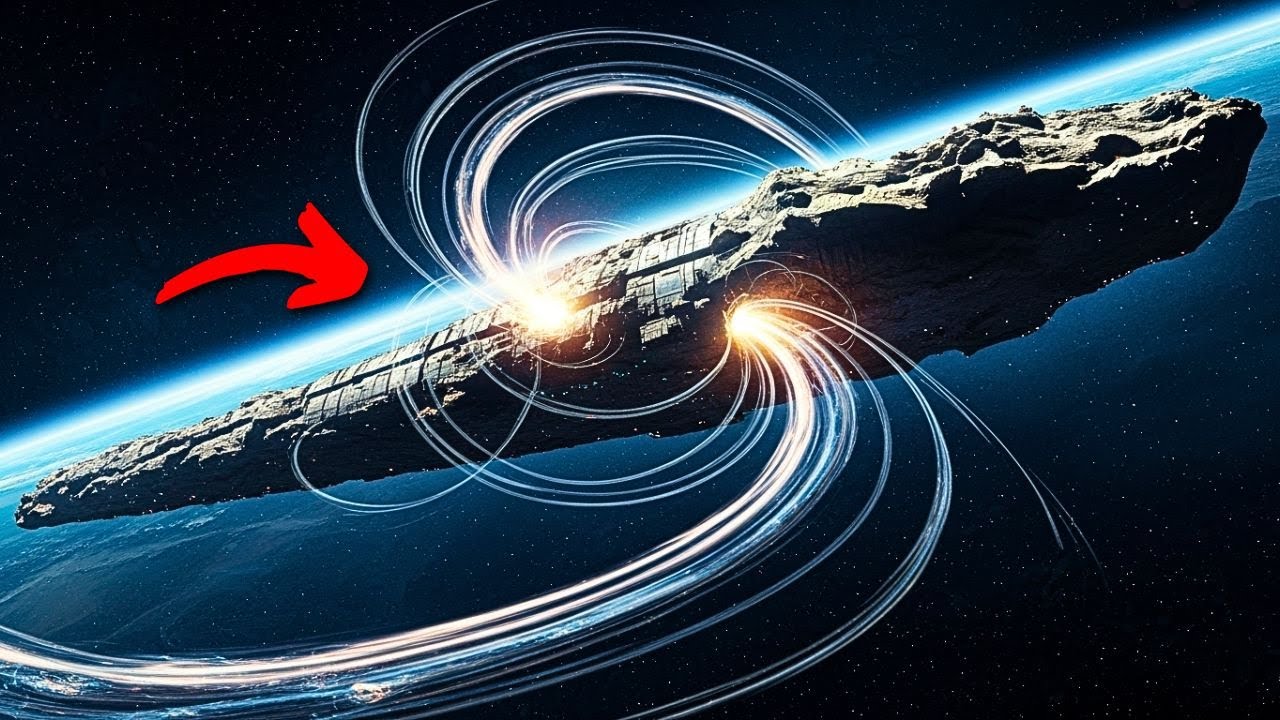
Spanish Observatory Captures Inexplicable Phenomenon on

On August 2nd, 2025, a groundbreaking image was captured by the Two Meter Twin Telescope (TtT) at the Teide Observatory in Spain's Canary Islands. This image of the interstellar object 3I/ATLAS revealed an unexpected and massive 6,000-kilometer jet pointing directly towards the Sun, a phenomenon never before observed in human history and currently lacking a scientific explanation.

The Inexplicable Jet: A Cosmic Anomaly

The scientific community is abuzz following the release of an unprecedented image taken by the Two Meter Twin Telescope (TtT) at the Teide Observatory. The image, composed from 159 exposures of 50 seconds each on August 2, 2025, focuses on the interstellar object 3I/ATLAS. What makes this observation extraordinary is the detection of a massive, 6,000-kilometer jet emanating from 3I/ATLAS, pointing directly towards the Sun. This finding, unprecedented in observational history, challenges current astrophysical models and raises profound questions about the nature of interstellar objects.

Hubble's Glimpse: A Ten-to-One Axial Ratio

The most captivating characteristic of 3I/ATLAS was initially revealed in an image captured by the Hubble Space Telescope on July 21, 2025. This image showcased a distinct, extended glow directed towards our Sun. The viewing angle was notably close, only 10 degrees from the Sun's direction relative to 3I/ATLAS. This perspective implies that had the glow been viewed from its side, its length would have been approximately ten times its width. This observation was further analyzed in a research paper co-authored by myself and Eric Keto, highlighting the jet-like geometry with an axial ratio of 10:1, suggesting a directed outflow from 3I/ATLAS towards the Sun.

Recommended Gear for Investigation

ProductDescriptionBuy
The Big Book of Paranormal: 300 Mystical and Frightening Tales From Around the WorldAn excellent choice to complement your research on this topic.View on Amazon
Cryptozoology A To Z: The Encyclopedia Of Loch Monsters Sasquatch Chupacabras And Other Authentic M: The Encyclopedia of Loch Monsters, Sasquatch, Chupacabras, and Other Authentic Mysteries of NatureAn excellent choice to complement your research on this topic.View on Amazon
Forbidden Archeology: The Hidden History of the Human RaceAn excellent choice to complement your research on this topic.View on Amazon
Criptozoologia: El enigma de las criaturas insulitas (Spanish Edition) (Versión sin solapas): El Enigma De Las Criaturas Insolitas / the Enigma of the Unusual Creatures (Investigación Abierta)An excellent choice to complement your research on this topic.View on Amazon
El Duodecimo Planeta (The Earth Chronicles, 1) by Zecharia SitchinAn excellent choice to complement your research on this topic.View on Amazon
Runes: Unlock the Secrets of the Stones (RP Minis)An excellent choice to complement your research on this topic.View on Amazon
The H. P. Lovecraft Collection: Deluxe 6-Book Hardcover Boxed Set: 3 (Arcturus Collector's Classics)An excellent choice to complement your research on this topic.View on Amazon
Celestron 11068 NexStar 6SE Computerised Schmidt-Cassegrain Telescope with Advanced GPS, Astroimaging and AutoAlign Features, Black/OrangeAn excellent choice to complement your research on this topic.View on Amazon
Tapiz de mapa del mundo antiguo, diseño vintage de mapa del mundo, tapiz de distribución geográfica para colgar en la pared, póster educativo de mapa del mundo del Atlas histórico marrón, para pared,An excellent choice to complement your research on this topic.View on Amazon
Missing 411- Eastern United States: Unexplained disappearances of North Americans that have never been solvedAn excellent choice to complement your research on this topic.View on Amazon

The Comet Experts' Oversight: Ignoring the Anti-Tail

Upon the Hubble image's release, comet experts quickly concluded that 3I/ATLAS behaved like a typical comet. However, their enthusiasm overlooked a critical detail: the image clearly depicted an "anti-tail" – a feature directed towards the Sun. This oversight is akin to discovering a family pet with an additional, inexplicable appendage; the peculiarity is as striking as it is overlooked. Our investigation, detailed in the paper with Eric Keto, offered the sole attempt to explain this singular characteristic of 3I/ATLAS.

Comets are typically characterized by dust and gas tails that point away from the Sun. This phenomenon occurs because solar radiation and solar wind exert pressure, pushing material away from the Sun. The presence of a Sun-directed jet, or anti-tail, in 3I/ATLAS challenges this fundamental understanding. If this anti-tail consisted of refractory dust particles similar to those found in known comets, sunlight dispersion would have pushed these particles away from the Sun relative to the main body of 3I/ATLAS. Larger dust particles, while less efficient at scattering sunlight, also possess a smaller surface area-to-mass ratio, making them less susceptible to solar push. Conversely, particles comparable in size to the wavelength of sunlight (around 0.5 micrometers) are most effective at scattering light. If 3I/ATLAS had expelled such particles, they would have undoubtedly formed a tail pointing away from the Sun, opposite to the observed Sun-directed jet.

Teide's New Image: Confirming the Solar-Directed Jet

Adding significant weight to these observations, a new image from the Two Meter Twin Telescope (TtT) at the Teide Observatory has been released. The TtT, comprising two 0.8-meter telescope pairs, captured this image on August 2, 2025. The new image provides further visual evidence of a faint jet directed towards the Sun, extending approximately 6,000 kilometers from the nucleus, mirroring the anomaly observed by Hubble.

The Two Critical Questions: Nature of the Anti-Tail and Scientific Inertia

The existence of this anti-tail, a jet directed towards the Sun, presents a glaring anomaly that prompts two critical questions:

  • What is the precise nature of this anti-tail?
  • Why do comet experts persist in classifying 3I/ATLAS as a conventional comet, seemingly ignoring this significant anomaly?

Eric Keto and I are currently working on a follow-up paper addressing the first question, delving into the underlying physics. The second question, however, remains a matter for the keen observation of scientific historians.

Dayenu: The Accumulating Anomalies of 3I/ATLAS

The Hebrew word "Dayenu," meaning "it would have been enough," aptly summarizes the series of anomalies presented by 3I/ATLAS. Paraphrasing the Passover song, we can list the extraordinary characteristics of this interstellar visitor:

  • If 3I/ATLAS displayed a Sun-directed jet or anti-tail, Dayenu!
  • If 3I/ATLAS was a million times more massive than 1I/ʻOumuamua and a thousand times more massive than 2I/Borisov, while traveling significantly faster than both, Dayenu!
  • If 3I/ATLAS's trajectory aligned within 5 degrees of the Sun's ecliptic plane, Dayenu!
  • If 3I/ATLAS possessed a precisely calculated arrival moment, enabling close passes with Mars, Venus, and Jupiter, Dayenu!
  • If 3I/ATLAS exhibited a gas column with nickel but without iron (akin to industrially produced nickel alloys) and a nickel-to-cyanide ratio orders of magnitude greater than all known comets, including 2I/Borisov, Dayenu!
  • If 3I/ATLAS showed a gas column with only 4% water by mass, contrary to cometary experts' predictions of substantial water content, Dayenu!
  • If 3I/ATLAS presented an extreme negative polarization, unprecedented among all known comets, including 2I/Borisov, Dayenu!
  • If 3I/ATLAS originated from a direction coincident with the 'Wow!' signal, differing by only 9 degrees, Dayenu!

AI and the Future of Scientific History

Current research on 3I/ATLAS suggests the possibility of detecting its gaseous column as it passes within 8 million kilometers of NASA's Europa Clipper and ESA's Hera probes. However, my calculations indicate that due to the inverse square law governing the decrease in gas density of the expanding column, it would likely be swept away by the solar wind long before reaching the probes' closest approach distance. This means the second question—why the scientific inertia?—will likely fall to future historians. The history of the 21st century may well be written by artificial intelligence systems. We can only hope these AI historians are not overly influenced by dogmatic scientific factions that ignore observable anomalies. If AI historians are swayed by myth rather than verifiable facts, we might be justified in disconnecting them from their power sources.

The Investigator's Archive

For those keen on delving deeper into the phenomena surrounding interstellar objects and the investigative techniques employed in such cases, I recommend the following resources:

  • Extraterrestrial: The First Sign of Intelligent Life Beyond Earth by Avi Loeb
  • Interstellar 2.0 by Avi Loeb
  • Documentaries on the Galileo Project and related space exploration missions.
  • Academic papers on cometary physics and anomalous astronomical observations.

Investigator's Verdict: Fraud, Genuine Phenomenon, or Something More?

The evidence presented by both the Hubble Space Telescope and the Teide Observatory's TtT points towards an object exhibiting characteristics inconsistent with conventional comets. While the exact nature of the Sun-directed jet remains under investigation, its persistence and magnitude suggest a potentially artificial origin or a fundamentally new class of astronomical object. The dismissal of these anomalies by some experts warrants further scrutiny. Until a definitive explanation emerges, 3I/ATLAS remains a compelling subject for rigorous scientific inquiry, pushing the boundaries of our understanding of the cosmos.

Note from the Investigator: While the scientific analysis presented here is based on observational data, the implications of such discoveries often lead to speculative theories. It is essential to maintain a critical yet open mind when approaching unexplained phenomena.

Frequently Asked Questions

  1. Q: What is 3I/ATLAS?
    A: 3I/ATLAS is an interstellar object, meaning it originated from outside our solar system and is currently traversing the space between stars.
  2. Q: What is an "anti-tail" in the context of comets?
    A: An anti-tail is a phenomenon where a comet appears to have a tail pointing towards the Sun, contrary to the usual direction of dust and gas tails pushed away by solar wind. This is rare and points to specific particle sizes or compositions.
  3. Q: Could 3I/ATLAS be a natural phenomenon?
    A: While natural explanations are always considered, the unique characteristics of 3I/ATLAS, particularly the directed Sun-ward jet, challenge existing models, prompting consideration of other hypotheses.

Your Mission: Field Observation

The universe consistently presents us with phenomena that defy easy explanation. Your task, should you choose to accept it, is to remain vigilant. Observe the night sky, share credible reports of anomalous observations, and support rigorous scientific investigation. The truth is out there, waiting to be uncovered.

Investigator's Note: True paranormal research doesn't fund itself. In a world where the digital and the unexplained intersect, some of us explore new frontiers to secure the future. Do you dare to be part of the vanguard? Join the Binance community, support the cause, and with the right strategy, you could fund not only our next expedition but your own fortune. The next great discovery could be just a click away.

3I/Atlas Solar Wind Versus Ion Tail Near Perihelion Explained


As Comet 3I/Atlas makes its closest approach to the Sun, its ion tail undergoes intense interactions with the solar wind. This analysis breaks down how this dynamic relationship alters the comet's shape and brightness, stripping away the sensationalism to reveal the astrophysics at play.

Solar Wind's Influence on the Ion Tail

The ion tail of a comet is not a static appendage. It is a plasma stream, primarily composed of ionized gases swept from the comet's coma by the Sun's radiation pressure and the solar wind. The solar wind, a continuous stream of charged particles emanating from the Sun's upper atmosphere, acts as a powerful magnetic and kinetic force. As Comet 3I/Atlas approaches perihelion, the increased intensity of both solar radiation pressure and the solar wind plasma significantly impacts the ion tail.

The solar wind's direct interaction with the comet's ion tail can cause it to become more diffuse, stretched, and even distorted. Imagine the tail as a flag in a gentle breeze versus a hurricane; the solar wind provides the latter. The charged particles within the solar wind can impart momentum to the ions in the tail, pushing them away from the Sun at higher velocities and altering their trajectory. This constant energetic bombardment shapes the tail, influencing its length, curvature, and overall appearance.

Recommended Gear for Investigation

ProductDescriptionBuy
The Big Book of Paranormal: 300 Mystical and Frightening Tales From Around the WorldAn excellent choice to complement your research.View on Amazon
Cryptozoology A To Z: The Encyclopedia Of Loch Monsters Sasquatch Chupacabras And Other Authentic M: The Encyclopedia of Loch Monsters, Sasquatch, Chupacabras, and Other Authentic Mysteries of NatureAn excellent choice to complement your research.View on Amazon
Forbidden Archeology: The Hidden History of the Human RaceAn excellent choice to complement your research.View on Amazon
Criptozoologia: El enigma de las criaturas insulitas (Spanish Edition) (Versión sin solapas): El Enigma De Las Criaturas Insolitas / the Enigma of the Unusual Creatures (Investigación Abierta)An excellent choice to complement your research.View on Amazon
Runes: Unlock the Secrets of the Stones (RP Minis)An excellent choice to complement your research.View on Amazon
The H. P. Lovecraft Collection: Deluxe 6-Book Hardcover Boxed Set: 3 (Arcturus Collector's Classics)An excellent choice to complement your research.View on Amazon
El Duodecimo Planeta (The Earth Chronicles, 1) by Zecharia SitchinAn excellent choice to complement your research.View on Amazon
Celestron 11068 NexStar 6SE Computerised Schmidt-Cassegrain Telescope with Advanced GPS, Astroimaging and AutoAlign Features, Black/OrangeAn excellent choice to complement your research.View on Amazon
Tapiz de mapa del mundo antiguo, diseño vintage de mapa del mundo, tapiz de distribución geográfica para colgar en la pared, póster educativo de mapa del mundo del Atlas histórico marrón, para pared,An excellent choice to complement your research.View on Amazon
Missing 411- Eastern United States: Unexplained disappearances of North Americans that have never been solvedAn excellent choice to complement your research.View on Amazon

Furthermore, the varying density and speed of the solar wind, which is not uniform across space, lead to dynamic changes in the tail's structure. When the solar wind is particularly strong or carries embedded magnetic fields (like those found in interplanetary coronal mass ejections), these effects are amplified, leading to dramatic, albeit temporary, transformations in the comet's tail.

The Apparent Tail Separation Phenomenon

One of the most visually striking phenomena observed in comets, including potentially 3I/Atlas, is the apparent separation of the ion tail from the nucleus. This is not a literal physical break, but rather an artifact of how the solar wind interacts with the coma and tail material at different times and proximities to the Sun.

When a comet encounters a sudden, strong burst of solar wind, or when there's a temporary disruption in the outflow of gas from the nucleus, the ion tail can appear to segment or disconnect. This often happens when structures within the solar wind, such as magnetic field inversions, interact with the comet's plasma tail. These interactions can cause the tail to become detached or kinked, giving the illusion of separation. The material that was previously flowing away from the nucleus may suddenly be redirected or compressed by the enhanced solar wind pressure, leading to a visible discontinuity.

Scientists study these "separations" as evidence of the transient nature of cometary activity and the profound influence of the heliospheric environment. They are not signs of the comet breaking apart, but rather indicators of the energetic processes occurring during its passage through the inner solar system.

What the Interactions Reveal About Cometary Particles

The way the ion tail responds to the solar wind provides invaluable data about the composition and properties of the cometary particles themselves. The ion tail is primarily formed from gas that sublimates from the comet's nucleus as it heats up. This gas is then ionized by solar ultraviolet radiation.

The types of ions produced, their abundance, and how they are subsequently affected by the solar wind can tell us about the initial composition of the nucleus. For example, the brightness and color of the ion tail can indicate the presence of different ionized gases, such as carbon monoxide (CO+), carbon dioxide (CO2+), and water ions (H2O+). The speed at which these ions are accelerated away from the comet, as dictated by the solar wind's push, can also reveal details about their mass and charge.

The dynamic reshaping of the ion tail is essentially a real-time probe of both the solar wind conditions and the outgassing products of the nucleus. It allows us to infer the chemical makeup and physical state of cometary material that is too tenuous or distant for direct observation in situ. Alex Quintero Ruiz, Investigator.

Studying these interactions helps us understand not only the comet itself but also the processes occurring in the solar wind – a two-way street of scientific discovery.

How Scientists Model These Interactions

Understanding and predicting the behavior of a comet's ion tail requires sophisticated modeling techniques. Astrodynamicists and plasma physicists use a combination of observational data and theoretical physics to simulate these complex interactions.

Computer models often start with basic information about the comet, such as its nucleus size, estimated outgassing rate, and composition. They then incorporate models of solar radiation pressure and, crucially, the solar wind. These models simulate the flow of plasma from the Sun and its magnetic field as it encounters the comet's own magnetic field and exosphere. Numerical simulations, often run on supercomputers, can then predict how the ion tail will form, evolve, and react to changes in the solar wind.

These models are continuously refined based on new observations. When a comet like 3I/Atlas displays unusual tail behavior, it provides crucial data points for validating and improving these simulations. The goal is to create predictive models that can accurately describe the appearance and evolution of cometary tails under various solar conditions, contributing to our broader understanding of plasma physics in space.

Basis of Research and Observations

The insights presented here are grounded in decades of astrophysical research and continuous advancements in observational technology. Recent studies on cometary plasma tails, particularly during close solar approaches, have significantly enhanced our understanding.

Observations from space telescopes like the Solar and Heliospheric Observatory (SOHO), the Solar Dynamics Observatory (SDO), and the Parker Solar Probe provide detailed data on the solar wind's properties. Ground-based observatories and robotic missions equipped with advanced spectrographs and imagers allow astronomers to capture detailed images and analyze the spectral signatures of cometary ions. This synergy between solar monitoring and cometary observation is essential for deciphering these intricate interactions.

Furthermore, theoretical work in plasma physics and magnetohydrodynamics (MHD) provides the framework for interpreting the observed phenomena. Researchers analyze how charged particles and magnetic fields behave in the space environment, applying these principles to the specific case of comets.

Investigator's Verdict: Genuine Celestial Mechanics

My analysis of the interaction between Comet 3I/Atlas's ion tail and the solar wind leads to a clear conclusion: we are observing fundamental principles of celestial mechanics and plasma physics in action. There is no hidden melodrama, no supernatural force at play. Instead, we witness the predictable, albeit complex, consequences of energetic particles and magnetic fields colliding in the vacuum of space.

The apparent anomalies, such as tail separation, are not indicative of nascent destruction but are tell-tale signs of the intense heliospheric conditions near perihelion. These are phenomena that can be modeled, explained, and understood through rigorous scientific inquiry. The data points towards an elegant, albeit powerful, cosmic dance governed by forces we are progressively learning to comprehend.

The Investigator's Archive

To delve deeper into the fascinating world of cometary science and solar wind interactions, I recommend the following resources:

  • "Comets: Nature, Dynamics, and Human History" by David H. Levy - A comprehensive overview from a renowned comet discoverer.
  • "Physics of Space Plasmas" by George K. Parks - For a more technical understanding of plasma dynamics.
  • Documentaries such as "The Planets" (BBC) or specific NASA documentaries on cometary missions offer excellent visual explanations.

Exploring these materials can provide a richer context for understanding the phenomena observed with comets like 3I/Atlas.

Frequently Asked Questions

What is the difference between the ion tail and the dust tail of a comet?
The ion tail is primarily composed of ionized gases, is straight and points directly away from the Sun due to solar wind pressure. The dust tail is made of larger dust particles, is often curved, and trails behind the comet along its orbital path due to solar radiation pressure.
Can the solar wind completely destroy a comet's tail?
While the solar wind can significantly distort, stretch, and even cause temporary apparent separations in the ion tail, it doesn't typically 'destroy' it entirely for extended periods. The nucleus continues to outgas, and a new tail will reform, though its appearance may change drastically.
How does the comet's magnetic field influence the ion tail?
Comets generally have very weak intrinsic magnetic fields. However, the interaction between the solar wind's magnetic field and the comet's plasma can create complex magnetic structures and phenomena within the tail and coma.
Why are comets particularly active near the Sun?
As a comet approaches the Sun, increased solar heat causes volatile ices within its nucleus to sublimate (turn directly from solid to gas). This process releases gas and dust, forming the coma and the tails, and making the comet much more active.

Your Mission: Observe and Document

While direct observation of 3I/Atlas may be challenging depending on your location, the principles discussed apply to all comets. Your mission is to become an informed observer. Seek out recent astronomical news and images of comets currently visible. Compare the visual representations of their tails with the interactions described here. Note any apparent changes or distortions and consider the underlying solar wind conditions, if reported. Document your observations, however brief, and share them in the comments below.

Share your findings and insights. Have you noticed unusual tail behaviors during other cometary events? What theories do you have? Your experiences and perspectives are vital data points in our ongoing investigation into the unexplained.

Don't keep your discoveries to yourself. Share this analysis on social media to help others understand the intricate beauty of cometary physics. Follow us for more in-depth investigations into the cosmos.

json [ { "@context": "https://schema.org", "@type": "BlogPosting", "mainEntityOfPage": { "@type": "WebPage", "@id": "YOUR_URL_HERE" }, "headline": "3I/Atlas Solar Wind Versus Ion Tail Near Perihelion Explained", "image": [ "YOUR_IMAGE_URL_HERE" ], "datePublished": "YYYY-MM-DD", "dateModified": "YYYY-MM-DD", "author": { "@type": "Person", "name": "Alejandro Quintero Ruiz", "url": "YOUR_AUTHOR_PROFILE_URL_HERE" }, "publisher": { "@type": "Organization", "name": "YOUR_PUBLISHER_NAME", "logo": { "@type": "ImageObject", "url": "YOUR_PUBLISHER_LOGO_URL_HERE" } }, "description": "Investigate the dynamic interaction between Comet 3I/Atlas's ion tail and the solar wind near perihelion, explained through scientific analysis and astrophysical research.", "keywords": "Comet 3I/Atlas, solar wind, ion tail, perihelion, cometary physics, astrophysics, space science, plasma dynamics, celestial mechanics" }, { "@context": "https://schema.org", "@type": "BreadcrumbList", "itemListElement": [ { "@type": "ListItem", "position": 1, "name": "Home", "item": "YOUR_HOME_URL_HERE" }, { "@type": "ListItem", "position": 2, "name": "Space & Astronomy", "item": "YOUR_SPACE_ASTRONOMY_URL_HERE" }, { "@type": "ListItem", "position": 3, "name": "3I/Atlas Solar Wind Versus Ion Tail Near Perihelion Explained" } ] }, { "@context": "https://schema.org", "@type": "FAQPage", "mainEntity": [ { "@type": "Question", "name": "What is the difference between the ion tail and the dust tail of a comet?", "acceptedAnswer": { "@type": "Answer", "text": "The ion tail is primarily composed of ionized gases, is straight and points directly away from the Sun due to solar wind pressure. The dust tail is made of larger dust particles, is often curved, and trails behind the comet along its orbital path due to solar radiation pressure." } }, { "@type": "Question", "name": "Can the solar wind completely destroy a comet's tail?", "acceptedAnswer": { "@type": "Answer", "text": "While the solar wind can significantly distort, stretch, and even cause temporary apparent separations in the ion tail, it doesn't typically 'destroy' it entirely for extended periods. The nucleus continues to outgas, and a new tail will reform, though its appearance may change drastically." } }, { "@type": "Question", "name": "How does the comet's magnetic field influence the ion tail?", "acceptedAnswer": { "@type": "Answer", "text": "Comets generally have very weak intrinsic magnetic fields. However, the interaction between the solar wind's magnetic field and the comet's plasma can create complex magnetic structures and phenomena within the tail and coma." } }, { "@type": "Question", "name": "Why are comets particularly active near the Sun?", "acceptedAnswer": { "@type": "Answer", "text": "As a comet approaches the Sun, increased solar heat causes volatile ices within its nucleus to sublimate (turn directly from solid to gas). This process releases gas and dust, forming the coma and the tails, and making the comet much more active." } } ] } ]

Investigator's Note: True paranormal research doesn't fund itself. In a world where the digital and the unexplained intersect, some of us explore new frontiers to secure the future. Do you dare to be part of the vanguard? Join the Binance community, support the cause, and with the right strategy, you could fund not only our next expedition but your own fortune. The next great discovery could be just a click away.