Followers

Mostrando las entradas con la etiqueta astrophysics. Mostrar todas las entradas

3I/ATLAS: Harvard Claims It's a 'Swarm' with Signs of Life

Image

In the vast, cold expanse of space, conventional explanations often crumble when confronted with sheer, unadulterated evidence. The celestial body designated 3I/ATLAS, initially dismissed as a mere comet, has become the epicenter of a scientific maelstrom. Recent analyses have peeled back its icy facade, revealing anomalies that are forcing astrophysicists to recalibrate their understanding of cosmic phenomena. The official narrative? It's no longer holding water.

The 'Swarm' Hypothesis: A Collective Entity?

Leading scientists at Harvard University have put forth a radical new theory: the "Swarm" hypothesis. This isn't about a singular rogue object hurtling through the void. Instead, evidence points towards 3I/ATLAS being a complex, multi-component structure. Imagine not one entity, but a tightly-knit formation, an organized collective moving with coordinated purpose. This dramatically shifts the paradigm from a simple astronomical body to something far more intricate, almost like a celestial hive.

This collective nature introduces a layer of complexity previously unimagined for cometary objects. It challenges our fundamental assumptions about formation and behavior in the solar system. The coordinated movement suggests an underlying mechanism or a shared origin far more sophisticated than previously theorized.

Recommended Gear for Investigation

ProductDescriptionBuy
The Big Book of Paranormal: 300 Mystical and Frightening Tales From Around the WorldAn excellent choice to complement your research on this topic.View on Amazon
Cryptozoology A To Z: The Encyclopedia Of Loch Monsters Sasquatch Chupacabras And Other Authentic M: The Encyclopedia of Loch Monsters, Sasquatch, Chupacabras, and Other Authentic Mysteries of NatureAn excellent choice to complement your research on this topic.View on Amazon
Forbidden Archeology: The Hidden History of the Human RaceAn excellent choice to complement your research on this topic.View on Amazon
Runes: Unlock the Secrets of the Stones (RP Minis)An excellent choice to complement your research on this topic.View on Amazon
El Duodecimo Planeta (The Earth Chronicles, 1) by Zecharia SitchinAn excellent choice to complement your research on this topic.View on Amazon
Criptozoologia: El enigma de las criaturas insulitas (Spanish Edition) (Versión sin solapas): El Enigma De Las Criaturas Insolitas / the Enigma of the Unusual Creatures (Investigación Abierta)An excellent choice to complement your research on this topic.View on Amazon
The H. P. Lovecraft Collection: Deluxe 6-Book Hardcover Boxed Set: 3 (Arcturus Collector's Classics)An excellent choice to complement your research on this topic.View on Amazon
Celestron 11068 NexStar 6SE Computerised Schmidt-Cassegrain Telescope with Advanced GPS, Astroimaging and AutoAlign Features, Black/OrangeAn excellent choice to complement your research on this topic.View on Amazon
Tapiz de mapa del mundo antiguo, diseño vintage de mapa del mundo, tapiz de distribución geográfica para colgar en la pared, póster educativo de mapa del mundo del Atlas histórico marrón, para pared,An excellent choice to complement your research on this topic.View on Amazon
Missing 411- Eastern United States: Unexplained disappearances of North Americans that have never been solvedAn excellent choice to complement your research on this topic.View on Amazon

Unsettling Discoveries: A Pulsating Heart and Ancient Life

The situation escalates from intriguing to profoundly disturbing when we examine the internal characteristics attributed to 3I/ATLAS. Reports confirm a strange, rhythmic "heartbeat" emanating from the object. This isn't the predictable cycle of a stellar body; it implies an internal, active process. Merging this with the detection of "building blocks of life" – ancient biological components – paints a picture that defies easy categorization. How can a single celestial object possess a pulsing core, biological vestiges, and exhibit organized, swarm-like locomotion?

The presence of what are being described as "prehistoric life bricks" is, frankly, extraordinary. These aren't mere organic molecules; they are suggestive of actual biological structures, albeit ancient ones. Connecting this with the object's energetic signature, its "heartbeat," opens speculative avenues that border on the biological, the artificial, or perhaps something entirely alien to our current understanding.

Implications for History: Rewriting Our Cosmic Story

As the disparate pieces of evidence begin to align, a new, potentially paradigm-shifting image emerges. The confluence of swarm behavior, a biological signature, and a pulsating energy source challenges our established timelines and origins. If objects like 3I/ATLAS are more common than we believed, or if they represent a mechanism for seeding life across the cosmos, then our understanding of our own history, and indeed the history of life itself, may need a drastic revision. This isn't just about astrophysics; it's about potentially unlocking secrets that could redefine humanity's place in the universe.

The implications extend beyond scientific theory. If such complex, potentially life-bearing structures are traversing interstellar or interplanetary space, it raises profound questions about panspermia, the origin of life on Earth, and the possibility of extraterrestrial intelligence. The coming years promise intense scrutiny of 3I/ATLAS and similar phenomena.

Observational Tools: Equipped for the Unknown

Observing such phenomena requires robust instrumentation. For those interested in the tools used to capture images of objects like 3I/ATLAS, or for enthusiasts looking to peer into the cosmos themselves, several options stand out. The Celestron CGEM II 800 EdgeHD 8"telescope was instrumental in the imaging process featured in related video analyses. For aspiring astronomers wanting to track celestial events, including potentially other anomalous objects, suitable telescopes include:

Researcher's Verdict: Beyond Conventional Astronomy

My assessment of the data surrounding 3I/ATLAS is straightforward: it defies simple classification. The "Swarm" hypothesis, while speculative, offers a framework to begin interrogating the interconnected anomalies. The biological components and the rhythmic pulsations push this object far beyond the realm of a typical comet or asteroid. Is it a natural phenomenon we simply haven't encountered before, or are we looking at something engineered? The evidence, while preliminary, leans towards the extraordinary. This demands rigorous, unbiased investigation, free from the constraints of existing paradigms. We must remain open to the possibility that our current models of celestial mechanics and biology are incomplete, perhaps fundamentally so.

This isn't the first time astronomical observations have yielded perplexing results. Throughout history, celestial events have sparked debate, challenged scientific dogma, and fueled our collective imagination. The ongoing analysis of 3I/ATLAS serves as a potent reminder that the universe is far stranger and more complex than we often assume. My own experiences investigating unexplained aerial phenomena have often pointed to similarly elusive objects that defy conventional explanation, hinting at processes and entities unknown to standard science.

Frequently Asked Questions

  1. What is the 'Swarm' hypothesis regarding comet 3I/ATLAS?

    The 'Swarm' hypothesis, proposed by Harvard scientists, suggests that comet 3I/ATLAS is not a single object but rather a complex structure composed of multiple components moving together.

  2. What are the 'building blocks of life' detected within 3I/ATLAS?

    The analysis of 3I/ATLAS has revealed the presence of ancient biological components, described as 'building blocks of life', which challenges conventional explanations for its composition.

  3. What does the 'rhythmic heartbeat' of 3I/ATLAS signify?

    The object exhibits a peculiar rhythmic 'heartbeat', a pulsating characteristic that, combined with its swarm-like movement and biological components, deepens the mystery surrounding its true nature.

  4. How does the 3I/ATLAS discovery challenge current physics?

    The anomalies observed in 3I/ATLAS, including its complex structure, biological constituents, and rhythmic pulsations, exceed the explanatory power of classical physics, prompting new scientific inquiries.

Your Field Mission

The universe continues to present us with enigmas that test the limits of our knowledge. 3I/ATLAS is a prime example, demanding we look beyond the surface. Your mission, should you choose to accept it, is to continue seeking knowledge. Engage with the data, question the assumptions, and share your findings. The pursuit of truth in the unexplained requires a community of dedicated investigators. Consider what tools or methods might be employed to further investigate such phenomena, drawing parallels from other fields like cryptid hunting or EVP analysis.

What are your thoughts on the 'Swarm' hypothesis? Have you encountered similar multi-component objects in your own astronomical observations or research? Share your experiences and theories in the comments below. Don't forget to share this investigation with fellow truth-seekers on your social networks – the more eyes on the mystery, the closer we get to the truth.

Investigator's Note: True paranormal research doesn't fund itself. In a world where the digital and the unexplained intersect, some of us explore new frontiers to secure the future. Do you dare to be part of the vanguard? Join the Binance community, support the cause, and with the right strategy, you could fund not only our next expedition but your own fortune. The next great discovery could be just a click away.

Sunsets from Different Alien Worlds: An Astrophysical Expedition

Image

The cosmos is a canvas of unimaginable beauty, and nowhere is this more apparent than in the diverse celestial phenomena that paint the skies of alien worlds. Beyond the familiar crimson hues of an Earthly sunset lies an infinite spectrum of light and shadow, orchestrated by stellar nurseries, dying giants, and the gravitational maelstrom of black holes. This investigation delves into the breathtaking, hypothetical vistas of sunsets as they might be witnessed from planets orbiting stellar bodies vastly different from our sun.

Introduction: Beyond Earth's Horizon

The concept of a sunset is intrinsically human, tied to our planet's rotation and the characteristics of our G-type main-sequence star, the Sun. However, in the grand theater of the universe, this familiar transition from day to night is merely one performance among countless variations. This report compiles simulated visualizations of sunsets from environments that defy terrestrial experience, ranging from the complex light play in binary star systems to the overwhelming presence of supermassive black holes. The visualizations, crafted using advanced astronomical simulation software, offer a glimpse into phenomena that, while hypothetical, are grounded in our understanding of astrophysics.

The Enigma of the Pink Sunset

Our journey begins with a celestial tableau bathed in pink. This simulated sunset occurs under a "white giant" star, a classification that can encompass several stellar types depending on their evolutionary stage and temperature. Unlike our Sun, which emits light across a broad spectrum that our eyes interpret as white, stars classified as white giants or supergiants often possess surface temperatures that shift the peak of their emitted light towards the blue or ultraviolet end. However, atmospheric conditions on an exoplanet can dramatically alter the perceived color. A thick atmosphere rich in specific aerosols or dust particles could scatter shorter wavelengths of light more effectively, allowing longer, redder wavelengths to dominate, potentially creating the observed pinkish hue. This phenomenon underscores the critical role of atmospheric composition in mediating the light we perceive from a star.

Recommended Gear for Investigation

ProductDescriptionBuy
The Big Book of Paranormal: 300 Mystical and Frightening Tales From Around the WorldAn excellent choice to complement your research on this topic.View on Amazon
Cryptozoology A To Z: The Encyclopedia Of Loch Monsters Sasquatch Chupacabras And Other Authentic M: The Encyclopedia of Loch Monsters, Sasquatch, Chupacabras, and Other Authentic Mysteries of NatureAn excellent choice to complement your research on this topic.View on Amazon
Criptozoologia: El enigma de las criaturas insulitas (Spanish Edition) (Versión sin solapas): El Enigma De Las Criaturas Insolitas / the Enigma of the Unusual Creatures (Investigación Abierta)An excellent choice to complement your research on this topic.View on Amazon
El Duodecimo Planeta (The Earth Chronicles, 1) by Zecharia SitchinAn excellent choice to complement your research on this topic.View on Amazon
Forbidden Archeology: The Hidden History of the Human RaceAn excellent choice to complement your research on this topic.View on Amazon
The H. P. Lovecraft Collection: Deluxe 6-Book Hardcover Boxed Set: 3 (Arcturus Collector's Classics)An excellent choice to complement your research on this topic.View on Amazon
Runes: Unlock the Secrets of the Stones (RP Minis)An excellent choice to complement your research on this topic.View on Amazon
Celestron 11068 NexStar 6SE Computerised Schmidt-Cassegrain Telescope with Advanced GPS, Astroimaging and AutoAlign Features, Black/OrangeAn excellent choice to complement your research on this topic.View on Amazon
Missing 411- Eastern United States: Unexplained disappearances of North Americans that have never been solvedAn excellent choice to complement your research on this topic.View on Amazon
Celestron 22452 StarSense Explore LT114AZ Telescope, Silver/BlackAn excellent choice to complement your research on this topic.View on Amazon

Crimson Spectacle: Sunset Near Betelgeuse

Few celestial bodies capture the imagination like Betelgeuse, a red supergiant star in the constellation Orion. Its immense size and cooler surface temperature (around 3,500 Kelvin) compared to our Sun (around 5,778 Kelvin) mean that its light is heavily shifted towards the red end of the spectrum. Imagining a sunset from a planet orbiting such a star conjures an overwhelming crimson vista. The sheer luminosity of Betelgeuse, even at its cooler temperature, would likely dominate any planetary sky. An observer on a nearby world would witness a sun that appears larger and redder than our own, casting the landscape in perpetual twilight hues. The simulation suggests a breathtaking, yet potentially terrifying, spectacle, where the sky burns crimson as this colossal star begins its descent.

The sheer scale of stars like Betelgeuse is difficult to comprehend from our terrestrial vantage point. To imagine standing on a world bathed in its light is to confront the raw power and immense scale of stellar evolution.

Holm 15A: A Giant's Luminous Farewell

Holm 15A is a fascinating subject, a supergiant star located at the center of the galaxy cluster Abell 85. While the exact nature of its stellar type can vary in astrophysical models, its classification as a supergiant implies an immense size and luminosity. Being near such a star would provide an unparalleled celestial display. The simulation depicts a sunset near Holm 15A where the sky fades behind its "glow," suggesting an overwhelming light source. This scenario likely involves a star significantly larger and brighter than our Sun, possibly an O-type or a hypergiant, whose brilliance would redefine what "daylight" means. The visual suggests a light so intense that even its fading moments are a powerful spectacle, characteristic of the most massive stars in the universe.

Celestial Dance: The Double Sunset

Binary and multiple star systems present some of the most enigmatic astronomical scenarios. Imagine a world orbiting two stars: a white giant and a red supergiant, such as Betelgeuse. A double sunset from such a system would be a dynamic ballet of light and color. The simulation depicts skies where dual celestial bodies set, potentially creating overlapping or contrasting light patterns. Depending on the orbital mechanics and atmospheric conditions, one might witness skies painted with hues from both stellar types simultaneously – perhaps a warm crimson from the red supergiant mingling with the brighter, harsher light of the white giant. Such sights have fueled centuries of speculation and artistic interpretation, representing the complex gravitational and radiative interactions possible in systems with more than one sun.

Many viewers expressed a profound sense of wonder at the concept of double sunsets. Online discussions frequently revolve around the potential for unique atmospheric phenomena and the aesthetic beauty of such dual celestial events. As one user noted, "It's crazy to think that for every star in the universe there are potentially several variations of sunsets and sunrises to be seen from it. Gorgeous displays that go unseen and unexperienced because there is nobody there to experience it." This sentiment is echoed across numerous platforms, highlighting a collective yearning to witness these hypothetical wonders.

Gravitational Majesty: Near M87*

M87* is the supermassive black hole at the center of the Messier 87 galaxy, famously imaged by the Event Horizon Telescope. While black holes themselves do not emit light, their accretion disks—superheated matter spiraling into the event horizon—radiate intensely across the electromagnetic spectrum. A "sunset" near M87* would not be the dimming of a star, but rather the observation of this accretion disk from a vantage point where its overwhelming light begins to dominate the celestial view, or perhaps as the planet moves into a position where the black hole’s gravitational lensing effects become apparent. The simulation suggests a point where the sky fades behind the "glow" of this cosmic behemoth, a humbling perspective on the extreme gravitational forces shaping the universe. The visual implies an environment where light itself is distorted and warped by gravity, a stark contrast to the predictable physics governing our solar system.

The implications of observing a supermassive black hole are profound. The simulated visuals, though artistic interpretations, hint at the mind-bending physics involved. Users have commented on the extreme conditions implied: "Damn, it is so scary with Ton 618 in the sky. Even at its distance of 3 light years away from the planet." This fear is often coupled with awe, underscoring the alien nature of such gravitational phenomena.

The Unimaginable Radiance of TON 618

TON 618 is another ultramassive black hole, significantly more massive than M87*, exerting a phenomenal gravitational pull and surrounded by an intensely luminous accretion disk. The prospect of witnessing a sunset near such an object is almost unfathomable. The simulation points to an "unimaginable" radiance, even from a distance of perhaps three light-years. The light emitted by TON 618's accretion disk would likely dwarf that of entire galaxies. As one commentator put it, "the light from ton 618 from 3 light years away would be unimaginable." The implications for a planet in proximity are staggering; such radiation could render the surface uninhabitable, turning perpetual night into a blinding, destructive glare. This scenario pushes the boundaries of what we can visualize, hinting at cosmic phenomena that defy conventional understanding.

IC 1101: A Supermassive Encounter

IC 1101 is often cited as one of the largest known galaxies, centered around a supermassive black hole. Observing a sunset from a planet within or near such a galactic core would be an experience of unparalleled scope. The simulation suggests a "sunset near IC 1101 CBH" (Central Black Hole), implying a view dominated by the galactic nucleus and its central engine. The sheer density of stars and the presence of the supermassive black hole would create a celestial panorama unlike any other. Instead of a single sun, an observer might see a sky filled with countless stars, nebulae, and the intense, gravitationally influenced light emanating from the galactic center. This perspective offers a humbling reminder of our place within the vast cosmic web.

Within the Stellar Crucible: Star Cluster Sunsets

Star clusters, whether open or globular, are dense congregations of stars bound by gravity. Witnessing a sunset from within such a cluster would be an immersive experience in stellar brilliance. The simulation depicts a "Sunset inside Star Cluster," where the sky is ablaze with the light of hundreds, thousands, or even millions of stars. This would not be a singular sunset, but a kaleidoscope of stellar glows, potentially with variable stars and widely different stellar types contributing to the visual tapestry. The density of stars could create a perpetual twilight, with the "setting" of one star merely giving way to the rising or dominant presence of others. As one viewer poignantly remarked, "Star clusters are so beautiful 🥹," capturing the evocative power of these stellar cities.

A Cosmic Perspective: Milky Way and LMC Views

The final scenarios presented offer perspectives from within our own galactic neighborhood, yet still alien. A "Sunset with Milky Way and LMC" suggests a view from a hypothetical planet that allows for a breathtaking panorama of our galaxy and the Large Magellanic Cloud (LMC). This isn't a sunset in the traditional sense of a single star disappearing over the horizon, but rather a view of a sky dominated by galactic structures. Imagine seeing the sprawling band of the Milky Way arching overhead, accompanied by the distinct glow of the LMC satellite galaxy. Such a view would offer an unparalleled sense of cosmic scale and our place within it. One user perfectly articulated this feeling: "Imagine seeing the milky way from far away, thinking: That's home, we came from there!"

Echoes from the Void: Audience Reflections

The profound nature of these hypothetical celestial displays has clearly resonated with viewers. Many comments reflect a deep sense of awe, melancholic beauty, and the inherent sadness of human limitations. The recurring theme is the vastness of the universe and the likely unlikelihood of humanity ever experiencing these sights firsthand. Phrases like "Wonderful scenes none of us will ever see" and "The indescribable sadness of knowing you will never be able to explore the cosmos within your lifetime" capture this sentiment. There's a palpable yearning expressed for direct experience, a desire to transcend physical limitations.

The philosophical implications are also widely discussed. The potential for alien civilizations to develop mythologies and religions based on such spectacular skies is a frequent topic. "Imagine what sort of mythologies any potential civilization out there could’ve/would’ve come up with, seeing a supermassive black hole or star cluster up in their skies," one commenter mused. This highlights how cosmic phenomena shape perception and culture, even in hypothetical scenarios. The shared experience of wonder and the acknowledgment of our cosmic solitude seem to unite viewers in a profound, albeit digital, communion.

Investigator's Analysis: Hypothetical Realities

From a scientific standpoint, these visualizations serve as powerful educational tools, translating complex astrophysical concepts into compelling visual narratives. Each scenario, while speculative, is rooted in observable phenomena and theoretical models:

  • Stellar Evolution: The depictions of sunsets near red supergiants like Betelgeuse and white giants are informed by our understanding of stellar lifecycles. These stages represent stars significantly different from our Sun, producing vastly altered radiative outputs and spectral characteristics.
  • Binary Systems: Double sunsets accurately reflect the orbital dynamics possible in multi-star systems, where a planet could indeed orbit two or more suns, leading to complex light interactions and atmospheric effects.
  • Black Hole Physics: The visualizations of accretion disks around M87* and TON 618, while simplified, touch upon the extreme gravitational environments near black holes. The intense radiation from accretion disks is a key feature, and gravitational lensing is a theoretical consequence. One detailed comment pointed out the scientific inaccuracies regarding visibility in space: "Rayleigh scattering means that dark objects outside the atmosphere never appear darker than the sky surrounding them... This is why the dark part of the black holes would be invisible, the same colour as the part of the sky they are in; only the parts emitting light, such as the accretion disk, would be visible." This highlights the challenges in accurately depicting such phenomena.
  • Galactic Structures: Views from within star clusters or with prominent galactic features like the Milky Way and LMC are grounded in astronomical observations. These scenarios emphasize the scale and structure of galaxies.

However, it's crucial to maintain a distinction between simulation and reality. The survival conditions on such planets are often overlooked in artistic renderings. The intense radiation from objects like TON 618, as noted in a comment, "would even turn night side of the planet to extremely bright glazing daylight. The planet would gradually cease to exist because of the ridiculously high gamma radiation." Furthermore, the formation of planets near very massive, hot stars (O-type stars) is considered highly improbable due to intense stellar winds and radiation, as another detailed analysis pointed out: "O- type stars are massive and extremely hot supergiants; their intense radiation and solar winds would drive off any protoplanetary dust and gas long before it could condense into planets." These scientific critiques, while accurate, do not diminish the value of the visualizations as thought experiments and pedagogical aids.

Tools of the Astrophysical Investigator

Visualizing these cosmic phenomena requires sophisticated tools. The creators utilized "Space Engine Pro" and other editing techniques, highlighting the importance of advanced simulation software in modern astrophysical exploration. For those inspired to delve deeper into understanding celestial mechanics and exoplanetary science, specific equipment and resources are indispensable:

Frequently Asked Questions

Q1: Are these alien sunsets real?
A1: The visualizations presented are artistic interpretations and scientific simulations based on our current understanding of astrophysics. They depict hypothetical scenarios of what sunsets might look like on planets orbiting different types of stars and celestial objects, not actual observed phenomena.
Q2: Could life exist on planets orbiting such extreme objects?
A2: The possibility of life in such extreme environments is highly speculative. While life has shown remarkable adaptability on Earth, the conditions near supermassive black holes or very massive stars would likely involve lethal levels of radiation, gravitational forces, and extreme temperatures, posing significant challenges to known forms of biology.
Q3: What scientific principles are these visualizations based on?
A3: They are based on principles of stellar physics, orbital mechanics, atmospheric science, and general relativity (particularly concerning black holes). Software like Space Engine Pro uses astronomical data and physical models to generate these visuals.
Q4: Why do some comments mention scientific inaccuracies?
A4: Astrophysical simulations are complex and often involve simplifications for visual impact. Detailed scientific critiques, such as those regarding Rayleigh scattering or planet formation near massive stars, point out areas where the visualizations might not perfectly align with all known physical laws or theoretical probabilities.
Q5: If we can't visit these places, why study them?
A5: Studying these extreme hypothetical scenarios expands our understanding of the universe's fundamental laws, pushes the boundaries of theoretical physics and astrophysics, and helps us refine our search for potentially habitable exoplanets by understanding the diverse range of conditions that might exist.

Investigator's Verdict: A Universe of Possibilities

These simulated alien sunsets are more than just pretty pictures; they are windows into the sheer diversity and scale of the cosmos. They challenge our anthropocentric view of celestial phenomena and remind us of the vastness of the unknown. While the physical realities of visiting such worlds remain firmly in the realm of science fiction, the scientific principles that underpin these visualizations are very real. They fuel our exploration, drive our innovation, and underscore humanity's persistent quest to comprehend our place among the stars.

Your Mission: Contemplate the Infinite

Your mission, should you choose to accept it, is to look up. Whether it's the familiar sunset over your local horizon or the distant glimmer of stars in a light-polluted sky, take a moment to consider the infinite variations of light and shadow playing out across the universe. How does contemplating these distant, hypothetical worlds affect your perspective on our own?

Share your thoughts and any personal experiences with unusual atmospheric or celestial phenomena in the comments below. Did any of these simulated sunsets resonate with you? What cosmic mystery captures your imagination the most?

If you found this exploration illuminating, do us a favor: share it across your social networks. Let's spread the wonder and encourage more minds to ponder the universe's greatest enigmas.

Don't forget to subscribe for more deep dives into the unexplained and the extraordinary!

Investigator's Note: True paranormal research doesn't fund itself. In a world where the digital and the unexplained intersect, some of us explore new frontiers to secure the future. Do you dare to be part of the vanguard? Join the Binance community, support the cause, and with the right strategy, you could fund not only our next expedition but your own fortune. The next great discovery could be just a click away.
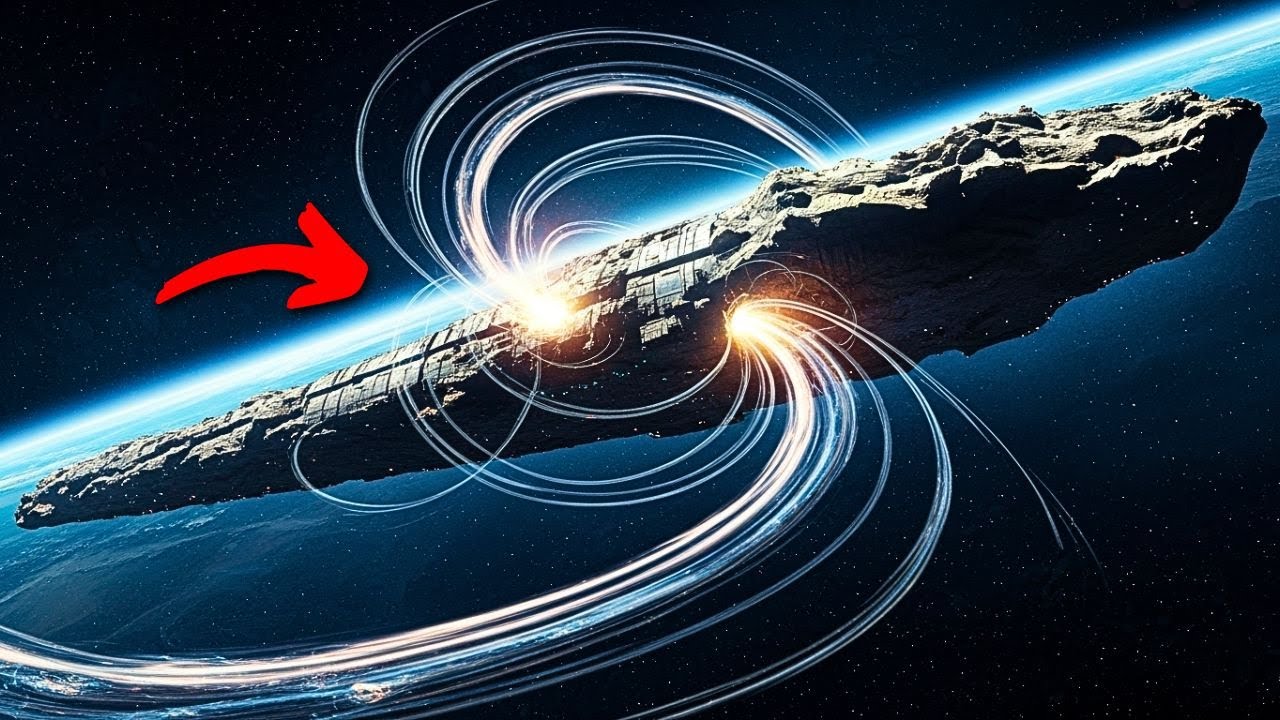
3I/Atlas Solar Wind Versus Ion Tail Near Perihelion Explained


As Comet 3I/Atlas makes its closest approach to the Sun, its ion tail undergoes intense interactions with the solar wind. This analysis breaks down how this dynamic relationship alters the comet's shape and brightness, stripping away the sensationalism to reveal the astrophysics at play.

Solar Wind's Influence on the Ion Tail

The ion tail of a comet is not a static appendage. It is a plasma stream, primarily composed of ionized gases swept from the comet's coma by the Sun's radiation pressure and the solar wind. The solar wind, a continuous stream of charged particles emanating from the Sun's upper atmosphere, acts as a powerful magnetic and kinetic force. As Comet 3I/Atlas approaches perihelion, the increased intensity of both solar radiation pressure and the solar wind plasma significantly impacts the ion tail.

The solar wind's direct interaction with the comet's ion tail can cause it to become more diffuse, stretched, and even distorted. Imagine the tail as a flag in a gentle breeze versus a hurricane; the solar wind provides the latter. The charged particles within the solar wind can impart momentum to the ions in the tail, pushing them away from the Sun at higher velocities and altering their trajectory. This constant energetic bombardment shapes the tail, influencing its length, curvature, and overall appearance.

Recommended Gear for Investigation

ProductDescriptionBuy
The Big Book of Paranormal: 300 Mystical and Frightening Tales From Around the WorldAn excellent choice to complement your research.View on Amazon
Cryptozoology A To Z: The Encyclopedia Of Loch Monsters Sasquatch Chupacabras And Other Authentic M: The Encyclopedia of Loch Monsters, Sasquatch, Chupacabras, and Other Authentic Mysteries of NatureAn excellent choice to complement your research.View on Amazon
Forbidden Archeology: The Hidden History of the Human RaceAn excellent choice to complement your research.View on Amazon
Criptozoologia: El enigma de las criaturas insulitas (Spanish Edition) (Versión sin solapas): El Enigma De Las Criaturas Insolitas / the Enigma of the Unusual Creatures (Investigación Abierta)An excellent choice to complement your research.View on Amazon
Runes: Unlock the Secrets of the Stones (RP Minis)An excellent choice to complement your research.View on Amazon
The H. P. Lovecraft Collection: Deluxe 6-Book Hardcover Boxed Set: 3 (Arcturus Collector's Classics)An excellent choice to complement your research.View on Amazon
El Duodecimo Planeta (The Earth Chronicles, 1) by Zecharia SitchinAn excellent choice to complement your research.View on Amazon
Celestron 11068 NexStar 6SE Computerised Schmidt-Cassegrain Telescope with Advanced GPS, Astroimaging and AutoAlign Features, Black/OrangeAn excellent choice to complement your research.View on Amazon
Tapiz de mapa del mundo antiguo, diseño vintage de mapa del mundo, tapiz de distribución geográfica para colgar en la pared, póster educativo de mapa del mundo del Atlas histórico marrón, para pared,An excellent choice to complement your research.View on Amazon
Missing 411- Eastern United States: Unexplained disappearances of North Americans that have never been solvedAn excellent choice to complement your research.View on Amazon

Furthermore, the varying density and speed of the solar wind, which is not uniform across space, lead to dynamic changes in the tail's structure. When the solar wind is particularly strong or carries embedded magnetic fields (like those found in interplanetary coronal mass ejections), these effects are amplified, leading to dramatic, albeit temporary, transformations in the comet's tail.

The Apparent Tail Separation Phenomenon

One of the most visually striking phenomena observed in comets, including potentially 3I/Atlas, is the apparent separation of the ion tail from the nucleus. This is not a literal physical break, but rather an artifact of how the solar wind interacts with the coma and tail material at different times and proximities to the Sun.

When a comet encounters a sudden, strong burst of solar wind, or when there's a temporary disruption in the outflow of gas from the nucleus, the ion tail can appear to segment or disconnect. This often happens when structures within the solar wind, such as magnetic field inversions, interact with the comet's plasma tail. These interactions can cause the tail to become detached or kinked, giving the illusion of separation. The material that was previously flowing away from the nucleus may suddenly be redirected or compressed by the enhanced solar wind pressure, leading to a visible discontinuity.

Scientists study these "separations" as evidence of the transient nature of cometary activity and the profound influence of the heliospheric environment. They are not signs of the comet breaking apart, but rather indicators of the energetic processes occurring during its passage through the inner solar system.

What the Interactions Reveal About Cometary Particles

The way the ion tail responds to the solar wind provides invaluable data about the composition and properties of the cometary particles themselves. The ion tail is primarily formed from gas that sublimates from the comet's nucleus as it heats up. This gas is then ionized by solar ultraviolet radiation.

The types of ions produced, their abundance, and how they are subsequently affected by the solar wind can tell us about the initial composition of the nucleus. For example, the brightness and color of the ion tail can indicate the presence of different ionized gases, such as carbon monoxide (CO+), carbon dioxide (CO2+), and water ions (H2O+). The speed at which these ions are accelerated away from the comet, as dictated by the solar wind's push, can also reveal details about their mass and charge.

The dynamic reshaping of the ion tail is essentially a real-time probe of both the solar wind conditions and the outgassing products of the nucleus. It allows us to infer the chemical makeup and physical state of cometary material that is too tenuous or distant for direct observation in situ. Alex Quintero Ruiz, Investigator.

Studying these interactions helps us understand not only the comet itself but also the processes occurring in the solar wind – a two-way street of scientific discovery.

How Scientists Model These Interactions

Understanding and predicting the behavior of a comet's ion tail requires sophisticated modeling techniques. Astrodynamicists and plasma physicists use a combination of observational data and theoretical physics to simulate these complex interactions.

Computer models often start with basic information about the comet, such as its nucleus size, estimated outgassing rate, and composition. They then incorporate models of solar radiation pressure and, crucially, the solar wind. These models simulate the flow of plasma from the Sun and its magnetic field as it encounters the comet's own magnetic field and exosphere. Numerical simulations, often run on supercomputers, can then predict how the ion tail will form, evolve, and react to changes in the solar wind.

These models are continuously refined based on new observations. When a comet like 3I/Atlas displays unusual tail behavior, it provides crucial data points for validating and improving these simulations. The goal is to create predictive models that can accurately describe the appearance and evolution of cometary tails under various solar conditions, contributing to our broader understanding of plasma physics in space.

Basis of Research and Observations

The insights presented here are grounded in decades of astrophysical research and continuous advancements in observational technology. Recent studies on cometary plasma tails, particularly during close solar approaches, have significantly enhanced our understanding.

Observations from space telescopes like the Solar and Heliospheric Observatory (SOHO), the Solar Dynamics Observatory (SDO), and the Parker Solar Probe provide detailed data on the solar wind's properties. Ground-based observatories and robotic missions equipped with advanced spectrographs and imagers allow astronomers to capture detailed images and analyze the spectral signatures of cometary ions. This synergy between solar monitoring and cometary observation is essential for deciphering these intricate interactions.

Furthermore, theoretical work in plasma physics and magnetohydrodynamics (MHD) provides the framework for interpreting the observed phenomena. Researchers analyze how charged particles and magnetic fields behave in the space environment, applying these principles to the specific case of comets.

Investigator's Verdict: Genuine Celestial Mechanics

My analysis of the interaction between Comet 3I/Atlas's ion tail and the solar wind leads to a clear conclusion: we are observing fundamental principles of celestial mechanics and plasma physics in action. There is no hidden melodrama, no supernatural force at play. Instead, we witness the predictable, albeit complex, consequences of energetic particles and magnetic fields colliding in the vacuum of space.

The apparent anomalies, such as tail separation, are not indicative of nascent destruction but are tell-tale signs of the intense heliospheric conditions near perihelion. These are phenomena that can be modeled, explained, and understood through rigorous scientific inquiry. The data points towards an elegant, albeit powerful, cosmic dance governed by forces we are progressively learning to comprehend.

The Investigator's Archive

To delve deeper into the fascinating world of cometary science and solar wind interactions, I recommend the following resources:

  • "Comets: Nature, Dynamics, and Human History" by David H. Levy - A comprehensive overview from a renowned comet discoverer.
  • "Physics of Space Plasmas" by George K. Parks - For a more technical understanding of plasma dynamics.
  • Documentaries such as "The Planets" (BBC) or specific NASA documentaries on cometary missions offer excellent visual explanations.

Exploring these materials can provide a richer context for understanding the phenomena observed with comets like 3I/Atlas.

Frequently Asked Questions

What is the difference between the ion tail and the dust tail of a comet?
The ion tail is primarily composed of ionized gases, is straight and points directly away from the Sun due to solar wind pressure. The dust tail is made of larger dust particles, is often curved, and trails behind the comet along its orbital path due to solar radiation pressure.
Can the solar wind completely destroy a comet's tail?
While the solar wind can significantly distort, stretch, and even cause temporary apparent separations in the ion tail, it doesn't typically 'destroy' it entirely for extended periods. The nucleus continues to outgas, and a new tail will reform, though its appearance may change drastically.
How does the comet's magnetic field influence the ion tail?
Comets generally have very weak intrinsic magnetic fields. However, the interaction between the solar wind's magnetic field and the comet's plasma can create complex magnetic structures and phenomena within the tail and coma.
Why are comets particularly active near the Sun?
As a comet approaches the Sun, increased solar heat causes volatile ices within its nucleus to sublimate (turn directly from solid to gas). This process releases gas and dust, forming the coma and the tails, and making the comet much more active.

Your Mission: Observe and Document

While direct observation of 3I/Atlas may be challenging depending on your location, the principles discussed apply to all comets. Your mission is to become an informed observer. Seek out recent astronomical news and images of comets currently visible. Compare the visual representations of their tails with the interactions described here. Note any apparent changes or distortions and consider the underlying solar wind conditions, if reported. Document your observations, however brief, and share them in the comments below.

Share your findings and insights. Have you noticed unusual tail behaviors during other cometary events? What theories do you have? Your experiences and perspectives are vital data points in our ongoing investigation into the unexplained.

Don't keep your discoveries to yourself. Share this analysis on social media to help others understand the intricate beauty of cometary physics. Follow us for more in-depth investigations into the cosmos.

json [ { "@context": "https://schema.org", "@type": "BlogPosting", "mainEntityOfPage": { "@type": "WebPage", "@id": "YOUR_URL_HERE" }, "headline": "3I/Atlas Solar Wind Versus Ion Tail Near Perihelion Explained", "image": [ "YOUR_IMAGE_URL_HERE" ], "datePublished": "YYYY-MM-DD", "dateModified": "YYYY-MM-DD", "author": { "@type": "Person", "name": "Alejandro Quintero Ruiz", "url": "YOUR_AUTHOR_PROFILE_URL_HERE" }, "publisher": { "@type": "Organization", "name": "YOUR_PUBLISHER_NAME", "logo": { "@type": "ImageObject", "url": "YOUR_PUBLISHER_LOGO_URL_HERE" } }, "description": "Investigate the dynamic interaction between Comet 3I/Atlas's ion tail and the solar wind near perihelion, explained through scientific analysis and astrophysical research.", "keywords": "Comet 3I/Atlas, solar wind, ion tail, perihelion, cometary physics, astrophysics, space science, plasma dynamics, celestial mechanics" }, { "@context": "https://schema.org", "@type": "BreadcrumbList", "itemListElement": [ { "@type": "ListItem", "position": 1, "name": "Home", "item": "YOUR_HOME_URL_HERE" }, { "@type": "ListItem", "position": 2, "name": "Space & Astronomy", "item": "YOUR_SPACE_ASTRONOMY_URL_HERE" }, { "@type": "ListItem", "position": 3, "name": "3I/Atlas Solar Wind Versus Ion Tail Near Perihelion Explained" } ] }, { "@context": "https://schema.org", "@type": "FAQPage", "mainEntity": [ { "@type": "Question", "name": "What is the difference between the ion tail and the dust tail of a comet?", "acceptedAnswer": { "@type": "Answer", "text": "The ion tail is primarily composed of ionized gases, is straight and points directly away from the Sun due to solar wind pressure. The dust tail is made of larger dust particles, is often curved, and trails behind the comet along its orbital path due to solar radiation pressure." } }, { "@type": "Question", "name": "Can the solar wind completely destroy a comet's tail?", "acceptedAnswer": { "@type": "Answer", "text": "While the solar wind can significantly distort, stretch, and even cause temporary apparent separations in the ion tail, it doesn't typically 'destroy' it entirely for extended periods. The nucleus continues to outgas, and a new tail will reform, though its appearance may change drastically." } }, { "@type": "Question", "name": "How does the comet's magnetic field influence the ion tail?", "acceptedAnswer": { "@type": "Answer", "text": "Comets generally have very weak intrinsic magnetic fields. However, the interaction between the solar wind's magnetic field and the comet's plasma can create complex magnetic structures and phenomena within the tail and coma." } }, { "@type": "Question", "name": "Why are comets particularly active near the Sun?", "acceptedAnswer": { "@type": "Answer", "text": "As a comet approaches the Sun, increased solar heat causes volatile ices within its nucleus to sublimate (turn directly from solid to gas). This process releases gas and dust, forming the coma and the tails, and making the comet much more active." } } ] } ]

Investigator's Note: True paranormal research doesn't fund itself. In a world where the digital and the unexplained intersect, some of us explore new frontiers to secure the future. Do you dare to be part of the vanguard? Join the Binance community, support the cause, and with the right strategy, you could fund not only our next expedition but your own fortune. The next great discovery could be just a click away.

50 Uncharted Cosmic Mysteries: An Investigator's Analysis of Recent Space Discoveries


The universe, as we understand it, is a realm of perpetual revelation and profound enigma. Far beyond the familiar confines of our terrestrial existence, space unfolds as a canvas painted with phenomena that defy conventional explanation, pushing the boundaries of scientific comprehension. It is here, in the silent expanse, that the true meaning of "final frontier" is etched. My years spent analyzing the unexplained have consistently led me back to the cosmos, not just for its breathtaking beauty, but for the persistent anomalies that challenge our most fundamental assumptions about reality itself. Today, we don't just observe; we dissect. We open an analytical case file on 50 of the most incredible recent discoveries and lingering mysteries that space has presented us, not as mere curiosities, but as data points in an ongoing investigation.

Cosmic Catalog Breakdown: Cataloging the Unknown

The notion of space as an infinite expanse is not just poetic; it's a scientific reality that underpins our quest for knowledge. Agencies like NASA, ESA, and others are not merely launching probes; they are deploying sophisticated sensors to gather data. This data, when analyzed, often yields findings that are so far outside our Earth-bound experiences that even seasoned astrophysicists find themselves grappling with implications. These are not simple observations; they are often the seeds of paradigm shifts. We're talking about phenomena that operate under different physical laws, suggesting that our current models may be incomplete, or perhaps, fundamentally flawed. This compilation isn't just a list; it's a meticulous catalog of these cosmic anomalies, a testament to the fact that the universe hides more secrets than it reveals, and our understanding is perpetually playing catch-up.

Exoplanet Enigmas: Worlds Beyond Our Grasp

The discovery of exoplanets has transformed our perspective on the cosmos. What was once theoretical speculation is now empirical data. We've found planets orbiting distant stars, some within habitable zones, others exhibiting atmospheric compositions that are, frankly, perplexing. The question is no longer "are there other Earths?" but "what kind of worlds truly exist out there, and what are the implications for life as we know it?" Analyzing their atmospheric data, their orbital mechanics, and their sheer diversity reveals that our solar system might be a far rarer, or perhaps far more common, configuration than previously assumed. Each new exoplanet is a data point, a potential anomaly, a subject for rigorous analysis. The persistent search for biosignatures on these distant worlds is a high-stakes investigation, one that requires the best observational tools and the most critically minded analysts.

Galactic Frontiers: Distant Galaxies and Their Secrets

When we look at the night sky, we are peering into the past. Galaxies, vast collections of stars, gas, and dust, are separated by unimaginable distances. Recent observations, particularly from advanced telescopes, have allowed us to resolve structures and phenomena within these distant galaxies that were previously hidden. We are talking about the early universe, about galactic formation models that are constantly being revised. Anomalies in galactic rotation, the unexpected presence of supermassive black holes in primordial galaxies, and strange patterns in cosmic microwave background radiation all suggest that our understanding of galactic evolution is still nascent. These are not just pretty pictures; they are pieces of an immense cosmic puzzle, requiring a disciplined approach to interpret.

Lunar Anomalies: Earth's Silent Watcher

Our own Moon, often considered a well-understood celestial body, continues to be a source of fascination and, dare I say, mystery. Recent missions and re-analysis of older data suggest geological processes and resource compositions that challenge previous assumptions. From unusual seismic activity to peculiar surface formations, the Moon guards secrets that might shed light on planetary formation itself. Is it merely a passive celestial body, or are there deeper implications to its presence and composition? The data from lunar orbiters and landers often presents more questions than answers, prompting further investigation into its formation history and its potential as a resource or even a historical archive.

Supernova Spectacles: Stellar Demise and Cosmic Rebirth

Supernovae, the cataclysmic explosions of stars, are not just spectacular events; they are crucial cosmic engines. They forge and distribute heavy elements essential for planetary formation and, consequently, for life. Recent observations have captured these events with unprecedented detail, revealing complex physics at play and offering insights into extreme astrophysical processes. However, lingering questions persist about the precise mechanisms driving these explosions and the precise composition of the remnants. Some supernovae exhibit behaviors that defy current stellar evolution models, prompting intense scrutiny and debate within the scientific community. Each observed supernova is a transient event, a fleeting opportunity to gather critical data before it fades into history.

Black Hole Abysses: Gravity's Ultimate Mystery

Black holes, regions of spacetime where gravity prevents anything, including light, from escaping, represent one of the most profound mysteries in physics. Recent advancements, including the imaging of a black hole's event horizon, have provided visual confirmation of their existence and allowed for more precise measurements of their properties. Yet, the singularity at their core, the nature of spacetime within them, and their role in galactic evolution remain subjects of intense theoretical and observational investigation. Are they simply cosmic vacuum cleaners, or do they play a more active, perhaps even fundamental, role in the structure of the universe? The physics governing these objects pushes the limits of our understanding, forcing us to reconsider the very fabric of reality.

"The universe doesn't reveal its secrets easily. Each discovery is a hard-won battle against the unknown, a testament to human curiosity and the relentless pursuit of truth, even when that truth lies in the deepest, darkest corners of existence." - Alejandro Quintero Ruiz

Quasar Luminaries: Ancient Beacons in the Dark

Quasars, the intensely luminous active galactic nuclei powered by supermassive black holes, are among the most distant and energetic objects known. Studying them allows us to probe the early universe and understand the co-evolution of galaxies and their central black holes. Recent observations have revealed quasars with properties that challenge established cosmological models. Their sheer brightness, their spectral characteristics, and their distribution across cosmic time all present puzzles that require careful, rigorous analysis. Are we seeing a complete picture, or are there aspects to quasar activity that our current instruments and theories simply cannot grasp yet?

The Limits of Observation: Where Science Meets Speculation

It's critical to acknowledge a fundamental principle in any serious investigation: the limits of our perception and instrumentation. The "50 incredible discoveries" are not all solved mysteries; many are persistent enigmas. The initial excitement of discovery often gives way to a long, arduous process of analysis, verification, and theoretical integration. Some phenomena remain stubbornly outside our current explanatory frameworks, hinting at physics we have yet to discover or dimensions we cannot perceive. My role, as an investigator of the unexplained, is to meticulously sift through the data, to identify genuine anomalies, and to differentiate between the explainable (albeit complex) and the truly inexplicable. This requires a blend of scientific rigor and an open, yet critical, mind. It's about understanding what our instruments tell us, and more importantly, what they *fail* to tell us.

Investigator's Verdict: The Unfolding Cosmic Narrative

After reviewing the vast array of recent cosmic findings, my verdict is clear: the universe is far more complex, dynamic, and mysterious than our current models can fully encapsulate. The "50 discoveries" presented are not just facts; they are prompts for deeper inquiry. They range from planets with bizarre atmospheric conditions to galactic structures that defy conventional formation theories, and the ever-present gravitational enigmas of black holes. While scientific agencies provide the raw data, it is the ongoing analysis, the cross-disciplinary collaboration, and the willingness to question fundamental assumptions that will unlock these secrets. We are at a pivotal moment in cosmic exploration. The task ahead is to refine our observational techniques, develop more robust theoretical frameworks, and crucially, to maintain a spirit of critical inquiry. The universe is speaking; our job is to learn its language.

Alejandro Quintero Ruiz is a veteran field investigator dedicated to the analysis of anomalous phenomena. His approach combines methodological skepticism with an open mind to the inexplicable, always seeking truth behind the veil of reality. With years of experience dissecting cases ranging from terrestrial hauntings to cosmic anomalies, his work aims to bridge the gap between the tangible and the mysterious.

The Researcher's Archive: Essential Cosmic Readings

  • 'Cosmos' by Carl Sagan: A foundational classic that ignited public fascination with astronomy and cosmology.
  • 'A Brief History of Time' by Stephen Hawking: Delves into the nature of space, time, and black holes, making complex physics accessible.
  • 'The Demon-Haunted World: Science as a Candle in the Dark' by Carl Sagan: Essential reading for maintaining critical thinking skills when faced with extraordinary claims, applicable even to scientific anomalies.
  • 'Astrophysics for People in a Hurry' by Neil deGrasse Tyson: A concise yet comprehensive overview of key astrophysical concepts and discoveries.
  • 'Pale Blue Dot: A Vision of the Human Future in Space' by Carl Sagan: Explores humanity's place in the cosmos and the importance of space exploration.

Field Mission Challenge: Your Cosmic Inquiry

Your Mission: Analyze the Unseen Data

The universe is replete with data that lies just beyond our current technological reach or theoretical grasp. Your challenge is to engage with this concept.

  1. Identify a specific recent space discovery (from the list or your own research) that you find particularly baffling.
  2. Research it further using reputable scientific sources (e.g., NASA, ESA, scientific journals, established astronomy news sites).
  3. Formulate at least two critical questions about this discovery that current science cannot definitively answer. What aspects remain unexplained or speculative?
  4. Speculate on potential future investigations or theoretical advancements that might help address your questions.
  5. Share your findings and questions in the comments below. Let's see what collective insights we can generate.

The quest to understand our universe is a continuous, collaborative endeavor. Every question asked, every anomaly noted, is a step towards a more comprehensive understanding. Keep observing, keep questioning, and remain vigilant in your pursuit of the inexplicable.

Top 3 Unsolvable Mysteries: An Investigator's Deep Dive


Introduction: The Edge of the Unknown

The universe, and our own history, is riddled with questions that echo unanswered. These aren't mere curiosities; they are chasms in our understanding, points where logic falters and the inexplicable asserts itself. As an investigator, my task is not to accept these enigmas at face value, but to dissect them, to probe their foundations with the cold, hard light of analysis, and to determine what truly lies beyond our current grasp. Today, we delve into three paramount mysteries that have defied millennia of scrutiny – the kind that keep you up at night, staring at the ceiling, wondering what secrets the darkness truly holds.

Mystery 1: The Voynich Manuscript - A Ciphered Silence

Discovered in 1912 by antique book dealer Wilfrid Voynich, this medieval codex is a monument to the unsolved. Its pages teem with intricate illustrations of plants that defy botanical classification, astronomical diagrams that hint at unknown celestial bodies, and what appear to be biological sketches of naked figures bathing in peculiar systems of pipes. Yet, the most confounding element is its text: a unique script, utterly undeciphered by generations of cryptographers, linguists, and codebreakers. The language, if it can be called that, flows with an eerie regularity, suggesting a sophisticated, deliberate construction, but its meaning remains locked away.

Analyzing the Textual Anomaly

The Voynich script exhibits statistical properties akin to natural languages, yet it resists every known cryptographic technique. Early theories proposed it was a form of medieval shorthand, an elaborate hoax, or the remnant of a lost proto-Romance language. However, advanced computational analysis, even employing AI, has failed to crack its code. The consistent structure, the apparent word patterns, and the sheer volume of the text (over 200 pages) argue against a simple cipher. Could it be an alchemical text, a lost philosophical treatise, or perhaps something more alien to our understanding of communication?

Botanical Impossibilities and Biological Oddities

The illustrations are equally perplexing. The 'botanical' section features flora that do not correspond to any known species on Earth. Some appear to be composite creations, while others seem entirely fantastical. Are these depictions of extinct plants from a forgotten ecosystem, or are they symbolic representations? The 'biological' section, with its nude figures in interconnected tubes and pools, hints at hydraulic systems or perhaps esoteric rituals, yet again, without a clear parallel in historical texts or practices. The level of detail suggests intimate knowledge, but of what?

Investigator's Note: The effort required to create such a detailed manuscript, complete with unique script and elaborate illustrations, points away from a simple prank. The systematic nature of the text, however, invites rigorous cryptographic and linguistic analysis, a field where the Voynich Manuscript remains an unparalleled challenge. Acquiring detailed facsimiles can be costly, but essential for serious study.

Mystery 2: The Tunguska Event - A Skyborne Catastrophe

On the morning of June 30, 1908, a colossal explosion flattened an estimated 80 million trees over 2,150 square kilometers of Siberian forest near the Podkamennaya Tunguska River. The blast was felt and heard thousands of kilometers away, and seismic stations around the world registered the shockwave. Eyewitness accounts from nomadic Evenki people described a fiery object streaking across the sky followed by an immense light and deafening roars. Astonishingly, no impact crater was ever found, leading to decades of speculation.

The Absence of an Impact Crater

This is the crux of the Tunguska enigma. Meteorite impacts of such magnitude typically leave discernible craters. The lack of one has fueled theories ranging from the mundane to the extraordinary. Initial expeditions were delayed by political turmoil, reaching the remote site only in the 1920s. Soviet scientist Leonid Kulik documented the devastation, collecting glassy rock fragments and flattened trees arranged radially around a central point, but no definitive meteoritic evidence or central impact scar. This absence is what makes the Tunguska Event so profoundly unsettling.

Theories: From Meteorites to Extraterrestrials

The prevailing scientific explanation points to an airburst – a meteor or comet fragment exploding several kilometers above the surface. However, the precise nature of the object and the exact composition of the explosion remain debated. Theories abound:

  • A stony meteorite or comet fragment that disintegrated entirely in the atmosphere.
  • A meteor composed of antimatter, which would annihilate on contact with Earth's atmosphere.
  • A bolide with an unusual trajectory and composition.
  • More speculative hypotheses include a small black hole passing through the Earth, or even an extraterrestrial spacecraft.
The lack of definitive physical evidence, coupled with the sheer scale of the event, keeps the door open for continued investigation and conjecture. The environmental effects, such as atmospheric luminescence and peculiar weather patterns observed for months afterward, only deepen the mystery.

Investigator's Note: The Tunguska Event serves as a stark reminder of cosmic forces beyond our immediate control. While the airburst theory is scientifically robust, the absence of a definitive impact crater is a persistent anomaly. For those interested in advanced analysis equipment, data from seismic and atmospheric monitoring stations could offer new insights if cross-referenced with historical accounts.

Mystery 3: The Mary Celeste - A Ghost Ship's Enigma

On December 4, 1872, the brigantine *Mary Celeste* was found adrift and deserted in the Atlantic Ocean. The ship was in seaworthy condition, its cargo of denatured alcohol largely intact, and the crew's personal belongings undisturbed. Yet, the captain, Benjamin Briggs, his wife, and their two young children, along with seven crewmen, had vanished without a trace. The lifeboat was missing, but the ship itself showed no signs of struggle, piracy, or damage that would necessitate abandoning its voyage.

The State of the Vessel: Order Amidst Chaos

The discovery by the brigantine *Dei Gratia* painted a bizarre picture. The sails were partially set, the galley stowed, and food was found on the table, suggesting a hurried departure rather than a prolonged abandonment due to distress. The ship's logbook ended abruptly on November 24, 1872, ten days before discovery. Critically, the *Mary Celeste* had taken on water, and the pumps had been used recently, indicating a possible leak or ingress of water, though not to a catastrophic degree that would justify abandoning the ship in its lifeboat.

Speculation and Unanswered Questions

The theories surrounding the disappearance are as numerous as they are chilling:

  • Rogue Waves/Waterspouts: A sudden, powerful wave or localized storm could have flooded the deck, prompting the crew to flee in the lifeboat, only for it to be lost at sea.
  • Explosion of Alcohol Vapors: The cargo itself, denatured alcohol, is highly volatile. A leak could have created explosive vapors, causing the crew to evacuate out of fear of the ship being destroyed. However, the cargo hold was reportedly intact, and the ship did not show signs of explosion.
  • Mutiny or Piracy: Though unlikely given the undisturbed state of the ship and cargo.
  • Supernatural or Extraterrestrial Intervention: The enduring, romanticized explanation for unexplained vanishings, offering no basis for empirical analysis but capturing the public imagination.
The most plausible explanations often involve a combination of factors – perhaps a minor incident leading to a hasty, panicked evacuation that turned into a tragedy at sea. But without the testimony of those involved, the *Mary Celeste* remains a haunting monument to irreversible loss and unanswered questions.

Investigator's Note: The Mary Celeste is a classic case of anomalous disappearance. The focus here is not on spectral encounters, but on the chain of events that could lead an experienced captain to abandon a seemingly sound vessel. Analyzing maritime disaster protocols of the era and the specific properties of the cargo is crucial for a rational assessment. Purchasing detailed historical logs or accounts from the discovery crew can be invaluable.

Investigator's Verdict: Why These Mysteries Endure

These three cases – the Voynich Manuscript, the Tunguska Event, and the Mary Celeste – represent different facets of the inexplicable. The Manuscript is a puzzle of intent and knowledge, a relic of a lost dialogue. Tunguska is a testament to the raw, untamed power that can erupt from the cosmos, leaving behind more questions than answers. The Mary Celeste is a chilling human drama, a stark reminder of how quickly the known can dissolve into the unknown.

What ties them together is not a lack of evidence, but an abundance of ambiguous, contradictory, or incomplete data. Our analytical approach requires us to acknowledge these gaps. We use tools like advanced linguistic analysis for the Manuscript, geological and atmospheric data for Tunguska, and maritime forensics for the *Mary Celeste*. Yet, some phenomena elude our current methodologies. They endure because they challenge our definitions of what is possible, pushing the boundaries of our understanding and reminding us that our maps of reality are perpetually incomplete. They are not merely unsolved riddles; they are invitations to deeper inquiry, to the relentless pursuit of truth, even when that truth resides in the deepest shadows of the unknown.

The Investigator's Archive

To truly grasp the depth of these enigmas, one must consult the foundational texts and visual records. My personal library contains a wealth of resources that have shaped my understanding and investigation techniques:

  • For the Voynich Manuscript: Works by scholars like René Zandbergen and the numerous facsimile editions offer the most comprehensive visual and textual data.
  • For the Tunguska Event: Scientific papers detailing geological surveys, atmospheric studies, and historical accounts from eyewitnesses are indispensable.
  • For the Mary Celeste: Maritime historical records, original logbooks of the *Dei Gratia*, and detailed analyses of 19th-century seafaring practices provide context.

Platforms like Gaia and Discovery+ often host documentaries that, while sometimes sensationalized, can provide valuable visual context and introduce lesser-known theories. For those seeking unfiltered data, consider exploring academic databases for studies on paleolinguistics, astrophysics, and historical maritime incidents. Investing in specialized equipment like high-sensitivity EMF meters or audio recorders can also enhance your personal investigative toolkit when exploring local mysteries.

Your Field Mission

These grand mysteries are compelling, but the edge of the unknown often lies closer than we think. Your mission, should you choose to accept it:

  1. Local Lore Investigation: Research a local unsolved mystery or urban legend in your area. Is there a missing person case, a peculiar historical event, or a supposed haunted location?
  2. Evidence Analysis: Attempt to find verifiable information or historical accounts related to your chosen mystery. Look for patterns, inconsistencies, or elements that defy easy explanation, just as we've done with the cases above.
  3. Hypothesis Formulation: Based on your findings, formulate at least two plausible hypotheses that attempt to explain the phenomenon. Remember to always considermundane explanations first.
  4. Share Your Findings: Document your investigation process and your hypotheses. Share them in the comments below, or through your own platforms, using the hashtag #MyLocalMystery. Let's build a collective archive of the unexplained right in our own backyards.

The quest for answers is a journey, not a destination. Every investigation, no matter how small, contributes to the larger tapestry of human curiosity and our drive to understand.

About the Author

alejandro quintero ruiz is a seasoned field investigator with years of experience traversing the globe in pursuit of anomalous phenomena. His approach blends hard-nosed skepticism with an unyielding openness to the inexplicable, treating every case as a potential key to unlocking deeper truths about our reality. He is the author of several seminal works on paranormal investigation techniques and the author of the forthcoming book, 'The Cartography of Shadows'.

Frequently Asked Questions

Q1: Are there any definitive answers to these mysteries?

A1: The very definition of these mysteries is their lack of definitive, universally accepted answers. While theories abound and new evidence occasionally surfaces, they remain in the realm of speculation and ongoing debate.

Q2: What is the most important tool for investigating such mysteries?

A2: The most critical tools are a sharp, analytical mind, a commitment to methodological skepticism, rigorous research skills, and an open, but critical, perspective. Physical equipment is secondary to the investigator's approach.

Q3: Could these mysteries be explained by natural phenomena we don't yet understand?

A3: Absolutely. Many perceived mysteries often find their explanation in undiscovered scientific principles or previously unknown natural phenomena. Our current understanding of physics, biology, and geology is not exhaustive.