Followers

Mostrando las entradas con la etiqueta Esoteric Lore. Mostrar todas las entradas

Vampiro: La Mascarada | El Lore Completo que No Te Contarán

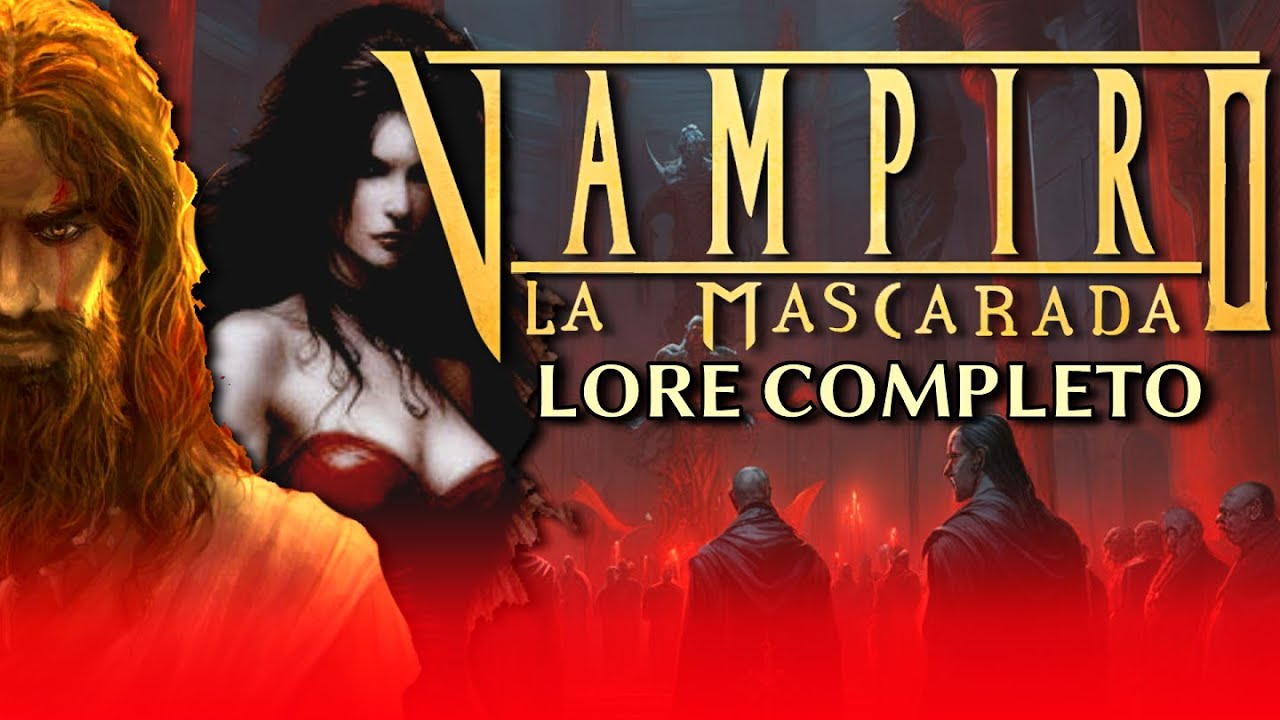
Miniatura del video: 🩸 Lore Completo de VAMPIRO: La MASCARADA ~Sommer 🩸

¿Sabías que la maldición de Caín, el primer asesino, no solo lo condenó a la inmortalidad, sino que desató una plaga de no-muertos sobre la humanidad? El lore de Vampiro: La Mascarada no es solo un juego de rol; es un espejo oscuro de nuestras propias sociedades, un tapiz tejido con poder, corrupción y la eterna lucha por la supervivencia. La NASA no te lo va a contar, pero los archivos del Mundo de Tinieblas sí. Hoy, desentrañaremos los secretos más profundos de esta saga, más allá de lo que cualquier video de YouTube podría ofrecer.

📖 11 min de lectura
⬡ Expediente de Investigación Confidencial
Nº DE EXPEDIENTE EXP-GEN-2026-742
INVESTIGADOR Alejandro Quintero Ruiz
CONTACTO rinconparanormal@gmail.com
AFILIACIÓN Cha0smagick Labs División de Investigación Paranormal
CLASIFICACIÓN Folclore Mexicano
ESTADO En Investigación
FECHA DE APERTURA 2026-07-08
RELACIONADOS 📂 Archivo de Folclore Mexicano | 🔬 Laboratorio Central

× El Grito Primigenio: La Maldición de Caín

La génesis de la noche eterna se remonta a los albores de la civilización, a un acto de violencia fratricida que resonaría por milenios. Caín, el primogénito de Adán y Eva, en un arranque de celos y furia, acabó con la vida de su hermano Abel. Este primer asesinato, la mancha original en la humanidad, no quedó impune. Dios mismo pronunció una sentencia que trascendería la vida y la muerte: la maldición de Caín. No se trató de una simple condena a la inmortalidad; fue la imposición de una sed insaciable, un repudio de la luz divina y, crucialmente, la transmisión de una sangre que corrompería a sus descendientes, convirtiéndolos en los primeros vampiros. La fecha exacta de este evento es inescrutable, perdida en la bruma de la mitología, pero su eco es la piedra angular de todo el lore de Vampiro: La Mascarada.

× La Ley de la Supervivencia: El Pacto de la Mascarada

Imagina un mundo donde criaturas de la noche acechan en las sombras, alimentándose de la vida misma. Si la humanidad supiera de su existencia, la guerra sería inevitable. La supervivencia de los vampiros, o "Vástagos" como se autodenominan, depende de un secreto férreo: la Mascarada. Este pacto no escrito, que se remonta a los primeros siglos de su existencia, es la regla de oro que prohíbe revelar su naturaleza a los mortales. Romperla no es solo una falta; es un acto de terrorismo contra su propia especie. La Camarilla, la secta más influyente, impone esta ley con mano de hierro, entendiendo que su propia existencia depende de permanecer ocultos. Tres gobiernos distintos, tres informes idénticos sobre avistamientos anómalos, cero respuestas oficiales. ¿Casualidad?

× El Mosaico de la Noche: Los 13 Clanes

La sociedad vampírica no es monolítica. Se divide en 13 clanes principales, cada uno un microcosmos con sus propias tradiciones, debilidades y, sobre todo, sus "Disciplinas", poderes sobrenaturales que definen su identidad. Desde los aristocráticos y controladores Ventrue, hasta los esquivos y deformes Nosferatu, pasando por los místicos Tremere o los esquizofrénicos Malkavian. Cada clan representa una faceta distinta de la existencia vampírica, una adaptación particular a la maldición. La interacción y el conflicto entre estos clanes forman el corazón de las intrigas del Mundo de Tinieblas. Los clanes más antiguos, como los Tzimisce con su dominio de la carne, o los Brujah con su pasión anárquica, han moldeado la historia de los Vástagos durante siglos.

Clan Disciplina Predominante Debilidad Común
Ventrue Dominación, Fortaleza, Presencia Solo pueden alimentarse de sangre de clase alta.
Tremere Auspex, Dominación, Thaumaturgia (Magia de Sangre) Dolor al beber sangre ajena.
Malkavian Auspex, Dementación, Presencia Sufrimiento de locura.
Nosferatu Animalismo, Obfuscación, Potencia Apariencia grotesca e irreconocible.

× El Poder en la Sangre: Las Disciplinas

Más allá de la fuerza sobrehumana y la inmortalidad, los Vástagos poseen Disciplinas, poderes que emanan de su sangre maldita. Estas habilidades varían enormemente entre clanes, pero las tres Disciplinas Antediluvianas (las más antiguas y poderosas) son Celeridad (velocidad sobrenatural), Fortaleza (resistencia física extrema) y Potencia (fuerza descomunal). Otras Disciplinas clave incluyen Auspex (sentidos agudizados y percepción psíquica), Dominación (control mental), Presencia (influencia emocional) y Obfuscación (invisibilidad y sigilo). Dominar estas Disciplinas es crucial para la supervivencia y el ascenso en la jerarquía vampírica. En la edición de 20 aniversario, se introdujeron nuevas variaciones y se reequilibraron las existentes, reflejando la evolución del lore.

× El Abrazo: Renacer en la Oscuridad

El proceso de convertir a un mortal en vampiro, conocido como el "Abrazo" o "Suscitar", es un rito de paso tan fundamental como aterrador. No es un simple mordisco; es una transformación que implica la muerte y el renacimiento en la noche. El vampiro debe primero drenar casi por completo a su víctima mortal, dejándola al borde de la muerte. Luego, el mortal debe beber la sangre del vampiro. Tras la muerte, el espíritu del mortal lucha por regresar, pero ahora está atado a la sed de sangre y a la maldición vampírica. Este acto, que otorga la no-vida, también implica la pérdida de la conexión con la luz solar y el mundo de los vivos. La decisión de quién recibir el Abrazo recae en el vampiro, y a menudo está cargada de motivos personales, políticos o estratégicos.

× La Jerarquía de la Sangre: Generaciones y Poder

La genealogía vampírica se mide en "generaciones", que indican la cercanía a Caín. Los vampiros de Primera Generación son casi míticos, descendientes directos del primer no-muerto. Le siguen la Segunda y la Tercera Generación, conocidos como Antidiluvianos, figuras de poder inmenso y legendario. Cuanto menor es la generación, más pura y potente es la sangre vampírica, lo que se traduce en mayor fuerza en las Disciplinas, mayor capacidad de resistencia y un mayor dominio sobre la Bestia Interior. Sin embargo, esta potencia a menudo viene acompañada de debilidades más pronunciadas. La mayoría de los vampiros que conocemos en el juego pertenecen a generaciones más altas (8ª, 9ª, 10ª o incluso más), lo que los hace más vulnerables pero también más integrados en la sociedad vampírica y, crucialmente, más capaces de mantener la Mascarada.

  1. Primera Generación: Los Antiguos, casi leyendas, con poder inimaginable. Se cree que solo quedan 7.
  2. Segunda Generación: Discípulos de los de Primera, también figuras de poder extremo.
  3. Tercera Generación: Los Antediluvianos, fundadores de los clanes, con gran influencia histórica.
  4. Cuarta y Quinta Generación: Ancianos y Príncipes, líderes de las ciudades y clanes.
  5. Generaciones 6ª a 8ª: La élite de la sociedad vampírica, Ancianos con poder considerable.
  6. Generaciones 9ª a 11ª: Vampiros de edad media y jóvenes, la mayoría de los jugadores.
  7. Generaciones 12ª y superiores: Vampiros muy jóvenes o con sangre extremadamente diluida, a menudo con debilidades severas.

× La Bestia Interior: El Lado Salvaje del No-Muerto

Cada vampiro, sin importar su linaje o poder, alberga una fuerza oscura y primordial: la Bestia Interior. Es el instinto depredador, la sed de sangre que nunca cesa, la furia incontrolable que amenaza con consumir la poca humanidad que queda. El concepto de "Humanidad" en Vampiro: La Mascarada es una métrica de la cordura y la moralidad de un Vástago. A medida que un vampiro comete actos crueles o pierde el control en un frenesí de sangre, su puntuación de Humanidad disminuye, acercándolo a la Bestia. Cuando la Humanidad es demasiado baja, el vampiro puede sucumbir por completo, volviéndose una criatura de pura maldad y caos, perdiendo su identidad. El control de esta Bestia es el verdadero desafío de la no-vida, una batalla constante que define la existencia de cada vampiro.

× Guerras Silenciosas: Camarilla vs. Sabbat

El Mundo de Tinieblas no es un lugar pacífico para los no-muertos. Las dos facciones vampíricas más grandes, la Camarilla y el Sabbat, representan ideologías opuestas sobre cómo debe existir la raza vampírica. La Camarilla, fundada en 300 a.C., defiende la Mascarada como el pilar de su supervivencia, buscando coexistir (o al menos, no ser descubiertos) con los mortales. El Sabbat, surgido mucho después, rechaza la Mascarada y la autoridad de la Camarilla. Se ven a sí mismos como la verdadera encarnación de la naturaleza vampírica, considerando a los mortales como ganado y a los vampiros de la Camarilla como débiles esclavos de la humanidad. Sus métodos son brutales, sus rituales sangrientos, y a menudo se enfrentan en guerras encubiertas por el control territorial y la influencia. Existen otras sectas menores, como los Anarquistas, que buscan liberarse de ambas estructuras.

× Lo Que Nadie Te Dice: La Conexión Oculta

Aquí es donde la investigación forense de lo paranormal se cruza con la ficción de una manera que pocos analistas se atreven a explorar. Los mitos sobre vampiros existen en casi todas las culturas, pero el lore de Vampiro: La Mascarada, con su estructura de clanes, disciplinas y la figura de Caín, resuena de forma inquietante con ciertos textos gnósticos y apócrifos que describen a los "Archones" o "Arcontes". Estas entidades, a menudo descritas como seres caídos o demoníacos, poseían poderes sobrehumanos y buscaban influir en la humanidad desde las sombras. La idea de una jerarquía de poder oscuro, con linajes específicos y habilidades heredadas, es un tema recurrente. ¿Es posible que los creadores del juego, de forma consciente o inconsciente, hayan canalizado arquetipos y leyendas que apuntan a una verdad más profunda sobre la influencia de entidades no humanas en nuestra historia? La insistencia en la "sangre" como fuente de poder y la lucha entre el control (Camarilla) y el caos primordial (Sabbat) recuerda a las dualidades presentes en muchas cosmogonías antiguas. Quizás la Mascarada no es solo una regla del juego, sino un eco de un secreto que la humanidad ha intentado olvidar durante milenios.

× Preguntas Frecuentes

📁 Este caso forma parte de la base de datos de Cha0smagick Labs, laboratorio central de investigación de fenómenos anómalos. Para consultar investigaciones relacionadas, visite nuestro archivo de Folclore Mexicano. Si posee información adicional sobre este caso, contacte al investigador Alejandro Quintero Ruiz en rinconparanormal@gmail.com.

P: ¿Cuál es el origen de los vampiros en Vampiro: La Mascarada?

R: Según el lore, los vampiros descienden de Caín, el primer asesino bíblico. Tras ser maldecido por Dios, Caín vagó por la tierra, y su sangre maldita se transmitió a sus descendientes, creando la primera generación de vampiros.

P: ¿Qué es la Mascarada en el juego?

R: La Mascarada es la ley fundamental que obliga a los vampiros a ocultar su existencia a la humanidad. Romperla puede acarrear severas sanciones, incluso la Final Muerte, por parte de sus congéneres.

P: ¿Cuántos clanes de vampiros existen en Vampiro: La Mascarada?

R: Existen 13 clanes principales de vampiros, cada uno con sus propias disciplinas, debilidades y visiones del mundo. Ejemplos son los Ventrue, Tremere, Malkavian y Nosferatu.

P: ¿Qué son las Disciplinas vampíricas?

R: Las Disciplinas son poderes sobrenaturales inherentes a la sangre vampírica. Incluyen habilidades como la Celeridad (velocidad), Fortaleza (resistencia) y Presencia (influencia mental), entre otras.

P: ¿Qué significa 'Abrazo' o 'Suscitar' en el contexto vampírico?

R: El 'Abrazo' es el ritual mediante el cual un vampiro transforma a un mortal en uno de los suyos. El mortal debe beber la sangre del vampiro y morir para luego renacer como no-muerto.

P: ¿Cuál es la diferencia entre vampiros de Primera, Segunda y Tercera Generación?

R: Las generaciones más bajas (más cercanas a Caín) poseen sangre más potente, lo que se traduce en mayor fuerza, resistencia y dominio de las Disciplinas, pero también suelen tener debilidades más extremas.

P: ¿Cómo afecta la 'Bestia Interior' a los vampiros?

R: La Bestia Interior es el instinto depredador y salvaje del vampiro. Si no se controla mediante la 'Humanidad', puede llevar al vampiro a actos de frenesí, perdiendo el control y actuando puramente por sed de sangre.

P: ¿Qué es el Sabbat y cómo se diferencia de la Camarilla?

R: La Camarilla es la secta vampírica que defiende la Mascarada a toda costa. El Sabbat, en cambio, es una secta más anárquica y violenta que rechaza la Mascarada, viendo a los mortales como ganado.

× Bibliografía

White Wolf Publishing. (1991). Vampire: The Masquerade Rulebook (1st ed.). White Wolf Publishing. ISBN: 978-1565040118.

White Wolf Publishing. (1998). Vampire: The Masquerade Revised Edition. White Wolf Publishing. ISBN: 978-1565044512.

Schwalb, M. (2011). Vampire: The Masquerade 20th Anniversary Edition. Onyx Path Publishing. ISBN: 978-1936613206.

Stewart, J. (2019). The Unofficial Guide to Vampire: The Masquerade. Lulu.com. ISBN: 978-0359603211.

Sommer. (2023, August 15). 🩸 Lore Completo de VAMPIRO: La MASCARADA ~Sommer 🩸 [Video]. YouTube. https://www.youtube.com/watch?v=SFsGS_uC8FQ

El lore de Vampiro: La Mascarada es vasto, complejo y, a menudo, perturbador. Nos obliga a confrontar la naturaleza del poder, la moralidad y la supervivencia en sus formas más extremas. La conexión con mitos ancestrales y la posibilidad de que estas narrativas oculten verdades sobre nuestra propia realidad son aspectos que me han perseguido desde mi primera incursión en este mundo. Ahora le pregunto a usted, lector: ¿Cree que la estructura de clanes y las luchas de poder en el Mundo de Tinieblas son meras ficciones, o reflejan dinámicas mucho más antiguas y oscuras que operan tras el velo de nuestra realidad?

Zobaq: The Egregore of Protection Against Violence – A Chaos Magick Invocation Analysis


The ethereal whispers of Chaos Magick often reveal entities that defy conventional understanding. Today, we open the case file on Zobaq, an egregore described not as a benevolent spirit, but as a "public servant of attack," dedicated to combating physical and psychological violence. This isn't about appeasing a deity; it's about strategically invoking a force designed for decisive intervention. Let's dissect the methodology behind this potent invocation.

Introduction

In a world where violence casts a pervasive shadow, the figure of Zobaq emerges as a beacon against the encroaching darkness. Her designation as a "public servant of attack" might initially evoke an aura of enigma, but beneath this facade lies a formidable power aimed at confronting the evils of both physical and psychological aggression. This investigation delves into the mystery surrounding Zobaq, examining her purported origins, her extraordinary capacities, and the precise procedural invocation required to solicit her intervention for those in desperate need.

The existence of Zobaq serves as a critical reminder: even in the most dire circumstances, solace and assistance are accessible to those seeking refuge from oppression and suffering. Her function as an ally against violence renders her a unique and influential entity within the esoteric landscape. Through rigorous analysis, we seek to unveil the deeper facets of Zobaq's nature and the operational protocols for her invocation.

Who is Zobaq?

Zobaq: The Guardian of the Spiral Center

Zobaq transcends the classification of a common entity. Her purported residence within the Spiral Center, situated at the very nexus of the Milky Way galaxy, indicates a strategic positioning that extends far beyond mere coincidence. This central location is not a byproduct of chance; rather, it underscores her critical role as a guardian and protector for individuals confronting violence in any manifestation. It is as if her essence emanates from the cosmic epicenter, poised to intercede and lend aid to those in genuine peril.

Regarding her attributes, Zobaq is characterized by a distinctive synthesis of qualities. On one hand, she demonstrates profound empathy towards sufferers, enabling a genuine connection with their needs and anxieties. However, this compassion does not equate to weakness; paradoxically, Zobaq also possesses keen insight and a calculative demeanor, adept at coolly assessing complex situations and rendering resolute decisions when necessitated. Her sharp intellect and severity are indispensable instruments in her operational arsenal, allowing her to confront challenges with unwavering clarity and resolve.

This confluence of attributes establishes Zobaq as a singular figure within the cosmic framework—a relentless guardian unequivocally prepared to intervene when violence threatens to disrupt the universal equilibrium. Her presence within the Spiral Center not only positions her as a pivotal entity in cosmic mythology but also as a vital source of hope and security for those seeking sanctuary amidst adversity.

What Does Zobaq Offer?

Specialization in Psychic Attack

Zobaq functions as more than a mere protective entity; she provides a specialized arsenal of capabilities designed to counter violence across its spectrum. Her preeminent skill resides in what is termed psychic attack—a methodology that transcends the purely physical, penetrating the deepest recesses of the psyche. This capacity enables Zobaq to access an aggressor's mind, initiating a cascade of destabilizing effects. These can manifest as profound mental confusion, severe headaches, temporary visual impairment, debilitating nightmares, vertigo, and overwhelming drowsiness, among other disruptive symptoms.

Impact on the Aggressor

The repercussions of Zobaq's intervention are not confined solely to the physical plane; they extend critically into the emotional and sexual spheres, generating a multi-faceted deterrent against continued violent behavior. Beyond the physical malaise, Zobaq is capable of inducing incapacitation such as erectile dysfunction, a significant erosion of self-esteem, and a diminished libido in the aggressor. This composite effect not only weakens the perpetrator internally but also establishes a crucial psychological distance between them and the victim, thereby reducing their inclination to perpetrate further aggression. Consequently, Zobaq effectively halts immediate physical assaults while concurrently working to dismantle the psychological and emotional underpinnings of the aggression itself.

How to Invoke Zobaq?

Conditions and Procedure

The invocation of Zobaq is a process that mandates precision and a profound respect for her established rituals. This is not an arbitrary action but a deliberate and conscious undertaking that requires a clear comprehension of its stipulated conditions and procedural steps. Meticulous preparation is paramount, given that Zobaq is a formidable entity demanding due reverence.

The conditions for invoking Zobaq are stringent and must not be treated lightly. It is imperative to conduct the invocation during specific temporal windows when her energetic signature is most receptive: precisely at 6:00 AM and 6:00 PM. Furthermore, Zobaq's energetic sustenance, or "feeding," is to be achieved through exposure to sunlight, underscoring the significance of natural and cosmic cycles within this paradigm.

In terms of required implements, careful selection and preparation are essential. Two candles must be readily available, symbolizing the duality and the energetic potency required to activate Zobaq's influence. Additionally, her specific image or sigil is indispensable for establishing the necessary resonant bond with this entity. Paramountly, the recitation of a designated incantation is required, which must be delivered with unwavering conviction and profound respect: "Vis ad lucem invocare zobaq." This phrase functions as the operative key, unlocking the portal for Zobaq's intervention. It is recommended to repeat this invocation twice for optimal efficacy. Another historically relevant phrase, reportedly from Yoruba magic, is: "kaalay oo la diriraya cadaawayaashayda, zobaq baba."

Additional Considerations

Gratitude and Appreciation

Upon the successful fulfillment of Zobaq's intervention, it is incumbent upon the petitioner to express sincere gratitude. This gesture surpasses mere courtesy; it serves to fortify the energetic link between the supplicant and this formidable protective entity. To adequately convey this appreciation, the use of two candles is again stipulated, accompanied by the recitation of the aforementioned gratitude phrases. Furthermore, a personal acknowledgment of her aid, articulating specific appreciation for the assistance rendered, is highly advisable.

Contract with Zobaq

Regarding the establishment of a formal contract with Zobaq, adherence to specific protocols is fundamental to ensuring its validity and fostering mutual respect. It is strongly emphasized that this contract should be drafted manually and subsequently preserved with care within a dedicated personal grimoire or record book. This act signifies a serious commitment and functions as a tangible testament to the established relationship. However, should the need arise to terminate this association, a symbolic dissolution is recommended, such as the ritualistic burning of the contract. This action not only marks the conclusion of the partnership but also formally releases both parties from any outstanding obligations.

Conclusion

In summation, Zobaq manifests as a critical protective egregore within a context increasingly defined by pervasive violence and adversity. Her demonstrated capacity to intercede effectively on both the physical and psychological planes establishes her as an invaluable ally for individuals confronting aggressive situations. Through a process of meticulous and respectful invocation, Zobaq extends her operational assistance to those in dire need, underscoring the principle that even amidst profound darkness, a potent force can illuminate the path toward peace and security. Her presence offers a tangible source of hope and robust protection, affirming that resources and support are consistently available to confront life's most formidable challenges.

Frequently Asked Questions

What happens if I invoke Zobaq but don't have all the necessary elements?

If you venture to invoke Zobaq without having all the essential components, the invocation is likely to fail. Each element plays a specific role in establishing a connection with this powerful entity. Without them, the link may be weak or entirely absent. Therefore, thorough preparation is crucial for a successful invocation.

Can Zobaq be invoked at any time of day?

While Zobaq can be invoked at any time, specific hours hold optimal energetic receptivity: 6 AM and 6 PM. During these periods, the connection may be stronger and more effective. However, in urgent situations, an invocation can still be attempted outside these optimal times, though the energetic intensity might differ.

Can Zobaq be invoked to protect someone other than myself?

Yes, Zobaq's protective capabilities extend beyond the individual performing the invocation. She can be summoned to protect anyone in need of assistance, regardless of who initiates the request. This makes her a formidable ally in situations demanding protection. Precision and respect in the invocation process are paramount to ensure an effective response.

How long does the effect of Zobaq's psychic attack last?

The duration of Zobaq's psychic attack effects varies based on factors like the aggressor's resistance, the attack's intensity, and situational specifics. Generally, the effects are temporary yet significant, offering relief to the victim and deterring further harmful actions. It's important to note Zobaq is not a permanent solution, and long-term strategies may be required.

Can Zobaq be deceived or manipulated?

Zobaq possesses a clear discernment that renders her immune to petitioner deception or manipulation. Attempts to invoke her with false or malicious intent are unlikely to yield a response. Her connection to truth and her protective nature make her wary of those with selfish or destructive motives. Sincerity and ethical intent are crucial for a genuine invocation.

Investigator's Verdict: Egregore or Archetype?

Zobaq’s operational framework within Chaos Magick presents a fascinating case study in egregore construction. The detailed methodology—specific timings, elemental requirements (candles, sigil), and precise vocalizations—suggests a practice rooted in deliberate energetic programming. The effectiveness of Zobaq hinges on the practitioner’s belief, focus, and the clarity of their intent to utilize this structured force against aggression. Whether Zobaq operates as an autonomous egregore or as a potent manifestation of the user's own latent protective energies, amplified by the symbolic framework, remains a subject of rigorous debate. The pragmatic outcome—deterrence of violence—suggests a functional efficacy, irrespective of the ontological interpretation. The described impacts, from psychological confusion to physical incapacitation, align with the energetic intent of a protective counter-measure, rather than overt demonic possession. The emphasis on gratitude and contract management further entrenches the concept of this as a directed, transactional force.

Researcher's Archive

  • Key Texts: While specific texts detailing Zobaq are elusive in mainstream occult literature, foundational works on Chaos Magick by authors like Peter J. Carroll and Phil Hine are essential for understanding egregore creation and invocation principles.
  • Related Concepts: Explore the concept of the "Shield of David" in protective magick, or the principles behind creating personal "Spirit Guardians" in various esoteric traditions.
  • Historical Parallels: Research historical accounts of protective amulets and rituals designed to ward off malevolent influences and physical harm.
  • Energy Work: For practical application, understanding advanced meditation techniques and visualization exercises is crucial for focusing intent—skills honed in resources discussing deep trance states.

Your Field Mission

The true test of any invocation lies in its practical application and observation. Your mission, should you choose to accept it, is twofold:

  1. Observation and Documentation: Identify a situation, either personal or observed, where intervention could be beneficial. Document the circumstances meticulously, focusing on the nature of the aggression and the potential need for protective energetic influence.
  2. Controlled Invocation (Optional, Ethical Considerations Paramount): If you choose to perform the Zobaq invocation, do so strictly following the outlined protocol and ethical guidelines. Maintain a detailed log of the process, including the precise timing, the incantations used, and any subjective or objective effects observed. Crucially, ensure your intent is purely protective and that no harm is inflicted. If no immediate situation arises, practice the invocation in a meditative state, focusing on the energetic projection of protection.

Share your anonymized findings, observations, or even your hypotheses regarding Zobaq's efficacy in the comments below. Remember, rigorous documentation is the bedrock of all serious investigation.

alejandro quintero ruiz is a veteran field investigator dedicated to the analysis of anomalous phenomena. His approach combines methodological skepticism with an open mind to the inexplicable, always seeking the truth behind the veil of reality. Decades spent navigating the liminal spaces between the known and the unknown have forged a unique perspective on the forces that shape our world.

(adsbygoogle = window.adsbygoogle || []).push({});

The Lost Library of Alexandria: Echoes of Ancient Knowledge and Paranormal Whispers


The Unfathomable Loss

The Library of Alexandria. The name alone conjures images of towering scrolls, hushed halls filled with the world's accumulated wisdom, and an intellectual ambition that dwarfs many modern endeavors. Yet, its disappearance from history remains one of its most profound mysteries. It wasn't merely a repository of books; it was a promise of understanding, a testament to humanity's drive to document, categorize, and comprehend. Its loss wasn't just the destruction of papyrus and ink; it was the erasure of countless potential futures, the silencing of voices that could have guided ours. In this analysis, we peel back the layers of myth and speculation to examine what truly happened to this ancient marvel, and whether its legacy, or perhaps something more, still lingers in the shadows.

A Beacon of Antiquity

Founded in the early 3rd century BCE under Ptolemy I Soter, the Library of Alexandria quickly became the intellectual heart of the ancient world. It was more than a library; it was a research institution, a magnet for scholars, scientists, poets, and philosophers from across the Hellenistic world and beyond. Its goal, as envisioned by its founders, was to collect all the world's knowledge. It's said that every ship docking in Alexandria had its scrolls confiscated, copied, and returned, with the original potentially retained for the library's vast collection.

Imagine the scene: scholars debating astronomical theories, physicians dissecting the human body (a controversial practice at the time), mathematicians like Euclid and Archimedes pushing the boundaries of their fields, and poets like Callimachus cataloging and critiquing the literary output of the age. The sheer intellectual output and preserved knowledge were staggering. This wasn't just a passive archive; it was a vibrant engine of discovery. Archaeological evidence, though sparse, suggests a complex of buildings dedicated to learning and research, including lecture halls, meeting rooms, and of course, vast storage spaces for its estimated hundreds of thousands of scrolls.

The Library was a symbol of power and prestige for the Ptolemaic dynasty, a demonstration of their cultural and intellectual dominance. Its existence facilitated advancements in mathematics, astronomy, geography, medicine, and literature. Its scholars produced seminal works, preserved ancient texts, and laid the groundwork for much of Western scientific and philosophical thought. To lose such an institution is not just a historical tragedy, but a profound setback for the trajectory of human understanding.

Theories of Demise: Fact and Fiction

The narrative of the Library's destruction is as contested as its contents. For centuries, the popular story pointed to Julius Caesar's accidental burning of the city in 48 BCE during his conflict with Pompey. While Caesar's actions undoubtedly caused damage to parts of the city, including potentially some warehouses near the docks holding scrolls, the consensus among many historians is that this event did not lead to the complete annihilation of the main Library. It's more probable that this incident marked the beginning of a long decline, rather than a singular cataclysm.

Other culprits have been cited throughout history. The Christian conquest under Emperor Theodosius I in the late 4th century CE, specifically the destruction of the Serapeum (a temple dedicated to Serapis that housed a "daughter" library), is another significant event. While the Serapeum's destruction undoubtedly resulted in the loss of countless texts, it's debated whether this was THE final blow or another step in its gradual demise. Later, during the Muslim conquest of Egypt in the 7th century CE, a story emerged attributing the final destruction to the Caliph Omar, who supposedly ordered the scrolls burned, arguing that if they agreed with the Quran they were redundant, and if they disagreed, they were heretical. This account is widely considered apocryphal by modern scholars, likely a later fabrication to demonize the conquerors or elevate the importance of the Quran.

The reality is likely more mundane and complex: a slow erosion caused by neglect, funding cuts, political instability, changes in intellectual focus, and multiple damaging conflicts over centuries. The Library may not have been destroyed in one fiery event, but rather faded, its collection dispersed, its scholars moved elsewhere, its buildings repurposed or falling into disrepair. The romantic notion of a single, dramatic end is compelling, but the historical record suggests a more drawn-out, less spectacular, and perhaps even more tragic, demise.

Whispers of Lost Esoteric Knowledge

Beyond the practical sciences, scrolls in the Library were rumored to contain esoteric knowledge – texts on alchemy, astrology, forgotten philosophies, and perhaps even histories that challenged the accepted narratives of power. Imagine lost dialogues of Plato, complete works of Sappho, or detailed astronomical charts predating known civilizations. The potential for lost wisdom is immense.

There's a seductive theory that the Library held texts detailing advanced technological or spiritual knowledge that was deliberately suppressed or lost to time. Could it have contained blueprints for ancient machines far beyond their era, or insights into consciousness that we are only now beginning to rediscover? The sheer scale of the collection, and the ambition of its collectors, fuels speculation that it housed more than just conventional literature. The very act of collecting and preserving knowledge on such a massive scale, in a pre-industrial age, hints at a profound reverence for, and perhaps a singular purpose behind, not just preserving history, but unlocking its deepest secrets.

This speculative element is precisely what draws paranormal investigators. If conventional history leaves gaps, the human mind naturally seeks explanations beyond the ordinary. The idea of a vast trove of knowledge, erased from history, becomes fertile ground for theories involving hidden societies, deliberate censorship by powerful forces, or knowledge so profound it was deemed too dangerous for the masses. It’s the ultimate "what if" scenario in the history of human intellect.

To truly understand the potential scope of this loss, one must consider the research tools available today. A modern researcher would employ advanced textual analysis software, cross-reference fragmented sources with archaeological data, and utilize digital reconstruction. Imagine what could be achieved if even a fraction of those texts were recovered. The value of such a find would be immeasurable, potentially rewriting our understanding of ancient civilizations and their capabilities. This is where the conversation often drifts towards the paranormal; if the Library held secrets so profound, perhaps some essence of that knowledge, or the entities that guarded it, never truly vanished.

Echoes in the Ruins: Modern Paranormal Accounts

While the physical Library is long gone, tales and lingering energies are said to persist. Modern Alexandria, built upon the foundations of its ancient predecessor, has seen its share of unusual phenomena reported in the vicinity of its historical sites. While direct evidence linking specific paranormal events to the original Library complex is scarce and often anecdotal, the sheer weight of history and the tragedy of its loss inspire certain psychological phenomena.

Reports, often emerging from local lore or from tourists visiting historical sites, speak of unexplained lights, disembodied voices, and feelings of overwhelming presence or sadness, particularly near areas believed to be part of the original Library complex or the adjacent Serapeum. These accounts, while difficult to verify, tap into the archetypal fear of lost knowledge and the lingering imprint of profound human endeavor. Are these genuine spectral echoes of scholars and scribes, or are they manifestations of our collective consciousness projecting onto a site charged with historical significance?

One persistent theme is the idea of guardian entities or residual energy protecting the remnants of lost knowledge. Some investigators suggest that the immense concentration of intellectual and spiritual energy within the Library could have created a powerful psychic imprint, a form of residual haunting. Others propose that the intense desire to preserve and protect such precious information might have manifested in ways that transcend normal physical laws. The human mind, confronted with such a monumental loss, often seeks to fill the void with supernatural explanations. It's a narrative as old as civilization itself: where the known ends, the mysterious begins.

The challenge in investigating such claims lies in differentiation. Are these phenomena the result of natural environmental factors (like specific geological conditions affecting acoustics), psychological expectation (the power of suggestion in a place associated with mystery), or something genuinely anomalous? Without rigorous methodology – precise recording equipment, EMF meters, spirit box sessions, and careful documentation – these accounts remain firmly in the realm of folklore, albeit fascinating folklore.

"The absence of evidence is not the evidence of absence, but it is a substantial hurdle for any serious investigator. We must approach these claims with both an open mind and a critical eye. The true mystery of Alexandria lies as much in its historical reality as in the enduring myths it has spawned." - Alejandro Quintero Ruiz

Investigator's Verdict: Unveiling the Shadows

The historical consensus points towards a protracted decline rather than a single, cataclysmic event for the Great Library of Alexandria. The loss of countless texts is an undeniable tragedy, representing a significant lacuna in our understanding of the ancient world. While the romantic notion of a sudden, dramatic destruction is compelling, the evidence suggests a more gradual fading due to a confluence of political, social, and economic factors over centuries.

Regarding the paranormal accounts, my stance, as always, is one of rigorous analysis. While the stories of hauntings and residual energies near historical sites are intriguing, they lack the concrete, verifiable evidence required to move them beyond folklore or psychological phenomena. The human psyche has a remarkable capacity to imbue places of great historical significance, especially those associated with loss and mystery, with supernatural significance. The power of suggestion, coupled with the natural acoustics and atmospheric conditions of ancient ruins, can easily lead to subjective experiences that are then interpreted through a paranormal lens.

However, this logical skepticism does not negate the profound mystery of the Library itself. The sheer volume of lost knowledge – scientific, philosophical, artistic, and potentially esoteric – is a haunting reality. The "what if" questions surrounding its contents continue to fuel speculation and research. Perhaps the true "ghost" of Alexandria is not a spectral entity, but the ghost of lost knowledge, a constant reminder of what humanity once possessed and tragically let slip through its fingers. The pursuit of this lost wisdom, through historical research and perhaps even unconventional investigation, remains a worthy endeavor.

The allure of Alexandria isn't just in its potential secrets, but in its demonstration of human ambition and vulnerability. It serves as a potent reminder that even the greatest achievements of civilization can be ephemeral. This makes it a fertile ground for exploring the boundaries of history, memory, and the persistent human fascination with the unknown.

The Investigator's Archive

To delve deeper into the mysteries surrounding the Library of Alexandria and the nature of lost knowledge, consider these resources:

  • Books:
    • "The Vanished Library: A Wonder of the Ancient World" by Luciano Canfora - A comprehensive historical examination of the Library and its fate.
    • "The City of Books: The Forbidden Legacy of the Alexandria Library" by Michael Parfitt - Explores the historical context and the search for its legacy.
    • "Censorship: A Very Short Introduction" by Tom Cheshire - While not directly about Alexandria, it provides context for the deliberate suppression or loss of knowledge.
  • Documentaries:
    • While a dedicated, definitive documentary on the Library's paranormal aspect is scarce, look for general documentaries on Ancient Egypt, Alexandria, and the history of knowledge. Keep an eye on platforms like Gaia or History Channel for potential explorations of related esoteric themes.
  • Related Topics for Further Investigation:

Frequently Asked Questions

Q1: Was the entire Library of Alexandria destroyed in a single event?

A1: The historical consensus suggests it was a gradual decline over centuries, with multiple damaging events, rather than one single catastrophic fire. While specific incidents like Caesar's fire or the destruction of the Serapeum caused significant losses, the Library likely faded over time.

Q2: What kind of esoteric knowledge might the Library have contained?

A2: Speculation includes texts on alchemy, astrology, forgotten philosophical systems, advanced mathematics, unique historical accounts, and potentially lost spiritual or technological knowledge. However, there is no concrete evidence to confirm the existence or nature of such esoteric texts within its collection.

Q3: Are there verifiable paranormal accounts linked to the Library's ruins?

A3: While anecdotal reports and local legends of hauntings exist near historical sites in Alexandria, there is no scientifically verifiable or rigorously documented paranormal evidence directly attributable to the original Library complex. Skepticism requires evidence, and as of now, it is lacking.

Q4: How much knowledge was lost?

A4: Estimates vary widely, but the Library housed hundreds of thousands of scrolls. The loss represents potentially unique works from antiquity across nearly every field of study, meaning the exact scope of lost knowledge remains a profound mystery.

Your Field Mission

The story of the Library of Alexandria is a potent reminder of the fragility of knowledge and the enduring power of human inquiry. Now, it's your turn to engage with this legacy.

Your Mission: Connect the Threads of Lost Knowledge

Consider a piece of knowledge or a historical account that you believe has been lost, suppressed, or misrepresented. This could be from ancient history, or even a more recent event. In the comments below, outline:

  1. The Subject: Briefly describe the knowledge or account in question.
  2. The Potential Loss: Why do you believe it was lost or suppressed? What are the implications of this loss?
  3. The "Echo": Does this situation remind you of the Library of Alexandria in any way? Are there any modern parallels to theories of monumental loss of information?

Your insights, grounded in critical thinking, can help us continue to explore the vast landscape of human history and its enduring enigmas. Let's build a contemporary archive of inquiry.

Remember to follow us on social media for daily updates on phenomena that defy explanation.

Blog: elrinconparanormal.blogspot.com

Twitter: @RinconParanorm1

Facebook: elrinconparanormalblogspotcom

Discord: Join our Discord

TikTok: @rinconparanormal0


About the Author

alejandro quintero ruiz is a veteran field investigator dedicated to the rigorous analysis of anomalous phenomena. His approach combines methodological skepticism with an open mind to the inexplicable, perpetually seeking the truth behind the veil of reality. With years of experience dissecting alleged hauntings, cryptid sightings, and historical enigmas, his goal is to foster critical thinking and informed debate in the exploration of the unknown.