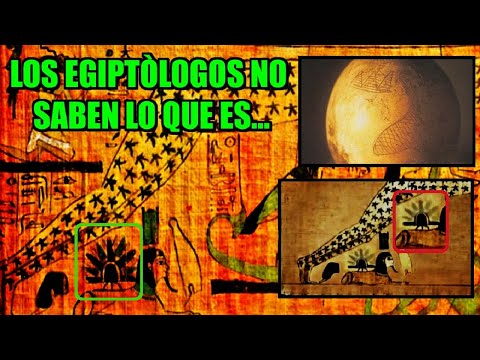
For three millennia, the sands of Saqqara have guarded their secrets. Now, a recently unearthed tomb whispers tales of forbidden knowledge: inscriptions speaking of resurrection, potent divine poisons, and a royal physician who dared to challenge the immutable grip of death. These are not mere carvings; they are a potential rewriting of ancient Egyptian history and our very understanding of the human soul. But as the archaeologists who translated these enigmatic texts vanished without a trace, the question looms: was this a scientific breakthrough or a ritualistic transgression?
EXPEDIENT INDEX
- Unveiling the Silence of Saqqara
- The Hieroglyph Debacle: Fact vs. Fiction
- A Skeptic's Analysis: Nature's Tricks or Ancient Science?
- Tete Nebefu: Physician or Mythmaker?
- Investigator's Verdict: Hoax, Genuine Phenomenon, or Something Else?
- The Researcher's Archive
- Frequently Asked Questions
- Your Mission: The Investigator's Challenge
Unveiling the Silence of Saqqara
The discovery in Saqqara, Egypt, has sent ripples through the archaeological community and ignited the public imagination. Reports speak of hieroglyphs that have remained 'indecipherable for 3,000 years' due to fear, detailing concepts as profound as resurrection and as dangerous as 'divine poisons.' Central to this narrative is Tete Nebefu, a physician to the pharaoh, allegedly possessing knowledge far beyond his time, perhaps even conquering death itself. The disappearance of the archaeologists who translated these texts adds a chilling layer, transforming a historical find into a potential paranormal investigation.
However, my investigations demand a rigorous dissection of such claims. The allure of the forbidden and the mysterious is potent, particularly when intertwined with ancient civilizations. Yet, history is replete with sensationalized discoveries that crumble under scrutiny. The context provided by audience reactions highlights this very tension: some express awe and anticipation for more, while others vehemently dismiss the narrative as fabricated, pointing to established archaeological knowledge.
Recommended Gear for Investigation
| Product | Description | Buy |
|---|---|---|
| The Big Book of Paranormal: 300 Mystical and Frightening Tales From Around the World | An excellent choice to complement your research on this topic. | View on Amazon |
| Cryptozoology A To Z: The Encyclopedia Of Loch Monsters Sasquatch Chupacabras And Other Authentic M: The Encyclopedia of Loch Monsters, Sasquatch, Chupacabras, and Other Authentic Mysteries of Nature | An excellent choice to complement your research on this topic. | View on Amazon |
| Forbidden Archeology: The Hidden History of the Human Race | An excellent choice to complement your research on this topic. | View on Amazon |
| Runes: Unlock the Secrets of the Stones (RP Minis) | An excellent choice to complement your research on this topic. | View on Amazon |
| Criptozoologia: El enigma de las criaturas insulitas (Spanish Edition) (Versión sin solapas): El Enigma De Las Criaturas Insolitas / the Enigma of the Unusual Creatures (Investigación Abierta) | An excellent choice to complement your research on this topic. | View on Amazon |
| The H. P. Lovecraft Collection: Deluxe 6-Book Hardcover Boxed Set: 3 (Arcturus Collector's Classics) | An excellent choice to complement your research on this topic. | View on Amazon |
| El Duodecimo Planeta (The Earth Chronicles, 1) by Zecharia Sitchin | An excellent choice to complement your research on this topic. | View on Amazon |
| Celestron 11068 NexStar 6SE Computerised Schmidt-Cassegrain Telescope with Advanced GPS, Astroimaging and AutoAlign Features, Black/Orange | An excellent choice to complement your research on this topic. | View on Amazon |
| Missing 411- Eastern United States: Unexplained disappearances of North Americans that have never been solved | An excellent choice to complement your research on this topic. | View on Amazon |
| Ghost-Hunting For Dummies [Idioma Inglés] | An excellent choice to complement your research on this topic. | View on Amazon |
"Impressive information and how difficult it is to interpret those hieroglyphs. My respects to the translators, upload more videos like this ❤❤❤❤ cordial greetings." - Audience Testimonial
This initial response exemplifies the public's appetite for the extraordinary. The promise of secrets re-emerging after millennia is a powerful hook. Yet, it is precisely this power that can be exploited by misinformation.
The Hieroglyph Debacle: Fact vs. Fiction
The claim that specific hieroglyphs remained 'indecipherable for 3,000 years' is the first red flag. The field of Egyptology has a well-documented history of decipherment, spearheaded by breakthroughs like the Rosetta Stone. Jean-François Champollion's work in 1822 is a cornerstone, allowing scholars to read hieroglyphs for nearly two centuries. To suggest a sudden, fear-induced 'prohibition' on understanding these symbols for three millennia contradicts established academic consensus.
The critical feedback within the provided context is invaluable here. One commenter sharply points out:
"Ah, yes, the 'indecipherable for 3,000 years out of fear' hieroglyphs. How touching!! ... What a pity that since 1822 (perhaps the ignorant author of the video might recall a certain Champollion)... we have spent two centuries reading hieroglyphs as naturally as we read Netflix subtitles."
This direct challenge forces us to question the veracity of the 'forbidden code' narrative. If the general understanding of hieroglyphs has been robust for 200 years, the premise of a 3,000-year 'forbidden' period becomes highly suspect. It suggests a deliberate embellishment to sensationalize the find, a common tactic in the paranormal and pseudo-archaeology circuits.
A Skeptic's Analysis: Nature's Tricks or Ancient Science?
The context further alleges that Tete Nebefu, the physician, invented phenomena like 'photoluminescence' and that other symbols 'beat' while walls were 'colder'. These claims are met with equally sharp skepticism:
"Jeroglificos invertidos nunca vistos,...simbolos que laten,....pintura viva..vamos a ver: – Símbolos invertidos: el artesano bostezó y se le fue el pincel. – Pigmento que brilla con luz azul: bienvenido al reino de los minerales con fluorescencia!!!, existen desde que existe la Tierra. – Las paredes “más frías”: se llama física. Una tumba subterránea no está a temperatura del desierto,...por eso los arqueólogos no nos derretimos cada junio!!!"
From an investigative standpoint, this commentary aligns with pragmatic explanations. 'Inverted symbols' could easily be errors in craftsmanship. 'Glowing paint' strongly suggests natural mineral fluorescence, a phenomenon well-understood and observable. Even 'cold walls' are a basic principle of thermodynamics: subterranean structures maintain a more stable, cooler temperature than the surface, especially in arid climates like Egypt's. Attributing these to advanced, 'quantum chemistry' or defeating death pushes the boundaries of credulity without extraordinary evidence.
The commenter's conclusion is stark: "If Tete Nebefu really is still breathing, I hope someone explains to him that his supposed tomb is full of chronological, anatomical, linguistic, archaeological, and chemical errors, and that his biography is now being written by an aneurysmal screenwriter uploading videos to YouTube!!" This sentiment underscores the critical need for empirical evidence over sensational storytelling. It’s a reminder that claims of defying physics or biology require extraordinary proof, not just evocative descriptions.
Tete Nebefu: Physician or Mythmaker?
The narrative surrounding Tete Nebefu is particularly intriguing. The idea of an ancient physician mastering resurrection and 'divine poisons' taps into universal human desires: the fear of death and the yearning for immortality. However, the historical record must be the primary source. Without corroborating evidence from widely accepted Egyptian texts or archaeological findings that align with Nebefu's purported achievements, he risks becoming a myth woven into a fabricated discovery.
The skepticism regarding Nebefu's advanced knowledge, particularly when contrasted with the known technological limitations of the era (e.g., lack of the metallic wheel), is well-founded. It suggests a potential anachronism, where modern concepts are projected onto ancient figures to create a more dramatic, albeit less accurate, story. This is where the line between historical investigation and speculative fiction blurs, especially in the realm of paranormal claims.
The audience's reaction is divided. Some praise the video maker ("jefe," "always learning"), while others see deception:
"What this video makes me understand is that since we know absolutely nothing related to the subject and cannot prove what is exposed... they deceive us... If you don't have scientific training, you will fall for their deceptions."
This highlights the challenge: how to present compelling ancient mysteries without succumbing to unsubstantiated speculation. Relying on established archaeological methods and peer-reviewed research is paramount for credible investigation.
Investigator's Verdict: Hoax, Genuine Phenomenon, or Something Else?
Based on the available information and the critical commentary, my professional assessment leans heavily towards a fabricated narrative, or at best, a gross misinterpretation of archaeological findings. The claims of '3,000 years of indecipherable hieroglyphs,' 'beating symbols,' and 'divine poisons,' when contrasted with established Egyptological knowledge and basic scientific principles, appear unsubstantiated.
The disappearance of the archaeologists is a classic trope in mystery narratives, designed to heighten intrigue. However, in a real-world investigative context, such disappearances require concrete evidence and thorough examination, not just anecdotal or speculative inclusion. It's possible a mundane explanation exists.
The core issue is the conflation of genuine ancient artifacts with sensational, pseudoscientific interpretations. While ancient Egypt was undoubtedly advanced in many areas, attributing modern or futuristic concepts without rigorous proof is misleading. The "forbidden code" seems more like a script for a captivating YouTube video than a factual historical revelation.
It's vital to distinguish between the excitement of discovery and the discipline of evidence-based research. As one viewer put it:
"Between reality and fantasy. This sounds like a bedtime story, nothing to learn from."
This sentiment accurately captures the potential disconnect between the presented narrative and verifiable truth. My conclusion is that this case likely falls into the category of elaborate conjecture or outright fabrication, designed to captivate an audience seeking the extraordinary.
The Researcher's Archive
For those delving deeper into the mysteries of ancient Egypt, approaching the subject with a critical and informed perspective is crucial. Understanding the established timeline of decipherment and archaeological discovery is key to discerning fact from fiction.
Recommended Reading:
- "The Rise and Fall of Ancient Egypt" by Toby Wilkinson: Provides a comprehensive historical overview.
- "Cracking the Egyptian Code: Champollion and the Rosetta Stone" by Andrew Robinson: Details the pivotal moment in hieroglyphic decipherment.
Documentaries:
- "Egypt's Golden Empire" (PBS): Explores various dynasties with expert insights.
- "The Mummy: Secrets of the Egyptian Dead" (National Geographic): Examines funerary practices and beliefs.
Exploring these resources offers a foundation of factual knowledge, enabling a more discerning analysis of sensational claims often found in popular media.
Recommended Equipment
The pursuit of truth, whether in the field or through meticulous research, often requires the right tools. For documenting findings, analyzing evidence, and ensuring the integrity of an investigation, certain equipment proves invaluable. Reliability and precision are paramount when dealing with potentially elusive phenomena or complex historical data.
Frequently Asked Questions
- Can ancient Egyptian hieroglyphs truly be considered 'forbidden codes'?
- No, the concept of 'forbidden codes' is largely a sensationalized interpretation. While decipherment took time, scholars have been able to read hieroglyphs for nearly two centuries since Champollion's breakthrough.
- What is the scientific explanation for glowing pigments found in ancient tombs?
- Such phenomena are typically explained by natural mineral fluorescence. Certain minerals in the pigments can absorb light and re-emit it, causing a glow, especially under specific lighting conditions. This is a known geological and chemical property, not evidence of advanced, lost technology.
- Did ancient Egyptians possess knowledge of resurrection or advanced chemistry?
- While ancient Egyptian beliefs centered on the afterlife and resurrection, it was primarily through complex rituals and mummification, not literal biological reanimation as modern science understands it. Claims of advanced chemical knowledge akin to 'divine poisons' or defiance of death require extraordinary, verifiable evidence beyond speculative interpretations of inscriptions.
- What happened to the archaeologists who translated the Saqqara tomb?
- The narrative of their disappearance is a common trope used to enhance mystery. Without official reports or verifiable evidence, it should be treated as speculative unless substantiated by credible sources.
Your Mission: The Investigator's Challenge
The allure of ancient mysteries is undeniable. The Saqqara tomb narrative, while likely sensationalized, touches upon fundamental human questions about life, death, and knowledge. Your mission, should you choose to accept it, is to approach such claims with a critical eye.
Your Mission:
- Verify Sources: When encountering sensational claims, always seek primary sources and cross-reference with established academic institutions and peer-reviewed research.
- Question the Narrative: Always ask: What evidence supports this? What alternative explanations exist? Who benefits from this narrative?
- Distinguish Fact from Conjecture: Learn to separate verifiable archaeological data from speculative interpretations or outright fabrications.
The pursuit of truth requires diligence. By employing these investigative principles, you equip yourself to navigate the complex landscape of ancient enigmas and paranormal claims, separating the genuine anomalies from the elaborate hoaxes.
What are your thoughts on this discovery? Have you encountered similar sensational claims about ancient Egypt? Share your experiences and insights in the comments below. Your perspective is crucial for our ongoing investigation. Don't forget to share this analysis with fellow truth-seekers on your social media channels!
Investigator's Note: True paranormal research doesn't fund itself. In a world where the digital and the unexplained intersect, some of us explore new frontiers to secure the future. Do you dare to be part of the vanguard? Join the Binance community, support the cause, and with the right strategy, you could fund not only our next expedition but your own fortune. The next great discovery could be just a click away.