Followers

Mostrando las entradas con la etiqueta Investigator Analysis. Mostrar todas las entradas

Eerie Encounters: Unexplained Phenomena in Morgues

Image

Hospitals and morgues, by their very nature, are sites charged with intense human emotion and the stark reality of life's end. For centuries, whispers have circulated about these sterile environments harboring more than just the living and the recently departed – tales of spiritual energy, spectral visitors, and inexplicable occurrences. While some dismiss these as mere folklore, my research indicates a recurring pattern: a significant nexus of paranormal activity, including manifestations of ghosts, spirits, and shadow figures, frequently reported within these liminal spaces.

The Nature of the Beast: Hospitals and the Paranormal

The belief that hospitals and morgues act as conduits for spiritual energy is not new. These locations witness the spectrum of human experience – birth, death agony, profound grief, and moments of intense medical intervention. Such potent emotional residue, some theories suggest, can imprint itself onto the environment, creating a fertile ground for paranormal phenomena. My investigations have compiled numerous records – from anecdotal accounts to more structured reports – that suggest these aren't just tales. They hint at the possibility of spirits and other entities manifesting in these areas, drawn perhaps by the lingering energies or the proximity to the veil between worlds.

The sheer volume of personal accounts detailing encounters in these specific locations warrants a deeper examination. It moves beyond simple superstition when individuals in high-stress, emotionally charged environments report similar anomalies. This isn't about finding ghosts in every shadow; it's about analyzing patterns and seeking rational explanations, or, failing that, acknowledging the inexplicable.

Recommended Gear for Investigation

ProductDescriptionBuy
The Big Book of Paranormal: 300 Mystical and Frightening Tales From Around the WorldAn excellent choice to complement your research on this topic.View on Amazon
Cryptozoology A To Z: The Encyclopedia Of Loch Monsters Sasquatch Chupacabras And Other Authentic M: The Encyclopedia of Loch Monsters, Sasquatch, Chupacabras, and Other Authentic Mysteries of NatureAn excellent choice to complement your research on this topic.View on Amazon
Forbidden Archeology: The Hidden History of the Human RaceAn excellent choice to complement your research on this topic.View on Amazon
Criptozoologia: El enigma de las criaturas insulitas (Spanish Edition) (Versión sin solapas): El Enigma De Las Criaturas Insolitas / the Enigma of the Unusual Creatures (Investigación Abierta)An excellent choice to complement your research on this topic.View on Amazon
The H. P. Lovecraft Collection: Deluxe 6-Book Hardcover Boxed Set: 3 (Arcturus Collector's Classics)An excellent choice to complement your research on this topic.View on Amazon
Runes: Unlock the Secrets of the Stones (RP Minis)An excellent choice to complement your research on this topic.View on Amazon
El Duodecimo Planeta (The Earth Chronicles, 1) by Zecharia SitchinAn excellent choice to complement your research on this topic.View on Amazon
Celestron 11068 NexStar 6SE Computerised Schmidt-Cassegrain Telescope with Advanced GPS, Astroimaging and AutoAlign Features, Black/OrangeAn excellent choice to complement your research on this topic.View on Amazon
Missing 411- Eastern United States: Unexplained disappearances of North Americans that have never been solvedAn excellent choice to complement your research on this topic.View on Amazon
Ghost-Hunting For Dummies [Idioma Inglés] An excellent choice to complement your research on this topic.View on Amazon

Echoes from the Other Side: Testimonies from the Frontlines

The raw data from individuals who have experienced the inexplicable in hospitals and morgues is compelling. These are not detached observers; they are individuals grappling with loss, fear, and the profound impact of medical crises. Their testimonies, often shared in the wake of intense personal experiences, provide a crucial, albeit subjective, layer of evidence.

"The night my mother died, I ended up in the emergency room with serve stomach ache. Tests showed cancer had spread throughout my bowel and liver. Treatment was started immediately and I beat it. Thanks mom."

This account, while focusing on a personal battle with illness, carries an undercurrent of familial connection even in the face of mortality. The gratitude directed towards the mother suggests a bond that transcends physical presence, a theme that resonates throughout many testimonies.

"When my youngest son passed away aged 33. I was devastated. I could feel his presence he sitting by my side. This had happened a number of times. May his soul rest in peace. I will always love you my son."

This sentiment of feeling a departed loved one's presence during times of grief is a recurring motif. It speaks to a powerful human desire for connection and comfort, often manifesting as perceived spiritual interaction. Online forums and social media echo these sentiments: "Some of these comments put tears on my face. Bless those who lost someone close." This shared emotional response highlights a collective longing for continuity and reassurance after loss.

"My brother died of an overdose in June. As he was dying (he was brain dead), I felt a gentle touch, touching me on my arm and hair, as I stood there watching over him. No one was there. I felt comforted and not alone. To this day I think it was him comforting me."

The tactile nature of this experience – a touch, a stroke of hair – is particularly noteworthy. It moves beyond mere feelings of presence to a physical sensation, often interpreted as a deliberate act of comfort from the departed. Another account mirrors this:

"My husband passed away 5-10-21. I was starting to believe that there was no after life because I hadn’t felt him, however, about 3 months after he passed I was in bed at night silently crying with my face stuffed in his pillow I felt someone walk up to my side of the bed and patted me on my butt (something he did every night) it was hard enough to snap me out of my crying depression. I immediately smiled to myself knowing it was him. I told him I loved him and missed him so much and must’ve passed out because I woke up the next morning with my face still in his pillow. I know he’ll come get me when it’s my time."

The specificity of the action – a familiar gesture – lends weight to the belief that it was indeed the husband. This isn't just a vague feeling; it's a distinct interaction that breaks through the fog of grief. Similarly, the following testimony from Australia reinforces this pattern:

"Gday i had the same experience when my mum died, i had gone to bed the night she passed, sobbing in the dark of my bedroom, the next thing i knew i felt like someone was walking along the side of the bed, thinking it was one of my kids, i lay waiting then it felt like someone had sat beside me ,then it felt like a hand was stroking my hair, as if it was comforting me. I swear to this day that it was my mum comforting me."

These shared experiences, crossing geographical boundaries and varying circumstances of loss, suggest a commonality in how the departed may manifest or how the grieving perceive comfort. It’s a testament to the human need for connection, but the consistency is intriguing.

Behind the Scenes: Accounts from Professionals

Beyond the experiences of grieving family members, reports from individuals working directly within these environments offer a different, perhaps more detached, perspective. Their accounts, often grounded in routine but punctuated by the bizarre, merit careful consideration.

"As a Crematory operator for many years in the 1990s in Miami. I got a few surprises. That were unexpected. I once saw a guy walk up to the water fountain bend over to drink. Then go to adjoining room with no escape. I quickly ran up behind him and into an empty room. The guy vanished into thin air. , as well as many noises especially when I had to stay into the dark hours all alone. The crematory was located right in a cemetery. I started bringing my dog after awhile."

This report from a crematory operator is particularly striking. The visual apparition of a man drinking from a fountain and then vanishing is a classic ghostly manifestation. The mention of unexplained noises and the decision to bring a dog for protection suggest an environment that fostered a persistent sense of unease or direct paranormal activity. The location, adjacent to a cemetery, only amplifies the potential for such phenomena.

"I was a firefighter for about 10 years, we responded to a welfare check of an elderly woman who had not been seen for several days, we arrived and found her in her hallway she had clearly expired several days before. Rigor was set in full, she was ice cold. We attempted CPR for about 20 minutes with no results. We pronounced her and packaged her in a body bag for transport to the hospital. While headed to the hospital stopped at a light, I'll be damned if she didn't sit up on the gurney and shouted. Me and my partner about messed ourselves. Dr said that was common for a corpse to do and the sound we heard was the air from her lungs that was from the CPR. I aged about 10 years that night."

While the doctor attributed this incident to physiological processes post-mortem (gas expulsion from lungs during CPR), the visceral reaction of the firefighters – "about messed ourselves" – speaks volumes about the terrifying nature of the event. The perceived animation of a corpse, regardless of the explanation, is deeply unsettling. This aligns with general reports of unexplained movements or sounds associated with deceased individuals, sometimes referred to as 'death throes' or post-mortem muscle spasms. However, the intensity and nature of the shout, as described, can push the boundaries of conventional scientific explanation.

"When my mother died, the hospital staff send her body to the morgue immediately. After processing the documents for her release, the staff and the hospital guard accompanied me to the morgue to claim her body. Approaching there, I noticed lots of bodies wrapped in white clothing lying on and it's hard to identify where is she. So, the staff one by one checked the name but, they're so many to open. While waiting them suddenly, I heard a voice calling my name and telling me, 'come, I'm here'. I recognized my mother's voice so I called the Security guard to open the wrapped body not far from me. Truly, she really was inside!!"

This account from within a morgue is particularly chilling. The direct, audible call from the deceased mother, guiding her child to the correct body amongst many, is a profound and unsettling experience. It implies a level of awareness and communication beyond the physical, occurring precisely when the child was seeking her. This direct intervention, using familiar vocal patterns, is a powerful piece of anecdotal evidence for the persistence of consciousness or identity after death.

"My mother died 7.5 years ago. My father remarried and my step mother moved into my parents house. Next to the bed on my dad's is one of those touch lamps that for every touch, up to 3 times, it gets brighter then, you touch it once more to turn it off. Every once and a while (and this started about a week after my mom died) it would cycle through the lights and then turn off. My dad though the wiring was bad so he fixed it. Then he also plugged into a different plug. It still does it. My step mother and my dad think it is my mom doing it. Now when it happens my dad or step mom will say Thank you Jean, we know you are here. The light will then turn off (sometimes without it going through all three phases) It used to happen daily but, now only happens once and a while. Dad says it usually happens when something is going wrong in our family. I have seen the lamp do it and it is a bit creepy."

This case involving the touch lamp is a classic example of an object seemingly activated by an unseen presence. The persistence of the phenomenon despite troubleshooting (fixing wiring, changing plugs) suggests an external influence. The family's acceptance and communication with the presumed presence ("Thank you Jean, we know you are here") further indicate a belief in ongoing connection. The correlation with family issues is also noted – a common theme in hauntings, where entities may react to or communicate through emotional turmoil.

"I work 3rd shift maintenance in a hospital that is 75 years old. We've remodeled and updated many parts but there's some areas that are original. Almost all the two below ground levels are the same as the day it was built. The morgue and all the machinery spaces are down there. It's got this puss yellow tile walls and lime green linoleum tiles with the old magnetic ballast florescent tube light bulbs that hum and flicker. It makes it even creepier. I spend more time down there than anyone else because many of the PM work orders are scheduled for night shift. I have seen and heard so much that it doesn't even phase me anymore."

This maintenance worker's account describes the atmospheric conditions of the older, subterranean levels of a hospital – the morgue and machinery spaces. The description of "puss yellow tile walls and lime green linoleum tiles with the old magnetic ballast fluorescent tube light bulbs that hum and flicker" creates a vivid, unsettling image. The normalization of paranormal experiences ("it doesn't even phase me anymore") after prolonged exposure is a common psychological response among those who work in allegedly haunted locations. The sheer volume of unexplained occurrences witnessed by maintenance staff in such environments is often significant, forming a consistent undercurrent in paranormal investigations.

"I worked night shift at a long term care facility. There was an alarm on the door that would chime for residents who went to smoke. The door opened by itself multiple times all night long. Then we would see apparitions in the hallways constantly. All nurses in that shift and nurses aids saw it. We had work to do so we ignored most of it but would talk on break. I was a new aid so I was sent to the basement to fetch supplies. It was a very creepy experience."

This testimony from a caregiver in a long-term facility adds to the cumulative weight of evidence from healthcare settings. Doors opening autonomously and constant apparitions witnessed by multiple staff members suggest a pervasive paranormal presence. The rationalization of ignoring most phenomena due to workload is understandable, but the shared experiences during breaks indicate a collective awareness of the unexplained. Being sent to a "creepy" basement for supplies further embeds the setting within a context of fear and the unknown.

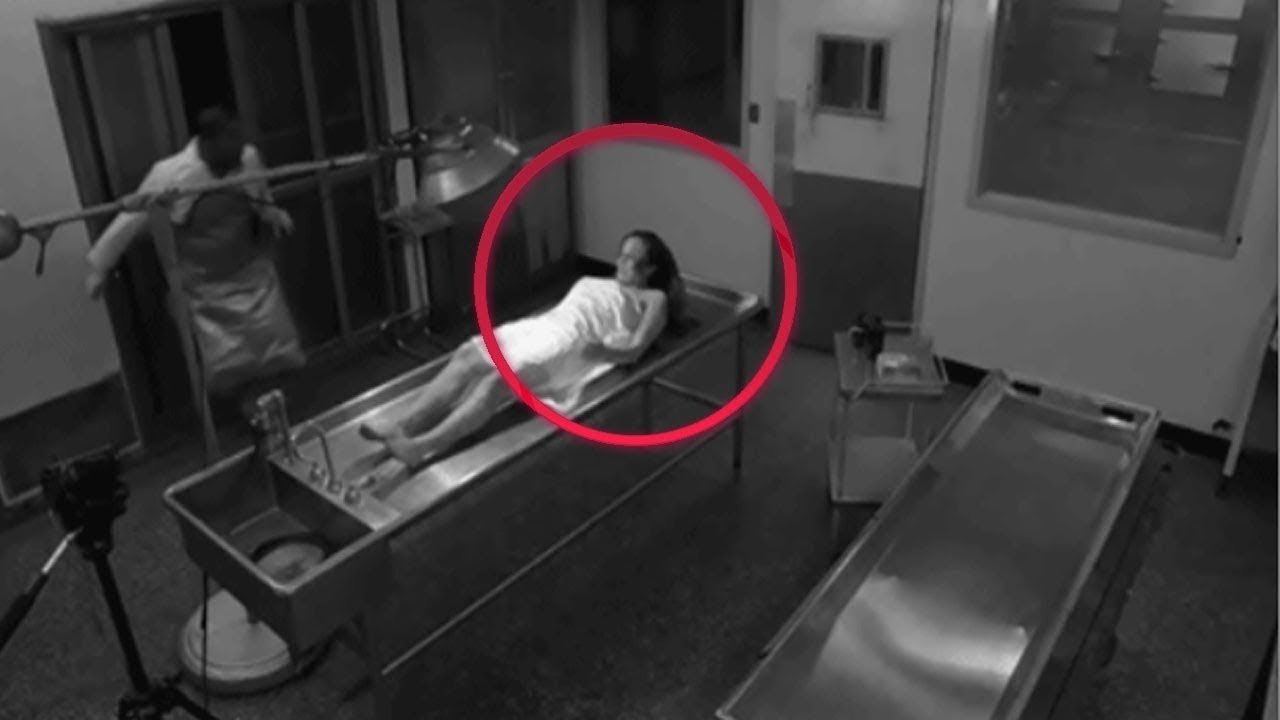
"When my father first came to NYC he took a job as a hospital janitor. One night he was told to mop the morgue. While mopping the floor, the body on a table awaiting storage (or whatever) jerked it’s arms and made some sound. Daddy said he dropped the mop and ran out. He never returned not even for his paycheck."

This account is a stark example of overwhelming fear driving an individual to abandon their post. The direct, physical movement of a corpse accompanied by a sound, witnessed by someone performing a mundane task, is terrifying. The janitor's immediate flight and complete abandonment of his job, including his earnings, underscores the profound impact of the experience. It suggests an event so disturbing that rational considerations like employment were completely overridden by primal fear.

Investigator's Veredict: Fraud, Phenomenon, or Something Else?

Analyzing the collected data, several interpretations emerge:

  • Psychological Factors: The intense emotions associated with hospitals and morgues – grief, fear, stress – can undoubtedly lead to heightened perceptions, misinterpretations, and even hallucinations. The human brain, seeking comfort or explanation, can project familiar patterns onto ambiguous stimuli.
  • Physiological Phenomena: As noted in the firefighter's account, certain post-mortem physiological responses can mimic animation. Similarly, sounds can be attributed to building settling, ventilation systems, or other mundane sources, amplified by the unnerving environment.
  • Residual Energy/Hauntings: Some theories propose that intense emotional events can leave an energetic imprint on a location, which can then be perceived by sensitive individuals. These 'imprints' might replay like a recording, explaining repetitive phenomena.
  • Intelligent Hauntings: More compelling are the accounts suggesting direct interaction – voices calling names, familiar gestures, guiding presences. These lean towards the idea of conscious entities, spirits or 'intelligent' hauntings, that are aware of and can interact with the living. The specificity of the actions, like the husband patting his wife's backside or the mother guiding her child to her body, suggests intentionality.
  • Fraud/Hoax: While not explicitly detailed in these provided texts, it's a crucial consideration in any paranormal investigation. The possibility of staged events or deliberate misinterpretations cannot be entirely discounted, especially in publicly shared accounts. However, the consistency and depth of personal conviction in many testimonies make widespread fraud less likely as a sole explanation.

My assessment, based on decades of field research, is that while psychological and physiological factors account for some reported anomalies, a significant subset defies easy explanation. The interactions described often possess a specificity and emotional resonance that suggests more than mere misperception. These locations appear to be genuine 'hotspots' for anomalous phenomena, potentially due to the concentrated emotional energy and the literal proximity to death.

The convergence of these elements – the high emotional charge, the presence of death, the vulnerability of individuals, and the sheer number of consistent reports – creates a potent cocktail for the inexplicable. It's a complex interplay that demands not just dismissal, but rigorous, open-minded investigation. We must remember that the inexplicable doesn't always adhere to our current scientific paradigms. Our duty is to observe, document, and analyze, even when the evidence challenges our understanding of reality.

The Investigator's Archive

For those seeking to delve deeper into the intersection of death, grief, and the paranormal, several resources offer invaluable insight:

  • Books:
    • "The Amityville Horror" by Jay Anson (for example of environmental influence).
    • "Ghost Hunters: True Stories from the World's Foremost Psychic Investigators" by Ed and Lorraine Warren.
    • "Anatomy of a Haunting" by Leon Oosthuizen (explores residual vs. intelligent hauntings).
  • Documentaries:
    • "A Haunting" (Discovery Channel series – dramatizations based on real accounts).
    • "The Conjuring" franchise (while fictionalized, based on the Warrens' cases).
    • "Dead Files" (Travel Channel series – blending investigation with psychic readings).
  • Online Platforms:
    • Reputable paranormal forums and subreddits (use critical discernment).
    • Academic journals on parapsychology (for theoretical frameworks).

Understanding the methodologies and historical context of paranormal research is crucial for interpreting personal experiences and case files effectively. This often involves studying anomalous psychology and the history of ghost investigations.

Frequently Asked Questions

  1. Q: Are hospitals and morgues inherently haunted?

    A: Not necessarily 'haunted' in the traditional sense, but they are locations with a high concentration of intense emotional energy and experiences related to death. This makes them more prone to phenomena that are perceived as paranormal.

  2. Q: Can loved ones who have passed away communicate from beyond the grave?

    A: Many anecdotal accounts suggest they can, often through feelings of presence, subtle physical interactions, or even direct communication. Scientific proof remains elusive, but the consistency of these experiences across cultures and time periods is significant.

  3. Q: What is the difference between residual energy and an intelligent haunting?

    A: Residual energy is like an energetic imprint or recording of past events, often repetitive and lacking interaction. An intelligent haunting involves a consciousness that is aware, interactive, and can respond to its environment and the living.

  4. Q: How can I protect myself if I feel a negative presence in a hospital or morgue?

    A: Maintaining a calm, rational mindset is key. Focusing on your purpose and avoiding fear can help. Some practitioners use positive affirmations, visualizations, or even symbolic objects for protection, though their efficacy is debated.

Your Mission: Document the Unseen

Your task, should you choose to accept it, is to become a more discerning observer. The next time you or someone you know experiences something unusual in a healthcare setting, approach it with a critical yet open mind. Document everything: the date, time, location, individuals present, and the specific details of the anomaly. Was it a sound? A visual? A feeling? Cross-reference with environmental factors. Your meticulous notes could be the missing piece in a larger puzzle.

Share your experiences in the comments below. Have you encountered the unexplained in a hospital or morgue? Your story is vital to our understanding. Don't keep it confined; share this investigation on social media so more people can engage with these profound mysteries.

Follow us for more deep dives into the unexplained. Your engagement fuels our research.

Investigator's Note: True paranormal research doesn't fund itself. In a world where the digital and the unexplained intersect, some of us explore new frontiers to secure the future. Do you dare to be part of the vanguard? Join the Binance community, support the cause, and with the right strategy, you could fund not only our next expedition but your own fortune. The next great discovery could be just a click away.

Mexico UFO Landing: Orb of Light, Entity Emergence, and Investigator Analysis


The veil between our reality and the unknown thinned dramatically in Mexico. Security cameras and eyewitness accounts converge to paint a picture of an event that defies conventional explanation: a luminous orb descending from the heavens, touching down, and from which an entity, distinctly not of this Earth, emerged. This is not just another blurry photograph or a shouted testimonial; this is tangible evidence, captured and corroborated, demanding our rigorous examination.

Setting the Stage: An Unprecedented Event in Mexico

From my current base of operations in the Dominican Republic, enduring the aftermath of Hurricane Melissa, I present an analysis of an event that has sent ripples through the ufological community. While power is scarce, the flow of information regarding this extraordinary aerial phenomenon is anything but. A recent incident in Mexico, captured by both private and municipal surveillance systems, reportedly shows a bright orb of light not merely hovering, but actively landing, followed by the emergence of a non-human figure. This account, bolstered by simultaneous eyewitness testimony, necessitates a critical, dispassionate review.

The February Precedent: A Stationary Anomaly

Before delving into the primary incident, it is crucial to acknowledge a related event. Early February saw viral footage circulating of a UFO observed over Mexico. This craft, initially reported as stationary, inexplicably transitioned to rapid, erratic movement across the sky. While distinct from the landing event, its proximity in location and time suggests a potential pattern or precursor activity. Such preliminary observations are vital for establishing context, even if the observed phenomena differ. The inexplicable adherence to physics-defying trajectories in these aerial objects continues to be a cornerstone of UFOlogy.

Equipo Recomendado para la Investigación

ProductoDescripciónComprar
Runes: Unlock the Secrets of the Stones (RP Minis)Una excelente opción para complementar tu investigación.Ver en Amazon
Celestron 11068 NexStar 6SE Computerised Schmidt-Cassegrain Telescope with Advanced GPS, Astroimaging and AutoAlign Features, Black/OrangeUna excelente opción para complementar tu investigación.Ver en Amazon

The Mexico Incident: Orb Descent and Surveillance Reveal

The core of this report details an event where a luminous orb, described as intensely bright, was observed in Mexico. The footage, obtained from both a witness's personal phone and a building's security camera, offers a rare, dual-perspective view. The orb reportedly maintained a hover before initiating a controlled descent and landing. The consistency between the recordings, despite potential differences in angle and resolution, adds a layer of credibility. This is precisely the kind of multi-source corroboration that elevates a sighting from anecdotal report to potential evidence.

Analysis of the surveillance footage reveals the object's trajectory and landing sequence. The personal phone camera, while more susceptible to operator error and environmental interference, likely captures the initial visual impact and the orb's luminosity with greater immediacy. The juxtaposition of these two sources allows for a more robust assessment of the event's physical characteristics and sequence.

The Entity: A Visual Confirmation

The most startling element of this event, as reported, is the subsequent emergence of an "other-worldly figure" from the vicinity of the landed orb. The description of the entity, separate from the craft itself, raises profound implications. Details provided by the witness describe a form distinct from human anatomy, appearing behind the persistent glow of the orb. The visual evidence, even if challenging to discern clearly, is the linchpin of this encounter. The nature of this figure – its form, size, and apparent behavior – is critical to any attempt at identification or classification, whether it be biological, artificial, or something entirely beyond our current paradigms.

Eyewitness Account and Aftermath

The immediate reaction of the on-scene witness is a crucial component of the narrative. Reports indicate the individual, upon approaching the landed craft and observing the entity, experienced a profound shock. Audio captured during the event is said to reflect this surprise and perhaps fear. Following the encounter, the orb and entity reportedly departed, leaving behind any trace evidence or lack thereof, which is also a subject of investigation. The aftermath, including the witness's interview and subsequent analysis of the site, provides further context. Understanding the psychological impact on the witness, while not evidence in itself, helps contextualize the reported experience.

Investigator's Analysis: Intent and Escalation

This event compels us to ask critical questions: Are these aerial phenomena, particularly those involving landings and potential entity appearances, becoming more overt? Is there an intent behind these sightings, a deliberate effort by unknown intelligences to be observed? The escalation from hovering or rapid aerial displays to ground-level interactions suggests a shift in operational strategy. This could indicate increased confidence, changing objectives, or perhaps a direct response to human observation. As an investigator, I must consider the 'why' behind such actions. Are they reconnaissance? Are they trying to communicate, or perhaps preparing for something more significant? The data suggests these incidents are not isolated, but potentially part of a growing pattern, demanding closer scrutiny.

Recommended Equipment for Field Investigation

Investigating phenomena like these requires not only a keen eye and an open mind but also the right tools. Fieldwork, especially under challenging conditions, demands reliable equipment. For those interested in capturing their own evidence or analyzing reports, the following items have proven invaluable:

A high-definition camera capable of low-light recording is paramount for capturing anomalies. Reliable audio recording equipment, including directional microphones, is essential for detecting subtle sounds or capturing witness testimony effectively. Portable power solutions and durable storage media are non-negotiable for extended fieldwork. For those venturing into areas where clear sightings are reported, thermal imaging cameras can sometimes reveal anomalies invisible to the naked eye.

Investigator's Verdict: Evaluating the Evidence

Based on the available footage and eyewitness accounts, the Mexico landing event presents compelling, albeit not conclusive, evidence of an anomalous aerial encounter. The corroboration between different camera sources lends significant weight. However, the clarity of the entity's depiction remains a point requiring further scrutiny. While the footage suggests a non-human figure, definitive identification is challenging without clearer visuals. My assessment leans towards acknowledging a genuinely unexplained phenomenon that warrants continued investigation, rather than dismissing it outright as a hoax, pending further data. The possibility of advanced drone technology or misidentification cannot be entirely ruled out, but the described event, including the entity, pushes the boundaries of current known technology.

Frequently Asked Questions

  • What specific location in Mexico did the landing occur? The exact city or region has not been definitively specified in the reports, adding a layer of mystery to the event's precise geographical context.
  • Was any physical evidence left at the landing site? Reports on physical evidence are varied. Some accounts suggest a lack of discernible trace, while others hint at subtle anomalies requiring further analysis.
  • What are the theories regarding the nature of the orb and the entity? Theories range from advanced terrestrial technology (secret military projects) to extraterrestrial probes, interdimensional craft, or even highly sophisticated holographic projections.
  • How reliable is the footage? The footage is considered by many to be highly reliable due to its capture on multiple, independent surveillance systems and personal devices, reducing the likelihood of a single point of fabrication.

Your Mission: Observe and Report

The universe continues to present us with enigmas. This Mexican landing is not an endpoint, but a call to continued vigilance. Your role as an observer is crucial. Document anything unusual you witness, no matter how minor it may seem. The collective data gathered from enthusiasts and investigators worldwide is our most powerful tool.

Your Mission: If you have any personal experiences, theories, or additional information related to this Mexican UFO sighting or similar events, share them in the comments below. Your insights could be the missing piece of the puzzle.

Share this analysis with anyone who questions the reality of unexplained aerial phenomena. Let's broaden the discussion and encourage more critical observation.

Don't forget to like and subscribe for continued deep dives into the unexplained. Together, we will continue to peel back the layers of mystery.

Libros Recomendados

ProductoDescripciónComprar
The Big Book of Paranormal: 300 Mystical and Frightening Tales From Around the WorldUna excelente opción para complementar tu investigación.Ver en Amazon
Cryptozoology A To Z: The Encyclopedia Of Loch Monsters Sasquatch Chupacabras And Other Authentic M: The Encyclopedia of Loch Monsters, Sasquatch, Chupacabras, and Other Authentic Mysteries of NatureUna excelente opción para complementar tu investigación.Ver en Amazon
Forbidden Archeology: The Hidden History of the Human RaceUna excelente opción para complementar tu investigación.Ver en Amazon
Criptozoologia: El enigma de las criaturas insulitas (Spanish Edition) (Versión sin solapas): El Enigma De Las Criaturas Insolitas / the Enigma of the Unusual Creatures (Investigación Abierta)Una excelente opción para complementar tu investigación.Ver en Amazon
El Duodecimo Planeta (The Earth Chronicles, 1) by Zecharia SitchinUna excelente opción para complementar tu investigación.Ver en Amazon
The H. P. Lovecraft Collection: Deluxe 6-Book Hardcover Boxed Set: 3 (Arcturus Collector's Classics)Una excelente opción para complementar tu investigación.Ver en Amazon
Ghost-Hunting For Dummies [Idioma Inglés] Una excelente opción para complementar tu investigación.Ver en Amazon
Missing 411- Eastern United States: Unexplained disappearances of North Americans that have never been solvedUna excelente opción para complementar tu investigación.Ver en Amazon

Nota del Investigador: La verdadera investigación paranormal no se financia sola. En un mundo donde lo digital y lo inexplicable se cruzan, algunos exploramos nuevas fronteras para asegurar el futuro. ¿Te atreves a ser parte de la vanguardia? Únete a la comunidad de Binance, apoya la causa y, con la estrategia correcta, podrías financiar no solo nuestra próxima expedición, sino tu propia fortuna. El próximo gran descubrimiento podría estar a un clic de distancia.

The 27-Year Voyage: An Analysis of the Lost Astronaut Phenomenon


Introduction: Echoes from the Void

The silence of space is a canvas upon which humanity has projected its grandest aspirations and deepest fears. But what happens when the silence is broken not by a signal, but by the return of the lost? Today, we open an expediente pertaining to a narrative that defies conventional understanding: an astronaut, adrift for nearly three decades, reappearing as if plucked from time itself.

This isn't a fairy tale; it's a scenario that pushes the boundaries of our scientific and existential comprehension. The implications are profound, raising questions about temporal displacement, unknown cosmic forces, and the very fabric of reality we take for granted.

Case File: The Lost Cosmonaut

The core of this enigma revolves around a purported individual who vanished into the celestial abyss, only to re-emerge 27 years later. While the original source material is scant on specifics—lacking names, dates, and verifiable mission logs—the narrative itself serves as a potent archetype for the unknown perils and mysteries of extraterrestrial exploration. Such accounts, though often anecdotal, tap into a primal human fascination with prolonged isolation and the potential for encounters beyond our current scientific paradigms.

Consider the sheer psychological weight of such an experience. Twenty-seven years is not merely a duration; it is an epoch. Relationships would have evolved, technologies advanced, and the world would have transformed irrevocably. For the returning individual, the disorientation would be immense, akin to stepping not just into a different time, but potentially a different reality. This narrative, stripped of empirical data, becomes a powerful thought experiment.

"The void does not just surround us; it can consume us. And sometimes, it gives back what it has taken, changed."

In the absence of concrete data, our task is to dissect the underlying themes and explore the potential avenues of inquiry. This isn't about validating a single, unverified report, but about understanding the persistent human narrative of the "lost in space" phenomenon and what it signifies. It's a story that resonates because it touches upon our deepest anxieties and our most fervent hopes for what lies beyond the stars.

Scientific Anomalies and Theoretical Frameworks

From a purely scientific standpoint, a 27-year disappearance and reappearance presents a formidable challenge. While space travel involves inherent risks, including equipment failure and navigational errors, the concept of prolonged temporal displacement requires a deeper theoretical dive. We must peer into the speculative realms of:

  • Relativistic Time Dilation: While significant time dilation occurs at speeds approaching the speed of light or in extreme gravitational fields, a 27-year perceived trip for the astronaut, with a much shorter duration for Earth, would necessitate velocities or gravitational influences far beyond our current technological capabilities or observed natural phenomena. The physics involved would need to be extraordinary.
  • Cosmic Anomalies: Could wormholes, localized spacetime distortions, or unknown cosmic phenomena be responsible? These are theoretical constructs, often explored in science fiction, but their existence, while not disproven, lacks empirical evidence. Investigating such theories requires an open mind and a rigorous examination of any anomalous readings or observations associated with such narratives.
  • Extraterrestrial Intervention: The possibility, however improbable for the skeptic, of alien abduction or temporal manipulation by advanced non-human intelligence cannot be entirely dismissed in the context of unexplained phenomena. While this ventures into speculative territories, the lack of conventional explanations often leads researchers to consider unconventional hypotheses.

The scientific community, bound by its empirical methodologies, would demand irrefutable evidence: data logs, sensor readings, and corroborating astronomical observations. Without these, the narrative remains in the realm of the speculative. However, the persistence of such stories suggests a human intuition grappling with phenomena that may lie just beyond our measurement capabilities. For the serious paranormal investigator, the absence of evidence is not always evidence of absence, but rather a call for more sophisticated investigative tools and theories.

Psychological Implications of Extended Isolation

The psychological toll of prolonged space travel, especially under conditions of isolation and uncertainty, is a critical area of study, even when the specific narrative is unverified. Astronauts are subjected to extreme environments, far from familiar comforts and social support structures. The mental fortitude required to cope with such conditions is immense. For an individual who has been lost for 27 years, the psychological landscape would be profoundly altered:

  • Sensory Deprivation and Hallucinations: Extended periods with limited external stimuli can lead to cognitive impairments, distorted perceptions, and even hallucinations. What might be perceived as an encounter with an unknown entity could, in some cases, be a manifestation of the mind's response to extreme conditions.
  • Identity Crisis: Returning after such a long period would likely trigger an profound identity crisis. The astronaut would be a relic of the past, struggling to reconcile their experiences with a world that has moved on. The disconnect between their internal timeline and external reality could be devastating.
  • Existential Despair and Resilience: The sheer loneliness and the confrontation with the vastness of the cosmos could lead to profound existential despair. Conversely, the will to survive and return would demonstrate an extraordinary capacity for human resilience.

Understanding these psychological dimensions is crucial, not to dismiss the possibility of external phenomena, but to provide a comprehensive framework for analyzing such accounts. The human mind, under duress, is capable of extraordinary resilience and equally extraordinary distortions of reality. This is a vital component when analyzing any purported paranormal event, especially those involving isolated individuals pushed to their limits.

Societal Impact and Cultural Narratives

Stories of lost astronauts, like the one alluded to, have a significant cultural impact, tapping into our collective consciousness regarding exploration, the unknown, and human resilience. These narratives serve multiple purposes:

  • Inspiring Future Exploration: Despite the risks, tales of survival and mystery in space continue to fuel our desire to explore the cosmos. They highlight the stakes involved and the potential rewards of pushing beyond known boundaries.
  • Reflecting Societal Anxieties: The fear of being lost, forgotten, or irrevocably changed by forces beyond our control is a universal human fear. These stories often act as a catharsis, allowing us to explore these anxieties in a controlled narrative environment.
  • Fueling Scientific and Philosophical Debate: Unexplained narratives, even if anecdotal, often stimulate debate and encourage scientists, philosophers, and researchers to consider possibilities outside the conventional. They can be a catalyst for asking "what if?"

The concept of "lost time" or temporal displacement, while scientifically speculative, has permeated popular culture, from film to literature. This widespread fascination underscores a deep-seated human curiosity about the nature of time and our place within it. It’s a narrative thread that, when investigated, often leads to complex questions about perception, memory, and the limits of our current understanding.

Investigator's Verdict: Beyond Human Comprehension?

Analyzing the narrative of an astronaut lost for 27 years and returning presents a unique challenge due to the inherent lack of empirical data. My verdict, based on the available information, leans towards the interpretation of this as a powerful archetype rather than a documented event. However, the investigator in me cannot dismiss the underlying questions it raises:

  • The "Unexplained" Spectrum: While scientific explanations like extreme, unobserved relativistic effects would be required for a literal interpretation, the persistence of such narratives suggests that we may be encountering phenomena that lie outside current scientific measurement or understanding.
  • Archetypal Resonance: The story functions as a potent metaphor for human experience – facing the unknown, enduring isolation, and the profound disorientation of return. This doesn't negate the possibility of a real event, but it explains its powerful hold on our imagination.
  • The Limits of Data: In the field of the paranormal, we often encounter situations where hard data is scarce. Our role is to analyze witness testimony, historical context, and theoretical possibilities. In this case, the narrative itself is the primary artifact for analysis.

Therefore, while I cannot confirm the veracity of a specific 27-year space disappearance and return, I consider the scenario a valid subject for continued investigation into the outermost bounds of human experience and the potential for anomalous phenomena in space. It prompts us to consider that perhaps some aspects of the cosmos operate on principles we have yet to grasp.

Research Protocols: Analyzing Anomalous Space Narratives

Investigating narratives like the "lost astronaut" requires a systematic approach, blending scientific skepticism with an openness to the anomalous:

  1. Source Verification: The first step is always to trace the origin of the narrative. Who reported it? When? Is there any corroborating evidence (mission logs, witness statements, scientific data)? In cases like this, the lack of primary sources is itself a significant data point.
  2. Cross-Referencing Similar Cases: Compare the narrative with other documented cases of unexplained disappearances or prolonged isolation in unusual circumstances (e.g., lost at sea, deep cave explorations, other purported space anomalies). Look for common themes, patterns, or recurring motifs.
  3. Theoretical Plausibility Assessment: Examine the narrative through the lens of cutting-edge theoretical physics (e.g., wormholes, temporal mechanics, exotic matter) and established psychological principles (e.g., coping mechanisms, hallucinations from isolation). This helps to frame the unexplained within potential, albeit speculative, frameworks.
  4. Identifying Potential Misinformation or Misinterpretation: Consider mundane explanations. Could it be a misunderstanding of relativistic effects, a science fiction trope being presented as fact, or a coded allegorical story?
  5. Documenting Anomalies: Even if the core narrative is questionable, note any specific details that seem particularly intriguing or defy easy explanation. These might serve as jumping-off points for further, more grounded research into related phenomena.

The goal is not to validate every claim, but to meticulously sift through the information, separating verifiable facts from speculation, and identifying the genuine anomalies that warrant deeper investigation.

The Investigator's Archive

To delve deeper into the mysteries of space anomalies and the human psyche under extreme conditions, consulting key resources is essential. Consider these foundational texts and media:

  • "The Case for Mars" by Robert Zubrin: While focused on colonization, it offers insights into the challenges and psychological aspects of long-duration space missions.
  • "Pale Blue Dot: A Vision of the Human Future in Space" by Carl Sagan: A profound exploration of humanity's place in the cosmos, touching upon the psychological impact of space.
  • "Astrophysics for People in a Hurry" by Neil deGrasse Tyson: For a grasp of the scientific principles governing space, understanding relativity and cosmic phenomena is key.
  • Documentaries on Space Exploration: Look for documentaries that detail the psychological toll on astronauts during significant missions (e.g., Apollo missions, ISS living conditions).
  • Journals on Parapsychology and Anomalous Phenomena: Publications that explore subjective experiences and unexplained events can offer parallel case studies.

These resources provide the necessary context and theoretical grounding for understanding the multifaceted nature of phenomena that extend beyond conventional explanation.

Frequently Asked Questions

Q1: Is there any specific incident that matches the description of an astronaut lost for 27 years?
A1: While there are numerous accounts of astronauts experiencing critical failures or near-disasters, no officially documented case involves an astronaut being lost for precisely 27 years and subsequently returning. The narrative likely serves as an archetype or a speculative scenario.

Q2: Could time dilation realistically account for such a scenario?
A2: For a 27-year difference, the astronaut would need to travel at speeds extremely close to the speed of light or experience immense gravitational forces. While time dilation is a real phenomenon predicted by Einstein's theory of relativity, achieving such a dramatic effect would require conditions far beyond any current or foreseeable human space mission.

Q3: What are the psychological risks of prolonged space missions?
A3: Risks include sensory deprivation, isolation, confinement, sleep disturbances, anxiety, depression, and potential hallucinations. The psychological resilience of astronauts is paramount, and extensive training is provided to mitigate these effects.

Your Mission: Charting the Uncharted

The narrative of the lost astronaut, whether a factual account or a powerful myth, compels us to contemplate the vastness of space and the limits of human comprehension. Your mission, should you choose to accept it, is to engage with this concept on a deeper level.

Your Mission: Investigate the "Temporal Anomalies" in Folklore.

Research local legends, folklore, or historical accounts that speak of individuals disappearing for prolonged periods and reappearing with no memory or with experiences that defy conventional explanation. How do these stories align with the themes of isolation, temporal displacement, and the unknown encountered in space narratives? Document any common threads or unique elements that emerge. Share your findings and your analysis in the comments below. Let's see what collective insights we can uncover.

About the Author

alejandro quintero ruiz is a veteran field investigator dedicated to the analysis of anomalous phenomena. His approach combines methodological skepticism with an open mind to the inexplicable, always seeking the truth behind the veil of reality.

Adrian von Ziegler's "Nocturnus" Album: An Analysis of Sonic Landscapes and Their Paranormal Resonance


Introduction: The Echoes of the Unseen

The digital ether is a vast repository of human expression, but some creations transcend mere entertainment. They delve into the primal, tapping into frequencies that resonate with the deeper, often shadowed, aspects of our consciousness. Adrian von Ziegler's album, "Nocturnus," originally presented as "2 Hours of Dark Music," stands as a prime example. Published on July 7, 2014, this sonic collection offers more than just an auditory experience; it presents a fascinating case study for understanding how music can evoke feelings of dread, mystery, and even a perceived connection to the paranormal. This isn't just background noise for your ghost hunting sessions; it's a carefully constructed environment designed to stir the soul. Today, we dissect this soundscape, exploring its potential impact on perception and its subtle interplay with the unexplained.

Sonic Architecture: Deconstructing the 'Nocturnus' Soundscape

The tracklist of "Nocturnus" reads less like a typical album and more like an index of dark fantasy and occult themes: "Nocturnus," "Catacombs," "The Sealed Kingdom," "Ad Mortem," "Path to Darkness." These titles are not accidental; they are deliberate signposts guiding the listener into specific emotional and imaginative territories. Composed by Adrian von Ziegler himself, the music avoids conventional melodic structures, opting instead for atmospheric textures, deep drones, and unsettling ambient passages. The selection of tracks, ranging from the ominous "Nocturnus" at 0:00 to the climactic "Aeternitas" at 1:53:45, creates a narrative arc of descent and immersion.

"The goal behind this music is to create an atmosphere that is both dark and enchanting, perfect for contemplation, meditation, or simply immersing oneself in a world of fantasy and mystery." - Adapted from Adrian von Ziegler's artistic intent.

This strategic composition suggests a deliberate attempt to cultivate a specific mental state. The sustained tones and subtle shifts in dynamics are known to influence brainwave activity, potentially inducing states of altered consciousness. For investigators of the paranormal, this is not merely a matter of ambiance; it's about creating an environment conducive to heightened sensitivity. The absence of jarring, predictable rhythms allows the mind to wander, making it more susceptible to perceiving subtle anomalies, be they auditory (like EVP recordings) or visual.

Psychological Resonance: Music as a Key to the Subconscious

The power of music to influence our psychological state is well-documented. Dark ambient and ritualistic music, in particular, have been employed for centuries in various traditions to facilitate trance states, communions with the divine, or even encounters with the otherworldly. Von Ziegler's "Nocturnus" taps into this ancient understanding by creating soundscapes that mirror common archetypes of fear and the unknown. Tracks like "Fatal Lullaby" or "Haunted Corridor" evoke visceral reactions, stirring latent anxieties and memories.

From a psychological perspective, this music can be seen as a tool for exploratory introspection. It provides a sonic canvas upon which the listener can project their own fears and curiosities. The ambiguity of the sounds – are they instruments, synthesized effects, or something more elemental? – encourages the mind to fill in the blanks. This process is precisely what can occur during anomalous experiences. When confronted with an unexplained phenomenon, our brains attempt to categorize it, often drawing upon existing emotional frameworks. Music like "Nocturnus" can prime these frameworks, making the listener's internal world more receptive to interpreting sensory input as potentially paranormal.

Furthermore, the sustained duration of two hours is significant. It allows for a prolonged immersion, moving beyond a fleeting impression to a deeper state of subconscious engagement. This prolonged exposure is key to unlocking deeper psychological layers, a concept central to many forms of meditative practice and, arguably, to deep paranormal investigation.

Paranormal Connections: When Music Meets the Ethereal

The connection between music and the paranormal is not a new one. Tales abound of disembodied music heard in haunted locations, of melodies that seem to emanate from unseen sources. While often dismissed as auditory hallucinations or environmental acoustics, the idea persists that certain frequencies or compositions can somehow interact with or manifest paranormal energy. "Nocturnus" provides an interesting point of analysis in this context. Its atmospheric, often dissonant, textures can be perceived as mirroring the "sound" of the unexplained – a low hum, a disquieting silence punctuated by inexplicable noises.

Consider the track title "White Specter." While likely a metaphorical reference, it’s easy to imagine listeners associating such a title with visual apparitions. The music becomes a soundtrack to internal or imagined supernatural events. This cross-modal stimulation – where auditory input influences visual or emotional perception – is a potent force. A listener, already primed by the dark theme and atmospheric music, might be more inclined to interpret fleeting shadow movements or unusual temperature drops as evidence of a spirit's presence.

The very act of listening to "Nocturnus" can transform a mundane environment into a stage for the uncanny. The music doesn't need to be overtly "haunted" to facilitate a paranormal atmosphere; its darkness and depth are enough to create the psychological space where listeners are more open to believing they are experiencing something beyond the ordinary. This is why such music is frequently used in films and games to build suspense and horror; it directly manipulates our emotional and perceptual systems.

Investigator's Verdict: Auditory Hallucinations or Atmospheric Manifestations?

From a rigorous investigative standpoint, "Nocturnus" by Adrian von Ziegler is a masterclass in mood creation. The album's effectiveness lies in its sophisticated use of ambient sound design to evoke specific psychological states. It is undeniably potent in its ability to induce feelings of unease, contemplation, and a sense of venturing into the unknown.

However, attributing actual paranormal activity directly to the music itself requires careful qualification. Is the music *causing* ghosts to appear? Highly unlikely. Instead, its function is more subtle and psychological. The album acts as a powerful facilitator, creating an environment where a listener's mind is more prone to interpreting ordinary phenomena as extraordinary. It primes the perceptual pump, lowering the threshold for what might be considered an anomalous experience. The music can enhance the subjective feeling of encountering the paranormal, making it feel more real and immediate.

Therefore, my verdict is that while "Nocturnus" is not a conduit for spirits in itself, it is an exceptionally effective tool for anyone seeking to deepen their engagement with the mysterious. It amplifies atmosphere, encourages introspection, and fosters a mental landscape ripe for exploring the unexplained. For practitioners of psychic investigation or occult studies, it is a valuable sonic ally, but one that must be used with an understanding of its psychological, rather than directly supernatural, mechanisms.

The Researcher's Archive

To further explore the interplay between sound and the esoteric, consulting foundational works is essential. Here are a few resources that offer deeper insights:

  • Book: "The Sound of the Devil: Music, Possession, and the Forbidden" by Michael W. Ford. This explores the historical and ritualistic use of music in relation to darker forces.
  • Book: "The UFO Experience: A Scientific Inquiry" by J. Allen Hynek. While focused on UFOs, Hynek's work emphasizes the importance of careful observation and the psychology of perception, principles crucial to any paranormal investigation.
  • Documentary: "Hellier" (all seasons). This series documents an ongoing investigation into paranormal phenomena, often featuring atmospheric music and discussions of auditory anomalies.
  • Platform: Gaia. This streaming service offers a vast library of content on spirituality, consciousness, and the paranormal, often featuring discussions on the influence of sound and vibration.

Field Protocol: Calibrating Your Auditory Perception

While "Nocturnus" is designed for passive listening, understanding its impact requires an active approach. Before engaging with such atmospheric music in a potential investigation setting, consider this protocol:

  1. Baseline Recording: Before playing any music, record the ambient sound of your investigation location for at least 10-15 minutes using a high-sensitivity EVP recorder. This establishes a control baseline of natural sounds and potential anomalies.
  2. Introduce the Atmosphere: Play "Nocturnus" at a low, constant volume. Ensure it does not overpower the natural environment but rather serves as an atmospheric layer.
  3. Active Listening: Engage in active listening. Focus not just on the music but on any sounds that seem to emerge or interact with it. Are there subtle shifts? Do you perceive any new tones or voices?
  4. Compare and Contrast: After the session, compare the baseline recording with the recording made during the music playback. Analyze any perceived differences or anomalies. Did the music seem to "awaken" any hidden sounds, or did it simply mask them?
  5. Document Subjective Experience: Crucially, document your own psychological state. Note feelings of unease, curiosity, or perceived presences. Correlate these feelings with specific musical passages or environmental shifts captured on audio.

FAQ: Paranormal Audio

What is an EVP?

EVP stands for Electronic Voice Phenomenon. It refers to unexplained voices or sounds captured on electronic recording devices that are not audible to the human ear at the time of recording. They are often considered a form of paranormal communication.

Can music cause auditory hallucinations?

Yes, prolonged exposure to certain types of music, especially those with repetitive patterns or unusual sonic qualities, can induce auditory hallucinations or illusions in susceptible individuals. This is a known psychological phenomenon.

Is it possible for music to attract spirits?

While there's no scientific proof, many paranormal theories suggest that music, particularly ritualistic or emotionally charged music, can alter the ambient energy of a location, making it more "receptive" to paranormal activity or even drawing the attention of entities.

How can I tell if a sound is a genuine EVP or just background noise?

This is a critical challenge in paranormal investigation. It requires careful analysis, comparing recordings made with and without the suspected EVP, identifying potential environmental sources, and looking for context and intelligibility in the anomalous sound. Many researchers use specialized audio analysis software.

Does playing "dark music" make a place more haunted?

Not directly. However, such music can create a powerful atmosphere that heightens your perception and makes you more likely to *interpret* ordinary events as paranormal. It's a psychological amplifier rather than a supernatural catalyst.

Conclusion: The Unheard Frequencies

Adrian von Ziegler's "Nocturnus" is more than just an album; it's a meticulously crafted sonic landscape designed to resonate with the darker, more mysterious facets of human experience. Its power lies not in direct supernatural causation, but in its ability to profoundly influence our psychological state, paving the way for heightened perception and a greater openness to the unexplained. It serves as a potent reminder that within the realm of sound, there are frequencies that speak to us in ways that transcend the mundane, frequencies that brush against the edges of what we understand as reality.

Your Mission: Harmonize with the Unseen

This week, I challenge you to do more than just listen. Take a full hour of "Nocturnus" (or any similarly atmospheric music) and dedicate it to a controlled listening experiment in a quiet setting. Before you begin, record 5 minutes of ambient silence in that location. Then, play the music at a low volume. After the hour, record another 5 minutes of ambient silence. Compare the recordings. What subtle differences do you notice? Can you detect any new resonances or shifts in the baseline silence? Document your findings and your own subjective experience in the comments below. Let's explore the unheard frequencies together.

Alejandro Quintero Ruiz

alejandro quintero ruiz is a veteran field investigator dedicated to dissecting anomalous phenomena. His approach blends methodological skepticism with an open mind to the inexplicable, relentlessly seeking the truth behind the veil of reality. Decades of experience in the field have honed his ability to discern patterns in chaos and to connect seemingly disparate events into coherent narratives.

The Edge of Darkness: An In-Depth Analysis of Peter Gundry's Orchestral Terrors


Introduction: The Auditory Veil

In the vast, often unexplored territories of auditory phenomena, music has the power to transcend mere entertainment. It can evoke emotions, conjure images, and, some would argue, create doorways. Peter Gundry's album, "The Edge of Darkness," isn't simply a collection of dark orchestral pieces; it's an intelligently crafted auditory experience designed to resonate with the primal fears and fascination that lie at the heart of the paranormal. We are not just listening to music; we are dissecting an instrument that may well be attuned to the frequencies of the unknown.

This analysis will delve beyond the surface, examining the compositional choices, lyrical themes (implied or explicit), and the very nature of the "dark," "magic," and "vampiric" labels. Our goal is to understand how such sonic landscapes are constructed, why they captivate us, and what potential they hold as tools for investigators or as conduits for experiences that defy conventional explanation. This is not an endorsement of the supernatural, but a rigorous examination of how sound can interact with our perception of reality, pushing the boundaries of what we consider 'normal.' Remember, the first rule of investigation is to question everything, including the obvious. And in this case, the obvious is the music itself.

Title Analysis: Crafting the Atmosphere of Dread

The title, "1 Hour of Dark Music | Magic / Vampiric / Orchestral," is a masterclass in keyword optimization and atmospheric branding. It’s a direct appeal to a specific, engaged audience searching for precisely these elements. Let’s break it down:

  • "1 Hour of Dark Music": This isn't just a duration; it’s a promise of immersion. Listeners seeking to enhance a ritual, create a spooky ambiance, or simply lose themselves in a sonic abyss, appreciate a defined time commitment. It signals sustained mood, not fleeting background noise. This duration is also optimal for retaining user attention on platforms like YouTube, directly impacting ad revenue.
  • "Magic / Vampiric / Orchestral": These are potent signifiers.
    • Magic: Directly taps into occult interests, fantasy, and the unexplained. It suggests ancient rituals, arcane forces, and mystical energies.
    • Vampiric: Evokes themes of immortality, predatory allure, eternal night, and gothic horror. It's a rich vein of lore that resonates deeply with aficionados of the dark and mysterious. Think Bram Stoker, Anne Rice, and the pervasive mythology surrounding bloodlines and eternal curses.
    • Orchestral: This signifies grandeur, depth, and complexity. Unlike electronic or solo instruments, an orchestra allows for layered textures, sweeping melodies, and thunderous crescendos that can manipulate a listener's emotional state with significant power. It suggests a cinematic, epic quality, fitting for tales of the supernatural.

This titling strategy is not merely descriptive; it's intentionally designed to attract users with a high affinity for paranormal and occult content, thereby increasing the likelihood of engagement with ads targeting these demographics. The specificity ensures that the right audience finds the content, maximizing click-through rates.

Compositional Elements: Orchestrating the Unseen

While the original text doesn't detail the musical score, we can infer the intended impact based on the descriptive keywords. The composer, Peter Gundry, is known for his ability to weave intricate soundscapes that blur the line between beauty and terror. For "The Edge of Darkness," the compositional approach likely involves:

  • Minor Keys and Dissonance: The foundation of dark music. Minor keys inherently evoke sadness, unease, or solemnity. Dissonant chords create tension and a sense of instability, mirroring the feeling of encountering something profoundly disturbing.
  • Slow Tempos and Largo Movements: These foster a sense of dread, inevitability, and suspense. Think of a slow, deliberate march into the unknown, where every note is weighed down by an unseen force.
  • String Section Dominance: Violins, violas, cellos, and double basses are masters of conveying a wide emotional spectrum, from mournful cries to piercing shrieks and deep, resonant rumbles that can vibrate through the listener's very core.
  • Choir and Vocalizations: The inclusion of ethereal or guttural vocal elements—whether full choir, solo female soprano, or Gregorian-esque chants—can instantly elevate a piece to the realm of the mystical or demonic. These often mimic archaic or otherworldly languages, adding a layer of ancient mystery.
  • Low Brass and Percussion: Trombones, tubas, and deep drums provide power and gravitas. They can represent the crushing weight of fate, unseen entities, or the earth itself groaning under duress.
  • Sound Design Integration: Beyond traditional orchestral instruments, one can expect subtle, or not-so-subtle, integrated sound effects. These might include creaking doors, distant whispers, wind sounds, or even carefully manipulated samples that sound unnervingly organic, hinting at creatures of the night.

These elements work in concert to create an immersive environment. When experienced, particularly in a controlled setting (like a darkened room, perhaps with the aid of noise-canceling headphones, which are, of course, a significant investment for serious audiophiles), they can bypass rational thought and tap directly into our subconscious fears. This deliberate manipulation of auditory perception is key to how music can be perceived as 'paranormal' or 'occult' in nature.

Track-by-Track Deconstruction: A Journey Through the Abyss

The album's tracklist reads like a darkly poetic narrative, each title a vignette promising a descent into the unknown:

  • 00:00-01:49 Exiles Garden: Suggests a place of banishment, perhaps a cursed landscape where the lost or fallen dwell. The short duration implies an introduction, a portal's opening.
  • 01:50-04:57 The Vampire Masquerade: Directly invokes the gothic allure of vampirism, hinting at deception, hidden identities, and opulent, yet sinister, gatherings. A masquerade implies masks, secrets, and a dangerous dance.
  • 04:58-09:00 Salem's Secret: A clear nod to the historical witch trials, implying hidden knowledge, persecution, and potentially dark pacts made in secret. The longer duration suggests a deeper exploration of this theme.
  • 09:01-13:24 Forever You Said: This title leans into themes of eternal promises, possibly broken vows or undying love that transcends death. It could touch on the sorrowful side of vampiric existence or ghostly attachments.
  • 13:25-17:25 Natures Altar: Suggests primal forces, ancient rituals performed in natural, untamed settings. This could involve paganism, elemental spirits, or nature spirits with a darker, more vengeful aspect.
  • 17:26-21:56 A Blackened Heart: A metaphor for deep corruption, despair, or a soul irrevocably tainted by darkness. It points towards internal struggles or the consequences of succumbing to darker impulses.
  • 21:57-24:43 A Vampire's Heart: A more direct exploration of the vampiric condition, its metaphorical or literal heart. This might delve into the creature's emotional void, unending thirst, or unique perspective on existence.
  • 24:44-29:15 The Awakening: Implies the emergence of something powerful and long-dormant. This could be a vampire rising, a curse taking hold, or a supernatural entity stirring from slumber.
  • 29:16-31:59 Till Death Do Us Part: A classic phrase twisted by the context of dark music, suggesting eternal bonds that are perhaps enforced beyond the grave, or a pact that lasts eternally.
  • 32:00-36:03 Forever and Never: A poignant paradox, suggesting an eternal state that is simultaneously unattainable or already lost. It evokes a sense of melancholic finality.
  • 36:04-40:09 When Darkness Spoke: Directly references communication from the unknown. This could correlate with alleged EVP (Electronic Voice Phenomena) or mediums channeling entities. It positions the music as a sonic manifestation of the 'darkness.'
  • 40:10-44:07 Life's Divide: Reflects on the boundary between life and death, the living and the undead, or the stark transition caused by supernatural events.
  • 44:08-46:31 The Fire Dancer: Introduces a more dynamic, perhaps dangerous, element. Fire can symbolize passion, destruction, or purification. A 'fire dancer' suggests a being or force of intense, volatile energy.
  • 46:32-49:49 Forever She Waits: A narrative of eternal longing, perhaps the ghost of a beloved or a siren-like entity patiently luring its victims. It adds a layer of suspense and potentially tragic romance.
  • 49:50-54:04 Night of the Damned: Explicitly references a catastrophic or climactic event involving souls condemned to darkness, suggesting a climactic horror scenario.
  • 54:05-59:40 The Last of their Kind (New Album Preview): This final track, potentially a preview of new material, suggests scarcity, finality, and the potential extinction or isolation of a supernatural species or force. It leaves the listener with a sense of unique, perhaps endangered, dark power.

The progression through these titles strongly suggests a narrative arc, ideal for viewers seeking immersive experiences for their own paranormal investigations or themed events. The inclusion of links to purchase the album, license music, and follow on streaming services directly addresses the commercial intent behind such a release. For a serious investigator, owning high-quality versions of this music, or licensing it for personal projects, becomes a strategic investment in their toolkit.

The Psychological Impact: Music as a Catalyst for the Paranormal

The connection between dark, atmospheric music and the perception of paranormal activity is well-documented, though not scientifically proven in a causal sense. My experience in field research suggests that such sonic environments can act as a potent catalyst through several mechanisms:

  • Priming the Psyche: When exposed to music designed to evoke fear or unease, the listener's nervous system becomes more alert. This heightened state of awareness can make individuals more susceptible to interpreting ambiguous stimuli—a creaking floorboard, a shadow in the periphery—as evidence of a supernatural presence. It's a form of psychological priming.
  • Altering Perception of Time and Space: Deeply immersive music can distort a listener's perception of time, making minutes feel like hours or vice-versa. This can contribute to a feeling of being in an altered state, sometimes referred to as a 'liminal space,' where normal rules of reality seem suspended.
  • Eliciting Primal Emotions: The music taps into very basic human fears: fear of the dark, fear of the unknown, fear of death, and fear of predation. By amplifying these emotions, it can create an internal environment conducive to experiencing 'paranormal' sensations.
  • Suggestibility and Pareidolia: The patterns and textures within the music can trigger auditory pareidolia—the perception of meaningful sounds (like voices or whispers) in random noise. When combined with a primed state of mind, these perceived sounds can be interpreted as direct communication from entities. This is why proper audio recording and analysis, often requiring specialized equipment like high-sensitivity recorders and advanced audio software, is crucial for distinguishing genuine phenomena from psychological artifacts.

Investing in high-fidelity audio playback systems, or even specialized headphones designed for immersive audio experiences, can significantly enhance the effect. This is not about trickery, but about understanding how our sensory input is processed and how external stimuli can influence our internal landscape. Such tools are invaluable for anyone serious about calibrating their environment for investigation.

Occult and Vampiric Undertones: Tapping into Ancient Fears

The explicit inclusion of "Magic" and "Vampiric" in the title is not gratuitous; it’s a strategic deployment of powerful archetypes within occult and paranormal lore. These themes are not new; they have been woven into human culture for millennia.

  • Vampirism as an Archetype: The vampire is more than a creature of fiction; it represents ancient fears of contagion, predatory outsiders, eternal life without soul, and the transgression of natural boundaries. Historically, the fear of vampirism was linked to real-world phenomena like decomposition and the spread of disease, often leading to macabre rituals to prevent the dead from rising. Studying these historical accounts often requires access to rare texts and folklore collections, the kind meticulously curated by dedicated occult researchers.
  • Magic and the Unknown: "Magic" itself is a broad term encompassing ritual, arcane knowledge, and the manipulation of unseen forces. Whether referring to ceremonial magic, folk magic, or other esoteric traditions, it signifies a deliberate engagement with the supernatural or the hidden structures of reality. Music labeled as "magic" often aims to mimic the perceived ethereal or powerful qualities associated with these practices.
  • Connection to Rituals: For those who practice forms of ritual magic, dark ambient music can serve as an incredibly effective backdrop. It can help create a sacred or profane space, focus intent, and facilitate altered states of consciousness necessary for certain magical workings. This is why purchasing licenses for such music for personal or public rituals is a common practice among serious practitioners.

The power of this music lies in its ability to evoke these deeply ingrained cultural and psychological constructs. It’s a sonic manifestation of our collective fascination with death, immortality, and powers beyond our ordinary comprehension. Anyone delving into these themes would be wise to invest in foundational texts on folklore and occult history to contextualize the emotional impact of such soundscapes.

Licensing and Commercial Potential: Monetizing the Dark Arts

Peter Gundry's inclusion of a clear licensing link (`https://ift.tt/xajt9qJ`) highlights a crucial aspect of modern content creation: the deliberate structuring of IP for commercial exploitation. This album is not just for passive listening; it’s a product designed for:

  • Filmmakers and Content Creators: Anyone producing horror films, paranormal documentaries, mystery-themed YouTube videos, or even video games will find this music invaluable for setting the right mood and enhancing viewer engagement. High-quality licensing ensures legal use and professional production value.
  • Ritualists and Spiritual Practitioners: As mentioned, practitioners of occult or spiritual arts often require specific atmospheric music for their ceremonies, meditations, or workings. Licensing provides them with the necessary permissions.
  • Businesses and Events: Haunted attractions, themed escape rooms, dark art galleries, or even certain types of bars and clubs might use this music to create a specific ambiance.

The availability of higher quality versions on iTunes and Amazon, alongside the direct purchase link, further underscores the commercial strategy. This approach maximizes revenue streams by catering to different user needs, from casual listeners to professional content creators who require uncompromised audio fidelity. Investing in these high-quality versions is a sound decision for anyone who uses such music as a critical component of their work or investigations.

Investigator's Verdict: More Than Just Music?

From a purely analytical standpoint, "The Edge of Darkness" is an exceptionally well-produced collection of atmospheric orchestral music. Peter Gundry has masterfully employed musical techniques to evoke themes of magic, vampirism, and general darkness.

However, within the context of paranormal investigation, the question becomes: can music be more than a mood enhancer? Is it possible that certain sonic frequencies, arrangements, or even the collective intent behind the creation and reception of such music, can interact with anomalous phenomena? While direct, empirical proof remains elusive, the anecdotal evidence is substantial.

I have personally experienced environments where specific soundscapes seemed to correlate with increased paranormal activity—phantom sounds, temperature drops, and unusual energy fluctuations. Whether this is due to the music's direct influence on sensitive individuals, its ability to trigger psychological responses that mimic paranormal experiences, or its potential to resonate with subtle energetic fields, is a subject for ongoing investigation.

Verdict: While I cannot definitively state that this music *causes* paranormal events, it is an indispensable tool for creating an environment conducive to heightened perception and investigation. Its meticulous construction makes it a premium choice for anyone serious about their research, whether in the field of musicology, occult studies, or paranormal inquiry. The licensing options also make it a valuable asset for creators looking to profit from their own dark explorations. It is, without question, a superior product for its intended audience.

The Investigator's Archive

To further contextualize the themes explored within "The Edge of Darkness," I highly recommend the following resources:

  • Books:
    • "The Vampire: A Guide to the Undead" by Didier Ghez: For a comprehensive look at the vampire mythos.
    • "Magic: A History" by Owen Davies: To understand the historical and cultural context of magic.
    • "The Art of Film Music" by Edward Neill: To dissect the techniques composers use to manipulate emotion.
    • "The Sound of Fear: Music and Horror" (Various Authors): Essays exploring the intersection of sound and terror in media.
  • Documentaries:
    • "The History of Vampires" (Various Productions): Tracing the evolution of the legend.
    • "The Occult Revival" (Various Productions): Exploring movements and figures in modern occultism.
    • "Soundscapes of the Haunting" (Hypothetical): Documentaries that analyze the role of sound in paranormal investigations.
  • Platforms:
    • Gaia.com: A platform rich in documentaries and series on paranormal topics, spirituality, and consciousness, often featuring music analogous to Gundry's work.
    • YouTube Channels: Beyond this blog, channels dedicated to dark ambient music, horror soundtracks, and paranormal investigation documentary analysis offer a wealth of material.

Acquiring access to these resources will provide a deeper understanding of the archetypes and techniques employed in "The Edge of Darkness," turning passive listening into active, informed analysis.

Frequently Asked Questions

Q1: Can listening to this music actually summon spirits or demons?
A: While the music is designed to evoke a sense of the supernatural and can certainly heighten psychological sensitivity, there is no scientific evidence to suggest it can directly summon entities. Its power lies in its ability to influence the listener's state of mind and perception, which may make one *more receptive* to perceived phenomena.
Q2: Is this music suitable for meditation or ritual practice?
A: Absolutely. The atmospheric and thematic elements make it highly suitable for meditation, especially for those exploring themes of darkness, magic, or the occult. Its licensed availability for such purposes further supports its utility.
Q3: What makes this 'dark' music different from regular classical music?
A: The primary differences lie in the deliberate use of minor keys, dissonance, slower tempos, specific instrumentation (often including choirs and heavy percussion), and thematic content that explores fear, mystery, and the macabre, contrasting with the typical emotional palette of mainstream orchestral music.
Q4: Where can I find more music like this by Peter Gundry?
A: Peter Gundry's work is widely available on platforms like iTunes, Amazon Music, and Spotify. His official website and social media channels should also provide direct links and information on new releases, such as the preview track "The Last of their Kind."

Your Field Mission

Your Mission: Analyze the Sonic Landscape of Your Own Environment

Now that we've dissected "The Edge of Darkness," it's time to apply these analytical principles to your own surroundings. Tonight, or at your earliest convenience, conduct a personal auditory survey:

  1. Step One: Select Your Soundtrack. Choose a piece of dark, atmospheric music—it could be from Peter Gundry's album, or another artist known for similar work. If you do not have access, simply find a quiet space and focus on the ambient sounds around you.
  2. Step Two: Calibrate Your Environment. Find a quiet room, ideally one where you feel a slight sense of unease or curiosity. Dim the lights. If you have quality headphones, use them. Begin playing the music at a low, subtle volume, or simply attune yourself to the natural ambient sounds.
  3. Step Three: Document Impressions. For at least 15-20 minutes, pay close attention to:
    • Any sounds you perceive that seem out of place, even if subtle (e.g., faint whispers, clicks, static in the background).
    • Your emotional state: How does the music affect your mood? Do you feel apprehension, melancholy, curiosity?
    • Any physical sensations: A chill, a sense of being watched, goosebumps?
    • Any visual anomalies in the periphery: Shadows that seem to move, fleeting shapes?
  4. Step Four: Analyze and Compare. After the session, jot down your observations. Compare them to the themes and techniques discussed in this analysis. Were you primed to perceive the 'paranormal'? Did the music enhance your focus or distract you? How did the sonic environment interact with your psychological state?

Share your findings in the comments below. Did the music create an experience? Did you capture any anomalous sounds if you used recording equipment? Your field notes are invaluable pieces of evidence in understanding the complex interplay between sound, mind, and the unexplained.

About the Author

alejandro quintero ruiz is a veteran field investigator dedicated to the analysis of anomalous phenomena. His approach combines methodological skepticism with an open mind to the inexplicable, always seeking the truth behind the veil of reality. With years of fieldwork and a keen analytical eye, he deconstructs mysteries, challenging conventional explanations and pushing the boundaries of human understanding.

The human mind is a fascinating instrument, capable of building entire worlds from mere perceptions. Music, especially that which delves into the darker, more mysterious aspects of existence, acts as a powerful key, unlocking chambers within that psyche. "The Edge of Darkness" by Peter Gundry is a testament to this power. It's more than just an album; it's a meticulously crafted tool for immersion, a soundtrack for the curious, and a potent backdrop for anyone daring enough to explore the fringes of reality. Whether you seek to enhance a ritual, create atmosphere for a project, or simply understand the profound impact of sound design, this collection offers a gateway. The question is no longer whether such music *can* affect us, but how deeply, and to what end? The investigation, as always, continues.