

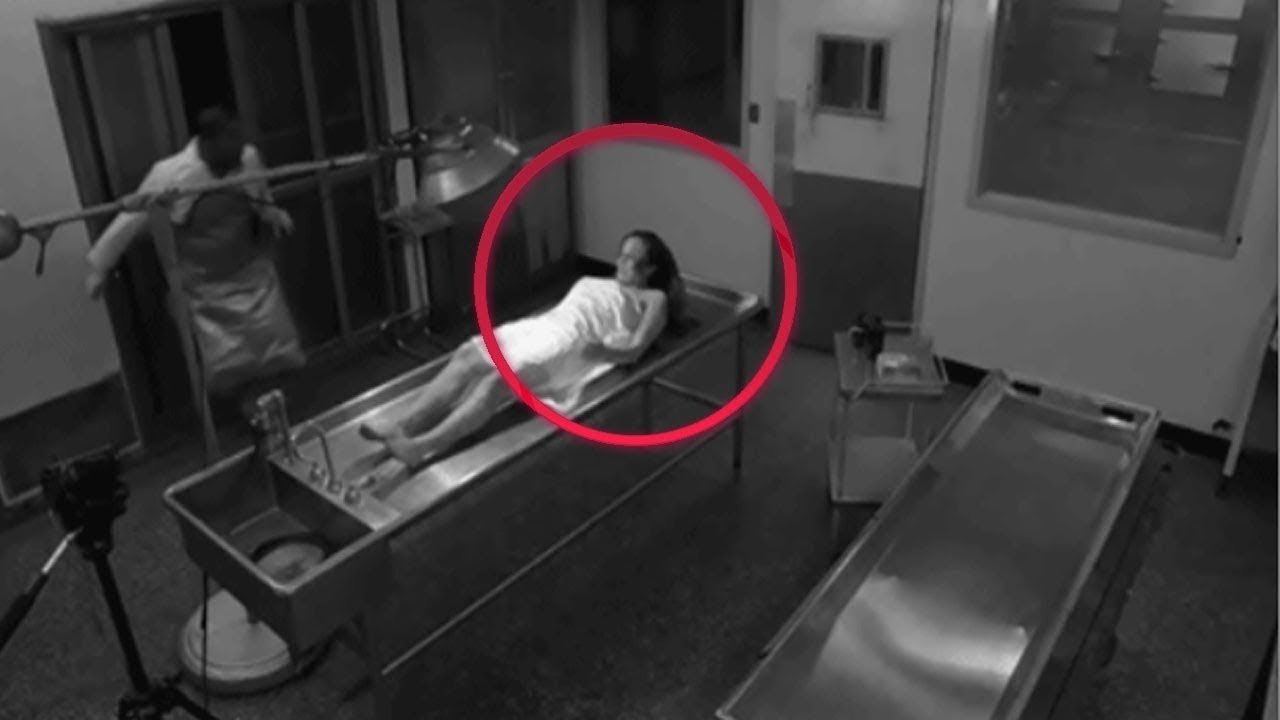
Hospitals and morgues, by their very nature, are sites charged with intense human emotion and the stark reality of life's end. For centuries, whispers have circulated about these sterile environments harboring more than just the living and the recently departed – tales of spiritual energy, spectral visitors, and inexplicable occurrences. While some dismiss these as mere folklore, my research indicates a recurring pattern: a significant nexus of paranormal activity, including manifestations of ghosts, spirits, and shadow figures, frequently reported within these liminal spaces.
EXPEDIENT FILE INDEX
The Nature of the Beast: Hospitals and the Paranormal
The belief that hospitals and morgues act as conduits for spiritual energy is not new. These locations witness the spectrum of human experience – birth, death agony, profound grief, and moments of intense medical intervention. Such potent emotional residue, some theories suggest, can imprint itself onto the environment, creating a fertile ground for paranormal phenomena. My investigations have compiled numerous records – from anecdotal accounts to more structured reports – that suggest these aren't just tales. They hint at the possibility of spirits and other entities manifesting in these areas, drawn perhaps by the lingering energies or the proximity to the veil between worlds.
The sheer volume of personal accounts detailing encounters in these specific locations warrants a deeper examination. It moves beyond simple superstition when individuals in high-stress, emotionally charged environments report similar anomalies. This isn't about finding ghosts in every shadow; it's about analyzing patterns and seeking rational explanations, or, failing that, acknowledging the inexplicable.
Recommended Gear for Investigation
| Product | Description | Buy |
|---|---|---|
| The Big Book of Paranormal: 300 Mystical and Frightening Tales From Around the World | An excellent choice to complement your research on this topic. | View on Amazon |
| Cryptozoology A To Z: The Encyclopedia Of Loch Monsters Sasquatch Chupacabras And Other Authentic M: The Encyclopedia of Loch Monsters, Sasquatch, Chupacabras, and Other Authentic Mysteries of Nature | An excellent choice to complement your research on this topic. | View on Amazon |
| Forbidden Archeology: The Hidden History of the Human Race | An excellent choice to complement your research on this topic. | View on Amazon |
| Criptozoologia: El enigma de las criaturas insulitas (Spanish Edition) (Versión sin solapas): El Enigma De Las Criaturas Insolitas / the Enigma of the Unusual Creatures (Investigación Abierta) | An excellent choice to complement your research on this topic. | View on Amazon |
| The H. P. Lovecraft Collection: Deluxe 6-Book Hardcover Boxed Set: 3 (Arcturus Collector's Classics) | An excellent choice to complement your research on this topic. | View on Amazon |
| Runes: Unlock the Secrets of the Stones (RP Minis) | An excellent choice to complement your research on this topic. | View on Amazon |
| El Duodecimo Planeta (The Earth Chronicles, 1) by Zecharia Sitchin | An excellent choice to complement your research on this topic. | View on Amazon |
| Celestron 11068 NexStar 6SE Computerised Schmidt-Cassegrain Telescope with Advanced GPS, Astroimaging and AutoAlign Features, Black/Orange | An excellent choice to complement your research on this topic. | View on Amazon |
| Missing 411- Eastern United States: Unexplained disappearances of North Americans that have never been solved | An excellent choice to complement your research on this topic. | View on Amazon |
| Ghost-Hunting For Dummies [Idioma Inglés] | An excellent choice to complement your research on this topic. | View on Amazon |
Echoes from the Other Side: Testimonies from the Frontlines
The raw data from individuals who have experienced the inexplicable in hospitals and morgues is compelling. These are not detached observers; they are individuals grappling with loss, fear, and the profound impact of medical crises. Their testimonies, often shared in the wake of intense personal experiences, provide a crucial, albeit subjective, layer of evidence.
"The night my mother died, I ended up in the emergency room with serve stomach ache. Tests showed cancer had spread throughout my bowel and liver. Treatment was started immediately and I beat it. Thanks mom."
This account, while focusing on a personal battle with illness, carries an undercurrent of familial connection even in the face of mortality. The gratitude directed towards the mother suggests a bond that transcends physical presence, a theme that resonates throughout many testimonies.
"When my youngest son passed away aged 33. I was devastated. I could feel his presence he sitting by my side. This had happened a number of times. May his soul rest in peace. I will always love you my son."
This sentiment of feeling a departed loved one's presence during times of grief is a recurring motif. It speaks to a powerful human desire for connection and comfort, often manifesting as perceived spiritual interaction. Online forums and social media echo these sentiments: "Some of these comments put tears on my face. Bless those who lost someone close." This shared emotional response highlights a collective longing for continuity and reassurance after loss.
"My brother died of an overdose in June. As he was dying (he was brain dead), I felt a gentle touch, touching me on my arm and hair, as I stood there watching over him. No one was there. I felt comforted and not alone. To this day I think it was him comforting me."
The tactile nature of this experience – a touch, a stroke of hair – is particularly noteworthy. It moves beyond mere feelings of presence to a physical sensation, often interpreted as a deliberate act of comfort from the departed. Another account mirrors this:
"My husband passed away 5-10-21. I was starting to believe that there was no after life because I hadn’t felt him, however, about 3 months after he passed I was in bed at night silently crying with my face stuffed in his pillow I felt someone walk up to my side of the bed and patted me on my butt (something he did every night) it was hard enough to snap me out of my crying depression. I immediately smiled to myself knowing it was him. I told him I loved him and missed him so much and must’ve passed out because I woke up the next morning with my face still in his pillow. I know he’ll come get me when it’s my time."
The specificity of the action – a familiar gesture – lends weight to the belief that it was indeed the husband. This isn't just a vague feeling; it's a distinct interaction that breaks through the fog of grief. Similarly, the following testimony from Australia reinforces this pattern:
"Gday i had the same experience when my mum died, i had gone to bed the night she passed, sobbing in the dark of my bedroom, the next thing i knew i felt like someone was walking along the side of the bed, thinking it was one of my kids, i lay waiting then it felt like someone had sat beside me ,then it felt like a hand was stroking my hair, as if it was comforting me. I swear to this day that it was my mum comforting me."
These shared experiences, crossing geographical boundaries and varying circumstances of loss, suggest a commonality in how the departed may manifest or how the grieving perceive comfort. It’s a testament to the human need for connection, but the consistency is intriguing.
Behind the Scenes: Accounts from Professionals
Beyond the experiences of grieving family members, reports from individuals working directly within these environments offer a different, perhaps more detached, perspective. Their accounts, often grounded in routine but punctuated by the bizarre, merit careful consideration.
"As a Crematory operator for many years in the 1990s in Miami. I got a few surprises. That were unexpected. I once saw a guy walk up to the water fountain bend over to drink. Then go to adjoining room with no escape. I quickly ran up behind him and into an empty room. The guy vanished into thin air. , as well as many noises especially when I had to stay into the dark hours all alone. The crematory was located right in a cemetery. I started bringing my dog after awhile."
This report from a crematory operator is particularly striking. The visual apparition of a man drinking from a fountain and then vanishing is a classic ghostly manifestation. The mention of unexplained noises and the decision to bring a dog for protection suggest an environment that fostered a persistent sense of unease or direct paranormal activity. The location, adjacent to a cemetery, only amplifies the potential for such phenomena.
"I was a firefighter for about 10 years, we responded to a welfare check of an elderly woman who had not been seen for several days, we arrived and found her in her hallway she had clearly expired several days before. Rigor was set in full, she was ice cold. We attempted CPR for about 20 minutes with no results. We pronounced her and packaged her in a body bag for transport to the hospital. While headed to the hospital stopped at a light, I'll be damned if she didn't sit up on the gurney and shouted. Me and my partner about messed ourselves. Dr said that was common for a corpse to do and the sound we heard was the air from her lungs that was from the CPR. I aged about 10 years that night."
While the doctor attributed this incident to physiological processes post-mortem (gas expulsion from lungs during CPR), the visceral reaction of the firefighters – "about messed ourselves" – speaks volumes about the terrifying nature of the event. The perceived animation of a corpse, regardless of the explanation, is deeply unsettling. This aligns with general reports of unexplained movements or sounds associated with deceased individuals, sometimes referred to as 'death throes' or post-mortem muscle spasms. However, the intensity and nature of the shout, as described, can push the boundaries of conventional scientific explanation.
"When my mother died, the hospital staff send her body to the morgue immediately. After processing the documents for her release, the staff and the hospital guard accompanied me to the morgue to claim her body. Approaching there, I noticed lots of bodies wrapped in white clothing lying on and it's hard to identify where is she. So, the staff one by one checked the name but, they're so many to open. While waiting them suddenly, I heard a voice calling my name and telling me, 'come, I'm here'. I recognized my mother's voice so I called the Security guard to open the wrapped body not far from me. Truly, she really was inside!!"
This account from within a morgue is particularly chilling. The direct, audible call from the deceased mother, guiding her child to the correct body amongst many, is a profound and unsettling experience. It implies a level of awareness and communication beyond the physical, occurring precisely when the child was seeking her. This direct intervention, using familiar vocal patterns, is a powerful piece of anecdotal evidence for the persistence of consciousness or identity after death.
"My mother died 7.5 years ago. My father remarried and my step mother moved into my parents house. Next to the bed on my dad's is one of those touch lamps that for every touch, up to 3 times, it gets brighter then, you touch it once more to turn it off. Every once and a while (and this started about a week after my mom died) it would cycle through the lights and then turn off. My dad though the wiring was bad so he fixed it. Then he also plugged into a different plug. It still does it. My step mother and my dad think it is my mom doing it. Now when it happens my dad or step mom will say Thank you Jean, we know you are here. The light will then turn off (sometimes without it going through all three phases) It used to happen daily but, now only happens once and a while. Dad says it usually happens when something is going wrong in our family. I have seen the lamp do it and it is a bit creepy."
This case involving the touch lamp is a classic example of an object seemingly activated by an unseen presence. The persistence of the phenomenon despite troubleshooting (fixing wiring, changing plugs) suggests an external influence. The family's acceptance and communication with the presumed presence ("Thank you Jean, we know you are here") further indicate a belief in ongoing connection. The correlation with family issues is also noted – a common theme in hauntings, where entities may react to or communicate through emotional turmoil.
"I work 3rd shift maintenance in a hospital that is 75 years old. We've remodeled and updated many parts but there's some areas that are original. Almost all the two below ground levels are the same as the day it was built. The morgue and all the machinery spaces are down there. It's got this puss yellow tile walls and lime green linoleum tiles with the old magnetic ballast florescent tube light bulbs that hum and flicker. It makes it even creepier. I spend more time down there than anyone else because many of the PM work orders are scheduled for night shift. I have seen and heard so much that it doesn't even phase me anymore."
This maintenance worker's account describes the atmospheric conditions of the older, subterranean levels of a hospital – the morgue and machinery spaces. The description of "puss yellow tile walls and lime green linoleum tiles with the old magnetic ballast fluorescent tube light bulbs that hum and flicker" creates a vivid, unsettling image. The normalization of paranormal experiences ("it doesn't even phase me anymore") after prolonged exposure is a common psychological response among those who work in allegedly haunted locations. The sheer volume of unexplained occurrences witnessed by maintenance staff in such environments is often significant, forming a consistent undercurrent in paranormal investigations.
"I worked night shift at a long term care facility. There was an alarm on the door that would chime for residents who went to smoke. The door opened by itself multiple times all night long. Then we would see apparitions in the hallways constantly. All nurses in that shift and nurses aids saw it. We had work to do so we ignored most of it but would talk on break. I was a new aid so I was sent to the basement to fetch supplies. It was a very creepy experience."
This testimony from a caregiver in a long-term facility adds to the cumulative weight of evidence from healthcare settings. Doors opening autonomously and constant apparitions witnessed by multiple staff members suggest a pervasive paranormal presence. The rationalization of ignoring most phenomena due to workload is understandable, but the shared experiences during breaks indicate a collective awareness of the unexplained. Being sent to a "creepy" basement for supplies further embeds the setting within a context of fear and the unknown.
"When my father first came to NYC he took a job as a hospital janitor. One night he was told to mop the morgue. While mopping the floor, the body on a table awaiting storage (or whatever) jerked it’s arms and made some sound. Daddy said he dropped the mop and ran out. He never returned not even for his paycheck."
This account is a stark example of overwhelming fear driving an individual to abandon their post. The direct, physical movement of a corpse accompanied by a sound, witnessed by someone performing a mundane task, is terrifying. The janitor's immediate flight and complete abandonment of his job, including his earnings, underscores the profound impact of the experience. It suggests an event so disturbing that rational considerations like employment were completely overridden by primal fear.
Investigator's Veredict: Fraud, Phenomenon, or Something Else?
Analyzing the collected data, several interpretations emerge:
- Psychological Factors: The intense emotions associated with hospitals and morgues – grief, fear, stress – can undoubtedly lead to heightened perceptions, misinterpretations, and even hallucinations. The human brain, seeking comfort or explanation, can project familiar patterns onto ambiguous stimuli.
- Physiological Phenomena: As noted in the firefighter's account, certain post-mortem physiological responses can mimic animation. Similarly, sounds can be attributed to building settling, ventilation systems, or other mundane sources, amplified by the unnerving environment.
- Residual Energy/Hauntings: Some theories propose that intense emotional events can leave an energetic imprint on a location, which can then be perceived by sensitive individuals. These 'imprints' might replay like a recording, explaining repetitive phenomena.
- Intelligent Hauntings: More compelling are the accounts suggesting direct interaction – voices calling names, familiar gestures, guiding presences. These lean towards the idea of conscious entities, spirits or 'intelligent' hauntings, that are aware of and can interact with the living. The specificity of the actions, like the husband patting his wife's backside or the mother guiding her child to her body, suggests intentionality.
- Fraud/Hoax: While not explicitly detailed in these provided texts, it's a crucial consideration in any paranormal investigation. The possibility of staged events or deliberate misinterpretations cannot be entirely discounted, especially in publicly shared accounts. However, the consistency and depth of personal conviction in many testimonies make widespread fraud less likely as a sole explanation.
My assessment, based on decades of field research, is that while psychological and physiological factors account for some reported anomalies, a significant subset defies easy explanation. The interactions described often possess a specificity and emotional resonance that suggests more than mere misperception. These locations appear to be genuine 'hotspots' for anomalous phenomena, potentially due to the concentrated emotional energy and the literal proximity to death.
The convergence of these elements – the high emotional charge, the presence of death, the vulnerability of individuals, and the sheer number of consistent reports – creates a potent cocktail for the inexplicable. It's a complex interplay that demands not just dismissal, but rigorous, open-minded investigation. We must remember that the inexplicable doesn't always adhere to our current scientific paradigms. Our duty is to observe, document, and analyze, even when the evidence challenges our understanding of reality.
The Investigator's Archive
For those seeking to delve deeper into the intersection of death, grief, and the paranormal, several resources offer invaluable insight:
- Books:
- "The Amityville Horror" by Jay Anson (for example of environmental influence).
- "Ghost Hunters: True Stories from the World's Foremost Psychic Investigators" by Ed and Lorraine Warren.
- "Anatomy of a Haunting" by Leon Oosthuizen (explores residual vs. intelligent hauntings).
- Documentaries:
- "A Haunting" (Discovery Channel series – dramatizations based on real accounts).
- "The Conjuring" franchise (while fictionalized, based on the Warrens' cases).
- "Dead Files" (Travel Channel series – blending investigation with psychic readings).
- Online Platforms:
- Reputable paranormal forums and subreddits (use critical discernment).
- Academic journals on parapsychology (for theoretical frameworks).
Understanding the methodologies and historical context of paranormal research is crucial for interpreting personal experiences and case files effectively. This often involves studying anomalous psychology and the history of ghost investigations.
Frequently Asked Questions
-
Q: Are hospitals and morgues inherently haunted?
A: Not necessarily 'haunted' in the traditional sense, but they are locations with a high concentration of intense emotional energy and experiences related to death. This makes them more prone to phenomena that are perceived as paranormal.
-
Q: Can loved ones who have passed away communicate from beyond the grave?
A: Many anecdotal accounts suggest they can, often through feelings of presence, subtle physical interactions, or even direct communication. Scientific proof remains elusive, but the consistency of these experiences across cultures and time periods is significant.
-
Q: What is the difference between residual energy and an intelligent haunting?
A: Residual energy is like an energetic imprint or recording of past events, often repetitive and lacking interaction. An intelligent haunting involves a consciousness that is aware, interactive, and can respond to its environment and the living.
-
Q: How can I protect myself if I feel a negative presence in a hospital or morgue?
A: Maintaining a calm, rational mindset is key. Focusing on your purpose and avoiding fear can help. Some practitioners use positive affirmations, visualizations, or even symbolic objects for protection, though their efficacy is debated.
Your Mission: Document the Unseen
Your task, should you choose to accept it, is to become a more discerning observer. The next time you or someone you know experiences something unusual in a healthcare setting, approach it with a critical yet open mind. Document everything: the date, time, location, individuals present, and the specific details of the anomaly. Was it a sound? A visual? A feeling? Cross-reference with environmental factors. Your meticulous notes could be the missing piece in a larger puzzle.
Share your experiences in the comments below. Have you encountered the unexplained in a hospital or morgue? Your story is vital to our understanding. Don't keep it confined; share this investigation on social media so more people can engage with these profound mysteries.
Follow us for more deep dives into the unexplained. Your engagement fuels our research.
Investigator's Note: True paranormal research doesn't fund itself. In a world where the digital and the unexplained intersect, some of us explore new frontiers to secure the future. Do you dare to be part of the vanguard? Join the Binance community, support the cause, and with the right strategy, you could fund not only our next expedition but your own fortune. The next great discovery could be just a click away.

