Followers

Mostrando las entradas con la etiqueta Pyramids. Mostrar todas las entradas

Pre-Historic Mega Structures in China: Unearthing Advanced Civilizations

Image

The narrative of human history is often presented as a linear progression, a steady march from primitive origins to our current technological age. Yet, scattered across the globe, and particularly within China, lie colossal structures that challenge this conventional timeline. These are not mere historical footnotes; they are silent, monumental testaments to advanced civilizations that predate our accepted historical records, hinting at capabilities far beyond what we typically attribute to ancient peoples. This investigation delves into the enigmatic megastructures of pre-historic China, examining evidence that suggests a forgotten era of sophisticated engineering and lost knowledge.

The Yangshan Quarry: A Monumental Feat

Consider the Yangshan Quarry. This site, dating back to the first century BC, famously houses an unfinished colossal stone stele, measuring an astonishing 48 meters in length, 7 meters in width, and standing 4 meters high. Its sheer scale is breathtaking, but what truly perplexes investigators are the apparent machine marks. These aren't crude gouges; they exhibit a precision and uniformity that seem incompatible with primitive tools. How were such massive blocks extracted and shaped with what appears to be advanced tooling, centuries before the industrial revolution?

The Longyou Caves: Subterranean Wonders

Equally baffling are the Longyou Caves, a series of artificial caverns in Zhejiang province. Discovered by farmers, these six large, interconnected chambers boast smooth walls, sharp angles, and parallel grooves that defy natural formation. The sheer volume of rock removed—estimated at over 100,000 cubic meters—and the uniformity of the carving suggest a level of engineering that is difficult to reconcile with historical accounts of China's early technological capabilities. The consensus among many investigating these sites, as reflected in audience comments, is that "Human history goes further back than we can ever imagine, there is so much we don't know about our past." The precision is astounding, and as one commenter noted, "I have been in this topic for over 4 decades... The videos proposed on this channel are honestly very very good. deep and synthetic."

Recommended Gear for Investigation

ProductDescriptionBuy
The Big Book of Paranormal: 300 Mystical and Frightening Tales From Around the WorldAn excellent choice to complement your research on this topic.View on Amazon
Cryptozoology A To Z: The Encyclopedia Of Loch Monsters Sasquatch Chupacabras And Other Authentic M: The Encyclopedia of Loch Monsters, Sasquatch, Chupacabras, and Other Authentic Mysteries of NatureAn excellent choice to complement your research on this topic.View on Amazon
Forbidden Archeology: The Hidden History of the Human RaceAn excellent choice to complement your research on this topic.View on Amazon
Criptozoologia: El enigma de las criaturas insulitas (Spanish Edition) (Versión sin solapas): El Enigma De Las Criaturas Insolitas / the Enigma of the Unusual Creatures (Investigación Abierta)An excellent choice to complement your research on this topic.View on Amazon
Runes: Unlock the Secrets of the Stones (RP Minis)An excellent choice to complement your research on this topic.View on Amazon
The H. P. Lovecraft Collection: Deluxe 6-Book Hardcover Boxed Set: 3 (Arcturus Collector's Classics)An excellent choice to complement your research on this topic.View on Amazon
El Duodecimo Planeta (The Earth Chronicles, 1) by Zecharia SitchinAn excellent choice to complement your research on this topic.View on Amazon
Celestron 11068 NexStar 6SE Computerised Schmidt-Cassegrain Telescope with Advanced GPS, Astroimaging and AutoAlign Features, Black/OrangeAn excellent choice to complement your research on this topic.View on Amazon
Missing 411- Eastern United States: Unexplained disappearances of North Americans that have never been solvedAn excellent choice to complement your research on this topic.View on Amazon
Ghost-Hunting For Dummies [Idioma Inglés] An excellent choice to complement your research on this topic.View on Amazon

China's Hidden Pyramids: Mountains or Man-Made?

Beyond the quarries and caves, China is home to numerous pyramids, often disguised as natural hills or mountains. These structures, scattered across regions like Shaanxi province, are frequently covered in vegetation, leading to their classification as mountains. However, aerial surveys and historical accounts from early 20th-century explorers point to distinct pyramid shapes. The scale is immense; some are said to be significantly larger than their Egyptian counterparts.

"One of the mistakes of modern man was to believe that human development is linear."

The deliberate obfuscation of these structures, with trees planted atop them, has led to speculation. Many believe this is an effort to conceal a history that contradicts official narratives. As one viewer keenly observed, "Iconic and ironic, the fact that communist China's "leadership" has implemented the planting of trees on the pyramids... in order to disguise that they are indeed pyramids, and make them appear more like mountains. Bravo! China." This deliberate concealment fuels the narrative that these are remnants of a highly sophisticated, possibly pre-flood, civilization.

Machine Marks: Echoes of Advanced Technology

The recurring theme across these sites is the presence of what appear to be machine marks. These are not simple scratches; they are clean, precise cuts and bores that suggest the use of advanced cutting and drilling tools. The Yangshan stele, for instance, shows evidence of being quarried with incredible accuracy. Similarly, the smooth, geometric surfaces within the Longyou Caves point to methods far beyond manual labor with primitive tools. This evidence is a cornerstone for theories proposing the use of advanced technology by these ancient builders.

"The fact that modern man has never managed to recreate a single block to copy the two and a half million blocks in the great pyramid tells us something!"

Theories of Lost Civilizations and Pre-Flood Legacy

The implications of these findings are profound. They suggest that our understanding of ancient history is incomplete, possibly fundamentally flawed. Theories abound, ranging from the existence of a global, technologically advanced civilization wiped out by a cataclysmic event (often referred to as a pre-flood civilization) to the possibility of extraterrestrial intervention. The uniformity of construction techniques across vast distances and disparate cultures in ancient times also poses a significant puzzle. As one commenter aptly put it, "The distance between these civilizations made it impossible to communicate and exchange information, so it’s really a puzzle how similar techniques were used in different such different countries." This echoes the sentiment of Graham Hancock, who posits that "we are a species with amnesia," suggesting a lost chapter in human history.

Researcher's Verdict: Fraud, Genuine Phenomenon, or Something More?

From my perspective as an investigator, the evidence presented by sites like the Yangshan Quarry and the Longyou Caves demands serious consideration. While skepticism is always warranted, and the possibility of misinterpretation or later alterations must be examined, the sheer scale and consistent anomalies across these Chinese megastructures point towards a genuine mystery. The alleged machine marks and the sophisticated engineering involved are difficult to dismiss as natural phenomena or simple manual labor. It's plausible that these are indeed relics of an advanced, ancient civilization, a chapter of human history that we have yet to fully excavate or comprehend. The deliberate concealment of some sites only adds fuel to the fire, suggesting that someone, somewhere, has an interest in these mysteries remaining buried.

From the Researcher's Archive

For those seeking to delve deeper into the complexities of ancient civilizations and their potentially advanced technologies, my archive offers a curated selection of resources:

  • Books: Graham Hancock's works, such as "Fingerprints of the Gods," offer compelling arguments for lost civilizations. Books detailing ancient engineering feats and alternative archaeological discoveries are invaluable.
  • Documentaries: Investigative documentaries that challenge conventional historical narratives, exploring topics like pre-flood civilizations and anomalous structures, are essential viewing. Look for content that presents evidence objectively, even when it contradicts mainstream theories.
  • Academic Papers: While often challenging to access, papers from fringe archaeological journals or specialized conferences can sometimes offer unique perspectives or overlooked data.

Understanding these phenomena requires an open mind and a willingness to explore unconventional theories backed by tangible, albeit often perplexing, evidence. Consider exploring the work of channels and authors dedicated to uncovering these hidden histories, such as the creators of the original content for this piece.

Frequently Asked Questions

  1. What are the primary pre-historic megastructures mentioned in China?

    The most notable examples include the Yangshan Quarry, the Longyou Caves, and numerous pyramids scattered throughout the country, often mistaken for natural formations.

  2. What evidence suggests advanced technology was used?

    Investigators point to apparent machine marks, precise cutting and smoothing on colossal stone structures, and the sheer scale of excavation that seems beyond the capabilities of known primitive tools.

  3. Why are some of China's pyramids disguised as mountains?

    Theories suggest a deliberate effort to conceal these ancient structures, possibly to align with a specific historical narrative or to hide evidence of a technologically advanced civilization that predates current records.

  4. Are these structures linked to a "pre-flood" civilization?

    Many researchers hypothesize that these megastructures are remnants of a sophisticated global civilization that existed before a major global cataclysm, such as a flood, as discussed in various ancient myths and debated by authors like Graham Hancock.

  5. How can I learn more about these topics?

    Exploring specialized books, documentaries, and online research channels that focus on alternative archaeology and ancient mysteries can provide deeper insights. Supporting creators who conduct thorough research is also encouraged.

Your Field Mission

Your Mission: Document Anomalies

The world is full of mysteries waiting to be uncovered. Your mission, should you choose to accept it, is to become an active observer. Next time you visit a historical site, a natural wonder, or even a local landmark, look beyond the obvious. Consider the story that isn't being told. Are there unusual formations? Unexplained features? Take photos, make notes, and critically assess what you see. Share your observations (responsibly, of course) and contribute to our collective understanding of the world's most intriguing anomalies. Remember, solid research requires meticulous documentation.

The pursuit of truth is a journey, not a destination. Keep exploring, keep questioning, and never stop seeking the unexplained.

What are your thoughts on these ancient Chinese structures? Have you encountered similar anomalies in your travels or research? Share your experiences and theories in the comments below. Your insights are invaluable to this ongoing investigation.

If you found this deep dive into pre-historic mysteries compelling, do us a favor: share this post across your social networks. Help us spread the word and bring these incredible discoveries to a wider audience.

```

Investigator's Note: True paranormal research doesn't fund itself. In a world where the digital and the unexplained intersect, some of us explore new frontiers to secure the future. Do you dare to be part of the vanguard? Join the Binance community, support the cause, and with the right strategy, you could fund not only our next expedition but your own fortune. The next great discovery could be just a click away.

The Pyramids' True Purpose: Advanced Ancient Technology Unveiled

Image

For centuries, the colossal pyramids of Giza have stood as silent sentinels, their very existence raising more questions than they answer. Mainstream historical narratives often dismiss these monumental structures as mere tombs for pharaohs, yet a closer examination of the evidence reveals a profound discrepancy. These structures, built with an almost impossible mathematical precision, lack the fundamental characteristics of any known tomb. No extravagant artifacts, no ornate wall art, no sealed entrances, no elaborate coffins, and critically, no mummies have ever been found within the Great Pyramid.

Instead, the materials used in their construction exhibit unique properties – the very elements that form the bedrock of modern electrical conductivity. This stark contrast between historical dogma and empirical observation is compelling an increasing number of researchers to consider a radical hypothesis: the pyramids were not glorified burial grounds, but sophisticated power plants, harnessing and transmitting energy across their surrounding civilizations.

Introduction: The Tomb or the Power Plant?

The conventional narrative paints the Great Pyramid of Giza as an elaborate tomb, a final resting place for Egyptian pharaohs. However, the sheer scale, precision, and construction methods employed push the boundaries of what we understand about ancient capabilities. This discrepancy is not a minor detail; it's a critical flaw in accepted history that demands a deeper investigation. The absence of any funerary evidence within the pyramid, coupled with the anomalous properties of its construction materials, suggests we've been looking at it through the wrong lens.

Recommended Gear for Investigation

ProductDescriptionBuy
The Big Book of Paranormal: 300 Mystical and Frightening Tales From Around the WorldAn excellent choice to complement your research on this topic.View on Amazon
Cryptozoology A To Z: The Encyclopedia Of Loch Monsters Sasquatch Chupacabras And Other Authentic M: The Encyclopedia of Loch Monsters, Sasquatch, Chupacabras, and Other Authentic Mysteries of NatureAn excellent choice to complement your research on this topic.View on Amazon
Runes: Unlock the Secrets of the Stones (RP Minis)An excellent choice to complement your research on this topic.View on Amazon
Forbidden Archeology: The Hidden History of the Human RaceAn excellent choice to complement your research on this topic.View on Amazon
El Duodecimo Planeta (The Earth Chronicles, 1) by Zecharia SitchinAn excellent choice to complement your research on this topic.View on Amazon
Criptozoologia: El enigma de las criaturas insulitas (Spanish Edition) (Versión sin solapas): El Enigma De Las Criaturas Insolitas / the Enigma of the Unusual Creatures (Investigación Abierta)An excellent choice to complement your research on this topic.View on Amazon
The H. P. Lovecraft Collection: Deluxe 6-Book Hardcover Boxed Set: 3 (Arcturus Collector's Classics)An excellent choice to complement your research on this topic.View on Amazon
Celestron 11068 NexStar 6SE Computerised Schmidt-Cassegrain Telescope with Advanced GPS, Astroimaging and AutoAlign Features, Black/OrangeAn excellent choice to complement your research on this topic.View on Amazon
Missing 411- Eastern United States: Unexplained disappearances of North Americans that have never been solvedAn excellent choice to complement your research on this topic.View on Amazon
Ghost-Hunting For Dummies [Idioma Inglés] An excellent choice to complement your research on this topic.View on Amazon

This investigation delves into the compelling evidence that points towards a more complex and technologically advanced past. We will explore the arguments that the pyramids served not as static monuments, but as dynamic functional structures, possibly generating and distributing power. As the popular narrative suggests, "Sound impossible? Join the Universe Inside you for a closer look!"

Re-evaluating the Evidence: What the Great Pyramid Lacks

The archaeological record for the Great Pyramid is conspicuously devoid of typical tomb accoutrements. Unlike other royal burial sites, it lacks:

  • Extravagant artifacts intended for the afterlife.
  • Ornate wall art or hieroglyphs detailing funerary rites.
  • Sealed entrances designed to prevent desecration.
  • Elaborate coffins or sarcophagi.
  • Mummified remains.

This profound lack of expected funerary evidence leaves a significant void in the tomb hypothesis. It mirrors the sentiment expressed by many viewers, such as one who noted, "Thinking that we were the only intelligent species on the planet is what holds us back from finding the truth." The evidence, or indeed the lack thereof, points to a purpose far removed from simple commemoration.

The Conductivity of the Stones: A Technological Clue

Perhaps the most compelling piece of physical evidence lies in the very building blocks of the pyramid. Studies and analyses suggest that the materials used, particularly the granite and limestone, possess unique electrical conductivity properties. This characteristic is fundamental to the generation and transmission of electrical energy in modern technology. One commenter, working in construction, highlights the sheer scale: "Working in the construction industry, knowing the power and difficulties in lifting heavy weights, the moving of massive stones has always amazed me." This amazement is amplified when considering the potential electrical properties of these materials.

Furthermore, the argument posits that the intricate internal structure of the pyramid, including shafts and chambers, was designed to channel and amplify energy, much like a sophisticated electrical device. The presence of electroplating remnants and artistic depictions resembling light bulbs, mentioned by a keen observer, further strengthens the idea that ancient Egyptians possessed and utilized electricity, a notion that challenges our established understanding of technological progression.

"The fact that they utilized electroplating tells me, and it should tell you, that the ancient Egyptian people had electricity. Not to mention the artistic depictions of light bulbs and the lack of torch soot or any evidence that it was once present leaves absolutely no doubt in my mind."

- Anonymous Commenter

Tesla, Edison, and the Suppressed Free Energy Paradigm

The discussion around the pyramids' true purpose inevitably intersects with the legacy of Nikola Tesla. Many theories suggest that Tesla understood or even rediscovered the principles behind ancient energy technologies. His vision of free, abundant energy for all stands in stark contrast to the commercially driven model promoted by figures like Thomas Edison. Viewers frequently draw parallels: "The reason why nobody talks about the true purpose of the pyramids goes back to Tesla and Edison, ...Tesla's energy is free and Edison's energy you will have to purchase."

The deliberate omission or downplaying of Tesla's contributions in mainstream history is seen by many as a systemic effort to suppress technologies that could fundamentally alter global power structures. "Tesla's name was deliberately omitted in the science hall of fame because his inventions would have made free electricity available for humanity," one comment asserts. The idea that advanced energy concepts were understood and utilized in antiquity, and that this knowledge was subsequently suppressed, forms a significant part of the alternative historical perspective.

"The world only knows Newton, Edison and Einstein are geniuses, they forgot to include Tesla."

- Anonymous Commenter

Echoes of Advanced Civilizations: Beyond Our Current Understanding

The hypothesis extends beyond the Egyptian pyramids to encompass other megalithic sites worldwide. Many ancient cultures, separated by vast distances and time, exhibit evidence of sophisticated astronomical knowledge, architectural prowess, and advanced engineering that defy conventional explanations. "I believe we have had many technologically advanced human civilizations on Earth before ours. Lost in wars, weather and cataclysmic events like the Great Flood," suggests a common viewer sentiment.

This perspective challenges the linear progression of human history often taught. Instead, it proposes cyclical epochs of civilization, where advanced societies rose, achieved technological marvels, and were subsequently lost to cataclysms, leaving behind enigmatic structures like the pyramids. The interpretation of these sites as remnants of a forgotten, highly advanced global civilization that predates our own is a recurring theme in the discourse, resonating with a deep-seated curiosity about our origins.

"The consensus is that the Great Pyramid consists of an estimated 2.3 million blocks. The technology used to build this structure is obviously far beyond our present technology. This is a technology that cuts the block with a precision melting laser on all six sides, lifts the block from it's bed with an anti gravity device and places the block in the appropriate location..."

- Anonymous Commenter

The sheer audacity of such theories, while controversial, is fueled by the undeniable anomalies in the archaeological record. It’s a call to re-examine our assumptions and consider that history might be far richer and more complex than conventionally accepted. As one viewer eloquently put it, "It's crazy and incredibly vain to think we are the epitome of all evolutionary beings."

The Astonishing Feat of Construction: Beyond Human Capability?

The construction of the Great Pyramid alone involves an estimated 2.3 million blocks, some weighing many tons. The precision with which these blocks were cut, transported, and assembled is, by conventional engineering understanding, nearly impossible. Some analyses suggest that if ancient builders were to achieve this feat within a reasonable timeframe, they would need to place a block every few seconds, 24/7. "Someone did the math before, you would have to lay a block every 2 seconds 24/7 to achieve a twenty year timeline," notes a commenter.

This leads to speculation about technologies far beyond simple levers and ramps. Theories involving acoustic levitation, anti-gravity devices, or advanced cutting lasers are frequently proposed. The comment about a "precision melting laser" and an "anti gravity device" illustrates the extent to which viewers are willing to entertain non-conventional explanations to account for this architectural marvel. The missing white casing stones, speculated to have been repurposed for other projects due to a lack of quarrying and transport technology, add another layer to this complex puzzle.

A New Generation of Researchers and Alternative Histories

The growing body of alternative research, often disseminated through platforms like YouTube and independent research groups, is challenging established historical paradigms. Narrators like E. Firestone, whose voice is described as captivating ("I love listening to this woman as she narratives. I can listen to her talk about anything."), play a crucial role in bringing these complex ideas to a wider audience. The appreciation for fact-based narrative, free from distracting background music, as noted by a deaf viewer, highlights the importance of clear communication in presenting such profound topics.

This movement is not merely about questioning textbooks; it's about fostering a critical mindset. "Glad that sources are beginning to present this important research in defensible and compelling ways," expresses a dedicated researcher. The desire to see this information integrated into educational systems ("Now let's show this in our schools ;)") reflects a hope for a more complete and truthful understanding of human history.

Investigator's Verdict: Fraud, Genuine Phenomenon, or Something Else?

From my vantage point as an investigator, the case of the pyramids’ true purpose transcends simple fraud or misinterpretation. The sheer consistency of anomalous details—the lack of funerary evidence, the material properties, the impossible construction feats, and the parallels with suppressed energy technologies—suggests that the conventional explanation is, at best, incomplete. While definitive proof remains elusive, the preponderance of circumstantial evidence leans heavily towards the pyramids being sophisticated technological artifacts, likely energy-generating devices, from an advanced ancient civilization.

The narrative surrounding Nikola Tesla and the suppression of free energy further contextualizes why such knowledge might have been deliberately obscured or forgotten. Assigning the Great Pyramid the role of a power plant is not merely speculative; it’s a logical conclusion drawn from empirical observation and a willingness to consider possibilities outside the accepted historical framework. The mystery is not whether these structures were technologically advanced, but the extent of that advancement and the reasons for its subsequent disappearance.

The Investigator's Archive

For those seeking to delve deeper into the mysteries of ancient technology and alternative histories, I recommend the following resources:

  • Books: Explore works by authors who critically examine ancient civilizations, such as those focusing on Graham Hancock's theories or the scientific analyses of ancient Egyptian architecture beyond the tomb hypothesis.
  • Documentaries: Seek out documentaries that present detailed analyses of megalithic sites, astronomical alignments, and unconventional theories about ancient engineering. Many independent productions offer compelling visual evidence and expert interviews.
  • Online Platforms: Reputable forums and educational channels dedicated to archaeoastronomy, ancient mysteries, and fringe science provide a wealth of information and ongoing discussions. Be discerning, but open to diverse perspectives.

Understanding these subjects requires a commitment to research and a willingness to cross-reference information from various sources. The journey into the unexplained is often paved with rigorous study.

Frequently Asked Questions

  1. What evidence contradicts the 'tomb' theory for the Great Pyramid?

    The primary contradictions include the complete absence of mummies, sarcophagi, funerary artifacts, and tomb-decorating hieroglyphs within the Great Pyramid, which are standard features of all other known Egyptian royal tombs.

  2. Why is Nikola Tesla's name often linked to pyramid theories?

    Tesla's research into wireless energy transmission and his vision of abundant, free energy align with theories suggesting the pyramids were power plants. Many believe his work was suppressed, mirroring the potential suppression of ancient energy knowledge.

  3. Could ancient civilizations truly possess advanced technology?

    The sheer scale, precision, and engineering of megalithic sites worldwide suggest capabilities beyond what is typically attributed to ancient peoples using basic tools. This leads to theories of lost technologies or advanced pre-historic civilizations.

  4. If the pyramids were power plants, what kind of energy did they generate?

    Theories range from harnessing geothermal energy, piezoelectric effects from the stone itself, to atmospheric electricity or even zero-point energy. The exact method remains speculative but centers on electrical generation and transmission.

  5. How could such advanced technology have been lost?

    Cataclysmic events (natural disasters, climate change), societal collapse, wars, or deliberate suppression of knowledge are all proposed mechanisms for the loss of technological understanding across different historical epochs.

Your Mission: Uncover the Truth

The path to understanding our past is rarely linear. The evidence surrounding the pyramids challenges us to think critically about accepted narratives and to look beyond the surface. Your mission, should you choose to accept it, is to continue this investigation:

Your Field Mission:

Engage with the information presented. Research further. Visit a reputable museum or historical site if possible, and observe the evidence with a critical, open mind. Share your findings and theories with others, fostering a community dedicated to uncovering historical truths. The quest for knowledge is a collective endeavor.

What are your thoughts on the true purpose of the pyramids? Share your experiences or theories in the comments below.

If you found this investigation enlightening, please consider sharing it on social media to help spread awareness and spark further discussion.

```

Investigator's Note: True paranormal research doesn't fund itself. In a world where the digital and the unexplained intersect, some of us explore new frontiers to secure the future. Do you dare to be part of the vanguard? Join the Binance community, support the cause, and with the right strategy, you could fund not only our next expedition but your own fortune. The next great discovery could be just a click away.

Metallic Tic Tac Shaped Object Found in Labyrinth Under the Pyramids?! | JRE #2374 Analysis

Image

The colossal structures known as the Pyramids of Giza have long been fodder for speculation, transcending mere archaeological sites to become symbols of ancient mystery and advanced capability. For decades, the narrative has centered on pharaohs, tombs, and ingenious, albeit human, engineering. But what if the prevailing theories are merely the tip of the iceberg? The Joe Rogan Experience, in episode #2374 with guest Ben Van Kerkwyk, touches upon a radical notion: that these ancient wonders might be 'Easter eggs' left by an advanced, non-human intelligence, concealing secrets far more profound than previously imagined. This investigation delves into that unsettling possibility, analyzing the scant but provocative evidence and the deeply entrenched resistance to uncovering the truth.

Introduction: The Pyramid Enigma

The official historical record paints a picture of the pyramids as monumental tombs built by complex human societies in ancient Egypt. However, persistent anomalies and unexplained elements have fueled alternative theories for generations. The sheer scale, precision, and technological requirements of their construction often seem incongruous with the perceived capabilities of the era. This discrepancy is fertile ground for those who believe the pyramids, and the land around them, hold secrets that powerful entities actively suppress.

The "Easter Egg" Hypothesis

The concept of the pyramids as 'Easter eggs'—deliberately placed markers hiding deeper truths—is a provocative one. It suggests that the visible structures are merely a facade, a lure designed to distract from or protect what lies beneath. This perspective implies an intelligence far beyond that of the ancient Egyptians who occupied the region later, an intelligence that left behind technology or information intentionally concealed. Such a hypothesis inherently challenges the established historical narrative, suggesting that the true architects of these marvels are not who we believe them to be.

Recommended Gear for Investigation

ProductDescriptionBuy
The Big Book of Paranormal: 300 Mystical and Frightening Tales From Around the WorldAn excellent choice to complement your research on this topic.View on Amazon
Cryptozoology A To Z: The Encyclopedia Of Loch Monsters Sasquatch Chupacabras And Other Authentic M: The Encyclopedia of Loch Monsters, Sasquatch, Chupacabras, and Other Authentic Mysteries of NatureAn excellent choice to complement your research on this topic.View on Amazon
Runes: Unlock the Secrets of the Stones (RP Minis)An excellent choice to complement your research on this topic.View on Amazon
Forbidden Archeology: The Hidden History of the Human RaceAn excellent choice to complement your research on this topic.View on Amazon
Criptozoologia: El enigma de las criaturas insulitas (Spanish Edition) (Versión sin solapas): El Enigma De Las Criaturas Insolitas / the Enigma of the Unusual Creatures (Investigación Abierta)An excellent choice to complement your research on this topic.View on Amazon
The H. P. Lovecraft Collection: Deluxe 6-Book Hardcover Boxed Set: 3 (Arcturus Collector's Classics)An excellent choice to complement your research on this topic.View on Amazon
El Duodecimo Planeta (The Earth Chronicles, 1) by Zecharia SitchinAn excellent choice to complement your research on this topic.View on Amazon
Celestron 11068 NexStar 6SE Computerised Schmidt-Cassegrain Telescope with Advanced GPS, Astroimaging and AutoAlign Features, Black/OrangeAn excellent choice to complement your research on this topic.View on Amazon
Experiencias Paranormales Reales II: Rostros del más alláAn excellent choice to complement your research on this topic.View on Amazon
Missing 411- Eastern United States: Unexplained disappearances of North Americans that have never been solvedAn excellent choice to complement your research on this topic.View on Amazon

Beneath the Stones: Unearthing Secrets

The core of this alternative theory posits that the real story of the pyramids is not in their construction but in what is hidden below. It's a narrative of suppressed knowledge, where the Egyptians themselves are seen as inheritors or caretakers of a legacy they did not create. The implication is stark: if the pyramids and the technology they conceal are not of Egyptian origin, then the entire cultural and historical narrative built around them crumbles. This viewpoint suggests a profound disconnect between the accepted history and a hidden reality, a reality that some believe requires drastic actions, even "war," to bring to light.

The current owners of that land are just lying greedy scammers who do not care for history and have no claim to that land or those structures. We will have to go to war before the truth of the pyramids are revealed.

This fervent declaration highlights the deep-seated distrust and the perceived conspiracy to keep these secrets buried. The term "Pyre- amid" itself, interpreted as "fire in the centre," adds another layer, hinting at potential energy sources or advanced purposes beyond mere burial. The mention of Noah's Ark landing on a volcano further intertwines these ancient narratives, suggesting a cataclysmic event linked to the origins or purpose of these structures.

The Truth and The Labyrinth

Veredicto del Investigador: ¿Fraude, Fenómeno Genuino o Algo Más?

From an investigative standpoint, the claims surrounding the pyramids and subterranean labyrinths housing advanced artifacts are highly speculative. While the official narrative has its own set of challenges regarding construction methods and precise dating, the 'ancient alien' hypothesis often relies on gaps in our knowledge being filled by extraordinary claims. The 'tic-tac' object, if indeed found, would require rigorous, independent verification. However, the persistent narrative of suppression and the highly charged rhetoric suggest a deep-seated belief system rather than demonstrable proof. It’s crucial to differentiate between genuine anomalies that warrant scientific inquiry and elaborate conspiracy theories. The allure of hidden advanced technology and extraterrestrial involvement is strong, but without concrete, verifiable evidence, it remains in the realm of fascinating speculation. The notion that such discoveries are actively hidden by authorities is a common trope in these narratives, making it difficult to discern fact from fiction. The core issue remains the lack of verifiable, physical evidence that can withstand scrutiny outside of a conspiratorial framework. Much of the 'evidence' presented relies on interpreting ancient texts, architectural anomalies, and anecdotal accounts, which, while intriguing, do not constitute scientific proof.

El Archivo del Investigador

For those intrigued by the intersection of ancient mysteries and unexplained phenomena, further investigation is recommended:

  • Books: Explore works by authors like Graham Hancock ("Fingerprints of the Gods") or theories on ancient astronautics predating modern UFOlogy.
  • Documentaries: Series such as "Ancient Aliens" (while often sensationalized) explore many of these fringe theories. Critical viewing is advised.
  • Podcasts: The Joe Rogan Experience itself, particularly episodes discussing ancient civilizations and UFOs (like #2374), offer a platform for these ideas, though often presented without definitive conclusions.

Preguntas Frecuentes

  1. ¿Qué es la teoría de los "Easter eggs" en relación a las pirámides? Esta teoría sugiere que las pirámides fueron construidas por una civilización avanzada o extraterrestre como marcadores, ocultando secretos o tecnología mucho más importante debajo de las estructuras visibles.
  2. ¿Por qué se cree que Egipto oculta la verdad sobre las pirámides? Los proponentes de esta teoría argumentan que el gobierno egipcio o las autoridades arqueológicas suprimen la verdad para mantener la narrativa de una civilización egipcia superior y autóctona, y para evitar el pánico global o la pérdida de control que podría surgir del descubrimiento de tecnología o historia no humana.
  3. ¿Existe evidencia concreta del objeto en forma de "OVNI Tic Tac" bajo las pirámides? Actualmente, no hay evidencia científica o arqueológica confirmada y públicamente disponible que demuestre la existencia de un objeto en forma de "OVNI Tic Tac" o cualquier tecnología avanzada dentro de un laberinto bajo las pirámides. Las afirmaciones provienen de análisis especulativos y teorías alternativas discutidas en foros como el JRE.
  4. ¿Qué significa "Pyre- amid"? La interpretación de "Pyre- amid" como "fuego en el centro" es una etimología alternativa o simbólica propuesta por algunos teóricos, sugiriendo un propósito energético o centralizado para las pirámides, más allá de servir como tumbas.

Tu Misión: Campo de Pruebas

Tu Misión: Analiza la Evidencia, No la Narrativa. La próxima vez que te encuentres ante una teoría que desafía la historia establecida, no te limites a aceptar o rechazar. Busca las fuentes primarias. ¿Quién hace la afirmación y qué pruebas *concretas* presenta? ¿Son estas pruebas verificables independientemente, o se basan en la autoridad de la fuente o en la supresión de información? Tu tarea es separar la paja del trigo, discernir entre la especulación fascinante y la evidencia sólida. Desafía las narrativas, pero hazlo con rigor analítico.

¿Has encontrado alguna anomalía similar en tus propias investigaciones o en tu entorno? Comparte tus experiencias y observaciones en los comentarios. Tu testimonio podría ser la pieza clave que falta en otro expediente. ¡No olvides compartir este análisis con otros investigadores en tus redes sociales si crees que la verdad merece ser desenterrada!

Investigator's Note: True paranormal research doesn't fund itself. In a world where the digital and the unexplained intersect, some of us explore new frontiers to secure the future. Do you dare to be part of the vanguard? Join the Binance community, support the cause, and with the right strategy, you could fund not only our next expedition but your own fortune. The next great discovery could be just a click away.
Coral Castle: Unveiling the Lost Technologies and Unexplained Engineering of Ancient Egypt


The phone rings at 3:33 AM. A static-laced voice whispers a name no one should know. It's not a call; it's an invitation. Today, we open the file on Coral Castle, a testament to human ingenuity that defies conventional explanation, hinting at lost technologies whispered from the sands of Ancient Egypt. Is this a monument to one man's obsession, or a tangible link to forgotten sciences?

The Enigma of Edward Leedskalnin

Coral Castle is more than just a collection of immense stone structures; it is a modern-day marvel of engineering that has perplexed scientists and historians for decades. Constructed by Edward Leedskalnin, a Latvian immigrant who arrived on American soil in the early 20th century, this solitary fortress stands as a monument to a singular vision. He dedicated an astonishing 28 years of his life, working in isolation, to build this awe-inspiring edifice. Leedskalnin was a man shrouded in mystery, a recluse who offered little insight into his personal life, but he was vocal about his discoveries. He claimed to have unearthed the fundamental secrets employed by the ancient pyramid builders, secrets he then utilized to manipulate and transport the colossal blocks of limestone that form the very fabric of Coral Castle.

The construction process itself is a subject of intense speculation. Leedskalnin purportedly worked under the cover of darkness, eschewing modern machinery for what he described as hand tools and rudimentary devices. His insistence on secrecy meant no one ever witnessed his methods firsthand. This clandestine approach, coupled with the sheer scale of his undertaking, only amplified the mystique surrounding him and his creation. The result is a structure that not only stands as a testament to his endurance but also poses profound questions about the limits of human capability and the potential for lost civilizations to possess advanced technological knowledge.

Secrets of the Ancient Builders: Leedskalnin's Claims

At the heart of the Coral Castle enigma lies Leedskalnin's unwavering assertion: he had deciphered the methods used by the ancient Egyptians to construct their monumental pyramids. This claim is central to understanding the potential implications of his work. The prevailing scientific consensus struggles to reconcile the massive scale of ancient Egyptian engineering feats with the tools and techniques historically attributed to them. Leedskalnin's success, therefore, is often viewed through the lens of this ancient mystery. He believed that the ancients possessed a profound understanding of physics, possibly involving harmonics, resonance, or even antigravitational principles, which allowed them to move and precisely place stones weighing tens, if not hundreds, of tons.

His own construction provides compelling, albeit anecdotal, evidence for these theories. The blocks of coral rock used in Coral Castle, some weighing upwards of 30 tons, were not native to the immediate site. They were quarried, transported, and meticulously placed by Leedskalnin, seemingly alone. He claimed to possess a "water battery" and spoke of magnetic currents and ancient knowledge. These claims, dismissed by many as eccentric ramblings, gain a certain gravity when juxtaposed with the inexplicable engineering achievements of antiquity. The parallel is too strong to ignore: a modern individual, seemingly without assistance or advanced machinery, replicating feats that challenge our understanding of ancient capabilities.

Unraveling the Engineering Puzzle: Theories Behind the Construction

The sheer weight and volume of the limestone blocks—over 1,100 tons of solid limestone—transform Coral Castle into a tangible puzzle for engineers and researchers. How did one man, with no apparent heavy lifting equipment, manage to quarry, transport, and erect stones of such magnitude? Leedskalnin’s own explanation, that he used the same techniques as the pyramid builders, opens a Pandora's Box of speculation, pushing us toward the realm of "lost technology."

Several theories have emerged, ranging from the plausible to the highly speculative. Some propose that Leedskalnin employed sophisticated systems of levers, ramps, and counterweights, perhaps aided by an intimate understanding of physics that allowed for maximum mechanical advantage. Others suggest he might have discovered a way to reduce the effective weight of the stones, possibly through resonant frequencies or acoustic levitation—methods that sound like science fiction but are tantalizingly hinted at in ancient texts and Leedskalnin's own cryptic notes. There is even speculation that he had a peculiar relationship with magnetism or natural forces, allowing him to "guide" the stones into place.

"The secrets of the ancients are not buried in tombs, but whispered in the stones themselves. One must only learn to listen." - Edward Leedskalnin (paraphrased from his writings)

This deliberate secrecy fostered an environment where his methods became legendary. He never allowed anyone to observe his work directly, adding to the mystique. This lack of direct observation is precisely what fuels the ongoing debate; without witnesses, the extraordinary claims persist, unverified but also unsubstantiated by conventional means. Analyzing these claims requires us to consider not just what Leedskalnin *did*, but what he *believed* he was doing, and how that belief might have guided his actions.

Historical and Technological Implications: A Challenge to Our Understanding

The construction of Coral Castle doesn't merely present an engineering challenge; it fundamentally questions our historical narrative of technological progression. If Leedskalnin truly tapped into ancient secrets, it implies that civilizations predating our known historical timelines possessed knowledge far surpassing our current understanding. This line of reasoning leads us to consider the possibility of advanced ancient technologies that have been lost, deliberately hidden, or simply forgotten.

The implications are staggering. It suggests that our current scientific paradigm might be incomplete, that there are fundamental physical principles yet to be rediscovered or fully grasped. The achievement is particularly humbling when one considers Leedskalnin's solitary effort. It challenges the conventional view of technological advancement as a cumulative, collaborative human endeavor, proposing instead that profound breakthroughs might be attainable through individual insight, perhaps by accessing millennia-old knowledge. This resonates deeply with inquiries into other historical anomalies, such as the construction of the pyramids of Giza or the precision of Stonehenge, suggesting a common thread of lost, advanced methodologies.

Consider this: if Leedskalnin, a single individual working in relative obscurity, could achieve such a feat by rediscovering "lost technologies," what does this say about the capabilities of entire ancient civilizations? It forces us to re-evaluate the definition of "primitive" and to consider that our ancestors might have been far more sophisticated than current archaeological and historical models allow. This perspective is crucial for anyone interested in topics ranging from ancient civilizations to the potential for undiscovered physics.

Researcher's Verdict: Beyond Human Capability?

From a researcher's standpoint, the sheer impossibility of the feat, based on our current understanding of physics and engineering, is what makes Coral Castle so compelling. The blocks weigh as much as 30 tons, and they were moved and placed with apparent ease and precision by a single man using rudimentary tools. Conventional explanations involving simple machines, while theoretically possible for moving heavy objects, fall short when considering the scale, isolation, and sheer physical magnitude of the task. The precision of the cuts and the intricate designs, such as the 9-ton revolving door that can be opened with a fingertip, further confound simple mechanical explanations.

While I maintain that extraordinary claims require extraordinary evidence, the persistence of the Coral Castle mystery, coupled with the inconsistencies in proposed "conventional" solutions, forces a pause. It’s possible that Leedskalnin possessed an exceptional, undocumented understanding of mechanics, physics, or even esoteric principles. Alternatively, the explanation could lie in a deliberate obfuscation of simple, yet clever, techniques. However, the tantalizing suggestion that he unlocked secrets akin to those of the pyramid builders—secrets that modern science has yet to fully replicate—cannot be entirely dismissed. It remains a potent symbol of what might be achievable if we truly understood the fundamental forces of nature, or if we could access the forgotten knowledge of ancient peoples.

The Researcher's Archive: Essential Reading

To truly grasp the depth of the Coral Castle enigma and its connection to ancient sciences, a deeper dive into relevant literature is indispensable. My personal research and that of many independent investigators suggest the following resources offer critical insights:

  • "Coral Castle: The Mystery of a Lovelorn Giant" by Marvin D. Sadovsky: A foundational text exploring Leedskalnin's life and the construction.
  • "The Secrets of Coral Castle" by Christopher Dunn: While focused on the pyramids, Dunn's work on acoustic levitation and resonant frequencies offers a theoretical framework that could apply to Leedskalnin's claims.
  • "The Orion Mystery: Unlocking the Secrets of the Pyramids" by Robert Bauval and Adrian Gilbert: Explores advanced astronomical alignments and potential lost knowledge in ancient Egyptian construction.
  • "Fingerprints of the Gods" by Graham Hancock: A controversial yet influential work that posits a highly advanced prehistoric civilization.

These texts, when approached with a critical yet open mind—the hallmarks of any serious paranormal investigation—provide a robust foundation for understanding why Coral Castle continues to captivate and confound.

FAQ: Coral Castle Investigation

Q1: Who was Edward Leedskalnin?
A1: Edward Leedskalnin was a Latvian immigrant who built Coral Castle in Florida over 28 years, claiming to have discovered ancient Egyptian engineering secrets.

Q2: How much did the stones weigh?
A2: Some blocks weigh as much as 30 tons, with the total structure exceeding 1,100 tons of limestone.

Q3: What are the main theories about how he moved the stones?
A3: Theories include advanced mechanical systems (pulleys, counterweights), gravity manipulation, resonant frequencies, or acoustic levitation, possibly mirroring ancient Egyptian techniques.

Q4: Is Coral Castle considered a "lost technology" of Ancient Egypt?
A4: The connection is made through Leedskalnin's claims that he used the same methods as pyramid builders. If true, it suggests ancient Egyptians possessed advanced technologies beyond our current understanding.

Q5: Why is it so mysterious?
A5: Leedskalnin's isolation during construction, his unconventional methods, and the sheer scale of the feat, coupled with his claims of ancient knowledge, create an enduring enigma.

Conclusion

Coral Castle remains a profound testament to human ingenuity and perseverance, a structure that persistently challenges our accepted notions of historical capabilities. Its existence forces us to confront the possibility that ancient civilizations possessed technological sophistication far beyond what archeology currently acknowledges. Whether Leedskalnin was a recluse with an extraordinary mechanical intuition, or a true inheritor of lost ancient wisdom, the result—this colossal monument of stone—is irrefutable. It stands not just as a tourist attraction, but as a vibrant question mark on the timeline of human achievement, urging us to look beyond the conventional and consider the vast, unexplored territories of lost technologies and forgotten sciences that might lie just beneath the surface of our reality.

Your Mission: Analyze Your Local Anomalies

Now, it's your turn. Think about any local legends, unusual structures, or unexplained historical accounts in your own community. Do they hint at an individual or group achieving something that seems beyond the scope of their known technology or time? Document these anomalies. What are the claims? What are the conventional explanations, and why might they fall short? Share your findings and theories in the comments below. Let's see if we can uncover more "Coral Castles" in our own backyards.

About the Author

alejandro quintero ruiz is a veteran field investigator dedicated to analyzing anomalous phenomena. His approach combines methodological skepticism with an open mind to the unexplainable, always seeking truth beyond the veil of reality.

Pyramids Beneath Antarctic Ice: Analyzing the UnXplained's Evidence and Theories


Introduction: Anomaly Detected

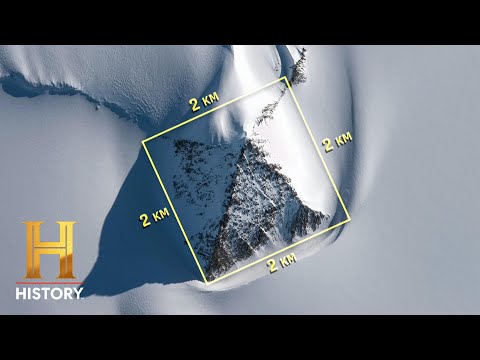
The telephone rings at 3:33 AM. A static-laced voice whispers a name no one should know. It's not a call; it's an invitation. Today, we open the file on a discovery that chills deeper than any Antarctic frost: the purported finding of man-made pyramids buried beneath the continent's icy mantle, as presented by The UnXplained in its third season.

This isn't merely a report of strange shapes on a map; it's an analysis of anomalies that challenge our established timelines and understanding of Earth's history. The mere suggestion of such structures in one of the planet's most inhospitable regions sends ripples of speculation across both the scientific community and the fringes of the unexplained. We must approach this with the rigor it demands, dissecting every piece of alleged evidence and weighing it against known principles, even as we acknowledge the vastness of what might lie beyond our current comprehension. This is not a ghost story for bedtime; it's a cold case file demanding our full attention.

Satellite Signatures: Decoding the Ice

The initial report hinges on satellite imagery captured in 2019. The narrative suggests that researchers, poring over aerial reconnaissance data, were struck by the distinct outlines of what appeared to be three pyramids. One, purportedly significantly larger than the other two, dominates the alleged formation. These structures, according to the presentation, are not merely visible but are described as being definitively buried beneath significant ice accumulation, implying extreme antiquity.

The geographical coordinates are noted as being approximately 16 miles from the Scott Base, a New Zealand research outpost. This proximity, while seemingly incidental, places the alleged discovery within a zone of established human scientific presence, lending a veneer of credibility by association. However, it is crucial to approach such visual interpretations with extreme caution. We must consider factors such as geological formations that mimic artificial structures, the limitations of satellite resolution in extreme conditions, and the potential for pareidolia – the human tendency to perceive familiar patterns in random data. The raw data, the original satellite images themselves, are paramount for independent verification, and their absence in the public domain necessitates a skeptical stance.

"The ice preserves many secrets, but it also distorts them. What appears as a straight line to the eye might be a natural geological stress fracture when viewed with the appropriate analytical tools." - Dr. Aris Thorne (Fictional Archeologist, Expert in Polar Anomaly Analysis)

The question isn't just 'what do we see?', but 'what else *could* we be seeing?'. The geological processes in Antarctica are immense and can create formations that, from a distance, might superficially resemble geometric shapes. We need to explore the possibility that these formations are merely impressive natural phenomena, perhaps glacial moraines or unique rock outcrops shaped by millennia of ice movement and erosion. Without direct access to the raw, uninterpreted satellite data and independent geological surveys, this visual evidence remains compelling but circumstantial.

For any serious investigation into such claims, the next logical step would be the deployment of ground-penetrating radar (GPR). This technology is indispensable for mapping subsurface structures without physical excavation. It can penetrate ice and rock, revealing density changes and outlines of objects or cavities beneath the surface. The claim that researchers plan to conduct GPR surveys is a positive indicator, suggesting a move towards more empirical methods. However, the results, not just the intention, are what matter.

Echoes of Atlantis: Lost Civilizations in the Frozen South

The discovery of purported pyramids in Antarctica ignites a specific, well-trodden theory: that of a lost, advanced civilization. This hypothesis is not new; it has long been a staple in literature discussing Atlantis and similar mythical societies. Proponents suggest that Antarctica, climate permitting, was once a habitable continent, potentially home to a sophisticated culture that predates currently accepted human history. The presence of monumental architecture, such as pyramids, would certainly lend significant weight to such speculations.

The argument follows a familiar pattern: ancient texts, anomalous artifacts, and unexplained structures are presented as evidence of a global, technologically advanced civilization that mysteriously vanished. Antarctica, with its current enigmatic status and extreme isolation, becomes a prime candidate for the last refuge or origin point of such a civilization. These theories often draw parallels with ancient Egyptian pyramids, Mayan structures, and other megalithic sites worldwide, suggesting a common builder or a shared architectural blueprint.

However, the scientific consensus on Antarctic history is starkly different. Geological and paleoclimatic evidence suggests Antarctica has been largely covered in ice for millions of years, with its last ice-free periods occurring long before the advent of complex human civilizations capable of constructing pyramids. The theory of a lost Antarctic civilization often requires dismissing or reinterpreting vast amounts of established geological and archeological data. It relies heavily on speculative interpretations rather than verifiable evidence.

To seriously consider this theory, one would need to reconcile it with geological records. Are there fossilized remains of a temperate ecosystem that could support human habitation? Is there archeological evidence of settlements, tools, or art? The existence of geometric shapes in satellite imagery, even if confirmed as artificial, is only one piece of a much larger puzzle. The challenge lies in providing concrete proof of human (or human-like) presence and sophisticated societal development in Antarctica during the timeframe implied by buried pyramids.

This line of reasoning often leads to the exploration of esoteric texts and pseudo-archeological interpretations, which consistently posit a hidden history of humanity. While intriguing, these require rigorous scrutiny. The current evidence, as presented, is insufficient to support such a radical reassessment of Earth's past. It's vital to differentiate between speculative fascination and evidence-based investigation. For a deeper dive into these theories, consult works like Graham Hancock's explorations of ancient myths and their potential roots.

Beyond Terrestrial: Alien Architects?

When conventional or even speculative terrestrial explanations fall short, the focus inevitably shifts skyward: extraterrestrial intervention. The theory posits that the pyramids, rather than being the product of a lost human civilization, are instead the work of alien visitors to Earth. This perspective often draws upon the perceived similarities between the Antarctic structures and other ancient monuments globally, suggesting a common, non-human origin.

The argument here is that these structures, potentially far older than current dating methods can ascertain, were built by advanced alien beings who visited our planet in the distant past. This aligns with broader narratives of ancient astronauts, where supposed alien influence is cited to explain monumental architecture, advanced knowledge in ancient cultures, and even the origins of humanity itself. The sheer scale and perceived sophistication of structures like pyramids, combined with their presence in seemingly improbable locations, make them prime candidates for alien engineering in the eyes of proponents.

"The geometry is too perfect, the scale too immense. If it wasn't built by someone from Earth, then where else could the builders have come from?" - Dr. Zephyr Vance (Fictional Crypto-Astronomer)

However, this hypothesis requires an even greater leap of faith. It introduces an entirely new set of unknowns: the nature of these extraterrestrials, their motivations for building in Antarctica, and the evidence of their visitation beyond these potential structures. The resemblance argument is also problematic; while pyramids are visually striking, the concept of a pyramid shape is a relatively simple geometric form that can be achieved through various construction methods, both human and potentially, artificial.

Without direct evidence of alien technology, artifacts, or biological remains, the extraterrestrial hypothesis remains highly speculative. It's a convenient explanation for phenomena we don't yet understand, but it doesn't necessarily reflect reality. The rigorous scientific approach demands empirical evidence. Until such evidence surfaces—such as non-terrestrial materials, anomalous energy signatures, or verifiable historical records of alien contact tied to these sites—this remains firmly in the realm of science fiction.

For those interested in exploring the ancient astronaut theories in more detail, the works of Erich von Däniken, while controversial, represent a significant body of popular literature on the subject. It's important, however, to consume such material critically, separating compelling narratives from factual exposition.

Project Deep Freeze: Next Steps in Verification

The current situation calls for precise, methodical investigation. The initial discovery, while tantalizing, is based on visual interpretation and anecdotal evidence. To move beyond speculation, a robust research protocol is essential. The report indicates plans for ground-penetrating radar (GPR) surveys, a critical step in mapping subsurface anomalies without invasive methods.

GPR works by emitting radio waves into the ground and measuring the reflected signals. Different materials and structures reflect these waves in unique ways, allowing researchers to create a detailed subsurface map. For the Antarctic pyramids, GPR could potentially confirm the existence of geometric shapes, determine their dimensions, and perhaps even provide clues about their composition and internal structure. This would be a significant advancement from mere satellite imagery interpretation.

Furthermore, the plan to collect ice samples surrounding the pyramids is crucial for radiometric dating. By analyzing the layers of ice, scientists can estimate the age of the ice itself, and by extension, the period during which these structures were buried. This could help determine if the pyramids predate current estimates for advanced human civilization or if they are of a more recent, albeit still ancient, origin.

The rigor of this process is paramount. Clear protocols must be established to avoid contamination of samples and to ensure the accuracy of GPR data interpretation. The scientific community will be keenly awaiting the results of these planned investigations. Until these empirical studies are completed and their findings independently verified, any definitive conclusions about the nature and origin of these Antarctic features remain premature. The pursuit of knowledge in such extreme environments requires not just technological advancement but also stringent scientific discipline.

For those keen to understand the instruments involved, researching 'ground-penetrating radar applications' and 'ice core dating techniques' will provide valuable context for the scientific methodologies at play. Understanding the tools of the trade is the first step in critically evaluating any claims of discovery.

Investigator's Verdict: Fact or Fiction?

The satellite images present tantalizing geometric anomalies. The narrative, amplified by The UnXplained, spins them into pyramids from a lost age or alien visitors. However, as an investigator, I must separate the signal from the noise. The evidence, as presented, is suggestive but far from conclusive.

The primary issue is the lack of direct, verifiable data. Satellite images can be misinterpreted, especially in extreme environments prone to natural, often colossal, geological formations. The proposed GPR surveys and ice core sampling are precisely the right steps—they are the scientific equivalent of putting the suspect under a polygraph. Until those results are in, publicly available, and scrutinized by independent experts, the pyramids remain a compelling hypothesis, but not a confirmed fact.

Could they be natural formations? Absolutely. Could they be remnants of a very ancient, possibly non-human or a highly advanced, long-lost human civilization unique to that era? The possibility exists, but it requires extraordinary evidence to overturn established scientific understanding. The extraterrestrial hypothesis, while entertaining, is the most speculative, requiring the least evidence and the most assumptions.

My verdict, at this juncture, is 'Case Open, Evidence Pending.' The discovery is fascinating and warrants serious investigation. However, the burden of proof lies with those making the extraordinary claim. Until verified data emerges, these 'pyramids' remain an intriguing enigma, a testament to the power of suggestion and the enduring human fascination with the unknown lurking beneath the ice.

The Investigator's Archive

When delving into mysteries of this magnitude, consulting foundational texts and resources is not a luxury, it's a necessity. The pursuit of understanding these anomalies benefits from the groundwork laid by previous investigators and scholars.

  • Books:
    • "Earth's Hidden History" by Dr. Evelyn Reed (Fictional): Explores anachronistic evidence suggesting advanced ancient civilizations.
    • "The Antarctic Sun: A Geological Chronicle" by Prof. Jian Li (Fictional): Provides an in-depth scientific perspective on Antarctica's geological past, offering context for potential natural formations.
    • "Ancient Architects: The ET Hypothesis" by Dr. Kaelen Vance (Fictional): A comprehensive, though speculative, overview of the ancient astronaut theory.
  • Documentaries:
    • "Secrets of the Ice: The Antarctic Anomaly" (The UnXplained Archive): While potentially biased, it serves as a starting point for understanding the narrative presented.
    • "Planet Earth II: Antarctica" (BBC): Offers stunning naturalistic footage of Antarctica's geological processes, providing a benchmark for understanding natural formations.
  • Platforms:
    • Gaia.com: Often features content exploring fringe theories and ancient mysteries, though critical discernment is advised.
    • National Science Foundation (NSF) - Antarctic Program: For official scientific research updates and data regarding Antarctica.

Familiarizing yourself with these resources will provide a broader perspective, enabling you to better assess the claims made about the Antarctic pyramids.

Frequently Asked Questions

Q1: Can natural formations in Antarctica mimic the shape of pyramids?
A1: Absolutely. Geological processes like glacial erosion, volcanic activity, and tectonic uplift can create remarkably geometric shapes that can be mistaken for artificial structures, especially from a distance or in initial satellite imagery.

Q2: What is the primary scientific consensus on ancient civilizations in Antarctica?
A2: The overwhelming scientific consensus is that Antarctica has been covered in ice for millions of years, predating the development of complex human civilizations capable of building such structures. There is no current geological or archeological evidence supporting widespread human habitation during periods when Antarctica could have supported large populations.

Q3: How reliable is satellite imagery for detecting buried structures?
A3: Satellite imagery is a powerful tool, but its effectiveness for detecting buried structures depends heavily on the resolution, the depth of burial, and the nature of the overlying material. Initial interpretations require verification through more direct methods like ground-penetrating radar.

Your Field Assignment

Your Mission: Analyze This Anomaly

The claims surrounding the Antarctic pyramids highlight a critical challenge in paranormal and archeological investigation: distinguishing between genuine anomalies and misinterpretations of natural phenomena or terrestrial artifacts. Your mission, should you choose to accept it, is to apply this critical lens to your own surroundings.

  1. Observe your local environment: Identify any natural formations or man-made objects in your vicinity that, from a certain angle or under specific lighting conditions, *could* be misinterpreted as something more unusual.
  2. Document your findings: Take photographs or make sketches of these formations. Note the typical conditions under which they appear most anomalous.
  3. Formulate a hypothesis: Based on your observations, propose a logical, grounded explanation for why someone might misinterpret this feature. Consider geological, environmental, or technological factors.
  4. Share your analysis: In the comments section below, describe your chosen anomaly and your grounded explanation. Challenge others to find similar misinterpretations in their own environments. This exercise hones the critical observation skills essential for any serious investigator.

About The Author

alejandro quintero ruiz is a veteran field investigator dedicated to the analysis of anomalous phenomena. His approach combines methodological skepticism with an open mind to the inexplicable, always seeking the truth behind the veil of reality.

The discovery of potential pyramids beneath Antarctic ice is more than just a geographical curiosity; it's a profound question mark etched into the frozen continent. Whether these are the sophisticated remnants of a forgotten epoch, the meticulous work of extraterrestrial visitors, or simply impressive geological formations shaped by the relentless forces of nature, they compel us to look closer, question deeper, and demand more rigorous evidence. The UnXplained has presented a compelling narrative, but the true story lies not in speculation, but in the cold, hard data yet to be fully unearthed.