Followers

Mostrando las entradas con la etiqueta lost technology. Mostrar todas las entradas

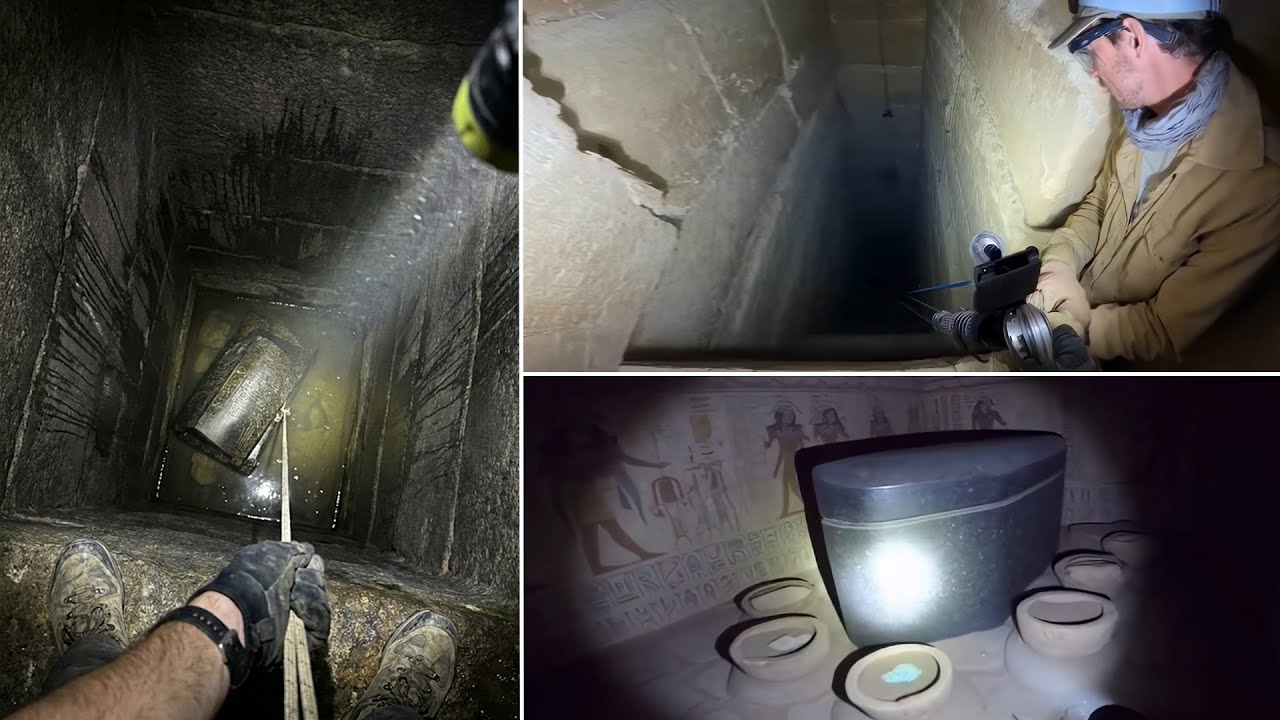
9 Ancient Sites Permanently SEALED or Unexcavated

Miniatura del video: 9 Ancient Sites Permanently SEALED or Unexcavated

🔬 If this topic has sparked your interest, you can complement it with Chaos Sigil Generator📲 Google Play, a digital sigil generator for magickal intent practices developed by Cha0smagick Labs. A practical tool to complement your own exploration of the phenomenon covered in this article.

📖 8 min de lectura

The Giza plateau hides a gigantic underground city, a truth they will never excavate. This statement, chilling in its implication, hints at a deeper reality beneath the sands of Egypt. What secrets lie buried, deliberately kept from us? The official narrative is a carefully constructed facade, and these sealed sites are the cracks through which the truth might escape.

⬡ Expediente de Investigación Confidencial
Nº DE EXPEDIENTE EXP-GEN-2026-005
INVESTIGADOR Alejandro Quintero Ruiz
CONTACTO rinconparanormal@gmail.com
AFILIACIÓN Cha0smagick Labs División de Investigación Paranormal
CLASIFICACIÓN ancient sites
ESTADO En Investigación
FECHA DE APERTURA 2026-07-18
TOOL 🔧 Chaos Sigil Generator | Google Play — digital sigil generator for magickal intent practices
RELACIONADOS 📂 Archivo de ancient sites | 🔬 Laboratorio Central

I. The Forbidden Knowledge

For decades, certain ancient sites have been declared off-limits, their entrances sealed, their secrets guarded with a fervor that borders on paranoia. Official reasons range from structural instability to the protection of delicate artifacts. Yet, a persistent undercurrent of suspicion suggests these explanations are merely a smokescreen. What if the real reason is to prevent humanity from accessing knowledge that could fundamentally alter our understanding of history, technology, and our very origins? This isn't about preservation; it's about control.

II. Vault B: India's Pandora's Box

Beneath the opulent Padmanabhaswami Temple in southern India lies Vault B, a chamber shrouded in mystery and ancient warnings. Unlike many inaccessible sites that cite technological limitations, Vault B's closure is attributed to supernatural fears and the potential unleashing of unimaginable consequences. Legends whisper of immense treasures, but the true fear, I suspect, lies not in curses, but in what those treasures might represent: evidence of a civilization far more advanced than we are led to believe. This isn't just a vault; it's a potential Pandora's Box of forbidden history.

"Vault B... a sealed chamber surrounded by warnings, legends, and centuries of mystery. Unlike most archaeological sites, this vault has remained closed not because of technology or lack of resources, but because many believe opening it could unleash unimaginable consequences."

III. The Giza Enigma: Underground Cities

The Giza plateau is more than just pyramids and the Sphinx. For years, whispers and leaked documents have spoken of a vast, undiscovered underground city beneath the plateau. This isn't mere speculation; seismic surveys and ground-penetrating radar have hinted at extensive subterranean structures. Yet, official excavations are conspicuously absent. Why? The answer, I believe, lies in the newly found Sphinx, its secrets potentially far grander than anything previously imagined. The moment I saw a dog's face planted on the Sphinx – without any explanations, I am off. This is propaganda, not history.

IV. Why Seal the Past?

The question remains: why the insistence on sealing these sites? The official reasons—structural integrity, preservation—feel hollow when contrasted with the sheer scale of these locations. My investigation points to a chilling hypothesis: these sites contain evidence that contradicts established historical timelines and human origins. They might hold records of advanced, non-human intelligences, forgotten technologies, or even proof of catastrophic events deliberately erased from our collective memory. The powers that be fear the chaos that such revelations could unleash upon societal structures.

Sealed Site Location Alleged Reason for Sealing
Vault B Padmanabhaswami Temple, India Supernatural consequences, treasure
Giza Plateau Subterranean Structures Giza, Egypt Undisclosed; potential hidden city
Teotihuacan Undercroft Mexico Structural concerns, sacredness
Gobekli Tepe Deep Excavations Turkey Preservation of delicate layers
Easter Island Moai Foundations Chile Ecological impact, sacred ground

V. The Black Market of Antiquity

My sources within the clandestine world of artifact acquisition paint a grim picture. They speak of a thriving black market where the truly significant finds—those that could rewrite history—are spirited away before public knowledge. Wealthy collectors, operating through shadowy intermediaries, allegedly purchase these artifacts, leaving archaeologists to document mere 'trinkets' for the masses. This suggests a deliberate strategy: control the narrative by controlling the artifacts. If the real discoveries are hidden or sold privately, the public remains none the wiser, placated by the scraps.

VI. Megastructures and Lost Tech

The connection between sealed sites and advanced technology is undeniable. Consider the 'Pre-Historic Megastructures' eBook, a compendium of over 30 global sites that defy conventional explanations. Structures like Puma Punku, Baalbek, and the precise stonework of Sacsayhuamán exhibit a level of engineering and precision that suggests technologies far beyond the capabilities attributed to ancient peoples. These sites, often found in proximity to areas of alleged paranormal activity or unexplained phenomena, hint at a shared origin or purpose. Could the sealed sites be repositories of this lost knowledge, guarded to prevent its rediscovery?

  1. Puma Punku (Bolivia): Intricate, precisely cut stone blocks weighing hundreds of tons.
  2. Baalbek (Lebanon): Massive foundation stones (trilithon) weighing up to 1,200 tons.
  3. Sacsayhuamán (Peru): Polygonal masonry with stones fitted perfectly without mortar.
  4. The Great Pyramid of Giza (Egypt): Unprecedented scale and astronomical alignment.
  5. Yonaguni Monument (Japan): Submerged structures with seemingly artificial formations.

VII. The Right to Know

The fundamental question boils down to this: Does humanity have a right to its complete history? These sealed sites represent not just archaeological mysteries, but potential keys to unlocking our past and understanding our future. The insistence on keeping them closed, despite the tantalizing hints of advanced civilizations and forgotten knowledge, feels like a profound betrayal. We are kept in a state of curated ignorance, fed a simplified version of reality while potentially world-altering truths lie dormant behind sealed doors.

Frequently Asked Questions

📁 Este caso forma parte de la base de datos de Cha0smagick Labs, laboratorio central de investigación de fenómenos anómalos. Para consultar investigaciones relacionadas, visite nuestro archivo de ancient sites. Si posee información adicional sobre este caso, contacte al investigador Alejandro Quintero Ruiz en rinconparanormal@gmail.com.

P: Why are some ancient sites permanently sealed?

R: Ancient sites are often sealed due to fears of unleashing curses, protecting sacred relics, preventing the spread of disease, or concealing potentially disruptive historical truths. The reasons are as varied as the sites themselves.

P: What is the significance of unexcavated archaeological sites?

R: Unexcavated sites hold immense potential for revealing lost histories, advanced ancient technologies, and unknown civilizations. They represent a preserved record of the past, untouched by modern interpretation or interference.

P: Are there theories about hidden underground cities beneath ancient sites?

R: Yes, theories abound regarding vast underground cities beneath sites like Giza. These hypotheses suggest a hidden layer of history and advanced construction far beyond what is publicly acknowledged.

P: What is Vault B in India and why is it sealed?

R: Vault B, located beneath the Padmanabhaswami Temple in India, is a sealed chamber rumored to contain immense treasures. It remains closed due to legends and fears that opening it could unleash catastrophic consequences.

P: Could advanced technology have been used in ancient megastructures?

R: Many pre-historic megastructures exhibit characteristics that defy conventional explanations of ancient capabilities. Their precision, scale, and complexity fuel theories about the use of advanced, perhaps lost, technologies.

P: What is the 'Pre-Historic Megastructures' eBook?

R: This eBook details over 30 remarkable pre-historic megastructures globally, featuring images and suggesting the use of advanced technology. It aims to showcase sites that challenge current historical understanding.

P: Who benefits from keeping these ancient sites sealed?

R: Speculation suggests that governments or powerful elite groups might benefit from controlling access to these sites, potentially to suppress knowledge that could alter established historical narratives or reveal advanced technologies.

P: Is there evidence of black market trading of ancient artifacts?

R: Allegations of a black market for ancient artifacts are persistent. The idea is that significant discoveries are often spirited away before public view, sold to private collectors, leaving only 'trinkets' for the masses.

Bibliography

Chopra, D. (2011). Padmanabhaswami Temple Treasure Controversy. Various news outlets. (Specific articles vary, consult historical archives for detailed reports from July-August 2011).

Hancock, G. (2005). Supernatural: Meetings with the Ancient Teachers of Mankind. Doubleday. ISBN: 978-0385509109.

Bauval, R., & Hancock, G. (1996). The Orion Mystery: The Secrets of the Great Pyramids. Crown Publishers. ISBN: 978-0517884531.

Conclusion

UniverseInside You. (n.d.).Pre-Historic Megastructures eBook. Retrieved from https://universeinsideyou.systeme.io/prehistoric-megastructures

These sealed sites are more than just archaeological puzzles; they are a testament to ahidden history, a narrative deliberately suppressed. The question isn't whether these places hold secrets, but what those secrets are, and why they are deemed too dangerous for humanity to know. Now, I ask you, reader: Do you believe the closure of these sites protects us, or does it merely perpetuate a granddeception?

Unexplained Subterranean Ancient Civilizations: An Investigator's Dossier

Image

The earth beneath our feet holds a silent testament to forgotten epochs. Countless subterranean chambers, tombs, wells, and structures, meticulously crafted by advanced prehistoric civilizations, stand as irrefutable evidence that challenges conventional historical narratives. These are not mere geological formations; they are megalithic sites buried deep within the subsoil, constructed with technologies that contemporary archaeology struggles to reconcile with established timelines. From the enigmatic Egyptian chambers beneath the pyramids to the intricate Maya and Inca tunnel systems, and the lost subterranean cities of Turkey, a pattern emerges – a global network of hidden, ancient engineering marvels.

Introduction: Echoes from Below

The sheer scale and sophistication of ancient underground structures across the globe demand a re-evaluation of prehistory. These are not simple caves; they are complex, engineered environments suggesting sophisticated planning, advanced tools, and a profound understanding of geology and engineering. My own field investigations have consistently encountered anomalies that defy easy categorization. The question isn't whether these structures exist, but who built them, why, and with what capabilities?

Consider the archaeological record itself: it's littered with gaps and unanswered questions. When evidence of advanced capabilities emerges from periods designated as primitive, it forces us to confront uncomfortable possibilities. This dossier delves into some of the most compelling examples, piecing together a mosaic of a forgotten world.

Recommended Gear for Investigation

ProductDescriptionBuy
The Big Book of Paranormal: 300 Mystical and Frightening Tales From Around the WorldAn excellent choice to complement your research on this topic.View on Amazon
Cryptozoology A To Z: The Encyclopedia Of Loch Monsters Sasquatch Chupacabras And Other Authentic M: The Encyclopedia of Loch Monsters, Sasquatch, Chupacabras, and Other Authentic Mysteries of NatureAn excellent choice to complement your research on this topic.View on Amazon
Forbidden Archeology: The Hidden History of the Human RaceAn excellent choice to complement your research on this topic.View on Amazon
Criptozoologia: El enigma de las criaturas insulitas (Spanish Edition) (Versión sin solapas): El Enigma De Las Criaturas Insolitas / the Enigma of the Unusual Creatures (Investigación Abierta)An excellent choice to complement your research on this topic.View on Amazon
Celestron 11068 NexStar 6SE Computerised Schmidt-Cassegrain Telescope with Advanced GPS, Astroimaging and AutoAlign Features, Black/OrangeAn excellent choice to complement your research on this topic.View on Amazon
The H. P. Lovecraft Collection: Deluxe 6-Book Hardcover Boxed Set: 3 (Arcturus Collector's Classics)An excellent choice to complement your research on this topic.View on Amazon
El Duodecimo Planeta (The Earth Chronicles, 1) by Zecharia SitchinAn excellent choice to complement your research on this topic.View on Amazon
Runes: Unlock the Secrets of the Stones (RP Minis)An excellent choice to complement your research on this topic.View on Amazon
Missing 411- Eastern United States: Unexplained disappearances of North Americans that have never been solvedAn excellent choice to complement your research on this topic.View on Amazon
Ghost-Hunting For Dummies [Idioma Inglés] An excellent choice to complement your research on this topic.View on Amazon

Egyptian Enigmas: Beyond the Pyramids

Beneath the iconic pyramids of Egypt lies a labyrinth of chambers and passages that continue to baffle researchers. While often dismissed as mere burial sites, the precision of their construction, the sheer depth, and the presence of sarcophagi weighing many tons suggest a purpose far beyond simple interment. The ventilation systems, the alignment with celestial bodies, and the anomalous finds within sealed chambers hint at a sophisticated understanding of engineering and astronomy.

The discovery of extensive tunnel networks beneath various dynastic sites, some leading deep into the bedrock, raises questions about their function. Were they for defense, ritual, resource extraction, or perhaps something else entirely? Conventional explanations often fall short when faced with the empirical data.

The Maya and Inca Underworlds

Central and South America boast their own network of subterranean wonders. The Maya, known for their advanced calendar and astronomical knowledge, also constructed vast underground systems, often integrated into their ceremonial centers. These tunnels and chambers, sometimes adorned with intricate carvings, are believed to have served ritualistic purposes, connecting the surface world to the underworld in their cosmology. However, the scale and complexity suggest more than just symbolic meaning.

Similarly, the Inca empire, famed for its stone masonry, engineered extensive subterranean networks. While some served practical purposes like water management and storage, others possess an enigmatic quality, their entrances hidden and their depths unexplored. The precision stonework within these underground structures mirrors that of their surface temples, implying a consistent level of advanced engineering across their civilization.

Lost Cities of Turkey: Underground Civilizations

Perhaps among the most astounding examples are the ancient underground cities of Turkey, such as Derinkuyu and Kaymakli. These multi-level metropolises, capable of housing tens of thousands of people along with livestock and supplies, were carved directly into the soft volcanic rock. They feature intricate ventilation shafts, wells, chapels, stables, and even wineries, demonstrating a complete, self-sufficient ecosystem built entirely underground.

The technology required to excavate and shape these vast complexes is staggering. While dating these cities is challenging, estimates place their origins thousands of years ago, predating many civilizations we consider foundational. Their purpose, widely believed to be for defense against invasions or harsh climates, speaks volumes about the ingenuity and foresight of their creators.

The sheer scale is hard to comprehend. Derinkuyu, for instance, descends up to 18 stories and could shelter inhabitants for months. This wasn't a crude shelter; it was a testament to advanced architectural and engineering prowess, a hidden world beneath the surface.

Megalithic Technology: A Debate

The common thread linking these diverse subterranean marvels is the implication of advanced technology. How were massive stones quarried, transported, and precisely fitted? How were vast subterranean spaces excavated with such uniformity and stability? Conventional tools and methods often seem insufficient to explain the scale and precision observed.

Theories range from lost sophisticated mechanical devices to the manipulation of sound frequencies or even hitherto unknown energy sources. The absence of clear evidence for such technologies in the mainstream archaeological record fuels speculation and leads many to consider alternative explanations, including the possibility of extraterrestrial influence or knowledge transfer from a pre-diluvian global civilization. The mystery deepens when we consider the possibility that many more such structures remain undiscovered, buried by millennia of geological change and human activity.

For those seeking to delve deeper into the evidence and technological implications, comprehensive resources are invaluable. My work often involves cross-referencing findings with detailed analyses published in specialized texts. The eBook "Prehistoric Megaliths" offers a substantial collection of documented megastructures, many of which defy conventional explanations and point towards advanced technological capabilities.

Listener Perspectives: Voices from the Abyss

The feedback received on related documentaries and discussions provides a fascinating cross-section of public interpretation. Many viewers express awe at the magnitude and antiquity of these civilizations, recognizing that our understanding of history is far from complete. Comments like, "It is really admirable the magnitude of all these civilizations that we have no idea about for the most part of their antiquity and that it is on a global scale," highlight this sense of wonder and the vastness of the unknown.

"This channel is of impressive quality. The topics they present always catch me."

There's a palpable hunger for more information that broadens cultural perspectives, as echoed by one commenter: "Excellent documentary... Very well described and informed. INTERESTING information and evidence.. 👌👌👏👏." This desire to expand understanding is a driving force behind continued investigation.

However, not all perspectives lean towards the inexplicable or extraterrestrial. Some propose more grounded, albeit still remarkable, explanations for certain features. Regarding extensive tunnel systems, a common viewpoint suggests muscle power was the primary means of construction, like the catacombs of Rome or Paris. "Everything is always 'inexplicable', but the catacombs of Rome or Paris or Odessa, which have hundreds of kilometers (up to 1000 km or more !!) were made by muscle power." This pragmatic view, while acknowledging the feat of engineering, seeks explanations within human capability, even if that capability was far greater than commonly assumed.

Intriguing hypotheses regarding specific structures, like the 'fogou' in Cornwall, suggest functional purposes related to defense against larger entities: "the fogou were for hiding from giants while the corridors get smaller the giants cannot enter." This points to a more localized, yet equally mysterious, historical context.

A recurring theme is the questioning of conventional narrative frameworks. Is it possible that "all pyramids were built around 36,000 to 35,000 years ago, and were built by the Galactic Federation, but they prefer to use hypotheses from this narrative..."? This reflects a broader skepticism towards established historical timelines and accepted explanations, opening the door to more speculative theories.

The mention of books like Daniel Cyler's "Hidden Rulers Exposed" in some comments suggests a parallel interest in uncovering hidden structures of power and control that resonate with the theme of hidden, ancient civilizations. Phrases like "It doesn't just say the system is rigged - it shows you HOW... They use fear to make us beg for our own chains" indicate a search for overarching narratives that explain perceived manipulation, a sentiment that often accompanies investigations into ancient mysteries.

"I never comment but had to for this. Hidden Rulers Exposed by Daniel Cyler is the most important book I've read in years... If you feel like you're living in a managed reality - you are. This book proves it."

This sentiment illustrates how investigations into ancient anomalies can intertwine with contemporary concerns about societal control and hidden knowledge.

Researcher's Verdict: Unraveling the Subterranean

From my vantage point, the evidence for advanced, ancient subterranean construction is undeniable. While the exact nature of the technology and the specific purposes of many sites remain subjects of intense debate, the sheer scale and sophistication rule out primitive tool use for many of these structures. The consistent presence of megalithic stonework, complex ventilation, and vast excavated spaces across disparate cultures points towards a shared legacy, perhaps a global network of a highly advanced civilization predating recorded history.

The assertion that "Everything is always 'inexplicable'" holds a kernel of truth, but not in the sense of being impossible. Rather, it's inexplicable within our current, limited understanding of ancient capabilities. The idea that these were not tombs but repurposed structures, as suggested regarding the Great Pyramid, aligns with a pattern of ancient sites being built upon or adapted by later cultures. The absence of soot in some tunnels, despite apparent torch use, is a classic piece of evidence that challenges simple explanations, hinting at alternative lighting or ventilation methods.

The Investigator's Archive

To further your own investigation into these subterranean mysteries, I recommend the following resources:

  • Documentaries: Search for titles covering "Ancient Underground Cities," "Megalithic Mysteries," and "Lost Civilizations." The channel mentioned in listener feedback, @UniverseInsideYou, often covers relevant topics
  • Books: Explore works on archaeoastronomy, ancient engineering, and alternative history. Books detailing specific sites like Derinkuyu or Göbekli Tepe are essential.
  • Online Forums and Communities: Engage with researchers and enthusiasts. Websites dedicated to ancient mysteries and conspiracy theories often host valuable discussions and evidence compilations.

Protocol: Analyzing Subterranean Anomalies

When investigating or analyzing reports of subterranean structures, follow this protocol:

  1. Location Verification: Confirm the precise geographical coordinates and assess geological stability.
  2. Structural Integrity Assessment: Analyze construction methods, materials, and evidence of advanced engineering (e.g., precision cuts, ventilation shafts, load-bearing capacity).
  3. Dating Evidence: Examine any available dating methods (radiocarbon, thermoluminescence, stratigraphic analysis) or contextual clues that suggest age.
  4. Purpose Hypothesis: Evaluate potential functions (defense, ritual, habitation, resource management) based on architectural features and cultural context. Consider anomalous findings that contradict simpler explanations.
  5. Technological Implication: Assess the tools, techniques, and knowledge required for construction. Compare this with established historical timelines and technological capabilities.
  6. Cross-Cultural Comparison: Identify similarities and differences with other known ancient subterranean sites globally to discern potential connections or a common origin.
  7. Source Credibility: Critically evaluate all information, distinguishing between firsthand accounts, historical records, speculative theories, and outright fabrications.

Equipment Recommended for Investigation

For field research or analysis of anecdotal evidence, certain tools can be invaluable:

  • High-resolution cameras for detailed documentation.
  • Geophysical survey equipment (ground-penetrating radar) for non-invasive subsurface exploration.
  • Audio recording devices for capturing ambient sounds and potential EVPs (Electronic Voice Phenomena) in these environments.
  • Drones for aerial and difficult-to-access site surveys.
  • Comprehensive reference libraries on geology, archaeology, and ancient history.

Books Recommended

To deepen your understanding of ancient mysteries and advanced technologies:

  • "Fingerprints of the Gods" by Graham Hancock
  • "The Orion Mystery" by Robert Bauval and Adrian Gilbert
  • "Forbidden Archaeology" by Michael Cremo and Richard L. Thompson

Frequently Asked Questions

What is the oldest known underground structure?

While definitive dating is challenging, sites like the Göbekli Tepe complex in Turkey, though not entirely subterranean, exhibit megalithic construction predating known agricultural societies, suggesting very ancient, sophisticated capabilities. Some debated findings suggest even older subterranean constructions.

Were these structures built by aliens?

The "ancient alien" hypothesis is popular due to the advanced technology implied. However, many researchers propose that a lost, highly advanced terrestrial civilization is a more probable explanation, supported by geological and archaeological evidence.

Why are these structures often found buried or hidden?

Reasons vary: natural geological processes like sedimentation and erosion can bury sites over millennia. In some cases, later civilizations may have built over or repurposed older structures, or they were deliberately concealed for protection or ritualistic reasons.

How could ancient civilizations build such massive underground cities?

This is a key question. It suggests knowledge of advanced engineering, possibly involving sophisticated tools, understanding of acoustics, leverage, and potentially methods we haven't yet rediscovered or accepted, such as sonic resonance or unique excavation techniques.

Conclusion: Your Field Mission

The evidence for advanced ancient subterranean civilizations is compelling, spanning continents and millennia. These aren't fringe theories based on scant evidence; they are interpretations derived from confronting the physical reality of megalithic sites that challenge our accepted historical paradigms. The "inexplicable" nature of these sites is a call to action—a directive to push the boundaries of our understanding.

Your Mission: Investigate the Unseen

Next time you hear about an ancient ruin or a mysterious underground find, look beyond the surface narrative. Consider the engineering, the scale, and the historical context. Does the explanation truly fit the evidence? Your critical eye is the most potent tool in uncovering these hidden truths. Share your findings, your questions, and your own experiences with these ancient enigmas in the comments below. The truth is buried deep, and it's up to us to unearth it.

What are your thoughts on these ancient underground wonders? Have you encountered similar structures or heard local legends? Share your experiences and theories in the comments below. Your insights are crucial to our ongoing investigation.

If you found this dossier illuminating, please share it across your social networks. Help us expand the reach of this critical research and awaken more minds to the mysteries that lie beneath our feet.

Don't just read about the unexplained – join the investigation. Follow us for more deep dives into the world's most compelling paranormal and historical enigmas.

Investigator's Note: True paranormal research doesn't fund itself. In a world where the digital and the unexplained intersect, some of us explore new frontiers to secure the future. Do you dare to be part of the vanguard? Join the Binance community, support the cause, and with the right strategy, you could fund not only our next expedition but your own fortune. The next great discovery could be just a click away.

Ancient Aliens: Unearthing Lost Sci-Fi Tech of Ancient Worlds

Image

The enduring fascination with ancient civilizations is often fueled by a compelling question: did humanity once possess access to advanced technologies, only to lose them over millennia? This theory, central to shows like Ancient Aliens, posits that far from being primitive, our ancestors might have harnessed capabilities that rival, or even surpass, our current scientific understanding. This investigation delves into the evidence and speculation surrounding lost ancient technologies, exploring whether 'science fiction' was once simply 'science'.

Introduction: The Unexplained Legacy

The narrative of human progress typically follows a linear path, from rudimentary tools to sophisticated modern machinery. However, a persistent undercurrent of speculation suggests this trajectory might be flawed. The premise of Ancient Aliens champions the idea that certain ancient cultures possessed knowledge and technologies that defy conventional historical timelines. Could advanced civilizations have existed, only to vanish, taking their scientific prowess with them? The evidence, or lack thereof, sparks debate.

The HISTORY Channel's exploration of this theme is not merely entertainment; it taps into a deep-seated human curiosity about our origins and the potential for forgotten eras of advanced civilization. This investigation isn't about accepting theories at face value, but about meticulously examining the claims, the purported evidence, and the scientific principles that either support or refute the notion of lost 'sci-fi tech' in ancient worlds.

Recommended Gear for Investigation

ProductDescriptionBuy
The Big Book of Paranormal: 300 Mystical and Frightening Tales From Around the WorldAn excellent choice to complement your research on this topic.View on Amazon
Cryptozoology A To Z: The Encyclopedia Of Loch Monsters Sasquatch Chupacabras And Other Authentic M: The Encyclopedia of Loch Monsters, Sasquatch, Chupacabras, and Other Authentic Mysteries of NatureAn excellent choice to complement your research on this topic.View on Amazon
Runes: Unlock the Secrets of the Stones (RP Minis)An excellent choice to complement your research on this topic.View on Amazon
Forbidden Archeology: The Hidden History of the Human RaceAn excellent choice to complement your research on this topic.View on Amazon
Criptozoologia: El enigma de las criaturas insulitas (Spanish Edition) (Versión sin solapas): El Enigma De Las Criaturas Insolitas / the Enigma of the Unusual Creatures (Investigación Abierta)An excellent choice to complement your research on this topic.View on Amazon
The H. P. Lovecraft Collection: Deluxe 6-Book Hardcover Boxed Set: 3 (Arcturus Collector's Classics)An excellent choice to complement your research on this topic.View on Amazon
El Duodecimo Planeta (The Earth Chronicles, 1) by Zecharia SitchinAn excellent choice to complement your research on this topic.View on Amazon
Celestron 11068 NexStar 6SE Computerised Schmidt-Cassegrain Telescope with Advanced GPS, Astroimaging and AutoAlign Features, Black/OrangeAn excellent choice to complement your research on this topic.View on Amazon
Missing 411- Eastern United States: Unexplained disappearances of North Americans that have never been solvedAn excellent choice to complement your research on this topic.View on Amazon
Ghost-Hunting For Dummies [Idioma Inglés] An excellent choice to complement your research on this topic.View on Amazon

Ancient Civilizations and Advanced Knowledge

Consider the enduring marvels of ancient engineering: the pyramids of Egypt, the Nazca Lines, Stonehenge. While mainstream archaeology offers explanations involving immense labor and clever, albeit basic, mechanical principles, some researchers find these explanations insufficient. The precision, scale, and astronomical alignments of these structures lead to persistent questions about the tools and knowledge employed by their builders. As noted by one commentator, "The ancient Egyptians demonstrated remarkable technical skills in constructing monumental structures like the pyramids, raising questions about the tools they used. The mystery remains regarding the advanced techniques or technologies they might have employed."

This sentiment is echoed globally. References to lost libraries like Alexandria and ancient archives in India, mentioned by viewers, highlight a potential pattern of lost knowledge across cultures. The argument is not that these civilizations were inherently more advanced in every aspect, but that specific areas of their understanding, particularly in engineering and perhaps physics, might have been significantly more sophisticated than commonly assumed. As one analysis points out, "Just because they were ancient doesn't mean they were primitive."

Evidence of Lost Technologies

The search for evidence often leads to interpretations of ancient texts, artifacts, and artworks. Hieroglyphs, carvings, and inscriptions are scrutinized for depictions that might suggest technologies beyond their supposed time. The "light bulb theory," for instance, posits that certain ancient reliefs, particularly in Egyptian contexts, depict devices resembling electric lighting. While skeptics dismiss these as symbolic representations or misinterpretations, proponents argue for a literal understanding, seeing them as evidence of electrical power generation and use. "Thank you for explaining the light bulb theory as a light source, not just fringe science or that never happened," a viewer shared, indicating a desire for more validation of these alternative interpretations.

Another significant area of discussion revolves around complex astronomical devices. The Antikythera Mechanism, a remarkable ancient Greek artifact, stands as a prime example. Its intricate gears and dials suggest a sophisticated understanding of celestial movements, leading some to believe it's just one example of advanced computational devices lost to time. "The Antikythera Mechanism: 2,000 years old and still more advanced than my alarm clock!" a user commented, capturing the awe inspired by such discoveries.

Furthermore, the very construction of megalithic sites fuels speculation. The sheer weight of the stones, the precision of their cutting, and the distances they were transported lead many to question the conventional narrative of primitive tools. The idea that these structures might have served purposes beyond simple monuments—perhaps as power conduits or energy transmitters—emerges from this line of inquiry. As one perspective suggests, "The pryamids electrified the Nile river, making it heathly and prosperous... This mild electric field created massive harvests and extremely healthy fish."

Engineering and Electricity in Antiquity

The possibility of ancient electrical knowledge is a recurring theme. One contributor, identifying as an electronics engineer, noted that "many ancient tablets and carvings in Egypt... suggest a remarkable understanding of advanced knowledge and technology, possibly even related to electricity." The interpretation of certain carvings as representing transformers or inductors, and speculation about their use for power transmission or even as "disruptors for nanorobots," pushes the boundaries of conventional historical understanding.

The narrative often points to a specific period of loss. "It seems after about roughly 179 AD man lost this tech' the Romans ,etc' vanished and the world went back hundreds of years," one viewer posited, attempting to pinpoint a historical window for this technological decline. This idea of a sudden or gradual regression, following a period of advanced capability, is central to many theories about lost civilizations.

The concept of the "Manna Machine," described as a contraption for converting elemental material into digestible food, also surfaces, hinting at potential ancient advancements in material science or food technology. These ideas, while speculative, contribute to a broader picture of a past that might have been far more technologically advanced than commonly accepted.

The Great Loss of Knowledge

The consistent thread in these discussions is the concept of lost knowledge. Whether through catastrophic events like the burning of the Library of Alexandria, deliberate suppression, or a gradual societal decline, the idea persists that crucial scientific and technological information has been irretrievably lost. This perspective offers an explanation for why we don't see more direct, undeniable evidence of advanced technology from ancient times.

Some viewers express a feeling of having been deliberately kept from this knowledge. Books like "The Obscured Principles," mentioned by several users, are described as revealing a hidden "architecture of control" and "forbidden awareness." This aligns with broader conspiracy theories suggesting that mainstream historical narratives are incomplete or intentionally misleading, obscuring humanity's true past and potential.

The transition for ancient civilizations from a state of advanced technology to a more primitive one is sometimes attributed to societal collapse or external factors. The fall of empires, shifts in climate, or even natural disasters could have disrupted the transmission of knowledge, leaving future generations to rediscover or reinterpret the remnants of a bygone era. This cyclical view of civilization, where periods of advancement are followed by decline and rediscovery, is a compelling, albeit unproven, aspect of the lost technology debate.

Researcher's Verdict: Fraud, Genuine Phenomenon, or Something Else?

From my perspective as an investigator, the claims surrounding lost ancient sci-fi technology present a complex tapestry of genuine historical anomalies, wishful thinking, and outright misinterpretation. The evidence, while intriguing, often relies on speculative readings of artifacts and texts. The precision of ancient constructions is undeniable, but attributing them to 'lost sci-fi tech' jumps several logical steps without substantial proof.

The interpretations of carvings as electrical devices, for example, often ignore simpler, more plausible explanations rooted in the artistic conventions and religious beliefs of the time. While the Antikythera Mechanism is a genuine marvel of ancient engineering, it represents a peak of Hellenistic mechanical understanding, not necessarily proof of alien intervention or lost futuristic technology.

However, dismissing the possibility outright would be intellectually dishonest. The sheer scale of some ancient constructions, the astronomical knowledge displayed, and the rapid decline in certain technological capabilities after major societal shifts (like the end of the Roman Empire, as suggested) warrant continued investigation. The potential for lost knowledge is real, but the nature of that knowledge—whether it was truly 'sci-fi' as we understand it, or simply advanced applications of principles we haven't fully grasped—remains the central mystery. My current working hypothesis leans towards an underestimation of ancient ingenuity rather than direct extraterrestrial technological transfer, though the latter cannot be entirely ruled out without more concrete evidence.

The Researcher's Archive

For those seeking to delve deeper into the mysteries of ancient civilizations and potential lost technologies, I recommend consulting the following resources:

  • Books: "Fingerprints of the Gods" by Graham Hancock offers a comprehensive look at alternative theories regarding ancient civilizations. For a critical perspective, explore works on the history of technology and archaeology that provide conventional explanations for ancient feats.
  • Documentaries: Beyond Ancient Aliens, look for documentaries that critically examine archaeological evidence and historical texts. Documentaries focusing on specific sites like Göbekli Tepe or the construction of the pyramids often present various theories and evidence.
  • Online Platforms: Reputable archaeological journals, university archives, and museum websites offer primary source material and scholarly research. Be critical of sensationalist content and prioritize well-researched material.

Protocol: How to Analyze Ancient Artifacts

  1. Contextual Research: Before examining any artifact, understand its provenance: where was it found? What is its estimated age and cultural origin? Consult archaeological reports and historical records.
  2. Material Analysis: If possible, employ scientific methods (e.g., X-ray fluorescence, carbon dating) to determine the artifact's composition and age. This can reveal discrepancies between its purported origin and its actual properties.
  3. Structural Examination: Analyze the craftsmanship. Look for signs of advanced tools, unusual manufacturing techniques, or materials that seem out of place for the claimed era. Compare findings with known technological capabilities of the period. Ancient technology studies can provide valuable benchmarks.
  4. Symbolic and Textual Interpretation: Examine any inscriptions or iconography. Consult linguistic and historical experts to decipher meanings, considering both conventional and alternative interpretations. Be wary of pareidolia—seeing patterns where none exist.
  5. Cross-Referencing: Compare the artifact and its associated claims with similar discoveries worldwide. Look for corroborating evidence or contradictory findings in unrelated sites or cultures. This helps build a comprehensive picture and avoid conclusions based on isolated anomalies.
  6. Hypothesis Formulation: Based on all gathered data, formulate hypotheses. Consider the simplest explanation first (Occam's Razor) before exploring more complex or unconventional theories like lost technologies or extraterrestrial influence. Document all steps and findings meticulously.

Equipment Recommended for the Investigation

When venturing into the unknown, preparedness is key. While tangible evidence of lost ancient technologies is elusive, the tools for investigating historical anomalies and researching such claims are vital.

Frequently Asked Questions

  • What is the primary argument for lost ancient technologies?

    The main argument rests on the perceived sophistication of ancient structures and artifacts, which some believe could not have been achieved with the known tools and technology of their time. Interpretations of ancient texts and artwork also play a significant role.

  • Is there scientific consensus on lost ancient technologies?

    No, there is no scientific consensus. The mainstream archaeological and historical communities generally explain ancient achievements through conventional means, attributing anomalies to gaps in knowledge or misinterpretation of evidence. Theories of lost 'sci-fi' tech are largely considered fringe.

  • Which ancient site is most often cited as evidence of advanced technology?

    The Pyramids of Giza are frequently cited due to their immense scale, precision engineering, and astronomical alignment. Other examples include Stonehenge, Puma Punku, and the Antikythera Mechanism.

  • Could ancient civilizations have had electricity?

    Some researchers propose this based on interpretations of artifacts like the 'Baghdad Battery' or certain Egyptian reliefs. However, conventional explanations often attribute these to other functions, and definitive proof of widespread electrical use remains absent.

Your Mission:

Your Mission: Investigate a local historical site or artifact.

Does your region boast any structures, ruins, or artifacts that spark questions about advanced ancient capabilities? Your mission, should you choose to accept it, is to research one such local point of interest. Examine the conventional historical explanations and then seek out any alternative theories or unexplained aspects. Document your findings and consider what mysteries might lie hidden in your own backyard. Share your discoveries in the comments below.

Share this report: Help spread awareness by sharing this investigation on social media. If you have experienced or know of any unexplained phenomena related to ancient sites, please share your accounts in the comments – your testimony could be the missing piece of a larger puzzle.

Join the discussion: What are your thoughts on lost ancient technologies? Do you believe humanity has forgotten more than we remember? Let us know in the comments, and subscribe for more deep dives into the unexplained.

```

Investigator's Note: True paranormal research doesn't fund itself. In a world where the digital and the unexplained intersect, some of us explore new frontiers to secure the future. Do you dare to be part of the vanguard? Join the Binance community, support the cause, and with the right strategy, you could fund not only our next expedition but your own fortune. The next great discovery could be just a click away.