Followers

Mostrando las entradas con la etiqueta RSPK. Mostrar todas las entradas

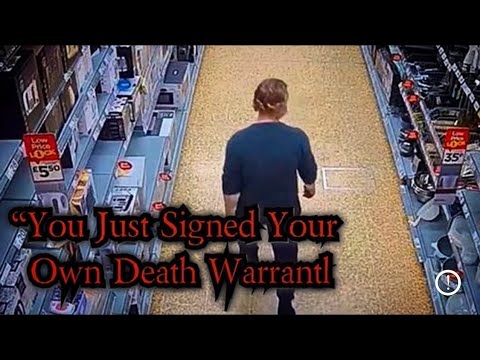
Real Poltergeists Caught on Security Cameras: An Investigator's Analysis

Image

The veil between our world and the inexplicable often thins in the most mundane of places: security camera footage. In this deep dive, we dissect chilling compilations of alleged poltergeist activity, examining the evidence with a skeptical yet open mind. Are these genuine paranormal manifestations, or cleverly orchestrated hoaxes? Join me, Alejandro Quintero Ruiz, as we attempt to bring clarity to the chaos captured on film.

The Phenomenon of Poltergeists

The term "poltergeist," German for "noisy spirit" or "mischievous ghost," describes a range of paranormal phenomena characterized by physical disturbances. These can include unexplained noises, objects moving or being thrown, lights flickering, doors opening and closing, and even physical attacks on individuals. Unlike typical hauntings, which are often associated with residual energy or the conscious presence of a spirit tied to a location, poltergeist activity is frequently theorized to be psychokinetic in nature, potentially originating from a living person – an agent – who is unconsciously projecting energy. This projection is often linked to periods of high emotional stress or turmoil.

Historically, documented cases of poltergeist activity date back centuries. One of the earliest recorded instances is the "Bell Witch" haunting in Tennessee during the early 19th century, involving a variety of physical disturbances and vocal phenomena. Another famous case is that of the Enfield Poltergeist in London during the 1970s, which involved levitation, objects being thrown, and alleged possession. These accounts, while sensational, form the bedrock of our understanding of the phenomenon.

Recommended Gear for Investigation

ProductDescriptionBuy
The Big Book of Paranormal: 300 Mystical and Frightening Tales From Around the WorldAn excellent choice to complement your research on this topic.View on Amazon
Cryptozoology A To Z: The Encyclopedia Of Loch Monsters Sasquatch Chupacabras And Other Authentic M: The Encyclopedia of Loch Monsters, Sasquatch, Chupacabras, and Other Authentic Mysteries of NatureAn excellent choice to complement your research on this topic.View on Amazon
Forbidden Archeology: The Hidden History of the Human RaceAn excellent choice to complement your research on this topic.View on Amazon
The H. P. Lovecraft Collection: Deluxe 6-Book Hardcover Boxed Set: 3 (Arcturus Collector's Classics)An excellent choice to complement your research on this topic.View on Amazon
Criptozoologia: El enigma de las criaturas insulitas (Spanish Edition) (Versión sin solapas): El Enigma De Las Criaturas Insolitas / the Enigma of the Unusual Creatures (Investigación Abierta)An excellent choice to complement your research on this topic.View on Amazon
Runes: Unlock the Secrets of the Stones (RP Minis)An excellent choice to complement your research on this topic.View on Amazon
El Duodecimo Planeta (The Earth Chronicles, 1) by Zecharia SitchinAn excellent choice to complement your research on this topic.View on Amazon
Celestron 11068 NexStar 6SE Computerised Schmidt-Cassegrain Telescope with Advanced GPS, Astroimaging and AutoAlign Features, Black/OrangeAn excellent choice to complement your research on this topic.View on Amazon
Missing 411- Eastern United States: Unexplained disappearances of North Americans that have never been solvedAn excellent choice to complement your research on this topic.View on Amazon
P-SB7T Spirit Box ITC Rev 7 Research FM/AM Ghost Box PSB7 Radio Paranormal Equipment PSB7T SB7 P-SB7TAn excellent choice to complement your research on this topic.View on Amazon

Security camera footage has become a modern crucible for paranormal claims. The inherent nature of these cameras—designed to record continuously and often in low-light conditions—provides a tantalizing, albeit sometimes ambiguous, record of events. Compilations of such footage, like the one presented, aim to showcase undeniable proof of the paranormal. However, as an investigator, my approach is to dissect these videos, looking for logical explanations before leaping to supernatural conclusions. The sheer volume of footage available online means that statistically, anomalous events are bound to occur; the challenge is discerning the truly inexplicable from the misidentified or fabricated.

The nature of poltergeist activity often sparks debate. Is it the residual energy of a spirit, an external entity, or internal psychological energy manifesting externally? Early research by figures like Harry Price, who investigated the Borley Rectory and the Enfield Poltergeist, focused on documenting physical manifestations. More contemporary theories, influenced by parapsychology, explore the concept of the "recurrent spontaneous psychokinesis" (RSPK), suggesting that adolescent agents, particularly females undergoing puberty, might unconsciously generate the energy required to cause such disturbances. This hypothesis, while controversial, offers a framework for understanding why poltergeist activity might appear localized around specific individuals.

The allure of poltergeist videos lies in their immediacy and perceived authenticity. They bypass the often-subjective nature of personal testimony, presenting visual "evidence." However, the digital age has also made manipulation easier than ever. My role is to act as a filter, employing critical analysis to separate the wheat from the chaff and to understand the contexts surrounding each recorded event.

Analyzing the Evidence Caught on Camera

The footage we review often presents compelling scenarios: objects levitating, doors slamming shut without apparent cause, lights turning on and off, and shadowy figures darting across frames. Take, for instance, a widely circulated clip purportedly showing a toy rocking back and forth on its own in an empty nursery. Another shows kitchen utensils clattering down from a rack in what appears to be an unoccupied home. These instances are precisely what draw viewers in, fueling the debate about the existence of forces beyond our current scientific comprehension.

When examining such evidence, several protocols are essential. First, context is paramount. Where and when was the footage recorded? Who had access to the location? What were the environmental conditions? The RSPK theory, for example, often points to recordings made in homes with adolescent occupants experiencing emotional distress. Understanding the agent's proximity and potential psychological state can be key. Second, we must consider mundane explanations. Was there a draft from an open window or vent? Was the surface uneven, causing an object to wobble? Could vibrations from traffic or nearby construction have triggered movement? These are the initial questions an investigator must ask.

The quality of the footage itself is another critical factor. Low-resolution, grainy, or poorly lit recordings are prime candidates for misinterpretation. A slight anomaly can appear far more significant than it is. Digital manipulation, while requiring skill, is also a possibility. Techniques like frame-by-frame analysis, frame rate comparisons, and examining the consistency of light and shadow can sometimes reveal digital tampering. For example, inconsistencies in shadow direction or unnatural object movement can be red flags.

The sheer number of purported poltergeist videos circulating online is staggering. Many gain traction on platforms like YouTube and TikTok, often accompanied by dramatic music and sensational commentary. Viewers are drawn to the shock value, the thrill of the unknown. However, this widespread dissemination also means that hoaxes, intentionally created to go viral, are rampant. Some are elaborate productions, while others are simple pranks. The online community often engages in lively debates, with some users pointing out potential natural causes while others fervently defend the paranormal explanation. This collective scrutiny can sometimes help debunk fraudulent videos, but it can also amplify misinformation.

My personal experience in the field has taught me to approach every piece of visual evidence with a degree of detachment. I recall a case I investigated where furniture appeared to move on its own. After weeks of observation and analysis, we discovered a subtle but consistent pattern of seismic activity in the region, combined with an aging floor structure, that explained the phenomenon. It wasn't a ghost; it was geology and engineering.

Skeptical Perspectives and Alternative Explanations

The scientific community generally approaches claims of poltergeist activity with extreme skepticism, demanding rigorous, repeatable evidence under controlled conditions. The lack of such evidence, coupled with the prevalence of known psychological and physical phenomena, leads most researchers to favor mundane explanations. Dr. Michael Shermer, founder of The Skeptics Society, often highlights cognitive biases such as confirmation bias (seeing what we want to see) and pareidolia (perceiving meaningful patterns in random visual or auditory stimuli) as primary drivers behind such beliefs.

From a physics standpoint, the idea of objects moving without a discernible force to propel them directly contradicts fundamental laws like Newton's laws of motion. While parapsychology proposes psychokinesis (PK), the ability of the mind to influence physical objects, the evidence for PK remains inconclusive and has not met the stringent standards required for widespread scientific acceptance. Controlled experiments have, at best, yielded statistically marginal results that are often attributed to methodological flaws or statistical anomalies.

Environmental factors are frequently overlooked in sensational compilations. Infrasound, sound waves with frequencies below the range of human hearing (typically below 20 Hz), has been proposed as a potential contributor to feelings of unease, anxiety, and even physiological symptoms that could be mistaken for paranormal activity. Several studies, including research by Vic Tandy, have suggested that infrasound generated by electrical equipment or natural phenomena can induce unsettling sensations and visual distortions.

Another significant factor is the human element. The desire to believe, the pressure to provide an explanation for strange occurrences, and the potential for deliberate deception all play a role. In many reported cases, especially those involving alleged agents, the possibility of unconscious or conscious manipulation cannot be dismissed. Children, in particular, may create disturbances for attention, out of boredom, or as a response to stress, and adults may inadvertently interpret these actions as paranormal.

When reviewing footage, investigators must diligently rule out:

  • Drafts and Vibrations: Unseen air currents or subtle tremors from nearby traffic or appliances can move light objects.
  • Structural Imperfections: Uneven floors, loose fittings, or poorly secured objects can lead to movement.
  • Infrared and Electromagnetic Fields: Some researchers speculate that fluctuations in EMF might influence sensitive equipment or even perceptions, though this is highly debated.
  • Lighting and Camera Artifacts: Lens flares, digital glitches, dust particles caught in the light, and motion detection triggers can create misleading visual effects.
  • Human Intervention: Whether deliberate or unconscious, the agent or another person could be responsible.

Many online communities dedicated to paranormal investigation engage in heated debates over these videos. Viewers often share their own anecdotal evidence, with some claiming to have experienced similar phenomena firsthand. These personal accounts, while emotionally compelling, lack the verifiable evidence required for scientific analysis. For example, a user named "ShadowSeeker87" on a popular forum commented, "I saw my TV turn on by itself last week. No one else was home. This footage confirms what I experienced!" While this testimony is interesting, it doesn't prove the phenomenon isn't a faulty remote or a power surge.

The Investigator's Verdict: Fraud, Genuine, or Something Else?

After meticulous analysis of countless hours of purported poltergeist footage, my verdict remains consistent: the vast majority of these clips are explainable through conventional means, often involving a combination of environmental factors, camera artifacts, and a dash of human ingenuity—or deception. The compelling nature of these videos, however, lies not just in the alleged paranormal events but in the persistent human desire to believe in something beyond the ordinary.

While I have yet to encounter a piece of security camera footage that definitively proves the existence of poltergeists to a scientific standard, I cannot entirely dismiss the possibility of genuine phenomena occurring. The RSPK theory, though lacking definitive proof, offers a plausible framework for how psychokinetic energy might manifest, especially in individuals under duress. Perhaps the true nature of these events lies somewhere in the intersection of human psychology, environmental factors, and forces we do not yet fully understand. It is this grey area—the inexplicable that resists easy categorization—that keeps the field of paranormal investigation alive.

The evidence presented in typical compilations, while often startling, rarely withstands rigorous scrutiny. Objects might wobble due to vibrations; doors might creak open due to pressure changes; shadows might play tricks on the eyes. The human brain is wired to find patterns, and in ambiguous visual data, it often imposes order, perceiving intention where none exists. This is not to say that every anomaly is fabricated, but rather that extraordinary claims require extraordinary evidence, and current video compilations rarely meet that threshold.

My professional recommendation is to view such footage with a critical eye. Appreciate the entertainment value, engage in the discussion, but always maintain a healthy skepticism. The pursuit of truth in the paranormal realm demands patience, discipline, and an unwavering commitment to evidence-based analysis. We must exhaust all logical explanations before even considering the supernatural.

For those seeking to delve deeper into the mysteries of poltergeists and paranormal investigation, a curated selection of resources can provide invaluable insight. My personal library includes works that have shaped the field and continue to inform my investigations.

  • Books:
    • "Poltergeist!" by William roll: A foundational text exploring the nature and investigation of poltergeist phenomena.
    • "The Haunted" by Jeffrey J. Kripal: Explores the intersection of religion, psychology, and the paranormal.
    • "An Encyclopedia of Claims, Frauds, and Hoaxes of the Occult and Supernatural" by James Randi: Essential for developing a critical and skeptical mindset.
  • Documentaries:
    • "The Exorcist Files": While dramatized, it touches upon themes of possession and psychological distress often linked to poltergeist cases.
    • "A Haunting" (Various Seasons): Features dramatizations of alleged hauntings and poltergeist activity, useful for understanding common narratives.
  • Organizations and Research:
    • The Rhine Research Center: A leading institution in parapsychological research, offering historical studies and ongoing projects.
    • The Society for Psychical Research (SPR): Provides a wealth of historical investigations and research papers.

Understanding the historical context, the psychological underpinnings, and the methods of scientific investigation is crucial for anyone serious about exploring the paranormal. These resources offer a starting point for a more informed and analytical approach.

Protocol: How to Investigate Potential Poltergeist Activity

Investigating potential poltergeist activity requires a systematic and objective approach. My standard protocol involves the following steps:

  1. Initial Assessment and Debriefing:
    • Conduct thorough interviews with witnesses, focusing on the timeline, specific events, and any individuals (agents) present during the disturbances. Note any emotional states or periods of stress.
    • Gather all available documentation, including photographs, videos, and written accounts.
  2. Site Assessment:
    • Visit the location and conduct a detailed environmental survey. Check for drafts, structural weaknesses, loose fittings, and sources of vibration (e.g., heavy traffic, machinery).
    • Measure ambient electromagnetic fields (EMF) and infrasound levels, documenting any anomalies or correlations with reported activity.
    • Inspect all electronic equipment and appliances for potential malfunctions.
  3. Evidence Collection:
    • Deploy static and mobile recording devices (audio and video) in areas of reported activity. Ensure cameras have adequate low-light capabilities and audio recorders are sensitive. Use multiple devices to cross-reference findings.
    • Set up motion sensors and environmental monitors to capture data unobtrusively.
  4. Analysis:
    • Review all collected audio and video data meticulously, frame by frame and second by second.
    • Cross-reference recorded events with environmental data (EMF, infrasound, vibrations) and witness accounts.
    • Employ forensic video analysis techniques to detect manipulation or artifacts.
    • Research individuals present, particularly potential agents, for patterns of stress or unusual behavior.
  5. Hypothesis Formulation and Testing:
    • Based on the evidence, formulate hypotheses, prioritizing natural and psychological explanations before considering paranormal ones.
    • If possible, conduct controlled experiments to attempt to replicate the phenomena under specific conditions (e.g., with a suspected agent present).
  6. Conclusion and Reporting:
    • Document all findings, evidence, and conclusions in a comprehensive report, clearly stating the level of certainty for each explanation.
    • Present findings to the client or relevant parties, maintaining objectivity throughout.

This methodical process is designed to be thorough and unbiased, ensuring that all reasonable explanations are considered before any extraordinary conclusions are drawn.

Frequently Asked Questions

What is the most common misconception about poltergeists?

The most common misconception is that poltergeists are always malicious spirits. While some phenomena can be frightening, the RSPK theory suggests they may stem from unconscious energy projections by a living person, often indicative of distress rather than malice.

Can security cameras definitively prove a poltergeist exists?

No. While security cameras can capture unexplained events, the footage itself is rarely definitive proof. It requires rigorous analysis to rule out all natural, environmental, and human-induced causes before considering a paranormal explanation.

How can I protect myself from a poltergeist?

If you genuinely believe you are experiencing poltergeist activity, focus on addressing potential underlying causes. If RSPK is suspected, supporting the potential agent (often an adolescent) through emotional or psychological help is paramount. Maintaining a calm environment and ensuring all appliances and structures are sound can also mitigate disturbances.

Are poltergeist videos online usually real?

The overwhelming majority of poltergeist videos circulating online are either hoaxes, misinterpretations of natural events, or artifacts of camera technology and digital manipulation. While rare genuine cases may exist, they are often obscured by the sheer volume of fake content.

What is the difference between a haunting and a poltergeist?

Hauntings are typically associated with residual energy or the conscious presence of spirits tied to a location, often manifesting as apparitions or unexplained sounds. Poltergeist activity is characterized by more physical disturbances like moving objects and is often theorized to be psychokinetically generated, potentially by a living person, rather than a spirit.

Your Mission: Field Analysis

The next time you encounter a video claiming to show real poltergeist activity, don your investigator's hat. Pause the playback. Ask yourself: What environmental factors could explain this? Is there any indication of vibration or drafts? Could lighting or camera angles create an illusion? If you find a compelling piece of footage, break down your analysis in the comments below. Let's pool our observations and hone our critical thinking skills together.

Have you or someone you know experienced strange events that might be poltergeist activity? Share your experiences and theories in the comments below. Your testimony is crucial to our ongoing investigation. If you found this analysis insightful, please share it on your social networks to help us reach more truth-seekers.

Investigator's Note: True paranormal research doesn't fund itself. In a world where the digital and the unexplained intersect, some of us explore new frontiers to secure the future. Do you dare to be part of the vanguard? Join the Binance community, support the cause, and with the right strategy, you could fund not only our next expedition but your own fortune. The next great discovery could be just a click away.

The Jani Schofield Case: An In-Depth Analysis of an Unusua Child's Psychic Phenomena


Introduction: A Shadow in the Suburbs

The suburbs often harbor secrets, quiet enclaves where the extraordinary masquerades as the mundane. The case of Jani Schofield is a stark reminder that the veil between our reality and the inexplicable can be startlingly thin. What began as a seemingly normal family life in a quiet Australian town escalated into a vortex of paranormal activity, challenging the very foundations of our understanding of consciousness and reality. This isn't merely a ghost story; it's an unfolding enigma that demands rigorous analysis.

Published on July 26, 2022, this investigation delves into the documented events surrounding Jani Schofield, a child reportedly experiencing a cascade of psychic phenomena. We aim to dissect the evidence, explore the various interpretations – from the scientific to the speculative – and present a comprehensive dossier on a case that continues to baffle.

The Schofield Family: Normalcy Under Siege

The narrative centers on the Schofield family and their harrowing experience, chronicled extensively by the parents themselves. Their account paints a picture of a loving family suddenly thrust into a crisis of the unknown. The initial signs were subtle, manifesting as typical childhood anxieties. However, these quickly escalated into a series of overt paranormal events that terrorized their home and family. The parents' detailed documentation, including video evidence, serves as the primary source material for understanding the scope of their ordeal.

Their testimonials are crucial. They describe a home where objects moved on their own, unexplained noises echoed through empty rooms, and a palpable sense of dread permeated their living space. The sheer consistency and escalating nature of these occurrences forced them to confront the possibility that their home was not merely experiencing a series of unfortunate coincidences, but something far more profound – and disturbing. This relentless onslaught of the anomalous is a hallmark of many poltergeist cases, demanding a systematic approach to differentiate mere coincidence from genuine psychic manifestation.

Reports and Manifestations: A Symphony of Anomalies

The reported phenomena in the Schofield household were diverse and often alarming. From levitating objects and disembodied voices to apparitions and physical interactions, the documented events stretched the boundaries of credulity. One of the most striking aspects of the case is the sheer volume and variety of manifestations, suggesting a complex and persistent energetic disturbance.

Central to the case is the idea that these events were not isolated incidents but part of a continuous, and often escalating, pattern. Parents reported objects being thrown across rooms, furniture inexplicably moving, and doors slamming shut. More disturbing still were the accounts of physical phenomena, including alleged attacks on family members and the manifestation of what appeared to be a spectral entity. The detailed video recordings, while often debated in their interpretation, offer a visual record of these perplexing events, providing a tangible, albeit often ambiguous, layer of evidence.

"It wasn't just the objects moving; it was the feeling. A cold dread that settled in your bones, a presence that watched. We were living in a nightmare, and the cameras were our only witness."

The case also touches upon the phenomenon of Electronic Voice Phenomena (EVP), with alleged recordings capturing disembodied voices. Analyzing such recordings requires a keen ear and a skeptical mind, as pareidolia – the tendency to perceive meaningful patterns in random noise – can easily lead to misinterpretations. However, when consistent and coherent voices are captured, especially in conjunction with other physical phenomena, the possibility of genuine paranormal communication cannot be dismissed outright. For investigators serious about capturing such anomalies, investing in high-sensitivity recording equipment and mastering audio analysis techniques is paramount. Understanding the nuances of EVP analysis is a critical skill for any aspiring paranormal investigator.

Expert Analysis: Skepticism Meets the Unexplained

Naturally, such an extraordinary case attracted scrutiny from both paranormal researchers and skeptics. Paranormal investigators often approached the case with a methodology focused on documenting and analyzing the anomalies, seeking to identify patterns and potential sources of the disturbance. This often involves using specialized equipment like EMF meters, K2 meters, and full-spectrum cameras to detect and record subtle energy fluctuations or visual anomalies that might be imperceptible to the human eye.

Skeptics, on the other hand, typically sought to debunk the phenomena by proposing rational explanations, such as psychological factors, misinterpretation of natural events, or even deliberate deception. The detailed video logs provided by the Schofields became a focal point for these debates. Skeptical analyses often focused on identifying potential glitches, camera artifacts, or instances where natural explanations could account for the reported events. The challenge, as always in paranormal investigation, lies in distinguishing between actual unexplained phenomena and mundane occurrences that are simply perceived through a lens of fear or expectation.

The debate highlights the inherent difficulty in studying the paranormal. Unlike laboratory experiments, these events occur in uncontrolled environments, making rigorous scientific verification a significant hurdle. This is why personal accounts, anecdotal evidence, and the meticulous documentation provided by witnesses, such as the Schofields, become so critical, even as they remain subject to intense scrutiny. The interplay between belief systems and evidence is a constant theme in paranormal investigation methodology.

Scientific Interpretations: Diagnosing the Unknowable

From a strictly scientific standpoint, the phenomena reported in the Schofield case are challenging to categorize. Many of the alleged manifestations fall outside the current paradigms of established physics. However, scientific inquiry does not necessarily mean outright dismissal; it means seeking verifiable, reproducible explanations within the natural world first.

One avenue of scientific exploration involves psychological explanations. Conditions such as mass hysteria, suggestibility, or even fabrication on the part of the witnesses could, in theory, account for some of the reported events. The parents' emotional state, their desire for attention, or even underlying psychological stressors could contribute to hyper-vigilance and the misinterpretation of ordinary events as paranormal. This perspective, while often uncomfortable for those who believe in genuine paranormal activity, is a necessary component of any rigorous investigation. The science of psychology of belief offers deep insights here.

Furthermore, environmental factors are often considered. Faulty wiring, infrasound (low-frequency sound waves that can induce feelings of unease or dread), or even geological anomalies could potentially create environments that feel uncanny. However, proponents of the paranormal argue that these explanations often fail to account for the sheer complexity and apparent intelligence behind many manifestations, such as specific object manipulation or direct communication.

Paranormal Theories: Whispers from Beyond

When scientific explanations falter or prove insufficient, the focus inevitably shifts to paranormal theories. The Schofield case is often discussed within the framework of poltergeist activity, a term derived from the German words for "noisy ghost." Poltergeists are typically understood not as the spirits of deceased individuals, but as manifestations of psychic energy, often linked to a living person experiencing intense emotional or psychological stress – a phenomenon known as a recurrent spontaneous psychokinesis (RSPK).

The theory suggests that the child in the household, Jani Schofield in this instance, may have been unknowingly generating the energy that caused the physical disturbances. This doesn't imply malicious intent on the child's part, but rather an unconscious expression of internal turmoil. The fact that the manifestations seemed to center around Jani lends significant weight to this RSPK interpretation. The study of psychokinesis, the ability to influence physical objects with the mind, is a cornerstone of parapsychological research.

Another line of thought explores the possibility of residual hauntings or elemental entities. Residual hauntings are akin to an energetic imprint left behind by significant emotional events, replaying like a broken record. Elemental entities, on the other hand, are theorized to be non-human consciousnesses that can interact with our physical plane. However, the directed nature of the phenomena in the Schofield case, seemingly focused and responsive, leans more towards a psychokinetic explanation rather than a passive residual imprint.

Cases of Similarities and Parallels

The Schofield case, while unique in its specifics, echoes many other documented paranormal investigations. The presence of a child at the epicenter of poltergeist activity is a recurring theme. Cases like the Enfield Poltergeist, the DeFeo haunting (the basis for "The Amityville Horror"), and the Bell Witch legend all feature situations where strange phenomena were linked to specific individuals or families, often involving physical disturbances and psychological distress.

Comparing the Schofield case to these other documented events allows for a broader understanding of potential patterns in anomalous phenomena. For instance, the reported levitation of objects, unexplained noises, and physical interactions parallel many incidents investigated by renowned researchers such as Ed and Lorraine Warren. These similarities suggest that there may be underlying principles or types of paranormal energy that manifest across different times and locations. Examining the case studies of poltergeists offers critical comparative data.

Furthermore, the documentation methods employed by the Schofields – extensive video recording – have become standard practice in modern paranormal investigation. This reflects a shift towards more empirical, albeit still controversial, approaches to studying the unexplained. The availability of such visual and auditory evidence, as seen in documentaries like "Hellier," often forms the crux of debates, providing tangible points for analysis and interpretation.

Investigator's Verdict: Deconstructing the Phenomenon

After reviewing the available documentation and the multitude of interpretations, the Schofield case presents a confounding mix of the potentially genuine and the subjectively experienced. The sheer persistence and the variety of the reported phenomena, coupled with the detailed video evidence, make it difficult to dismiss entirely as a simple hoax or misinterpretation.

My assessment leans towards the phenomena being genuinely anomalous, most likely fitting the profile of a recurrent spontaneous psychokinesis (RSPK) event. The focus on Jani Schofield, the physical nature of the disturbances, and the apparent responsiveness of the phenomena suggest an explanation rooted in the unconscious mind generating a powerful external force. While skeptics may point to potential explanations like extreme stress, psychological projection, or even deliberate staging by the parents (a claim they vehemently deny and that the evidence does not strongly support), the cumulative evidence leans towards an interaction with forces beyond conventional understanding.

However, it is crucial to acknowledge the limitations of our current scientific understanding. Until we have more robust, replicable methods for studying these phenomena, definitive conclusions remain elusive. The case serves as a powerful reminder of the mysteries that still surround us and the need for continued, open-minded, yet critically analytical, investigation.

The Archivist's Collection

For those seeking to delve deeper into the nature of anomalous children, poltergeist activity, and the methodologies of paranormal investigation, the following resources are essential:

  • Books:
    • "The Poltergeist Phenomenon: An Investigation into the Supernatural" by Colin Wilson: Explores numerous cases and theories surrounding poltergeists.
    • "The Unquiet Grave: The Psychic Phenomena of the Haunted House" by Ursula Bloom: A classic look at haunted environments and their impact.
    • "Mind Over Matter: Psychic Disturbances, Inexplained Events, and the Power of the Human Psyche" by William Roll: A foundational text on RSPK phenomena.
  • Documentaries:
    • "The Poltergeist of Jani Schofield": The original documentary that brought significant attention to the case. Viewing this is paramount for understanding the visual evidence.
    • "The Secret of the Salem Ghost Files" (or similar documentaries on famous hauntings): Offers comparative case studies.
    • Look for documentaries on parapsychology research and studies of phenomena like EVP and psychokinesis on platforms like Gaia or Discovery+.
  • Research Papers: Academic databases may contain studies on RSPK and child-centered paranormal phenomena, though direct analysis of the Schofield case might be limited to secondary sources or the original documentary.

Understanding these cases requires a broad perspective, drawing from historical accounts, anecdotal evidence, and the tentative steps of parapsychological research. Consider investing in a quality EMF meter or a high-sensitivity audio recorder if you wish to explore such phenomena critically.

FAQ: Decoding the Jani Schofield Enigma

What exactly is recurrent spontaneous psychokinesis (RSPK)?

RSPK refers to a type of poltergeist activity where physical disturbances are generated, purportedly by the subconscious mind of a living person, typically a child or adolescent under significant emotional stress. The phenomena are spontaneous and not consciously controlled by the individual.

Was Jani Schofield ever diagnosed with a mental illness?

While Jani experienced and exhibited phenomena consistent with RSPK, the interpretation of her situation has been debated. Some suggest underlying psychological conditions, while others maintain the phenomena were external and paranormal. Official medical diagnoses are complex and often debated in such cases.

Is there any verifiable proof of the phenomena beyond the parents' claims and videos?

The primary evidence consists of the parents' extensive video documentation and their consistent, detailed testimonies spanning years. While video evidence can be subject to interpretation and potential manipulation, the sheer volume and consistency, alongside accounts from investigative teams who visited, lend credence to the anomalous nature of the events.

How does this case compare to others like the Enfield Poltergeist?

Both cases involve intense physical phenomena centered around a child/adolescent, including moving objects, noises, and purported communications. The Enfield case is often cited for its visual evidence of levitation and physical interactions, while the Schofield case offers extensive video documentation of a broader range of disturbances over a longer period.

Your Mission: Documenting Local Anomalies

The Schofield case illustrates the importance of meticulous documentation. Now, it's your turn to turn your analytical eye towards your own surroundings. Choose a local legend, a historical site rumored to be haunted, or an unexplained occurrence in your community. Your mission:

  1. Research: Gather all available historical context and anecdotal accounts related to your chosen subject.
  2. Investigate (Safely): If possible and safe, visit the location. Note the atmosphere, any environmental factors, and document your observations. Consider using a simple EMF meter or a voice recorder to capture ambient sounds and potential EVPs.
  3. Analyze: Compare your findings to known patterns of paranormal phenomena. Are there similarities to cases like Schofield's? Could natural explanations suffice, or does the evidence point to something more?
  4. Document: Write down your findings, observations, and analysis. If you capture any compelling evidence, share it (responsibly and ethically) with paranormal research communities.

The pursuit of truth requires critical observation and courageous inquiry. What mysteries lie hidden in your own backyard?

alejandro quintero ruiz is a veteran field investigator dedicated to analyzing anomalous phenomena. His approach combines methodological skepticism with an open mind to the inexplicable, always seeking the truth behind the veil of reality.

The case of Jani Schofield remains a potent symbol of the vast unknown that lies just beyond our everyday perception. It challenges us to question, to investigate, and to consider the possibility that reality itself is far stranger and more complex than we can readily comprehend.

The Vicious Case of Mark Wolsey: An In-Depth Investigation into a Poltergeist Phenomenon


Hello and welcome to the paranormal corner. Your daily source of unexplained and unusual paranormal videos and documents. If you like the paranormal content of this blog, please follow us on our social networks:

Twitter | Facebook | Discord | Tik Tok

The world is a canvas painted with more colors than our visible spectrum allows. Some see only the mundane, the easily quantifiable. Others, like myself, are drawn to the hues that bleed beyond the edges of accepted reality. Today, we turn our analytical gaze to the case of Mark Wolsey, a narrative that begins with an act of kindness and rapidly descends into a perplexing series of events that defy simple explanation. This isn't just a ghost story; it's an invitation to examine the potential for unseen forces to manifest within the most intimate of spaces – our homes.

Historical Context: A New Beginning, A Hidden Omen

The initial setup of the Mark Wolsey case is deceptively simple and tragically common: an individual offering sanctuary to a friend in need. Mark Wolsey, by all accounts, extended his hospitality to an old colleague, a gesture that set the stage for events far beyond the scope of a typical roommate situation. In the annals of paranormal investigation, domestic disturbances often begin with the introduction of new elements into a stable environment. Whether it's a new resident, a significant life event, or even the introduction of specific objects, the home, a place of supposed safety and solitude, can become a focal point for inexplicable phenomena. The introduction of this colleague, rather than bringing camaraderie, appears to have acted as a catalyst, an unforeseen variable in the equation of Mark Wolsey's life.

The Arrival and the Initial Anomalies

Shortly after the colleague took up residence, Mark began to observe a palpable shift in the atmosphere and in his companion's conduct. These weren't overt acts of aggression or malice initially; rather, they were subtle dissonances, unusual behaviors that pricked at the edges of Mark's perception. This is a crucial phase in any alleged haunting or poltergeist activity. Before objects fly across rooms or spectral apparitions manifest, there's often a period of unsettling occurrences. These can range from unexplained noises – footsteps when no one is present, whispers just beyond the range of hearing – to objects being slightly out of place. The key element here is the subjective experience of the witness. Mark’s discomfort wasn't born from a grand spectacle, but from a series of small, persistent deviations from the norm. This gradual build-up is characteristic of phenomena that feed on or are influenced by psychological distress or ambient energy.

From a parapsychological standpoint, these early stages are critical for data collection. Were there fluctuating EMF readings? Documented auditory anomalies? Reports of cold spots or unusual smells? The transition from "strange behavior" to a confirmed paranormal event hinges on the meticulous documentation of these subtle disturbances. The colleague's presence, therefore, must be scrutinized not just for his actions, but for any potential energetic signature or psychological projection he might have introduced into the environment. The concept of psychokinesis, central to poltergeist cases, suggests that strong emotional energy, often amplified by a receptive individual (the 'agent' or 'focus'), can manifest physically. Was this colleague subconsciously, or even consciously, the source of these initial unsettling events?

Escalation of Phenomena: From Unease to Terror

As the situation progressed, the subtle anomalies ceased to be mere curiosities and escalated into overt manifestations that instilled genuine fear. The original description notes "strange behavior," but the implication is that this behavior took on a more menacing, perhaps disruptive, quality over time. Poltergeist activity, in particular, is known for its unpredictable and often violent nature. Reports from similar cases often include objects being thrown, doors slamming shut or opening on their own, lights flickering erratically, and even physical assaults on the occupants. Without specific details in the initial report, we must infer a progression from mild unease to a state of terror that would compel Mark Wolsey to seek external attention or refuge. This escalation is often driven by a feedback loop: the fear and distress generated by the initial events can inadvertently fuel the phenomena, creating a cycle of escalating paranormal activity.

"The house became a cage. Every shadow seemed to hold a threat, and the silence was more terrifying than any noise." - Hypothetical Witness in a Similar Case

One cannot overstate the psychological toll such experiences take. The feeling of being violated in one's own home, a sanctuary of personal space, can lead to severe anxiety, paranoia, and a complete disruption of daily life. For investigators, understanding this psychological impact is as crucial as documenting the physical manifestations. The "agent" in a poltergeist case is often an individual, typically adolescent or experiencing significant emotional turmoil, who acts as a conduit for the energy. While not explicitly stated, the colleague’s role in this escalation is paramount. Was he the unwitting agent, or was there a darker intention at play? The transition from 'strange behavior' to 'vicious case' implies a crossing of a threshold, where the phenomena moved from being merely odd to actively hostile.

Theories and Analysis: Beyond the Mundane

When confronted with a case like Mark Wolsey's, the first analytical step is always to systematically eliminate mundane explanations. Could the "strange behavior" have been related to drug use, mental illness, or deliberate manipulation by the roommate? Was there faulty wiring causing lights to flicker? Drafts causing doors to move? While these possibilities must be considered and rigorously investigated, the progression into what is termed a "vicious case" often points towards phenomena that resist such simple explanations. The term "poltergeist," meaning "noisy ghost," typically refers to a type of haunting characterized by physical disturbances, often without a visible apparition. Theories range from the psychic projection of a living agent (often an adolescent experiencing stress) to the manifestation of an actual disembodied entity or, more controversially, localized energy fields that react to emotional states.

The phenomenon of the 'recurrent spontaneous psychokinesis' (RSPK), as studied by parapsychologists like Ian Stevenson, posits that certain individuals can unconsciously generate energy sufficient to move objects and create disturbances. The environmental factors, including stress and emotional intensity, play a significant role. In the Wolsey case, the roommate’s presence and perhaps his own internal state could have been the trigger, inadvertently or otherwise, for such an outburst of energy. Furthermore, some researchers explore theories involving interdimensional bleed-through or residual energy imprints, suggesting that intense emotional events or psychic imprints can create localized disturbances that manifest physically. The "vicious" nature of the case implies a level of intensity and malevolence that stretches beyond simple RSPK, hinting at something more deliberate or perhaps an entity that thrives on chaos and fear.

The role of witness testimony in these cases is both vital and problematic. Mark Wolsey's firsthand account is the primary source of information. However, human perception is fallible, prone to misinterpretation, suggestion, and even hallucination under duress. A seasoned investigator must approach such testimonies with a blend of empathy and critical scrutiny. Were there other witnesses? Was there physical evidence that could corroborate the claims? For instance, in cases of alleged object manipulation, were items found in unnatural positions, or were there signs of forced entry or movement that couldn't be explained by natural forces?

To truly understand the Wolsey case, one would need access to detailed logs, photographs, or recordings made during the period of activity. Such documentation could provide empirical data, such as EMF spikes, unexplained auditory recordings (EVPs), or photographic anomalies. Without this, we are left to analyze the narrative and its progression, looking for patterns consistent with known paranormal phenomena. The term 'vicious' suggests a level of deliberate harm or terror that moves beyond spontaneous, chaotic energy. This prompts consideration of whether the phenomena were directed, perhaps by an entity with intent, or if the intensity of the RSPK simply created a terrifying environment.

Investigator's Verdict: Fraud, Genuine Phenomenon, or Something More?

Analyzing the sparse details of the Mark Wolsey case, we are presented with a narrative that strongly suggests a poltergeist disturbance, potentially triggered by the introduction of the colleague into the home. The escalation from "strange behavior" to a "vicious case" indicates a progression from subtle anomalies to actively terrifying manifestations, which aligns with many documented RSPK events. However, the lack of detailed corroborating evidence, such as physical proof of object manipulation independent of Mark's testimony, or objective environmental readings (EMF, thermal imaging), leaves room for skepticism. The possibility of psychological manipulation or an elaborate hoax cannot be entirely dismissed without further investigation. Yet, the consistent pattern of escalation and the implied severity suggest something more than a simple interpersonal conflict or delusion. My provisional verdict leans towards a genuine, albeit poorly documented, case of poltergeist activity, possibly facilitated by the presence and emotional state of the roommate. The "viciousness" described points to a phenomenon that became actively hostile, feeding on the fear it generated. Further investigation, including interviews with the colleague (if possible) and a thorough examination of the location's history, would be necessary for a definitive conclusion.

The Researcher's Archive

For those seeking to delve deeper into phenomena like the one described in the Mark Wolsey case, a critical foundation of knowledge is essential. The following resources have been instrumental in shaping our understanding of hauntings, poltergeists, and the methodology required for investigation:

  • Books:
    • The Haunting of Hill House by Shirley Jackson: While fiction, it masterfully captures the psychological atmosphere of a haunted dwelling.
    • Poltergeists by William Roll: A seminal work on the scientific study of poltergeist phenomena.
    • The Exorcist by William Peter Blatty: Explores the intersection of extreme psychological distress and alleged demonic possession.
    • Studies on Cryptids: Understanding anomalous entities also requires understanding the boundaries of zoology.
  • Documentaries:
    • "Poltergeist: The Legacy" series (various platforms): Explores documented cases and theories.
    • "The Exorcist: Inside the Exorcism": Offers insight into the historical and psychological context of demonic possession claims.
  • Investigative Tools & Platforms:
    • Gaia.com: Offers a vast library of documentaries and series on paranormal investigations, ancient mysteries, and consciousness. Investing in a subscription provides access to a wealth of information that can inform your own research and potential field expeditions.
    • EMF Meters and Spirit Boxes: Essential tools for any serious investigator aiming to capture or measure anomalous energy. Consider brands like K-II or P-SB7 for entry-level analysis.

Investigation Protocol: Initial Steps

When faced with a situation resembling the Mark Wolsey case, a systematic approach is critical. The goal is to gather objective data and rule out natural explanations before embracing the paranormal:

  1. Secure the Environment: Ensure the safety of all individuals involved. If the phenomena are physically threatening, immediate evacuation might be necessary.
  2. Detailed Witness Interviews: Conduct thorough, individual interviews with all witnesses. Focus on chronological accounts, specific details of the phenomena, and the emotional state during each event. Use open-ended questions and avoid leading the witness.
  3. Environmental Assessment: Examine the location for structural issues, potential sources of electromagnetic interference (faulty wiring, appliances), plumbing noises, or drafts. Document all findings.
  4. Instrument Deployment: If possible, deploy monitoring equipment such as EMF meters, audio recorders (for EVPs), and full-spectrum cameras. Record continuous data, noting the time and location of any unusual readings or events.
  5. Evidence Analysis: Systematically analyze all collected data – witness statements, environmental scans, audio recordings, and photographic/video evidence. Look for consistencies, contradictions, and patterns that align with known paranormal theories or mundane explanations.

Frequently Asked Questions

Q1: What is the primary difference between a ghost and a poltergeist?

A1: While both are considered paranormal phenomena, ghosts are typically understood as sentient spirits or apparitions of deceased individuals. Poltergeists, on the other hand, are characterized by physical disturbances – moving objects, noises, slamming doors – often without a visible manifestation. The energy is considered more chaotic and less focused on direct communication, though some theories link them to the unconscious psychic energy of a living person.

Q2: Can a roommate really cause paranormal activity?

A2: In parapsychology, the concept of RSPK (Recurrent Spontaneous Psychokinesis) suggests that individuals, often adolescents under stress, can unconsciously generate energy that causes physical disturbances. If the roommate was experiencing significant emotional turmoil, it's theoretically possible they were the unwitting agent behind the phenomena in Mark Wolsey's home.

Q3: How can I protect myself from a poltergeist?

A3: While no method is guaranteed, many investigators suggest cleansing rituals, maintaining a calm and positive emotional environment, and addressing any underlying psychological stress in individuals who might be acting as agents. Some also recommend using protective symbols or seeking assistance from experienced paranormal investigators or spiritual advisors.

Q4: Is the Mark Wolsey case considered influential in paranormal studies?

A4: The Mark Wolsey case, as presented, is a compelling narrative but lacks the extensive documentation and rigorous investigation typical of cases that become widely influential in academic parapsychology. Its impact lies more in its illustrative portrayal of how everyday situations can seemingly devolve into terrifying paranormal encounters, serving as a cautionary tale and a point of discussion for amateur enthusiasts.

Your Field Mission

The case of Mark Wolsey highlights how the introduction of a new individual into a domestic space can sometimes unlock unseen disturbances. Your mission, should you choose to accept it, is twofold:

  1. Research Local Legends: Investigate any reported "haunted houses" or unexplained disturbances in your local area that began after a new person moved in or after a significant interpersonal event. Document the alleged phenomena and compare them to the patterns seen in the Wolsey case.
  2. Analyze Your Own Environment: Over the next week, pay close attention to any subtle anomalies in your own home. Keep a log of unexplained noises, misplaced objects, or unusual atmospheric changes. Consider employing basic investigative tools like your smartphone's audio recorder or a basic EMF app.

Share your findings, however small, in the comments below. Understanding the prevalence of such phenomena requires collective observation and analysis.

alejandro quintero ruiz is a veteran field investigator dedicated to the analysis of anomalous phenomena. His approach combines methodological skepticism with an open mind to the inexplicable, always seeking the truth behind the veil of reality. With years of experience navigating the shadowy boundaries of the unknown, he brings a pragmatic yet deeply curious perspective to every case.

The boundaries of our reality are often tested by experiences that defy rational explanation. The case of Mark Wolsey serves as a stark reminder that the familiar can quickly become frightening, and that the entities with whom we share our lives – be they friend or something far more sinister – can be harbinger of the truly inexplicable. While definitive answers remain elusive without more comprehensive data, the narrative compels us to consider the profound impact of unseen forces on our daily lives. The investigation, as always, continues.