Followers

Mostrando las entradas con la etiqueta security cameras. Mostrar todas las entradas

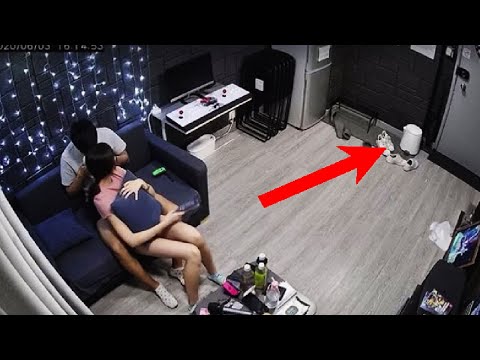
Real Poltergeists Caught on Security Cameras: An Investigator's Analysis

Image

The veil between our world and the inexplicable often thins in the most mundane of places: security camera footage. In this deep dive, we dissect chilling compilations of alleged poltergeist activity, examining the evidence with a skeptical yet open mind. Are these genuine paranormal manifestations, or cleverly orchestrated hoaxes? Join me, Alejandro Quintero Ruiz, as we attempt to bring clarity to the chaos captured on film.

The Phenomenon of Poltergeists

The term "poltergeist," German for "noisy spirit" or "mischievous ghost," describes a range of paranormal phenomena characterized by physical disturbances. These can include unexplained noises, objects moving or being thrown, lights flickering, doors opening and closing, and even physical attacks on individuals. Unlike typical hauntings, which are often associated with residual energy or the conscious presence of a spirit tied to a location, poltergeist activity is frequently theorized to be psychokinetic in nature, potentially originating from a living person – an agent – who is unconsciously projecting energy. This projection is often linked to periods of high emotional stress or turmoil.

Historically, documented cases of poltergeist activity date back centuries. One of the earliest recorded instances is the "Bell Witch" haunting in Tennessee during the early 19th century, involving a variety of physical disturbances and vocal phenomena. Another famous case is that of the Enfield Poltergeist in London during the 1970s, which involved levitation, objects being thrown, and alleged possession. These accounts, while sensational, form the bedrock of our understanding of the phenomenon.

Recommended Gear for Investigation

ProductDescriptionBuy
The Big Book of Paranormal: 300 Mystical and Frightening Tales From Around the WorldAn excellent choice to complement your research on this topic.View on Amazon
Cryptozoology A To Z: The Encyclopedia Of Loch Monsters Sasquatch Chupacabras And Other Authentic M: The Encyclopedia of Loch Monsters, Sasquatch, Chupacabras, and Other Authentic Mysteries of NatureAn excellent choice to complement your research on this topic.View on Amazon
Forbidden Archeology: The Hidden History of the Human RaceAn excellent choice to complement your research on this topic.View on Amazon
The H. P. Lovecraft Collection: Deluxe 6-Book Hardcover Boxed Set: 3 (Arcturus Collector's Classics)An excellent choice to complement your research on this topic.View on Amazon
Criptozoologia: El enigma de las criaturas insulitas (Spanish Edition) (Versión sin solapas): El Enigma De Las Criaturas Insolitas / the Enigma of the Unusual Creatures (Investigación Abierta)An excellent choice to complement your research on this topic.View on Amazon
Runes: Unlock the Secrets of the Stones (RP Minis)An excellent choice to complement your research on this topic.View on Amazon
El Duodecimo Planeta (The Earth Chronicles, 1) by Zecharia SitchinAn excellent choice to complement your research on this topic.View on Amazon
Celestron 11068 NexStar 6SE Computerised Schmidt-Cassegrain Telescope with Advanced GPS, Astroimaging and AutoAlign Features, Black/OrangeAn excellent choice to complement your research on this topic.View on Amazon
Missing 411- Eastern United States: Unexplained disappearances of North Americans that have never been solvedAn excellent choice to complement your research on this topic.View on Amazon
P-SB7T Spirit Box ITC Rev 7 Research FM/AM Ghost Box PSB7 Radio Paranormal Equipment PSB7T SB7 P-SB7TAn excellent choice to complement your research on this topic.View on Amazon

Security camera footage has become a modern crucible for paranormal claims. The inherent nature of these cameras—designed to record continuously and often in low-light conditions—provides a tantalizing, albeit sometimes ambiguous, record of events. Compilations of such footage, like the one presented, aim to showcase undeniable proof of the paranormal. However, as an investigator, my approach is to dissect these videos, looking for logical explanations before leaping to supernatural conclusions. The sheer volume of footage available online means that statistically, anomalous events are bound to occur; the challenge is discerning the truly inexplicable from the misidentified or fabricated.

The nature of poltergeist activity often sparks debate. Is it the residual energy of a spirit, an external entity, or internal psychological energy manifesting externally? Early research by figures like Harry Price, who investigated the Borley Rectory and the Enfield Poltergeist, focused on documenting physical manifestations. More contemporary theories, influenced by parapsychology, explore the concept of the "recurrent spontaneous psychokinesis" (RSPK), suggesting that adolescent agents, particularly females undergoing puberty, might unconsciously generate the energy required to cause such disturbances. This hypothesis, while controversial, offers a framework for understanding why poltergeist activity might appear localized around specific individuals.

The allure of poltergeist videos lies in their immediacy and perceived authenticity. They bypass the often-subjective nature of personal testimony, presenting visual "evidence." However, the digital age has also made manipulation easier than ever. My role is to act as a filter, employing critical analysis to separate the wheat from the chaff and to understand the contexts surrounding each recorded event.

Analyzing the Evidence Caught on Camera

The footage we review often presents compelling scenarios: objects levitating, doors slamming shut without apparent cause, lights turning on and off, and shadowy figures darting across frames. Take, for instance, a widely circulated clip purportedly showing a toy rocking back and forth on its own in an empty nursery. Another shows kitchen utensils clattering down from a rack in what appears to be an unoccupied home. These instances are precisely what draw viewers in, fueling the debate about the existence of forces beyond our current scientific comprehension.

When examining such evidence, several protocols are essential. First, context is paramount. Where and when was the footage recorded? Who had access to the location? What were the environmental conditions? The RSPK theory, for example, often points to recordings made in homes with adolescent occupants experiencing emotional distress. Understanding the agent's proximity and potential psychological state can be key. Second, we must consider mundane explanations. Was there a draft from an open window or vent? Was the surface uneven, causing an object to wobble? Could vibrations from traffic or nearby construction have triggered movement? These are the initial questions an investigator must ask.

The quality of the footage itself is another critical factor. Low-resolution, grainy, or poorly lit recordings are prime candidates for misinterpretation. A slight anomaly can appear far more significant than it is. Digital manipulation, while requiring skill, is also a possibility. Techniques like frame-by-frame analysis, frame rate comparisons, and examining the consistency of light and shadow can sometimes reveal digital tampering. For example, inconsistencies in shadow direction or unnatural object movement can be red flags.

The sheer number of purported poltergeist videos circulating online is staggering. Many gain traction on platforms like YouTube and TikTok, often accompanied by dramatic music and sensational commentary. Viewers are drawn to the shock value, the thrill of the unknown. However, this widespread dissemination also means that hoaxes, intentionally created to go viral, are rampant. Some are elaborate productions, while others are simple pranks. The online community often engages in lively debates, with some users pointing out potential natural causes while others fervently defend the paranormal explanation. This collective scrutiny can sometimes help debunk fraudulent videos, but it can also amplify misinformation.

My personal experience in the field has taught me to approach every piece of visual evidence with a degree of detachment. I recall a case I investigated where furniture appeared to move on its own. After weeks of observation and analysis, we discovered a subtle but consistent pattern of seismic activity in the region, combined with an aging floor structure, that explained the phenomenon. It wasn't a ghost; it was geology and engineering.

Skeptical Perspectives and Alternative Explanations

The scientific community generally approaches claims of poltergeist activity with extreme skepticism, demanding rigorous, repeatable evidence under controlled conditions. The lack of such evidence, coupled with the prevalence of known psychological and physical phenomena, leads most researchers to favor mundane explanations. Dr. Michael Shermer, founder of The Skeptics Society, often highlights cognitive biases such as confirmation bias (seeing what we want to see) and pareidolia (perceiving meaningful patterns in random visual or auditory stimuli) as primary drivers behind such beliefs.

From a physics standpoint, the idea of objects moving without a discernible force to propel them directly contradicts fundamental laws like Newton's laws of motion. While parapsychology proposes psychokinesis (PK), the ability of the mind to influence physical objects, the evidence for PK remains inconclusive and has not met the stringent standards required for widespread scientific acceptance. Controlled experiments have, at best, yielded statistically marginal results that are often attributed to methodological flaws or statistical anomalies.

Environmental factors are frequently overlooked in sensational compilations. Infrasound, sound waves with frequencies below the range of human hearing (typically below 20 Hz), has been proposed as a potential contributor to feelings of unease, anxiety, and even physiological symptoms that could be mistaken for paranormal activity. Several studies, including research by Vic Tandy, have suggested that infrasound generated by electrical equipment or natural phenomena can induce unsettling sensations and visual distortions.

Another significant factor is the human element. The desire to believe, the pressure to provide an explanation for strange occurrences, and the potential for deliberate deception all play a role. In many reported cases, especially those involving alleged agents, the possibility of unconscious or conscious manipulation cannot be dismissed. Children, in particular, may create disturbances for attention, out of boredom, or as a response to stress, and adults may inadvertently interpret these actions as paranormal.

When reviewing footage, investigators must diligently rule out:

  • Drafts and Vibrations: Unseen air currents or subtle tremors from nearby traffic or appliances can move light objects.
  • Structural Imperfections: Uneven floors, loose fittings, or poorly secured objects can lead to movement.
  • Infrared and Electromagnetic Fields: Some researchers speculate that fluctuations in EMF might influence sensitive equipment or even perceptions, though this is highly debated.
  • Lighting and Camera Artifacts: Lens flares, digital glitches, dust particles caught in the light, and motion detection triggers can create misleading visual effects.
  • Human Intervention: Whether deliberate or unconscious, the agent or another person could be responsible.

Many online communities dedicated to paranormal investigation engage in heated debates over these videos. Viewers often share their own anecdotal evidence, with some claiming to have experienced similar phenomena firsthand. These personal accounts, while emotionally compelling, lack the verifiable evidence required for scientific analysis. For example, a user named "ShadowSeeker87" on a popular forum commented, "I saw my TV turn on by itself last week. No one else was home. This footage confirms what I experienced!" While this testimony is interesting, it doesn't prove the phenomenon isn't a faulty remote or a power surge.

The Investigator's Verdict: Fraud, Genuine, or Something Else?

After meticulous analysis of countless hours of purported poltergeist footage, my verdict remains consistent: the vast majority of these clips are explainable through conventional means, often involving a combination of environmental factors, camera artifacts, and a dash of human ingenuity—or deception. The compelling nature of these videos, however, lies not just in the alleged paranormal events but in the persistent human desire to believe in something beyond the ordinary.

While I have yet to encounter a piece of security camera footage that definitively proves the existence of poltergeists to a scientific standard, I cannot entirely dismiss the possibility of genuine phenomena occurring. The RSPK theory, though lacking definitive proof, offers a plausible framework for how psychokinetic energy might manifest, especially in individuals under duress. Perhaps the true nature of these events lies somewhere in the intersection of human psychology, environmental factors, and forces we do not yet fully understand. It is this grey area—the inexplicable that resists easy categorization—that keeps the field of paranormal investigation alive.

The evidence presented in typical compilations, while often startling, rarely withstands rigorous scrutiny. Objects might wobble due to vibrations; doors might creak open due to pressure changes; shadows might play tricks on the eyes. The human brain is wired to find patterns, and in ambiguous visual data, it often imposes order, perceiving intention where none exists. This is not to say that every anomaly is fabricated, but rather that extraordinary claims require extraordinary evidence, and current video compilations rarely meet that threshold.

My professional recommendation is to view such footage with a critical eye. Appreciate the entertainment value, engage in the discussion, but always maintain a healthy skepticism. The pursuit of truth in the paranormal realm demands patience, discipline, and an unwavering commitment to evidence-based analysis. We must exhaust all logical explanations before even considering the supernatural.

For those seeking to delve deeper into the mysteries of poltergeists and paranormal investigation, a curated selection of resources can provide invaluable insight. My personal library includes works that have shaped the field and continue to inform my investigations.

  • Books:
    • "Poltergeist!" by William roll: A foundational text exploring the nature and investigation of poltergeist phenomena.
    • "The Haunted" by Jeffrey J. Kripal: Explores the intersection of religion, psychology, and the paranormal.
    • "An Encyclopedia of Claims, Frauds, and Hoaxes of the Occult and Supernatural" by James Randi: Essential for developing a critical and skeptical mindset.
  • Documentaries:
    • "The Exorcist Files": While dramatized, it touches upon themes of possession and psychological distress often linked to poltergeist cases.
    • "A Haunting" (Various Seasons): Features dramatizations of alleged hauntings and poltergeist activity, useful for understanding common narratives.
  • Organizations and Research:
    • The Rhine Research Center: A leading institution in parapsychological research, offering historical studies and ongoing projects.
    • The Society for Psychical Research (SPR): Provides a wealth of historical investigations and research papers.

Understanding the historical context, the psychological underpinnings, and the methods of scientific investigation is crucial for anyone serious about exploring the paranormal. These resources offer a starting point for a more informed and analytical approach.

Protocol: How to Investigate Potential Poltergeist Activity

Investigating potential poltergeist activity requires a systematic and objective approach. My standard protocol involves the following steps:

  1. Initial Assessment and Debriefing:
    • Conduct thorough interviews with witnesses, focusing on the timeline, specific events, and any individuals (agents) present during the disturbances. Note any emotional states or periods of stress.
    • Gather all available documentation, including photographs, videos, and written accounts.
  2. Site Assessment:
    • Visit the location and conduct a detailed environmental survey. Check for drafts, structural weaknesses, loose fittings, and sources of vibration (e.g., heavy traffic, machinery).
    • Measure ambient electromagnetic fields (EMF) and infrasound levels, documenting any anomalies or correlations with reported activity.
    • Inspect all electronic equipment and appliances for potential malfunctions.
  3. Evidence Collection:
    • Deploy static and mobile recording devices (audio and video) in areas of reported activity. Ensure cameras have adequate low-light capabilities and audio recorders are sensitive. Use multiple devices to cross-reference findings.
    • Set up motion sensors and environmental monitors to capture data unobtrusively.
  4. Analysis:
    • Review all collected audio and video data meticulously, frame by frame and second by second.
    • Cross-reference recorded events with environmental data (EMF, infrasound, vibrations) and witness accounts.
    • Employ forensic video analysis techniques to detect manipulation or artifacts.
    • Research individuals present, particularly potential agents, for patterns of stress or unusual behavior.
  5. Hypothesis Formulation and Testing:
    • Based on the evidence, formulate hypotheses, prioritizing natural and psychological explanations before considering paranormal ones.
    • If possible, conduct controlled experiments to attempt to replicate the phenomena under specific conditions (e.g., with a suspected agent present).
  6. Conclusion and Reporting:
    • Document all findings, evidence, and conclusions in a comprehensive report, clearly stating the level of certainty for each explanation.
    • Present findings to the client or relevant parties, maintaining objectivity throughout.

This methodical process is designed to be thorough and unbiased, ensuring that all reasonable explanations are considered before any extraordinary conclusions are drawn.

Frequently Asked Questions

What is the most common misconception about poltergeists?

The most common misconception is that poltergeists are always malicious spirits. While some phenomena can be frightening, the RSPK theory suggests they may stem from unconscious energy projections by a living person, often indicative of distress rather than malice.

Can security cameras definitively prove a poltergeist exists?

No. While security cameras can capture unexplained events, the footage itself is rarely definitive proof. It requires rigorous analysis to rule out all natural, environmental, and human-induced causes before considering a paranormal explanation.

How can I protect myself from a poltergeist?

If you genuinely believe you are experiencing poltergeist activity, focus on addressing potential underlying causes. If RSPK is suspected, supporting the potential agent (often an adolescent) through emotional or psychological help is paramount. Maintaining a calm environment and ensuring all appliances and structures are sound can also mitigate disturbances.

Are poltergeist videos online usually real?

The overwhelming majority of poltergeist videos circulating online are either hoaxes, misinterpretations of natural events, or artifacts of camera technology and digital manipulation. While rare genuine cases may exist, they are often obscured by the sheer volume of fake content.

What is the difference between a haunting and a poltergeist?

Hauntings are typically associated with residual energy or the conscious presence of spirits tied to a location, often manifesting as apparitions or unexplained sounds. Poltergeist activity is characterized by more physical disturbances like moving objects and is often theorized to be psychokinetically generated, potentially by a living person, rather than a spirit.

Your Mission: Field Analysis

The next time you encounter a video claiming to show real poltergeist activity, don your investigator's hat. Pause the playback. Ask yourself: What environmental factors could explain this? Is there any indication of vibration or drafts? Could lighting or camera angles create an illusion? If you find a compelling piece of footage, break down your analysis in the comments below. Let's pool our observations and hone our critical thinking skills together.

Have you or someone you know experienced strange events that might be poltergeist activity? Share your experiences and theories in the comments below. Your testimony is crucial to our ongoing investigation. If you found this analysis insightful, please share it on your social networks to help us reach more truth-seekers.

Investigator's Note: True paranormal research doesn't fund itself. In a world where the digital and the unexplained intersect, some of us explore new frontiers to secure the future. Do you dare to be part of the vanguard? Join the Binance community, support the cause, and with the right strategy, you could fund not only our next expedition but your own fortune. The next great discovery could be just a click away.

10 Spine-Chilling Paranormal Events Caught on Security Cameras: An Investigator's Analysis


EXPEDIENT INDEX

Introduction: The Unblinking Eye of Surveillance

The modern world is perpetually under observation. Security cameras, once the domain of high-security facilities and a few cautious businesses, have proliferated to the point where they are as common as streetlights. Their unblinking lenses capture the mundane, the criminal, and, on rare occasions, that which defies rational explanation. These digital sentinels, designed to deter and document the ordinary, have inadvertently become a primary source for paranormal investigators, offering a detached, objective record of events that might otherwise be dismissed as folklore or hallucination. Today, we delve into ten such instances, examining the footage through the lens of rigorous analysis, separating the provable from the speculative, and asking: what truly lies beyond the frame?

The digital age has gifted us an unprecedented archive of visual data. While many of these clips are undoubtedly hoaxes or misinterpretations, a select few present compelling anomalies that warrant deeper scrutiny. The raw, unedited nature of security footage, often devoid of human bias in its recording, makes it a goldmine for those seeking to understand the fringes of reality. Our task is not to accept these events at face value, but to dissect them, question their origins, and explore the potential implications if they are, indeed, genuine manifestations of the paranormal. This is not about ghost stories; it's about evidence, context, and the persistent, often unsettling, questions that arise when the unexplained makes its indelible mark on the otherwise ordinary.

Case 1: The Whispering Entity in the Empty Warehouse

This seemingly deserted warehouse footage presents a perplexing anomaly. The camera, positioned to monitor inventory, captures an empty space. Yet, audio analysis (often requiring specialized equipment like digital voice recorders designed for EVP) supposedly picked up faint, disembodied whispers. Visually, the frame remains static, offering no clear apparition. However, subtle environmental shifts – a slight temperature drop, inexplicable drafts, or the peculiar interaction of dust motes in the air – can sometimes accompany such auditory phenomena. The challenge here is threefold: verifying the authenticity of the audio, ruling out external noise pollution that standard security microphones might accidentally amplify, and identifying any environmental factors that could mimic vocalizations. Skepticism demands we first consider mundane explanations: faulty wiring, wind whistling through unseen cracks, or even rodents.

"In the silence of the night, the camera recorded nothing but emptiness. Yet, what the microphone caught was a chorus of sighs, a language lost to time."

Without clear visual confirmation, the auditory evidence becomes paramount. This case highlights the importance of correlating visual and auditory data, a fundamental principle in paranormal investigation. Investing in high-sensitivity audio recording equipment, perhaps akin to those used in ghost hunting kits, is crucial for such analyses, moving beyond the built-in microphones of standard security systems. The true test lies in replicating the conditions – an endeavor often impossible with fleeting phenomena.

Case 2: Poltergeist Activity in a Silent Office

Office environments, particularly after hours, are prime locations for reported hauntings. This footage allegedly depicts a standard office space after closing. The anomaly involves objects – pens rolling off desks, chairs subtly shifting, or papers scattering without apparent cause. Security cameras are ideal for documenting these events because they operate continuously and anonymously. The critical analysis involves scrutinizing the footage for any signs of tampering, electrical interference, or even subtle vibrations from external sources (e.g., heavy traffic outside, HVAC systems). Could air currents from the ventilation system be strong enough to move light objects? Is there a seismic tremor too minor to be felt by humans but detectable by sensitive equipment? These are the questions a methodical investigator asks before invoking the paranormal.

If these mundane explanations can be definitively ruled out, we are left with a perplexing scenario. The sheer randomness and apparent intelligibility of the object movements suggest a force beyond simple physics. This is where the concept of a poltergeist, often described as a chaotic, energetic manifestation, comes into play. The lack of a clear apparition in such cases often leads to the theory that the energy is manifesting through external manipulation rather than a visible form. For a deeper dive into such phenomena, research into the works of parapsychologists like William Roll is highly recommended.

Case 3: The Shadow Figure in the Abandoned Hospital Corridor

Abandoned hospitals are notorious hotspots for paranormal activity, and this footage from such a location is particularly chilling. It shows an empty corridor, bathed in the dim light filtering through grimy windows, when a dark, human-like shape appears to glide into view and then dissipate. The key here is to analyze the nature of the "shadow." Is it a projection of light and shadow? A trick of the camera lens or sensor? Or something more? We must consider the possibility of lens flare, dust particles catching the light, or even a deliberate hoaxer. However, the consistency of movement and the form itself, if persistent across multiple frames and angles, can defy such simple explanations.

The term "shadow figure" is widely used in paranormal circles. Investigators often employ infrared cameras and full-spectrum photography to detect phenomena invisible to the naked eye. The question remains: are these entities residual energy imprints, intelligent spirits, or something else entirely? Exploring the work of John Keel offers context on the more complex and often malevolent nature of such apparitions, moving beyond simple "ghost" theories. The reliability of security camera footage, often lacking resolution or advanced spectral capabilities, is a challenge, making cross-referencing with eyewitness accounts or other investigative data vital.

Case 4: Anomalous Object Movement in a Residential Home

This case documents strange occurrences within a private residence, captured by home security systems. The footage shows everyday objects like doors opening or closing on their own, lights flickering, or items seemingly being thrown across rooms, all without visible human intervention. The initial investigational step is to meticulously check for environmental factors: drafts from open windows or vents, faulty wiring causing lights to flicker, the house settling, or even pets inadvertently causing minor disturbances. If these are ruled out, the focus shifts to the consistency and nature of the events. Are they random and chaotic, suggesting a poltergeist, or do they appear to have a more directed, almost intelligent, pattern?

The proximity to human activity in residential cases adds a layer of complexity. Some theories suggest that strong emotional energy within the household can trigger or amplify such phenomena. Understanding the history of the location and the emotional state of its inhabitants can sometimes provide context, though it rarely offers a definitive explanation. This is where the concept of psychic energy, a staple in paranormal literature, becomes relevant, though scientifically unproven. For those interested in structured approaches to such events, consulting resources on domestic paranormal investigations is key.

Case 5: The Spectral Apparition at the Crossroads

Crossroads, often steeped in local legend and folklore, are frequently cited as sites of paranormal activity. This footage purportedly captures a fleeting, translucent figure near a desolate intersection. The challenge with such footage is immense. The low light conditions common at crossroads at night, combined with the inherent graininess of many security cameras, can easily lead to pareidolia – the human tendency to perceive familiar patterns (like faces or figures) in random stimuli. We must analyze the movement, density, and persistence of the anomaly. Does it interact with the environment? Does it cast a shadow? Does its form remain consistent or morph erratically?

Many reported apparitions at crossroads are linked to tragic events or historical occurrences. The "spectral figure" is a classic archetype in urban legends. However, rational explanations must always be prioritized. Could it be a reflection, a distant vehicle's headlights creating an illusion, or even atmospheric phenomena like mist or fog? The work of Charles Fort, a pioneer in cataloging anomalous phenomena, offers a vast repository of such unexplained events, reminding us that the world is stranger than we often assume, but also that extraordinary claims require extraordinary evidence. The very nature of a "crossroads" often implies a convergence of paths, physical and perhaps metaphysical.

Case 6: Unexplained Lights in a Nocturnal Industrial Zone

Industrial zones at night, with their complex lighting systems and vast, open spaces, can create unusual visual phenomena. This footage shows unidentified lights moving erratically, not consistent with typical aircraft or vehicle patterns. The first step in analysis is to consider all possible prosaic explanations: drones (increasingly sophisticated and often difficult to detect), atmospheric conditions (weather balloons, unusual cloud formations), reflections from distant sources, or even experimental aircraft. The consistency and speed of the lights are crucial factors. Do they exhibit rapid acceleration or deceleration? Do they move in ways that defy known physics?

When such lights are observed, they often fall under the broad category of Unidentified Aerial Phenomena, or UAP (formerly UFOs). While the term "UFO" is often associated with extraterrestrial craft, it simply means an unidentified flying object. The analysis of UAP footage requires a disciplined approach, divorcing it from preconceived notions. Investigators often look for patterns of behavior that suggest non-human intelligence or technology far beyond our current understanding. Documentaries like "Missing 411" and discussions around the OVNI phenomenon by researchers like J. Allen Hynek provide frames of reference for interpreting such events.

Case 7: The Cry of the Unseen in a Child's Room

Children's rooms are often cited as areas of frequent paranormal activity, possibly due to the heightened sensitivity of young minds or the concentration of personal items and emotional energy. This footage captures what is described as the cry or whisper of an unseen entity, seemingly emanating from an empty room. As with other auditory anomalies, the primary challenge is authenticity. Could it be background noise picked up by sensitive microphones, stray radio frequencies, or even the child's own subconscious vocalizations during sleep? Thorough environmental sweeps for electronic interference and careful analysis of audio waveforms are necessary.

If the sound is confirmed as anomalous and external to the child, the question of the source arises. Theories range from residual energy imprints of past events or individuals to the presence of a more conscious, perhaps playful or even malicious, entity. The use of Spirit Boxes or other divination tools, while controversial, aims to establish communication with such entities. However, for objective analysis of security footage, the focus remains on verifiable sound events. The consistent reporting of such phenomena in children's spaces across cultures suggests a deeper, perhaps archetypal, connection to the unseen world. Understanding the psychological impact of sleep disturbances and imagination in children is also critical.

Case 8: Object Manipulation in a Retail Store After Hours

Retail environments after closing present opportunities for surveillance to capture anomalies without the interference of customers or staff. This footage shows items being moved, shelves being subtly disturbed, or doors opening and closing within a closed store. The analytical process mirrors that of the office poltergeist case: eliminating drafts, vibration from external sources, faulty automated systems (like electronic locks or displays), and potential tampering by unauthorized individuals. The scale of these locations, with their vast arrays of objects, can sometimes amplify minor disturbances, making careful frame-by-frame analysis crucial.

The intent, if any, behind such manipulation is a key question. Is it merely random energy discharge, or is there a pattern or purpose? Some theories posit that certain locations, especially those with a long history or significant human traffic, can accumulate residual energies that manifest physically. The use of K2 meters or other EMF detectors in conjunction with visual evidence is a common practice for investigators attempting to gauge the energetic presence in such environments. However, interpreting EMF spikes without correlating visual or auditory anomalies remains speculative.

Case 9: The Fleeting Figure in a University Lecture Hall

University campuses, with their long histories and sometimes gothic architecture, are fertile ground for ghost stories and alleged paranormal sightings. This footage captures a brief, fleeting figure in a lecture hall, often a place of intellectual discourse, now seemingly occupied by something else. The primary challenge is the transient nature of the anomaly and the common occurrences of light and shadow interplay in large rooms. We must ask: is the figure solid, translucent, or merely a visual artifact of the camera? Does it interact with any environmental elements? Does its movement suggest it is a physical being or something more ethereal?

The psychological aspect of collective belief and expectation on a campus cannot be ignored. However, objective analysis focuses on the physical evidence presented by the camera. The speed at which the figure appears and disappears might suggest a non-corporeal entity or a momentary glitch in recording or perception. Researchers like Ed and Lorraine Warren documented numerous cases in institutional settings, often involving complex historical narratives. The question of whether such figures are residual energy imprints, intelligent entities, or something stranger remains a central debate in parapsychology.

Case 10: Ambient Phenomena in a Remote Research Facility

Remote research facilities, often isolated and operating with advanced technology, can be sites where unusual phenomena are documented. This footage might show subtle environmental shifts, unexplained equipment malfunctions, or fleeting visual anomalies that are difficult to categorize. The analytical rigor here is paramount due to the potential for complex technological explanations. Investigators must thoroughly understand the facility's operations, known environmental factors, and potential sources of interference before even considering paranormal causes. Are the "anomalies" simply the result of experimental equipment, calibration errors, or natural phenomena unique to the remote location?

This scenario often blurs the lines between the paranormal and the cutting-edge of science, or even classified projects. The possibility of unknown natural forces or undiscovered scientific principles manifesting cannot be dismissed lightly. The Project Blue Beam theory, while conspiratorial, touches on the idea of advanced holographic or energy projections. However, grounded investigation prioritizes verifiable data. When unexplained events occur in such controlled environments, the scientific community faces a challenge: either find a mundane explanation or acknowledge a genuinely anomalous phenomenon that demands further study. This is where the philosophy of "extraordinary claims require extraordinary evidence" is most tested.

Investigator's Verdict: Between Mundane and Manifestation

After dissecting these ten cases, the pattern is clear: the unblinking eye of security cameras provides a unique, albeit often imperfect, window into potential paranormal events. Skepticism is not an impediment to investigation; it is its cornerstone. The vast majority of unexplained footage can, and should, be attributed to mundane causes – misinterpretations, environmental factors, technical glitches, or outright hoaxes. The real work of an investigator lies in the meticulous process of elimination, ruling out every possible prosaic explanation before even entertaining the extraordinary.

However, what of the instances that resist such debunking? The cases where phenomena exhibit intelligent interaction, defy known physics, or persist across multiple recordings without a discernible cause? These are the cases that keep us searching. They suggest that our understanding of reality may be incomplete. Whether these manifestations are echoes of the past, independent entities, or something entirely beyond our current comprehension, the evidence captured by these cameras compels us to continue asking questions. The true paranormal is not the noise; it is the persistent, unyielding silence that shrugs off every attempt at rationalization.

The Investigator's Archive: Essential Resources

To truly understand the phenomena presented, a deep dive into the established literature and resources is indispensable. Investing in these materials is not a sign of credulity, but a commitment to comprehensive research. Here are some foundational elements for any serious investigator:

  • Books:
    • "The Encyclopedia of Ghosts and Spirits" by Rosemary Ellen Guiley: A comprehensive reference for entities and hauntings.
    • "The History of the Devil" by Robert E. Wilson: For understanding historical manifestations and occult theories.
    • "The Day After Roswell" by Philip J. Corso: Essential reading for understanding the complex narrative around UFOs and government cover-ups.
    • "Passport to Magonia" by Jacques Vallée: A seminal work connecting UFOs and fairy lore, offering a broader perspective.
  • Documentaries:
    • "Hellier": A modern docu-series that blends investigation with personal experiences, showcasing contemporary approaches.
    • "The Phenomenon": A recent, extensive look at the UAP topic with historical context and expert interviews.
    • "A Haunting": A series that dramatizes alleged paranormal events, useful for understanding common narrative structures, though often dramatized.
  • Platforms:
    • Gaia.com: Offers a vast library of documentaries and series focused on consciousness, unexplained mysteries, and spirituality, often featuring interviews with leading researchers in the field. While some content leans speculative, it can provide diverse perspectives.

Research Protocol: Analyzing Security Footage for Anomalies

When confronted with security footage that suggests paranormal activity, a rigorous protocol is essential. Treating every anomaly as a potential hoax until proven otherwise is the only path to credible investigation. Follow these steps:

  1. Obtain Raw Footage: Always strive to get the original, unedited footage. Any conversion or editing process can introduce artifacts or allow for manipulation.
  2. Document Environmental Conditions: Record all observable environmental factors at the time and location of the recording: weather, temperature, time of day, presence of animals, and any known construction or industrial activity nearby.
  3. Analyze Visuals Frame-by-Frame: Use specialized software to examine each frame. Look for:
    • Movement Patterns: Is the anomaly moving consistently or erratically? Does it interact with the environment?
    • Form and Density: Is the figure solid, translucent, or a light artifact? Does it cast a shadow?
    • Camera Artifacts: Investigate potential lens flares, dust particles, insect trails, or sensor noise.
  4. Correlate with Audio: If audio is available, analyze it independently. Look for EVPs (Electronic Voice Phenomena) that are clear, intelligent, and contextually relevant. Rule out common sound sources like static, HVAC systems, or external noise.
  5. Rule Out Mundane Explanations: Systematically eliminate all possible prosaic causes:
    • Technical Faults: Camera malfunctions, recording errors, power fluctuations.
    • Environmental Factors: Drafts, seismic activity, reflections, light anomalies.
    • Human or Animal Interference: Pranksters, residual effects from recent activity, pets.
  6. Check for Manipulation: Employ digital forensic techniques to detect any signs of editing or compositing in the footage.
  7. Seek External Verification: If possible, interview witnesses who were present or who have knowledge of the location's history. Compare findings with known historical accounts or other reported phenomena in the area.

Frequently Asked Questions

Q1: Can security cameras truly capture ghosts?

Security cameras can capture footage that *appears* to show paranormal activity. Whether this activity is genuinely paranormal, or a misinterpretation/hoax, requires rigorous investigation using protocol outlined above.

Q2: What is the most common explanation for anomalies in security footage?

By far, the most common explanation is misinterpretation of mundane phenomena, such as dust particles, insects, light reflections, camera glitches, or environmental factors like drafts.

Q3: How can I tell if security footage is faked?

Signs of fakery can include inconsistent lighting, unnatural movement, impossible physics, digital artifacts indicating editing, or a lack of correlation between visual and auditory elements. Digital forensics can often detect manipulation.

Q4: Are certain locations more prone to paranormal activity captured on camera?

Historically significant locations, places with strong emotional events, or large, often unoccupied spaces like hospitals, schools, and industrial sites are frequently reported as hotspots for paranormal activity.

Q5: What equipment is essential for investigating security footage anomalies?

Beyond the security cameras themselves, essential tools include high-resolution monitors, video analysis software, audio recording and analysis equipment (for EVP), and potentially EMF meters and thermal cameras if conducting on-site investigations.

Your Field Mission: Uncover Your Local Anomalies

The most compelling investigations often begin in our own backyards. Every town, every city, has its local legends, its whispered tales of unexplained events. Your mission, should you choose to accept it, is to become the investigator of your own territory.

Identify a local legend or a place with a reputation for paranormal activity in your area. Research its history, any documented accounts (even anecdotal), and its geographical context. If there is any existing security footage, or if you have the opportunity to set up your own cameras (with permission, of course, and adhering to all privacy laws), treat it as a case study. Apply the principles of analysis discussed in this report. Rigorously seek mundane explanations first. Document everything. Even if you find nothing, the process of methodical investigation itself hones your critical thinking skills, making you a more discerning observer of the world around you.

Share your findings, or your theories based on your research, in the comments below. Let's build a collective archive of local mysteries.

About the Author

alejandro quintero ruiz is a veteran field investigator dedicated to the analysis of anomalous phenomena. His approach combines methodological skepticism with an open mind to the inexplicable, always seeking the truth behind the veil of reality. With years of experience documenting and dissecting cases from around the globe, he brings a pragmatic yet deeply curious perspective to the unexplained.

10 Bizarre and Unexplained Paranormal Events Caught on Security Cameras


Introduction: The Digital Eye and the Unseen

The proliferation of security cameras has transformed our world into a vast, interconnected surveillance network. While primarily designed for security and crime prevention, these ubiquitous lenses have inadvertently become silent witnesses to events that defy rational explanation. From the mundane ebb and flow of daily life, they occasionally capture glimpses of the inexplicable, moments that challenge our understanding of reality. These digital recordings, often raw and unedited, present a unique challenge to the investigator: separating the genuine anomaly from trickery, misinterpretation, or technological glitches. Today, we pore over ten such instances, not merely to recount chilling tales, but to rigorously analyze the evidence, question the limitations of our perception, and consider what these fleeting digital echoes might truly represent. The question is not if these events happened, but *what* exactly happened, and whether the veil between our world and the paranormal is thinner than we dare to admit.

Case 1: The Phantom Custodian

This footage from an empty office building corridor shows what appears to be a disembodied entity, or 'shadow person,' gliding silently along the wall. The figure is indistinct, lacking clear human features, yet its movement is fluid and purposeful. Standard explanations might point to lighting anomalies or dust particles caught in the camera's beam. However, the consistent shape and its seemingly independent trajectory warrant closer examination. We are not just looking at shadows; we're observing a form that behaves as if it possesses agency.
"The camera never sleeps, but what does it see when we are not looking? That's the million-dollar question." - A.Q.R.

Case 2: Eerie Object Movement

Reported from a residential property, this clip displays several objects on a shelf inexplicably shifting and tumbling to the floor without any apparent physical cause. There are no drafts, no vibrations from external sources, and no visible manipulation. The disturbance is localized and appears directed. While skeptics might propose infrasound or subtle seismic activity, the nature of the movement—specific items being affected while others remain still—suggests a more targeted phenomenon. This is the hallmark of what we term 'poltergeist activity,' the disturbing of the physical environment by an unseen force.

Case 3: Shadow Figures in the Corridor

Another instance captured by a security camera in what seems to be an industrial setting. The footage shows fleeting, dark shapes darting in and out of the camera's field of vision. These are not mere shadows cast by passing objects; they appear to have independent locomotion. Their speed and transient nature make them difficult to analyze in detail, but their consistent presentation across multiple frames suggests a phenomenon that is more than a simple optical illusion. The lack of any discernible source for these 'shadows' is precisely what elevates them beyond the mundane.

Case 4: Anomalous Light Phenomena

In this segment, a security camera monitoring an outdoor area records unusual light anomalies. These are not typical lens flares or reflections. The lights exhibit unusual movement patterns, sometimes appearing as solid orbs, other times as streaks of light that defy known aerial physics. While many such phenomena are eventually explained by insects, atmospheric conditions, or the mundane operation of the camera, a persistent few defy such easy categorization. Are these residual energy patterns, or something more?

Case 5: Disembodied Voices and Sounds

While visual evidence is paramount, security cameras often capture audio that adds another layer to the mystery. This clip includes faint, yet distinct, vocalizations or sounds that do not correspond to any present individuals or identifiable environmental noises. The analysis of Electronic Voice Phenomena (EVP) is a complex field, with much debate surrounding its validity. Yet, when captured unexpectedly by routine surveillance equipment, these anomalous sounds gain a degree of credibility. They are not sought after; they are discovered.

Case 6: The Unexplained Visitor

Footage from a retail store shows a figure entering the frame, interacting with an object, and then seemingly vanishing or moving with impossible speed. The initial appearance might be deceptive, but the subsequent departure or transition is what raises eyebrows. The lack of clear facial features or context makes definitive identification impossible, forcing us to consider the possibility of a non-corporeal presence or an entity capable of moving through solid matter.

Case 7: Objects Appearing and Disappearing

This segment presents a disturbing anomaly where objects seem to materialize or dematerialize within the camera's view. A specific item might be present one moment and gone the next, with no visible means of removal or entry. While camera malfunctions or editing can create such illusions, when multiple independent recordings show similar occurrences, the possibility of a genuine spatial anomaly or a 'glitch' in our perceived reality cannot be dismissed outright.

Case 8: Poltergeist Activity in a Residence

Recorded in a private home, this footage captures doors opening and closing on their own, lights flickering erratically, and objects being thrown across rooms. The intensity and apparent maliciousness of the activity are palpable. This is often categorized as 'poltergeist activity,' distinct from a residual haunting, suggesting a conscious or semi-conscious force at play. Analyzing such evidence requires accounting for psychological stressors within the household, but when the activity is relentless and visually documented, it demands serious consideration.

Case 9: Cryptid or Unknown Entity Sighting

In a remote outdoor setting, a security camera captures a fleeting glimpse of a large, unidentifiable creature moving through the periphery. The quality of the footage is often poor, rendering clear identification impossible, yet the sheer scale and unusual gait of the figure are compelling. While many cryptid sightings are later identified as misidentified animals or hoaxes, the persistent nature of these reports, coupled with occasional difficult-to-explain visual evidence like this, keeps the question of unknown entities alive.

Case 10: Apparition in a Public Space

This footage, from a public thoroughfare or building, shows what appears to be a translucent figure or apparition walking through the scene. The ephemeral nature of the entity, coupled with its apparent disregard for physical barriers, points towards a phenomenon often described as a 'ghost' or 'spirit.' Skeptical analysis would focus on lens aberrations, dust, or simple pareidolia, but some of these recordings possess a clarity and consistency that warrant deeper contemplation.

Investigator's Verdict: Interpreting the Digital Echoes

When confronted with paranormal evidence captured by security cameras, the investigator's primary duty is to remain objective. The first step is always to exhaust mundane explanations. Could it be a trick of the light? A fault in the camera's sensor? A deliberate hoax? In many cases, the answer lies within these possibilities. However, a significant minority of incidents persist, exhibiting characteristics that are difficult to reconcile with known physics or human deception.

The value of these recordings lies not just in the anomaly itself, but in the context. When multiple cameras in the same vicinity capture similar phenomena, or when the event is corroborated by independent witnesses, the credibility increases. Furthermore, the presence of audio anomalies alongside visual disturbances can be particularly compelling.

My assessment of these clips suggests that while definitive proof remains elusive, several instances demonstrate patterns inconsistent with standard explanations. The 'shadow figures' exhibit a form of movement that transcends simple light interaction. The object manipulations suggest an external, directed force. The 'disappearing' entities challenge our understanding of spatial presence.

Are these spirits of the departed? Energies imprinted on the environment? Or manifestations of unknown phenomena beyond our current scientific grasp? The technology that records them is merely a tool; the interpretation requires rigorous analysis, an open mind, and a healthy dose of skepticism. These captured moments serve as a stark reminder that reality may be far more complex and mysterious than our everyday experience suggests. The digital age has not dispelled the ghosts; it has merely provided new ways for them to be seen.

The Investigator's Archive

To truly understand the breadth of unexplained phenomena captured on film and digital media, consult these essential resources:
  • Books:
    • "The Ghost Hunter's Survival Guide" by Paul Adams - Provides practical techniques for investigating and documenting paranormal activity.
    • "The Unexplained" by Jerome Clark - A comprehensive encyclopedia of mysteries, strange phenomena, and paranormal accounts.
    • "Realms of the Unknown" by Jacques Vallée - Explores the intersection of UFOs, folklore, and consciousness, offering a framework for understanding anomalies.
  • Documentaries:
    • "The Phenomenon" - A deep dive into the history and evidence of UFO encounters.
    • "Missing 411" series by David Paulides - Investigates unexplained disappearances in national parks, often with baffling circumstances.
    • "Hellier" - A docuseries following paranormal investigators, blending personal experiences with historical mystery.
  • Platforms:
    • Gaia.com - Offers a vast library of content dedicated to consciousness, metaphysics, and unexplained phenomena.
    • Discovery+ - Features various shows exploring mysteries, paranormal investigations, and historical enigmas.
For those seeking to understand anomalous light phenomena, researching atmospheric optics and aviation lights is crucial before dismissing them as paranormal. Similarly, understanding camera artifacts and digital manipulation techniques is vital when analyzing footage for hoaxes.

Frequently Asked Questions

What is the most common non-paranormal explanation for phenomena captured on security cameras?

The most frequent rational explanations include technical malfunctions (camera glitches, sensor issues), environmental factors (dust, insects, light reflections, drafts), pareidolia (perceiving familiar patterns in random stimuli), and deliberate hoaxes. It's crucial to rule these out before considering paranormal causes.

How can I analyze security camera footage for paranormal evidence?

Begin by examining the metadata for tampering and verify the camera's operating conditions. Look for consistency in the anomaly across multiple frames and cameras. Analyze the movement patterns, sound signatures, and compare them against known physical laws and potential mundane causes. Document everything meticulously.

Are there specific types of security cameras better suited for capturing paranormal activity?

While any camera can potentially capture anomalies, cameras with higher resolution, better low-light performance (like those with infrared capabilities), and accurate audio recording can provide more detailed evidence. However, the paranormal is not constrained by technology; it can manifest on any recording device.

What is 'pareidolia' in the context of paranormal footage?

Pareidolia is the psychological phenomenon where the mind perceives a familiar pattern (like a face or figure) where none actually exists. In paranormal footage, it often leads people to interpret random shapes, shadows, or visual noise as apparitions or entities.

How do paranormal investigators differentiate between a 'ghost' and a 'poltergeist'?

Generally, 'ghosts' are believed to be residual imprints or spirits of deceased individuals, often associated with specific locations. 'Poltergeists,' however, are thought to be more active and disruptive phenomena, often linked to a living person (a 'focus') experiencing psychological distress, causing objects to move or be thrown.

Your Field Mission

This compilation serves as a starting point, a curated selection of digital mysteries. Your mission, should you choose to accept it, is to become an active investigator.

Your Mission: Investigate Your Local Legends

Every town, every city, has its share of local hauntings, strange disappearances, or unexplained occurrences. Using the analytical framework we've discussed today, conduct your own research into one such local legend. Seek out any documented accounts, eyewitness testimonies, or even historical security footage, if available. Apply the principles of skepticism and evidence-based analysis. Can you find any mundane explanations, or does your local mystery hold up under scrutiny? Document your findings and share them in the comments below, along with the hashtag #LocalLegendInvestigation. Let's see what anomalies your own backyard holds.

Investigator's Verdict: Interpreting the Digital Echoes

When confronted with paranormal evidence captured by security cameras, the investigator's primary duty is to remain objective. The first step is always to exhaust mundane explanations. Could it be a trick of the light? A fault in the camera's sensor? A deliberate hoax? In many cases, the answer lies within these possibilities. However, a significant minority of incidents persist, exhibiting characteristics that are difficult to reconcile with known physics or human deception.

The value of these recordings lies not just in the anomaly itself, but in the context. When multiple cameras in the same vicinity capture similar phenomena, or when the event is corroborated by independent witnesses, the credibility increases. Furthermore, the presence of audio anomalies alongside visual disturbances can be particularly compelling.

My assessment of these clips suggests that while definitive proof remains elusive, several instances demonstrate patterns inconsistent with standard explanations. The 'shadow figures' exhibit a form of movement that transcends simple light interaction. The object manipulations suggest an external, directed force. The 'disappearing' entities challenge our understanding of spatial presence.

Are these spirits of the departed? Energies imprinted on the environment? Or manifestations of unknown phenomena beyond our current scientific grasp? The technology that records them is merely a tool; the interpretation requires rigorous analysis, an open mind, and a healthy dose of skepticism. These captured moments serve as a stark reminder that reality may be far more complex and mysterious than our everyday experience suggests. The digital age has not dispelled the ghosts; it has merely provided new ways for them to be seen.

About The Author

alejandro quintero ruiz is a seasoned field investigator with extensive experience in the analysis of anomalous phenomena. His approach blends methodological skepticism with an open mind towards the unexplained, relentlessly pursuing the truth behind the veil of reality.