Followers

Mostrando las entradas con la etiqueta psychic phenomena. Mostrar todas las entradas

The Amazing World of Psychic Phenomena (1976): An Investigator's Analysis

Image

In the annals of paranormal exploration, few documentaries from the analog era stand out as vividly as the Schick Sunn Classic production, "The Amazing World of Psychic Phenomena" (1976). Hosted by the inimitable Raymond Burr, this film delves into a landscape brimming with purported telepathy, precognition, and phenomena that push the boundaries of our understanding. As an investigator, my approach is to deconstruct these claims, dissecting the evidence presented through the lens of critical thinking, while acknowledging the enduring human fascination with the unexplained.

This documentary explores the work and claims of individuals who became prominent figures in the parapsychological field during their time. Among them are Peter Hurkos, Ted Serios, Uri Geller, Ruth Montgomery, Edgar Mitchell, and Jeane Dixon. Their contributions, and the phenomena they represent—from Edgar Cayce's prophecies to the mysteries of Kirlian photography and the very nature of auras—form the core of the investigations presented.

Introduction: The 1976 Enigma

The 1970s represented a unique cultural moment where the paranormal, while often met with skepticism, also found a mainstream platform. Documentaries like "The Amazing World of Psychic Phenomena" weren't just entertainment; they were catalysts for public discourse on subjects previously relegated to the fringes. Raymond Burr's measured narration lent an air of credibility, guiding viewers through a series of astonishing claims and demonstrations that challenged conventional scientific paradigms.

Recommended Gear for Investigation

ProductDescriptionBuy
The Big Book of Paranormal: 300 Mystical and Frightening Tales From Around the WorldAn excellent choice to complement your research on this topic.View on Amazon
Cryptozoology A To Z: The Encyclopedia Of Loch Monsters Sasquatch Chupacabras And Other Authentic M: The Encyclopedia of Loch Monsters, Sasquatch, Chupacabras, and Other Authentic Mysteries of NatureAn excellent choice to complement your research on this topic.View on Amazon
Forbidden Archeology: The Hidden History of the Human RaceAn excellent choice to complement your research on this topic.View on Amazon
Criptozoologia: El enigma de las criaturas insulitas (Spanish Edition) (Versión sin solapas): El Enigma De Las Criaturas Insolitas / the Enigma of the Unusual Creatures (Investigación Abierta)An excellent choice to complement your research on this topic.View on Amazon
The H. P. Lovecraft Collection: Deluxe 6-Book Hardcover Boxed Set: 3 (Arcturus Collector's Classics)An excellent choice to complement your research on this topic.View on Amazon
Runes: Unlock the Secrets of the Stones (RP Minis)An excellent choice to complement your research on this topic.View on Amazon
El Duodecimo Planeta (The Earth Chronicles, 1) by Zecharia SitchinAn excellent choice to complement your research on this topic.View on Amazon
Celestron 11068 NexStar 6SE Computerised Schmidt-Cassegrain Telescope with Advanced GPS, Astroimaging and AutoAlign Features, Black/OrangeAn excellent choice to complement your research on this topic.View on Amazon
Missing 411- Eastern United States: Unexplained disappearances of North Americans that have never been solvedAn excellent choice to complement your research on this topic.View on Amazon
P-SB7T Spirit Box ITC Rev 7 Research FM/AM Ghost Box PSB7 Radio Paranormal Equipment PSB7T SB7 P-SB7TAn excellent choice to complement your research on this topic.View on Amazon

The film promised an exploration of abilities that seemed to defy the laws of physics and biology: seeing the future, communicating across vast distances without technology, and perceiving energies invisible to the naked eye. As an investigator, my task is not to simply accept these assertions but to critically examine the context, the individuals involved, and the potential for both genuine phenomena and sophisticated deception.

Key Figures and Phenomena Explored

The documentary showcases a pantheon of individuals who claimed extraordinary psychic gifts:

  • Edgar Cayce: Known as the "Sleeping Prophet," Cayce's readings were reportedly delivered in a trance state, offering diagnoses for physical ailments and prophecies about the future.
  • Precognition: The ability to foresee future events, a theme explored through various anecdotal accounts and testimonials.
  • Psychometry: The alleged psychic ability to obtain information about an object or person by touching it. Peter Hurkos was a prominent figure associated with this.
  • Faith Healing: The practice of healing through spiritual belief, often involving a connection between the healer and the divine.
  • Biofeedback: While presented in a parapsychological context, this touches upon the conscious control of involuntary bodily functions, a field that has seen more conventional scientific exploration.
  • Kirlian Photography: The technique of capturing luminous images of living organisms, often interpreted as 'auras' or life energy.
  • Psychic Investigators: Individuals who claimed to use their abilities to solve crimes or locate missing persons.
  • Auras: The purported colored fields of energy surrounding living beings, said to convey information about health and emotional state.
  • Astral Projection: The concept of the spirit or consciousness leaving the physical body to travel independently.
  • Haunted Houses: Investigations into locations believed to be inhabited by paranormal entities.
  • Psychic Photography: Images allegedly capturing spirits or psychic energy not visible to the unaided eye.
  • Ghost Sound Recordings (EVP): The recording of unexplained voices or sounds on audio equipment, a cornerstone of modern paranormal investigation.
  • Séances: Gatherings where individuals attempt to communicate with spirits of the deceased.
  • Reincarnation: The belief that the soul is reborn into a new body after death, a concept often linked to past-life recall.

Among the featured personalities, Edgar Mitchell, the sixth man to walk on the Moon, brings a unique astronomical perspective, discussing his work on the effects of consciousness and the potential of quantum mechanics to explain psychic phenomena. His involvement lends significant weight to the discussions on the nature of reality and human potential.

Audience Reflections: Echoes from the Field

The enduring appeal of this documentary is evident in the feedback shared by viewers across various platforms. Many recall the profound impact it had during their formative years. One viewer recounts, "I seen this at 7yrs old. Shit scared me. Grown now it is nothing. But as a kid. This was more eerie then any horror movie." This sentiment highlights the power of suggestion and atmosphere in shaping our perception of the unexplained, particularly during childhood.

The documentary's influence extended beyond mere entertainment. Several comments point to its role in shaping future researchers: "Hail to Charlie Tart, Dr Mishlove, Russell Targ, Ingo Swann, skip atewater, Stuart Hameroff, Edgar Mitchell, Robert Monroe for helping me understand my scenario's as a child & more so as an adult!" This underscores how exposure to such topics, even if controversial, can open minds to alternative possibilities and inspire a lifelong pursuit of knowledge in fields like parapsychology.

"The ghostly hour of 3am." Still gives me the chills

— Viewer Comment

The recurring theme of childhood fear and adult re-evaluation suggests that the documentary taps into primal anxieties and curiosities. The mention of "Anthropologists report that people here are capable of transmitting and receiving thoughts telepathically" by one viewer reflects a common thread in the material: the idea that psychic abilities are not just individual anomalies but potentially widespread human traits, albeit suppressed or unrecognized in mainstream society. The difficulty in publishing such claims in academic journals, even in the 70s, speaks to the persistent skepticism that has always surrounded these subjects.

Debunking and Skepticism: The Investigator's Doubt

No serious investigation into psychic phenomena is complete without confronting the inevitable charges of fraud and misdirection. The documentary itself, and the careers of some featured individuals, have faced rigorous scrutiny. Uri Geller, in particular, has been a frequent target. As one commenter points out, "Uri Gellar was shamed on Johnny Carson, when he was caught palming a second spoon that had been pre broken, and placed back together with Mercury & frozen." This incident, involving the alleged use of mercury to repair a spoon and then melt it away, is a classic example of how skilled performers can create illusions of psychic power.

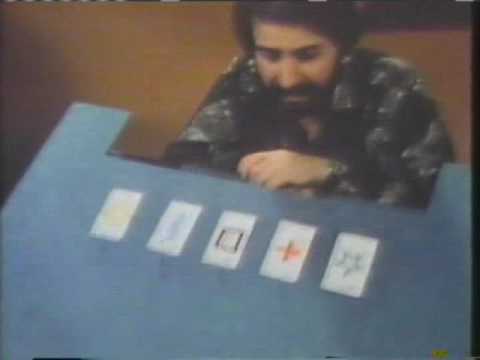
Another viewer keenly observes the rigged nature of some demonstrations: "The 2 of hearts thing.....didja notice he DID NOT show the other card. Why? Because BOTH cards were a two of hearts. No matter WHAT arm Burr picked (right or left), it was going to be right." This analytical approach, dissecting the methodology of the 'tests,' is precisely the kind of critical evaluation required. The film likely presented these demonstrations as evidence, but a careful observer, especially one familiar with stage magic, can see the potential for trickery.

I totally dig this kinda crap but it's so set up it's funny. This is an awesome comedy.

— Viewer Comment

The skepticism extends to other demonstrations. The explanation for the fish pictures and hang glider test suggests that deliberate misdirection—making one option appear more likely or dynamic than another—can create the illusion of psychic insight. This aligns with the principles of psychological manipulation often employed in both magic and, unfortunately, in fraudulent psychic readings. The documentary's very presentation, aiming to amaze, inadvertently provides material for those seeking to debunk it.

Scientific Perspectives and Modern Interpretations

While the 1976 documentary captured a specific moment in the public perception of psychic phenomena, it's crucial to assess these claims through the lens of modern scientific understanding. The field of parapsychology continues to investigate phenomena like precognition and telepathy, though mainstream scientific acceptance remains elusive. Research into consciousness, quantum entanglement, and even the subtle biological signals captured by techniques like Kirlian photography has evolved significantly.

Edgar Mitchell's contribution, linking psychic phenomena to quantum holographic universe theories, reflects an attempt to bridge the gap between the esoteric and the scientific. While elegant, these theories often remain speculative and difficult to test empirically. The debate continues: are these phenomena genuine expressions of consciousness beyond our current understanding, or are they products of cognitive biases, statistical anomalies, and deliberate deception?

The decline in mainstream discussion of these topics is noted by viewers: "Anyone remember when this kind of research stopped being talked about seriously now a far higher percentage of the population will simply dismiss esp as modern propergander treats such things as myth or 'conspiracy theories' reinforcing ignorance." This observation points to a societal shift, where open discussion of the paranormal has become more marginalized, often relegated to online communities and labeled as fringe or conspiratorial. This creates a challenge for genuine researchers trying to explore these frontiers without being dismissed.

When considering phenomena like ghost sound recordings (EVP), advancements in audio technology and our understanding of auditory pareidolia (perceiving meaningful sounds in random noise) provide more conventional explanations. Similarly, while auras and Kirlian photography can be visually striking, their interpretation as direct evidence of psychic energy remains largely unsubstantiated by rigorous scientific methods. The potential for psychological suggestion, particularly in the context of haunted houses and séances, is immense. We must acknowledge that human perception is fallible and highly susceptible to expectation and environmental cues.

Investigator's Toolkit: Essential Gear for Psychic Research

For those inspired by "The Amazing World of Psychic Phenomena" to venture into the realm of investigation, having the right tools is paramount. While the documentary showcased anecdotal evidence and dramatic demonstrations, modern investigators rely on a more systematic approach.

Essential equipment often includes:

  • Digital Voice Recorders: For capturing Electronic Voice Phenomena (EVP) with high fidelity.
  • EMF Meters: To detect fluctuations in electromagnetic fields, often associated with reported paranormal activity.
  • Infrared and Full-Spectrum Cameras: To capture visual anomalies that may not be visible to the naked eye.
  • Geophone Sensors: To detect subtle vibrations in floors and structures.
  • Thermometers (Infrared and Ambient): To measure temperature fluctuations, another common indicator cited in paranormal reports.

Beyond technology, the most critical tools are a clear, analytical mind, meticulous record-keeping, and a commitment to methodological rigor. Understanding basic principles of psychology, physics, and common deception techniques is as vital as any gadget.

Investigator's Verdict: Authenticity or Artifice?

After reviewing the documentary and the subsequent discussions, my assessment leans heavily towards a critical interpretation. While the film captures a fascinating cultural moment and highlights individuals who genuinely believed in their abilities, the evidence presented is largely anecdotal or demonstrably susceptible to trickery. The claims made by figures like Uri Geller have been widely debunked, and the "demonstrations" within the documentary itself often show signs of careful staging.

The surviving comments suggest a divergence of opinion: some viewers remain captivated, while others, with a more discerning eye, see the "set up" and consider it "awesome comedy." The stark contrast between those who "passed all the tests" and those who see the deliberate nature of the illusions is telling. The persistence of belief, even when faced with evidence of fraud (as with Geller), speaks to the powerful human desire to believe in something beyond the ordinary, and the effectiveness of persuasive presentation.

It is true that some phenomena, like the claims surrounding Edgar Cayce and Peter Hurkos, have faced less definitive debunking compared to others. However, the absence of conclusive, repeatable scientific evidence for most psychic abilities means they remain in the realm of speculation and personal experience rather than established fact. The documentary is a valuable historical artifact, showcasing the popular fascination with the psychic world, but as a source of definitive proof, it falls short.

Frequently Asked Questions

  1. What is the main criticism leveled against the phenomena shown in "The Amazing World of Psychic Phenomena (1976)"?
    The primary criticism is that many of the demonstrations were staged, relied on trickery, or could be explained by natural causes and psychological suggestion rather than genuine psychic ability.
  2. Who were some of the key figures featured in the documentary?
    The documentary featured individuals such as Edgar Cayce, Peter Hurkos, Ted Serios, Uri Geller, Ruth Montgomery, Jeane Dixon, and astronaut Edgar Mitchell.
  3. Has scientific research validated the psychic claims presented in the film?
    While parapsychology continues to investigate these areas, mainstream science has not validated most of the claims presented in the film with conclusive, repeatable evidence. Many of the featured individuals, like Uri Geller, have faced public debunking.
  4. Why are documentaries like this still popular despite skepticism?
    These films tap into a deep human fascination with the unknown, the possibility of hidden potentials within consciousness, and the enduring mystery of life and death. They offer a glimpse into a world beyond the ordinary, captivating audiences with wonder and intrigue.
  5. Can psychic abilities be learned or developed?
    This is a central question in parapsychology. Some theories suggest potential, while others emphasize the role of natural talent or the possibility of heightened intuition. However, definitive methods for developing psychic abilities remain unproven.

Your Mission: The Critical Observer

The legacy of "The Amazing World of Psychic Phenomena" serves as a potent reminder: to approach extraordinary claims with extraordinary skepticism. Your mission, should you choose to accept it, is to cultivate the skill of the critical observer. When confronted with sensational evidence, ask yourself:

  • What is being shown, and what might be deliberately concealed?
  • Are there simpler, non-paranormal explanations for what I am seeing?
  • What are the motivations of the individuals presenting this information?

Engage with content like this not just as a passive viewer, but as an active investigator. Share your findings, your analyses, and your toughest questions. The pursuit of truth, whether it lies in the mundane or the paranormal, requires constant vigilance and incisive questioning.

The world of the unexplained is vast and often misleading. It requires careful navigation, and this documentary, while engaging, is best viewed as a historical snapshot of belief rather than a definitive guide to psychic truths. Continue your research, stay critical, and never stop questioning.

Share your own experiences with psychic phenomena or your thoughts on this documentary. Did it influence you? Do you believe the claims? Let us know in the comments below. Don't forget to share this investigation into the amazing world of psychic phenomena with your fellow truth-seekers on social media!

Investigator's Note: True paranormal research doesn't fund itself. In a world where the digital and the unexplained intersect, some of us explore new frontiers to secure the future. Do you dare to be part of the vanguard? Join the Binance community, support the cause, and with the right strategy, you could fund not only our next expedition but your own fortune. The next great discovery could be just a click away.

Beyond Belief (1976): An Investigator's Analysis of a 70s Paranormal Compendium

Image

In the annals of esoteric exploration, certain artifacts resurface from the obscurity of low-budget productions, offering a glimpse into the collective consciousness of a bygone era. "Beyond Belief" (1976), a paranormal documentary unearthed from the cluttered archives of the 1970s, presents itself as such an artifact. Hosted by Richard Mathews, this film appears to be a mosaic, pieced together from disparate sources, yet its thematic coherence on the unexplained is undeniable.

Introduction

The 1970s were a fertile ground for a burgeoning interest in the paranormal, a period when the lines between science, skepticism, and the supernatural seemed to blur for many. "Beyond Belief" emerges from this zeitgeist, a product of its time that attempts to catalogue a range of phenomena that defied conventional understanding. As an investigator, my approach is to dissect such materials not merely as entertainment, but as cultural documents reflecting societal anxieties and curiosities regarding the unknown. This film, despite its apparent low-budget origins and fragmented nature, warrants a closer examination of its presented topics and the reactions it continues to elicit.

Thematic Scope: A Kaleidoscope of the Unexplained

The documentary ambitiously touches upon a wide spectrum of anomalous experiences and alleged psychic abilities. The topics covered read like a syllabus for an introductory course in parapsychology, albeit one presented through the lens of 1970s media:

  • Telepathy: The purported transmission of thoughts or feelings between individuals.
  • Hypnotic Regression: The exploration of past experiences, often claimed to be from previous lifetimes, under hypnosis.
  • Past Lives: Belief in reincarnation, where consciousness is thought to persist after physical death and inhabit new bodies.
  • UFOs: Unidentified Flying Objects, a persistent source of fascination and speculation about extraterrestrial visitation.
  • Psychokinesis: The alleged ability to influence physical objects with the mind.
  • Ghosts: Manifestations of spirits or apparitions of the dead.
  • Automatic Writing/Drawing: The process of producing writing or art without conscious thought, often attributed to external influences or subconscious communication.
  • Alien Abduction: The experience of being taken by non-human entities, typically in spacecraft.
  • Backster Effect (Plant Perception): The controversial idea that plants possess a form of consciousness or sensitivity, famously explored through lie detector tests on plants.
Each of these subjects has spawned countless theories, investigations, and debates, and "Beyond Belief" attempts to provide a condensed overview, likely aimed at an audience eager for sensational, unverified accounts.

Recommended Gear for Investigation

ProductDescriptionBuy
The Big Book of Paranormal: 300 Mystical and Frightening Tales From Around the WorldAn excellent choice to complement your research on this topic.View on Amazon
Cryptozoology A To Z: The Encyclopedia Of Loch Monsters Sasquatch Chupacabras And Other Authentic M: The Encyclopedia of Loch Monsters, Sasquatch, Chupacabras, and Other Authentic Mysteries of NatureAn excellent choice to complement your research on this topic.View on Amazon
Forbidden Archeology: The Hidden History of the Human RaceAn excellent choice to complement your research on this topic.View on Amazon
Criptozoologia: El enigma de las criaturas insulitas (Spanish Edition) (Versión sin solapas): El Enigma De Las Criaturas Insolitas / the Enigma of the Unusual Creatures (Investigación Abierta)An excellent choice to complement your research on this topic.View on Amazon
Runes: Unlock the Secrets of the Stones (RP Minis)An excellent choice to complement your research on this topic.View on Amazon
The H. P. Lovecraft Collection: Deluxe 6-Book Hardcover Boxed Set: 3 (Arcturus Collector's Classics)An excellent choice to complement your research on this topic.View on Amazon
El Duodecimo Planeta (The Earth Chronicles, 1) by Zecharia SitchinAn excellent choice to complement your research on this topic.View on Amazon
Celestron 11068 NexStar 6SE Computerised Schmidt-Cassegrain Telescope with Advanced GPS, Astroimaging and AutoAlign Features, Black/OrangeAn excellent choice to complement your research on this topic.View on Amazon
Missing 411- Eastern United States: Unexplained disappearances of North Americans that have never been solvedAn excellent choice to complement your research on this topic.View on Amazon
Ghost Hunting EVP - Grabadora EVP de 8 GB, equipo paranormal, caja de voz digital SpiritAn excellent choice to complement your research on this topic.View on Amazon

Historical Context: The 70s and the Paranormal Boom

The era in which "Beyond Belief" was produced was marked by a significant cultural embrace of the unexplained. Following the cultural shifts of the 1960s, the 1970s saw a surge in interest in everything from ufology and spiritualism to occult practices and psychic phenomena. Books like "Chariots of the Gods?" by Erich von Däniken popularized ancient astronaut theories, while figures like Uri Geller captured global attention with alleged psychokinetic feats. Documentaries and television programs frequently delved into mysteries, catering to a public hungry for alternatives to established scientific paradigms. This documentary fits squarely within that trend, offering viewers a curated selection of topics that already resonated with a curious populace. The film's fragmented nature, as noted, might even reflect the chaotic, yet enthusiastic, way these disparate ideas were being compiled and disseminated at the time. The mention of the Edgar Cayce Foundation complex in Virginia Beach, coincidentally near the Bayne Theater where the film was shown in '76, further contextualizes the film within the milieu of established esoteric traditions influencing popular culture.

Evidence Analysis: Subjectivity vs. Objectivity

From an investigator's perspective, the primary challenge with documentaries of this nature is the reliance on anecdotal evidence and subjective interpretations. Topics like telepathy, ghosts, and psychokinesis are notoriously difficult to study under controlled conditions. The film likely presents testimonials and demonstrations that, while compelling to some, lack empirical rigor. The "Backster Effect," for instance, has faced significant criticism regarding experimental design and potential observer bias. Similarly, accounts of alien abduction and past life regressions often hinge on memory, suggestion, and psychological factors rather than verifiable external phenomena. The film's success often depends on its ability to evoke a sense of wonder or fear, rather than on the demonstrable validity of its claims. This is a common tactic in paranormal media; it trades in possibility and emotional resonance over hard evidence.

Viewer Reactions: Echoes from the Past

The commentary section provides a fascinating, albeit unfiltered, glimpse into how the film resonates with contemporary viewers, many of whom are revisiting it years later or discovering it for the first time. These reactions offer valuable social context and highlight the film's enduring, albeit niche, appeal.

"I love these old documentary films! Good stuff, reminds me of my childhood."
This sentiment speaks to nostalgia, a powerful connection to a simpler perceived past. Another viewer remarks on the stark contrast between the 1970s and the present:
"I was 5yrs old in 1976. Today we have smart phones......... The 70's had smart yogurt.... I would pick the yogurt any day."
This highlights a common theme in retrospectives of past decades – a perceived decline in product quality, societal values, and overall well-being. The romanticized view of the past, where everything from food to people was "much, much better," is a potent emotional hook. Some viewers express a deep personal connection:
"I’m so glad to find this video the hypnotist in the video was my father and I don’t have many photos of him so thank you for posting this!!!!!"
This poignant testimony underscores the personal impact such artifacts can have, transcending the documentary's intended subject matter. Others offer technical details, like identifying the title music:
"That piece of title music @ 01:43 is 'Vergessen Und Vorbei' ('Forgotten and Gone'), Track 2 from the Orchestra Addy Flor album 'Twilight Mood', 1967."
This level of detail demonstrates a dedicated viewer base, capable of excavating specific information from the film. However, not all reactions are reverential. A notable undercurrent of skepticism and amusement is also present:
"So screaming, moving your stomach around in a peculiar manner and pushing a table over is a manifestation of psychic phenomena.....ok then lol"
And:
"this is hilariously bad."
These comments reflect a more critical eye, perhaps tempered by decades of exposure to more sophisticated (or more obvious) hoaxes, and a modern sensibility that views some 70s paranormal claims with a degree of irony. The comparison to mockumentaries also suggests a shift in how such content is perceived. The mention of Kathy Bates resemblance to the hypnotized woman is a curious pop-culture observation, further illustrating how viewers engage with the material through their own references. The overarching sentiment from the audience suggests the film serves as both a historical curiosity and a comforting touchstone for those who recall the era, while also providing fodder for those with a more critical, or simply amused, perspective.

Investigator's Verdict: Fraud, Genuine Phenomenon, or Something Else?

From a professional standpoint, "Beyond Belief" falls into the category of "entertainment disguised as documentary." Filmed in 1976, its production values and the nature of the "evidence" presented strongly suggest it was created for an audience predisposed to believe in the paranormal, rather than for rigorous scientific inquiry. The topics are vast, implying a superficial treatment of each. The lack of verifiable data, controlled experiments, or skeptical counterpoints points towards a one-sided presentation designed to sensationalize.

Is it fraud? Perhaps not in the sense of deliberate deception by every participant, but certainly in the presentation of subjective experiences as objective proof. Many elements rely on eyewitness accounts, suggestive interviewing techniques (especially regarding hypnosis and past-life regression), and phenomena that are easily faked or misinterpreted. The film likely capitalizes on the human desire to believe in something beyond the mundane, a desire that was particularly prevalent in the 1970s. It’s a product of its time, reflecting a cultural fascination with the unexplained, but offering little in the way of concrete advancement in our understanding of these phenomena. It serves as a valuable artifact for studying the history of paranormal media and public perception, but its claims should be treated with extreme caution and a healthy dose of skepticism. The sheer variety of topics covered, from telepathy to UFOs and plant consciousness, suggests a grab-bag approach rather than a deep dive into any single mystery. This breadth, while appealing to a curious audience, often comes at the expense of depth and critical analysis. In essence, "Beyond Belief" is less a scientific investigation and more a compendium of popular mysteries designed to provoke wonder and discussion.

The Researcher's Archive

Equipo Recomendado para la Investigación

(Script will inject Amazon product tables here)

Frequently Asked Questions

  1. What is the primary purpose of "Beyond Belief (1976)"?

    The documentary appears to serve as an overview of various paranormal and unexplained phenomena popular in the 1970s, aiming to intrigue and inform a general audience rather than conduct rigorous scientific investigation.

  2. Why is the documentary described as "cobbled together"?

    Reviewers suggest the film seems to combine footage or segments from different sources, lacking a unified production style or narrative flow, indicative of its low-budget and potentially piecemeal creation.

  3. What historical context is important for understanding this film?

    The film is a product of the 1970s, a period of significant cultural interest in the paranormal, UFOs, and New Age ideas. Its content and presentation reflect the prevailing attitudes and media styles of that era.

  4. Are the claims made in "Beyond Belief" scientifically validated?

    No, the phenomena discussed (telepathy, psychokinesis, UFOs, etc.) are generally not accepted by mainstream science due to a lack of empirical evidence and reproducible results. The film relies heavily on anecdotal accounts and subjective interpretations.

  5. What is the "Backster Effect"?

    The Backster Effect refers to the controversial claim, popularized by polygraph expert Cleve Backster, that plants possess consciousness and can react to stimuli, as allegedly demonstrated through lie detector tests.

Field Mission: Your Task

The allure of the unknown is a powerful force, driving both genuine inquiry and sensationalism. "Beyond Belief (1976)" exemplifies this duality, serving as a time capsule of 70s esoteric interests. Your mission, should you choose to accept it, is to engage critically with such content. Analyze the claims, consider the historical context, and differentiate between compelling narrative and verifiable fact. The world is awash with unexplained phenomena, but clarity comes from methodical investigation, not passive acceptance.

Share your own experiences with documentaries of this era in the comments below. Did you see "Beyond Belief" in 1976? What are your thoughts on the topics it covers?

Don't forget to share this analysis with fellow investigators and enthusiasts on social media. Let's broaden the dialogue on the unexplained.

Investigator's Note: True paranormal research doesn't fund itself. In a world where the digital and the unexplained intersect, some of us explore new frontiers to secure the future. Do you dare to be part of the vanguard? Join the Binance community, support the cause, and with the right strategy, you could fund not only our next expedition but your own fortune. The next great discovery could be just a click away.

The Ariaga Haunted House: Analyzing the Viral Video Phenomenon


There's a primal, almost magnetic pull to the chilling, the unexplained. It’s the dark curiosity that beckons us to witness what logic dictates shouldn't exist, to delve into the shadows where the ordinary ceases to apply. This is the phenomenon that has captivated the digital sphere, transforming a simple residence into a potent symbol of the uncanny: the Ariaga Haunted House. A single, minute-long viral video has coalesced fear and speculation across the web, elevating a mere dwelling into an enduring urban legend. But what truly lies within its stone façade, behind that enigmatic door that opens and closes with no visible operator? More crucially, why do those who approach this location find themselves compelled to return, despite the palpable dread it evokes?

These are the narratives that haunt our quietest hours, blurring the razor-thin line between tangible reality and the spectral realm. Here at The Paranormal Investigator, we've processed countless reports from individuals unnerved by the viral #shorts video, experiencing a disquieting blend of fascination and dread. The fear of the unknown is arguably humanity's most profound emotional driver. The Ariaga Haunted House doesn't merely exploit this; it amplifies it, weaponizing unease into an inescapable allure.

(adsbygoogle = window.adsbygoogle || []).push({});

The Origin of Terror: The Story Behind the #shorts

The video that ignited this wave of digital haunting presents a disturbingly simple perspective: an ancient, isolated house, the shaky lens of a mobile phone, and then, the front door swings wide open, seemingly of its own accord. Moments later, it slams shut with a definitive thud. The videographer, their voice a hushed whisper, utters a phrase that has become the hallmark of this digital ghost story: "There's no one here... so who was that?"

This act, seemingly so basic, has spawned thousands of comments and fervent debates. Skeptics suggest elaborate pranks, perhaps a system of strings or an opportune gust of wind. Yet, seasoned investigators of enigmas recognize that what appears on camera is rarely the full narrative. This video functions as a lure, a single piece in a far larger, more sinister puzzle.

(adsbygoogle = window.adsbygoogle || []).push({});

The Hidden Pact: Why the Ariaga House Draws You In

What elevates the Ariaga House beyond the typical haunted haunted house narrative? It transcends the viral footage. The true potency, or perhaps the true horror, lies in the experiential aspect. Accounts from individuals who have even approached the structure speak of an oppressive atmosphere, a pervasive sense of being watched. Yet, the most perplexing observation is the emergent compulsion to revisit the site, a desire that seems to override the palpable fear.

This is the element most viewers fail to grasp, and it taps into our most fundamental psychological needs: the need for validation and the need for belonging. A place like this doesn't repel you; it beckons. It subtly suggests there is something within, an entity that has singled you out, that requires your presence, your return. This operates as a psychological trap, a form of chaos magic that manipulates your most vulnerable emotions. It makes you feel unique, special, the sole individual capable of comprehending its plight, ensnaring you in its intricate game. Once ensnared, this potent mix of fear and desire – the thirst to be the first to unearth the secret, to attain notoriety, to become the protagonist of this unfolding saga – takes hold. But caution is paramount, as these narratives rarely culminate in favorable outcomes. The world of occultism and ritual practice teaches us that such occurrences are seldom accidental.

(adsbygoogle = window.adsbygoogle || []).push({});

How to Defend Yourself Against These Types of Phenomena

For those undeniably drawn to the paranormal, it is imperative to understand that visual media, especially viral content, rarely provides the whole picture. The Ariaga House serves as a stark example of how an entity, or a location imbued with potent energy, can exploit your deepest vulnerabilities to draw you in. Common wisdom cautions that "curiosity killed the cat," and in this context, that adage may hold more literal weight than mere anecdote. Protecting your spiritual energy and mental fortitude against such influences is crucial. If you find yourself feeling unusually affected by a location or a narrative, the most prudent course of action is to disengage, step back, and seek understanding within a secure environment, ideally supported by a like-minded community.

Here at The Paranormal Investigator, we acknowledge this curiosity, but we are acutely aware of the inherent risks. Consequently, we have cultivated a space dedicated to exploring these themes safely, providing verifiably accurate information and the backing of a community of truth-seekers. If you dare to look beyond the viral facade, we extend an invitation to join us. Together, we can unravel the true significance behind the Ariaga Haunted House and countless other mysteries that await discovery.

(adsbygoogle = window.adsbygoogle || []).push({});

Don't remain captive to fear. Become part of the The Paranormal Investigator community and uncover the truth.

JOIN OUR TELEGRAM CHANNEL FOR EXCLUSIVE CONTENT & LIVE DEBATES!

CLICK HERE TO JOIN OUR TELEGRAM CHANNEL

The next mystery is just a step away.

This post is crafted for informational and entertainment purposes. While grounded in documented phenomena and established theories, its core aim is to investigate the human fascination with the unknown.

Follow us on our social networks:

Researcher's Verdict: Fraud, Genuine Phenomenon, or Something Else?

Analyzing the viral footage of the Ariaga House presents a classic dichotomy: the undeniable technical execution of a potential hoax versus the persistent anecdotal evidence suggesting something more. On one hand, the simplicity of the video – a door opening and closing – is easily replicable with common tricks. The grainy quality and shaky camera work, hallmarks of many viral videos, conveniently obscure precise details. This points towards a deliberate staging for maximum impact and shareability. The narrative of being 'chosen' by an entity is also a powerful psychological hook, a common trope in folklore designed to resonate with individuals seeking significance or validation, thus ensuring viral spread.

However, dismissing the accounts of pervasive unease and the compulsion to return outright would be premature. Such psychological responses can be complex and, in rare instances, influenced by latent environmental factors or subtle energetic signatures within a location. While mainstream science currently lacks methods to definitively quantify such energies, the consistency of sensory and emotional reports from unconnected individuals warrants careful consideration. Could the video be a catalyst, amplifying pre-existing atmospheric conditions or psychological predispositions? Or is it a sophisticated piece of misdirection, designed to obscure a more mundane, yet still unsettling, truth—perhaps a local legend being deliberately perpetuated for notoriety? My current assessment leans towards a meticulously crafted fabrication, designed to tap into our collective fascination with the spectral. However, the persistent anecdotal reports of psychological compulsion cannot be entirely discounted as mere suggestibility. Further, independent investigation, free from the influence of the viral narrative, would be required to definitively rule out any genuine anomalous activity, however improbable.

The Researcher's Archive

To truly comprehend cases like the Ariaga House, one must arm themselves with knowledge. The study of hauntings and unexplained phenomena is a vast field, rich with historical accounts and investigative methodologies. Here are essential resources that form the bedrock of any serious paranormal investigation:

  • Books: "The Uninvited: Solving the Ghostly Mysteries of the House of the Seven Gables" by Tim O'Neil offers a deep dive into a famous haunted property. For broader context on spectral phenomena, "Ghost Hunters: True Stories from the World's Most Famous Psychic Investigators" by Ed and Lorraine Warren provides classic case studies, though always to be read with a critical eye.
  • Documentaries: The series "Ghost Adventures" often explores locations with intense reported activity, showcasing various investigation techniques, albeit with a dramatic flair. For a more academic approach to folklore and unexplained phenomena, consider documentaries exploring the work of figures like Charles Fort or Jacques Vallée.
  • Platforms: Services like Gaia offer a wide array of documentaries and series dedicated to paranormal investigation and esoteric subjects, providing a broad spectrum of theories and reported cases.

Your Field Mission

The Ariaga House phenomenon is a compelling example of how digital media can amplify folklore. Your mission, should you choose to accept it, is to dissect the psychology behind viral paranormal content.

  1. Analyze a Viral Clip: Find another short, viral video claiming to show paranormal activity (e.g., a ghost sighting, an object moving on its own).
  2. Deconstruct the Narrative: What elements make it compelling? What psychological needs does it tap into (fear, curiosity, validation)?
  3. Evaluate the Evidence: Critically assess the visual and auditory data. What are the most likely mundane explanations? What evidence, if any, is truly anomalous?
  4. Consider the Motivation: Why might someone create or share this video? Fame, money, genuine belief, or something else?
  5. Report Your Findings: In the comments below, share your analysis and the link to the video you examined. Compare your findings with those of other investigators.

Remember, the goal is not to debunk or confirm, but to critically analyze the phenomenon as presented.

(adsbygoogle = window.adsbygoogle || []).push({});

About the Author

alejandro quintero ruiz is a seasoned field investigator dedicated to the analytical dissection of anomalous phenomena. His approach melds methodological skepticism with an open-mindedness towards the inexplicable, always pursuing truth beyond the veil of the mundane. With years of boots-on-the-ground experience in countless alleged hotspots, his insights are forged in the crucible of direct observation and rigorous inquiry.

The Ariaga Haunted House, much like the digital whisper that brought it to prominence, serves as a potent illustration of how modern mediums amplify age-old fears and folklore. While the viral video itself may represent a carefully orchestrated illusion, the psychological impact and the enduring allure of such stories speak to a deeper human engagement with the unknown. The true investigation lies not just in disproving hoaxes, but in understanding why these narratives resonate so profoundly. The challenge remains: to distinguish the genuine anomaly from the clever artifice, and in doing so, to better understand ourselves and our place within the vast tapestry of reality.


Parravicini's Prophecies: An Analytical Deep Dive into the Psychic Visions of Benjamin Solari Parravicini


Introduction: The Whispers of Tomorrow

The future is a siren song, beckoning from the mists of time. For centuries, humanity has sought to pierce this veil, to catch a glimpse of what lies beyond the horizon. Among those who claimed to hear these whispers most clearly was Benjamin Solari Parravicini, an Argentine physician whose prolific output of precognitive drawings has sparked debate and wonder for generations. While some dismiss his visions as mere coincidence or post-hoc rationalization, others point to their uncanny specificity as evidence of genuine psychic ability. Today, we open the file on Parravicini, not to simply recount his prophecies, but to analyze the phenomenon, examine the evidence, and question the very nature of precognition itself. This is not a story; it's an investigation into one of the most compelling datasets of psychic phenomena ever compiled.

The Man Behind the Visions: A Biographical Sketch

Born in Buenos Aires in 1898, Benjamin Solari Parravicini pursued a career in medicine, specializing in pediatrics. Yet, his life took a profound turn in 1938 when, according to his accounts, he began experiencing vivid visions. These were not fleeting impressions but detailed, often cryptic, drawings accompanied by descriptive texts. Over the next three decades, he filled an estimated hundreds of notebooks with these visions, depicting scenes ranging from technological marvels and global conflicts to social changes and potential catastrophes. His medical background lends a certain gravitas to his claims, offering a logical, scientific mind grappling with the seemingly illogical. This duality is key to understanding why Parravicini’s work continues to resonate: a doctor of science engaging with phenomena that defy conventional explanation.

"The hands that heal are the same hands that must record what the future reveals." - Adapted from researcher notes on Parravicini.

The Canvas of Precognition: Analyzing the Drawings

Parravicini's visual output is vast and varied. The drawings, often rendered in a simple, almost childlike style, are frequently accompanied by prophetic captions that are as enigmatic as they are specific. Examples cited by proponents include depictions of the discovery of penicillin, the rise of atomic power, figures resembling JFK and Charles de Gaulle, and even descriptions of the internet and mobile phones, concepts far ahead of their time. The method of their production, typically done in moments of trance or deep contemplation, is central to the narrative of psychic phenomena. From an analytical standpoint, several factors must be considered:

  • Vagueness vs. Specificity: How much of the alleged accuracy stems from the inherent ambiguity of the imagery and text, allowing for broad interpretation?
  • Confirmation Bias: Once a real-world event occurs, how readily do observers search for and find a match within Parravicini’s extensive catalog? This is a well-documented cognitive bias that plagues retrospective analysis of predictions.
  • Stylistic Consistency: The consistent style across thousands of drawings suggests a single author, but does it indicate a genuine psychic channel or a highly disciplined individual creating a vast body of work?
  • The Role of Technology: Many of his depictions, like "the man communicating from afar with a small box in his hand," eerily resemble modern communication devices. The question is whether this is precognition or an intuitive grasp of emerging technological trajectories.

Case Studies: Predictions That Echoed Future Realities

Several of Parravicini's prophecies have garnered significant attention for their supposed clairvoyant accuracy. One frequently cited drawing shows a figure resembling Pope Paul VI, with an accompanying text that hints at his struggle against "the modern world." Another depicts figures in distress, with the caption "Atomic catastrophe." Proponents link this to the development and deployment of nuclear weapons. Furthermore, depictions of figures like Kennedy, often with ominous undertones, are frequently brought up in discussions of his work. The chilling detail in some of these images, if indeed predictive, raises profound questions. However, it is imperative to approach these links with stringent scrutiny. The process of matching a drawing to an event often involves a degree of interpretation, a bridge built by hindsight. The true test of precognition lies in predictions made before an event, with no possibility of retroactive fitting. This is where the dataset of Parravicini's work presents both its greatest strength and its most significant challenge for empirical verification.

The Skeptic's Lens: Deconstructing the Phenomenon

The scientific community, by and large, remains skeptical of claims of precognition. Parravicini's prophecies, while compelling, are not immune to this critical examination. Key points of skepticism include:

  • The Barnum Effect: Many of the prophecies are broad enough to apply to a wide range of situations, making them seem accurate to many people who encounter them.
  • Selective Presentation: Often, only the 'hits' are highlighted, while the numerous 'misses' or ambiguous predictions are overlooked. The sheer volume of Parravicini's output makes it statistically probable that some would align with future events by chance.
  • Allegations of Fraud or Misinterpretation: While Parravicini was a respected physician, the possibility of self-deception or deliberate manipulation of his work after the fact cannot be entirely dismissed without rigorous posthumous investigation of the original materials.
  • Cultural Context: Parravicini lived through periods of immense global change. His drawings could reflect an astute observation of societal trends and anxieties, rather than a supernatural foreknowledge.

The challenge for parapsychology is to move beyond anecdotal evidence and establish repeatable, verifiable phenomena. For Parravicini's work, this would require access to authenticated original documents, independent analysis of the drawings and texts prior to significant world events, and a robust methodology to control for psychological biases. The documentary provided offers visual evidence, but the true investigative depth lies in the raw, unadulterated archive. For those seeking to truly understand, acquiring copies of his notebooks or visiting archives where they might be preserved becomes a primary objective.

Research Protocol: Approaching Precognitive Data

Investigating phenomena like Benjamin Solari Parravicini's prophecies demands a structured approach, akin to forensic analysis. The following protocol is essential for any serious inquiry:

  1. Source Verification: Procure original, authenticated reproductions of Parravicini’s drawings and texts. Establish their creation date independently if possible. This prevents claims of posthumous manipulation.
  2. Contextualization: Research the historical period in which each prophecy was made. What were the prevailing anxieties, scientific advancements, and political tensions? This provides a baseline for understanding potential influences.
  3. Comparative Analysis: Systematically compare the details of each drawing and caption against documented historical events. Be precise: does the event *exactly* match the description, or is there room for interpretation?
  4. Identify Ambiguities: Catalogue every element of vagueness, symbolic language, or open-ended phrasing. These are the potential 'escape hatches' for retrospective interpretation.
  5. Statistical Evaluation: If the volume of verified, specific, pre-event predictions is significant and statistically improbable by chance, it strengthens the case for precognition. This is a high bar to clear.
  6. Consider Alternative Explanations: Always explore rational explanations first: astute observation, psychological projection, collective unconscious archetypes, or even elaborate fabrication.

This methodical approach is crucial for distinguishing genuine anomalies from coincidence or misinterpretation. It’s about applying scientific rigor to the fringes of human experience.

Filmmaker's Intent: The Documentary's Approach

The provided documentary, presented in multiple languages, serves as an introduction to Parravicini's work. Its intent appears to be to showcase the breadth and perceived accuracy of his prophecies, aiming to intrigue and perhaps convince the viewer of his psychic abilities. The use of multiple language tracks (ESP, SUB, PT) suggests a desire for broad accessibility, aiming to reach an international audience fascinated by the paranormal. Documentaries of this nature often adopt a narrative that leans towards belief, presenting compelling visuals and testimonials that support the central thesis of precognition. While valuable for initial exposure, such films rarely delve into the rigorous methodological challenges or the extensive counter-arguments that a dedicated investigator would demand. They provide the 'what' but leave the 'how' and 'why' open for deeper analysis. To truly engage with Parravicini, one must go beyond the narrated story and scrutinize the primary source material – the drawings themselves.

Frequently Asked Questions

Who was Benjamin Solari Parravicini?
Benjamin Solari Parravicini (1898–1974) was an Argentine physician and psychic, known for his thousands of precognitive drawings and prophecies made between 1938 and his death in 1974. His visions often depicted future events with remarkable detail.

What is the significance of Parravicini's prophecies?
The significance lies in their alleged accuracy in predicting major world events, technological advancements, and even disasters. Skeptics often attribute this to vague language, retrospective interpretation, or coincidence, while proponents see them as evidence of genuine precognition.

How can one practically investigate psychic phenomena like Parravicini's visions?
Investigating such phenomena requires a rigorous approach: meticulous documentation of the original source material, comparative analysis with historical events, an understanding of psychological biases (like confirmation bias and pareidolia), and a critical assessment of potential fraud or misinterpretation. Engaging with documented cases and employing critical thinking are paramount.

Investigator's Verdict: Beyond Coincidence?

Benjamin Solari Parravicini’s catalog of precognitive drawings presents a tantalizing dataset. The sheer volume and the consistent thematic elements, coupled with occasional uncanny parallels to future events, make it difficult to dismiss entirely. However, the history of prophecy is littered with vague pronouncements and retrospective interpretations. While Parravicini’s artistic and textual detail surpasses many, the critical investigator must remain vigilant against confirmation bias and the Barnum effect. Without access to authenticated originals and independent verification of their creation dates predating events, concrete proof of genuine precognition remains elusive. My verdict leans towards a phenomenon of profound psychological insight and perhaps an astute read of societal trajectories, rather than definitive proof of supernatural foresight. Nevertheless, the ongoing allure of his work suggests a deep-seated human desire to believe in a connection to the future, a belief that fuels continued examination of cases like Parravicini’s. The question isn't definitively answered, but the investigation is far from over.

The Investigator's Archive

For those keen to deepen their understanding of precognition and related phenomena, the following resources are essential:

  • Books: "The Unexplained" by Jerome Clark, "Passport to Magonia" by Jacques Vallée, and any comprehensive compilations of Solari Parravicini’s works that claim reputable sourcing.
  • Documentaries: Beyond the provided film, seek documentaries that critically examine psychic phenomena, looking for those that consult with parapsychologists, skeptics, and historians. Consider series like "Unsolved Mysteries" for case studies, but always with a critical eye.
  • Academic Journals: Publications from the Rhine Research Center or the Parapsychological Association, which often feature peer-reviewed studies on precognition, though direct analysis of Parravicini might be scarce.
  • Online Archives: Reputable paranormal research websites that maintain databases of prophecies and predictive cases, cross-referencing dates and details.

Understanding the context and methodology of past research is crucial for any new investigator entering this complex field. Investing in these foundational resources is the first step in building a credible investigative skillset.

Your Field Mission: Unraveling Local Mysteries

Parravicini looked to the future, but the past and present are rife with mysteries. Your mission, should you choose to accept it, is to apply the principles of critical analysis learned today to your own local lore. Identify a local legend, a piece of folklore, or an unexplained event in your community. Is there a documented history? Are there eyewitness accounts? Apply the research protocol outlined above: verify sources, contextualize the narrative, look for specific details, and consider alternative explanations. Document your findings and share them in the comments below. Let's see if we can uncover new enigmas or shed light on old ones, one local mystery at a time. The goal is not to 'prove' the paranormal, but to understand the narratives and evidence surrounding it with clarity and rigor.

About the Author

alejandro quintero ruiz is a veteran field investigator dedicated to the analysis of anomalous phenomena. His approach combines methodological skepticism with an open mind to the inexplicable, always seeking the truth behind the veil of reality. With years of experience navigating the shadowy corners of unexplained occurrences, his work aims to foster critical thinking and informed debate.

A Quest for God: Unveiling Paranormal and Occult Pathways Beyond Traditional Faith


The human psyche has perpetually grappled with the ultimate questions of existence: our origin, our purpose, and what lies beyond the veil of mortality. For millennia, organized religion has served as the primary conduit for these inquiries, offering structured narratives and communal frameworks. Yet, a persistent segment of the populace finds these established doctrines insufficient, sensing a profound dissonance between dogma and their lived experiences. Today, we dissect the documentary A Quest for God, not as a mere summary, but as an analytical dossier examining the profound human drive to seek answers outside conventional belief systems, venturing into the often-maligned territories of the paranormal and the occult.

The Unending Search: Beyond Mundane Dogma

Traditional religions, with their established catechisms and historical texts, often present a seemingly immutable reality. However, the inherent limitations of these frameworks become apparent when faced with phenomena that defy empirical explanation. This article, inspired by the exploration within A Quest for God, posits that a significant population feels an unfillable void within these traditional structures. This void compels individuals to seek meaning and truth in unconventional avenues, pushing the boundaries of what is considered acceptable inquiry. The documentary highlights how, for many, the rigid dogma of established faiths has become obsolete, necessitating a search for deeper understanding that transcends the purely material and the doctrinally prescribed.

The investigation into the paranormal becomes a crucial pivot point in this quest. Phenomena such as Near-Death Experiences (NDEs), alleged psychic abilities, and even controversial accounts of extraterrestrial encounters are not merely dismissed as sensationalism by those who experience or study them. Instead, these events are often interpreted as potential glimpses into a more profound, expansive reality—a higher order or a different dimensional plane that traditional religious or scientific models fail to encompass. The core of this search lies in challenging assumptions and demanding evidence that resonates with personal, often inexplicable, experiences.

"For many people, traditional religion and its dogma have become obsolete, leaving them searching for deeper meaning and truth beyond the physical realm. This search has led many to explore the paranormal, the strange, and the unexplained, seeking answers to questions that science and traditional religion cannot seem to answer."

This exploration into the unexplained is not a new phenomenon. Throughout history, individuals have felt a pull towards the anomalous, the mysterious. The documentary implicitly argues that this pull is a fundamental aspect of the human condition, a testament to our innate curiosity and our desire to comprehend the vastness of existence. The sheer diversity of reported paranormal experiences—from disembodied voices to inexplicable lights in the sky—suggests a landscape of reality far richer and more complex than commonly acknowledged. For those on this path, the dismissal of such phenomena as mere hoaxes or psychological aberrations is seen as intellectually lazy, an avoidance of questions that demand a more robust and open-minded investigation.

To truly engage with this search, one must be prepared to confront cognitive dissonance and embrace a degree of uncertainty. The allure of the paranormal lies precisely in its resistance to easy categorization. It forces us to question our perception of reality, our understanding of consciousness, and the very nature of the universe. The quest for answers here often involves delving into esoteric literature, studying historical accounts of purported supernatural events, and critically evaluating anecdotal evidence that might otherwise be discarded through conventional means. We are, in essence, opening ourselves to the possibility that the answers we seek are not confined to the gilded halls of established institutions, but may lie hidden in the shadows of the unexplained.

The initial exposure through the documentary can be seen as an invitation to consider the breadth of human spiritual exploration. It challenges viewers to move beyond their conditioned responses to terms like "occult" or "paranormal" and to consider them as field research areas for phenomena that fall outside current scientific or religious paradigms. The search for truth, when directed beyond traditional belief systems, inevitably leads down paths less traveled, demanding a robust methodology that, while perhaps not strictly scientific in the empirical sense, relies on critical analysis, pattern recognition, and the evaluation of testimonial evidence. This commitment to critical inquiry, even in the face of the seemingly impossible, is the hallmark of genuine investigation.

Piercing the Veil: Occult Practices and Supernatural Encounters

The documentary's focus broadens to encompass the realm of the occult and the supernatural, areas often steeped in both fascination and fear. Historically, these practices—ranging from ancient divination techniques and ceremonial magic to modern interpretations of esotericism—have been pathways for individuals seeking hidden knowledge and a perceived mastery over unseen forces. While mainstream society frequently dismisses occult practices as mere superstition or charlatanism, proponents argue they offer a means to access deeper states of consciousness, uncover profound insights, and potentially influence the fabric of perceived reality. This perspective challenges the conventional dichotomy between the rational and the mystical, suggesting a continuum of experience that traditional frameworks often ignore.

The exploration of occult practices within the context of seeking "God" or a higher truth is fascinating. It implies a belief that the divine is not solely accessible through prayer, scripture, or organized ritual, but can also be encountered or invoked through methods that operate outside the accepted norms. Divination, for instance, can be viewed not just as fortune-telling, but as a sophisticated symbolic language designed to access subconscious insights or universal patterns. Similarly, ritual magic, when stripped of sensationalized portrayals, can be understood as a psychological technology—a method of focused intention and symbolic action designed to manifest desired outcomes or achieve altered states of consciousness conducive to spiritual revelation.

The controversy surrounding these practices is understandable. Historically, many occult traditions have been suppressed, distorted, or misrepresented, often by the very religious institutions that seek to maintain a monopoly on spiritual authority. This has created an environment where genuine exploration can be easily conflated with dangerous dogma or outright fraud. However, a rigorous investigation demands that we separate the *practice* from the *prevalence of misuse*. The documentary encourages a more nuanced view: that within the diverse landscape of occult traditions lie methodologies and belief systems that, for some, offer genuine pathways to self-discovery and a deeper connection to what they perceive as the divine or the fundamental nature of reality. These are not necessarily about personal power in a manipulative sense, but about understanding one's place within a larger, often unseen, cosmic order.

The intersection of occult practices with direct claims of supernatural encounters—such as apparitions, poltergeists, or perceived interactions with spiritual entities—forms a critical nexus in the documentary's argument. It suggests that these phenomena are not random occurrences but may, in some cases, be influenced or triggered by the very practices aimed at engaging with the unseen. This opens up complex questions about causality, consciousness, and the potential for humans to interact with dimensions or intelligences that exist beyond our ordinary sensory perception. Understanding these connections requires moving beyond simplistic skepticism or blind acceptance, and engaging with the evidence—both historical and contemporary—with a critical yet open mind.

For the serious investigator, understanding the historical context and diverse interpretations of occult practices is paramount. This includes tracing the lineage of ideas from ancient mystery schools to modern esoteric movements. It means examining texts such as the Hermetic Corpus, the Kabbalah, and various Grimoires not merely as historical curiosities, but as potential repositories of knowledge related to consciousness, energy, and the subtle forces of the universe. The documentary encourages us to consider that what is labeled "occult" might simply be knowledge that has been deliberately hidden or has fallen outside the purview of mainstream academic and religious discourse. The pursuit of hidden knowledge, in this context, is less about power and more about understanding the full spectrum of reality.

"Occult practices such as divination, magic, and ritual have been used throughout history to gain insight into the unknown and to access hidden realms of consciousness. Some argue that these practices are mere superstition, while others claim that they offer a path to enlightenment and self-discovery."

The challenge for the modern investigator is to approach these subjects with methodological rigor. This involves distinguishing between genuine anomalous experiences and psychological projections, discerning authentic traditions from fraudulent imitations, and understanding the symbolic language inherent in many occult practices. The documentary, by raising these points, serves as an impetus to explore these complex territories with a discerning eye, not necessarily to validate every claim, but to understand the persistent human drive to seek answers through these often-misunderstood avenues.

Anomalous Divinity: The Quest Beyond Conventional Frameworks

The core thesis presented, and echoed in the documentary, is that traditional religion, while offering a valuable framework for many, falls short for a considerable portion of humanity in answering life's most profound existential queries. This insufficiency acts as a catalyst, propelling individuals to seek the divine—or a deeper understanding of existence—through avenues that lie beyond the prescribed doctrines. This quest leads down a varied terrain of paranormal phenomena, esoteric traditions, and alternative spiritual practices, each offering a unique lens through which to view the ineffable.

The sheer diversity of these alternative paths is remarkable. From the more structured New Age philosophies, which often synthesize elements from various ancient wisdom traditions and modern psychological theories, to the direct exploration of ancient yogic or shamanic practices, the spectrum is vast. Each path promises a different route to spiritual enlightenment and personal fulfillment. The documentary prompts us to consider that the "divine" or the ultimate truth might not be a singular entity to be discovered, but a multifaceted reality accessible through numerous, sometimes contradictory, approaches. This perspective inherently challenges the exclusivity often claimed by single religious doctrines.

A critical aspect of this search is the burgeoning belief that the answers we seek are not external, to be bestowed by an outside authority, but internal, residing within the individual's own consciousness. This introspective turn suggests that spiritual discovery is less about finding "God" out there, and more about uncovering the divine potential that already exists within. Paths like meditation, deep introspection, and cultivating mindfulness are seen as tools for accessing this inner divinity. The paradox of the quest, then, is that by looking beyond traditional systems, individuals may ultimately be looking more deeply within themselves, and by extension, within the fabric of reality itself.

Looking outwards, the documentary also points towards celestial and cosmic interpretations. The search for answers may extend to the stars, engaging with theories that posit extraterrestrial intelligence as a source of spiritual or existential knowledge, or even suggesting that divinity itself may be linked to cosmic phenomena. This aligns with certain fringe scientific theories and speculative philosophies that envision a universe teeming with consciousness, where humanity is but one manifestation of a greater cosmic intelligence. The documentary, by including encounters with extraterrestrial beings as part of this quest, broadens the definition of "divine" to include potentially non-human intelligences that could offer profound insights into our existence.

The journey for spiritual fulfillment is deeply personal. This is not a battlefield where one doctrine is declared victorious over all others. Instead, it is a landscape of individual exploration. The documentary encourages such exploration by validating the pursuit of answers through the paranormal and the occult. It suggests that by engaging with these less conventional areas, we can potentially gain a more comprehensive understanding of the universe's mysteries and discover truths that traditional belief systems, by their very nature, might not fully encompass or articulate. The possibilities are, as the documentary implies, truly endless.

Considering the implications of this quest, it's evident that embracing alternative spiritualities and paranormal investigations requires a significant departure from ingrained cultural and religious norms. It demands a willingness to suspend disbelief, to question established narratives, and to tolerate ambiguity. The "god" or "divine" sought might not be the anthropomorphic deity of many religions, but a fundamental cosmic consciousness, an underlying order, or simply a profound interconnectedness of all things. The documentary, by framing the search in such broad terms, opens the door for a wide array of interpretations and personal discoveries, emphasizing the active role of the seeker in defining their own spiritual reality.

Investigator's Verdict: Divine Truth or Psychological Construct?

The documentary A Quest for God positions the search for divine understanding as a fundamental human drive, often unmet by traditional religious frameworks. It bravely ventures into the territories of the paranormal and occult as potential avenues for revelation. My analysis leads to a verdict that is neither a full endorsement nor a complete dismissal, but a qualified acknowledgment of the phenomenon's complexity. The consistent reporting of anomalous experiences—NDEs, psychic phenomena, and accounts of encounters with non-human intelligences—cannot be entirely wished away as mere delusion or elaborate hoaxes. There is a compelling narrative of human experience here, suggesting that consciousness and reality may be far more fluid and expansive than our current scientific or religious models admit.

However, the interpretation of these experiences as direct evidence of a "God" or a singular divine entity remains a significant leap. It is plausible, and perhaps more parsimonious, to view these phenomena through lenses of advanced psychology, quantum physics, or undiscovered natural laws. NDEs, for instance, could be neurological events triggered by extreme physiological stress. Psychic phenomena might be subtle manifestations of interconnectedness or untapped cognitive abilities. Extraterrestrial encounters could be misinterpretations of known phenomena, advanced human technology, or even interdimensional beings rather than solely "divine" messengers. The documentary excels at presenting the *quest* and the *anomalies*, but the definitive link to a traditional or even an unconventional "God" requires further rigorous investigation, moving beyond subjective experience to objective corroboration where possible.

Ultimately, the value of A Quest for God lies not in providing definitive answers, but in validating the legitimacy of the search itself and in highlighting the diverse and often unconventional pathways individuals take. It serves as an essential primer for anyone feeling alienated by traditional dogma and seeking a more expansive understanding of spirituality. I conclude that while the documentary effectively showcases the *search* for divine connection through anomalous experiences, the nature of these experiences and their ultimate interpretation as "divine" remain open to critical inquiry and further scientific and philosophical exploration. The quest is valid; the conclusions are, for now, provisional.

The Investigator's Archive: Recommended Resources

For those compelled to delve deeper into the mysteries presented in A Quest for God, my archive offers a curated selection of essential resources. These are not casual reads, but foundational texts and documentaries that have shaped our understanding of the unexplained:

  • Books:
    • "Passport to Magonia" by Jacques Vallée: Explores the historical and anthropological patterns behind UFO sightings and encounters, suggesting a connection to folklore and archetypes.
    • "The Realist's Guide to the Unexplained" by Skeptic Magazine: A critical yet open-minded examination of various paranormal claims, offering debunking but also acknowledging genuine mysteries.
    • "The Varieties of Religious Experience" by William James: A seminal work exploring the subjective nature of religious and spiritual experiences.
    • "Communion" by Whitley Strieber: A personal account of alleged alien abduction that explores themes of consciousness and the unknown.
    • "Life After Death: The Burden of Proof" by Gary E. Schwartz and Linda G. Schwartz: A comprehensive overview of scientific research into consciousness after death.
  • Documentaries:
    • "Unacknowledged" (directed by Michael Mazzola): Explores the alleged government cover-up of UFO phenomena and consciousness research.
    • "The Phenomenon" (directed by James Fox): A recent deep dive into the global UFO/UAP issue, featuring interviews with high-ranking officials.
    • "Inner Worlds, Outer Worlds" (directed by Adam Chapman): Explores ancient wisdom, meditation, and the interconnectedness of consciousness and the universe.
    • "Hellier" (directed by Greg Newbold and Karl Pfeiffer): A multi-part docuseries following paranormal investigators exploring bizarre phenomena in Kentucky.
  • Platforms:
    • Gaia.com: A streaming service dedicated to consciousness, spirituality, and alternative perspectives.
    • YouTube channels: Searching for specific phenomena (e.g., "NDEs scientific research," "occult history explained," "cryptid investigations") will yield a wealth of content, but critical discernment is paramount.

These resources are designed to equip you with historical context, scientific inquiry, and diverse philosophical perspectives, enabling a more informed approach to the quest for answers beyond conventional belief systems.

Frequently Asked Questions

Q1: Is exploring the paranormal and occult dangerous?

Answer: The perception of danger often stems from sensationalized portrayals. Like any field of study, approaching the paranormal and occult requires respect, caution, and a critical mindset. While some practices may involve psychological risks or attract fraudulent individuals, the primary danger usually lies in misinformation and the potential for self-delusion if approached without rigor. Always prioritize verifiable information and maintain a healthy skepticism.

Q2: Can science explain all paranormal phenomena?

Answer: Currently, science cannot definitively explain all reported paranormal phenomena. Phenomena like certain alleged psychic abilities, spontaneous apparitions, or persistent poltergeist activity remain outside the established scientific paradigm. While science continuously expands its understanding, there exists a significant body of anecdotal evidence and research that suggests aspects of reality may not yet be measurable or comprehensible through current scientific methods. Researchers in parapsychology continually seek to bridge this gap.

Q3: How do I differentiate between genuine spiritual experience and psychological issues?

Answer: This is a critical challenge. Genuine spiritual experiences are often characterized by lasting positive transformation, a sense of profound meaning, and a connection to something larger than oneself. Psychological issues, while sometimes manifesting in profound ways, may involve persistent distress, impaired functioning, or a disconnect from reality. Consulting mental health professionals and engaging in critical self-reflection, alongside seeking corroborating evidence or perspectives, is crucial for discernment. The consistency and external verifiability (where possible) of experiences are key indicators.

Q4: If traditional religion is insufficient, what is the alternative?

Answer: The "alternative" is not a single doctrine but a diverse landscape of exploration. This can include personal spiritual practices (meditation, journaling), the study of comparative religion and mythology, engagement with philosophical inquiry, exploring paranormal research, or participating in non-dogmatic spiritual communities. The key is to find what resonates with your personal search for truth and meaning, emphasizing personal growth and understanding over blind adherence to dogma. Exploring alternative spirituality can be a rewarding journey.

Your Field Mission: Charting Personal Spiritual Anomalies

The documentary A Quest for God serves as an impetus, but true understanding requires active engagement. Your mission, should you choose to accept it, is to become your own investigator of spiritual anomalies. Begin by critically assessing your own beliefs and the experiences that have shaped them. Do you feel a void that traditional doctrines don't fill? Have you ever experienced something inexplicable that felt profoundly meaningful or significant?

  1. Document Your Own Anomalies: For one week, keep a detailed journal of any experiences, thoughts, or dreams that feel outside the ordinary. Note down emotions, sensory details, and any patterns that emerge.
  2. Research Complementary Perspectives: If a particular phenomenon or belief system resonates with you from the documentary or this analysis (e.g., NDEs, specific occult traditions, consciousness research), dedicate at least one hour to researching it from a source that offers a different perspective than your initial reaction. For example, if you're drawn to NDEs, look for scientific studies on the neurological correlates of such experiences as well as anecdotal accounts.
  3. Identify Personal Gaps: Reflect on your journal and your research. Where do your current beliefs fall short? What questions remain unanswered? Where do you feel a deeper truth might lie?

Share your insights, your challenges, or a particularly compelling personal anomaly (anonymously, if preferred) in the comments below. This collective sharing can illuminate the diverse paths of the spiritual quest.

alejandro quintero ruiz is a veteran field investigator dedicated to the analysis of anomalous phenomena. His approach combines methodological skepticism with an open mind to the inexplicable, always seeking the truth behind the veil of reality. He has spent years scrutinizing claims from the paranormal and occult for their verifiable elements and their deeper psychological and philosophical implications.

The quest for the divine, unbound by the constraints of tradition, is a profound testament to the human spirit's yearning for understanding. By venturing into the realms of the paranormal and the occult, we do not necessarily abandon the search for truth, but rather broaden its scope. These territories, often dismissed or feared, may hold keys to comprehending consciousness, reality, and our place within the cosmos that traditional frameworks have yet to unlock. The journey is personal, the answers are often elusive, but the courage to seek them fuels our collective exploration of the unknown.