Followers

Mostrando las entradas con la etiqueta Unidentified Aerial Phenomena. Mostrar todas las entradas

Overlords of the UFO (1976): An Investigated Dossier

Image

The landscape of UFO documentaries is a peculiar one, often blurring the lines between genuine inquiry and sensationalist spectacle. Among these, "Overlords of the UFO" from 1976 stands out not for its scientific rigor, but for its unique place in what can only be described as "cultural ephemera." Hosted by W. Gordon Allen and featuring notable figures like Stanton Friedman, Robert Gribble, Trevor James Constable, and Uri Geller, this film attempts to grapple with the mysteries of unidentified aerial phenomena. While undeniably campy and at times hokey, it presents intriguing segments that warrant a closer look, such as discussions of UFOs within Air Force Academy textbooks and early explorations into interdimensional theories of UFO origins.

Introduction: Deciphering 'Overlords of the UFO'

"Overlords of the UFO" serves as a time capsule, offering a glimpse into the discourse surrounding unidentified aerial phenomena in the mid-1970s. The documentary, while self-aware of its perceived flaws, presents a collection of topics that continue to fascinate researchers and enthusiasts alike. From pilot and astronaut sightings to abduction accounts and speculative voyages from purported alien civilizations like UMMO, the film touches upon a broad spectrum of the UFO phenomenon. Examining this piece critically allows us to understand not only the content presented but also the cultural context and audience reception that have kept it alive in the collective memory of the paranormal community.

Bridging Eras: The 1976 Perspective

When "Overlords of the UFO" was released, the study of UFOs was already a multifaceted field, grappling with Cold War anxieties and nascent scientific curiosity. The inclusion of figures like Stanton Friedman, a nuclear physicist and early proponent of the extraterrestrial hypothesis for UFOs, lent a degree of credibility to the proceedings, despite the film's deliberately dramatic presentation. Trevor James Constable, known for his work on "UFOs and the Deep-Sea Mysteries," brought theories about atmospheric life forms, while Uri Geller, the psychic spoon-bender, represented the more fringe, parapsychological aspects of the phenomenon. This blend of scientific speculation, eyewitness accounts, and apparent psychic phenomena reflects the diverse and often conflicting approaches prevalent in UFOlogy during that era. Many viewers, as noted in online comments, appreciate its preservation, labeling it "cultural ephemera," highlighting its value as a historical artifact rather than a definitive exposé.

Recommended Gear for Investigation

ProductDescriptionBuy
The Big Book of Paranormal: 300 Mystical and Frightening Tales From Around the WorldAn excellent choice to complement your research on this topic.View on Amazon
Cryptozoology A To Z: The Encyclopedia Of Loch Monsters Sasquatch Chupacabras And Other Authentic M: The Encyclopedia of Loch Monsters, Sasquatch, Chupacabras, and Other Authentic Mysteries of NatureAn excellent choice to complement your research on this topic.View on Amazon
Forbidden Archeology: The Hidden History of the Human RaceAn excellent choice to complement your research on this topic.View on Amazon
The H. P. Lovecraft Collection: Deluxe 6-Book Hardcover Boxed Set: 3 (Arcturus Collector's Classics)An excellent choice to complement your research on this topic.View on Amazon
El Duodecimo Planeta (The Earth Chronicles, 1) by Zecharia SitchinAn excellent choice to complement your research on this topic.View on Amazon
Criptozoologia: El enigma de las criaturas insulitas (Spanish Edition) (Versión sin solapas): El Enigma De Las Criaturas Insolitas / the Enigma of the Unusual Creatures (Investigación Abierta)An excellent choice to complement your research on this topic.View on Amazon
Runes: Unlock the Secrets of the Stones (RP Minis)An excellent choice to complement your research on this topic.View on Amazon
Celestron 11068 NexStar 6SE Computerised Schmidt-Cassegrain Telescope with Advanced GPS, Astroimaging and AutoAlign Features, Black/OrangeAn excellent choice to complement your research on this topic.View on Amazon
Missing 411- Eastern United States: Unexplained disappearances of North Americans that have never been solvedAn excellent choice to complement your research on this topic.View on Amazon
Ghost-Hunting For Dummies [Idioma Inglés] An excellent choice to complement your research on this topic.View on Amazon

Analyzing the Core Arguments

The documentary ambitiously tackles several key areas. A significant portion is dedicated to visual evidence, including still and motion pictures of UFOs, alongside testimony from pilots and astronauts. These accounts, often from individuals trained to observe and report accurately, form a crucial part of the UFO database. The film also explores sightings reported around test flights, suggesting a potential connection between advanced aerospace technology and unexplained aerial phenomena. Furthermore, it delves into the disturbing subject of abductions, a theme that would gain greater prominence in later decades. The inclusion of a segment on the "Space Voyage from UMMO" introduces a complex narrative of alleged alien communication and interaction, adding another layer to the film's multifaceted exploration.

Audience Reactions: A Cult Following?

The contemporary reception of "Overlords of the UFO" is a fascinating case study in itself. While acknowledging its low-budget production, cheesy presentation, and bombastic soundtrack, many viewers express a genuine affection for the film. Comments frequently describe it as "corny," "cheesy," "silly," and profoundly entertaining, often comparing it favorably to modern UFO programs. This paradoxical appreciation suggests that its perceived flaws have, for some, contributed to its enduring appeal. Phrases like "one million times more entertaining than Ancient Aliens" and "favorite 'worst documentaries'" highlight a cult following that cherishes its unique, unpolished charm. The preservation and re-uploading of the film are met with gratitude, underscoring its status as a cherished piece of paranormal media history. Some viewers recall encountering it late at night on television, adding to its mystique as a bizarre, unexpected discovery, akin to finding "the Plan 9 of documentaries." This enduring fascination with its "wacky" and "awesome nonsense" demonstrates its impact as more than just a film, but an experience.

"We were literally stunned. What the f'n @(!*)$) is this??? It was so cheap, stupid, strange and utterly honest in its own presentation I felt we'd found the Plan 9 of documentaries! I've loved it ever sense. So wacky."

The persistence of the UFO discourse is also a notable observation from viewers, who remark on how little the fundamental questions and themes have changed over the decades. This continuity suggests that "Overlords of the UFO" tapped into enduring aspects of the human fascination with the unknown.

Beyond the Camp: Interdimensional and Atmospheric Fauna Theories

Beyond the surface-level entertainment, "Overlords of the UFO" touches upon theories that, while speculative, have persisted in paranormal research. The concept of interdimensional origins for UFOs, posited as an alternative to purely extraterrestrial explanations, suggests that these craft might originate from a different plane of reality, intersecting with our own. This theory attempts to account for the anomalous characteristics and seemingly impossible maneuvers attributed to UFOs. Equally intriguing, and certainly more peculiar, is the mention of "invisible flying critters" or "atmospheric fauna." This concept, championed by figures like Trevor James Constable, proposes that some UFOs might not be technological craft at all, but rather unknown biological entities existing within Earth's atmosphere. While these ideas remain largely outside mainstream scientific acceptance, they represent the diverse and often unconventional avenues explored by UFO investigators trying to make sense of ambiguous evidence. The film's tendency to weave these speculative theories into its narrative, even when grabbing onto "a few pieces of legit UFO sightings," is indicative of the era's exploratory, less constrained approach to the subject.

The UMMO Space Voyage: A Linguistic Anomaly?

One of the more enigmatic segments involves the alleged "Space Voyage from UMMO." The UMMO phenomenon, which gained traction in Spain and France in the 1960s and 70s, involves purported communications from an alien civilization claiming to have visited Earth. These communications often took the form of detailed letters and scientific treatises, exhibiting a sophisticated and peculiar internal logic. The inclusion of this topic in "Overlords of the UFO" highlights the growing international scope of UFO investigations and the complex narratives that emerged. The "psychedelic light show" accompanying this sequence, noted by viewers, further adds to the hallucinatory quality of the narrative, blending alleged alien contact with avant-garde visual presentation. Understanding the UMMO case requires delving into intricate linguistic analysis and sociological studies of its propagation, far beyond the scope of a single documentary, yet its inclusion here speaks to the broad church of ideas within the UFO community at the time.

Technological Hypotheses: From Pulse Analyzers to Gravity Manipulation

Critical viewers have pointed to specific moments within the documentary that offer tantalizing, albeit highly speculative, technological insights. One such instance, noted at the 44:41 mark, involves a "pulse analyzer" supposedly detecting a microwave frequency of 3 gigahertz emanating from a UFO. This detail, coupled with references to Einstein's General Relativity and the work of Isadore Rabi on atomic oscillation, forms the basis of a complex, user-generated hypothesis regarding the propulsion of UFOs. The theory posits that by aligning and accelerating atoms within the hull of a craft, potentially using Nuclear Quadrupole Resonance (NQR) on metallic structures, immense accelerations could be generated, creating a form of gravity manipulation. This hypothesis attempts to bridge theoretical physics with observed phenomena, such as the electric effects reported around UFOs. While this remains a speculative interpretation derived from a brief on-screen readout, it exemplifies how viewers actively engage with and seek scientific explanations for the phenomena presented, even in a film known for its unconventional approach.

"At time 44:41 there is a readout from a 'pulse analyzer' - it was designed to receive high frequency radio signals. In this case, at time 44:41, the video shows that the pulse analyzer picked up a microwave frequency of 3 gigahertz coming from a UFO... From General Relativity they knew, in 1938, 'accelerated matter creates gravity.'… This is probably what they (the government) has been refining since the late 1930s/early 1940s. Nuclear Quadupole Resonance applied to the metal hull of gravity vehicles."

Investigator's Verdict: Genuine Inconclusive or Glorious Nonsense?

From an investigator's standpoint, "Overlords of the UFO" is less a definitive exposé and more a fascinating artifact of early UFOlogy. While it incorporates interviews with credible individuals like Stanton Friedman, the film's overall presentation leans heavily into sensationalism. The theories discussed, particularly regarding interdimensional beings and atmospheric fauna, push the boundaries of conventional scientific inquiry. The UMMO segment remains particularly baffling, bordering on pure speculation. However, its persistent popularity and the genuine affection it garners from viewers cannot be dismissed. It succeeds in capturing a sense of wonder and mystery, even if through a lens of low-budget charm and dramatic flair. The film doesn't provide concrete answers but rather poses questions and explores a wide array of possibilities, some more grounded than others. It serves as an entertaining, if not entirely rigorous, examination of the UFO phenomenon as understood and presented in the 1970s. The speculation about advanced physics, while presented without substantiation within the film, is indicative of the intellectual threads that viewers continue to explore and connect, demonstrating the enduring power of anomalous evidence to inspire research.

The Investigator's Archive

For those seeking deeper dives into the subjects touched upon in "Overlords of the UFO," my archive recommends the following resources:

  • Books on Stanton Friedman: Explore his extensive research into the Roswell incident and his advocacy for the extraterrestrial hypothesis. Titles like "Crash at Corona" offer detailed analysis.
  • Trevor James Constable's Works: For theories on atmospheric life forms, Constable's self-published works, though rare, provide the foundational ideas presented in the documentary.
  • The UMMO Phenomenon: Academic and enthusiast sites dedicated to ufology often feature analyses of the UMMO letters and their complex propagation history. Search for detailed case studies from the 1970s.
  • General UFO History Resources: Websites like Wikipedia offer broad overviews of UFO sightings, government reports (such as Project Blue Book), and historical context.
  • Paranormal Investigation Techniques: Our own blog archives contain guides on analyzing photographic evidence and understanding witness testimony, crucial for any critical examination of such documentaries. Explore our paranormal investigation guides.

Frequently Asked Questions

FREQUENTLY ASKED QUESTIONS

  1. Is Overlords of the UFO considered scientifically accurate?
    No, the documentary is widely regarded as more entertainment than scientific accuracy. It presents speculative theories and anecdotal evidence in a dramatic fashion, rather than through rigorous scientific methodology.

  2. Who were the main contributors featured in the film?
    The film featured prominent figures in the UFO community of the time, including Stanton Friedman (nuclear physicist advocating for the extraterrestrial hypothesis), Robert Gribble, Trevor James Constable (theorist on atmospheric life forms), and Uri Geller (psychic performer).

  3. What is the significance of the UMMO segment?
    The UMMO segment refers to a complex hoax or reported phenomenon involving purported communications from an alien civilization. Its inclusion highlights the diverse and sometimes convoluted narratives within UFOlogy.

  4. Why is this low-budget documentary still popular?
    Its popularity stems from its nostalgic appeal, campy charm, and the fact that it covers a wide range of UFO topics in an entertaining, albeit unpolished, manner. Many viewers find it more engaging than modern, slicker productions.

  5. What does the film suggest about UFO propulsion?
    While speculative, the film and subsequent viewer analyses touch upon concepts like interdimensional travel and advanced physics, such as manipulating atomic acceleration to create gravity effects, as potential explanations for UFO flight capabilities.

Your Mission: Field Observation and Analysis

What are your thoughts on "Overlords of the UFO"? Have you encountered similar "campy" yet intriguing documentaries? Share your experiences in the comments below. Your insights are crucial for our collective understanding.

Don't forget to share this investigation with fellow truth-seekers on social media. Let's bring these historical anomalies back into the light!

```

Investigator's Note: True paranormal research doesn't fund itself. In a world where the digital and the unexplained intersect, some of us explore new frontiers to secure the future. Do you dare to be part of the vanguard? Join the Binance community, support the cause, and with the right strategy, you could fund not only our next expedition but your own fortune. The next great discovery could be just a click away.

Pentagon Officially Releases UFO Videos: An Investigator's Analysis

Image

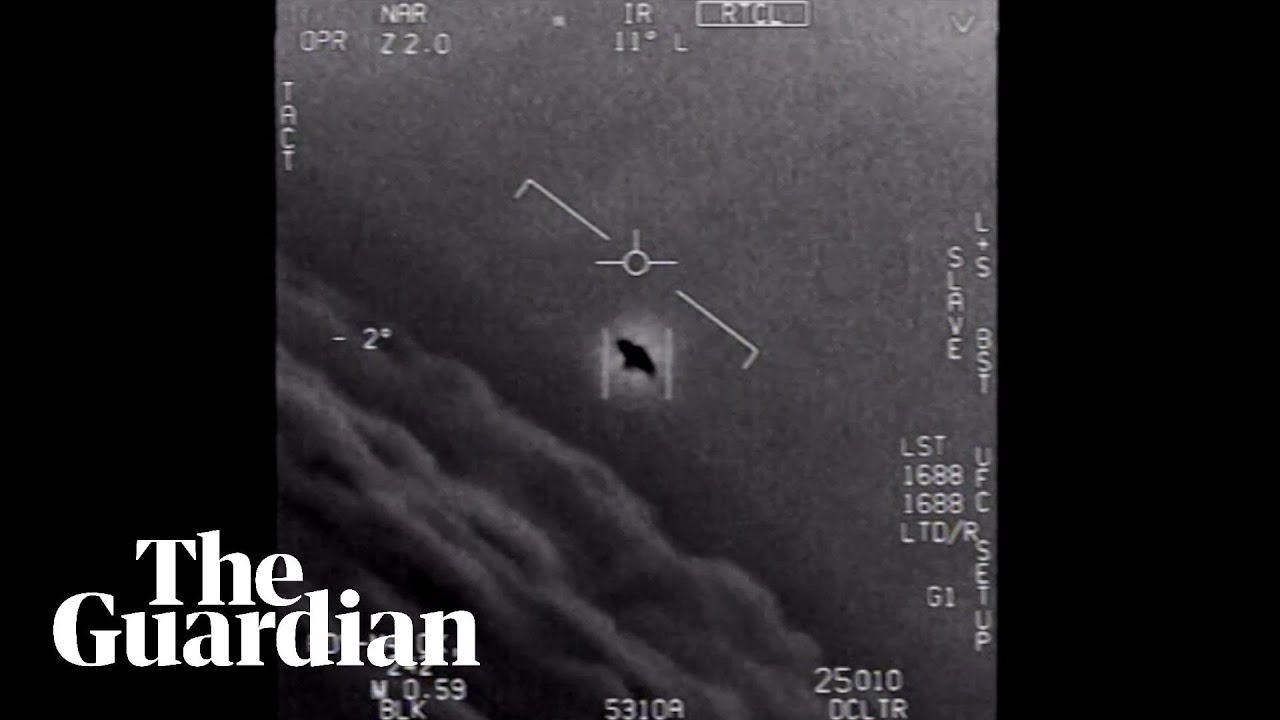
On Monday, the Pentagon made a move that sent ripples through the UAP (Unidentified Aerial Phenomena) community and beyond: the formal release of three unclassified videos. These weren't new discoveries, but rather footage captured by U.S. Navy pilots that had been circulating for years, depicting encounters with objects that defied conventional explanation. As an investigator, I've learned to approach such mainstream confirmations with a mixture of professional intrigue and inherent skepticism. The question isn't just *what* was released, but *why now* and *what does it truly signify*?

The Unveiling: A Strategic Release?

The Pentagon's confirmation and release of these UAP videos is a significant development, moving the discussion from the fringes of conspiracy forums to official government channels. The videos themselves, showing encounters from 2004 and January 2015, depict objects exhibiting flight characteristics that are, frankly, astounding. We're talking about phenomena moving at hypersonic speeds, demonstrating instantaneous changes in direction without apparent means of propulsion. From an investigative standpoint, this isn't just about confirming the existence of these *things*; it's about understanding their capabilities and the potential implications for national security and our understanding of physics.

The timing of this release, however, begs for scrutiny. In an era saturated with information, where does such a revelation fit? Many commenters online noted a curious lack of widespread public astonishment. One user aptly captured this sentiment: "If this had been released in 2000 something, the world would have gone wild, but now it's just feels weirdly ... normal." This observation is crucial. It suggests a societal desensitization to extraordinary events, perhaps a byproduct of the information age or the sheer volume of global crises we've faced. It's a strange paradox: the government officially acknowledges phenomena that defy conventional understanding, and for many, it barely registers as a blip on the radar.

Recommended Gear for Investigation

ProductDescriptionBuy
Cryptozoology A To Z: The Encyclopedia Of Loch Monsters Sasquatch Chupacabras And Other Authentic M: The Encyclopedia of Loch Monsters, Sasquatch, Chupacabras, and Other Authentic Mysteries of NatureAn excellent choice to complement your research on this topic.View on Amazon
The Big Book of Paranormal: 300 Mystical and Frightening Tales From Around the WorldAn excellent choice to complement your research on this topic.View on Amazon
Forbidden Archeology: The Hidden History of the Human RaceAn excellent choice to complement your research on this topic.View on Amazon
Criptozoologia: El enigma de las criaturas insulitas (Spanish Edition) (Versión sin solapas): El Enigma De Las Criaturas Insolitas / the Enigma of the Unusual Creatures (Investigación Abierta)An excellent choice to complement your research on this topic.View on Amazon
The H. P. Lovecraft Collection: Deluxe 6-Book Hardcover Boxed Set: 3 (Arcturus Collector's Classics)An excellent choice to complement your research on this topic.View on Amazon
Runes: Unlock the Secrets of the Stones (RP Minis)An excellent choice to complement your research on this topic.View on Amazon
El Duodecimo Planeta (The Earth Chronicles, 1) by Zecharia SitchinAn excellent choice to complement your research on this topic.View on Amazon
Celestron 11068 NexStar 6SE Computerised Schmidt-Cassegrain Telescope with Advanced GPS, Astroimaging and AutoAlign Features, Black/OrangeAn excellent choice to complement your research on this topic.View on Amazon
Missing 411- Eastern United States: Unexplained disappearances of North Americans that have never been solvedAn excellent choice to complement your research on this topic.View on Amazon
Ghost-Hunting For Dummies [Idioma Inglés] An excellent choice to complement your research on this topic.View on Amazon

A Legacy of Leaks and Verification

It’s important to contextualize this official release. These videos didn't materialize out of thin air. They were unofficially leaked in 2007 and 2017, sparking years of speculation before the Navy officially verified their authenticity. This protracted timeline from leak to official acknowledgment is not uncommon in cases involving national security and potentially groundbreaking technology. The military's official stance has historically been one of cautious ambiguity, often attributing sightings to misidentified conventional aircraft, atmospheric phenomena, or classified projects. However, the persistent nature of these UAP reports, coupled with the quality of the leaked footage, eventually pushed the issue into the public spotlight, forcing a more direct engagement from the Pentagon.

The very fact that these videos were initially leaked is telling. It suggests a desire within certain circles to bring this information into the public domain. When official channels are perceived as slow or obstructive, unofficial disclosures often emerge. This pattern—leak, speculation, eventual verification—is a recurring theme in the study of unexplained phenomena. It forces institutions to confront evidence that might otherwise remain classified or dismissed.

Deconstructing the Footage: Hypersonic Anomalies and Pilot Reactions

Let's break down what these videos allegedly show. One incident from 2004 involves the USS Nimitz carrier strike group encountering an object described as a "Tic Tac" – white, smooth, and roughly the size of a commercial airliner, but exhibiting no visible wings or propulsion systems. Reports indicate this object accelerated rapidly and disappeared. The 2015 videos, on the other hand, show smaller objects, often referred to as pyjamas or drones, moving erratically. The key takeaway across these recordings is the extreme maneuverability and speed, which current human-engineered technology struggles to replicate, particularly the apparent ability to achieve hypersonic velocities and make instantaneous directional changes.

The human element, captured in the pilots' dialogues, is as fascinating as the visual data. While audio is crucial for context, one comment noted the pilot's reported ability to "lock onto a ufo going hypersonic." This implies a level of tracking and engagement that suggests the pilots were not simply observing a distant anomaly, but actively interacting with it. Some reactions in the comments highlighted this: "How is no one talking about how the pilot locked onto a ufo going hypersonic? Dude has skills." This speaks to the advanced capabilities of the individuals involved and the sophisticated nature of the encounter. Another user found humor in the pilots' expressed surprise and occasional fear, stating: "I love how happy they are :D because without the audio I would be kind of terrified." This points to the emotional impact of witnessing something so far beyond the ordinary.

The "instant flip and rotation" described by one commenter, mimicking a panicked alien response, is a recurring motif in UAP encounters. It suggests that whatever these objects are, they are not passive observers but entities capable of sophisticated evasive maneuvers when detected. This leads to intriguing, albeit speculative, questions about intent and awareness.

When the Extraordinary Becomes Mundane: A 2020 Phenomenon

Perhaps the most striking aspect of this official release is the muted public reaction. The year 2020 has been a crucible of global events, from pandemics to social unrest, and the release of UAP videos, which would have dominated headlines in previous decades, was met with a peculiar sense of apathy. "It must be bad when 2020 is such a bad year, that this news isnt even surprising," one user commented. Another echoed this sentiment: "2020 is so weird, Pentagon releases UFO's footage officially and it's barely a news."

This phenomenon of desensitization is a critical area for social researchers. Are we so overwhelmed by information and crisis that true anomalies no longer capture our attention? Or perhaps it signals a growing, albeit subconscious, acceptance that we are not alone in the universe. The meme culture surrounding "aliens in April" further underscores this normalization. What was once sci-fi speculation has, for some, become an almost expected, if still strange, part of the ongoing narrative of 2020. The comment, "Everyone thought that 'aliens in April' was a joke, now look where we are," perfectly encapsulates this shift.

This societal shift is a double-edged sword for investigators. On one hand, it allows for a more objective analysis without mass hysteria. On the other, it risks trivializing potentially crucial evidence that could have profound implications for humanity. The urgency to understand these phenomena is diminished when their existence is met with a collective shrug.

Investigator's Verdict: What Lies Beyond the Frame?

The Pentagon’s official release of these UAP videos is a watershed moment, moving the subject from classified projects and leaked footage into the realm of public acknowledgement. However, it's crucial to maintain analytical rigor. The videos, while compelling, are limited. They offer glimpses, tantalizing fragments of encounters, but they do not constitute definitive proof of extraterrestrial visitation. The military’s focus on "unidentified aerial phenomena" strategically leaves the door open to a spectrum of possibilities, including advanced foreign adversary technology, classified domestic projects, or, indeed, non-human intelligence.

From my perspective, the most significant takeaway isn't the confirmation of the videos' authenticity, but the shift in official narrative. The term "UAP" itself is a rebranding, moving away from the loaded term "UFO," allowing for a more scientific and less sensationalized examination. Yet, the anecdotal evidence and the sheer anomaly presented within the footage—hypersonic speeds, instantaneous acceleration, transmedium capabilities (if reports are to be believed)—continue to point towards possibilities that challenge our current scientific paradigms.

To delve deeper into the complexities of UAP phenomena and the methodologies of paranormal investigation, I recommend the following resources:

"The Pentagon UFO Videos: The Inside Story" by Luis Elizondo. A critical look at the official releases and behind-the-scenes developments from a key figure in the UAP disclosure movement.
"A History of UFOs" by David Jacobs. For a comprehensive overview of historical sightings and the cultural impact of the UFO phenomenon.
Luis Elizondo's interviews on various platforms. His testimony provides valuable insight into the government's perspective and the ongoing investigation into UAPs.

These resources offer a blend of firsthand accounts, historical context, and analytical perspectives essential for any serious investigator.

Frequently Asked Questions

  1. What exactly are "Unidentified Aerial Phenomena" (UAP)?
    UAP is the official term used by governments and military organizations to describe any airborne object or phenomenon that cannot be immediately identified. It encompasses a wide range of sightings, from conventional aircraft that are simply misidentified to truly anomalous objects exhibiting extraordinary capabilities.
  2. Why did the Pentagon release these videos now?
    The reasons are likely multifaceted. Increased public and congressional pressure, coupled with a desire to demystify the topic and potentially prepare the public for future revelations, are probable contributing factors. It may also serve to legitimize the ongoing study of UAP by military and intelligence agencies.
  3. Do these videos prove the existence of aliens?
    No, the videos do not definitively prove the existence of extraterrestrial life. They confirm the existence of unidentified objects exhibiting advanced flight characteristics. While this leaves the door open to extraterrestrial origins, other explanations, such as classified human technology or unknown natural phenomena, cannot be ruled out without further evidence.
  4. How does the public react differently to this news in 2020 compared to previous decades?
    The muted reaction in 2020 is attributed to a combination of factors, including societal desensitization to extraordinary events due to information overload, the impact of the COVID-19 pandemic and other global crises, and perhaps a growing, albeit passive, acceptance of the possibility of non-human intelligence.
  5. What is the significance of the pilots' reactions in the videos?
    The pilots' dialogues provide crucial context, revealing their surprise, confusion, and sometimes fear, indicating that the objects displayed behaviors far outside their operational experience and understanding of known physics and technology. Their reactions underscore the anomalous nature of the observed phenomena.

Investigator's Recommended Gear

For those interested in conducting their own preliminary observations or documenting local anomalies, having reliable equipment is key. While spectral analysis and advanced sensor technology are beyond the scope of civilian investigation, basic tools can enhance observation and data collection.

Your Mission: Document Local Anomalies

The vastness of the unknown often begins with the seemingly mundane. Your mission, should you choose to accept it, is to become a vigilant observer in your own environment. Pay attention to unusual aerial sightings, unexplained lights, or any phenomena that defy conventional explanation. Document everything meticulously: note the date, time, location, atmospheric conditions, and any accompanying sounds or visual details. If possible, capture photographic or video evidence. Your observations, however small, contribute to the larger mosaic of unexplained phenomena. Share your documented experiences in the comments below. The truth is out there, and sometimes, it's right above your head.

Don't let this groundbreaking revelation fade into the background noise of 2020. Share this analysis with your networks and spark a conversation. What are your thoughts on the Pentagon's UAP video release? Have you or someone you know witnessed something similar? Leave your experiences and theories in the comments below. Remember to follow us for more in-depth investigations into the unexplained.

```

Investigator's Note: True paranormal research doesn't fund itself. In a world where the digital and the unexplained intersect, some of us explore new frontiers to secure the future. Do you dare to be part of the vanguard? Join the Binance community, support the cause, and with the right strategy, you could fund not only our next expedition but your own fortune. The next great discovery could be just a click away.
Massive Daytime Object Observed Above Earth: An Investigative Breakdown


Introduction: The Anomaly

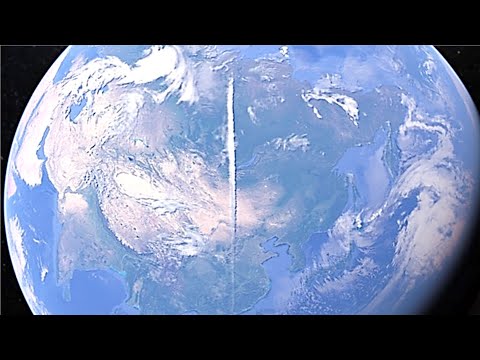
The phone buzzes, not with a notification, but with a query from the ether. A colossal shape, defying conventional astronomical explanation, has been sighted against the midday sun. These are not mere whispers in the cosmic wind; these are tangible observations demanding rigorous scrutiny. Today, we don your lab coat and grab our magnifying glass to dissect a recent report that has sent ripples through the ufological community. Our objective: move beyond the sensationalism and apply critical analysis to the phenomenon of unexplained massive daytime aerial objects.

Case File Analysis: The Incident Overview

The sheer volume of anomalous photographic evidence shared annually is staggering. While scientific and logical explanations account for the vast majority, a persistent minority continues to defy categorization. The specific incident under examination centers around an image that has recently circulated, purportedly depicting an immense object suspended far above our planet. The provenance of this image is as curious as the object itself: uploaded anonymously after being “found” on a personal device, accompanied by a recollection of witnessing the phenomenon firsthand. This narrative, while compelling, requires meticulous deconstruction. We must ask: what are the systemic biases in digital evidence sharing, and how do they influence our perception of anomalous events?

Photographic Evidence: Unpacking the Image

The image in question, while intriguing, presents a classic challenge in anomalous photography. Before we can even begin to theorize about exotic origins, a forensic examination of the visual data is paramount. Key questions arise: Is the object truly massive, or is it an illusion of scale? What are the potential distortions introduced by the device’s lens, sensor, or any subsequent digital processing? Is there evidence of manipulation, either intentional or accidental? Without high-resolution originals and metadata, the analysis is severely hampered. This situation echoes countless historical cases where preliminary photographic "evidence" dissolved under scrutiny, revealing mundane explanations such as atmospheric phenomena, distant aircraft, or even simple photographic artifacts. The critical first step in any case like this is to exhaust all conventional explanations before entertaining more extraordinary hypotheses.
"The history of unexplained aerial phenomena is littered with compelling images that, upon rigorous investigation, revealed themselves to be nothing more than misidentified terrestrial objects or atmospheric optical illusions. Our duty is to approach every piece of evidence with a healthy dose of skepticism and a methodical process of elimination." - Alejandro Quintero Ruiz

Witness Testimony: The Observer's Account

The narrative accompanying the image speaks of a forgotten upload and a remembered sighting. The observer claims a distinct memory of this vast object forming above the planet. While personal testimony is a vital component of any investigation, it is also one of the most subjective and fallible forms of evidence. Human memory is notoriously reconstructive; details can be embellished, distorted, or conflated over time. Furthermore, the psychological impact of witnessing something perceived as anomalous can lead to heightened interpretation. Was the observer truly seeing an object of unprecedented scale, or was it a momentarily striking cloud formation, a high-altitude aircraft viewed from an unusual angle, or even an internal visualization triggered by a pre-existing interest in the unexplained? Without corroborating witnesses or independent data, the solitary account, while valuable, remains an insufficient basis for definitive conclusions.

Potential Explanations: Mundane vs. Phenomenal

When confronted with an anomaly, the investigator’s first priority is to systematically rule out all known and mundane causes. For massive daytime objects, the possibilities are numerous:
  • Atmospheric Phenomena: Unusual cloud formations, lenticular clouds, or complex optical illusions caused by light refraction and atmospheric conditions can often mimic solid structures.
  • High-Altitude Aircraft: Drones, weather balloons, experimental aircraft, or even satellites can appear as peculiar shapes in the sky, especially when viewed from specific angles or under particular lighting conditions.
  • Optical Illusions and Pareidolia: The human brain is wired to find patterns, sometimes seeing familiar shapes in random stimuli. This can be exacerbated by camera artifacts or memory reconstruction.
  • Misidentification of Celestial Bodies: Venus, for instance, can be visible during the daytime under clear conditions and has, on occasion, been mistaken for something more enigmatic.

Only after exhausting these avenues can we begin to entertain more speculative, albeit fascinating, possibilities such as advanced aerial technology of unknown origin or other phenomena that currently defy our scientific understanding, falling into the realm of Ufology and Unidentified Aerial Phenomena (UAP).

Investigator's Verdict: Deconstructing the Unknown

The image and accompanying testimony present a compelling narrative, but the evidence, as it stands, is circumstantial and lacks the forensic rigor required for definitive identification. The anonymous nature of the upload and the reliance on a single, recollected account significantly weaken its evidentiary value. While we cannot definitively dismiss the possibility of a genuine anomaly, the absence of verifiable metadata, corroborated sightings, or independent analysis of the object’s characteristics leaves it firmly in the category of "unexplained" rather than "proven phenomenon." This case highlights the critical distinction between something that is simply not understood and something that is demonstrably *otherworldly*. My verdict leans towards the former, pending the emergence of far more robust data.

Protocols for Investigation: Your Mission

This case serves as an excellent primer for your own observational endeavors. Your mission, should you choose to accept it, is to become a vigilant observer and a meticulous recorder of the skies.
  1. Document Everything: If you witness an anomaly, use your device to record video and take multiple photographs from different angles. Crucially, try to capture the surrounding environment to establish scale and context.
  2. Record Metadata: Ensure location services and timestamps are enabled on your device. This data is invaluable for corroboration and ruling out mundane explanations.
  3. Seek Corroboration: If possible, have other individuals witness the event independently and record their observations.
  4. Research Thoroughly: Before jumping to conclusions, investigate common atmospheric phenomena, aircraft types, and known optical illusions that could explain your sighting. Consult resources like aircraft databases or meteorological charts.
  5. Share Responsibly: When sharing your findings, provide all available original documentation and data. Be prepared for critical analysis.

The Researcher's Archive

For those who wish to delve deeper into the study of unexplained aerial phenomena and photographic anomalies, I highly recommend the following resources available in my archive:
  • Books:
    • "The UFO Experience: A Scientific Inquiry" by J. Allen Hynek
    • "In Search of Modern UFOs" by Philip J. Klass
    • "The Day After Roswell" by Philip J. Corso (for controversial but influential perspectives)
  • Documentaries:
    • "I Know What You Saw Last Summer" (Exploring eyewitness accounts and memory)
    • "An Inconvenient UFO" (Examining government disclosures and research methodologies)
    • "The Phenomenon" (A comprehensive overview of the UAP subject)
  • Platforms:
    • Gaia: Offers a wide array of documentaries and series on unexplained phenomena.
    • Sky & Telescope: For astronomical information that can help identify celestial bodies.

Frequently Asked Questions

  • Q: Is it possible for a massive object to remain unseen for long periods?
    A: While large objects are typically detectable, phenomena occurring at extreme altitudes, with unusual reflective properties, or during specific atmospheric conditions could potentially evade casual observation, especially if not actively being sought.
  • Q: How do investigators differentiate between a genuine UAP and a known object?
    A: The process involves meticulous data collection: eyewitness corroboration, photographic/video analysis, radar data, atmospheric conditions, and ruling out all conventional explanations. If an object cannot be identified through these rigorous steps, it remains classified as Unidentified.
  • Q: What is the role of pareidolia in UAP sightings?
    A: Pareidolia is the psychological phenomenon where the mind perceives a familiar pattern (like a face or an object) in random or ambiguous visual stimuli. It's a common misinterpretation that can lead people to see shapes in clouds or static that resemble known forms, including craft.

Conclusion: The Persistent Enigma

The observation of a "massive object above our planet during the daytime" is a narrative that, while intriguing, currently lacks the substantiating evidence required for a concrete conclusion. It serves as a potent reminder of the vast unknown that surrounds us and the perennial human fascination with the inexplicable. While countless sightings are eventually attributed to prosaic explanations, the persistent reports of genuinely anomalous phenomena compel us to maintain an open yet critically analytical stance. The universe still holds its secrets close, and it is through diligent investigation, rigorous analysis, and a willingness to question our own perceptions that we inch closer to understanding them.

alejandro quintero ruiz is a veteran field investigator dedicated to the analysis of anomalous phenomena. His approach combines methodological skepticism with an open mind to the inexplicable, always seeking the truth behind the veil of reality. With years spent documenting unexplained events across the globe, his insights are forged in the crucible of experience.

Your Mission: Analyze the Sky

Consider your next clear day. Keep a watchful eye on the sky, not just for the extraordinary, but for the subtle anomalies that ordinary observation might miss. Document anything peculiar, and apply the principles discussed here. Is it a cloud, a drone, or something more? Your critical faculties are your most potent investigative tool. Report your findings and your analysis in the comments below. Let's see what we can collectively uncover.

NASA Detects Massive, Unidentified Objects 300 Miles Wide: An Interstellar Enigma


(adsbygoogle = window.adsbygoogle || []).push({});

Introduction: The Silent Watchers

The cosmos is a vast, silent ocean, and humanity has long been peering into its depths, searching for any sign of life beyond our terrestrial cradle. For decades, astronomers have meticulously scanned the void, their powerful telescopes acting as extensions of our own curious gaze, seeking whispers from distant stars. The dream: to encounter interstellar visitors, entities that have traversed unimaginable distances to grace our solar system. This pursuit, however, has often been a lonely one, fraught with the frustration of finding nothing but the familiar cosmic dust and rock.

"We always look up. We search for signs. But sometimes, what we search for finds us." - Attributed to a senior analyst at SETI.

It is a peculiar irony that when the hope of discovery begins to wane, when the datasets yield only predictable patterns, the universe often decides to reveal its most profound secrets. This is precisely the narrative that unfolded for a dedicated group of astronomers, their years of tireless observation culminating in a discovery that defies conventional understanding. Just as they were compiling reports of another fruitless search, two colossal, unidentified objects, each spanning an astonishing 300 miles, materialized within our cosmic neighborhood. This is not merely a sighting; it is an event that demands rigorous analysis and opens a Pandora's Box of possibilities.

The Decades-Long Hunt for Interstellar Visitors

The endeavor to detect extraterrestrial intelligence (ETI) and, by extension, potential visitors from other star systems, is a scientific undertaking as old as the field of astronomy itself. Projects like SETI (Search for Extraterrestrial Intelligence) have employed radio telescopes and optical surveys for decades, listening for signals that might betray the presence of advanced civilizations. The sheer scale of the universe, with billions of galaxies each containing billions of stars, logically suggests that life should be abundant. Yet, the "Great Silence" persists, a perplexing contradiction known as the Fermi Paradox: if aliens are likely, where are they?

This quest is not solely about detecting signals. It also involves searching for physical evidence of extraterrestrial artifacts or probes. The theoretical framework for such searches considers objects that might traverse interstellar space. These could be natural phenomena occurring in ways we don't yet understand, or, more dramatically, they could be artificial in origin—ships, probes, or remnants of technology from civilizations far older and more advanced than our own. The challenge lies not only in the vast distances involved but also in the subtle nature of such detection. An interstellar visitor might not announce itself with flashing lights; it could be a fleeting anomaly, easily missed against the backdrop of cosmic noise.

Our current tools, while sophisticated, are primarily designed to observe known astronomical phenomena. Detecting something entirely novel, something that doesn't fit existing models of asteroids, comets, or rogue planets, requires not only advanced observational capabilities but also a willingness to consider unconventional explanations when data points towards them. The history of astronomy is replete with examples where initial observations of anomalies were later explained by known physics, yet the pursuit of the unknown remains a critical driver of scientific progress.

An Unexpected Arrival: When All Hope Seemed Lost

The year was marked by a pervasive sense of scientific ennui regarding the search for interstellar objects. Data streams offered the usual cosmic fare – distant galaxies, nebulae, and the predictable orbits of celestial bodies within our solar system. Hope for a breakthrough, for that one piece of evidence that would confirm our existence is not solitary, had diminished to a flicker. It was precisely at this juncture, according to astronomical logs, that the universe decided to playwright a scene worthy of science fiction.

Suddenly, two entities, unlike anything ever cataloged, appeared. Their characteristics defied immediate classification. They were massive, dwarfing typical asteroids or comets, with estimated dimensions reaching an astounding 300 miles in diameter. Their trajectory and composition were anomalous, suggesting a journey from beyond the confines of our sun's gravitational dominion. Imagine the scene in the observatory: the quiet hum of machinery, the focused gazes, and then, the sudden jolt of disbelief as the instruments registered these gargantuan, unidentified presences. It was a moment where decades of searching culminated not in a faint signal, but in the undeniable detection of colossal, unknown entities.

The suddenness and scale of this detection were staggering. It wasn’t a gradual observation or a slow approach; it was, in essence, an arrival. This event prompted immediate reassessment of observation priorities and data analysis protocols. All hope, it seemed, had been lost, only to be spectacularly rekindled by the appearance of these enigmatic visitors.

Analysis of the Gargantuan Objects: Data and Speculation

The raw data from NASA's advanced deep-space surveillance systems painted a picture of entities that challenged established astronomical categories. Each object measured approximately 300 miles across, a size that places them firmly in the realm of dwarf planets or large moons, yet their observed characteristics were far from typical. Unlike comets, they showed no significant outgassing or coma, suggesting an absence of volatile materials or a composition that differs radically from known icy bodies.

Furthermore, their trajectories were not easily explicable by the gravitational influences within our solar system alone. While initial analyses attempted to reconcile their paths with theoretical models of rogue celestial bodies or unusual orbital resonances, the data consistently pointed towards origins far beyond the Oort Cloud, suggesting an interstellar provenance. The term "unidentified" became the operative descriptor, a stark admission of the limitations of our current understanding when faced with such colossal anomalies.

Speculation, as always in the face of the unknown, ran rampant. Could these be massive fragments of a distant solar system, ejected into the void? Or were they, as some whispered, evidence of non-natural phenomena? The sheer scale and the anomalous characteristics of these objects invite profound questions about their nature, origin, and purpose. Were they passively drifting through space, or was there an underlying intelligence directing their course? The scientific method demands we exhaust all natural explanations first, but the data, at this preliminary stage, presented a formidable challenge to conventional models. This is where the true investigative work begins: to sift through the data, re-run the models, and consider the extraordinary if the ordinary fails to satisfy.

The NASA Perspective: Scientific Rigor vs. The Unexplained

NASA, as the preeminent space exploration agency, operates on a foundation of rigorous scientific methodology. When confronted with phenomena like these massive, unidentified objects, their approach is characterized by cautious analysis, data verification, and a systematic elimination of known explanations. The initial reports of these 300-mile-wide entities would trigger a cascade of internal processes: cross-referencing data from multiple instruments, consulting with astrophysicists and planetary scientists, and comparing observations against extensive databases of celestial bodies.

The agency's mandate is to explore the unknown, but this exploration is guided by empirical evidence. The designation "Unidentified" is not an endpoint but a starting point for deeper investigation. It signifies that, based on current data and established scientific understanding, a definitive classification cannot be made. This does not automatically equate to extraterrestrial origin; it means more data is needed, more analysis is required, and potentially, new theoretical frameworks must be considered.

However, the sheer scale and anomalous characteristics of these objects place them in a unique category. While NASA likely maintains protocols for classifying and investigating potential extraterrestrial artifacts (often referred to in broader contexts as "unidentified aerial phenomena" or UAP, though typically within Earth's atmosphere), the detection of such massive objects in interstellar space presents a different order of magnitude. The agency's public statements would, understandably, reflect a conservative stance, emphasizing ongoing research and the need for more data. Yet, behind the formal pronouncements, the scientific community within NASA would undoubtedly be grappling with the profound implications of such a discovery, pushing the boundaries of our understanding of the cosmos and our place within it.

Implications for Extraterrestrial Life and the Fermi Paradox

The detection of massive, unidentified objects with apparent interstellar origins would send seismic waves through the scientific community and fundamentally challenge our perspective on the Fermi Paradox. This paradox, famously articulated by physicist Enrico Fermi, questions why, given the high probability of extraterrestrial life in the universe, we have found no definitive evidence of it. The "Great Silence" suggests either that life is exceedingly rare, that advanced civilizations self-destruct, or that they are deliberately avoiding contact.

If these 300-mile-wide objects were confirmed to be artificial, it would provide an unprecedented answer to Fermi's question: they are here, or at least passing through, and they are technologically advanced enough to traverse interstellar distances. This would imply that civilizations capable of such feats are not only possible but perhaps more common than previously assumed. It would shift the focus from "Are we alone?" to "Why are they here, and why haven't they made open contact?"

Such a discovery would necessitate a re-evaluation of our search strategies. We might need to consider that interstellar visitors are not just sending radio signals but are actively traversing the cosmic landscape. It could also suggest that their presence is subtle, designed to observe without interference, or that their motives are entirely alien to our comprehension. The implications for humanity would be profound, potentially ushering in a new era of understanding about life in the universe and our own place within its grand, unfolding narrative. It would mean the universe is far more populated and dynamic than we dared to imagine, and that the silence we perceive has been broken by colossal, enigmatic visitors.

Analogies and Historical Context: Oumuamua and Beyond

While the detection of 300-mile-wide interstellar objects would be unprecedented, the scientific community has already encountered phenomena that hint at such possibilities. The most famous example is 'Oumuamua, discovered in 2017. This object, the first interstellar visitor detected passing through our solar system, exhibited several peculiar characteristics that defied easy classification. Its highly elongated shape, its slight acceleration away from the sun without any visible cometary outgassing, and its trajectory all led to intense scientific debate.

Scientists proposed various explanations, ranging from a nitrogen iceberg to a fragment of a planet like Pluto, but none entirely satisfied all observations. Avi Loeb, a prominent astrophysicist, controversially proposed that 'Oumuamua could be an artificial object, a solar sail or probe sent by an extraterrestrial civilization. While this hypothesis remains on the fringes of mainstream scientific acceptance, it highlights the intellectual space occupied by the idea of interstellar visitors and the challenges of identifying them with our current observational capabilities.

The historical context of such discoveries is critical. For centuries, humanity speculated about other worlds and inhabitants. The advent of modern astronomy and space exploration has gradually replaced myth and speculation with data and observation. However, each genuinely anomalous observation, like 'Oumuamua or the potential detection of these larger objects, serves as a reminder that our understanding of the cosmos is incomplete. They push us to refine our instruments, expand our theoretical models, and, most importantly, maintain an open mind to the truly extraordinary possibilities that lie hidden within the vast, unexplored expanse of space.

Investigator's Verdict: Interstellar Visitors or Cosmic Coincidence?

The data points to something extraordinary: massive, unidentified objects, 300 miles wide, detected by NASA, originating from beyond our solar system. The scientific inclination is to seek a natural explanation, however exotic. Could these be hyper-dense remnants of a supernova, ejected at high velocity? Perhaps unusually large fragments from a galactic collision, flung across interstellar space? The sheer scale, however, makes conventional explanations strained. The lack of typical cometary or asteroidal characteristics further deepens the mystery.

While the term "visitor" implies intent, and "interstellar" points to an origin beyond our sun, the evidence presented, while compelling, remains circumstantial for definitive conclusions about artificiality. The scientific community will undoubtedly dedicate significant resources to tracking these objects, analyzing their spectral signatures, and modeling their trajectories. The crucial step is to rule out all plausible, albeit rare, natural phenomena before entertaining more speculative hypotheses.

However, the persistent anomalies observed in such interstellar objects, from 'Oumuamua to these colossal new detections, suggest that the universe may hold surprises that stretch the boundaries of our current physics and biology. Until definitive data proves otherwise, these objects remain precisely what they are designated: massive, unidentified, and originating from the interstellar void. They represent not a confirmed alien visitation, but a profound testament to the vastness of our ignorance and the boundless potential of the cosmos.

The Investigator's Archive

For those seeking to delve deeper into the phenomena of interstellar objects and the search for extraterrestrial life, the following resources are invaluable:

  • Books:
    • "Extraterrestrial: The First Sign of Intelligent Life Beyond Earth" by Avi Loeb - A firsthand account and defense of the 'Oumuamua hypothesis.
    • "The Extraterrestrial Life Debate: Are We Alone?" (Anthology) - A collection of essays exploring various facets of the search for life.
    • "The Day After Roswell" by Philip J. Corso (with William J. Birnes) - While focused on terrestrial UFOs, it discusses the implications of advanced extraterrestrial technology.
  • Documentaries:
    • "The Search for Alien Life" (Various productions) - Documentaries exploring SETI, exoplanet research, and astrobiology.
    • "Are We Alone?" (PBS NOVA) - Explores the scientific quest for extraterrestrial life.
    • "The Phenomenon" (2020) - A comprehensive look at the UAP subject, touching on extraterrestrial possibilities.
  • Platforms & Resources:
    • Gaia.com: Offers a vast library of documentaries and series on paranormal, esoteric, and extraterrestrial topics.
    • SETI Institute: The official website provides news, research updates, and educational resources on the search for extraterrestrial intelligence.
    • NASA's Exoplanet Archive: A database of all confirmed exoplanets, offering insights into the sheer number of potential habitats for life.

Your Field Mission: Observing the Cosmos

The detection of these colossal objects is a stark reminder of how much we still don't know about the universe. While direct observation of these specific entities may be beyond most individuals, the spirit of astronomical investigation is within everyone's reach.

  1. Engage with Citizen Science: Participate in online projects like Zooniverse, which allow you to contribute to real scientific research by analyzing astronomical data, such as identifying galaxies or classifying celestial objects. Your efforts could help uncover the next anomaly.
  2. Stargazing and Astrophotography: Even with basic equipment, observing the night sky can be profoundly inspiring. Learn to identify planets, constellations, and fainter celestial objects. If you have a camera, experiment with astrophotography to capture the beauty and mystery of space.
  3. Follow Official Astronomical News: Keep abreast of announcements from NASA, ESA, and other space agencies. Understanding the latest discoveries and ongoing research provides context for events like the detection of these unidentified objects.
  4. Critical Analysis: When presented with sensational claims about extraterrestrial encounters, apply a healthy dose of skepticism. Research the source, look for corroborating evidence, and consider all possible natural explanations before jumping to extraordinary conclusions.

The cosmos is vast and full of mysteries. Your mission is to observe, question, and analyze. What have you seen in the night sky that defied explanation?

About the Author

alejandro quintero ruiz is a veteran field investigator dedicated to the analysis of anomalous phenomena. His approach combines methodological skepticism with an open mind to the inexplicable, always seeking the truth behind the veil of reality. With years of experience traversing uncharted territories of the unknown, he brings a unique blend of investigative rigor and a profound respect for the mysteries that defy our current understanding.

The universe continues to present us with enigmas that challenge our very perception of reality. The detection of these gargantuan, unidentified objects serves as a potent reminder that our exploration has only just begun. The silence of space may not be empty, but filled with wonders yet to be understood.

What are your theories regarding these massive interstellar objects? Share your thoughts and any personal observations in the comments below. The truth is out there, and sometimes, it's bigger than we can imagine.

Serra da Bocaina National Park: Analysis of 'Giant Object' Sighting and Unidentified Aerial Phenomena in Brazil


Introduction: The Unfolding Mystery

The static crackles, not from a faulty radio, but from the ether itself. A flicker in the periphery, a shadow that defies geometry. These are the whispers that haunt the edges of our perception, the anomalies that demand rigorous investigation. Today, we turn our analytical gaze towards the dense, verdant expanse of Brazil, where recent reports suggest an extraordinary event transpired. Residents of the mountainous regions, particularly north of Rio de Janeiro, have come forward with compelling, albeit unverified, accounts of something significant sighted in their skies – an event culminating in what is described as a terrestrial impact. This isn't mere folklore; it's a pattern of reportage that warrants a deep dive into the facts, the testimonies, and the plausible hypotheses.

The Brazilian press has been abuzz, fueled by local submissions of video evidence. The narrative coalesces around a series of sightings of Unidentified Flying Objects (UFOs), with one particular incident involving a metallic object reportedly making contact with the ground. Our objective is not to sensationalize, but to dissect these claims with the critical eye of an investigator, separating speculation from potential reality. We must ask: what truly unfolded in the skies and on the mountainsides of Brazil?

Case File Establishment: Reports from Northern Brazil

The initial reports began to surface over recent weeks, originating from various communities situated in the northern regions of Brazil, with a specific focus on areas proximate to the Serra da Bocaina National Park. Residents have stepped forward, driven by a palpable sense of unease and curiosity, to report sightings of atypical aerial phenomena. These weren't fleeting glimpses of conventional aircraft or natural atmospheric occurrences; the descriptions consistently pointed towards objects exhibiting anomalous flight characteristics. The uniformity across multiple, independent accounts is the first layer of data we must meticulously examine. The Brazilian press, acting as a conduit for local narratives, has amplified these reports by disseminating videos submitted by concerned citizens. This influx of visual data, however unpolished, forms the bedrock of our initial investigation.

The narrative gained significant traction when a particular incident was reported: one of these unidentified objects, described as metallic in nature, was alleged to have made contact with the ground. This detail elevates the phenomenon from mere aerial observation to a potential physical event, introducing the possibility of tangible evidence. Understanding the geographical context is paramount; the Serra da Bocaina region, with its vast, often inaccessible terrain, presents an ideal, albeit challenging, environment for observing unexplained phenomena without easy terrestrial corroboration.

Witness Testimony Analysis: Consistent but Unverified Accounts

When analyzing anomalous events, witness testimony is often the initial, and sometimes only, available data. In the case of the Serra da Bocaina sightings, the consistency of these accounts across multiple individuals is noteworthy. Reports describe "strange things" and specifically "unidentified flying objects" being observed in the skies. The uniformity in describing these objects as exhibiting characteristics beyond known terrestrial or atmospheric craft is a critical data point. This is not simply a matter of misidentification; the recurring descriptions suggest a genuine deviation from the expected. For any investigator, this convergence of independent observations is a red flag, demanding deeper scrutiny rather than immediate dismissal.

However, as any seasoned investigator knows, consistency does not automatically equate to accuracy. Human perception is fallible, influenced by expectation, suggestion, and the inherent limitations of sensory input, especially under duress or in low-visibility conditions. The psychological landscape of belief is as complex as the phenomena we seek to understand. While the testimonies paint a vivid picture, the absence of independent, corroborating evidence beyond the submitted videos leaves a significant gap. The "metallic object" that reportedly "made contact with the ground" is the linchpin of this narrative. Without verifiable physical remnants or unambiguous, high-resolution photographic or video evidence, these accounts remain, for now, compelling anecdotes rather than incontrovertible proof. It is our duty to explore every avenue, but also to acknowledge the threshold where anecdote ends and evidence begins.

Physical Evidence Scrutiny: The Alleged Crash

The most pivotal aspect of the Serra da Bocaina incident, distinguishing it from a mere collection of UFO sightings, is the report of a physical impact. The claim that a "metallic object" crashed to the ground transforms the event from an aerial mystery into a potential terrestrial one, possibly involving recovered technology or biological material. This is where the investigation transitions from observational analysis to a more forensic approach. The inherent scientific methodology dictates that extraordinary claims require extraordinary evidence. In this context, the absence of publicly available, verified physical evidence is a significant hurdle.

What constitutes sufficient evidence for a crash? We would expect debris, impact craters, radiometric anomalies, or clear photographic/video documentation of the object and its immediate aftermath. The fact that the Brazilian press has been reporting on the objects and locals have been sending in videos suggests that *some* visual material exists. However, the quality and provenance of this footage are crucial. Is it clear enough to definitively identify the object? Can it be independently verified and analyzed for signs of terrestrial origin or advanced technology? The "metallic object" becoming one with the ground implies a tangible presence. If such an event occurred, the subsequent lack of widespread, verifiable physical evidence – such as debris samples analyzed by independent labs or official government confirmation of a recovered anomaly – raises critical questions about the veracity or scope of the reported impact. This deficiency in hard data necessitates a cautious, analytical approach, avoiding definitive conclusions until more concrete evidence emerges.

Potential Explanations and Comparisons

When confronted with anomalous aerial sightings, a systematic investigator must first exhaust all conventional explanations. These reports from Brazil, while intriguing, are not unprecedented in the vast tapestry of unexplained phenomena. We must consider potential misidentifications of conventional aircraft, such as advanced military prototypes, high-altitude weather balloons, or even drones operating in remote areas. The atmospheric conditions in mountainous regions can also create optical illusions and visual distortions that might lead to misinterpretation.

Furthermore, the phenomenon of mass hysteria or collective misperception, particularly in close-knit communities with a predisposition towards the unusual, cannot be entirely discounted. The power of suggestion, amplified by local press coverage and the sharing of unverified videos, can create a feedback loop where perceptions are shaped by expectation. Comparing these reports to historical incidents is also instructive. The early days of UFOlogy are replete with accounts of "flying discs" and unexplained aerial objects, many of which were later attributed to misidentified aircraft from burgeoning aerospace programs, meteors, or even mass delusions. For instance, the wave of sightings in the late 1940s and 1950s, which spurred significant governmental interest and investigation, shares certain thematic parallels with the current Brazilian reports. The "metallic object" aspect echoes descriptions found in numerous classic UFO crash retrieval narratives, such as those surrounding the Roswell incident. However, it is precisely the lack of definitive, reproducible evidence from these historical cases that cautions us against premature acceptance of new, similar claims. A rigorous analysis requires comparing the specifics of the Serra da Bocaina reports against known phenomena, atmospheric events, and documented cases of hoaxes or misidentification, always maintaining a balanced perspective.

Investigator's Verdict: Awaiting Verifiable Data

Based on the available information, the reports from Brazil's mountainous regions present a compelling case for further scrutiny, but a definitive conclusion remains elusive. The consistency in witness testimonies regarding unidentified aerial objects is significant, suggesting that observers genuinely perceived something anomalous. The claim of a metallic object impacting the ground elevates the event beyond simple atmospheric or aerial observation.

However, the critical missing element is verifiable, material evidence. Without independently analyzed debris, clear, high-resolution, unedited photographic or video evidence that withstands forensic scrutiny, or official confirmation from credible scientific or governmental bodies, the incident remains within the realm of anecdotal evidence. It is possible we are witnessing a genuine aerial anomaly, perhaps a novel craft or natural phenomenon. It is equally plausible that the reports are a combination of misidentifications, atmospheric effects, and potentially, a degree of embellishment fueled by local media attention. My verdict, at this stage, remains: The data is suggestive but insufficient for a conclusive determination. The phenomenon warrants continued observation, and any future emergence of concrete, verifiable evidence will necessitate a complete reassessment. Until then, it remains an open file, a tantalizing enigma.

The Researcher's Archive

For those who wish to delve deeper into the labyrinthine world of unexplained aerial phenomena and bolster their investigative toolkit, certain seminal works and resources are indispensable. Understanding the historical context and the methodologies employed by pioneers in the field is crucial for developing a critical perspective. These aren't mere collections of spooky stories; they are foundational texts for anyone serious about the study of anomalies.

  • Books:
    • Passport to Magonia: On UFOs, Folklore, and Parallel Worlds by Jacques Vallée: A foundational text exploring the connection between UFO sightings and folklore.
    • The UFO Experience: A Scientific Inquiry by J. Allen Hynek: Dr. Hynek's rigorous approach to classifying UFO sightings offers a valuable framework.
    • The Day After Roswell by Philip J. Corso: While controversial, it details alleged government recovery and reverse-engineering efforts.
    • Chariots of the Gods? by Erich von Däniken: An early exploration of ancient astronaut theories, sparking debate on extraterrestrial influence.
  • Documentaries:
    • The Phenomenon (2020): A comprehensive overview of the modern UFO debate, featuring interviews with high-profile individuals and declassified documents.
    • Unacknowledged (2017): Explores alleged government cover-ups and the disclosure movement.
    • Missing 411 series: While not strictly UFO-focused, it details unexplained disappearances in wilderness areas, often with anomalous elements.
  • Platforms for Further Study:
    • Gaia.com: Offers a wide array of documentaries and series on paranormal, unexplained, and consciousness topics.
    • YouTube Channels: Many channels dedicate themselves to analyzing UFO sightings and paranormal events. Exercise critical discernment when viewing content. Look for those that emphasize evidence analysis and debunking skepticism.

A thorough grounding in these resources will equip you with the necessary perspective to analyze reports like the one from Brazil with analytical rigor.

Frequently Asked Questions

  • What is the primary evidence supporting the claim of a large object sighting in Brazil?

    The primary evidence consists of anecdotal reports from local residents and video submissions to the Brazilian press. These testimonies describe unidentified flying objects, with one account specifically mentioning a metallic object that reportedly crashed.

  • Has any physical evidence of the alleged crash been recovered or verified?

    As of the reporting date, there has been no widely circulated or independently verified physical evidence of a crash, such as debris or impact site documentation, made public. This remains a critical point of inquiry.

  • What are the most common conventional explanations for UFO sightings in remote areas?

    Conventional explanations include misidentification of aircraft (military prototypes, drones, conventional planes), natural atmospheric phenomena (ball lightning, lenticular clouds), celestial objects (meteors, planets), and even optical illusions caused by terrain and lighting conditions.

  • How has the media been involved in reporting this event?

    The Brazilian press has played a role in disseminating local accounts and videos, contributing to the spread of the narrative. This amplification necessitates careful scrutiny to distinguish factual reporting from speculation or sensationalism.

Your Field Mission

The incident in Brazil highlights the importance of local observation and documentation. Your mission, should you choose to accept it, is to apply the principles of investigative analysis to your own environment. For the next week, serve as an observer in your local area. Document any unusual aerial phenomena you witness, no matter how mundane they may seem initially. Pay close attention to flight patterns, apparent size, shape, and any unusual lights or sounds. If you capture any photographic or video evidence, resist the urge to immediately label it. Instead, analyze it critically: Can it be explained by known objects? Are there atmospheric distortions? What are the environmental conditions? Share your documented observations (or lack thereof) in the comments below. Your contribution, however small, adds to the collective understanding of anomalous events in our world.

About The Author

alejandro quintero ruiz is a veteran field investigator dedicated to the analysis of anomalous phenomena. His approach combines methodological skepticism with an open mind to the inexplicable, always seeking the truth behind the veil of reality.