
Followers

Mostrando las entradas con la etiqueta technology. Mostrar todas las entradas

Archaeologists Uncover Ancient Advanced Technology from Extraterrestrial Gods

Image

Investigator's Note: While the following content discusses archaeological findings and historical interpretations, some elements venture into speculative theories regarding extraterrestrial influence. It is presented for informational and analytical purposes, encouraging critical thinking.

March 15, 2026 – A recent archaeological discovery has sent seismic waves through the established historical narrative. Reports are emerging of findings that suggest a technological sophistication far beyond what was believed possible for ancient civilizations. This raises a critical question: were our ancestors solely responsible for these marvels, or could the hand of advanced, non-human intelligence – perhaps extraterrestrial – have guided their progress?

I. The Anomaly: Unearthing the Implausible

The core of this unfolding story lies in fragments of evidence that defy conventional archaeological and historical explanations. We're not talking about sophisticated pottery or early metalworking. We're discussing evidence of advanced materials, intricate engineering, and potentially, energy manipulation that current scientific understanding struggles to reconcile with the presumed capabilities of societies thousands of years ago.

Recommended Gear for Investigation

ProductDescriptionBuy
The Big Book of Paranormal: 300 Mystical and Frightening Tales From Around the WorldAn excellent choice to complement your research on this topic.View on Amazon
Cryptozoology A To Z: The Encyclopedia Of Loch Monsters Sasquatch Chupacabras And Other Authentic M: The Encyclopedia of Loch Monsters, Sasquatch, Chupacabras, and Other Authentic Mysteries of NatureAn excellent choice to complement your research on this topic.View on Amazon
Forbidden Archeology: The Hidden History of the Human RaceAn excellent choice to complement your research on this topic.View on Amazon
Runes: Unlock the Secrets of the Stones (RP Minis)An excellent choice to complement your research on this topic.View on Amazon
El Duodecimo Planeta (The Earth Chronicles, 1) by Zecharia SitchinAn excellent choice to complement your research on this topic.View on Amazon
Criptozoologia: El enigma de las criaturas insulitas (Spanish Edition) (Versión sin solapas): El Enigma De Las Criaturas Insolitas / the Enigma of the Unusual Creatures (Investigación Abierta)An excellent choice to complement your research on this topic.View on Amazon
The H. P. Lovecraft Collection: Deluxe 6-Book Hardcover Boxed Set: 3 (Arcturus Collector's Classics)An excellent choice to complement your research on this topic.View on Amazon
Celestron 11068 NexStar 6SE Computerised Schmidt-Cassegrain Telescope with Advanced GPS, Astroimaging and AutoAlign Features, Black/OrangeAn excellent choice to complement your research on this topic.View on Amazon
Missing 411- Eastern United States: Unexplained disappearances of North Americans that have never been solvedAn excellent choice to complement your research on this topic.View on Amazon
Ghost-Hunting For Dummies [Idioma Inglés] An excellent choice to complement your research on this topic.View on Amazon

The initial reports, often disseminated through alternative media channels like URMAH TV, speak of recovered artifacts and structural analyses suggesting technologies that significantly outperform even our most advanced modern achievements. This isn't just a matter of discovering old tools; it's about finding blueprints for the impossible, hidden in plain sight within the ruins of antiquity.

The implications are staggering. If confirmed, these findings would necessitate a radical revision of human history, forcing us to confront the possibility that our ancestors were not merely builders and farmers, but perhaps recipients of knowledge from a source far beyond Earth. The question isn't just 'how did they build it?', but 'who taught them?'

II. Beyond Human Grasp: Reassessing Ancient Prowess

Consider the sheer scale and precision of structures like the Pyramids of Giza or the megalithic sites found across the globe. For decades, mainstream archaeology has proposed explanations involving massive labor forces, ingenious, albeit basic, engineering techniques, and immense time investment. However, recent analyses, often dismissed by academia, point to discrepancies that cannot be easily explained away.

One persistent thread in audience reactions and fringe research is the notion that our current technological level is, in some aspects, inferior to what these ancient constructions imply. Comments frequently surface suggesting that modern technology is merely "junk" compared to the lost wisdom: "All this technology was hidden and today our entire mind is controlled by junk technology to prescribe us whenever they want." This sentiment highlights a deep-seated distrust in current systems and a yearning for a perceived golden age of knowledge. The idea that ancient peoples were taught this technology, and we can no longer replicate it, is a powerful narrative.

Further fueling this disbelief is the perceived impossibility of millions of individuals constructing such complex edifices using rudimentary tools. As one viewer from Colombia eloquently stated, "It is impossible that Thousands of people in a rudimentary way, have created such complex structures." This sentiment is echoed globally, suggesting a widespread intuition that something fundamental is missing from the conventional historical record.

III. The Extraterrestrial Hypothesis: A Logical Leap?

When evidence points towards capabilities exceeding known historical means, the mind naturally seeks extraordinary explanations. The Extraterrestrial Hypothesis (ETH) posits that advanced alien civilizations visited Earth in antiquity and imparted knowledge and technology to early humans. This hypothesis attempts to bridge the gap between archaeological anomalies and our understanding of ancient capabilities.

The argument takes shape in several ways: advanced construction, impossible precision, the use of unknown materials, and the apparent sudden leap in cultural and technological development in certain civilizations. These ancient 'gods' or 'sky beings' are often depicted in ancient texts and iconography, further supporting the idea of external influence. The suggestion that these beings provided the blueprints for what we now call ancient wonders is a central tenet of this theory.

However, the skepticism surrounding the ETH is considerable. Critics argue that it often stems from a lack of imagination regarding ancient problem-solving or an underestimation of the dedication and social organization possible in antiquity. The burden of proof lies heavily on proponents, requiring undeniable, unambiguous evidence that cannot be explained by terrestrial means.

As one comment points out, the idea that a structure was built in 20 years is questioned, with an exasperated "who said that?" highlighting the speculative nature of some claims. This skepticism is valid; wild assertions without rigorous backing damage the credibility of even the most compelling anomalies. Moreover, alternative explanations like the use of advanced material science, such as geopolymers, are sometimes proposed, attempting to ground these anomalies in more conventional, albeit cutting-edge, scientific principles.

IV. Cosmic Alignments: Pyramids as Antennas?

Perhaps one of the most compelling pieces of evidence cited in favor of the ETH is the precise astronomical alignment of ancient structures, particularly the pyramids. The correlation between the Giza pyramids and the constellation Orion, and similar alignments found in sites across the globe, is too precise to be mere coincidence for many researchers.

The prevailing narrative identifies these pyramids as tombs for pharaohs. However, persistent theories suggest a different purpose entirely. The idea that these monumental structures were, in fact, sophisticated antennas designed for communication with celestial bodies, specifically the Orion constellation, is a significant departure from accepted Egyptology. This perspective reframes the pyramids not as resting places, but as functional devices, part of a vast, ancient global network.

This theory gains traction when considering the sheer impossibility of accurately aligning such massive structures with distant stars using the presumed technology of the era. The knowledge required for such precise astronomical observation and complex construction suggests a level of understanding that hints at external tutelage. If these were communication hubs, it implies a civilization capable of interstellar dialogue, a capability attributed to advanced extraterrestrial beings.

V. Sonic Engineering: The Lost Art of Levitation

Beyond astronomical alignments, another area of ancient technological prowess that baffles modern science is the ability to manipulate massive stones with apparent ease. How were multi-ton blocks quarried, transported, and precisely placed in structures like Machu Picchu or the temples of Baalbek? While massive labor forces are the standard explanation, certain traditions hint at a more profound understanding of physics.

It is theorized that monks and lamas in the East, possibly through instruction from these same ancient 'gods,' developed methods of acoustic levitation. This involves using sound frequencies to counteract gravity, allowing immense weights to be lifted and manipulated. This concept echoes in ancient myths and esoteric teachings, suggesting a lost science of sound manipulation.

The legendary city of Shambhala, often described as a hidden utopia in Tibet, is sometimes linked to such ancient knowledge. Proponents of the ETH suggest that the secrets of sonic engineering were passed down through esoteric lineages, a legacy of the extraterrestrial visitors. This lost art, if real, would explain the seemingly impossible feats of ancient builders far more elegantly than sheer manpower alone.

The information provided, particularly the mention of URMAH and the Colombian viewers' enthusiastic response, underscores the resonance of these ideas. Such detailed discussions, bolstered by visual evidence and passionate testimonials, create a compelling narrative for those seeking alternatives to established historical accounts.

VI. The Great Concealment: Why Hide Advanced Tech?

If ancient civilizations indeed possessed or were gifted with technology far surpassing our own, a crucial question arises: where is it now? The consistent theme in many audience reactions is that this knowledge was deliberately hidden or suppressed.

One perspective suggests a cautionary tale: perhaps humanity, in its immaturity, was deemed unfit to wield such power. This could have led to the technology being deliberately concealed to prevent misuse or destruction. The idea of "resetting" populations or maintaining control through technological limitation is a recurring motif in these discussions, pointing to a potential agenda of extraterrestrial guardians or manipulators.

Another interpretation posits that ancient societies, perhaps guided by their extraterrestrial benefactors, chose a different path. Instead of building enduring monuments, they opted for more ephemeral creations, favoring a cycle of creation and renewal rather than permanence. This perspective suggests a philosophical choice rather than a loss of capability.

The frustration expressed by some viewers, labelling research that doesn't reveal "new" information as "commercial fraud" and "deceptive advertising," highlights the public's desire for definitive answers. They feel their time is wasted if the presented information merely reiterates existing theories without providing concrete, irrefutable proof. This demand for tangible evidence is the bedrock upon which any serious investigation must be built.

VII. Investigator's Verdict: Fraud, Genuine Anomaly, or Deliberate Misdirection?

From my perspective, grounded in pragmatic investigation, the evidence presented is tantalizingly suggestive but remains inconclusive without rigorous, verifiable proof. The anomalies are undeniable: precision, scale, and potential energy applications in ancient sites challenge conventional explanations.

However, attributing these to extraterrestrial intervention is a significant leap. While the ETH offers a framework, it risks becoming an 'argument from ignorance' – filling gaps in our knowledge with an extraordinary explanation simply because we lack a terrestrial one. We must exhaust all terrestrial possibilities, including advanced, lost civilizations, undiscovered engineering principles, and even collective delusion or misinterpretation, before resorting to non-human intelligence.

The skepticism regarding "commercial fraud" is warranted. The proliferation of sensationalized content online often prioritizes clicks over accuracy. Authentic investigation demands meticulous research, peer review (even if unconventional), and a commitment to transparency. The core claim – that ancient peoples had technology far beyond their time, possibly influenced by extraterrestrials – warrants continued investigation, but demands a higher standard of evidence than currently presented in popular forums.

My professional assessment remains: the phenomena are real; the explanation is speculative. We are observing evidence of advanced capabilities, but the source remains an open case file. The truth likely lies somewhere between accepted history and the most fervent alien theories, possibly involving a combination of advanced terrestrial knowledge, profound engineering, and perhaps, yes, an unknown catalyst.

For those seeking to delve deeper into the mysteries of ancient advanced technology and the possibility of extraterrestrial influence, I recommend the following resources:

  • Books:
    • "Chariots of the Gods?" by Erich von Däniken: A foundational, albeit controversial, exploration of ancient astronaut theories.
    • "The Orion Mystery: The Secrets of the Great Pyramids" by Robert Bauval and Adrian Gilbert: Focuses on the astronomical alignments of the Giza pyramids.
    • "Fingerprints of the Gods" by Graham Hancock: Examines evidence for a lost global civilization predating known history.
  • Documentaries:
    • "Ancient Aliens" (History Channel): While often sensationalized, it presents many of the core arguments and archaeological sites related to ancient astronaut theories.
    • Look for independent documentaries focusing on specific sites like Baalbek, Puma Punku, and the Bosnian Pyramids, often available on platforms like YouTube.
  • Platforms:
    • Academic journals specializing in archaeoastronomy and controversial archaeology (search university databases).
    • Reputable forums dedicated to ufology and ancient mysteries, but always cross-reference information.

IX. Frequently Asked Questions

  1. Q: Are archaeologists officially recognizing advanced alien technology in ancient sites?
    A: No, mainstream archaeology does not officially recognize extraterrestrial technology as an explanation for ancient sites. Standard explanations involving human ingenuity and labor are the accepted paradigms.
  2. Q: What is the most compelling piece of evidence for ancient alien intervention?
    A: Arguments often center on the precision of astronomical alignments (like the Orion correlation with the Giza pyramids), the inexplicable scale and construction of megalithic structures (like Baalbek's stone blocks), and anomalous artifacts suggesting advanced metallurgy or energy use.
  3. Q: Could advanced knowledge have come from a lost human civilization instead of aliens?
    A: Yes, this is a significant alternative theory. Many researchers explore the possibility of a highly advanced, ancient human civilization that predates recorded history, whose knowledge was lost due to a cataclysm. This avoids the extraterrestrial element while still accounting for anomalies.
  4. Q: How can I research these topics critically?
    A: Always seek multiple sources, cross-reference claims, differentiate between speculation and evidence, and be wary of sensationalism. Look for peer-reviewed studies where available, but also consider the arguments from alternative researchers with a critical eye.
  5. Q: If this ancient technology was so advanced, why don't we have it now?
    A: Theories range from deliberate concealment by ancient elites or extraterrestrials, to the loss of knowledge through catastrophic events, or even a conscious decision to move towards simpler, more sustainable ways of life.

X. Your Field Mission

The allure of ancient mysteries is potent. These findings, whether earthly marvels or celestial gifts, demand our attention. Your mission, should you choose to accept it, is to critically examine the evidence presented in this report and beyond. Do not accept claims at face value. Seek verifiable data. Question everything, especially the narratives you are most readily given.

Your Task: Identify one ancient site discussed (or similar) and research its construction and historical context from both mainstream and alternative perspectives. Document the discrepancies. Are the conventional explanations sufficient? Or do the anomalies point towards a source beyond our current understanding?

Share your findings and your personal experiences in the comments below. Have you witnessed something that defies explanation? Have you encountered evidence that makes you question our past? Your testimony is vital to our ongoing investigation.

Don't keep these revelations confined to your own circle. Share this report across your social networks to spark conversation and critical thinking. The more eyes examining the evidence, the closer we get to the truth.

Investigator's Note: True paranormal research doesn't fund itself. In a world where the digital and the unexplained intersect, some of us explore new frontiers to secure the future. Do you dare to be part of the vanguard? Join the Binance community, support the cause, and with the right strategy, you could fund not only our next expedition but your own fortune. The next great discovery could be just a click away.

The Dendera Cold Generator: Ancient Egyptian Power Source or Elaborate Myth?

Image

The sands of Egypt hold more than just pharaohs and pyramids; they cradle enigmas that challenge our understanding of history. Among these, the so-called 'Dendera Cold Generator' stands out – a series of reliefs in the Temple of Hathor at Dendera that some interpret as evidence of advanced ancient technology. This isn't just about interpreting hieroglyphs; it’s about questioning the very trajectory of human technological development. Is it possible that ancient civilizations possessed knowledge that rivals, or even surpasses, our own?

Introduction: The Enigma of Dendera

The Temple of Hathor at Dendera is a repository of Egyptian religious and cosmological beliefs. However, within its walls lies a specific set of reliefs that have ignited imaginations and fueled speculation about ancient technological prowess. These depictions, often referred to as the 'Dendera Light' or 'Dendera Generator,' are interpreted by some as evidence of a sophisticated energy device, perhaps even a primitive form of electricity generation used for industrial purposes. The sheer detail and the unconventional interpretations have led many to question whether we are looking at religious symbolism or the remnants of forgotten science.

This analysis delves into the heart of the Dendera mystery, examining the reliefs, exploring the various hypotheses – from advanced technology to extraterrestrial intervention – and contrasting them with the established views of Egyptology. Our goal is to deconstruct the narrative, separate speculation from evidence, and assess the credibility of claims suggesting ancient Egyptians wielded technologies far beyond their historical context. The intention is to provide a clear, analytical perspective, unclouded by sensationalism, on one of archaeology's most persistent puzzles.

Recommended Gear for Investigation

ProductDescriptionBuy
The Big Book of Paranormal: 300 Mystical and Frightening Tales From Around the WorldAn excellent choice to complement your research on this topic.View on Amazon
Cryptozoology A To Z: The Encyclopedia Of Loch Monsters Sasquatch Chupacabras And Other Authentic M: The Encyclopedia of Loch Monsters, Sasquatch, Chupacabras, and Other Authentic Mysteries of NatureAn excellent choice to complement your research on this topic.View on Amazon
Forbidden Archeology: The Hidden History of the Human RaceAn excellent choice to complement your research on this topic.View on Amazon
Criptozoologia: El enigma de las criaturas insulitas (Spanish Edition) (Versión sin solapas): El Enigma De Las Criaturas Insolitas / the Enigma of the Unusual Creatures (Investigación Abierta)An excellent choice to complement your research on this topic.View on Amazon
The H. P. Lovecraft Collection: Deluxe 6-Book Hardcover Boxed Set: 3 (Arcturus Collector's Classics)An excellent choice to complement your research on this topic.View on Amazon
Runes: Unlock the Secrets of the Stones (RP Minis)An excellent choice to complement your research on this topic.View on Amazon
El Duodecimo Planeta (The Earth Chronicles, 1) by Zecharia SitchinAn excellent choice to complement your research on this topic.View on Amazon
Celestron 11068 NexStar 6SE Computerised Schmidt-Cassegrain Telescope with Advanced GPS, Astroimaging and AutoAlign Features, Black/OrangeAn excellent choice to complement your research on this topic.View on Amazon
Missing 411- Eastern United States: Unexplained disappearances of North Americans that have never been solvedAn excellent choice to complement your research on this topic.View on Amazon
Ghost-Hunting For Dummies [Idioma Inglés] An excellent choice to complement your research on this topic.View on Amazon

Deciphering the Dendera Reliefs

The reliefs in question are located in a chamber deep within the Temple of Hathor. They depict what appears to be a large, cylindrical object, resembling a giant Egyptian hieroglyph for water (nu) or a serpent, placed within a shrine. From one end of this object extends a cable or conduit, connecting to a winged sun disk. At the other end, a figure, often interpreted as a priest or a deity, holds the object. The most striking element is the presence of what looks like a filament or spark emanating from within the cylinder, suggesting an electrical discharge.

Many interpretations hinge on this perceived electrical discharge. Proponents of the 'cold generator' theory argue that this represents a device for cooling sulfuric acid, synthesized within the 'great gallery' (another interpretation of a space within the temple complex), before it enters what they term the 'queen's chamber.' This implies a complex industrial process involving chemical reactions and temperature control, capabilities not typically attributed to ancient Egypt.

"No hay por donde negarlo tecnología muy avanzada para la época sin menosprecio de sabiduría de aquellas civilizaciones...tuvieron ayuda y adquirieron esa información de alguien..dioses? o de otros?..maravilloso capitulo contacto con la ciencia gracias." Audience Testimonial

This sentiment resonates with many who view the reliefs. The idea that ancient Egyptians, or even earlier civilizations, had access to such advanced knowledge is both fascinating and profoundly challenging to our established historical timelines. The question remains: are we seeing a literal depiction of technology, or a symbolic representation imbued with religious meaning?

Technological Interpretations: Generator or Symbol?

The core of the debate lies in how we interpret these iconic images. The 'cold generator' hypothesis, popularized by authors like Erich von Däniken, suggests the reliefs illustrate a sophisticated electro-chemical device. The serpent-like cylinder is seen as a type of discharge tube, possibly containing an inert gas, with the 'filament' representing an electrical arc. The connection to sulfuric acid and cooling processes are extrapolations based on the supposed function of such a device.

However, mainstream Egyptologists offer a different perspective. They argue that these images are deeply embedded within Egyptian religious iconography. The 'serpent' is a common symbol of creation and divine power, often associated with the creator god Atum. The 'cable' could represent a symbolic connection to the divine, and the 'winged sun disk' is a ubiquitous symbol of solar power and kingship. The entire scene is likely a symbolic representation of religious concepts, possibly related to the creation myth or the journey of the sun god through the underworld.

Consider the context: temples were not industrial sites but sacred spaces dedicated to religious rituals and beliefs. Interpreting every intricate carving as a blueprint for technology risks imposing modern concepts onto an ancient worldview. The argument that sophisticated technology would have been necessary for such structures and artistic achievements is compelling, but the evidence must be scrutinized rigorously.

Ancient Aliens and Advanced Races Theories

The Dendera reliefs have become a cornerstone for theories involving ancient astronauts and lost hyper-advanced civilizations. Proponents often suggest that the technological knowledge depicted was not indigenous to the Egyptians but was instead provided by extraterrestrial visitors or inherited from earlier, technologically superior cultures like the Atlanteans or the Nephilim, as mentioned by some viewers.

"Esa Tecnologia no hera en sí de los Egipcios heran de Los Nefelines Gigantes Antiluvianos que la obtuvieron de sus progenitores Anunaquens y después La obtuvieron Los Atlantes." Audience Testimonial

These theories posit that humanity's technological progress has been interrupted multiple times, with each advanced civilization leaving behind enigmatic artifacts or structures. The Dendera reliefs, in this view, are not just a generator but a clue to a much larger, lost history of advanced beings influencing or interacting with early human societies. While captivating, these hypotheses generally lack verifiable archaeological or historical evidence, relying heavily on speculative interpretations of ancient texts and artifacts.

The idea that these technologies came from beings like the Anunnaki, often cited in ancient astronaut theories, suggests that ancient cultures were perhaps incapable of developing such complexity on their own, requiring external intervention. This remains a highly controversial stance, often criticized for its dismissal of the documented ingenuity and achievements of ancient peoples.

Scientific and Egyptological Perspectives

From a scientific and mainstream Egyptological standpoint, the 'Dendera Cold Generator' theory is largely dismissed. Archaeologists and historians point out several critical flaws in the technological interpretation. Firstly, there is no corroborating evidence of the existence of sulfuric acid synthesis or advanced cooling systems in ancient Egypt. Secondly, the materials and construction techniques observed in Egyptian temples are consistent with the known capabilities of the period, demonstrating remarkable engineering and organizational skills, but not necessarily advanced electrical or chemical technology.

Experts contend that the reliefs should be understood within the framework of Egyptian cosmology and religious symbolism. The 'serpent' is a potent symbol in many ancient cultures, representing life, power, and rebirth. The 'cable' could be a symbolic representation of divine energy or a connection to the afterlife. The entire scene aligns with known religious narratives and iconographic conventions prevalent in ancient Egyptian art.

Moreover, the proposed 'filament' could easily be interpreted as a stylized representation of light or divine energy, common motifs in religious art. The term 'pyramids of cold' used in some discussions is a modern invention, not supported by any ancient texts related to the Dendera site. The vast body of archaeological evidence accumulated over centuries points towards a sophisticated, but fundamentally pre-industrial, civilization.

This pragmatic view doesn't diminish the Egyptians' achievements; rather, it grounds them in their historical and cultural context. Their accomplishments in architecture, mathematics, astronomy, and governance were monumental, reflecting a deep understanding of their world and remarkable ingenuity, even without advanced electrical technology. They built, they ruled, and they worshipped, leaving behind a legacy that continues to awe us.

Investigator's Verdict: Hoax, Genuine Phenomenon, or Misinterpretation?

After reviewing the evidence, the Dendera reliefs present a fascinating case study in interpretation. While the 'cold generator' theory is compelling due to its implications of lost technology, it lacks substantial supporting evidence and runs counter to established Egyptological understanding.

My assessment leans heavily towards misinterpretation. The reliefs are almost certainly symbolic representations deeply rooted in ancient Egyptian religious beliefs. The human tendency to seek evidence of advanced or extraterrestrial influence in ancient mysteries leads to hypotheses like the 'cold generator.' However, Occam's Razor suggests the simplest explanation – religious symbolism – is often the most likely.

The technological feats of the ancient Egyptians are undeniable, but they are best understood through the lens of their own culture and capabilities. Attributing modern or futuristic technology to them, without concrete proof, risks overshadowing their genuine, albeit different, forms of ingenuity.

"Miguel Murúa, gracias por traer este tema tan interesante y esa imagen la he visto muchas veces y en varios libros, pero jamás con ese análisis y ese discernimiento. Muchas gracias Miguel🙏🫂" Audience Testimonial

The dedication of creators like Miguel Murúa in exploring these topics is invaluable. His detailed analysis, as appreciated by viewers, adds layers to our understanding, even if the ultimate conclusion points towards symbolism rather than literal technology. The engagement from the audience, with theories about Nephilim and Atlanteans, highlights the enduring human fascination with lost civilizations and advanced ancient knowledge.

The Researcher's Archive

To further your investigation into ancient mysteries and alternative history, I recommend the following resources:

  • Books: "Chariots of the Gods?" by Erich von Däniken (for the controversial perspective), "The Orion Mystery" by Robert Bauval and Graham Hancock (for alternative theories on pyramid construction), and scholarly works on Egyptian religion and iconography by respected Egyptologists.
  • Documentaries: Series like "Ancient Aliens" offer entertaining, though often speculative, explorations of these topics. For a more grounded perspective, look for documentaries produced by reputable historical channels focusing on archaeological discoveries and scientific analysis.
  • Websites: Reputable museum websites (like the British Museum or the Metropolitan Museum of Art) and academic journals often provide well-researched articles on ancient Egypt. Skeptical organizations also offer critical analyses of pseudoscientific claims.

Frequently Asked Questions

What is the primary argument for the Dendera Cold Generator being a real device?
Proponents point to the visual depiction of what appears to be a large cylindrical object with a filament-like element inside, connected by a 'cable,' interpreting it as an electrical discharge tube or cooling apparatus.
What is the mainstream Egyptological explanation for the Dendera reliefs?
Mainstream Egyptologists view the reliefs as symbolic representations within Egyptian religious and cosmological beliefs, likely depicting concepts related to creation or divine power, with the serpent being a common symbol.
Are there any scientific experiments that have replicated the proposed function?
No widely accepted scientific experiments have successfully replicated a 'cold generator' based on the Dendera reliefs that functions as theorized by alternative researchers.
Could any known ancient technology explain these reliefs?
While ancient Egyptians possessed advanced knowledge in areas like architecture, astronomy, and materials science, there is no evidence to suggest they developed electrical generation or advanced chemical cooling systems as depicted in the 'cold generator' theory.

Your Mission: Investigate Further

The Dendera reliefs serve as a powerful reminder of how we interpret the past. We see what we expect to see, or what fits our preconceived notions of history. Your mission, should you choose to accept it, is to approach mysteries like this with a dual mindset: remain open to the possibility of the unknown, but always demand rigorous evidence. Look beyond sensational claims and delve into the historical context. What do the symbols truly represent within their original culture? Your critical thinking is your most valuable tool.

What are your thoughts on the Dendera reliefs? Do you believe they represent advanced technology, religious symbolism, or something else entirely? Share your theories and any personal experiences or knowledge you have in the comments below. Your insights might be the missing piece of the puzzle!

If you found this analysis illuminating, please share it across your social networks. Help us bring more clarity to these enduring mysteries. Don't forget to follow for more deep-dive investigations into the unexplained!

Investigator's Note: True paranormal research doesn't fund itself. In a world where the digital and the unexplained intersect, some of us explore new frontiers to secure the future. Do you dare to be part of the vanguard? Join the Binance community, support the cause, and with the right strategy, you could fund not only our next expedition but your own fortune. The next great discovery could be just a click away.
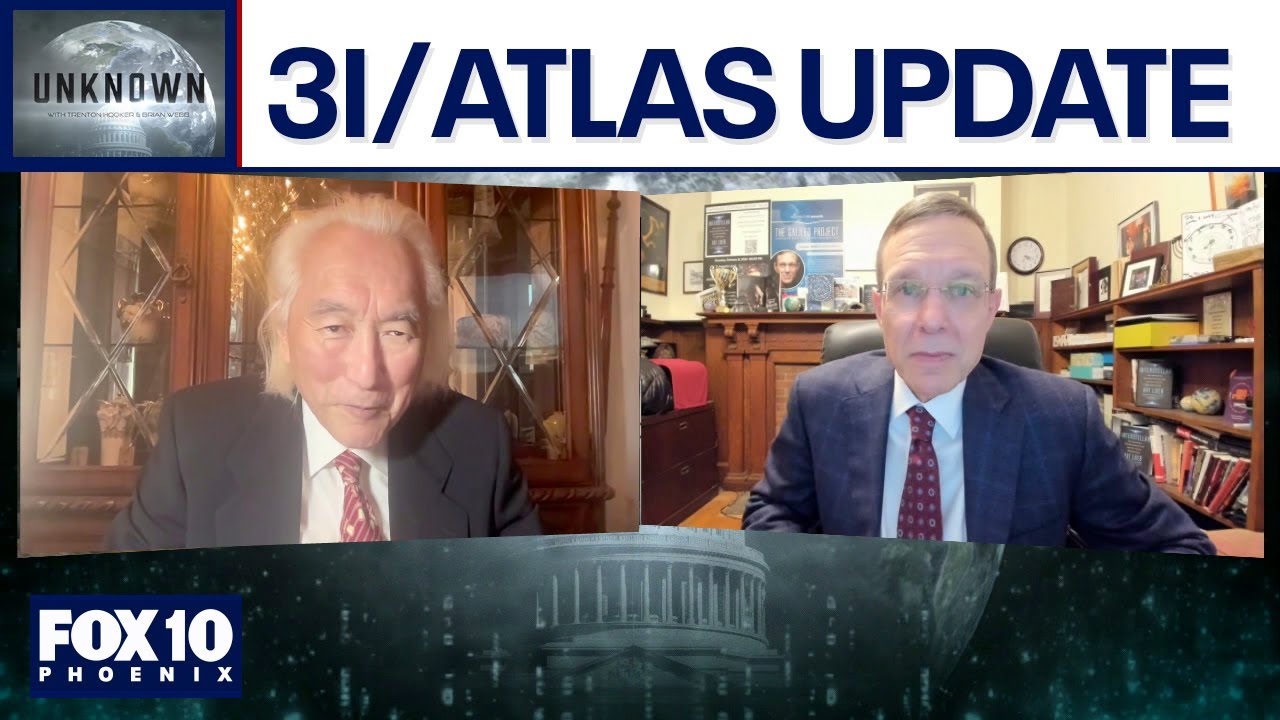
3I/ATLAS: Natural Phenomenon or Technological Artifact? An Investigator's Analysis

Image

The cosmos, as I've learned in my line of work, rarely offers simple answers. Instead, it presents enigmas that stretch the very fabric of our understanding. The case of the interstellar object 3I/ATLAS is a prime example. Was this visitor from beyond our solar system a mere comet, as NASA initially declared, or does it harbor a more complex, perhaps even manufactured, origin? This is not just a question for the scientific community; it's a challenge to our perception of reality.

Introduction: The 3I/ATLAS Enigma

On an episode of "UNKNOWN" with Trenton Hooker & Brian Webb, the discussion gravitated towards one of the most perplexing celestial visitors of recent times: 3I/ATLAS. While official channels, notably NASA, were quick to label it a standard comet, dissenting voices emerged, most notably from Dr. Avi Loeb. His challenge wasn't merely academic; it was a direct interrogation of the accepted narrative, highlighting a series of anomalies that suggested something far beyond conventional astrophysics at play. This, coupled with insights from theoretical physicist Dr. Michio Kaku, paints a picture of an event that demands a closer, more critical examination.

Dr. Avi Loeb's 12 Anomalies: Questioning the Conventional

Dr. Avi Loeb, a figure known for his bold hypotheses in astrophysics, presented a compelling case against the conventional comet classification of 3I/ATLAS. His assertion of 12 distinct anomalies, as detailed in the original broadcast, serves as the bedrock of his argument. These aren't minor discrepancies; they are fundamental deviations from expected natural behavior. The peculiar nickel ratio, a signature not typically associated with cometary composition, and the bizarre, unexplained jets emanating from the object, all point towards a sophisticated, perhaps engineered, origin. Loeb's stance is clear: the interstellar object's characteristics are inconsistent with known natural physics, raising the tantalizing possibility of it being a technological artifact. In my experience, when a scientist of Loeb’s caliber flags such a significant number of anomalies, it’s a signal that the standard model is being pushed to its limits.

Recommended Gear for Investigation

ProductDescriptionBuy
Cryptozoology A To Z: The Encyclopedia Of Loch Monsters Sasquatch Chupacabras And Other Authentic M: The Encyclopedia of Loch Monsters, Sasquatch, Chupacabras, and Other Authentic Mysteries of NatureAn excellent choice to complement your research on this topic.View on Amazon
The Big Book of Paranormal: 300 Mystical and Frightening Tales From Around the WorldAn excellent choice to complement your research on this topic.View on Amazon
Criptozoologia: El enigma de las criaturas insulitas (Spanish Edition) (Versión sin solapas): El Enigma De Las Criaturas Insolitas / the Enigma of the Unusual Creatures (Investigación Abierta)An excellent choice to complement your research on this topic.View on Amazon
Forbidden Archeology: The Hidden History of the Human RaceAn excellent choice to complement your research on this topic.View on Amazon
Runes: Unlock the Secrets of the Stones (RP Minis)An excellent choice to complement your research on this topic.View on Amazon
The H. P. Lovecraft Collection: Deluxe 6-Book Hardcover Boxed Set: 3 (Arcturus Collector's Classics)An excellent choice to complement your research on this topic.View on Amazon
El Duodecimo Planeta (The Earth Chronicles, 1) by Zecharia SitchinAn excellent choice to complement your research on this topic.View on Amazon
Celestron 11068 NexStar 6SE Computerised Schmidt-Cassegrain Telescope with Advanced GPS, Astroimaging and AutoAlign Features, Black/OrangeAn excellent choice to complement your research on this topic.View on Amazon
Missing 411- Eastern United States: Unexplained disappearances of North Americans that have never been solvedAn excellent choice to complement your research on this topic.View on Amazon
Tapiz de mapa del mundo antiguo, diseño vintage de mapa del mundo, tapiz de distribución geográfica para colgar en la pared, póster educativo de mapa del mundo del Atlas histórico marrón, para pared,An excellent choice to complement your research on this topic.View on Amazon

Dr. Michio Kaku's Analysis: A Slim Probability

Adding another layer to the investigation, Dr. Michio Kaku confirmed the object's unique, seven-billion-year history—a timescale that dwarfs most celestial bodies we encounter. Kaku’s analysis underscored the object's strange traits, yet he tempered expectations regarding immediate extraterrestrial confirmation. He placed the probability of a genuine extraterrestrial visitation at a non-zero, albeit slim, 1%. This pragmatic approach, while acknowledging the anomalous, keeps the discussion grounded in empirical validation. Kaku's insistence that the final word on this high-profile interstellar visitor remains unwritten is a crucial reminder that while speculation is vital for scientific progress, concrete evidence is paramount. It's a fine line between open-mindedness and wishful thinking, a line Kaku navigates with his characteristic flair.

The Crucial Decision: Rethinking Our Hunt for Signatures

The core of the debate, and the central question posed by the 3I/ATLAS event, is this: should the scientific community fundamentally adjust its approach? Are we equipped to detect technological signatures within phenomena initially classified as natural? Or must we continue our hunt with current methods, potentially overlooking groundbreaking evidence? Dr. Loeb’s findings suggest the latter might be a critical error. The implications are vast. If interstellar objects can indeed be artificial, our understanding of cosmic neighbors and their potential presence shifts dramatically. This compels a crucial decision, one that analysts like myself grapple with daily: do we redefine our search parameters, or do we risk missing the signal amidst the noise of the natural universe? The potential for advanced civilizations to mask their presence or operate in ways we don't yet comprehend is a constant variable in these investigations.

Whispers from the Digital Crowd: Unpacking Audience Sentiments

The digital echo chamber provided a fascinating, if often chaotic, commentary on the 3I/ATLAS debate. Many viewers echoed Dr. Loeb's skepticism, with one commenter noting, "The nasa event in my opinion was below elementary school level." This sentiment of dissatisfaction with the official explanation was widespread. Several individuals expressed strong support for Dr. Loeb, praising his scientific rigor: "I like Avi. He's a very important man of science and humanity is lucky to have him." The general distrust towards official statements, especially from NASA, was palpable. Comments like, "I am not going to pretend that I have some massive knowledge concerning 3I/ATLAS but if it wasn't a spacecraft NASA would say it was not a spacecraft. If it was a spacecraft they would say it is not a spacecraft. Therefore NASA saying it is not a spacecraft means nothing," highlight a deep-seated cynicism regarding transparency. The sheer number of "anomalies" was a recurring point, with many agreeing, "12 anomalies are too many to ignore." This collective voice, amplified across social platforms, serves as a crucial data point, reflecting public perception and fueling the demand for answers.

The Looming Shadow: AI, Quantum Computing, and Code Breaking

Investigator's Verdict: Fraud, Genuine Anomaly, or Extraterrestrial Technology?

After sifting through the testimonies, the scientific analyses, and the raw data presented, my verdict leans heavily towards genuine anomaly with a significant potential for technological origin. NASA's swift dismissal, coupled with what many perceived as a lackluster press conference, only fuels suspicion. The sheer number of anomalies cited by Dr. Loeb cannot be easily discounted. While a 1% probability, as suggested by Dr. Kaku, might seem slim from a purely statistical standpoint, in the context of interstellar visitors, it represents a compelling data point. The idea that our current methods might be insufficient to detect advanced technology is a valid concern, often voiced by researchers in the field. The government's historical reluctance to admit to unexplained phenomena is a well-documented pattern. Therefore, classifying 3I/ATLAS as simply a "comet" feels like an incomplete, perhaps even deliberately misleading, conclusion. The evidence, while not yet definitive proof of alien craft, strongly suggests we are dealing with something that defies conventional natural explanations.

Investigator's Toolkit: Essential Gear and Resources

Investigating phenomena like 3I/ATLAS requires not only a discerning mind but also the right tools. Whether you're analyzing visual data, attempting to capture potential signals, or simply delving deeper into the subject, the right equipment and knowledge base are crucial. For those looking to expand their understanding and capabilities in paranormal and extraterrestrial research, consider exploring these resources.

Recommended Books for Deeper Understanding

Essential Equipment for Field Investigations

Frequently Asked Questions

Investigator's Q&A

  • Question: What is the primary argument against 3I/ATLAS being a natural comet?
    Answer: The primary argument centers on the numerous anomalies, including its unusual nickel ratio and unexplained jets, which deviate significantly from the expected characteristics of natural comets, as highlighted by Dr. Avi Loeb.
  • Question: Why did some audience members distrust NASA's explanation?
    Answer: Distrust stemmed from perceived inconsistencies, a lengthy delay in releasing information, and a general skepticism towards official explanations for unexplained phenomena. Many felt the press conference was inadequate.
  • Question: What is the significance of the 1% probability mentioned by Dr. Kaku?
    Answer: While statistically low, a 1% chance of extraterrestrial visitation in the context of a unique interstellar object is considered noteworthy by some, indicating that the possibility, however slim, cannot be entirely dismissed without further evidence.
  • Question: How do AI and quantum computing pose a threat in this context?
    Answer: These advanced technologies have the potential to break current encryption methods, compromising digital security and necessitating a fundamental rethinking of cybersecurity and data protection strategies.
  • Question: What did viewers mean by NASA only looking for "rocks"?
    Answer: This comment refers to the idea that scientific training and methodology can create biases, leading researchers to find only what they are programmed to look for, potentially missing non-natural or technological signatures.

Your Mission: Become an Observer

The universe is filled with mysteries waiting to be unraveled. The 3I/ATLAS event is but one chapter in a much larger cosmic narrative. Your mission, should you choose to accept it, is to remain vigilant, critically analyze information, and never cease questioning the official narrative. The unexplained is not always unexplainable; it often just requires a different perspective.

What are your thoughts on 3I/ATLAS? Did you witness any unusual celestial events? Share your experiences and theories in the comments below. Your testimony adds crucial data to our ongoing investigations.

If you found this analysis insightful, please share it across your social networks. Knowledge is power, and sharing it amplifies our collective understanding. Help us bring more of these hidden truths to light.

Investigator's Note: True paranormal research doesn't fund itself. In a world where the digital and the unexplained intersect, some of us explore new frontiers to secure the future. Do you dare to be part of the vanguard? Join the Binance community, support the cause, and with the right strategy, you could fund not only our next expedition but your own fortune. The next great discovery could be just a click away.
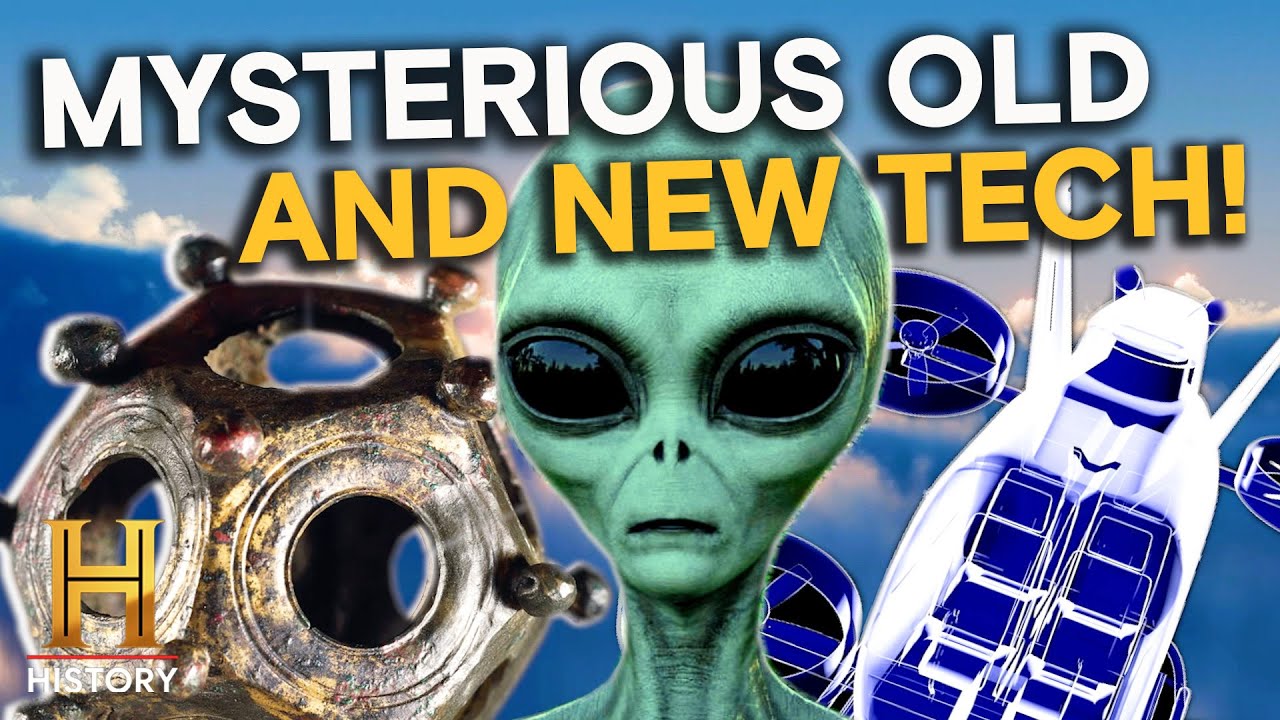
Old Tech vs. New Mysteries: Analyzing Evidence with The

Image

The line between tangible evidence and outright fabrication often blurs when confronting the world's most baffling phenomena. For years, programs like "The Proof Is Out There" have attempted to cut through the noise, pitting antiquated investigative techniques against the sophistication of modern technology. From the barely discernible grain of vintage footage to the crisp clarity of high-definition digital captures, the question remains: which era of technology offers a more credible window into the inexplicable? Join us as we delve into the methodology behind discerning truth from fiction in an age of abundant, yet often misleading, evidence.

Chapter 1: The Enigmatic Ancient Dodecahedron

Our investigation begins with an artifact that has puzzled archaeologists and researchers for decades: the Roman Dodecahedron. These peculiar bronze or stone objects, dating back to the 2nd or 3rd centuries AD, feature twelve pentagonal faces, each with a circular hole of varying diameter. Their true purpose remains shrouded in mystery. While theories abound, ranging from astronomical instruments to religious relics or even knitting tools, the lack of definitive historical texts leaves us with speculation. Early attempts to analyze such artifacts relied on basic visual inspection and contextual clues from excavation sites. Modern technology, however, offers the potential for more rigorous examination. Non-invasive techniques like CT scanning could reveal internal structures or manufacturing details previously hidden, while material analysis can pinpoint origins and creation methods. The challenge lies in applying these advanced tools to objects already subject to considerable handling and potential degradation over centuries.

Chapter 2: Unpacking the "Flying Car" Phenomenon

The concept of a "flying car" has long captured the public imagination, fueling countless science fiction narratives and, more recently, alleged sightings. "The Proof Is Out There" scrutinizes footage and eyewitness accounts of vehicles that appear to defy conventional flight. When examining older evidence, we're often limited to grainy film or photographic stills. The interpretation of such media is highly subjective, susceptible to misidentification of conventional aircraft, atmospheric distortions, or even deliberate hoaxes. The advent of drone technology, advanced CGI, and ubiquitous smartphone cameras presents a double-edged sword. While new "sightings" can be captured with unprecedented clarity, the ease with which sophisticated fakes can be created means that digital evidence demands an even higher level of scrutiny. Experts now employ sophisticated digital forensics to detect alterations, analyze motion patterns, and cross-reference environmental data. We must ask: does the increased resolution of new technology inherently make it more reliable, or does it simply provide a more detailed canvas for deception?

Recommended Gear for Investigation

ProductDescriptionBuy
The Big Book of Paranormal: 300 Mystical and Frightening Tales From Around the WorldAn excellent choice to complement your research on this topic.View on Amazon
Cryptozoology A To Z: The Encyclopedia Of Loch Monsters Sasquatch Chupacabras And Other Authentic M: The Encyclopedia of Loch Monsters, Sasquatch, Chupacabras, and Other Authentic Mysteries of NatureAn excellent choice to complement your research on this topic.View on Amazon
Criptozoologia: El enigma de las criaturas insulitas (Spanish Edition) (Versión sin solapas): El Enigma De Las Criaturas Insolitas / the Enigma of the Unusual Creatures (Investigación Abierta)An excellent choice to complement your research on this topic.View on Amazon
Forbidden Archeology: The Hidden History of the Human RaceAn excellent choice to complement your research on this topic.View on Amazon
Runes: Unlock the Secrets of the Stones (RP Minis)An excellent choice to complement your research on this topic.View on Amazon
The H. P. Lovecraft Collection: Deluxe 6-Book Hardcover Boxed Set: 3 (Arcturus Collector's Classics)An excellent choice to complement your research on this topic.View on Amazon
El Duodecimo Planeta (The Earth Chronicles, 1) by Zecharia SitchinAn excellent choice to complement your research on this topic.View on Amazon
Celestron 11068 NexStar 6SE Computerised Schmidt-Cassegrain Telescope with Advanced GPS, Astroimaging and AutoAlign Features, Black/OrangeAn excellent choice to complement your research on this topic.View on Amazon
Ghost-Hunting For Dummies [Idioma Inglés] An excellent choice to complement your research on this topic.View on Amazon
Cámara de video 5K, videocámara de 64 MP con zoom digital de 18X, WiFi, visión nocturna IR, cámara de vlogging para YouTube, pantalla táctil, incluye tarjeta SD, micrófono, 2 baterías, control remotoAn excellent choice to complement your research on this topic.View on Amazon

Chapter 3: The Case of the Alleged Ancient Brain Implant

Reports of advanced medical knowledge in ancient civilizations often surface, challenging our understanding of history. One such controversial claim involves alleged evidence of ancient brain implants. These narratives typically rely on the interpretation of skeletal anomalies or artifacts found in archaeological digs. Traditional analysis might involve examining the physical characteristics of bones or the composition of unearthed objects. However, the leap to classifying such finds as sophisticated implants requires extraordinary evidence. Modern forensic pathology and paleopathology, equipped with electron microscopes and advanced imaging, can offer more nuanced insights. They can differentiate between natural bone growth, disease, trauma, and the effects of foreign objects. Yet, even with these tools, biases in interpretation can persist. The narrative of ancient technological prowess is compelling, but rigorous scientific analysis, comparing new findings against known biological and geological processes, is paramount. Some theories popular among enthusiasts suggest these could be relics of extraterrestrial intervention, a claim that requires substantial, verifiable proof beyond interpretation.

Chapter 4: Aerial Anomalies: Person Flying Over Ocean

The image of an individual seemingly flying, particularly over vast bodies of water like the ocean, evokes a sense of awe and wonder. Such phenomena, often captured in dated photographs or videos, present a significant challenge for investigators. Old-school analysis might focus on the physical characteristics of the image, looking for signs of montage or alteration, and comparing the scene to known environmental conditions. The "proof" often rests on the apparent realism of the scene. In the digital age, however, the analysis of such images can be far more complex. Forensic photo analysts can examine pixel data, metadata, and lighting inconsistencies with incredible precision. Yet, the very tools that allow for such detailed examination also enable the creation of highly convincing digital manipulations. When considering reports from social media, as some viewers have noted, the sheer volume of content makes verification a constant struggle. A recurring question in online discussions is whether these figures are leveraging unknown technologies, exhibiting unexplained abilities, or if the images are simply elaborate fabrications.

Investigator's Verdict: Reconciling Old and New Evidence

The core of investigative work, whether examining ancient artifacts or modern video captures, lies in a systematic approach to evidence. Old technology offered limited resolution and analytical tools, often forcing reliance on subjective interpretation and eyewitness testimony – valuable, but prone to error. New technology provides unprecedented detail and analytical power, capable of debunking many older claims with forensic certainty. However, these same advancements empower hoaxers to create more sophisticated deceptions. Ultimately, the credibility of evidence doesn't solely depend on the technology used to capture or analyze it, but on the rigor, objectivity, and transparency of the investigative process. As veteran journalist Tony Harris emphasizes in "The Proof Is Out There," taking nothing for granted, tracking down eyewitnesses, and subjecting each piece of evidence to a battery of tests are crucial. This meticulous process, combining historical context with cutting-edge analysis, is the only reliable path to discerning truth in the face of the inexplicable.

The Investigator's Archives: Recommended Resources

Frequently Asked Questions

  1. Q: How does "The Proof Is Out There" differentiate between genuine phenomena and hoaxes?
    A: The show employs rigorous analysis, utilizing expert opinions, technological testing (like digital forensics), and eyewitness interviews to scrutinize evidence, aiming to debunk hoaxes while highlighting credible findings.
  2. Q: Can old technology still provide valid evidence for mysteries?
    A: Yes, old technology can provide initial evidence, but its interpretation is often limited. Modern analysis techniques can sometimes re-evaluate older evidence with greater accuracy, though the condition and quality of the original capture remain critical factors.
  3. Q: What is the role of eyewitness testimony in paranormal investigations?
    A: Eyewitness testimony is a starting point, providing leads and context. However, it's considered subjective and is typically corroborated with physical or digital evidence whenever possible.
  4. Q: How can viewers submit their own potential evidence?
    A: Viewers interested in submitting content can visit the official History channel website for "The Proof Is Out There" submission guidelines and terms and conditions.

Your Field Mission

Your Mission: Analyze and Annotate

Your task, should you choose to accept it, is to become a field investigator in your own right. The next time you encounter a compelling piece of evidence – be it an old photograph, a viral video, or an intriguing artifact – apply the principles discussed. Ask yourself: What technology was likely used to capture this? What modern tools could verify or debunk it? What biases might be influencing its interpretation? Document your findings, no matter how small. The pursuit of the unexplained relies on diligent observation and critical analysis from all corners. Share your findings and theories in the comments below – let's compare notes.

Share this investigation: If you found this analysis thought-provoking, help us expand the reach of credible anomaly research. Share this post on your social media channels and let others join the quest for answers.

Investigator's Note: True paranormal research doesn't fund itself. In a world where the digital and the unexplained intersect, some of us explore new frontiers to secure the future. Do you dare to be part of the vanguard? Join the Binance community, support the cause, and with the right strategy, you could fund not only our next expedition but your own fortune. The next great discovery could be just a click away.

Ghost Hunting Apps: Scam or Genuine Tool? An Investigative


The digital age has brought the paranormal to our fingertips. Literally. Countless applications flood the app stores, promising direct communication with spirits, detection of spectral energies, and even visual confirmation of otherworldly presences. But do these ghost hunting apps actually work? As an investigator who has dedicated years to the inexplicable, I felt compelled to put these digital tools to the test. I acquired every ghost hunting app available, delved into their functionalities, and even consulted with developers behind some of these intriguing pieces of software. The findings, I must admit, were… illuminating.

Introduction: The Digital Veil

The allure of communicating with the departed, of sensing the unseen, is a primal human fascination. For centuries, investigators relied on intuition, sensitive equipment, and painstaking observation. Today, the smartphone in your pocket is touted as the next frontier in paranormal research. Apps like Ghost Radar, Necrophonic, and GhostTube SLS claim to harness electromagnetic fields, analyze ambient sounds, and even interpret spiritual energy. But as a seasoned investigator, my default setting is skepticism. Before any tool can be deemed reliable, it must be rigorously examined. Are these apps merely sophisticated toys preying on our desire for the supernatural, or do they hold a kernel of truth, a digital extension of our investigative capabilities?

Deconstructing the Apps: A Technical Breakdown

My investigation required a systematic approach. I procured a comprehensive set of applications from both major app stores, focusing on those that promised direct interaction or detection of paranormal phenomena. This included apps that claimed to interpret radio frequencies, generate white noise for spirit communication (often referred to as Electronic Voice Phenomena or EVP), detect EMF fluctuations, and even utilize device sensors like LiDAR and accelerometers for purported 'spirit detection'. The sheer volume was overwhelming, ranging from simple, almost rudimentary interfaces to complex dashboards with scientific-sounding metrics. The initial hurdle was not just in the acquisition, but in parsing the claims versus the actual technical capabilities. Many apps offered no clear explanation of their methodology, relying on vague references to 'spiritual energy' or 'ghostly vibrations'.

Recommended Gear for Investigation

ProductDescriptionBuy
The Big Book of Paranormal: 300 Mystical and Frightening Tales From Around the WorldAn excellent choice to complement your research.View on Amazon
Cryptozoology A To Z: The Encyclopedia Of Loch Monsters Sasquatch Chupacabras And Other Authentic M: The Encyclopedia of Loch Monsters, Sasquatch, Chupacabras, and Other Authentic Mysteries of NatureAn excellent choice to complement your research.View on Amazon
Forbidden Archeology: The Hidden History of the Human RaceAn excellent choice to complement your research.View on Amazon
The H. P. Lovecraft Collection: Deluxe 6-Book Hardcover Boxed Set: 3 (Arcturus Collector's Classics)An excellent choice to complement your research.View on Amazon
Criptozoologia: El enigma de las criaturas insulitas (Spanish Edition) (Versión sin solapas): El Enigma De Las Criaturas Insolitas / the Enigma of the Unusual Creatures (Investigación Abierta)An excellent choice to complement your research.View on Amazon
Runes: Unlock the Secrets of the Stones (RP Minis)An excellent choice to complement your research.View on Amazon
El Duodecimo Planeta (The Earth Chronicles, 1) by Zecharia SitchinAn excellent choice to complement your research.View on Amazon
Ghost Hunting EVP - Grabadora EVP de 8 GB, equipo paranormal, caja de voz digital SpiritAn excellent choice to complement your research.View on Amazon
P-SB7T Spirit Box ITC Rev 7 Research FM/AM Ghost Box PSB7 Radio Paranormal Equipment PSB7T SB7 P-SB7TAn excellent choice to complement your research.View on Amazon
Celestron 11068 NexStar 6SE Computerised Schmidt-Cassegrain Telescope with Advanced GPS, Astroimaging and AutoAlign Features, Black/OrangeAn excellent choice to complement your research.View on Amazon

Ghost Radar: A Classic Contender

Ghost Radar, particularly its "Classic" iteration, is arguably one of the most well-known ghost hunting apps. Its interface, reminiscent of early digital devices, displays detected 'words' or 'energy signatures' on a radar-like screen. The app purports to detect spiritual energy in the vicinity and translate it into recognizable concepts. During testing at the historically charged Pine Lawn cemetery, an area with documented reports of paranormal activity, Ghost Radar did indeed display a variety of words. Some were generic, like "danger" or "fear," while others were specific, such as "tree" or "car." The history of Pine Lawn itself is steeped in tragedy, adding a layer of narrative to the app's output. However, the critical question remains: is the app genuinely interpreting spectral communication, or is it employing a complex algorithm to generate plausible, contextually relevant words based on environmental factors, user input, or simply random chance? The lack of transparency in its methodology makes definitive conclusions difficult, a recurring theme across many such applications.

Necrophonic: Transcending Text

Necrophonic takes a different approach. Instead of displaying words, it manipulates ambient sound, generating what is often described as 'spirit box' noise. The theory behind spirit boxes is that spirits can manipulate radio frequencies or audio signals to form coherent words or voices. Necrophonic simulates this, offering various sound banks and control over playback speed and pitch, ostensibly to aid spirits in communication. My experience with Necrophonic involved extended sessions in allegedly haunted locations. While the generated sounds can be unsettling and at times appear to offer phonetic suggestions of words, the line between auditory pareidolia (the perception of meaningful sounds in random noise) and genuine spirit interaction is exceedingly fine. Many developers acknowledge that the effectiveness is subjective and relies heavily on the user's ability to interpret the sounds within a given context. The app also utilizes a 'ghost meter' feature, which appears to track fluctuations in device sensors, adding another layer to its purported detection capabilities.

LiDAR & Music Box: Visual and Auditory Anomalies

The integration of advanced device technology into paranormal apps is a recent development. The app 's.g. LiDAR' leverages the LiDAR scanner found in many modern smartphones to create 3D maps of environments, ostensibly to detect anomalous shapes or presences that deviate from the expected physical structure. The concept is intriguing: could a spirit displace air or energy in a way that registers on a high-resolution scanner? My tests were inconclusive. While the LiDAR scans provided detailed environmental models, clearly highlighting furniture and structural elements, no definitive 'anomalies' were detected that couldn't be explained by environmental factors like dust motes or minor sensor inaccuracies. Similarly linked is the 'Paranormal Spirit Music Box' app, which, much like Necrophonic, aims to facilitate communication through ambient sounds, often employing a music box motif to create a haunting atmosphere. These tools, while technologically advanced, still rely on subjective interpretation.

Necrometer: Measuring the Immeasurable?

The 'Necrometer' app presents itself as a device capable of measuring 'necro-energies'. It often displays readings as fluctuating graphs or numerical values, implying a quantifiable measure of paranormal presence. This is precisely the kind of tool that demands the most scrutiny. Science relies on repeatable, measurable phenomena. While energy is measurable, the concept of 'necro-energy' is not a scientifically recognized term. The app's readings, much like EMF meters used in paranormal investigations, can certainly fluctuate. However, these fluctuations can often be attributed to common environmental factors: Wi-Fi signals, mobile phone transmissions, electrical wiring, and even the user's own body heat and movement. Without a scientifically validated baseline and a controlled methodology for 'necro-energy' measurement, the readings provided by such apps remain largely speculative.

GhostTube SLS: The Promise of Perception

GhostTube SLS Camera aims to replicate the functionality of specialized SLS (Structured Light Sensor) cameras used by some paranormal investigators. These devices project infrared dots onto surfaces, creating a 3D map and highlighting objects or figures that the camera perceives. The app claims to detect 'spirits' by analyzing these dot patterns for anomalies. During investigations, particularly those involving entities like Sean Austin, who has explored the application of such technology, the GhostTube SLS app has sometimes registered human-like shapes. The debate here is fierce: are these actual spectral apparitions, or are they artifacts of the scanning process, environmental interference, or even the app's algorithm misinterpreting random patterns as figures? The software's ability to generate human-like forms is undeniable, but its interpretation of these forms as spirits is where the scientific consensus breaks down. The underlying technology is sound for mapping environments, but its application to spirit detection remains in the realm of hypothesis.

SPI: A Simpler Approach

The SPI (Spirit Perception Interface) app offers a more streamlined experience. It often focuses on detecting environmental anomalies, such as sudden temperature drops or electromagnetic field spikes, which are commonly associated with paranormal activity in anecdotal reports. While less visually complex than some of its counterparts, the SPI app taps into the foundational methodologies of traditional paranormal investigation. However, the crucial difference lies in the source of the data. Traditional EMF meters and thermometers are calibrated scientific instruments. Apps, however, often rely on the device's built-in sensors, which are not designed for the precise, controlled measurements required for rigorous paranormal research. Calibration, environmental interference, and the sheer variability of sensor accuracy on different devices mean that data from such apps must be treated with extreme caution.

Developer's Perspective: The Art of Illusion?

To gain a deeper understanding, I reached out to developers behind some of these applications. Conversations with individuals like those associated with Spotted Ghosts and Sean Austin provided valuable context. Many developers are enthusiasts themselves, driven by a passion for the paranormal. Some openly admit that their apps are designed to simulate the experience of using professional paranormal investigation equipment, acknowledging the subjective nature of interpretation. Others maintain a more assertive stance, believing their algorithms can genuinely detect subtle energies. A common thread was the acknowledgment of the 'entertainment value' and the difficulty in definitively proving or disproving paranormal activity through digital means alone. Some expressed frustration with the scientific community's skepticism, while others were pragmatic, understanding their apps operate in a grey area between technology, belief, and entertainment. The insights gained suggest a spectrum of intent, from genuine exploratory tools to sophisticated digital Ouija boards.

Investigator's Verdict: Scam, Tool, or Both?

The Investigator's Toolkit

While the apps provide a glimpse into the digital possibilities, a true paranormal investigation demands a more robust toolkit. Understanding the principles behind these apps can inform the selection of more reliable equipment. For those looking to delve deeper, consider the following:

Essential Equipment for Serious Investigation:

  • EMF Meters: Calibrated devices to detect electromagnetic field fluctuations.
  • Audio Recorders: High-quality digital recorders for capturing Electronic Voice Phenomena (EVP).
  • Full Spectrum Cameras: Cameras sensitive to a broader range of light, including infrared and ultraviolet.
  • Temperature Dataloggers: To accurately record and track ambient temperature changes.
  • Geophone/Vibration Sensors: To detect subtle physical disturbances.

These tools, when used correctly and in conjunction with methodical research and analysis, form the backbone of credible paranormal investigation. The apps, meanwhile, remain a fascinating, albeit often unreliable, addition to the digital landscape of the unexplained.

Frequently Asked Questions

Are ghost hunting apps a complete scam?
Not entirely. While many lack scientific rigor, they can enhance the experience of investigation and entertainment. However, their claims of definitive proof are largely unsubstantiated.
Can any ghost hunting app genuinely detect spirits?
Currently, there is no scientific consensus or verifiable evidence that any smartphone app can definitively detect or communicate with spirits. Their outputs are typically based on algorithms interpreting sensor data or generating random responses.
What is the most reputable ghost hunting app?
Reputation in this field is subjective. Apps like Necrophonic and GhostTube SLS are popular for their features, but their effectiveness remains debated. It's best to approach all apps with a critical mindset.
How can I be sure if a ghost hunting app is reliable?
Look for transparency in methodology, scientific backing (which is rare), and cross-referenced data from traditional investigation equipment. Be wary of apps making extraordinary claims without extraordinary evidence.

Investigator's Verdict: Scam, Tool, or Both?

My journey through the digital realm of ghost hunting apps has been an education in technology, belief, and the human desire to connect with the unknown. While the allure of a pocket-sized spirit communicator is strong, the reality, as with most things in the paranormal field, is complex. These apps can serve as conversation starters, atmospheric enhancers, and even sources of creative interpretation for those involved in investigations. However, they are far from definitive scientific instruments. The core of paranormal investigation lies in critical analysis, methodical research, and the careful collection of evidence. Apps can supplement this, but they cannot replace it. The true "ghost hunting app" is the one that encourages critical thinking, not blind acceptance.

Your Mission: Document and Analyze

Next time you encounter a 'ghost hunting' app, approach it with the analytical rigor of an investigator. Does it explain its methodology? Are its claims supported by evidence, or are they purely speculative? Try using an app in conjunction with traditional equipment and see if the data correlates. Document your findings, analyze the discrepancies, and form your own informed conclusions. The field of the paranormal is constantly evolving, and understanding the tools we use—digital or otherwise—is paramount to uncovering genuine truths.


Share Your Experiences

Have you used any of these ghost hunting apps? Did you capture anything compelling, or was it just digital noise? Share your experiences, your findings, and your opinions in the comments below. Your firsthand accounts enrich our collective investigation into the unexplained.

Support the Investigation

If you found this analysis valuable, please consider supporting our work. Share this post on your social media channels to help spread awareness and critical thinking about paranormal technology. Your engagement fuels our continued exploration into the mysteries that lie beyond.

Follow me on:

Subscribe to the Channel:

Investigator's Note: True paranormal research doesn't fund itself. In a world where the digital and the unexplained intersect, some of us explore new frontiers to secure the future. Do you dare to be part of the vanguard? Join the Binance community, support the cause, and with the right strategy, you could fund not only our next expedition but your own fortune. The next great discovery could be just a click away.