Followers

Mostrando las entradas con la etiqueta human evolution. Mostrar todas las entradas

Giants of the Past: Evidence of Extinct Humanoids

Image

The February 2018 discovery of evidence pointing to a lost civilization reignited ancient debates. This finding, often overshadowed by sensationalism, is part of a larger, persistent narrative: the existence of giants among humankind's ancestors. For centuries, tales of immense beings have been dismissed, yet anomalous artifacts and historical accounts continue to surface, challenging our understanding of human evolution and history. This investigation delves into the tangible and anecdotal evidence that suggests giants were not mere mythology, but a reality that modern archaeology often overlooks.

Introduction: The Persistent Shadow of Giants

February 2018 marked a significant moment in paleontology with the discovery of evidence suggesting a previously unknown civilization. While the mainstream media focused on the immediate implications, this find echoes a much older, more profound mystery: the presence of giants in human history. From biblical texts to indigenous folklore, the concept of colossal humanoids has woven itself into the fabric of global cultures. Skeptics often relegate these accounts to myth, but a closer examination of historical records, anecdotal evidence, and even supposed physical remains reveals a disquieting pattern that warrants deeper investigation. As an investigator, I approach such claims with a critical, yet open, mind. The unexplained demands meticulous scrutiny, and the lore of giants is ripe for deconstruction.

Ancient Aliens Context

The notion of giants predates recorded history and has become a prominent theme in discussions surrounding ancient extraterrestrial intervention, notably popularized by shows like "Ancient Aliens." This program explores the hypothesis that advanced alien beings visited Earth in antiquity, influencing human development and culture. Within this framework, giants are often presented not just as unusually tall humans, but as beings with extraordinary physical attributes, sometimes linked to specific alien lineages or genetic manipulations. The narrative suggests that evidence of these giants, including their skeletal remains and monumental constructions, has been deliberately suppressed or misinterpreted by mainstream science to maintain a conventional historical timeline. This perspective frames the search for giant evidence as a quest to uncover hidden truths about our past and our cosmic origins.

Recommended Gear for Investigation

ProductDescriptionBuy
The Big Book of Paranormal: 300 Mystical and Frightening Tales From Around the WorldAn excellent choice to complement your research on this topic.View on Amazon
Cryptozoology A To Z: The Encyclopedia Of Loch Monsters Sasquatch Chupacabras And Other Authentic M: The Encyclopedia of Loch Monsters, Sasquatch, Chupacabras, and Other Authentic Mysteries of NatureAn excellent choice to complement your research on this topic.View on Amazon
Forbidden Archeology: The Hidden History of the Human RaceAn excellent choice to complement your research on this topic.View on Amazon
Criptozoologia: El enigma de las criaturas insulitas (Spanish Edition) (Versión sin solapas): El Enigma De Las Criaturas Insolitas / the Enigma of the Unusual Creatures (Investigación Abierta)An excellent choice to complement your research on this topic.View on Amazon
The H. P. Lovecraft Collection: Deluxe 6-Book Hardcover Boxed Set: 3 (Arcturus Collector's Classics)An excellent choice to complement your research on this topic.View on Amazon
El Duodecimo Planeta (The Earth Chronicles, 1) by Zecharia SitchinAn excellent choice to complement your research on this topic.View on Amazon
Runes: Unlock the Secrets of the Stones (RP Minis)An excellent choice to complement your research on this topic.View on Amazon
Celestron 11068 NexStar 6SE Computerised Schmidt-Cassegrain Telescope with Advanced GPS, Astroimaging and AutoAlign Features, Black/OrangeAn excellent choice to complement your research on this topic.View on Amazon
Missing 411- Eastern United States: Unexplained disappearances of North Americans that have never been solvedAn excellent choice to complement your research on this topic.View on Amazon
Ghost-Hunting For Dummies [Idioma Inglés] An excellent choice to complement your research on this topic.View on Amazon

Historical Accounts and Legends

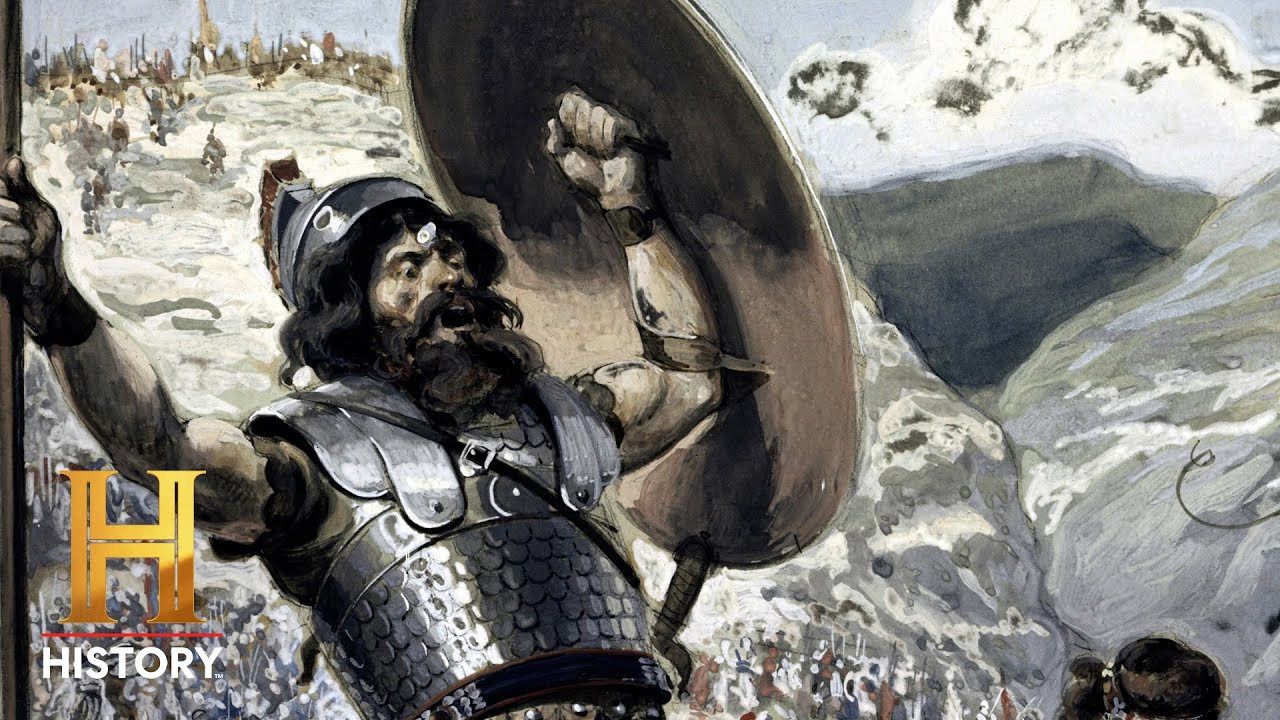
The legend of giants is remarkably consistent across disparate cultures. The biblical narrative prominently features figures like Goliath, described as a warrior of immense stature, and the Nephilim, a race of giants preceding the Great Flood. Beyond religious texts, numerous indigenous traditions worldwide speak of colossal beings. For instance, in Tonga, the Stonehenge of Maui is steeped in stories involving giants. Native American legends, particularly in regions like Nevada's Lovelock Caves, recount encounters with red-haired giants. In Eastern India and Burma, oral traditions mention formidable, large figures. Even in Europe, figures like Pier Gerlofs Donia, known as "Grutte Pier," were legendary for their imposing height and strength, with his massive sword still preserved as a testament to his formidable presence.

"One of the most common native traditional gestures was to raise the arm up and display the open hand towards the other person? This was a way to guard against the giants who were commonly known to have 6 fingers and toes with double rows of teeth! Size can very, and red hair can be shaved or covered. But an extra digit is hard to conceal."

These accounts often describe giants possessing additional digits, double rows of teeth, and formidable strength, characteristics that distinguish them from merely tall humans. The recurrence of these specific attributes across continents suggests a shared ancestral memory or a common phenomenon that inspired these widespread myths. The question is not whether the stories exist, but what they might signify in terms of verifiable human history.

Physical Evidence and Anomalies

Beyond folklore, purported physical evidence has fueled the giant hypothesis. Reports of unusually large skeletal remains being unearthed have surfaced throughout history. Early American newspapers detailed discoveries of giant bones in burial mounds, raising questions about their eventual fate. Abraham Lincoln himself is documented to have written about such finds. The phenomenon extends globally, with mentions of giants in islands near Italy and extensive stories surrounding Catalina Island. A particular focus is often placed on unusual physical traits, such as extra fingers and toes, or double rows of teeth, which are cited as indicators that these were not simply tall humans but a distinct, larger species or subspecies.

"There's talk about an almost 14 foot skeleton being found yet again in Southern Kentucky. Ive always said Southern Kentucky hold giants bones. All the caves there im sure there are still things to be found."

The sheer volume of these reports, spread across different eras and geographies, suggests a pattern that cannot be easily dismissed as mere superstition or misinterpretation. The challenge lies in verifying these claims and understanding why such potential evidence might disappear from public record.

Scientific Skepticism and Alternative Theories

Mainstream archaeology and anthropology generally attribute giant legends to hyperbole, misidentification, or natural phenomena. Skeptics argue that what may be perceived as giant skeletons are often the remains of individuals with gigantism, a medical condition characterized by abnormal growth. For example, Sultan Kösen, the tallest living man at 8'3", provides a modern reference point. A skeleton measuring 6'8" to 7 feet, while exceptionally tall, is not unprecedented. It is argued that in ancient times, individuals of such stature would indeed be considered giants and might be buried with special rituals, leading to exaggerated accounts. Furthermore, natural explanations for large formations or artifacts, such as geological processes or the use of large tools by average-sized individuals (e.g., "giant Legos" for Stonehenge), are often proposed to debunk literal interpretations of giant constructions.

The argument posits that our current understanding of genetics and physiology can account for extreme human height without resorting to a separate "giant" race. The prevalence of tall athletes, such as those in the NBA, further normalizes figures that might have seemed extraordinary in antiquity. This perspective emphasizes empirical evidence and established scientific principles, viewing the giant narrative as a cultural phenomenon rather than historical fact.

Archaeological Enigmas

Certain archaeological sites and discoveries continue to fuel the giant debate, often presenting anomalies that defy simple explanations. The Lovelock Caves in Nevada, for instance, have a history of alleged giant remains, including red-haired individuals, discovered around a century ago, much of which has reportedly vanished. Similarly, legends surrounding giants in the Samaria region speak of beings over 12 feet tall, with some accounts even mentioning physical anomalies like horned skulls and tails. These stories, often rooted in local traditions and passed down through generations, persist despite a lack of widely accepted corroborating evidence from official archaeological digs. The consistent disappearance or suppression of such potential evidence is a recurring theme in discussions about giants.

Skeptical Analysis of Giantism

The scientific community largely attributes tales of giants to exaggeration or misinterpretation of individuals suffering from gigantism. Conditions like acromegaly, caused by an overproduction of growth hormone, can lead to significantly increased height and distinct facial features. Historical records, including newspaper clippings and anecdotal accounts, often describe individuals who, while exceptionally tall by ancient standards, fall within the range of what modern medicine understands as extreme growth disorders. The case of Goliath, for instance, is often analyzed through this lens, suggesting he may have had acromegaly or a similar condition. Likewise, figures like Grutte Pier, while legendary, are contextualized within the variability of human height. The existence of approximately 2,800 people globally standing 7 feet and above today further normalizes extreme height, making the concept of a distinct "giant race" less necessary from a purely biological standpoint.

The Smithsonian and Disappearing Evidence

A persistent undercurrent in the giant debate involves allegations of a cover-up, with the Smithsonian Institution frequently cited as the entity responsible for suppressing evidence of giant humanoids. Conspiracy theories suggest that the Smithsonian has systematically eliminated or hidden large skeletal remains discovered in burial mounds and archaeological sites across North America. Proponents of this theory point to historical newspaper articles allegedly detailing these finds and their subsequent removal to Smithsonian archives, only to disappear. They question why such discoveries are not prominently featured in mainstream historical accounts or museum exhibits. This narrative posits a deliberate effort to maintain a conventional understanding of human history by concealing evidence that would challenge established timelines and theories of human evolution.

"I guess this means that the Smithsonian made a huge mistake by eliminating all those giant skeletons."

This alleged suppression fuels skepticism about official archaeological findings and encourages independent research into alternative historical narratives.

Investigator's Verdict: A Persistent Anomaly

After meticulously examining the available lore, historical accounts, and the recurring themes of physical anomalies, the existence of giants remains an anomaly that cannot be entirely dismissed. While mainstream science offers plausible explanations for extreme human height through conditions like gigantism and gigantism, the sheer consistency and detail in global legends, coupled with persistent reports of unusual skeletal finds, suggest that there may be more to the story. The narrative of evidence disappearance, particularly concerning institutions like the Smithsonian, adds a layer of suspicion that, while difficult to prove, cannot be ignored in a comprehensive investigation. It is pragmatically possible that individuals of exceptional height existed, and perhaps even distinct, taller ancestral groups, whose legacies were mythologized over time. Until definitive, non-suppressed evidence emerges, the question of giants remains a compelling mystery on the fringes of accepted history, demanding continued, unbiased inquiry.

Frequently Asked Questions

  1. Are there any confirmed discoveries of giant human skeletons?

    While numerous historical accounts and anecdotal reports mention the discovery of giant skeletons, there is no definitive, widely accepted scientific confirmation within mainstream archaeology. Many purported discoveries have either lacked verifiable evidence or have been attributed to misinterpretations of normal-sized remains or those with medical conditions like gigantism.

  2. What is the scientific explanation for legends of giants?

    Scientists generally attribute giant legends to a combination of factors: exaggeration of historical figures, misinterpretation of large animal fossils as human, individuals with medical conditions causing extreme height (gigantism, acromegaly), and cultural storytelling. Hyperbole in oral traditions can easily transform exceptionally tall individuals into mythical giants.

  3. Why are so many alleged giant skeletons claimed to have disappeared?

    Allegations of suppressed evidence, often involving institutions like the Smithsonian, are common in conspiracy theories surrounding giants. Skeptics argue that these claims lack concrete proof and that alleged disappearances might be due to poor record-keeping, natural decay of organic material over time, or the simple lack of any genuine giant remains to begin with. The "mud floods" theory, for example, sometimes incorporates the idea of buried giant structures and remains.

  4. Could ancient structures like Stonehenge have been built by giants?

    The prevailing scientific view is that ancient megalithic structures like Stonehenge were built by organized human labor using sophisticated engineering techniques, levers, and large crews. While the scale of these constructions is impressive, attributing them to giants is not supported by archaeological evidence. Explanations involving giant builders are typically found in fringe theories and ancient astronaut hypotheses.

  5. What does the "Ancient Aliens" theory propose about giants?

    The "Ancient Aliens" hypothesis suggests that giants were not merely tall humans but were potentially the result of extraterrestrial intervention, possibly through genetic manipulation or direct lineage. This theory posits that these giants played significant roles in ancient civilizations and that evidence of their existence, including their remains and constructions, has been deliberately hidden.

Your Mission: Field Investigation

The next time you encounter a tale of giants, whether in an old book, a family story, or online, approach it with a critical eye. Research the specific claims, look for corroborating evidence, and consider alternative explanations. Document any local legends or historical accounts of unusual finds in your area. Your observations, however small, contribute to the larger tapestry of unexplained phenomena. Share your findings and your own documented experiences in the comments below; your contribution is vital to this ongoing investigation.

Do you have personal experiences or knowledge about alleged giant discoveries? Share your insights and stories in the comments below. Your testimony could be the missing piece of an ancient puzzle. If this investigation has piqued your curiosity, share it with your network and help us uncover more truths hidden in plain sight.

Investigator's Note: True paranormal research doesn't fund itself. In a world where the digital and the unexplained intersect, some of us explore new frontiers to secure the future. Do you dare to be part of the vanguard? Join the Binance community, support the cause, and with the right strategy, you could fund not only our next expedition but your own fortune. The next great discovery could be just a click away.

Polar Civilization: Activating Planetary Toroidal Energy by TopVideo Maker


The digital echo chamber of YouTube teems with creators, each shouting into the void, hoping to capture the fleeting attention of an audience hungry for novelty. Amidst this cacophony, the enigmatic figure known only as TopVideo Maker has carved out a niche, not by chasing trending topics, but by excavating the bedrock of human history itself. His expeditions into ancient civilizations and spiritual evolution offer a profound, often unsettling, alternative to the orthodox narratives we’ve inherited. This isn't mere historical speculation; it's an attempt to reconstruct a lost blueprint of existence. Today, we dissect the core tenets of his captivating, if controversial, thesis.

Enigmatic Beginning: The Polar Civilization

TopVideo Maker posits that the genesis of our planetary story lies not in the fertile crescents of the Middle East, but in a forgotten civilization situated at the poles. This wasn't just a settlement; it was an operational nexus. Its primary function, according to this theory, was the activation of the planet's intrinsic toroidal energy. This concept, rooted in sacred geometry, describes a donut-shaped energy field that permeates celestial bodies. The polar civilization, in essence, acted as the conductor for this planetary symphony, harmonizing the spiritual essence with the material fabric of Earth. This is a crucial distinction: not merely living on the planet, but actively tuning its energetic resonance. Understanding this toroidal field is akin to finding the master key to a cosmic lock.

Lost Realms: Hyperborea and Lemuria

The narrative then transports us to other enigmatic lost realms: Hyperborea and Lemuria. These are not just geographical locations from speculative maps; they represent distinct evolutionary stages and energetic anchors. Lemuria, in particular, is presented as having its origins in the Pleiades star cluster, suggesting a cosmic seeding of spiritual consciousness on Earth. Its purpose was to ground this extraterrestrial spiritual energy, leading to the manifestation of the 'Trine Flame' – a concept that signifies a profound, tripartite spiritual essence. The Pleiadian connection is vital here, suggesting our spiritual evolution is intrinsically linked to celestial mechanics and conscious stellar lineages. For those looking to delve deeper, the works of spiritual science pioneers often echo these star-seed narratives, but TopVideo Maker attempts to weave them into a more cohesive historical arc.

The Tragic Tale of Atlantis

No exploration of lost civilizations is complete without addressing the specter of Atlantis. TopVideo Maker places its catastrophic downfall around 12,000 years ago, a period coinciding with significant cosmic shifts. He attributes this fall not solely to internal decay or technological hubris, but to external cosmic factors, critically including the transition into the 'galactic night' – a period of reduced cosmic energetic influence – and a spiritual rebellion, metaphorically termed the 'rebellion of Lucifer.' This cosmic entanglement transformed Atlantis from a beacon of advanced civilization into a cautionary fable, a negative archetype of what happens when spiritual alignment is lost. The study of such falls, from a ancient civilizations perspective, often highlights the delicate balance between terrestrial existence and cosmic forces.

The Ascension Process and the Galactic Era

Looking forward, TopVideo Maker speculates on humanity's evolutionary trajectory, particularly the concept of ascension. He suggests that the current, fifth root race, having evolved from what he describes as 'animal dimensions,' is poised for a new stage of development. This progression, he believes, will culminate in a humanity ready for conscious human evolution and meaningful extraterrestrial contact within the emerging Galactic Era. The implication is that overcoming the negative vibrational influences that led to the downfall of civilizations like Atlantis is a prerequisite for this next evolutionary leap. This requires not just physical advancement, but a fundamental spiritual recalibration. For those seeking to understand advanced concepts of consciousness, the exploration of spiritual science is paramount.

Merging Spiritual, Mythological, and Scientific Elements

The salient feature of TopVideo Maker's thesis is its ambitious synthesis. He doesn't present these ideas in isolation but masterfully blends elements from spirituality, mythology, and archaeological interpretation. While mainstream academia often compartmentalizes these fields, he argues that true understanding of our past—and future—requires their confluence. This holistic approach allows for a richer, more nuanced perspective, suggesting that the ancient myths are not mere stories but encrypted records of spiritual and scientific truths. This interdisciplinary fusion is what elevates his narrative beyond simple conjecture into a framework for a radical reimagining of history.

TopVideo Maker's Unique Perspective

As a storyteller, TopVideo Maker possesses a rare gift for making the esoteric accessible. His approach is not that of a dry academic but a seasoned explorer guiding his audience through uncharted territories of thought. The importance of his unique viewpoint lies in its ability to connect disparate threads of human knowledge—from cosmic cycles documented in ancient calendars to the energetic principles described in forgotten yogic texts—into a coherent, compelling whole. This narrative craftsmanship is essential for engaging audiences who might otherwise dismiss such profound ideas as mere fantasy. The effective merging of these perspectives is what truly defines his contribution to the discourse on mysteries unveiled.

Challenging Mainstream Narratives

It is no exaggeration to state that TopVideo Maker's work directly confronts the prevailing historical paradigms. He challenges the linear progression of human development, the archaeological timeline, and even the definition of consciousness itself. By positing civilizations like the polar one and its role in planetary energy activation, he forces a re-evaluation of what constitutes 'evidence' and 'history.' This deliberate provocation is crucial, as it encourages viewers to move beyond passive acceptance of established doctrines and engage in critical inquiry. The pursuit of knowledge, especially in areas as nebulous as alternative history, necessitates a willingness to question the unquestioned. For further exploration into challenging historical views, consider reading works on ancient civilizations from authors who operate outside the academic mainstream.

Critics and Skeptics: Addressing Common Concerns

Of course, such unconventional theories attract their share of critics and skeptics. The primary concerns often revolve around the lack of empirical, verifiable evidence in the traditional scientific sense. Critics question the interpretation of myths and legends as historical fact, and the allegorical nature of concepts like the 'Trine Flame' or 'Lucifer's rebellion.' TopVideo Maker, however, anticipates this. His counterargument often lies in the consistency of these themes across vastly different cultures and epochs, suggesting a common underlying truth. He invites us to consider that perhaps 'evidence' itself needs a broader definition when dealing with energetic and spiritual phenomena, a perspective that challenges the foundations of scientific materialism. Examining the work of researchers into Atlantis fall often involves navigating this divide.

The Spiritual Geometry: Toroidal Energy in Detail

The concept of toroidal energy is central to TopVideo Maker's framework. Far from being a mere esoteric buzzword, it's presented as the fundamental energetic architecture of consciousness and the cosmos. A torus is a shape with a hole through the middle, like a donut or an apple. TopVideo Maker argues that planets, stars, and even human beings possess this energetic signature. The activation of this field by the polar civilization was not just an act of engineering; it was an act of spiritual stewardship. This energy flow connects the inner and outer realms, acting as a conduit for consciousness and life force. Understanding toroidal geometry can unlock profound insights into phenomena often dismissed as 'paranormal.' The study of spiritual science often returns to these foundational energetic principles, essential for grasping the energetic interplay within the universe.

The Pleiadian Connection: Lemuria's Cosmic Roots

The narrative's exploration of Lemuria deepens the cosmic perspective. Originating from the Pleiades, this civilization is depicted as a spiritual crucible for Earth. The Pleiadian beings, often revered in various spiritual traditions, are said to have anchored a specific spiritual frequency—the Trine Flame—onto our planet. This implies that Earth's spiritual evolution is not an isolated event but part of a larger galactic network. The energy imparted by Lemuria, and its Pleiadian roots, laid the groundwork for subsequent human development, albeit fraught with challenges. This connection highlights the possibility that our journey is interwoven with the destinies of other star systems, a theme increasingly explored within alternative history circles.

The Galactic Era and Human Evolution

TopVideo Maker's vision extends into our future, framing the current epoch as a critical juncture. He suggests that humanity is transitioning into a new phase – the Galactic Era – characterized by a renewed connection with cosmic forces and a potential evolutionary leap. This era is not merely about technological advancement but about spiritual maturity. Overcoming negative influences, both internal and external, is presented as the key to unlocking this potential. The narrative implies that the fifth root race is destined to reintegrate with higher consciousness, preparing us for a conscious coexistence with advanced extraterrestrial intelligences. This optimistic, yet rigorous, outlook on human evolution provides a compelling counterpoint to more dystopian views of humanity's future.

The Researcher's Archive

To truly grasp the depth of TopVideo Maker's work, one must engage with the synthesized information that forms its backbone. This often involves consulting fringe researchers and ancient texts that mainstream academia overlooks. For instance, exploring the potential existence of lost civilizations like Lemuria or Hyperborea requires delving into sources that bridge mythology and proto-history. The study of ancient civilizations often leads to these wellsprings of unconventional knowledge.

  • Key Texts: While TopVideo Maker's content is primary, his narratives draw from, and encourage exploration of, works discussing esoteric cosmologies and Atlantis fall narratives.
  • Energetic Principles: For a deeper dive into toroidal energy and sacred geometry, consider resources on spiritual science and quantum field theory, although the latter is often presented through an esoteric lens in these discussions.
  • Cosmic Connection: Research into the Pleiades and concepts of stellar lineage provides context for the Lemurian origins discussed.

Field Protocol: Analyzing Energetic Signatures

Investigating claims of planetary energy activation and ancient civilizations requires a shift in methodology. While direct archaeological evidence for polar civilizations is scarce, the principles TopVideo Maker discusses can inform a new approach to field research:

  1. Toroidal Energy Mapping: Develop or utilize tools capable of detecting subtle energy fields. While specialized equipment exists for advanced practitioners, even basic EMF meters can offer preliminary readings in areas of purported energetic significance.
  2. Mythological Correlation: Cross-reference creation myths and ancient legends of different cultures. Look for recurring themes of polar origins, celestial seeding, or catastrophic falls linked to cosmic events.
  3. Comparative Consciousness Study: Examine historical accounts of ascensions, spiritual awakenings, and alleged extraterrestrial contact, looking for patterns that align with the concept of evolving root races and the Galactic Era.
  4. Skepticism and Openness: The most critical tool is a balanced mind. Approach unconventional theories with rigorous skepticism, demanding logical consistency, but remain open to possibilities that transcend current scientific understanding.

This approach transforms passive consumption into active investigation, encouraging the reader to become a researcher in their own right, exploring the mysteries unveiled by TopVideo Maker.

"We are not just inhabitants of Earth; we are integral parts of its energetic system. The ancients knew this. It is time we remembered." - TopVideo Maker (paraphrased)

Veredicto del Investigador: ¿Fraude, Fenómeno Genuino o Algo Más?

TopVideo Maker navigates a treacherous path between speculative cosmology and historical interpretation. His theories on polar civilizations, toroidal energy, and the cosmic origins of Lemuria are undoubtedly provocative and challenge the very foundations of our accepted timeline. While concrete, empirical evidence in the traditional sense remains elusive, the consistency of these themes across disparate ancient myths and spiritual traditions cannot be easily dismissed. He presents a compelling, albeit unproven, narrative that resonates with a deep-seated human intuition about our cosmic connectedness. It’s easy to label such ideas as fringe, but the allure of his synthesis—merging spirituality, mythology, and a speculative science of energy—suggests that perhaps the truth of our origins lies in the spaces between established disciplines. The lack of definitive proof is not necessarily proof of absence, but an indication that our current methods of investigation may be inadequate for the phenomena being described. This is not a case of simple fraud, but rather an exploration into the vast, uncharted territories of what we *don't* know about our past and our potential future.

alejandro quintero ruiz es un veterano investigador de campo dedicado al análisis de fenómenos anómalos. Su enfoque combina el escepticismo metodológico con una mente abierta a lo inexplicable, buscando siempre la verdad detrás del velo de la realidad.

TopVideo Maker's journey through ancient civilizations and spiritual evolution offers a potent antidote to historical complacency. By weaving together spiritual tenets, mythological narratives, and speculative scientific principles, he constructs an alternative history that challenges us to reconsider our origins, our purpose, and our ultimate potential as a species in the grand cosmic scheme. His work is a testament to the enduring power of storytelling to probe the deepest mysteries of existence, urging us to look beyond the accepted narrative and explore the hidden chronicles of our past and future.

FAQs

How credible is TopVideo Maker's perspective on ancient civilizations?

TopVideo Maker's credibility stems from his unique method of integrating spiritual, mythological, and speculative scientific elements, offering a holistic, albeit unconventional, understanding of ancient history. While not aligned with mainstream academia, his narrative resonates with those seeking alternative explanations.

What evidence supports the existence of polar and Lemurian civilizations?

Direct archaeological evidence is scarce. TopVideo Maker, like many researchers in this field, draws upon interpretations of ancient texts, cross-cultural mythologies, and esoteric traditions to support his claims regarding these lost civilizations.

Are there other researchers or scholars who share similar viewpoints?

Yes, a community of 'fringe' researchers, authors, and speakers explore alternative theories concerning ancient history, lost civilizations, and cosmic connections. While often outside mainstream acceptance, their work contributes to a broader discourse on these topics.

How do mainstream historians react to these alternative theories?

Mainstream historians generally regard theories about polar civilizations, Lemuria, or Atlantis as speculative or mythological, lacking the robust empirical and verifiable evidence required by academic standards. They tend to focus on established archaeological and textual evidence.

What implications does the narrative have on our understanding of human evolution?

TopVideo Maker's narrative challenges traditional, linear views of human evolution. It suggests a more complex, spiritually-driven process, influenced by cosmic cycles and extraterrestrial connections, potentially leading to conscious ascension rather than mere biological adaptation.

(adsbygoogle = window.adsbygoogle || []).push({});

Your Mission: Investigate Your Own Local Legends

The world is replete with local myths and legends of lost places or powerful energies. Your mission, should you choose to accept it, is to research a significant local legend or historical anomaly in your area. Does it speak of unusual energies, forgotten peoples, or celestial influences? Apply the same critical yet open-minded approach discussed in this analysis. Document your findings, looking for patterns that echo the principles of toroidal energy, star-seed origins, or catastrophic energetic events. Share your preliminary research and any intriguing connections you uncover in the comments below. Let's expand the map of our hidden history, one local legend at a time.

Prehistoric Graves Unearthed: An Analytical Deep Dive into Ancient Aliens' Unexplained Discoveries


Introduction: The Unearthing of Anomalies

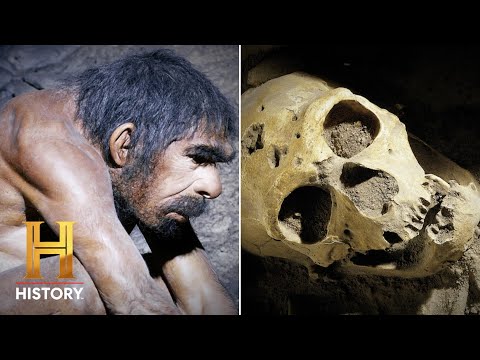
The earth, a silent repository of eons, occasionally yields secrets that challenge our understanding of history and our place within it. When archaeologists unearth a prehistoric grave, it's typically a window into ancient lives, rituals, and societal structures. However, certain discoveries transcend the mundane, hinting at phenomena that defy conventional explanation. This presentation, extracted from a special feature of 'Ancient Aliens' Season 1, titled "Aliens and Human Evolution," delves into such a discovery – the unearthing of a prehistoric grave containing what is described as a "revolutionary cousin." This isn't merely about bones in the dirt; it's about the unsettling implications when the familiar paradigm of human evolution is confronted with the possibility of extraterrestrial influence. Today, we don't just recount a finding; we dissect it, applying the rigor of investigative analysis to the claims presented.

Ancient Aliens Theory: Intertwining Humanity and the Extraterrestrial

The 'Ancient Aliens' series operates on a foundational premise: that Earth's history, particularly the development of human civilization and consciousness, has been significantly influenced by extraterrestrial visitors. This theory posits that ancient myths, megalithic structures, and unexplained artifacts are not products of nascent human ingenuity alone, but rather evidence of advanced alien intervention. Proponents suggest that these beings, often referred to as "ancient astronauts," seeded knowledge, guided technological development, and perhaps even played a role in our very biological makeup. This perspective reframes archaeological findings not just as historical records, but as potential evidence of a cosmic dialogue that spans millennia. It's a narrative that seeks to connect the inexplicable dots of our past, suggesting that the "missing links" might not be terrestrial. The implication is profound: our evolutionary journey may be far more complex, and less isolated, than conventionally taught.

Archaeological Anomalies: The Unconventional Discovery

The crux of this presentation lies in a specific archaeological find: a prehistoric grave that reportedly contains remains categorized as a "revolutionary cousin." The description itself is provocative. In paleontology and anthropology, a "cousin" implies a shared lineage, a close ancestral relationship. Describing this relative as "revolutionary" suggests a significant divergence or advancement from the known hominin evolutionary tree. Such a discovery, if substantiated, would necessitate a radical revision of our understanding of human origins. It raises immediate questions: What specific characteristics made this individual "revolutionary"? What geological or archaeological context identified it as prehistoric? And crucially, what evidence points towards a connection, however speculative, with extraterrestrial intervention? The presentation aims to showcase this find as a cornerstone piece of evidence for its broader theories, presenting it as an anomaly that current scientific frameworks struggle to fully accommodate without considering an external influence.

"We are not alone. The evidence is right there, buried in the earth, waiting for us to understand." - A common sentiment echoed in the 'Ancient Aliens' narrative.

Analytical Breakdown: Beyond the Surface Narrative

To truly grasp the significance and validity of such claims, we must move beyond the sensationalism and perform a critical analysis. The term "revolutionary cousin" is laden with implication. From a strictly anthropological standpoint, a discovery of a new hominin species or a significant intermediate fossil would indeed be revolutionary. However, integrating this with an "Ancient Aliens" narrative requires careful scrutiny of the evidence presented. We must ask:

  • Contextual Integrity: Was the grave site properly excavated and dated using established scientific methodologies (e.g., radiocarbon dating, stratigraphic analysis)? Without rigorous, peer-reviewed archaeological context, any interpretation remains purely speculative.
  • Biological Assessment: What were the specific physical characteristics of the remains that led to the "revolutionary cousin" classification? Are these features unique and unexplainable by known variations within established hominin species, or are they potentially misinterpretations or exaggerations?
  • The Extraterrestrial Link: What is the direct evidence connecting these remains to extraterrestrial visitation? Is it based on symbolic carvings found within the grave, anomalous material composition, or purely on the assertion that the remains are too "advanced" for their presumed time period? It is crucial to distinguish between correlation and causation.

The methodology of "Ancient Aliens" often involves presenting anomalies and then asserting an extraterrestrial explanation rather than demonstrating a direct, verifiable causal link. This approach, while compelling for narrative purposes, requires a discerning eye when assessing its scientific merit. For instance, any anomalous artifact or biological feature found within an ancient context is immediately framed as proof of aliens, bypassing the exhaustive work of proving mundane or terrestrial explanations first.

Evidence or Interpretation? The Investigator's Dilemma

The core challenge in evaluating claims like those presented here lies in differentiating between objective evidence and subjective interpretation. The discovery of a prehistoric grave is, in itself, evidence. The classification of its contents as a "revolutionary cousin" is an interpretation. The assertion that this points to alien intervention is a further, more speculative interpretation. As investigators, our duty is to trace this chain back to its empirical source.

  • Objective Evidence: Fossilized remains, artifacts, geological strata, dating results.
  • Interpretations: Classification of species, dating range, cultural significance of artifacts.
  • Speculative Hypotheses: Extraterrestrial involvement, ancient astronaut theories.

The "Ancient Aliens" series excels at presenting speculative hypotheses as if they are direct conclusions drawn from evidence. This requires us to be meticulous. We must analyze the *quality* of the evidence presented. Are the dating methods reliable? Are the biological classifications supported by mainstream science? Is the extraterrestrial hypothesis the *only* plausible explanation, or merely the most dramatic one? Often, the narrative jumps from "unexplained" to "extraterrestrial" without exhausting all conventional possibilities, a logical fallacy known as the "argument from ignorance." True investigation demands that we exhaust the terrestrial before venturing into the cosmic.

Broader Implications and Further Research

If the claims regarding this prehistoric grave are to be taken seriously, even as a provocative hypothesis, the implications are monumental. It would mean that chapters of human evolution are not only incomplete but have been actively obscured or influenced by external forces. This opens the door to reconsidering numerous other archaeological enigmas. For dedicated researchers, this raises the imperative for further investigation.

Areas for deeper exploration include:

  • Comparative Genomics: If viable DNA could be extracted, comparative genomic analysis would be the ultimate arbiter. Comparing the genetic makeup of such remains to known hominin and modern human genomes could provide definitive answers about lineage.
  • Independent Archaeological Verification: Seeking out peer-reviewed archaeological reports detailing this specific find, or similar discoveries, from paleontologists and anthropologists outside the 'Ancient Aliens' sphere of influence.
  • Analysis of Associated Artifacts: Examining any artifacts found within the grave for anomalous properties, unusual craftsmanship, or symbolic language that might genuinely defy contemporary understanding of prehistoric capabilities.

The pursuit of knowledge in these areas requires not just curiosity, but a commitment to rigorous methodology and open-minded skepticism. The 'Ancient Aliens' presentation serves as a prompt for such investigation, acting as a catalyst for those willing to probe deeper into the historical record.

Verdict of the Investigator: A Case for Critical Examination

The narrative presented regarding the prehistoric grave and its "revolutionary cousin" from 'Ancient Aliens' is undeniably compelling, tapping into humanity's deep-seated fascination with our origins and the unknown. However, from an investigative standpoint, it remains firmly in the realm of hypothesis and speculative interpretation, rather than conclusive evidence. The absence of readily available, peer-reviewed archaeological data directly corroborating the specific claims of extraterrestrial involvement is a significant hurdle. While the idea of a "revolutionary cousin" is fascinating and could point to undiscovered aspects of human evolution, the immediate leap to an alien explanation without exhaustive conventional scientific analysis is a methodological weakness.

Therefore, my verdict is one of cautious skepticism coupled with an acknowledgment of the potential for genuine mystery. The presented material functions as a powerful narrative device, posing intriguing questions. Yet, as a piece of evidence for the ancient astronaut theory, it requires independent verification through rigorous scientific channels. Until such verification occurs, the discovery serves primarily as a compelling case study in how anomalies can be framed to support pre-existing theories. It highlights the critical need for critical thinking when confronted with extraordinary claims, urging us to analyze the evidence, question the interpretation, and demand verifiable proof before accepting extraordinary conclusions.

The Researcher's Archive

For those seeking to delve deeper into the intersection of archaeology, human evolution, and the ancient astronaut hypothesis, the following resources are recommended:

  • Books:
    • "Chariots of the Gods?" by Erich von Däniken: The foundational text that popularized the ancient astronaut theory.
    • "The 12th Planet" by Zecharia Sitchin: Explores ancient Sumerian texts for evidence of extraterrestrial influence.
    • "Beyond Earth: A Chronicle of Deep Space Exploration" by Andrew Chaikin: For understanding the scientific perspective on space exploration and potential for extraterrestrial life.
  • Documentaries:
    • The entire "Ancient Aliens" series (The HISTORY Channel): Provides extensive examples and arguments for the theory.
    • "Searching for Noah's Ark" (National Geographic): Explores archaeological and geological evidence related to ancient biblical accounts, often touching on historical mysteries.
    • "The Phenomenon" (Documentary Film): A comprehensive look at the contemporary UFO/UAP situation, often touching upon historical implications.
  • Academic Resources:
    • Journals such as "Archaeology," "Nature," and "Science" for peer-reviewed findings in paleontology and anthropology.
    • Websites dedicated to critical analysis of pseudoscientific claims, such as those from skeptical organizations.

FAQ: Paranormal Investigations

1. What is the primary scientific approach to analyzing ancient remains?

The primary scientific approach involves detailed archaeological excavation, stratigraphic analysis, radiocarbon dating, and comparative osteology. Paleontologists and anthropologists meticulously document the context of the find and compare physical characteristics to known species within the evolutionary tree. Peer review and independent verification are paramount.

2. How do proponents of the ancient astronaut theory differentiate their findings from mainstream archaeology?

Proponents typically highlight anomalies—artifacts, structures, or biological remains—that they argue cannot be explained by conventional human capabilities or evolutionary processes of the time. They then posit extraterrestrial intervention as the most logical explanation, often interpreting ancient texts and iconography as historical accounts of alien encounters.

3. What are the risks of accepting speculative interpretations of archaeological finds?

The main risk is the propagation of misinformation and the distortion of established scientific knowledge. It can lead to a dismissal of rigorous research in favor of sensationalistic narratives, potentially hindering genuine scientific progress and fostering a distrust of established academic disciplines.

4. How can an individual critically evaluate claims made in shows like 'Ancient Aliens'?

By cross-referencing information with reputable scientific sources, looking for peer-reviewed studies that support or refute the claims, examining the qualifications of the experts cited, and being aware of logical fallacies such as the argument from ignorance or confirmation bias. Always ask: Is there a simpler, well-supported explanation?

The journey into the past is fraught with mystery, and not all enigmas yield easily to scientific inquiry. While the presentation of this prehistoric grave seeks to illuminate the 'Ancient Aliens' perspective, it simultaneously underscores the enduring power of the unexplained and the critical importance of analytical rigor in discerning truth from speculation. Your mission, should you choose to accept it, is to continue questioning, researching, and analyzing. The archives of history are vast, and many secrets are yet to be unearthed.

About the Author

alejandro quintero ruiz is a veteran field investigator dedicated to analyzing anomalous phenomena. His approach blends methodological skepticism with an open mind to the inexplicable, always seeking the truth beyond the veil of reality and approaching each case with the precision of a forensic analyst and the weary insight of a noir detective.

Nephilim Among Us: Analyzing the Evidence for Giant Humans in Ancient Lore and Modern Discoveries


Introduction: Echoes of the Colossal

The human narrative is steeped in tales of beings that dwarf us, figures of immense stature that loom large in our collective subconscious. From the biblical Nephilim to the cyclopean builders of forgotten civilizations, the concept of giant humans persists across cultures and epochs. Are these mere allegories, embellishments of historical fact, or glimmers of a suppressed truth? Today, we open the expediente on a question that has haunted anthropological discourse for centuries: Did giant humans ever walk this Earth?

The genesis of such persistent myths is rarely accidental. It suggests an underlying archetype, a resonant theme that speaks to fundamental human anxieties and aspirations. The idea of giants—powerful, primal, and often terrifying—represents the 'other,' the formidable challenges we face, or perhaps, echoes of a past humanity struggling to understand its own origins and place in the cosmos. As a researcher, my duty is not to accept these tales at face value, but to dissect them, to sift through the layers of myth and folklore, and to rigorously examine any purported evidence, no matter how outlandish it may seem initially. The world of the inexplicable requires rigorous analysis, not blind faith.

Historical Accounts: Giants in the Script

The earliest and perhaps most influential accounts of giant humans originate from ancient religious texts. The Book of Genesis in the Hebrew Bible, for instance, speaks of the Nephilim, often translated as 'giants,' who were present in the land before and after the Great Flood. "There were giants on the earth in those days—and also afterward—when the sons of God went in to the daughters of humans, and they bore children to them. They were the heroes of old, men of renown." (Genesis 6:4).

Numerous other ancient cultures feature similar narratives. Greek mythology is replete with the Gigantes, beings of immense size and strength who warred with the Olympian gods. Herodotus, the 'Father of History,' recorded tales of giants in his travels, and Pliny the Elder, in his Naturalis Historia, documented cases of skeletal remains far exceeding modern human proportions being unearthed. These historical references, while often embedded in mythology, provide a consistent thread of belief in exceptionally tall humanoids throughout antiquity. The sheer prevalence suggests that these were not isolated incidents but a pervasive concept in the ancient worldview.

"The most ancient writers have talked of them, and still farther back tradition has been silent." - Pliny the Elder on the common belief in giants.

For any serious investigator, the first step is to contextualize these records. Were these accounts literal descriptions of individuals or genetic anomalies, or were they symbolic representations of powerful leaders, monstrous enemies, or even misunderstood geological formations? The line between historical fact and mythologizing is often blurred in ancient texts. Our task is to look for corroborating evidence, for patterns that transcend mere storytelling.

The persistence of these legends in documented history warrants a deeper look. It's not just about biblical or classical texts; medieval chronicles and even early modern explorers often reported encounters or discoveries that hinted at the existence of giants. This widespread, cross-cultural reporting is precisely what elevates the question from simple folklore to a subject of serious investigation.

Consider the implications if even a fraction of these historical reports hold literal truth. It would rewrite our understanding of human evolution, of our planet's history, and potentially, of our very origins. This possibility, however remote, is what drives the persistent search for concrete evidence.

Folklore and Mythology: Whispers Across Cultures

Beyond the authoritative pronouncements of religious texts, the concept of giants permeates the folklore of nearly every corner of the globe. In Norse mythology, the Jötnar were a race of giants, often depicted as primordial beings who preceded the gods. Celtic lore speaks of giants who shaped the landscape, carving mountains and lakes with their immense forms. Indigenous American traditions, from the West Coast to the Plains, contain stories of giants, sometimes benevolent creators and other times fearsome adversaries.

In Asia, tales abound of colossal beings. Chinese mythology has Pangu, a primordial giant whose body formed the world. In the Philippines, Lam-ang is a legendary hero who, as an infant, possessed superhuman strength and size, capable of walking distances in a single stride. These narratives are not merely entertaining stories; they are cultural artifacts that reveal a shared human fascination with beings that transcend normative physical boundaries.

This universal presence of giant figures in mythology isn't easily dismissed. It suggests an archetypal resonance, a symbol that speaks to fundamental aspects of the human experience. The giants of folklore often embody raw power, untamed nature, and the challenges of existence. Their colossal size can be interpreted as a metaphor for overwhelming forces—natural disasters, powerful enemies, or the vastness of the unknown that early humans grappled with.

However, as investigators, we must also consider the psychological aspects. The desire to believe in beings larger than ourselves, beings who could perhaps account for the inexplicable feats attributed to ancient peoples or explain colossal megalithic structures, is potent. This belief can be fueled by a need for mythic explanations in the face of scientific uncertainty. Is it possible that these stories are collective expressions of awe, fear, or a longing for more 'heroic' ancestors?

The sheer diversity of these tales, while pointing to a common theme, also presents a complex web of interpretations. Some accounts are clearly mythical, while others, particularly those found in more recent folklore or local legends, might be rooted in misinterpreted observations or exaggerated accounts of unusually tall individuals. The challenge is to identify any potential kernel of literal truth within this rich tapestry of imagination.

Physical Evidence: The Bones of Contention

The most compelling, yet controversial, aspect of the giant human debate lies in the alleged physical evidence. Throughout history, numerous reports have surfaced of the discovery of abnormally large human skeletons. These reports, often sensationalized and lacking rigorous scientific documentation, typically describe unearthed bones of immense size, suggesting individuals who stood 10, 15, or even 20 feet tall.

For decades, archaeological and anthropological circles have been rife with rumors and alleged photographic evidence of such discoveries, particularly in the United States. These accounts frequently appear in fringe publications and online forums dedicated to unexplained phenomena. The typical narrative involves local historians, amateur archaeologists, or even construction workers stumbling upon massive skulls, femurs, and rib cages, often dismissed or suppressed by mainstream science.

"We have found bones of giants in this country, which no man could hardly believe. They had teeth as big as your finger, and as broad as your hand." - William Penn, regarding purported discoveries in Pennsylvania.

One notable example often cited is the alleged discovery of a subterranean tomb in Coahuila, Mexico, in the 1930s, containing skeletons of people over 20 feet tall. Another recurring theme involves discoveries made by Native American tribes, who allegedly passed down oral traditions and sometimes kept skeletal remains of giants.

The critical issue with much of this 'evidence' is its elusiveness and lack of verifiable provenance. Photographic evidence is often blurry, digitally manipulated, or lacks context. Skeletal remains, when they *have* been subjected to scientific scrutiny, have invariably turned out to be misidentified animal bones (such as mammoths or prehistoric sloths), or hoaxes created by combining or altering existing human or animal skeletal fragments. The scientific community requires bones to be cataloged, studied by multiple reputable institutions, and published in peer-reviewed journals—a standard that most 'giant skeleton' claims fail to meet.

However, the persistent nature of these claims, coupled with the undeniable existence of genetic conditions like Gigantism in modern humans, keeps the door slightly ajar for further investigation. What if there were indeed isolated instances of extreme genetic variation in ancient human populations? And why is such evidence, if it existed, so difficult to find and verify?

Scientific Skepticism: Debunking the Giants

From a conventional scientific standpoint, the existence of humans exceeding a certain height threshold (roughly 10-12 feet, placing maximum limits on skeletal integrity) is highly improbable, if not physically impossible, based on our current understanding of biology and physics. The primary arguments against the literal existence of giant humans, as popularized in folklore and conspiracy theories, center on biological constraints and the lack of credible evidence.

Firstly, skeletal structure. The human skeleton, particularly the skull and long bones, is engineered to support and move a body of a certain mass. As height increases dramatically, the weight of the body increases exponentially. A skeleton capable of supporting a 20-foot human would require bones of extraordinary density and thickness, far beyond what is observed even in individuals with severe gigantism today. Furthermore, the energy demands to power such a large metabolism would be immense, and the cardiovascular system would struggle to pump blood effectively to such heights.

Secondly, the missing evidence. If a race or significant population of giants existed, it is reasonable to expect that their remains would have been discovered in substantial numbers by now. Archeological digs worldwide, cataloging millions of human remains, have yielded no definitive proof of such beings. The occasional 'giant skeleton' reported is almost always debunked as a misidentification of animal fossils, a fabrication, or a hoax. The famous 'Nephilim giant' photos circulating online have been traced back to elaborate Photoshop creations.

The scientific discipline of paleopathology and forensic anthropology plays a crucial role here. These fields rely on meticulous data collection, comparative analysis, and peer review. Claims that bypass these rigorous processes are, by scientific standards, unsubstantiated. The burden of proof lies with the claimant, and so far, no claim of giant human skeletons has withstood professional scrutiny. This adherence to empirical data is non-negotiable in the scientific method, even when dealing with tantalizing tales of the past.

Skepticism, however, should not be confused with outright dismissal. The history of science is replete with examples of phenomena once considered impossible or mythical that were later explained or even proven. Our current biological models might simply be incomplete, or perhaps, the evidence, if it exists, is deliberately obscured. But until credible, verifiable evidence emerges, the scientific consensus remains firmly against the literal interpretation of giant humans.

Alternative Theories: Beyond Conventional Explanations

While mainstream science leans heavily on skepticism regarding literal giant humans, alternative theories attempt to reconcile the persistent lore with the lack of definitive proof. These theories often operate outside the established scientific paradigm, exploring possibilities that challenge our current understanding of biology, history, and even reality itself.

One prominent avenue is the exploration of genetic anomalies and mutations. While extreme gigantism exists today, it's theorized that ancient human populations might have experienced vastly different or more potent genetic variations. Some speculate about ancient bloodlines possessing unique genetic markers that allowed for immense stature, particularly if these were isolated communities or even a distinct hominid species that has since gone extinct.

Another theory posits a deliberate suppression of evidence by scientific or governmental bodies. This "cover-up" narrative suggests that genuine artifacts or remains of giants have been found but hidden from the public to maintain a particular narrative about human history and evolution. The idea is that revealing such evidence would shatter established paradigms and potentially expose hidden truths about our past or even extraterrestrial involvement.

"The truth is out there," a common refrain in paranormal and conspiracy circles, often applied to phenomena like giant humans.

Furthermore, some interpretations suggest that "giants" might not refer to physical stature but to spiritual or symbolic power. In this view, the tales might describe individuals of immense influence, wisdom, or connection to the divine, whose 'greatness' was metaphorically translated into physical size in subsequent storytelling. This aligns with the concept of 'Nephilim' possibly referring to fallen angels or beings of immense spiritual significance rather than literal giants.

The realm of "lost history" or "ancient advanced civilizations" also provides a framework. If sophisticated, powerful civilizations existed in the distant past (a theory often linked to megalithic structures around the world), it's conceivable they might have included individuals of extraordinary physical capabilities, including height. The evidence for these civilizations, proponents argue, is all around us in the form of enigmatic ruins, but largely ignored or misunderstood by mainstream archaeology.

These alternative theories, while speculative, address the enduring mystery. They acknowledge the widespread lore and the yearning for explanations that bridge the gap between myth and evidence, often pointing to the limitations of our current scientific framework.

Verdict of the Investigator: The Lingering Shadow of Doubt

After sifting through historical texts, folklore, and the often-dubious claims of physical evidence, the verdict on the existence of literal giant humans remains firmly in the realm of the unproven, yet tantalizingly persistent. The sheer volume of myth and legend, echoing across continents and millennia, is too significant to be dismissed as mere fancy.

On one hand, the scientific arguments against the biological viability and the utter lack of verifiable, peer-reviewed skeletal evidence present formidable barriers. The path of scientific inquiry demands concrete, reproducible proof, and concerning giants, that proof is conspicuously absent. Many alleged discoveries have been debunked as misidentifications of animal fossils or outright hoaxes, fueled by sensationalism and a desire for the extraordinary. The ease with which fabricated images of giant skeletons circulate online further underscores the need for extreme caution and critical analysis.

However, dismissing the entire phenomenon outright would be an abdication of the investigator's duty. The consistency of the 'giant' archetype across disparate cultures suggests a shared human experience or perception that warrants deeper consideration. Could there have been individuals of truly exceptional stature due to rare genetic mutations that have since vanished? Could some megalithic structures, disproportionately large for the tools and techniques attributed to ancient peoples, hint at beings of greater physical capability, even if not literal giants? The possibility, however remote, that a grain of truth lies within these widespread myths cannot be entirely extinguished.

My conclusion, therefore, is one of suspended judgment, tempered by rigorous skepticism. While I cannot endorse the notion of a race of giants existing as depicted in many legends, I maintain that the historical and cultural persistence of these tales, alongside sporadic and often unsubstantiated claims of physical evidence, warrants ongoing, critical examination. It points to a deep-seated human fascination with the colossal, perhaps representing our own awe, fear, or a veiled memory of a past we have yet to fully comprehend. The shadow of doubt, in this case, lingers not because of overwhelming evidence for giants, but because of the profound, unanswered questions their legends provoke about our history and our potential.

The Researcher's Archive

For those seeking to delve deeper into the enigma of giant humans and related mysteries, I recommend the following resources:

  • Books:
    • "The Lost Book of Enki" by Zecharia Sitchin: Explores ancient Sumerian texts that some interpret as descriptions of Anunnaki, a race of 'gods' often depicted as giants.
    • "Chariots of the Gods?" by Erich von Däniken: A classic in the ancient astronaut theory, which often postulates advanced beings (potentially giants) influencing early human civilizations.
    • "The Nephilim: Giant of Genesis" by Don Patton: A more direct exploration of biblical accounts and purported archaeological findings related to giants.
  • Documentaries:
    • "Ancient Aliens" (Series): Frequently discusses theories involving giants, Nephilim, and megalithic construction.
    • "Secrets of the Earth" (Various episodes): Often touch upon anomalous finds and alternative historical interpretations that could encompass giant human claims.
  • Online Resources:
    • Reputable archaeological journals or databases that may have documented unusual skeletal finds (though direct evidence of giants is scarce).
    • Academic discussions on gigantism and genetic anomalies in human populations.

Remember, critical evaluation is paramount. Cross-reference information and always question the provenance and scientific validity of any claims, especially those found on fringe platforms.

Field Protocol: Documenting Anomalous Finds

Should you ever encounter something that appears to be an unusually large skeletal remain, or any artifact related to purported ancient giants, rigorous documentation is key to preventing its misinterpretation or dismissal.

  1. Observe and Document Context: Note the exact location, depth, and surrounding soil conditions. Are there other artifacts nearby? Is it part of a larger structure?
  2. Photograph Extensively: Take multiple high-resolution photographs from various angles. Include a scale reference (like a ruler, coin, or your own hand) in at least one photo to indicate size. Use a tripod for stability, especially in low light.
  3. Record Measurements: If safe and possible, carefully measure dimensions of any bone or artifact.
  4. Note Environmental Conditions: Document time of day, weather, and lighting, as these can affect perception and photographic quality.
  5. Seek Expert Consultation (with Caution): Document everything meticulously before contacting any authorities or experts. Be aware that many mainstream institutions may immediately dismiss unusual claims without thorough investigation. Your collected data can serve as a preliminary record. Avoid disturbing the site unnecessarily, as it may be of scientific importance.
  6. Avoid Sensationalism: Present your findings factually. Avoid premature conclusions or attaching speculative labels like "giant's bone" without solid evidence. Let the data speak for itself.

The scientific community relies on this level of detail to validate any extraordinary claim. Without it, even genuine discoveries can be lost to speculation and folklore.

Frequently Asked Questions

Q1: Are there any confirmed, scientifically validated discoveries of giant human skeletons?
A1: No. Despite numerous sensational claims throughout history and online, no scientifically verified, unequivocally giant human skeleton has ever been presented to the mainstream academic community. Most alleged finds are debunked as misidentified animal bones or hoaxes.

Q2: What is Gigantism, and how does it relate to the idea of giants?
A2: Gigantism is a medical condition caused by excessive growth hormone production by the pituitary gland. Individuals with gigantism can grow to extraordinary heights (e.g., Robert Wadlow, the tallest person on record, was 8 ft 11 in). However, this is a pathological condition, not evidence of a naturally occurring race of giants, and individuals often suffer severe health complications due to their size.

Q3: Could ancient megalithic structures be evidence of giants?
A3: This is a popular theory within alternative history circles. Proponents suggest that the sheer scale and precision of structures like the pyramids or Stonehenge could not have been achieved by humans of ordinary size and capability. However, mainstream archaeology offers explanations involving advanced engineering, large workforces, and sophisticated tools available to ancient peoples.

Q4: What is the most credible explanation for the widespread myths of giants?
A4: Most scholars attribute these myths to a combination of factors: symbolic representation of power or the unknown, exaggeration of unusually tall individuals or ancient heroes, misinterpretation of large animal fossils (like mammoths), and the human desire for grand, mythic origins. The biblical Nephilim are a prime example, with interpretations ranging from literal giants to fallen angels or powerful ancient rulers.

Your Mission: Unearthing Local Legends

"The path of discovery often begins in our own backyard." Your mission, should you choose to accept it, is to become a local historian of the extraordinary. Investigate the folklore and legends of your own town, region, or ancestral homeland. Are there any tales of unusually large individuals, colossal beings, or mysterious ancient builders? Document these stories, noting their sources, any historical context provided, and any purported locations associated with them. Compare these local legends with the patterns discussed in this report. Are there commonalities? What might these persistent local narratives truly signify about our collective memory and the mysteries that lie just beneath the surface of accepted history?

About the Author

Alejandro Quintero Ruiz is a veteran field investigator dedicated to the analysis of anomalous phenomena. His approach combines methodological skepticism with an open mind to the inexplicable, always seeking the truth behind the veil of reality. He has spent decades meticulously documenting and dissecting claims that defy conventional understanding.

The question of giant humans may remain unanswered by definitive evidence, but the exploration itself reveals profound insights into human history, mythology, and our enduring quest to understand the boundaries of possibility. The search continues.

The Forgotten Human Hybrids of Antiquity: An Investigative Dossier


The annals of human history, meticulously cataloged and widely accepted, often present a singular, unified narrative of our origins. Yet, beneath the veneer of established fact, lie persistent threads of anomaly – whispers from forgotten epochs suggesting a more complex, and perhaps more unsettling, truth. We are not merely the solitary product of evolutionary chance. This investigation delves into the tantalizing, often dismissed, possibility of human hybrids in antiquity, entities whose existence, if proven, would fundamentally reshape our understanding of civilization and consciousness itself. This dossier aims to synthesize fragmented evidence, analyze obscure texts, and question the very definition of 'human' as we understand it.

Ancient Texts and Myths: Whispers of the Other

Long before the scientific method was conceived, ancient civilizations across the globe recorded accounts of beings that blurred the lines between human and something else entirely. The Book of Enoch, an ancient Jewish religious work, speaks of the Watchers, celestial beings who descended to Earth and mated with human women, birthing giants known as Nephilim. These accounts are not mere allegorical tales; to many scholars of esoteric history, they represent a distorted, yet potent, recollection of actual interspecies encounters.

Similarly, Sumerian myths detail the Anunnaki, often interpreted as extraterrestrial beings who, according to some theories, genetically engineered early humans. While the literal interpretation of "gods from the sky" is debated, the persistent motif of a technologically advanced, non-terrestrial influence in human genesis cannot be ignored. These narratives, replicated in varying forms across Mesopotamia, Egypt, and beyond, consistently point to a period where human and non-human entities coexisted, with the latter possessing superior knowledge and power.

Consider also the legends stemming from ancient Greece, with tales of gods and mortals intermingling to produce demigods and heroes. While often framed within a polytheistic mythology, these stories could also be interpreted as echoes of encounters with advanced beings, whose physical and intellectual differences led them to be perceived as divine. The recurring theme is the creation of a lineage that is both connected to humanity and transcendent of its limitations.

The sheer consistency of these hybrid narratives across disparate cultures, separated by vast geographical distances, warrants rigorous analysis. Are these mere archetypal expressions of human anxieties about the unknown, or are they faint signals from a distant past where biological boundaries were more fluid? The challenge lies in sifting through layers of metaphor and religious doctrine to find any kernel of verifiable historical or anthropological insight.

Archaeological Anomalies: The Fossil Record's Unsettling Gaps

Beyond the mythological, the archaeological record itself presents anomalies that defy easy explanation. Skeletal remains showcasing deviations from the standard Homo sapiens morphology have been unearthed, often quickly suppressed or reclassified. The ‘Paracas skulls’ in Peru are a prime example. These elongated crania, some significantly larger and differing in cranial sutures from known human skulls, have sparked intense debate. While mainstream archaeology attributes these to cranial deformation techniques, some researchers argue their unique shape and bone density suggest a non-human or hybrid origin. The genetic testing performed on some of these skulls, albeit controversial, has yielded results that, if validated, could indicate unknown hominin lineages.

Furthermore, megalithic structures scattered across the globe—from the pyramids of Egypt and the stone circles of Britain to the ruins of Puma Punku—exhibit a level of engineering sophistication that challenges our understanding of primitive human capabilities. The precision, scale, and sheer weight of the stones used beg the question: what kind of beings, possessing what level of technology or physical prowess, were capable of such feats? Some theories posit that these were not solely human achievements, but perhaps collaborative efforts or creations of a progenitor race, a hybrid lineage that inherited or developed advanced knowledge.

"The persistent anomalies in our archaeological record, the skeletal deviations, the impossible stonework—these are not mere curiosities. They are a silent testament to a history we have been taught to ignore, a history where the definition of 'human' was far broader than we currently accept." - Alejandro Quintero Ruiz

Investigating these anomalies requires a multidisciplinary approach, combining paleontology, genetics, archaeology, and a healthy dose of analytical skepticism. Dismissing them outright as misinterpretations or natural phenomena feels increasingly insufficient when confronted with the sheer volume and peculiarity of the evidence. Could these anomalies be the tangible remnants of hybrid peoples, their unique traits and capabilities leading to both the creation of magnificent structures and their eventual disappearance from the historical narrative?

Entangled Lineages: Examining Genetic Possibilities

The question of human hybrids inevitably leads to the realm of genetics. While mainstream science firmly places human origins within a specific evolutionary tree, fringe theories and esoteric research explore the potential for ancient interbreeding with other hominin species or even non-terrestrial entities. The undeniable fact of Neanderthal DNA within our own genome serves as scientific proof that interbreeding between human and other hominin species did occur.

Extending this principle, some researchers hypothesize that similar interbreeding events could have occurred with now-extinct or undiscovered hominin species, or even with beings whose biological makeup was significantly different. The concept is not necessarily to invoke aliens in the modern sense, but to consider ancient hominid variations that may have possessed distinct genetic markers, leading to offspring with enhanced cognitive abilities, physical prowess, or unique sensory perceptions. These individuals, perhaps seen as superior or different, could then have formed elite groups, intermingling with nascent human societies and influencing their development.

The idea of a hybrid lineage offers a potential explanation for the rapid advancements seen in certain ancient civilizations. If a portion of the population possessed a genetic advantage—perhaps inherited from a non-human progenitor—it could account for leaps in knowledge, artistry, and societal organization that seem disproportionate to the general evolutionary timeline. This is not to diminish human ingenuity, but to acknowledge that evolution is rarely a linear, monolithic process.

For a deeper dive into the speculative, yet compelling, scientific frameworks surrounding ancient genetics, consulting works by researchers like Graham Hancock or exploring the implications of ancient astronaut theories provides valuable context. Understanding the potential for gene flow, even across vastly different biological lines, is critical when evaluating claims of ancient hybrid populations. The implications for our own genetic makeup are profound, suggesting that the 'human' genome might be far more diverse and complex than currently taught.

The Veil of Secrecy: Why Were These Hybrids 'Forgotten'?

If human hybrids existed, then why are they largely absent from our conventional historical accounts? Alejandro Quintero Ruiz posits that several factors could contribute to this 'forgetting'. Firstly, the very nature of hybridity might have led to their eventual assimilation or extinction. If they possessed superior traits, they may have been perceived as a threat by nascent human societies, leading to conflict or deliberate marginalization. Conversely, if their traits were subtle, they may have simply integrated into the human population over millennia, their unique heritage diluted to the point of invisibility.

Secondly, the deliberate suppression of evidence cannot be discounted. Throughout history, dominant narratives have often sought to erase or reframe inconvenient truths. The existence of hybrid beings could have challenged religious dogma, socio-political structures, or the very definition of human exceptionalism. Such knowledge might have been deemed dangerous, leading to the destruction of records, the discrediting of witnesses, and the reclassification of anomalous artifacts. This is a pattern observed in many suppressed historical and paranormal investigations.

Lastly, the inherent difficulty in proving such claims plays a significant role. Without conclusive genetic evidence or unambiguous physical remains, the hypothesis remains speculative. The scientific community's conservative stance, while necessary for maintaining rigor, can also create a barrier to investigating phenomena that lie outside current paradigms. This can inadvertently foster secrecy, as researchers who pursue these avenues often face professional ostracism.

"History is written by the victors, and often, the victors are those who are simply the most numerous. Those who were different, those who were 'other,' rarely had a voice left to tell their tale." - Alejandro Quintero Ruiz

The argument for a 'forgotten' history of hybrids hinges on the idea that our current historical record is incomplete, deliberately curated, or fundamentally misinterpreted. The task for the modern investigator is to meticulously re-examine the existing evidence, seeking patterns and connections that have been overlooked by mainstream scholarship. This requires looking at ancient myths not as fantasy, but as potential historical records, and at archaeological puzzles not as impossibilities, but as clues.

Investigator's Verdict: Unraveling the Human Hybrid Enigma

The evidence for forgotten human hybrids in antiquity resides in a precarious balance between tantalizing possibility and verifiable fact. The mythological accounts, while rich in symbolism, lack concrete proof. Archaeological anomalies, such as the Paracas skulls, present intriguing deviations but are subject to conventional explanations, however debated. Genetic science confirms interbreeding occurred between hominin species, opening the door for further speculative interbreeding events.

However, the sheer persistence and global distribution of hybrid narratives, coupled with the engineering enigmas of ancient sites, suggest that to dismiss the concept entirely would be intellectually negligent. It is plausible that a distinct lineage, possessing traits derived from non-human progenitors—whether terrestrial hominins or something more enigmatic—existed and interacted with early human populations. Their 'forgetting' is likely a byproduct of assimilation, conflict, or deliberate historical erasure.

While conclusive proof remains elusive, the investigation into these potential ancient hybrids serves a crucial purpose: it challenges our anthropocentric worldview and encourages a more open-minded approach to history and biology. The unexplained elements in our past do not necessarily point to supernatural intervention, but perhaps to chapters in the story of intelligent life on Earth that have been deliberately or accidentally omitted.

The Researcher's Archive

To truly grasp the depth of this subject, one must consult the foundational texts and documentaries that have dared to explore these challenging hypotheses. The ongoing investigation into ancient enigmas requires a robust toolkit of knowledge:

  • Books:
    • Chariots of the Gods? by Erich von Däniken: While controversial, it was instrumental in popularizing the ancient astronaut theory.
    • Fingerprints of the Gods by Graham Hancock: Explores evidence of a lost, sophisticated ancient civilization.
    • The Lost Book of Enki by Zecharia Sitchin: A reinterpretation of Sumerian texts regarding the Anunnaki.
    • Forbidden Archaeology by Michael Cremo and Richard L. Thompson: Documents extensive evidence of human origins that contradicts the standard evolutionary timeline.
  • Documentaries:
    • "Ancient Aliens" (History Channel): Explores various theories related to extraterrestrial influence on ancient civilizations.
    • "The Revelation of the Pyramids": Investigates the construction and purpose of ancient megalithic sites.
    • Films focusing on the Paracas skulls and other anomalous skeletal finds provide visual evidence that fuels debate.
  • Platforms:
    • Subscribing to platforms like Gaia can provide access to a vast library of documentaries and series delving into these fringe topics.

Field Protocol: Investigating Ancient Anomalies

Engaging with the mystery of ancient hybrids requires a shift in investigative methodology. While direct excavation of such phenomena is beyond the scope of most individuals, applying critical thinking and observational skills to existing data is paramount:

  1. Deconstruct Myth: When encountering ancient myths or religious texts, look for recurring motifs related to creation, 'gods' or advanced beings, and unusual offspring. Cross-reference these motifs across different cultures to identify common threads.
  2. Analyze Archaeological Claims: Examine photographic evidence of anomalous artifacts or skeletal remains. Research the originating archaeological context and any subsequent scientific analyses. Be wary of unquestioned claims and seek out dissenting opinions and counter-arguments.
  3. Study Genetic Linkages: Familiarize yourself with the accepted science of human evolution and interbreeding (e.g., Neanderthal DNA). Then, explore speculative scientific theories that propose genetic interactions with unknown hominin groups or entities.
  4. Question Dominant Narratives: Actively seek out information that challenges mainstream historical and scientific consensus. Understand the motivations behind historical record-keeping and potential biases.

Your mission, should you choose to accept it, is to approach every piece of ancient lore and every archaeological oddity with a blend of open-minded curiosity and rigorous skepticism. The truth is often found not in the sensational, but in the persistent, overlooked details.

Frequently Asked Questions

Are there any confirmed fossil remains of human hybrids?
Currently, there are no universally accepted, scientifically confirmed fossil remains that definitively prove the existence of human hybrids in antiquity. While anomalies like the Paracas skulls exist, mainstream science offers alternative explanations.
What is the scientific consensus on the Anunnaki?
The scientific and archaeological consensus is that the Anunnaki are figures from Mesopotamian mythology, and their accounts describe gods or powerful beings within that cultural context, rather than literal extraterrestrial visitors.
How can one differentiate between myth and historical fact in ancient texts?
This is a complex scholarly challenge. Historians and mythologists analyze linguistic patterns, cultural context, corroborating evidence from other disciplines (archaeology, genetics), and the potential symbolic or allegorical meaning of texts to discern possible kernels of historical truth within mythological frameworks.
Could 'hybrids' refer to advanced human civilizations rather than biological interbreeding?
This is a valid interpretation. The term 'hybrid' can refer metaphorically to the blending of cultures or the emergence of advanced knowledge within a society, possibly influenced by external contact or a forgotten lineage of highly intelligent humans. The investigation remains open to such interpretations.

The quest to understand our past is an ongoing investigation. The possibility of forgotten human hybrids demands that we look beyond the comfortable confines of established knowledge and consider the unsettling implications of what might lie hidden within the shadows of history. The evidence, though fragmented, invites us to question the very definition of humanity and our place in the cosmic tapestry.

About the Author

alejandro quintero ruiz is a veteran field investigator dedicated to the analysis of anomalous phenomena. His approach combines methodological skepticism with an open mind to the inexplicable, always seeking the truth behind the veil of reality.