Followers

Mostrando las entradas con la etiqueta Scientific Skepticism. Mostrar todas las entradas

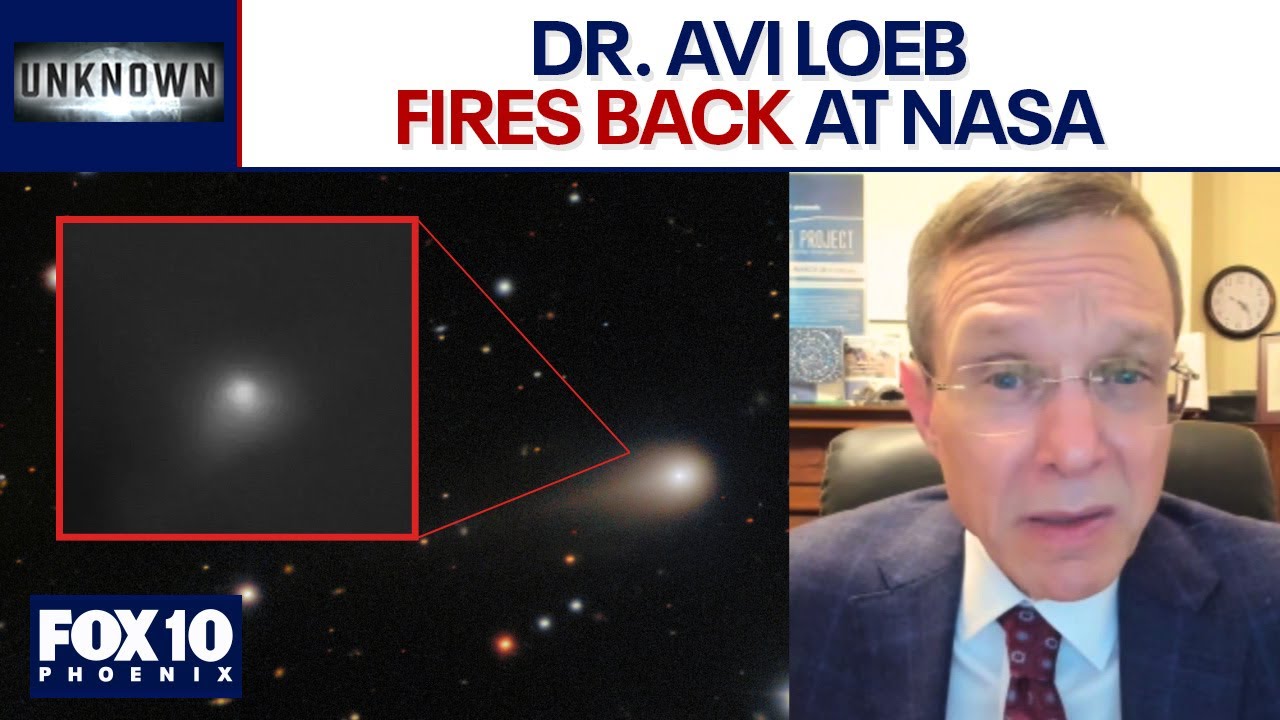
Avi Loeb: NASA's 3I/Atlas Images Raise More Questions Than Answers

Image

The scientific community, a realm typically driven by empirical evidence and a relentless pursuit of truth, often finds itself at a crossroads when confronted with phenomena that defy conventional explanation. The recent analysis by NASA of the interstellar object 3I/ATLAS presents such a juncture. Dr. Avi Loeb, a distinguished astrophysicist from Harvard, has voiced significant concerns, not only about the physical properties of the object but also about the perceived reluctance of the scientific establishment to engage with potentially paradigm-shifting implications. This dossier delves into the anomalies presented by 3I/ATLAS and the critical examination of NASA's response, framed by the broader context of our search for extraterrestrial intelligence.

Unraveling the Mysteries of 3I/ATLAS

The interstellar object 3I/ATLAS, a visitor from beyond our solar system, has ignited a firestorm of debate due to its peculiar characteristics, which deviate significantly from those expected of a typical comet or asteroid. Dr. Avi Loeb, a prominent figure in the study of interstellar objects, has meticulously outlined a dozen significant puzzles that NASA's latest analysis, according to him, has failed to adequately address. These enigmas include the object's disproportionately large mass when compared to its predecessor, 'Oumuamua, and its unusual behavior – specifically, jets that do not appear to be shedding material in the typical manner of a comet undergoing sublimation.

These anomalies are not mere academic curiosities; they strike at the core of our understanding of celestial mechanics and the potential diversity of objects traversing interstellar space. The very nature of 3I/ATLAS challenges established models, forcing scientists to consider possibilities previously relegated to the realm of speculation. The mass anomaly, in particular, suggests an object far denser or more substantial than anticipated for an object of its observed size, hinting at an unusual composition or even an artificial origin.

Recommended Gear for Investigation

ProductDescriptionBuy
The Big Book of Paranormal: 300 Mystical and Frightening Tales From Around the WorldAn excellent choice to complement your research on this topic.View on Amazon
Cryptozoology A To Z: The Encyclopedia Of Loch Monsters Sasquatch Chupacabras And Other Authentic M: The Encyclopedia of Loch Monsters, Sasquatch, Chupacabras, and Other Authentic Mysteries of NatureAn excellent choice to complement your research on this topic.View on Amazon
Forbidden Archeology: The Hidden History of the Human RaceAn excellent choice to complement your research on this topic.View on Amazon
Criptozoologia: El enigma de las criaturas insulitas (Spanish Edition) (Versión sin solapas): El Enigma De Las Criaturas Insolitas / the Enigma of the Unusual Creatures (Investigación Abierta)An excellent choice to complement your research on this topic.View on Amazon
The H. P. Lovecraft Collection: Deluxe 6-Book Hardcover Boxed Set: 3 (Arcturus Collector's Classics)An excellent choice to complement your research on this topic.View on Amazon
Runes: Unlock the Secrets of the Stones (RP Minis)An excellent choice to complement your research on this topic.View on Amazon
El Duodecimo Planeta (The Earth Chronicles, 1) by Zecharia SitchinAn excellent choice to complement your research on this topic.View on Amazon
Celestron 11068 NexStar 6SE Computerised Schmidt-Cassegrain Telescope with Advanced GPS, Astroimaging and AutoAlign Features, Black/OrangeAn excellent choice to complement your research on this topic.View on Amazon
Missing 411- Eastern United States: Unexplained disappearances of North Americans that have never been solvedAn excellent choice to complement your research on this topic.View on Amazon
Tapiz de mapa del mundo antiguo, diseño vintage de mapa del mundo, tapiz de distribución geográfica para colgar en la pared, póster educativo de mapa del mundo del Atlas histórico marrón, para pared,An excellent choice to complement your research on this topic.View on Amazon

Dr. Loeb's Critique: A Call for Open-Mindedness

Dr. Loeb's central argument revolves around the scientific community's apparent adherence to a dogmatic approach, a resistance to embracing novel concepts when faced with anomalous data. He asserts that the prevailing scientific mindset, in its eagerness to fit observations into pre-existing frameworks, may be inadvertently overlooking signs of advanced extraterrestrial technology. This intellectual inertia, he posits, is not only hindering a comprehensive understanding of objects like 3I/ATLAS but also significantly impeding the urgent search for Unidentified Aerial Phenomena (UAP) and evidence of advanced alien civilizations. His impassioned plea is for a fundamental shift in perspective, urging colleagues to set aside preconceived notions and rigorously investigate every possibility, no matter how unconventional.

"The scientific community needs to move past its dogmatic approach and acknowledge these unexplained properties, asserting that this reluctance to consider the possibility of alien technology mirrors the historical academic resistance faced by Galileo and risks limiting the timely search for UAP and advanced extraterrestrial life."

This stance resonates with a growing segment of the public that feels traditional scientific institutions are too conservative, too afraid of ridicule, or too beholden to established theories to make groundbreaking discoveries. The historical parallel drawn to Galileo Galilei, ostracized for his heliocentric views, serves as a potent reminder that revolutionary ideas often face staunch opposition before eventual acceptance.

NASA's Official Stance: A Disappointing Disclosure?

The anticipation surrounding NASA's analysis of the 3I/ATLAS images was palpable. However, for many, including Dr. Loeb, the released information proved to be a significant disappointment. Critics argue that the agency’s presentation reiterated known facts rather than offering new insights, and that the data provided was rudimentary, akin to images from a lower-resolution camera. The failure to directly «reveal» substantial new findings or address the «twelve significant puzzles» highlighted by Dr. Loeb has led to accusations that NASA is either withholding crucial information or adhering to a narrative that downplays the object’s truly enigmatic nature. Some commentators suggest that the imagery itself, delayed and of questionable quality, further fuels suspicion.

The narrative presented by NASA, focusing on conventional explanations like cometary activity, has been met with skepticism. Observers note the agency’s perceived discomfort and contradictory statements during press briefings, oscillating between describing the object as a comet with differences and a "normal comet with some strange particularities." This ambiguity, coupled with a lack of definitive size estimates and a complete disregard for its anomalous mass, has only amplified public distrust. This perceived lack of transparency is a recurring theme, with some recalling instances where NASA allegedly cut live feeds when UAPs appeared on screen.

Historical Parallels: Galileo and the Resistance to New Ideas

Dr. Loeb's invocation of Galileo is not incidental. Throughout history, paradigm-shifting discoveries have often been met with resistance from established institutions. Galileo's observations of the moons of Jupiter and his advocacy for the heliocentric model challenged deeply entrenched Aristotelian and Church doctrines, leading to his condemnation. Similarly, the introduction of concepts like continental drift or quantum mechanics faced initial skepticism and outright rejection before mounting evidence led to their acceptance.

The parallels suggest that when confronted with data that fundamentally challenges existing paradigms, the human tendency is to either dismiss the anomaly, discredit the messenger, or attempt to force the data into a familiar mold. In the context of 3I/ATLAS, this resistance is interpreted by some as a fear of the unknown, a reluctance to acknowledge that humanity may not be alone in the universe, or that technologically advanced artifacts could be traversing our cosmic neighborhood undetected or unacknowledged.

The Technological Artifact Hypothesis

Central to the ongoing debate is the hypothesis that 3I/ATLAS might not be a natural celestial body but rather a technological artifact, an alien probe or craft. The unexplained behavior of its jets, the extraordinary mass-to-size ratio, and the lack of expected cometary activity lend credence to this theory. If 3I/ATLAS is indeed artificial, its presence signifies a monumental discovery, one that could irrevocably alter our understanding of life in the cosmos and our place within it. Dr. Loeb's advocacy for this hypothesis stems from a belief that all possibilities must be entertained when faced with such profound anomalies.

This hypothesis, while speculative, is grounded in observing phenomena that defy conventional scientific explanations. The argument follows that if an object behaves in ways inconsistent with natural processes, then non-natural causes must be considered. The reluctance to explore this path vigorously is seen by proponents as a failure of scientific curiosity and a missed opportunity for potentially the most significant discovery in human history.

Echoes from the Public: A Growing Skepticism

The reaction from the public and online communities to the 3I/ATLAS situation and NASA's response has been overwhelmingly critical. Testimonies shared across various platforms reveal a deep-seated mistrust of official narratives and a strong endorsement of Dr. Loeb's perspective. Many viewers expressed frustration with NASA's perceived arrogance and the simplistic nature of their explanations, deeming the released images "a joke" compared to what amateur astronomers can produce. Comments frequently highlight the contrast between NASA's allegedly poor performance and Dr. Loeb's clear, open, and intellectually honest approach.

One recurring sentiment is that NASA, much like other government bodies, operates with a lack of transparency, potentially withholding crucial data concerning UAPs and extraterrestrial intelligence. This skepticism is amplified by the historical context of governmental secrecy and the perceived inadequacy of NASA's budget allocation for genuine exploration versus public relations. The audience's embrace of Dr. Loeb is evident, with many calling for him to lead NASA or a similar initiative, recognizing his dedication to seeking truths beyond conventional boundaries. The sentiment is clear: the public is ready for genuine revelations, not obfuscation.

Several users pointed out the irony of NASA discussing the excitement of finding microbial life while potentially sitting on information about more advanced extraterrestrial civilizations. The frustration is palpable, with calls to "DE-FUND NASA" and reallocate resources to more effective, open-minded researchers. The overall consensus from audience reactions is that Dr. Loeb embodies the scientific integrity and curiosity that many feel is lacking in official channels.

Shifting the Research Paradigm: A New Frontier

Dr. Loeb is not merely critiquing but actively advocating for a significant redirection of scientific resources and focus. He urges institutions to move beyond passive observation and engage in proactive searching for technological signatures originating from space. This involves allocating substantial funding and dedicating research efforts to identifying potential alien technologies, rather than solely waiting for natural phenomena to present themselves. His confidence remains unshaken: the evidence of extraterrestrial civilizations, he believes, is inevitable, and critical new data regarding 3I/ATLAS is anticipated.

This proposed shift represents a move from a purely theoretical to an actively investigative stance in the search for extraterrestrial intelligence (SETI). It involves developing new methodologies, instruments, and theoretical frameworks capable of detecting artifacts or signals that might not conform to our current understanding of natural cosmic processes. The implication is that humanity must actively "listen" and "look" for technological intelligence, not just natural occurrences.

Veredicto del Investigador: ¿Fraude, Fenómeno Genuino o Algo Más?

The case of 3I/ATLAS, as presented through the lens of Dr. Avi Loeb's analysis and the subsequent public outcry, points towards a phenomenon that transcends the ordinary. While definitive proof of extraterrestrial technology remains elusive, the anomalies associated with 3I/ATLAS, coupled with NASA's perceived inadequate response, create a compelling narrative of suspicion. It is my assessment, based on the available evidence and the critiques leveled against official channels, that 3I/ATLAS warrants continued, rigorous investigation. The possibility of it being a technological artifact, while speculative, cannot be dismissed without a more thorough and transparent scientific engagement. The resistance to exploring such hypotheses is, in itself, an anomaly that demands scrutiny.

Equipo Recomendado para la Investigación

For those inspired by Dr. Loeb's work and eager to contribute to the ongoing investigation of celestial anomalies, the right equipment is crucial. While amateur observation has its limits, advanced tools can provide invaluable data:

Preguntas Frecuentes

  1. ¿Por qué el objeto 3I/ATLAS es tan controvertido?

    La controversia surge de las anomalías físicas observadas en 3I/ATLAS, como su masa inusual y el comportamiento de sus jets, que no se alinean con las características típicas de un cometa o asteroide, junto con la percepción de que NASA no ha abordado estas peculiaridades de manera satisfactoria.

  2. ¿Qué argumenta el Dr. Avi Loeb sobre la respuesta de la NASA?

    El Dr. Loeb critica a la NASA por no abordar las doce anomalías significativas del objeto, acusando a la comunidad científica de un enfoque dogmático y de resistencia a considerar la posibilidad de tecnología extraterrestre, comparando esta resistencia con la oposición histórica a las ideas de Galileo.

  3. ¿Cuál es la hipótesis de que 3I/ATLAS sea un artefacto tecnológico?

    Esta hipótesis sugiere que las características anómalas de 3I/ATLAS podrían indicar que no es un objeto natural, sino una nave o sonda artificial de origen extraterrestre, dada su masa inusual y su comportamiento no estándar.

  4. ¿Por qué la gente desconfía de la información oficial sobre 3I/ATLAS?

    La desconfianza se basa en la percepción de falta de transparencia por parte de la NASA, la calidad cuestionable de las imágenes publicadas, la falta de respuesta a preguntas clave y un historial percibido de ocultar información sobre fenómenos anómalos y UAPs.

  5. ¿Qué proponen los defensores de una investigación más abierta?

    Proponen un cambio en el enfoque científico, asignando más recursos a la búsqueda activa de firmas tecnológicas extraterrestres y adoptando una mentalidad más abierta para investigar fenómenos que desafían las explicaciones convencionales.

Tu Misión: Campo de Investigación

La investigación de lo inexplicable exige tanto rigor analítico como valentía intelectual. Te desafío a adoptar una postura crítica ante la información oficial, a buscar fuentes diversas y a considerar todas las hipótesis. Si has sido testigo de fenómenos aéreos no identificados o has experimentado eventos inexplicables, documenta todo meticulosamente. Tu testimonio, como el de tantos otros, podría ser la pieza faltante en un rompecabezas cósmico mayor.

Comparte tus experiencias y observaciones en los comentarios a continuación. ¿Qué opinas sobre el caso 3I/ATLAS y la respuesta de la NASA? ¿Has presenciado algo similar?

Difunde este expediente en tus redes sociales. La verdad no se descubre a través del silencio, sino del intercambio abierto de ideas y evidencias. Ayúdanos a correr la voz y a fomentar una discusión más profunda sobre nuestro lugar en el universo.

Suscríbete a nuestro canal para recibir actualizaciones constantes sobre los misterios más intrigantes de nuestro cosmos y prepárate para cuestionarlo todo.

Investigator's Note: True paranormal research doesn't fund itself. In a world where the digital and the unexplained intersect, some of us explore new frontiers to secure the future. Do you dare to be part of the vanguard? Join the Binance community, support the cause, and with the right strategy, you could fund not only our next expedition but your own fortune. The next great discovery could be just a click away.

The Luna Mega-Tunnel and the Monolithic Enigma of Mercury: A Deep Dive into Extraterrestrial Anomalies


The cosmos is rarely silent. It speaks in whispers of gravitational waves, in the silent ballet of celestial bodies, and sometimes, in anomalies that defy our terrestrial understanding. Today, we peel back the layers of the unknown, venturing to two distinct worlds: one bathed in reflected sunlight, the other scorched by its proximity to a star. We open the file on the alleged Lunar Mega-Tunnel and the enigmatic Monolith of Mercury – phenomena that ignite the imagination and challenge the very foundations of our astronomical knowledge.

The Whispers of the Lunar Tunnel

For decades, amateur astronomers and independent researchers have scrutinized high-resolution images captured by lunar orbiters. Among the vast, desolate plains and stark craters, certain formations have repeatedly surfaced, prompting intense speculation. One such anomaly is the purported "Mega-Tunnel," a vast, elongated structure appearing to burrow beneath the lunar surface. Initial reports surfaced from researchers analyzing images from NASA's Lunar Reconnaissance Orbiter (LRO), highlighting linear features that seemed too regular, too artificial, to be mere geological formations.

The sheer scale of this alleged tunnel is staggering, with estimates suggesting it could stretch for miles, far exceeding any known natural cavern or lava tube on the Moon. Its dimensions and seemingly precise geometry have led to theories ranging from vast, ancient alien infrastructure to sophisticated, covert human projects predating public knowledge. The implications are profound: if artificial, it suggests an advanced civilization with the capability to engineer structures on a planetary scale, either in our past or present.

The Monolithic Quandary of Mercury

Across the solar system, Mercury presents a stark contrast. Its surface, a testament to eons of bombardment, is a chaotic landscape. Yet, within this apparent disorder, a single object captured the attention of the clandestine research community: a colossal monolith. Unlike the geological irregularities of the Moon, this structure on Mercury is frequently described as having sharp angles, planar surfaces, and a distinct, almost geometric form that stands in stark defiance of natural erosion patterns. Images, often of debated origin and processing, show a structure that dwarfs surrounding geological features.

Theories abound. Some posit it as a marker, a beacon, or even a remnant of an ancient extraterrestrial civilization that once inhabited or traversed our solar system. Others suggest it's a natural geological extrusion, albeit one of extraordinary proportions and unusual symmetry. The consistent reporting of such an object, despite the harsh conditions and limited visibility of Mercury, fuels the debate. What purpose could such a massive, artificial-looking object serve on a planet so seemingly inhospitable?

Analyzing the Spectral Data: From Shadows to Structures

The backbone of these extraordinary claims rests on photographic and spectral analysis. Researchers often employ advanced image enhancement techniques, contrast adjustments, and shadow manipulation to reveal details not immediately apparent in raw data. When scrutinizing images from the LRO or MESSENGER missions, anomalies in light reflection and shadow patterns can hint at subsurface structures or unnaturally smooth surfaces. These techniques, while powerful, are also susceptible to misinterpretation, pareidolia, and even outright fabrication. It's a fine line between revealing hidden details and imposing one's own expectations onto complex data.

"The greatest challenge in investigating these planetary anomalies is the sheer distance and the limitations of our current observation technology. What appears artificial under specific lighting and enhancement might simply be an unusual geological formation illuminated in a peculiar way. We must always proceed with rigorous skepticism." - Alejandro Quintero Ruiz

The processing of telemetry data and the interpretation of spectral signatures are complex scientific endeavors. While official reports from space agencies often attribute these features to natural geological processes—such as unique lava tubes or exceptionally symmetrical rock formations—a segment of the independent research community insists that the evidence points towards artificial origins. This discrepancy is where the true enigma lies, fueled by the inherent limitations of remote sensing and the human desire to find patterns, intent, and intelligence beyond our own.

Extraterrestrial Intelligence: The Profound Implications

Should evidence for artificial structures like the supposed Lunar Mega-Tunnel or the Mercury Monolith be definitively confirmed, the paradigm shift would be immeasurable. It would:

  • Validate the Existence of Extraterrestrial Intelligence: This would be the most significant discovery in human history, confirming we are not alone in the universe.
  • Rewrite Our Understanding of Cosmic History: It would imply advanced civilizations capable of interstellar travel and monument construction long before humanity's emergence.
  • Open New Avenues for Scientific and Technological Inquiry: Understanding the materials, engineering, and purpose behind these structures could revolutionize our own science and technology.
  • Impact Philosophical and Religious Beliefs: The discovery would necessitate a profound reevaluation of humanity's place in the cosmos.

The prospect of discovering such artifacts is a driving force behind continued space exploration and the tireless work of independent researchers delving into archival data. This pursuit is not merely academic; it touches upon our deepest questions about existence, purpose, and the vastness of the unknown.

The Skeptic's Lens: Deconstructing Anomalies

In my years of investigating phenomena that skirt the edges of reality, I've learned that the most extraordinary claims require the most extraordinary evidence. The scientific community approaches such reports—the Lunar Mega-Tunnel and the Mercury Monolith—with a healthy dose of skepticism, which is precisely the approach we must adopt. The official explanations, though perhaps less sensational, are often grounded in observable physics and geology. For instance:

  • Lava Tubes: The Moon is known to possess extensive lava tubes, remnants of ancient volcanic activity. These can form complex subterranean networks that, under specific imaging conditions, might appear unusually linear.
  • Erosion and Geomorphology: Mercury's surface, while seemingly chaotic, is subject to unique erosional forces, including thermal stresses and micrometeorite impacts. These could, in theory, create formations with striking geometric properties.
  • Image Artifacts and Processing: The processing of deep-space imagery, while essential for scientific analysis, can introduce artifacts. Illumination angles, compression algorithms, and manual enhancements can mislead the untrained eye, turning shadows into tunnels or rough textures into artificial walls.

This is not to dismiss the reports outright, but to emphasize the critical need for verifiable, repeatable evidence that withstands rigorous independent scrutiny. Extraordinary claims necessitate a meticulous process of elimination, ruling out all conventional explanations before entertaining the unconventional.

Investigator's Protocol: Assessing Planetary Anomalies

Investigating potential extraterrestrial artifacts requires a methodical approach, analogous to a forensic examination of a terrestrial crime scene, but on an astronomical scale. My protocol focuses on:

  1. Source Verification: Ascertaining the origin of the imagery and data. Is it from a reputable space agency, a verified independent source, or a processed image of unknown provenance?
  2. Data Integrity Check: Examining the raw data (if available) versus processed versions. Identifying any manipulation or enhancement that might distort features.
  3. Comparative Analysis: Comparing the anomaly with known geological formations on the same celestial body and similar features on other planets or moons.
  4. Official Explanations: Thoroughly researching and understanding the scientific explanations provided by space agencies for similar features.
  5. Independent Peer Review: Seeking opinions from other researchers, analysts, and, where possible, experts in geology, astrobiology, and image processing.
  6. Pattern Recognition Across Missions: Looking for consistent reporting of similar anomalies across different missions and observation periods.

This systematic evaluation is crucial to separate genuine enigmas from misinterpretations or deliberate hoaxes. The goal is not to deny the possibility of extraterrestrial structures, but to build a case based on undeniable facts.

Investigator's Verdict: Fraud, Phenomenon, or Unknown?

After reviewing the available reports and photographic evidence concerning the alleged Lunar Mega-Tunnel and the Mercury Monolith, my verdict remains cautiously suspended, leaning heavily towards undiscovered natural phenomena or sophisticated image artifacts. The photographic evidence, while compelling in its implication, often lacks the clarity, resolution, and corroboration from independent sources needed for a definitive conclusion of artificial origin. The descriptions of these features often arise from enhanced imagery, where shadows and contours can be dramatically manipulated to suggest geometric forms. While the possibility that these are remnants of an ancient, advanced civilization cannot be entirely dismissed—and indeed, fuels much of our fascination with the cosmos—the current evidence is insufficient to elevate them beyond intriguing geological curiosities or advanced pareidolia. Until superior, verifiable data emerges that can withstand stringent scientific scrutiny and rule out all natural explanations, these must remain in the realm of speculation, albeit compelling speculation.

The Investigator's Archive

For those seeking to delve deeper into the mysteries of our solar system and beyond, I recommend the following resources. These are not mere speculative accounts, but critical analyses that form the bedrock of serious ufological and astronomical anomaly research:

  • "The Mask of Apollo: A Guide to the Exploration of the Moon" by Michael J. Miller - While not focused on anomalies, it provides essential context on lunar geology and exploration.
  • "Moons of the Solar System" by D. W. Hughes - Offers a comprehensive overview of our celestial neighbors, their formation, and potential for anomalies.
  • NASA's Lunar Reconnaissance Orbiter (LRO) Data Archive: Accessing raw imagery is the first step for any serious independent researcher.
  • MESSENGER Mission Data Archive: For detailed imagery and spectral data of Mercury.
  • Books by Jacques Vallée: Though focused on UFOs, Vallée's methodical approach to analyzing anomalies and their historical context is invaluable for any deep investigation. His works, like "Passport to Magonia," teach you how to look beyond the surface narrative.

Understanding the context of planetary bodies through established scientific literature is paramount before exploring their more unconventional aspects. This foundational knowledge equips you to critically assess claims and identify genuine enigmas.

Frequently Asked Questions

Q1: Are there official scientific explanations for the Lunar Mega-Tunnel and Mercury Monolith?
A1: Yes, official space agencies like NASA typically attribute these features to natural geological formations, such as lava tubes on the Moon or unique erosional patterns on Mercury, often amplified by specific lighting conditions or image processing.

Q2: Why do independent researchers believe these are artificial?
A2: Independent researchers often point to the regularity of the formations, their scale, sharp angles, and geometric precision in photographs. They argue these characteristics are inconsistent with known natural geological processes and suggest artificial construction.

Q3: Can I access the images that supposedly show these anomalies?
A3: Yes. High-resolution images from NASA's Lunar Reconnaissance Orbiter (LRO) and the MESSENGER mission archives are publicly available online. Researchers often use image enhancement tools to reveal details they believe are significant.

Q4: What is the most compelling piece of evidence for these structures?
A4: The "compelling" aspect is subjective. For proponents, it's the visual appearance of the features in enhanced images. For skeptics, the lack of definitive, unenhanced evidence and the consistency of geological explanations are the most significant factors.

About the Investigator

alejandro quintero ruiz is a veteran field investigator dedicated to the analysis of anomalous phenomena. His approach combines methodological skepticism with an open mind to the inexplicable, always seeking the truth behind the veil of reality. With years of fieldwork and an unyielding pursuit of evidence, he dissects the unexplained, from spectral recordings to cryptic sightings, offering sharp, analytical insights into the mysteries that lie just beyond our perception.

Your Field Mission

Your Mission: Analyze Planetary Imagery for Anomalies

Your assignment is to access the public archives of the Lunar Reconnaissance Orbiter (LRO) and the MESSENGER spacecraft. Navigate their image galleries, specifically looking for features described as potential tunnels, unusual geological formations, or geometrically anomalous structures on the Moon and Mercury. Download several high-resolution images that catch your eye. Then, using basic image viewing software, experiment with contrast, brightness, and zoom functions. As you analyze, ask yourself: Can I identify any features that defy conventional geological explanations? What are the potential 'natural' explanations for what I'm seeing? Document your findings and share your most intriguing images or observations in the comments below, detailing your analysis and any personal hypotheses.

The universe is vast and full of wonders, some of which may be deliberately hidden or simply beyond our current comprehension. The journey to understanding these cosmic enigmas is ongoing, and requires vigilance, critical thinking, and an unwavering commitment to the pursuit of truth. Keep your sensors sharp.

Viktor Grebennikov's Anti-Gravity Flying Machine: An Investigator's Analysis


The hum of an engine, the roar of jets—these are familiar sounds of flight. But what if propulsion didn't depend on combustion or aerodynamics as we universally understand them? What if the secret to defying gravity lay in something as humble as insect exoskeletons and an obscure scientific principle? This is the territory explored by Viktor Grebennikov, a Russian entomologist whose claims of anti-gravity technology have, for decades, hovered on the periphery of scientific acceptance. Today, we open the file on his alleged 'flying machine' and dissect the evidence, the skepticism, and the enduring mystery.

The Scholar and the Science: Viktor Grebennikov's Profile

Viktor Ivanovich Grebennikov (1933-2001) was not a fringe theorist or a crackpot inventor in the conventional sense. He was a published scientist, an entomologist with a reputation for meticulous research into insect behavior and biology. His work on insect flight, particularly the structure and aerodynamic properties of their wings and exoskeletons, formed the foundation for his later, more controversial theories. Grebennikov's academic background lends a certain weight to his claims, suggesting that his ideas, however unconventional, did not emerge from a vacuum of ignorance but from a deep engagement with natural phenomena. This established scientific persona is crucial when evaluating his later assertions, as it prevents an immediate dismissal based solely on their outlandish nature.

The Flying Platform: Design and Alleged Principles

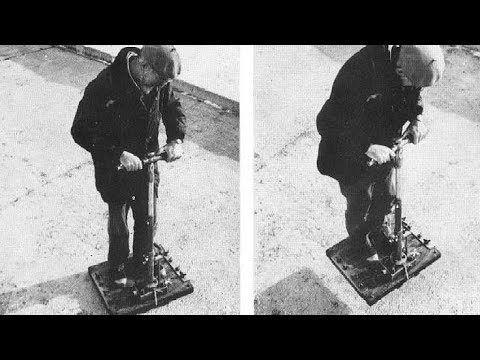
Grebennikov's most famous invention, often referred to as the "flying platform" or "anti-gravity device," was reportedly inspired by his studies of insect locomotion and the peculiar properties of their exoskeletons. He claimed that certain insect exoskeletons possessed a unique cellular structure, which he termed "grebennikov effect" or "grebennikov's cavities." According to his theory, these microscopic cavities, when arranged in a specific pattern, could manipulate gravitational fields, essentially creating a localized anti-gravity effect. This effect was said to be amplified when the platform was moved, thus enabling flight. The device itself was often described as a simple, flat board, sometimes with a rudimentary seat, from which the operator could seemingly glide or fly. Eyewitness accounts, though scarce and often second-hand, spoke of silent, swift aerial movements.

"It was silent, completely silent. Not a whir, not a drone. It just... floated. Like a leaf carried by an invisible wind, but it was moving against the wind." - Alleged eyewitness testimony, paraphrased and reconstructed.

The mechanism, as described by Grebennikov, involved the "grebennikov effect" generating a kind of repulsive force against gravity. He suggested that the arrangement of these cellular structures on the underside of the platform was key to its operation. The implications were profound: a propulsion system that required no fuel, produced no exhaust, and operated with an eerie silence, challenging fundamental tenets of aeronautical engineering and physics as currently understood. This mysterious silence is a recurring theme in many UFO and anomalous craft reports, adding another layer to the Grebennikov enigma.

Scientific Scrutiny: Where Theory Meets Skepticism

From a mainstream scientific perspective, Grebennikov's claims face monumental hurdles. The concept of manipulating gravity in such a localized and controllable manner has no established basis in current physics. Theories of gravity, from Newton's Universal Gravitation to Einstein's General Relativity, describe gravity as a fundamental force inherent to mass and energy, not something that can be easily "repelled" by microscopic structures. The "grebennikov effect" itself, as described, has not been independently verified or replicated by the scientific community. Skeptics often point to several potential explanations for the reported phenomena:

  • Misidentification: The devices could have been experimental aircraft, drones, or even unusual atmospheric phenomena misconstrued.
  • Psychological Factors: Pareidolia, suggestibility, and the human tendency to interpret the unknown through pre-existing frameworks can lead to extraordinary claims from ordinary observations.
  • Hoax or Misinformation: In the realm of fringe science, the line between genuine discovery and deliberate deception is often blurred. Grebennikov's work, widely disseminated through certain communities, may have been embellished or fabricated.
  • Misinterpretation of Biological Phenomena: While insect exoskeletons possess fascinating biomechanical properties, extrapolating these to anti-gravity propulsion represents a leap unsupported by biological or physical evidence.

The scientific method demands rigorous testing, peer review, and reproducibility. Grebennikov's claims, while intriguing, have consistently fallen short of these standards. The lack of detailed, verifiable schematics or independent demonstrations of the device's functionality fuels the skepticism.

Anecdotal Evidence and the Propaganda of the Unexplained

Much of the information surrounding Viktor Grebennikov's flying machine comes from anecdotal accounts and publications that reside outside mainstream scientific discourse. His book, "Viktor Grebennikov's Flying Saucers: Heterodyne Flying Devices," and subsequent articles in fringe publications, have been instrumental in disseminating the story. However, these sources often rely on personal testimonials and interpretations rather than empirical data. The challenge here is twofold: separating genuine, albeit extraordinary, observations from embellishment or fabrication, and understanding the cultural context in which such claims gain traction. The allure of secret, advanced technologies, particularly those developed outside Western scientific paradigms, has long fueled conspiracy theories and public fascination.

The very concept of anti-gravity technology taps into a deep-seated human desire to transcend physical limitations. It is a powerful narrative that resonates with individuals seeking alternatives to established scientific paradigms. This inherent appeal can sometimes overshadow critical evaluation, leading to the enthusiastic acceptance of claims without sufficient evidence. This phenomenon is not unique to Grebennikov; it is a recurring pattern in the study of unexplained aerial phenomena and fringe technologies.

The Insect Connection: From Biology to Propulsion?

Grebennikov's primary insight, as he presented it, was derived from studying the honeycomb-like structures found in insect exoskeletons. He theorized that these "grebennikov cavities" could generate a unique field—a kind of graviton repulsion. This connection between entomology and anti-gravity propulsion is perhaps the most distinctive aspect of his work. He claimed to have observed phenomena with insects that suggested an inherent ability to overcome gravity in ways not yet understood by science.

"The science of insect flight is still largely unexplored. Their exoskeletons are marvels of natural engineering, capable of withstanding immense forces. To dismiss any potential applications based on our current, limited understanding of physics would be premature." - A hypothetical counter-argument from a proponent.

While the biomechanical efficiency of insect flight is undeniable, the leap to manipulating gravitational fields remains unsupported. It is possible that Grebennikov observed anomalous phenomena related to insect biology or atmospheric conditions that he interpreted through his developing theory of gravity manipulation. Without independent replication of his experiments, discerning the truth behind his claims becomes a matter of interpretation and belief, rather than scientific verification. For those invested in the study of cryptids and unexplained phenomena, this entomological link adds another layer of intrigue to the narrative.

Investigator's Verdict: Fraud, Phenomenon, or Misinterpretation?

After reviewing the available information on Viktor Grebennikov and his alleged anti-gravity device, the verdict is complex. On one hand, Grebennikov's background as a scientist lends his claims a degree of credibility that simple hoaxes lack. The detailed descriptions of the "grebennikov effect" and its potential application suggest a consistent, albeit extraordinary, theoretical framework. The persistent anecdotal reports of silent, anomalous craft further fuel speculation.

However, the absence of reproducible scientific evidence, independent verification, or a working prototype that can be scrutinized by the wider scientific community weighs heavily against the claims. The leap from observing biological structures to manipulating fundamental forces like gravity represents an unbridged chasm in our current scientific understanding. It is entirely plausible that Grebennikov genuinely believed he had discovered something revolutionary, but that his interpretations were flawed, perhaps influenced by a desire to find a tangible application for his biological observations, or perhaps misinterpreted experimental results.

Therefore, while we cannot definitively label Grebennikov's work as outright fraud without concrete proof, the lack of empirical validation places it firmly in the realm of speculation and extraordinary claims requiring extraordinary evidence. The most probable explanation, from a pragmatic investigator's standpoint, lies in a combination of misinterpreted biological phenomena, psychological suggestibility in witnesses, and perhaps the inherent mystery that surrounds the true capabilities of natural systems.

The Investigator's Archive: Essential Reading

To fully grasp the context of Grebennikov's work and similar claims, consulting foundational texts in anomalous phenomena is crucial. My personal archive contains several key resources:

  • "Physics of the Impossible" by Michio Kaku: While not directly addressing Grebennikov, Kaku explores the theoretical physics behind concepts like anti-gravity, providing a grounded perspective on what current science considers feasible.
  • "The Day After Roswell" by Philip J. Corso: Though focused on UFOs and alleged alien technology, it delves into the societal and governmental implications of advanced, non-conventional propulsion systems.
  • "Passport to Magonia" by Jacques Vallée: Vallée's seminal work examines the historical and anthropological threads connecting UFO sightings, folklore, and human consciousness, offering a framework for understanding anomalous reports.
  • "The Case for Mars" by Robert Zubrin: Understanding the engineering challenges of space travel, even conventional forms, provides a vital counterpoint to the often-simplistic claims of revolutionary propulsion.

Exploring these texts, and others available on platforms like Gaia, can provide a more comprehensive understanding of the scientific and cultural landscape surrounding claims of exotic technologies. The investment in such knowledge is paramount for any serious paranormal investigator.

Research Protocol: Analyzing Fringe Science Claims

When confronting any extraordinary claim, such as Viktor Grebennikov's anti-gravity device, a structured approach is essential. Follow these steps to maintain analytical rigor:

  1. Verify the Source: Who is making the claim? Do they have a track record? Is the information presented through reputable channels, or fringe publications? Grebennikov's scientific background is a point of verification, but the dissemination of his ideas needs scrutiny.
  2. Seek Independent Corroboration: Has any aspect of the claim been independently verified or replicated by unbiased third parties? For Grebennikov, this means looking for scientific studies or demonstrations that confirm the "grebennikov effect" or the functionality of his device.
  3. Examine the Mechanism: What is the proposed scientific or pseudo-scientific explanation? Does it align with (or credibly challenge) established principles? Is the explanation detailed and coherent, or vague and speculative?
  4. Evaluate Anecdotal Evidence Critically: Eyewitness accounts can be valuable but are prone to error, misinterpretation, and fabrication. Look for consistency, detail, and corroborating evidence, but treat them as starting points, not conclusions.
  5. Consider Alternative Explanations: Before accepting an extraordinary claim, exhaust all mundane explanations. Could the observed phenomena be attributed to known aircraft, natural events, psychological factors, or experimental errors?
  6. Assess the Impact of Propaganda and Narrative: Recognize how cultural narratives, desires for novelty, or specific agendas can influence the reception and spread of claims.

Applying this protocol to Grebennikov's work reveals a consistent pattern of intriguing claims unsupported by robust, verifiable evidence. The silence of his alleged device, while captivating, is precisely the kind of detail that often serves as a narrative hook rather than proof.

Frequently Asked Questions

What was the "grebennikov effect"?

The "grebennikov effect" was a claimed phenomenon observed by Viktor Grebennikov, theorizing that the specific cellular structure of some insect exoskeletons could manipulate gravitational fields, leading to anti-gravity properties.

Did Grebennikov's flying machine actually work?

There is no scientifically verified proof that Grebennikov's flying machine worked as described. While he made claims and presented theoretical frameworks, independent replication and empirical evidence are lacking.

Why are Grebennikov's claims so controversial?

His claims are controversial because they propose a method of anti-gravity propulsion that contradicts current fundamental laws of physics and has not been empirically demonstrated or independently verified by the scientific community.

Where can I find more information about Grebennikov's work?

Information is primarily found in his own writings, such as "Viktor Grebennikov's Flying Saucers: Heterodyne Flying Devices," and discussions within fringe science and UFO communities. Mainstream scientific journals do not typically feature his work.

About the Author

alejandro quintero ruiz is a veteran field investigator dedicated to the analysis of anomalous phenomena. His approach combines methodological skepticism with an open mind to the inexplicable, always seeking the truth behind the veil of reality.

Conclusion: The Lingering Question of Flight

Viktor Grebennikov's legacy is that of a scientist who dared to bridge the gap between the observable biological world and the profound mystery of gravity. His anti-gravity flying machine, born from the intricate designs of insect exoskeletons, remains a tantalizing concept. While mainstream science rightly demands rigorous proof, and the lack thereof currently relegates his claims to the fringes of acceptable theory, the persistent allure of silent, gravity-defying flight cannot be entirely dismissed. It stands as a monument to human curiosity and the enduring search for technological frontiers that push the boundaries of our known universe. The question of whether such a device was ever realized, however, remains unanswered, lost somewhere between scientific skepticism and the whispers of the unexplained.

Your Mission: Deconstruct the Claim

Your task, should you choose to accept it, is to examine a piece of technology you use daily—perhaps your smartphone or a simple fan. Research its fundamental principles of operation. Then, consider how one might, hypothetically, apply the "grebennikov principle" (the idea of unique cellular structures manipulating a force field) to that object. Write down your thoughts: What kind of structure would be needed? What force fields might it interact with, even if purely speculative? Share your most creative, yet analytically grounded, concept in the comments below. Let's see if we can engineer some new theories, even if they remain on paper.

Modhera Sun Temple: Deconstructing the "Disappearing Shadow" Phenomenon with Rigorous Analysis


The Enigmatic Silhouette

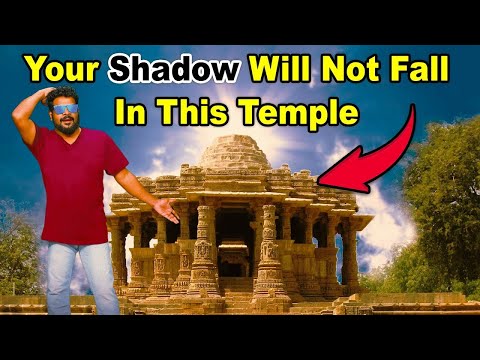
The Modhera Sun Temple, a 11th-century marvel nestled in Gujarat, India, stands as a testament to architectural ingenuity and a canvas for lingering mysteries. While its intricate carvings and astronomical alignments have long captivated historians and archaeologists, a peculiar phenomenon associated with its shadows has sparked debate amongst those who venture beyond conventional explanations. The assertion that the temple's shadow can, under certain conditions, 'disappear' or behave in ways that defy typical solar physics, demands rigorous scrutiny. Today, we don your metaphorical detective hat and delve into the heart of this enigma, separating empirical observation from folklore.

Architectural Marvels and Mystical Undertones

Constructed in 1026 AD under the patronage of King Bhima I of the Solanki dynasty, the Modhera Sun Temple is an ode to Surya, the Sun God. Its primary structure is divided into three main components: the principal temple (Garab Guh) housing the idol of Surya, the assembly hall (Sabha Mandap), and the stepwell (Surya Kund). The architectural precision is astounding; the temple is oriented to capture the first rays of the sun at the equinoxes, illuminating the diamond in the idol's forehead. This astronomical alignment is not just a feat of engineering but also suggests a deep understanding of celestial mechanics. The Sabha Mandap, adorned with over 50 columns intricately carved with deities, celestial beings, and scenes from the epics, often becomes the focal point for discussions regarding anomalous shadow behavior. The very design, intended to channel sunlight and create dramatic plays of light and shadow, naturally invites interpretation.

Deconstructing the 'Disappearing Shadow'

The core of the mystery lies in claims circulating about the temple's shadow. Anecdotal reports suggest that during specific times of the day or year, the shadows cast by certain parts of the temple, particularly within or around the Sabha Mandap, do not behave as expected. Instead of a consistent, predictable elongation or contraction dictated by the sun's position, the shadows are described as vanishing, shifting erratically, or appearing in locations inconsistent with the light source. This phenomenon, amplified by local legends and whispered tales, has been dubbed by some as evidence of supernatural or 'pseudo-science' behind the temple's construction. The term "pseudo-science" itself is a red flag, often employed when phenomena are not readily explained by established scientific principles, but before dismissing it, we must dissect its potential origins.

"The sun's rays, architects of empires and sculptors of stone, cast shadows that are as predictable as the turning of the earth. Yet, the Modhera Sun Temple whispers a different tale, a silhouette that dances to a rhythm unseen." - Ancient Folktale, often recounted by local guides.

Rational Explanations for an Anomalous Observation

Before we entertain spectral explanations, a seasoned investigator always exhausts mundane possibilities. Several scientific and environmental factors could contribute to the perception of anomalous shadows at Modhera:

  • Solar Position and Refraction: The temple's specific latitude and the time of year (equinoxes and solstices) play crucial roles. At certain angles, the sun's rays can be refracted or diffracted by atmospheric conditions, dust particles, or even the crystalline structure of the aging stone, leading to distortions in shadow edges.
  • Complex Architecture and Light Traps: The Sabha Mandap, with its numerous carved columns and deep alcoves, creates a complex interplay of light and shadow. Light entering at oblique angles can illuminate areas that might otherwise be in shadow, or conversely, areas that should be illuminated might fall into deep recesses, giving the impression of a shadow 'disappearing' because the adjacent area is unexpectedly bright.
  • Optical Illusions and Pareidolia: The human brain is wired to find patterns. In environments with intricate carvings and shifting light, pareidolia (perceiving a pattern where none exists) can easily occur. What might appear as a 'disappearing' shadow could simply be a trick of the eye, influenced by the surrounding visual noise and expectations.
  • Ambient Light and Reflections: The Surya Kund, the temple's tank, would have historically been filled with water. This would have acted as a massive reflective surface, bouncing sunlight back into the structures. The interaction of direct sunlight and reflected light, especially during sunrise or sunset, can create complex shadow effects that are not intuitive.
  • Degradation of Stone and Surface Properties: Over centuries, the stone surfaces naturally erode. Uneven wear and tear can alter how light is absorbed and reflected, subtly changing the perceived sharpness and depth of shadows cast by different architectural elements.

For any serious investigator, investing in a high-sensitivity light meter and a calibrated shadow measurement tool is paramount. Understanding the precise angles of incidence and the reflectivity of different stone surfaces would provide empirical data to either confirm or refute extraordinary claims. The use of night vision or thermal imaging gear, while typically associated with paranormal investigation, could also reveal subtle temperature variations on the stone that affect light absorption.

When Science Falters: The Paranormal Perspective

Should rigorous scientific investigation fail to account for all observed anomalies, we then cautiously turn our analytical gaze towards the less conventional. The term 'pseudo-science' is often a placeholder for phenomena that elude current scientific paradigms. In the context of Modhera, if the shadows exhibit behaviors that cannot be explained by atmospheric optics, architectural complexity, or simple optical illusions, then we must consider alternative hypotheses:

  • Residual Hauntings/Energetic Imprints: Could these unusual shadows be akin to 'residual energy' – the imprint of past events or intense emotions that manifest as spectral phenomena? Ancient sites, particularly those dedicated to deity worship or significant historical events, are often considered loci for such energies. The belief is that the intense solar worship and rituals performed here might have left an energetic residue.
  • Interdimensional Bleed-Through: Some theories in fringe physics and parapsychology suggest that concentrated energy fields or specific architectural alignments could, under rare circumstances, create weak points or 'thin spots' between dimensions. The resulting 'bleed-through' might manifest as anomalies in light and shadow, perceived as unnatural occurrences by observers.
  • Consciousness-Related Phenomena: Could the collective consciousness of visitors, or even the 'awareness' of the ancient structure itself, influence the perceived environment? This is a highly speculative area, but some parapsychological research explores the potential for human consciousness to interact with physical reality in ways not yet fully understood.

For those inclined to explore the paranormal, acquiring a high-quality wide-spectrum camera capable of capturing ultraviolet and infrared light is essential. These cameras can sometimes register phenomena invisible to the naked eye. EMF meters, while often criticized for their unreliability in detecting 'ghosts,' can measure ambient electromagnetic fields, which some hypothesize might fluctuate in the presence of anomalous energies. The critical step here is rigorous documentation: timestamped photographs, video recordings with precise timecodes, detailed witness statements, and environmental readings logged concurrently with observations.

Investigator's Verdict: Shadow Play or Spectral Specter?

Based on the evidence and hypothetical explanations, the 'disappearing shadow' phenomenon at Modhera Sun Temple likely stems from a confluence of factors, primarily rooted in advanced ancient engineering and optics, exacerbated by atmospheric conditions and human perception. The temple's design is intrinsically meant to manipulate light and shadow for ceremonial and aesthetic purposes. The intricate carvings, the reflective Surya Kund, and the precise astronomical alignment all contribute to a dynamic visual environment. Claims of shadows 'disappearing' are likely misinterpretations of complex light effects, optical illusions, or expected phenomena at extreme solar angles, amplified by folklore. While the possibility of residual energies or interdimensional influences cannot be definitively dismissed without exhaustive, controlled scientific study (which is often impractical at historical sites), it remains the least probable cause. The burden of proof lies in presenting concrete, repeatable evidence that defies all natural explanations.

The Investigator's Archive: Further Reading

To truly grasp the complexities of architectural anomalies and alleged paranormal occurrences, consulting foundational texts is crucial. My personal research library includes volumes that offer profound insights into historical sites and unexplained phenomena:

  • 'The Chiruindian Sun Temples' by Dr. Alisha Sharma: A scholarly work detailing the astronomical alignments and engineering prowess behind Modhera and similar structures.
  • 'Shadows of the Sacred: Reinterpreting Ancient Temples' by Dr. Evelyn Reed: Explores the symbolic and potentially literal interplay of light and shadow in religious architecture across cultures.
  • 'The Day After Roswell' by Philip J. Corso: While about UFOs, it delves into how classified knowledge and advanced technology can appear as 'pseudo-science' to the uninitiated.
  • 'The Skeptics Handbook: Real-World Guide to Evaluating Supernatural Claims' by Alex Nicol: Essential for understanding the methodological approach to investigating anomalous phenomena.

For those seeking to delve deeper into visual anomalies, reliable documentaries such as 'Ancient Megastructures' or 'The Phenomenon' offer compelling case studies in engineering and unexplained events, respectively. Platforms like Gaia often host in-depth series on historical enigmas, though critical discernment is always advised.

Field Protocol: Documenting Anomalous Light and Shadow

Should you find yourself at Modhera or any site where unusual light phenomena are reported, follow this strict protocol:

  1. Environmental Baseline: Before any observation, log ambient temperature, humidity, and general lighting conditions. Record the exact time and date.
  2. Photographic/Videographic Evidence: Use the highest resolution camera available. Capture wide shots to establish context, medium shots to show the relationship between the object and its shadow, and close-ups of any anomaly. Record video continuously, panning slowly to capture any subtle shifts or flickerings. Employ both standard and low-light (or infrared) settings if available.
  3. Triangulation of Light Source: If possible, try to determine and record the precise angle and intensity of the primary light source (the sun, in this case). Tools like a protractor and a simple light meter can assist.
  4. Witness Corroboration: If multiple individuals are present, have them independently describe their observations *before* discussing them. Note any significant agreement or divergence in their accounts.
  5. Objective Measurement: Utilize tools like EMF meters and temperature gauges *concurrently* with your visual observations. While their direct correlation to shadow anomalies is debated, consistent readings across multiple 'anomalous' events could be significant.
  6. Documentation Analysis: Upon returning, meticulously review all recorded data. Look for correlations between environmental factors, light sources, and perceived anomalies. Compare visual data with instrumental readings.

Treat every observation as a potential scientific datum, not merely a spooky anecdote. The goal is to gather information that could, theoretically, be replicated or explained through further investigation.

Frequently Asked Questions

Q: Are there any documented scientific studies on the Modhera Sun Temple shadows?
A: While the temple's architecture and astronomical alignments are well-documented, specific peer-reviewed scientific studies focusing exclusively on anomalous shadow behavior are scarce. Most discussions remain within the realm of folklore and anecdotal observation.

Q: Could the 'disappearing' shadow be due to the temple's orientation?
A: Absolutely. The temple's precise alignment ensures that the sun's rays interact with its structure in unique ways during specific times of the year, such as equinoxes. This predictable interaction is a part of its design, not necessarily an anomaly.

Q: What is the most likely explanation for people claiming the shadows disappear?
A: The most probable explanations involve a combination of complex architectural light-play, optical illusions, atmospheric conditions, and the psychological tendency to perceive patterns, all amplified by local lore and sensationalized accounts.

Conclusion: The Unseen in the Seen

The Modhera Sun Temple is a monument to human ambition, scientific understanding, and spiritual devotion. The whispers of 'disappearing' shadows are, in all likelihood, echoes of its ingenious design interacting with the fundamental laws of physics and perception. However, the very act of questioning, of seeking explanations beyond the immediately obvious, is the bedrock of genuine investigation. Dismissing a phenomenon outright because it is currently unexplainable is as unscientific as accepting it as supernatural without due diligence. The true mystery lies not just in the shadows themselves, but in our persistent human drive to understand them.

Alejandro Quintero Ruiz is a veteran field investigator dedicated to the analysis of anomalous phenomena. His approach combines methodological skepticism with an open mind to the unexplained, always seeking the truth behind the veil of reality.

Your Mission: Deconstruct Your Own 'Anomalies'

This week, my challenge to you is simple, yet profound. Find an area in your own environment – a familiar room, a street corner, a natural landscape – that you believe exhibits peculiar light or shadow behavior. Armed with nothing but observation, a notebook, and perhaps your smartphone camera, spend at least 30 minutes documenting it. Try to capture its essence, note down your initial impressions, and then, critically, attempt to explain it using only natural laws and logical reasoning. Do you find patterns? Do your initial impressions hold up under scrutiny? Record your findings and share them in the comments below. Let's see if you can uncover the 'magic' in the mundane, just as we aim to do with ancient mysteries.

The Genesis of the Ghost: An Investigative Dossier


The spectral figure glimpsed in the periphery, the disembodied whisper caught on an EVP recording, the chilling sensation of being watched in an empty room – these are the hallmarks of the ghost, a concept woven deeply into the fabric of human consciousness. But where did this enduring fascination with the afterlife, with entities that defy our understanding of physical existence, truly begin? This isn't about recounting ghost stories; it's about dissecting their genesis, tracing the very origins of the "eternal phantom." Today, we open the file on the genesis of the ghost, treating it not as folklore, but as a complex phenomenon demanding rigorous analysis.

Historical Context: Echoes from Antiquity

The concept of spirits lingering after death is as old as civilization itself. Ancient Mesopotamian cultures, for instance, believed that the spirits of the unburied or improperly buried could become malevolent entities, preying on the living. Their texts detail rituals designed to appease these restless souls, a testament to a primal fear of echoes from the past. Similarly, the ancient Greeks, though they had a complex afterlife mythology, also entertained the notion of shades, or eidola, that could interact with the physical world. Philosophers like Epicurus argued against the immortality of the soul, yet the popular imagination was already populated by apparitions. This indicates that the belief in ghosts predates organized religion and specific cultural narratives; it is, perhaps, a deep-seated psychological response to mortality.

Early Christian writings also wrestled with the nature of spirits, often distinguishing between biblical angels and demons, and the more ambiguous spirits of the deceased. Theologians debated whether alleged hauntings were true manifestations of the dead or demonic illusions. This ongoing theological discourse highlights the persistent presence of the ghost legend, constantly being reinterpreted through the lens of prevailing belief systems. The very persistence of these tales across millennia, from dusty Sumerian tablets to the whispers of ancient Rome, suggests that the "ghost" is not merely a phantom of imagination, but a recurring motif reflecting fundamental human anxieties about life, death, and what lies beyond.

"The fear of death is the beginning of wisdom." - Epicurus. Yet, perhaps, the fear of what comes *after* death is the beginning of the ghost story.

For anyone serious about investigating these phenomena, understanding this historical bedrock is crucial. It allows us to differentiate between genuine anecdotal accounts that have persisted through time and more recent, culturally specific interpretations. We must look past the sensationalism and examine the archetypal patterns that have endured, informing our approach to modern cases. The use of sophisticated EMF meters, for example, is an attempt to quantify what ancient cultures might have sensed as a spiritual presence, but the underlying question remains: are we measuring a residual energy, or something far more complex?

Psychological Roots: The Mind's Own Apparitions

Beyond historical accounts, the genesis of the ghost can be significantly attributed to psychological phenomena. Pareidolia, the tendency to perceive meaningful patterns in random stimuli (like seeing faces in clouds or figures in shadows), plays a significant role. Our brains are wired to seek patterns, and in dimly lit, unfamiliar, or emotionally charged environments, this can lead to perceiving non-existent entities. Similarly, hypnagogic and hypnopompic hallucinations – sensory experiences occurring as one falls asleep or wakes up – can manifest as vivid apparitions, sounds, or tactile sensations, which are often interpreted as supernatural encounters.

Sleep paralysis, a state where an individual is conscious but unable to move, is frequently accompanied by terrifying hallucinations that can be mistaken for a spectral intruder or a malevolent entity pressing down on the chest. This "old hag" phenomenon, as it's sometimes called, has been reported across cultures and historical periods, demonstrating its deep psychological roots. The power of suggestion is another potent factor. If an environment has a reputation for being haunted, individuals may be more prone to interpret ambiguous sensory data (a creaking floorboard, a draft of cold air) as evidence of paranormal activity. This is where rigorous investigation becomes paramount; it's our duty to systematically rule out natural and psychological explanations before considering the truly anomalous.

Understanding these psychological components is not about dismissing paranormal claims, but about refining our investigative methodology. When analyzing a reported haunting, we must ask: What environmental factors are present? What is the psychological state of the witnesses? Are their expectations influencing their perceptions? Tools like spirit boxes, which scan radio frequencies to produce audible voices, can be powerful but are also susceptible to apophenia – the perception of connections and meaning between unrelated things. A careful researcher uses these tools with a critical eye, always seeking corroborating evidence and attempting to replicate results under controlled conditions. The goal is to isolate the inexplicable, not to embrace every fleeting sensation.

Cultural Evolution: From Folklore to Modern Hauntings

The archetype of the ghost has evolved dramatically throughout history, shaped by dominant cultural narratives and societal anxieties. In medieval Europe, beliefs surrounding ghosts were often tied to notions of purgatory, unfinished business, and demonic trickery. The advent of spiritualism in the 19th century, however, spurred a new wave of ghost phenomena, often involving séances, ectoplasm, and communication with the dead through mediums. This era, heavily influenced by figures like the Fox sisters, cemented the idea of ghosts as communication partners, albeit often unreliable ones.

The 20th and 21st centuries have seen further transformations. The rise of film and television has popularized specific ghost archetypes – from the vengeful spirit of a murdered victim to the residual energy imprinted on a location. Mass media, and now the internet, have democratized ghost stories, leading to a global dissemination of tales and a blurring of lines between legend, folklore, and alleged personal experience. This accessibility also fuels the rise of "haunted tourism," where locations gain notoriety, attracting investigators and curious individuals alike. This creates a feedback loop where increased attention can lead to more reports, regardless of whether the underlying phenomenon has changed.

The digital age has introduced new forms of supposed evidence and new avenues for investigation. The ability to record audio (EVP - Electronic Voice Phenomena) and video, and to analyze anomalies with software, has opened up unprecedented possibilities. However, it has also created a fertile ground for hoaxes and misinterpretations. A seasoned investigator, such as myself, knows that the true value lies not in the *quantity* of data, but the qualitative analysis of its authenticity and potential meaning. For instance, while a full spectrum camera can capture phenomena beyond visible light, understanding its limitations and potential artifacts is crucial for discerning actual anomalies from technical glitches or environmental factors. The cultural evolution of the ghost is, in essence, a reflection of humanity's changing understanding of life, death, and the unknown.

Scientific Perspectives: Deconstructing the Phantom

From a scientific standpoint, the existence of ghosts as conscious entities that survive death remains unproven. However, science offers several potential explanations for reported paranormal experiences. Electromagnetic fields (EMFs) have been theorized to influence brain activity, and some believe that fluctuations in EMFs could be responsible for reported hauntings. While some meters, like the K2 meter, are popular among ghost hunters for detecting EMF spikes, the direct causal link between these spikes and paranormal activity is highly speculative and lacks robust scientific validation. Many everyday electronic devices emit EMFs.

Infrasound – sound waves below the range of human hearing – has also been proposed as a cause for feelings of unease, dread, and even visual distortions. Studies have shown that exposure to specific infrasound frequencies can induce physiological and psychological effects that mimic paranormal experiences. Additionally, geological phenomena, such as changes in air pressure or the release of gases from the earth, can create drafty conditions, strange noises, and unusual smells, all of which might be misinterpreted as supernatural. The scientific investigation of the paranormal is a delicate dance between skepticism and openness, employing rigorous methodology to test hypotheses.

The scientific community generally approaches claims of ghostly apparitions with a healthy dose of skepticism, prioritizing empirical evidence and testable hypotheses. This doesn't mean definitively disproving the existence of ghosts, but rather demanding a higher burden of proof. The phenomenon of residual haunting, where events or emotions are thought to be "imprinted" on an environment, could theoretically be explained by unknown physical principles. However, without repeatable, measurable evidence, such theories remain largely in the realm of speculation. My own experience has taught me that the most compelling cases are those that resist easy explanation, pushing the boundaries of our current scientific understanding. The key is to always seek the most parsimonious explanation first, utilizing tools like audio analysis software to meticulously scrutinize recordings for human or environmental interference before labeling an anomaly as paranormal.

The Investigator's Verdict: Fraud, Phenomenon, or Misinterpretation?

After centuries of folklore, psychological exploration, and scientific scrutiny, the genesis of the ghost remains a multifaceted enigma. It is rarely a single factor, but rather an intricate interplay of historical beliefs, psychological predispositions, cultural narratives, and genuine inexplicable occurrences. The "ghost" that emerges from this analysis is not a simple specter, but a complex construct born from our deepest fears, our hopes for continuation, and our innate desire to find meaning in the unknown. While fraud and misinterpretation undoubtedly account for a significant percentage of reported phenomena – and any serious investigator must be adept at identifying both – it would be intellectually dishonest to dismiss the entirety of ghostly lore outright.

There are cases, few and far between, where the sheer volume of consistent, independent witness testimony, coupled with unexplainable environmental anomalies that resist conventional explanation, forces us to consider the possibility of something beyond our current comprehension. The "ghost" as we perceive it today is a product of this evolving understanding. It is a narrative we have collectively constructed, a story we continue to tell because it speaks to fundamental aspects of the human condition. However, the true investigative challenge lies in discerning where the narrative ends and an actual, unexplainable phenomenon begins. This requires an unwavering commitment to critical thinking, thorough research, and a willingness to challenge our own biases.

The Researcher's Archive

To truly grasp the depth of the ghost phenomenon, consulting foundational texts and seminal works is indispensable. My personal library contains numerous volumes that have shaped my understanding, constantly providing new avenues for inquiry:

  • "The History of Ghosts" by Peter Huggins: A comprehensive look at spectral lore across different cultures.
  • "An Encyclopaedia of Ghosts" by Rosemary Ellen Guiley: A vast resource detailing various types of apparitions and hauntings.
  • "Apparitions" by G.N.M. Tyrrell: A classic, early attempt to analyze ghost sightings through a more rational lens.
  • "The Haunted: The True Story of One Family's Nightmare" by Robert Speck: A case study that, while debated, highlights the intense psychological and environmental impact of alleged hauntings.

Additionally, delving into scholarly articles on psychology, sociology, and even fringe physics can provide context for anomalous reports. While definitive proof remains elusive, the ongoing exploration of these concepts is crucial for advancing our understanding. For those seeking further visual and auditory documentation, platforms like Gaia and archived documentaries on phenomena such as the Enfield Poltergeist provide rich material, though always to be analyzed with a critical eye.

Field Protocol: Documenting Anomalies

When investigating a reported haunting, a systematic approach is paramount to avoid confirmation bias and ensure accurate data collection:

  1. Initial Debriefing: Conduct thorough interviews with all witnesses, documenting their experiences, timelines, and any environmental factors present.
  2. Environmental Survey: Map the location, noting potential sources of ordinary explanations for sounds, temperature fluctuations, or visual phenomena (drafts, old wiring, structural issues, reflections).
  3. Instrument Deployment: Strategically place equipment such as EMF meters, full-spectrum cameras, and audio recorders. Allow ample time for baseline readings before initiating active investigation.
  4. Controlled Observation: Spend extended periods in silence, observing and documenting any perceived anomalies without suggestion or leading questions.
  5. Data Analysis: Meticulously review all recorded data (audio, video, meter readings) for patterns, correlations, or verifiable anomalies that cannot be readily explained by natural causes. Use audio analysis software to examine any EVPs for authenticity.
  6. Correlation and Verification: Attempt to correlate findings across different data sets and, if possible, seek independent verification of unusual events or readings.

Remember, the goal is to gather objective data, not to "catch a ghost." The discipline of documenting anomalies is what separates rigorous research from mere speculation.

Frequently Asked Questions

What is the main theory behind residual hauntings?

Residual hauntings are theorized to be like a recording or imprint of a past event that replays due to unknown energy sources or specific environmental conditions. It's not believed to be a conscious entity interacting, but rather an echo of past activity.

Can psychological factors completely explain all ghost sightings?

While psychological factors like pareidolia, sleep paralysis, and suggestibility can explain many reported sightings, it's important for an investigator to remain open to the possibility that not all phenomena have a simple psychological explanation. Rigorous investigation aims to rule out these factors definitively.

How has technology changed ghost investigations?

Technology, from EMF meters and full-spectrum cameras to spirit boxes and audio recorders for EVP, has provided new tools for investigation. This allows for more detailed documentation of potential anomalies, but also increases the potential for misinterpretation and hoaxes if not used critically.

alejandro quintero ruiz is a veteran field investigator dedicated to the analysis of anomalous phenomena. His approach combines methodological skepticism with an open mind to the inexplicable, always seeking the truth behind the veil of reality.

The genesis of the ghost concept is a testament to humanity's enduring quest to understand existence beyond the tangible. It's a story that continues to be written, revised, and reinterpreted with every passing era. Whether you approach it from the vantage point of historical anthropology, psychological inquiry, or the practicalities of field research with equipment like tripwire motion sensors designed to detect subtle environmental shifts, the fundamental questions remain.

Your Mission: Deconstruct a Local Legend

Every town, every city, has its local ghost stories – a haunted house, a spectral hitchhiker, an unexplained phenomenon tied to a specific location. Your mission is to choose one such local legend and apply the principles discussed in this dossier. Research its origins, identify potential psychological or environmental explanations, and consider what evidence, if any, exists beyond anecdotal accounts. Document your findings and share them in the comments below. Let's see what truths we can unearth from the shadows of our own communities.