Followers

Mostrando las entradas con la etiqueta media manipulation. Mostrar todas las entradas

27 TV Conspiracy Theories That Turned Out to Be True!

Image

The flickering screen of television, a seemingly innocuous source of entertainment, often conceals a labyrinth of hidden agendas and meticulously crafted narratives. While we settle in for a night of escapism, the reality behind the scenes can be far more complex and, at times, unsettling than we might imagine. From rigged game shows to backstage power plays, the world of television is rife with secrets. Join us as we delve into the annals of broadcast history to uncover conspiracy theories about TV that, against all odds, proved to be remarkably true. Prepare to be astonished by the manipulative tactics employed in reality shows, the unexpected demise of beloved characters, and the inconvenient truths behind programs we once considered authentic. This investigation is not for the faint of heart.

The Illusion of Reality: Inside the Scripted Chaos

For years, the allure of reality television has captivated audiences worldwide. Shows like 'The Bachelor', 'Survivor', and 'Hell's Kitchen' promise unscripted drama and genuine human emotion. However, the comments from viewers suggest a widespread understanding that these programs are anything but spontaneous. One recurring sentiment is the notion that "all reality shows are totally scripted or at least given small guidelines to the contestants to generate conflict." This perception is reinforced by specific examples, such as the highly produced nature of 'The Jerry Springer Show', often compared to 'Laura in America', and the assertion that "80% of all reality shows are scripted." The financial stakes involved are immense, as one commenter points out: "they can't afford to fail in the investment." This leads to a calculated approach where authenticity is sacrificed for ratings and narrative cohesion. The surprise expressed by some viewers, like "Wait... people still believe reality shows are real? 🤣🤣🤣", highlights a generational divide in media literacy, but the prevailing opinion suggests that the era of unquestioning belief in reality TV's authenticity is long past. The very title, combining "reality" and "show," should have been ample warning, as noted by a pragmatic viewer: "Only someone legitimately idiotic would believe that by having 'reallity' and 'show' in the title they would be anything 'real' xD."

Behind the Scenes: Celebrity Scandals and Secret Contracts

Beyond the manufactured drama of reality TV, the entertainment industry is also a breeding ground for scandals involving celebrities and behind-the-scenes machinations. The alleged "tumor of revenge" involving Katherine Heigl and the "secret contract" of Jay Leno on 'The Tonight Show' are prime examples of how personal and professional disputes can shape the public perception of television personalities. The case of Kim Cattral, who reportedly "didn't want to come back, they begged her to make that cameo," starkly illustrates the complex dynamics of professional relationships in the industry. Further fueling skepticism, one testimony describes a chef who claims Gordon Ramsay inflicted a burn with a hot knife, suggesting that the on-screen persona of aggression might not be entirely for show, and that "over there in England they had to film him in secret to sue him for how he treated his apprentices." This account, coupled with observations about other chefs' injuries, paints a picture of a high-pressure environment where safety and interpersonal conduct can be compromised for the sake of compelling television. The mention of 'The Walking Dead' and Jeffrey Dean's loyalty to Frank Darabont, along with Patrick Dempsey's departure from 'Grey's Anatomy', points to deeper narrative decisions and potential on-set conflicts that influence character arcs and show longevity.

Recommended Gear for Investigation

ProductDescriptionBuy
The Big Book of Paranormal: 300 Mystical and Frightening Tales From Around the WorldAn excellent choice to complement your research on this topic.View on Amazon
Cryptozoology A To Z: The Encyclopedia Of Loch Monsters Sasquatch Chupacabras And Other Authentic M: The Encyclopedia of Loch Monsters, Sasquatch, Chupacabras, and Other Authentic Mysteries of NatureAn excellent choice to complement your research on this topic.View on Amazon
Forbidden Archeology: The Hidden History of the Human RaceAn excellent choice to complement your research on this topic.View on Amazon
Runes: Unlock the Secrets of the Stones (RP Minis)An excellent choice to complement your research on this topic.View on Amazon
The H. P. Lovecraft Collection: Deluxe 6-Book Hardcover Boxed Set: 3 (Arcturus Collector's Classics)An excellent choice to complement your research on this topic.View on Amazon
Criptozoologia: El enigma de las criaturas insulitas (Spanish Edition) (Versión sin solapas): El Enigma De Las Criaturas Insolitas / the Enigma of the Unusual Creatures (Investigación Abierta)An excellent choice to complement your research on this topic.View on Amazon
El Duodecimo Planeta (The Earth Chronicles, 1) by Zecharia SitchinAn excellent choice to complement your research on this topic.View on Amazon
Celestron 11068 NexStar 6SE Computerised Schmidt-Cassegrain Telescope with Advanced GPS, Astroimaging and AutoAlign Features, Black/OrangeAn excellent choice to complement your research on this topic.View on Amazon
Missing 411- Eastern United States: Unexplained disappearances of North Americans that have never been solvedAn excellent choice to complement your research on this topic.View on Amazon
Ghost-Hunting For Dummies [Idioma Inglés] An excellent choice to complement your research on this topic.View on Amazon

The Manipulated Interview: When Truth is a Casualty

The art of the interview, ostensibly a tool for uncovering truth and insight, can also be a stage for manipulation. The case of Princess Diana's interview is cited as an example of "secret tactics for interviews," suggesting that the circumstances surrounding the conversation may have been influenced to elicit specific responses. Similarly, the "call-in scams" mentioned in the context of various shows highlight how viewers themselves can be targets of deceptive practices. Even seemingly straightforward programs like 'Top Chef' are not immune, with a "secret judge" potentially altering the outcome. The disappearance of characters like Susan from 'Seinfeld' and John Amos from 'Good Times', or the sudden shift in public sentiment towards the fifteenth Doctor in 'Doctor Who', raise questions about narrative control and potential behind-the-scenes decisions that impact beloved characters and storylines. The "Sinéad O'Connor cancellation" after her SNL performance underscores how media perception and potential public backlash can lead to the swift removal of talent.

Beyond the Facade: The Unseen Realities of Television

Television programming, across various genres, frequently employs tactics that blur the lines between authenticity and pre-planned scenarios. Shows like 'House Hunters' are called into question with the observation that "the shopping has already been done," implying that the depicted home-buying process is staged. 'Pawn Stars' is also implicated, with the acknowledgment that "much of the show is planned in advance." Even programs designed to educate, such as 'Cash Cab', are subject to scrutiny regarding their authenticity. The mention of 'The Cosby Show' and the "Bill Cosby problem" points to the complex relationship between the art and the artist, and how societal issues can cast a shadow over even the most popular programs. The infamous "puppy episode" of 'Ellen' and the criticism of 'American Idol' contestants being "so bad they're good" suggest that manufactured drama and calculated appeal are pervasive elements in modern television. Another commenter's query about 'El Desafío' in Colombia, asking "is the program fixed?", reflects a global skepticism towards televised competitions.

Investigator's Verdict: The Enduring Power of Television Deception

After dissecting these various instances, a clear pattern emerges: television, as a medium, has a long and intricate history of bending the truth to serve its narrative and commercial interests. From the elaborate deceptions in reality TV to the calculated framing of celebrity interviews and the manipulation of contestants in game shows, the evidence suggests that authenticity is often a secondary concern. The widespread viewer awareness, as evidenced in the comments, indicates a sophisticated audience that is increasingly discerning about what they consume. However, the continued success of these formats raises a critical question: are we complicit in perpetuating these illusions? The persistence of these "conspiracy theories" only serves to highlight the deep-seated distrust some viewers have developed, a distrust that is not unfounded given the multitude of documented cases. This enduring power of deception is a testament to television's capacity to shape perception, even when the underlying artifice is widely recognized. It's a curious paradox that, despite knowing the game, we continue to watch.

The Investigator's Archive

To further your understanding of broadcast manipulation and the psychology behind television's influence, I recommend exploring the following resources:

  • Books: "Amusing Ourselves to Death: Public Discourse in the Age of Show Business" by Neil Postman offers a foundational critique of television's impact on critical thinking.
  • Documentaries: Look for documentaries that deconstruct specific shows or delve into the history of media manipulation. While direct recommendations are difficult without current availability, searching for terms like "reality TV secrets" or "TV fakery exposed" can yield fruitful results.
  • Academic Journals: For a deeper dive, consult academic databases for studies on media studies, sociology of media, and communication theory.

Investigative Protocol: Decoding Broadcast Manipulation

When analyzing television programs for potential manipulation, follow these steps:

  1. Identify the Genre: Reality shows, competition programs, and talk shows are more prone to scripted elements than, for example, documentary filmmaking.
  2. Look for Narrative Tropes: Pay attention to recurring character archetypes, predictable plot twists, and overly dramatic emotional arcs.
  3. Analyze Contestant Behavior: Observe if contestants exhibit overly rehearsed dialogue, extreme emotional reactions that seem out of place, or if their actions consistently serve a specific narrative purpose.
  4. Research Program History: Investigate past controversies, lawsuits, or insider reports related to the show or its creators.
  5. Cross-Reference Testimonies: Compare information from multiple sources, including former contestants, crew members, and critical analyses.
  6. Question the "Unforeseen": Be skeptical of coincidences that perfectly advance the plot or resolve conflicts in a highly convenient manner.
  7. Consider Production Influence: Understand that editing, music, and producer commentary are powerful tools that can shape viewer perception.

Your critical eye is your most potent investigative tool. Never underestimate the power of observation and a healthy dose of skepticism when viewing televised content.

Frequently Asked Questions

Are all reality shows scripted?
While not all reality shows are entirely scripted word-for-word, a significant portion incorporates scripting, producer guidance, and selective editing to enhance drama and create compelling narratives. The consensus among viewers and many industry insiders is that a high percentage of reality TV relies heavily on manufactured scenarios.
How can I tell if a TV show is fake?
Look for overly dramatic reactions, predictable plotlines, convenient coincidences, and inconsistencies in character behavior or story logic. Researching the show's production history and looking for contestant testimonies can also provide clues.
What are some examples of manipulated interviews in television history?
Princess Diana's famous interview is often cited as an example where media tactics may have influenced the conversation. The nature of celebrity interviews generally, especially in tabloid-style programs, often involves careful framing and questioning to elicit specific responses.
Why do networks continue to produce scripted reality shows if audiences know they are fake?
Despite audience awareness, these shows often remain profitable due to their lower production costs compared to scripted dramas and their ability to attract large viewerships interested in gossip, drama, and vicarious experiences. The "guilty pleasure" factor also plays a significant role.

Your Field Mission

This investigation into the deceptive practices of television is ongoing. My mission is to uncover the truth, no matter how uncomfortable. Now, I pass the torch to you. Your mission, should you choose to accept it, is to become a more critical viewer. When you watch your favorite shows, especially reality programs, employ the investigative protocols outlined above. Look for the seams, question the narrative, and share your findings.

What specific show have you watched where you suspected heavy manipulation or outright fabrication? Share your experiences and theories in the comments below. Your insights are crucial to our collective understanding. Don't keep your discoveries to yourself – share this exposé on your social media channels and alert others to the hidden realities of television!

Investigator's Note: True paranormal research doesn't fund itself. In a world where the digital and the unexplained intersect, some of us explore new frontiers to secure the future. Do you dare to be part of the vanguard? Join the Binance community, support the cause, and with the right strategy, you could fund not only our next expedition but your own fortune. The next great discovery could be just a click away.

Jacob Rothschild: The Disturbing Interview and The Shadow of Global Power

Image

The recent release of what is being termed the 'Jacob Rothschild Disturbing Interview' has ignited a firestorm of commentary and speculation across the internet. While presented as a glimpse into the life of one of the world's most influential, yet enigmatic, figures, the content has been overwhelmingly met with skepticism and outright condemnation. This investigator must delve beyond the surface to analyze the claims, the reactions, and the deeper implications of this peculiar release.

The Shadowy Figure: Unpacking Rothschild's Public Persona

Jacob Rothschild, head of the prominent European banking dynasty, has long been a figure shrouded in mystique. While the family's financial influence is undeniable, their public presence has been carefully managed, leading to a vacuum often filled by conspiracy theories and speculation. The very release of this 'interview'—if it can even be called that—raises immediate flags. Why now? And why in this format? As an investigator, my primary directive is to approach such events with a critical, analytical lens. The initial reactions suggest that this 'interview' may not be what it purports to be, hinting at a carefully orchestrated public relations maneuver by a family accustomed to operating behind the scenes.

The 'Interview' Deconstructed: Propaganda or Genuine Release?

The overwhelming sentiment from viewers is that this is not a genuine interview. Comments like "This video is no interview at all. It's a pat on the back to one of the darkest families in the world!" and "Spoiler alert there's no interview" indicate a widespread perception of staged content. The repeated, almost ritualistic, use of the title "Lord Rothschild," noted by viewers as "hearing an automated voice say LORD Rothschild a thousand times," further fuels the notion of a controlled narrative. My analysis aligns with this: the presentation lacks the spontaneity and genuine exchange characteristic of a true interview. Instead, it appears to be a carefully curated piece of media, possibly released by the family or their associates to shape public perception, a tactic often seen when facing mounting criticism.

Recommended Gear for Investigation

ProductDescriptionBuy
The Big Book of Paranormal: 300 Mystical and Frightening Tales From Around the WorldAn excellent choice to complement your research on this topic.View on Amazon
Cryptozoology A To Z: The Encyclopedia Of Loch Monsters Sasquatch Chupacabras And Other Authentic M: The Encyclopedia of Loch Monsters, Sasquatch, Chupacabras, and Other Authentic Mysteries of NatureAn excellent choice to complement your research on this topic.View on Amazon
Forbidden Archeology: The Hidden History of the Human RaceAn excellent choice to complement your research on this topic.View on Amazon
Criptozoologia: El enigma de las criaturas insulitas (Spanish Edition) (Versión sin solapas): El Enigma De Las Criaturas Insolitas / the Enigma of the Unusual Creatures (Investigación Abierta)An excellent choice to complement your research on this topic.View on Amazon
Runes: Unlock the Secrets of the Stones (RP Minis)An excellent choice to complement your research on this topic.View on Amazon
The H. P. Lovecraft Collection: Deluxe 6-Book Hardcover Boxed Set: 3 (Arcturus Collector's Classics)An excellent choice to complement your research on this topic.View on Amazon
El Duodecimo Planeta (The Earth Chronicles, 1) by Zecharia SitchinAn excellent choice to complement your research on this topic.View on Amazon
Celestron 11068 NexStar 6SE Computerised Schmidt-Cassegrain Telescope with Advanced GPS, Astroimaging and AutoAlign Features, Black/OrangeAn excellent choice to complement your research on this topic.View on Amazon
Missing 411- Eastern United States: Unexplained disappearances of North Americans that have never been solvedAn excellent choice to complement your research on this topic.View on Amazon
Ghost-Hunting For Dummies [Idioma Inglés] An excellent choice to complement your research on this topic.View on Amazon

One comment starkly illustrates this: "This is released as a puff piece by the family to show how great they are. Instead it shows that Satan has a face." This visceral reaction points to a disconnect between the intended message and its reception. Such a public relations strategy, if that's what it is, has backfired spectacularly, solidifying negative perceptions rather than dispelling them.

Echoes of the Past: Historical Grievances and Accusations

The controversy surrounding the Rothschilds is not new; it is deeply rooted in historical events and long-standing criticisms. The family's financial involvement in global affairs, including wars and political shifts, has made them a recurring subject of conspiracy theories. One comment directly challenges the historical legitimacy of territorial sales: "The British government was only had mandate authority to Palestine, but not colonized authority like UK with Indian, therefore, the British government had no legal right to sell Palestine’s land to Rothschild family. Also, the Balfort Declaration was a piece of a private letter, not a decree that was not issued by the the Court , therefore, that piece letter should not be treated or enforced as a legal document."

This critique touches upon sensitive geopolitical issues, questioning the historical foundation of certain state territories and the role of financial powers in shaping them. The mention of the Balfour Declaration, a pivotal document in the establishment of Israel, highlights how the Rothschilds are often implicated in events with far-reaching and complex consequences. When statements like "That man is a testament to how Israel abandoned their God, not the other way around" emerge, they reflect a deeper narrative linking the family's actions to perceived moral and divine transgressions, a theme echoed in religious underpinnings of many conspiracy narratives.

The Specter of Plutocracy: Wealth and Influence

The sheer magnitude of the Rothschilds' wealth has always placed them at the center of discussions about global economic control. Such comments as "No billionaire has made his money without hurting others" and "For the LOVE OF MONEY is the root of ALL EVIL. These families want it all and human life don't matter to them" encapsulate a common sentiment: that immense wealth, particularly inherited wealth, is inherently tied to exploitation and a disregard for human well-being. The idea that "6k patents have been either bought, hidden or destroyed to keep this family and a few others in ridiculous wealth" speaks to a deep-seated distrust in the transparency and ethics of global financial systems, suggesting an active suppression of innovation for profit maintenance.

Furthermore, the accusation that "Both sides of war have been paid by this family" points to the controversial theory of "Orchestrated Conflict," where powerful financial entities allegedly profit from global wars by funding opposing sides. This notion of profiting from suffering is a cornerstone of many anti-Rothschild narratives. The assertion that "this one family have enough money to feed, clothe, house every person in the world...if they wanted to" serves as a moral indictment, suggesting a failure of compassion and a prioritization of power over humanitarianism. The call to action, "Get the ultra rich out of politics it’s not democracy it’s plutocracy," directly addresses the perceived threat of plutocracy, where financial power dictates political outcomes.

Audience Analysis: The Unvarnished Truth from the Comments

The comments section analysis is crucial for understanding the public reception of this 'interview.' It's a raw, unfiltered stream of consciousness, offering insights into the collective psyche reacting to the perceived actions of powerful entities. Viewers express shock and disgust, with statements like "Holy sh*t, it's Mr Burns from the Simpsons, IRL?!" and "WHAT A SICK WORLD." This comparison to Mr. Burns, a cartoonishly evil, greedy industrialist, is telling. It suggests that the public image of Jacob Rothschild, or rather the image projected by this 'interview,' aligns with archetypes of malevolent, detached wealth.

The emotional toll is palpable: "I’m gonna need therapy 😵‍💫🤦🏾‍♂️" and "13 mins in and I cant take anymore 'Lord Rothschild'." These are not mere critiques; they are expressions of genuine distress and revulsion. The characterization of the release as a "positive propoganda film. They are scared and trying to shed the rage against them" suggests viewers see this not as an act of confidence, but of desperation—an attempt to quell rising public anger. The reference to the Epstein list ("Must be on the Epstein list") links the alleged behavior of the Rothschilds to other powerful figures embroiled in scandal, further associating them with illicit activities.

"This is a positive propoganda film. They are scared and trying to shed the rage against them."

Viewer Comment Analysis

The recurring theme of "naked I came and naked I shall leave it" from Ecclesiastes 1:21 presents a moral counterpoint to the accumulation of wealth, implying that material possessions and power are ultimately meaningless. This biblical resonance suggests a deep-seated moral framework through which viewers are judging the perceived excesses of the ultra-rich.

Investigator's Verdict: Fraud, Genuine Phenomenon, or Something Else?

Based on the analysis of the content and the overwhelming consensus of audience reactions, my verdict is clear: this 'interview' is highly unlikely to be a genuine, spontaneous exchange. The evidence points towards a carefully managed public relations effort, likely intended as propaganda. The lack of substantive new information, the repetitive use of titles, and the overall tone suggest a desperate attempt to control a narrative that has long been dominated by public suspicion and historical grievances.

While it's impossible to definitively prove the exact motivations or the full extent of the Rothschilds' historical influence from this single piece of media, the 'interview' itself serves as a potent symbol of the distrust many harbor towards global financial elites. It has amplified existing criticisms rather than mitigating them, inadvertently reinforcing the image of a powerful, secretive family perceived as manipulative and self-serving. The phenomenon here isn't the interview itself, but the public's reaction to it, revealing a deep societal unease with concentrated wealth and power.

The Investigator's Archive

Understanding the forces that shape global narratives requires a deep dive into history, economics, and the psychology of power. For those seeking to expand their knowledge beyond sensational headlines, exploring primary sources and critical analyses is paramount. My archive includes resources that shed light on the intricate interplay of finance, politics, and societal control.

When investigating phenomena like this, understanding historical context is key. Resources on the history of banking dynasties, geopolitical shifts, and the economic underpinnings of major world events are invaluable. Similarly, delving into sociological studies on wealth inequality and the psychology of power can provide frameworks for analyzing the public's reaction to figures like Jacob Rothschild. This requires a commitment to long-term research, often involving sifting through dense academic texts or declassified documents.

Frequently Asked Questions

What is the Rothschild family known for?
The Rothschild family is a prominent European banking dynasty, historically known for its vast financial influence, involvement in international finance, and its role in financing governments and major projects since the 18th century.
Why is Jacob Rothschild often a subject of controversy?
Jacob Rothschild, as a scion of the dynasty, is often associated with the long-standing conspiracy theories surrounding the family's alleged control over global financial systems, political events, and media, often fueled by their immense inherited wealth and historical influence.
What does 'plutocracy' mean in this context?
Plutocracy refers to a society or system governed by the wealthy. Critics use this term to suggest that the Rothschilds, by virtue of their financial power, exert undue influence over political and economic decisions, undermining democratic processes.
Was the Balfour Declaration legally binding?
The legal standing and implications of the Balfour Declaration are complex and debated. It was a statement of intent from the British government favoring the establishment of a national home for the Jewish people in Palestine, but its interpretation and subsequent actions based upon it remain controversial.

Your Field Mission

As investigators of the unexplained and the potentially manipulative, our role extends beyond mere observation. We must encourage critical thinking and the pursuit of verifiable truth. The release of this 'interview' presents a unique opportunity to analyze how carefully crafted narratives are received and debated.

Your Mission: Analyze and Share

Your mission, should you choose to accept it, is twofold. First, engage with this material critically. Look beyond the sensationalism and consider the historical context, the potential motivations behind such a release, and the reliability of the source. Second, take this analysis and disseminate it. Share your insights, discuss the implications with others, and encourage a healthy skepticism towards all forms of concentrated power, whether financial, political, or informational. The pursuit of truth requires an active, informed populace.

Share this analysis: If you found this investigative report valuable, please share it across your social networks. Help us spread critical thinking and debunk misleading narratives by using the share buttons below. Let's ensure that information like this reaches those who need to question the official story.

Your Experience Matters: Have you encountered similar 'interviews' or media releases that seemed designed to manipulate public perception? Share your experiences and insights in the comments section below. Your testimony adds weight to our collective understanding of these complex phenomena.

Investigator's Note: True paranormal research doesn't fund itself. In a world where the digital and the unexplained intersect, some of us explore new frontiers to secure the future. Do you dare to be part of the vanguard? Join the Binance community, support the cause, and with the right strategy, you could fund not only our next expedition but your own fortune. The next great discovery could be just a click away.
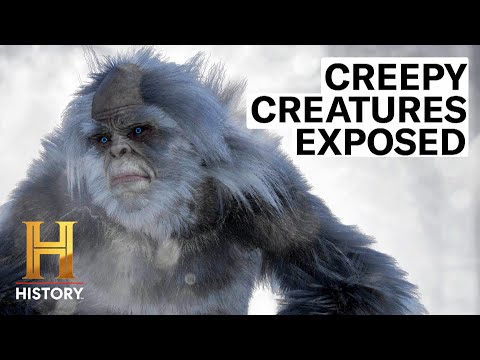
5 MYSTERIOUS CREATURES EXPOSED AS FAKE: An Investigative Analysis of "The Proof Is Out There"


Introduction: The Illusion of Proof

The human psyche is a fertile ground for mystery, constantly seeking patterns in the chaos, narratives in the void. Cryptids, those elusive creatures lurking at the fringes of scientific understanding, embody this pursuit. They spark imagination, fuel speculation, and, critically, generate significant engagement. The HISTORY Channel's series "The Proof Is Out There" attempts to navigate this complex terrain, promising to dissect viral phenomena and render a "credible verdict." This post, however, delves beyond the surface-level presentation of the episode "5 MYSTERIOUS CREATURES EXPOSED AS FAKE." We will analyze the implied methodology, the nature of the evidence presented, and the broader implications for investigators and enthusiasts alike. Is the "proof... out there," or is it a carefully constructed narrative designed to captivate and, perhaps, mislead?

In an era saturated with easily manipulated digital media, the line between genuine anomaly and calculated deception has become increasingly blurred. Our task as investigators is not merely to catalog strange occurrences but to apply rigorous scrutiny, dissecting claims with a methodical approach that prioritizes evidence over sensationalism. This episode, by its very title, suggests a focus on debunking, a crucial but often overlooked aspect of paranormal investigation. Understanding how a case is debunked is as vital as understanding its initial claims. It sharpens our critical faculties and helps us avoid falling prey to well-crafted hoaxes, which, I can attest from years in the field, are far more common than genuine inexplicable phenomena.

Case File: The Legendary Florida Skunk Ape

The Skunk Ape, a primate-like cryptid purportedly inhabiting the swamps of Florida, is a regional variant of the more widespread Bigfoot or Sasquatch legend. Its defining characteristic, as the name suggests, is an overpowering, foul odor. Reports often describe a large, bipedal creature covered in dark hair, ranging from six to eight feet tall.

Eyewitness accounts, the primary source of information for this cryptid, frequently describe encounters in remote, wooded areas, often near water sources. Some narratives include physical evidence, such as large footprints, broken branches indicative of great strength, and, of course, the infamous smell. The episode likely presents a specific case or compilation of sightings, aiming to dissect the validity of these claims.

From an investigative standpoint, the Skunk Ape presents several markers for potential fraud: the subjective nature of olfactory evidence, the ease with which large footprints can be faked, and the psychological tendency towards pareidolia (perceiving familiar shapes in random stimuli) in dimly lit, unsettling environments. When analyzing such cases, one must consider the environmental factors: the scent of decaying vegetation, animal musk, and the general disorienting effect of swamp environments, all of which can contribute to misidentification or exaggerated sensory experiences.

Case File: EPIC Tennessee Dogman Encounter

The Dogman phenomenon, a staple in contemporary folklore, describes a creature that is part-man, part-wolf or dog, often depicted with humanoid posture and canine features. Encounters are typically characterized by fear, aggression, and a sense of primal terror.

The "ENCOUNTER" implies a narrative of direct interaction, possibly involving a chase, a close sighting, or even a perceived threat. Such accounts are potent because they tap into deep-seated human fears of predators and the unknown lurking in the wilderness. The "EPIC" descriptor suggests a particularly dramatic or compelling testimony.

When examining Dogman reports, investigators focus on several key elements: the consistency of physical descriptions (height, fur, gait, facial features), the context of the sighting (time of day, location, presence of other witnesses), and any purported physical evidence. The challenge lies in differentiating genuine sightings from misidentifications of known animals (such as bears or wolves, especially when viewed under duress or poor lighting), or from deliberate fabrications. The "Dogman" archetype itself is heavily influenced by pop culture, a factor that must be weighed when assessing its credibility.

Case File: Russian Yeti Found in the Tundra

The Yeti, or Abominable Snowman, is one of the most enduring cryptid mysteries, traditionally associated with the Himalayan region. However, variants of the "wild man of the woods" legend exist globally, including Siberia. A "Russian Yeti" sighting would place this phenomenon in the vast, remote Siberian tundra.

Reports from such extreme environments often involve extreme weather conditions, limited visibility, and a sparse human population, factors that can lend themselves to extraordinary claims. Evidence might include large footprints in snow, blurry photographs, or testimonials from isolated communities.

"The harshness of the Siberian tundra itself can play tricks on the mind. Extreme cold, isolation, and the sheer scale of the landscape can amplify perceived threats and encourage the projection of human-like forms onto natural phenomena."

Investigating these claims requires understanding the local fauna that could be misidentified (e.g., bears, large deer) and the psychological impact of extreme isolation. The lack of robust, verifiable evidence has historically plagued Yeti-type cases, often relying on anecdotal accounts and folklore passed down through generations.

Case File: Costa Rican Monkey Witch

This case introduces an intriguing blend of local folklore and potential cryptid reporting. The "Monkey Witch" suggests a creature that possesses characteristics of both an animal (monkey) and a supernatural entity (witch). Such composite beings are common in various mythologies, often serving as cautionary figures or explanations for misfortune.

Costa Rica's rich biodiversity and vibrant indigenous cultures provide a fertile ground for unique folkloric traditions. The description of a "Monkey Witch" could encompass various interpretations, from a physical creature to a spiritual entity associated with the natural world. The report likely details specific sightings, perhaps involving unusual behavior, vocalizations, or physical characteristics that deviate from known primate species.

Analyzing such a case requires a deep dive into local folklore and mythology. Is this a known entity within Costa Rican legends? Are there related stories that provide context? From a cryptid perspective, the concern would be distinguishing between a genuine unknown species and a creature born from cultural narratives and potentially misunderstood natural phenomena. The "witch" aspect adds a layer of supernatural interpretation that often complicates purely scientific investigation.

Case File: Montana Nightcrawlers

The "Nightcrawlers" are a specific type of cryptid sighting that gained notoriety through grainy video footage. These entities are typically described as tall, slender, pale beings with long limbs and no discernible facial features, often seen at night.

The most famous Nightcrawler footage, which the episode likely references or contrasts with, purportedly shows two such figures moving across a darkened field in rural Montana. The ambiguity of the footage, coupled with the unusual appearance of the entities, has fueled speculation about their true nature – alien, interdimensional beings, or elaborate hoaxes.

The critical evaluation of Nightcrawler evidence hinges on analyzing the visual data. Factors include the quality of the footage, the potential for digital manipulation, the movement patterns of the figures, and the plausibility of such beings existing undetected. Investigators often look for evidence of puppetry, CGI, or other forms of staged deception. The inherent limitations of low-light, amateur video make definitive conclusions challenging, but also render them highly susceptible to fabrication. Understanding the principles of visual effects is paramount here.

Analysis: Methodology and Verdict

The core premise of "The Proof Is Out There" is to act as a jury, examining evidence and rendering a verdict on ostensibly impossible phenomena. The strength of such a show lies in its investigative approach, which ideally involves expert analysis, detailed fact-checking, and a commitment to transparency. However, the inherent challenge in analyzing these specific cases—creatures exposed as fake—is to understand *how* they were debunked.

The episode likely employs several investigative techniques:

  • Eyewitness Testimony Analysis: Interviewing witnesses, assessing their credibility, and cross-referencing accounts.
  • Forensic Examination: Analyzing footprints, hair samples (if available), or other physical traces.
  • Digital Forensics: Scrutinizing photos and videos for signs of manipulation (editing, CGI, compositing).
  • Expert Consultation: Bringing in zoologists, folklorists, or digital imaging specialists to provide informed opinions.

When a creature is "exposed as fake," the verdict implies that the initial claims were either definitively disproven or shown to be highly improbable due to identifiable fraud or misidentification. The "proof" then lies not in the existence of the creature, but in the evidence of its fabricated nature. This is a crucial distinction. The show's success hinges on presenting a compelling narrative of debunking, which requires clear, logical arguments and supporting evidence.

"The most compelling debunking doesn't just dismiss a claim; it offers a plausible alternative explanation that accounts for the observed phenomena, often highlighting the ingenuity and motivation behind the deception."

For the investigator, the verdict of "fake" is not a failure but another piece of data. It teaches us about the mechanisms of deception, the psychology of belief, and the evolving capabilities of media manipulation. It raises the bar for what constitutes credible evidence in the paranormal realm.

The Investigator's Archive

To further your understanding of cryptid investigation and the dissection of alleged evidence, consult these foundational resources:

  • "Cryptozoology A to Z: The Encyclopedia of Loch Ness, Bigfoot, Chupacabras, and Other Mysteries of That Ilk" by Loren Coleman and Jerome Clark: A comprehensive overview of cryptid lore and investigation.
  • "The Field Guide to Bigfoot and Other Mystery Primates" by Loren Coleman and Patrick Huyghe: Detailed accounts and analysis of primate-like cryptids.
  • "Abominable Science: Origins of the Yeti, Sasquatch, and the Yeti" by Daniel Loxton and Donald R. Prothero: A skeptical yet thorough examination of popular cryptid cases.
  • "The Skeptics Guide to the Universe" podcast: Features regular segments debunking paranormal claims with scientific rigor.
  • Online resources such as Snopes.com and reputable scientific journals that address folklore and misidentification in zoology.

FAQ: Frequently Asked Questions

What is the primary challenge when investigating cryptid claims?

The primary challenge is the scarcity of verifiable, high-quality evidence. Most cases rely on anecdotal accounts, blurry photographs, or ambiguous audio recordings, making definitive conclusions difficult and leaving ample room for misinterpretation or deliberate hoaxing.

How does pop culture influence cryptid reports?

Pop culture significantly shapes the archetypes of cryptids. Concepts like Bigfoot, the Loch Ness Monster, or the Dogman are heavily influenced by movies, books, and television shows, leading to reports that may conform to pre-existing fictional portrayals rather than genuine unknown entities.

What is "The Proof Is Out There" host Tony Harris's role?

Host Tony Harris, a veteran journalist, leads the investigation by tracking down eyewitnesses, subjecting evidence to rigorous testing, and ultimately calling out hoaxes while highlighting the most credible findings, aiming to provide a balanced perspective.

Why is debunking important in paranormal investigation?

Debunking is crucial for maintaining intellectual honesty and advancing genuine understanding. It helps researchers distinguish between credible anomalies and deceptions, sharpens critical thinking skills, and educates the public about common pitfalls like misidentification and fraud.

Your Field Mission

Mission: Deconstruct a Viral Phenomenon

Your mission, should you choose to accept it, is to apply the critical lens honed by this analysis to a recent viral video or photograph claiming to show a cryptid or paranormal event. Follow these steps:

  1. Identify the Source: Locate the original, unedited footage or image if possible. Note the date, location, and any immediate context provided by the uploader.
  2. Initial Assessment: What is the primary claim? What elements seem most compelling or suspicious? Does it resemble known cryptids or phenomena?
  3. Consider Alternative Explanations: Brainstorm at least three plausible, mundane explanations for the phenomenon. Think about natural lighting, common animals, environmental effects, or known special effects.
  4. Search for Debunking Efforts: Look for analyses from skeptical organizations, fact-checking websites, or other investigators who may have already examined the claim.
  5. Formulate Your Verdict: Based on your research, what is your conclusion? Is it a genuine anomaly, a likely hoax, or an unresolvable case? Document your reasoning clearly, just as "The Proof Is Out There" aims to do.

Share your findings and your verdict in the comments section below. Let's see if we can collectively "expose as fake" or validate another piece of online mystery.

About the Author

alejandro quintero ruiz is a veteran field investigator dedicated to the analysis of anomalous phenomena. His approach combines methodological skepticism with an open mind to the inexplicable, always seeking the truth behind the veil of reality.

The pursuit of truth in the realm of the unexplained is a painstaking process. While "The Proof Is Out There" offers curated cases for public consumption, the true work lies in the diligent, often unglamorous, task of verification and debunking. The creatures exposed in this episode serve as valuable case studies, not for their purported existence, but for the methods and motivations behind their fabrication. Understanding these hoaxes is the first step toward identifying genuine anomalies, should they ever truly emerge from the shadows.