Followers

Mostrando las entradas con la etiqueta Great Flood. Mostrar todas las entradas

Pre-Egyptian Megastructures: Challenging the Narrative of the Great Flood

Image

The sands of time often obscure the grandest achievements of humanity, leaving us with fragmented histories and prevailing narratives that rarely tell the whole story. In the realm of ancient civilizations, particularly those predating the dynastic Egyptians, a compelling body of evidence suggests a technological prowess and sophistication far beyond our current understanding. This investigation delves into the enigmatic world of pre-Egyptian megastructures, colossal edifices that challenge conventional timelines and hint at a lost era of advanced knowledge.

The Osireion and Beyond: Evidence of a Lost Civilization

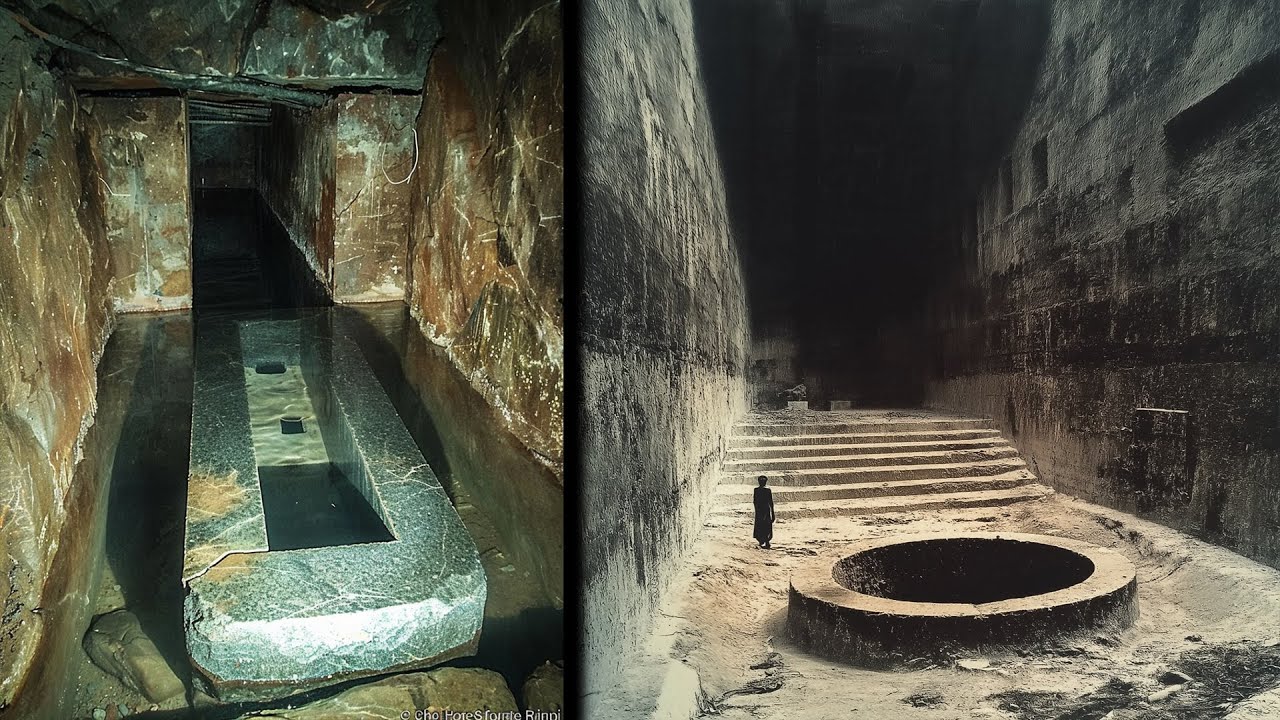
The concept of an advanced civilization flourishing before the established dynastic periods of ancient Egypt is not merely speculative; it is a hypothesis supported by enigmatic sites like the Osireion, Zawyet el Aryan, and the Serapeum of Saqqara. These locations present architectural and engineering feats that defy conventional explanations. The precision with which massive stone blocks were quarried, transported, and fitted together suggests a profound understanding of physics, mathematics, and engineering, far surpassing the tools and techniques typically attributed to the era.

Some theorists propose that these structures weren't merely monuments but served advanced purposes, possibly as power plants or sophisticated astronomical observatories. The granite sarcophagi in the Serapeum, for instance, exhibit a mechanical precision that leads many to question their function as mere burial chambers. As one commenter aptly put it, quote-style, ">I don't believe for a minute that the Serapeum of Saqqara boxes are burial chambers nor sarcophagi. Admittedly, it's just a gut feeling on my part, but it feels like there's something more going on here than burial chambers. It's too plain and undecorated and just looks utilitarian more than anything else." This sentiment is echoed by many who find the conventional narrative of tombs for dead pharaohs, constructed with rudimentary tools, insufficient to explain the monumental scale and precision of these ancient wonders.

Recommended Gear for Investigation

ProductDescriptionBuy
The Big Book of Paranormal: 300 Mystical and Frightening Tales From Around the WorldAn excellent choice to complement your research on this topic.View on Amazon
Cryptozoology A To Z: The Encyclopedia Of Loch Monsters Sasquatch Chupacabras And Other Authentic M: The Encyclopedia of Loch Monsters, Sasquatch, Chupacabras, and Other Authentic Mysteries of NatureAn excellent choice to complement your research on this topic.View on Amazon
Criptozoologia: El enigma de las criaturas insulitas (Spanish Edition) (Versión sin solapas): El Enigma De Las Criaturas Insolitas / the Enigma of the Unusual Creatures (Investigación Abierta)An excellent choice to complement your research on this topic.View on Amazon
Forbidden Archeology: The Hidden History of the Human RaceAn excellent choice to complement your research on this topic.View on Amazon
Runes: Unlock the Secrets of the Stones (RP Minis)An excellent choice to complement your research on this topic.View on Amazon
The H. P. Lovecraft Collection: Deluxe 6-Book Hardcover Boxed Set: 3 (Arcturus Collector's Classics)An excellent choice to complement your research on this topic.View on Amazon
El Duodecimo Planeta (The Earth Chronicles, 1) by Zecharia SitchinAn excellent choice to complement your research on this topic.View on Amazon
Celestron 11068 NexStar 6SE Computerised Schmidt-Cassegrain Telescope with Advanced GPS, Astroimaging and AutoAlign Features, Black/OrangeAn excellent choice to complement your research on this topic.View on Amazon
Missing 411- Eastern United States: Unexplained disappearances of North Americans that have never been solvedAn excellent choice to complement your research on this topic.View on Amazon
Ghost-Hunting For Dummies [Idioma Inglés] An excellent choice to complement your research on this topic.View on Amazon

Architectural Anomalies: Precision and Power

The construction of sites like the Great Pyramid of Giza showcases an almost unbelievable level of accuracy. Its alignment with the cardinal directions is remarkable, and the precision in cutting and fitting colossal stone blocks, some weighing many tons, has long puzzled archaeologists and engineers. The use of copper chisels and primitive tools, as commonly taught, seems increasingly improbable when faced with the evidence. The sheer scale of these projects implies not only advanced engineering but also a highly organized society capable of mobilizing vast resources and labor forces.

A carpenter with decades of experience starkly pointed this out: quote-style, ">I've been a carpenter for 30 plus years, and I've cut many different materials in those years. I assure anyone watching this piece, the people who've tried convincing us these materials were cut with coper chisels only puts on full display their total lack of real world experience cutting anything othere than paper!! This was not done with a chisel period full stop!" This practical perspective underscores the disconnect between the proposed methods and the tangible reality of the structures themselves. The granite, rich in quartz, further fuels speculation. As noted by another observer, quote-style, ">Granite is full of quartz. Quartz produces electricity when subjected to pressure. We might have finally understood how the machine was powered." This points towards potential energy generation, transforming these ancient sites from simple tombs into complex machines of antiquity.

Astronomical Alignments: Celestial Blueprints

The deliberate alignment of ancient structures with celestial bodies is a recurring theme across various cultures. The hypothesized alignment of the Giza pyramids with Orion's Belt is perhaps the most famous example, suggesting a sophisticated understanding of astronomy and cosmology. This knowledge would have been crucial for timekeeping, agricultural cycles, and possibly even spiritual practices. The ability to map the stars with such precision and translate that knowledge into monumental architecture implies a civilization with deep scientific insights.

The concept that these structures were meticulously planned, not as mere religious sites but as functional devices, is gaining traction. The idea of the pyramids as power plants, as suggested by some viewers, aligns with the theory of advanced technological understanding. This perspective challenges the traditional view of ancient Egyptians as solely builders of tombs, pushing us toward a more complex picture of their capabilities and knowledge base. The precision in architectural design isn't just about aesthetics; it's about function, as suggested by the idea that "The title of the video should really be 'Pre-Egyptian Engineering and Electrical Generation - The Great Pyramids' or something that reflected the content better."

Technological Implications: Beyond Hammers and Chisels

The prevailing narrative often asserts that these megastructures were built using simple tools like hammers and chisels. However, the sheer number of colossal blocks, the precision of their cuts, and the immense weight involved make this explanation difficult to accept for many. Theories involving advanced technology, sound manipulation, or unknown energy sources are frequently discussed in communities dedicated to exploring these anomalies. The possibility of a civilization possessing technology comparable to, or even exceeding, our own cannot be dismissed lightly.

The notion that "the narrative we were taught in school is totally incorrect at every level" resonates with many who question established historical accounts. This skepticism is a crucial driver for exploring alternative hypotheses. The structures' internal designs, often described as looking like "a machine," further bolster the idea that their purpose extended far beyond religious or funerary rites. The resonance experienced within these structures, like the echoing snap of fingers described by a visitor, suggests acoustic properties that might have played a functional role, perhaps in energy generation or communication.

The Great Flood Theory: A Precursor to Modern Civilizations?

Many theories posit that these advanced civilizations existed before a cataclysmic event, such as the Great Flood, which reshaped the planet and wiped out much of human knowledge. According to this perspective, the remnants of these ancient societies, including their monumental structures, are the only tangible evidence left of their existence. The incredible longevity attributed to people before the flood, often cited as 600-900 years, would have allowed for the development and transmission of sophisticated knowledge over many generations, supporting the construction of such massive projects.

This theory suggests that our current understanding of history is incomplete, missing a crucial chapter of advanced human civilization. The Sahara Desert, for instance, was not always arid; evidence points to a time when it was a lush jungle, capable of supporting large populations and complex societies. This environmental context is vital for understanding how such civilizations could have thrived and undertaken ambitious building projects. The question, quote-style, ">Why is it that people just can't say 'we simply do not know'?" highlights the frustration with historical certainties that seem to ignore abundant anomalies.

Expert Analysis and Skepticism: Bridging the Divide

While fringe theories abound, the rigorous work of engineers and researchers outside the traditional Egyptological circles has begun to shed new light on these ancient marvels. Their methodologies, focusing on physics, engineering principles, and a willingness to consider unconventional explanations, often provide more compelling insights than explanations rooted in dogma. The observation that quote-style, ">The work of engineers taking an interest in the great pyramid has done more to advance archeology on the topic than so called Egyptologists" points to a potential schism in how these ancient sites are studied.

Skepticism is a vital tool in any investigation, but it should not become a barrier to considering all available evidence. The persistent anomalies presented by these megastructures demand further inquiry. As one viewer noted, quote-style, ">This channel challenges my skepticism and makes me intrigued and full of questions." This intellectual curiosity is precisely what drives paranormal and historical research forward, pushing the boundaries of accepted knowledge and encouraging a re-evaluation of our past.

Investigator's Verdict: Re-evaluating History

The evidence surrounding pre-Egyptian megastructures strongly suggests that our current historical timeline and understanding of ancient capabilities are incomplete. The precision engineering, astronomical knowledge, and sheer scale of these constructions point towards a civilization possessing advanced technology and a profound understanding of the natural world. While definitive answers remain elusive, the persistent anomalies compel us to question established narratives and remain open to the possibility of lost chapters in human history.

For those seeking to delve deeper into the mysteries of ancient civilizations and unexplained phenomena, a curated selection of resources can illuminate the path. Understanding the methodologies and findings of various researchers is crucial for forming a comprehensive perspective.

The eBook "Pre-Historic Megastructures" by Universe Inside You is a prime example, offering a detailed look at over 30 remarkable sites. Such comprehensive works are invaluable for anyone serious about investigating these topics. Furthermore, documentaries and academic papers that challenge conventional thinking often spark critical debate and encourage further research into areas often overlooked by mainstream academia. Exploring the mysteries of ancient civilizations is a journey that benefits from diverse sources and perspectives.

Frequently Asked Questions

Q1: What is the main argument against the pyramids being tombs?

A1: The primary arguments include the incredible precision of construction, the lack of significant burial artifacts in many chambers, the use of vastly superior materials and techniques implied by the stonework, and alternative theories suggesting functions like power generation or astronomical observation.

Q2: How could such advanced technology have existed so long ago?

A2: Theories propose a highly advanced pre-diluvian civilization that either predates known history or existed concurrently with early civilizations, possessing knowledge lost to time. Some also suggest extraterrestrial influence, though evidence for this remains speculative.

Q3: What is the significance of astronomical alignments in these structures?

A3: These alignments suggest a deep understanding of celestial mechanics, used for timekeeping, navigation, agricultural planning, and possibly spiritual or energetic purposes. They indicate a level of scientific sophistication far beyond what is typically attributed to ancient peoples.

Q4: Could water have played a role in constructing these megastructures?

A4: Some theories suggest advanced hydraulic engineering, possibly involving water rams or other devices, to move massive stones or even generate power. The presence of ancient water systems and the historical existence of lush environments in currently arid regions support these ideas.

Q5: Why is it difficult to find definitive proof of these advanced ancient civilizations?

A5: Cataclysmic events like the Great Flood could have destroyed much evidence. Furthermore, prevailing historical narratives may resist or suppress findings that contradict established timelines and theories, making it challenging for alternative interpretations to gain mainstream acceptance.

Your Mission: Field Assignment

The greatest mystery is not always in the monumental structures themselves, but in our willingness to question the accepted truth. Your mission, should you choose to accept it, is to examine your own assumptions about history. Seek out the anomalies, question the narratives, and explore the evidence with an open, analytical mind. The past is not as settled as it appears; it is a landscape ripe for re-investigation.

What are your thoughts on these pre-Egyptian megastructures? Have you encountered similar anomalies in your own research or travels? Share your experiences and theories in the comments below. Your insights are crucial to piecing together this historical puzzle.

If this investigation has sparked your curiosity, help us spread the word. Share this post on your social media channels and join the conversation. Let's challenge the ordinary and uncover the extraordinary together.

For more in-depth analysis and exclusive content, follow us on our social media platforms and subscribe to our channels. Stay vigilant.

Investigator's Note: True paranormal research doesn't fund itself. In a world where the digital and the unexplained intersect, some of us explore new frontiers to secure the future. Do you dare to be part of the vanguard? Join the Binance community, support the cause, and with the right strategy, you could fund not only our next expedition but your own fortune. The next great discovery could be just a click away.

The Ark of Noah: Deconstructing the Deluge and an Ancient Enigma


The scent of ancient dust, the whisper of water where no water should be. For millennia, the story of Noah's Ark and the Great Flood has echoed through human consciousness, a narrative of divine judgment, survival, and cosmic reset. But beyond the theological interpretations lies a complex tapestry of historical inquiry, archaeological pursuit, and scientific debate. Today, we don't just retell a story; we meticulously dissect an enduring enigma. We open the file on an event that shaped civilizations and continues to challenge our understanding of history and the very fabric of reality.

Historical Context: The Genesis Account

The Book of Genesis, the foundational text of Abrahamic religions, provides the most widely recognized narrative of Noah's Ark and the Great Flood. According to the account, God, witnessing the pervasive wickedness of humanity, resolves to cleanse the Earth with a catastrophic deluge. Noah, a righteous man, is divinely instructed to build an ark of specific dimensions – detailed with painstaking precision – to preserve himself, his family, and pairs of every living creature from the impending destruction. The dimensions provided (300 cubits long, 50 cubits wide, and 30 cubits high) have been a subject of intense scrutiny, with scholars debating the cubit's exact measurement and the ark's potential seaworthiness. The narrative emphasizes not just survival but also a divine covenant, a promise that such a universal flood would never occur again, symbolized by the rainbow. This narrative, deeply embedded in religious doctrine, also poses significant questions for historical and scientific analysis. How can we reconcile such a monumental, global event with the geological and archaeological records? What are the implications if such an event, or at least its core elements, actually transpired?

Archaeological Evidence and Anomalies: The Quest for the Ark

The search for empirical evidence of Noah's Ark is a quest fraught with challenges, fueled by faith, speculation, and occasionally, genuine discovery. Mount Ararat in present-day Turkey is the most frequently cited location for the ark's resting place, a tradition stretching back to ancient times. Numerous expeditions have been launched over the decades, driven by eyewitness accounts, dubious photographs (which often turn out to be natural geological formations or man-made structures), and tantalizing radar scans suggesting unnatural shapes beneath the ice and rock. Organizations like the Noah's Ark Ministries International have claimed significant findings, presenting sonar imagery and supposed remnants of wood. However, these claims are consistently met with skepticism from the broader scientific and archaeological community. Critics point to the lack of verifiable artifacts, the prevalence of hoaxes, and the geological implausibility of a massive wooden vessel remaining intact at such altitudes for thousands of years. The infamous "Ararat Anomaly," a large, ship-like formation often cited, has been largely dismissed by geologists as a natural phenomenon. Yet, the allure persists. Why are so many drawn to this specific location? What drives these expeditions, and what are they truly looking for: a tangible relic or validation of faith? The pursuit itself has become a phenomenon, attracting adventurers and researchers alike, many investing significant resources in a search that, thus far, has yielded no conclusive physical proof.

Scientific and Geological Challenges: Reconciling the Flood

From a scientific standpoint, the concept of a literal, worldwide flood capable of engulfing the entire planet presents formidable obstacles. Geology offers no straightforward evidence for a single, global inundation event of the magnitude described in Genesis within the timeframe of human civilization's known development. While geologists acknowledge evidence of widespread past flooding events, these are typically regional or localized, explainable by natural processes such as glacial melt, tectonic shifts, or extreme weather patterns. The sheer volume of water required to cover all continents, including the highest mountain ranges, is staggering and would necessitate a hydrological and geological scenario far beyond our current understanding. Furthermore, the ark's capacity, even with generous estimations of cubit measurements, raises questions about housing and sustaining two of every animal species, their food, and waste management for an extended period. Theories attempting to reconcile the biblical account with science often propose a hyper-localized flood within the Fertile Crescent, arguing that early human civilizations perceived this regional catastrophe as global due to their limited understanding of the Earth's geography. Another perspective suggests a metaphorical or allegorical interpretation, where the "flood" represents a profound spiritual cleansing or societal transformation rather than a literal water event. The debate highlights the fundamental tension between literal interpretations of ancient texts and the empirical evidence gathered through modern scientific methodologies. It forces us to ask: are we looking for physical proof of a divine intervention, or are we misinterpreting a profound historical or allegorical event through a modern, literalistic lens?

"The challenge isn't just finding a boat on a mountain. It's understanding why the story persists, why humanity needs a narrative of profound renewal after destruction."

Cultural and Mythological Parallels: Echoes of the Deluge

The Genesis narrative is not unique. Echoes of a great flood, a primordial cataclysm that wipes the slate clean, appear in cultures across the globe, suggesting a possible ancient, shared memory or a recurring archetypal theme. The Epic of Gilgamesh, one of the oldest known works of literature, predating the biblical account by centuries, describes a similar deluge sent by the gods, with Utnapishtim (the Mesopotamian Noah) building a boat to save himself, his family, and animals. Similar flood myths can be found among the ancient Greeks (Deucalion), the Egyptians, the Hindus (Manu), the Chinese (Gun-Yu), and indigenous peoples of the Americas and Oceania. This widespread recurrence has led researchers to posit several theories. One is the concept of a Panspermic Memory: a genuine, ancient global flood event so impactful that its memory was preserved and transmitted across disparate cultures. Another theory suggests a common origin story, perhaps stemming from widespread, devastating regional floods in early human history that were later mythologized and globalized. Alternatively, these myths could be explained by the universality of human experience, with the archetypal fear of natural disasters and the need for divine intervention or renewal manifesting in similar symbolic narratives independently across different societies. The consistent theme of a surviving hero, a vessel of salvation, and a repopulation of the Earth speaks to fundamental human needs for hope and continuity in the face of overwhelming chaos. Analyzing these parallels provides crucial context for understanding the Genesis account not just as a religious text, but as a part of a vast, cross-cultural mythological landscape. It invites us to explore what these stories reveal about our collective psyche and our relationship with the forces of nature and perceived divine will.

Investigator's Verdict: Fraud, Genuine Phenomenon, or Something Else?

After sifting through millennia of scripture, modern-day expeditions, scientific analyses, and cross-cultural mythologies, the question remains: what is the tangible reality behind the Ark of Noah? The biblical narrative, while deeply resonant and foundational for billions, lacks conclusive, universally accepted empirical evidence. Archaeological searches on Mount Ararat have consistently failed to produce definitive proof. Many claims have been debunked as natural formations or outright hoaxes, a testament to both human gullibility and the enduring allure of finding such a significant artifact. Scientifically, a literal global flood presents significant geological and biological challenges that are difficult to reconcile with our current understanding of Earth's history. Yet, to dismiss the narrative entirely is to ignore its profound cultural impact and the persistent, cross-cultural flood myths that hint at something significant, whether a collective memory of a regional catastrophe or a deep-seated archetypal expression.

My assessment is this: While the existence of a literal, global flood as described in Genesis, with an ark containing all species, remains highly improbable from a scientific perspective, the story itself is undeniably real in its cultural and spiritual impact. The search for a physical ark, while compelling, may be a misdirection. The true "ark" might be the narrative itself – a vessel carrying moral lessons, historical echoes, and spiritual hope through the ages. The anomalies and ongoing searches, however, are real phenomena in themselves, reflecting a deep human drive to connect with our origins and understand the seemingly inexplicable. Until verifiable, undeniable physical evidence emerges, the Ark of Noah remains in the realm of faith and historical interpretation, a powerful testament to humanity's ongoing quest for meaning in the face of the unknown. The enigma persists not because the ark is hidden, but perhaps because its true significance lies beyond the physical.

The Investigator's Archive

To delve deeper into the complexities surrounding Noah's Ark and global flood narratives, I highly recommend consulting the following resources. These are not mere storybooks, but critical tools for understanding the historical, mythological, and scientific dimensions of this enduring enigma:

  • "The Genesis Flood: The Curse of Science" by Henry M. Morris and John C. Whitcomb Jr.: A seminal work defending a literal interpretation, crucial for understanding the Young Earth Creationist perspective.
  • "The Mythology of the Flood" by Paul Bahn and Donald E. Coleson: Explores the global prevalence of flood myths, offering comparative analysis and potential explanations.
  • "The Skeptics Guide to the Bible" by Christopher Coggin: Provides a critical examination of biblical narratives, including the flood, from a secular viewpoint, offering scientific and historical counterpoints.
  • "After the Flood: The Early History of Civilization" by Peter Ackroyd: While not directly about the ark, it delves into the historical and mythological transition of civilizations post-cataclysmic events, offering a broader cultural context.
  • Documentaries on Mount Ararat Expeditions: Numerous documentaries follow the attempts to find the ark. While often speculative, they illustrate the passion and methodology (or lack thereof) employed in the search. Look for productions that critically evaluate evidence, not just sensationalize claims.

Understanding these varied perspectives is key to forming your own informed opinion. Accessing these materials often requires a subscription to platforms like Gaia or purchasing specific books, representing a small 'investment' in truly grasping the depth of this mystery.

Frequently Asked Questions

  • Is there definitive scientific proof of Noah's Ark?
    No. Despite numerous claims and expeditions, no conclusive, universally accepted scientific or archaeological evidence of Noah's Ark has ever been found.
  • Why are there so many flood myths around the world?
    This phenomenon is attributed to various factors, including collective memory of actual prehistoric regional floods, shared archetypal human fears and needs, or a common ancient origin story that spread globally.
  • What is the most commonly cited location for Noah's Ark?
    Mount Ararat in Turkey is the traditional and most frequently cited location for the ark's final resting place.
  • Can the dimensions of Noah's Ark be scientifically verified?
    The dimensions are recorded in Genesis, but their exact measurement (depending on the cubit's length) and the ark's logistical capacity to hold all species remain subjects of debate and scientific scrutiny.
  • Is it possible that the "flood" was not global?
    Many scientists and theologians propose that the biblical flood was a catastrophic regional event, perceived as global by the inhabitants of the time due to their limited geographical knowledge.

Your Field Mission

Your mission, should you choose to accept it, is to become your own mythologist. Identify a local legend or historical event in your region that speaks of a significant natural disaster or a profound societal shift. Research its origins, the evidence (or lack thereof) supporting it, and how it's remembered or mythologized today. Consider how modern methodologies of investigation, archaeology, and geology might interpret such an event. Document your findings and share the parallels, or stark differences, you discover with the Noah's Ark narrative in the comments below. Let's see what echoes of the deluge we can find in our own backyards.

alejandro quintero ruiz is a veteran investigator dedicated to the rigorous analysis of anomalous phenomena. His approach combines methodological skepticism with an open mind to the inexplicable, always seeking the truth behind the veil of reality. With years of field experience documenting unexplained events, his work aims to bridge the gap between folklore and tangible evidence.

The Great Flood: Anatomy of a Pre-Cataclysmic Civilization


Ancient Civilizations Under the Microscope

The narrative of human history is punctuated by cataclysms, floods of biblical proportions that often mark a definitive end to one era and the violent birth of another. Among the most persistent and profound of these is the Great Flood. But beyond the religious texts, what can we glean about the civilization that supposedly preceded this epochal event? This isn't about blind faith; it's about forensic examination of the surviving fragments of our collective memory. We are not merely recounting a legend; we are dissecting an archetype that has shaped cultures for millennia.

My years in the field have taught me that the most extraordinary claims often rest on the thinnest evidence, yet their longevity speaks volumes about the human need to understand origins. The pre-diluvian world, as described in various traditions, is a tantalizing subject. It paints a picture of a humanity that predates our current understanding of history, a period shrouded in mystery and ripe for speculation. Today, we apply the cold, hard light of analysis to this ancient enigma. Are we looking at divine judgment, a natural disaster of unprecedented scale, or perhaps something entirely different that has been lost to time and translation?

The Genesis Account: A Historical or Mythological Lens?

The primary source for most Western interpretations of the Great Flood is the Book of Genesis. This biblical narrative presents a world populated by long-lived giants, a humanity deeply corrupted, and a divine decision to cleanse the Earth with a catastrophic flood, saving only Noah, his family, and pairs of every animal aboard an ark. The precision in describing the ark's dimensions, the duration of the flood, and the subsequent events suggests a detailed account, but the question remains: is it literal history, a symbolic allegory, or a composite of oral traditions reflecting a profound, albeit perhaps localized, ancient disaster?

From an analytical standpoint, the Genesis account shares striking similarities with Mesopotamian flood myths, most notably the Epic of Gilgamesh. The Sumerian Utnapishtim, like Noah, built an ark to survive a divine flood. This shared motif across disparate cultures suggests a deeply ingrained memory or a common, ancient source event. Examining these parallels isn't about undermining the Genesis narrative, but about contextualizing it within the broader tapestry of human storytelling and ancient consciousness. The theological implications are profound, but as investigators, we must first consider the archaeological and anthropological evidence.

Reconstructing Pre-Flood Life: The Shadows of Text

According to these ancient texts, pre-diluvian humanity lived radically different lives. Longevity was extraordinary, with patriarchs like Methuselah reportedly living for centuries. This longevity suggests a biological or environmental state vastly different from our own. The narrative also speaks of a profound spiritual or moral decline, a pervasive wickedness that prompted divine intervention. This moral framework is crucial; it imbues the flood not just as a physical event, but as a consequence, a judgment, or perhaps a cyclical reset.

What else can we infer? The presence of 'Nephilim'—often translated as giants—in accounts preceding the flood, as mentioned in Genesis 6:4, adds another layer of complexity. Were these literal giants, or a metaphor for rulers, a corrupted bloodline, or perhaps even encounters with non-human entities? The interpretation directly impacts our understanding of pre-diluvian society. This period is often depicted as an age of advanced knowledge, potentially even technological or spiritual prowess that has since been lost. Think of it like excavating a crime scene; each fragment, however small, can tell us about the world that existed before the 'event' wiped it clean.

For any serious investigator looking to understand these epochs, the foundational texts are paramount. However, relying solely on religious or mythological accounts is insufficient. To bridge the gap between myth and potential reality, we must consult scholarly works. Texts like "The Lost Civilizations of the Stone Age" by Richard Rudgley or the extensive cataloging of myths by Charles Fort offer critical perspectives. Understanding the cultural context—the societal needs, fears, and cosmologies that gave rise to these stories—is key to discerning potential historical kernels from pure allegory. My personal research into anomalous historical records often leads back to these foundational narratives, suggesting that, at their core, they might be grappling with truths we've long forgotten.

Archaeological Enigmas: Whispers from Antediluvian Times

Here’s where the tangible—or rather, the tantalizingly *implying*—evidence comes into play. Numerous archaeological sites and anomalies have been cited as potential remnants of a sophisticated pre-flood civilization, a period predating widely accepted timelines of human development. Sites like Göbekli Tepe in Turkey, predating Stonehenge and the pyramids by millennia, showcase megalithic structures and intricate carvings that challenge conventional understanding of early human capabilities and societal organization. The precision and scale of these constructions suggest a level of knowledge and cooperation that, if representative of a broader pre-diluvian culture, points to a far more advanced humanity than typically assumed.

Other anomalies include the controversial theories surrounding underwater structures, such as the Yonaguni Monument off the coast of Japan, or the purported discoveries of fossilized human footprints alongside dinosaur tracks, which, if genuine, would shatter established paleontological timelines. While many of these findings are debated, dismissed as natural geological formations, or outright hoaxes by mainstream science, they persist in the collective consciousness of alternative history and archaeoastronomy circles. The sheer volume of these 'out-of-place artifacts' (OOPArts) invites scrutiny. Are they misinterpreted geology, clever forgeries, or genuine clues to a lost chapter of history?

"The standard model of history is a beautifully constructed edifice, but it has foundations built on sand. Every so often, the tide of evidence threatens to wash it away."

My own investigations have led me to examine numerous OOPArts and controversial sites. The critical mistake is often to accept these findings at face value or to dismiss them entirely. The correct approach is methodical: analyze the context of the discovery, scrutinize the dating methods, investigate the chaîne opératoire (the sequence of actions involved in making an object), and compare the finding with known natural phenomena or accepted historical technologies. For example, a supposed ancient battery found in Baghdad, while intriguing, requires rigorous testing to rule out natural causes or later origins before it can be definitively classified as an advanced artifact. The same applies to any claim of pre-diluvian technology.

The Great Flood: A Metaphorical or Literal Event?

The debate over the nature of the Great Flood is as old as its telling. Was it a global cataclysm, as described in literal interpretations of scripture, or a widespread, but perhaps regional, flood event that became mythologized over time? Geologists point to evidence of significant past flood events, such as the flooding of the Black Sea basin or catastrophic meltwater floods in North America at the end of the last Ice Age. These events, while devastating, were not necessarily global in scale. Yet, the universality of flood myths across continents suggests a deeper, more resonant experience.

"The commonality of the flood myth is what elevates it beyond coincidence," notes Dr. Evelyn Reed, a noted mythologist. "It speaks to a shared, ancestral trauma or a fundamental understanding of life's fragility in the face of natural forces." This perspective invites us to consider the flood as either a literal, albeit perhaps not planet-wide, event that was universally experienced or remembered, or as a powerful metaphor for cyclical destruction and rebirth inherent in human consciousness. The power of the symbol lies in its ability to represent profound endings and new beginnings, a necessary narrative for civilizations grappling with existential threats, both real and perceived.

From an analytical viewpoint, it's imperative to avoid falling into the trap of a false dichotomy. Could it be both? A specific, devastating flood event, perhaps amplified by unique environmental conditions or ancient societal memory, that then became codified as a global, divine cleansing? The potential for hyperbole in oral traditions, combined with the psychological impact of such a disaster, could easily transform a monumental regional flood into an all-encompassing deluge in subsequent retellings. This is where comparative mythology and geological data must intersect.

Attribute Literal Interpretation Allegorical Interpretation
Scope Global event, entire planet submerged. Symbolic cleansing of sin or societal corruption; potentially a significant regional flood.
Purpose Divine judgment and a reset of humanity. Moral lesson, cyclical nature of destruction and renewal, spiritual awakening.
Evidence Required Global geological evidence of a single, massive flood event coinciding with biblical timeline; universal archaeological strata. Widespread flood myths, psychological archetypes, geological evidence of regional catastrophic floods.

Investigator's Verdict: Fraud, Phenomenon, or Misinterpretation?

After sifting through ancient texts, archaeological curiosities, and the compelling parallels in global mythology, my verdict is nuanced. The literal interpretation of a single, global flood event, as described in Genesis, faces significant challenges from geology and mainstream archaeology. There is no definitive, universally accepted geological stratum that proves a single, worldwide deluge of that magnitude within the accepted historical timeline. However, this does not dismiss the power of the narrative.

The sheer persistence of the flood archetype across unrelated cultures points to a profound experience at the root of human consciousness. This could be a fragmented memory of a genuine, devastating regional cataclysm—or series of cataclysms—that profoundly shaped early human migration and societal development. The Genesis account, therefore, is likely a spiritual and moral interpretation of such events, imbued with theological meaning and amplified through generations of storytelling. The longevity of the story isn't necessarily proof of a literal global flood, but proof of its potent impact on the human psyche and its ability to explain the inexplicable: the apparent 'end' of one world and the 'beginning' of another.

The 'pre-flood civilization' remains an enigma. While tantalizing hints of advanced, lost societies persist in fringe archaeology and ancient texts, concrete, irrefutable evidence remains elusive. It is more probable that we are dealing with a complex interplay of early human ingenuity (as seen in sites like Göbekli Tepe), the symbolic resonance of catastrophic natural events, and the inherent human tendency to mythologize origins. The search for definitive proof of hyper-advanced pre-diluvian societies continues, fueled by these enduring stories, but until concrete evidence emerges, it remains firmly in the realm of speculation, albeit compelling speculation.

The Researcher's Archive

For those who wish to delve deeper into the evidence and theories surrounding pre-diluvian civilizations and the Great Flood, the following resources are indispensable:

  • "The Epic of Gilgamesh" (various translations): Essential for understanding the Mesopotamian flood narrative and its parallels.
  • "Fingerprints of the Gods" by Graham Hancock: A controversial but influential exploration of ancient civilizations and lost history.
  • "The Mythic Past: Biblical Archaeology and the Myth of Israel" by Kenneth Kitchen: Offers a more traditional, yet critical, perspective on biblical accounts and their historical context.
  • "Göbekli Tepe: A History of Ancient Mesopotamia" (Academic Journals/Documentaries): For analysis of this groundbreaking archaeological site.
  • "When the Mountains Opened" by Jonathan Hill: Explores geological evidence of catastrophic flood events.

Access to platforms like Gaia or subscribing to academic journals focused on archaeology and ancient history can provide further insights and ongoing research into these persistent mysteries.

Your Field Mission

The story of the Great Flood is not just a historical curiosity; it's a narrative woven into our collective identity. Your mission, should you choose to accept it, is to engage with the local legends of your region. Does your area have any stories of significant floods, ancient civilizations, or unusual geological formations that speak of a forgotten past? Document these stories, compare their themes to the grand narratives we've discussed, and ponder what remnants of truth—or powerful metaphor—they might hold. Share your findings and local legends in the comments below. Let's expand the archive.

About the Author

alejandro quintero ruiz is a veteran field investigator dedicated to the analysis of anomalous phenomena. His approach combines methodological skepticism with an open mind to the inexplicable, always seeking the truth behind the veil of reality.

The Great Flood Phenomenon: A Global Pattern Analysis


Introduction: Echoes of the Deluge

The telephone rings at 3:07 AM. A faint, static-laced whisper asks, "Did you see the water rising?" It’s not a prank call; it’s an echo from a primordial fear, a subconscious reminder of a global event that permeates our oldest stories. Today, we don't just revisit the myth of the Great Flood; we dissect its persistent presence, analyzing whether it's a singular, forgotten cataclysm or a cyclical pattern embedded within the very fabric of our planet and consciousness.

Hello and welcome to "el rincon paranormal," your daily source of unexplained and unusual paranormal videos and documents. This post, "EL DILUVIO UNIVERSAL ESTÁ POR TODAS PARTES | TVM," published on November 21, 2019, delves into a phenomenon that, while often relegated to mythology, presents a compelling case for deeper investigation.

Historical Analysis: Myth or Memory?

The narrative of a great flood is not an isolated tale confined to a single culture. From the Epic of Gilgamesh in Mesopotamia, predating biblical accounts by centuries, to Indigenous flood myths across the Americas, Africa, and Australia, the story of humanity being cleansed or reshaped by a colossal deluge is remarkably consistent. This isn't mere coincidence; it suggests a shared ancestral memory or a response to a widespread, undeniable event.

We must approach these narratives with a critical but open mind. While many elements are allegorical, the sheer ubiquity of flood motifs demands rigorous cross-cultural analysis. Are these stories purely symbolic, representing spiritual rebirth or moral judgment? Or do they encode fragmented recollections of actual geological or astronomical events that impacted early human civilizations on a global scale?

For any serious researcher, understanding the historical context is paramount. This requires delving into primary sources and archaeological findings. The consistency across disparate cultures, separated by vast geographical distances and lacking apparent communication, points towards a potential origin rooted in a shared experience. The question then becomes: what kind of experience could trigger such a universally resonant myth?

Geological Evidence: Probing the Stratigraphy

Beyond the textual evidence, science offers potential corroboration. Geologists have identified widespread sedimentary layers that suggest colossal, rapid inundation events. The Black Sea flood hypothesis, for instance, posits a massive influx of Mediterranean water into the Black Sea basin around 7,500 years ago, potentially offering a localized, albeit dramatic, antecedent.

Furthermore, analyses of ancient shorelines and submerged continental shelves hint at dramatic sea-level changes throughout Earth’s history. While the exact mechanisms—whether a single, planet-altering flood or a series of regional inundations over millennia—remain subjects of debate, the geological record doesn't entirely dismiss the possibility of cataclysmic flood events that could have significantly impacted early human populations. The presence of widespread marine fossils in what are now landlocked mountainous regions is often cited as evidence for past, widespread flooding.

To truly grasp the scale, we need to examine the work of geologists and paleoclimatologists. Are these layers evidence of a single, cataclysmic event, or are they the cumulative result of gradual oceanic rise and fall over vast epochs? The distinction is critical for understanding the potential reality behind the myth. The strata don't lie, but their interpretation can be as complex as the phenomenon they represent.

"The consistency of flood myths across cultures is not merely a curious parallel; it is a siren call from the deep past, urging us to look beyond allegory and consider a shared geological trauma." - Dr. Aris Thorne, Paleohydrologist.

Cultural Pervasiveness: A Global Blueprint?

The flood narrative serves as a foundational element in creation and destruction myths worldwide. It often represents a purging of wickedness, allowing for a new beginning, a reset of humanity. This theme is present in the Noah story, the Mesopotamian Utnapishtim account, and numerous indigenous traditions, where divine intervention is typically the catalyst.

The persistence of this archetype suggests it fulfills a deep psychological need. It provides a framework for understanding disaster, loss, and renewal. However, from an investigative standpoint, we must ask if these psychological needs are met *because* of a historical event, or if the event itself is invented to satisfy those needs. This is the classic chicken-and-egg paradox of myth-making.

Consider the implications of this archetype's endurance. In an age of climate change and rising sea levels, the ancient flood narrative resonates with a new, urgent fidelity. It taps into both our deepest ancestral fears and our present-day anxieties, making it a potent subject for continued study and contemplation.

Theories and Hypotheses: Decoding the Patterns

Several hypotheses attempt to reconcile the myth with potential reality:

  • The Younger Dryas Impact Hypothesis: Suggests a cometary impact event around 12,800 years ago caused widespread flooding and climatic upheaval. This theory posits a dramatic, singular event that could explain global flood myths.
  • Rapid Ice Melt and Sea-Level Rise: The end of the last Ice Age saw significant melting of polar ice caps, leading to a substantial rise in global sea levels over thousands of years. This gradual, yet profound, change could have inundated coastal civilizations and inspired flood legends.
  • Local Catastrophes Amplified: While a single, global deluge might be unlikely, numerous large-scale regional floods (e.g., Glacial Lake Missoula floods, Black Sea inundation) could have occurred throughout prehistory, with their stories spreading and merging over time.
  • Symbolic Representation: The flood as a metaphor for profound societal or spiritual change, rather than a literal physical event.

The scientific community often favors explanations involving gradual sea-level changes or localized catastrophic events. However, the possibility of a more widespread, rapid inundation event, perhaps triggered by astronomical phenomena or massive seismic activity, cannot be dismissed outright, especially when considering the vast gaps in our historical and geological records.

Investigator's Verdict: Cataclysm or Cyclical Truth?

The evidence for a literal, singular, planet-wide Great Flood, as depicted in some religious texts, remains speculative and lacks definitive, universally accepted scientific proof. The geological record points more towards significant, albeit localized, inundations and gradual sea-level shifts. However, the sheer, global prevalence of flood narratives cannot be ignored. It is too consistent, too deeply ingrained across disparate cultures, to be purely coincidental.

My verdict leans towards a combination of factors. It is highly probable that ancient human populations experienced numerous significant regional flood events, possibly amplified by catastrophic geological or even astronomical occurrences. These traumatic experiences were then woven into foundational myths, serving to explain disaster, loss, and the genesis of new beginnings. The archetype of the flood resonates because it is rooted in genuine, albeit fragmented, ancestral memory of profound, transformative watery events.

Therefore, while a literal re-enactment of the Genesis flood may be improbable, the "phenomenon" of the Great Flood is very real—as a persistent, cross-cultural indicator of humanity's deep relationship with catastrophic water events, both historical and psychological.

The Researcher's Archive

To further your investigation into global inundation myths and their potential evidence, I recommend exploring the following resources:

  • Books:
    • "Catastrophism, Unformity, and the Great Flood" by Bill Cooper: Explores the geological and historical arguments for a global flood.
    • "Ages in Chaos" (Series) by Immanuel Velikovsky: While controversial, it offers alternative chronologies and interpretations of ancient history, including potential flood events.
    • "The 10,000 Year Explosion: How Civilization Accelerated After an Ancient Catastrophe" by Gregory Cochran and Henry Harpending: Discusses pre-historic events that may have reshaped humanity.
  • Documentaries:
    • Look for documentaries discussing the Black Sea flood hypothesis or theories related to the Younger Dryas impact.
    • Investigate series that explore comparative mythology and ancient flood stories.
  • Platforms:
    • Gaia (gaia.com): Often features content exploring alternative historical and geological theories, including potential flood events.
    • YouTube Channels: Search for "ancient flood myths explained," "geological evidence Great Flood," or "Younger Dryas impact." (Remember to cross-reference information and maintain a skeptical, analytical approach.)

Frequently Asked Questions

Q1: Is there scientific consensus on a single global flood event?
A1: No, there is no scientific consensus on a single, literal global flood event as depicted in some religious texts. Scientific theories generally favor regional floods and significant sea-level changes over vast periods.

Q2: Why are flood stories so common across cultures?
A2: The commonality is attributed to several factors: shared ancestral memory of actual geological events, the psychological resonance of water as a symbol of destruction and renewal, and the spread of ideas through cultural diffusion.

Q3: Could the Great Flood be a metaphor for something else?
A3: Yes, many scholars interpret flood myths as powerful metaphors for spiritual rebirth, societal upheaval, or the transition from chaos to order, rather than literal historical accounts.

Q4: What is the Younger Dryas impact hypothesis?
A4: It's a theory suggesting that a comet fragment impacted Earth around 12,800 years ago, causing widespread fires, flooding, and a sudden, dramatic climate shift, potentially explaining rapid human societal changes and inspiring flood myths.

Your Field Mission: Local Legends of Water

Every region has its tales of the water. Your mission, should you choose to accept it, is to become a local historian of the deluge. Research historical accounts, folklore, and geological surveys related to significant flood events or water-related legends in your area. Document any consistencies, anomalies, or peculiar details that might suggest more than just folklore.

Gather any oral histories from elders, local museums, or libraries. Does your town have a "high water mark" story? Was there a time when the landscape was dramatically different due to water? Compile your findings and analyze them through the lens of this investigation. Share your discoveries in the comments below, citing your sources. Let's build a collective archive of these watery memories.

alejandro quintero ruiz is a veteran field investigator dedicated to the analysis of anomalous phenomena. His approach combines methodological skepticism with an open mind to the inexplicable, always seeking the truth behind the veil of reality.

The echoes of the flood are everywhere, etched in stone, whispered in myths, and felt in the primal human psyche. Whether a singular cataclysm or a cyclical narrative woven from fragmented memories and geological realities, its pervasive influence demands our continued scrutiny. The water has always shaped our world and our stories; understanding that connection is key to understanding ourselves.