Followers

Mostrando las entradas con la etiqueta Deep Sea Mysteries. Mostrar todas las entradas

Secrets of the Deep Sea | Ancient Aliens


# Ancient Aliens: Deep Sea Secrets and Extraterrestrial Theories

Introduction: The Abyss of the Unknown

The vast, dark expanse of Earth's oceans, covering over 70% of our planet, remains one of the last great frontiers. While we've mapped the surface of the Moon and sent probes to distant planets, much of our own underwater world remains a mystery. This inherent unknown has always been fertile ground for speculation, and few topics captivate the imagination like the possibility that these depths might hold secrets far older and more alien than we can comprehend. The theory of Ancient Astronauts, often focusing on terrestrial monuments and ancient texts, frequently overlooks the most extensive and enigmatic environment on Earth: the deep sea. Could the silence of the abyss be hiding evidence of an extraterrestrial presence that has interacted with our planet for millennia, long before the pyramids were built or the first cities rose? This expediente delves into the compelling, albeit speculative, connections between deep-sea mysteries and the enduring paradigm of extraterrestrial influence.

Historical Context: Ancient Mariners and Unexplained Phenomena

For as long as humanity has sailed, tales of the sea have been intertwined with the wondrous and the terrifying. Ancient mariners, navigating by stars and instinct, were intimately familiar with the ocean's power and its capacity to conceal. Myths and legends from cultures worldwide speak of mysterious voyages, strange lights beneath the waves, and encounters with beings not of this earth. These narratives, dismissed by many as folklore, can be re-examined through the lens of potential extraterrestrial interaction.

Consider the ancient texts that describe flying machines or celestial visitors. While often linked to terrestrial sites, what if some of these descriptions were inspired by phenomena observed not in the sky, but in the water? The deep sea, with its bioluminescent creatures and crushing pressures, is a realm that has always defied easy explanation. Early human cultures, lacking scientific instruments, would have perceived these unusual events as manifestations of the divine or the otherworldly. It is plausible that some of these ancient accounts, when stripped of religious interpretation, might point to observations of advanced, non-human technology operating within our oceans.

Deep Sea Anomalies: Echoes from the Deep

Modern oceanography has cataloged an array of phenomena that defy conventional scientific explanation. Sonar anomalies, unexplained acoustic signals, and peculiar patterns of activity in the deepest trenches hint at something more than just geological processes or known marine life.

One persistent area of interest is the existence of unexplained acoustic signals originating from the ocean depths. The "Bloop," a sound detected in 1997, was so powerful and unlike any known biological or geological source that it initially fueled speculation about massive, undiscovered sea creatures. While later attributed to icequakes, the intensity and unique characteristics of such sounds continue to puzzle researchers. Could these signals be remnants of advanced propulsion systems, communication networks, or even territorial markers left by non-terrestrial intelligences that utilize Earth's oceans as a base or transit zone?

Furthermore, deep-sea exploration has revealed hydrothermal vents teeming with life, pushing the boundaries of our understanding of habitability. Some theories propose that advanced extraterrestrial civilizations might have seeded life on Earth, and that the deepest oceanic trenches, with their extreme conditions, could serve as ecological niches or even preserved remnants of ancient, non-terrestrial biological experiments.

Underwater Structures: Artificial or Natural Illusions?

Perhaps the most tantalizing evidence, often cited in discussions of Ancient Astronauts, involves purported underwater structures. From the Yonaguni Monument off the coast of Japan to alleged formations in the Bimini Road, these geological features have sparked debate: are they natural geological processes, or do they represent the architectural remains of lost civilizations, possibly influenced by or created by extraterrestrial visitors?

The Yonaguni Monument, in particular, has been a focal point. This massive, multi-tiered formation features sharp angles and flat surfaces that some argue are too regular to be natural. While geologists largely classify it as a natural rock formation, the debate persists. Proponents of the Ancient Astronaut theory suggest it could be a submerged megalithic structure, dating back thousands of years, perhaps constructed by a civilization that predates known history – a civilization that may have had extraterrestrial contact.

Similarly, other underwater sites around the globe have yielded findings that are difficult to reconcile with purely natural explanations. If these are indeed artificial structures, their sheer age and submerged state raise profound questions about Earth's history and the civilizations that may have once inhabited it, potentially with the aid or guidance of extraterrestrial entities.

Cryptids and Encounters: Life in the Uncharted Depths

The deep sea is home to creatures so bizarre they often seem like something from another world. From the colossal squid to the anglerfish with its bioluminescent lure, nature’s imagination in the abyss is boundless. This environment also serves as a backdrop for numerous cryptid sightings and unexplained encounters.

Legends of mermaids and sea serpents, while often relegated to myth, could be distorted accounts of something more. Some researchers posit that these tales might stem from encounters with advanced aquatic beings, or even extraterrestrial species that have adapted to or engineered life for Earth’s oceans. The sheer scale and pressure of the deep sea make it an ideal hiding place for entities that would prefer to remain unobserved by surface dwellers.

Consider the concept of "aquatic aliens" – species from other planets that might favor watery environments, similar to how many Earth species are adapted to water. If extraterrestrials have been visiting Earth for eons, it stands to reason they might have established bases or monitoring stations in our vast oceans, potentially interacting with or observing the indigenous marine life, and perhaps even creating new forms of life. The possibility of intelligent non-human life, whether indigenous or alien, residing in the deep sea continues to fuel intriguing, if unproven, hypotheses.

Ancient Astronaut Implications: An Extraterrestrial Oceanography?

The core of the Ancient Astronaut theory suggests that extraterrestrial beings have influenced human civilization throughout history. When applied to the deep sea, this expands the scope of potential interaction dramatically. If these visitors were not merely observers or occasional visitors to land, but established a significant presence, then the oceans would be a logical place for such activity.

Imagine extraterrestrials utilizing Earth’s oceans as a strategic vantage point, a resource hub, or even a terraforming project. Their technology, far beyond our comprehension, could operate unimpeded by the immense pressure and darkness. This perspective reframes many oceanic mysteries: are unusual energy signatures the result of unknown geological phenomena, or are they the byproduct of advanced alien technology? Are unexplained disappearances at sea merely tragic accidents, or are they evidence of deliberate interference?

The theory posits that ancient coastal civilizations might have had more direct contact with these underwater alien presence than inland cultures. Coastal peoples were the first to witness strange lights emerging from the sea, or unusual visitors arriving on their shores, potentially shaping their myths and beliefs about the gods from the water. This integrated view suggests that any comprehensive study of Ancient Astronauts must acknowledge the profound role Earth's oceans may have played in this millennia-long narrative.

Researcher's Verdict: Drowning in Speculation or Diving for Truth?

From a pragmatic standpoint, the hypothesis that Earth's oceans are a staging ground for extraterrestrial activity remains firmly in the realm of speculation. The evidence presented – be it sonar anomalies, purported underwater structures, or ancient myths – can, in most cases, be explained by known geological, biological, or psychological phenomena. The human tendency to seek patterns and assign meaning to the unknown is a powerful force, especially when confronted with the sheer mystery of the deep sea.

However, the investigator's duty is not to dismiss the unexplainable, but to investigate it. The persistent anomalies detected in our oceans, the enigmatic nature of certain underwater formations, and the enduring human fascination with the unknown warrant continued scientific inquiry. While extraordinary claims require extraordinary evidence, and the Ancient Astronaut theory thrives on circumstantial links, the possibility that something extraordinary resides in our planet's depths cannot be entirely discounted. The ocean floor is a treasure trove of geological history; it is not beyond the realm of possibility, however remote, that it also holds clues to visitors from beyond our world. The lack of definitive proof does not equate to definitive absence.

Field Notes: Further Investigation

The exploration of deep-sea phenomena and their potential connection to extraterrestrial theories requires a multidisciplinary approach. Scientists continue to deploy advanced sonar and submersible technology to map and understand the ocean floor. Researchers in the field of parapsychology and ufology can contribute by analyzing historical records, witness testimonies, and exploring anecdotal evidence that might otherwise be overlooked.

Key areas for future investigation include:

  • Advanced Acoustic Analysis: Thoroughly re-examine historical and ongoing acoustic data from the oceans, employing AI and advanced pattern recognition to distinguish between natural and potentially artificial signals.
  • Geological and Archaeological Surveys: Conduct more rigorous surveys of purported underwater structures, employing state-of-the-art remote sensing and employing archaeological methodologies to assess their origins.
  • Historical Textual Analysis: Re-evaluate ancient seafaring myths and legends across diverse cultures, looking for common motifs or descriptions that might align with advanced technology or non-human intelligences.
  • Biomimicry and Exobiology: Study the extremophiles of the deep sea as potential models for extraterrestrial life adapted to harsh environments.

The challenge lies in separating genuine mysteries from imaginative interpretations. My protocol dictates a rigorous process of elimination, seeking the most parsimonious explanation first. Yet, I remain open to the possibility that some anomalies may indeed point towards an agenda far grander and more ancient than terrestrial history alone can explain.

"The ocean is a mirror to the cosmos, reflecting depths we are only beginning to fathom. What lies beneath the crushing dark might be more alien than any star."

Frequently Asked Questions

  • What is the main argument connecting the deep sea to Ancient Astronaut theories?

The argument suggests that the vast, unexplored nature of Earth's oceans provides an ideal environment for ancient extraterrestrial visitors to establish bases, conduct operations, or leave behind evidence without direct human observation. This includes purported underwater structures and unexplained acoustic phenomena.
  • What are some examples of alleged underwater structures linked to extraterrestrials?

The Yonaguni Monument off the coast of Japan and the Bimini Road in the Bahamas are frequently cited examples. While geological explanations exist, proponents argue their regularity suggests artificial origins, potentially from lost ancient civilizations influenced by aliens.
  • How do unexplained deep-sea sounds relate to this theory?

Mysterious and powerful acoustic signals, like the historical "Bloop," are sometimes interpreted as evidence of large, unknown entities or advanced underwater technology, possibly of extraterrestrial origin, operating in the deep sea.
  • Are there any scientific theories about aquatic alien life?

While speculative, the field of astrobiology considers the possibility of life evolving in water-rich environments on other planets. Some theorize that if aliens visited Earth, they might have possessed aquatic capabilities or engineered life suited for our oceans.

alejandro quintero ruiz is a seasoned investigator with decades of experience dissecting anomalous phenomena. His pragmatic approach, honed by countless fieldwork expeditions and rigorous analysis, has led him to explore the fringes of the known world. He specializes in ufology, cryptozoology, and the intersection of ancient history with potential extraterrestrial influence. His work aims to bridge the gap between skepticism and the possibility of the unexplained, always seeking verifiable evidence. He is the author of several influential reports and a frequent consultant on cases deemed too unusual for conventional study.

Your Mission: A Descent into the Unknown

The next time you gaze out at the ocean, remember that its surface is merely a thin veil. The true mystery lies miles below. Your mission, should you choose to accept it, is to remain curious. Seek out reputable documentaries, read critically about oceanographic discoveries, and ponder the possibilities. Do you believe our oceans harbor secrets beyond mere marine biology, secrets that might connect to the stars?

Share your thoughts and any personal experiences with unexplained phenomena related to water or the sea in the comments below. Let this investigation serve as a catalyst for your own explorations.

Don't let these mysteries remain submerged. Share this expediente on your social networks and join the conversation. Subscribe to our channel for more deep dives into the unexplained.

Alvin Submarine's Mysterious Encounter: The Plesiosaur of Alvin

Image

In the 1960s, a deep-sea research mission aboard the submersible Alvin encountered something extraordinary, something that defied conventional zoology. The scientists aboard reported a creature so bizarre, so ancient, that their descriptions could only point to one conclusion: a prehistoric survivor. This is the chilling account of the Submarine Alvin and its brush with the unknown, a tale that continues to fuel the fires of cryptozoology.

The Alvin Encounter: A Glimpse into the Unknown

The deep ocean remains one of Earth's last true frontiers, a realm of crushing pressure, perpetual darkness, and unimaginable mysteries. It's within this alien environment that the crew of the submersible Alvin, a pioneering vessel in deep-sea exploration, allegedly had a close encounter that has echoed through the annals of cryptozoology. While mainstream science often dismisses such accounts, the consistent pattern of unexplained sightings suggests that our understanding of marine life may be far from complete. The story of the Alvin's encounter is not just a curious anecdote; it's a stark reminder of how much we still don't know about the planet we inhabit. Many witnesses, like the user who commented, "I love these stories of cryptids hidden on our planet 😊 thank you for sharing your work," find solace and fascination in the idea that wonders still exist, waiting to be discovered.

Submersible Technology and the Dawn of Deep-Sea Exploration

The 1960s marked a pivotal era in oceanography. Submersibles like Alvin, commissioned in 1964, were pushing the boundaries of human exploration, descending into depths previously thought inaccessible. These technological marvels allowed scientists to witness firsthand the bizarre ecosystems of the abyssal plains and hydrothermal vents. It was during this period of intense discovery that anomalies, like the one reported by the Alvin's crew, began to surface. These early expeditions, filled with a sense of wonder and the potential for groundbreaking discoveries, were also fertile ground for phenomena that defied immediate explanation. The user who noted, "Interesting video the idea of a possible Plesiosaurios survivor is interesting," highlights this enduring curiosity about prehistoric life potentially lurking in unexplored waters.

Recommended Gear for Investigation

ProductDescriptionBuy
Cryptozoology A To Z: The Encyclopedia Of Loch Monsters Sasquatch Chupacabras And Other Authentic M: The Encyclopedia of Loch Monsters, Sasquatch, Chupacabras, and Other Authentic Mysteries of NatureAn excellent choice to complement your research on this topic.View on Amazon
The Big Book of Paranormal: 300 Mystical and Frightening Tales From Around the WorldAn excellent choice to complement your research on this topic.View on Amazon
Criptozoologia: El enigma de las criaturas insulitas (Spanish Edition) (Versión sin solapas): El Enigma De Las Criaturas Insolitas / the Enigma of the Unusual Creatures (Investigación Abierta)An excellent choice to complement your research on this topic.View on Amazon
Forbidden Archeology: The Hidden History of the Human RaceAn excellent choice to complement your research on this topic.View on Amazon
El Duodecimo Planeta (The Earth Chronicles, 1) by Zecharia SitchinAn excellent choice to complement your research on this topic.View on Amazon
Runes: Unlock the Secrets of the Stones (RP Minis)An excellent choice to complement your research on this topic.View on Amazon
The H. P. Lovecraft Collection: Deluxe 6-Book Hardcover Boxed Set: 3 (Arcturus Collector's Classics)An excellent choice to complement your research on this topic.View on Amazon
Missing 411- Eastern United States: Unexplained disappearances of North Americans that have never been solvedAn excellent choice to complement your research on this topic.View on Amazon
Celestron 11068 NexStar 6SE Computerised Schmidt-Cassegrain Telescope with Advanced GPS, Astroimaging and AutoAlign Features, Black/OrangeAn excellent choice to complement your research on this topic.View on Amazon
Ghost-Hunting For Dummies [Idioma Inglés] An excellent choice to complement your research on this topic.View on Amazon

The Unexplained Creature: Witness Testimony and Analysis

Accounts from the Alvin mission describe a creature that bore a striking resemblance to a plesiosaur, an ancient marine reptile thought to have gone extinct millions of years ago. The specifics of the sighting remain shrouded in some mystery, partly due to what some speculate might have been a deliberate effort to downplay the discovery. However, the core details consistently point to an encounter with a large, long-necked marine animal. Such eyewitness accounts, even if anecdotal, form the bedrock of cryptozoological investigation. As one commenter put it, "I always thought that if there existed a living dinosaur or a giant marine animal, it is very probable, with an 85% reality." This sentiment reflects a common feeling among enthusiasts that the vastness of the ocean could, indeed, harbor such survivors.

"This case I read once in a book called 1999 The End of the World, there is almost no information on the internet about this case."

Anonymous Viewer

The scarcity of information on specific cases, as noted by a viewer, often fuels conspiracy theories and deepens the mystery. This lack of readily available data is a recurring theme in many unexplained phenomena investigations, leading to speculation about cover-ups or the deliberate suppression of evidence.

Plesiosaurs: Prehistoric Giants of the Deep

Plesiosaurs were a diverse group of marine reptiles that dominated the oceans during the Mesozoic Era. Characterized by their long necks, broad bodies, and four large flippers, they were formidable predators. Their extinction, along with that of the non-avian dinosaurs, is a cornerstone of paleontological understanding. However, the persistent belief in their survival, particularly concerning creatures like the Loch Ness Monster or the alleged Alvin plesiosaur, stems from a combination of factors: the sheer unexplored volume of the world's oceans and the potential for isolated populations to survive undetected.

Modern scientific understanding posits that sustained populations require breeding grounds and a consistent food source, making the survival of large, air-breathing reptiles unlikely without significant evidence. Yet, as one viewer observed, "Scientists say that plesiosaurs can live for many years and can adapt to different environments." This adaptability, coupled with the immense depth and darkness of the ocean, leaves a sliver of possibility for cryptozoologists. The deep sea, with its unique adaptations for survival in extreme conditions, could theoretically harbor species that have evolved differently or persisted longer than surface-dwelling counterparts.

The alleged plesiosaur sighting by the Alvin is often drawn into comparison with other famous cryptid cases, most notably the Loch Ness Monster. The similarities in description—long neck, large size, aquatic environment—are striking and have led many to believe these might be sightings of the same or similar creatures. This phenomenon of cross-cultural and geographically dispersed sightings of comparable beings is a key area of interest in cryptozoology. As one user pointed out, "The marine cryptids are some of the ones with the most possibilities of existing, it is also striking that this case happened in the Bahamas, near or even within the Bermuda Triangle." The Bermuda Triangle, with its own mystique and history of unexplained disappearances and sightings, adds another layer of intrigue to the Alvin incident.

Furthermore, comparisons are frequently made to other alleged lake monsters and deep-sea creatures documented in our extensive cryptozoological archives. The notion that undiscovered species, perhaps descendants of prehistoric creatures, inhabit the abyssal depths is a compelling one, resonating deeply with those who feel science has yet to catalog all life on Earth. Many viewers, like the one stating, "For me, several prehistoric reptiles or dinosaurs could exist but Plesiosaurs are definitely the ones that could most commonly inhabit this world 🌎," share this conviction.

Whispers of Suppression: Was This Discovery Buried?

A recurring theme in the discussion surrounding the Alvin plesiosaur encounter is the idea that the discovery might have been intentionally suppressed. Given the revolutionary implications of finding a living prehistoric reptile, some speculate that authorities or scientific bodies might have sought to contain such a revelation. This line of thinking is not unique to this case; it surfaces whenever a potentially paradigm-shifting discovery is reported with limited corroboration or follow-up. The original content's copyright disclaimers and notes about video usage, while standard for content creation, can sometimes inadvertently add to the mystique surrounding the information presented, especially if viewers perceive a lack of transparency.

The comment, "This is like that story of the Deepstar 4000 submarine and its encounter with a giant being and it really draws attention that it seems that mission was erased from Alvin's history 🤔," directly addresses this concern. While historical records are often incomplete or subject to revision, such perceived gaps can become fertile ground for theories of deliberate obfuscation. Was the mission's log altered? Was the crew sworn to secrecy? These questions, while speculative, are central to the enduring appeal of such mysteries.

Essential Gear for Your Deep-Sea Cryptozoological Expeditions

Venturing into the realm of deep-sea cryptozoology, whether literally or figuratively through research, requires specific tools and knowledge. While a personal submersible like Alvin is beyond the reach of most investigators, understanding the principles behind such explorations can be applied to other cryptozoological pursuits. For those interested in documenting potential evidence, especially in aquatic environments or remote wilderness, reliable equipment is paramount.

Investigator's Verdict: Fraud, Genuine Phenomenon, or Something Else?

The case of the Alvin submersible encounter remains tantalizingly ambiguous. From a purely investigative standpoint, the lack of definitive proof—photographic, biological, or corroborative official documentation—prevents a conclusive "case closed" verdict. The descriptions align eerily with plesiosaurs, but extraordinary claims require extraordinary evidence. Given the context of the 1960s, when deep-sea exploration was nascent and the public was captivated by dinosaurs and prehistoric life, it's plausible that a misidentification or an embellished account could have occurred. Some might lean towards a psychological phenomenon, a collective hallucination, or even a deliberate fabrication for publicity.

However, to dismiss it outright would be to ignore the consistent pattern of similar sightings reported across decades and oceans. The sheer volume of the ocean, estimated to be only 5% explored, leaves ample room for the unknown. The sentiment expressed by a viewer, "I sometimes like to believe that these animals exist, I don't know if it's real or not, but I like it because you can't say they do or do not exist since we don't know the depths of the sea," captures the essence of this uncertainty. Until we have comprehensively mapped and understood every corner of our planet's oceans, the possibility of undiscovered giants, perhaps descendants of ancient lineages, cannot be entirely ruled out. The Alvin encounter, therefore, serves as a compelling piece of evidence in the ongoing debate within cryptozoology, highlighting the enduring allure of the unknown lurking beneath the waves.

Frequently Asked Questions

What is the significance of the Alvin submersible in this case?
The Alvin submersible was a pioneering vessel in deep-sea exploration in the 1960s. Its advanced capabilities at the time allowed its crew to witness firsthand phenomena in the deep ocean, making their alleged encounter with a prehistoric creature particularly noteworthy.
How does the Alvin plesiosaur sighting compare to other cryptid cases?
The descriptions of a long-necked marine creature align closely with reports of the Loch Ness Monster and other alleged plesiosaur sightings worldwide. This recurring pattern fuels speculation about a potential surviving species.
Why is there limited information available about this specific incident?
The scarcity of detailed records and official confirmation often leads to speculation about possible cover-ups or the deliberate suppression of information in controversial or paradigm-challenging cases within cryptozoology. Some viewers have noted reading about it in obscure books, suggesting it was never widely publicized.
Could plesiosaurs have survived to the present day?
While mainstream paleontology states plesiosaurs went extinct millions of years ago, the vast, unexplored nature of the deep ocean leaves room for speculation. Some scientists acknowledge the potential adaptability of marine life, though conclusive evidence for surviving plesiosaurs remains absent.

Your Mission: Investigate the Depths

The ocean depths hold secrets we have only begun to fathom. The story of the Alvin serves as a potent reminder that exploration, skepticism, and an open mind are crucial when confronting the unexplained. Your mission, should you choose to accept it, is to continue questioning, researching, and exploring the vast, mysterious world around us. Share your own encounters, theories, or knowledge of similar phenomena in the comments below. The pursuit of truth requires collective effort.

What are your thoughts on the Alvin plesiosaur encounter? Have you heard similar stories from your region? Share your experiences and theories in the comments below! Don't forget to share this article on your social media channels to help spread awareness and gather more perspectives. Your engagement is vital to our ongoing investigation into the unexplained.

```

Investigator's Note: True paranormal research doesn't fund itself. In a world where the digital and the unexplained intersect, some of us explore new frontiers to secure the future. Do you dare to be part of the vanguard? Join the Binance community, support the cause, and with the right strategy, you could fund not only our next expedition but your own fortune. The next great discovery could be just a click away.

Deep Sea Mystery: Monster Attacks Mako Shark - Analysis of "The UnXplained" Episode

Image

The vast, unexplored depths of our oceans harbor more secrets than we can possibly imagine. Legends of colossal sea creatures capable of feats that defy conventional understanding have persisted for centuries. One such mystery, explored in an episode of The UnXplained, posits a terrifying scenario: a deep-sea entity large enough to bisect a Mako shark. This investigation delves into the episode's claims, examining the evidence presented and considering alternative, albeit equally intriguing, explanations.

Introduction: The UnXplained's Terrifying Premise

Season 6, Episode 10 of The UnXplained, titled "Monsters Among Us," ventures into the abyssal plains to confront a chilling question: could a creature lurking in the deep ocean be so immense that it could literally tear apart a Mako shark, one of the ocean's apex predators? The premise itself is enough to send shivers down the spine, tapping into our primal fear of the unknown that lies beneath the waves. This episode, presented by William Shatner, delves into the possibility of undiscovered leviathans, forcing us to reconsider the limits of marine biology and the potential for true monsters to exist in the 70% of our planet that remains largely unexplored.

Examining the Evidence: What the Episode Suggests

The core of the episode's premise revolves around the fate of a tagged Mako shark. The narrative suggests that this powerful predator met a violent end, not by a typical predator, but by something significantly larger and more formidable, capable of inflicting such damage that the shark was bitten in half. While the episode doesn't explicitly identify the attacker, it leans into the sensationalism of a colossal, unknown sea monster. The implication is that conventional predators, even large ones like Great Whites or Orcas, might not be the sole explanation for such a violent demise. The mystery is amplified by the fact that the evidence, as presented, points towards an act of incredible power.

Recommended Gear for Investigation

ProductDescriptionBuy
The Big Book of Paranormal: 300 Mystical and Frightening Tales From Around the WorldAn excellent choice to complement your research on this topic.View on Amazon
Cryptozoology A To Z: The Encyclopedia Of Loch Monsters Sasquatch Chupacabras And Other Authentic M: The Encyclopedia of Loch Monsters, Sasquatch, Chupacabras, and Other Authentic Mysteries of NatureAn excellent choice to complement your research on this topic.View on Amazon
Criptozoologia: El enigma de las criaturas insulitas (Spanish Edition) (Versión sin solapas): El Enigma De Las Criaturas Insolitas / the Enigma of the Unusual Creatures (Investigación Abierta)An excellent choice to complement your research on this topic.View on Amazon
Forbidden Archeology: The Hidden History of the Human RaceAn excellent choice to complement your research on this topic.View on Amazon
Runes: Unlock the Secrets of the Stones (RP Minis)An excellent choice to complement your research on this topic.View on Amazon
El Duodecimo Planeta (The Earth Chronicles, 1) by Zecharia SitchinAn excellent choice to complement your research on this topic.View on Amazon
The H. P. Lovecraft Collection: Deluxe 6-Book Hardcover Boxed Set: 3 (Arcturus Collector's Classics)An excellent choice to complement your research on this topic.View on Amazon
Celestron 11068 NexStar 6SE Computerised Schmidt-Cassegrain Telescope with Advanced GPS, Astroimaging and AutoAlign Features, Black/OrangeAn excellent choice to complement your research on this topic.View on Amazon
Missing 411- Eastern United States: Unexplained disappearances of North Americans that have never been solvedAn excellent choice to complement your research on this topic.View on Amazon
Ghost-Hunting For Dummies [Idioma Inglés] An excellent choice to complement your research on this topic.View on Amazon

Alternative Theories: Natural Predation vs. The Unknown

While The UnXplained embraces the possibility of a monstrous attacker, the reality of marine ecosystems offers several plausible, albeit less sensational, explanations. As many keen observers in online discussions noted, Orcas (Killer Whales) are notorious for their predatory prowess and are known to hunt and dismember sharks, often targeting their nutrient-rich livers. A large Great White Shark could also inflict significant damage. One viewer pointed out, "It looked like several bites had been taken out of the Mako, so once hooked it was attacked by other sharks, nothing to say it was one huge creature." This suggests a feeding frenzy rather than a single, monolithic entity. Another perspective offered, "The whole shark didn't have to be eaten. The tracker was attached to the dorsal fin. Whatever ate it only had to bite off the fin. A shark of the same size could be the attacker." This pragmatic view breaks down the event into more manageable biological interactions. The vastness of the ocean, as one commenter wisely stated, "is SO VAST that probably there are creatures that are yet undiscovered." This acknowledges the potential for the unknown without resorting to outright monster speculation.

The History Channel's Approach to Mystery

The UnXplained, produced by the same team behind shows like "Ancient Aliens" and "The Curse of Oak Island," operates within a specific genre of documentary filmmaking. These programs are designed to explore the inexplicable, often leaning into speculation and the more dramatic interpretations of events. Hosted by William Shatner, whose distinctive voice and presence evoke a sense of wonder and gravitas, the series aims to present compelling narratives around mysteries that lack definitive answers. As one viewer fondly recalled, "Bill Shatner's voice is just perfect. So many videos today are horrible robot voice, it's great to hear a real human - and such a talented one." This approach, while entertaining, often prioritizes intrigue over definitive proof, a style that has led some long-time viewers to question the channel's editorial direction. One commentator lamented, "Remember when History channel was considered a serious and trustworthy outlet?" This sentiment highlights a common critique: the channel's shift towards sensationalism, which can sometimes overshadow rigorous investigation.

Voices from the Deep: Expert and Audience Interpretations

The reception to episodes like this is often divided, reflecting a spectrum of belief and skepticism. Many audience members engage with the show's premises, offering their own theories and observations. For instance, the suggestion of a massive sea monster, potentially a Megalodon survivor, resonates with a segment of the audience, as seen in the comment: "If, somewhere in the world, there WERE a gigantic, terrifying and deadly sea monster, which can bite an enormous shark in half... it makes perfect sense that it would reside near Australia." However, a strong counter-current of skepticism is always present. Several comments point towards more mundane explanations: "Big fish bites smaller fish. Happens everyday," and "No monsters... Just Orcas." The pragmatic analysis of bite marks also stands out: "The mouth of the attacker is in plain view. It took 3 bites, not one. Pretty big great white, or other shark. Come on people it wasn't a megladon..." This practical deconstruction of the visual evidence is crucial in paranormal and cryptozoological investigations. Some viewers found solace in the familiar, with William Shatner's narration bringing a sense of nostalgia: "Narrator William Shatnor takes me back to my childhood and watching Rescue 911. Nostalgia. His voice is calming." Yet, the recurring theme in much of the feedback is the lack of concrete evidence: "Hundreds for possibilities, Hundreds of theories, ZERO evidence or facts." This highlights the critical demand for demonstrable proof in any investigation.

"We don’t know what ate the shark," but you had the tracker IN the shark’s stomach, still working... 3:00 - This statement highlights a common frustration: presented with an anomaly, the investigation seems to stop short of definitive conclusions, leaving the audience to fill in the blanks, often with speculative leaps.

Researcher's Verdict: Fraud, Genuine Phenomenon, or Something Else?

From an analytical standpoint, The UnXplained often presents a compelling narrative dressed in the guise of investigation. The scenario of a deep-sea monster attacking a Mako shark is, by its very nature, designed for maximum impact. While the possibility of undiscovered, large marine life cannot be entirely dismissed given the ocean's vastness, the evidence presented typically lacks the irrefutable quality demanded by rigorous scientific inquiry. The most logical explanation, supported by extensive marine biology data, points towards known predators like Orcas or large sharks. The behavior of Orcas, particularly their tendency to prey on sharks for their livers, provides a well-documented mechanism for such an event. The episode's speculation about a monstrous entity, while entertaining, aligns more with the tradition of maritime folklore and cryptozoology than with verifiable fact. It serves as a reminder that sensational claims require extraordinary evidence, which, in this case, appears to be absent. The show excels at posing intriguing questions, but the answers it hints at often remain firmly in the realm of the speculative.

The Researcher's Archive

For those seeking deeper dives into unexplained phenomena and the science behind them, the following resources are invaluable:

Books:
  • "The Deep: The Extraordinary Creatures of the Abyss" by Claire Nouvian - Explores the real, often bizarre, creatures of the deep sea.
  • "Otherness: Living with the Aliens" by Jacques Vallée - Delves into the nature of unexplained phenomena and potential interpretations beyond simple extraterrestrial contact.
Documentaries:
  • "My Octopus Teacher" (Netflix) - Offers an intimate look at marine intelligence and the deep sea environment.
  • "Searching for Sugar Man" (Netflix) - A masterclass in investigative documentary storytelling about a mystery with a surprising resolution.
Platforms:
  • National Geographic Archives: For factual reporting on marine life and oceanographic research.
  • BBC Earth YouTube Channel: Features stunning natural history footage and explanations.

Protocol: How to Investigate Marine Anomalies

Investigating potential marine anomalies, especially those involving large predators or unexplained events, requires a methodical approach:

  1. Document Observation: Record all details meticulously. If visual evidence exists, analyze it critically for signs of known species, environmental factors, or editing.
  2. Consult Experts: Engage with marine biologists, zoologists, and cryptozoologists who specialize in the relevant ecosystems and creatures. Their insights are crucial for distinguishing between known behaviors and genuine anomalies.
  3. Analyze Environmental Data: Consider factors like sonar readings, ocean currents, seismic activity, and water temperature, which can influence animal behavior and create unusual phenomena. Military sonar, for instance, has been implicated in unusual whale behavior, as one comment suggested: "I do believe the whales are running in fear from something, it’s called military sonar."
  4. Evaluate Predatory Behavior: Research the known hunting patterns and capabilities of species in the area. For shark attacks, understanding the feeding habits of Orcas and Great White Sharks is paramount. Reports of sharks surviving severe injuries, or of multiple predators being involved, should be given weight.
  5. Review Existing Literature: Cross-reference the event with historical accounts, folklore, and previous research on similar phenomena or creatures in the region.
  6. Seek Corroboration: Look for independent reports or evidence that might support or refute the primary claim.
  7. Consider Technological Limitations: Bear in mind the potential for equipment malfunction or misinterpretation, especially with tracking devices or underwater recordings.

Equipo Recomendado para la Investigación

Frequently Asked Questions

Q1: Could a Megalodon still exist in the deep ocean?

While the idea of a surviving Megalodon is a popular one in cryptozoology and speculative media, the scientific consensus is that the species went extinct millions of years ago. The lack of definitive fossil evidence from recent geological periods makes its survival highly improbable, though not entirely impossible given the vastness of the unexplored ocean.

Q2: What is the most likely explanation for a shark being bitten in half?

The most scientifically plausible explanations involve predation by other large marine animals, such as Orcas or exceptionally large Great White Sharks. These animals are capable of inflicting severe damage. Additionally, a shark that has been hooked or injured could become prey for multiple scavengers or predators in a feeding frenzy.

Q3: Why does a show like "The UnXplained" focus on sensational mysteries?

"The UnXplained" and similar programs aim to entertain by exploring topics that capture public imagination and defy easy answers. They often present speculative theories and highlight anecdotal evidence to create compelling narratives. Their goal is to spark curiosity and discussion rather than provide definitive, scientifically validated conclusions.

Q4: Is there any scientific basis for belief in large, undiscovered sea monsters?

While the ocean remains largely unexplored, and new species are discovered regularly, the existence of creatures large enough to routinely bisect apex predators like Mako sharks would likely leave more substantial evidence. However, the ocean's depths are a frontier, and the possibility of megafauna yet unknown cannot be entirely ruled out, though it remains highly speculative.

Your Field Mission

The allure of undiscovered creatures in the deep sea challenges our understanding of the natural world. While "The UnXplained" presents a sensational possibility, your mission is to approach such claims with a critical yet open mind. Consider the evidence presented, research known biological behaviors, and always question the narrative. NEXT TIME YOU SEE A DOCUMENTARY ABOUT SEA MONSTERS, ASK YOURSELF: IS THIS AN ALIEN PREDATOR, OR JUST LARGER FISH DOING WHAT LARGER FISH DO?

Share your thoughts and any personal experiences with unexplained marine phenomena in the comments below. Did you find the episode convincing? What are your theories? Don't keep your insights to yourself – share this investigation with fellow explorers and enthusiasts on social media!

Investigator's Note: True paranormal research doesn't fund itself. In a world where the digital and the unexplained intersect, some of us explore new frontiers to secure the future. Do you dare to be part of the vanguard? Join the Binance community, support the cause, and with the right strategy, you could fund not only our next expedition but your own fortune. The next great discovery could be just a click away.

5 Deepest Ocean Mysteries: Unraveling Unexplained Findings from the Abyss


Introduction: The Ocean's Unfathomable Depths

Much like the infinite nature of space can baffle and disturb the human mind, so too can the vastness of our ocean. Beneath the sunlit surface lies an alien world, a realm of crushing pressures, eternal darkness, and phenomena that defy conventional understanding. It is here, in these abyssal plains and hydrothermal vents, that we encounter mysteries that echo the great enigmas observed in the cosmos – vast, dark, and hinting at entities or processes beyond our current grasp. Today, we open the file on some of the most perplexing discoveries from the deep, not to sensationalize, but to meticulously analyze the anomalies that persist.

Case File #1: The Norwegian Fjord Anomaly

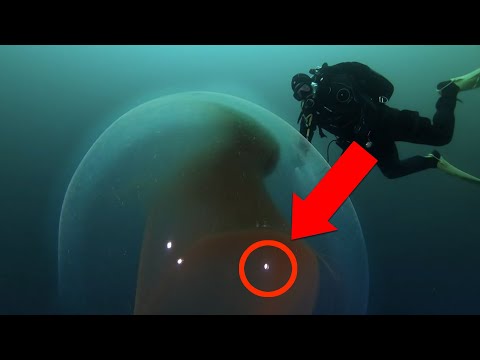
In 2019, the already enigmatic waters of a Norwegian fjord yielded a discovery that sent ripples through both the scientific and paranormal communities. Research diver Ronald Raasch, in collaboration with Nils Baadnes, captain of the REV Ocean vessel, encountered an object of significant size and unknown origin. While exploring a World War II shipwreck site at a relatively shallow depth of 55 feet, they stumbled upon what can only be described as a large, translucent enigma.

The object was described as being as large as a human, possessing a gelatinous form encased within a discernible membrane. At its core, a distinct, swirling pattern was observed. Raasch, employing his flashlight, illuminated the interior, revealing what appeared to be a dense concentration of hundreds of thousands of tiny, dark-colored spheres. This perplexing finding immediately raised more questions than answers, prompting a deeper dive into its potential classification.

"It was unlike anything I've ever seen. The sheer scale and the internal structure were baffling. We're trained to identify marine life, but this didn't fit any known biological profile. It was a perfect sphere, almost artificial in its symmetry, yet undeniably organic." - Ronald Raasch (paraphrased testimony).

The initial encounter, documented by Raasch and his team, presents a significant challenge to marine biology. The sheer volume of internal spheres, their uniform distribution, and the cohesive membrane suggest a highly organized structure, unlike the random aggregation of plankton or the cellular breakdown of decaying organic matter. Could this be an unprecedented life form, a rare geological phenomenon, or something entirely outside our current scientific paradigms? The implications are staggering.

Investigator's Analysis: Beyond the Known Biology

When confronted with phenomena that defy easy classification, the investigator's first duty is to systematically eliminate the mundane. In the case of the Norwegian Fjord Anomaly, this means considering all plausible biological explanations before venturing into more speculative territory. Was it a colossal siphonophore colony, perhaps? These colonial organisms can achieve impressive lengths, but typically exhibit a more complex, fragmented structure, not the unified, spherical form described. Could it be a large, spherical mass of mucus, possibly from a known species during an unusual reproductive event? While mucus aggregates are common, the described internal complexity and the sheer quantity of distinct dark spheres pose a hurdle for this hypothesis.

The mention of "hundreds of thousands of tiny dark-colored spheres" at the center is particularly intriguing. This suggests a reproductive or developmental function unlike anything cataloged. The precise arrangement and quantity imply an evolutionary advantage or specialization we have yet to understand. The membrane itself speaks to a controlled internal environment, essential for the survival and potential proliferation of these internal structures. This level of organization points towards a complex biological entity.

However, the sheer "otherness" of the object – its size, its seemingly uniform structure, and the lack of immediate identification by experienced divers – nudges us towards considering less conventional hypotheses. In the field of parapsychology, such unexplained phenomena are often cataloged as Anomalous Biological Occurrences (ABOs). These are entities or events that possess characteristics suggestive of life but do not conform to existing biological classifications. Sometimes, these can be linked to rarer deep-sea organisms, but in other instances, they hint at processes or even entities that operate on principles unknown to science.

The REV Ocean vessel itself is a state-of-the-art platform for oceanographic research, equipped with advanced sonar and remotely operated vehicles (ROVs). The fact that such an anomaly was encountered visually by divers, and not initially detected by sophisticated equipment, suggests it may possess properties that mask its presence or that it exists in an environment where detection is difficult. Comparative analysis with other deep-sea enigmas, such as the "Bloop" sound or the mysterious deep-sea creatures captured on film by research submarines, reveals a pattern: the ocean's depths are a reservoir of the unknown, challenging our anthropocentric view of life and reality.

The Investigator's Archive

To truly grasp the depth of the ocean's mysteries, one must consult the foundational texts and documented observations that have shaped our understanding of the unexplained from beneath the waves. These resources are not mere curiosities; they are vital datasets for any serious investigator venturing into this field.

  • "Twenty Thousand Leagues Under the Seas" by Jules Verne: While fictional, Verne's work presciently explored the potential for advanced, unknown life forms in the ocean, influencing generations of researchers and thinkers. His imaginative narratives often capture the essence of the "what if" that drives such investigations.
  • "The Great Unknown: The Thirteen Mysteries of the Deep" by Donald G. Malcom: This non-fiction work delves into documented enigmas, from unexplained disappearances to bizarre sightings, providing a factual basis for the ocean's capacity to harbor the extraordinary.
  • Documentation from the Census of Marine Life: While primarily scientific, the exhaustive data collected by this global initiative highlights the sheer diversity and the vast percentage of the ocean that remains unmapped and unexplored. It serves as a constant reminder of how much we don't know.
  • Deep Sea Exploration Footage (e.g., from NOAA): Visual records from ROVs and submersibles often capture fleeting glimpses of bioluminescent phenomena, unusual geological formations, and creatures that stretch the boundaries of known taxonomy. Seeking out these raw recordings can reveal anomalies that may not make it into polished documentaries.

Investigation Protocol: Deep Sea Anomalies

Investigating anomalies in the deep ocean presents unique challenges given the extreme conditions. However, applying a structured approach, similar to terrestrial paranormal investigations, can yield valuable insights. Here’s a protocol for approaching such cases:

  1. Prioritize Visual and Sensor Data: The primary evidence will be visual (photographs, video) and sensor readings (sonar, depth, pressure, temperature, salinity). Rigorous analysis of frame rates in video, lighting conditions, and any spectral analysis of luminescence is crucial.
  2. Corroborate Witness Testimony: If divers or crew members report an anomaly, cross-reference their accounts. Look for consistencies in descriptive details, spatial relationships, and temporal sequencing. Note any discrepancies, as they can sometimes point to environmental factors or misinterpretations.
  3. Consult Oceanographic Databases: Before classifying an anomaly as "unexplained," consult extensive databases of known marine life, geological formations, and unusual oceanographic events. Cross-reference with known phenomena like giant squid, large jellyfish blooms, or gas hydrates.
  4. Analyze Environmental Conditions: Extreme pressure, low light, and unique chemical compositions of deep-sea environments can create optical illusions or affect biological processes in ways we don't fully understand. Consider how these factors might influence what is observed.
  5. Consider Technological Limitations: Equipment can malfunction, create artifacts in images, or misinterpret data. Always question the integrity of the recording or sensing device itself. Was the camera calibrated? Was the sonar functioning optimally?
  6. Seek Expert Consultation: If an anomaly persists after initial analysis, consult with marine biologists, oceanographers, and theoretical physicists. Their specialized knowledge can shed light on complex biological or physical processes that might explain the phenomenon.

Frequently Asked Questions

Q: Could the Norwegian Fjord Anomaly be a known, albeit rare, marine organism?

A: While possible, its described characteristics, particularly the unified spherical structure and the massive number of internal dark spheres, do not readily align with any documented species. Further scientific analysis would be required for a definitive classification.

Q: What is the significance of the "hundreds of thousands of tiny dark-colored spheres"?

A: This detail is highly significant. It suggests a complex internal structure, possibly related to reproduction, development, or a specialized organelle. Its density and distribution are characteristic of a highly organized biological or even artificial system.

Q: Are there other similar unexplained objects found in the ocean?

A: Yes, the deep ocean is replete with unexplained phenomena, including unidentified sonar contacts, bizarre biological specimens brought up by research vessels, and large, enigmatic structures observed in deep-sea footage. The ocean remains one of Earth's last truly uncharted frontiers.

Investigator's Verdict: Fraud, Genuine Phenomenon, or Something Else?

The discovery in the Norwegian fjord presents a compelling case for an unidentified phenomenon. While the absence of definitive scientific classification leaves room for speculation, the testimony of experienced divers and the visual evidence, however limited, point towards something beyond the easily explainable. The object's size, internal structure, and lack of immediate identification prevent a hasty dismissal as a known marine organism or a simple anomaly. It is premature to label it definitively, but the evidence strongly suggests a genuine encounter with the unknown. It is not necessarily otherworldly, but certainly *other-thalassic* – belonging to a realm of oceanic biology and phenomena we have barely begun to catalog. The rigorous methodology required for such deep-sea investigations means that conclusive answers are rare, but the persistence of such mysteries is itself evidence of the profound unknowns that lie beneath the waves.

Conclusion: The Uncharted Territory Within

Our planet's oceans are a vast, dark canvas upon which nature paints its most alien and mysterious masterpieces. From colossal, gelatinous spheres to echoes of unknown entities, the deep sea continues to challenge our understanding of life and reality. The Norwegian fjord anomaly is but one testament to this enduring enigma. As technology advances, allowing us to probe deeper and longer into this alien realm, we must approach these discoveries with both scientific rigor and an open mind. The true expedition into the unknown has only just begun, and the abyss holds secrets that could fundamentally alter our perception of the world.

Your Field Mission

Your mission, should you choose to accept it, is to become an armchair explorer. Research other documented unexplained phenomena encountered during deep-sea expeditions. Look for patterns in these occurrences. Are there commonalities in the descriptions, locations, or the types of equipment involved? Document your findings and consider what these anomalies might collectively signify about the nature of life and existence in our planet's most inaccessible environments. Share your most compelling discovery and your hypothesis in the comments below. Let this analysis serve as a springboard for your own deep-sea investigation into the unknown.

About the Author

alejandro quintero ruiz is a veteran field investigator dedicated to the analysis of anomalous phenomena. His approach combines methodological skepticism with an open mind to the inexplicable, always seeking the truth behind reality's veil.

Lake Baikal's Deepest Secret: The Soviet Encounter with Subaquatic Humanoids


Introduction: The Abyss Beckons

The surface of Lake Baikal, vast and shimmering under the Siberian sun, belies a darkness that stretches deeper than any ocean trench. It is a realm largely untouched by human exploration, a silent keeper of secrets that defy conventional understanding. In 1982, this profound enigma became the stage for an encounter that would echo through the annals of unexplained phenomena: a reported confrontation between Soviet military personnel and inexplicable subaquatic humanoids. This isn't just a story; it's an intelligence briefing on an anomaly that continues to challenge our perception of what lies beneath the waters.

We peel back the layers of this extraordinary report, examining it not as a mere anecdote, but as a crucial data point in the broader spectrum of anomalous underwater phenomena (AUPs). The sheer depth and unique ecosystem of Baikal make it fertile ground for speculation, but when military assets are involved, the narrative shifts from folklore to potential classified intelligence. Was this a misidentification, a deliberate fabrication, or a genuine glimpse into the unknown?

The Cold War's Unseen Front: Lake Baikal in 1982

The year 1982 was a period of heightened geopolitical tension. The Cold War was in full swing, and both the Soviet Union and the United States were heavily invested in military advancements, surveillance technologies, and the exploration of potential strategic advantages – even those lying in unconventional territories. Lake Baikal, with its unparalleled depth (over 1,600 meters) and its vast freshwater reserves, represented a unique strategic asset. Its isolated location and immense volume made it an ideal site for sensitive military operations or classified research.

Submarine activity, sonar experiments, and deep-water reconnaissance were not uncommon even in inland bodies of water, particularly those of strategic importance. The presence of military divers during this era suggests operations that were likely classified, their objectives masked from public knowledge. It is within this context of secrecy and military presence that the Baikal humanoid report emerges, demanding a rigorous analysis of its origins and implications.

The Baikal Anomaly: Subaquatic Humanoids Versus the Soviets

The core of the report, disseminated through various channels including clandestine leaks and subsequent translations, details an incident involving a Soviet military unit, possibly a Spetsnaz deep-diving operation, in the frigid depths of Lake Baikal. While precise details remain elusive, the consistent elements across different accounts describe the discovery of beings that bear an uncanny resemblance to terrestrial humanoids but are distinctly adapted for an aquatic environment. These entities were reportedly encountered at considerable depths, far exceeding typical diving capabilities for unsupported human divers.

The narrative suggests a degree of conflict or at least a tense interaction. Reports indicate that the military divers attempted to capture or engage these subaquatic beings. The results, predictably, were disastrous for the human side. Several divers were allegedly lost or severely injured during the encounter, with some accounts even mentioning the beings employing advanced technology or exhibiting capabilities that far surpassed human understanding. The implication is that these were not mere animals, but intelligent entities, capable of defending themselves and posing a significant threat.

"We thought we were exploring the unknown depths of our own planet. We found something else entirely. Something that didn't belong, and that fought back with a ferocity we weren't prepared for." - Alleged testimony fragments from a former Soviet naval officer.

The specific descriptions of the humanoids vary, but common themes include tall, slender figures, with smooth, greyish skin that might have been adapted for camouflage or protection in the deep-water environment. Their heads are often described as large, with prominent eyes suitable for low-light conditions. The mention of specialized diving suits or biological adaptations for extreme pressure and cold adds another layer of enigma. Were these indigenous life forms, or something more extraordinary?

Deconstructing the Narrative: Evidence and Speculation

Analyzing the Baikal humanoid report requires a multi-faceted approach, blending critical skepticism with an openness to anomalous data. The primary challenge lies in the scarcity of verifiable, primary evidence. Most accounts are second-hand, compiled from alleged leaked documents and anecdotal testimonies. This immediately places the report within the realm of classified information, hearsay, and potential disinformation campaigns common during the Cold War.

Potential Explanations and Counter-Arguments:

  • Misidentification of Known Fauna: Lake Baikal is home to unique species, including the Baikal seal (nerpa). Could the military have mistaken known or unknown aquatic animals for humanoids? While possible, the descriptions of advanced capabilities and the alleged "confrontation" suggest something more complex than a simple animal encounter. The sheer depth at which these beings were reportedly sighted also raises questions about the ecological niches occupied by known Baikal fauna.
  • Experimental Soviet Technology: During the Cold War, both sides engaged in highly secretive military projects. Could the "humanoids" have been advanced submersible drones or even bio-engineered entities? This hypothesis aligns with the era of intense military experimentation but lacks concrete proof. If it were advanced technology, why the reported loss of personnel?
  • Psychological Warfare or Disinformation: The Soviet Union was known for its sophisticated disinformation tactics. Could the entire report be a fabricated story designed to mislead Western intelligence or to explain away a failed military operation or equipment malfunction? This is a strong possibility, as the narrative itself contains elements designed to shock and intrigue.
  • Genuine Anomalous Life Forms: This is the most sensational, yet persistent, interpretation. The notion of an unknown, intelligent species inhabiting the Earth's deepest freshwater lake is compelling. The depths of Baikal offer an environment hostile to human exploration, providing a perfect sanctuary for undiscovered life. The alleged technological or biological capabilities of these beings suggest an evolutionary path vastly different from our own, potentially hinting at origins beyond our planet, or at least, a lineage that predates known human history.

The consistency of the "humanoid" description across various alleged testimonies is significant. When multiple, independent sources, particularly those with military discipline, report similar phenomena, it warrants further investigation, even if the evidence remains circumstantial. The loss of life is a particularly sobering detail that lends a grim authenticity to the accounts, making simple explanations less likely.

Investigator's Verdict: Fraud, Genuine Phenomenon, or Cover-Up?

Based on the available records, the Baikal humanoid incident presents a classic case of a high-strung anomaly wrapped in layers of classified information and anecdotal reporting. It is highly improbable that this is a straightforward case of misidentification of known fauna, given the context of a military operation and the alleged nature of the encounter. Similarly, while a disinformation campaign is plausible, the reported casualties add a somber weight that complicates purely artificial explanations.

The most compelling avenue for exploration, while remaining deeply speculative without concrete evidence, is that of a genuine encounter with an unknown intelligent species inhabiting the extreme depths of Lake Baikal. The depths of Baikal are a world unto themselves, capable of harboring lifeforms that defy our current understanding of biology. The Soviet military's reported loss suggests these entities possess capabilities, whether biological or technological, that are not only unknown but potentially advanced.

Therefore, my verdict leans towards a potential genuine phenomenon with a significant likelihood of a subsequent cover-up. The Soviet military would have had every incentive to classify such an event to avoid public panic, to hide the loss of personnel, and to potentially study or conceal the existence of these beings. The lack of definitive proof is not, in itself, proof of absence, especially in the context of deeply classified military operations during the Cold War.

The Investigator's Archive: Essential Reading and Viewing

To delve deeper into the mysteries of subaquatic anomalies and Soviet-era enigmas, consulting specific resources is paramount. While direct documentation on the Baikal humanoid incident remains elusive, understanding the context is key. For those seeking to expand their knowledge, the following resources are invaluable:

  • On Subaquatic Enigmas: Explore works by researchers like Charles Fort, whose collections of anomalous phenomena, while eclectic, laid the groundwork for modern ufology and unexplained mysteries. Consider documentaries or books discussing unidentified subaquatic objects (USOs) and deep-sea mysteries.
  • On Soviet Secrecy and Anomalies: Research books detailing Soviet-era military projects or declassified documents pertaining to anomalous phenomena. While direct links to Baikal might be scarce, understanding the broader Soviet approach to the unexplained is crucial. Books on the Tunguska event or alleged Soviet UFO investigations can provide context.
  • On Deep-Sea Exploration and Biology: Understanding the extreme environment of Lake Baikal itself is vital. Research its unique endemic species and the challenges of deep-water scientific exploration. This provides a baseline against which anomalous reports can be assessed.
  • Platforms for Unexplained Content: Consider subscribing to platforms like Gaia.com or seeking out specialized documentaries on services like Amazon Prime or even dedicated YouTube channels that curate content on paranormal and unexplained events. These platforms often host deep dives into cases like the Baikal incident.

Field Protocol: Investigating Aquatic Anomalies

Investigating aquatic anomalies presents unique challenges compared to terrestrial investigations. The medium itself obscures evidence and limits direct observation. However, a structured approach, even when dealing with historical reports, can yield insights.

  1. Document Analysis: The first step, as demonstrated here, is to meticulously gather and analyze all available documentation, testimonies, and reports, cross-referencing details to identify consistencies and discrepancies.
  2. Environmental Assessment: Understand the specific environment of the reported anomaly. For Lake Baikal, this means studying its depth, temperature gradients, unique ecosystem, geological features, and the history of human activity within it. Knowledge of the natural can help discern the unnatural.
  3. Technological Considerations: Research the types of technology available and potentially deployed by military or scientific bodies during the period of the alleged sightings. This includes sonar capabilities, submersible technology, and deep-sea surveillance equipment that could have been used or were potentially overwhelmed.
  4. Corroboration and Witness Psychology: Seek independent corroboration, if any exists. Analyze witness testimonies for psychological factors that might influence perception, but also for indicators of genuine distress or conviction. In military contexts, consider the potential for group hysteria versus trained observation.
  5. Comparative Analysis: Compare the details of the Baikal incident with other reports of subaquatic humanoids or USOs globally. Look for recurring patterns in descriptions, behaviors, and interactions with human technology.

Frequently Asked Questions

Q1: What exactly is Lake Baikal?

Lake Baikal is an ancient freshwater lake located in southern Siberia, Russia. It is the deepest and oldest lake on Earth, holding approximately 20% of the world's unfrozen surface fresh water. Its unique ecosystem hosts numerous endemic species.

Q2: Why was the Soviet military potentially operating in Lake Baikal in 1982?

During the Cold War, strategic inland waterways like Lake Baikal could have been sites for sensitive military operations, including submarine testing, deep-water surveillance, or classified research due to their depth and isolation. The exact reasons remain speculative and likely classified.

Q3: Are there other reports of subaquatic humanoids?

Yes, reports of unidentified subaquatic creatures or humanoids, often termed "Merfolk," "Aquatic Aliens," or related to Unidentified Subaquatic Objects (USOs), exist globally. These often involve encounters with military or civilian vessels and divers in various oceans and large lakes.

Q4: Is there any official confirmation of the Baikal incident?

To date, there is no official, declassified confirmation from Russian or Soviet authorities regarding the specific incident of subaquatic humanoids encountering a military unit in Lake Baikal. The information largely circulates through unofficial channels and translations of alleged reports.

Conclusion: The Depths of the Unknown

The reported encounter in Lake Baikal in 1982 serves as a stark reminder of how little we truly understand about our own planet. The lake's extreme depth and unique environment create a plausible, albeit extraordinary, habitat for undiscovered life. The involvement of the Soviet military adds a layer of gravity, suggesting that if true, this was not merely a sighting but a significant event with potentially dire consequences.

Whether the Baikal humanoids are indigenous anomalies or visitors from beyond, their story, like so many others, lingers in the shadowy corners of our knowledge. It beckons us to continue exploring, to question the boundaries of the possible, and to acknowledge that the greatest mysteries may lie not in the stars, but in the unfathomable depths beneath our feet.

Your Mission: Explore Your Local Mysteries

Every region has its local legends, its whispered tales of unexplained phenomena. The Baikal incident, while dramatic, is rooted in the same human curiosity that drives us to investigate anomalies closer to home. Your mission, should you choose to accept it, is to become an investigator in your own backyard. Identify a local legend or an unexplained event in your community. Gather any anecdotal evidence, historical accounts, or local lore surrounding it. Then, apply the critical thinking skills we've discussed: consider potential explanations, look for consistencies, and determine what remains truly anomalous. Share your findings, your analysis, and your own verdict in the analysis section of the comments below. Let's uncover the mysteries that surround us, no matter how deep the water.

Alejandro Quintero Ruiz is a veteran paranormal field investigator dedicated to analyzing anomalous phenomena. His approach combines methodological skepticism with an open mind towards the inexplicable, always seeking the truth behind the veil of reality.