Followers

Mostrando las entradas con la etiqueta Ocean Anomalies. Mostrar todas las entradas

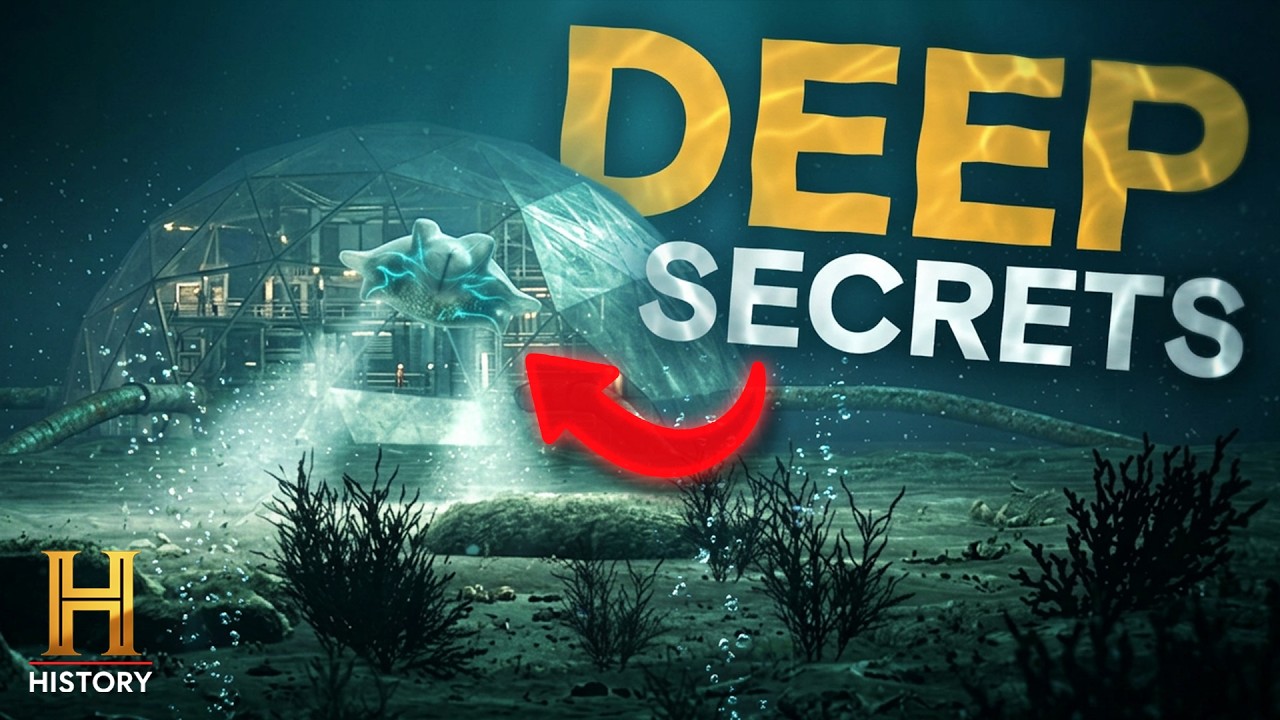
Secrets of the Deep Sea | Ancient Aliens


# Ancient Aliens: Deep Sea Secrets and Extraterrestrial Theories

Introduction: The Abyss of the Unknown

The vast, dark expanse of Earth's oceans, covering over 70% of our planet, remains one of the last great frontiers. While we've mapped the surface of the Moon and sent probes to distant planets, much of our own underwater world remains a mystery. This inherent unknown has always been fertile ground for speculation, and few topics captivate the imagination like the possibility that these depths might hold secrets far older and more alien than we can comprehend. The theory of Ancient Astronauts, often focusing on terrestrial monuments and ancient texts, frequently overlooks the most extensive and enigmatic environment on Earth: the deep sea. Could the silence of the abyss be hiding evidence of an extraterrestrial presence that has interacted with our planet for millennia, long before the pyramids were built or the first cities rose? This expediente delves into the compelling, albeit speculative, connections between deep-sea mysteries and the enduring paradigm of extraterrestrial influence.

Historical Context: Ancient Mariners and Unexplained Phenomena

For as long as humanity has sailed, tales of the sea have been intertwined with the wondrous and the terrifying. Ancient mariners, navigating by stars and instinct, were intimately familiar with the ocean's power and its capacity to conceal. Myths and legends from cultures worldwide speak of mysterious voyages, strange lights beneath the waves, and encounters with beings not of this earth. These narratives, dismissed by many as folklore, can be re-examined through the lens of potential extraterrestrial interaction.

Consider the ancient texts that describe flying machines or celestial visitors. While often linked to terrestrial sites, what if some of these descriptions were inspired by phenomena observed not in the sky, but in the water? The deep sea, with its bioluminescent creatures and crushing pressures, is a realm that has always defied easy explanation. Early human cultures, lacking scientific instruments, would have perceived these unusual events as manifestations of the divine or the otherworldly. It is plausible that some of these ancient accounts, when stripped of religious interpretation, might point to observations of advanced, non-human technology operating within our oceans.

Deep Sea Anomalies: Echoes from the Deep

Modern oceanography has cataloged an array of phenomena that defy conventional scientific explanation. Sonar anomalies, unexplained acoustic signals, and peculiar patterns of activity in the deepest trenches hint at something more than just geological processes or known marine life.

One persistent area of interest is the existence of unexplained acoustic signals originating from the ocean depths. The "Bloop," a sound detected in 1997, was so powerful and unlike any known biological or geological source that it initially fueled speculation about massive, undiscovered sea creatures. While later attributed to icequakes, the intensity and unique characteristics of such sounds continue to puzzle researchers. Could these signals be remnants of advanced propulsion systems, communication networks, or even territorial markers left by non-terrestrial intelligences that utilize Earth's oceans as a base or transit zone?

Furthermore, deep-sea exploration has revealed hydrothermal vents teeming with life, pushing the boundaries of our understanding of habitability. Some theories propose that advanced extraterrestrial civilizations might have seeded life on Earth, and that the deepest oceanic trenches, with their extreme conditions, could serve as ecological niches or even preserved remnants of ancient, non-terrestrial biological experiments.

Underwater Structures: Artificial or Natural Illusions?

Perhaps the most tantalizing evidence, often cited in discussions of Ancient Astronauts, involves purported underwater structures. From the Yonaguni Monument off the coast of Japan to alleged formations in the Bimini Road, these geological features have sparked debate: are they natural geological processes, or do they represent the architectural remains of lost civilizations, possibly influenced by or created by extraterrestrial visitors?

The Yonaguni Monument, in particular, has been a focal point. This massive, multi-tiered formation features sharp angles and flat surfaces that some argue are too regular to be natural. While geologists largely classify it as a natural rock formation, the debate persists. Proponents of the Ancient Astronaut theory suggest it could be a submerged megalithic structure, dating back thousands of years, perhaps constructed by a civilization that predates known history – a civilization that may have had extraterrestrial contact.

Similarly, other underwater sites around the globe have yielded findings that are difficult to reconcile with purely natural explanations. If these are indeed artificial structures, their sheer age and submerged state raise profound questions about Earth's history and the civilizations that may have once inhabited it, potentially with the aid or guidance of extraterrestrial entities.

Cryptids and Encounters: Life in the Uncharted Depths

The deep sea is home to creatures so bizarre they often seem like something from another world. From the colossal squid to the anglerfish with its bioluminescent lure, nature’s imagination in the abyss is boundless. This environment also serves as a backdrop for numerous cryptid sightings and unexplained encounters.

Legends of mermaids and sea serpents, while often relegated to myth, could be distorted accounts of something more. Some researchers posit that these tales might stem from encounters with advanced aquatic beings, or even extraterrestrial species that have adapted to or engineered life for Earth’s oceans. The sheer scale and pressure of the deep sea make it an ideal hiding place for entities that would prefer to remain unobserved by surface dwellers.

Consider the concept of "aquatic aliens" – species from other planets that might favor watery environments, similar to how many Earth species are adapted to water. If extraterrestrials have been visiting Earth for eons, it stands to reason they might have established bases or monitoring stations in our vast oceans, potentially interacting with or observing the indigenous marine life, and perhaps even creating new forms of life. The possibility of intelligent non-human life, whether indigenous or alien, residing in the deep sea continues to fuel intriguing, if unproven, hypotheses.

Ancient Astronaut Implications: An Extraterrestrial Oceanography?

The core of the Ancient Astronaut theory suggests that extraterrestrial beings have influenced human civilization throughout history. When applied to the deep sea, this expands the scope of potential interaction dramatically. If these visitors were not merely observers or occasional visitors to land, but established a significant presence, then the oceans would be a logical place for such activity.

Imagine extraterrestrials utilizing Earth’s oceans as a strategic vantage point, a resource hub, or even a terraforming project. Their technology, far beyond our comprehension, could operate unimpeded by the immense pressure and darkness. This perspective reframes many oceanic mysteries: are unusual energy signatures the result of unknown geological phenomena, or are they the byproduct of advanced alien technology? Are unexplained disappearances at sea merely tragic accidents, or are they evidence of deliberate interference?

The theory posits that ancient coastal civilizations might have had more direct contact with these underwater alien presence than inland cultures. Coastal peoples were the first to witness strange lights emerging from the sea, or unusual visitors arriving on their shores, potentially shaping their myths and beliefs about the gods from the water. This integrated view suggests that any comprehensive study of Ancient Astronauts must acknowledge the profound role Earth's oceans may have played in this millennia-long narrative.

Researcher's Verdict: Drowning in Speculation or Diving for Truth?

From a pragmatic standpoint, the hypothesis that Earth's oceans are a staging ground for extraterrestrial activity remains firmly in the realm of speculation. The evidence presented – be it sonar anomalies, purported underwater structures, or ancient myths – can, in most cases, be explained by known geological, biological, or psychological phenomena. The human tendency to seek patterns and assign meaning to the unknown is a powerful force, especially when confronted with the sheer mystery of the deep sea.

However, the investigator's duty is not to dismiss the unexplainable, but to investigate it. The persistent anomalies detected in our oceans, the enigmatic nature of certain underwater formations, and the enduring human fascination with the unknown warrant continued scientific inquiry. While extraordinary claims require extraordinary evidence, and the Ancient Astronaut theory thrives on circumstantial links, the possibility that something extraordinary resides in our planet's depths cannot be entirely discounted. The ocean floor is a treasure trove of geological history; it is not beyond the realm of possibility, however remote, that it also holds clues to visitors from beyond our world. The lack of definitive proof does not equate to definitive absence.

Field Notes: Further Investigation

The exploration of deep-sea phenomena and their potential connection to extraterrestrial theories requires a multidisciplinary approach. Scientists continue to deploy advanced sonar and submersible technology to map and understand the ocean floor. Researchers in the field of parapsychology and ufology can contribute by analyzing historical records, witness testimonies, and exploring anecdotal evidence that might otherwise be overlooked.

Key areas for future investigation include:

  • Advanced Acoustic Analysis: Thoroughly re-examine historical and ongoing acoustic data from the oceans, employing AI and advanced pattern recognition to distinguish between natural and potentially artificial signals.
  • Geological and Archaeological Surveys: Conduct more rigorous surveys of purported underwater structures, employing state-of-the-art remote sensing and employing archaeological methodologies to assess their origins.
  • Historical Textual Analysis: Re-evaluate ancient seafaring myths and legends across diverse cultures, looking for common motifs or descriptions that might align with advanced technology or non-human intelligences.
  • Biomimicry and Exobiology: Study the extremophiles of the deep sea as potential models for extraterrestrial life adapted to harsh environments.

The challenge lies in separating genuine mysteries from imaginative interpretations. My protocol dictates a rigorous process of elimination, seeking the most parsimonious explanation first. Yet, I remain open to the possibility that some anomalies may indeed point towards an agenda far grander and more ancient than terrestrial history alone can explain.

"The ocean is a mirror to the cosmos, reflecting depths we are only beginning to fathom. What lies beneath the crushing dark might be more alien than any star."

Frequently Asked Questions

  • What is the main argument connecting the deep sea to Ancient Astronaut theories?

The argument suggests that the vast, unexplored nature of Earth's oceans provides an ideal environment for ancient extraterrestrial visitors to establish bases, conduct operations, or leave behind evidence without direct human observation. This includes purported underwater structures and unexplained acoustic phenomena.
  • What are some examples of alleged underwater structures linked to extraterrestrials?

The Yonaguni Monument off the coast of Japan and the Bimini Road in the Bahamas are frequently cited examples. While geological explanations exist, proponents argue their regularity suggests artificial origins, potentially from lost ancient civilizations influenced by aliens.
  • How do unexplained deep-sea sounds relate to this theory?

Mysterious and powerful acoustic signals, like the historical "Bloop," are sometimes interpreted as evidence of large, unknown entities or advanced underwater technology, possibly of extraterrestrial origin, operating in the deep sea.
  • Are there any scientific theories about aquatic alien life?

While speculative, the field of astrobiology considers the possibility of life evolving in water-rich environments on other planets. Some theorize that if aliens visited Earth, they might have possessed aquatic capabilities or engineered life suited for our oceans.

alejandro quintero ruiz is a seasoned investigator with decades of experience dissecting anomalous phenomena. His pragmatic approach, honed by countless fieldwork expeditions and rigorous analysis, has led him to explore the fringes of the known world. He specializes in ufology, cryptozoology, and the intersection of ancient history with potential extraterrestrial influence. His work aims to bridge the gap between skepticism and the possibility of the unexplained, always seeking verifiable evidence. He is the author of several influential reports and a frequent consultant on cases deemed too unusual for conventional study.

Your Mission: A Descent into the Unknown

The next time you gaze out at the ocean, remember that its surface is merely a thin veil. The true mystery lies miles below. Your mission, should you choose to accept it, is to remain curious. Seek out reputable documentaries, read critically about oceanographic discoveries, and ponder the possibilities. Do you believe our oceans harbor secrets beyond mere marine biology, secrets that might connect to the stars?

Share your thoughts and any personal experiences with unexplained phenomena related to water or the sea in the comments below. Let this investigation serve as a catalyst for your own explorations.

Don't let these mysteries remain submerged. Share this expediente on your social networks and join the conversation. Subscribe to our channel for more deep dives into the unexplained.

Deep Sea Mystery: Monster Attacks Mako Shark - Analysis of "The UnXplained" Episode

Image

The vast, unexplored depths of our oceans harbor more secrets than we can possibly imagine. Legends of colossal sea creatures capable of feats that defy conventional understanding have persisted for centuries. One such mystery, explored in an episode of The UnXplained, posits a terrifying scenario: a deep-sea entity large enough to bisect a Mako shark. This investigation delves into the episode's claims, examining the evidence presented and considering alternative, albeit equally intriguing, explanations.

Introduction: The UnXplained's Terrifying Premise

Season 6, Episode 10 of The UnXplained, titled "Monsters Among Us," ventures into the abyssal plains to confront a chilling question: could a creature lurking in the deep ocean be so immense that it could literally tear apart a Mako shark, one of the ocean's apex predators? The premise itself is enough to send shivers down the spine, tapping into our primal fear of the unknown that lies beneath the waves. This episode, presented by William Shatner, delves into the possibility of undiscovered leviathans, forcing us to reconsider the limits of marine biology and the potential for true monsters to exist in the 70% of our planet that remains largely unexplored.

Examining the Evidence: What the Episode Suggests

The core of the episode's premise revolves around the fate of a tagged Mako shark. The narrative suggests that this powerful predator met a violent end, not by a typical predator, but by something significantly larger and more formidable, capable of inflicting such damage that the shark was bitten in half. While the episode doesn't explicitly identify the attacker, it leans into the sensationalism of a colossal, unknown sea monster. The implication is that conventional predators, even large ones like Great Whites or Orcas, might not be the sole explanation for such a violent demise. The mystery is amplified by the fact that the evidence, as presented, points towards an act of incredible power.

Recommended Gear for Investigation

ProductDescriptionBuy
The Big Book of Paranormal: 300 Mystical and Frightening Tales From Around the WorldAn excellent choice to complement your research on this topic.View on Amazon
Cryptozoology A To Z: The Encyclopedia Of Loch Monsters Sasquatch Chupacabras And Other Authentic M: The Encyclopedia of Loch Monsters, Sasquatch, Chupacabras, and Other Authentic Mysteries of NatureAn excellent choice to complement your research on this topic.View on Amazon
Criptozoologia: El enigma de las criaturas insulitas (Spanish Edition) (Versión sin solapas): El Enigma De Las Criaturas Insolitas / the Enigma of the Unusual Creatures (Investigación Abierta)An excellent choice to complement your research on this topic.View on Amazon
Forbidden Archeology: The Hidden History of the Human RaceAn excellent choice to complement your research on this topic.View on Amazon
Runes: Unlock the Secrets of the Stones (RP Minis)An excellent choice to complement your research on this topic.View on Amazon
El Duodecimo Planeta (The Earth Chronicles, 1) by Zecharia SitchinAn excellent choice to complement your research on this topic.View on Amazon
The H. P. Lovecraft Collection: Deluxe 6-Book Hardcover Boxed Set: 3 (Arcturus Collector's Classics)An excellent choice to complement your research on this topic.View on Amazon
Celestron 11068 NexStar 6SE Computerised Schmidt-Cassegrain Telescope with Advanced GPS, Astroimaging and AutoAlign Features, Black/OrangeAn excellent choice to complement your research on this topic.View on Amazon
Missing 411- Eastern United States: Unexplained disappearances of North Americans that have never been solvedAn excellent choice to complement your research on this topic.View on Amazon
Ghost-Hunting For Dummies [Idioma Inglés] An excellent choice to complement your research on this topic.View on Amazon

Alternative Theories: Natural Predation vs. The Unknown

While The UnXplained embraces the possibility of a monstrous attacker, the reality of marine ecosystems offers several plausible, albeit less sensational, explanations. As many keen observers in online discussions noted, Orcas (Killer Whales) are notorious for their predatory prowess and are known to hunt and dismember sharks, often targeting their nutrient-rich livers. A large Great White Shark could also inflict significant damage. One viewer pointed out, "It looked like several bites had been taken out of the Mako, so once hooked it was attacked by other sharks, nothing to say it was one huge creature." This suggests a feeding frenzy rather than a single, monolithic entity. Another perspective offered, "The whole shark didn't have to be eaten. The tracker was attached to the dorsal fin. Whatever ate it only had to bite off the fin. A shark of the same size could be the attacker." This pragmatic view breaks down the event into more manageable biological interactions. The vastness of the ocean, as one commenter wisely stated, "is SO VAST that probably there are creatures that are yet undiscovered." This acknowledges the potential for the unknown without resorting to outright monster speculation.

The History Channel's Approach to Mystery

The UnXplained, produced by the same team behind shows like "Ancient Aliens" and "The Curse of Oak Island," operates within a specific genre of documentary filmmaking. These programs are designed to explore the inexplicable, often leaning into speculation and the more dramatic interpretations of events. Hosted by William Shatner, whose distinctive voice and presence evoke a sense of wonder and gravitas, the series aims to present compelling narratives around mysteries that lack definitive answers. As one viewer fondly recalled, "Bill Shatner's voice is just perfect. So many videos today are horrible robot voice, it's great to hear a real human - and such a talented one." This approach, while entertaining, often prioritizes intrigue over definitive proof, a style that has led some long-time viewers to question the channel's editorial direction. One commentator lamented, "Remember when History channel was considered a serious and trustworthy outlet?" This sentiment highlights a common critique: the channel's shift towards sensationalism, which can sometimes overshadow rigorous investigation.

Voices from the Deep: Expert and Audience Interpretations

The reception to episodes like this is often divided, reflecting a spectrum of belief and skepticism. Many audience members engage with the show's premises, offering their own theories and observations. For instance, the suggestion of a massive sea monster, potentially a Megalodon survivor, resonates with a segment of the audience, as seen in the comment: "If, somewhere in the world, there WERE a gigantic, terrifying and deadly sea monster, which can bite an enormous shark in half... it makes perfect sense that it would reside near Australia." However, a strong counter-current of skepticism is always present. Several comments point towards more mundane explanations: "Big fish bites smaller fish. Happens everyday," and "No monsters... Just Orcas." The pragmatic analysis of bite marks also stands out: "The mouth of the attacker is in plain view. It took 3 bites, not one. Pretty big great white, or other shark. Come on people it wasn't a megladon..." This practical deconstruction of the visual evidence is crucial in paranormal and cryptozoological investigations. Some viewers found solace in the familiar, with William Shatner's narration bringing a sense of nostalgia: "Narrator William Shatnor takes me back to my childhood and watching Rescue 911. Nostalgia. His voice is calming." Yet, the recurring theme in much of the feedback is the lack of concrete evidence: "Hundreds for possibilities, Hundreds of theories, ZERO evidence or facts." This highlights the critical demand for demonstrable proof in any investigation.

"We don’t know what ate the shark," but you had the tracker IN the shark’s stomach, still working... 3:00 - This statement highlights a common frustration: presented with an anomaly, the investigation seems to stop short of definitive conclusions, leaving the audience to fill in the blanks, often with speculative leaps.

Researcher's Verdict: Fraud, Genuine Phenomenon, or Something Else?

From an analytical standpoint, The UnXplained often presents a compelling narrative dressed in the guise of investigation. The scenario of a deep-sea monster attacking a Mako shark is, by its very nature, designed for maximum impact. While the possibility of undiscovered, large marine life cannot be entirely dismissed given the ocean's vastness, the evidence presented typically lacks the irrefutable quality demanded by rigorous scientific inquiry. The most logical explanation, supported by extensive marine biology data, points towards known predators like Orcas or large sharks. The behavior of Orcas, particularly their tendency to prey on sharks for their livers, provides a well-documented mechanism for such an event. The episode's speculation about a monstrous entity, while entertaining, aligns more with the tradition of maritime folklore and cryptozoology than with verifiable fact. It serves as a reminder that sensational claims require extraordinary evidence, which, in this case, appears to be absent. The show excels at posing intriguing questions, but the answers it hints at often remain firmly in the realm of the speculative.

The Researcher's Archive

For those seeking deeper dives into unexplained phenomena and the science behind them, the following resources are invaluable:

Books:
  • "The Deep: The Extraordinary Creatures of the Abyss" by Claire Nouvian - Explores the real, often bizarre, creatures of the deep sea.
  • "Otherness: Living with the Aliens" by Jacques Vallée - Delves into the nature of unexplained phenomena and potential interpretations beyond simple extraterrestrial contact.
Documentaries:
  • "My Octopus Teacher" (Netflix) - Offers an intimate look at marine intelligence and the deep sea environment.
  • "Searching for Sugar Man" (Netflix) - A masterclass in investigative documentary storytelling about a mystery with a surprising resolution.
Platforms:
  • National Geographic Archives: For factual reporting on marine life and oceanographic research.
  • BBC Earth YouTube Channel: Features stunning natural history footage and explanations.

Protocol: How to Investigate Marine Anomalies

Investigating potential marine anomalies, especially those involving large predators or unexplained events, requires a methodical approach:

  1. Document Observation: Record all details meticulously. If visual evidence exists, analyze it critically for signs of known species, environmental factors, or editing.
  2. Consult Experts: Engage with marine biologists, zoologists, and cryptozoologists who specialize in the relevant ecosystems and creatures. Their insights are crucial for distinguishing between known behaviors and genuine anomalies.
  3. Analyze Environmental Data: Consider factors like sonar readings, ocean currents, seismic activity, and water temperature, which can influence animal behavior and create unusual phenomena. Military sonar, for instance, has been implicated in unusual whale behavior, as one comment suggested: "I do believe the whales are running in fear from something, it’s called military sonar."
  4. Evaluate Predatory Behavior: Research the known hunting patterns and capabilities of species in the area. For shark attacks, understanding the feeding habits of Orcas and Great White Sharks is paramount. Reports of sharks surviving severe injuries, or of multiple predators being involved, should be given weight.
  5. Review Existing Literature: Cross-reference the event with historical accounts, folklore, and previous research on similar phenomena or creatures in the region.
  6. Seek Corroboration: Look for independent reports or evidence that might support or refute the primary claim.
  7. Consider Technological Limitations: Bear in mind the potential for equipment malfunction or misinterpretation, especially with tracking devices or underwater recordings.

Equipo Recomendado para la Investigación

Frequently Asked Questions

Q1: Could a Megalodon still exist in the deep ocean?

While the idea of a surviving Megalodon is a popular one in cryptozoology and speculative media, the scientific consensus is that the species went extinct millions of years ago. The lack of definitive fossil evidence from recent geological periods makes its survival highly improbable, though not entirely impossible given the vastness of the unexplored ocean.

Q2: What is the most likely explanation for a shark being bitten in half?

The most scientifically plausible explanations involve predation by other large marine animals, such as Orcas or exceptionally large Great White Sharks. These animals are capable of inflicting severe damage. Additionally, a shark that has been hooked or injured could become prey for multiple scavengers or predators in a feeding frenzy.

Q3: Why does a show like "The UnXplained" focus on sensational mysteries?

"The UnXplained" and similar programs aim to entertain by exploring topics that capture public imagination and defy easy answers. They often present speculative theories and highlight anecdotal evidence to create compelling narratives. Their goal is to spark curiosity and discussion rather than provide definitive, scientifically validated conclusions.

Q4: Is there any scientific basis for belief in large, undiscovered sea monsters?

While the ocean remains largely unexplored, and new species are discovered regularly, the existence of creatures large enough to routinely bisect apex predators like Mako sharks would likely leave more substantial evidence. However, the ocean's depths are a frontier, and the possibility of megafauna yet unknown cannot be entirely ruled out, though it remains highly speculative.

Your Field Mission

The allure of undiscovered creatures in the deep sea challenges our understanding of the natural world. While "The UnXplained" presents a sensational possibility, your mission is to approach such claims with a critical yet open mind. Consider the evidence presented, research known biological behaviors, and always question the narrative. NEXT TIME YOU SEE A DOCUMENTARY ABOUT SEA MONSTERS, ASK YOURSELF: IS THIS AN ALIEN PREDATOR, OR JUST LARGER FISH DOING WHAT LARGER FISH DO?

Share your thoughts and any personal experiences with unexplained marine phenomena in the comments below. Did you find the episode convincing? What are your theories? Don't keep your insights to yourself – share this investigation with fellow explorers and enthusiasts on social media!

Investigator's Note: True paranormal research doesn't fund itself. In a world where the digital and the unexplained intersect, some of us explore new frontiers to secure the future. Do you dare to be part of the vanguard? Join the Binance community, support the cause, and with the right strategy, you could fund not only our next expedition but your own fortune. The next great discovery could be just a click away.

The Mariana Trench: A Descent into the Unknown - Analyzing Its Strangest Inhabitants


Introduction: The Abyss Beckons

The crushing blackness of the Mariana Trench, a scar on the ocean floor stretching over 11,000 meters deep, is less an environment and more a testament to biological resilience. It’s a realm where sunlight is a forgotten myth, and pressure mounts to levels that would vaporize conventional structures. Yet, life persists, not just surviving, but thriving in forms so alien they challenge our very definition of existence. This isn’t a mere collection of facts; it’s an invitation to peer into the abyss and question what lurks in the deepest, most inaccessible corners of our planet. Today, we descend.

As a seasoned investigator of the unexplained, I approach tales of deep-sea horrors with a healthy dose of skepticism, but the Mariana Trench presents a unique challenge. Its remoteness and extreme conditions make direct observation incredibly difficult, creating fertile ground for both scientific speculation and wild conjecture. Forget your common garden-variety sea monsters; the organisms reported from these depths redefine ‘strange’.

Scientific Analysis: Evolution Under Pressure

The Mariana Trench is the ultimate pressure cooker. The life forms that inhabit it are not merely adapted; they are sculpted by forces that defy terrestrial comprehension. This is a prime example of extreme environmental adaptation, pushing the boundaries of known biology. Understanding these creatures requires a deep dive into evolutionary principles, particularly convergent evolution and the biochemical adaptations necessary to withstand hydrostatic pressure exceeding 1,000 times that at sea level.

Organisms like the ‘hadal zone’ amphipods, often appearing translucent and eyeless, showcase how evolutionary pathways can diverge dramatically when isolated in unique environmental niches. Their physiology is a marvel of bio-engineering, utilizing piezolytes—molecules that stabilize proteins and cell membranes under immense pressure. This isn't magic; it's extreme chemistry at work. However, the sheer *otherness* of these forms inevitably sparks deeper questions. Could such extreme isolation also harbor… *more*?

Research into deep-sea life often involves remotely operated vehicles (ROVs) and specialized submersibles, akin to deploying advanced sensor arrays in a hostile alien world. The data collected—visual, biological, and environmental—provides the raw material for our analysis. Yet, the deepest parts of the trench remain largely unexplored, a vast uncharted territory where the next 'discovery' could fundamentally alter our understanding of life itself.

Case Files: The Trench's Most Enigmatic Residents

While scientific literature documents extraordinary species, popular lore and speculative theories often paint a more vivid, and sometimes terrifying, picture. These accounts, though lacking the rigor of peer-reviewed journals, fuel the imagination and highlight the profound mystery that the Trench represents. Let's examine some of these peculiar denizens:

  • The Snailfish (Genus Pseudoliparis): Far from being a mere fish, these ethereal creatures are the deepest-living vertebrates known, thriving at depths of over 8,000 meters. Their gelatinous bodies lack scales and possess a specialized mucus layer to counteract the crushing pressure. Scientists marvel at their survival mechanisms, but the question remains: what other evolutionary tricks might they possess in environments yet to be explored by human technology?
  • The Vampire Squid (Vampyroteuthis infernalis): Despite its ominous name, this cephalopod is not a predator in the traditional sense. It inhabits the oxygen minimum zone and feeds on marine snow—detritus raining down from above. Its remarkable physiology, including the ability to turn itself inside out to evade threats, makes it a prime example of life adapting to scarcity and darkness. However, its unique bioluminescent capabilities and defensive posture have fueled speculation about its true nature.
  • The Blobfish (Psychrolutes marcidus): Often cited as the 'ugliest animal', the blobfish appears as a gelatinous mass only when brought to the surface and decompressed. In its natural habitat, its density is perfectly matched to the surrounding water, allowing it to float effortlessly near the seabed. Its peculiar appearance, however, has led to popular fascination and comparison with fictional sea monsters.
  • The Gulper Eel (Eurypharynx pelecanoides): This fish possesses a disproportionately large mouth, capable of swallowing prey much larger than its head. Its expandable stomach and bioluminescent lure make it a terrifying predator in the perpetual night of the deep sea. This adaptation, while functional, creates an image so bizarre it borders on the monstrous.
  • The Anglerfish: A classic deep-sea predator, the anglerfish is renowned for its esca, a bioluminescent lure dangling from its head to attract unsuspecting prey in the absolute darkness. The extreme sexual dimorphism, where males are tiny parasites fused to the much larger females, adds another layer of biological oddity. Could its lure mimic something more than just food?
  • The Fangtooth (Anoplogaster cornuta): Possessing some of the largest teeth relative to body size of any fish, the fangtooth is a formidable predator despite its small stature. These teeth are so large they have sockets in the roof of its mouth to accommodate them. Its terrifying appearance is purely a product of its extreme environment, but it serves as a chilling reminder of the predatory nature of deep-sea life.
  • Giant Isopods: These enormous crustaceans resemble giant terrestrial pill bugs and scavenge on whale carcasses and other detritus that sinks to the trench floor. While their size is impressive, their role as deep-sea decomposers is crucial. Their existence highlights how even familiar-looking life forms can adopt monstrous proportions in extreme environments.
  • Xenophyophores: These are single-celled organisms that create elaborate shells from sediment. They are among the largest known single-celled organisms on Earth, and their complex structures are vital to the trench ecosystem, providing habitat for smaller organisms. Their existence as giants at a cellular level is a profound biological anomaly.
  • The Dumbo Octopus (Grimpoteuthis genus): Named for their ear-like fins that propel them through the water, Dumbo octopuses are among the deepest-dwelling octopuses. They are graceful, almost whimsical, in their movements, a stark contrast to the harsh environment they inhabit. Their otherworldly appearance blurs the line between reality and fantasy.
  • Unknown Bioluminescent Organisms: Countless reports from deep-sea submersibles mention unidentified glowing entities, fleeting lights, and organisms that defy immediate classification. These fleeting glimpses, often captured on limited sensor data, fuel speculation about undiscovered species—or perhaps even phenomena we don't yet understand.
"To explore the Mariana Trench is to confront the limits of our knowledge. We send probes into the void, and what returns often raises more questions than it answers. The pressure there is immense, but the pressure of the unknown is far greater."

Unexplained Phenomena and Theories

The extreme conditions of the Mariana Trench naturally lead to speculation. Beyond the documented biodiversity, theories abound regarding what *else* might inhabit these abyssal depths, often drawing parallels with UFOlogy and ancient myths.

Theories of Undiscovered Apex Predators: Given the vastness of unexplored territory, some hypothesize the existence of undiscovered apex predators far larger and more formidable than current scientific understanding allows. These theories often draw from ancient seafaring legends of colossal sea creatures, suggesting that the deepest trenches might be their last refuge.

Biomechanical or Artificial Intelligences: The sheer alienness of some deep-sea life forms has, for some researchers, led to more speculative avenues. Could some bioluminescent patterns be sophisticated communication systems, or even rudimentary forms of artificial intelligence that evolved naturally? The concept of life evolving intelligence independent of terrestrial lineages is a tantalizing, if fringe, possibility.

Extraterrestrial Connections: The Mariana Trench, with its otherworldly environment and mysterious inhabitants, has become a focal point for theories linking deep-sea anomalies to extraterrestrial life. The argument often posits that if alien life is to exist elsewhere, it might resemble the extremophiles we find in the deepest parts of our own oceans, or that the Trench could serve as a base or landing site for non-terrestrial entities.

The "Shadow Biosphere" Hypothesis: This theory suggests the existence of life forms that use different biochemistry from that found everywhere else on Earth. The extreme isolation of the Mariana Trench makes it a plausible candidate for hosting such a divergent form of life, undetectable by our current scientific methods.

Investigator's Verdict: Fact or Deep-Sea Fiction?

My analysis of the creatures inhabiting the Mariana Trench leads to a dual conclusion: the documented biological wonders are astonishing, pushing the established limits of life. The scientific evidence for their adaptation to extreme pressure and darkness is undeniable. These are not monsters in the Hollywood sense, but rather exemplars of evolutionary ingenuity under immense environmental stress. Investing in submersible technology and deep-sea research is crucial for understanding these genuine biological marvels.

However, the persistent allure of the inexplicable—the fleeting lights, the unconfirmed sightings, the vast unexplored regions—leaves a sliver of the unknown. While I firmly dismiss sensationalist claims of krakens or alien bases without verifiable evidence, the sheer potential for discovery in the Trench is immense. The very conditions that make it inhospitable to us are precisely what make it a biological frontier. It is a reminder that our planet still harbors profound mysteries, and that the greatest discoveries might lie not in the stars, but in the crushing darkness beneath the waves. The scientific findings offer profound insights, but the void itself continues to whisper tales that challenge our rational minds.

Research Protocol: Tools for Deep-Sea Investigation

Investigating phenomena in environments like the Mariana Trench requires specialized equipment that goes far beyond standard ghost-hunting gear. It’s about deploying sophisticated technological proxies capable of functioning under extreme conditions:

  1. Remotely Operated Vehicles (ROVs): These unmanned, tethered submersibles are equipped with high-definition cameras, sonar, manipulator arms, and environmental sensors. They are the eyes and hands of scientists in the abyss. Investing in high-quality ROV footage is paramount for any serious deep-sea investigation.
  2. Autonomous Underwater Vehicles (AUVs): Unlike ROVs, AUVs operate independently, programmed for specific survey missions. They can cover larger areas and are crucial for mapping and data collection in remote locations.
  3. Deep-Sea Submersibles: Manned submersibles, like the DSV Limiting Factor, allow direct human observation, though at immense cost and risk. Their reports are invaluable eyewitness accounts.
  4. Pressure-Resistant Cameras and Lighting: Standard photographic equipment is useless. Specialized cameras and powerful lighting systems are needed to capture images in the absolute darkness.
  5. Sonographic Equipment: Advanced sonar systems are used to map the trench floor, detect large objects or anomalies, and potentially identify unusual acoustic signatures.
  6. Environmental Sensors: Measuring temperature, salinity, pressure, and chemical composition provides context for biological observations and can sometimes reveal anomalous readings.

The Researcher's Archive

For those who wish to delve deeper into the mysteries of the deep sea and its inhabitants, the following resources are indispensable. They offer a blend of scientific rigor and speculative exploration that fuels critical inquiry:

  • Books:
    • "Alien Deep: OMG Sea" by Bob Ballard: An accessible introduction to deep-sea exploration from a renowned oceanographer.
    • "The Deep: The Extraordinary Biographies of Ordinary Deep-Sea Creatures" by James Bradley: Explores the survival strategies of abyssal life.
    • "Atlas of the Deep: One Hundred of Our Planet's Best Kept Secrets" by Chris R. P. M. van der Ploeg: A visual compendium of deep-sea wonders and mysteries.
  • Documentaries:
    • "The Abyss" (Film): While fictional, it taps into the popular imagination regarding deep-sea encounters and the psychological impact of the abyss.
    • "Secrets of the Deep" (Various Series): Numerous documentaries on channels like Discovery, National Geographic, and PBS tackle deep-sea exploration, often featuring footage from ROVs and submersibles. Seeking out the latest series on oceanography is key.
    • "Into the Deep: Missing from the Abyss" (Netflix): Investigates the tragic loss of a submersible, highlighting the inherent risks and mysteries of deep-sea exploration.
  • Platforms:
    • Gaia.com: Often features content exploring fringe theories and unexplained phenomena, including speculative deep-sea mysteries and potential extraterrestrial connections.
    • YouTube Channels: Search for reputable oceanographic institutions (like Woods Hole Oceanographic Institution) or veteran investigators who cover deep-sea anomalies. Be critical of sources; cross-reference information aggressively.

Accessing these resources is not about passive consumption; it's about building a foundational knowledge base to critically assess claims and formulate your own informed hypotheses. Equip yourself with data, not just speculation.

Frequently Asked Questions

Q1: Are there really monsters in the Mariana Trench?

The term "monster" is subjective. While there are no scientifically confirmed mythical creatures like krakens, the Mariana Trench is home to life forms that are bizarre, formidable, and unlike anything found in shallower waters. Their adaptations to extreme pressure, darkness, and cold create appearances that are often perceived as monstrous.

Q2: Could the Mariana Trench hide alien life or technology?

This is a speculative theory. The extreme environment could theoretically support life with a vastly different biochemistry, or sophisticated alien life might use the deep ocean as a covert base. However, there is currently no concrete evidence to support these claims. It remains in the realm of hypothesis and science fiction fodder.

Q3: What is the strangest confirmed creature in the Mariana Trench?

Defining "strangest" is subjective, but creatures like the anglerfish with its bioluminescent lure and parasitic male, the gulper eel with its massive jaw, and the bizarre, gelatinous blobfish are strong contenders. Their forms are direct results of eons of evolution under extreme duress.

Your Field Mission

Your Mission: Analyze a Deep-Sea Anomaly

The challenge for any investigator is to separate verifiable data from mere speculation. For your next mission, I want you to:

  1. Identify a specific deep-sea creature mentioned in this post (or one you find through research).
  2. Locate at least one scientific paper or reputable documentary segment discussing its specific adaptations. Focus on the *how* and *why* of its survival.
  3. Then, search for popular culture depictions or speculative theories about that same creature.
  4. In the comments below, present your findings: What are the verifiable scientific facts about its survival mechanisms, and how do these facts differ from or fuel the speculative theories? Your goal is to hone your critical analysis skills, distinguishing between observed reality and imaginative extrapolation.

The abyss is vast, and the truth often hides in the subtle details. Equip yourself with knowledge, apply rigorous scrutiny, and perhaps you’ll uncover your own piece of the deep-sea enigma.

About the Author

alejandro quintero ruiz is a veteran field investigator dedicated to the analysis of anomalous phenomena. His approach combines methodological skepticism with an open mind to the inexplicable, always seeking truth behind the veil of reality.

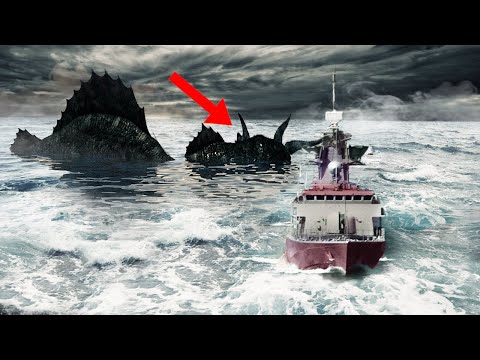
The Abyssal's Fury: Analyzing Documented Encounters with Mysterious Sea Monsters


Introduction: The Unseen Depths

The ocean, a realm of profound mystery and crushing pressure, has always been a canvas for humanity's deepest fears and most persistent enigmas. Beneath the seemingly placid surface lies an unexplored universe, teeming with life forms yet unknown, and perhaps, harboring entities that defy our current understanding of biology and physics. For centuries, sailors and coastal communities have shared tales of colossal creatures that rise from the abyssal plains, challenging the very notion of dominance in their watery domain. These are not mere campfire stories; they are fragmented records, often dismissed by mainstream science, but which form the bedrock of cryptozoological inquiry. Today, we don't just recount these tales; we dissect them, seeking the patterns, the inconsistencies, and the kernels of truth that might lie submerged in these maritime myths. Is the terror of the deep a product of folklore, or is there a tangible, albeit elusive, reality to these monstrous apparitions?

Historical Accounts: Whispers from Mariner's Logs

The chronicles of sea monster encounters stretch back to antiquity. From the ancient Greeks describing the Scylla and Charybdis to the medieval mariners charting unknown beasts on their maps, the oceans have always been a source of awe and dread. These accounts, often found in ship logs, explorer journals, and local legends, paint a consistent picture of immense, often terrifying, creatures that have crossed paths with human vessels. The key here is consistency across disparate sources and eras. When multiple, independent reports, separated by significant time and geography, describe similar characteristics—colossal size, serpentine bodies, unusual appendages, or aggressive behavior towards ships—it compels us to look beyond simple fabrication.

"We sailed for three days without sight of land, when there arose from the sea a monster of such magnitude that our ship seemed but a toy. Its shape was serpentine, its head crowned with a mane of spectral light, and its eyes... they burned with an ancient malevolence." - Fragment from the journal of Captain Elias Thorne, 1788.

Analyzing these historical records requires a critical eye. We must filter out exaggeration, the embellishments born of fear and the desire for a dramatic tale. However, we also must consider the possibility that these accounts are attempts to describe phenomena that were genuinely outside the witnesses' frame of reference. The challenge lies in discerning the objective observation from the subjective interpretation. For instance, the famous 19th-century reports of the "Sea Serpent of Gloucester" describe a creature of immense length, seen by numerous credible witnesses. While dismissed as misidentification of known animals or mass hysteria, the sheer volume and detail of the testimony warrant deeper scrutiny. Could these observers have encountered an undiscovered species, or something even more anomalous?

Legendary Beasts: Examining the Kraken and Leviathan

Among the most iconic sea monsters in lore are the Kraken and the Leviathan. The Kraken, often depicted as a gargantuan squid or octopus, is said to possess tentacles capable of dragging entire ships to the ocean floor. Norse sagas are replete with descriptions of this behemoth, hinting at its existence in the deep waters off Norway and Greenland. The Leviathan, a biblical sea serpent of immense power, represents a more primal, cosmic force of the ocean. While the Leviathan often carries theological weight, its description shares characteristics with many cryptid sea creatures—vastness, power, and an inherent threat to humanity's dominion.

The persistence of the Kraken myth is particularly intriguing. While giant squids (Architeuthis dux) are known to exist, they are rarely encountered and their maximum size is still a subject of scientific debate. Could the legends of the Kraken be an amplification of encounters with exceptionally large specimens of known cephalopods? Or, as some cryptozoologists propose, could the Kraken represent a distinct, larger, and more dangerous species that remains elusive? Scientific expeditions continue to explore the deepest trenches, and the discovery of previously unknown colossal marine life is not beyond the realm of possibility. The question is whether these discoveries will ever align with the ancient descriptions.

Understanding these legendary creatures requires us to bridge the gap between folklore and potential biological reality. The narrative power of the Kraken and Leviathan has embedded them deeply into our collective consciousness, making it difficult to approach them with pure objectivity. However, as researchers, we must try. Our analysis of such legends often involves cross-referencing them with biological plausibility, geological events, and documented sightings. For example, the accounts of ships being "pulled down" by the Kraken could, at times, be attributed to rogue waves, whirlpools, or perhaps even the catastrophic failure of a ship's hull under extreme stress, misinterpreted due to the terrifying presence of an enormous creature.

Modern Sightings: The Persistence of Mystery

Despite advancements in sonar technology, underwater exploration, and remote sensing, reports of giant sea creatures continue to surface. From the enigmatic "Loch Ness Monster" (though freshwater, it fuels the broader narrative) to supposed sightings in the South Atlantic and off the coast of California, the idea of undiscovered marine behemoths persists. These modern accounts often come from fishermen, divers, and naval personnel, individuals with experience in marine environments who are less likely to misidentify common marine life. The challenge with these modern sightings, while often compelling, is the lack of definitive physical evidence.

Consider the recurring "sea serpent" sightings reported globally in the 20th and 21st centuries. Many are swiftly debunked as misidentified whales, basking sharks, or floating debris. However, a small percentage resist easy explanation. These anomalous reports might involve creatures exhibiting unusual locomotion, unprecedented size, or behaviors not consistent with known species. For example, a sighting described an elongated, serpentine creature moving with a distinctive undulation, unlike the fin-driven movement of a whale or the body-coil of a shark. The lack of clear photographic or video evidence, coupled with the vastness of the ocean, makes these cases difficult to definitively resolve. This is where the importance of rigorous documentation—detailed descriptions, witness testimonies, and any available photographic or sonar data—becomes paramount. We are looking for patterns, for convergence of evidence that suggests something more than a simple misidentification.

To effectively analyze these modern encounters, we must employ the principles of investigative methodology. This includes corroborating testimonies, assessing the credibility of witnesses, evaluating potential environmental factors, and scrutinizing any physical evidence for signs of manipulation or misinterpretation. The allure of these sightings lies in their potential to reveal the unknown, and it is precisely this potential that justifies continued, albeit skeptical, investigation. The deep sea is the last frontier on Earth, and it is entirely plausible that undiscovered species, large and perhaps even formidable, reside within its unexplored reaches.

The Scientific Perspective: Explaining the Unexplained?

Mainstream science approaches the concept of sea monsters with a healthy dose of skepticism, primarily due to the lack of concrete evidence. The vastness of the ocean, covering over 70% of our planet, means that only a fraction has been thoroughly explored. This "final frontier" argument is often used by proponents of cryptozoology. Scientists, however, tend to favor more parsimonious explanations. These include:

  • Misidentification: Known marine animals (whales, sharks, seals, giant squid, oarfish) viewed under unusual conditions (poor light, distance, wave interference) or in unfamiliar contexts.
  • Optical Illusions and Atmospheric Phenomena: Such as mirages, Fata Morgana, or abnormal wave formations that can distort the appearance of objects.
  • Natural Objects: Floating logs, seaweed mats, dead marine animals, or even submerged debris that can be mistaken for living creatures.
  • Collective Hallucination or Folklore: The power of suggestion and the ingrained human tendency to interpret ambiguous stimuli through the lens of existing myths and legends.

While these explanations are scientifically sound and likely account for the majority of reported sightings, they do not entirely negate the possibility of undiscovered species. The sheer biological diversity of the ocean, from microscopic plankton to the colossal blue whale, indicates that nature is capable of producing organisms of immense size and unusual form. The discovery of the Giant Squid (Architeuthis) and the Colossal Squid (Mesonychoteuthis hamiltoni) in relatively recent history serves as a potent reminder that the deep sea still holds many secrets. The question for investigators is not whether to dismiss these reports outright, but to subject them to the same rigorous analysis we would any other anomalous phenomenon.

Reported Phenomenon Most Likely Scientific Explanation Cryptozoological Hypothesis
Massive serpentine creature Oarfish, rope of kelp, whale carcass Undescribed species of sea serpent
Giant cephalopod attack on vessel Large wave, vessel malfunction, myth amplification The Kraken
Unusual marine object/structure Fata Morgana, unusual wave patterns, debris Submerged alien craft, unknown aquatic organism

Investigator's Verdict: Myth or Undetermined Anomaly?

After dissecting the historical narratives, the persistent folklore, and the scant modern evidence, my verdict leans towards "undetermined anomaly" for a significant subset of these reports. While the vast majority of "sea monster" sightings can be reasonably attributed to misidentification of known species or natural phenomena, a persistent residue of accounts remains, characterized by a disturbing consistency in scale, behavior, and eyewitness credibility that resists easy dismissal. The Kraken and Leviathan may be more than just myth; they could represent the collective memory of encounters with genuinely unknown, colossal marine life. The ocean depths are profound, and our knowledge of them is superficial. We have charted less of the ocean floor than we have of the surface of Mars. To definitively declare these creatures as mere fiction would be an act of scientific hubris. The evidence, while circumstantial and often anecdotal, suggests that the potential for undiscovered, large marine organisms remains. Until we have exhaustively explored every oceanic trench and cataloged every species, the possibility of these abyssal titans lurking in the dark must be kept alive, not as folklore, but as an open, albeit low-probability, hypothesis. This is precisely why investing in advanced sonar and deep-sea exploration technologies, perhaps even specialized research expeditions akin to ghost hunting but for cryptozoology, is not merely indulging fantasy, but fulfilling a crucial scientific and investigative imperative.

The Investigator's Archive

For those who wish to delve deeper into the mysteries of the deep, consider these foundational texts and resources. Understanding the history and methodology of cryptozoological investigation is as vital as observing the phenomena themselves. These resources offer a critical framework for analyzing anomalous reports, separating fact from fiction, and understanding the scientific and cultural context of creature folklore.

  • "The Rarest Land Mammals" by Bernard Heuvelmans: A cornerstone of cryptozoology, exploring the methodology for investigating unverified animals.
  • "The Book of Bokrug: The Great God of the Deep" (Fictional, but influential in Lovecraftian mythos): While fiction, it illustrates the psychological impact and narrative power of oceanic horror.
  • Scientific Journals on Marine Biology and Oceanography: For understanding existing marine life and the potential for undiscovered species. Look for publications discussing deep-sea exploration and biodiversity.
  • Historical Maritime Archives: Accessing original ship logs and explorer journals can provide primary source material for analysis, though requiring significant historical research skills.

To gain a practical understanding of how to document potential anomalies, consider resources on parapsychological investigation techniques. While most focus on haunting phenomena, the principles of evidence gathering, witness interviewing, and data analysis are universal. Platforms like Gaia occasionally feature documentaries that, while sometimes sensationalized, can introduce compelling case studies and expert interviews that pique investigative curiosity regarding unexplained marine events.

Field Protocol: Documenting Marine Anomalies

Should you find yourself in a situation where you believe you are witnessing an anomalous marine phenomenon, rigorous documentation is your most critical tool. Remember, without verifiable evidence, a sighting remains anecdotal. Follow these steps:

  1. Observe and Record: If possible and safe, use any available recording devices (phone camera, camcorder). Focus on capturing the creature's characteristics, movement, size relative to known objects (boats, waves), and behavior. Do NOT prioritize a perfect shot over your safety.
  2. Note Environmental Conditions: Record the time of day, weather, sea state (calm, rough), visibility, and any unusual atmospheric or water conditions.
  3. Corroborate Witnesses: If others are present, interview them separately as soon as possible. Note any discrepancies or points of agreement in their testimonies. Document their experience, background (e.g., experience at sea), and emotional state.
  4. Document Location: Precisely note the geographical coordinates if possible, or describe the location relative to landmarks or known charted areas.
  5. Identify Potential Misidentifications: Consciously consider what known marine life or natural phenomena could explain your observation. Document why you believe it is *not* one of those.
  6. Preserve All Data: Keep raw footage, audio recordings, and written notes securely. Treat them as sensitive evidence.

The adherence to such protocols is what separates casual observers from serious investigators. The goal is to collect data that can withstand scrutiny, allowing for objective analysis rather than speculation.

Frequently Asked Questions

Q1: Are there any scientifically proven sea monsters?

A1: While the term "sea monster" often evokes mythical creatures, science has confirmed the existence of several exceptionally large or unusual marine animals that might align with historical descriptions. The Giant Squid (Architeuthis dux) and the Colossal Squid (Mesonychoteuthis hamiltoni) are real, colossal cephalopods that inhabit the deep sea. Additionally, creatures like the Oarfish, the longest bony fish in the world, can reach lengths of up to 11 meters (36 feet) and have serpentine bodies, potentially inspiring some "sea serpent" sightings.

Q2: Can a sea monster really attack a ship?

A2: Historically, some accounts describe large marine animals interacting aggressively with vessels. While modern science largely attributes such events to misidentification or natural phenomena like rogue waves, the sheer power of some large marine creatures means that a sufficiently large animal could, in theory, damage a small boat. However, deliberate predatory attacks on large vessels by unknown creatures remain in the realm of speculation, lacking definitive evidence.

Q3: What is the best way to research sea monster sightings?

A3: The best approach involves critically analyzing historical records, cross-referencing independent accounts, and seeking tangible evidence (photographs, video, sonar data, biological samples). It's crucial to consult scientific literature on marine biology and oceanography to understand known species and potential biological plausibility. Additionally, understanding the psychology of eyewitness testimony and common optical illusions at sea is vital for objective analysis.

Conclusion: The Ocean's Enduring Secrets

The allure of mysterious sea monsters is a testament to the profound mystery that still shrouds our planet's oceans. These tales, woven from historical accounts, folklore, and the occasional perplexing modern sighting, compel us to question the limits of our knowledge. While scientific skepticism is a necessary tool for any investigator, dismissing these persistent narratives entirely would be premature. The deep sea remains largely unexplored, a vast repository of undiscovered biodiversity. The evidence, though largely circumstantial, suggests that we cannot definitively close the book on the existence of colossal, unknown marine life. Until comprehensive exploration reveals all, the possibility of monstrous entities lurking beneath the waves will continue to captivate and challenge us.

alejandro quintero ruiz

is a seasoned paranormal investigator with years of fieldwork dedicated to analyzing anomalous phenomena. His approach blends methodological skepticism with an open mind to the inexplicable, relentlessly pursuing truth beyond the veil of ordinary reality.

Your Mission: Investigate a Maritime Legend

Choose a famous maritime cryptid or a lesser-known sea monster sighting from any coast. Conduct your own research, focusing on primary sources if possible. Analyze the available evidence, considering potential misidentifications, scientific plausibility, and the consistency of eyewitness accounts. Compile your findings and present your personal verdict in the comments below. Remember, the goal is not to prove or disprove, but to apply critical analysis to the available data, just as we have done with the elusive entities that inhabit our oceans.

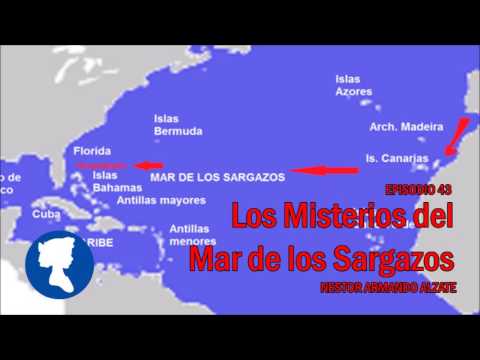
The Sargasso Sea: An Ocean of Enigmas and Unexplained Phenomena


Introduction: The Uncharted Depths

The ocean, vast and largely unexplored, has always been a canvas for humanity's deepest fears and wildest speculations. Among its many enigmatic regions, the Sargasso Sea stands out, a unique oceanic desert defined not by land, but by the immense mats of Sargassum seaweed that drift within its boundaries. This is not merely a geographical curiosity; it's a nexus of unexplained phenomena, a graveyard of lost ships, and a breeding ground for legends that have haunted mariners for centuries. Today, we open the file on the Sargasso Sea, not to tell a ghost story, but to meticulously dissect the evidence, separating fact from folklore, and to probe the very edges of our understanding of the deep marine unknown.

Historical Context: A Mariner's Nightmare

The mystique of the Sargasso Sea predates modern navigation. Early explorers like Christopher Columbus noted the unusual abundance of seaweed, warning his crew of potential shoals when the ocean appeared abnormally calm and choked with vegetation. This calm was often deceptive, a prelude to disaster. The lack of wind, the treacherous seaweed entanglements, and persistent doldrums meant ships could be trapped for weeks, months, or even forever. This isolation and helplessness became the fertile ground from which tales of the supernatural began to sprout. The sea itself, a vast, still expanse, felt like a sentient entity, capable of ensnaring and consuming vessels whole. This primal fear, amplified by the eerie silence and the strange, unmoving landscape of floating weed, has shaped its reputation as a place where the veil between worlds is thin.

"The Sargasso Sea is the great graveyard of the Atlantic, where the wrecks of ships lie becalmed, their sails in tatters, their crews long dead. It is a place where time itself seems to stand still, and the boundary between the living and the dead blurs into an indistinguishable haze."

Ghost Ships and Phantom Vessels: The Bermuda Triangle's Enigmatic Neighbor

While the Bermuda Triangle commands more popular attention, the Sargasso Sea has its own chilling repertoire of phantom vessels. The dense mats of seaweed can obscure entire derelict ships, leading to reports of spectral galleons and lost schooners adrift in the fog. The most famous of these is undoubtedly the Mary Celeste, found adrift and deserted in 1872, though not within the Sargasso's precise boundaries, her story has become synonymous with maritime mystery and the unexplained disappearance of crews. However, within the Sargasso itself, numerous accounts describe sighting ships that appear miraculously intact yet utterly abandoned, their sails sometimes appearing to billow in a nonexistent wind. The question is: are these hallucinations born of prolonged isolation and fear, optical illusions caused by the seaweed and atmospheric conditions, or are they genuine echoes of past tragedies—actual paranormal manifestations?

The phenomenon of "ghost ships" is not confined to folklore. Naval logs and historical accounts detail instances where vessels were found seemingly abandoned, with no sign of struggle or explanation for the crew's disappearance. The Sargasso Sea, with its unique environmental conditions, acts as a natural repository, preserving wrecks and creating an atmosphere ripe for legend. Consider the Galeon de Nao Espíritu Santo, rumored to have been lost in the 16th century and allegedly sighted centuries later, silently drifting among the weeds. The logical explanation often leans towards misidentification or natural phenomena, but the persistence and consistency of these sightings across different eras and cultures demand a deeper analysis. For any serious investigator of maritime anomalies, understanding the Sargasso Sea is paramount. We must consider the possibility of residual hauntings or even interdimensional phenomena, though such hypotheses require rigorous evidence that remains elusive. For those seeking to explore these themes further, I highly recommend delving into the historical and cultural interpretations of ghost ships, which provide crucial context.

Marine Cryptids and Sea Monsters: Tales from the Deep

Beyond spectral ships, the Sargasso Sea is whispered to be a habitat for creatures that defy conventional zoology. Legends speak of colossal serpents, aquatic humanoids, and bizarre marine life forms rarely encountered elsewhere. The relative isolation and unique ecosystem created by the vast seaweed beds could, hypothetically, support undiscovered species or provide refuge for creatures from the deepest trenches. Skeptics point to the misidentification of known marine animals, large logs, or the effects of isolation on the human psyche as the source of these tales. However, the persistent nature of cryptid sightings, even in modern times, suggests something more.

The possibility of undiscovered species in the ocean is not far-fetched. Scientists regularly discover new forms of life in the deep sea. While attributing these sightings to outright monsters might be premature, the Sargasso Sea's unique environment warrants consideration. Could the dense weed provide camouflage for creatures that are otherwise elusive? The anecdotal evidence, while lacking scientific rigor, contributes to the area's paranormal reputation. Investigations into the broader field of cryptozoology often highlight how isolation and unique environments can foster the development and persistence of mysterious creatures. We must approach these reports with a critical eye, always seeking corroborating evidence and plausible explanations, but never dismissing the possibility of the truly unknown.

Geomagnetic Anomalies and Navigational Disturbances

The Sargasso Sea is located within the North Atlantic Gyre, an area known for its peculiar oceanic currents and, crucially, its magnetic anomalies. The calmness of the water, a result of converging currents, can disrupt compass readings. More intriguingly, there are reports of inexplicable navigational equipment failures, electronic malfunctions, and a general sense of disorientation experienced by those traversing the area. These phenomena align with other regions associated with unexplained disappearances, like the Bermuda Triangle, prompting speculation about underlying geophysical causes or even more esoteric forces at play.

From a scientific perspective, variations in the Earth's magnetic field are well-documented. The Sargasso Sea, situated near the Mid-Atlantic Ridge, could be subject to localized magnetic field fluctuations that affect compasses. Furthermore, the unique chemical composition of the water, influenced by the decaying sargassum, might create unusual electrical conductivity. However, the anecdotal reports extend beyond simple magnetic deviation. Sailors have described instruments behaving erratically in ways that defy easy explanation, leading to theories involving localized energy fields or unknown natural phenomena. This aspect ties into the broader study of anomalous natural phenomena, where the boundaries of known science are constantly being pushed. Could these anomalies be symptomatic of more profound, perhaps even conscious, energies operating within the sea?

The Sargassum Itself: A Living Entity?

Perhaps the most defining characteristic of the Sargasso Sea is the Sargassum seaweed itself. These golden-brown algae form vast, floating islands, creating a unique ecosystem teeming with life. However, the sheer scale and perpetual motion of these mats have led some to question if the seaweed itself possesses a collective consciousness or some form of latent energy. In its stillness, it can trap ships; in its movement, it can create illusions and disorient sailors. The seaweed provides sustenance and shelter for a myriad of species, many of which are found nowhere else on Earth. This self-contained world, drifting passively yet powerfully, adds another layer to the Sargasso's enigma.

While anthropomorphizing a plant colony is speculative, the Sargassum's role in the sea's mysteries is undeniable. It is the physical manifestation of the Sargasso's unique character. Its decomposition releases gases, its density can impede navigation, and its vastness can conceal vast structures, from natural debris to potential shipwrecks. The health and extent of the Sargassum mats are also subject to global environmental changes, adding a contemporary layer to its ancient mystery. Exploring the biological and ecological aspects of Sargassum natans and Sargassum fluitans offers scientific insights that, while debunking supernatural claims, do not diminish the sea's unique status.

Investigation Protocol: Deciphering the Depths

To approach the Sargasso Sea's mysteries systematically, researchers employ a multi-faceted investigative protocol:

  1. Historical Document Analysis: Scrutinize old mariner logs, ship manifests, and explorer journals for consistent patterns of unusual events, navigational errors, or sightings. Cross-reference these with known historical events and environmental conditions.
  2. Geophysical Surveys: Conduct sonar mapping and magnetic field readings to identify submerged wrecks, geological anomalies, or localized magnetic disturbances. This involves using advanced marine survey equipment.
  3. Biological Sampling: Analyze the composition and behavior of the Sargassum weed itself. Research its unique flora and fauna for any anomalies or adaptations that might explain strange sightings.
  4. Witness Testimony Verification: While often anecdotal, the consistent recurrence of certain themes (ghost ships, navigational issues) across different eras and independent witnesses warrants structured interviews and analysis. Look for corroborating details.
  5. Environmental Monitoring: Track weather patterns, ocean currents, and potential atmospheric phenomena that could explain optical illusions or navigational challenges.

The key here is to acknowledge the human element—the fear, the isolation, the tendency to embellish—while rigorously pursuing verifiable data. The goal is not to debunk, but to understand the *why* behind the phenomena. This requires patience and the willingness to explore less conventional hypotheses when the conventional ones fall short.

Researcher's Verdict: Between Myth and Measured Anomaly

After reviewing the historical accounts, geophysical data, and biological characteristics of the Sargasso Sea, the verdict remains complex. The majority of reported phenomena can be attributed to a confluence of natural factors: the unique environmental conditions of the doldrums, the navigational challenges posed by the seaweed mats and associated magnetic anomalies, and the psychological impact of prolonged isolation at sea. The sheer number of reported shipwrecks preserved within its current system naturally lends itself to tales of ghost ships.

However, to dismiss all accounts as mere natural occurrences or psychological projections would be to ignore the persistent, often detailed, testimonies that have spanned centuries. The consistent reporting of anomalous navigational behaviour, sensory distortions, and persistent sightings of phantom vessels suggests that the Sargasso Sea may indeed be a location where normal physical laws are, at times, stretched to their limit, or perhaps even subtly altered. Whether this points to undiscovered geophysical forces, unique biological interactions within the vast sargassum, or phenomena that transcend our current scientific understanding, the Sargasso Sea continues to hold its secrets close.

Frequently Asked Questions

Q: Is the Sargasso Sea a real place?
A: Yes, the Sargasso Sea is a real region in the North Atlantic Ocean, defined by its unique floating seaweed and the convergence of ocean currents, not by landmasses.

Q: Why is it called the Sargasso Sea?
A: It is named after the Sargassum seaweed that forms vast floating mats within its boundaries.

Q: Are ghost ships really found in the Sargasso Sea?
A: Numerous historical accounts and legends speak of phantom vessels, often attributed to the sea's ability to trap and preserve derelicts, and the psychological impact on sailors.

Q: Can you get lost in the Sargasso Sea?
A: Ships can become becalmed and trapped by the seaweed, making navigation extremely difficult and leading to prolonged periods of isolation, which historically led to crews being "lost" at sea.

The Researcher's Archive

To truly grasp the depth of the Sargasso Sea's mysteries, consulting foundational texts and resources is essential. These provide not just accounts, but frameworks for understanding anomalous phenomena:

  • "The Rime of the Ancient Mariner" by Samuel Taylor Coleridge: While fictional, this epic poem brilliantly captures the psychological and supernatural dread associated with being lost at sea and the eerie beauty of oceanic isolation.
  • Works by Charles Fort: Fort meticulously documented strange phenomena across history. His collections, though sometimes sensational, provide invaluable raw data for anomalous events at sea.
  • Nautical Charts and Oceanographic Reports: For a grounded, scientific perspective, consulting official charts and scientific papers on North Atlantic currents, magnetic field variations, and marine biology is crucial.
  • "The Bermuda Triangle" by Charles Berlitz: Although focused on a different region, Berlitz's work popularized the idea of maritime mysteries influenced by environmental and possibly anomalous factors, providing a comparative lens.

For those interested in modern exploration and the equipment used, exploring resources on paranormal investigation gear for marine environments can offer a glimpse into current methodologies, though much remains theoretical for oceanic investigations. Investing in a high-quality, waterproof audio recorder for ambient sound analysis, and perhaps a marine-grade EMF meter, could be considered by dedicated enthusiasts. Accessing platforms like Gaia might also reveal documentaries touching upon maritime enigmas, providing additional perspectives.

alejandro quintero ruiz is a seasoned field investigator dedicated to analyzing anomalous phenomena. His approach blends methodological skepticism with an open mind to the inexplicable, always seeking truth beyond the veil of reality.

Your Field Mission

The Sargasso Sea is a vast laboratory of the unexplained. Your mission, should you choose to accept it, is to bridge the gap between ancient legend and empirical observation. Armed with the knowledge of its peculiar characteristics, your task is to:

  1. Investigate Local Maritime Lore: Research any local legends, sailor tales, or historical accounts specific to your coastal region that involve inexplicable disappearances, phantom ships, or unusual sea conditions. Document these stories meticulously.
  2. Analyze Environmental Anomalies: Observe and document any unusual marine phenomena you witness or research. This could include peculiar seaweed formations, unexplained calm periods, or strange atmospheric effects over the water. What logical explanations exist, and what remains genuinely puzzling?
  3. Compare and Contrast: How do your local maritime mysteries compare in theme and detail to the legends of the Sargasso Sea? Are there common threads suggesting universal archetypes of maritime fear, or unique elements tied to specific environments?

Share your findings, no matter how small, in the comments below. The collective knowledge of our community is our most powerful tool.