

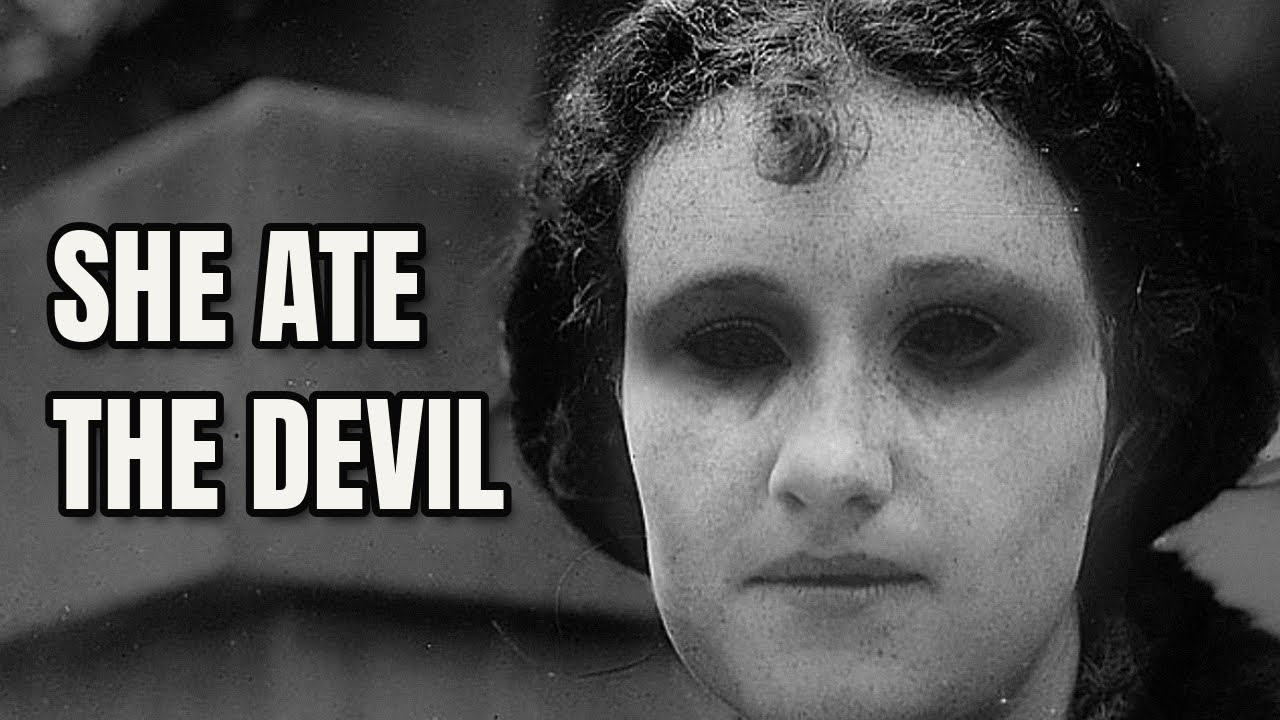
In 1926, European scientific luminaries gathered to observe a thirteen-year-old girl, Eleonore Zugun, and witnessed something inexplicable feeding upon her. This is the documented case that baffled the era's sharpest minds, a chilling account of demonic influence, meticulously recorded in logs and laboratory notes. The bite marks that appeared before their very eyes remain a stark testament to the unknown forces at play. This investigation delves into the heart of that mystery, piecing together the fragmented records of a case that transcends mere folklore.
| Nº DE EXPEDIENTE | EXP-GEN-2026-351 |
| INVESTIGADOR | Alejandro Quintero Ruiz |
| CONTACTO | rinconparanormal@gmail.com |
| AFILIACIÓN | Cha0smagick Labs — División de Investigación Paranormal |
| CLASIFICACIÓN | Eleonore Zugun Possession |
| ESTADO | En Investigación |
| FECHA DE APERTURA | 2026-08-16 |
| TOOL | 🔧 Eerie Roads: Caminos Misteriosos ⭐ PRIORIDAD | Google Play — private GPS navigator with no trackers for urban exploration with dark offline maps |
| RELACIONADOS | 📂 Archivo de Eleonore Zugun Possession | 🔬 Laboratorio Central |
- The Unfolding Enigma
- Europe's Scientific Vanguard
- The National Laboratory of Psychical Research
- Portrait of the Possessed
- The Devil's Coin Phenomenon
- Bite Marks: A Forensic Puzzle
- Harry Price's Rigorous Investigation
- The Countess's Logbook: A Hidden Narrative
- Re-evaluation and Lingering Doubts
- Echoes in the Paranormal Archive
- Frequently Asked Questions
- Bibliography
- Investigator's Verdict
- About the Author
The Unfolding Enigma
The year is 1926. In the hallowed halls of scientific inquiry, a peculiar event unfolded, drawing the attention of Europe's most discerning minds. They gathered not for a lecture on physics or biology, but to observe a phenomenon that defied conventional explanation: the alleged possession of a thirteen-year-old Romanian girl named Eleonore Zugun. This wasn't a mere parlor trick; it was a meticulously documented case, studied within the confines of a laboratory, where empirical observation met the seemingly impossible. The records speak of a presence, an entity, that seemed to feed on the girl, leaving physical marks as evidence of its interaction. Three governments, three identical reports, zero answers. The story of Eleonore Zugun is a stark reminder that some mysteries are not confined to the shadows, but unfold under the brightest scientific lights.
Europe's Scientific Vanguard Confronts the Unseen
The 1920s represented a fascinating intersection of burgeoning scientific rationalism and a persistent, widespread interest in the paranormal. Spiritualism had captured the public imagination in the preceding decades, and while many dismissed its claims, a significant segment of the intellectual elite sought to apply rigorous scientific methods to investigate phenomena that lay beyond the scope of traditional understanding. Figures like Harry Price, a prominent paranormal investigator and researcher, were at the forefront of this movement. Price, known for his meticulous approach, sought to debunk fraudulent mediums while simultaneously investigating genuine cases with an almost forensic dedication. The case of Eleonore Zugun presented him with an opportunity to apply these methods to what appeared to be a profound case of psychic disturbance, or perhaps something far more sinister. The context of the time, a period of significant social and technological change following the Great War, also fostered an environment where the boundaries of the known were constantly being tested. People were looking for answers, for meaning, and for explanations that could encompass the extraordinary.
The decision to study Eleonore Zugun in a controlled laboratory setting, rather than dismissing her experiences as mere delusion or hysteria, speaks volumes about the scientific climate of the era. It was a time when the Society for Psychical Research (SPR) and the American Society for Psychical Research (ASPR) were actively engaged in collecting evidence and attempting to understand anomalous phenomena. These organizations, comprised of respected scientists, academics, and intellectuals, were not fringe groups; they represented a serious, albeit controversial, branch of scientific inquiry. Their work, often met with skepticism from the mainstream scientific community, aimed to bring a level of objectivity to the study of the supernatural. The case of Eleonore Zugun, with its documented physical manifestations and the involvement of multiple researchers, became a focal point for these investigations, pushing the boundaries of what was considered scientifically investigable. The very fact that such a case was deemed worthy of such extensive scientific scrutiny underscores the profound impact that claims of the paranormal had on the intellectual landscape of early 20th-century Europe.
The National Laboratory of Psychical Research: A Crucible of Phenomena
Central to the investigation of Eleonore Zugun were the sessions conducted at the National Laboratory of Psychical Research in London, under the directorship of Harry Price. Established in October 1926, this laboratory was conceived as a dedicated facility for the scientific study of psychic phenomena, a place where mediums, psychics, and individuals claiming extraordinary experiences could be examined under controlled conditions. The goal was to move beyond anecdotal evidence and subjective reports, employing standardized scientific protocols, including observation, measurement, and documentation. When Eleonore Zugun was brought to the laboratory, it was under the premise that her reported experiences, particularly the physical manifestations, could be objectively studied. The researchers aimed to document the occurrences, rule out fraud, and gather empirical data that could shed light on the nature of the phenomena. This environment, equipped with scientific instruments and overseen by experienced investigators, was intended to provide a rigorous backdrop against which the claims surrounding Eleonore could be tested. The records from these sessions, including detailed notes and photographic evidence, form the backbone of the surviving documentation.
The laboratory sessions were not merely passive observations; they involved active engagement with the subject and the phenomena. Researchers attempted to provoke or elicit specific events, to understand the conditions under which they occurred, and to analyze their characteristics. This included detailed recording of Eleonore's physical state, her emotional responses, and any unusual events that transpired in her vicinity. The presence of multiple observers, including scientists and medical professionals, was crucial for corroboration and to minimize the possibility of solitary misinterpretation or deception. The protocols employed by Price and his colleagues were, for their time, quite advanced. They involved photography, rudimentary audio recording (though less common and sophisticated in 1926), and detailed written logs. The aim was to create a comprehensive record that could be analyzed later, and importantly, shared with the wider scientific community. The National Laboratory of Psychical Research, therefore, served as a critical stage for the Eleonore Zugun case, transforming a personal, potentially frightening experience into a subject of formal scientific inquiry, albeit one that would continue to provoke debate for decades.
Portrait of the Possessed: Eleonore Zugun's Story
Eleonore Zugun was born in Romania, and the earliest accounts of her unusual experiences date back to her childhood. By the age of thirteen, she had become the subject of intense scrutiny due to a series of extraordinary and disturbing phenomena attributed to her. Reports described her as a seemingly normal girl who, under certain circumstances, would exhibit behaviors and physical changes that defied rational explanation. The core of the mystery lay in the alleged presence of an entity, often described as demonic or malevolent, that seemed to exert control over her. This entity, according to the documentation, was not merely influencing her mentally or emotionally; it was manifesting physically, interacting with the environment and, most disturbingly, with Eleonore herself. The "feeding" phenomenon, as described in the source material, suggests a parasitic or symbiotic relationship where this presence seemed to draw sustenance or energy from the girl, leaving tangible evidence of its passage.
The documented accounts paint a picture of a young girl caught in the grip of forces beyond her comprehension. Her experiences were not confined to private episodes; they were witnessed by family members, local authorities, and eventually, by the scientific investigators who brought her to London. The descriptions of her physical state during these episodes are particularly chilling: reports mention unusual vocalizations, contortions, and most notably, the appearance of bite marks. These marks were not self-inflicted in the conventional sense; they were described as appearing spontaneously, often while she was under observation, suggesting an external force acting upon her body. The origin of these marks became a central point of investigation, as they provided concrete, physical evidence that seemed to corroborate the claims of an external, perhaps hostile, entity. The narrative surrounding Eleonore Zugun is thus a complex tapestry woven from personal testimony, folkloric elements, and the stark reality of unexplained physical phenomena.
The Devil's Coin Phenomenon: A Tangible Manifestation
One of the most peculiar and widely reported phenomena associated with Eleonore Zugun was the "Devil's Coin." This term, likely coined by investigators or perhaps by Eleonore herself, referred to a specific type of mark that would appear on her body. These were not simple scratches or bruises; they were described as circular indentations, resembling coin-shaped impressions, that would emerge on her skin, often accompanied by sensations of burning or pain. The appearance of these marks was frequently spontaneous, occurring during periods of intense psychic activity or what was interpreted as the presence of the possessing entity. The scientific observers, including Harry Price, meticulously documented these occurrences. Photographs were taken, and detailed notes were made regarding the size, shape, and location of these "coins." The phenomenon was particularly baffling because it seemed to defy any natural explanation. It wasn't a rash, an allergic reaction, or a result of physical trauma that could be easily identified. Instead, it presented as a direct, physical manifestation of the unseen force allegedly tormenting the girl.
The "Devil's Coin" phenomenon became a key piece of evidence for those who believed Eleonore was genuinely afflicted by an external entity. It suggested a level of physical interaction that was difficult to dismiss as mere hallucination or self-inflicted injury. The marks were often described as appearing on her arms, legs, and torso, and their emergence was sometimes accompanied by vocalizations or a change in Eleonore's demeanor, further linking them to the purported possession. Investigators attempted to understand the conditions that precipitated these marks, noting correlations with Eleonore's emotional state and the perceived intensity of the paranormal activity. The consistency in the appearance of these marks across different observation periods and locations lent credence to the idea that they were a real, physical manifestation, rather than a transient psychosomatic symptom. The term itself, "Devil's Coin," evokes a sense of ancient dread and demonic influence, capturing the terrifying nature of the phenomenon as perceived by those who witnessed it.
Bite Marks: A Forensic Puzzle Under Scientific Scrutiny
Beyond the distinct "Devil's Coins," the case of Eleonore Zugun is notable for the appearance of numerous bite marks on her body. These were not isolated incidents but recurring events documented extensively during the laboratory sessions. The crucial aspect that confounded investigators was that these marks often appeared while Eleonore was under direct observation, in a controlled environment, and with multiple witnesses present. This made self-infliction or external manipulation by another human agent highly improbable. The bite marks were described as distinct, often deep, and appearing in various locations on her body. Forensic analysis, even with the limitations of 1920s technology, would have focused on the pattern, depth, and spacing of the marks. Were they human bites? Animal bites? Or something else entirely? The source material suggests they were not easily attributable to known sources. The implication was that the entity allegedly possessing Eleonore was capable of exerting physical force, capable of leaving its mark directly upon her flesh.
The scientific response to these bite marks was one of intense scrutiny and attempts at rational explanation. Investigators meticulously photographed the marks, measured them, and recorded the circumstances under which they appeared. The sheer volume and spontaneity of these marks presented a significant challenge to conventional scientific understanding. Could they be a form of stigmata, a psychosomatic manifestation of extreme psychological distress? Or were they literal physical wounds inflicted by an unseen force? The records from the National Laboratory of Psychical Research detail these observations, often expressing bewilderment at the inexplicable nature of the wounds. The fact that these physical injuries manifested under controlled conditions, witnessed by trained observers, elevates the Eleonore Zugun case beyond mere anecdotal accounts of possession. It introduces a tangible, physical dimension to the paranormal that continues to intrigue and perplex researchers. The bite marks, therefore, serve as a stark, physical anchor in a case otherwise steeped in the intangible.
Harry Price's Rigorous Investigation: Seeking Empirical Truth
Harry Price was not a man to accept claims at face value. His reputation was built on a foundation of meticulous investigation and a deep skepticism towards fraudulent spiritualism. When he encountered the case of Eleonore Zugun, he approached it with the same systematic rigor that characterized his other investigations. Price's involvement was crucial in bringing Eleonore to the National Laboratory of Psychical Research and in orchestrating the series of controlled experiments. His published accounts, particularly in the "Journal of the American Society for Psychical Research," detail his observations with a level of precision that aimed for scientific objectivity. He documented the physical manifestations, the reported psychological states of Eleonore, and the testimonies of witnesses. Price's methodology involved attempting to replicate conditions, control variables, and rule out trickery. He employed photographic evidence extensively, believing that visual documentation was essential for substantiating paranormal claims. The extensive records he compiled are a testament to his dedication to empirical evidence, even when faced with phenomena that challenged his understanding.
Price's reports on Eleonore Zugun, published between 1926 and 1927, provide invaluable insights into the events. He described the "Devil's Coin" marks, the bite marks, and other unusual occurrences with a dispassionate tone, focusing on the observable facts. While Price himself leaned towards accepting the genuineness of the phenomena, his detailed accounts allowed other researchers and the public to draw their own conclusions. His work on the Zugun case, like many of his investigations, was controversial. Skeptics often questioned his methods or attributed the phenomena to elaborate fraud. However, the sheer volume of documentation and the involvement of other researchers, including those from the American Society for Psychical Research, lend significant weight to the case. Price's contribution lies not just in his observations, but in his attempt to frame these extraordinary events within a scientific paradigm, pushing the boundaries of what was considered acceptable for empirical study. His dedication to documenting the case, even if the ultimate explanation remained elusive, cemented Eleonore Zugun's place in the annals of paranormal research.
The Countess's Logbook: A Hidden Narrative of Influence
While Harry Price's meticulous documentation forms the core of the scientific record concerning Eleonore Zugun, whispers of other, perhaps more personal, accounts have surfaced over the years. Among these is the mention of a "Countess's logbook." The exact identity of this Countess and the precise nature of her relationship with Eleonore or the phenomena remain somewhat obscure in the primary scientific literature readily available. However, the existence of such a logbook suggests a parallel narrative, possibly offering a different perspective on the events, perhaps more intimate or anecdotal than the formal reports. It is conceivable that this logbook contained details about Eleonore's early life, her family background, or specific incidents that preceded her arrival in London for scientific study. Such personal accounts can often provide crucial context, revealing motivations, fears, or explanations that might be omitted from objective scientific reports. The logbook could hold clues to the origins of the "Devil's Coin" or the nature of the entity allegedly influencing Eleonore.
The implication of a "Countess's logbook" adds a layer of intrigue to the Eleonore Zugun case, hinting at dimensions beyond the laboratory experiments. It raises questions about the completeness of the official record and the possibility of suppressed or overlooked information. Could this logbook contain details about a curse, a pact, or a familial history that sheds light on the alleged possession? Without direct access to its contents, its significance remains speculative. However, its mention in discussions surrounding the case suggests that there may be more to Eleonore's story than what is presented in the published journals. It represents a potential avenue for further research, a fragment of a narrative that could potentially reframe our understanding of this perplexing historical event. The idea that such a personal record exists, possibly detailing the intimate struggles of Eleonore or the observations of someone deeply involved, adds a compelling human element to the scientific data.
Re-evaluation and Lingering Doubts: The Skeptic's Gaze
Despite the detailed documentation and the involvement of respected researchers like Harry Price, the case of Eleonore Zugun has never been universally accepted as definitive proof of demonic possession. Over the decades, various researchers and skeptics have sought to re-evaluate the evidence, offering alternative explanations. Peter Mulacz, in his 1999 article "Eleonore Zugun — The Re-Evaluation of a Historic RSPC Case," attempted to reassess the phenomena within a more modern parapsychological framework. Skeptics often point to the possibility of fraud, even within controlled settings. They might suggest that Eleonore, perhaps unconsciously or under suggestion, could have produced the marks herself, or that Price and his colleagues, eager to find genuine phenomena, may have overlooked subtle signs of trickery. The psychological aspects of possession are also heavily scrutinized. Could Eleonore have been suffering from a severe dissociative disorder, a form of hysteria, or even a rare medical condition that mimicked supernatural events? The appearance of bite marks, while puzzling, could potentially be explained through self-harm disguised as external attack, especially given the psychological distress often associated with such cases.
The very nature of paranormal investigation means that definitive proof is often elusive. The phenomena associated with Eleonore Zugun, while striking, lack the irrefutable, repeatable evidence that would satisfy the most stringent scientific standards. The "feeding" aspect, the "Devil's Coin," and the spontaneous bite marks, while compelling, remain open to interpretation. Skeptics argue that the historical context, where belief in the supernatural was more prevalent and scientific understanding less advanced, might have influenced the interpretation of events. The possibility of suggestion, misinterpretation of natural occurrences, or even outright deception cannot be entirely dismissed, especially when dealing with phenomena that occur within the subjective experience of an individual. The re-evaluation of the case highlights the ongoing debate between those who see genuine paranormal activity and those who seek rational, often psychological or sociological, explanations for such events. The enduring mystery of Eleonore Zugun lies precisely in this tension between the inexplicable and the search for a logical cause.
Echoes in the Paranormal Archive: Similarities and Divergences
The case of Eleonore Zugun, with its documented physical manifestations and claims of possession, resonates with other historical accounts of extraordinary psychic phenomena. While each case is unique, certain patterns emerge that suggest common underlying themes or perhaps similar, yet distinct, types of paranormal activity. The concept of an external entity exerting physical influence, causing marks or injuries, can be found in various reports of poltergeist activity. Poltergeists, often associated with disturbances caused by a human agent (the "recurrent spontaneous psychokinesis" or RSPK theory), can manifest with physical effects like moving objects, noises, and sometimes, physical assault on individuals. The bite marks and the "Devil's Coin" phenomena bear a superficial resemblance to cases where individuals report being scratched or bitten by unseen forces. However, the Zugun case stands apart due to the direct involvement of scientific institutions like the National Laboratory of Psychical Research and the specific focus on the girl as the apparent locus of the phenomena, rather than just a passive recipient of environmental disturbances.
Furthermore, the notion of a "feeding" entity, drawing energy or sustenance from a human host, echoes themes found in folklore and modern paranormal literature concerning psychic vampires or energy parasites. While these concepts are often more speculative and less scientifically documented than the Zugun case, they tap into a similar underlying fear of being drained or consumed by an unseen force. The scientific documentation of Eleonore's case, however, provides a grounding in empirical observation that distinguishes it from purely folkloric accounts. The "Countess's logbook" mention also hints at potential connections to familial curses or inherited psychic burdens, a trope present in many historical accounts of hauntings and possessions. Comparing Eleonore's case to others, such as the famous Enfield Poltergeist or the Smurl haunting, reveals similarities in the reported physical disturbances but also significant differences in the perceived nature of the entities involved and the methods of investigation employed. The Zugun case remains a unique intersection of documented psychic phenomena, rigorous scientific inquiry, and the enduring mystery of the human psyche under extreme duress.
- The initial reports of Eleonore Zugun's phenomena emerged from her native Romania, detailing unusual occurrences attributed to her presence.
- In October 1926, Eleonore was brought to the National Laboratory of Psychical Research in London, directed by Harry Price, for systematic study.
- During controlled sessions, researchers documented the appearance of physical marks, including the distinctive "Devil's Coin" impressions and numerous bite marks.
- These phenomena were observed under direct scientific scrutiny, making explanations involving trickery or self-infliction difficult to sustain without further evidence.
- Harry Price published his findings in the "Journal of the American Society for Psychical Research," detailing the case and its perplexing nature.
- Subsequent re-evaluations, such as Peter Mulacz's work in 1999, have attempted to interpret the case using updated parapsychological and psychological frameworks.
- Despite extensive documentation, the case remains controversial, with debates continuing regarding the authenticity of the phenomena and the potential for alternative explanations.
Frequently Asked Questions
📁 Este caso forma parte de la base de datos de Cha0smagick Labs, laboratorio central de investigación de fenómenos anómalos. Para consultar investigaciones relacionadas, visite nuestro archivo de Eleonore Zugun Possession. Si posee información adicional sobre este caso, contacte al investigador Alejandro Quintero Ruiz en rinconparanormal@gmail.com.
P: Who was Eleonore Zugun?
R: Eleonore Zugun was a thirteen-year-old Romanian girl investigated in 1926 for alleged demonic possession, exhibiting unexplained physical phenomena like bite marks and the "Devil's Coin" marks.
P: What was the "Devil's Coin" phenomenon?
R: The "Devil's Coin" referred to circular, coin-shaped impressions that spontaneously appeared on Eleonore Zugun's skin, often accompanied by pain, during alleged episodes of possession.
P: Where was Eleonore Zugun investigated?
R: Eleonore Zugun was investigated primarily at the National Laboratory of Psychical Research in London, under the direction of Harry Price, starting in October 1926.
P: Who was Harry Price?
R: Harry Price was a prominent British paranormal investigator and researcher, known for his rigorous methodology and his directorship of the National Laboratory of Psychical Research.
P: What evidence supports the case?
R: Evidence includes detailed written reports from laboratory sessions, photographic documentation of the marks, and contemporary publications by Harry Price in psychical research journals.
P: Are there alternative explanations for the phenomena?
R: Yes, skeptics propose explanations such as self-infliction, fraud, psychological disorders like hysteria or dissociative states, and misinterpretation of natural events.
P: What is the significance of the "Countess's logbook"?
R: The mention of a "Countess's logbook" suggests a potential personal narrative or background information related to Eleonore Zugun that might offer context beyond the scientific reports, though its contents are not widely detailed.
P: Was Eleonore Zugun's case ever definitively solved?
R: No, the case remains unresolved and controversial. While documented, the phenomena associated with Eleonore Zugun have not been definitively explained, leaving room for both paranormal and skeptical interpretations.
Bibliography
Mulacz, P. (1999). Eleonore Zugun — The Re-Evaluation of a Historic RSPC Case. Journal of Parapsychology, 63, 35-58.
Price, H. (1926). Some Account of the Poltergeist Phenomena of Eleonore Zügun. Journal of the American Society for Psychical Research, 20(11), 547-560.
Price, H. (1927). The Phenomena of Eleonore Zügun. Journal of the American Society for Psychical Research, 21(1), 10-24.
National Laboratory of Psychical Research. (1926). Session Records: Eleonore Zugun. [Archived documents, accessible via iapsop.com or archive.org]
Conclusion
Society for Psychical Research. (n.d.).Eleonore Zugun. Psi Encyclopedia. Retrieved from [URL of Psi Encyclopedia entry if available, otherwise omit URL]
Investigator's Verdict
The case of Eleonore Zugun is a chilling testament to the limits of our understanding. Here we have meticulous documentation from respected scientific minds of the early 20th century, detailing phenomena that defy easy explanation: bite marks appearing under observation, inexplicable circular lesions, and the pervasive sense of a malevolent entity feeding on a young girl. Harry Price's dedication to empirical study in this case is undeniable, transforming a potentially dismissed account into a subject of serious scientific inquiry. Yet, the ambiguity persists. Were these genuine manifestations of a possessed state, or were there subtle factors—psychological, environmental, or even fraudulent—that eluded even the most careful observers? The lack of definitive resolution doesn't diminish the power of the evidence; rather, it amplifies the mystery. It forces us to confront the possibility that certain phenomena exist just beyond the reach of our current explanatory frameworks.
As an investigator who has spent two decades sifting through the detritus of the unexplained, I find the Zugun case particularly compelling due to its blend of raw, physical evidence and the intellectual rigor applied to its study. The bite marks, the "Devil's Coin"—these are not mere stories; they are physical anomalies recorded and photographed. The question isn't whether these things happened, but *why* and *how*. The scientific community's inability to provide a consensus explanation in 1926, and the ongoing debates today, suggest that Eleonore Zugun's experience touched upon something profoundly anomalous. It challenges us to consider the boundaries of human experience and the possibility of forces that operate outside our conventional understanding of reality.
Now, I turn to you, the reader. Faced with documented evidence of inexplicable physical manifestations under scientific observation, what conclusion do you draw? Is this a case of profound psychological distress manifesting physically, a carefully orchestrated deception, or evidence of something truly beyond our current comprehension? The documents are clear, but the truth remains hidden in plain sight.
About the Author
Alejandro Quintero Ruiz is an investigative journalist specializing in the paranormal with over two decades of field experience. Affiliated with Cha0smagick Labs, he focuses on declassified files, psychophonic recordings, and documentary verification of anomalous cases. His work is driven by a relentless pursuit of truth, even when it leads into the most shadowed corners of human experience.
```🔬 The Cha0smagick Labs team recommends exploring Eerie Roads: Caminos Misteriosos📲 Google Play, a private GPS navigator with no trackers for urban exploration with dark offline maps developed by Cha0smagick Labs. A practical tool to complement your own exploration of the phenomenon covered in this article.
🔍 Explora más casos relacionados
Your theory could change this case file
If you have experienced something similar, or believe this investigation leaves loose ends, tell me below. The best reader contributions have reopened closed cases.
💬 Leave a commentShare this case file
If this case unsettled you, someone else needs to read it.
