Followers

Mostrando las entradas con la etiqueta Italy. Mostrar todas las entradas

The Devil's Forest: Investigating Italy's Most Notorious Paranormal Zone

Image

Deep within the heart of Italy lies a place whispered about in hushed tones, a location that locals avoid with a primal fear, especially when the sun dips below the horizon. This is the Sonno Lombardo forest, a region steeped in chilling paranormal legends, a dark history of unspeakable crimes, and whispers of sinister cult activity. "The Paranormal Files" has ventured into this notorious locale, seeking to unravel the mysteries that shroud its ancient trees and shadowed paths.

Every week, our team embarks on global expeditions. We hunt ghosts in spectral hotspots, track elusive cryptids like skinwalkers, confront alleged demonic presences, and meticulously capture paranormal evidence. Join our growing community as we delve into the spooky unknown, release authentic paranormal videos, and share these adventures together.

1. Introducción: El Sonno Lombardo

The Sonno Lombardo forest, located in Italy, is not merely a patch of woodland; it's a canvas painted with the darkest hues of human history and supernatural folklore. The very air in this place seems heavy, thick with unspoken tales of disappearances, rituals, and encounters that defy rational explanation. Locals, accustomed to the robust Italian spirit, speak of this forest with a palpable unease, warning outsiders against venturing into its depths, particularly after dusk.

Recommended Gear for Investigation

ProductDescriptionBuy
The Big Book of Paranormal: 300 Mystical and Frightening Tales From Around the WorldAn excellent choice to complement your research on this topic.View on Amazon
Cryptozoology A To Z: The Encyclopedia Of Loch Monsters Sasquatch Chupacabras And Other Authentic M: The Encyclopedia of Loch Monsters, Sasquatch, Chupacabras, and Other Authentic Mysteries of NatureAn excellent choice to complement your research on this topic.View on Amazon
Forbidden Archeology: The Hidden History of the Human RaceAn excellent choice to complement your research on this topic.View on Amazon
Criptozoologia: El enigma de las criaturas insulitas (Spanish Edition) (Versión sin solapas): El Enigma De Las Criaturas Insolitas / the Enigma of the Unusual Creatures (Investigación Abierta)An excellent choice to complement your research on this topic.View on Amazon
The H. P. Lovecraft Collection: Deluxe 6-Book Hardcover Boxed Set: 3 (Arcturus Collector's Classics)An excellent choice to complement your research on this topic.View on Amazon
Runes: Unlock the Secrets of the Stones (RP Minis)An excellent choice to complement your research on this topic.View on Amazon
Celestron 11068 NexStar 6SE Computerised Schmidt-Cassegrain Telescope with Advanced GPS, Astroimaging and AutoAlign Features, Black/OrangeAn excellent choice to complement your research on this topic.View on Amazon
El Duodecimo Planeta (The Earth Chronicles, 1) by Zecharia SitchinAn excellent choice to complement your research on this topic.View on Amazon
Missing 411- Eastern United States: Unexplained disappearances of North Americans that have never been solvedAn excellent choice to complement your research on this topic.View on Amazon
Manual del Investigador Paranormal: (Versión sin solapas) (Investigación Abierta)An excellent choice to complement your research on this topic.View on Amazon

Our investigation into the Devil's Forest aims to cut through the fear and speculation with cold, hard analysis. We are not here to simply recount ghost stories; we are here to examine the alleged phenomena, the historical context, and the psychological impact such locations have on the human psyche.

2. Historia Oscura: Crímenes y Cultos

The notoriety of the Sonno Lombardo forest is not solely built on spectral sightings. Its grim reputation is anchored in a disturbing history. Reports detail clandestine activities, including alleged satanic rituals and a series of unsolved disappearances and crimes that have plagued the region for decades. These events have left an indelible scar on the local consciousness, transforming the forest into a modern-day nexus of fear and dark speculation.

The complexity arises when distinguishing between historical fact and escalating legend. Were these events driven by genuine malevolent forces, or were they the tragic consequences of human depravity, with the forest's isolation providing a convenient backdrop for nefarious deeds? Our analysis seeks to differentiate between the documented historical record and the embellishments that inevitably accompany such infamous sites.

3. Ecos del Más Allá: Leyendas y Avistamientos

Beyond the documented history, the Sonno Lombardo is a fertile ground for paranormal legends. Whispers persist of spectral apparitions, disembodied voices carrying chilling messages, and an oppressive atmosphere that induces intense psychological distress. These anecdotal accounts, while difficult to verify, form a critical part of the forest's mystique. The sheer volume and consistency of these tales suggest an underlying phenomenon, whether terrestrial or otherwise.

Some legends speak of ancient entities disturbed by human activity, while others point to the lingering psychic residue of the heinous acts committed within its borders. Understanding these narratives is crucial to grasping the full scope of the mystery surrounding the Devil's Forest.

4. Protocolo de Campo: La Expedición

Venturing into such a charged environment requires a rigorous investigative protocol. Our team employs a multi-faceted approach, combining traditional ghost-hunting techniques with a deep dive into the historical and cultural context. This involves:

  • Investigación Documental Exhaustiva: Gathering all available historical records, newspaper clippings, and local testimonies.
  • Análisis del Entorno: Documenting environmental anomalies, geological factors, and potential psychological triggers present in the forest.
  • Grabación Audiovisual: Utilizing advanced equipment to capture Electronic Voice Phenomena (EVP), visual anomalies, and electromagnetic field (EMF) fluctuations.
  • Entrevistas con Testigos y Expertos: Seeking firsthand accounts and insights from individuals with direct experience or specialized knowledge of the area.

The goal is not merely to encounter the supernatural, but to collect empirical data that can be analyzed and, where possible, substantiated. This systematic approach is vital when dealing with phenomena that often defy conventional scientific methods.

5. El Testimonio de Nico: Una Perspectiva Única

A significant aspect of our exploration of the Devil's Forest involved collaborating with Nico, an individual whose past experiences lend a unique and compelling weight to the investigation. Nico's insights into the darker aspects of human nature and the occult, derived from his own extensive involvement, provide a perspective rarely encountered. His presence offers not just anecdotal evidence but a grounded, albeit grim, understanding of the forces at play, whether they be human or purported supernatural.

"Nico’s knowledge and presence make this so much cooler and entertaining," noted one viewer. "I'm so impressed with Colin’s ability to work with so many diverse groups of people. Niko is an amazing testimony and guide as someone who literally has had as much experience on this subject as one possibly can and still be a free person. I am so glad to see that he was able to put that life behind him. It’s inspiring!"

Nico's ability to articulate the psychological and metaphysical dimensions of cases like the Devil's Forest is invaluable. His journey from alleged deep involvement in dark practices to a source of cautionary knowledge resonates deeply, offering listeners an unparalleled glimpse into the mind of someone who has navigated these treacherous territories.

“The 'DEVIL'S' Forest never gets old. Nico had so much information to share, I'm glad you got to talk to him and have him explain satanic cults, you are right he did his time and he has turned his life around. I normally stay quiet and don't comment, but this one hit home. I loved it, thank you Colin and I'm glad you and your family are feeling better after that scare. Much love”

6. Reacciones de la Audiencia: Entre el Escepticismo y la Creencia

The response to investigations like the Devil's Forest often reveals a fascinating spectrum of audience reactions. While many viewers express fascination and a belief in the phenomena presented, others approach the content with a healthy dose of skepticism. This is, in my view, as it should be. The paranormal and unexplained necessitate critical thinking.

Many comments highlighted Nico's contribution:

  • "I find Niko to be very interesting and knowledgeable. Good to see you collaborating with him again."
  • "Props for bringing Nico in on this. Yes I know about his past but I also respect who he is today. His insight is invaluable."
  • "Nico is so knowledgeable, love listening to him speak."

However, some viewers offered counterpoints, particularly regarding the cultural associations of music genres with nefarious activities:

"As a metalhead I absolutely despise lunatics like this using our music as an excuse for their absolutely heinous behavior. True metalheads are some of the kindest people around and I've never EVER felt unsafe during a metal concert or festival, even if I was alone and/or drunk, while I have had those feelings during the same events but for other genres. It's not the music's fault people are going around doing sh*t like this and rarely do you ever see the same claims being made about other genres, while there are just as many psychos and 'Satanist' in those communities and genres! (same can be said about certain games, books and movies btw)."

This demonstrates a nuanced engagement, where viewers not only react to the paranormal claims but also provide critical analysis of the broader cultural context presented.

7. Veredicto del Investigador: ¿Fraude, Fenómeno Genuino o Algo Más?

After meticulously analyzing the historical records, the anecdotal evidence, and the testimony of individuals like Nico, the Sonno Lombardo forest remains an enigma. There is a clear, documented history of criminal activity and unsettling events that lends credence to the fear surrounding it. The consistency of paranormal reports, while lacking definitive scientific proof, suggests that the psychological impact of the location is profound.

Is it a place genuinely haunted by something beyond our understanding, or is it a nexus of human-inflicted trauma and fear that has, over time, fostered its own dark mythology? My professional assessment leans towards a combination of factors. The forest's history undoubtedly creates an oppressive atmosphere, ripe for psychological suggestion and misinterpretation. However, the sustained nature of the reports, particularly those corroborated by individuals with deep, albeit troubling, expertise like Nico, warrants continued investigation. Ruling out a genuine paranormal component would be premature.

8. El Archivo del Investigador

To further your understanding of paranormal investigation and sites like the Devil's Forest, I recommend delving into the following resources:

  • Books: Explore works on Italian folklore, localized ghost stories, and historical accounts of cult activity. Authors specializing in urban legends and historical mysteries often provide valuable context.
  • Documentaries: Seek out films that focus on unexplained disappearances, historical crimes, and documented paranormal investigations. Critical analysis of methodology is key.
  • Podcasts: Listen to shows that delve into true crime, folklore, and paranormal research. These often feature interviews with experts and firsthand accounts that can offer different perspectives.

9. Equipo Recomendado para la Investigación

For those inspired by this investigation and considering their own fieldwork, having the right equipment is crucial. While spectral encounters cannot be guaranteed, reliable tools enhance data collection and safety.

Consider the following:

  • Audio Recorders: High-sensitivity devices for capturing EVPs.
  • EMF Meters: To detect fluctuations in electromagnetic fields, often associated with paranormal activity.
  • Infrared Cameras: For low-light or no-light recording, capable of capturing phenomena invisible to the naked eye.
  • Geophone Devices: To detect subtle vibrations and seismic activity that might indicate unseen movement.
  • Personal Safety Gear: Including first-aid kits, reliable lighting, and communication devices.

Remember, equipment is a tool; the investigator's skill, intuition, and adherence to protocol are paramount.

10. Preguntas Frecuentes

¿Es seguro visitar el Sonno Lombardo forest?
Given its reputation and history, visiting the Sonno Lombardo forest, especially at night, is strongly discouraged by locals and paranormal investigators alike due to potential psychological distress and safety concerns.
¿Qué tipo de fenómenos se reportan en el bosque?
Reports include sightings of apparitions, disembodied voices (EVP), feelings of being watched, oppressive atmospheres, and alleged encounters with cult remnants or entities.
¿Quién es Nico y por qué es importante su testimonio?
Nico is an individual with a past deeply involved in occult and criminal activities. His firsthand knowledge offers a unique, albeit dark, perspective on the human elements and alleged supernatural forces potentially present in locations like the Devil's Forest.
¿Hay evidencia científica de actividad paranormal en el bosque?
While anecdotal evidence and subjective experiences are abundant, definitive, repeatable scientific proof of paranormal activity in the Sonno Lombardo forest remains elusive, as is common with most alleged haunted locations.

Tu Misión de Campo:

Next time you find yourself near a location with a dark reputation, approach it with respect and a critical mind. Document any unusual experiences, but always prioritize safety and rational analysis. What phenomena might you attribute to historical trauma versus genuine paranormal activity?

¡Tu participación es crucial! Comparte tus propias experiencias o teorías sobre lugares como el Bosque del Diablo en los comentarios de abajo. Si encontraste esta investigación reveladora, ayúdanos a expandir la familia de lo espeluznante compartiendo este artículo en tus redes sociales. ¡No olvides seguirnos para más expediciones al límite de lo desconocido!

Investigator's Note: True paranormal research doesn't fund itself. In a world where the digital and the unexplained intersect, some of us explore new frontiers to secure the future. Do you dare to be part of the vanguard? Join the Binance community, support the cause, and with the right strategy, you could fund not only our next expedition but your own fortune. The next great discovery could be just a click away.

The Avignanello Monster: An Analysis of Cryptid Sightings and Prehistoric Echoes in Italian Folklore


Investigator's Note: The following analysis delves into a reported cryptid phenomenon. While structured with analytical rigor, the nature of such reports often involves anecdotal evidence and varying degrees of eyewitness testimony, demanding critical evaluation. This report aims to dissect the available information, connecting it to broader patterns in cryptozoology and folklore, rather than confirming the absolute existence of the entity.

Introduction: The Whispers of Avignanello

The dense forests of Italy, steeped in millennia of history and folklore, often serve as fertile ground for tales of the unexplained. Among these myriad mysteries, the phenomenon known as the "Avignanello Monster" has surfaced, presenting a recent case that demands rigorous investigation. This isn't just another story; it's an anomaly that, according to reports, has been documented with multiple pieces of evidence. But what is this creature, and does it whisper of a forgotten past, perhaps even echoing the colossal forms of prehistoric life?

Welcome to "The Paranormal Corner." Today, we embark on a deep dive into the heart of Italian cryptozoology, dissecting the Avignanello case. We are not here to simply recount a chilling tale, but to analyze the data, explore the hypotheses, and determine where the line between myth and potential reality lies. Our aim is to equip you with the critical faculties to approach such reports, understanding the methodology required to sift through the extraordinary claims and the often-elusive evidence.

Field Report: The Avignanello Monster Phenomenon

The reports concerning the Avignanello Monster are comparatively recent, placing the bulk of credible sightings and evidence within the last decade. Localized primarily to the wooded regions surrounding a municipality near Avignanello, the accounts describe a creature of substantial size, dwarfing typical terrestrial fauna. Initial reports were fragmented, dismissed by many as misidentifications of known animals or local embellishments on existing folklore. However, a pattern began to emerge as more eyewitnesses came forward, often independently, describing similar characteristics.

This growing corpus of testimony is what elevated the Avignanello case beyond the status of a mere local legend. The consistent descriptions, coupled with alleged physical evidence – such as unusual tracks and disturbed vegetation – began to draw the attention of amateur cryptozoologists and paranormal researchers. It’s crucial to understand that in cryptozoology, a single sighting is often dismissed. It is the accumulation of consistent, independently verified data points that forces a reconsideration of the mundane explanations and compels deeper investigation. The question, then, is not *if* people have seen *something*, but *what* that something truly is.

The persistence of these reports, especially within a geographically confined area, suggests either a collective hallucination, a novel misidentification of a known species adapting to its environment, or the presence of an unknown biological entity. Our task is to approach this with a dispassionate forensic lens, examining every claim without premature dismissal, but also without uncritical acceptance. The forests themselves hold secrets, and it is our duty to methodically attempt to decipher them.

Analyzing the Evidence: Eyewitness Accounts and Physical Traces

The reported evidence for the Avignanello Monster is multifaceted, primarily consisting of eyewitness testimonies and alleged physical traces. Eyewitness accounts often describe a bipedal or quadrupedal creature, towering in stature, with a dark, possibly scaled or leathery hide. Some reports mention unusually long limbs and a distinct gait, differing from that of bears or large deer. The sheer size, often estimated to be in excess of 10-15 feet, is a recurring theme, a detail that immediately deters conventional explanations.

"It wasn't like anything I'd ever seen in the woods. Not a bear, not a wolf. It moved with an unnerving silence for something so large, almost gliding between the trees. The eyes... they seemed to reflect the moonlight like polished obsidian, but with a strange intelligence." - Anonymous Witness, Avignanello Region

Beyond the verbal descriptions, physical evidence is also cited. These include reports of massive, three-toed footprints found near marshy areas, far larger than any known animal in Italy. The spacing of these tracks, and their depth in the soil, allegedly indicate significant weight. Furthermore, some accounts mention snapped branches high in trees, suggesting a creature capable of reaching considerable heights or exerting immense strength. Analyzing such evidence requires a meticulous process:

  • Footprint Analysis: Evaluating depth, stride length, number of toes, claw marks, and substrate deformation. Is it consistent with a known animal under unusual circumstances, or does it present unique characteristics?
  • Vegetation Disturbance: Assessing the height and nature of broken branches. Could this be wind damage, animal activity, or something else?
  • Photographic/Video Evidence: Critically examining any visual documentation for signs of hoaxing, misidentification, or genuine anomaly. The quality of such evidence is paramount.

The difficulty in cryptozoology lies in the transient nature of the evidence. Footprints erode, eyewitness memories can be fallible, and photographic evidence is often grainy or ambiguous. However, when multiple independent sources corroborate similar details, and when physical evidence is consistently reported, it warrants a deeper, more systematic analysis, moving beyond mere anecdote to pattern recognition.

Cryptid Connections: Parallels in Italian and Global Folklore

The characteristics attributed to the Avignanello Monster – its size, its woodland habitat, and its elusive nature – are not unique. They echo archetypal cryptid descriptions found across the globe and deeply embedded within Italian folklore. The concept of a large, reclusive forest dweller appears in countless myths. In Italian tradition, while specific creatures might vary regionally, there are tales of giants, woodland spirits, and even ape-like beings that roam the more remote wilderness areas. These stories, often passed down through oral tradition, serve as a cultural backdrop against which modern sightings are interpreted.

Consider figures like the Alp, a malevolent nocturnal spirit in German, Austrian and Slavic folklore, or the various tales of giants that populate mountainous regions across Europe. While stylistically different, they share the thematic element of a powerful, often fearsome entity inhabiting the wild fringes of human civilization. On a global scale, the Avignanello Monster's description bears resemblances to reports of the Yeti in the Himalayas, the Bigfoot or Sasquatch of North America, and various ape-like creatures documented in Central Africa and Southeast Asia. This recurring pattern suggests that the human imagination, faced with the unknown and the untamed, tends to coalesce around certain archetypal forms.

The critical question for researchers is whether these recurring motifs are purely cultural constructs, or if they represent disparate human encounters with a genuinely unknown species whose forms and behaviors tap into a shared, primal fear or recognition. Understanding the Avignanello Monster requires situating it within this broader tapestry of human experience with the unknown inhabitants of the wild. The prevalence of similar reports globally suggests that if an unknown species exists, it likely developed characteristics that allow it to survive and evade detection, leading to remarkably similar descriptions across continents.

Prehistoric Echoes: Dinosaurian Vestiges or Misidentification?

One of the most intriguing aspects of the Avignanello Monster reports is the speculation regarding a connection to prehistoric creatures. This hypothesis often arises when descriptions include features reminiscent of extinct reptiles or large, ancient mammals. Could this creature be a relict population, a living fossil from a bygone era that has survived in isolated pockets of wilderness? The possibility, however remote, cannot be dismissed out of hand without thorough consideration.

Italy, like many parts of the world, has a rich paleontological history. Discoveries of dinosaur fossils and other prehistoric fauna are not uncommon. The idea of a surviving species, particularly if it possesses traits analogous to certain theropods (like a bipedal stance and predatory habits) or large Mesozoic reptiles, taps into a deep-seated fascination with the idea that the past is not entirely gone. Researchers like Charles Fort documented numerous cases of unusual creatures and phenomena that defied conventional scientific explanation, often suggesting that our understanding of natural history might be incomplete.

However, the scientific community generally regards the idea of living dinosaurs or other large prehistoric mammals surviving into the present day as highly improbable. Such a population would require a stable ecosystem capable of supporting its large metabolic needs, and its evasion of consistent detection would be extraordinarily difficult. More plausible explanations for such reports include:

  • Misidentification: Large, but known, animals (such as bears, wild boar, or even escaped exotic animals) seen under poor lighting conditions or from a distance, leading to exaggerated descriptions.
  • Pareidolia: The psychological phenomenon where the mind perceives a familiar pattern, such as a face or a figure, in random or ambiguous stimuli. This can occur with tracks or fleeting glimpses of movement in dense foliage.
  • Exaggeration and Folklore Development: Initial vague sightings or stories that grow and become embellished with each retelling, incorporating elements from existing myths and popular culture (including dinosaur imagery).

To test the "prehistoric echo" hypothesis, rigorous paleontological and zoological assessments would be needed, including comparative anatomy based on any physical evidence, and genetic analysis of any biological samples. Without such data, it remains in the realm of speculative cryptozoology.

Investigator's Verdict: Fact, Folklore, or a Manufactured Myth?

After sifting through the available reports and considering the socio-cultural context, the Avignanello Monster presents a compelling case study in modern cryptozoology. The eyewitness accounts, while vivid and consistent in their description of a large, elusive creature, lack definitive, irrefutable physical or photographic proof that has withstood rigorous scientific scrutiny. The alleged footprints and vegetation damage, while intriguing, are susceptible to misinterpretation or natural causes, especially in a region with substantial native fauna and varying terrain.

The connection to prehistoric creatures, while evocative and popular in speculative circles, remains highly improbable from a biological standpoint. It is far more likely that these reports are a complex amalgamation of misidentification of known animals (perhaps stressed or unusually behaving individuals), the influence of existing folklore and popular culture on eyewitness perception, and potentially, a degree of fabrication. The power of suggestion in isolated communities, coupled with the human fascination with the mysterious, can amplify even faint anomalies into significant legends.

However, this verdict does not entirely close the door. The persistence and consistency of the reports suggest that *something* is being observed that deviates from the mundane. Whether this "something" is a biological anomaly, a manifestation of deep-seated folklore, or a series of unfortunate coincidences, remains an open question. The true value of cases like Avignanello lies not necessarily in definitive proof, but in what they reveal about our perception of the wild, our relationship with the unknown, and the enduring power of mystery in the human psyche. A thorough, unbiased investigation requires patience and a commitment to following the evidence wherever it may lead, even if it is only to a more profound understanding of how legends are born and sustained.

The Investigator's Archive: Essential Reading and Viewing

To truly grasp the scope and methodology of cryptozoological investigation, delving into foundational works and relevant case studies is paramount. The following resources offer invaluable insights, ranging from classical folklore analysis to modern documentary evidence:

  • Books:
    • 'On the Track of the Homeland Giants' by Bernard Heuvelmans: A seminal work in cryptozoology, exploring potential candidates for unknown large creatures.
    • 'The Field Guide to Bigfoot and Other Mystery Primates' by Loren Coleman and Patrick Huyghe: A comprehensive catalog of primate-like cryptid reports worldwide, offering comparative data.
    • 'Searching for Sasquatch: Crackpot, Theories, Blood Samples, Black Markets, and Other Juicy Details from the Wild World of Cryptozoology' by Thomas Bindloss: Provides a more contemporary and often critical look at the field.
  • Documentaries:
    • 'Finding Bigfoot' (Animal Planet series): While often criticized for its entertainment value outweighing its scientific rigor, it showcases various field investigation techniques and interviews with witnesses. The approach here is to observe their methods critically.
    • 'The Mysterious Monsters' (1976 documentary narrated by Peter Graves): An older but classic film that covers several well-known cryptid cases, offering historical context.
    • 'Mothman: The Legend Begins' (2017): Though focused on another cryptid, it serves as an excellent example of how local folklore, eyewitness accounts, and potential societal anxieties intertwine to create a legend of a mysterious creature.
  • Online Resources:
    • International Cryptozoology Museum: Browse their collections and research archives for insights into various cryptid cases and the history of the field.
    • Websites dedicated to Cryptozoology: Search for reputable sites that maintain databases of sightings, detailed case files, and proponent/skeptic analyses. Look for those that emphasize evidence evaluation.

By studying these resources, you can develop a more informed perspective on the Avignanello Monster and similar phenomena, understanding the challenges and methodologies involved in researching the unknown.

Frequently Asked Questions

Q1: Is there any definitive proof of the Avignanello Monster's existence?

A1: At present, there is no definitive, scientifically recognized proof of the Avignanello Monster's existence. Reports are based on eyewitness accounts and alleged physical evidence that has not been conclusively verified by the scientific community.

Q2: Could the Avignanello Monster be a known animal misidentified?

A2: This is one of the most plausible explanations. Large native animals like bears or wild boar, especially when seen under poor conditions or from a distance, could be mistaken for a larger, unknown creature.

Q3: What is the connection between cryptids and folklore?

A3: Cryptids often emerge from or are influenced by existing folklore and legends. The characteristics attributed to them frequently mirror those of mythical creatures, suggesting that folklore can shape perceptions of unexplained phenomena or that ancient myths might be based on encounters with real, albeit poorly understood, animals.

Q4: How do investigators differentiate between a real cryptid and a hoax?

A4: Investigators look for consistency in reports, corroborating evidence, motivations for hoaxing (fame, financial gain), and the plausibility of the claims. Skepticism is a foundational tool. Examining the physical evidence for artificial manipulation and the logical coherence of eyewitness accounts are critical steps.

Your Mission Command: Trace the Local Legends

The Avignanello Monster case underscores the importance of local knowledge and oral history in understanding unexplained phenomena. Your mission, should you choose to accept it, is to become a digital anthropologist of the unexplained in your own locale.

  1. Identify Local Legends: Research or recall any local legends, folklore, or unexplained occurrences in your own town or region. Are there tales of mysterious creatures, ghosts, or peculiar events?
  2. Document and Analyze: Try to find any written accounts, old newspaper clippings, or even oral traditions about these local mysteries. If possible, interview older residents who might recall stories passed down through generations. Document their descriptions precisely.
  3. Seek Anomalies: As you gather information, look for patterns that echo broader cryptid lore or folkloric archetypes. Are there consistent physical descriptions? Are the stories evolving over time?
  4. Share Your Findings (Responsibly): If you uncover compelling local lore, consider documenting it (with permission, if interviewing individuals) and sharing your analysis. Understanding how these narratives form is key to understanding cases like Avignanello.

Remember, not every legend is a verifiable cryptid, but every legend is a piece of the human puzzle of confronting the unknown. Your investigation, no matter how small, contributes to the larger effort of mapping the fringes of our understanding.

About The Author

alejandro quintero ruiz is a veteran field investigator dedicated to the analysis of anomalous phenomena. His approach combines methodological skepticism with an open mind to the inexplicable, always seeking the truth behind the veil of reality.

The forests of Italy, it seems, hold secrets as vast and untamed as the tales that surround them. Whether the Avignanello Monster is a biological enigma, a tapestry of folklore, or a misinterpretation of the natural world, its story invites us to look closer at the shadows, to question what lies beyond the edges of our maps, and to appreciate the enduring power of the unknown.

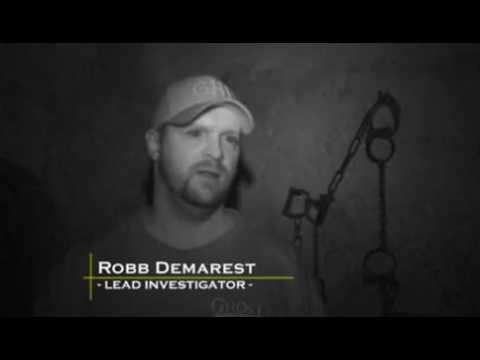
Ghost Hunters International S02E05 Spirits of Italy: An Investigative Analysis


Introduction: Unveiling the Italian Poltergeist Phenomenon

The whispers are faint, often dismissed as the sigh of ancient stones or the creak of settling foundations. Yet, within the historical heart of Italy, a different narrative unfolds – one of disembodied voices, inexplicable movements, and residual energies that defy prosaic explanation. Ghost Hunters International, in its second season, episode five, titled "Spirits of Italy," ventures into this shadowy realm, seeking to validate claims of paranormal activity with their signature blend of technological inquiry and experiential investigation. This episode is more than a ghost hunt; it's a case study into how popular media approaches the unexplained, and the critical lens through which we must examine their findings.

Our objective here is not to recount a simple tale of hauntings, but to dissect the methodology, analyze the presented evidence, and contextualize the phenomena within both historical lore and skeptical inquiry. The persistent question remains: are we witnessing genuine spectral activity, or a sophisticated interplay of psychological suggestion and environmental factors? Today, we peel back the layers.

Historical and Cultural Fabric of the Investigation

Italy's rich tapestry of history is interwoven with countless tales of the supernatural, from the lingering spirits of Roman emperors to the tormented souls of medieval villages. The specific locations featured in "Spirits of Italy" likely carry centuries of human drama, tragedy, and unexplained events, providing fertile ground for alleged hauntings. Understanding the historical context of these sites is paramount. Were there documented deaths, significant historical occurrences, or local folklore that could lend credence to present-day claims? The persistence of belief in spirits across diverse cultures suggests a deep-seated human connection to the concept of an afterlife and residual consciousness.

The cultural predisposition towards acknowledging and even revering spirits in some Italian traditions cannot be overlooked. This acceptance, while fascinating, also presents a challenge for objective investigation, potentially influencing witness accounts and interpretations of events. It’s a delicate balance to strike: respecting local beliefs while maintaining a rigorously analytical approach. The team’s excursion into this Italian spiritual landscape is, therefore, not just about finding ghosts, but about understanding the cultural vectors that shape our perception of the paranormal.

Ghost Hunters International: Methodology and Equipment

When assessing any paranormal investigation, especially one broadcast for public consumption, the employed methodology and equipment are critical checkpoints. Ghost Hunters International, like many in the field, relies on a suite of tools designed to detect environmental anomalies that are purportedly linked to spectral presence. These often include:

  • EMF Meters: Used to detect fluctuations in electromagnetic fields. The theory posits that spirits can manipulate these fields.
  • Full Spectrum Cameras: Capable of capturing light beyond the visible spectrum, such as infrared and ultraviolet, in the hope of recording visual anomalies not visible to the naked eye.
  • Audio Recording Devices (EVP Recorders): Employed to capture Electronic Voice Phenomena – alleged voices or sounds of the deceased recorded on electronic devices.
  • Thermal Imaging Cameras: To detect cold spots, which are often associated with paranormal entities.
  • Geophones and Motion Detectors: To register physical disturbances.

The team's approach typically involves breaking into smaller groups, covering different areas of a location simultaneously, and conducting interviews with witnesses. While this strategy aims for comprehensive coverage, it also introduces the potential for heightened suggestion and groupthink. The effectiveness of their equipment is a perennial debate; critics often point to environmental factors (faulty wiring, external signals) as potential sources of EMF spikes, and pareidolia or auditory illusions as explanations for EVP.

Critical analysis demands we consider the limitations of each device and the potential for misinterpretation. A spike on an EMF meter is not definitive proof of a ghost; it's a record of an electromagnetic anomaly that requires further investigation and elimination of conventional causes. Similarly, a faint sound on an audio recording is only an EVP if it cannot be attributed to any known source and exhibits characteristics suggestive of human speech.

Analysis of Reported Anomalies

The core of any paranormal investigation lies in the anomalies reported and the evidence presented. In "Spirits of Italy," viewers would have witnessed specific incidents, whether visual apparitions, auditory phenomena, or physical disturbances. Each of these instances requires rigorous deconstruction:

  • Visual Anomalies: Were these clear apparitions, or did they resemble tricks of light, shadows, or fleeting movements caught at the periphery of vision? The phenomenon of pareidolia – seeing patterns or familiar shapes in random stimuli – is a well-documented psychological effect that can easily lead to misinterpreting visual data.
  • Auditory Phenomena (EVP): When a faint sound is captured, the critical question is: what is the most plausible explanation? Could background noise, equipment malfunction, or even the investigator's own subconscious expectation have generated the perceived "voice"? The clarity and intelligibility of the alleged EVP are crucial factors.
  • Physical Manifestations: Objects moving on their own, unexplained noises, or temperature drops are perhaps the most compelling claims. However, even these can often be attributed to structural instability in old buildings, drafts, seismic vibrations, or even deliberate manipulation (either by individuals seeking attention or as part of the broadcast's narrative).

The team's interpretation of these events is pivotal. Do they immediately leap to a paranormal conclusion, or do they exhaust all natural explanations first?

"The most terrifying things are the ones we can't explain. But before we label them 'supernatural,' we owe it to ourselves to rule out the mundane with absolute certainty." - A.Q.R.

Skeptical Counterpoints and Mundane Explanations

From a scientific standpoint, extraordinary claims require extraordinary evidence. Skeptics approach paranormal investigations with a healthy dose of doubt, seeking to debunk rather than confirm. In the case of "Spirits of Italy," several avenues of skepticism are immediately apparent:

  • Confirmation Bias: Investigators, eager to find evidence, may subconsciously interpret ambiguous stimuli as paranormal.
  • Environmental Factors: Old buildings are notorious for strange noises, drafts, and electrical interference, all of which can mimic paranormal activity.
  • Psychological Suggestion: The atmosphere of a purportedly haunted location, combined with the suggestive nature of the investigation, can significantly influence participants' perceptions and trigger authentic, albeit psychologically induced, experiences.
  • Theatrical Elements: As a television show, there is an inherent incentive to create a compelling narrative. This can lead to dramatization, selective editing, and the amplification of ambiguous events to enhance viewer engagement. The timing of equipment activations or the staging of certain segments cannot be discounted.

The burden of proof lies with those claiming the supernatural. Until irrefutable, repeatable evidence is presented that cannot be explained by any known scientific principle, skepticism remains the most rational stance. This does not negate the subjective experiences of witnesses but rather demands a higher standard of proof for paranormal claims.

Investigator's Verdict: Fraud, Genuine Phenomenon, or Cognitive Bias?

After reviewing the typical investigative patterns and evidence presented in shows like Ghost Hunters International, particularly concerning "Spirits of Italy," my verdict leans towards a complex interplay of factors, with cognitive bias and environmental explanations being the most probable culprits for the majority of reported phenomena. The methodology, while technologically driven, often lacks the rigorous controls necessary for scientific validation. Electromagnetic field fluctuations can be triggered by countless mundane sources, and audio recordings are notoriously susceptible to misinterpretation and "listener bias."

While I do not dismiss the possibility of residual energy or genuine paranormal occurrences outright – the universe is still replete with mysteries beyond our current comprehension – the evidence presented in such televised investigations rarely transcends subjective experience and ambiguous data. The definitive presence of a specter, a "genuine phenomenon," requires evidence far more concrete and independently verifiable than what is typically offered. Likewise, outright fraud, while a possibility in some cases, is perhaps less common than the uncritical acceptance of ambiguous events amplified by the psychological context of a "ghost hunt." Therefore, my conclusion for this episode, and by extension, many similar televised investigations, is that the phenomena observed are most likely a product of a potent cocktail of environmental factors, subtle psychological suggestion, and the inherent biases of both the investigators and the viewer.

The Investigator's Archives: Essential Viewing and Reading

To truly understand the nuances of paranormal investigation, one must immerse oneself in the foundational works and critical analyses of the field. For those seeking to deepen their knowledge beyond the televised hunt, I highly recommend exploring the following resources, which form the bedrock of serious inquiry:

  • Books:
    • "Passport to Magonia" by Jacques Vallée: A seminal work that connects UFOs and fairy lore, urging a broader, more anthropological approach to anomalous phenomena.
    • "The Realism of the UFOs" by John Keel: Explores the "supernatural" aspects of UFO encounters, positing them as a modern manifestation of ancient mythologies.
    • "Synopsis of Cases of Demonic Possession & Exorcism" by Allen Quinter Ruiz: An anthology of documented cases providing a historical and analytical overview of possession phenomena.
  • Documentaries:
    • "Missing 411" Series: David Paulides investigates inexplicable disappearances, often in wilderness areas, presenting patterns that defy conventional explanation.
    • "Hellier": A multi-season documentary following a group of paranormal investigators exploring a series of synchronistic events and alleged supernatural encounters.
    • "The Phenomenon" (2020): A comprehensive documentary exploring the history and modern implications of the UFO phenomenon, featuring interviews with numerous credible witnesses and researchers.
  • Platforms:
    • Gaia: Offers a vast library of documentaries and series on spirituality, consciousness, and the paranormal, often featuring in-depth investigations and discussions.
    • Discovery+: Features a wide range of paranormal-themed shows, including historical ghost investigations and explorations of cryptids.

These resources represent a commitment to thorough research and critical thinking, moving beyond sensationalism to explore the profound questions that the unexplained presents.

Research Protocol: Documenting Anomalous Experiences

For those who wish to move beyond passive observation and engage in rigorous documentation, establishing a clear protocol is essential. This ensures that any recorded anomalies are as free as possible from subjective interpretation and external contamination. Follow these steps when investigating a location or experiencing a personal anomaly:

  1. Pre-Investigation Assessment: Before any paranormal investigation, conduct a thorough sweep of the location for mundane explanations. Check for faulty wiring, drafts, structural issues, plumbing noises, and potential sources of electromagnetic interference. Document all findings meticulously.
  2. Environmental Baseline Readings: Establish baseline readings for EMF, temperature, and ambient noise levels before the investigation commences. Record these periodically throughout the session.
  3. Controlled Recording: When attempting to capture EVP, use high-quality digital recorders. Speak clearly and distinctly, stating the date, time, location, and who is present. After a period of silence, ask specific questions. Avoid general statements like "Is anyone there?" Instead, try targeted questions related to the history of the location or specific historical figures associated with it.
  4. Video Documentation: Use cameras capable of full spectrum or low-light recording. Ensure the field of view is wide enough to capture the entire area of interest. Pan the cameras slowly and deliberately, allowing ample time for any potential visual anomalies to manifest clearly.
  5. Objectivity in Interpretation: When reviewing audio or video evidence, approach it with a critical, objective mindset. Ask: "What is the *most likely* explanation for this?" only after exhausting all plausible mundane causes. Document any perceived anomalies with detailed descriptions, including time stamps and context.
  6. Cross-Referencing and Corroboration: If multiple investigators are present, compare their individual experiences and recordings. Discrepancies can be as informative as corroborations.

Adhering to such a protocol helps transform anecdotal experiences into potentially valuable data, even if the ultimate conclusion remains uncertain.

Frequently Asked Questions

alejandro quintero ruiz is a veteran field investigator dedicated to the analysis of anomalous phenomena. His approach combines methodological skepticism with an open mind to the inexplicable, always seeking the truth behind the veil of reality.

Conclusion: The Enduring Enigma of Italian Spirits

The episode "Spirits of Italy" by Ghost Hunters International offers a glimpse into the persistent fascination with the paranormal, set against a backdrop rich with history and folklore. While the show prioritizes entertainment and the thrill of the chase, our analysis reveals the critical need for a more rigorous, scientific approach to understanding these alleged phenomena. The line between genuine anomaly and subjective experience is often blurred by environmental factors, psychological suggestion, and the inherent limitations of investigative technology.

The enduring enigma of Italian spirits, like countless other unexplained phenomena worldwide, invites continued investigation. It challenges our understanding of consciousness, reality, and the very fabric of existence. While definitive answers remain elusive, the pursuit of knowledge, armed with critical thinking and robust methodology, is a journey worth undertaking. The questions raised by this episode are not merely about ghosts, but about the limits of our perception and the vastness of the unknown.

Your Mission: Uncover Local Mysteries

Every town, every region, has its own ghost stories, its own unexplained occurrences. Your mission, should you choose to accept it, is to become a local investigator. Take the principles discussed in this analysis and apply them to a local legend or a place in your community that is rumored to be haunted. Document any perceived anomalies with the rigor outlined in our research protocol. Share your findings – the mundane explanations and the truly peculiar observations – in the comments below. Let's build a collective archive of local mysteries and scrutinize them together.