Followers

Mostrando las entradas con la etiqueta Alien Technology. Mostrar todas las entradas

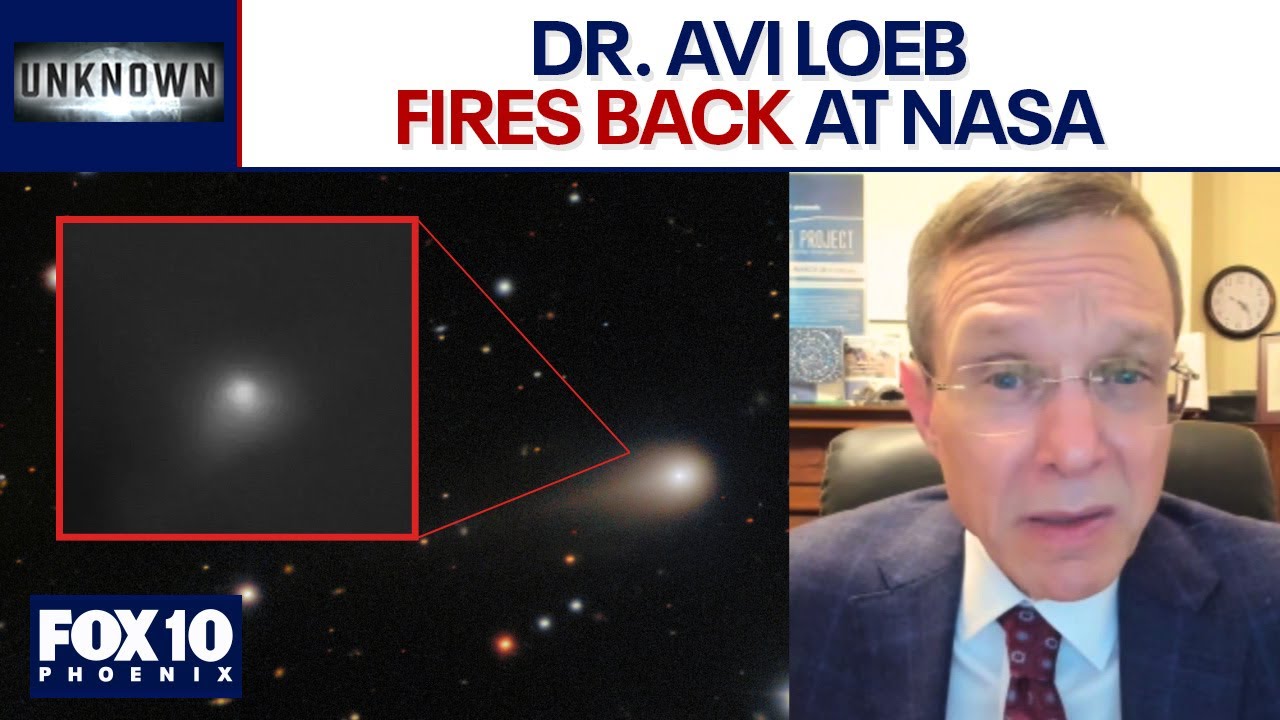
Avi Loeb: NASA's 3I/Atlas Images Raise More Questions Than Answers

Image

The scientific community, a realm typically driven by empirical evidence and a relentless pursuit of truth, often finds itself at a crossroads when confronted with phenomena that defy conventional explanation. The recent analysis by NASA of the interstellar object 3I/ATLAS presents such a juncture. Dr. Avi Loeb, a distinguished astrophysicist from Harvard, has voiced significant concerns, not only about the physical properties of the object but also about the perceived reluctance of the scientific establishment to engage with potentially paradigm-shifting implications. This dossier delves into the anomalies presented by 3I/ATLAS and the critical examination of NASA's response, framed by the broader context of our search for extraterrestrial intelligence.

Unraveling the Mysteries of 3I/ATLAS

The interstellar object 3I/ATLAS, a visitor from beyond our solar system, has ignited a firestorm of debate due to its peculiar characteristics, which deviate significantly from those expected of a typical comet or asteroid. Dr. Avi Loeb, a prominent figure in the study of interstellar objects, has meticulously outlined a dozen significant puzzles that NASA's latest analysis, according to him, has failed to adequately address. These enigmas include the object's disproportionately large mass when compared to its predecessor, 'Oumuamua, and its unusual behavior – specifically, jets that do not appear to be shedding material in the typical manner of a comet undergoing sublimation.

These anomalies are not mere academic curiosities; they strike at the core of our understanding of celestial mechanics and the potential diversity of objects traversing interstellar space. The very nature of 3I/ATLAS challenges established models, forcing scientists to consider possibilities previously relegated to the realm of speculation. The mass anomaly, in particular, suggests an object far denser or more substantial than anticipated for an object of its observed size, hinting at an unusual composition or even an artificial origin.

Recommended Gear for Investigation

ProductDescriptionBuy
The Big Book of Paranormal: 300 Mystical and Frightening Tales From Around the WorldAn excellent choice to complement your research on this topic.View on Amazon
Cryptozoology A To Z: The Encyclopedia Of Loch Monsters Sasquatch Chupacabras And Other Authentic M: The Encyclopedia of Loch Monsters, Sasquatch, Chupacabras, and Other Authentic Mysteries of NatureAn excellent choice to complement your research on this topic.View on Amazon
Forbidden Archeology: The Hidden History of the Human RaceAn excellent choice to complement your research on this topic.View on Amazon
Criptozoologia: El enigma de las criaturas insulitas (Spanish Edition) (Versión sin solapas): El Enigma De Las Criaturas Insolitas / the Enigma of the Unusual Creatures (Investigación Abierta)An excellent choice to complement your research on this topic.View on Amazon
The H. P. Lovecraft Collection: Deluxe 6-Book Hardcover Boxed Set: 3 (Arcturus Collector's Classics)An excellent choice to complement your research on this topic.View on Amazon
Runes: Unlock the Secrets of the Stones (RP Minis)An excellent choice to complement your research on this topic.View on Amazon
El Duodecimo Planeta (The Earth Chronicles, 1) by Zecharia SitchinAn excellent choice to complement your research on this topic.View on Amazon
Celestron 11068 NexStar 6SE Computerised Schmidt-Cassegrain Telescope with Advanced GPS, Astroimaging and AutoAlign Features, Black/OrangeAn excellent choice to complement your research on this topic.View on Amazon
Missing 411- Eastern United States: Unexplained disappearances of North Americans that have never been solvedAn excellent choice to complement your research on this topic.View on Amazon
Tapiz de mapa del mundo antiguo, diseño vintage de mapa del mundo, tapiz de distribución geográfica para colgar en la pared, póster educativo de mapa del mundo del Atlas histórico marrón, para pared,An excellent choice to complement your research on this topic.View on Amazon

Dr. Loeb's Critique: A Call for Open-Mindedness

Dr. Loeb's central argument revolves around the scientific community's apparent adherence to a dogmatic approach, a resistance to embracing novel concepts when faced with anomalous data. He asserts that the prevailing scientific mindset, in its eagerness to fit observations into pre-existing frameworks, may be inadvertently overlooking signs of advanced extraterrestrial technology. This intellectual inertia, he posits, is not only hindering a comprehensive understanding of objects like 3I/ATLAS but also significantly impeding the urgent search for Unidentified Aerial Phenomena (UAP) and evidence of advanced alien civilizations. His impassioned plea is for a fundamental shift in perspective, urging colleagues to set aside preconceived notions and rigorously investigate every possibility, no matter how unconventional.

"The scientific community needs to move past its dogmatic approach and acknowledge these unexplained properties, asserting that this reluctance to consider the possibility of alien technology mirrors the historical academic resistance faced by Galileo and risks limiting the timely search for UAP and advanced extraterrestrial life."

This stance resonates with a growing segment of the public that feels traditional scientific institutions are too conservative, too afraid of ridicule, or too beholden to established theories to make groundbreaking discoveries. The historical parallel drawn to Galileo Galilei, ostracized for his heliocentric views, serves as a potent reminder that revolutionary ideas often face staunch opposition before eventual acceptance.

NASA's Official Stance: A Disappointing Disclosure?

The anticipation surrounding NASA's analysis of the 3I/ATLAS images was palpable. However, for many, including Dr. Loeb, the released information proved to be a significant disappointment. Critics argue that the agency’s presentation reiterated known facts rather than offering new insights, and that the data provided was rudimentary, akin to images from a lower-resolution camera. The failure to directly «reveal» substantial new findings or address the «twelve significant puzzles» highlighted by Dr. Loeb has led to accusations that NASA is either withholding crucial information or adhering to a narrative that downplays the object’s truly enigmatic nature. Some commentators suggest that the imagery itself, delayed and of questionable quality, further fuels suspicion.

The narrative presented by NASA, focusing on conventional explanations like cometary activity, has been met with skepticism. Observers note the agency’s perceived discomfort and contradictory statements during press briefings, oscillating between describing the object as a comet with differences and a "normal comet with some strange particularities." This ambiguity, coupled with a lack of definitive size estimates and a complete disregard for its anomalous mass, has only amplified public distrust. This perceived lack of transparency is a recurring theme, with some recalling instances where NASA allegedly cut live feeds when UAPs appeared on screen.

Historical Parallels: Galileo and the Resistance to New Ideas

Dr. Loeb's invocation of Galileo is not incidental. Throughout history, paradigm-shifting discoveries have often been met with resistance from established institutions. Galileo's observations of the moons of Jupiter and his advocacy for the heliocentric model challenged deeply entrenched Aristotelian and Church doctrines, leading to his condemnation. Similarly, the introduction of concepts like continental drift or quantum mechanics faced initial skepticism and outright rejection before mounting evidence led to their acceptance.

The parallels suggest that when confronted with data that fundamentally challenges existing paradigms, the human tendency is to either dismiss the anomaly, discredit the messenger, or attempt to force the data into a familiar mold. In the context of 3I/ATLAS, this resistance is interpreted by some as a fear of the unknown, a reluctance to acknowledge that humanity may not be alone in the universe, or that technologically advanced artifacts could be traversing our cosmic neighborhood undetected or unacknowledged.

The Technological Artifact Hypothesis

Central to the ongoing debate is the hypothesis that 3I/ATLAS might not be a natural celestial body but rather a technological artifact, an alien probe or craft. The unexplained behavior of its jets, the extraordinary mass-to-size ratio, and the lack of expected cometary activity lend credence to this theory. If 3I/ATLAS is indeed artificial, its presence signifies a monumental discovery, one that could irrevocably alter our understanding of life in the cosmos and our place within it. Dr. Loeb's advocacy for this hypothesis stems from a belief that all possibilities must be entertained when faced with such profound anomalies.

This hypothesis, while speculative, is grounded in observing phenomena that defy conventional scientific explanations. The argument follows that if an object behaves in ways inconsistent with natural processes, then non-natural causes must be considered. The reluctance to explore this path vigorously is seen by proponents as a failure of scientific curiosity and a missed opportunity for potentially the most significant discovery in human history.

Echoes from the Public: A Growing Skepticism

The reaction from the public and online communities to the 3I/ATLAS situation and NASA's response has been overwhelmingly critical. Testimonies shared across various platforms reveal a deep-seated mistrust of official narratives and a strong endorsement of Dr. Loeb's perspective. Many viewers expressed frustration with NASA's perceived arrogance and the simplistic nature of their explanations, deeming the released images "a joke" compared to what amateur astronomers can produce. Comments frequently highlight the contrast between NASA's allegedly poor performance and Dr. Loeb's clear, open, and intellectually honest approach.

One recurring sentiment is that NASA, much like other government bodies, operates with a lack of transparency, potentially withholding crucial data concerning UAPs and extraterrestrial intelligence. This skepticism is amplified by the historical context of governmental secrecy and the perceived inadequacy of NASA's budget allocation for genuine exploration versus public relations. The audience's embrace of Dr. Loeb is evident, with many calling for him to lead NASA or a similar initiative, recognizing his dedication to seeking truths beyond conventional boundaries. The sentiment is clear: the public is ready for genuine revelations, not obfuscation.

Several users pointed out the irony of NASA discussing the excitement of finding microbial life while potentially sitting on information about more advanced extraterrestrial civilizations. The frustration is palpable, with calls to "DE-FUND NASA" and reallocate resources to more effective, open-minded researchers. The overall consensus from audience reactions is that Dr. Loeb embodies the scientific integrity and curiosity that many feel is lacking in official channels.

Shifting the Research Paradigm: A New Frontier

Dr. Loeb is not merely critiquing but actively advocating for a significant redirection of scientific resources and focus. He urges institutions to move beyond passive observation and engage in proactive searching for technological signatures originating from space. This involves allocating substantial funding and dedicating research efforts to identifying potential alien technologies, rather than solely waiting for natural phenomena to present themselves. His confidence remains unshaken: the evidence of extraterrestrial civilizations, he believes, is inevitable, and critical new data regarding 3I/ATLAS is anticipated.

This proposed shift represents a move from a purely theoretical to an actively investigative stance in the search for extraterrestrial intelligence (SETI). It involves developing new methodologies, instruments, and theoretical frameworks capable of detecting artifacts or signals that might not conform to our current understanding of natural cosmic processes. The implication is that humanity must actively "listen" and "look" for technological intelligence, not just natural occurrences.

Veredicto del Investigador: ¿Fraude, Fenómeno Genuino o Algo Más?

The case of 3I/ATLAS, as presented through the lens of Dr. Avi Loeb's analysis and the subsequent public outcry, points towards a phenomenon that transcends the ordinary. While definitive proof of extraterrestrial technology remains elusive, the anomalies associated with 3I/ATLAS, coupled with NASA's perceived inadequate response, create a compelling narrative of suspicion. It is my assessment, based on the available evidence and the critiques leveled against official channels, that 3I/ATLAS warrants continued, rigorous investigation. The possibility of it being a technological artifact, while speculative, cannot be dismissed without a more thorough and transparent scientific engagement. The resistance to exploring such hypotheses is, in itself, an anomaly that demands scrutiny.

Equipo Recomendado para la Investigación

For those inspired by Dr. Loeb's work and eager to contribute to the ongoing investigation of celestial anomalies, the right equipment is crucial. While amateur observation has its limits, advanced tools can provide invaluable data:

Preguntas Frecuentes

  1. ¿Por qué el objeto 3I/ATLAS es tan controvertido?

    La controversia surge de las anomalías físicas observadas en 3I/ATLAS, como su masa inusual y el comportamiento de sus jets, que no se alinean con las características típicas de un cometa o asteroide, junto con la percepción de que NASA no ha abordado estas peculiaridades de manera satisfactoria.

  2. ¿Qué argumenta el Dr. Avi Loeb sobre la respuesta de la NASA?

    El Dr. Loeb critica a la NASA por no abordar las doce anomalías significativas del objeto, acusando a la comunidad científica de un enfoque dogmático y de resistencia a considerar la posibilidad de tecnología extraterrestre, comparando esta resistencia con la oposición histórica a las ideas de Galileo.

  3. ¿Cuál es la hipótesis de que 3I/ATLAS sea un artefacto tecnológico?

    Esta hipótesis sugiere que las características anómalas de 3I/ATLAS podrían indicar que no es un objeto natural, sino una nave o sonda artificial de origen extraterrestre, dada su masa inusual y su comportamiento no estándar.

  4. ¿Por qué la gente desconfía de la información oficial sobre 3I/ATLAS?

    La desconfianza se basa en la percepción de falta de transparencia por parte de la NASA, la calidad cuestionable de las imágenes publicadas, la falta de respuesta a preguntas clave y un historial percibido de ocultar información sobre fenómenos anómalos y UAPs.

  5. ¿Qué proponen los defensores de una investigación más abierta?

    Proponen un cambio en el enfoque científico, asignando más recursos a la búsqueda activa de firmas tecnológicas extraterrestres y adoptando una mentalidad más abierta para investigar fenómenos que desafían las explicaciones convencionales.

Tu Misión: Campo de Investigación

La investigación de lo inexplicable exige tanto rigor analítico como valentía intelectual. Te desafío a adoptar una postura crítica ante la información oficial, a buscar fuentes diversas y a considerar todas las hipótesis. Si has sido testigo de fenómenos aéreos no identificados o has experimentado eventos inexplicables, documenta todo meticulosamente. Tu testimonio, como el de tantos otros, podría ser la pieza faltante en un rompecabezas cósmico mayor.

Comparte tus experiencias y observaciones en los comentarios a continuación. ¿Qué opinas sobre el caso 3I/ATLAS y la respuesta de la NASA? ¿Has presenciado algo similar?

Difunde este expediente en tus redes sociales. La verdad no se descubre a través del silencio, sino del intercambio abierto de ideas y evidencias. Ayúdanos a correr la voz y a fomentar una discusión más profunda sobre nuestro lugar en el universo.

Suscríbete a nuestro canal para recibir actualizaciones constantes sobre los misterios más intrigantes de nuestro cosmos y prepárate para cuestionarlo todo.

Investigator's Note: True paranormal research doesn't fund itself. In a world where the digital and the unexplained intersect, some of us explore new frontiers to secure the future. Do you dare to be part of the vanguard? Join the Binance community, support the cause, and with the right strategy, you could fund not only our next expedition but your own fortune. The next great discovery could be just a click away.

The Buga Sphere: Unexplained Metallic Anomalies and Global Sightings


The skies have become a canvas for the inexplicable. Across the globe, from the bustling avenues of Moscow to the serene landscapes of Mexico, a new breed of aerial anomaly has emerged: metallic spheres exhibiting remarkable capabilities. These aren't mere weather balloons or conventional aircraft; they are silent observers, leaving behind a trail of baffling evidence and igniting the imaginations of those who witness them. This dossier delves into the compelling case of the Buga Sphere, a metallic artifact recovered in Colombia, which serves as a linchpin in understanding a wave of over 40 similar sightings reported since March.

Global Phenomenon: The Rise of Metallic Spheres

Since March, the skies have been unusually active, with reports cataloging over 40 distinct sightings of metallic spheres across various continents. These incidents, ranging from the urban sprawls of Mexico City to the geopolitical heart of Moscow, and extending to the Pacific coast of Long Beach, California, paint a picture of a coordinated, global observation campaign. The sheer volume and consistency of these reports suggest a phenomenon far beyond isolated misidentifications or atmospheric quirks.

The Buga Sphere Truth: Advanced Sensor Technology

Central to understanding this phenomenon is the investigation surrounding the "Buga Sphere." Recovered in Colombia, this artifact is described as a metallic object embedded with fiber optics. Preliminary analysis suggests that these spheres are not merely passive observances but sophisticated sensor platforms, equipped to meticulously record their surroundings. The fiber optic system implies an advanced data collection capability, hinting at an intelligence actively seeking to gather information about our world.

Recommended Gear for Investigation

ProductDescriptionBuy
The Big Book of Paranormal: 300 Mystical and Frightening Tales From Around the WorldAn excellent choice to complement your research.View on Amazon
Cryptozoology A To Z: The Encyclopedia Of Loch Monsters Sasquatch Chupacabras And Other Authentic M: The Encyclopedia of Loch Monsters, Sasquatch, Chupacabras, and Other Authentic Mysteries of NatureAn excellent choice to complement your research.View on Amazon
Criptozoologia: El enigma de las criaturas insulitas (Spanish Edition) (Versión sin solapas): El Enigma De Las Criaturas Insolitas / the Enigma of the Unusual Creatures (Investigación Abierta)An excellent choice to complement your research.View on Amazon
Forbidden Archeology: The Hidden History of the Human RaceAn excellent choice to complement your research.View on Amazon
The H. P. Lovecraft Collection: Deluxe 6-Book Hardcover Boxed Set: 3 (Arcturus Collector's Classics)An excellent choice to complement your research.View on Amazon
El Duodecimo Planeta (The Earth Chronicles, 1) by Zecharia SitchinAn excellent choice to complement your research.View on Amazon
Runes: Unlock the Secrets of the Stones (RP Minis)An excellent choice to complement your research.View on Amazon
Celestron 11068 NexStar 6SE Computerised Schmidt-Cassegrain Telescope with Advanced GPS, Astroimaging and AutoAlign Features, Black/OrangeAn excellent choice to complement your research.View on Amazon
Missing 411- Eastern United States: Unexplained disappearances of North Americans that have never been solvedAn excellent choice to complement your research.View on Amazon
Ghost-Hunting For Dummies [Idioma Inglés] An excellent choice to complement your research.View on Amazon

Evidence from Moscow, Russia: A Levitating Enigma

In Moscow, a stunning aerial display was captured: a metallic sphere, seemingly defying gravity, levitated silently above the cityscape. The footage, scrutinized by researchers, shows an object exhibiting controlled movement and a distinct physical presence, unlike any known terrestrial aircraft or natural phenomenon. Its serene, almost effortless, suspension in the air has fueled speculation about its propulsion and operational capabilities.

Long Beach, California: A Swift and Elusive Encounter

The phenomenon extended to the United States, with a notable sighting in Long Beach, California. Witnesses reported observing a sphere at close proximity. The object executed a rapid, agile maneuver before accelerating away at an incredible speed, leaving the observers astonished. The lack of sonic boom or visible exhaust further deepens the mystery surrounding its speed and propulsion methods.

Mexico - Puebla Sighting: High-Speed Oscillation

Mexico, a region with a rich history of unexplained aerial phenomena, has also contributed significant evidence. In Puebla, a sphere was observed exhibiting rapid, high-speed oscillations directly above a hill in Metepec. The erratic yet controlled movements suggest a sophisticated guidance system, capable of performing maneuvers that would be impossible for conventional aircraft.

Tepotzlan, Morelos: Electromagnetic Distortion Near Ancient Pyramids

Further adding to Mexico's enigmatic aerial encounters, a sighting near the ancient pyramids of Tepotzlan, Morelos, revealed an object crossing the sky. Crucially, analysis of the surrounding environment detected significant electromagnetic distortions. This finding suggests that the spheres may not only be observing visually but also interacting with or influencing local energy fields, a characteristic attributed to advanced, non-terrestrial technology.

CDMX Observation: A Sphere's Potential Pursuit

In a particularly intriguing event captured near Maussan Televisión in Mexico City (CDMX), a sphere was recorded. The proximity to the Buga Sphere investigation's hub suggests a potential connection, with some theorizing this sphere might have been actively searching for – or monitoring – its Colombian counterpart. This localized incident amplifies the possibility of a networked intelligence operating within our airspace.

The Central Case: Colombia and the Recovered Buga Sphere

The pivotal event in this unfolding narrative occurred in March 2025 in Colombia, where a witness successfully recovered one of these enigmatic metallic spheres. The artifact, now famously known as the Buga Sphere, represents tangible evidence. Its intricate design, featuring embedded fiber optics, has become the focal point for researchers attempting to decipher the purpose and origin of these global visitors.

Yumbo, Valle del Cauca: Low-Altitude Levitation

Adding to the Colombian evidence, a metallic sphere was observed levitating at an extremely low altitude over a sugarcane field in Yumbo, Valle del Cauca. The object's proximity to the ground and its stable, unmoving posture challenge conventional explanations, reinforcing the notion of controlled, advanced levitation technology.

The Definitive Comparison: Yumbo vs. Buga Spheres

A detailed comparative analysis between the Yumbo sphere and the recovered Buga sphere reveals startling similarities. Specifically, both objects exhibit an identical "equatorial belt," a distinct feature that strongly suggests they originate from the same manufacturing source or are part of a unified technological system. This comparative evidence is critical in establishing a link between disparate sightings and corroborating the claims of a coordinated effort.

Investigator's Verdict: Sentient Sensors of Extraterrestrial Intelligence

Based on the cumulative evidence—the global distribution, the advanced technological indicators (levitation, speed, electromagnetic influence), and the striking similarities between recovered and observed artifacts—the conclusion is both profound and unsettling. These metallic spheres are not random occurrences. They represent the "eyes and ears" of non-human intelligences, sophisticated sensor drones meticulously deployed to study and understand humanity and our planet. The Buga Sphere case, in particular, provides a crucial tangible link in what appears to be an ongoing, large-scale reconnaissance mission.

The Investigator's Archive

For those keen to delve deeper into the mysteries of unexplained aerial phenomena and advanced technology, I recommend the following resources:

  • Books: Works by Jacques Vallee, such as "Passport to Magonia," offer historical context on aerial phenomena. Modern analyses of sensor technology in UFO reports are emerging from independent researchers.
  • Documentaries: Series that explore historical UFO cases and analyze witness testimonies provide invaluable context. Look for productions that focus on factual analysis rather than sensationalism.
  • Platforms: Reputable online forums and archives dedicated to UFO research often contain aggregated sighting reports and scientific analyses. Organizations that promote rigorous investigation offer structured databases of evidence.

Equipment Recommended for Investigation

For those inspired to document potential anomalies, reliable equipment is paramount. Capturing clear, undeniable evidence is key to serious investigation.

Frequently Asked Questions

What is the primary significance of the Buga Sphere?
The Buga Sphere is significant because it is a tangible, recovered artifact exhibiting advanced technological characteristics, suggesting it is a sensor drone deployed by an unknown intelligence.
Are these metallic spheres a new phenomenon?
While metallic spheres have been reported for decades, the recent surge in documented sightings and the specific recovery of the Buga Sphere indicate a potential intensification or change in the observed activity.
Can these spheres be explained by known technology?
The reported capabilities—silent levitation, extreme speed, electromagnetic influence, and advanced sensor integration—exceed current publicly acknowledged terrestrial technology, suggesting an extraterrestrial or highly advanced, undisclosed origin.
What is the implication of these spheres being "sensors"?
It implies a deliberate, intelligent effort to gather data about Earth and its inhabitants, suggesting careful observation rather than random encounters.

Your Mission: Documenting the Unseen

The world is filled with unexplained phenomena, and your personal observations can contribute to the collective understanding. If you witness any unusual aerial objects, particularly those matching the descriptions of metallic spheres:

  • Document Thoroughly: Use high-resolution video and multiple still photographs. Record the object's movement, altitude, and any associated environmental effects.
  • Note Environmental Conditions: Record the time, date, weather, and location precisely. Note any unusual sounds or electromagnetic interference.
  • Cross-Reference: Compare your observations with known sightings and phenomena. Consult resources like Wikipedia's UFO article for context.
  • Report Responsibly: Submit your findings to reputable investigative organizations. Accuracy and detail are paramount.

Your diligence could be the key to unlocking the next piece of the puzzle. The unexplained is out there, waiting to be understood.

Share Your Experiences and Insights

Have you encountered similar aerial anomalies? Do you have personal experiences or theories regarding the Buga Sphere and its global counterparts? Share your accounts in the comments below. Your testimony might be the crucial piece of evidence we need.

If you found this investigation compelling, please share it across your social networks to help spread awareness and encourage further discussion on these profound mysteries.

Connect with us for more exclusive investigations and insights into the world's greatest enigmas. Follow our channels for continuous updates.

Investigator's Note: True paranormal research doesn't fund itself. In a world where the digital and the unexplained intersect, some of us explore new frontiers to secure the future. Do you dare to be part of the vanguard? Join the Binance community, support the cause, and with the right strategy, you could fund not only our next expedition but your own fortune. The next great discovery could be just a click away.

The Apollo 11 Lunar Landing: Deconstructing the Evidence and Unveiling the Anomalies


I. The Official Account: A Giant Leap

On July 20, 1969, a date indelibly etched into historical consciousness, humanity achieved what was once the exclusive domain of science fiction: landing on the Moon. The Apollo 11 mission, spearheaded by Neil Armstrong and Buzz Aldrin, represented a monumental triumph of human ingenuity, scientific endeavor, and geopolitical ambition. The grainy images broadcast across the globe, the iconic phrases spoken from a desolate alien landscape – these elements coalesced into a narrative of unparalleled achievement. It was a moment that unified nations, albeit temporarily, under a shared sense of awe and possibility. This official account, supported by extensive documentation, scientific data, and the testimonies of hundreds of thousands involved, paints a picture of a successful, albeit perilous, expedition into the cosmos. The subsequent Apollo missions further solidified this narrative, bringing back geological samples and invaluable data that continue to inform our understanding of lunar science.

The sheer logistical and technological undertaking of the Apollo program was staggering. From the Saturn V rocket, a colossal engineering marvel, to the intricate guidance systems and life support, every component was a testament to American scientific prowess during the Space Race. The successful return of the astronauts, their accounts validated by recovered lunar soil and rock samples, formed the bedrock of this historical event. For decades, this has been the accepted truth, a beacon of human exploration. However, as with many events of such profound significance, the narrative has not remained unchallenged. The very magnitude of the achievement has, paradoxically, invited skepticism and fueled a counter-narrative that questions the authenticity of the entire endeavor.

II. Whispers in the Void: The Case for a Faked Landing

The persistent claims that the Apollo moon landings were faked are not merely the ramblings of the disaffected fringe. They originate from a critical examination of the visual and circumstantial evidence, and the inherent human tendency to question extraordinary claims. These doubts, amplified by the digital age and the ease with which information—and misinformation—can spread, have solidified into a resilient conspiracy theory. The core arguments often revolve around perceived anomalies in photographs and video footage, questions about the technological capabilities of the era, and underlying geopolitical motivations. The intense pressure of the Cold War and the desire to outpace the Soviet Union are frequently cited as potential catalysts for a staged event. If the objective was to win a propaganda victory, faking the landing would have been a high-risk, high-reward gambit. The very idea that such a monumental event could be manufactured has a certain dramatic allure, tapping into a deep-seated suspicion of authority and official narratives.

"The difference between science and faith is that science demands evidence, while faith demands belief without it. When it comes to the Moon landing, the evidence is being scrutinized by both sides with the fervor of religious devotion." - Alejandro Quintero Ruiz

The counter-arguments often point to the sheer complexity of faking such an event, the involvement of thousands of personnel who would have had to maintain silence, and the scientific validation through independent sources and lunar samples. Yet, the proponents of the hoax theory remain undeterred, meticulously dissecting every frame of footage and every official statement for chinks in the armor of the established narrative. It's a classic case of the extraordinary claim requiring extraordinary evidence, and for the skeptics, the official evidence is not extraordinary enough.

III. Examining the Photographic and Video Evidence

The most fertile ground for moon landing skepticism lies within the visual records. Critics meticulously analyze photographs and film footage, searching for inconsistencies that, they argue, betray a terrestrial origin. One of the most frequently cited points is the apparent lack of stars in the lunar sky. In the vacuum of space, with no atmosphere to scatter light, stars should be brilliantly visible. NASA’s explanation—that the exposure settings for the brightly lit lunar surface and astronauts made the fainter starlight imperceptible—is often dismissed by theorists as a convenient post-hoc rationalization.

Another common point of contention is the behavior of shadows. Inconsistencies in shadow direction and length, particularly when multiple light sources are supposedly absent, are presented as evidence of artificial studio lighting. The waving of the American flag, despite the absence of wind on the Moon, is another popular talking point, though NASA explains this by the presence of a horizontal rod inserted to keep the flag unfurled and the fabric's tendency to retain folds. The Van Allen radiation belts, intense bands of charged particles surrounding Earth, also present a challenge. Skeptics question how astronauts could have passed through these belts unharmed with the technology available at the time. NASA’s counter-argument involves the trajectory of the spacecraft and the limited duration of exposure, suggesting the radiation dosage was within acceptable limits. The sheer abundance of these 'anomalies,' whether genuine oversights or misinterpretations, fuels the ongoing debate.

Alleged Anomaly Official Explanation Skeptic's Counter
Lack of Stars Exposure settings for a bright surface Convenient excuse; stars should be visible.
Waving Flag Horizontal rod and fabric memory Implies wind; visual artifact.
Shadow Inconsistencies Uneven terrain, perspective, single primary light source (Sun) Suggests multiple artificial light sources.
Van Allen Radiation Belts Short transit time, trajectory, spacecraft shielding Lethal radiation levels for humans.

IV. A Fleet Fueled by the Unknown: The Hacker's Revelation

Beyond the visual scrutiny, a more recent and intriguing layer has been added to the moon landing conspiracy: claims of recovered alien technology powering a covert US space fleet. This narrative, often emerging from the shadowy corners of the internet where hacktivism and ufology intersect, posits that the Apollo missions were not just a staged event, but a carefully constructed deception to mask an even grander, more clandestine reality. The premise is that the US government, far from merely faking the Moon landing, had already made contact or discovered advanced extraterrestrial propulsion systems. These systems, it is alleged, formed the basis of a secret space program, a fleet capable of true interstellar or at least interplanetary travel, years, if not decades, before public acknowledgment. The 'evidence' for this often comes in the form of leaked documents, whistleblower testimonies, or, as in the case mentioned, a hacker's purported discovery. These revelations suggest that the 'Moon missions' served a dual purpose: to pacify public curiosity with a fabricated achievement while simultaneously developing and utilizing technology far beyond our current understanding, possibly acquired through reverse-engineering alien craft.

"The true mystery isn't just whether we landed on the Moon, but what secrets might have been uncovered, or even utilized, during that era. The idea of a hidden fleet powered by non-terrestrial tech shifts the paradigm entirely." - Alejandro Quintero Ruiz

This hypothesis connects the dots between the perceived inconsistencies of the Apollo program and the broader phenomenon of UFO sightings and alleged government cover-ups. It suggests that the 'hoax' was not just about deception, but about concealment of a much larger, more profound interaction with non-human intelligence. The implications are staggering, suggesting that humanity's technological trajectory has been secretly steered by alien influence, with the public granted only a curated, sanitized version of our cosmic neighborhood. The challenge, of course, lies in verifying such extraordinary claims, which often remain buried in encrypted files and unsubstantiated digital breadcrumbs. When dealing with claims of 'alien technology,' the burden of proof becomes astronomically high, requiring rigorous forensic analysis of digital artifacts and corroboration from credible, verifiable sources, which are notoriously scarce in this domain.

For any serious investigator exploring these claims, the acquisition of specialized tools is paramount. Devices such as high-sensitivity EMF meters (Geiger counters are also useful for certain energy signatures), full-spectrum cameras capable of capturing infrared and ultraviolet light, and sophisticated audio recorders for EVP (Electronic Voice Phenomena) analysis are indispensable. Furthermore, understanding data forensics and encryption decryption techniques can be crucial when assessing claims like those of the alluded hacker. Investing in training or resources for these areas is not a luxury, but a necessity for anyone serious about uncovering evidence in the clandestine world of secret space programs and potential extraterrestrial interactions. Consider resources like advanced digital forensics courses or robust data recovery software – investments that could unlock the next phase of your research.

V. Investigator's Verdict: Fraud, Genuine Phenomenon, or Something Else Entirely?

After meticulously sifting through the official records, the photographic anomalies, and the speculative yet compelling claims of a hidden alien-powered fleet, the verdict remains, intriguingly, plural. The overwhelming scientific consensus, backed by decades of evidence—including lunar samples, laser reflectors left on the Moon, and corroborating data from independent space agencies—supports the authenticity of the Apollo 11 landing. The meticulous planning, the vast network of personnel, and the sheer difficulty of maintaining such a colossal deception point towards the landing being a genuine historical event. This is the pragmatic, evidence-based conclusion.

However, the persistent dissection of visual evidence revealing inconsistencies like the absent stars and the flag's behavior cannot be entirely dismissed as mere nitpicking. While NASA offers plausible explanations, the recurrence of these perceived anomalies in the public consciousness speaks to a gap between the official narrative and the viewer's intuitive interpretation. This gap fosters doubt, and where doubt exists, the possibility of deception, or at least a narrative that has been heavily curated, remains. The claims of a hacker uncovering evidence of alien technology powering a secret space fleet, while bordering on speculative fiction, tap into a broader tapestry of unexplained phenomena and alleged government secrecy surrounding UFOs and advanced propulsion. It suggests a layer of reality so hidden that even the 'hoax' narrative might itself be a misdirection. Could it be that the landing was real, but that something else—something extraordinary and possibly extraterrestrial—was also happening, and the true extent of it has been deliberately obscured? The possibility of a 'limited hangout,' where a portion of the truth is revealed to conceal a larger secret, is a recurring theme in these investigations. Therefore, while fraud is unlikely given the scale of evidence, the hypothesis of a genuinely recorded event layered with significant obfuscation, perhaps related to extraterrestrial technology, cannot be entirely ruled out without further, extraordinary evidence.

VI. The Researcher's Archive

To delve deeper into the intricacies of the Apollo program, its controversies, and the broader context of alleged extraterrestrial involvement, consulting definitive resources is paramount. My personal archive, meticulously curated over years of field research and theoretical exploration, includes several key texts that offer invaluable perspectives:

  • "A Hard Rain Fall: The Apollo 11 'Moon Landing' Hoax" by David Southwell: A critical examination of the hoax claims, offering a balanced perspective that dissects the arguments with a skeptical yet open mind.
  • "The Case for Mars" by Robert Zubrin: While not directly about the Moon landing hoax, this book provides profound insight into the challenges and realities of space exploration, offering a grounded counterpoint to speculative theories.
  • "Accidental Revelation: The Secret of the UFOs" by Grant Cameron: Explores the potential for government disclosure and the implications of advanced propulsion technologies, touching upon themes relevant to the hacker's claims.
  • "Project Blue Book: The Complete Report on UFO Investigations": Essential for understanding the historical context of government investigations into anomalous aerial phenomena, which often intersect with astronaut testimonies and concerns.

Furthermore, for visual analysis, access to high-resolution original NASA footage and photographic archives is crucial. Platforms like NASA.gov and archives of reputable documentary channels offer detailed resources. For those interested in the hacker-sphere and alleged leaked data, exploring secure, encrypted forums and whistle-blower platforms (with extreme caution and a robust understanding of digital security and verification protocols) can sometimes yield intriguing, albeit unverified, leads. Remember, the objective is not to accept claims at face value, but to gather all available data points, however unconventional, for a comprehensive analysis.

VII. Protocol: Decoding Anomalous Evidence

Investigating claims like those surrounding the Apollo missions requires a rigorous, multi-stage protocol to discern fact from fiction. My approach, honed over years of dissecting complex cases, involves the following steps:

  1. Initial Evidence Triage: Collect all available data—photographs, video footage, audio recordings, documents, testimonies. Categorize each piece of evidence based on its source (official, leaked, anecdotal).
  2. Cross-Referencing Official Narratives: Compare all collected evidence against the established historical and scientific accounts. Identify initial discrepancies or points of conflict.
  3. Image and Video Forensic Analysis: For visual evidence, employ specialized software to check for digital manipulation, analyze lighting, perspective, and consistency. Look for anomalies like improbable shadows, duplicated backgrounds, or inconsistencies in pixel data. Tools for metadata analysis are also critical here.
  4. Testimonial Reliability Assessment: Evaluate the credibility of witnesses. Consider their background, potential biases, consistency of their statements over time, and corroboration from other sources.
  5. Technological Feasibility Study: Analyze the claims against the known scientific and technological capabilities of the era in question. For instance, scrutinize the documented capabilities of early spaceflight, computing, and photographic equipment.
  6. Contextual and Geopolitical Analysis: Understand the historical, political, and social climate surrounding the event. In the case of Apollo, the Space Race provides crucial context that could explain motivations for deception or extraordinary effort.
  7. Hypothesis Formulation and Testing: Based on the gathered data, formulate hypotheses. The primary hypothesis remains the official account, but alternative hypotheses (e.g., staging, alien technology involvement) must also be considered and tested against the evidence.
  8. Seeking Independent Corroboration: Any extraordinary claim requires independent verification. Look for confirmations from unrelated sources, peer-reviewed studies, or multiple, credible whistleblowers. This is often the most challenging step.

When analyzing claims of alien technology or secret fleets, a deep dive into ufological databases, historical accounts of anomalous sightings, and the work of researchers like Jacques Vallée or John Keel becomes essential. Understanding the evolution of these narratives and the patterns of alleged phenomena provides a framework for interpreting new, often fragmented, pieces of information.

VIII. FAQ

Q1: Is there any definitive proof that the moon landings were faked?

A1: No single piece of definitive, irrefutable proof has emerged that conclusively proves the moon landings were faked. The overwhelming scientific consensus, supported by extensive evidence, confirms their authenticity. However, numerous photographic and video anomalies continue to fuel skepticism.

Q2: What is the most compelling argument made by moon landing hoax theorists?

A2: Many find the photographic anomalies, such as the lack of stars in the lunar sky and inconsistent shadow alignments, to be the most compelling arguments. These are often interpreted as evidence of artificial studio lighting and staging.

Q3: How does the claim of alien technology relate to the moon landing hoax theory?

A3: The claim of alien technology suggests that the 'hoax' was not merely a staged event, but a cover-up for the existence of a secret space program utilizing advanced, non-terrestrial propulsion systems discovered or acquired by the US government around that era.

Q4: What are the official explanations for the alleged anomalies in moon landing footage?

A4: NASA and scientific bodies explain these anomalies through factors such as camera exposure settings, uneven lunar terrain, perspective effects, the reflective properties of the lunar surface, and the lack of atmospheric diffusion. For instance, the 'waving' flag is explained by a rod and fabric memory.

Q5: Why would the US government fake the Moon landing?

A5: Proponents of the hoax theory suggest motivations such as winning the Space Race against the Soviet Union for propaganda and technological dominance, or to conceal the alleged discovery of alien technology and life on the Moon or in space.

IX. Your Field Mission: Challenge the Consensus

The official narrative of the Apollo 11 landing is deeply entrenched. However, as investigators, our duty is to apply critical thinking and a rigorous methodology to all claims, regardless of their popularity or official standing. Your mission, should you choose to accept it, is to critically examine the evidence presented here and beyond.

Begin by seeking out original NASA footage and high-resolution photographs from the Apollo missions. Do not rely solely on compilations or analyses. Look for the phenomena discussed: the stars, the shadows, the flag. Compare them across different images and missions. Simultaneously, research the claims made by hackers or whistleblowers regarding secret space fleets and alien technology. Remember the protocol: cross-reference, analyze for manipulation, and seek independent corroboration. Are the 'anomalies' truly inexplicable, or do they have plausible scientific or technical explanations? Does the 'new evidence' of alien technology stand up to scrutiny, or does it rely on conjecture and unsubstantiated claims? Formulate your own hypothesis based on the evidence you can verify. Your task is not just to accept or reject a theory, but to understand the process of investigation and the challenges of discerning truth in a world rife with information and misinformation. Share your findings, your questions, and your reasoned conclusions in the comments below. Let's see what the collective field intelligence can uncover.

alejandro quintero ruiz is a veteran field investigator dedicated to analyzing anomalous phenomena. His approach combines methodological skepticism with an open mind to the inexplicable, always seeking truth behind the veil of reality.

The Moon Landing Hoax: Deconstructing the Apollo 11 Conspiracy and Allegations of Alien Technology


On July 21st, 1969, humanity collectively held its breath as Neil Armstrong descended the ladder of the Apollo 11 lunar module, marking an epochal moment in history: the first human steps on the Moon. This event, broadcast globally, was heralded as a triumph of scientific ingenuity and human ambition. Yet, beneath the triumphant narrative, a persistent undercurrent of doubt has brewed for decades. The question echoes: *Did we really go to the moon?* This post delves into the heart of the Apollo 11 conspiracy, dissecting the claims of a staged event and exploring astonishing new allegations of extraterrestrial technology powering clandestine US space fleets.

Historical Context: The Iconic Landing

The Apollo 11 mission was the culmination of a decade-long "space race" between the United States and the Soviet Union, fueled by Cold War tensions. President John F. Kennedy's 1961 challenge to land a man on the Moon and return him safely to Earth before the end of the decade galvanized NASA and the American scientific community. The immense technological hurdles, the political stakes, and the sheer audacity of the goal make Apollo 11 a focal point not just for scientific achievement, but for human aspiration. The images of Armstrong and Buzz Aldrin planting the US flag on the lunar surface, against the stark blackness of space, are imprinted in the global consciousness.

The Moon Landing Hoax: Core Allegations

The conspiracy theories surrounding the Apollo 11 moon landing suggest that the entire event was meticulously staged by NASA, likely within a film studio. The primary motivations attributed to this alleged deception range from winning the space race against the Soviets, to generating public support for space exploration funding, or even masking a deeper, more sinister agenda involving extraterrestrial contact. The arguments typically presented by proponents of the hoax theory often revolve around perceived anomalies in the photographic and video evidence captured during the missions.

Analyzing the Alleged Evidence

Investigators examining the moon landing hoax narrative often point to several key areas of contention:

  • The Flag: Critics argue the US flag appears to be waving in a vacuum, suggesting the presence of wind. However, NASA explains this was due to a horizontal bar sewn into the top of the flag to keep it unfurled, creating a rippled effect.
  • Absence of Stars: Photographs from the lunar surface show no stars in the sky. The explanation is that the lunar surface was brightly lit by the Sun, and camera exposure settings were adjusted for this brightness, making the fainter starlight undetectable.
  • Parallel Shadows: Some images appear to show shadows falling in different directions, suggesting multiple light sources, as would be present in a studio. The accepted explanation involves the uneven lunar terrain, wide-angle lens distortion, and the single, powerful light source of the Sun.
  • The "C" Rock: A photograph shows a rock with what appears to be a perfectly formed letter "C" on it, leading to speculation it was a studio prop marker. NASA suggests this could be a photographic anomaly, a stray hair during processing, or a naturally occurring feature.

From a forensic perspective, these anomalies, while appearing convincing at first glance, often have plausible scientific or photographic explanations. The rigorous testing and re-testing of the lunar samples brought back by the Apollo missions also serve as substantial physical evidence of the landings.

"The true test of a conspiracy theory isn't how elaborate it is, but how many independent sources and verifiable facts it can withstand. The Apollo missions, when analyzed with a critical, scientific lens, present a formidable challenge to any hoax narrative."

The Hacker's Claim: Alien-Fueled Space Fleets

Adding a new, sensational layer to the existing conspiracy discourse, recent claims by an alleged hacker suggest a far more profound secret. According to this individual, evidence has surfaced indicating the existence of a clandestine US space fleet. This is not merely about faking the Moon landing, but about a parallel space program allegedly operating in secret, powered by advanced alien technology. Such claims tap into long-standing UFO lore and theories of recovered alien craft, proposing that governments not only have knowledge of extraterrestrial technology but are actively utilizing it. This assertion, if true, would rewrite not only the history of space exploration but our understanding of global power structures and potential interspecies relations.

Analyzing such claims requires a rigorous approach. Are these the ramblings of a provocateur, or is there a kernel of truth within? The technical specifics of "alien technology" are always nebulous, making verification difficult. However, the mere suggestion of such a program raises profound questions about the true pace of technological advancement and the possibility of hidden scientific endeavors.

For those dedicated to uncovering what lies beyond the veil of accepted reality, this opens a new investigative frontier. It prompts us to consider:

  • What capabilities would such "alien-fueled" technology possess?
  • What evidence could possibly support such a claim, beyond anonymous hacker declarations?
  • How would such a secret program have been maintained for so long, especially considering the vast number of personnel involved in any space endeavor?

This transcends the simple "hoax" narrative and enters the realm of advanced technological secrecy and potential extraterrestrial interaction. It's a narrative that demands examination, even if only to dismantle it piece by piece, revealing the layers of misdirection or, perhaps, hidden truth.

For a deeper dive into similar claims and their historical context, consider exploring: Moon landing conspiracy theories on Wikipedia.

Investigator's Verdict: Deconstructing Doubt

While the idea of a staged moon landing is a captivating narrative, my analysis of the available evidence and the scientific explanations strongly points towards the authenticity of the Apollo 11 mission. The sheer scale of the required conspiracy—involving hundreds of thousands of individuals, multiple nations, and decades of silence—renders it highly improbable. The physical evidence, from lunar samples analysed globally to the laser retroreflectors still functioning on the Moon, forms a robust counter-argument. The claims of alien technology powering secret space fleets, however, introduce a fascinating, albeit speculative, element. These allegations, while currently unsubstantiated by concrete, verifiable proof, highlight the public's enduring fascination with the unknown and the potential for hidden technological advancements. Until such claims are backed by irrefutable data—beyond anonymous declarations and vague allusions—they remain firmly in the realm of unsubstantiated conspiracy. The true mystery may not be whether we went to the Moon, but what other secrets humanity has pursued, or perhaps discovered, in the silent expanse of space.

The Investigator's Archive

For those seeking to deepen their understanding of lunar exploration, conspiracy theories, and the potential for secret technological programs, I recommend the following resources:

  • Books:
    • "A Funny Thing Happened on the Way to the Moon" by Bart Sibrel: Explores specific arguments of the hoax theory.
    • "Apollo 11: The Official Recollections of the First Moon Landing" edited by Ken graphic: A comprehensive look at the mission from NASA's perspective.
    • "The Day After Roswell" by Philip J. Corso: Discusses alleged alien technology and government cover-ups (while not directly about Apollo, it touches on related themes of recovered tech).
  • Documentaries:
    • "Moonwalk One" (1971): A documentary about the Apollo 11 mission.
    • "Conspiracy: Did We Go to the Moon?" (Discovery Channel): Presents various sides of the hoax debate.

Exploring these materials will equip you with the context and critical thinking tools necessary to evaluate such claims.

Your Field Mission

This week, your mission is to become a critical analyst of visual media. Find a readily available photograph or short video clip from any of the Apollo missions (easily searchable online). Apply the principles discussed in this post: look for apparent anomalies such as flag movement, shadow inconsistencies, or unusual objects. Then, conduct your own research to find the scientific or photographic explanation for these perceived discrepancies. Document your findings and share them in the comments below. Let's dissect the evidence together.

About the Author

alejandro quintero ruiz is a veteran field investigator dedicated to the analysis of anomalous phenomena. His approach combines methodological skepticism with an open mind to the inexplicable, always seeking the truth behind the veil of reality. Decades of confronting the unknown have honed his analytical skills, making him a trusted voice in the study of mysteries.

The vastness of space holds countless secrets. Whether the great leap of Apollo 11 was a monumental achievement or part of an elaborate deception, the questions it raises about our capabilities, our limitations, and what might lie beyond our immediate perception continue to fuel human curiosity. The pursuit of truth, especially in the face of profound enigmas, is a journey that requires vigilance, critical inquiry, and an unyielding desire to understand the universe around us.

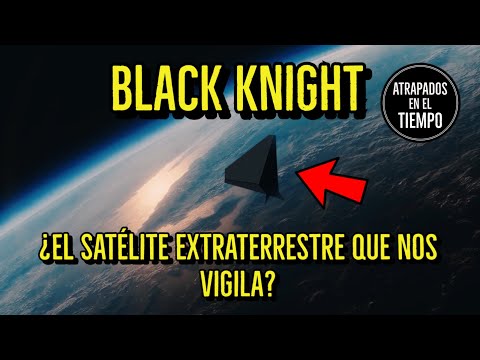
The Black Knight Satellite: An Investigation into an Extraterrestrial Enigma


Introduction: The Orbital Anomaly

The hum of terrestrial machinery is a constant, but what if the silence above us isn't so silent? What if, for decades, an object of unknown origin has been a silent observer in Earth's orbit? The Black Knight satellite is more than just a persistent urban legend; it's a cosmic question mark, a potential harbinger of intelligence beyond our own. Today, we delve into the verifiable data, the speculative theories, and the enduring mystery that surrounds this alleged extraterrestrial probe.

Historical Context: Whispers from the Void

The narrative of the Black Knight satellite stretches back to the mid-20th century, a period rife with Cold War tensions and an burgeoning fascination with the cosmos. Early reports began to surface through amateur radio astronomers and observers who claimed to detect signals and visual anomalies originating from an object in polar orbit, distinct from any known man-made satellite. This was long before official space agencies like NASA had the capabilities to track such objects consistently.

One of the most frequently cited origins for the Black Knight legend involves Nikola Tesla, the brilliant but often eccentric inventor. Whispers suggest that in the 1930s, Tesla detected a strange extraterrestrial signal originating from deep space, which some believe was the Black Knight itself. While concrete evidence directly linking Tesla to the detection of this specific object remains elusive, his pioneering work in radio transmission and his known interest in extraterrestrial communication lend a certain mystique to these early associations.

Later, in the late 1950s and 1960s, during the nascent stages of the space race, the story gained traction. Various sources, including military and astronomical circles, allegedly reported tracking an unidentified object in a synchronous polar orbit. This was a peculiar orbit for the time, and the object's behavior – its presumed age and its apparent ability to evade definitive identification – fueled speculation. The lack of official confirmation from governments, particularly the silence from the United States and the Soviet Union concerning such a significant discovery, only served to amplify the mystery.

The story was further popularized by Donald Keyhoe, a prominent UFO investigator and former Marine pilot, who claimed in the 1950s and 60s that unidentified flying objects were not only real but were being covered up by authorities. While Keyhoe focused broadly on UFOs, his work helped create an environment where the possibility of an extraterrestrial object in orbit could be seriously considered by researchers and the public alike.

The term "Black Knight" itself is believed to have been coined later, likely in the 1960s or 70s, as the legend coalesced. It's a fitting name – dark, mysterious, and suggesting an active, observational role. This historical vacuum, filled with tantalizing hints and a distinct lack of definitive answers, has allowed the Black Knight satellite to persist in the lexicon of unexplained phenomena.

Evidence Analysis: Decoding the Signal

The "evidence" for the Black Knight satellite exists primarily in the realm of anecdotal reports, alleged photographic anomalies, and speculative interpretations of historical data. Authenticating these claims requires a rigorous analytical approach, separating verifiable facts from conjecture.

One of the most frequently discussed pieces of evidence is a series of photographs allegedly taken by NASA astronauts. The most famous among these are attributed to the STS-41-G Gemini 11 mission in 1960 and later attributed to the STS-88 mission in 1998, which deployed the International Space Station (ISS). These images purport to show a dark, unusually shaped object in orbit, often depicted with a trident-like structure. However, upon closer scrutiny and confirmation from NASA, these images have been consistently identified as lens flares, reflections, or insulation material that detached from the spacecraft during their missions. NASA has provided official explanations and identifications for these supposed "anomalies," and they do not represent an extraterrestrial satellite.

Another significant aspect of the Black Knight narrative involves alleged radio signals. The idea of alien transmissions is a cornerstone of many UFO theories, and the Black Knight is no exception. Reports have circulated for decades about amateur radio operators and even official listening posts detecting unusual or patterned signals that defy conventional explanation. However, a critical challenge in substantiating these claims is the lack of verifiable, repeatable signal data. In the absence of publicly accessible and rigorously analyzed recordings, these reports remain within the domain of speculation. For a signal to be considered definitive evidence of an extraterrestrial intelligence, it would need to possess specific characteristics—complexity, non-random patterns, and ideally, a decipherable structure—that have yet to be credibly demonstrated in connection with the Black Knight.

Furthermore, the orbital mechanics present a significant hurdle for the traditional Black Knight narrative. The object is often described as being in a polar orbit, supposedly transmitting signals for thousands of years. If such an object were a satellite of artificial origin, its orbital path and the energy required to maintain it over such a vast timescale would be considerable. Modern tracking capabilities by organizations like NORAD and NASA can identify and catalog virtually all objects in Earth orbit, large or small. The persistent lack of any official record of an object fitting the description of the Black Knight, especially one that has been allegedly observable for decades, is a substantial counter-argument. The satellite, if it were a physical object of significant size, would be easily tracked. Its supposed "invisibility" to official tracking systems strains credulity. The scientific community generally posits that the "evidence" for the Black Knight is a product of misidentification of natural phenomena, space debris, conventional satellites, or optical illusions within photographs.

The lack of concrete, verifiable evidence, when contrasted with the sheer volume of speculation, is a hallmark of many enduring mysteries. While the romantic notion of an ancient alien probe watching us from above is compelling, the analytical approach demands that we prioritize corroborated data over folklore. The "evidence" presented thus far for the Black Knight satellite, when subjected to scientific scrutiny and compared with the capabilities of modern tracking and photographic analysis, largely dissolves into misinterpretations and imaginative leaps.

Theories and Hypotheses: Bridging the Unknown

Despite the scientific skepticism, the enduring allure of the Black Knight satellite has spawned numerous theories, each attempting to fill the void left by a lack of concrete evidence. These hypotheses, while often speculative, offer fascinating insights into how we conceptualize extraterrestrial intelligence and our place in the cosmos.

The most prominent theory posits that the Black Knight is indeed an artificial object of extraterrestrial origin, placed in orbit by an advanced alien civilization. Proponents suggest its purpose could be that of a reconnaissance satellite, a communication relay, or even a marker left behind by ancient visitors. The purported longevity of the object, potentially spanning thousands of years, implies a technological capability far beyond our current understanding, perhaps involving self-repairing mechanisms or an energy source capable of sustaining its mission indefinitely. This aligns with the broader concept of ancient astronauts and the idea that intelligent life has visited Earth throughout history.

Another hypothesis suggests that the Black Knight isn't a satellite in the conventional sense but rather a form of extraterrestrial probe or drone that operates through unconventional means. This theory allows for its erratic behavior and apparent ability to evade traditional tracking methods. Perhaps it doesn't adhere to standard orbital mechanics, or it possesses cloaking technology that makes it intermittently visible or undetectable. This category of explanation leans heavily into the unknown capabilities of non-human intelligence.

A more grounded, yet still intriguing, theory suggests that the "Black Knight" might be a misidentified piece of advanced, perhaps classified, human technology. Given the intense secrecy surrounding military and intelligence projects, particularly during the Cold War and continuing into the present day, it's conceivable that an experimental satellite or probe, designed for surveillance or advanced communication, could have been misinterpreted as alien. Such a craft might have unique design features or operate in ways that defy immediate public understanding, leading to its identification as something otherworldly.

Other theories propose that the Black Knight is not a physical object at all, but rather a persistent atmospheric or electromagnetic phenomenon that has been consistently misinterpreted over the years. This could encompass unusual auroral displays, plasma phenomena, or even collective psychological effects leading to widespread belief in its existence. This perspective seeks a naturalistic explanation, albeit one that remains poorly understood.

Finally, there's the possibility that the Black Knight is a cultural construct, a modern myth that has taken on a life of its own. The story, fueled by sensationalized reporting, fictional accounts, and the inherent human desire to believe in the unknown, has become a self-perpetuating legend. In this view, the "evidence" is a result of confirmation bias and the selective interpretation of ambiguous data to fit a pre-existing narrative. This doesn't diminish the power of the story, but it frames it as a product of human imagination rather than an external reality.

Each of these theories, from the profoundly alien to the socio-psychological, offers a lens through which to view the Black Knight enigma. The lack of definitive proof ensures that the speculation continues, making it a fertile ground for ongoing investigation into the unexplained.

Investigator's Verdict: Beyond the Pale Blue Dot

After meticulously sifting through the available documentation, photographic "evidence," and historical accounts surrounding the Black Knight satellite, my verdict leans heavily towards the rational. While the allure of an ancient alien observer is undeniably potent, the tangible, verifiable proof remains conspicuously absent. The purported photographic evidence has been definitively debunked by official sources as optical artifacts, lens flares, or detached insulation. The alleged radio signals lack the rigor of reproducible scientific data, often relying on anecdotal accounts from amateur observers without the technical means for robust analysis.

The scientific community and major space agencies like NASA and NORAD possess sophisticated tracking capabilities that would undoubtedly detect an object of the size and orbital characteristics attributed to the Black Knight. Its continued absence from all official catalogs of orbital objects is a significant counter-argument. Furthermore, the idea of an object remaining in a stable orbit for thousands of years, transmitting signals without any discernible decay or maintenance, presents substantial physical challenges that are not addressed by current scientific understanding.

However, the persistence of the legend itself warrants a degree of open-mindedness. It speaks to our deep-seated fascination with the unknown and our innate desire to find evidence of intelligent life beyond Earth. The Black Knight satellite, therefore, serves as a potent symbol of that curiosity. It acts as a placeholder for the vast unknowns that lie beyond our terrestrial sphere. While I conclude that there is no credible evidence of a physical, extraterrestrial satellite known as the Black Knight actively orbiting our planet, the enigma it represents—the possibility of what lies unseen or unacknowledged in the cosmos—remains a compelling subject for investigation and contemplation.

The true mystery may not be the satellite itself, but why the *idea* of it continues to capture our imagination so profoundly. It prompts us to question what is truly out there, what we might be missing, and what secrets the vastness of space might still hold. It’s a reminder that even in an age of advanced astrophysics, the universe retains its capacity to surprise us.

The Researcher's Archive

For those seeking to delve deeper into the mysteries of orbital anomalies and the broader context of potential extraterrestrial contact, the following resources are indispensable:

  • Books:
    • "Passport to Magonia" by Jacques Vallée: A seminal work that explores the historical and anthropological aspects of UFO phenomena, challenging conventional interpretations.
    • "The UFO Book: Encyclopedia of Extraterrestrial Intelligence" by Jerome Clark: A comprehensive reference guide to UFO sightings, theories, and historical cases.
    • "Unacknowledged" by Steven M. Greer: While controversial, this book and related documentaries present arguments for advanced extraterrestrial technology and cover-ups.
  • Documentaries:
    • "Ancient Aliens" (History Channel series): Explores various theories of extraterrestrial influence on human history, often touching upon related concepts.
    • "The Phenomenon" (2020): A documentary that compiles interviews and declassified information regarding UFOs.
    • "Sirius" (2014): A documentary by Dr. Steven Greer presenting arguments for advanced technology and potential alien contact.
  • Platforms:
    • Gaia: A streaming service that hosts a wide array of documentaries and series on paranormal, mystical, and extraterrestrial topics.
    • YouTube Channels dedicated to analysis: Explore reputable channels that focus on critical analysis of evidence, such as Science Channel's investigative series or curated channels discussing astronomical anomalies.

Understanding the Black Knight satellite requires appreciating the historical context of UFOlogy and the scientific understanding of orbital mechanics. These resources provide a foundation for critical thinking and further independent research into the unexplained.

Frequently Asked Questions

What is the Black Knight satellite?
The Black Knight is an alleged unidentified object, often described as a satellite of extraterrestrial origin, that has reportedly been observed in Earth's orbit for decades.
What evidence supports its existence?
Supporters cite alleged photographs from NASA missions and anecdotal reports of unusual radio signals. However, these claims lack definitive scientific verification and are often explained as optical illusions or misidentifications.
Has NASA or any space agency confirmed the Black Knight?
No. Space agencies have not confirmed the existence of the Black Knight satellite. Images attributed to it have been identified as lens flares or other spacecraft artifacts.
Could it be a piece of secret human technology?
This is a speculative theory. While governments do operate classified projects, the claims about the Black Knight's age and origin are not supported by evidence that would point to a terrestrial source.
Why does the legend persist?
The legend persists due to the inherent human fascination with the unknown, the desire to find evidence of extraterrestrial intelligence, and the circulation of ambiguous or misrepresented "evidence" in popular culture.

Your Field Mission

The Black Knight satellite, whether real or a legend, prompts us to look upwards with a critical eye. Your mission, should you choose to accept it, is twofold:

  1. Investigate Orbital Anomalies: Visit the NASA J-Track website (or similar public orbital tracking databases) and explore real-time satellite data. Note the sheer volume and diversity of objects orbiting Earth. Can you identify any anomalies, or unusual orbital paths that *could* be misinterpreted?
  2. Analyze Visual "Evidence": Find a few of the commonly circulated "Black Knight" images online. Using the principles discussed in this post (identify light sources, potential reflections, camera artifacts), attempt to deconstruct them. What are the most likely explanations for these images? Share your findings, and your reasoning, in the comments below.
The pursuit of knowledge requires both looking at the stars and questioning what we see. Your analytical skills are your most valuable tool.

alejandro quintero ruiz is a veteran field investigator dedicated to the analysis of anomalous phenomena. His approach combines methodological skepticism with an open mind to the inexplicable, always seeking the truth behind the veil of reality.