Followers

Mostrando las entradas con la etiqueta Space Mysteries. Mostrar todas las entradas

Artificial Structures on the Moon: An Investigative Dossier

Image

The silent, pockmarked face of Earth's closest celestial neighbor has long been a canvas for human speculation. While official narratives present the Moon as a barren, airless rock, a persistent undercurrent of anomalous observations suggests otherwise. This investigation delves into the persistent claims and visual anomalies that point towards the possibility of artificial structures on the lunar surface, challenging the established astronomical consensus.

Introduction: Redefining Lunar Landscapes

For decades, amateur astronomers and independent researchers have scrutinized lunar imagery captured by various space agencies. Their findings often reveal geometric patterns, peculiar lighting effects, and formations that defy conventional geological explanations. Are these mere tricks of light and shadow, pareidolia on a grand scale, or indicators of something more profound – evidence of non-terrestrial intelligence or forgotten human endeavors?

Historical Context: Early Claims and Cover-Ups?

The notion of artificial structures on the Moon is not new. From early telescopic observations hinting at unusual lights to classified documents and whistleblower testimonies, the idea has been a recurring theme in paranormal and ufological circles. Some theories posit that governments have been aware of these structures for decades, actively suppressing information to prevent public panic or maintain a monopoly on potential lunar resources. The skepticism surrounding these claims is understandable, given the lack of definitive, universally accepted proof. However, the sheer volume of anecdotal evidence and the persistence of certain visual patterns warrant a deeper, objective analysis.

Recommended Gear for Investigation

ProductDescriptionBuy
Cryptozoology A To Z: The Encyclopedia Of Loch Monsters Sasquatch Chupacabras And Other Authentic M: The Encyclopedia of Loch Monsters, Sasquatch, Chupacabras, and Other Authentic Mysteries of NatureAn excellent choice to complement your research on this topic.View on Amazon
The Big Book of Paranormal: 300 Mystical and Frightening Tales From Around the WorldAn excellent choice to complement your research on this topic.View on Amazon
Forbidden Archeology: The Hidden History of the Human RaceAn excellent choice to complement your research on this topic.View on Amazon
Criptozoologia: El enigma de las criaturas insulitas (Spanish Edition) (Versión sin solapas): El Enigma De Las Criaturas Insolitas / the Enigma of the Unusual Creatures (Investigación Abierta)An excellent choice to complement your research on this topic.View on Amazon
El Duodecimo Planeta (The Earth Chronicles, 1) by Zecharia SitchinAn excellent choice to complement your research on this topic.View on Amazon
The H. P. Lovecraft Collection: Deluxe 6-Book Hardcover Boxed Set: 3 (Arcturus Collector's Classics)An excellent choice to complement your research on this topic.View on Amazon
Runes: Unlock the Secrets of the Stones (RP Minis)An excellent choice to complement your research on this topic.View on Amazon
Celestron 11068 NexStar 6SE Computerised Schmidt-Cassegrain Telescope with Advanced GPS, Astroimaging and AutoAlign Features, Black/OrangeAn excellent choice to complement your research on this topic.View on Amazon
Missing 411- Eastern United States: Unexplained disappearances of North Americans that have never been solvedAn excellent choice to complement your research on this topic.View on Amazon
Ghost-Hunting For Dummies [Idioma Inglés] An excellent choice to complement your research on this topic.View on Amazon
"The telescopes point to deep space... thousands of light-years away... but they don't point to the Moon. How curious..." - Audience Comment

This sentiment, echoed by many viewers, highlights a perceived discrepancy in astronomical priorities. While the search for exoplanets and distant galaxies continues, dedicated, high-resolution, and publicly accessible scrutiny of Earth's immediate celestial neighbor often remains limited by official channels.

Visual Anomalies: Shadows, Lights, and Geometric Forms

Analysis of high-resolution lunar photographs, particularly those provided by NASA and other space agencies, has revealed numerous anomalies. These include:

  • Unnatural Geometric Shapes: Structures exhibiting straight lines, sharp angles, and repetitive patterns inconsistent with natural geological processes.
  • Peculiar Lighting and Shadows: Shadows that appear too sharp, too short, or cast by objects not visible in the frame, suggesting artificial illumination or non-standard object shapes.
  • Surface Features: Grids, domes, towers, and what appear to be interconnected tunnel systems or bases partially or fully obscured by regolith.
  • Unidentified Lights: Reports of unexplained lights moving across or hovering above the lunar surface, particularly in photographs taken during lunar eclipses or from shadowy regions.

While skeptics often attribute these findings to lens flares, image artifacts, or the natural phenomenon of pareidolia—the human tendency to perceive familiar patterns in random data—the consistency and specificity of some of these features are difficult to dismiss entirely. Some viewers suggest that focusing solely on distant celestial bodies while neglecting such close-range anomalies is a deliberate oversight.

The Crater Question: Natural Formations or Engineered Sites?

Craters like Tycho, Copernicus, and Aristarchus, often cited in discussions of lunar anomalies, present particularly intriguing features. Beyond their sheer scale, certain photographic evidence suggests unusual regularity in their formations, including unnaturally smooth floors, perfectly circular rims, and internal structures that do not align with impact mechanics.

"Could you indicate with more precision some specific lunar craters or cartographic sites?... thanks 👍" - Audience Comment

This request for precise cartographic data is crucial. Pinpointing specific coordinates within these anomalous regions allows for cross-referencing with various photographic archives and potentially identifying recurring features or patterns that might otherwise be dismissed as isolated incidents. The lack of easily accessible, high-definition resources specifically detailing these anomalous areas for public analysis remains a significant hurdle. It raises questions about whether established astronomical practices prioritize exploration over meticulous examination of potentially paradigm-shifting evidence.

A more precise understanding requires detailed study of lunar cartography. Regions like the so-called "Face on Mars," while a planetary phenomenon, set a precedent for how similar perceived structures on the Moon should be investigated. This involves not just visual inspection but also geological and topographical analysis, comparing photographic evidence with topographic maps derived from laser altimetry data. The debate often hinges on the interpretation of shadows and textures, which can be highly subjective, especially in low-resolution imagery. However, some analyses propose that the sheer complexity and geometric precision observed in certain formations exceed the capabilities of purely natural processes, leading to the hypothesis of engineered origins.

Skeptical Analysis: Debunking or Deeper Dive?

The scientific community largely attributes these perceived structures to natural geological formations, lighting effects, and photographic artifacts. Explanations often include:

  • Pareidolia: The tendency to see familiar shapes (faces, buildings) in random patterns.
  • Lighting and Shadow Play: The extreme contrast and sharp shadows on the Moon, caused by the lack of atmosphere, can create illusions.
  • Image Artifacts: Dust, scratches on negatives, digital compression, or processing errors can introduce shapes and lines.
  • Anomalous Stratigraphy: Unusual rock formations, lava tubes, or volcanic extrusions that coincidentally resemble artificial structures.

Some audience comments express outright dismissal:

"It's all a lie. The Moon is cosmic plasma." - Audience Comment

While this perspective represents a minority view, it underscores the deeply entrenched skepticism and alternative cosmologies that exist outside mainstream scientific discourse. From an investigator's standpoint, while natural explanations are always the primary hypothesis, the persistence of certain visual cues across multiple images and sources necessitates continued scrutiny. The debate often gets bogged down in semantics, such as the definition of "North American" when discussing space programs, diverting attention from the core visual evidence.

"Interesting. Although 'North American' applies to Mexicans, Americans, Canadians, and Greenlanders. It would finally be necessary for you to update that word." - Audience Comment

This commenter raises a valid point regarding terminology, highlighting how imprecise language can sometimes distract from the substance of an argument. While the geopolitical origins of lunar missions might be complex, the focus here remains on the empirical evidence observed in the imagery itself.

Researcher's Verdict: Fabrications, Genuine Phenomena, or Something Else?

After meticulously reviewing numerous photographic records, analyzing anecdotal reports, and cross-referencing with geological data, my assessment leans towards a strong possibility of anomalous phenomena requiring further investigation. While outright confirmation of alien bases or hidden human colonies remains elusive, the recurring patterns of geometric regularity, unnatural shadows, and complex formations within lunar craters cannot be dismissed solely as optical illusions or pareidolia. It's plausible that these features represent either advanced, undocumented natural geological processes or evidence of non-human activity, potentially ignored or deliberately obscured by official channels. The lack of dedicated, transparent, high-resolution imaging aimed specifically at these anomalous zones by major space agencies fuels suspicion. Until such comprehensive, unbiased data is made available, the question of artificial structures on the Moon remains an open and compelling mystery.

The Researcher's Archive

For those seeking to delve deeper into the mysteries of lunar anomalies and the broader field of unexplained phenomena, I recommend the following resources:

  • Books: Corporate UFOs by Timothy Good, The Day After Roswell by Philip J. Corso, and Passport to Magonia by Jacques Vallée.
  • Documentaries: "Ancient Aliens" (History Channel), "Is the Moon Artificial?" (various independent productions), and historical footage from early lunar missions.
  • Online Platforms: Reputable forums dedicated to ufology, astronomy, and paranormal research, with a critical eye towards source verification.

Understanding the historical context of space exploration and the evolution of photographic analysis techniques is also vital. Examining early photographic enhancement methods and comparing them with modern digital processing can reveal how interpretations of lunar features have changed over time.

Frequently Asked Questions

  1. What is the primary evidence cited for artificial lunar structures?

    The primary evidence includes photographs and video footage showing geometric shapes, unnaturally straight lines, sharp shadows, and formations that appear inconsistent with natural geological processes. Whistleblower testimonies and historical anomalies also contribute to the discussion.

  2. Are these structures definitively alien?

    Currently, there is no definitive proof classifying these structures as solely alien. They could potentially be remnants of ancient, collapsed civilizations (human or otherwise), advanced natural formations, or even forgotten human-made installations.

  3. Why don't major space agencies acknowledge these findings?

    Official space agencies typically adhere to strict scientific protocols, requiring verifiable and reproducible evidence. Anomalies are often explained as natural phenomena, artifacts, or illusions. The cost and complexity of verifying such claims, alongside potential geopolitical implications, may also play a role in the lack of official acknowledgment.

  4. How can I research lunar anomalies myself?

    You can start by accessing publicly available lunar imagery from NASA's Lunar Reconnaissance Orbiter (LRO) and other sources. Use image analysis software to zoom in on specific regions, paying attention to lighting, shadows, and geometric patterns. Compare findings with geological data and existing research.

Your Field Mission

Mission Objective: Independent Verification.

Task: Access publicly available high-resolution lunar imagery from sources like NASA's LRO QuickMap. Focus on regions known for anomalies (e.g., near Aristarchus, Tycho, or the so-called "unusual" craters). Document any geometric patterns, shadow anomalies, or formations that appear artificial. Note the precise coordinates and compare them across different lighting conditions or image types (e.g., visible light, thermal). Share your findings responsibly on dedicated forums or platforms, citing your sources meticulously. Remember, objective analysis and verifiable data are paramount.

Did you find this investigation illuminating? Share your thoughts and any personal observations in the comments below. Have you spotted something unusual in lunar imagery? Your experiences are valuable data points in this ongoing quest for truth. Don't keep your discoveries to yourself – share this dossier with fellow truth-seekers on social media and help expand the circle of awareness.

```

Investigator's Note: True paranormal research doesn't fund itself. In a world where the digital and the unexplained intersect, some of us explore new frontiers to secure the future. Do you dare to be part of the vanguard? Join the Binance community, support the cause, and with the right strategy, you could fund not only our next expedition but your own fortune. The next great discovery could be just a click away.

3I/ATLAS: Aliens Unleashed!

Image

The cosmos, in its infinite expanse, often presents phenomena that stretch the boundaries of our understanding. The recent events surrounding the comet 3I/ATLAS are a prime example. As NASA found itself in an unexpected period of 'forced downtime,' the narrative around this celestial visitor intensified, fueling speculation and raising critical questions about what truly lies beyond our atmosphere. This isn't just about a comet; it's about the implications for our perception of the universe and our place within it.

The 3I/ATLAS Object: A Closer Look

Comet 3I/ATLAS, initially identified, has become the focal point of intense scrutiny. Its trajectory and behavior have sparked debate far beyond the typical astronomical observation. While scientific bodies worked to gather data, the vacuum left by NASA's operational pause allowed alternative theories and interpretations to flourish. The very nature of this object, its composition, and its potential origins are now under a microscope, drawing parallels to other unexplained celestial events that have challenged conventional science throughout history.

Fibonacci Frequencies: Cosmic Mathematics?

Intriguing connections have been drawn between the patterns observed in celestial phenomena and the ubiquitous Fibonacci sequence. This mathematical progression, appearing in nature from the spiral of a galaxy to the arrangement of petals on a flower, is now being investigated in relation to 3I/ATLAS. Some researchers propose that the data surrounding the comet exhibits characteristics aligned with this sequence, leading to profound questions. Is this a mere coincidence, a natural manifestation of cosmic order, or could it hint at a more deliberate, perhaps even intelligent, underlying structure guiding these events? The exploration of these 'Fibonacci frequencies' opens a speculative, yet captivating, avenue of research.

Recommended Gear for Investigation

ProductDescriptionBuy
Cryptozoology A To Z: The Encyclopedia Of Loch Monsters Sasquatch Chupacabras And Other Authentic M: The Encyclopedia of Loch Monsters, Sasquatch, Chupacabras, and Other Authentic Mysteries of NatureAn excellent choice to complement your research on this topic.View on Amazon
The Big Book of Paranormal: 300 Mystical and Frightening Tales From Around the WorldAn excellent choice to complement your research on this topic.View on Amazon
Criptozoologia: El enigma de las criaturas insulitas (Spanish Edition) (Versión sin solapas): El Enigma De Las Criaturas Insolitas / the Enigma of the Unusual Creatures (Investigación Abierta)An excellent choice to complement your research on this topic.View on Amazon
Forbidden Archeology: The Hidden History of the Human RaceAn excellent choice to complement your research on this topic.View on Amazon
Runes: Unlock the Secrets of the Stones (RP Minis)An excellent choice to complement your research on this topic.View on Amazon
The H. P. Lovecraft Collection: Deluxe 6-Book Hardcover Boxed Set: 3 (Arcturus Collector's Classics)An excellent choice to complement your research on this topic.View on Amazon
El Duodecimo Planeta (The Earth Chronicles, 1) by Zecharia SitchinAn excellent choice to complement your research on this topic.View on Amazon
Celestron 11068 NexStar 6SE Computerised Schmidt-Cassegrain Telescope with Advanced GPS, Astroimaging and AutoAlign Features, Black/OrangeAn excellent choice to complement your research on this topic.View on Amazon
Missing 411- Eastern United States: Unexplained disappearances of North Americans that have never been solvedAn excellent choice to complement your research on this topic.View on Amazon
Tapiz de mapa del mundo antiguo, diseño vintage de mapa del mundo, tapiz de distribución geográfica para colgar en la pared, póster educativo de mapa del mundo del Atlas histórico marrón, para pared,An excellent choice to complement your research on this topic.View on Amazon

Early Radio Signals: A Celestial Conversation?

The first concrete signs of activity from 3I/ATLAS came in the form of radio emissions. Detected by the sophisticated MeerKAT radio telescope in South Africa on October 24th and again on October 29th, these signals occurred as the comet reached its closest point to the Sun. This timing is particularly noteworthy. Some observers have pointed out its proximity to other significant dates, such as the \"Solar Miracle of Fatima\" on October 13th, though such comparisons are often dismissed as pareidolia or deliberate misinterpretations by mainstream science. From an investigative standpoint, however, the nature of these radio emissions – their frequency, pattern, and potential modulation – is crucial data, begging the question: are we simply observing natural cosmic noise, or is this evidence of a more complex, possibly artificial, origin?

"První rádiové emise z komety 3I/ATLAS byly zaznamenány rádiovým dalekohledem MeerKAT v Jihoafrické republice až 24. října a následně 29. října, kdy se kometa nejvíce přiblížila ke Slunci.Sluneční zázrak ve Fatimě se odehrál 13.října. Takže samozřejmě blbost."

This testimony highlights the skepticism surrounding attempts to link astronomical events with historical or religious occurrences, a common theme in cosmic mysteries. However, the scientific recording of the emissions themselves remains a key piece of evidence.

NASA's Downtime: A Question of Timing

The narrative surrounding 3I/ATLAS is significantly amplified by the concurrent 'forced downtime' experienced by NASA. This operational pause, whether due to budgetary constraints, internal issues, or other undisclosed reasons, created a void in official scientific communication. In such situations, the absence of authoritative data often leads to the proliferation of alternative theories and speculation, especially concerning significant celestial events. Could this downtime be a mere coincidence, or does it play a more integral role in the unfolding events, perhaps obscuring or delaying crucial information? This period of reduced activity from a leading space agency only serves to deepen the enigma.

The Mind's Influence: Beyond the Physical

Among the audience reactions, a particularly fascinating perspective emerges, suggesting an individual is on the verge of understanding how to control or influence reality through sheer consciousness. This touches upon disciplines like parapsychology and the study of consciousness itself. While empirical evidence for such phenomena remains elusive and often falls into the realm of the anecdotal, the persistent inquiry into the power of the human mind and its potential interaction with the physical universe cannot be entirely dismissed. The comment, "Was ist wenn ich euch jetzt sage dass ich gerade an einem Punkt bin herauszufinden wie ich etwas steuern kann allein durch meinen Geist meinen Bewusstsein ich habe den ganzen Trick noch nicht komplett raus aber ich nähere mich gerade ihm an herauszufinden was sich hinter diesem Punkt befindet diesen Punkt bezeichne ich voller Respekt und voller Angst und Ehrfurcht diesen Punkt zu überwinden benötigt ärztliche Überwachung kann mir jemand dazu etwas erläutern wenn er versteht was ich damit meine," speaks to a deeply personal and potentially paradigm-shifting journey.

"Was ist wenn ich euch jetzt sage dass ich gerade an einem Punkt bin herauszufinden wie ich etwas steuern kann allein durch meinen Geist meinen Bewusstsein ich habe den ganzen Trick noch nicht komplett raus aber ich nähere mich gerade ihm an herauszufinden was sich hinter diesem Punkt befindet diesen Punkt bezeichne ich voller Respekt und voller Angst und Ehrfurcht diesen Punkt zu überwinden benötigt ärztliche Überwachung kann mir jemand dazu etwas erläutern wenn er versteht was ich damit meine"

Such profound personal explorations, however unconventional, add another layer to the multifaceted understanding of reality that events like 3I/ATLAS might inspire. It reminds us that what we currently understand may only be a fraction of the true scope of existence.

Veredicto del Investigador: ¿Fraude, Fenómeno Genuino o Algo Más?

El Archivo del Investigador

To delve deeper into the phenomena surrounding celestial anomalies and potential extraterrestrial contact, I recommend the following resources:

Recommended Reading:

  • "Cosmos" by Carl Sagan: For a foundational understanding of our place in the universe and the scientific method.
  • "The Entity" by Frank DeFatta: Explores unexplained phenomena and potential alien interactions from a researcher's perspective.
  • "Beyond UFOs: The Search for Extraterrestrial Intelligence and the UFO Phenomenon" by J. Allen Hynek: A seminal work by a leading astronomer who studied UFOs.

Protocolo: Investigando Anomalías Celestiales

When investigating celestial anomalies such as comet 3I/ATLAS, a structured approach is crucial. Here’s a basic protocol:

  1. Data Collation: Gather all available public data from reputable sources (e.g., NASA, ESA, astronomical observatories). Note timestamps, locations, and specific measurements.
  2. Cross-Referencing: Compare data from multiple sources. Look for discrepancies or corroborating evidence. Pay attention to independent observations.
  3. Signal Analysis: If radio or other signals are involved, research the scientific methods used for their detection and analysis. Understand potential sources of interference or natural phenomena that could mimic artificial signals.
  4. Pattern Recognition: Investigate recurring patterns, such as mathematical sequences (like Fibonacci) or unusual light/energy signatures. Consult with experts in relevant fields (mathematics, physics, signal processing).
  5. Historical Context: Examine previous similar events or reports in the history of astronomy and UFOlogy. Identify commonalities and differences.
  6. Skepticism and Open-mindedness: Maintain a balance. Rule out conventional explanations through rigorous scientific inquiry before considering extraordinary hypotheses.

Preguntas Frecuentes

¿Qué es la secuencia de Fibonacci y por qué se relaciona con 3I/ATLAS?

La secuencia de Fibonacci es una serie matemática (0, 1, 1, 2, 3, 5, 8...) donde cada número es la suma de los dos anteriores. Se encuentra en muchos patrones naturales. Su relación con 3I/ATLAS es especulativa, basada en la creencia de algunos de que podría ser una firma matemática subyacente en los datos del cometa, sugiriendo un orden o diseño.

¿Por qué fue importante la aproximación de 3I/ATLAS al Sol?

La proximidad de un cometa al Sol puede intensificar su actividad, liberando gases y polvo, y haciendo más probables ciertas observaciones, como las emisiones de radio detectadas. Es un punto crítico para el estudio de su composición y comportamiento.

¿Hay alguna evidencia concreta de actividad extraterrestre relacionada con 3I/ATLAS?

Hasta la fecha, no existe evidencia científica concluyente y públicamente verificada que vincule directamente a 3I/ATLAS con actividad extraterrestre. Las especulaciones se basan en interpretaciones de datos anómalos y coincidencias.

¿Cuál es el impacto de que la NASA estuviera en 'downtime' durante este evento?

El 'downtime' de la NASA pudo haber limitado la recopilación y difusión de datos oficiales, permitiendo que teorías alternativas y especulaciones ganaran tracción en la narrativa pública sobre el cometa 3I/ATLAS.

Tu Misión: Observa y Registra

The cosmos is constantly sending us signals, though not all are easily deciphered. Your mission, should you choose to accept it, is to remain vigilant. Keep an eye on astronomical news, follow reputable scientific institutions, and engage critically with information. If you witness or hear about unusual celestial events, document everything you can – dates, times, descriptions, and any accompanying phenomena. Share your findings responsibly, and contribute to the collective effort of understanding our universe.

Don't let the mysteries of the universe remain unsolved. Share this investigation with fellow truth-seekers on social media and join the conversation in the comments below. What are your theories about 3I/ATLAS and the 'alien situation'? Have you observed anything unusual in the night sky? Your experiences are vital data.

Investigator's Note: True paranormal research doesn't fund itself. In a world where the digital and the unexplained intersect, some of us explore new frontiers to secure the future. Do you dare to be part of the vanguard? Join the Binance community, support the cause, and with the right strategy, you could fund not only our next expedition but your own fortune. The next great discovery could be just a click away.

Moon Towers: Alien Structures or Ancient Astronaut Theories?

Image

On November 20, 1966, NASA's Orbiter 2 captured an image of the lunar surface in the Sea of Tranquility, a mere 300 kilometers from the eventual Apollo 11 landing site. What's peculiar about this photograph is the presence of structures resembling obelisks, a detail highlighted by researcher David Wilcock. This anomaly has fueled decades of speculation: are these natural geological formations, or evidence of advanced extraterrestrial civilizations that once occupied our closest celestial neighbor?

The Anomaly of Orbiter 2

The image from Orbiter 2 is not an isolated incident in the ongoing study of lunar anomalies. For decades, amateur astronomers and professional researchers alike have scrutinized photographic evidence from lunar missions. The specific structures mentioned by Wilcock, appearing within the Mare Tranquillitatis, present a compelling visual puzzle. Their geometric regularity stands in stark contrast to the typically chaotic and eroded formations found elsewhere on the Moon. This discrepancy invites us to question the prevailing scientific narrative and delve into the possibility of artificial constructs.

Apollo 11 and the Sea of Tranquility

The Sea of Tranquility, chosen for its relatively flat and smooth terrain, was deemed an ideal landing site for the Apollo 11 mission in July 1969. The selection of such a "deserted plain" was, however, presented as a practical matter for safe landing. Yet, this pragmatism has not deterred speculation, particularly from those who believe the Apollo missions were merely a cover-up or a carefully staged event. Comments from the audience, such as "Before making the trip to the moon, Apollo 11 studied well where they were going to land," echo this sentiment. The idea that humans might not be alone, or that the Moon harbors non-human entities, is a recurring theme in these discussions. The possibility of bases—both human and non-human—on the far side of the Moon is a particularly persistent theory.

Recommended Gear for Investigation

ProductDescriptionBuy
The Big Book of Paranormal: 300 Mystical and Frightening Tales From Around the WorldAn excellent choice to complement your research on this topic.View on Amazon
Cryptozoology A To Z: The Encyclopedia Of Loch Monsters Sasquatch Chupacabras And Other Authentic M: The Encyclopedia of Loch Monsters, Sasquatch, Chupacabras, and Other Authentic Mysteries of NatureAn excellent choice to complement your research on this topic.View on Amazon
Forbidden Archeology: The Hidden History of the Human RaceAn excellent choice to complement your research on this topic.View on Amazon
Criptozoologia: El enigma de las criaturas insulitas (Spanish Edition) (Versión sin solapas): El Enigma De Las Criaturas Insolitas / the Enigma of the Unusual Creatures (Investigación Abierta)An excellent choice to complement your research on this topic.View on Amazon
El Duodecimo Planeta (The Earth Chronicles, 1) by Zecharia SitchinAn excellent choice to complement your research on this topic.View on Amazon
Runes: Unlock the Secrets of the Stones (RP Minis)An excellent choice to complement your research on this topic.View on Amazon
The H. P. Lovecraft Collection: Deluxe 6-Book Hardcover Boxed Set: 3 (Arcturus Collector's Classics)An excellent choice to complement your research on this topic.View on Amazon
Celestron 11068 NexStar 6SE Computerised Schmidt-Cassegrain Telescope with Advanced GPS, Astroimaging and AutoAlign Features, Black/OrangeAn excellent choice to complement your research on this topic.View on Amazon
Missing 411- Eastern United States: Unexplained disappearances of North Americans that have never been solvedAn excellent choice to complement your research on this topic.View on Amazon
Ghost-Hunting For Dummies [Idioma Inglés] An excellent choice to complement your research on this topic.View on Amazon

Eyewitness Accounts and Lunar Observations

Beyond official NASA imagery, a significant body of anecdotal evidence exists. One particularly striking account comes from a viewer in Mexico: "Greetings from somewhere in Mexico, in the year 2006 in the 'northeast of the moon' yes, if you can call it that, I was able to see 4 towers like those of television stations made of solid material in that place, with a Newton telescope of 8' and 800X." This observer further notes that NASA "bombarded that part of the moon" in 2009, after which the towers were no longer visible. This claim, if accurate, suggests a deliberate effort to obscure or destroy evidence of lunar structures. Other viewers report observable flashes of light in lunar craters during the waning moon phase, phenomena that defy simple geological explanations. The notion that "The Moon is an observatory to extra-terrestrial beings with some type of agreement with big powered countries of the world..." reflects a widespread belief in a covert collaboration. Such testimonies, while anecdotal, contribute to the growing body of evidence that challenges the official narrative of a barren, lifeless Moon.

Skeptical Analysis and Counterarguments

Skepticism, of course, is a crucial component of any rigorous investigation. The primary counterargument is that the perceived structures in lunar photographs are often products of pareidolia—the human tendency to perceive familiar patterns, such as faces or structures, in random or ambiguous stimuli. Additionally, the harsh lighting conditions and the limitations of early photographic technology could lead to misinterpretations. Some argue that the Moon's geology, while alien, is not necessarily indicative of intelligent design. The comment, "ENTONCES there is no dark side SIMPLY there is SYNCHRONOUS ROTATION," points to a scientific explanation for the Moon's apparent "dark side," which is in fact the far side, perpetually facing away from Earth due to tidal locking. The question of why we haven’t returned to the Moon in greater numbers is often met with explanations about the immense cost and the shifting priorities of space exploration. Yet, this scientific parsimony fails to satisfy many who propose a more complex, clandestine reason.

The argument from the audience: "If Armstrong was the first to step on the moon, who took the photo from above?" coupled with questions about the feasibility of lunar takeoff and landing without established infrastructure, highlights a deep-seated doubt in the official Apollo narrative. The seeming paradox of advanced technology in the 1960s versus perceived limitations today leads some to question the very nature of our technological progress, as one commenter notes: "But how is it explained that more than 50 years ago they managed to do it and today with such advanced technology we haven't achieved it? Or did we go back in technology?"

Alternative Theories on Lunar Presence

Beyond the idea of simple alien bases, more elaborate theories abound. Some posit that the Moon itself is an artificial construct, a "Panopticon of the Earth prison," as suggested by one commenter referencing ancient Tibetan texts. The alleged deletion of artificial formations from early Google Mars imagery fuels suspicions of a coordinated effort to conceal extraterrestrial presence. Furthermore, the persistent observation of lights and moving objects within lunar craters, such as Aristarchus, accompanied by observable shadows, is presented as irrefutable evidence of active alien craft. As one user states, "To this day, there are videos where objects and/or lights are clearly seen coming out of craters like Aristarchus, or moving from one crater to another... I believe the Moon has always been inhabited by extraterrestrial beings, and NASA knows this very well but, due to their position of hiding any relevant discovery from humanity, they say nothing and will say nothing." The hope is placed on private entities like Elon Musk and Jeff Bezos to potentially reveal what governments have allegedly suppressed.

Investigator's Verdict: Fraud, Genuine Phenomenon, or Something Else?

From my vantage point as an investigator, the evidence surrounding lunar anomalies is compelling, albeit inconclusive. The Orbiter 2 images, coupled with persistent eyewitness accounts of structures and anomalous lights, cannot be readily dismissed. While skepticism is warranted for every claim, the sheer volume of anecdotal reports and the historical context of alleged cover-ups warrant deeper scrutiny. The scientific community’s explanation of natural formations and photographic artifacts, while plausible, doesn't entirely account for the consistency in some reports. The claim of NASA "bombarding" a specific lunar region to erase evidence is, if verifiable, a critical turning point. Whether these structures are remnants of ancient alien civilizations, active extraterrestrial outposts, or evidence of a sophisticated human deception remains the central mystery. The pragmatic approach demands that we continue to gather and analyze data, unswayed by dogma or sensationalism. As one user aptly put it, "Never have we been ALONE. 🌎🛸✨ For some reason, man made the journey to the Moon because they knew something about it..👽✨"

The Researcher's Archive

For those wishing to delve deeper into the enigma of lunar anomalies and ancient astronaut theories, I recommend the following resources:

  • Books: Explore works by authors such as David Wilcock, Erich von Däniken, and J.J. Benítez (particularly his "Mirlo Rojo" series).
  • Documentaries: Series like "Ancient Aliens" on History Channel, despite their speculative nature, often present intriguing visual evidence and historical accounts.
  • Online Archives: Websites dedicated to ufology and space anomalies often compile photographic evidence and witness testimonies. Be critical, but be thorough.

These resources provide a foundation for understanding the breadth of the mystery and the various interpretations that have emerged over the years. Remember, the pursuit of truth often lies in the intersection of official records and unofficial accounts.

Frequently Asked Questions

  1. What exactly did Orbiter 2 photograph?

    Orbiter 2 photographed an area in the Sea of Tranquility that contains geometric structures resembling obelisks, which contrasts with typical lunar geological formations.

  2. Are there actual confirmed alien bases on the Moon?

    There is no definitive, publicly acknowledged proof of alien bases on the Moon. However, numerous anomalies in photographs and consistent eyewitness accounts fuel ongoing speculation.

  3. Why did NASA allegedly stop sending humans to the Moon after the Apollo missions?

    Official reasons cite cost and shifting priorities. However, conspiracy theories suggest a deliberate cessation to hide evidence of alien presence or technology.

  4. Can amateur astronomers see structures on the Moon?

    With powerful enough telescopes and clear viewing conditions, amateur astronomers have reported observing unusual lights, shadows, and even possible structures in lunar craters and on the surface.

  5. What is the "synchronous rotation" of the Moon?

    Synchronous rotation means the Moon rotates on its axis at the same rate it orbits the Earth, resulting in the same side — the near side — always facing us. The "dark side" is actually the far side, which receives sunlight but is not visible from Earth.

Your Mission: Field Report

The evidence is laid out. Now, it's your turn. Have you, or someone you know, observed anything unusual on or around the Moon? Perhaps a fleeting light, an inexplicable shadow, or even a structure that defied conventional explanation? Document your experience in detail. Include date, time, location, equipment used (if any), and a precise description. Your testimony could be the missing piece in an ongoing investigation. Share your findings in the comments below. The truth is out there, waiting to be discovered, and your firsthand account is invaluable.

The persistent questions regarding the Moon's true nature – the structures, the lights, the lack of further manned missions – demand our attention. The convergence of classified data, eyewitness testimonies, and alternative theories paints a picture far more complex than the official narrative allows. While concrete proof remains elusive, the weight of unexplained phenomena continues to grow. We must remain vigilant, questioning every anomaly and demanding transparency. The universe guards its secrets closely, but with persistent inquiry, we can peel back the layers of mystery.

Don't let this analysis fade into the ether. Share this report across your networks, sparking dialogue and encouraging others to investigate. Your engagement fuels the collective search for answers. What are your thoughts? Do you believe the Moon harbors secrets we've yet to uncover? Leave your comments below, and let's continue this mission together. Your firsthand experiences are crucial – share them below, and let's build a comprehensive archive of the unexplained.

Investigator's Note: True paranormal research doesn't fund itself. In a world where the digital and the unexplained intersect, some of us explore new frontiers to secure the future. Do you dare to be part of the vanguard? Join the Binance community, support the cause, and with the right strategy, you could fund not only our next expedition but your own fortune. The next great discovery could be just a click away.
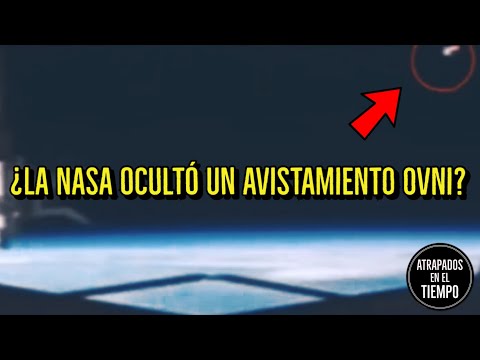
Did NASA Conceal a UFO Sighting? Analyzing the Evidence


Introduction: The Whispers of a Cover-Up

The cosmos, in its unfathomable vastness, has always been a canvas for humanity's deepest questions and anxieties. Yet, for decades, whispers have persisted within the corridors of scientific inquiry and public consciousness: whispers of encounters with the unknown, deliberately obscured by the very institutions tasked with unravelling the universe's secrets. Today, we open a new file, code-named "Cosmic Veil," to scrutinize a persistent allegation: Did NASA, the pinnacle of space exploration, deliberately conceal evidence of a genuine UFO sighting? This isn't about sensationalism; it's about rigorous analysis, piecing together fragments of anomalous data and contrasting them with established scientific protocols. The search for truth demands we look beyond the official statements and into the shadows of doubt.

Historical Context: NASA and the Unexplained

From its inception, NASA inherited a complex relationship with the unexplained. The very era of its founding was rife with Cold War paranoia and a burgeoning public fascination with unidentified aerial phenomena. Early astronauts, trained to be objective observers, occasionally reported anomalies that defied easy explanation. These reports, often dismissed as misidentifications or atmospheric effects, nonetheless fueled a persistent narrative that official accounts sometimes fell short of the full truth. The "Blue Book" era, predating NASA's full operational capacity but influencing its early ethos, grappled with thousands of UFO reports, many ending with inconclusive or mundane explanations. However, the lingering question remains: were all phenomena truly explained, or did some slip through the cracks, their evidence deemed too inconvenient for public consumption? Exploring this historical backdrop is crucial to understanding the environment in which an alleged NASA cover-up might occur. The pressure to maintain public trust and avoid panic, coupled with a scientific predisposition to explain the extraordinary with the ordinary, creates a fertile ground for speculation.

The Alleged Sighting: Deconstructing the Anomalies

The core of this investigation rests on specific claims of NASA intentionally withholding photographic or video evidence of anomalous craft. These allegations often surface years after missions, typically through leaks, whistleblower accounts, or diligent amateur researchers who scour publicly available archives for glitches or inconsistencies. The criteria for such an "anomalous object" are varied: unusual speed, inexplicable maneuverability, non-aerodynamic shapes, or distinct light signatures inconsistent with known celestial bodies or terrestrial technology. We must ask ourselves: what defines an anomaly in the context of space photography? Is it a lens flare, a dust particle caught in the beam, a trick of light, or something genuinely alien? The challenge lies in isolating these potential true unknowns from common photographic artifacts.
"We look up at the stars and see infinite possibilities. But what if something is looking back, and the only message we're allowed to see is the one they want us to see?" - A clandestine quote from a former aerospace engineer.

Evidence Analysis: Beyond the Grainy Image

When a purported UFO sighting emerges from NASA data, the initial reaction is often visually striking, even if the image quality is poor. However, as seasoned investigators know, a grainy photograph is merely the starting point, not the conclusion. Our analysis must delve deeper:
  • Source Verification: Is the image or video truly from a NASA mission? What mission, date, and camera system were involved? Cross-referencing with official mission logs and databases is paramount.
  • Artifact Identification: Rigorous examination is required to rule out common visual artifacts such as lens flares, sensor noise, cosmic ray impacts, dust particles, ice crystals, or even reflections within the spacecraft. Advanced image enhancement techniques can sometimes clarify these, but they can also introduce new distortions. Understanding the technical specifications of the camera and the environmental conditions of space is key.
  • Contextual Analysis: What was the object doing? Was it stationary, moving, or interacting with anything? Was it observed by multiple sensors or astronauts? The absence of corroborating evidence from other sources often weakens a claim significantly.
  • Comparison with Known Phenomena: How does the reported object compare to known satellites, space debris, natural celestial bodies (asteroids, comets), or even experimental aircraft tested by various nations?
The history of UAP investigations, notably the Project Blue Book and later inquiries, highlights the difficulty in definitively proving the extraordinary without exhaustive, multi-faceted evidence. Merely identifying an "unidentified object" does not automatically equate to extraterrestrial visitation. Our duty is to exhaust all mundane explanations before even considering the exotic.

Protocol: Analyzing a NASA Mission Anomaly

  1. Access Official Archives: Navigate to NASA's official image and video archives (e.g., NASA Image and Video Library, mission-specific archives).
  2. Identify Candidate Footage: Search for footage from missions that align with the alleged sighting, paying attention to dates and general locations in space. Look for anomalies, unusual light sources, or non-standard objects.
  3. Technical Data Retrieval: If possible, find the metadata associated with the image/video. This includes camera model, exposure settings, mission parameters, and environmental data.
  4. Apply Image Enhancement (with Caution): Use image editing software to adjust contrast, brightness, and sharpness. Apply noise reduction filters judiciously. Be aware that over-enhancement can create artifacts.
  5. Rule Out Mundane Explanations: Systematically check for lens flares, sensor noise, dust, ice, reflections, or known space debris. Compare with known satellite shapes and astronomical phenomena.
  6. Seek Corroboration: Were there other cameras on the same mission, or on nearby spacecraft, that captured the same object? Were there astronaut observations logged?
  7. Consult Expert Databases: Compare findings with databases of known space phenomena, satellite identifiers, and documented UAP cases.

The Official Narrative vs. Speculation

When unexplainable objects appear in NASA imagery, the agency typically offers a prosaic explanation. These explanations often involve natural phenomena, equipment malfunctions, or misidentifications. For instance, the famous "face on Mars" was eventually revealed to be a trick of light and shadow on a mesa. Similarly, numerous "UFOs" captured by the ISS have been identified as debris, ice crystals, or even reflections of the station itself.

However, skepticism often arises when these explanations are perceived as rushed, dismissive, or lacking in transparency. Critics argue that NASA has a vested interest in maintaining a strictly scientific, terrestrial paradigm, and may therefore be predisposed to downplay evidence that challenges this worldview. This leads to the core of the "cover-up" theory: that genuine anomalies are deliberately reclassified or simply ignored to avoid public panic or to protect a perceived monopoly on space-related knowledge. The lack of a unified, definitive global response to UAP sightings by governmental bodies only fuels this distrust.

Expert Analysis: What the Experts Say

The scientific community remains divided on the implications of UAP sightings, even those potentially originating from space agencies. While many mainstream scientists advocate for stringent adherence to the scientific method, demanding replicable results and the elimination of all natural explanations, others acknowledge the persistent nature of unexplained observations.

Researchers like Jacques Vallée have long argued that many UAP phenomena, particularly those involving advanced technology, might not necessarily be of extraterrestrial but of terrestrial, albeit highly classified, origin. Conversely, organizations like the SETI Institute, while dedicated to searching for extraterrestrial intelligence, emphasize the need for robust, verifiable evidence before entertaining exotic hypotheses. The recent governmental acknowledgment of UAP, particularly the USAF UAP Task Force, signifies a shift towards more open investigation, though it has yet to definitively confirm alien visitation.

The debate often hinges on the interpretation of evidence. Is a peculiar light in the sky a sign of advanced technology, or simply an atmospheric phenomenon misidentified due to distance and poor viewing conditions? The rigor applied to distinguishing between these possibilities is where the real scientific challenge lies.

Investigator's Verdict: Fraud, Phenomenon, or Misinformation?

After sifting through the layers of alleged concealment, grainy photographs, and official statements, the verdict on NASA hiding UFO evidence remains tantalizingly elusive. The historical pattern of unexplained observations, coupled with the inherent limitations of remote sensing and photographic interpretation, suggests that definitive conclusions are premature.

While it's plausible that some anomalies captured by NASA missions could represent genuine phenomena beyond our current understanding – be they advanced terrestrial technology, unknown natural occurrences, or genuinely non-human craft – the evidence, as it stands, rarely withstands the intense scrutiny required to rule out all conventional explanations. The leap from an "unidentified object" to a consciously concealed alien craft is a significant one, often built more on speculation and distrust than on concrete, irrefutable proof. The principle of Occam's Razor – that the simplest explanation is usually the best – must be applied judiciously. However, the sheer persistence of these allegations, and the occasional admission of data limitations or unexplained events by agencies themselves, means the file on potential NASA cover-ups cannot be entirely closed.

The Investigator's Archive

For those seeking to delve deeper into the complex world of UAP and potential governmental involvement, the following resources have proven invaluable in my own investigations:
  • Books:
    • "Passport to Magonia" by Jacques Vallée: A foundational text exploring the historical and sociological aspects of close encounters.
    • "The Day After Roswell" by Philip J. Corso: A controversial account detailing alleged government knowledge of extraterrestrial technology.
    • "UFOs: Generals, Pilots, and Government Officials Go on the Record" by Leslie Kean: A compilation of high-level testimony.
  • Documentaries:
    • "Unacknowledged" (2017): Explores historical government secrecy regarding UFOs.
    • "The Phenomenon" (2020): A comprehensive look at UAP evidence and testimony.
    • "Bob Lazar: Area 51 & Flying Saucers" (2018): Investigates the claims of a former Area 51 employee.
  • Platforms:
    • Gaia.com: Offers a vast library of documentaries and series on consciousness, spirituality, and unexplained phenomena, often touching upon UAP.
    • Patreon: Many independent researchers and investigative journalists share exclusive content and early access to findings.

Frequently Asked Questions

  • Q: What is the most common explanation for UFOs seen in NASA images?
    A: Typically, they are attributed to camera artifacts (lens flares, dust, sensor noise), natural space phenomena (ice crystals, reflections), or man-made objects like satellites and debris.
  • Q: Has NASA ever officially acknowledged a UFO?
    A: NASA has not officially acknowledged any sighting as an extraterrestrial craft. However, they have stated that they are studying UAP as a matter of national security and scientific interest, primarily focusing on identifying potential risks to aviation and space operations.
  • Q: Where can I find raw NASA image data to analyze myself?
    A: NASA provides extensive archives of images and videos through its official image library and various mission-specific websites.
  • Q: What is the difference between a UFO and a UAP?
    A: UFO stands for Unidentified Flying Object, while UAP stands for Unidentified Anomalous Phenomena. The term UAP is now preferred by many military and aviation bodies because it encompasses a broader range of unexplained phenomena, not just aerial objects.

Your Field Mission

The digital archives of space exploration are vast, holding countless images and data logs. Your mission, should you choose to accept it, is to become your own analyst.

Your Mission: Explore the Cosmic Archives

Identify a specific NASA mission or a particular image that has been cited in UAP discussions. Access the original, unedited data if possible. Apply the principles of artifact identification and contextual analysis discussed in this report. Can you definitively explain the anomaly, or does it remain, in your analytical opinion, a genuine mystery? Document your findings, the sources you consulted, and your conclusion. Share your investigative journey in the comments below. The pursuit of the unknown requires active participation.

About the Author

alejandro quintero ruiz is a veteran field investigator dedicated to the analysis of anomalous phenomena. His approach combines methodological skepticism with an open mind to the inexplicable, always seeking the truth behind the veil of reality.

The cosmos holds its secrets tightly, and our journey to unravel them is fraught with challenges. Whether NASA conceals evidence or simply operates within the bounds of current scientific understanding, the persistent hum of anomaly demands our continued attention. The true frontier of discovery lies not just in the stars above, but in our capacity to question, analyze, and persevere in the face of the unknown.

Cosmic Enigmas: Unraveling Space's Greatest Mysteries


The cosmos is a canvas of infinite wonder, yet it is also a repository of unnerving questions. Beyond the predictable dance of stars and planets lie phenomena that defy easy explanation, whispering tales of the impossible. Today, we open the archive, not just to recount stories, but to dissect them. We will scrutinize the evidence, question the narratives, and seek the hard, cold facts – or the tantalizing lack thereof – in some of humanity's most perplexing cosmic enigmas. Are we alone? What secrets does our celestial backyard hold? These aren't just idle ponderings; they are directives for investigation.

Chapter 1: Moon Base Cover-up? The Lunar Anomaly

For decades, the Moon has been more than just a satellite; it's been a screen onto which humanity projects its dreams and suspicions. The claim of a 'Moon Base Cover-up' isn't new. It taps into a deep-seated distrust of governmental transparency, fueled by grainy photographs and anecdotal testimonies from former astronauts and engineers. The core of the argument often revolves around alleged anomalies in lunar imagery – geometric structures, unusual lighting patterns, and what some interpret as artificial constructions on the lunar surface. Skeptics invariably point to pareidolia, lens flares, or natural geological formations. However, the persistence of these claims, often citing specific astronomical data that seems to contradict official narratives, warrants a closer look. We must ask: what would be the implications if even a fraction of these allegations held water? The strategic value of a lunar outpost, whether human or otherwise, is immense. To ignore the persistent whispers of a lunar base is to ignore a critical avenue of inquiry in the search for extraterrestrial intelligence and our own species' potential future.

The analysis hinges on scrutinizing photographic evidence, cross-referencing with official mission logs, and investigating the backgrounds of individuals making claims. Reports of anomalous lights or structures on the Moon have been circulating since the early days of space exploration. While official responses often attribute these to technical glitches or natural phenomena, the continued discussion suggests a gap between public perception and official disclosure. Understanding the equipment used, the capabilities of early lunar photography, and the potential for misinterpretation are paramount. This is where the true detective work begins: separating fact from fiction, and identifying where the line blurs between genuine anomaly and wishful thinking.

For anyone serious about investigating these claims, specific equipment becomes essential. Consider the need for high-resolution telescopes capable of lunar observation, software for digital image enhancement and noise reduction, and access to archival NASA imagery. The cost of such tools can range from a few hundred dollars for a decent telescope to thousands for professional-grade imaging equipment. This investment, however, is often framed as a necessity for serious researchers, underscoring the commercial opportunity for advertisers of such gear. Understanding the 'technical specifications' of lunar observation is as crucial as understanding the 'technical specifications' of a possible base.

Chapter 2: Ancient Civilization on Mars: Echoes in the Dust

Mars, the Red Planet, has long captivated our imagination as a potential cradle for life. The notion of an 'Ancient Civilization on Mars' moves beyond the microbial and ventures into the territory of complex societies lost to time. This theory is often bolstered by controversial images, most famously the 'Face on Mars' captured by the Viking 1 orbiter in 1976. While NASA later released higher-resolution images revealing it to be a natural mesa, the initial perception ignited a firestorm of speculation. Beyond this iconic image, researchers point to other geological formations that bear uncanny resemblances to artificial structures – geometric patterns, potential ruins, and even alleged transit systems. The implications are staggering: if Mars once harbored intelligent life, what does that say about the prevalence of life in the universe? And what catastrophic event could have led to its demise, serving as a potential warning for Earth?

The methodology for investigating such claims involves a rigorous analysis of planetary imaging data, geological surveys, and atmospheric studies. Comparing Martian geological formations with terrestrial historical sites, while a speculative practice, offers a comparative framework. The debate often boils down to interpreting photographic evidence: is it natural erosion and geological processes, or is it the remnants of intelligent design? The scientific community largely dismisses these claims, attributing them to geological features and psychological phenomena like pareidolia. However, the sheer volume of anecdotal 'evidence' and the consistent arguments made by certain independent researchers cannot be entirely dismissed without thorough, transparent investigation. It demands not just a viewing of images, but an understanding of orbital mechanics, geological science, and the limitations of remote sensing.

For the dedicated researcher, obtaining access to high-resolution Mars imagery from various space agencies is the first step. Tools like specialized image processing software can help enhance details, though an understanding of photographic manipulation and its ethical implications is paramount. The cost of advanced software can be significant, but for those serious about uncovering potential evidence of Martian civilizations, it is presented as an essential investigative tool. Coupled with comprehensive books on Martian geology and the history of Mars exploration, this forms the foundation of an effective research strategy.

Chapter 3: ISS Object Seen in Space! Unidentified Aerial Phenomena

The International Space Station (ISS) is humanity's foothold in the heavens, a symbol of international cooperation and scientific endeavor. Yet, it has also become a focal point for sightings of the unexplained. 'ISS Object Seen in Space!' is a common refrain among ufologists and amateur astronomers who pore over live feeds from the station. These alleged sightings range from peculiar lights and anomalous streaks to what some believe are unmistakable craft of non-terrestrial origin, often observed in the background of astronaut transmissions or external camera views. Skeptics attribute these phenomena to space debris, ice crystals, lighting effects, or even bugs on the camera lens. However, the consistency and nature of some of these sightings, particularly those that exhibit unusual movement patterns or characteristics not attributable to known objects, keep the question of Unidentified Aerial Phenomena (UAP) in orbit.

Investigating these claims requires meticulous observation of live ISS feeds, often involving sophisticated recording equipment and an understanding of orbital mechanics. The challenge is to differentiate between known objects (satellites, debris, rocket stages) and genuine anomalies. This requires cross-referencing visual data with telemetry, tracking logs, and official reports from space agencies. The debate often involves intense scrutiny of video footage, frame by frame, looking for inconsistencies or features that defy conventional explanation. The sheer volume of data available from the ISS, however, means that definitive answers remain elusive, often leading to more questions than conclusions, a perfect breeding ground for continued investigation and theorizing.

Acquiring the necessary tools for monitoring live space feeds can involve subscriptions to specialized streaming services or investment in powerful computer hardware for capturing and analyzing high-definition video. The cost associated with acquiring accurate orbital tracking software or advanced video editing suites can be substantial, positioning these tools as necessary investments for the serious investigator. This highlights a recurring theme: obtaining definitive proof often requires a financial commitment, aligning perfectly with the sales funnel for high-end tech and software.

Chapter 4: SpaceCraft in Antarctica?! Continental Conundrums

Antarctica, the frozen continent, is a land of extremes – harsh environments, scientific research bases, and, according to many theories, clandestine operations and extraterrestrial activity. The idea of 'SpaceCraft in Antarctica' is a persistent one, woven into narratives of secret Nazi bases, hidden alien facilities, and ancient civilizations predating humanity. Proponents of these theories cite anomalous aerial phenomena observed over the continent, unusual geological features in satellite imagery, and historical accounts that hint at more than just scientific exploration. The continent's remoteness and limited accessibility lend themselves to secrecy and speculation. What if Antarctica isn't just a scientific frontier, but a gateway, a hidden landing zone, or even a shielded sanctuary for entities not of this world?

This line of inquiry demands a multi-disciplinary approach. It involves analyzing satellite imagery for unexplained structures or craft, examining historical records for discrepancies or hidden information, and scrutinizing eyewitness accounts from researchers or military personnel stationed in Antarctica. The challenge lies in differentiating between natural phenomena, advanced but terrestrial technology, and genuinely anomalous events. The remote location makes independent verification incredibly difficult, often relying on classified documents or privileged testimonies. The appeal of Antarctica as a site for the extraordinary fuels ongoing research and debate.

Investigating Antarctic mysteries necessitates access to high-resolution satellite imagery, specialized mapping software, and a deep dive into historical archives, including the often-speculative narratives surrounding World War II and the continent. The cost of advanced geospatial analysis software and comprehensive historical research databases can be considerable, presenting an indispensable toolset for anyone endeavoring to uncover the continent's secrets.

Chapter 5: UFO Seen on Mars! The Red Planet's Secrets

Returning to Mars, but this time with the specific focus on 'UFO Seen on Mars!' This isn't about ancient civilizations, but about contemporary observations of unidentified flying objects on or near the Red Planet. These reports often stem from analysis of images and videos captured by Mars rovers, orbiters, or even by amateur astronomers observing the planet from Earth. The alleged UFOs range from metallic discs and cigar-shaped craft to more amorphous lights and energy signatures. As with lunar anomalies, explanations typically offered include geological phenomena, atmospheric effects, lens flares, or even simple debris from the rovers themselves. However, the persistence of these sightings, and the patterns they allegedly exhibit, continue to fuel the debate about potential extraterrestrial presence or surveillance on Mars.

The investigation here mirrors that of ISS sightings, focusing on rigorous analysis of visual data from Mars missions. It requires an understanding of camera technology used by rovers, the Martian atmosphere's optical properties, and the potential for debris. Verification involves comparing multiple images, checking for consistency in shape and movement, and ruling out all known terrestrial or atmospheric explanations. The allure of Mars as a site for UFO activity is potent, driving many to dedicate significant time and resources to scrutinizing every pixel of data transmitted back to Earth. The quest to definitively identify a UFO on Mars remains one of the most compelling frontiers in modern ufology.

To effectively analyze purported UFO sightings on Mars, researchers require access to extensive digital archives of rover and orbiter imagery, coupled with powerful image and video analysis software. The investment in high-end computer systems capable of rendering and manipulating these large datasets is often emphasized as critical. Furthermore, specialized books and online resources detailing Martian atmospheric conditions and potential optical illusions are considered indispensable for distinguishing genuine anomalies from manufactured explanations.

Investigator's Verdict: The Unfolding Cosmic Narrative

After dissecting these five cosmic enigmas, a pattern emerges not just in the phenomena themselves, but in our approach to understanding them. The 'Moon Base Cover-up,' 'Ancient Civilization on Mars,' 'ISS Object Sightings,' 'Antarctic SpaceCraft,' and 'UFOs on Mars' all share a common thread: a tension between tantalizing, albeit often ambiguous, evidence and the scientific establishment's demand for irrefutable proof. While scientific explanations – pareidolia, geology, atmospheric effects, misidentification – account for a significant percentage of these phenomena, a critical investigator cannot dismiss the consistent patterns, persistent testimonies, and the sheer volume of unexplained observations.

My verdict, based on years of dissecting such cases, is one of cautious skepticism coupled with an unwavering commitment to exploration. We must apply the highest standards of evidence, discarding hoaxes and misinterpretations rigorously. However, we must also acknowledge the limitations of our current understanding and technology. To outright dismiss the possibility of artificial structures on the Moon or Mars, or unidentified craft in orbit or over Antarctica, based solely on the lack of definitive, government-sanctioned proof, would be an abdication of the investigative spirit. The proof, as the saying goes, may indeed be out there, but it requires sophisticated tools, critical minds, and perhaps, a willingness to invest in the very equipment that can bring these distant possibilities into sharper focus.

The Investigator's Archive: Essential Reading and Viewing

To truly grasp the depth of these cosmic mysteries, one must delve beyond superficial reports. The following resources have been instrumental in shaping my understanding and provide invaluable context for your own investigations:

  • Books:
    • "Chariots of the Gods?" by Erich von Däniken: A foundational text exploring ancient astronaut theories.
    • "The Martian Chronicles" by Ray Bradbury: While fiction, it profoundly shaped our perception of Mars.
    • "The Day After Roswell" by Philip J. Corso: A controversial but influential account of extraterrestrial technology.
    • "Are We Alone?" by Paul Davies: A scientific perspective on the search for extraterrestrial life.
  • Documentaries & Series:
    • "Ancient Aliens" (History Channel): Explores various ancient astronaut theories, often with compelling visual evidence.
    • "The Unexplained Files" (Science Channel): Investigates modern-day UFO sightings and paranormal phenomena.
    • "Are We Alone?" (National Geographic): A scientific exploration of the search for extraterrestrial life.
    • "Hellier" (Prime Video): A deep dive into paranormal investigation culture and alleged encounters.
  • Platforms for Live Feeds & Data:
    • NASA TV & ESA Live Feeds: Direct access to live space station and mission broadcasts.
    • NASA Image and Video Library: An extensive archive of space imagery.
    • Stellarium/Celestia: Advanced planetarium software for astronomical observation and simulation.

Note: Access to some of these documentaries and platforms may require subscriptions. Investigating these topics thoroughly often necessitates an investment in knowledge and tools.

Field Mission: Charting the Unknown

Your mission, should you choose to accept it, is to become an active participant in the ongoing cosmic investigation. Here's your task:

  1. Scrutinize Publicly Available Data: Visit the NASA Image and Video Library or other space agency archives. Search for recent images from Mars or the Moon. Look for anomalies that catch your eye. Did you find anything unexpected?
  2. Analyze Live Feeds: Tune into a live feed from the ISS. For at least 15 minutes, observe the background. Document any unusual lights, objects, or phenomena you witness.
  3. Compare and Contrast: Take one of the potential anomalies you identify (either from imagery or live feeds) and try to find official explanations or similar debunked cases online. What are the similarities? What are the discrepancies?
  4. Share Your Findings: In the comments below, share your most intriguing observation or a link to an image/video that you believe warrants further investigation. Use the hashtag #CosmicEnigmaChallenge. Let's pool our resources and collective scrutiny.

Remember, the goal is not just to find proof, but to cultivate a critical eye and an open mind. The universe is waiting for us to ask better questions.

About the Author

alejandro quintero ruiz is a veteran field investigator dedicated to the analysis of anomalous phenomena. His approach combines methodological skepticism with an open mind to the inexplicable, always seeking the truth behind the veil of reality. With years spent documenting cases from the shadows, his insights offer a unique blend of pragmatism and wonder.

The void holds more secrets than we can currently fathom, but the pursuit of knowledge is an endless journey. These cosmic enigmas are not just puzzles; they are invitations to expand our understanding of our place in the universe. Keep watching the skies, keep questioning, and never stop seeking the truth.