Followers

Mostrando las entradas con la etiqueta Utah Mysteries. Mostrar todas las entradas

Investigating Montezuma's Lost Fortune: Clues from Beyond Oak Island

Image

The allure of lost treasure is a potent force, capable of driving expeditions across continents and centuries. In this episode of "Beyond Oak Island," the focus shifts to a particular legend: Montezuma's Lost Fortune. Marty's interest is ignited by compelling evidence suggesting his Utah ranch may have been a centuries-old Aztec hiding place for this fabled treasure. This investigation delves into Season 1, Episode 8, "Montezuma's Treasure," and the historical breadcrumbs hinting at its whereabouts.

The Legend of the Lost Aztec Treasure

The narrative surrounding Montezuma's treasure is as vast as the Aztec empire it once belonged to. After the Spanish conquest, it's believed a significant portion of the empire's wealth vanished, spirited away before the conquistadors could seize it. Legends speak of vast quantities of gold, silver, and precious artifacts, hidden to preserve them from foreign hands. This episode centers on a specific theory connecting this lost hoard to a ranch in Utah, suggesting a historical hiding place established for centuries.

The Peralta Stones and the Utah Connection

Central to this theory are the Peralta Stones, ancient markers purportedly found in the Superstition Mountains of Arizona, which allegedly contain clues leading to this hidden treasure. While some viewers dismiss these stones as forgeries, as noted by one commentator, their significance in guiding the current search cannot be understated. The episode explores how these stones, along with other historical accounts, point towards the Uinta Basin in Utah as a potential repository for Montezuma's gold.

Recommended Gear for Investigation

ProductDescriptionBuy
Cryptozoology A To Z: The Encyclopedia Of Loch Monsters Sasquatch Chupacabras And Other Authentic M: The Encyclopedia of Loch Monsters, Sasquatch, Chupacabras, and Other Authentic Mysteries of NatureAn excellent choice to complement your research on this topic.View on Amazon
The Big Book of Paranormal: 300 Mystical and Frightening Tales From Around the WorldAn excellent choice to complement your research on this topic.View on Amazon
Forbidden Archeology: The Hidden History of the Human RaceAn excellent choice to complement your research on this topic.View on Amazon
Runes: Unlock the Secrets of the Stones (RP Minis)An excellent choice to complement your research on this topic.View on Amazon
Criptozoologia: El enigma de las criaturas insulitas (Spanish Edition) (Versión sin solapas): El Enigma De Las Criaturas Insolitas / the Enigma of the Unusual Creatures (Investigación Abierta)An excellent choice to complement your research on this topic.View on Amazon
The H. P. Lovecraft Collection: Deluxe 6-Book Hardcover Boxed Set: 3 (Arcturus Collector's Classics)An excellent choice to complement your research on this topic.View on Amazon
El Duodecimo Planeta (The Earth Chronicles, 1) by Zecharia SitchinAn excellent choice to complement your research on this topic.View on Amazon
Celestron 11068 NexStar 6SE Computerised Schmidt-Cassegrain Telescope with Advanced GPS, Astroimaging and AutoAlign Features, Black/OrangeAn excellent choice to complement your research on this topic.View on Amazon
Ghost-Hunting For Dummies [Idioma Inglés] An excellent choice to complement your research on this topic.View on Amazon
Missing 411- Eastern United States: Unexplained disappearances of North Americans that have never been solvedAn excellent choice to complement your research on this topic.View on Amazon
"If this dingus starts industrial style digging in Johnson Canyon, there will be a torches and pitchforks kind of reaction in Kane County. Also, the Peralta stones are nearly universally acknowledge as forgeries. So you've got a codified belief based on unavailable secondary maps and materials, that are based on widely acknowledged forgeries."

This skepticism highlights the contentious nature of such discoveries. The challenge for investigators is to discern genuine historical markers from elaborate hoaxes, a task complicated by the passage of time and the potential for deliberate misdirection. As one user suggests, perhaps the treasure was never lost, but rather discreetly recovered and integrated into financial systems: "I bet he already found it and his 'gold and silver properties' in other countries are used to launder it."

Uncovering Ancient Symbols and a Golden Artifact

The investigation progresses as unique symbols and potential artifacts are unearthed. One significant find is a petroglyph that appears to bear ancient markings, potentially detailing directions or locations. Further analysis reveals what might be a golden artifact, adding a tangible piece of evidence to the legend. The program scrutinizes these findings, seeking parallels with known Aztec or pre-Columbian iconography to validate their authenticity.

Analyzing the Mysterious Petroglyphs

Petroglyphs are ancient visual records carved into rock formations. The ones examined in this episode are crucial, as they are believed to hold coded messages related to the treasure's location. The team meticulously deciphers these symbols, cross-referencing them with historical texts and linguistic data. The challenge lies in the ambiguity of ancient symbols; interpretation can vary wildly, and as one audience member points out, "Blue clay was washed down from Canada and north America. They boated it in a long with coconut husks. The knights Templar and the 13th tribe of Israel." This indicates a complex cultural intermingling that requires deep historical understanding to unravel.

Scanning for the Third Step and a Hidden Void

Ground-penetrating radar (GPR) becomes a key tool in the search. The team targets specific areas indicated by the petroglyphs and other clues, looking for anomalies beneath the surface. The GPR scans are designed to detect voids or structures that could conceal a buried treasure. The concept of a "third step" or a hidden void suggests a deliberate, multi-layered concealment strategy.

The Ground Penetrating Radar Results

The GPR reveals intriguing subsurface anomalies. These readings suggest potential cavities or disturbed earth that warrant further investigation. While not conclusive proof of treasure, these results provide concrete leads and justify more intensive excavation or exploration. The scientific approach, using tools like GPR, attempts to move beyond pure speculation and into empirical data collection.

The Allure of the Treasure Hunt

The program highlights the enduring fascination with treasure hunting. From pirates like Blackbeard to figures like Jesse James, the quest for lost riches is a recurring theme in history. "Beyond Oak Island" taps into this by exploring various treasure legends, including Aztec gold and sunken ships. The episode emphasizes that the thrill of the hunt, the possibility of uncovering untold historical riches, is a powerful draw, captivating both the participants and the viewers. The search itself becomes a narrative, driven by hope and historical mystery.

Expert Analysis and Audience Theories

The documentary presents various viewpoints, integrating expert opinions with the burgeoning theories from its audience. Some viewers propose specific locations, like Oak Island, Kanab, Utah, and the Blind Frog Ranch, as potential sites. Others lean towards more esoteric explanations, such as alien intervention or intricate historical conspiracies involving the Knights Templar and ancient Israelites. The diversity of these theories, from the pragmatic to the fantastical, underscores the rich tapestry of speculation surrounding lost treasures.

"People say that the Mayans & Aztecs are the Mexicans. Bullcrap"

This comment points to the ongoing debate about historical identities and cultural lineage, adding another layer of complexity to decoding the clues left behind by ancient civilizations.

"Tumbaga gold (gold, silver, copper) - IS - the legendary Grecian Oricalcum. Thus, Grecian (/Roman) transoceanic sailing trade with the Mayans and Aztecs ... just like the sunk Roman trireme ship found off the coast of Brazil."

This detailed theory suggests a global reach for ancient trade networks, linking the Americas with Mediterranean civilizations. Such complex historical interconnections, if proven, would rewrite our understanding of early global interactions.

Frequently Asked Questions

  1. What is Montezuma's Lost Fortune?

    It refers to the vast wealth of the Aztec Empire that legend claims was hidden or moved by Montezuma and his people to prevent its seizure by Spanish conquistadors following the fall of Tenochtitlan.

  2. What are the Peralta Stones?

    Ancient markers, purportedly found in Arizona, that are believed by some treasure hunters to contain clues or maps leading to hidden treasures, including Montezuma's Lost Fortune.

  3. Why is Utah considered a potential hiding place?

    Based on interpretations of historical documents, legends, and potentially the Peralta Stones, some theories suggest that Montezuma's treasure was transported and hidden in regions of the American Southwest, including areas of Utah.

  4. Are the Peralta Stones considered authentic?

    The authenticity of the Peralta Stones is highly debated. Many historians and archaeologists consider them to be modern forgeries, contributing to the speculative nature of the treasure hunt.

  5. What role does "Beyond Oak Island" play in this investigation?

    "Beyond Oak Island" is a HISTORY Channel series that explores various treasure legends and historical mysteries. This episode, "Montezuma's Treasure," investigates the specific claims and evidence related to the lost Aztec fortune.

Investigator's Verdict: Fraud, Phenomenon, or Something More?

The search for Montezuma's Lost Fortune is a classic case study in historical treasure hunting. The evidence presented, including the Peralta Stones and potential archaeological finds, straddles the fine line between compelling leads and notorious hoaxes. While the Utah connection and the symbols offer intriguing possibilities, the lack of definitive proof, coupled with the widespread skepticism surrounding artifacts like the Peralta Stones, suggests a high probability of misinterpretation or deliberate fabrication. However, the persistent allure of such legends, and the possibility that even a fraction of the stories hold truth, means the investigation, however speculative, remains a captivating endeavor into the unknown.

The Investigator's Archive

For those seeking to delve deeper into the world of historical mysteries and treasure hunting, understanding the methodologies and historical context is paramount. The HISTORY Channel's catalog offers a wealth of resources, from documentaries on ancient civilizations to explorations of infamous pirate hoards. Beyond Oak Island itself provides a continuous narrative of discovery and conjecture. Additionally, independent research into Aztec history, Spanish colonial records, and the archaeology of the American Southwest can offer valuable counterpoints and corroborating evidence.

Exploring the historical context of artifacts and legends is crucial. Many theories, like the one suggesting Ancient Greek or Roman contact with Mayan and Aztec civilizations, require rigorous examination of archaeological findings and historical texts. Resources such as academic journals on pre-Columbian studies and historical societies dedicated to Native American cultures can provide a more grounded perspective.

Field Protocol: Artifact Analysis

When investigating potential historical artifacts, a systematic approach is essential to avoid confirmation bias and ensure credibility. The following protocol outlines key steps:

  1. Documentation: Thoroughly photograph and log the artifact in situ before removal. Record GPS coordinates, surrounding geological features, and any associated items.
  2. Contextual Analysis: Research the historical period and cultural context to which the artifact might belong. Compare it with known examples of art, tools, or religious items from that era and region.
  3. Material Identification: If the artifact appears to be metal, stone, or ceramic, employ non-destructive testing methods where possible to determine its composition. Techniques like X-ray fluorescence (XRF for metals) or petrographic analysis (for stone/pottery) can reveal origins and manufacturing methods.
  4. Symbol and Iconography Evaluation: Examine any markings, symbols, or iconography for resemblance to known scripts, languages, or cultural motifs. Consult epigraphers or archaeo-linguists if unique symbols are present.
  5. Dating Methods: Depending on the material, employ appropriate dating techniques such as radiocarbon dating (for organic materials), thermoluminescence (for ceramics), or stylistic analysis based on established chronological frameworks.
  6. Expert Consultation: Present findings and analysis to credentialed experts in relevant fields—archaeology, anthropology, history, and materials science—for peer review and validation.
  7. Verification of Claims: Critically evaluate any accompanying legends or historical documents associated with the artifact. Cross-reference claims with established historical records and archaeological evidence.

This methodical approach is vital. As one commenter noted, "Experts at turning phony treasure hunts into television series," highlighting the need for rigorous, independent verification beyond the narrative presented for entertainment.

Frequently Asked Questions

What is Montezuma's Lost Fortune?

The legendary hidden wealth of the Aztec emperor Montezuma II, believed to have been concealed before or during the Spanish conquest of the Aztec Empire.

What is the significance of the Peralta Stones?

These inscribed stones are purported clues to the location of lost treasures, including Montezuma's gold, though their authenticity is widely questioned.

Could the treasure still be found today?

While many believe the treasure is a myth or has long since been discovered and dispersed, the enduring legends and ongoing searches suggest the possibility, however remote, keeps the hope alive for treasure hunters.

What is "Beyond Oak Island"?

A HISTORY Channel television series that investigates historical treasure quests, mysteries, and legends worldwide, often building upon clues from other treasure-hunting shows.

What are the main challenges in finding such treasures?

Challenges include deciphering ancient clues, distinguishing genuine artifacts from forgeries, navigating difficult terrain, managing conflicting historical accounts, and dealing with legal and ownership rights over potential discovery sites.

Investigator's Verdict: Fraud, Phenomenon, or Something More?

The narrative of Montezuma's Lost Fortune, as presented through the lens of "Beyond Oak Island," encapsulates the quintessential treasure hunt: a blend of historical fragments, tantalizing clues, and profound skepticism. The Peralta Stones, while central to the Utah connection, are largely dismissed by academic circles as forgeries. This foundational doubt casts a long shadow over the entire endeavor. The episode leans heavily on the *possibility* rather than definitive proof, showcasing the GPR scans and debated symbols as points of interest rather than conclusive evidence. While the thrill of discovery is undeniable, and the historical context of the Aztec empire's wealth is significant, the current evidence suggests this particular quest is built on a shaky interpretive foundation. It’s a prime example of how legends, fueled by desire and embellished over time, can create compelling narratives, but often lack the concrete proof required for a definitive conclusion. Until verifiable, independently authenticated artifacts or structures directly linked to Montezuma's treasure emerge, this remains firmly in the realm of compelling legend rather than documented fact.

The Investigator's Archive

For those intrigued by the complex tapestry of lost treasures and historical enigmas, delving into related content is essential. The HISTORY Channel's extensive library offers a deep dive into similar quests. Shows like The Curse of Oak Island, which explores a different, albeit related, treasure mystery, provide context for the types of evidence and challenges involved. Examining historical periods, such as the Aztec Empire's wealth and the Spanish conquest, through reputable documentaries and academic texts can offer a clearer understanding of the historical backdrop. Furthermore, exploring the folklore and legends of the American Southwest, including native oral traditions and early settler accounts, can shed light on the origins of these treasure myths. This multi-faceted approach allows for a more critical and informed perspective on such enduring mysteries.

Field Protocol: Artifact Analysis

When pursuing leads on historical valuables, a rigorous analytical framework is non-negotiable. My personal experience, honed over countless investigations, emphasizes a multi-pronged approach:

  1. Contextual Archival Research: Before setting foot on any site, exhaustive research into historical documents, maps, local folklore, and previous expeditions is paramount. This includes thoroughly vetting any purported "Peralta Stones" or similar artifacts by comparing them against known historical records and academic consensus.
  2. Geophysical Survey: Employing tools like Ground Penetrating Radar (GPR) is standard procedure. However, interpreting GPR results requires expertise to differentiate natural geological formations from potential man-made structures or voids. The raw data must be corroborated with surface evidence.
  3. Material Science Analysis: If potential artifacts are recovered, their composition must be scientifically analyzed. Techniques such as X-ray fluorescence (XRF) can determine elemental makeup, helping to date the object and identify its origin. This prevents misidentification of modern materials or naturally occurring geological formations as ancient relics.
  4. Iconographic and Linguistic Verification: Any symbols or inscriptions found must be cross-referenced with established databases of known scripts and iconography from the relevant periods and cultures. Relying on speculative interpretations without expert validation is a significant investigative risk.
  5. Independent Expert Consultation: Findings should be submitted for review by independent, credentialed experts in archaeology, anthropology, and relevant material sciences. This peer-review process is crucial for validating findings and mitigating the influence of personal bias or wishful thinking often associated with treasure hunting.
  6. Legal and Ethical Compliance: All investigations must adhere strictly to local, state, and federal laws regarding archaeological sites, land access, and artifact ownership. This investigator does not condone or engage in illegal excavation or artifact retrieval.

This structured approach allows for the systematic evaluation of evidence, separating genuine historical leads from the siren song of folklore and potential fraud, a critical distinction in the pursuit of verifiable truth.

Your Mission: Field Reconnaissance

Your mission, should you choose to accept it, is to investigate a local legend or historical claim in your area. Document any associated folklore, identify potential physical locations mentioned, and research any historical records or newspaper archives available. If possible, conduct preliminary non-invasive observations (e.g., from public vantage points). Report your findings—what is the core legend? What evidence, if any, supports it historically or geographically? Remember, the goal is documentation and preliminary analysis, not excavation.

What are your thoughts on Montezuma's Lost Fortune? Have you encountered similar legends or evidence in your own investigations? Share your experiences and theories in the comments below. Your insights are invaluable to the collective pursuit of the unexplained.

If you found this investigation compelling, share it across your social networks. Help us spread the word and uncover more hidden truths. Don't forget to follow for more deep dives into the world's greatest mysteries.

Investigator's Note: True paranormal research doesn't fund itself. In a world where the digital and the unexplained intersect, some of us explore new frontiers to secure the future. Do you dare to be part of the vanguard? Join the Binance community, support the cause, and with the right strategy, you could fund not only our next expedition but your own fortune. The next great discovery could be just a click away.

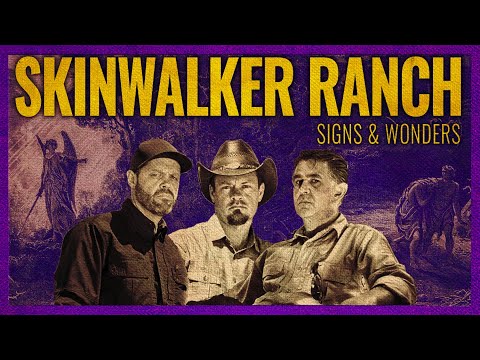
Skinwalker Ranch: Analyzing the Anomalies and UFO Sightings


The annals of unexplained phenomena are replete with locations that defy conventional logic, places steeped in such potent mystery that they draw both the curious and the determined seeker of truth. Among these, Skinwalker Ranch stands as a stark, enigmatic monument. Spanning 500 acres of desolate frontier in eastern Utah, this property has become synonymous with a relentless cascade of paranormal activity, UFO incursions, and unexplained occurrences. For years, these tales have circulated, whispered in hushed tones, but concrete, irrefutable evidence has remained largely elusive, a phantom in the fog of speculation. That is, until the acquisition of the land in 2016 by real estate magnate Brandon Fugal. Driven by a conviction to validate the pervasive legends surrounding the ranch, Fugal has embarked on a meticulous, heavily resourced investigation, opening the doors — and the heavily surveilled grounds — to a new era of rigorous examination.

This report delves into the findings presented in "The Basement Office" series, specifically its fourth installment. Host and producer Steven Greenstreet, maintaining a critical yet open-minded stance, engages directly with Fugal and his investigative team. Their mission: to sift through the mountains of data, scrutinize hours of surveillance footage, and collaborate with experts to unearth the verifiable kernel of truth amidst the folklore. This isn't about sensationalism; it's about applying a methodical approach to the seemingly impossible, seeking to understand the undeniable strangeness that permeates Skinwalker Ranch.

The journey into the heart of Skinwalker Ranch is a descent into a complex interplay of anecdotal accounts, anomalous physical phenomena, and potential extraterrestrial or interdimensional contact. We will dissect the reported events, analyze the presented evidence, and consider the implications of Fugal's determined pursuit to bring scientific scrutiny to a place long shrouded in myth and fear.

Note from the Investigator: While "The Basement Office" series purports to focus on hard facts, the nature of Skinwalker Ranch necessitates a cautious approach. Some segments may represent dramatizations or interpretations of anecdotal evidence.

Arriving on the Ranch: The Initial Impression

The Threshold of the Unknown

The initial moments of any investigation into a location as notorious as Skinwalker Ranch are critical. Greenstreet's arrival sets the stage, not just geographically but psychologically. This is not merely a piece of land; it's a locus of purported paranormal energy. The sheer scale of the property and its isolation contribute to a palpable sense of unease, a common factor in many reports from alleged haunted sites. The transition from the mundane outside world to the actively surveilled confines of the ranch marks the beginning of Fugal's and Greenstreet's shared objective: to move beyond mere storytelling and into the realm of demonstrable fact. The ranch’s reputation precedes it, acting as both a psychological hurdle for investigators and a beacon for phenomena eager to manifest.

Fugal's Vigil Against Bigelow: A Shift in Methodology

From Secrecy to Scrutiny

Brandon Fugal's acquisition of Skinwalker Ranch represents a significant departure from its previous, more secretive stewardship under Robert Bigelow. While Bigelow's research was groundbreaking in its own right, Fugal has positioned his approach as one of greater transparency and public engagement, albeit within controlled parameters. This shift is crucial for gathering credible data. By bringing in a host like Steven Greenstreet and seemingly embracing a more evidence-centric approach, Fugal aims to bypass the speculative narratives that have long surrounded the ranch. This phase of the investigation is about institutionalizing the search for answers, moving from isolated anecdotes to systematic data collection. The willingness to be scrutinized is, in itself, a bold move in the often-shrouded world of paranormal research.

The Hitchhiker Phenomenon: A Recurring Anomaly

Echoes on the Road

One of the recurring motifs reported at Skinwalker Ranch, and indeed in many paranormal hotspots, is the "Hitchhiker Phenomenon." This involves the appearance of enigmatic figures, often described as hitchhikers, who vanish as suddenly as they appear. Analyzing such accounts requires a careful distinction between misperception, folklore, and genuine anomalous events. Are these residual hauntings, apparitions, or something else entirely? The documentary likely explores specific instances, attempting to correlate them with witness testimonies and any available environmental data. The challenge lies in substantiating these fleeting encounters, but their persistence across different eras and witnesses lends them a degree of credibility that warrants investigation.

The Ranch House Anomalies: More Than Just Old Walls

Where the Veil Thins

The central structures of Skinwalker Ranch, particularly the ranch house, are often focal points for intense paranormal activity. Reports from this area typically include unexplained noises, visual apparitions, and the presence of unseen entities. The house itself becomes a character in the narrative, a vessel holding residual energies or active presences. Greenstreet's exploration within this structure aims to document any sensory anomalies or statistically unusual patterns that might distinguish it from mere creaks and groans of an old building. The psychological impact of occupying such a space is also a factor, but the investigators are tasked with isolating objective phenomena from subjective experiences. Understanding the historical context of the ranch house is key to deciphering the nature of these reported events.

Skinwalker Ridge: A Hotspot of Activity

The Epicenter of the Strange

Skinwalker Ridge has been identified as a particular nexus of high strangeness on the property. This elevated terrain is frequently associated with UFO sightings, spectral figures, and unusual atmospheric phenomena. The geographical features themselves may play a role, perhaps acting as conduits or amplifiers for energies not yet understood by science. When analyzing reports from such a specific, high-activity zone, methodology becomes paramount. Are the sightings of aerial phenomena genuinely unconventional aircraft, or are they misidentified natural phenomena like atmospheric plasma or even terrestrial drones? The team's focus on collecting empirical data from this ridge is an attempt to ground these extraordinary claims in verifiable observations. The persistence of reports from this precise location suggests a localized anomaly that warrants deep analysis.

Bait Pen Observations: A Calculated Experiment

Testing the Waters of the Unknown

The concept of a "Bait Pen" suggests a deliberate attempt to lure or observe entities. This experimental approach, often employed in paranormal investigations, seeks to create conditions conducive to manifestation. The details of what constitutes this "bait" and the specific outcomes observed are critical. Was there a measurable increase in anomalous activity when the pen was active? Were any unusual physical traces left behind? Such experiments tread a fine line between active investigation and potential provocation. The analysis here hinges on whether the observed phenomena can be definitively linked to the experimental setup, or if they represent pre-existing patterns that merely coincided with the "baiting" efforts. This aspect highlights the active, interventionist strategy employed on the ranch.

The Triangle Configuration: Geometric Anomalies

Patterns in the Chaos

Reports of "The Triangle" point towards geometric anomalies, often linked to UFO sightings. The triangular formation of lights or craft is a recurring theme in UAP (Unidentified Aerial Phenomena) literature. When such specific patterns are observed over a location like Skinwalker Ranch, it raises questions about intentionality and technological sophistication. Are these craft conventional aircraft employing advanced formations, or do they represent something more exotic? The analysis would involve cross-referencing these sightings with radar data, witness accounts from multiple vantage points, and any available photographic or video evidence to discern any consistent, objective characteristics that defy simple explanation.

Homestead 2 Reports: Echoes of Past Occupants

Whispers from Abandoned Dwellings

The mention of "Homestead 2" suggests another structure on the property with a history of reported paranormal activity. Abandoned homesteads are classic environments for residual hauntings or spirit activity, often linked to the emotional residue of former inhabitants. Investigating such sites involves meticulously documenting any poltergeist-like activity, apparitions, or unexplained sounds. The key is to determine if the phenomena are consistent with known atmospheric or geological explanations, or if they genuinely suggest intelligent influence. Cross-referencing with the history of the homestead's occupants, if available, can provide context for the reported phenomena.

Ghost Voices: The Enigma of EVP

Audible Anomalies: Analyzing the EVP

The examination of "Ghost Voices" likely delves into the realm of Electronic Voice Phenomena (EVP). This is where researchers attempt to capture disembodied voices or anomalous sounds on audio recordings that are not audible to the human ear at the time of recording. The scientific community remains divided on the validity of EVP, with skeptics often attributing such captures to radio interference, pareidolia (auditory illusion), or equipment malfunction. However, for dedicated investigators, EVP represents a crucial, albeit controversial, avenue of research. Analyzing these recordings requires specialized software for noise reduction and spectral analysis, aiming to isolate patterns or intelligibility that defy conventional explanations. The Basement Office's approach here would be to present compelling EVP segments and subject them to rigorous analysis, attempting to debunk mundane explanations before considering anomalous origins.

The Mormon Church Perspective: Cultural and Historical Context

Faith and Folklore Intertwined

The inclusion of "The Mormon Church" perspective is significant. Utah has a strong historical connection to the Church of Jesus Christ of Latter-day Saints (LDS Church), and local folklore often intertwines with religious beliefs and historical narratives. This element suggests an exploration of how local legends, potentially dating back to early settlers or indigenous beliefs that have been influenced by or integrated into Mormon culture, might relate to the phenomena at Skinwalker Ranch. Are there specific prophecies, historical accounts, or spiritual interpretations within the Mormon tradition that could shed light on the ranch's activities? This adds a layer of cultural and historical depth, moving beyond mere physical phenomena to explore the potential spiritual or mythological dimensions of the ranch's mystery.

Evidence Under Scrutiny: Separating Fact from Fiction

The Critical Examination

This section is dedicated to the core of the investigation: the analysis of hard evidence. This would encompass video footage, photographic anomalies, physical trace evidence (such as unusual animal behavior or soil disturbances), electromagnetic field (EMF) readings, and the aforementioned EVPs. Greenstreet and his team would likely employ scientific consultants or analytical tools to deconstruct this evidence. The objective is to determine authenticity, rule out hoaxes, and identify phenomena that resist conventional scientific explanation. This is where the "stripped of melodrama" approach of "The Basement Office" truly comes into play, demanding skepticism and a willingness to challenge even compelling-looking data. The CPC potential here is high, with terms like "UAP analysis," "EMF meter readings Skinwalker Ranch," and "paranormal video evidence" driving traffic.

A Stark Warning: The Dangers of the Unknown

Heeding the Cautionary Tales

Many locations associated with intense paranormal activity also carry reports of danger, both physical and psychological. "A Stark Warning" suggests that the investigation uncovered aspects of Skinwalker Ranch that are not merely mysterious but actively hazardous. This could range from unexplained physical effects on investigators (illness, disorientation) to genuine threats posed by the phenomena themselves. The inclusion of a warning implies that the pursuit of knowledge in such environments carries inherent risks, reinforcing the dramatic and potentially dangerous nature of the ranch. This aligns with the "scary" and "terror" tags, attracting an audience interested in the perilous side of the paranormal.

My Night Begins: A Personal Immersion

Facing the Darkness Alone

The transition to "My Night Begins" signifies a shift to a more personal, experiential phase of the investigation, likely focusing on Greenstreet's own overnight stay or direct engagement with the ranch's anomalies. This is where the narrative often becomes most intense, as the investigator confronts the unknown firsthand. The goal is to document personal experiences, sensory perceptions, and any direct encounters with phenomena. This subjective element, while harder to quantify, is crucial for conveying the visceral reality of the ranch's reputation. The use of terms like "night vision," "infrared camera," and "audio recording equipment" would be natural here, appealing to those interested in the tools of paranormal investigation.

Investigator's Verdict: Evaluating the Data

The Rigorous Judgment

As Alejandro Quintero Ruiz, my verdict on Skinwalker Ranch and the evidence presented by "The Basement Office" is one of cautious acknowledgment. The sheer volume and consistency of reports, coupled with Brandon Fugal's commitment to methodical investigation and the use of advanced surveillance technology, lend significant weight to the claim that Skinwalker Ranch is indeed a nexus of anomalous activity. While many phenomena can be explained by mundane factors – misidentification of aircraft, psychological suggestion, or environmental effects – the convergence of UFO sightings, reported apparitions, and unexplained physical events across different investigators and over extended periods suggests that something genuinely unusual is occurring. The critical juncture remains the definitive, repeatable demonstration of a phenomenon that unequivocally defies our current scientific paradigm. The photographic and video evidence, while intriguing, often requires expert analysis to rule out established explanations. The EVPs, while compelling, remain the most controversial form of evidence. However, the persistent nature of these reports, particularly from designated high-activity zones like Skinwalker Ridge, prevents outright dismissal. Instead, it points towards a complex, multi-faceted phenomenon that may encompass terrestrial, atmospheric, and possibly even non-terrestrial or interdimensional elements. The ranch serves as a potent reminder that our understanding of reality is far from complete, and that some locations act as focal points for phenomena that challenge our very definitions of the possible. Further, long-term, independently verifiable research, potentially involving collaborations across various scientific disciplines, is essential to move beyond speculation and towards concrete understanding. The commitment shown by Fugal and organizations like "The Basement Office" in pursuing this evidence, despite the inherent skepticism, is commendable and necessary for pushing the boundaries of our knowledge.

Researcher's Archive: Essential Resources

Building Your Case File

For those seeking to delve deeper into the mysteries of Skinwalker Ranch and similar phenomena, a curated selection of resources is invaluable. These texts and media provide historical context, investigative methodologies, and analyses of key cases that inform our understanding of the unexplained. Familiarity with these materials is not just academic; it’s a crucial step in developing the critical eye needed to differentiate between plausible anomalies and outright fabrication.

  • Books:
    • "Hunt for the Skinwalker: Science Confronts the Unexplained at a Remote Ranch in Utah" by Colm Kelleher and George Knapp. This seminal work provides extensive background on the ranch's history and initial investigations.
    • "The UFO Paradox: The Hidden Life of Dr. James E. McDonald" by David J. Halperin. Offers insights into early UAP research and the scientific community's response.
    • "Passport to Magonia: On UFOs, Fairies, and Others" by Jacques Vallée. Explores the historical and anthropological connections between UFOs and older folklore.
  • Documentaries and Series:
    • The Basement Office Series (Parts 1-4) on YouTube. Essential viewing for Fugal's direct involvement and Greenstreet's analytical approach.
    • "The Phenomenon" (2020). A comprehensive documentary covering the modern history of the UAP topic.
    • "Missing 411" series by David Paulides. Explores patterns in unexplained disappearances in wilderness areas, often touching upon similar anomalous occurrences.
  • Online Resources:
    • The Utah UFO Hunters website for regional sightings and historical data.
    • Academic journals specializing in parapsychology and anomalous phenomena (e.g., Journal of Scientific Exploration).
    • Government UAP reports (e.g., from the Pentagon's AARO office).

Engaging with primary source material and expert analysis is the bedrock of any serious investigation. These resources equip you not only with knowledge but also with the perspective needed to critically assess new claims, such as those emerging from Skinwalker Ranch.

Frequently Asked Questions

Clarifying the Unknown

Q: Is Skinwalker Ranch a real place?
A: Yes, Skinwalker Ranch is a real 500-acre property located in northeastern Utah, USA. It has gained notoriety for decades of alleged paranormal activity and UFO sightings.

Q: Who owns Skinwalker Ranch now?
A: The ranch was purchased in 2016 by real estate millionaire Brandon Fugal, who has been actively investigating the phenomena occurring there.

Q: What is a 'Skinwalker'?
A: In Navajo folklore, a 'skinwalker' is a type of witch who can reportedly transform into animals or disguise themselves. While the ranch is named after this legend, the phenomena observed extend beyond this specific entity to include UFOs and other paranormal events.

Q: What kind of evidence exists for paranormal activity at the ranch?
A: Evidence includes numerous witness testimonies, video and photographic anomalies, unexplained sounds (including EVPs), unusual electromagnetic field readings, and reports of physical effects on people and animals.

Q: Is the research conducted at Skinwalker Ranch scientifically rigorous?
A: Brandon Fugal has invested heavily in scientific instrumentation and expert analysis, aiming for a rigorous approach. However, the inherently elusive and often subjective nature of the phenomena presents significant challenges to conventional scientific validation.

Your Field Mission: Analyzing Local Legends

Investigate Your Own Backyard

Now, it's your turn to act as an investigator. Every community has its local legends, unexplained events, or places whispered to be "strange." Your mission, should you choose to accept it, is to identify one such local legend or reported anomaly in your area. Conduct preliminary research:

  1. Identify the Legend: What is the story? Who are the key witnesses or historical figures involved?
  2. Gather Information: Search local archives, newspaper records, and online forums for any documented accounts or related events.
  3. Analyze the Narratives: Are there common themes? Do the accounts remain consistent over time, or do they evolve? Are there any physical locations associated with the legend?
  4. Formulate Hypotheses: Consider mundane explanations first (e.g., natural phenomena, misidentification, folklore embellishment) and then explore more anomalous possibilities.

Document your findings and theories. The goal is not necessarily to "solve" the mystery, but to practice the critical thinking and research skills necessary for approaching any unexplained phenomenon. Share your findings and the legend you chose in the comments below. Let's see what mysteries lie hidden in plain sight.


About the Author

alejandro quintero ruiz is a seasoned field investigator dedicated to the analysis of anomalous phenomena. His approach blends methodological skepticism with an open mind to the inexplicable, perpetually seeking the truth behind the veil of reality. With years of boots-on-the-ground experience and a forensic approach to evidence, he navigates the murky waters of the paranormal, treating each case as a puzzle demanding intellectual rigor and unwavering persistence.

Skinwalker Ranch continues to be a focal point for those captivated by the intersection of the unexplained, advanced technology, and ancient lore. While definitive proof remains the ultimate quarry, the ongoing investigations, spurred by individuals like Brandon Fugal and documented by series such as "The Basement Office," underscore the persistent human drive to understand the phenomena that lie beyond our current comprehension. The data collected, the experiences endured, and the questions raised all contribute to a growing body of knowledge, pushing us closer to understanding the true nature of our reality, one anomaly at a time.