Followers

Mostrando las entradas con la etiqueta Loch Ness Monster. Mostrar todas las entradas

The Mysterious Monsters (1975): An Investigative Dossier

Image

In an era where wonder often trumped cynicism, the 1975 documentary "The Mysterious Monsters," hosted by Peter Graves, emerged as a seminal work in paranormal cinema. This wasn't just another film; it was an expedition into the unknown, a product of the 1970s' unique fascination with cryptids and unexplained phenomena. This dossier delves into the documentary's core subjects, the witnesses interviewed, and the enduring impact it had on a generation of investigators and enthusiasts.

I. The Enigma Unveiled: A 1970s Perspective

Released in 1975, "The Mysterious Monsters" stands as a testament to a bygone era of documentary filmmaking. Unlike contemporary productions often steeped in skepticism, films from this period, particularly those under the Schick Sunn Classic banner, embraced a sense of awe and possibility. Hosted by the authoritative presence of Peter Graves, the documentary plunged viewers into the heart of investigations into legendary creatures, presenting evidence and firsthand accounts with an earnestness that resonated deeply. The grainy film quality and evocative soundtracks were not mere stylistic choices; they contributed to an atmosphere where the existence of UFOs, Bigfoot, and the Loch Ness Monster felt not just conceivable, but imminent. This approach, characterized by an openness to the unexplained, is a stark contrast to the often disbelieving narratives prevalent today.

The documentary's timing is also significant. Released on October 20, 2017, to commemorate the 50th anniversary of the Bluff Creek sighting—the event that yielded the iconic Patterson-Gimlin film—it tapped into a rich vein of cryptozoological history. This historical context is crucial for understanding the documentary's approach and its lasting appeal.

Recommended Gear for Investigation

ProductDescriptionBuy
Cryptozoology A To Z: The Encyclopedia Of Loch Monsters Sasquatch Chupacabras And Other Authentic M: The Encyclopedia of Loch Monsters, Sasquatch, Chupacabras, and Other Authentic Mysteries of NatureAn excellent choice to complement your research on this topic.View on Amazon
The Big Book of Paranormal: 300 Mystical and Frightening Tales From Around the WorldAn excellent choice to complement your research on this topic.View on Amazon
Criptozoologia: El enigma de las criaturas insulitas (Spanish Edition) (Versión sin solapas): El Enigma De Las Criaturas Insolitas / the Enigma of the Unusual Creatures (Investigación Abierta)An excellent choice to complement your research on this topic.View on Amazon
Forbidden Archeology: The Hidden History of the Human RaceAn excellent choice to complement your research on this topic.View on Amazon
The H. P. Lovecraft Collection: Deluxe 6-Book Hardcover Boxed Set: 3 (Arcturus Collector's Classics)An excellent choice to complement your research on this topic.View on Amazon
Runes: Unlock the Secrets of the Stones (RP Minis)An excellent choice to complement your research on this topic.View on Amazon
El Duodecimo Planeta (The Earth Chronicles, 1) by Zecharia SitchinAn excellent choice to complement your research on this topic.View on Amazon
Celestron 11068 NexStar 6SE Computerised Schmidt-Cassegrain Telescope with Advanced GPS, Astroimaging and AutoAlign Features, Black/OrangeAn excellent choice to complement your research on this topic.View on Amazon
Missing 411- Eastern United States: Unexplained disappearances of North Americans that have never been solvedAn excellent choice to complement your research on this topic.View on Amazon
Ghost-Hunting For Dummies [Idioma Inglés] An excellent choice to complement your research on this topic.View on Amazon

II. The Experts and Eyewitnesses

"The Mysterious Monsters" assembled a compelling panel of individuals at the forefront of paranormal and cryptozoological research in the 1970s. Their inclusion lent significant weight to the narratives presented:

  • Peter Byrne: A renowned investigator of Bigfoot and other cryptids.
  • Grover Krantz: An anthropologist and prominent Bigfoot researcher, known for his detailed analyses of skeletal structures and footprints.
  • Robert Morgan: Likely an investigator or author involved in paranormal subjects of the era.
  • Tim Dinsdale: A key figure in the Loch Ness Monster investigations, known for his photographic evidence.
  • Peter Hurkos: A Dutch psychic and object reader, bringing a different dimension of sensitivity to the unexplained.
  • Eric Shipton: An accomplished mountaineer and explorer whose Arctic expeditions sometimes brushed against unexplained phenomena.

The direct engagement with such figures marked a departure from mere speculation. As one viewer noted, "The 1970s and 1980s had very fascinating documentaries. They actually interviewed the people who experienced the events... nope straight to the first person sources." This emphasis on primary accounts, a method often neglected in favor of social media hearsay today, underscores the documentary's value.

III. Creatures of Legend: A Comprehensive Survey

The documentary meticulously explored several of the world's most enduring cryptids and unexplained events:

  • Loch Ness Monster: A deep dive into the aquatic enigma of Scotland, potentially featuring analysis of photographic evidence like Tim Dinsdale's famous film.
  • Bigfoot: Extensive coverage of North America's elusive ape-like humanoid, including discussions of sightings, footprints, and the psychological impact on witnesses. The documentary likely touched upon the Patterson-Gimlin film, given its 50th-anniversary commemoration context.
  • Yeti: The "Abominable Snowman" of the Himalayas, another staple of cryptozoological lore, was also a subject of investigation.
  • Ape Canyon Incident: A historical account from the early 20th century involving miners allegedly attacked by ape-like creatures in Washington State.
  • Albert Ostman Story: A controversial firsthand account of an alleged Bigfoot abduction in British Columbia.
  • Jacko (Young Bigfoot): The documentary may have explored juvenile sightings or the implications of young specimens in the Bigfoot phenomenon.
  • John Cobb Incident: While less commonly cited than others, this likely refers to a specific encounter or piece of evidence related to cryptids.

These subjects, presented with the era's characteristic blend of seriousness and wonder, fueled the imaginations of viewers. As recalled by one viewer, "I was 10 years old when I saw the add for this movie on tv. That scene with the Big Foot going through the window had me scared silly for a long time." This emotional impact is a key characteristic of the film's enduring legacy.

IV. Cultural Resonance and Audience Testimony

The impact of "The Mysterious Monsters" is vividly captured in the recollections of those who watched it. Many describe the documentary as a formative experience, igniting a lifelong passion for the unexplained.

"I am 43 years old now and I can remember watching this documentary when I was about 7 years old. I am a researcher and investigator of cryptids and this is one of the very early documentaries that started my interest in Bigfoot and other cryptids. I think it was ahead of it's time with some of the data and witness statement collecting."

This sentiment is echoed by others who recall the film's power to instill both fear and fascination. The era's documentaries, as noted by viewers, often excelled at capturing a sense of genuine mystery. "These old 30 plus year old videos are better than any of the newest TV shows about the subject Finding Bigfoot is big trash," one commenter asserted, highlighting a perceived decline in the quality and sincerity of modern paranormal content. The distinctive synth-heavy soundtracks of the 70s also contributed significantly to the atmosphere, with many users expressing fondness for this unique musical style.

The documentary's ability to create vivid imagery is undeniable. Mentions of Bigfoot having "sideburns" or specific scenes like the one depicting Bigfoot "going through the window" demonstrate how effectively the film imprinted itself on the audience's memory. Viewers consistently praise Peter Graves' narration, finding his delivery perfectly suited to the film's tone, lending it an air of credibility that viewers seem to miss in contemporary productions.

A recurring theme in audience feedback is the perceived difference in approach between 70s documentaries and modern investigative content. The emphasis on firsthand accounts and a spirit of open inquiry in "The Mysterious Monsters" is frequently contrasted with what some viewers describe as a more cynical or less thorough approach in current media. This appreciation for direct, face-to-face interviews and a willingness to explore possibilities without immediate dismissal is a cornerstone of the documentary's appeal.

V. Essential Tools for the Modern Cryptozoologist

While the investigative methods of the 1970s laid crucial groundwork, modern cryptozoology benefits from advanced technology. For those inspired by "The Mysterious Monsters" to conduct their own research, certain tools are indispensable:

  • High-Resolution Cameras: Capable of capturing clear photographic and video evidence in various lighting conditions.
  • Audio Recording Equipment: Sensitive microphones and digital recorders for capturing potential vocalizations or environmental anomalies (EVP).
  • Night Vision and Thermal Imaging: Essential for observing wildlife, especially elusive subjects, in low-light or dark environments.
  • GPS and Mapping Software: For accurately documenting sighting locations and tracking potential creature territories.
  • Field Research Guides: Comprehensive books on tracking, animal identification, and evidence preservation.

VI. Investigative Framework: Analyzing the Past

From an analytical standpoint, "The Mysterious Monsters" represents a valuable historical artifact. It provides insight into how paranormal phenomena were perceived and investigated during the mid-20th century. The documentary's strength lies in its presentation of diverse case studies and expert opinions, offering a broad yet accessible overview of prominent cryptids.

However, a critical examination requires acknowledging the limitations of the era's technology and investigative standards. Claims made within the documentary should be cross-referenced with later research and scientific scrutiny. The documentary's success in fostering genuine wonder also means it prioritized narrative engagement, which could sometimes overshadow rigorous scientific debunking. For instance, the precision with which some witnesses estimated height and weight ("He was between 7 and 8 feet tall and weighed between 600 and 700 lbs.") is a point of interest, representing an anecdotal precision that modern scientific protocols would seek to verify more stringently.

Despite these considerations, the documentary's commitment to featuring primary sources and its evident enthusiasm for the subject matter remain compelling. It serves as an excellent entry point for understanding the historical development of modern cryptozoology and the cultural landscape that nurtured such interests. Examining films like this helps us understand how popular beliefs in mysterious creatures evolved outside of, and sometimes in parallel with, established scientific discourse.

VII. Frequently Asked Questions

Q1: What is "The Mysterious Monsters" (1975)?
It is a paranormal documentary film from the 1970s, hosted by Peter Graves, that explores various cryptids such as Bigfoot, the Loch Ness Monster, and the Yeti, featuring interviews with researchers and eyewitnesses.
Q2: Who were the main researchers featured in the documentary?
The film included prominent figures like Peter Byrne, Grover Krantz, Tim Dinsdale, and others who were active in paranormal and cryptozoological investigations during that era.
Q3: Why is this documentary considered significant?
It is significant for its earnest approach to unexplained phenomena, its focus on firsthand accounts, and its role in shaping public perception and interest in cryptids during the 1970s.
Q4: How does this documentary compare to modern paranormal shows?
Audience members often recall "The Mysterious Monsters" as having a greater sense of wonder and a more direct engagement with witnesses compared to some contemporary shows, which are sometimes perceived as more cynical or reliant on sensationalism.
Q5: What is the significance of the 50th anniversary of the Bluff Creek sighting mentioned?
The documentary's release or promotion around this time highlights its connection to the Patterson-Gimlin film, a pivotal piece of evidence in the Bigfoot phenomenon, suggesting the film aimed to capitalize on and contribute to ongoing discussions surrounding that event.

VIII. Investigator's Verdict: A Legacy of Intrigue

"The Mysterious Monsters" (1975) is more than just a collection of old footage; it's a time capsule of a specific cultural moment, a period where the boundaries of the known world seemed more permeable to the truly extraordinary. The documentary’s enduring appeal lies in its sincerity, its reliance on credible (for the time) figures, and its ability to tap into a primal human curiosity about the unknown. While modern science may offer different explanations or demand more rigorous proof, the impact of this film on a generation of believers and researchers is undeniable.

It successfully bridged the gap between folklore and investigation, presenting compelling narratives that continue to fascinate. The "grainy film" and "fabulous soundtracks" were not just nostalgic elements; they were integral to creating an atmosphere where belief felt plausible. As one viewer aptly put it, "In '75... it was easy to believe they really could exist." This willingness to explore the possibility, without immediate dismissal, is perhaps its most valuable lesson.

Your Mission: Document the Unseen

The spirit of inquiry that fueled "The Mysterious Monsters" lives on. Your mission, should you choose to accept it, is to approach unexplained phenomena with a similar blend of critical analysis and open-mindedness. Document your own local legends, investigate the unexplained in your community, and contribute your findings to the ongoing pursuit of truth. Remember, the world is full of mysteries waiting to be understood.

What are your memories of "The Mysterious Monsters" or similar documentaries? Have you had any personal experiences with cryptids that resonate with the stories presented? Share your thoughts and experiences in the comments below. Let's keep the investigation alive!

If this deep dive into cryptozoological history has ignited your curiosity, share this dossier with fellow enthusiasts on social media. Help us expand the reach of paranormal research and uncover more hidden truths.

```

Investigator's Note: True paranormal research doesn't fund itself. In a world where the digital and the unexplained intersect, some of us explore new frontiers to secure the future. Do you dare to be part of the vanguard? Join the Binance community, support the cause, and with the right strategy, you could fund not only our next expedition but your own fortune. The next great discovery could be just a click away.

The Insane Cryptozoology Iceberg: An In-Depth Investigation

Image

The world of cryptozoology is a vast, often bewildering landscape. Much like an iceberg, the commonly known creatures—Bigfoot, the Loch Ness Monster—represent only the tip of a much larger, stranger phenomenon. Beneath the surface lie countless theories, alleged cover-ups, and speculative connections that push the boundaries of belief and scientific understanding. This investigation delves into the deeper, more "insane" layers of this submerged world, examining theories that range from the plausible to the utterly outlandish. Prepare for a deep dive into the cryptid universe.

EXPEDIENT MINUTES

The Unfathomable Depths of Cryptozoology

The term 'iceberg' is often used metaphorically to describe phenomena where the visible portion is merely a fraction of the whole. In cryptozoology, this analogy proves particularly apt. While creatures like Bigfoot and the Loch Ness Monster dominate public consciousness, they are merely the surface ripples of a vast ocean of speculation, alleged evidence, and increasingly bizarre theories. This investigation embarks on a journey beneath those familiar waves to explore the truly 'insane' cryptozoology iceberg—a realm where accepted norms of zoology, physics, and even reality itself are stretched, twisted, and occasionally shattered. We analyze claims that challenge our understanding of life, evolution, and the very fabric of existence.

The Bearfoot Enigma

Our descent begins with the "Bearfoot" phenomenon. While seemingly straightforward, this classification hints at the growing complexity within cryptid taxonomy. Is it a distinct species, a misidentification, or something stranger? The very naming convention suggests an organism sharing characteristics with known fauna, yet diverging significantly. This is where the real work of a cryptozoologist begins: not just cataloging anomalies, but dissecting the subtle distinctions that separate rumor from potential reality.

Recommended Gear for Investigation

ProductDescriptionBuy
Cryptozoology A To Z: The Encyclopedia Of Loch Monsters Sasquatch Chupacabras And Other Authentic M: The Encyclopedia of Loch Monsters, Sasquatch, Chupacabras, and Other Authentic Mysteries of NatureAn excellent choice to complement your research on this topic.View on Amazon
The Big Book of Paranormal: 300 Mystical and Frightening Tales From Around the WorldAn excellent choice to complement your research on this topic.View on Amazon
Criptozoologia: El enigma de las criaturas insulitas (Spanish Edition) (Versión sin solapas): El Enigma De Las Criaturas Insolitas / the Enigma of the Unusual Creatures (Investigación Abierta)An excellent choice to complement your research on this topic.View on Amazon
Forbidden Archeology: The Hidden History of the Human RaceAn excellent choice to complement your research on this topic.View on Amazon
The H. P. Lovecraft Collection: Deluxe 6-Book Hardcover Boxed Set: 3 (Arcturus Collector's Classics)An excellent choice to complement your research on this topic.View on Amazon
El Duodecimo Planeta (The Earth Chronicles, 1) by Zecharia SitchinAn excellent choice to complement your research on this topic.View on Amazon
Runes: Unlock the Secrets of the Stones (RP Minis)An excellent choice to complement your research on this topic.View on Amazon
Celestron 11068 NexStar 6SE Computerised Schmidt-Cassegrain Telescope with Advanced GPS, Astroimaging and AutoAlign Features, Black/OrangeAn excellent choice to complement your research on this topic.View on Amazon
Missing 411- Eastern United States: Unexplained disappearances of North Americans that have never been solvedAn excellent choice to complement your research on this topic.View on Amazon
Ghost-Hunting For Dummies [Idioma Inglés] An excellent choice to complement your research on this topic.View on Amazon

Zooform, Wildmen, and Prehistoric Paradigms

The concept of a "Zooform" implies an animal of unknown origin, a broad category that can encompass anything from escaped exotic pets to undiscovered species. When we move to "Wildman" phenomena, we tread into territory familiar to Bigfoot and Yeti lore. Yet, the "Prehistoric Survivor Paradigm" suggests that some of these sightings might not be merely unknown species, but living relics from epochs long past. This raises profound questions: What evolutionary bottlenecks or geological anomalies could allow such creatures to persist undetected?

The Missing 411 Connection

The inclusion of "Missing 411" is a critical juncture. This refers to the work of David Paulides, documenting baffling disappearances in national parks and wilderness areas, often with unusual characteristics and lack of evidence. The inference here is that cryptids might be involved, not just as passive observers, but as active agents in these perplexing vanishings. This shifts the narrative from mere zoological curiosity to potential danger, a recurring theme in the deeper layers of the cryptid iceberg.

Mothman, Bloop, and Thylacine Colonies

The mention of Mothman, the enigmatic winged entity associated with disaster, and the Bloop, a mysterious deep-sea sound, broadens the scope dramatically. Are these phenomena related? Could the Bloop be the vocalization of an unknown aquatic cryptid? Furthermore, the idea of "Thylacine Colonies" challenges the accepted extinction of the Tasmanian Tiger. If isolated populations survived, where, and why did they remain hidden for so long? This suggests a pattern of concealment or simply remarkable elusiveness for species on the brink.

Bigfoot: Coverups and Theories

Bigfoot. The icon of cryptozoology. Here, the discourse dives into alleged "coverups," implying a deliberate effort by authorities to suppress evidence of this creature. This aligns with the investigator's inherent skepticism towards official narratives. Theories abound regarding the nature of Bigfoot: biological anomaly, interdimensional visitor, or something else entirely? The sheer variety of described forms hints at a complex reality far removed from simple misidentification.

Alien Cryptids and Unconventional Forms

The hypothesis of "Alien Cryptids" is a significant leap. It posits that some extraordinary creatures encountered on Earth may not be terrestrial in origin. This opens the door to extraterrestrial interaction, whether through direct visitation, ancient seeding, or other, more esoteric means. Coupled with "Slothfoot"—an unusual variation on the Bigfoot theme—and the assertion that the "Minnesota Iceman was Real," we see a recurring insistence on the validity of controversial specimens, pushing back against scientific debunking.

"Man, Bigfoot is basically the alien from The Thing at this point with so many shapes they say he has." - Audience Commenter

This audience observation crystallizes the notion that Bigfoot might not be a singular entity, but a category embodying numerous, perhaps even alien, forms. The sheer adaptability and variety attributed to it mirror the shapeshifting capabilities of fictional extraterrestrials.

Specific Specimens: Minnesota Iceman and Beyond

Regarding the Minnesota Iceman, scientific consensus leaned towards a hoax. However, the insistence on its reality within fringe circles highlights a persistent rejection of mainstream explanations. Cryptozoology often thrives in the space where definitive proof is elusive, and skepticism is met with counter-theories and renewed claims of authenticity. This dynamic fuels the ongoing fascination and debate.

Human Cryptids and Anthropological Anomalies

The "Human Cryptids" category, including concepts like "Nephilim Bigfoot" and "True Giants," delves into historical and religious texts, seeking cryptid connections. Are biblical giants and Nephilim accounts descriptions of actual hominid species unknown to modern science? The suggestion that "Homo Gardiensiensis" might be a real, albeit undiscovered, human species further blurs the lines between anthropology and cryptozoology. This area is fraught with interpretive challenges, often relying on selective readings of ancient literature.

The Patterson-Gimlin Debate

"Bigfoot Wearing Clothes," "Patterson Re-created the Roe Encounter," and the "Patterson Gimlin Massacre" (likely a misinterpretation of the controversial nature of the film) point directly to the iconic 1967 Patterson-Gimlin film. The persistent debate over its authenticity—whether it depicts a genuine unknown primate or a staged event—is central to Bigfoot research. Some theories suggest Patterson may have staged the footage based on other encounters or even created a costume, a claim echoed by the "Roe Encounter" reference.

"The picture of the bigfoot on the thumbnail goes hard" - Audience Commenter

The enduring power of the Patterson-Gimlin image, even as a thumbnail, speaks volumes about its cultural impact. It remains a potent symbol, regardless of its veracity, fueling continued investigation and speculation.

Chupacabra and Australian Big Cats

The Chupacabra, famously associated with livestock predation, and "Australian Big Cats" represent geographically distinct yet conceptually similar phenomena: predators of unknown origin causing localized disruption. The audience comment suggesting the Chupacabra might be a Thylacine is particularly intriguing, blending two distinct cryptid categories. Similarly, the evidence presented for escaped lions from the Wanneroo Lion Park in Western Australia provides a tangible, albeit controversial, explanation for the "Australian Big Cat Coverup."

"I gotta admit that if the chupacabra turned out to be a thylacine that would be both the best and most absurd thing that has ever happened." - Audience Commenter

This sentiment captures the delightful irony that often permeates cryptozoology. The possibility of a familiar, extinct animal being rebranded as something far more monstrous—or vice versa—is a narrative twist that captivates the imagination.

"The theory of big cats in Western Australia actually has some validity...Several lions had escaped from the park in the 1970s and early 1980s...It is possible that these escapees were the reason for the surge in big cat sightings in WA around that time..." - Audience Commenter

This detailed account provides a compelling, evidence-based counterpoint to a simple "coverup" narrative, illustrating how real-world events can fuel cryptozoological speculation.

Ancient and Aquatic Cryptids

The "Loch Ness Wormhole Footage" and "Loch Ness Mollusk" theories, alongside the "Triassic Kraken," pull us into the realm of aquatic mysteries. The wormhole theory suggests Nessie's appearances are linked to dimensional rifts. The mollusk theory offers a more biological explanation, while the Triassic Kraken evokes immense, prehistoric marine life. "Ishtar Gate Dinosaur" connects ancient art with potential dinosaurian survival, a concept explored in "Extinct Animal Coverup."

Extinct Animal Anomalies

"Extinct Animal Coverup," "Chinese Established Ground Sloth Colonies," and "Dicynodont Chipekwe" all hinge on the idea that creatures long believed extinct might still exist, deliberately hidden or simply overlooked. The persistence of species like the Thylacine, if indeed they survived in colonies, challenges our understanding of extinction events and the effectiveness of scientific surveys.

Historical Theories and Anomalies

"Thomas Jefferson Cryptozoological Theories" suggests prominent historical figures may have entertained ideas about unknown animals. "Eels that Never Stop Growing," "Trilobite Sightings," and "Horses in the American City of Fusang" point to historical anomalies and legends that could be interpreted through a cryptozoological lens. The concept of "Hesperopithicus was Bigfoot" attempts to re-evaluate fossil finds, linking them to known cryptids.

Cryptids as Experiments

The assertion that "Cryptids are Experiments" and the "Spiny Backed Chimpanzee Coverup" introduce a sinister element: that some creatures might be artificial, the result of clandestine research or genetic manipulation. This aligns with conspiracy theories involving government agencies or secret organizations. The "Barium Bigfoot" theory adds another layer, suggesting a specific substance might be involved in its detection or nature.

Classification and Systems

The "Dogman Classification System" implies a structured approach to understanding a specific cryptid category, suggesting an attempt to bring order to the chaos of sightings. This echoes the need for rigorous classification within traditional zoology. However, the very existence of such systems for unproven creatures highlights the dedication of researchers in this field.

Giant and Cannibal Cryptids

"Cannibal Giants," "Cannibal Bigfoot," and "Portlock Alaska Bigfoot Attacks" paint a terrifying picture of large, aggressive, and potentially predatory cryptids. These accounts tap into primal fears and suggest that some encounters are not merely curious observations but life-threatening confrontations. The "Tsavo Lions were Cave Lions" theory attempts a historical reinterpretation, linking a famous case to a potentially different, more formidable species.

Continental Cryptids and Coverups

"Cave Bigfoot," "British Big Cats are Native" (challenging introduced species theories), and "Monkey Bigfoot" suggest widespread and varied manifestations of bipedal and simian-like entities across different continents and environments. The persistent "coverup" narrative across multiple cryptid types implies a systemic effort to conceal their existence.

Disinformation and Perception

"Disinfo Campaigns" acknowledges the deliberate spread of false information, a tactic often employed to discredit genuine reports or mask the truth. This adds a layer of complexity for researchers, requiring them to sift through deliberate misinformation to find factual kernels. "Three Toes Truthers" suggests a faction within the community focused on specific, perhaps obscure, details.

Origins of Bipedalism and Cryptids

"Initial Bipedalism" touches upon evolutionary biology, questioning the origins and development of upright walking. Could undiscovered hominids or cryptids offer insights into this crucial evolutionary step? The idea of "Mermaids are Unknown Species of Manatee" attempts a biological explanation for folklore, while "Neanderthals are alive and well in Switzerland" echoes the "Homo Gardiensiensis" concept—the survival of archaic human forms.

"I just realized that (most) cryptids are living, breathing organisms that can die. This means that sightings that span decades are likely different creatures that people mistake as the same one. This would mean that cryptids have species. This could explain why so many countries have such similar cryptids." - Audience Commenter

This insightful comment addresses a fundamental challenge in cryptozoology: the longevity of sightings. By proposing that cryptids exist as distinct species, reproducing over time, it offers a logical framework for understanding persistent reports without resorting to immortality or single-entity persistence.

Aquatic Humanoids and Sea Monsters

"Merbeings" and the "Sandersonian Sea Giants" expand the aquatic cryptid repertoire beyond Nessie. These accounts often involve large, intelligent, or humanoid marine entities. The commentary clarifying that "manatees aren’t pinnipeds" and are closer to elephants, while pinnipeds include seals and sea lions, showcases the detailed biological corrections that enrich these discussions.

"Small correction, pinnipeds are seals and stuff, not sea cows and manatees." - Audience Commenter

This level of specific correction demonstrates the audience's engagement and desire for accuracy within the broader speculative framework.

Ancient Beasts and Mythological Connections

"Goblin Universe" and "Atmospheric Beasts come from Other Galaxies" push the boundaries into the cosmically bizarre. Could folklore be a distorted memory of encounters with non-terrestrial life? "Crowley Summoned Nessie" links occult practices with cryptid appearances, suggesting supernatural or ritualistic involvement. The "Ishtar Gate Dinosaur" finds resonance with "Extinct Animal Coverup," suggesting ancient knowledge suppressed by modern science.

Cryptid Anomalies and Interdimensional Theories

The idea of "Cryptids are Space-Time Anomalies" and "Cryptids are Portals" moves beyond biology and into physics-bending speculation. This suggests that some cryptids may not be physical beings in the conventional sense, but rather manifestations of temporal or spatial distortions, or entities that utilize such phenomena to appear and disappear. "Loch Ness Wormhole Footage" fits squarely within this category.

Specific Cryptid Theories

"Cephalopod Bigfoot" and "Octosquatch" represent some of the most imaginative and unsettling cryptid concepts, merging primate-like forms with marine invertebrates. "Spider-squatch" similarly blends arachnid features with the bipedal archetype. These theories, while wild, highlight the human tendency to project fears and anomalies onto the unknown. "Winston Churchill and Fidel Castro were human-yeti hybrids" and "Ground Sloths had superpowers" are particularly outlandish, blending historical figures and mythical abilities with cryptid lore.

"Cephalopod Bigfoot has got to be the wildest theory I’ve ever heard. Maybe that or Bigfoot is an abandoned alien robot." - Audience Commenter

This comment perfectly encapsulates the extreme end of the cryptozoological spectrum, where biological limitations are discarded in favor of imaginative, often extraterrestrial, explanations.

Cryptid Hunting Forces and Locations

"Cryptid Hunting Forces" suggests organized, perhaps clandestine, groups dedicated to tracking or studying these creatures. The mention of "Portlock Alaska Bigfoot Attacks" and "Mount St Helens Bigfoot Incident" grounds specific encounters in real-world locations known for their rugged terrain and associated legends.

Nature Restocking and Morphic Resonance

"Nature Restocks Animals and Morphic Resonance" introduces concepts from Rupert Sheldrake, suggesting a collective memory or non-physical influence shaping biological forms and behaviors. This implies that the "appearance" of cryptids might be influenced by a shared consciousness or inherent patterns within nature, offering a more esoteric explanation for their persistence and perceived forms.

Cryptid Artistry and Perception

"The way we just keep circling back to Bigfoot 😂" and "It’s kinda funny how some hairy guy living in the woods can inspire such creatively bonkers ideas. Imagine if there were this many conspiracy theories about your town's local hobo" highlight the cultural saturation and creative inspiration derived from cryptids, particularly Bigfoot. The humor acknowledges the often absurd lengths to which theories can go.

Cryptid Origin Theories

Beyond simple survival, theories suggest cryptids could be "Experiments," "Alien Cryptids," "Space Animals," "Atmospheric Beasts come from Other Galaxies," or even "Tulpa Cryptids" (thought-forms made manifest). These varied origins challenge the traditional biological framework, positing interdimensional, extraterrestrial, or psychic sources.

Expert Denials and Alternative Identities

"Jon Erik Beckjord Death Denial" and "Jon Erik Beckjord was Mothman" place a specific researcher at the center of bizarre claims, suggesting either a deliberate misdirection about his fate or an identification with a cryptid itself. "Zermatism" is another obscure theory that requires deeper investigation within the field's literature.

Cryptid Coverups and Trafficking

The concepts of "Cryptid Trafficking Rings" and "Robert Kline's Man Eating Cloaking Ground Sloths" introduce criminal elements into the cryptid world. This suggests a hidden economy or exploitation based on these creatures, adding a layer of danger and conspiracy far beyond simple sightings.

Exotic Cryptid Forms

"Sailing Sasquatch," "Men in Plaid," and "Paraty Spotting" hint at cryptids exhibiting unusual behaviors or associated with specific, perhaps anomalous, contexts. "Paraty Spotting" likely refers to an unknown event or creature sighted in Paraty, Brazil.

Cryptid Behavior and Theory

"Portlock Alaska Bigfoot Attacks," "Cannibal Bigfoot," and "Bigfoot Warriors" detail aggressive behaviors. Conversely, "Psychic Bigfoot" and "Infrasound Bigfoot" explore more subtle, potentially paranormal or sensory-based interactions. The "Patty Air Sacs" theory relates to specific physical interpretations of the Patterson-Gimlin film.

Unexplained Phenomena and Cryptids

"Thunderbirds are UFOs" directly equates a legendary creature with aerial phenomena, suggesting a possible misidentification or a shared origin. "Cryptids are Space-Time Anomalies" and "Cryptids are Portals" link them to fundamental physics mysteries. "Blobsquatchery" describes ambiguous, formless sightings, adding to the chaotic nature of the phenomena.

Historical Accounts and Skepticism

The discussion of "Neanderthals are alive and well," "Hesperopithicus was Bigfoot," and "Thomas Jefferson Cryptozoological Theories" highlights how historical and fossil records are reinterpreted. The audience comment about the "missing link" being antiquated reflects a shift in anthropological understanding, yet cryptid research often revisits these older paradigms.

"It's funny that anyone is still talking about the concept of the missing link. It's so antiquated that everyone is off that ish. There is no one 'missing link'." - Audience Commenter

This comment reflects contemporary scientific understanding, contrasting with older ideas that sometimes inform cryptozoological theories.

Cryptid Analysis and Research

The structure of the original content, presented as a rapid-fire list of topics, mirrors the "iceberg" concept—each point a different facet. Audience comments praising the "rapid transitions" and suggesting pauses indicate different preferences for information delivery. The dedication of channels like the one this content likely originated from is lauded: "As an Older fan of Cryptozoology... this Channel has been a pleasant breath of fresh air."

"I love all your videos dude, but one nitpick, can you pause between topics or announce when you're going on to the next subject? Either way, keep on killing it." - Audience Commenter

This feedback highlights a common challenge in presenting dense, multi-topic content: balancing pace with clarity. The rapid-fire nature can be overwhelming, yet for some, it enhances the comedic or astonishing effect.

"We may not believe in cryptozology with a few reasonable expections, but holy shit the field is goddamn interesting" - Audience Commenter

This sentiment captures the core appeal of cryptozoology: its inherent fascination, even for those who maintain a degree of skepticism.

Investigator's Verdict: Navigating the Cryptozoological Maze

The "Insane Cryptozoology Iceberg" is less a collection of distinct cases and more a sprawling, interconnected web of speculation. What emerges is a picture of a field grappling with the unknown, often resorting to extraordinary explanations—interdimensional portals, alien origins, ancient conspiracies—when faced with phenomena that defy conventional classification. While scientific rigor demands skepticism, the sheer volume and variety of reports, coupled with alleged coverups and persistent folklore, compel continued investigation. The challenge lies in discerning genuine anomalies from misidentifications, hoaxes, and the fertile ground of human imagination. The key takeaway is not necessarily the existence of these creatures, but the enduring human drive to explore the unexplained and the deep-seated belief that our known world might be far stranger than we acknowledge.

The Researcher's Archive

To delve deeper into the fascinating, and at times bewildering, world of cryptozoology, consulting primary sources and rigorous analyses is essential. The following resources offer invaluable perspectives:

  • Books: Explore works by authors like Bernard Heuvelmans ("On the Track of Unknown Animals"), Loren Coleman ("Cryptozoology A to Z"), and the detailed case files presented in David Paulides' "Missing 411" series.
  • Documentaries: Films such as "Loch Ness: The Real Story," "The Mysterious Death of''," and various specials on Bigfoot and other cryptids provide visual explorations of the evidence and theories.
  • Online Archives: Websites dedicated to cryptozoology, forums discussing sightings, and academic papers (where available) offer a wealth of information. Be critical, however, and cross-reference claims.
  • Scientific Journals (Niche): While mainstream zoology often dismisses cryptozoology, occasional papers in fringe or interdisciplinary journals touch upon related topics like anomalous animal sightings or folklore analysis.

Understanding the history and evolution of these theories is crucial. Remember, the journey into cryptozoology is one of critical thinking, evidence evaluation, and an open mind—always tempered with a healthy dose of skepticism.

Frequently Asked Questions

Q1: Are cryptids real or just folklore?
The scientific consensus is that most cryptid reports are explainable as misidentifications, hoaxes, or folklore. However, the persistence and volume of certain sightings, particularly those involving large, unknown animals, keep the debate alive for cryptozoologists and enthusiasts.
Q2: What is the most scientifically plausible cryptid?
Creatures like large squid (e.g., the Colossal Squid, once thought mythical), deep-sea fish, or even undiscovered species in remote jungles are considered more plausible by some scientists than Bigfoot or lake monsters, due to the possibility of undiscovered biodiversity.
Q3: Why are there so many theories about Bigfoot?
Bigfoot is perhaps the most iconic cryptid. Its alleged widespread distribution, varied descriptions (from ape-like to almost human), and the controversial Patterson-Gimlin film have fueled countless theories, ranging from undiscovered primates to aliens and interdimensional beings.
Q4: How can I research cryptids responsibly?
Approach the subject with critical thinking. Examine evidence carefully, consider alternative explanations, consult multiple sources, and be aware of potential hoaxes and biases. Distinguish between anecdotal reports and verifiable data.

Your Mission: The Field Observer

Your mission, should you choose to accept it, is to become a more discerning observer. The next time you encounter a story about an unknown creature, whether online, in a book, or through word-of-mouth, pause. Ask yourself: What is the source of this information? What evidence, if any, is presented? What are the most likely mundane explanations? Documenting your own observations, however mundane, with detailed notes on time, location, conditions, and your own perceptions, builds valuable data. The unexplained is compelling, but understanding the process of investigation is paramount.

Your feedback is critical: Have you ever had an unexplained encounter? Share your experiences and theories in the comments below. Help us expand this investigation by sharing this post on your social media channels. Your engagement fuels our search for truth in the shadows.

Investigator's Note: True paranormal research doesn't fund itself. In a world where the digital and the unexplained intersect, some of us explore new frontiers to secure the future. Do you dare to be part of the vanguard? Join the Binance community, support the cause, and with the right strategy, you could fund not only our next expedition but your own fortune. The next great discovery could be just a click away.

Loch Ness Monster: Unmasking the Myth of the Aquatic Cryptid

Image

"In Search of Aliens: Quest for the Loch Ness Monster (S1, E3)" delves into one of the most enduring enigmas of our time. While the legend of Nessie captivates the globe, similar aquatic cryptid accounts surface worldwide, baffling investigators. This episode scrutinizes the evidence, tracing patterns across continents.

Unraveling the Nessie Phenomenon

The legend of the Loch Ness Monster, affectionately known as Nessie, is deeply embedded in Scottish folklore and global popular culture. The story typically centers around a large, long-necked creature said to inhabit Loch Ness in the Scottish Highlands. Its origins can be traced back to ancient Pictish carvings and early Christian hagiography. However, the modern fascination with Nessie truly ignited in the 1930s, following a series of sensationalized sightings. Alfred Cruickshank, the managing director of the Drumnadrochit Hotel, reported seeing a "whale-like fish" or "water beast" in the loch in 1933. This account, published in the local press, spurred a wave of public interest and subsequent "sightings."

The most famous imagery associated with Nessie is the "Surgeon's Photograph," purportedly taken by Colonel Robert Kenneth Wilson in 1934. This image depicted a long neck and small head emerging from the water. For decades, it was considered prime evidence of the monster's existence. However, in the 1990s, the story behind the photograph unraveled. It was revealed to be an elaborate hoax orchestrated by Marmaduke Wetherell, who sought revenge on the Daily Mail for mocking his previous " Nessie footprints" which were later identified as those of a hippopotamus foot. The "monster" was a toy submarine fitted with a sculpted head and neck. Despite its debunking, the Surgeon's Photograph remains an iconic, albeit fraudulent, artifact in the Nessie lore, underscoring the human desire to believe in the unknown.

Recommended Gear for Investigation

ProductDescriptionBuy
Cryptozoology A To Z: The Encyclopedia Of Loch Monsters Sasquatch Chupacabras And Other Authentic M: The Encyclopedia of Loch Monsters, Sasquatch, Chupacabras, and Other Authentic Mysteries of NatureAn excellent choice to complement your research on this topic.View on Amazon
The Big Book of Paranormal: 300 Mystical and Frightening Tales From Around the WorldAn excellent choice to complement your research on this topic.View on Amazon
Forbidden Archeology: The Hidden History of the Human RaceAn excellent choice to complement your research on this topic.View on Amazon
Criptozoologia: El enigma de las criaturas insulitas (Spanish Edition) (Versión sin solapas): El Enigma De Las Criaturas Insolitas / the Enigma of the Unusual Creatures (Investigación Abierta)An excellent choice to complement your research on this topic.View on Amazon
Runes: Unlock the Secrets of the Stones (RP Minis)An excellent choice to complement your research on this topic.View on Amazon
The H. P. Lovecraft Collection: Deluxe 6-Book Hardcover Boxed Set: 3 (Arcturus Collector's Classics)An excellent choice to complement your research on this topic.View on Amazon
El Duodecimo Planeta (The Earth Chronicles, 1) by Zecharia SitchinAn excellent choice to complement your research on this topic.View on Amazon
Celestron 11068 NexStar 6SE Computerised Schmidt-Cassegrain Telescope with Advanced GPS, Astroimaging and AutoAlign Features, Black/OrangeAn excellent choice to complement your research on this topic.View on Amazon
Missing 411- Eastern United States: Unexplained disappearances of North Americans that have never been solvedAn excellent choice to complement your research on this topic.View on Amazon
Equipo paranormal de mano de la caja del espíritu del metro del EMF del equipo de la caza del fantasAn excellent choice to complement your research on this topic.View on Amazon

The sheer volume of alleged Nessie encounters is staggering, encompassing descriptions from fleeting glimpses of humps to more detailed accounts of serpentine necks and large bodies. Witnesses often describe a creature that moves with unusual speed and grace through the water, leaving disturbed wakes or unusual ripples. The depth and size of Loch Ness itself contribute to the mystery; at over 23 miles long and in places more than 700 feet deep, it’s a vast, dark body of water capable of concealing many secrets. Modern sonar scans and underwater expeditions, while failing to produce conclusive evidence, have sometimes detected unexplained contacts or large, moving underwater objects, fueling speculation and keeping the legend alive. This persistent fascination makes Nessie not just a cryptid mystery, but a cultural phenomenon studied in fields ranging from folklore to psychology.

Global Counterparts: Aquatic Cryptids Worldwide

The narrative of a mysterious aquatic creature in a large body of water is far from unique to Scotland. Similar legends and sightings of water-dwelling cryptids have been reported across the globe, suggesting a shared archetype or perhaps a common misinterpretation of natural phenomena. The "In Search of Aliens" episode, "The Mystery of Loch Ness," highlights these global parallels, seeking to understand if Nessie is an isolated anomaly or part of a broader pattern of unexplained aquatic life.

In North America, the Ogopogo of Okanagan Lake in British Columbia, Canada, bears striking resemblances to Nessie. Indigenous legends speak of a powerful water spirit, often depicted as a large serpent with humps. Modern reports describe a creature with a long neck, dark color, and a tendency to move rapidly, creating significant wakes. Like Loch Ness, Okanagan Lake is deep and large, providing ample cover for a presumed hidden inhabitant.

Further south, Lake Champlain in Vermont and New York is home to Champ, another long-necked, humped aquatic cryptid. Sightings date back centuries, with numerous reports describing a creature variously resembling a horse, a serpent, or a plesiosaur. The lake's complex system of caves and islands offers potential hiding places, and its considerable size has fueled speculation for generations. Several expeditions using sonar and underwater cameras have yielded intriguing, though inconclusive, results, including sonar contacts and blurry video footage.

In Africa, the Mokele-mbembe, a creature said to inhabit the Congo River basin, is often described as a large, semi-aquatic reptile with a long neck, reminiscent of a sauropod dinosaur. While distinct from typical lake monsters, its description as a large, elusive creature dwelling in murky waters fits within the broader category of unexplained aquatic cryptids. Reports often emerge from remote jungle regions, making verification extremely challenging.

These global parallels are crucial for researchers. Are they all independent folklore based on similar environmental pressures and human imagination? Or do they point to a widespread, yet unconfirmed, category of unknown aquatic species? The comparative analysis of these cases, as presented in the documentary, aims to identify commonalities in witness descriptions, environmental factors, and evidence presented, moving beyond the singular focus on Loch Ness to a more comprehensive understanding of aquatic cryptid phenomena.

Scientific Scrutiny and Dubious Evidence

Despite the allure of creatures like Nessie and her global counterparts, the scientific community remains largely skeptical. The evidence presented over the decades has consistently failed to meet rigorous standards for proof. Investigative efforts, often driven by the HISTORY channel's "In Search of Aliens" series, employ a critical lens, examining each piece of documentation through a combination of historical analysis, photographic evidence review, and, where possible, biological and geological context.

Sonar readings, while often interpreted as evidence of large, unknown creatures, are frequently explained by more mundane causes. Scientists point to schools of fish, submerged debris, thermoclines (layers of water at different temperatures that can reflect sonar waves), or even the misinterpretation of boat wakes and waves as large animals. The sheer size of Loch Ness and other deep lakes means that accurate sonar mapping is complex, and interpretations can be subjective. Numerous sonar expeditions have yielded ambiguous results, with some detecting large, undefined objects that could easily be explained by geological features or equipment malfunction.

Photographic and video evidence, notoriously, is often blurry, distant, or easily faked. The infamous "Surgeon's Photograph" is a prime example of photographic evidence being deliberately fabricated. Other purported images and videos often suffer from poor quality, lack of scale, or are later identified as known animals, logs, or optical illusions. For instance, many "hump" sightings can be attributed to boat wakes, floating debris, seals, otters, or even unusually large birds. The lack of any definitive, high-resolution image or clear biological sample—such as DNA, bones, or tissue—has been a major stumbling block for proponents of these creatures' existence.

The biological feasibility of a large, air-breathing creature surviving undetected in a relatively confined body of water like Loch Ness is also questioned. For a breeding population to exist, a significant number of individuals would be required, increasing the probability of detection. Furthermore, the food chain within such an ecosystem might not be sufficient to support a large predator or a population of large animals. Proponents often suggest a plesiosaur-like creature, but the geological timeline makes this highly improbable, as these marine reptiles went extinct millions of years ago.

"The burden of proof lies with those making the extraordinary claim. Until verifiable, repeatable evidence emerges, these phenomena remain in the realm of folklore and speculation." - Alejandro Quintero Ruiz

The scientific approach demands repeatable experiments and verifiable data. While the allure of discovering a new species is strong, the current evidence for creatures like Nessie, Ogopogo, or Champ falls short of scientific validation. This doesn't necessarily mean the phenomena are entirely fabricated, but that established explanations—misidentification, hoaxes, and natural occurrences—are far more parsimonious and likely.

Investigator's Verdict: Myth or Misidentification?

After meticulously sifting through decades of accounts, photographic "evidence," sonar readings, and comparative folklore, my assessment leans heavily towards a combination of factors, primarily misidentification and the potent force of human imagination fueled by folklore. The case for a distinct, unknown species of large aquatic creature persisting in places like Loch Ness, Okanagan Lake, or Lake Champlain simply lacks robust, verifiable data.

The historical trajectory of the Loch Ness Monster legend, particularly the role of sensationalized media reports and outright hoaxes like the Surgeon's Photograph, demonstrates how quickly a myth can take root. The modern era, with its enhanced media coverage and global connectivity, has only amplified these legends. Witnesses, often sincere in their accounts, are susceptible to suggestion, pareidolia (perceiving patterns in random stimuli), and misinterpreting common phenomena under ambiguous conditions.

Consider the mundane explanations that consistently arise: unusually large waves, floating logs, otters playing in the water, seals venturing into freshwater lakes, or even large fish and birds misinterpreted by observers seeking something extraordinary. The specific conditions of deep, dark, and often choppy waters like Loch Ness are perfect breeding grounds for such misinterpretations. The sheer depth and murkiness provide a plausible "hiding place," making definitive observation impossible.

While the possibility of unknown species lurking in the unexplored depths of our planet's waters is tantalizing—and indeed, new species are still discovered—the evidence presented for these specific cryptids does not warrant classifying them as scientifically confirmed entities. The persistence of the phenomena speaks more to our enduring fascination with the unknown and our capacity to weave compelling narratives from fragmented observations than to the existence of actual monsters. The "In Search of Aliens" series aims to dissect these narratives, stripping away the sensationalism to examine the underlying "evidence." In cases like Nessie, the analysis reveals a compelling story, but not definitive proof of an unknown creature.

Therefore, my conclusion, based on the current available data and the history of investigations, is that while the legend of the Loch Ness Monster and its global counterparts is a fascinating cultural artifact and a testament to human storytelling, it remains firmly in the realm of myth and misidentification, rather than confirmed biological reality. The quest continues, but the evidence remains elusive.

Equipo Recomendado para la Investigación

Para aquellos intrigados por desentrañar los misterios que rodean a criaturas críptidas como el Monstruo del Lago Ness, contar con el equipo adecuado es fundamental. Una investigación seria requiere herramientas que puedan capturar datos objetivos y reducir el margen de error.

En el campo de la investigación paranormal y criptozoológica, la tecnología puede ser una aliada valiosa. El equipo puede variar desde herramientas básicas de observación hasta tecnología más avanzada para monitorizar entornos acuáticos o capturar evidencia sutil.

Libros Recomendados

La literatura es una fuente inagotable de conocimiento y perspectiva. Para comprender a fondo el fenómeno del Monstruo del Lago Ness y otros críptidos acuáticos, la lectura de investigaciones documentadas, análisis históricos y compilaciones de testimonios es indispensable. Estos recursos ofrecen un contexto más profundo y detallado.

Your Mission: Contemporary Field Analysis

While definitive proof of Nessie or similar creatures remains elusive, your mission, should you choose to accept it, is to apply critical analysis to any unexplained phenomena you encounter. Document observations meticulously: time, location, environmental conditions, and detailed descriptions. Consider the most likely mundane explanations first. Photography and video can be useful, but remember their limitations and potential for misinterpretation. Share your documented findings, but always with a critical eye towards verifiable data. The pursuit of unexplained phenomena requires diligence, skepticism, and a commitment to objective investigation.

Preguntas Frecuentes

  • ¿Existe alguna evidencia científica concluyente del Monstruo del Lago Ness?

    No. A pesar de numerosas investigaciones, expediciones y décadas de supuestos avistamientos, no se ha presentado ninguna evidencia científica concluyente que confirme la existencia del Monstruo del Lago Ness u otras criaturas similares.

  • ¿Qué explicaciones científicas hay para los supuestos avistamientos?

    Las explicaciones más comunes incluyen la mala identificación de animales conocidos (como focas, nutrias o peces grandes), fenómenos naturales (olas, troncos flotantes, espejismos), e ilusión óptica. También hay casos documentados de fraudes deliberados.

  • ¿Por qué sigue siendo tan popular la leyenda del Monstruo del Lago Ness?

    La leyenda persiste debido a su atractivo cultural, el misterio inherente a las profundidades del lago, la naturaleza humana de buscar lo inexplicable, y la continua cobertura mediática y turística que se beneficia de la historia.

  • ¿Qué otras criaturas críptidas acuáticas similares existen?

    Existen leyendas de críptidos acuáticos en todo el mundo, como el Ogopogo en Canadá, Champ en el lago Champlain (EE. UU./Canadá) y el Mokele-mbembe en África, entre otros.

Investigator's Note: True paranormal research doesn't fund itself. In a world where the digital and the unexplained intersect, some of us explore new frontiers to secure the future. Do you dare to be part of the vanguard? Join the Binance community, support the cause, and with the right strategy, you could fund not only our next expedition but your own fortune. The next great discovery could be just a click away.
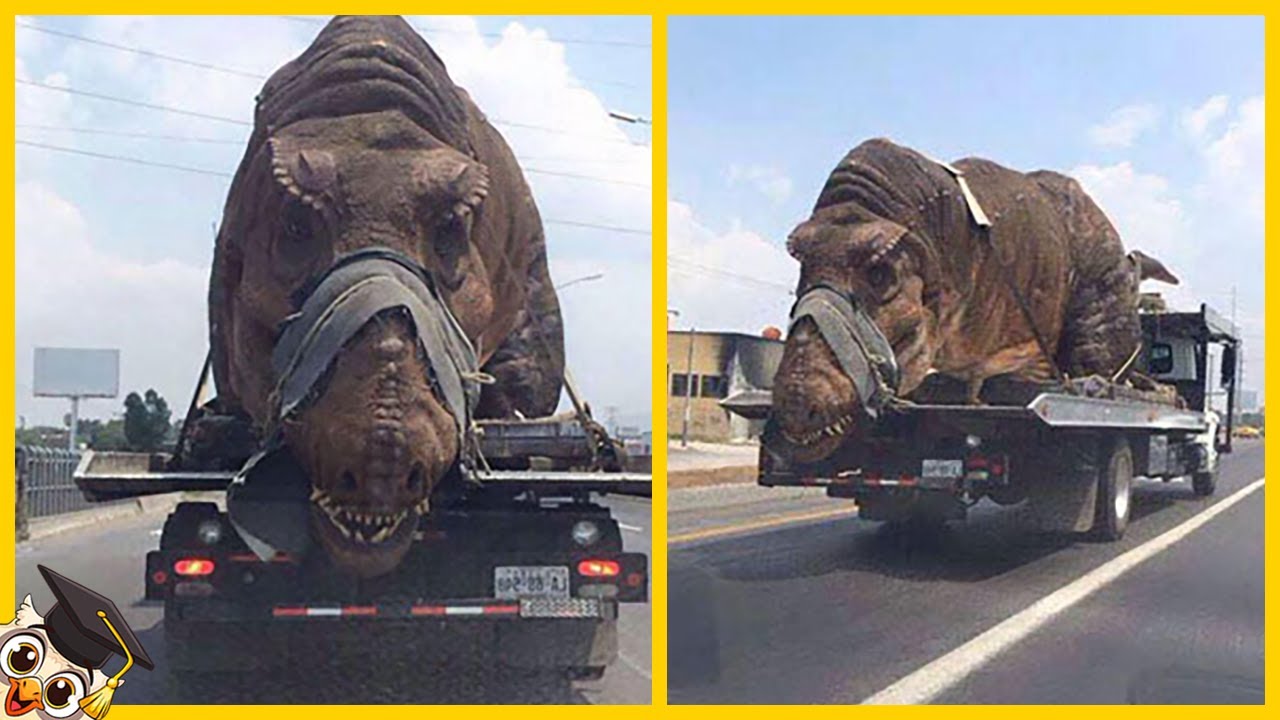
10 Dinosaur Sightings Captured on Camera: Fact or Fiction?

Image

The prevailing scientific consensus dictates that the last dinosaur species vanished approximately 65 million years ago, marking the end of the Cretaceous period. Yet, a persistent undercurrent of intrigue surrounds the possibility of these ancient behemoths still roaming hidden corners of our planet. While modern science endeavors to resurrect them through ancient DNA, a compelling, albeit controversial, narrative persists: that some dinosaur species might have survived extinction. Today, we delve into the visual evidence, presenting 10 instances where alleged dinosaurs were purportedly captured on camera. Whether you perceive these recordings as irrefutable proof or elaborate hoaxes rests solely on your discernment.

Unveiling the Improbable: Dinosaurs in the Modern Age

The shadow of the dinosaur looms large in our collective imagination, a testament to their sheer power and mysterious disappearance. While paleontology paints a detailed picture of their reign and demise, the human mind often struggles to accept finality, especially when faced with fragmented evidence or compelling narratives. The idea that these creatures, rulers of a bygone era, might still exist is fertile ground for speculation. This investigation aims to sift through the grainy footage and anecdotal accounts, applying a critical lens to determine what, if anything, lies beneath the surface of these supposed photographic encounters.

The Camera's Eye: Alleged Dinosaur Captures

The following accounts represent a compilation of alleged dinosaur sightings captured on film or video. It is imperative to approach each case with a critical mind, scrutinizing the details for inconsistencies and potential explanations.

Recommended Gear for Investigation

ProductDescriptionBuy
Cryptozoology A To Z: The Encyclopedia Of Loch Monsters Sasquatch Chupacabras And Other Authentic M: The Encyclopedia of Loch Monsters, Sasquatch, Chupacabras, and Other Authentic Mysteries of NatureAn excellent choice to complement your research on this topic.View on Amazon
The Big Book of Paranormal: 300 Mystical and Frightening Tales From Around the WorldAn excellent choice to complement your research on this topic.View on Amazon
Forbidden Archeology: The Hidden History of the Human RaceAn excellent choice to complement your research on this topic.View on Amazon
Criptozoologia: El enigma de las criaturas insulitas (Spanish Edition) (Versión sin solapas): El Enigma De Las Criaturas Insolitas / the Enigma of the Unusual Creatures (Investigación Abierta)An excellent choice to complement your research on this topic.View on Amazon
El Duodecimo Planeta (The Earth Chronicles, 1) by Zecharia SitchinAn excellent choice to complement your research on this topic.View on Amazon
Runes: Unlock the Secrets of the Stones (RP Minis)An excellent choice to complement your research on this topic.View on Amazon
The H. P. Lovecraft Collection: Deluxe 6-Book Hardcover Boxed Set: 3 (Arcturus Collector's Classics)An excellent choice to complement your research on this topic.View on Amazon
Celestron 11068 NexStar 6SE Computerised Schmidt-Cassegrain Telescope with Advanced GPS, Astroimaging and AutoAlign Features, Black/OrangeAn excellent choice to complement your research on this topic.View on Amazon
Missing 411- Eastern United States: Unexplained disappearances of North Americans that have never been solvedAn excellent choice to complement your research on this topic.View on Amazon
Ghost-Hunting For Dummies [Idioma Inglés] An excellent choice to complement your research on this topic.View on Amazon
  • The Congo "Mokele-mbembe" Footage: Reports have surfaced over decades of a creature resembling a long-necked dinosaur in the remote Likouala swamps of the Congo Basin. While definitive proof remains elusive, sporadic video fragments and eyewitness accounts fuel the legend. Analysts point to similar descriptions of aquatic dinosaurs like Brontosaurus, but skepticism remains high due to the difficulty of verification in such a remote and often inaccessible region.
  • The "Living Plesiosaur" of Japan: In 1977, a bizarre carcass washed ashore in Kaikoura, New Zealand, which some speculated was that of a plesiosaur. While subsequent analysis suggested it was likely a decomposing basking shark, the visual documentation sparked numerous debates and comparisons to prehistoric marine reptiles. Similar claims have periodically emerged from various coastlines worldwide, often leading to intense public fascination.
  • The "Dragon of South America": Accounts of a dinosaur-like creature have been reported in rural South America, often described as a reptilian beast with a long neck and tail. Video evidence is scarce and often of poor quality, making objective analysis challenging. These reports frequently overlap with local folklore and indigenous legends of large, unknown beasts inhabiting dense jungles.
  • The "Okanagan Lake Monster" (Ogopogo): While more commonly depicted as a serpentine entity, some early descriptions and artist interpretations of the Ogopogo, a cryptid associated with Okanagan Lake in British Columbia, Canada, bear a striking resemblance to certain aquatic dinosaurs. The consistent nature of sightings over many years, despite a lack of concrete evidence, keeps the legend alive.
  • The "Loch Ness Monster" - A Prehistoric Echo?: Perhaps the most famous lake monster, the Loch Ness Monster, has frequently been compared to a plesiosaur due to descriptions of a long neck and humps. While scientific expeditions have yielded no tangible evidence, the sheer volume of eyewitness accounts and blurry photographs has cemented its place in popular culture and cryptozoological studies.
  • The "Terror Bird" of Papua New Guinea: Sightings of a large, flightless, bird-like predator have been reported in remote regions of Papua New Guinea. While modern avian species like the Cassowary exist, some descriptions suggest a creature far larger and more aggressive, reminiscent of the extinct terror birds known as Phorusrhacidae.
  • The "Chupacabra" - A Modern Dinosaur?: While predominantly known for attacking livestock, some early and less common descriptions of the Chupacabra, particularly in Puerto Rico, veered towards a reptilian or dinosaur-like creature rather than the more typical canid-like descriptions that emerged later. This highlights how ambiguous cryptid reports can evolve over time.
  • The "Pterodactyl" Sighting in Texas: In 2009, two separate reports emerged from Texas describing giant, winged reptiles resembling pterodactyls. The witnesses provided sketches and descriptions, sparking a flurry of online discussion. Skeptics suggest misidentification of large birds like vultures or even man-made objects.
  • The "Yowie" of Australia: The Australian Yowie is often described as a large, ape-like creature, but some accounts and artistic renditions incorporate reptilian features, leading to comparisons with primitive, bipedal dinosaurs. The vast, unexplored wilderness of Australia provides a plausible, albeit unproven, habitat for such an elusive entity.
  • The "Lake Ilopango Monster" (El Tio Lago): Similar to other lake monsters, El Tio Lago in El Salvador has been described with features that some speculate could align with a surviving aquatic dinosaur. Persistent local legends and occasional eyewitness reports keep the mystery alive.

Researcher's Note: The following accounts are presented as reported phenomena. Objective verification remains a significant challenge, and explanations range from misidentification to elaborate hoaxes.

The Scientific Counterpoint: Extinction and De-extinction

From a mainstream scientific perspective, the extinction of the non-avian dinosaurs approximately 65 million years ago is a well-established fact, supported by extensive fossil records and geological evidence. The Chicxulub impact event is widely accepted as the primary catalyst for this mass extinction. However, the field of paleontology is constantly evolving. Recent discoveries suggest that birds are, in fact, direct descendants of theropod dinosaurs, meaning a lineage of dinosaurs never truly went extinct.

Beyond evolutionary lineage, the concept of "de-extinction" has gained traction. Scientists are exploring the technical feasibility of resurrecting extinct species, including dinosaurs, by utilizing ancient DNA fragments recovered from fossils. The process is fraught with immense challenges, primarily the degradation of DNA over such vast geological timescales. The successful sequencing and assembly of a viable dinosaur genome remain theoretical at this point. Projects like those at The American Museum of Natural History continue to push the boundaries of our understanding of prehistoric life and the potential for scientific intervention.

The Cryptozoological Angle: Survivors of the Past

Cryptozoology, the study of hidden or unknown animals, thrives on the fringes of scientific inquiry. Within this discipline, the possibility of surviving dinosaur species is a recurring theme. Proponents suggest that isolated, unexplored ecosystems—deep ocean trenches, vast jungle interiors, or remote cave systems—could harbor relict populations of dinosaurs that somehow evaded the Cretaceous–Paleogene extinction event.

"The sheer scale of Earth's unexplored territories offers a tantalizing canvas for the imagination. If any creatures could have weathered a global cataclysm, perhaps ancient survivors adapted to niche environments, it's the incredibly resilient dinosaurian forms."

The logic often follows that these creatures would be masters of evasion, avoiding human detection through stealth, nocturnal habits, or simply occupying regions infrequently visited by humankind. The cryptozoological pursuit of these creatures, while often lacking rigorous scientific methodology, taps into a deep-seated human desire for discovery and the belief that mysteries still abound in the natural world. The visual "evidence" presented in alleged video captures, however dubious, serves as fuel for these enduring cryptozoological quests.

Analysis and Hoaxes: Separating Wheat from Chaff

The critical investigator must approach any alleged photographic or video evidence with extreme skepticism. Hoaxes, misidentifications, and pareidolia—the tendency to perceive a pattern or image where none exists—are rampant in the realm of unexplained phenomena. Several factors contribute to the difficulty in verifying dinosaur sightings:

  • Technological Limitations: Much of the purported evidence comes from low-resolution footage, often captured on older equipment or under poor lighting conditions, making clear identification impossible.
  • Misidentification: Known animals (large reptiles, seals, deer, birds of prey) can be mistaken for unknown creatures, especially when viewed from a distance or under unusual circumstances. Log-like debris, waves, and even floating vegetation have been misinterpreted as lake monsters.
  • Deliberate Hoaxes: The internet age has facilitated the creation and rapid dissemination of fabricated images and videos. Sophisticated editing software allows for the creation of convincing-yet-false evidence, often designed to gain attention or sow disinformation. Past alleged "dinosaur captures" have been definitively debunked as elaborate fabrications.
  • Pareidolia and Suggestibility: The human brain is wired to find patterns. When primed with the idea of seeing a dinosaur, individuals may be more likely to interpret ambiguous shapes or movements as such.

Thorough analysis requires examining the context, source, and consistency of the evidence. Cross-referencing with known natural phenomena, geological records, and the history of hoaxes related to specific locations is crucial. For example, the famous "Surgeon's Photo" of the Loch Ness Monster was eventually revealed to be a deliberate hoax, significantly impacting the credibility of other evidence.

Researcher's Verdict: Fraud, Genuine Phenomenon, or Something Else?

After meticulous review of numerous alleged dinosaur captures, the verdict leans heavily towards misidentification and deliberate fabrication. While the allure of a surviving dinosaur population is powerful, the presented visual evidence consistently fails to meet the threshold for credible proof. The inconsistencies, lack of verifiable detail, and prevalence of known hoaxes erode the foundation of these claims. The scientific community stands firm on the established extinction event, supported by overwhelming empirical data. The cryptozoological perspective, while acknowledging the possibility, lacks the rigorous, repeatable evidence required for validation. Therefore, these "captured" dinosaurs are, in all likelihood, products of vivid imaginations, clever deceptions, or simple errors in observation. The true legacy of dinosaurs lies not in shadowy video footage, but in the fossilized remnants that continue to teach us about Earth's profound history.

The Investigator's Archive

To further your understanding of cryptozoology, paleontology, and the analysis of anomalous evidence, I recommend the following resources:

  • Books: "The Field Guide to Monsters: Suppressed Evidence" by Ken Gerhard, "Cryptozoology A to Z: The Encyclopedia of Loch Ness Monster, Bigfoot, and Other Legendary Creatures" by Loren Coleman.
  • Documentaries: "Searching for Nessie," "The Mysterious Death of the Loch Ness Monster," and various BBC or National Geographic documentaries on dinosaur paleontology.
  • Websites: Reputable paleontological institutions like the Natural History Museum (UK) and cryptozoological archives such as Cryptozoonews (approach with critical discernment).

Equipment Recommended for Investigation

While investigating phenomena requires resources, the initial steps often involve observation and documentation. Here are some tools that can aid in capturing clear evidence:

  • High-definition video camera with night vision capabilities.
  • Telephoto lens for capturing distant subjects.
  • Audio recording devices for capturing potential vocalizations (EVP).
  • Binoculars for enhanced observation.
  • Field notebooks for detailed logging of observations, environmental conditions, and temporal data.

Frequently Asked Questions

Q1: Is it possible that small dinosaurs survived extinction?
While scientifically improbable based on current evidence, cryptozoology explores this possibility, focusing on isolated habitats. However, no conclusive proof exists.
Q2: How can I tell if a video of a dinosaur is real?
Analyze the video quality, context, source credibility, consistency of movement, and look for digital artifacts or signs of editing. Compare it against known hoaxes and natural phenomena.
Q3: Are birds considered modern dinosaurs?
Yes, current scientific consensus classifies birds as avian dinosaurs, direct descendants of theropod dinosaurs that survived the extinction event.
Q4: What is the most famous alleged dinosaur capture?
Cases like the Loch Ness Monster and purported Mokele-mbembe footage are among the most persistent and widely discussed, though lacking definitive proof.

Your Mission: The Critical Observer

Your task is not merely to consume information but to engage with it critically. Should you encounter any purported evidence of unusual creatures, apply the principles of investigative analysis. Document everything meticulously. Seek corroborating evidence. Exhaust all natural explanations before resorting to extraordinary hypotheses. The pursuit of truth requires diligence and an unwavering commitment to verifiable facts.

Engage the Investigation

Have you ever witnessed something you couldn't explain? Share your personal experiences with unexplained phenomena in the comments below. Your testimony could be the missing piece in a larger puzzle. Don't keep these discoveries to yourself – share this investigation with fellow truth-seekers on your social networks to broaden the circle of inquiry!

For copyright matters, contact us at: contactthewiseowlyt@gmail.com

Subscribe for more top 10 videos and intriguing explorations: http://bit.ly/3q4ApG4

Investigator's Note: True paranormal research doesn't fund itself. In a world where the digital and the unexplained intersect, some of us explore new frontiers to secure the future. Do you dare to be part of the vanguard? Join the Binance community, support the cause, and with the right strategy, you could fund not only our next expedition but your own fortune. The next great discovery could be just a click away.