Followers

Mostrando las entradas con la etiqueta anomalous evidence. Mostrar todas las entradas

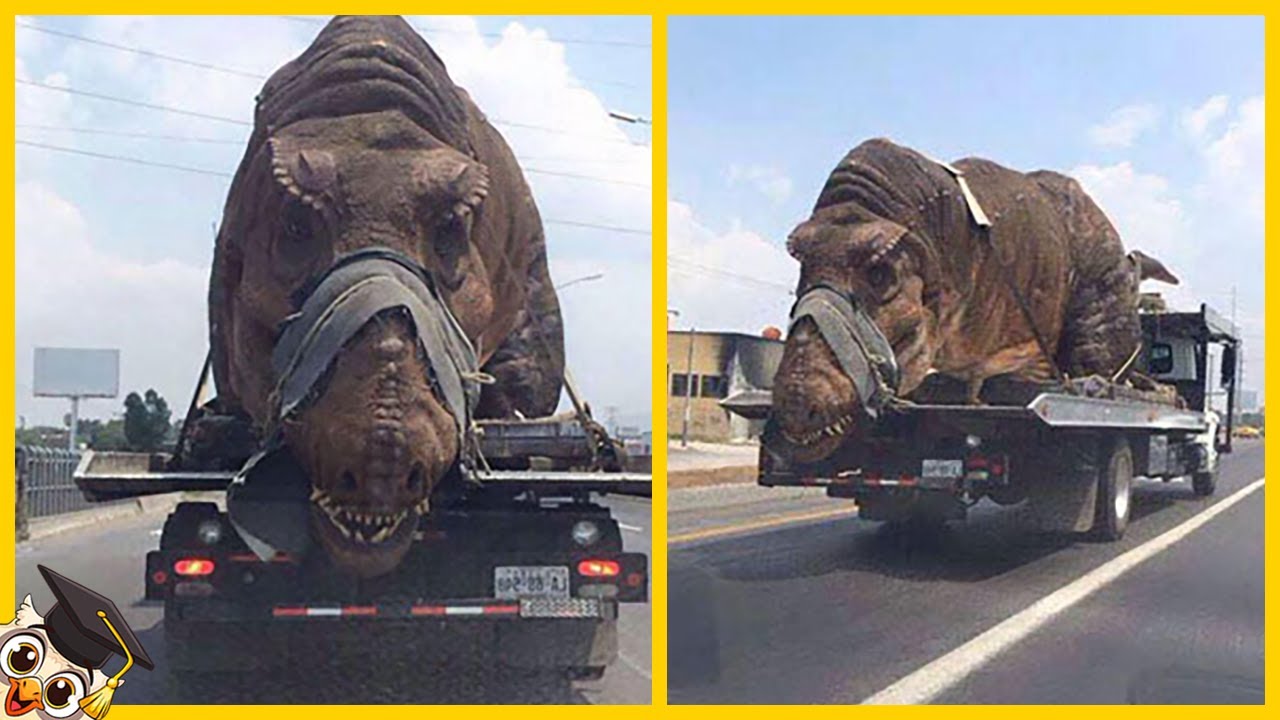
10 Dinosaur Sightings Captured on Camera: Fact or Fiction?

Image

The prevailing scientific consensus dictates that the last dinosaur species vanished approximately 65 million years ago, marking the end of the Cretaceous period. Yet, a persistent undercurrent of intrigue surrounds the possibility of these ancient behemoths still roaming hidden corners of our planet. While modern science endeavors to resurrect them through ancient DNA, a compelling, albeit controversial, narrative persists: that some dinosaur species might have survived extinction. Today, we delve into the visual evidence, presenting 10 instances where alleged dinosaurs were purportedly captured on camera. Whether you perceive these recordings as irrefutable proof or elaborate hoaxes rests solely on your discernment.

Unveiling the Improbable: Dinosaurs in the Modern Age

The shadow of the dinosaur looms large in our collective imagination, a testament to their sheer power and mysterious disappearance. While paleontology paints a detailed picture of their reign and demise, the human mind often struggles to accept finality, especially when faced with fragmented evidence or compelling narratives. The idea that these creatures, rulers of a bygone era, might still exist is fertile ground for speculation. This investigation aims to sift through the grainy footage and anecdotal accounts, applying a critical lens to determine what, if anything, lies beneath the surface of these supposed photographic encounters.

The Camera's Eye: Alleged Dinosaur Captures

The following accounts represent a compilation of alleged dinosaur sightings captured on film or video. It is imperative to approach each case with a critical mind, scrutinizing the details for inconsistencies and potential explanations.

Recommended Gear for Investigation

ProductDescriptionBuy
Cryptozoology A To Z: The Encyclopedia Of Loch Monsters Sasquatch Chupacabras And Other Authentic M: The Encyclopedia of Loch Monsters, Sasquatch, Chupacabras, and Other Authentic Mysteries of NatureAn excellent choice to complement your research on this topic.View on Amazon
The Big Book of Paranormal: 300 Mystical and Frightening Tales From Around the WorldAn excellent choice to complement your research on this topic.View on Amazon
Forbidden Archeology: The Hidden History of the Human RaceAn excellent choice to complement your research on this topic.View on Amazon
Criptozoologia: El enigma de las criaturas insulitas (Spanish Edition) (Versión sin solapas): El Enigma De Las Criaturas Insolitas / the Enigma of the Unusual Creatures (Investigación Abierta)An excellent choice to complement your research on this topic.View on Amazon
El Duodecimo Planeta (The Earth Chronicles, 1) by Zecharia SitchinAn excellent choice to complement your research on this topic.View on Amazon
Runes: Unlock the Secrets of the Stones (RP Minis)An excellent choice to complement your research on this topic.View on Amazon
The H. P. Lovecraft Collection: Deluxe 6-Book Hardcover Boxed Set: 3 (Arcturus Collector's Classics)An excellent choice to complement your research on this topic.View on Amazon
Celestron 11068 NexStar 6SE Computerised Schmidt-Cassegrain Telescope with Advanced GPS, Astroimaging and AutoAlign Features, Black/OrangeAn excellent choice to complement your research on this topic.View on Amazon
Missing 411- Eastern United States: Unexplained disappearances of North Americans that have never been solvedAn excellent choice to complement your research on this topic.View on Amazon
Ghost-Hunting For Dummies [Idioma Inglés] An excellent choice to complement your research on this topic.View on Amazon
  • The Congo "Mokele-mbembe" Footage: Reports have surfaced over decades of a creature resembling a long-necked dinosaur in the remote Likouala swamps of the Congo Basin. While definitive proof remains elusive, sporadic video fragments and eyewitness accounts fuel the legend. Analysts point to similar descriptions of aquatic dinosaurs like Brontosaurus, but skepticism remains high due to the difficulty of verification in such a remote and often inaccessible region.
  • The "Living Plesiosaur" of Japan: In 1977, a bizarre carcass washed ashore in Kaikoura, New Zealand, which some speculated was that of a plesiosaur. While subsequent analysis suggested it was likely a decomposing basking shark, the visual documentation sparked numerous debates and comparisons to prehistoric marine reptiles. Similar claims have periodically emerged from various coastlines worldwide, often leading to intense public fascination.
  • The "Dragon of South America": Accounts of a dinosaur-like creature have been reported in rural South America, often described as a reptilian beast with a long neck and tail. Video evidence is scarce and often of poor quality, making objective analysis challenging. These reports frequently overlap with local folklore and indigenous legends of large, unknown beasts inhabiting dense jungles.
  • The "Okanagan Lake Monster" (Ogopogo): While more commonly depicted as a serpentine entity, some early descriptions and artist interpretations of the Ogopogo, a cryptid associated with Okanagan Lake in British Columbia, Canada, bear a striking resemblance to certain aquatic dinosaurs. The consistent nature of sightings over many years, despite a lack of concrete evidence, keeps the legend alive.
  • The "Loch Ness Monster" - A Prehistoric Echo?: Perhaps the most famous lake monster, the Loch Ness Monster, has frequently been compared to a plesiosaur due to descriptions of a long neck and humps. While scientific expeditions have yielded no tangible evidence, the sheer volume of eyewitness accounts and blurry photographs has cemented its place in popular culture and cryptozoological studies.
  • The "Terror Bird" of Papua New Guinea: Sightings of a large, flightless, bird-like predator have been reported in remote regions of Papua New Guinea. While modern avian species like the Cassowary exist, some descriptions suggest a creature far larger and more aggressive, reminiscent of the extinct terror birds known as Phorusrhacidae.
  • The "Chupacabra" - A Modern Dinosaur?: While predominantly known for attacking livestock, some early and less common descriptions of the Chupacabra, particularly in Puerto Rico, veered towards a reptilian or dinosaur-like creature rather than the more typical canid-like descriptions that emerged later. This highlights how ambiguous cryptid reports can evolve over time.
  • The "Pterodactyl" Sighting in Texas: In 2009, two separate reports emerged from Texas describing giant, winged reptiles resembling pterodactyls. The witnesses provided sketches and descriptions, sparking a flurry of online discussion. Skeptics suggest misidentification of large birds like vultures or even man-made objects.
  • The "Yowie" of Australia: The Australian Yowie is often described as a large, ape-like creature, but some accounts and artistic renditions incorporate reptilian features, leading to comparisons with primitive, bipedal dinosaurs. The vast, unexplored wilderness of Australia provides a plausible, albeit unproven, habitat for such an elusive entity.
  • The "Lake Ilopango Monster" (El Tio Lago): Similar to other lake monsters, El Tio Lago in El Salvador has been described with features that some speculate could align with a surviving aquatic dinosaur. Persistent local legends and occasional eyewitness reports keep the mystery alive.

Researcher's Note: The following accounts are presented as reported phenomena. Objective verification remains a significant challenge, and explanations range from misidentification to elaborate hoaxes.

The Scientific Counterpoint: Extinction and De-extinction

From a mainstream scientific perspective, the extinction of the non-avian dinosaurs approximately 65 million years ago is a well-established fact, supported by extensive fossil records and geological evidence. The Chicxulub impact event is widely accepted as the primary catalyst for this mass extinction. However, the field of paleontology is constantly evolving. Recent discoveries suggest that birds are, in fact, direct descendants of theropod dinosaurs, meaning a lineage of dinosaurs never truly went extinct.

Beyond evolutionary lineage, the concept of "de-extinction" has gained traction. Scientists are exploring the technical feasibility of resurrecting extinct species, including dinosaurs, by utilizing ancient DNA fragments recovered from fossils. The process is fraught with immense challenges, primarily the degradation of DNA over such vast geological timescales. The successful sequencing and assembly of a viable dinosaur genome remain theoretical at this point. Projects like those at The American Museum of Natural History continue to push the boundaries of our understanding of prehistoric life and the potential for scientific intervention.

The Cryptozoological Angle: Survivors of the Past

Cryptozoology, the study of hidden or unknown animals, thrives on the fringes of scientific inquiry. Within this discipline, the possibility of surviving dinosaur species is a recurring theme. Proponents suggest that isolated, unexplored ecosystems—deep ocean trenches, vast jungle interiors, or remote cave systems—could harbor relict populations of dinosaurs that somehow evaded the Cretaceous–Paleogene extinction event.

"The sheer scale of Earth's unexplored territories offers a tantalizing canvas for the imagination. If any creatures could have weathered a global cataclysm, perhaps ancient survivors adapted to niche environments, it's the incredibly resilient dinosaurian forms."

The logic often follows that these creatures would be masters of evasion, avoiding human detection through stealth, nocturnal habits, or simply occupying regions infrequently visited by humankind. The cryptozoological pursuit of these creatures, while often lacking rigorous scientific methodology, taps into a deep-seated human desire for discovery and the belief that mysteries still abound in the natural world. The visual "evidence" presented in alleged video captures, however dubious, serves as fuel for these enduring cryptozoological quests.

Analysis and Hoaxes: Separating Wheat from Chaff

The critical investigator must approach any alleged photographic or video evidence with extreme skepticism. Hoaxes, misidentifications, and pareidolia—the tendency to perceive a pattern or image where none exists—are rampant in the realm of unexplained phenomena. Several factors contribute to the difficulty in verifying dinosaur sightings:

  • Technological Limitations: Much of the purported evidence comes from low-resolution footage, often captured on older equipment or under poor lighting conditions, making clear identification impossible.
  • Misidentification: Known animals (large reptiles, seals, deer, birds of prey) can be mistaken for unknown creatures, especially when viewed from a distance or under unusual circumstances. Log-like debris, waves, and even floating vegetation have been misinterpreted as lake monsters.
  • Deliberate Hoaxes: The internet age has facilitated the creation and rapid dissemination of fabricated images and videos. Sophisticated editing software allows for the creation of convincing-yet-false evidence, often designed to gain attention or sow disinformation. Past alleged "dinosaur captures" have been definitively debunked as elaborate fabrications.
  • Pareidolia and Suggestibility: The human brain is wired to find patterns. When primed with the idea of seeing a dinosaur, individuals may be more likely to interpret ambiguous shapes or movements as such.

Thorough analysis requires examining the context, source, and consistency of the evidence. Cross-referencing with known natural phenomena, geological records, and the history of hoaxes related to specific locations is crucial. For example, the famous "Surgeon's Photo" of the Loch Ness Monster was eventually revealed to be a deliberate hoax, significantly impacting the credibility of other evidence.

Researcher's Verdict: Fraud, Genuine Phenomenon, or Something Else?

After meticulous review of numerous alleged dinosaur captures, the verdict leans heavily towards misidentification and deliberate fabrication. While the allure of a surviving dinosaur population is powerful, the presented visual evidence consistently fails to meet the threshold for credible proof. The inconsistencies, lack of verifiable detail, and prevalence of known hoaxes erode the foundation of these claims. The scientific community stands firm on the established extinction event, supported by overwhelming empirical data. The cryptozoological perspective, while acknowledging the possibility, lacks the rigorous, repeatable evidence required for validation. Therefore, these "captured" dinosaurs are, in all likelihood, products of vivid imaginations, clever deceptions, or simple errors in observation. The true legacy of dinosaurs lies not in shadowy video footage, but in the fossilized remnants that continue to teach us about Earth's profound history.

The Investigator's Archive

To further your understanding of cryptozoology, paleontology, and the analysis of anomalous evidence, I recommend the following resources:

  • Books: "The Field Guide to Monsters: Suppressed Evidence" by Ken Gerhard, "Cryptozoology A to Z: The Encyclopedia of Loch Ness Monster, Bigfoot, and Other Legendary Creatures" by Loren Coleman.
  • Documentaries: "Searching for Nessie," "The Mysterious Death of the Loch Ness Monster," and various BBC or National Geographic documentaries on dinosaur paleontology.
  • Websites: Reputable paleontological institutions like the Natural History Museum (UK) and cryptozoological archives such as Cryptozoonews (approach with critical discernment).

Equipment Recommended for Investigation

While investigating phenomena requires resources, the initial steps often involve observation and documentation. Here are some tools that can aid in capturing clear evidence:

  • High-definition video camera with night vision capabilities.
  • Telephoto lens for capturing distant subjects.
  • Audio recording devices for capturing potential vocalizations (EVP).
  • Binoculars for enhanced observation.
  • Field notebooks for detailed logging of observations, environmental conditions, and temporal data.

Frequently Asked Questions

Q1: Is it possible that small dinosaurs survived extinction?
While scientifically improbable based on current evidence, cryptozoology explores this possibility, focusing on isolated habitats. However, no conclusive proof exists.
Q2: How can I tell if a video of a dinosaur is real?
Analyze the video quality, context, source credibility, consistency of movement, and look for digital artifacts or signs of editing. Compare it against known hoaxes and natural phenomena.
Q3: Are birds considered modern dinosaurs?
Yes, current scientific consensus classifies birds as avian dinosaurs, direct descendants of theropod dinosaurs that survived the extinction event.
Q4: What is the most famous alleged dinosaur capture?
Cases like the Loch Ness Monster and purported Mokele-mbembe footage are among the most persistent and widely discussed, though lacking definitive proof.

Your Mission: The Critical Observer

Your task is not merely to consume information but to engage with it critically. Should you encounter any purported evidence of unusual creatures, apply the principles of investigative analysis. Document everything meticulously. Seek corroborating evidence. Exhaust all natural explanations before resorting to extraordinary hypotheses. The pursuit of truth requires diligence and an unwavering commitment to verifiable facts.

Engage the Investigation

Have you ever witnessed something you couldn't explain? Share your personal experiences with unexplained phenomena in the comments below. Your testimony could be the missing piece in a larger puzzle. Don't keep these discoveries to yourself – share this investigation with fellow truth-seekers on your social networks to broaden the circle of inquiry!

For copyright matters, contact us at: contactthewiseowlyt@gmail.com

Subscribe for more top 10 videos and intriguing explorations: http://bit.ly/3q4ApG4

Investigator's Note: True paranormal research doesn't fund itself. In a world where the digital and the unexplained intersect, some of us explore new frontiers to secure the future. Do you dare to be part of the vanguard? Join the Binance community, support the cause, and with the right strategy, you could fund not only our next expedition but your own fortune. The next great discovery could be just a click away.

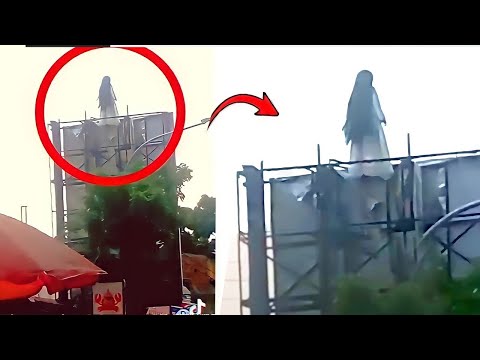
7 Ghost Videos That Skeptics Can't Explain: An Investigative Deep Dive


Introduction: The Skeptic's Gauntlet

The flickering screen. The grainy footage. The hushed whispers of a witness. For decades, paranormal investigators have scoured the globe, armed with cameras and recorders, seeking tangible proof of the unseen. Yet, the debate rages on: is it genuine evidence of the spectral realm, or simply misinterpretation, environmental anomalies, or outright fabrication? Today, we bypass the sensationalism. We're not just looking at videos; we're dissecting them. We're entering the arena where belief clashes with doubt, and examining seven specific instances of paranormal video evidence that have, thus far, resisted conventional explanation. This isn't about scaring you; it's about analyzing the persistent enigmas that challenge the rational mind.

The Credence-Credibility Dichotomy

Within the vast landscape of the paranormal, two forces are perpetually at play: the believers and the skeptics. The believers are the conduits, the ones who press record when the veil thins, who recount the chilling tales that echo through time. They are the fishermen of the inexplicable, casting their nets into the murky waters of reality. On the other side stand the skeptics, the gatekeepers of verifiable truth, the judges who sift through the catch, discarding the mundane and the illusory. Their role is crucial, for it is through their rigorous scrutiny that the genuinely anomalous is meant to be separated from the easily explained. This constant tension, this dialogue between conviction and doubt, is what fuels genuine investigation. Without it, the field risks devolving into mere folklore or sensationalism. In this analysis, we focus on those rare moments where the skeptic's tools of demystification find their edge blunted, leaving behind questions that linger.

Analyzing Anomalous Video Evidence

The advent of accessible video technology has flooded the paranormal community with an unprecedented volume of footage. Yet, raw footage is merely the starting point. True analysis requires a systematic approach, akin to forensic examination. We must consider context, witness testimony, environmental factors, and potential for hoaxes. Are we observing a genuine residual haunting, an intelligent apparition, or a trick of light and shadow? Could it be pareidolia, where the human brain imposes patterns on random stimuli? Or is it a sophisticated manipulation designed to deceive? Each video presents a unique puzzle, a set of variables that must be meticulously isolated and assessed. The goal is not to prove the existence of ghosts, but to determine, with as much certainty as possible, what the evidence *actually* indicates, and what remains defiantly unexplained.

"The unexamined video is not worth believing. Our duty as investigators is to apply the same rigor we would to a crime scene, even when the 'suspect' is ethereal." - Alejandro Quintero Ruiz

Case Study 1: The Spectral Specter

This particular piece of footage, allegedly captured in a historic coastal town, depicts a translucent figure seemingly drifting through what appears to be an abandoned lighthouse. The recording, taken on a standard digital camera, shows the figure, indistinct yet undeniably humanoid in form, moving against the backdrop of a storm-lashed window. No obvious wires or projection methods are visible. The ambient noise is dominated by the wind and sea, offering little in the way of explanatory sound. Initial analyses have ruled out common optical illusions like lens flares or dust particles due to the figure's consistent movement and apparent interaction with the environment, subtly altering the light as it passes.

Case Study 2: The Shadow Figure Phenomenon

Recorded in a private residence known for its reported paranormal activity, this video showcases a distinct, dark, humanoid shape materializing in a dimly lit hallway. What sets this footage apart is the apparent solidity of the shadow-figure, its distinct edges contrasting sharply with the surrounding gloom. More compellingly, it appears to pause, as if observing the camera, before abruptly vanishing. Skeptics often attribute such sightings to tricks of the light or the natural formation of shadows cast by unseen objects. However, the lack of any discernible light source capable of casting such a defined, mobile figure, combined with the witness's consistent and detailed accounts, makes this clip a persistent enigma. Further investigation requires advanced shadow analysis and environmental lighting audits.

Case Study 3: Intelligent Apports

The phenomenon of "apports" – the appearance of objects seemingly from nowhere – is a staple in mediumship claims. This video, however, presents apport activity captured without direct human manipulation. Filmed during a controlled investigation in a reputedly haunted Victorian mansion, the footage shows a small, antique locket lying on a dusty table. The camera remains static. After several minutes of inactivity, the locket appears to levitate briefly before settling back down, only for a small, tarnished silver coin to materialize beside it moments later. The area was meticulously searched beforehand, and no means of external interference were found. The question remains: was this a staged event, or evidence of an unknown energy source capable of manifesting physical objects?

Case Study 4: The Orb Enigma

Orbs – those luminous, spherical anomalies often captured in paranormal photography and videography – are perhaps the most debated visual artifact. While many are easily identified as dust, insects, or moisture particles catching the flash, this particular video presents a cluster of orbs exhibiting behavior that defies simple explanation. Captured in an expansive, reportedly unoccupied ballroom, these orbs are seen moving in a coordinated, non-random fashion. They appear to swirl, merge and separate, seemingly reacting to the movement of the camera. Their luminosity is consistent, and their trajectory does not align with air currents or natural light refractions. The debate here centers on whether these are sophisticated digital artifacts, or something more profound – glimpses of energy entities, perhaps?

Case Study 5: Poltergeist Activity Captured

This footage, a classic in paranormal circles, allegedly shows a poltergeist event in an ordinary suburban home. The video, recorded by a security camera, captures objects on a kitchen shelf inexplicably sliding and falling to the floor. There are no visible vibrations, no pets or drafts that could account for the movement. What’s particularly unsettling is the sequence: first, a salt shaker moves as if nudged, followed by a jar of spices, and finally, a decorative plate. The movements are not violent or chaotic but deliberate, almost playful. While skeptics might point to seismic tremors or faulty camera stabilization, the specific and sequential nature of the object displacement raises questions about the forces at play.

Case Study 6: Apparitions in Low Light

Investigating a notoriously “active” asylum, this night-vision recording presents what appears to be a fleeting apparition in a desolate corridor. The figure, more of a smoky silhouette than a distinct form, flits across the frame at the edge of visibility. The key factor here is the context: the camera was positioned to capture any movement in an area repeatedly associated with spectral sightings. The figure’s speed and ephemeral nature make definitive identification impossible, but its presence during a period of documented high paranormal activity, and its distinct departure from environmental artifacts typically seen in night-vision footage, lends it a measure of credibility.

Case Study 7: Unexplained Object Movement

This final entry, captured by a tourist's mobile phone at a European castle, shows a medieval helmet, seemingly dislodged from its display perch, toppling over and hitting the floor with a loud clang. The tourist, understandably startled, pans the camera away. The peculiar aspect is the initial nudge: the helmet appears to be pushed by an unseen force, a subtle yet distinct movement before its inevitable fall. While castle environments can be prone to drafts and structural settling, the specific, localized force applied to the helmet suggests a more direct, external influence. This clip challenges the assumption that all such events are merely environmental. For a comprehensive understanding of such events, consult field investigation guides detailing how to isolate environmental factors.

The Skeptic's Paradox

The skeptic’s position, while vital for critical inquiry, presents a unique paradox when confronted with seemingly inexplicable phenomena captured on video. If a video clearly shows an event that defies current scientific understanding, the skeptic’s default is to seek a mundane explanation. However, when all plausible mundane explanations are exhausted, and the evidence remains anomalous, the skeptic faces a dilemma. Does one continue to search for an increasingly improbable mundane cause, or acknowledge the possibility of an unknown phenomenon? This is the challenge posed by the videos presented. They represent not definitive proof, but persistent anomalies that, through rigorous analysis, remain resistant to easy dismissal. The true skeptic doesn't close their mind; they demand better evidence to explain the inexplicable.

Methodology for Video Analysis

Deconstructing anomalous video evidence requires a multi-layered approach. My process, honed over years of field research and case file reviews, involves several critical steps:

  1. Contextualization: Understand the location, time, and circumstances of the recording. Is the location known for paranormal activity? What were the environmental conditions (temperature, humidity, electromagnetic fields if measured)?
  2. Witness Assessment: Evaluate the credibility and consistency of the witness(es). Are they prone to exaggeration, or do they present detailed, coherent accounts?
  3. Technical Examination: Analyze the recording itself. What type of camera was used? Are there signs of digital manipulation, splicing, or editing? Can artifacts like lens flares, dust, or motion blur be identified and ruled out?
  4. Environmental Factor Analysis: Scrutinize potential mundane explanations. Could drafts, structural vibrations, light refractions, insects, or even subtle seismic activity account for the observed phenomenon? This often requires consulting experts or specialized equipment.
  5. Pattern Recognition: Look for anomalies that deviate from natural occurrences. Does the movement of an object seem dictated by an unseen intelligence? Does a figure behave in a manner inconsistent with ambient light or environmental conditions?
  6. Cross-Referencing: Compare the footage with documented cases of similar phenomena. Does it align with known patterns of poltergeist activity, apparitions, or other paranormal events? Relevant research can be found in classic case files and resources like Charles Fort's archives.

This structured methodology, when applied diligently, moves us closer to understanding the nature of these unexplained visual anomalies.

The Investigator's Verdict

While digital manipulation and environmental quirks account for a vast majority of purported paranormal videos, the seven cases presented here represent a persistent challenge. They resist easy dismissal. The spectral specter's interaction with light, the shadow figure's defined edges, the intelligent apport of the locket, the organized movement of the orbs, the deliberate sequential actions in the poltergeist case, the fleeting yet distinct apparition in the asylum, and the seemingly intentional nudge of the helmet—all these defy simple, conventional explanations. My verdict, after careful consideration of the available evidence and ruling out common sources of error, is that these videos capture phenomena that are, at present, genuinely anomalous. They do not constitute definitive proof of discarnate entities, but they certainly push the boundaries of our understanding of the unexplained. Further investigation, potentially involving advanced field equipment like EMF meters, temperature anomaly detectors, and full-spectrum cameras, would be necessary for a more conclusive assessment.

FAQ on Paranormal Videos

Q1: Can't most "ghost videos" be explained by simple tricks like dust or insects?

A1: Absolutely, a significant portion can. However, experienced investigators have developed methodologies to differentiate true anomalies from common artifacts. Factors like movement patterns, interaction with the environment, and the absence of typical light sources for reflections are crucial in identifying videos that warrant deeper scrutiny.

Q2: What makes a paranormal video "skeptic-proof"?

A2: A video becomes difficult for skeptics to dismiss when it presents phenomena that cannot be easily replicated through natural means, digital manipulation, or environmental factors. Consistency in witness testimony, lack of discernible hoaxing evidence, and repeatable patterns across multiple recordings (if available) strengthen its anomalous nature.

Q3: Should I try to film paranormal activity myself?

A3: If you are interested in documenting potential anomalies, it is strongly recommended to do so responsibly. Research proper filming techniques, understand how to mitigate environmental factors, and maintain detailed logs of your experiences. Equip yourself with reliable recording devices, and consider investing in audio recording devices to capture potential EVP (Electronic Voice Phenomena) simultaneously.

Q4: Where can I find more resources on analyzing paranormal videos?

A4: Reputable paranormal research organizations, forums dedicated to critical analysis of paranormal evidence, and books by seasoned investigators like John Keel or Jacques Vallée offer in-depth insights into analysis methodologies and case studies. Platforms offering documentaries on the unexplained can also be valuable, provided they maintain a critical perspective.

Your Field Mission

Your mission, should you choose to accept it, is to delve deeper into the digital archives. Locate one of the phenomena described—be it an orb cluster, a shadow figure sighting, or unexplained object movement—documented online. Apply the analytical framework outlined in this report. Can you find mundane explanations? Are there subtle clues missed by initial observers? Document your findings and share them in the comments below. Let's see if we can collectively demystify these anomalies, or perhaps, identify further evidence of the inexplicable.

About The Author

alejandro quintero ruiz is a seasoned field investigator dedicated to the meticulous analysis of anomalous phenomena. His approach blends methodological skepticism with an open mind to the inexplicable, always seeking truth behind the veil of reality. With years of experience navigating the most challenging cases, his insights cut through conjecture to the core of the mystery.

The pursuit of truth in the paranormal realm is a relentless endeavor. It demands more than just belief; it requires rigorous investigation, critical analysis, and an unwavering commitment to understanding the phenomena that lie beyond our current comprehension. The videos examined here serve as potent reminders that the world holds secrets we are still striving to unlock.

The Cryptid Compendium: Analyzing the Unseen Through Disturbing Video Evidence


The Premise: A Glimpse into the Unknown

The allure of the unknown is a primal force, one that drives us to probe the shadows and question the boundaries of our perceived reality. Cryptozoology, the study of hidden or unknown animals, taps directly into this fascination. For decades, alleged encounters with creatures that defy conventional zoological classification have been documented, from lake monsters to winged humanoids. In the digital age, these accounts have found a new medium: video. This post descends into the murky waters of alleged cryptid sightings captured on camera. We are not merely spectators; we are analysts tasked with dissecting visual data that purports to show entities existing outside the realm of established biology. Is this proof? Or is it a sophisticated interplay of misidentification, suggestion, and outright fabrication? Let's open the file.

The Nature of Evidence: Video and the Unseen

Video footage of alleged cryptids presents a unique challenge for investigators. On one hand, it offers a seemingly objective record of an event, capturing movement, form, and behavior in a way static photography cannot. The advent of ubiquitous personal recording devices means that the potential for capturing genuine anomalies has theoretically increased. However, this accessibility also amplifies the potential for manipulation, hoaxes, and misinterpretations. Low-resolution footage, poor lighting, distance, and the inherent unreliability of eyewitness perception in moments of stress or fear all contribute to a complex evidentiary landscape. Our task is to approach each clip not as definitive proof, but as a hypothesis that requires rigorous scrutiny, cross-referencing with known phenomena and psychological principles.

Analyzing the Compilation: Case Studies in Anomalous Footage

The compilation presented here, identified as "10 SCARY Videos of Cryptids That DEFY All Logic," functions as a curated exhibition of purported cryptid encounters. While the source material aims to induce fear and wonder—a common strategy in paranormal content—our objective is analytical. We will examine each segment, not just for its narrative impact, but for its potential to yield verifiable data or indicate a consistent pattern of misidentification. The goal is to move beyond the emotional response and engage with the cognitive dissonances presented by each clip. We must ask: What specific visual cues are present? How do these align with established cryptid lore? And, crucially, what mundane explanations can be systematically ruled out?

Case File 001: The White Cryptid

The initial segment, labeled "The White Cryptid," likely showcases an elusive bipedal or quadrupedal entity, distinguished by its pale coloration. Reports of white-furred or white-skinned creatures span various folkloric traditions. From a scientific perspective, albinism or leucism can occur in many species, explaining unusual coloration. However, the context of the sighting—often in remote, forested areas—coupled with descriptions of anomalous movement or size, prompts further investigation. Is this a mutated natural animal, a projection of pareidolia in low light, or evidence of something else entirely? The analytical approach demands we consider the possibility of a known animal seen under stress or unusual environmental conditions before entertaining more speculative theories.

Case File 002: Creepy Encounter

This segment, "Creepy Encounter," is intentionally vague, suggesting an unexpected and unsettling confrontation. Such encounters often rely heavily on the subjective experience of the witness. The footage may feature a fleeting glimpse, unusual sounds, or a palpable sense of unease. The challenge here is to discern between genuine anomalous sensory input and the psychological amplification of perceived threats. The concept of the uncanny—that which is familiar yet unsettlingly strange—is often at play. We must analyze the visual elements for any concrete identifiers, while acknowledging the powerful role of suggestion and fear in shaping perception. The mere presence of fear in a video doesn't constitute proof of a cryptid.

Case File 003: Cryptids on the Loose

"Cryptids on the Loose" implies a scenario where multiple unidentified creatures are observed, perhaps in an urban or suburban fringe environment, or a documented escape from a known habitat. This introduces the possibility of a population or a coordinated movement, which significantly raises the stakes beyond individual sightings. Such claims require substantial corroboration to be taken seriously. Are we looking at a group of misidentified animals, perhaps domestic animals in distress or a rare migration? Or does this suggest a coordinated presence of something more extraordinary? The analysis must scrutinize herd behavior, environmental factors, and the source of the footage itself for any signs of fabrication.

"The line between an anomaly and an error in perception is often thinner than we care to admit. Our job is to find that line, not to erase it."

Case File 004: The Goat Sucker

This title immediately brings to mind the "Chupacabras," a creature notorious in Latin American folklore, primarily associated with attacks on livestock. If the footage depicts such an entity, we must analyze its morphology as presented. Is it reptilian, canine, or something else entirely? Cryptozoology often involves categorizing creatures based on reported attributes. The evidence must be weighed against known predators capable of such attacks—wild dogs, coyotes, or even escaped exotic animals. The viral spread of the Chupacabras legend itself is a phenomenon worth studying, often fueled by grainy images and sensationalized accounts. We need to look for specific anatomical features that deviate from known predators and are consistently presented across multiple alleged sightings.

Case File 005: Out-worldly Dwellers

The descriptor "Out-worldly Dwellers" suggests entities that not only defy terrestrial classification but hint at extraterrestrial origins or dimensions. This segment pushes the boundaries of cryptozoology into the realm of xenobiology and potentially ufology. The visual characteristics here might be drastically different from typical cryptids—perhaps metallic or bioluminescent, exhibiting unusual modes of locomotion or interaction with the environment. Such footage demands an exceptionally high burden of proof. We must rigorously analyze for signs of advanced technology, holographic projection, or simply imaginative filmmaking. The term "out-worldly" is a potent narrative device, and its application requires careful dissection of the visual data.

Case File 006: Giant Bat or…?

The question mark is critical here. This segment likely presents footage of a large, flying creature, prompting immediate comparison to known bat species. However, the implication is that the size or behavior observed exceeds any scientifically recognized bat. This brings to mind legends of giant bats or even winged humanoids, such as the infamous Mothman. When examining such footage, we must consider scale estimation challenges, optical illusions, and the possibility of misidentified aircraft or large birds. The analytical process involves comparing the object's silhouette, wing movement, and apparent size against known aerial phenomena and anatomical limitations of known volant creatures. The "or...?" invites speculation, but our duty is to ground it in available data.

Case File 007: Hunting the Hunters

"Hunting the Hunters" suggests a meta-narrative: footage captured by individuals actively seeking cryptids, only to become the observed themselves. This scenario is rich with potential for psychological drama, but also for deliberate staging. Are the alleged hunters genuinely startled, or are they actors performing for the camera? The footage might show fleeting shapes, disembodied sounds, or a panicked retreat. This type of video often relies on dramatic editing and sound design to create an effect. We must analyze the behavior of the alleged "hunters" for signs of genuine fear versus performative distress. The actual "cryptid" evidence in such segments can be incredibly subtle, making it difficult to isolate and analyze without the framing narrative.

Case File 008: Cryptid in the Dark

Sightings in darkness are notoriously difficult to authenticate. This segment, "Cryptid in the Dark," likely features low-light conditions, possibly captured with infrared or night-vision technology. Darkness conceals detail, amplifies imagination, and makes misidentification of familiar objects or animals incredibly easy. We must analyze the luminance, the quality of the infrared spectrum (if applicable), and any discernable shapes or movements against known nocturnal fauna or environmental phenomena. The human eye and camera sensors behave differently in low light, and artifacts or shadows can easily be mistaken for entities. The burden of proof is significantly higher for footage captured under these conditions.

Case File 009: Demon on the Road

The term "Demon" immediately elevates the discussion from cryptid to something potentially supernatural or malevolent. This suggests an entity that exhibits non-biological characteristics or behavior. If the footage depicts something that appears to defy physics, such as levitating or disintegrating, the analysis shifts from cryptozoology to parapsychology or even demonology. However, it's crucial to first explore more mundane explanations: vehicle headlights, optical illusions created by atmospheric conditions, or hoaxes employing special effects. The context of the sighting—a road, often isolated—is a common trope in paranormal accounts, making it a fertile ground for both genuine anomalies and fabricated narratives.

"The camera captures light, but it doesn't always capture truth. Our deepest analyses require us to look beyond the photons."

Case File 010: Ming-boggling Cryptid

This title suggests an encounter so bizarre and inexplicable that it challenges rational comprehension. The footage likely contains elements that are difficult to reconcile with any known biological or physical phenomenon. Perhaps it involves impossible anatomy, strange energy signatures, or interactions with the environment that defy logic. This is where extreme skepticism is paramount. While the footage may be compelling, we must consider advanced forms of deception, elaborate hoaxes, or phenomena that are not yet understood by science but do not necessarily imply a "cryptid" in the traditional sense. The challenge is to break down each "baffling" element and try to find a rational anchor, however elusive.

Bonus Dossier: The Winged Cryptid

The inclusion of a bonus segment, specifically a "Winged Cryptid," indicates a desire to leave the viewer with a particularly striking image. This could be a variation on the giant bat theme or a distinct type of winged humanoid. The objective of a bonus segment is often to be the most memorable or the most ambiguous. We must apply the same rigorous analysis as before, paying close attention to the texture, movement, and environmental context. Is it truly a biological entity with wings, or a projection, an optical illusion, or a deliberate fabrication designed for maximum impact? Understanding the creator's intent is as important as analyzing the visual data.

Investigator's Verdict: Beyond the Lens

After meticulously examining the presented video fragments, the verdict on their status as definitive proof of cryptid existence remains, as it often does, inconclusive. The visual data, while often evocative and unsettling, consistently suffers from limitations inherent to amateur videography, low-light conditions, distance, and potential digital manipulation. Several segments exhibit characteristics that could be attributed to misidentified common animals under unusual circumstances, pareidolia, or well-executed hoaxes designed to capitalize on the public's fascination with the unknown. The "White Cryptid" and the "Goat Sucker" bear resemblance to established folkloric descriptions, but the visual evidence lacks the clarity and context required for scientific validation. The "Winged Cryptid" and "Demon on the Road" footage, while dramatic, are particularly susceptible to interpretation via special effects or atmospheric phenomena. Ultimately, these videos serve as compelling artifacts of belief and rumor, fueling the ongoing mystery of cryptozoology. They are not scientific evidence, but they are invaluable case studies in how visual media shapes our perception of the unexplained.

The Investigator's Archive

For those seeking to delve deeper into the study of cryptozoology and the analysis of anomalous evidence, consulting authoritative resources is essential. My personal archive includes several seminal works and tools that have proven invaluable in dissecting such phenomena:

  • Books:
    • "The Cryptozoology Field Guide" by Cryptozoology Field Guide contributors: A comprehensive overview of known and legendary creatures.
    • "The Mothman Prophecies" by John Keel: While a case study, it delves into the broader implications of anomalous aerial sightings and eyewitness testimony.
    • "Abominable Science! Origins of the Yeti, Nessie, and Grandfather Bigfoot" by Daniel Loxton and Donald R. Prothero: A critical examination of the evidence and history of major cryptids.
  • Documentaries:
    • "MonsterQuest" (History Channel series): Explores alleged cryptid sightings globally, offering diverse perspectives and investigative approaches.
    • "Finding Bigfoot" (Animal Planet series): Documents expeditions aimed at finding evidence of Bigfoot, showcasing field research techniques (and their challenges).
  • Online Resources:
    • The Cryptozoological Society Website: For ongoing research and case files.
    • Academic databases (e.g., JSTOR, Google Scholar): Search for peer-reviewed articles on misidentification, animal behavior, and folklore.

These resources provide the foundational knowledge and critical frameworks necessary for evaluating claims of hidden creatures. Understanding the scientific and folkloric context is paramount before engaging with raw, unverified footage.

Field Protocol: Advanced Video Anomaly Analysis

Analyzing video evidence of potential cryptids requires a systematic approach, far removed from passive viewing. Here’s a protocol for dissecting such footage:

  1. Source Verification: Trace the origin of the footage. Who captured it? When? Under what conditions? Is it publicly accessible from reputable archives or a recent, unverified social media post?
  2. Environmental Context: Analyze the background. What is the terrain? Time of day? Weather conditions? Are there any known animals or objects in the vicinity that could be mistaken for a cryptid?
  3. Object Identification: Isolate the alleged cryptid. Can its form, size, and movement be clearly discerned? Use image enhancement tools cautiously, being aware of potential artifacts.
  4. Behavioral Analysis: Observe the entity's actions. Does it interact with the environment? How does it move? Does its behavior align with known animal behaviors, or does it suggest something novel?
  5. Comparative Analysis: Compare the footage with known creatures, optical illusions, atmospheric phenomena (e.g., light refraction, fog), and common hoaxing techniques. Utilize databases of known cryptid descriptions.
  6. Witness Testimony (if available): Corroborate the visual evidence with the witness's account. Are there discrepancies? Does the testimony reveal psychological factors like fear or suggestion?
  7. Pattern Recognition: If multiple similar videos exist, look for consistent features in morphology, behavior, and location. This is where larger patterns might emerge, though it does not equate to definitive proof.

This structured approach moves beyond mere observation, transforming passive viewing into active investigation.

FAQ: Cryptid Investigations

Q: What is the most common misidentification for cryptids in video footage?

A: Common animals seen under unusual lighting or distance, optical illusions caused by atmospheric conditions, and even inanimate objects moving in the wind are frequently mistaken for cryptids. The "Mothman" sightings, for instance, have often been linked to misidentified owls or cranes.

Q: How can I tell if a cryptid video is a hoax?

A: Look for inconsistencies in lighting or shadows, unnatural movements or physics, overly dramatic sound effects, and a lack of clear, verifiable details. Many hoaxes are created using CGI or by manipulating known footage. Always seek the original source and any corroborating evidence.

Q: Are there any scientifically recognized cryptids?

A: While the field of cryptozoology is largely considered pseudoscience, there are instances where creatures once thought to be mythical were later discovered and scientifically classified (e.g., the Okapi, the Giant Squid). However, no cryptid currently remains officially recognized by mainstream science.

Q: What equipment is needed for effective cryptid research?

A: For video analysis, high-resolution cameras, night-vision or infrared technology, and audio recording equipment are essential. In the field, this expands to include trail cameras, thermal imagers, and sophisticated audio recorders to capture potential evidence like EVPs (Electronic Voice Phenomena) or physical traces.

Q: Where can I find reliable information on cryptid sightings?

A: While many sources exist, look for researchers who emphasize critical analysis and evidence-based conclusions. Websites like LOCH NESS INVESTIGATION BUREAU or organizations dedicated to specific cryptids often contain databases, but always cross-reference information and maintain a skeptical viewpoint.

Your Field Mission

The pursuit of truth in cryptozoology is an ongoing expedition. You’ve been presented with a compilation of alleged evidence, each clip a whisper from the edge of the known. Now, apply your critical lens. Your mission:

Seek out one of the cryptids mentioned or implied in the compilation (e.g., the "Goat Sucker," a "White Cryptid," or a "Winged Cryptid"). Research documented sightings and any available video or photographic evidence associated with it. Using the Field Protocol: Advanced Video Anomaly Analysis outlined above, draft a brief analysis (no more than 200 words) of one specific piece of evidence you find. Identifiy its potential strengths and weaknesses as proof. Post your analysis in the comments below. Let’s see if we can collectively sift the signal from the noise.

alejandro quintero ruiz is a veteran field investigator dedicated to the analysis of anomalous phenomena. His approach combines methodological skepticism with an open mind to the inexplicable, always seeking the truth behind the veil of reality.

JFK's Assassination: An Unsettled Case Beyond the Warren Commission


The Lingering Shadow

November 22, 1963. The Elm Street of Dallas, Texas, became a stage for a tragedy that continues to echo through the decades. The assassination of President John F. Kennedy is not merely a historical event; it's a scar on the American psyche, a case study in the enduring power of unanswered questions. While official reports have long cemented a narrative, the sheer volume of inconsistencies, eyewitness accounts, and subsequent investigations suggests that the full truth remains shrouded, perhaps intentionally obscured. This isn't just a murder; it's an enduring enigma that compels us to look beyond the headlines, to sift through the debris of conflicting accounts, and to question the very fabric of the reality presented to us.

The Official Narrative: A Single Shooter

The Warren Commission, established in the immediate aftermath of the assassination, concluded its extensive investigation with a definitive finding: Lee Harvey Oswald acted alone in assassinating President Kennedy. The commission's report detailed Oswald's movements, his purported motives, and the ballistic evidence, painting a picture of a lone, troubled individual driven by personal demons or ideological extremism. This conclusion, while providing a structured answer, has been a focal point of skepticism for generations. The swiftness with which this conclusion was reached, coupled with the subsequent violent death of Oswald himself before he could stand trial, planted seeds of doubt that have only grown with time. The official narrative, therefore, stands not as an unquestioned truth, but as a primary catalyst for deeper inquiry.

"The gun was not fired from behind. It was fired from the front, and from the right." - Many Eyewitness Testimonies

Anomalies and Contradictory Evidence

The case file on JFK's assassination is littered with pieces that simply do not fit the jigsaw puzzle of the lone gunman theory. The infamous "magic bullet" theory, posited by the Warren Commission, suggests a single projectile caused multiple wounds to both President Kennedy and Governor Connally, traversing through them at improbable angles. This explanation has been widely challenged by ballistics experts, medical examiners, and seasoned investigators alike. Eyewitness accounts frequently contradict the official timeline and the location of shots. The Zapruder film, a silent, amateur movie that captured the assassination in vivid detail, provides chilling visual evidence that some argue supports the idea of shots coming from multiple directions, particularly a shot from the infamous "grassy knoll." Furthermore, inconsistencies in the autopsy reports, the handling of evidence, and the alleged suppression of witness testimonies only serve to deepen the mystery. These are not minor discrepancies; they are fundamental cracks in the edifice of the official conclusion, demanding further scrutiny.

Allegation Official Finding Investigator's Note
Multiple Shooters / Shots from Grassy Knoll Lee Harvey Oswald, single shooter Contradicted by multiple eyewitnesses and film analysis.
The "Magic Bullet" Trajectory Single bullet caused seven wounds Physically improbable trajectory, widely debated.
Oswald's Connections and Loyalty Lone gunman, disillusioned Alleged ties to intelligence agencies and anti-Castro groups remain contentious.

Alternative Theories: The Web of Speculation

The vacuum left by the Warren Commission's unsatisfying conclusion has been filled by a veritable cottage industry of conspiracy theories. These theories implicate a wide array of actors: the CIA, the FBI, the Mafia, Cuban exiles, Soviet agents, Lyndon B. Johnson himself, and even shadowy elements within the military-industrial complex. Each theory posits a different motive, from political retribution to a coup d'état designed to shift national policy. These aren't mere academic exercises; many are fueled by declassified documents that, while not offering definitive proof of a conspiracy, do reveal questionable handling of intelligence, inter-agency rivalries, and deliberate misinformation campaigns. The sheer persistence and variety of these theories suggest that the official account fails to address deeply rooted suspicions held by a significant portion of the population. Understanding these theories requires dissecting their core claims, the alleged evidence, and the logical pathways they follow, however speculative.

The Role of Conspiracy and the Paranormal

While the term "paranormal" might seem incongruous in a political assassination, the JFK case has attracted fringe elements that explore unexplained phenomena. This includes discussions of coded messages, premonitions, unusual atmospheric conditions reported on the day, and even alleged psychic insights from witnesses or researchers. Some theories leverage the "Men in Black" trope, suggesting agencies involved in suppressing the truth might employ methods that blur the lines between covert operations and what could be perceived as anomalous. Are these mere narrative embellishments, or do they point to a deeper, more complex layer of this historical event that defies conventional explanation? The challenge lies in separating genuine historical anomalies or suppressed data from pure conjecture. However, in the study of unexplained phenomena, the most persistent mysteries often lie at the intersection of documented events and the unexplainable.

"The truth is out there, but it is often hidden in plain sight, obscured by layers of disinformation and deliberate misdirection." - A common sentiment in conspiracy circles.

Investigator's Verdict: Fraud, Genuine Phenomenon, or Something Else?

The evidence presented on the JFK assassination is a tangled knot. The official narrative, while providing a seemingly solid conclusion, is undermined by a multitude of inconsistencies and unanswered questions. The "magic bullet" remains a significant point of contention, as do the numerous eyewitness accounts that suggest shots from multiple directions. The rapid demise of Lee Harvey Oswald before a public trial further fuels suspicions of a cover-up. While direct evidence of paranormal involvement is scarce and highly speculative, the sheer volume of unexplained details and the persistent feeling that vital information has been withheld invite a deeper, more critical analysis. It is my assessment that the official conclusion is, at best, incomplete and, at worst, a deliberate fabrication. The possibility of a conspiracy involving multiple actors, either state-sanctioned or rogue elements, remains the most plausible explanation for the anomalies. Whether this conspiracy involved any truly paranormal elements is a question that, by its very nature, is difficult to prove or disprove with conventional investigative tools. However, the persistence of anomalies suggests that conventional explanations may not be sufficient.

The Researcher's Archive

For those who wish to dive deeper into the JFK assassination and similar historical enigmas, a curated selection of resources is essential. These materials go beyond the surface-level reporting and offer critical analysis, historical context, and challenging perspectives. Acquiring detailed knowledge is the first step in distinguishing fact from fiction in these complex cases.

  • Books:
    • "JFK and the Unspeakable: Why the President Was Assassinated" by James W. Douglass: A comprehensive look at the evidence suggesting a conspiracy beyond Oswald.
    • "Case Closed: Lee Harvey Oswald and the Assassination of JFK" by Gerald Posner: A detailed defense of the Warren Commission's findings, useful for understanding the official narrative's arguments.
    • "The Devil in the White City" by Erik Larson (While not directly about JFK, it illustrates the investigative challenges in historical cases).
  • Documentaries:
    • "JFK: Destiny Betrayed" (Showtime): A multi-part series that critically examines the evidence and alternative theories.
    • "The JFK Assassination: The Evidence For Conspiracy" (Various Sources): Many documentaries explore the inconsistencies, often featuring interviews with researchers and former officials.
  • Online Archives:
    • National Archives: The official repository for many declassified documents related to the assassination.
    • The Sixth Floor Museum at Dealey Plaza: Offers exhibits and historical context from the site of the assassination.

Research Protocol: Analyzing Anomalous Evidence

Investigating a case as complex and contentious as the JFK assassination requires a rigorous and methodical approach. The goal is to move beyond emotional reactions and speculative leaps, focusing instead on verifiable facts and logical deductions:

  1. Establish the Baseline Facts: Begin by understanding the accepted sequence of events, the key figures involved, and the official findings. This provides a framework against which to measure discrepancies.
  2. Examine Eyewitness Testimonies Critically: Contemporary accounts are invaluable, but human memory is fallible and prone to suggestion. Look for patterns of agreement and divergence among witnesses, and consider potential biases or external influences. Cross-reference statements with physical evidence.
  3. Analyze Physical Evidence Objectively: Ballistics reports, photographic evidence (like the Zapruder film), and medical examiner's findings are crucial. However, question the interpretation of this evidence, especially when it seems to contradict other data points. Seek expert opinions from independent sources.
  4. Investigate Alternative Theories and Suspects: Research the various conspiracy theories that have emerged. Understand their core arguments, the rationale behind them, and any evidence they present. This requires a balanced approach, separating plausible hypotheses from baseless speculation.
  5. Seek Redundant and Corroborating Information: In complex cases, no single piece of evidence is conclusive. Look for multiple sources that independently corroborate a specific claim or theory. Declassified documents, investigative journalism, and dissenting official reports can be critical here.
  6. Maintain Skepticism, But Remain Open: The most crucial element is a commitment to intellectual honesty. Avoid confirmation bias. If evidence points to a conclusion that challenges your initial assumptions, you must be willing to follow where it leads, even if it is uncomfortable.

Frequently Asked Questions

Q1: What is the primary piece of evidence that challenges the lone gunman theory?
A1: The most frequently cited pieces of evidence include the Zapruder film, numerous eyewitness accounts describing shots from the "grassy knoll," and profound questions surrounding the trajectory and effects of the so-called "magic bullet."

Q2: Why is Lee Harvey Oswald's quick death so significant?
A2: Oswald's assassination by Jack Ruby before he could be tried or extensively questioned eliminated the primary suspect and denied the public a chance to hear his full account. This event, more than any other, cemented suspicions that critical information was being suppressed.

Q3: Could paranormal phenomena have played a role in the assassination or its cover-up?
A3: While direct evidence of paranormal involvement is absent, the enduring mystery and the feeling of something "off" about the case could be interpreted through a lens of the unexplained. Some researchers explore theories of premonitions, strange atmospheric events, or even psychic interference, though these remain highly speculative and outside the realm of demonstrable fact.

Conclusion

The assassination of John F. Kennedy remains one of the most scrutinized and debated events in modern history. The official story, while convenient, fails to adequately address the myriad of contradictions and anomalies that have surfaced over the decades. From the problematic "magic bullet" theory to the persistent questions about multiple shooters and potential conspiracies, the legacy of JFK's murder is one of enduring mystery. As investigators, our duty is to continue probing, to analyze each new piece of evidence, and to challenge accepted narratives when they fail to align with the truth. The quest for clarity in the JFK case is not just about rewriting history; it's about understanding the mechanisms of power, deception, and the human capacity for both remarkable insight and profound obfuscation.

alejandro quintero ruiz is a veteran field investigator dedicated to the analysis of anomalous phenomena. His approach combines methodological skepticism with an open mind to the inexplicable, always seeking the truth behind the veil of reality.

Your Mission: Analyze This Evidence

The JFK assassination presents a complex web of interconnected elements. Your mission, should you choose to accept it, is to approach a widely accepted historical event with the tools of critical inquiry. Consider the following:

  • What is the most compelling piece of evidence that contradicts the official Warren Commission report?
  • How does the persistence of conspiracy theories surrounding the JFK assassination reflect broader societal trust issues regarding authority and information?
  • If you were tasked with reopening this case today, what specific lines of inquiry would you prioritize, and what modern investigative technologies might be applicable?

Share your findings and insights. The pursuit of truth is a collective endeavor, and every critical perspective adds another facet to our understanding.

The Scariest Home Videos Caught Around The World: An Investigative Analysis


Introduction: A Glimpse into the Unknown

The digital age has democratized documentation, turning every smartphone into a potential witness. This proliferation of personal recording devices has inadvertently opened a Pandora's Box of phenomena, pushing the boundaries of what we consider explainable. Today, we delve into "The Scariest Home Videos Caught Around The World," a collection that purports to showcase genuine paranormal encounters. However, my mandate as an investigator is not to simply consume these sensational compilations, but to dissect them. My objective is to apply a rigorous analytical framework, separating potential evidence of the truly anomalous from the mundane, the mistaken, and indeed, the fabricated. We will move beyond mere observation to a critical examination of these spectral sightings, seeking to understand if they represent a crack in our perceived reality or simply clever reinterpretation of common occurrences.

Analyzing the Anomalous: Ghost Sightings and Paranormal Videos

The core appeal of collections like "The Scariest Home Videos" lies in their raw, unpolished nature. Unlike staged productions, these often originate from unsuspecting individuals documenting everyday life, only to capture something… unscripted. The emphasis on "caught on camera ghost" and "paranormal videos caught on tape" suggests a reliance on visual and auditory evidence, the very types that challenge scientific methodology due to their inherent subjectivity and susceptibility to misinterpretation. My approach involves dissecting these categorizations:

  • Visual Anomalies: Are we observing genuine apparitions, or are these instances of pareidolia (seeing faces or figures in random patterns), lens flares, dust particles, or intentional CGI manipulation? Each frame must be scrutinized for inconsistencies, photographic artifacts, and logical explanations that precede paranormal attribution.
  • Auditory Phenomena: The claim of "eerie sightings" in these collections often extends to Electronic Voice Phenomena (EVP). The critical question is whether these captured sounds are genuine disembodied voices, or the result of radio interference, background noise, or even cryptophonia (subtle sounds within a recording that are perceived as voices). This requires advanced audio analysis techniques, often beyond the scope of casual viewing, but essential for any serious investigation.
  • Contextual Integrity: Was the recording environment known? Were there potential sources of mundane explanation, such as drafts, structural settling, or pets? Lacking this baseline context, the leap to paranormal conclusions is premature and analytically unsound.

The analysis of new and scary YouTube videos requires a systematic process. It's not about the initial shiver of fear, but about tracing the origin of that feeling to its source. Is it the inherent terror of the unknown, or the specific details of the footage itself? Understanding this distinction is paramount to distinguishing genuine anomalies from manufactured scares. This necessitates careful consideration of the visual narrative, the accompanying audio, and any anecdotal evidence provided by the original recorder.

"The paranormal doesn't announce itself with trumpets. It whispers in the static, it flickers at the edge of vision, and it's often masked by the mundane. Our job is to strip away the noise, to isolate the signal, however faint."

The Psychological Weight of Caught-on-Camera Phenomena

The "terrifying" nature of these videos is not solely a product of the alleged entities, but also of the psychological impact on the viewer. The feeling of being watched, the invasion of private space by an unseen force, and the vulnerability inherent in a domestic setting all contribute to the fear factor. This phenomenon taps into primal anxieties about the unknown and the loss of control. From an analytical standpoint, it's crucial to differentiate between fear induced by the subject matter and evidence supporting the paranormal. A well-crafted horror film can evoke a powerful emotional response without containing a single genuine supernatural event. Therefore, understanding the psychological resonance of these videos is as important as analyzing the grainy footage itself.

Collections that feature a "variety of eerie sightings" often rely on a cumulative effect. By presenting a rapid succession of potentially unsettling clips, they aim to overload the viewer's critical faculties and amplify the emotional impact. This strategy, while effective for entertainment, can obscure the need for individual case analysis. Each sighting, regardless of its place in a compilation, warrants its own investigation into its potential origin, whether mundane or extraordinary.

The Skeptic's Lens: Dissecting the Evidence

As an investigator, my initial stance is always one of profound skepticism. This is not to dismiss the possibility of the paranormal, but to ensure that every claim is subjected to the most stringent scrutiny. The term "ghost" is often applied prematurely. Consider common explanations that must be exhausted before any paranormal hypothesis can be entertained:

  • Pareidolia and Apophenia: The human brain is wired to find patterns. In low-light conditions, or with ambiguous visual cues, we tend to see faces, figures, or movements where none exist. This is a well-documented psychological phenomenon.
  • Environmental Factors: Changes in light, reflections, dust or insects near the lens, heat signatures interacting with camera sensors, or even subtle vibrations can create visual anomalies that mimic more sinister phenomena.
  • Hoaxes and Fabrication: The ease with which digital content can be manipulated means that intentional hoaxes are a constant concern. CGI, simple editing tricks, or staged reenactments can effectively mimic paranormal activity.
  • Misidentification: Shadows, reflections, and ordinary objects seen from unusual angles can easily be mistaken for something more.

When analyzing footage from around the world, the diversity of cultural interpretations of what constitutes "paranormal" also comes into play. While some may see a spirit, another culture might interpret the same visual as an omen or a natural phenomenon. This underscores the need for an objective, evidence-based approach that transcends cultural biases.

Investigator's Verdict: Genuine Anomaly or Elusive Explanation?

The critical evaluation of "The Scariest Home Videos Caught Around The World" reveals a complex interplay of genuine mystery, psychological projection, and potential misinterpretation. While some segments within such compilations may present fleeting moments that defy immediate, conventional explanation – a shadow that moves against the flow of air currents, a whisper that seems to carry intent in a silent room – the leap to definitively labeling them as "ghosts" or "paranormal entities" is a substantial one. My verdict, based on extensive experience analyzing such material, is that while a small percentage of these captured events might represent genuine anomalies pushing the limits of our current understanding, the vast majority can often be attributed to a combination of psychological factors, environmental conditions, and the inherent ambiguity of digital recordings. The challenge lies in isolating those few, truly inexplicable instances from the noise of the mundane and the deliberate. Without direct access to the original recordings, detailed environmental data, and the ability to conduct on-site investigations, definitive proof remains elusive for most clips presented in such compilations. The true "scare" often lies not in the apparition, but in the vastness of what we do not yet understand.

The Investigator's Archives

For those seeking to delve deeper into the nature of filmed paranormal phenomena, a curated selection of resources is essential. Understanding the foundational work in this field requires examining the historical context and methodologies employed by pioneers. Accessing primary source material and critical analyses provides a more robust foundation than simply consuming compilations.

  • Books:
    • "The Ghost Hunter's Survival Guide" by Paul Adams: A pragmatic approach to debunking and investigating.
    • "The Anomaly" by Jacques Vallée: Explores the broader context of unexplained phenomena, often linking UFOs and other anomalies.
    • "Real Ghosts: Contact with the Other Side" by Hans Holzer: A classic exploration of haunted locations and spectral evidence.
  • Documentaries:
    • "Searching for Andrew: A Paranormal Investigation": A detailed case study that highlights investigative methodology.
    • "The Phenomenon": A comprehensive look at the UFO enigma, often touching upon visual evidence.
  • Platforms:
    • Gaia.com: Offers a wide array of documentaries and series on paranormal topics, though critical discernment is advised.

Remember, the true investigator builds their knowledge base deliberately, seeking authoritative sources rather than relying on fleeting viral content. Examining methodologies for audio analysis (EVP) and photographic anomaly detection is key to moving beyond subjective interpretation.

Your Field Mission: Documenting the Mundane and the Mysterious

The most insightful research often begins in one's own environment. While directly confronting specters is not our immediate goal, understanding how phenomena are captured is the first step toward critical analysis. Your mission, should you choose to accept it, is to become a more discerning observer of your own recorded reality.

  1. Document Your Environment: Set up a stationary camera (even your phone) in a room where you experience no unusual activity. Record for an extended period (e.g., 30 minutes).
  2. Analyze the Footage Critically: Look for dust motes, light reflections, subtle shifts in shadows, or any visual artifacts that might be misinterpreted. Pay attention to ambient sounds.
  3. Experiment with Audio: Conduct a brief EVP session in a quiet space. Record silence for a few minutes and then play it back at a higher gain. Note any faint sounds that emerge. Are they voices, or just tape hiss and background interference?
  4. Compare and Contrast: Compare your findings with the types of anomalies seen in compilations like "The Scariest Home Videos." Can you identify potential mundane explanations for similar occurrences based on your experiment?

Share your observations and any potential curiosities you find in the comments below. This participatory approach transforms passive viewing into active investigation.

Frequently Asked Questions

Can ghost videos be proven real?
Proving the existence of ghosts unequivocally through video footage is exceptionally difficult. While some videos capture phenomena that defy immediate explanation, they often lack the rigorous conditions required for scientific validation, making definitive proof elusive.
What is the most common explanation for 'ghostly' figures in videos?
The most common explanations include pareidolia, lens flares, dust particles, insects near the camera, reflections, and intentional hoaxes. Human perception is highly susceptible to interpreting ambiguous stimuli as familiar patterns, such as faces or figures.
How can I tell if a paranormal video is fake?
Look for inconsistencies in lighting or shadows, unnatural movements, repeated visual elements (suggesting CGI), or audio anomalies that sound too much like human speech. Cross-referencing the footage with original sources, if available, can also reveal manipulation.
What equipment is used by paranormal investigators to capture evidence?
Investigators often use full-spectrum cameras, infrared cameras, EMF meters, digital audio recorders for EVPs, and motion detectors. The goal is to capture data that might indicate environmental changes associated with alleged paranormal activity.

About the Author

alejandro quintero ruiz is a seasoned field investigator dedicated to the analysis of anomalous phenomena. His approach blends methodological skepticism with an open mind towards the inexplicable, always seeking truth behind the veil of reality.

The pursuit of the unknown within recorded media is a journey fraught with deception and wonder. While compilations like "The Scariest Home Videos" offer a potent, albeit often sensationalized, glimpse into potential paranormal events, they serve best as a starting point for rigorous investigation rather than conclusive proof. Our analysis must always prioritize verifiable data and logical deduction over emotional response. The true anomalies, if they exist, require a more structured, evidence-based inquiry.