Followers

The Unseen Spectacle: Analyzing Alleged Alien Captures on Camera


Introduction: The Siren Call of the Unknown

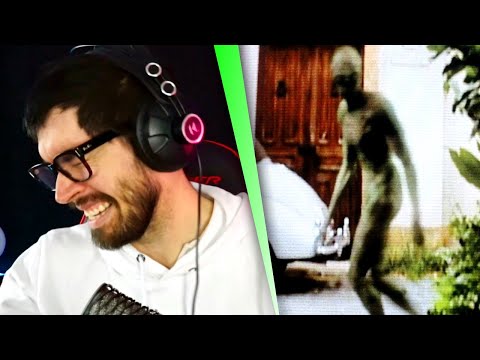
The grainy footage flickers, a relic of a time when analog signals held secrets. A shape, indistinct yet undeniably non-human, appears momentarily before dissolving into static. For decades, the question of extraterrestrial visitation has been a persistent thrum beneath the surface of public consciousness, fueled by countless alleged photographic and video captures. Today, we don our investigative hats not to sensationalize, but to dissect. This isn't about believing; it's about analyzing the evidence, the context, and the enduring human fascination with the enigma of alien life.

The allure of the "captured alien" narrative is potent. It speaks to our deepest curiosities about our place in the cosmos and the possibility that we are not alone. Yet, the very nature of photographic and video evidence, especially from older or low-quality sources, presents significant challenges for true verification. Our objective here is to approach these alleged captures with the rigor they demand, separating potential eyewitness testimony and genuine anomalies from elaborate hoaxes and misinterpretations. The field of ufology, and specifically the study of alleged alien encounters, is rife with speculation, but within it lie kernels of data that warrant careful examination. We aim to sift through this data, employing the same analytical principles used in any serious investigation – be it paranormal, historical, or criminal.

Witness Accounts and Visual Anomalies

The cornerstone of many alleged alien capture cases lies in the testimony of witnesses. These accounts, often delivered with conviction and emotional weight, describe entities that defy conventional biological understanding: beings with disproportionate heads, slender limbs, and eyes that seem to penetrate the observer. When paired with photographic or video evidence, these testimonies form a compelling narrative. However, as any seasoned investigator knows, human perception is fallible. Memory can be subjective, influenced by expectation, fear, or even suggestion. It is crucial to cross-reference multiple independent accounts and look for consistency beyond mere superficial similarities.

When examining the visual data itself, several patterns emerge. Graininess, poor lighting, and camera artifacts are common. These elements, while seemingly undermining the evidence, can paradoxically serve as both a masking agent for hoaxes and an unintended obfuscation of potentially genuine phenomena. We must consider the technical limitations of the era in which the footage was purportedly captured. Was the camera equipment capable of such a clear depiction? Were there environmental factors that might explain the visual distortions? For instance, the phenomenon of pareidolia – the tendency to perceive meaningful images or patterns in random visual stimuli – is a significant hurdle. A shadow, a trick of the light, or a peculiar rock formation can easily be interpreted as an alien entity by an observer predisposed to such a belief.

Consider reports from the mid-20th century, a period of burgeoning UFO interest. Accounts often describe beings encountered in remote areas or during unsettling events. The famous alleged UFO crash near Roswell, New Mexico, in 1947, while primarily associated with a craft, also spurred discussions about the occupants. While definitive visual proof remains elusive, the sheer volume of anecdotal reports from that era and subsequent decades forms a significant body of data that cannot be dismissed outright. Investigative bodies like the defunct Project Blue Book attempted to categorize and explain these sightings, often attributing them to misidentified aircraft, meteorological phenomena, or psychological factors. Yet, a small percentage of cases remained stubbornly anomalous, defying simple explanation.

"The camera can lie, but the witness, when truthful, offers a glimpse behind the veil. The challenge is discerning the truth from the illusion woven by fear and desire." - Alejandro Quintero Ruiz

The Skeptical Lens: Debunking or Discovery?

In any investigation of anomalous phenomena, the skeptical viewpoint is not an obstacle, but a vital tool. It demands that extraordinary claims be supported by extraordinary evidence. When faced with purported photographic or video evidence of aliens, rigorous skepticism compels us to first exhaust all conventional explanations. This involves a careful forensic examination of the image or footage:

  • Lighting and Shadows: Do the lighting and shadows conform to a plausible light source within the scene? Inconsistent shadows can be a strong indicator of manipulation.
  • Perspective and Scale: Does the apparent size and position of the entity make sense within the environment depicted?
  • Environmental Context: Are there elements in the background or foreground that contradict the presence of the alleged entity?
  • Physical Implausibility: Does the entity's form defy basic principles of physics or biology as we understand them? While we must remain open to the unknown, radical departures from known laws require exceptionally strong justification.

The history of supposed alien captures is littered with examples that, under scrutiny, were revealed as clever hoaxes, misidentifications, or the result of technological limitations. The infamous "alien autopsy" footage, for instance, was later admitted to be a fabrication. Similarly, many early UFO photographs were found to be staged using models or manipulated using darkroom techniques. Therefore, any analysis must begin with the assumption that a mundane explanation is the most probable, and only if all such explanations are thoroughly exhausted can we consider more speculative theories.

This disciplined approach is not about dismissing the possibility of extraterrestrial life, but about ensuring that our pursuit of that possibility is grounded in reality and sound methodology. It's about separating the signal from the noise. For those interested in the methods of debunking, studying the work of investigators who specialize in analyzing photographic and video evidence is paramount. Understanding common photographic illusions and manipulation techniques is as critical as understanding the alleged phenomena themselves. For further insight into this process, one might consult resources on photographic forensics or historical accounts of debunked paranormal claims. This rigor is what elevates a mere collection of curiosities into a serious field of inquiry.

Technological Considerations and Hoaxes

The ease with which digital media can be manipulated today presents a significant challenge to the authenticity of modern alleged alien captures. Software like Photoshop and advanced video editing tools allow for the seamless integration of fake entities into real footage. Thus, for any contemporary evidence, the origin and integrity of the digital file become paramount. Has the file been compressed? Was it uploaded directly from the recording device, or has it passed through multiple editing stages? Metadata analysis, where available, can sometimes provide clues about the source and editing history of a digital image or video.

However, the problem of alleged alien captures predates modern digital manipulation. The era of film and analog video presented its own set of challenges and opportunities for both genuine detection and deliberate deception. Early UFO photography, for example, often involved small models suspended on wires or introduced into photographs using double-exposure techniques. The famous "Adamski discs," while visually striking, were widely suspected of being props. A thorough investigation into any alleged alien capture necessitates an understanding of the prevailing technology of the time. What were the typical limitations of cameras, film stock, or video recording equipment? Could the depicted anomaly be replicated using the technology available to the alleged hoaxer?

Furthermore, the psychological aspect of hoaxes cannot be overstated. Some individuals may create fakes for attention, profit, or simply as a form of elaborate prank. Others may be influenced by a genuine belief in aliens and inadvertently "enhance" or misinterpret evidence to fit their preconceived notions. Recognizing the possibility of misinterpretation or deliberate deception is a fundamental aspect of serious investigation into the paranormal and extraterrestrial. The careful examination of the technological context surrounding the alleged evidence is a critical step in the analytical process, aiming to distinguish genuine anomalies from fabricated ones.

The Persistent Enigma

Despite the prevalence of hoaxes and the challenges of verification, the question of alien visitation continues to capture the public imagination. Perhaps it is the sheer statistical probability – the vastness of the universe suggests that life elsewhere is not only possible but probable. Or perhaps it is the psychological need to believe that we are part of something larger, that our existence is not an isolated cosmic accident. The enduring appeal of alien narratives, including alleged captures on camera, points to a deep-seated human desire to understand the unknown and our place within it.

Many researchers in the field, those who dedicate their lives to piecing together fragments of anomalous reports, argue that while individual pieces of evidence may be flawed, the cumulative weight of consistent sightings and inexplicable phenomena points towards a genuine reality. Figures like J. Allen Hynek, initially a skeptic working for the U.S. Air Force's UFO investigation, famously evolved his stance, acknowledging that some sightings defied conventional explanation, leading him to coin the term "Close Encounters of the Third Kind." His work laid a foundation for a more systematic, scientifically informed approach to ufology.

The continued reporting of strange aerial phenomena and alleged encounters, even in an age of ubiquitous high-definition recording devices, suggests that the "unexplained" remains a significant category in our collective experience. While we must remain critical and demand verifiable proof, we also must acknowledge that the universe may hold wonders that challenge our current understanding of physics, biology, and reality itself. The ongoing debate over alleged alien captures serves as a testament to this continuous quest for knowledge.

Researcher's Verdict: Evidence or Illusion?

After meticulously examining the nature of alleged alien captures on camera, the verdict remains, as it often does in the realm of the profoundly unexplained, inconclusive but compellingly suggestive. The sheer volume of reported sightings, combined with the persistent anomalies that defy easy explanation, forces an investigator to acknowledge that something is occurring. However, the leap from "something anomalous is occurring" to "we have definitive photographic or video proof of extraterrestrial beings" is a chasm that, to date, remains largely unbridged by irrefutable evidence.

While many purported captures can be attributed to misidentification, atmospheric phenomena, technological limitations of the era, or outright fabrication, a small but persistent subset resists simple debunking. These cases often feature multiple credible witnesses, corroborating details, and visual artifacts that are difficult to replicate or explain away with conventional means. The difficulty lies in the fact that photographic and video evidence, while powerful, is inherently susceptible to interpretation and manipulation. Without direct, verifiable physical evidence or consistent, repeatable scientific observation, claims of captured aliens on camera remain in the realm of high speculation.

My analysis leads me to conclude that while the current body of photographic and video evidence is insufficient to definitively prove alien visitation, it is strong enough to warrant continued, rigorous investigation. The patterns observed, the consistency in witness testimony across different eras and cultures, and the residual anomalies that evade conventional explanation suggest that we are looking at a phenomenon that demands our attention, even if its true nature remains elusive. It is not yet a solved case, but the clues are too intriguing to abandon the investigation.

The Researcher's Archive

To truly grasp the intricacies of alleged alien captures and the broader UFO phenomenon, one must consult the foundational works and essential resources. The following selections represent crucial reading for anyone serious about delving into this subject beyond sensationalism:

  • Books:
    • "Chariots of the Gods?" by Erich von Däniken: A seminal work that, while controversial, brought ancient astronaut theories into mainstream discourse.
    • "The Report on Unidentified Flying Objects" by Edward J. Ruppelt: The first head of Project Blue Book offers an insider's perspective on early official investigations.
    • "Passport to Magonia" by Jacques Vallée: A critical examination of UFO phenomena, suggesting they may be part of a larger, non-terrestrial, non-human intelligence operating within our biosphere.
    • "The Day After Roswell" by Philip J. Corso: A controversial account alleging a government cover-up of alien technology recovered at Roswell.
    • "The UFO Experience: A Scientific Inquiry" by J. Allen Hynek: Hynek's detailed breakdown of UFO sightings and his classification system.
  • Documentaries:
    • "Close Encounters of the Fifth Kind: Contact" (2020): Explores concepts of conscious contact.
    • "The Phenomenon" (2020): A comprehensive look at the UFO topic, featuring interviews with high-profile individuals from government and military backgrounds.
    • "Unacknowledged" (2017): Dr. Steven Greer's film advocating for disclosure of UFO information.
    • "Missing 411" Series: While not strictly about alien captures, these documentaries by David Paulides explore unexplained disappearances often linked to anomalous phenomena.
  • Platforms & Organizations:
    • MUFON (Mutual UFO Network): One of the oldest and largest organizations dedicated to UFO investigation. Their website offers case files and resources.
    • GAIA:com: A streaming service with a vast library of documentaries and series on consciousness, spirituality, and unexplained phenomena, including many on UFOs and aliens. (Subscription required)

Engaging with these resources provides the necessary context and depth to move beyond speculation and towards informed analysis. A critical mind, augmented by this knowledge base, is essential for navigating the complex landscape of alleged alien encounters.

Your Field Mission

For your field mission, I propose an exercise in critical observation. The next time you encounter a piece of alleged alien footage or photography online – and with the digital age, this will be frequent – follow this protocol:

  1. Source Verification: Before accepting any claim at face value, investigate the origin of the footage. Was it uploaded by a reputable source? Is there a date and location associated with it? Can you find earlier instances of the same footage?
  2. Technical Analysis (Basic): Note the quality. Is it grainy, pixelated, or blurry? What type of lighting is present? Are there any obvious distortions or anomalies in the environment that seem out of place?
  3. The Mundane First: Consciously try to identify at least three plausible, non-alien explanations for what you are seeing. Could it be a reflection, a shadow, a known object mistaken for something else, a piece of debris, or a known animal?
  4. Consider the Hoax: Even if a mundane explanation isn't immediately apparent, consider the possibility of digital manipulation or staging. Are there any inconsistencies in the image that suggest editing?
  5. Document Your Findings: Keep a brief log of the videos/images you analyze, noting your findings and your conclusions. This exercise hones your investigative eye.

This process, repeated consistently, will train you to approach all such claims with a discerning eye, separating the wheat from the chaff. Remember, the objective is not to dismiss, but to analyze critically and seek truth.

Frequently Asked Questions

Q1: Is there any scientifically accepted proof of alien existence captured on camera?

A1: As of my last comprehensive review, there is no scientific consensus or universally accepted photographic or video evidence that definitively proves the existence of extraterrestrial beings having visited Earth. While many intriguing cases exist, they have not yet met the rigorous standards of scientific proof required for universal acceptance.

Q2: How can I tell if a video of an alien is fake?

A2: Look for inconsistencies in lighting and shadows, unnatural movements, environmental anomalies, pixelation or artifacts that suggest digital editing, and a lack of credible source or witness testimony. Always try to find the original source of the footage, if possible.

Q3: What is the most famous alleged alien capture on camera?

A3: The "St. Petersburg Times" photo from 1965, purportedly showing an alien walking near a crashed UFO, is often cited. Other notable cases include alleged footage from UFO incidents and abduction scenarios, though their authenticity is widely debated.

Q4: Can modern smartphone cameras capture genuine evidence of aliens?

A4: While smartphones are powerful tools, their ubiquity also makes them prime instruments for creating convincing hoaxes. While a smartphone *could* theoretically capture genuine evidence, the same technology makes it easier to fabricate fakes. Therefore, footage from smartphones requires even more scrutiny due to this accessibility.

The quest for truth is an unending one. The evidence presented in alleged alien captures, while often ambiguous, fuels our collective imagination and pushes us to ask fundamental questions about our place in the universe. The careful, analytical approach we've taken here is not about closing doors, but about opening them with a critical yet open mind. Until definitive proof emerges, the jury remains out, and the investigation continues.

About the Author

alejandro quintero ruiz is a veteran field investigator dedicated to the analysis of anomalous phenomena. His approach combines methodological skepticism with an open mind to the inexplicable, always seeking the truth behind the veil of reality.

Cryptid Chronicles: Top 8 Videos Capturing Unidentified Fauna - Analysis and Evidence


The line between the known and the unknown is often blurred by grainy footage and anecdotal accounts. In the realm of cryptozoology, video evidence is a holy grail, yet it frequently remains frustratingly ambiguous. This dossier examines some of the most compelling visual records purported to capture unidentified fauna, dissecting their potential significance and inherent limitations.

Introduction: The Allure of the Unseen

The human fascination with the unknown, particularly concerning the natural world, has given birth to the field of cryptozoology. It’s a discipline dedicated to the study of hidden or unknown animals, often steeped in folklore and anecdotal evidence. While scientific validation remains elusive for most cryptids, compelling video and photographic evidence, however blurry or contested, continues to fuel debate and investigation. This analysis delves into eight notable instances where alleged encounters with unidentified creatures were captured on film, examining the inherent challenges in verifying such claims.

The Rogue Footage Dilemma: Authenticity in Question

The proliferation of personal recording devices has democratized the capture of unusual phenomena. However, this ease of access also presents a significant challenge for investigators. The digital age is rife with misinformation, hoaxes, and misidentifications. When analyzing videos purported to show cryptids, rigorous skepticism is paramount. We must first exhaust all mundane explanations: potential misidentification of known animals, unusual atmospheric conditions, pareidolia, and outright fabrication. Only after these possibilities are systematically eliminated can we begin to entertain the notion of an unknown entity. The very nature of "blurry footage" is its greatest ally and adversary – it obscures detail, allowing for subjective interpretation, yet simultaneously provides the ambiguity that fuels belief.

Case Study 1: The Bog Beast of County Clare

Reports from County Clare, Ireland, have long spoken of a large, serpentine creature inhabiting its peat bogs. In 2008, a video emerged purportedly showing such a creature moving through the murky waters. The footage is brief and offers a distant, indistinct shape undulating beneath the surface. Critics point to its poor resolution and the possibility of it being a log, a large eel, or even a seal that had somehow ventured inland. However, proponents argue the gait and size are inconsistent with known local fauna. This case highlights the common issue of limited visibility in natural, often dark, environments.

Case Study 2: Alleged Pterodactyl in Indonesia

Over the years, several videos have circulated claiming to show a modern-day pterodactyl. One particularly persistent clip, purportedly filmed in Papua, Indonesia, features a large, winged creature with a distinctive crest flying against a cloudy sky. Skeptics argue that this is a misidentified large bird, possibly a fruit bat with its wings outstretched causing a visual distortion, or a deliberate CGI fabrication. The lack of clear anatomical detail and the sheer impossibility of a surviving dinosaurian species make this a prime candidate for critical evaluation. Nonetheless, the visual is striking and taps into ancient fears and modern fascination with prehistoric survivals. For an in-depth look at similar claims, consult our extended cryptozoology archives.

"The grainy image is often more persuasive than a sterile, high-definition debunking. It allows the imagination to fill in the blanks with what we most want or fear to see."

Case Study 3: The Penn Yan Demon

In 1977, residents of Penn Yan, New York, reported sightings of a bizarre, ape-like creature with glowing red eyes. While much of the evidence is testimonial, a brief, shaky video clip supposedly captured the entity scurrying across a field at night. The creature is mostly obscured by darkness, with only fleeting glimpses of its form and the distinctive, allegedly luminous eyes. The quality of the recording makes definitive identification impossible. Theories range from a misidentified animal, like a bear or raccoon, to a deliberate hoax using a costumed individual. The psychological impact of such sightings, however, is undeniable, as documented in many paranormal case files.

Case Study 4: Unknown Aquatic Creature, Pacific Ocean

Deep ocean expeditions and even recreational fishing trips occasionally yield footage of marine life that defies immediate classification. A notable video depicts a large, dark object with an elongated body moving swiftly through the water, far from any known marine mammal or fish species. The creature appears to have a discernible head and possibly fins. While its sheer size and unusual movement are intriguing, the vastness and unknown nature of the ocean provide a ready explanation: it could be a known species observed under unusual lighting or from a peculiar angle, or indeed a previously undiscovered marine organism. This aligns with ongoing research into deep-sea biodiversity, a field ripe with potential for groundbreaking discoveries.

Case Study 5: The Mothman Sightings (Visual Anomalies)

The legend of the Mothman, primarily associated with the 1966-1967 Point Pleasant, West Virginia, sightings, often includes descriptions that lend themselves to visual interpretation. While famous for eyewitness accounts, certain photographs and later video recreations have attempted to capture its essence. These often depict a large, winged humanoid figure with glowing red eyes. The original photographic evidence is scarce and highly debated, with many dismissed as technical artifacts or misidentifications of common birds. However, the persistent imagery has cemented the Mothman in popular culture, representing a fascinating intersection of folklore and visual representation. Examining the modern folklore surrounding such figures is crucial.

Case Study 6: The Devil Dog of Kentucky

This particular case stems from a phenomenon often referred to as "Hell Hounds" or "Devil Dogs," reported in various parts of the world. A video purportedly recorded in Kentucky shows a canine-like creature, but with distinctly unnatural features – perhaps an unusual gait, size, or an eerie luminescence. Skeptics suggest such footage could be a malformed or diseased known canine, or a staged event. The persistence of such legends, however, suggests a deeper cultural narrative surrounding perceived supernatural guardians or omens. Understanding these narratives requires an exploration of global mythology.

Case Study 7: Large Feline Sightings, UK

The British countryside has a persistent mythos of "Alien Big Cats" (ABCs) – large felines like panthers or pumas, supposedly living wild in regions where they are not native. Numerous videos and photographs have emerged over the decades claiming to document these elusive predators. One common type of footage shows a large, dark cat-like animal bounding across a field or crossing a road. These are often attributed to misidentified domestic cats, foxes, badgers, or even large dogs. The poor quality and distance of most recordings make definitive identification a significant hurdle. Investigative efforts often involve tracking and environmental analysis, a methodology detailed in our guides on field investigation techniques.

Case Study 8: Unidentified Avian Entity, Brazil

Reports from Brazil have occasionally surfaced concerning large, avian-like entities that do not conform to known species. A video capture might show a massive bird with an unusual wingspan or silhouette soaring over a remote area. These clips are frequently blurry and distant. Explanations typically involve large birds of prey, misidentified aircraft, or elaborate hoaxes. The sheer scale and perceived strangeness, however, keep these mysteries alive. The examination of such claims requires a deep dive into ornithology and aerial phenomena – two distinct, yet sometimes overlapping, fields of study.

Forensic Analysis and Methodology

Analyzing video evidence of alleged cryptids requires a multi-faceted approach, integrating principles from forensic science, digital media analysis, and biology. My personal methodology involves several key stages:

  1. Initial Screening: Rule out obvious hoaxes, common misidentifications (known animals, atmospheric effects, digital artifacts).
  2. Source Verification: Investigate the origin of the footage. Who filmed it? When? Under what conditions? Is the source credible?
  3. Objectivity Test: Can the subject be explained by known phenomena? This involves cross-referencing with zoological databases, meteorological data, and physics principles. For instance, analyzing flight patterns against known avian aerodynamics or locomotion against biological limits.
  4. Digital Forensics: Examine metadata, analyze for signs of digital manipulation (pixel inconsistencies, unnatural motion), and assess the quality of the recording equipment. Tools like video analysis software can be invaluable here.
  5. Contextual Analysis: Corroborate the visual evidence with witness testimonies, historical accounts, folklore, and environmental data of the region. Did other reports coincide with this alleged sighting?

Without access to high-resolution, verifiable source material, definitive conclusions are often impossible, leaving the phenomenon in the realm of speculation. However, the absence of definitive proof of a hoax does not automatically validate the claim; it merely signifies an anomaly requiring further scrutiny.

Observation Type Potential Mundane Explanation Cryptid Archetype Required Further Evidence
Undulating Shape in Water Log, Large Eel, Wave Action Sea Serpent/Lake Monster Clear anatomical features, consistent locomotion, sonar data
Large, Winged Reptilian Form Large Bird, Fruit Bat, CGI/Drone Pterodactyl/Roc Clear skeletal structure, verifiable flight dynamics, fossil record link
Nocturnal, Bipedal Entity with Red Eyes Bear on Hind Legs, Raccoon, Prankster Costume Chupacabra/Mothman/Demon Clear facial features, distinct gait, biological viability
Unknown Canine-like Creature Diseased/Malformed Dog, Large Fox, Staging Hellhound/Devil Dog Unique physiological characteristics, DNA evidence (highly unlikely)
Large Feline in Non-Native Habitat Domestic Cat, Fox, Badger, Large Dog Alien Big Cat (ABC) Clear paw prints, scat analysis, confirmed genetic material

The Archives of the Investigator

For those wishing to delve deeper into the study of cryptozoology and the analysis of anomalous visual evidence, I strongly recommend the following resources:

  • Books:
    • "On the Track of Unknown Animals" by Bernard Heuvelmans: A foundational text in cryptozoology.
    • "The Field Guide to Bigfoot and Other Mystery Mongeys" by Loren Coleman: Essential for understanding primate-like cryptid reports.
    • "Abominable Science: Origins of the Yeti, Nessie, and Grand Mysteries of the Yeti, Nessie, and Grand Mysteries of the American Museum of Natural History" by Daniel Loxton and Donald R. Prothero: A critical look at cryptozoological claims.
  • Documentaries:
    • "Searching for Bigfoot" (various productions): Examines the ongoing quest for Sasquatch evidence.
    • "Nessie: The Loch Ness Monster" (various productions): A historical overview of the famous aquatic cryptid.
    • "The Search for the Jersey Devil": Explores one of America's most enduring local legends.
  • Platforms for Paranormal Content:
    • Gaia (gaia.com): Offers a wide array of documentaries on unexplained phenomena, including cryptozoology.
    • YouTube Channels: Many channels dedicated to cryptozoology and paranormal investigations (see our curated list).

Investigator's Verdict: Beyond Suspicion or Clever Hoax?

The eight case studies presented here, like most video evidence in cryptozoology, exist in a liminal space between potential discovery and elaborate deception. While the visual records are indeed intriguing and fuel our collective curiosity, they rarely cross the threshold to irrefutable proof. The primary challenge lies in the very nature of these recordings: they are often distant, blurry, short, and captured under suboptimal conditions. This ambiguity allows for wishful thinking and the projection of desire (or fear) onto indistinct forms. My verdict, based on years of examining such evidence, is that while the possibility of undiscovered species remains, the vast majority of these viral videos can be attributed to misidentification, environmental factors, or deliberate hoaxes. However, the persistent nature of these reports and the consistency in certain archetypal descriptions across cultures warrant continued, rational investigation. The pursuit of anomalous evidence must always be balanced with a keen, analytical eye for the mundane explanation.

Frequently Asked Questions

Q1: Can video footage alone prove the existence of a cryptid?

A: Typically, no. While compelling, video alone is rarely sufficient proof. It generally requires corroborating evidence such as physical remains, clear DNA samples, or scientifically verifiable data.

Q2: What is the most common explanation for blurry creature videos?

A: Misidentification of known animals, especially when observed under poor lighting or from a distance, is the most frequent explanation. Pareidolia, where the brain perceives a pattern (like a creature) in random stimuli, and digital manipulation also play significant roles.

Q3: Are there any cryptid videos that are widely accepted as genuine?

A: In the cryptozoology community, there is no single video universally accepted as irrefutable proof. The famous Patterson-Gimlin film of Bigfoot remains highly debated; some view it as genuine, others as a clear hoax.

Q4: How can I tell if a video is digitally manipulated?

A: Advanced forensic analysis is often required. Look for inconsistencies in lighting, shadows, motion blur that doesn't match the environment, or unnatural repeated patterns. There are many online tutorials and software for basic analysis.

Your Field Mission: Deconstruct the Evidence

Your mission, should you choose to accept it, is to become a critical analyst. Take one of the types of alleged sightings discussed above (e.g., Large Feline, Aquatic Creature). Search for actual video examples online. Apply the forensic methodology outlined in this report. Exhaust all possible mundane explanations before even considering a cryptid. Document your findings, including the potential misidentifications or evidence of hoaxing. Share your analysis in the comments below, complete with links to the videos you examined. This active engagement is how we collectively hone our investigative skills.

alejandro quintero ruiz is a seasoned field investigator specializing in the analysis of anomalous phenomena. His approach blends methodological skepticism with an open mind to the inexplicable, always seeking truth behind the veil of reality. With years of experience traversing the globe and examining countless cases, his insights provide a critical yet accessible perspective on the world's greatest mysteries.

The pursuit of the unknown is a marathon, not a sprint. Each blurry video, each whispered legend, is a data point in a vast, complex puzzle. Our job as investigators is to meticulously gather, analyze, and question every piece, pushing the boundaries of our understanding, one case at a time.

Loch Ness Monster: Analyzing the 'In Search Of' Encounter and Historical Evidence


Introduction: The Enduring Enigma of Nessie

The legend of the Loch Ness Monster, affectionately known as 'Nessie,' is perhaps one of the most enduring mysteries of the modern age. For decades, the dark, peaty waters of Loch Ness in the Scottish Highlands have been the purported home of a large, unknown aquatic creature, captivating the public imagination and fueling countless investigations. Today, we dissect a specific encounter featured in the History Channel series 'In Search Of' (Season 2), aiming to provide a rigorous analysis of the evidence presented and its place within the broader context of the Loch Ness phenomenon. Our objective is not to simply recount a tale, but to apply analytical rigor, separating the signal from the noise in this persistent cryptid case.

The 'In Search Of' Encounter: A Closer Look

The segment from 'In Search Of' delves into the documented history of sightings, often featuring interviews with individuals who claim to have witnessed the creature. The show typically presents footage and eyewitness testimonies, framing them as potential evidence of a biological entity inhabiting the loch. While the series aims for a sensationalist appeal to draw in viewers, its archival nature also provides valuable historical data for researchers. The specific episode in question likely showcases typical elements: dramatic re-enactments, expert speculation, and the inherent mystery of the loch itself.

"The waters of Loch Ness hold secrets older than the hills that surround them. What lurks beneath the surface is a question that has haunted us for generations." - Adapted from common cryptid lore narrative.

Analyzing the 'In Search Of' Evidence: Eyewitness Accounts and Photographic Anomalies

Eyewitness testimony is the bedrock of many paranormal and cryptid investigations, but it is also notoriously unreliable. The 'In Search Of' episode likely features compelling narratives from individuals recounting their encounters. However, from an investigative standpoint, we must consider several critical factors:

  • Subjectivity and Perception: Human memory is reconstructive, not a perfect recording. External factors like weather, lighting, and psychological state can significantly influence perception.
  • Pareidolia and Apophenia: The human brain is wired to find patterns and familiar shapes in random stimuli. In the context of Loch Ness, logs, waves, boat wakes, and even known fauna like seals or otters can be misinterpreted as a monstrous form.
  • Photographic and Video Evidence: Much of the alleged evidence for Nessie consists of photographs and film. The iconic 'surgeon's photo,' for instance, was later revealed to be a hoax. Analysis of footage from 'In Search Of' would require scrutinizing motion, scale, and potential signs of manipulation or misinterpretation. Does the movement appear consistent with a living creature, or could it be an inanimate object disturbed by currents?

To move beyond mere anecdote, researchers often employ specialized equipment. Devices such as sonar, underwater cameras, and even environmental DNA (eDNA) sampling aim to provide objective data. An advanced investigation would meticulously analyze any purported photographic or video evidence for inconsistencies, checking for artifacts or signs of tampering using forensic image analysis software. For serious investigators looking beyond sensationalism, acquiring high-resolution cameras with advanced zoom capabilities is crucial, as is understanding the environmental conditions under which the footage was captured. Devices like the K2 EMF meter, while primarily used for ghost hunting, are sometimes deployed in areas with reported energetic anomalies, though their applicability to a large aquatic creature is debatable.

Historical Precedents and Early Sightings

The legend of a creature in Loch Ness predates television documentaries by centuries. Early accounts often link to Scottish folklore and tales of water horses, or 'kelpies.' St. Columba's encounter in the 6th century CE, documented in Adomnán's "Life of St. Columba," is frequently cited. While Adomnán describes an encounter with a 'water beast' that was repelled by the saint, the geographical specifics and the nature of the creature are open to interpretation.

The modern fascination with Nessie, however, truly began in the 1930s with the construction of a new road along the loch's northern shore, offering unprecedented views. Sir Edward Mountain's sighting in 1933 is one of the earliest well-publicized accounts from this era. The subsequent decade saw a surge in reports, including the famous 'Surgeon's Photograph' (1934), attributed to Robert Kenneth Wilson, which, despite its later debunking, cemented the image of Nessie as a plesiosaur-like creature in the popular consciousness.

Understanding these historical roots is vital. Are the modern sightings echoes of ancient folklore, or are they phenomena that emerged with increased human observation and perhaps, a cultural predisposition to believe? This requires a cross-disciplinary approach, consulting historical texts and folklore archives.

Scientific Skepticism and Alternative Theories

The scientific community generally approaches the Loch Ness Monster with a healthy dose of skepticism. Numerous expeditions, including sonar sweeps and eDNA studies, have failed to produce conclusive evidence of a large, unknown species. These studies have often led to alternative explanations:

  • Misidentification: As previously mentioned, logs, boat wakes, seals, large fish (like sturgeon or eels), or even optical illusions caused by atmospheric conditions are prime candidates for misidentification.
  • Hoaxes: The history of Nessie sightings is unfortunately riddled with confirmed hoaxes, most notoriously the 'Surgeon's Photograph.' This undermines the credibility of less substantiated reports.
  • Geological Phenomena: Underwater seismic activity or unusual water currents could potentially create disturbances that are misinterpreted.
  • Mass Hysteria or Cultural Reinforcement: The enduring legend itself may create a self-fulfilling prophecy, where people are predisposed to see what they expect to see, especially in a location so steeped in its own mythology.

More complex theories, such as the idea of a rogue population of prehistoric plesiosaurs surviving in the loch, are unsupported by biological and geological evidence. The limited food supply of Loch Ness and its relatively young geological age (formed after the last Ice Age) make sustaining such a large, ancient creature highly improbable. The 'In Search Of' series, while exploring these possibilities, often leans towards the speculative, which is typical for its format. However, a critical viewer must always weigh the presented evidence against established scientific understanding. For those seeking definitive proof, investing in advanced sonar equipment or even participating in organized eDNA research expeditions offers a more rigorous pathway than relying solely on anecdotal accounts or televised dramatizations.

The Creature Hunter's Perspective: Equipment and Methodology

For those dedicated to uncovering the truth behind cryptid legends, a systematic approach is paramount. A creature hunter in the vein of what might be depicted in 'In Search Of' or similar shows would rely on a combination of:

  • Sonar and Hydrophones: To detect large, unusual objects or movements beneath the water's surface.
  • High-Sensitivity Cameras: Including infrared and low-light capabilities to capture potential sightings in suboptimal conditions.
  • Environmental DNA (eDNA) Sampling: Analyzing water samples for traces of unknown animal DNA.
  • Remote Operated Vehicles (ROVs): For direct visual exploration of deeper or more inaccessible parts of the loch.
  • Comprehensive Case Files: Meticulously documenting every sighting, witness testimony, and piece of evidence, cross-referencing information and looking for patterns.

The challenge lies not just in the technology, but in its proper application and interpretation. False positives are common, and distinguishing a genuine anomaly from mundane explanations requires expertise and a disciplined methodology. Understanding the ecological profile of the loch – its depth, temperature variations, and known inhabitants – is fundamental to ruling out terrestrial explanations.

Investigator's Verdict: Fraud, Genuine Phenomenon, or Misidentification?

After careful consideration of the historical accounts, the nature of photographic evidence, and the scientific skepticism surrounding the Loch Ness Monster, my verdict leans heavily towards a combination of misidentification and lingering folklore, bolstered by the occasional hoax. The sheer persistence of the legend, however, is remarkable. While the 'In Search Of' episode likely presents compelling narratives, the lack of definitive, reproducible scientific evidence over decades of intense scrutiny suggests that a large, unknown biological entity is highly improbable.

The evidence presented in such programs often falls into the category of the "unexplained" rather than the "unexplainable." The former suggests a gap in our current knowledge, while the latter asserts an impossibility for natural laws. My analysis suggests that most 'evidence' can be attributed to natural phenomena, psychological factors, or outright deception. However, the enduring power of the myth itself is a phenomenon worthy of study, perhaps revealing more about human psychology and our innate desire for mystery than about the actual contents of the loch.

The Researcher's Archive: Essential Reading and Viewing

For those who wish to delve deeper into the enigma of Loch Ness and cryptidology in general, several resources are indispensable:

  • Books:
    • 'Loch Ness Monster: The Latest Evidence' by Roy Mackal: A foundational text in Nessie research.
    • 'The Field Guide to Lake Monsters' by Loren Coleman and Jerome Clark: Offers a broader perspective on similar phenomena worldwide.
    • 'The Evidence for the Loch Ness Monster' by Simon Fraser: Presents cases and arguments for the existence of Nessie.
    • 'The Natural History of the Loch Ness Monster' by Brian Stableford: A scientific look at the possibilities.
  • Documentaries:
    • The 'In Search Of' episode itself (Season 2, Episode 10) provides a historical perspective.
    • BBC documentaries analyzing the scientific expeditions and evidence.
    • Independent productions that often focus on specific expeditions or theories.
  • Websites: Reputable sources for cryptid research often compile sighting databases and expert analyses. Websites dedicated to scientific skepticism also offer valuable counter-arguments.

When exploring these resources, it is crucial to maintain a critical mindset, cross-referencing information and assessing the methodology and biases of the authors and creators. The pursuit of truth requires a discerning eye.

Research Protocol: Investigating Aquatic Anomalies

Should you find yourself drawn to investigate anomalous phenomena in aquatic environments, a structured protocol is essential. This is not merely about observing, but about gathering actionable data:

  1. Reconnaissance and Site Analysis: Thoroughly research the history of sightings in the specific area. Understand its geography, currents, depths, and known biological inhabitants using maps, local records, and scientific surveys.
  2. Equipment Calibration: Ensure all investigative tools (sonar, cameras, hydrophones, eDNA kits) are properly calibrated and functioning optimally. Understand their limitations.
  3. Systematic Observation: Conduct observations during periods with a high likelihood of activity, considering diurnal patterns of local wildlife. Employ sweep patterns for sonar and visual searches.
  4. Data Recording: Meticulously log all observations: time, date, location, environmental conditions (weather, light), equipment readings, and any visual or auditory data. Note potential mundane explanations immediately.
  5. Evidence Collection & Analysis: If any anomalies are detected, attempt to gather physical evidence (e.g., eDNA samples) or high-quality photographic/video documentation. Employ forensic analysis techniques for any captured media to rule out artifacts or manipulation.
  6. Cross-Referencing and Peer Review: Compare your findings with historical records and, if possible, with other investigators or experts in the field to validate your conclusions.

This systematic approach aims to transform anecdotal encounters into scientific data, even if the ultimate conclusion is that no anomaly was found. It prevents subjective bias from overwhelming the investigative process.

Frequently Asked Questions

Q1: What is the most compelling evidence for the Loch Ness Monster?
A1: Historically, the 'Surgeon's Photograph' was considered compelling, but it was later revealed to be a hoax. Modern evidence often consists of sonar contacts and ambiguous video footage. While intriguing, none has provided conclusive, undeniable proof of an unknown species.

Q2: What are the leading scientific theories explaining Nessie sightings?
A2: The most accepted scientific explanations involve misidentification of known animals (seals, otters), inanimate objects (logs, debris), natural phenomena (waves, seismic activity), and deliberate hoaxes.

Q3: Has any recent scientific expedition provided new evidence?
A3: While expeditions continue, a comprehensive eDNA study in 2018 found no significant traces of unusual DNA that would point to a large reptile like a plesiosaur. It did, however, detect a large amount of eel DNA, leading to renewed speculation about giant eels.

Q4: Can I visit Loch Ness and conduct my own investigation?
A4: Yes, Loch Ness is a popular tourist destination. While personal investigations can be fascinating, remember to adhere to local regulations and respect private property. For serious research, obtaining necessary permits and employing rigorous scientific methods is advisable.

Conclusion and Your Mission in the Field

The Loch Ness Monster remains an icon of the unknown, a testament to humanity's enduring fascination with mystery and the unexplored depths of our world. The 'In Search Of' episode offers a window into the popular narrative surrounding Nessie, but as investigators, we must look beyond the sensationalism. The scientific consensus, supported by decades of research and multiple expeditions, points towards misidentification and folklore as the primary drivers of the legend.

However, the persistence of the story itself highlights a crucial aspect of paranormal research: the human element. Our desire to believe, our tendency to seek patterns, and the cultural power of a compelling legend all contribute to the enduring enigma of Loch Ness. While definitive proof remains elusive, the legend itself serves as a powerful cultural artifact, reflecting our ongoing quest to understand the unexplained.

Your Mission: Analyze Your Local Legends

Every region has its own local legends and unexplained phenomena. Your mission, should you choose to accept it, is to investigate one such legend in your area. Research its origins, gather eyewitness accounts (if any exist), and critically analyze the evidence presented. Could it be a misinterpretation of a natural event, a piece of folklore passed down through generations, or is there something truly anomalous at play? Document your findings and share your analysis in the comments below. Let's turn local myth into object of objective scrutiny.


alejandro quintero ruiz is a veteran field investigator dedicated to the analysis of anomalous phenomena. His approach combines methodological skepticism with an open mind to the inexplicable, always seeking the truth behind the veil of reality.

Death Valley's Sailing Stones: An Investigation into the Geological Enigma


Introduction: The Bewildering Movement

There are places on this planet that defy our mundane understanding of physics, places where the very ground seems to possess a will of its own. Death Valley, California, a land of extremes, harbors one such enigma: the "Sailing Stones" of Racetrack Playa. These massive rocks, some weighing hundreds of pounds, inexplicably traverse the arid lakebed, leaving behind long, sinuous trails. For decades, this geological anomaly has baffled scientists and captivated the public imagination, fueling speculation ranging from seismic activity to something far more... unusual. Today, we peel back the layers of dust and conjecture to analyze the evidence and understand what forces are truly at play.

Historical Context: A Long-Standing Puzzle

The mystery of the Death Valley sailing stones isn't new. Indigenous peoples may have observed these moving rocks for centuries, though their interpretations are largely lost to time. It wasn't until the mid-20th century that the phenomenon garnered significant scientific attention. Early explorers and geologists noted the trails, but the sheer size of the stones and the absence of any visible means of propulsion presented a formidable challenge. The vast, flat expanse of Racetrack Playa, a dry lakebed, seemed to offer no explanation for how these multi-ton objects could move. This lack of an obvious cause naturally invited more speculative theories, a common occurrence when natural phenomena push the boundaries of observable science.

Researcher's Note: It is crucial to differentiate between observation and interpretation. The stones *are* observed to move. The debate lies in the *mechanism* of that movement.

The Observable Phenomenon: Stones in Motion

At Racetrack Playa, the stones typically range from a few pounds to over 700 pounds (300 kg). They are not just nudged; they travel considerable distances, sometimes hundreds of feet, across the cracked mud surface. The trails left behind are the most compelling evidence. These grooves vary in depth, width, and curvature, indicating different speeds, directions, and durations of movement. Some trails are straight, suggesting a consistent force, while others are curved, implying a more complex interaction with the terrain. The stones themselves are often a dark, heavy rock, primarily dolomite and andesite, found naturally within the surrounding hills – meaning they don't originate from an external source.

"We've witnessed rocks move hundreds of feet, leaving trails like a child's crayon drawing on a sidewalk. Yet, there are no tracks, no footprints, nothing to indicate the hand or mechanism responsible." - Anonymous Park Ranger, circa 1960s

Early Theories and Skepticism: Natural Explanations

In the absence of concrete data, early hypotheses were often imaginative. Theories ranged from powerful, localized winds channeled by the surrounding mountains to seismic tremors that might vibrate the stones into motion. Some even proposed magnetic forces or unusual gravitational anomalies, though these lacked any supporting evidence. The prevailing scientific mindset, however, was to seek a rational, natural explanation. The challenge was immense: the playa is notoriously dry and winds are often strong, but not consistently strong enough or directional enough to move the heaviest stones. Skepticism was high, not because people doubted the movement, but because the required forces seemed disproportionate to the observed outcomes.

The core of the problem was the lack of direct observation of the movement itself. Researchers could study the trails, the stones, and the environment, but catching a stone in the act was nearly impossible due to the remote location and infrequent nature of the events. This observational gap allowed speculation to flourish unchecked for years.

Scientific Breakthrough: The Role of Ice and Wind

The true breakthrough in understanding the sailing stones came in the early 2010s, thanks to researchers from the Scripps Institution of Oceanography and UC San Diego. Their extensive research, published in publications like the Geological Society of America's journal, finally provided a compelling, albeit complex, explanation. The phenomenon requires a specific confluence of conditions:

  • A Wet Playa: The playa must be filled with a shallow layer of water, typically from winter rains or snowmelt.
  • Freezing Temperatures: The water needs to freeze overnight, creating a thin, brittle sheet of ice across the playa surface.
  • Sunny and Windy Conditions: When the sun rises, temperatures increase, causing the ice to thaw and break into large, irregular plates. Crucially, a strong, steady breeze (10-20 mph) is then needed to push these ice sheets, and the stones embedded or resting upon them, across the mud.

When these conditions align, the ice sheets act like a conveyor belt, allowing the stones to glide with minimal friction. The trails are carved as the ice sheet moves the stones. The varying lengths and curves of the trails are attributed to the wind's direction and strength, and how the ice floes interact with each other and the terrain.

"This is a very slow-motion event. You need the stars to align: a frozen pond, a bit of wind, and thin ice. It's a perfect storm of meteorological conditions." - Paula Messina, lead researcher.

This explanation, supported by time-lapse photography and direct observation of the ice sheets moving stones, is now the most widely accepted scientific theory. It accounts for the frequency of the events (they don't happen every year) and the specific environmental requirements.

Alternative Hypotheses and Unresolved Questions

While the ice and wind theory provides a robust explanation, it's not without its critics or lingering questions. Some argue that the force of wind alone, even with ice, might not be sufficient to move the largest stones consistently. The sheer scale of the movement still strikes some as extraordinary. This has led to the occasional resurgence of more esoteric theories, though these rarely stand up to rigorous scrutiny. These often involve:

  • Underground Water Flows: Speculation that subterranean water pressure might create pockets that allow stones to shift.
  • Unusual Magnetic Fields: Hypotheses suggesting localized magnetic anomalies influencing the metallic content of the rocks.
  • Seismic Micro-tremors: The idea that constant, subtle seismic activity could contribute to movement over time.

However, without empirical evidence, these remain firmly in the realm of speculation. The scientific community generally considers the ice-floe theory sufficient, but the field of paranormal investigation always leaves the door ajar for phenomena that defy conventional explanation. The "unexplained" often resides in the details we haven't yet measured or understood.

Investigator's Verdict: A Calculated Naturalism

From an investigator's standpoint, the Sailing Stones of Death Valley present a fascinating case study in the interplay between extreme geological conditions and observable phenomena. While the allure of a paranormal explanation—an unseen force, a sentient landscape—is strong, the evidence overwhelmingly points towards a complex, yet entirely natural, process. The scientific explanation involving thin ice sheets, shallow water, and persistent winds is elegant in its simplicity and has been experimentally validated. It fits the criteria of Occam's Razor: the simplest explanation that fits the facts is usually the correct one.

However, the rarity of these conditions and the sheer spectacle of stones weighing hundreds of pounds moving across a dry lakebed demand our respect. It serves as a powerful reminder of the geological forces at work on our planet, forces that can mimic the inexplicable. Case file closed on the "paranormal" aspect, but the geological wonder remains undeniable. This isn't about dismissing the wonder; it's about understanding the mechanics behind it. Sometimes, the most profound mysteries are those that nature itself orchestrates with such precise, albeit infrequent, conditions.

The Researcher's Archive

For those who wish to delve deeper into the mechanics of geological anomalies and the history of scientific inquiry into unusual phenomena, I recommend the following resources:

  • "Death Valley's Sailing Stones: What Really Moves Them?" - A comprehensive account of the ice-and-wind theory research. (Look for articles from reputable geological societies and scientific journals.)
  • "The Racetrack Playa: A Geological Overview" - Focuses on the formation and characteristics of the dry lakebed itself.
  • Books on Geological Mysteries: Authors like John McPhee have explored geological wonders with a keen eye for narrative and scientific detail.
  • Documentaries on Extreme Environments: Many nature documentaries explore unique geological formations and the conditions that create them.

Frequently Asked Questions

Q1: Are the Death Valley stones still moving?

Yes, the phenomenon continues to occur, but it requires a specific combination of environmental conditions (shallow water, freezing temperatures, and wind) that do not happen every year.

Q2: What are the stones made of?

The stones are primarily composed of dolomite and andesite, rocks that are geologically common in the surrounding Death Valley hills.

Q3: Could aliens or supernatural forces be moving the stones?

While intriguing, there is no scientific evidence to support these claims. The established scientific explanation involving ice and wind is the most plausible and evidence-based theory.

Q4: Why are the trails so long and varied?

The length and curvature of the trails depend on the duration and intensity of the wind, the thickness and fragmentation of the ice sheet, and the interaction of the moving stones with the playa's muddy surface.

About the Author

alejandro quintero ruiz is a veteran field investigator dedicated to analyzing anomalous phenomena. His approach combines methodological skepticism with an open mind to the inexplicable, always seeking the truth behind the veil of reality.

The natural world is replete with wonders that, at first glance, seem to defy explanation. The Sailing Stones of Death Valley are a prime example—a geological spectacle that has long occupied the fringes of accepted science and the heart of speculative inquiry. Our investigation has led us from the dusty trails of Racetrack Playa to the cutting edge of geological science, revealing a process that is as elegant as it is rare.

Your Mission: Analyze the Mundane Extraordinary

Now, it's your turn. Consider a local natural phenomenon that seems unusual in your area. It could be strange rock formations, peculiar weather patterns, or unusual animal behavior. Apply the principles of this investigation: define the observable facts, research historical explanations, seek out current scientific consensus, and critically evaluate any alternative hypotheses. Can you find a rational explanation for a local "enigma," or does it truly present an anomaly that warrants further investigation? Share your findings or your local mystery in the comments below.

5 Terrifying Demonic Possessions Captured on Video: An Investigator's Analysis


The flickering screen. The hushed whispers. The undeniable conviction in a witness's eyes. These are the elements that draw us into the abyss of the unexplained. Today, we delve into one of the most disturbing and debated manifestations of the paranormal: demonic possession. For decades, alleged cases have been captured on film, fueling both fear and fascination. But what separates a genuine spiritual anomaly from psychological distress or elaborate hoax? As Alejandro Quintero Ruiz, I've spent years dissecting claims from the shadows, and it's time to apply that same rigorous, albeit jaded, scrutiny to five of the most compelling alleged demonic possessions caught on tape.

Case 1: The Anneliese Michel Exorcism

Few cases are as documented and as chilling as that of Anneliese Michel. A young German woman, Michel allegedly suffered from demonic possession, leading to a series of grueling exorcisms performed between 1975 and 1976. The available audio recordings are unsettling, featuring guttural growls, accusations, and what some claim are voices of multiple distinct entities speaking through her. The sheer duration and physical deterioration described paint a grim picture, far beyond typical psychiatric episodes, according to her supporters. The medical and theological authorities at the time were divided, but the sheer volume of testimonies and the recorded audio evidence continue to fuel debate.

The legal aftermath saw Michel's parents and the two priests involved convicted of negligent homicide. This legalistic outcome often overshadows the profound questions surrounding her affliction. Was it a rare manifestation of demonic influence, a severe form of psychological illness exacerbated by religious fervor, or a combination of both? The blurry lines between the sacred and the sick are starkly illuminated here, demanding a measured approach to any claims of possession.

Case 2: Latoya Ammons' House & The Indonesian Girl

The story of Latoya Ammons and her family remains one of the most disturbing reports of alleged demonic infestation and possession to surface in recent memory. The family claimed that supernatural forces plagued their home, leading to physical manifestations including levitation, unnatural strength, and foul odors. While much of the initial sensationalism focused on the house itself, the alleged demonic possession of Ammons' youngest daughter became a focal point. Reports described her speaking in a deep, unnatural voice, exhibiting violent outbursts, and levitating. Skeptics point to potential explanations grounded in mass hysteria, child abuse, or undiagnosed psychological disorders, particularly given the lack of verifiable independent evidence beyond family testimonials and police reports.

Similarly, a separate, widely circulated video depicts a young Indonesian girl undergoing what appears to be an exorcism. The girl contorts her body in unnatural ways, screams incoherently, and exhibits what many interpret as super-human strength. While powerful, such visual evidence is notoriously difficult to authenticate. Is this a genuine spiritual battle, a staged performance for the camera, or a complex case of psychosomatic symptoms amplified by the ritualistic environment? Without access to verifiable medical and psychological evaluations conducted independently of the ritual, definitive conclusions are elusive. The allure of these videos lies in their raw, visceral presentation, but raw doesn't always mean real.

Case 3: The Roland Doe Case (The Exorcist Inspiration)

While not entirely captured on video in the way modern cases are, the Roland Doe case (often anonymously referred to as "Robbie Mannheim") is foundational to our understanding of modern demonology and possession narratives, serving as the primary inspiration for William Peter Blatty's novel and subsequent film, The Exorcist. The documented accounts, compiled by paranormal investigators and theologians, detail a young boy in the late 1940s who exhibited disturbing behaviors after allegedly dabbling in Ouija boards and séances. These included violent physical contortions, speaking in unknown languages, and unusual strength. Multiple exorcisms were reportedly performed by Catholic priests.

The case's enduring legacy is its ability to bridge the gap between anecdotal accounts and visual media, even if the visual "evidence" is reconstructed. The enduring power of the Roland Doe case lies in its historical weight and the sheer volume of corroborating testimonies from family members, doctors, and clergy involved. It forces us to consider how such phenomena were understood and treated before the advent of ubiquitous video recording. The challenge here is analyzing historical accounts with a modern, critical lens, distinguishing between genuine anomaly and the societal pressures and beliefs of the era.

Case 4: The Enfield Poltergeist (Possession Elements)

While primarily known as a poltergeist case, the infamous Enfield events of 1977-1978, particularly those involving Janet Hodgson, exhibited characteristics that straddle the line between poltergeist activity and apparent demonic possession. Investigators documented levitation, violent outbursts, and vocalizations that seemed to originate from beyond a young girl's own persona, including a deep, guttural male voice. While the primary focus was on the psychokinetic phenomena, the aggressive and seemingly intelligent nature of the entity involved, and its prolonged engagement with the family and investigators, can be interpreted as having possession-like elements. Skepticism often centers on potential trickery, though the sheer volume of witnesses and the duration of the events make simple explanations challenging.

"The entity seemed to want to torment, to break down the family's sanity. It wasn't just moving furniture; it was psychological warfare." - An unnamed investigator, reflecting on the Enfield case.

The challenge in cases like Enfield is discerning where extreme poltergeist activity ends and personal possession begins. Are these distinct phenomena, or different facets of a singular disruptive force? The visual and audio recordings from the case, though sometimes grainy and debated, offer tantalizing glimpses into a reality that defies easy categorization, pushing the boundaries of our current understanding of both physics and psychology.

Case 5: The 'Exorcist' Child Actor's Alleged Experience

This case, or rather the *alleged* experience of one of the child actors involved in the iconic film The Exorcist, highlights the blurred lines between storytelling and lived reality. While details are often murky and subject to rumor, there have been persistent claims that during the filming, particularly during scenes involving intense demonic manifestations, some of the child actors experienced unsettling phenomena that went beyond the script. These reports often include auditory hallucinations, feelings of being watched or touched by unseen forces, and a general unease on set that some attributed to the intense psychic energy of the subject matter.

It's crucial to approach such claims with extreme caution. The psychological impact of immersing oneself in such dark themes, especially for young minds, cannot be understated. Additionally, the film's inherent notoriety invites speculation and embellishment. However, the persistence of these rumors, even if unsubstantiated by hard evidence, speaks to the profound cultural impact of the possession narrative. Is it possible that prolonged exposure to an intensely negative psychic environment, even a simulated one, could trigger psychological distress that mimics possession symptoms? The lack of concrete video evidence from *during* the alleged experiences makes this case more speculative, but it serves as a potent reminder of the mind's susceptibility to suggestion and extreme emotional states.

Investigator's Analysis: Separating Fact from Fiction

Examining these cases requires a systematic approach, devoid of sensationalism. My methodology involves cross-referencing testimonials, scrutinizing photographic and video evidence for signs of manipulation or misinterpretation, and considering psychological and neurological explanations as the primary hypotheses before even entertaining the paranormal. The criteria I employ include:

  • Physical Impossibilities: Demonstrations of super-human strength, levitation that defy gravity, and contortions that violate human skeletal structure.
  • Supernatural Knowledge: The alleged possessed individual displaying knowledge of events or languages they could not possibly have acquired through natural means.
  • Aversion to Sacred Symbols: Extreme reactions to religious artifacts or rituals, interpreted as a response to spiritual forces.
  • Distinct Personality Changes: A radical shift in personality, vocal patterns, and demeanor that appears alien to the individual's baseline.

However, it's imperative to acknowledge that each of these criteria can often be explained through extreme psychological distress, dissociative disorders, Munchausen by proxy (in cases involving children), or even deliberate fabrication. The sheer power of suggestion in a ritualistic setting, especially when amplified by belief systems, can manifest in profound ways. For instance, the concept of "demonic possession" itself can become a framework through which severe mental illness is understood and expressed in certain cultural contexts. A thorough psychological evaluation, independent of religious dogma, is paramount.

The proliferation of video evidence complicates matters. While offering a visual record, it also presents opportunities for editing, staging, and subjective interpretation. What appears as a guttural growl could be a fabricated sound effect. What looks like levitation might be subtle camera tricks or staged falls. The allure of the 'captured' moment is powerful, but its authenticity must be rigorously interrogated. This is why investing in a good EMF meter and understanding how to interpret its readings, or acquiring a high-sensitivity audio recorder for potential EVP capture, becomes essential for serious investigators, rather than relying solely on grainy YouTube clips.

Investigator's Verdict: Genuine Phenomena or Psychological Spectacle?

After dissecting the available evidence, my verdict remains cautiously agnostic, leaning towards the highly probable influence of psychological and societal factors in most documented cases. The Anneliese Michel case, perhaps the most thoroughly investigated from a theological standpoint, still holds an unnerving ambiguity. The recordings are potent, but the legal outcome suggests a failure to definitively prove supernatural intervention over medical neglect. Cases involving children, like Roland Doe and the Ammons' daughter, are particularly sensitive. The potential for exploitation, misinterpretation of childhood distress, or even deliberate manipulation makes it incredibly difficult to ascertain genuine possession without extensive, independent psychological and medical oversight, which is often absent in these sensationalized accounts.

The allure of demonic possession lies in its simplicity: an external force is responsible for extreme or frightening behavior. This absolves the individual, their family, or society of direct culpability. However, the reality is often far more complex and tragic. While I do not dismiss the possibility of phenomena beyond our current scientific comprehension, the vast majority of alleged possessions, particularly those captured on video, can be subjected to more mundane explanations. The truly unexplained cases are those that resist all attempts at rationalization, leaving a residue of profound mystery. Until such irrefutable evidence emerges from a verifiable source, these videos remain compelling, disturbing, but ultimately unproven examples of alleged demonic influence.

The Investigator's Archive

For those seeking to delve deeper into the labyrinthine world of demonic possession and its critical analysis, I recommend the following resources:

  • "The Demoniac: An Anatomical and Historical Study of Possession" by Malachi Martin: A dense, scholarly work exploring historical and theological perspectives.
  • "Hostage to the Devil" by Malachi Martin: Martin's personal accounts and analysis of possession cases.
  • "The Exorcist" by William Peter Blatty: While fiction, it is deeply rooted in the Roland Doe case and explores key themes.
  • "Annabelle: Creation" (Film): Though fictionalized, it taps into the lore surrounding the Warrens' investigations, who were prominent in possession cases. For a more factual exploration related to their work, consider their case files, though access is limited.
  • Documentaries like "The Exorcism of Emily Rose" (based on Anna Ecklund's case): These often present differing viewpoints, highlighting the tension between faith and medical science.

Understanding these cases requires not just watching the videos, but engaging with the historical context, theological arguments, and psychological frameworks that attempt to explain them. Consider visiting the Disclose.tv archives or similar platforms, but always with a critical eye, cross-referencing claims with more reputable sources like academic journals or historical archives.

Protocol: Analyzing Paranormal Video Evidence

When faced with footage claiming to depict demonic possession, follow this protocol:

  1. Initial Observation: Play the footage multiple times, noting any immediate anomalies. Is the audio clear? Is the camera movement steady?
  2. Contextual Research: Identify the purported source, date, location, and individuals involved. Search for corroborating or conflicting reports from reliable sources.
  3. Skeptic's Examination: Look for evidence of tampering, editing, or staging. Are there visual artifacts that suggest digital manipulation? Can the sounds be produced physically or through known audio effects?
  4. Psychological Assessment (Theoretical): Consider potential psychological explanations. Could the behavior be a result of extreme stress, mental illness, a learned behavior, or even a performance?
  5. Environmental Factors: Analyze the environment. Could ambient sounds, lighting conditions, or physical props explain the phenomena?
  6. Expert Consultation (Ideal): If possible, consult with paranormal investigators, psychologists, or theologians to gain diverse perspectives.
  7. Verdict Formulation: Based on the evidence, form a conclusion: definitively paranormal, likely explanation found, or inconclusive.

This methodical approach is crucial for objective analysis and prevents falling prey to confirmation bias or sensationalism. It’s the difference between witnessing an event and truly investigating it. For further insight into investigative techniques, explore our guides on investigative techniques.

Frequently Asked Questions

What differentiates demonic possession from mental illness?
This is the central question. While symptoms can overlap, proponents of possession argue for phenomena like speaking in unknown languages, super-human strength, extreme aversion to religious symbols, and knowledge beyond the individual's capacity. Skeptics argue these can be explained by severe psychological disorders, hysteria, or fabrication.
Can possession be proven definitively?
Currently, there is no universally accepted scientific method to definitively prove demonic possession. The evidence relies heavily on anecdotal accounts, religious interpretation, and subjective experiences, making it fall outside the realm of empirical scientific verification.
Are there reliable exorcism videos?
Most videos labeled as "reliable exorcism" are subject to debate. While they may capture intense moments, authenticity is often questioned due to potential staging, psychological factors, or misinterpretation. Rigorous verification is almost always lacking.
What role does culture play in possession narratives?
Culture plays an enormous role. The specific manifestations, rituals, and interpretations of possession are heavily influenced by cultural beliefs, religious traditions, and societal anxieties. What is seen as demonic in one culture might be understood differently in another.

Your Field Mission

The next time you encounter a video claiming to show demonic possession, pause the sensationalism. Engage your critical faculties. Instead of accepting it at face value, consider:

  • What is the primary emotional response the video seeks to elicit? Fear? Disgust? Awe?
  • What specific elements of the video *could* be explained by natural phenomena, psychology, or trickery? List them.
  • What specific elements are truly anomalous *if* the video is taken at face value? How would you attempt to verify these anomalies independently?

Share your analysis in the comments below. Let's dissect these phenomena together, not as believers or deniers, but as investigators seeking the stark, often uncomfortable, truth.

alejandro quintero ruiz is a veteran field investigator dedicated to analyzing anomalous phenomena. His approach combines methodological skepticism with an open mind to the inexplicable, always seeking the truth behind the veil of reality. He has spent countless nights in abandoned locations and interviewing witnesses, painstakingly collecting and analyzing evidence.
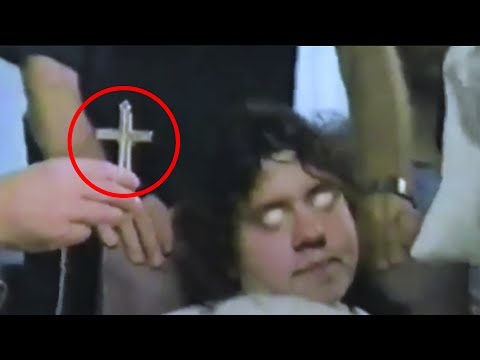
The pursuit of understanding phenomena like demonic possession is a delicate dance between the known and the unknown. While definitive proof remains elusive in the realm of empirical science, the persistent human fascination with these extreme manifestations compels us to continue investigating, questioning, and analyzing. The blurry figures on a screen are more than just images; they are echoes of profound human anxieties and enduring mysteries.