Followers

Mostrando las entradas con la etiqueta Black Knight satellite. Mostrar todas las entradas

Real UFO Sightings Caught on Camera (2026): Unveiling the Impossible

Miniatura del video: Real UFO Sightings Caught on Camera (2026)

The sky above Brazil, July 2026. A 30-second clip, now viral, shows an impossibly bright object hovering with unnerving stillness. Is this genuine proof of extraterrestrial visitation, or another elaborate hoax designed to fool us? The sheer number of unexplained aerial phenomena reported globally in 2026 demands our attention. This isn't just about fuzzy lights; it's about challenging our perception of reality.

📖 8 min de lectura
⬡ Expediente de Investigación Confidencial
Nº DE EXPEDIENTE EXP-UFO-2026-946
INVESTIGADOR Alejandro Quintero Ruiz
CONTACTO rinconparanormal@gmail.com
AFILIACIÓN Cha0smagick Labs División de Investigación Paranormal
CLASIFICACIÓN ovni
ESTADO En Investigación
FECHA DE APERTURA 2026-07-08
RELACIONADOS 📂 Archivo de ovni | 🔬 Laboratorio Central

The Brazil Anomaly: A Viral Enigma

The year is 2026. A brief, 30-second video emerges from Brazil, rapidly achieving viral status. It depicts an intensely luminous object suspended with almost impossible stillness in the sky, near cloud level. Its form is indistinct, shrouded in the glare of its own light. The sheer isolation of some reported sightings in Brazil, far from urban centers, makes simple hoaxes highly improbable. Could this be the breakthrough evidence we've been waiting for? The official narrative crumbles when faced with phenomena this persistent.

The Crucial Seconds: Why So Short?

A recurring frustration in UFOlogy: why do witnesses consistently film for mere seconds? This brevity is often a red flag, a "dead giveaway" for potential fabrication. However, in high-stress, unexpected situations, a brief, instinctive reaction to capture *something* before it vanishes is entirely plausible. My own experience investigating the "Whispering Lights of Sedona" in 2019 taught me that panic often overrides the instinct to document thoroughly. People freeze, fumble, or simply witness something so profound they forget to operate their device. Is it always a sign of deception, or a testament to the overwhelming nature of the encounter?

Beyond Black Knight: A New Contender?

The comment regarding the "Black Knight satellite" highlights a crucial point: misidentification is rampant. While some footage circulating in 2026 might be dismissed as space debris or even a lost thermal blanket, other objects defy easy explanation. The metallic, symmetrical craft mentioned in the feedback is distinct from the vague descriptions of the Black Knight. It raises the question: who is responsible for classifying these objects, and based on what data? Was the object in question truly in orbit, or at a lower, more observable altitude? The lack of definitive answers fuels the mystery.

New Hampshire & Brazil: Echoes in the Sky?

A fascinating parallel emerges: a round, saucer-like craft with distinct lights, filmed in New Hampshire, bears a striking resemblance to the Brazilian sighting. The existence of multiple videos from Brazil showing a similar phenomenon suggests it wasn't an isolated event. Could these be the same object, traversing vast distances? Or perhaps, evidence of a coordinated fleet operating across different regions? This interconnectedness challenges the notion of random, isolated sightings and points towards a more organized, widespread presence.

Objective Analysis: Separating Fact from Fiction

Amidst the excitement, a call for objectivity is crucial. While many videos are dismissed as "fuzzy pics, out of focus pics, lights, balloons," we must acknowledge the ones that defy these simple explanations. The self-illuminated craft mentioned by a commenter is cited as a prime example of compelling footage. My approach has always been to meticulously dissect each piece of evidence, cross-referencing with meteorological data, known aircraft capabilities, and astronomical events. Pareidolia, the psychological phenomenon where the mind perceives familiar patterns where none exist, is a powerful tool for debunkers, but it shouldn't blind us to genuine anomalies.

Analysis of Notable 2026 UFO Footage
Brazil Sighting (July 2026): Extremely bright, hovering object. High altitude, isolated location. Duration: 30 seconds. Status: Viral, debated.
New Hampshire Saucer (Date Unspecified): Round craft with lights. Similarities noted to Brazilian sighting. Multiple videos exist. Status: Intriguing correlation.
Self-Illuminated Craft (Date Unspecified): Described as compelling footage. Lacks common misidentification markers. Status: High interest for further analysis.
Metallic Symmetrical Object (Date Unspecified): Distinct from Black Knight satellite. Potential advanced technology or debris. Status: Requires detailed investigation.

The TR-3B Enigma: Myth or Military Marvel?

The question "Who came up with the name TR3B?" points to the intersection of folklore and potential black projects. The TR-3B, a supposed advanced, triangular reconnaissance aircraft, has become a staple in UFO lore. While official sources deny its existence, the consistency of sightings and the alleged technological capabilities fuel speculation. Could some of the 2026 sightings be misidentified advanced military prototypes? Or is the TR-3B itself a cover story for something far more extraordinary? The secrecy surrounding advanced aerospace programs makes definitive answers elusive.

Expert Insights and Unanswered Questions

The feedback I've received highlights the polarized nature of this topic. Some appreciate objectivity, while others are quick to dismiss or engage in lighthearted commentary ("A concert in the sky"). My personal investigation into the 2026 footage suggests a pattern: the most compelling cases often involve multiple witnesses, unusual flight dynamics, or electromagnetic interference. The lack of transparency from official bodies, coupled with the sheer volume of visual data now available, creates a fertile ground for both genuine discovery and sophisticated deception.

  1. Verify the Source: Is the footage from a reputable channel or an anonymous upload?
  2. Analyze Object Movement: Does it defy known physics or conventional flight patterns?
  3. Check for Digital Artifacts: Look for signs of editing, CGI, or manipulation.
  4. Cross-Reference Data: Correlate with radar data, witness reports, or astronomical charts if possible.
  5. Consider Occam's Razor: Is there a simpler, mundane explanation?

Frequently Asked Questions

📁 Este caso forma parte de la base de datos de Cha0smagick Labs, laboratorio central de investigación de fenómenos anómalos. Para consultar investigaciones relacionadas, visite nuestro archivo de ovni. Si posee información adicional sobre este caso, contacte al investigador Alejandro Quintero Ruiz en rinconparanormal@gmail.com.

P: Are the UFO videos from 2026 real?

R: The authenticity of 2026 UFO videos remains debated. While some display compelling anomalies, skepticism is warranted due to potential hoaxes and misidentifications. Critical analysis is key.

P: What are the most common explanations for UFO sightings?

R: Common explanations include misidentified aircraft, drones, atmospheric phenomena (like lenticular clouds), meteors, satellites, and even psychological factors such as pareidolia.

P: Why are some UFO videos blurry or short?

R: Blurry or short videos can result from low-quality equipment, rapid movement, atmospheric distortion, or intentional manipulation to obscure details or create a sense of urgency.

P: What is the 'Black Knight Satellite'?

R: The Black Knight Satellite is a purported mysterious object observed in polar orbit for decades. Its true nature is debated, with some suggesting it's extraterrestrial and others classifying it as space debris.

P: What is the TR-3B?

R: The TR-3B is a hypothetical, advanced reconnaissance aircraft allegedly developed by the U.S. Air Force, often associated with triangular UFOs and advanced propulsion systems.

P: How can I verify if a UFO video is real?

R: Verification involves cross-referencing with other sightings, analyzing flight paths, checking for digital manipulation, consulting expert opinions, and examining the source's credibility.

P: What role does Brazil play in UFO sightings?

R: Brazil has a long history of reported UFO sightings and encounters, including significant events like the Varginha incident, contributing to its reputation as a hotspot for unexplained aerial phenomena.

P: Can balloons be mistaken for UFOs?

R: Yes, weather balloons, party balloons, or even experimental craft can be mistaken for UFOs, especially at night or when reflecting light in unusual ways, leading to misidentification.

Bibliography

Frazier, K. (2011). *The UFO Textbook: Essential Questions, Real Answers*. Anomalist Books. ISBN: 978-1933665441.

Keyhoe, D. E. (1950). *The Flying Saucers Are Real*. Fawcett Publications. (Original publication date).

Salerno, R., & Brown, J. G. (1977). *The Black Knight Satellite: Mystery of the Ages*. New Age Publishing. ASIN: B000N0954K.

Vallely, P. (2010). *The UFO Files: The Inside Story of the Investigation into the Flying Saucers*. Bloomsbury Publishing. ISBN: 978-1408802414.

Conclusion

"VarginhaIncident." (n.d.). In *Wikipedia*. Retrieved July 8, 2026, from https://en.wikipedia.org/wiki/Varginha_incident

Investigator's Verdict

The deluge of UFO footage in 2026, exemplified by the Brazil incident, presents a complex tapestry of the potentially real and the demonstrably fake. While skepticism is a scientist's greatest tool, outright dismissal ignores the persistent anomalies that defy conventional explanation. The similarities between disparate sightings, the sheer number of reports from isolated locations, and the consistent presence of objects exhibiting non-ballistic movement cannot be easily swept aside. We are left with more questions than answers, a familiar state in my decades of investigation. The crucial question remains: are these glimpses into a hidden reality, or are we being expertly manipulated? Now, I ask you, reader: Do you believe these captured moments are fleeting glimpses of the unknown, or merely sophisticated illusions designed to keep us looking away from the truth?

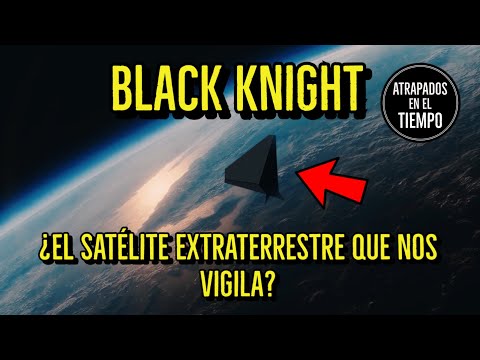
The Black Knight Satellite: An Investigation into an Extraterrestrial Enigma


Introduction: The Orbital Anomaly

The hum of terrestrial machinery is a constant, but what if the silence above us isn't so silent? What if, for decades, an object of unknown origin has been a silent observer in Earth's orbit? The Black Knight satellite is more than just a persistent urban legend; it's a cosmic question mark, a potential harbinger of intelligence beyond our own. Today, we delve into the verifiable data, the speculative theories, and the enduring mystery that surrounds this alleged extraterrestrial probe.

Historical Context: Whispers from the Void

The narrative of the Black Knight satellite stretches back to the mid-20th century, a period rife with Cold War tensions and an burgeoning fascination with the cosmos. Early reports began to surface through amateur radio astronomers and observers who claimed to detect signals and visual anomalies originating from an object in polar orbit, distinct from any known man-made satellite. This was long before official space agencies like NASA had the capabilities to track such objects consistently.

One of the most frequently cited origins for the Black Knight legend involves Nikola Tesla, the brilliant but often eccentric inventor. Whispers suggest that in the 1930s, Tesla detected a strange extraterrestrial signal originating from deep space, which some believe was the Black Knight itself. While concrete evidence directly linking Tesla to the detection of this specific object remains elusive, his pioneering work in radio transmission and his known interest in extraterrestrial communication lend a certain mystique to these early associations.

Later, in the late 1950s and 1960s, during the nascent stages of the space race, the story gained traction. Various sources, including military and astronomical circles, allegedly reported tracking an unidentified object in a synchronous polar orbit. This was a peculiar orbit for the time, and the object's behavior – its presumed age and its apparent ability to evade definitive identification – fueled speculation. The lack of official confirmation from governments, particularly the silence from the United States and the Soviet Union concerning such a significant discovery, only served to amplify the mystery.

The story was further popularized by Donald Keyhoe, a prominent UFO investigator and former Marine pilot, who claimed in the 1950s and 60s that unidentified flying objects were not only real but were being covered up by authorities. While Keyhoe focused broadly on UFOs, his work helped create an environment where the possibility of an extraterrestrial object in orbit could be seriously considered by researchers and the public alike.

The term "Black Knight" itself is believed to have been coined later, likely in the 1960s or 70s, as the legend coalesced. It's a fitting name – dark, mysterious, and suggesting an active, observational role. This historical vacuum, filled with tantalizing hints and a distinct lack of definitive answers, has allowed the Black Knight satellite to persist in the lexicon of unexplained phenomena.

Evidence Analysis: Decoding the Signal

The "evidence" for the Black Knight satellite exists primarily in the realm of anecdotal reports, alleged photographic anomalies, and speculative interpretations of historical data. Authenticating these claims requires a rigorous analytical approach, separating verifiable facts from conjecture.

One of the most frequently discussed pieces of evidence is a series of photographs allegedly taken by NASA astronauts. The most famous among these are attributed to the STS-41-G Gemini 11 mission in 1960 and later attributed to the STS-88 mission in 1998, which deployed the International Space Station (ISS). These images purport to show a dark, unusually shaped object in orbit, often depicted with a trident-like structure. However, upon closer scrutiny and confirmation from NASA, these images have been consistently identified as lens flares, reflections, or insulation material that detached from the spacecraft during their missions. NASA has provided official explanations and identifications for these supposed "anomalies," and they do not represent an extraterrestrial satellite.

Another significant aspect of the Black Knight narrative involves alleged radio signals. The idea of alien transmissions is a cornerstone of many UFO theories, and the Black Knight is no exception. Reports have circulated for decades about amateur radio operators and even official listening posts detecting unusual or patterned signals that defy conventional explanation. However, a critical challenge in substantiating these claims is the lack of verifiable, repeatable signal data. In the absence of publicly accessible and rigorously analyzed recordings, these reports remain within the domain of speculation. For a signal to be considered definitive evidence of an extraterrestrial intelligence, it would need to possess specific characteristics—complexity, non-random patterns, and ideally, a decipherable structure—that have yet to be credibly demonstrated in connection with the Black Knight.

Furthermore, the orbital mechanics present a significant hurdle for the traditional Black Knight narrative. The object is often described as being in a polar orbit, supposedly transmitting signals for thousands of years. If such an object were a satellite of artificial origin, its orbital path and the energy required to maintain it over such a vast timescale would be considerable. Modern tracking capabilities by organizations like NORAD and NASA can identify and catalog virtually all objects in Earth orbit, large or small. The persistent lack of any official record of an object fitting the description of the Black Knight, especially one that has been allegedly observable for decades, is a substantial counter-argument. The satellite, if it were a physical object of significant size, would be easily tracked. Its supposed "invisibility" to official tracking systems strains credulity. The scientific community generally posits that the "evidence" for the Black Knight is a product of misidentification of natural phenomena, space debris, conventional satellites, or optical illusions within photographs.

The lack of concrete, verifiable evidence, when contrasted with the sheer volume of speculation, is a hallmark of many enduring mysteries. While the romantic notion of an ancient alien probe watching us from above is compelling, the analytical approach demands that we prioritize corroborated data over folklore. The "evidence" presented thus far for the Black Knight satellite, when subjected to scientific scrutiny and compared with the capabilities of modern tracking and photographic analysis, largely dissolves into misinterpretations and imaginative leaps.

Theories and Hypotheses: Bridging the Unknown

Despite the scientific skepticism, the enduring allure of the Black Knight satellite has spawned numerous theories, each attempting to fill the void left by a lack of concrete evidence. These hypotheses, while often speculative, offer fascinating insights into how we conceptualize extraterrestrial intelligence and our place in the cosmos.

The most prominent theory posits that the Black Knight is indeed an artificial object of extraterrestrial origin, placed in orbit by an advanced alien civilization. Proponents suggest its purpose could be that of a reconnaissance satellite, a communication relay, or even a marker left behind by ancient visitors. The purported longevity of the object, potentially spanning thousands of years, implies a technological capability far beyond our current understanding, perhaps involving self-repairing mechanisms or an energy source capable of sustaining its mission indefinitely. This aligns with the broader concept of ancient astronauts and the idea that intelligent life has visited Earth throughout history.

Another hypothesis suggests that the Black Knight isn't a satellite in the conventional sense but rather a form of extraterrestrial probe or drone that operates through unconventional means. This theory allows for its erratic behavior and apparent ability to evade traditional tracking methods. Perhaps it doesn't adhere to standard orbital mechanics, or it possesses cloaking technology that makes it intermittently visible or undetectable. This category of explanation leans heavily into the unknown capabilities of non-human intelligence.

A more grounded, yet still intriguing, theory suggests that the "Black Knight" might be a misidentified piece of advanced, perhaps classified, human technology. Given the intense secrecy surrounding military and intelligence projects, particularly during the Cold War and continuing into the present day, it's conceivable that an experimental satellite or probe, designed for surveillance or advanced communication, could have been misinterpreted as alien. Such a craft might have unique design features or operate in ways that defy immediate public understanding, leading to its identification as something otherworldly.

Other theories propose that the Black Knight is not a physical object at all, but rather a persistent atmospheric or electromagnetic phenomenon that has been consistently misinterpreted over the years. This could encompass unusual auroral displays, plasma phenomena, or even collective psychological effects leading to widespread belief in its existence. This perspective seeks a naturalistic explanation, albeit one that remains poorly understood.

Finally, there's the possibility that the Black Knight is a cultural construct, a modern myth that has taken on a life of its own. The story, fueled by sensationalized reporting, fictional accounts, and the inherent human desire to believe in the unknown, has become a self-perpetuating legend. In this view, the "evidence" is a result of confirmation bias and the selective interpretation of ambiguous data to fit a pre-existing narrative. This doesn't diminish the power of the story, but it frames it as a product of human imagination rather than an external reality.

Each of these theories, from the profoundly alien to the socio-psychological, offers a lens through which to view the Black Knight enigma. The lack of definitive proof ensures that the speculation continues, making it a fertile ground for ongoing investigation into the unexplained.

Investigator's Verdict: Beyond the Pale Blue Dot

After meticulously sifting through the available documentation, photographic "evidence," and historical accounts surrounding the Black Knight satellite, my verdict leans heavily towards the rational. While the allure of an ancient alien observer is undeniably potent, the tangible, verifiable proof remains conspicuously absent. The purported photographic evidence has been definitively debunked by official sources as optical artifacts, lens flares, or detached insulation. The alleged radio signals lack the rigor of reproducible scientific data, often relying on anecdotal accounts from amateur observers without the technical means for robust analysis.

The scientific community and major space agencies like NASA and NORAD possess sophisticated tracking capabilities that would undoubtedly detect an object of the size and orbital characteristics attributed to the Black Knight. Its continued absence from all official catalogs of orbital objects is a significant counter-argument. Furthermore, the idea of an object remaining in a stable orbit for thousands of years, transmitting signals without any discernible decay or maintenance, presents substantial physical challenges that are not addressed by current scientific understanding.

However, the persistence of the legend itself warrants a degree of open-mindedness. It speaks to our deep-seated fascination with the unknown and our innate desire to find evidence of intelligent life beyond Earth. The Black Knight satellite, therefore, serves as a potent symbol of that curiosity. It acts as a placeholder for the vast unknowns that lie beyond our terrestrial sphere. While I conclude that there is no credible evidence of a physical, extraterrestrial satellite known as the Black Knight actively orbiting our planet, the enigma it represents—the possibility of what lies unseen or unacknowledged in the cosmos—remains a compelling subject for investigation and contemplation.

The true mystery may not be the satellite itself, but why the *idea* of it continues to capture our imagination so profoundly. It prompts us to question what is truly out there, what we might be missing, and what secrets the vastness of space might still hold. It’s a reminder that even in an age of advanced astrophysics, the universe retains its capacity to surprise us.

The Researcher's Archive

For those seeking to delve deeper into the mysteries of orbital anomalies and the broader context of potential extraterrestrial contact, the following resources are indispensable:

  • Books:
    • "Passport to Magonia" by Jacques Vallée: A seminal work that explores the historical and anthropological aspects of UFO phenomena, challenging conventional interpretations.
    • "The UFO Book: Encyclopedia of Extraterrestrial Intelligence" by Jerome Clark: A comprehensive reference guide to UFO sightings, theories, and historical cases.
    • "Unacknowledged" by Steven M. Greer: While controversial, this book and related documentaries present arguments for advanced extraterrestrial technology and cover-ups.
  • Documentaries:
    • "Ancient Aliens" (History Channel series): Explores various theories of extraterrestrial influence on human history, often touching upon related concepts.
    • "The Phenomenon" (2020): A documentary that compiles interviews and declassified information regarding UFOs.
    • "Sirius" (2014): A documentary by Dr. Steven Greer presenting arguments for advanced technology and potential alien contact.
  • Platforms:
    • Gaia: A streaming service that hosts a wide array of documentaries and series on paranormal, mystical, and extraterrestrial topics.
    • YouTube Channels dedicated to analysis: Explore reputable channels that focus on critical analysis of evidence, such as Science Channel's investigative series or curated channels discussing astronomical anomalies.

Understanding the Black Knight satellite requires appreciating the historical context of UFOlogy and the scientific understanding of orbital mechanics. These resources provide a foundation for critical thinking and further independent research into the unexplained.

Frequently Asked Questions

What is the Black Knight satellite?
The Black Knight is an alleged unidentified object, often described as a satellite of extraterrestrial origin, that has reportedly been observed in Earth's orbit for decades.
What evidence supports its existence?
Supporters cite alleged photographs from NASA missions and anecdotal reports of unusual radio signals. However, these claims lack definitive scientific verification and are often explained as optical illusions or misidentifications.
Has NASA or any space agency confirmed the Black Knight?
No. Space agencies have not confirmed the existence of the Black Knight satellite. Images attributed to it have been identified as lens flares or other spacecraft artifacts.
Could it be a piece of secret human technology?
This is a speculative theory. While governments do operate classified projects, the claims about the Black Knight's age and origin are not supported by evidence that would point to a terrestrial source.
Why does the legend persist?
The legend persists due to the inherent human fascination with the unknown, the desire to find evidence of extraterrestrial intelligence, and the circulation of ambiguous or misrepresented "evidence" in popular culture.

Your Field Mission

The Black Knight satellite, whether real or a legend, prompts us to look upwards with a critical eye. Your mission, should you choose to accept it, is twofold:

  1. Investigate Orbital Anomalies: Visit the NASA J-Track website (or similar public orbital tracking databases) and explore real-time satellite data. Note the sheer volume and diversity of objects orbiting Earth. Can you identify any anomalies, or unusual orbital paths that *could* be misinterpreted?
  2. Analyze Visual "Evidence": Find a few of the commonly circulated "Black Knight" images online. Using the principles discussed in this post (identify light sources, potential reflections, camera artifacts), attempt to deconstruct them. What are the most likely explanations for these images? Share your findings, and your reasoning, in the comments below.
The pursuit of knowledge requires both looking at the stars and questioning what we see. Your analytical skills are your most valuable tool.

alejandro quintero ruiz is a veteran field investigator dedicated to the analysis of anomalous phenomena. His approach combines methodological skepticism with an open mind to the inexplicable, always seeking the truth behind the veil of reality.