Followers

Mostrando las entradas con la etiqueta Christianity. Mostrar todas las entradas

Christians Practicing Witchcraft Unknowingly: An Investigation

Image

In the vast and often contradictory landscape of human belief, a peculiar phenomenon emerges: individuals deeply entrenched in one spiritual tradition may unknowingly engage in practices associated with another. This dossier delves into the intricate connections between Christianity and witchcraft, exploring how certain Christian rituals, intentions, or interpretations can blur the lines between divine invocation and arcane arts. Our investigation aims to dissect this complex intersection, moving beyond superficial categorizations to examine the underlying energies and methodologies at play. The initial query, which sparked this inquiry, involved a specific Christian conjuration that hinted at a far deeper, and perhaps unsettling, overlap than commonly acknowledged.

Origins of the Investigation

The genesis of this particular investigation stemmed from a submitted case file, which I'll refer to as "The Christian Conjuration." This document, received some time ago, presented a series of rites and invocations presented within a distinctly Christian framework. However, upon initial analysis, the methodologies and underlying principles bore striking resemblances to practices typically classified under the umbrella of witchcraft or ritualistic magic. This discrepancy immediately flagged the case for deeper scrutiny. My mandate as an investigator is to seek the underlying truth, unclouded by dogma or popular perception. When evidence suggests a confluence of seemingly disparate belief systems, it is my duty to explore that intersection rigorously.

The Conceptual Nexus: Christianity and Witchcraft

At first glance, Christianity and witchcraft appear to be diametrically opposed. Christianity, a monotheistic religion, emphasizes faith in a single God and adherence to divine law as interpreted through scripture and tradition. Witchcraft, in its myriad forms, often involves the manipulation of spiritual or natural energies, sometimes through invocation of various entities, adherence to natural cycles, or the performance of specific rituals to achieve desired outcomes. However, when we move beyond the surface-level definitions and examine the core mechanics of ritual and intention, the parallels become more pronounced.

Recommended Gear for Investigation

ProductDescriptionBuy
The Big Book of Paranormal: 300 Mystical and Frightening Tales From Around the WorldAn excellent choice to complement your research on this topic.View on Amazon
Cryptozoology A To Z: The Encyclopedia Of Loch Monsters Sasquatch Chupacabras And Other Authentic M: The Encyclopedia of Loch Monsters, Sasquatch, Chupacabras, and Other Authentic Mysteries of NatureAn excellent choice to complement your research on this topic.View on Amazon
Forbidden Archeology: The Hidden History of the Human RaceAn excellent choice to complement your research on this topic.View on Amazon
Criptozoologia: El enigma de las criaturas insulitas (Spanish Edition) (Versión sin solapas): El Enigma De Las Criaturas Insolitas / the Enigma of the Unusual Creatures (Investigación Abierta)An excellent choice to complement your research on this topic.View on Amazon
The H. P. Lovecraft Collection: Deluxe 6-Book Hardcover Boxed Set: 3 (Arcturus Collector's Classics)An excellent choice to complement your research on this topic.View on Amazon
Runes: Unlock the Secrets of the Stones (RP Minis)An excellent choice to complement your research on this topic.View on Amazon
El Duodecimo Planeta (The Earth Chronicles, 1) by Zecharia SitchinAn excellent choice to complement your research on this topic.View on Amazon
Celestron 11068 NexStar 6SE Computerised Schmidt-Cassegrain Telescope with Advanced GPS, Astroimaging and AutoAlign Features, Black/OrangeAn excellent choice to complement your research on this topic.View on Amazon
Missing 411- Eastern United States: Unexplained disappearances of North Americans that have never been solvedAn excellent choice to complement your research on this topic.View on Amazon
Witchcraft Supplies - Kit de hechizos de bruja, 60 piezas, suministros y herramientas Wiccan, incluye vela de cristal de hierba, cuenco de altar, campana de bruja, regalo de bruja, kit de iniciaciónAn excellent choice to complement your research on this topic.View on Amazon

Both traditions, in their pure forms, often aim to connect with a higher power or influence reality through focused intent and symbolic action. Christianity employs prayer, sacraments, and liturgy. Witchcraft utilizes spells, incantations, and ceremonies. The critical differentiator often lies not in the *act* of ritual, but in its *source* of power, its *intended purpose*, and its *theological framework*. Yet, history is replete with examples where these boundaries have been fluid, and where practices could be interpreted through multiple lenses.

Deconstructing the Christian Conjuration

The submitted conjuration was particularly illuminating. It involved specific prayers, the use of blessed water, and affirmations of faith in Christ. On the surface, these are unequivocally Christian elements. However, the structure of the ritual—the precise timing, the formulation of the intention into a command-like structure, the use of specific symbolic objects, and the expectation of a direct, manifest result—mirrored common practices in ceremonial magic. It wasn't merely a prayer for divine intervention; it was a meticulously crafted sequence designed to compel a specific outcome, a hallmark of many magical systems.

Consider the concept of "binding" or "unbinding" in witchcraft. This involves using intention and ritual to restrict or release a force or influence. The conjuration, while framed as a prayer for protection against negative spiritual influences, employed a similar energetic structure. It sought to energetically "bind" malevolent forces and "unbound" positive divine energy. The language was Christian, the invocation was to Christian figures, but the *methodology* of energetic manipulation was, by many definitions, arcane.

Energetic Signatures: Intent vs. Practice

This brings us to a crucial point in the investigation: the divergence between intent and energetic signature. A person might intend to perform a Christian act of blessing, but if the energy they are channeling or the method they are using aligns with arcane principles, can the act truly be considered purely Christian? This is where the lines blur and individual interpretation becomes paramount.

My experience in field investigations has shown that energy signatures are often more revealing than labels. A ritual performed with profound faith and love, even if using symbols not strictly orthodox, can carry a different energetic resonance than a ritual driven by fear or a desire for control, regardless of the chosen religious terminology. The practitioners in the submitted case genuinely believed they were acting within their Christian faith. Their intent was to connect with God and seek His protection. However, the *technique* they employed—the precise ordering of actions, the specific energetic frequencies they were attempting to work with—was remarkably similar to what one might find in a grimoire.

Historical Parallels and Misinterpretations

History offers numerous instances where religious practices have been co-opted, misunderstood, or deliberately conflated. During periods of intense religious persecution, practices deemed heretical were often demonized. Conversely, elements from older pagan or folk traditions were sometimes absorbed into dominant religions, often recontextualized to fit the new theological framework. The very concept of "witchcraft" has evolved dramatically, often used as a broad brush to condemn anything outside the accepted religious norm.

It's plausible that elements of ancient magic, pre-dating Christianity, persisted in folk traditions and were later integrated into what became recognizable as Christian practices. Consider the use of relics, holy water, or exorcism rites. While these are now standard within certain Christian denominations, their historical roots and functional parallels with older magical traditions are undeniable. The energy invested in these practices, the belief in their efficacy to ward off evil or invoke divine favor, operates on principles that transcend specific religious labels.

Furthermore, many individuals who identify as Christian may engage in spiritual practices learned informally, passed down through family or community, without a deep theological understanding of their origins or energetic implications. They might perform these actions with genuine faith, believing they are simply "praying" or "asking for protection," unaware that the specific structure of their actions aligns with arcane principles.

Audience Perspectives on the Phenomenon

Analyzing audience reactions to similar discussions reveals a spectrum of responses. Many viewers express shock and disbelief, unable to reconcile their understanding of Christianity with any form of witchcraft. Others, particularly those with a background in comparative religion or esoteric studies, find the connections unsurprising, arguing that all spiritual practices share fundamental energetic principles.

"I was raised Catholic, and we used holy water and blessed salt. My grandmother always said it 'cleansed the bad energy.' I never thought of it as witchcraft, but the intent was to push away negative forces, just like you describe."

This sentiment is echoed in many online forums and comments sections. Some viewers report personal experiences where prayers or rituals within their Christian upbringing felt more potent or "active" than simple supplication, leading them to question the nature of the forces involved.

"It makes sense. The power isn't just in the words, but in the belief and the ritual. If you're directing that belief and ritual with specific intent, isn't that magic, regardless of who you call on?"

These testimonies, while anecdotal, highlight a common thread: the recognition that focused intent and structured ritual, regardless of religious framing, can produce tangible results or energetic shifts. The debate often centers on whether these results are solely attributable to divine intervention as understood within Christianity, or if they tap into broader universal energies that practitioners of witchcraft also utilize. The core question for many in our audience seems to be: Is it the label that defines the energy, or the energy that defines the practice?

Investigator's Verdict: Divine Purpose or Arcane Influence?

After meticulous analysis of the submitted conjuration and cross-referencing with historical and contemporary practices, my verdict leans towards complexity rather than simple categorization. The individuals involved were, by all indications, acting with genuine Christian faith and intent. Their desire was to connect with the divine and seek protection through established Christian means. However, the *methodology* employed in their conjuration exhibits structural and energetic parallels with witchcraft and ceremonial magic.

This suggests not necessarily a deliberate embrace of witchcraft, but rather an unconscious application of arcane principles within a Christian framework. It is a testament to the fact that fundamental energetic laws govern spiritual practices, regardless of the dogma attached. The power utilized may be channeled through a Christian lens, invoking Christian figures, but the mechanics of its operation—the focal point of intent, the ritualistic structure, the energetic manipulation—align with principles recognized in other esoteric traditions.

Therefore, to say that these Christians are "practicing witchcraft" without knowing it is a provocative, yet not entirely inaccurate, assessment from a purely energetic and ritualistic standpoint. It underscores the idea that the spiritual world is far more interconnected than theological divisions often allow. The energy of intent, when focused and structured, can be potent, regardless of the invoked name.

To truly grasp the nuances of spiritual practices and their underlying energetic currents, one must consult a range of perspectives. The following resources have been instrumental in my own research and are highly recommended for those seeking a deeper understanding:

Equipo Recomendado para la Investigación

Investigating the subtle energies and phenomena discussed requires specialized tools. While much can be done with keen observation and focused intent, certain equipment can aid in data collection and analysis.

Frequently Asked Questions

  1. Is it possible for a Christian to unintentionally practice witchcraft?

    Yes, it is possible. If a Christian employs ritualistic structures, specific energetic manipulations, or focuses intent in ways that align with recognized magical principles, even if framed within a Christian context, they may be unknowingly engaging in practices that share characteristics with witchcraft.

  2. What distinguishes a Christian prayer from a magical spell?

    The distinction often lies in the framework, the source of recognized power, and the intent. A Christian prayer typically seeks divine intervention or guidance from God within a theological system. A spell, in the context of witchcraft, often focuses on manipulating energies or invoking entities to achieve a specific, often predetermined, outcome, employing methodologies that may differ from standard Christian liturgy.

  3. Are holy water and exorcism considered witchcraft?

    Within mainstream Christianity, these are considered sacred rites for protection and purification. However, from a purely structural and energetic perspective, their function—to cleanse, protect, and expel negative influences through ritual and symbolic means—bears functional similarities to practices found in various forms of magic and witchcraft. The key difference lies in the theological interpretation and the recognized source of power.

  4. How can one ensure their spiritual practice remains within their intended faith tradition?

    Deep theological study, understanding the historical context of rituals, and maintaining a clear focus on the core tenets and recognized sources of power within one's faith tradition are crucial. It also involves discernment—questioning whether a practice feels aligned with one's faith or if it seems to borrow heavily from or mimic other traditions without proper understanding.

Your Field Mission

Your Mission: Discernment in Practice

The spiritual realm is a tapestry woven with threads of intent, energy, and belief. By examining its intricate patterns, we can gain a more profound understanding of our own place within it. Keep your senses sharp, your mind open, and your spirit grounded.

Investigator's Note: True paranormal research doesn't fund itself. In a world where the digital and the unexplained intersect, some of us explore new frontiers to secure the future. Do you dare to be part of the vanguard? Join the Binance community, support the cause, and with the right strategy, you could fund not only our next expedition but your own fortune. The next great discovery could be just a click away.

The La Luz Del Mundo Cult: A Deep Dive into Spiritual Control and Alleged Abuses


alejandro quintero ruiz here. The shadowy corners of human belief often conceal structures of power that, while cloaked in divine mandate, can become instruments of profound control and, at times, exploitation. Today, we open an investigation into the organization known as La Luz Del Mundo (The Light of the World), a religious movement that commands significant devotion but has also been the subject of persistent, disturbing allegations. This isn't about dismissing faith; it's about dissecting the mechanisms that uphold spiritual empires.

Our inquiry will delve beyond the surface of sermons and rites to examine the historical roots, the core doctrines, the hierarchical structures, and the serious accusations that have shadowed its leadership. We seek to understand how a spiritual movement can evolve, and what warning signs emerge when devotion ossifies into unquestioning obedience.

Historical Context: The Genesis of La Luz Del Mundo

Founded in 1926 in Guadalajara, Mexico, by Eusebio Joaquín González (later known as Aaron Joaquín), La Luz Del Mundo emerged from a period of significant religious and social upheaval in Mexico. The movement's initial appeal lay in its promise of a direct connection to God and a return to perceived apostolic purity, a compelling narrative in a landscape seeking spiritual solace and moral guidance.

Aaron Joaquín positioned himself not merely as a minister, but as the divinely appointed apostle, a charismatic figurehead tasked with restoring the true church. This foundational claim of unique, divinely sanctioned authority is a critical element in understanding the movement's trajectory and its subsequent consolidation of power. The early years were marked by fervent evangelism, spreading its message across Mexico and eventually, internationally. The narrative of a restorationist church, reclaiming lost truths, resonated with those seeking an alternative to established religious institutions.

This historical context is crucial. It provides the bedrock upon which the organization's structure and theological framework were built. Understanding the socio-political climate of early 20th-century Mexico offers insight into the initial receptiveness and growth of a movement that would eventually encompass millions worldwide.

Doctrinal Analysis: The Architecture of Belief and Control

At the heart of La Luz Del Mundo's doctrine is the belief in the divine election of its leaders, culminating in the current "Apostle." This tenet is paramount: the Apostle is seen as God's living representative on Earth, his pronouncements carrying an authority that supersedes secular law and individual conscience. This creates an environment where dissent is not merely discouraged, but framed as spiritual rebellion.

Key doctrines emphasize:

  • Divine Election: The unquestionable mandate of the elected Apostle, inheriting spiritual authority through a lineage.
  • Restorationism: The belief that the true church was lost and has been restored through the movement's founders.
  • Exclusive Salvation: The idea that salvation is attainable only through adherence to La Luz Del Mundo and its leadership.
  • Community Obligation: Strong emphasis on communal living, shared resources, and unwavering support for the church's hierarchy and directives.

This doctrinal architecture is not unique to La Luz Del Mundo; it mirrors patterns seen in various high-control religious groups. The intellectual and spiritual isolation it fosters can be a powerful tool for maintaining cohesion. When critical thinking is discouraged in favor of faith, and when the leadership is presented as infallible, the groundwork is laid for potential abuses of power. The doctrine doesn't just guide worship; it dictates life.

From an analytical standpoint, the concept of a "living oracle" within a religious structure presents inherent risks. It removes the checks and balances often provided by historical texts or communal interpretation of scripture, placing immense power in the hands of one individual and their inner circle. This concentration of authority is a red flag that warrants rigorous scrutiny.

Leadership and Succession: The Patriarchal Structure

The succession within La Luz Del Mundo has historically been passed down through the Joaquín family, most notably from Aaron Joaquín to his son Samuel Joaquín Flores, and subsequently to Samuel Joaquín's son, Naason Joaquín García. This hereditary transfer of spiritual authority reinforces the notion of a sacred lineage, making the leadership appear immutable and divinely ordained.

This patriarchal system, while common in many traditional societies and some religious organizations, can become problematic when coupled with absolute spiritual authority. It can lead to a system where loyalty to the family line outweighs accountability to the broader membership or external legal frameworks. Examining historical patterns of succession in such movements often reveals how power is consolidated and how challenges to authority are managed.

The transition of leadership has not been without its complexities, often involving internal consolidation of power and the quiet marginalization of potential rivals or dissenting voices. Understanding this succession mechanism is key to grasping how the organization maintains its internal hierarchy and its outward projection of unity.

Allegations of Abuse: Examining the Darker Threads

The most critical aspect of our investigation concerns the serious allegations of sexual abuse, exploitation, and financial impropriety that have been leveled against leadership figures within La Luz Del Mundo, particularly against Naason Joaquín García and his predecessors. These are not mere rumors; they are the subject of ongoing legal investigations and have been detailed in numerous testimonies and journalistic exposés.

Allegations often include:

  • Sexual Abuse: Claims of exploitation and abuse, often occurring within the supposed sanctuary of the church, involving minors and adult members.
  • Financial Mismanagement: Accusations of diverting church funds for personal gain and pressuring members for excessive financial contributions.
  • Spiritual Coercion: Using religious doctrine to silence victims, intimidate accusers, and maintain control over the narrative.

The consistent reporting of such allegations across different jurisdictions and over extended periods suggests a pattern that cannot be easily dismissed. The challenge for investigators is often overcoming the community's deeply ingrained loyalty and the fear of reprisal, while simultaneously navigating legal systems that may be slow to act or face pressure from influential figures. The concept of "spiritual authority" being used as a shield against legal accountability is a recurring theme in cultic studies. It presents a significant hurdle for justice.

It is imperative that these allegations are investigated thoroughly and impartially. The principle of "innocent until proven guilty" applies, but so does the moral and ethical obligation to listen to and protect potential victims, and to hold perpetrators accountable regardless of their perceived spiritual standing.

"When a shepherd demands unquestioning faith and punishes doubt, one must ask if he is guiding the flock to pasture or to slaughter." - A common sentiment echoed in investigative circles regarding such movements.

Investigator's Verdict: Between Faith and Exploitation

La Luz Del Mundo presents a complex case study where genuine faith and community devotion coexist with deeply disturbing allegations of abuse of power and sexual misconduct. The organization's hierarchical structure, built upon a foundation of divinely appointed leadership, creates an environment susceptible to exploitation.

While the movement offers a sense of belonging and spiritual purpose to many, the persistent and credible allegations against its leaders cannot be ignored. The legal processes currently underway are critical. From an investigative standpoint, the pattern of alleged behavior, the use of spiritual authority to suppress dissent and victim testimony, and the hereditary control of leadership are significant indicators that warrant extreme caution and continued scrutiny. It is a delicate balance between respecting an individual's right to practice their faith and the imperative to protect vulnerable individuals from harm and exploitation.

The question that remains is not whether faith can be a source of good, but whether the structures erected around it have become, for some, a tool for control and abuse. The evidence suggests a troubling answer.

For those seeking to understand the mechanics of undue influence and spiritual manipulation, further research into organizations of this nature is essential. Understanding the psychological and social dynamics at play is the first step toward safeguarding oneself and others.

The Researcher's Archive

To delve deeper into the intricacies of spiritual control, cult dynamics, and investigative reporting on such matters, the following resources are invaluable:

  • Books:
    • "Combating Cult Mind Control" by Steven Hassan: A foundational text on the psychology of cults and coercive influence.
    • "The Power of Illusion: The Making of a Cult" by James R. Lewis: Explores the mechanisms by which cults recruit and maintain members.
    • "Hostage to Heaven" by Rabinowitz, Steinfeldt & White: An analysis of the Children of God cult, offering parallels in structure and allegations.
  • Documentaries:
    • "Going Clear: Scientology and the Prison of Belief" (HBO): While focusing on Scientology, it illuminates common tactics used by high-control groups.
    • Investigative reports by reputable news organizations (e.g., The New York Times, BBC, Associated Press) detailing legal proceedings and victim testimonies related to La Luz Del Mundo.
  • Academic Journals:
    • Publications from organizations like the International Cultic Studies Association (ICSA) offer research papers and analyses of cultic phenomena.

These resources provide context and methodological frameworks for approaching the study of religious movements with both an open mind and critical discernment.

Frequently Asked Questions

What is La Luz Del Mundo?

La Luz Del Mundo is a religious organization founded in Mexico in 1926, centered around the belief in a divinely appointed Apostle who acts as God's representative on Earth. It emphasizes apostolic purity and offers a path to salvation through adherence to its doctrines and leadership.

What are the main allegations against the leadership?

The leadership, particularly Naason Joaquín García, has faced serious allegations including sexual abuse of minors and adults, financial misconduct, and using spiritual authority to coerce members and suppress dissent.

Is La Luz Del Mundo considered a cult?

While the term "cult" can be pejorative, La Luz Del Mundo exhibits characteristics often associated with high-control religious groups, including a centralized, authoritarian leadership, doctrines that discourage critical questioning, and allegations of coercive practices. Many former members and external observers describe it as such.

About the Author

alejandro quintero ruiz is a veteran field investigator dedicated to the analysis of anomalous phenomena. His approach combines methodological skepticism with an open mind to the inexplicable, always seeking the truth behind the veil of reality. With years spent documenting the fringes of human experience, his work aims to dissect narratives, scrutinize evidence, and provoke critical thought.

The investigation into La Luz Del Mundo is ongoing, both in legal arenas and in the court of public opinion. The line between fervent devotion and harmful manipulation is often blurred, but it is a line that must be examined with unwavering rigor. What begins as a search for spiritual enlightenment can, in some structures, become a pathway to spiritual subjugation.

Your Mission: Analyze the Doctrine of Authority

Consider a secular organization (a corporation, a political party) where leadership claims absolute, divinely inspired authority and succession is hereditary. What mechanisms of accountability would you implement to prevent abuse? How does this compare to the religious context, and where do the dangers lie?

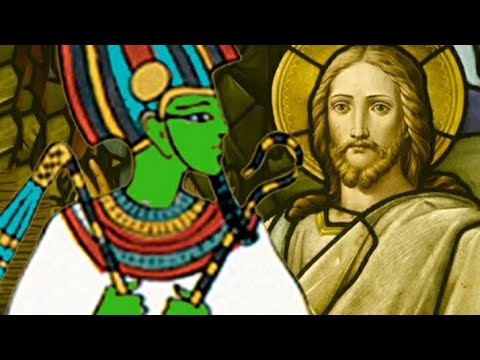
Osiris and Jesus: An Analysis of Parallel Myths and Historical Echoes


The human psyche has an enduring fascination with narratives of death, rebirth, and divine intervention. Across cultures and millennia, certain stories resonate with an uncanny similarity, prompting questions about their origin and interconnectedness. Today, we open the dossier on two figures whose stories, separated by vast gulfs of time and geography, exhibit striking thematic parallels: the ancient Egyptian deity Osiris and the central figure of Christianity, Jesus Christ. Is this mere coincidence, a shared human archetypal language, or evidence of direct or indirect historical transmission? Let us delve into the evidence.

Historical Context: The Echoes of Antiquity

To understand the alleged parallels between Osiris and Jesus, it is imperative to establish a foundation in historical and cultural contexts. Ancient Egypt, with its sophisticated civilization dating back thousands of years, developed a rich tapestry of mythology and religious practices. The Osiris myth, central to Egyptian religion, particularly during the New Kingdom and later periods, explained concepts of death, the afterlife, and resurrection, profoundly influencing Egyptian funerary practices and beliefs.

Conversely, the narrative of Jesus Christ emerged within the Hellenistic-Roman world of the 1st century CE. Christianity, while rooted in Jewish tradition, developed a distinct theology and cosmology that spoke to a diverse audience. The comparative study of these narratives requires careful consideration of the timelines, potential cultural exchanges, and the inherent human propensity for creating meaning through symbolic storytelling.

The proximity of the Egyptian civilization to the historical milieu in which Christianity began to spread cannot be ignored. Ideas and philosophical concepts often travel with trade routes, conquering armies, and religious missionaries. Scholars have long debated the extent to which early Christianity may have absorbed or adapted existing religious or philosophical frameworks from older traditions, including Egyptian mysteries, Gnosticism, and mystery cults prevalent in the Roman Empire.

The Osiris Mythos: Death, Resurrection, and Divine Kingship

The myth of Osiris, as reconstructed from various Egyptian texts like the Pyramid Texts and the Coffin Texts, is one of profound betrayal, death, and ultimate triumph over oblivion. Osiris, a benevolent king, was murdered and dismembered by his envious brother, Set. His devoted wife, Isis, painstakingly gathered his scattered body parts, miraculously reassembled him, and, through divine power, conceived their son, Horus. Osiris then descended to the underworld, becoming its ruler and judge, ushering in an era of potential rebirth for his followers.

Key elements of this myth include:

  • Divine Birth/Origin: Osiris was often depicted as a divine king, a god-man whose reign brought order and prosperity to Egypt.
  • Mortal Life and Teachings: He taught humanity agriculture and civilization.
  • Betrayal and Murder: A violent death at the hands of a jealous relative.
  • Dismemberment and Reconstruction: His body being scattered and subsequently reassembled.
  • Resurrection/Ascension: A return from death, not to earthly life as before, but to a new existence in the underworld.
  • Afterlife and Judgment: Becoming ruler and judge of the dead, offering a form of eternal life to believers.
  • Son as Successor/Avenger: His son, Horus, avenging his death and reclaiming the throne.

The funerary rituals and beliefs surrounding Osiris aimed to enable the deceased to identify with him, thereby achieving a similar resurrection and eternal life in the Field of Reeds, the Egyptian paradise. The ritualistic mummification and the recitation of spells were designed to aid the soul's journey through the Duat (underworld) and ensure a favorable judgment by Osiris.

The Jesus Narrative: Sacrifice, Resurrection, and Salvation

The narrative of Jesus Christ, as presented in the New Testament Gospels, also revolves around themes of divine origin, sacrifice, and resurrection. Jesus is presented as the Son of God, born of a virgin, who lived a life of teaching and performing miracles before being betrayed, crucified, and resurrected on the third day. His death is seen as a sacrifice to atone for the sins of humanity, and his resurrection offers the promise of eternal life to those who believe in him.

Key elements of this narrative include:

  • Divine Birth/Origin: Born of the Virgin Mary, conceived by the Holy Spirit; the Word made flesh.
  • Mortal Life and Teachings: Preached a message of love, repentance, and the Kingdom of God, performing numerous miracles.
  • Betrayal and Murder: Crucified under Pontius Pilate after being betrayed by one of his disciples.
  • Death and Burial: Died on the cross and was buried in a tomb.
  • Resurrection: Rose from the dead on the third day, appearing to his disciples.
  • Ascension: Ascended into heaven after a period on Earth post-resurrection.
  • Salvation and Eternal Life: Through faith in him, believers are promised forgiveness of sins and eternal life.

Christian theology posits that Jesus's resurrection is the linchpin of the faith, validating his divinity and providing the basis for humanity's hope for salvation and an afterlife in the presence of God.

"The resurrection of Christ is not merely an event, but the central pillar upon which the entire edifice of Christian theology is built. Without it, the faith, in its most fundamental sense, would crumble."

Comparative Analysis: Core Themes and Archetypal Resonance

Upon juxtaposing the Osiris and Jesus narratives, several striking thematic overlaps emerge:

  • Divine Figures with Human Incarnations: Both Osiris and Jesus are depicted as divine or semi-divine beings who walk among mortals, interact with humanity, and ultimately face death.
  • Violent Death at the Hands of Betrayal: Both figures are subjected to murder, orchestrated by figures close to them (Set for Osiris, Judas for Jesus), signifying a profound act of treachery.
  • The Spectacle of Death and Resurrection/Rebirth: This is the most pronounced similarity. Osiris's reassembly and entry into the underworld, and Jesus's crucifixion, burial, and subsequent resurrection, form the core of their respective theological significance. Both narratives offer a pathway to overcoming death and achieving a form of eternal existence.
  • Offerings of Salvation/Eternal Life: Both figures, through their experiences, provide a means for humanity to achieve a better existence beyond mortal life. For Egyptians, it was union with Osiris; for Christians, it is salvation through faith in Jesus.
  • Sacrifice and Atonement (Implicit/Explicit): While Osiris's death was primarily an act of fratricidal envy leading to his divine rule, it opened the path for human rebirth. Jesus's death is explicitly defined as a sacrificial atonement for human sin.

These parallels have led some scholars and commentators to propose that the Christian narrative may have been influenced by, or consciously adapted elements from, older Egyptian mysteries. The historian G.W. Butterworth, in his work "The Tree at the Center of the World," explored such deep mythological connections.

Evidence of Transmission or Archetypal Parallelism?

The debate hinges on whether these similarities point to direct cultural borrowing or to the manifestation of universal human archetypes. The concept of the dying and rising god is a recurring motif in comparative mythology, and scholars like Mircea Eliade have extensively documented such patterns across diverse cultures.

Arguments for transmission often highlight the existence of widespread mystery cults in the Hellenistic period that incorporated themes of dying and rising deities, to which early Christianity was exposed. The cult of Isis and Osiris, in particular, was popular throughout the Roman Empire, including in Egypt itself during the period leading up to and concurrent with the development of early Christianity.

Conversely, arguments for archetypal parallelism suggest that these narratives arise organically from the human psyche's fundamental concerns with life, death, mortality, and the desire for meaning and transcendence. The hero's journey, often involving trials, death, and rebirth, is a narrative structure found globally. From this perspective, the similarities are not the result of one story copying another, but rather independent expressions of deep psychological truths.

It is also essential to consider the nature of mythological development. Stories evolve, are reinterpreted, and blend with existing traditions. The Gospel accounts were written decades after Jesus's death, during a time of extensive oral and written transmission of narratives. The precise historical relationship between the Osiris myth and the Jesus narrative remains a subject of scholarly debate, with no definitive consensus.

"Dismissing the Christian narrative as a mere copy of older myths oversimplifies the complex religious and cultural landscape of the ancient world. However, ignoring the profound resonance and thematic echoes is equally shortsighted."

Investigator's Verdict: Mythological Echoes or Conscious Adoption?

Based on the available evidence, it is difficult to definitively prove direct, conscious adoption of the Osiris myth by the originators of the Jesus narrative. The historical and textual evidence for such a direct transfer is not conclusive. However, the thematic parallels are too profound to be dismissed as mere coincidence.

My analysis leans towards a combination of factors: the pervasive nature of archetypal narratives within the human collective consciousness and the demonstrable cultural cross-pollination that occurred in the Hellenistic-Roman world. It is highly probable that early Christians, operating within a milieu familiar with various mystery cults, including the cult of Isis and Osiris, intuitively or unconsciously wove elements of these shared symbolic languages into their own theological framework. Furthermore, the desacralization and reinterpretation of ancient myths as new spiritual movements gained traction is a well-documented phenomenon throughout history.

Whether viewed as independent manifestations of universal archetypes or as subtle adaptations within a fertile cultural exchange, the stories of Osiris and Jesus continue to captivate and inform our understanding of humanity's perennial quest for meaning, transcendence, and victory over death. The psychological and spiritual impact of these narratives underscores their enduring power, regardless of their ultimate origin.

The Researcher's Archive

To conduct your own comparative study, consider these foundational texts and resources:

  • Books:
    • "The Egyptian Book of the Dead" (various translations): Essential for understanding Osiris and the Egyptian afterlife.
    • "The Dying and Rising Gods of Antiquity" by G.W. Butterworth: A classic exploration of comparative mythology.
    • "The Golden Bough" by Sir James George Frazer: A monumental work on comparative religion and mythology.
    • "The New Testament" (specifically the Gospels of Matthew, Mark, Luke, and John): For the primary narrative of Jesus.
  • Documentaries:
    • Documentaries exploring "Ancient Egyptian Mysteries" and "The Cult of Isis and Osiris."
    • Documentaries on the historical Jesus and the origins of Christianity.
    • Investigative series on comparative mythology and religious history.
  • Platforms:
    • Gaia: Often features content delving into ancient mysteries and comparative religious studies.
    • Academic databases (JSTOR, Project MUSE): For scholarly articles on Egyptology, early Christianity, and comparative mythology.

Understanding these narratives requires a commitment to in-depth research. Purchasing these materials or subscribing to relevant platforms is a necessary step for any serious investigator in this field. Investing in knowledge is the first step to uncovering hidden truths.

Protocol: Comparative Mythology and Textual Analysis

To approach this subject with rigor, follow these steps:

  1. Establish Chronology: Determine the approximate dates of the earliest known versions of the Osiris myth and the Gospels.
  2. Identify Core Narrative Elements: For each figure, list the essential plot points, divine attributes, and theological significations.
  3. Map Thematic Parallels: Systematically compare the lists, noting direct correspondences and significant divergences.
  4. Examine Historical Contexts: Research the religious, social, and political environments in which each narrative emerged and developed.
  5. Investigate Potential Transmission Routes: Explore evidence of cultural exchange, philosophical overlaps, and linguistic connections between ancient Egypt and the Judaeo-Christian world.
  6. Consider Archetypal Theory: Analyze the narratives through the lens of Jungian psychology and comparative mythology to understand universal symbolic patterns.
  7. Consult Scholarly Consensus: Review the findings and debates among reputable historians, theologians, and mythologists.
  8. Formulate a Hypothesis: Based on the evidence, propose whether the similarities are more indicative of transmission, archetypal resonance, or a combination of both.

This rigorous protocol ensures that your conclusions are grounded in evidence and reasoned analysis, rather than speculation.

FAQ: Parallel Narratives in Mythology

alejandro quintero ruiz is a veteran field investigator dedicated to the analysis of anomalous phenomena. His approach combines methodological skepticism with an open mind to the inexplicable, always seeking the truth behind the veil of reality.

Your Mission: Investigate Your Own Narrative Echoes

The human experience is rich with stories that speak to universal themes. Your mission is to apply the principles of comparative analysis to a myth or legend prominent in your own cultural background or local folklore. Identify its core elements, consider its historical context, and explore potential parallels with other narratives, whether ancient or modern. Document your findings and share your hypothesis on whether they represent cultural transmission or archetypal expressions. The most insightful observations often come from examining the stories closest to us.