Followers

Mostrando las entradas con la etiqueta Edgar Cayce. Mostrar todas las entradas

Impactful Prophecies for 2026: Analyzing Baba Vanga, Nostradamus, and Cayce

Image

The year 2026 looms on the horizon, a date marked by a constellation of unsettling prophecies from history's most enigmatic seers. In each era, humanity grapples with the anxiety of the unknown future, turning to figures like Baba Vanga, Nostradamus, and Edgar Cayce for guidance, or perhaps, a grim premonition. This investigation delves into their most striking predictions for the near future, dissecting these forecasts with a critical yet open mind.

Introduction: Whispers of 2026

The year 2026 is no longer a distant concept; it's a rapidly approaching frontier, shadowed by predictions that have echoed through centuries. This episode of "Más Allá" with Esteban Cruz, featuring insights from Alejandro Bernal and Jhoana Arenas, attempts to synthesize the visions of three titans of prophecy: Baba Vanga, Nostradamus, and Edgar Cayce. Are we merely masochists, drawn to tales of destruction, or is there a genuine imperative to heed these warnings? As we dissect their forecasts, we must also consider the nature of prophecy itself – are they immutable decrees, or mutable warnings contingent on our collective actions?

Baba Vanga: The Balkan Oracle's Glimpses

Baba Vanga, the Bulgarian mystic often dubbed the 'Nostradamus of the Balkans', left behind a legacy of predictions spanning political upheavals, natural disasters, and societal transformations. For 2026, her pronouncements are particularly chilling. While specific details are often debated and subject to interpretation, recurring themes include significant geopolitical shifts, potential breakthroughs in technology that could alter humanity's course, and environmental challenges that demand immediate global attention. Vanga's visions, often cryptic and delivered in a trance-like state, typically focus on events that reshape the world order, hinting at conflicts and the rise of new global powers. Her prophecies are not merely abstract pronouncements; they are often rooted in perceived historical patterns, making them compelling, if unsettling.

Recommended Gear for Investigation

ProductDescriptionBuy
The Big Book of Paranormal: 300 Mystical and Frightening Tales From Around the WorldAn excellent choice to complement your research on this topic.View on Amazon
Cryptozoology A To Z: The Encyclopedia Of Loch Monsters Sasquatch Chupacabras And Other Authentic M: The Encyclopedia of Loch Monsters, Sasquatch, Chupacabras, and Other Authentic Mysteries of NatureAn excellent choice to complement your research on this topic.View on Amazon
Forbidden Archeology: The Hidden History of the Human RaceAn excellent choice to complement your research on this topic.View on Amazon
The H. P. Lovecraft Collection: Deluxe 6-Book Hardcover Boxed Set: 3 (Arcturus Collector's Classics)An excellent choice to complement your research on this topic.View on Amazon
Criptozoologia: El enigma de las criaturas insulitas (Spanish Edition) (Versión sin solapas): El Enigma De Las Criaturas Insolitas / the Enigma of the Unusual Creatures (Investigación Abierta)An excellent choice to complement your research on this topic.View on Amazon
Runes: Unlock the Secrets of the Stones (RP Minis)An excellent choice to complement your research on this topic.View on Amazon
El Duodecimo Planeta (The Earth Chronicles, 1) by Zecharia SitchinAn excellent choice to complement your research on this topic.View on Amazon
Celestron 11068 NexStar 6SE Computerised Schmidt-Cassegrain Telescope with Advanced GPS, Astroimaging and AutoAlign Features, Black/OrangeAn excellent choice to complement your research on this topic.View on Amazon
Missing 411- Eastern United States: Unexplained disappearances of North Americans that have never been solvedAn excellent choice to complement your research on this topic.View on Amazon
Ghost-Hunting For Dummies [Idioma Inglés] An excellent choice to complement your research on this topic.View on Amazon

Nostradamus: Quatrains and Near-Future Forebodings

Michel de Nostredame, the 16th-century apothecary and seer, penned thousands of quatrains – four-line poems – that have been interpreted for centuries as predictions of future events. Deciphering Nostradamus is an art form in itself, as his cryptic verses are rich in allegory, symbolism, and historical context. For 2026, analysts pore over specific quatrains that hint at widespread unrest, technological advancements with dual-use potential (both beneficial and catastrophic), and significant climatic anomalies. The challenge with Nostradamus lies in the ambiguity; a single quatrain can be applied to numerous historical and potential future events. Yet, the sheer volume of interpretations and the uncanny accuracy attributed to past predictions keep researchers returning to his cryptic verses, searching for tangible evidence of what the future holds.

Edgar Cayce: The Sleeping Prophet's Dormant Warnings

Edgar Cayce, known as the 'Sleeping Prophet', delivered his readings while in a self-induced trance, touching upon subjects ranging from health and reincarnation to global prophecies. His insights into the future often painted a picture of profound societal and environmental change. While Cayce is less associated with specific yearly predictions compared to Vanga or Nostradamus, his readings often contain broad strokes that many believe are coming to fruition. For 2026, interpretations of his work suggest a period of intense global challenges, but also one of significant spiritual awakening and technological advancement. Cayce emphasized the role of free will, suggesting that his prophecies were not fixed destinies but potential outcomes based on humanity's collective spiritual and ethical trajectory. He spoke of shifts in global power, potential geological disturbances, and the dawning of a new spiritual age.

Investigator's Analysis: Context, Credibility, and Caution

The recurring theme across these prophetic traditions is one of significant global change. However, as an investigator, my mandate is to approach such claims with rigorous analysis and a healthy dose of skepticism. The human psyche has a remarkable capacity for pattern recognition, often leading us to find meaning in randomness. The "end of the world" narrative, as noted by some viewers of the original broadcast, is a trope that resurfaces annually, amplified by anxiety and the desire for definitive answers in uncertain times. The prophecies, especially those of Nostradamus, are notoriously open to post-hoc interpretation. Events are often shoehorned into pre-existing quatrains after they occur, creating an illusion of accuracy. Baba Vanga's pronouncements, often passed down through intermediaries, also face challenges regarding accurate translation and context. Edgar Cayce's readings, while extensive, often deal with broader spiritual and societal trends rather than precise, dated events.

It's crucial to differentiate between genuine foresight and the human tendency to predict catastrophe. The recurring mention of "end of the world" scenarios, dismissed by many as cyclical alarmism, contrasts sharply with those who interpret these prophecies as profound warnings. As one observer put it, "Las profecías NO están escritas en piedra. Muchas de ellas son advertencias si la humanidad no cambia su comportamiento." This perspective aligns with a more empowered view of the future, where our actions dictate outcomes. The focus on constructive change, as suggested by another commenter, rather than dwelling on destruction, offers a more productive path forward. While we must acknowledge the potential for significant global events in 2026, attributing them solely to ancient prophecies oversimplifies complex geopolitical, environmental, and technological factors.

Echoes from the Audience

The original broadcast generated a spectrum of reactions, reflecting the diverse ways people engage with prophecies. Some viewers expressed skepticism, noting the cyclical nature of apocalyptic predictions: "Esa vaina la dicen cada año..." and "Desde 1900 están con la joda de que el mundo se acaba." This sentiment is echoed by others who believe the "end of the world" is a personal experience tied to individual mortality, rather than a global event. Conversely, many found the program and its featured guests, such as Alejandro Bernal and Jhoana Arenas, to be highly engaging and informative, appreciating Esteban Cruz's work. Some viewers offered a more hopeful perspective, positing that December and the coming year would bring "bendiciones prosperidad protección y sanación," rejecting the notion of global demise. A particularly vivid personal vision was shared, describing a powerful figure, akin to Jesus, warning of impending judgment, earthquakes, and drowning, tied to humanity's "disastrous aberrations." This highlights how personal spiritual beliefs and interpretations heavily influence how prophecies are perceived.

The feedback also included praise for the return of the program: "Me encanta que hayan vuelto!!!!" and "Gracias chicos, finalmente de nuevo!". There were also specific compliments for the guests, with one user stating, "Felicitaciones Esteban por tan extraordinaria invitado Alejandro Bernal sus conocimientos investigaciones son súper interesantes uno de los mejores periodistas del misterio." Suggestions for program enhancement, such as background music and introductory segments reminiscent of past TV programs, were also noted. Underlying many comments is a deep interest in the future and its consequences, even among those who claim not to believe in prophecies, underscoring the universal human curiosity about what lies ahead.

Field Research Kit

To effectively investigate claims like those surrounding the 2026 prophecies, researchers require a reliable toolkit. Understanding the historical and cultural context of these predictions is paramount. This involves delving into ancient texts, cross-referencing interpretations, and examining the biographies of the prophets themselves. Tools for this kind of deep dive include comprehensive historical archives, scholarly analyses of esotericism, and reliable encyclopedic resources.

Recommended Equipment for Investigation

Frequently Asked Questions

  1. What do Baba Vanga, Nostradamus, and Edgar Cayce predict for 2026?

    Baba Vanga's prophecies suggest imminent global changes, Nostradamus's quatrains may hold clues to events in 2026, and Edgar Cayce's 'sleeping prophecies' are seen as gaining relevance for the near future.

  2. Are prophecies set in stone?

    Many believe prophecies are not fixed destinies but rather warnings. They suggest that humanity's behavior and choices can alter the course of predicted events.

  3. How often are predictions of the end of the world made?

    Predictions about the world ending or facing catastrophic events have been recurrent throughout history, with many recurring annually or across different eras, often tied to specific dates or astronomical events.

  4. What is considered a positive outlook on the future?

    A positive outlook focuses on constructive changes, planetary well-being, and transformations that benefit all living beings, rather than solely on destruction or impending doom.

Conclusion: Preparing for the Unforeseen

The prophecies of Baba Vanga, Nostradamus, and Edgar Cayce offer a stark, albeit often ambiguous, glimpse into potential futures. While the exact events of 2026 remain unknown, these ancient warnings serve as powerful reminders of humanity's vulnerability and the potential consequences of our collective actions. As investigators, our role is not to blindly accept or dismiss these visions, but to analyze them within their historical, cultural, and psychological contexts. The recurring narrative of impending doom, while captivating, often overshadows the capacity for human resilience and positive transformation. Perhaps the most potent 'prophecy' is not one of unavoidable catastrophe, but a call to action – a challenge to shape a future defined not by fear, but by wisdom, cooperation, and a commitment to a better world.

Your Mission: Reflect and Engage

Consider this an open-ended investigation. Do the prophecies resonate with your personal beliefs or experiences? What steps can humanity take collectively to avert potential negative outcomes predicted by these seers? Share your thoughts, original experiences, or analyses in the comments below. Your unique perspective is crucial to understanding the enduring power and interpretation of prophecy.

Call to Action:

  • Share this investigation with your network to spark discussion.
  • Leave a comment below with your own insights or personal experiences related to future predictions.
  • Follow us for more deep dives into the unexplained.

Investigator's Note: True paranormal research doesn't fund itself. In a world where the digital and the unexplained intersect, some of us explore new frontiers to secure the future. Do you dare to be part of the vanguard? Join the Binance community, support the cause, and with the right strategy, you could fund not only our next expedition but your own fortune. The next great discovery could be just a click away.

The Amazing World of Psychic Phenomena (1976): An Investigator's Analysis

Image

In the annals of paranormal exploration, few documentaries from the analog era stand out as vividly as the Schick Sunn Classic production, "The Amazing World of Psychic Phenomena" (1976). Hosted by the inimitable Raymond Burr, this film delves into a landscape brimming with purported telepathy, precognition, and phenomena that push the boundaries of our understanding. As an investigator, my approach is to deconstruct these claims, dissecting the evidence presented through the lens of critical thinking, while acknowledging the enduring human fascination with the unexplained.

This documentary explores the work and claims of individuals who became prominent figures in the parapsychological field during their time. Among them are Peter Hurkos, Ted Serios, Uri Geller, Ruth Montgomery, Edgar Mitchell, and Jeane Dixon. Their contributions, and the phenomena they represent—from Edgar Cayce's prophecies to the mysteries of Kirlian photography and the very nature of auras—form the core of the investigations presented.

Introduction: The 1976 Enigma

The 1970s represented a unique cultural moment where the paranormal, while often met with skepticism, also found a mainstream platform. Documentaries like "The Amazing World of Psychic Phenomena" weren't just entertainment; they were catalysts for public discourse on subjects previously relegated to the fringes. Raymond Burr's measured narration lent an air of credibility, guiding viewers through a series of astonishing claims and demonstrations that challenged conventional scientific paradigms.

Recommended Gear for Investigation

ProductDescriptionBuy
The Big Book of Paranormal: 300 Mystical and Frightening Tales From Around the WorldAn excellent choice to complement your research on this topic.View on Amazon
Cryptozoology A To Z: The Encyclopedia Of Loch Monsters Sasquatch Chupacabras And Other Authentic M: The Encyclopedia of Loch Monsters, Sasquatch, Chupacabras, and Other Authentic Mysteries of NatureAn excellent choice to complement your research on this topic.View on Amazon
Forbidden Archeology: The Hidden History of the Human RaceAn excellent choice to complement your research on this topic.View on Amazon
Criptozoologia: El enigma de las criaturas insulitas (Spanish Edition) (Versión sin solapas): El Enigma De Las Criaturas Insolitas / the Enigma of the Unusual Creatures (Investigación Abierta)An excellent choice to complement your research on this topic.View on Amazon
The H. P. Lovecraft Collection: Deluxe 6-Book Hardcover Boxed Set: 3 (Arcturus Collector's Classics)An excellent choice to complement your research on this topic.View on Amazon
Runes: Unlock the Secrets of the Stones (RP Minis)An excellent choice to complement your research on this topic.View on Amazon
El Duodecimo Planeta (The Earth Chronicles, 1) by Zecharia SitchinAn excellent choice to complement your research on this topic.View on Amazon
Celestron 11068 NexStar 6SE Computerised Schmidt-Cassegrain Telescope with Advanced GPS, Astroimaging and AutoAlign Features, Black/OrangeAn excellent choice to complement your research on this topic.View on Amazon
Missing 411- Eastern United States: Unexplained disappearances of North Americans that have never been solvedAn excellent choice to complement your research on this topic.View on Amazon
P-SB7T Spirit Box ITC Rev 7 Research FM/AM Ghost Box PSB7 Radio Paranormal Equipment PSB7T SB7 P-SB7TAn excellent choice to complement your research on this topic.View on Amazon

The film promised an exploration of abilities that seemed to defy the laws of physics and biology: seeing the future, communicating across vast distances without technology, and perceiving energies invisible to the naked eye. As an investigator, my task is not to simply accept these assertions but to critically examine the context, the individuals involved, and the potential for both genuine phenomena and sophisticated deception.

Key Figures and Phenomena Explored

The documentary showcases a pantheon of individuals who claimed extraordinary psychic gifts:

  • Edgar Cayce: Known as the "Sleeping Prophet," Cayce's readings were reportedly delivered in a trance state, offering diagnoses for physical ailments and prophecies about the future.
  • Precognition: The ability to foresee future events, a theme explored through various anecdotal accounts and testimonials.
  • Psychometry: The alleged psychic ability to obtain information about an object or person by touching it. Peter Hurkos was a prominent figure associated with this.
  • Faith Healing: The practice of healing through spiritual belief, often involving a connection between the healer and the divine.
  • Biofeedback: While presented in a parapsychological context, this touches upon the conscious control of involuntary bodily functions, a field that has seen more conventional scientific exploration.
  • Kirlian Photography: The technique of capturing luminous images of living organisms, often interpreted as 'auras' or life energy.
  • Psychic Investigators: Individuals who claimed to use their abilities to solve crimes or locate missing persons.
  • Auras: The purported colored fields of energy surrounding living beings, said to convey information about health and emotional state.
  • Astral Projection: The concept of the spirit or consciousness leaving the physical body to travel independently.
  • Haunted Houses: Investigations into locations believed to be inhabited by paranormal entities.
  • Psychic Photography: Images allegedly capturing spirits or psychic energy not visible to the unaided eye.
  • Ghost Sound Recordings (EVP): The recording of unexplained voices or sounds on audio equipment, a cornerstone of modern paranormal investigation.
  • Séances: Gatherings where individuals attempt to communicate with spirits of the deceased.
  • Reincarnation: The belief that the soul is reborn into a new body after death, a concept often linked to past-life recall.

Among the featured personalities, Edgar Mitchell, the sixth man to walk on the Moon, brings a unique astronomical perspective, discussing his work on the effects of consciousness and the potential of quantum mechanics to explain psychic phenomena. His involvement lends significant weight to the discussions on the nature of reality and human potential.

Audience Reflections: Echoes from the Field

The enduring appeal of this documentary is evident in the feedback shared by viewers across various platforms. Many recall the profound impact it had during their formative years. One viewer recounts, "I seen this at 7yrs old. Shit scared me. Grown now it is nothing. But as a kid. This was more eerie then any horror movie." This sentiment highlights the power of suggestion and atmosphere in shaping our perception of the unexplained, particularly during childhood.

The documentary's influence extended beyond mere entertainment. Several comments point to its role in shaping future researchers: "Hail to Charlie Tart, Dr Mishlove, Russell Targ, Ingo Swann, skip atewater, Stuart Hameroff, Edgar Mitchell, Robert Monroe for helping me understand my scenario's as a child & more so as an adult!" This underscores how exposure to such topics, even if controversial, can open minds to alternative possibilities and inspire a lifelong pursuit of knowledge in fields like parapsychology.

"The ghostly hour of 3am." Still gives me the chills

— Viewer Comment

The recurring theme of childhood fear and adult re-evaluation suggests that the documentary taps into primal anxieties and curiosities. The mention of "Anthropologists report that people here are capable of transmitting and receiving thoughts telepathically" by one viewer reflects a common thread in the material: the idea that psychic abilities are not just individual anomalies but potentially widespread human traits, albeit suppressed or unrecognized in mainstream society. The difficulty in publishing such claims in academic journals, even in the 70s, speaks to the persistent skepticism that has always surrounded these subjects.

Debunking and Skepticism: The Investigator's Doubt

No serious investigation into psychic phenomena is complete without confronting the inevitable charges of fraud and misdirection. The documentary itself, and the careers of some featured individuals, have faced rigorous scrutiny. Uri Geller, in particular, has been a frequent target. As one commenter points out, "Uri Gellar was shamed on Johnny Carson, when he was caught palming a second spoon that had been pre broken, and placed back together with Mercury & frozen." This incident, involving the alleged use of mercury to repair a spoon and then melt it away, is a classic example of how skilled performers can create illusions of psychic power.

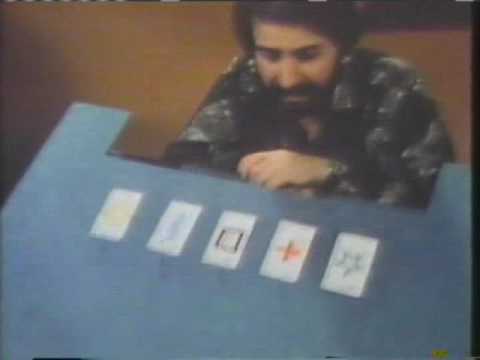
Another viewer keenly observes the rigged nature of some demonstrations: "The 2 of hearts thing.....didja notice he DID NOT show the other card. Why? Because BOTH cards were a two of hearts. No matter WHAT arm Burr picked (right or left), it was going to be right." This analytical approach, dissecting the methodology of the 'tests,' is precisely the kind of critical evaluation required. The film likely presented these demonstrations as evidence, but a careful observer, especially one familiar with stage magic, can see the potential for trickery.

I totally dig this kinda crap but it's so set up it's funny. This is an awesome comedy.

— Viewer Comment

The skepticism extends to other demonstrations. The explanation for the fish pictures and hang glider test suggests that deliberate misdirection—making one option appear more likely or dynamic than another—can create the illusion of psychic insight. This aligns with the principles of psychological manipulation often employed in both magic and, unfortunately, in fraudulent psychic readings. The documentary's very presentation, aiming to amaze, inadvertently provides material for those seeking to debunk it.

Scientific Perspectives and Modern Interpretations

While the 1976 documentary captured a specific moment in the public perception of psychic phenomena, it's crucial to assess these claims through the lens of modern scientific understanding. The field of parapsychology continues to investigate phenomena like precognition and telepathy, though mainstream scientific acceptance remains elusive. Research into consciousness, quantum entanglement, and even the subtle biological signals captured by techniques like Kirlian photography has evolved significantly.

Edgar Mitchell's contribution, linking psychic phenomena to quantum holographic universe theories, reflects an attempt to bridge the gap between the esoteric and the scientific. While elegant, these theories often remain speculative and difficult to test empirically. The debate continues: are these phenomena genuine expressions of consciousness beyond our current understanding, or are they products of cognitive biases, statistical anomalies, and deliberate deception?

The decline in mainstream discussion of these topics is noted by viewers: "Anyone remember when this kind of research stopped being talked about seriously now a far higher percentage of the population will simply dismiss esp as modern propergander treats such things as myth or 'conspiracy theories' reinforcing ignorance." This observation points to a societal shift, where open discussion of the paranormal has become more marginalized, often relegated to online communities and labeled as fringe or conspiratorial. This creates a challenge for genuine researchers trying to explore these frontiers without being dismissed.

When considering phenomena like ghost sound recordings (EVP), advancements in audio technology and our understanding of auditory pareidolia (perceiving meaningful sounds in random noise) provide more conventional explanations. Similarly, while auras and Kirlian photography can be visually striking, their interpretation as direct evidence of psychic energy remains largely unsubstantiated by rigorous scientific methods. The potential for psychological suggestion, particularly in the context of haunted houses and séances, is immense. We must acknowledge that human perception is fallible and highly susceptible to expectation and environmental cues.

Investigator's Toolkit: Essential Gear for Psychic Research

For those inspired by "The Amazing World of Psychic Phenomena" to venture into the realm of investigation, having the right tools is paramount. While the documentary showcased anecdotal evidence and dramatic demonstrations, modern investigators rely on a more systematic approach.

Essential equipment often includes:

  • Digital Voice Recorders: For capturing Electronic Voice Phenomena (EVP) with high fidelity.
  • EMF Meters: To detect fluctuations in electromagnetic fields, often associated with reported paranormal activity.
  • Infrared and Full-Spectrum Cameras: To capture visual anomalies that may not be visible to the naked eye.
  • Geophone Sensors: To detect subtle vibrations in floors and structures.
  • Thermometers (Infrared and Ambient): To measure temperature fluctuations, another common indicator cited in paranormal reports.

Beyond technology, the most critical tools are a clear, analytical mind, meticulous record-keeping, and a commitment to methodological rigor. Understanding basic principles of psychology, physics, and common deception techniques is as vital as any gadget.

Investigator's Verdict: Authenticity or Artifice?

After reviewing the documentary and the subsequent discussions, my assessment leans heavily towards a critical interpretation. While the film captures a fascinating cultural moment and highlights individuals who genuinely believed in their abilities, the evidence presented is largely anecdotal or demonstrably susceptible to trickery. The claims made by figures like Uri Geller have been widely debunked, and the "demonstrations" within the documentary itself often show signs of careful staging.

The surviving comments suggest a divergence of opinion: some viewers remain captivated, while others, with a more discerning eye, see the "set up" and consider it "awesome comedy." The stark contrast between those who "passed all the tests" and those who see the deliberate nature of the illusions is telling. The persistence of belief, even when faced with evidence of fraud (as with Geller), speaks to the powerful human desire to believe in something beyond the ordinary, and the effectiveness of persuasive presentation.

It is true that some phenomena, like the claims surrounding Edgar Cayce and Peter Hurkos, have faced less definitive debunking compared to others. However, the absence of conclusive, repeatable scientific evidence for most psychic abilities means they remain in the realm of speculation and personal experience rather than established fact. The documentary is a valuable historical artifact, showcasing the popular fascination with the psychic world, but as a source of definitive proof, it falls short.

Frequently Asked Questions

  1. What is the main criticism leveled against the phenomena shown in "The Amazing World of Psychic Phenomena (1976)"?
    The primary criticism is that many of the demonstrations were staged, relied on trickery, or could be explained by natural causes and psychological suggestion rather than genuine psychic ability.
  2. Who were some of the key figures featured in the documentary?
    The documentary featured individuals such as Edgar Cayce, Peter Hurkos, Ted Serios, Uri Geller, Ruth Montgomery, Jeane Dixon, and astronaut Edgar Mitchell.
  3. Has scientific research validated the psychic claims presented in the film?
    While parapsychology continues to investigate these areas, mainstream science has not validated most of the claims presented in the film with conclusive, repeatable evidence. Many of the featured individuals, like Uri Geller, have faced public debunking.
  4. Why are documentaries like this still popular despite skepticism?
    These films tap into a deep human fascination with the unknown, the possibility of hidden potentials within consciousness, and the enduring mystery of life and death. They offer a glimpse into a world beyond the ordinary, captivating audiences with wonder and intrigue.
  5. Can psychic abilities be learned or developed?
    This is a central question in parapsychology. Some theories suggest potential, while others emphasize the role of natural talent or the possibility of heightened intuition. However, definitive methods for developing psychic abilities remain unproven.

Your Mission: The Critical Observer

The legacy of "The Amazing World of Psychic Phenomena" serves as a potent reminder: to approach extraordinary claims with extraordinary skepticism. Your mission, should you choose to accept it, is to cultivate the skill of the critical observer. When confronted with sensational evidence, ask yourself:

  • What is being shown, and what might be deliberately concealed?
  • Are there simpler, non-paranormal explanations for what I am seeing?
  • What are the motivations of the individuals presenting this information?

Engage with content like this not just as a passive viewer, but as an active investigator. Share your findings, your analyses, and your toughest questions. The pursuit of truth, whether it lies in the mundane or the paranormal, requires constant vigilance and incisive questioning.

The world of the unexplained is vast and often misleading. It requires careful navigation, and this documentary, while engaging, is best viewed as a historical snapshot of belief rather than a definitive guide to psychic truths. Continue your research, stay critical, and never stop questioning.

Share your own experiences with psychic phenomena or your thoughts on this documentary. Did it influence you? Do you believe the claims? Let us know in the comments below. Don't forget to share this investigation into the amazing world of psychic phenomena with your fellow truth-seekers on social media!

Investigator's Note: True paranormal research doesn't fund itself. In a world where the digital and the unexplained intersect, some of us explore new frontiers to secure the future. Do you dare to be part of the vanguard? Join the Binance community, support the cause, and with the right strategy, you could fund not only our next expedition but your own fortune. The next great discovery could be just a click away.
The Great Sphinx of Giza: Unearthing the Hidden Chamber and its Historical Implications


I. The Enigma Beckons

The sands of Egypt hold secrets as vast and ancient as time itself. Among them, the Great Sphinx of Giza stands as a silent sentinel, its enigmatic gaze fixed on the horizon, guarding millennia of unanswered questions. For centuries, whispers have persisted of hidden chambers, of lost knowledge concealed within its colossal stone body. This isn't mere folklore; it's an enduring hypothesis fueled by anomalous findings and the sheer audacity of its construction. Today, we delve into the persistent pursuit of these hidden passages, examining whether modern archaeology and technology are finally cracking the code of the Sphinx's most guarded secret.

II. Centuries of Speculation

The Sphinx, a limestone colossus with the body of a lion and the head of a human, predates many of the structures it overlooks, possibly by millennia. Its true age and purpose remain subjects of intense debate, a fertile ground for speculation and, of course, paranormal inquiry. Ancient texts offer fragmented clues, often shrouded in myth and allegory. Legends speak of hidden vaults containing the wisdom of the Atlanteans or records from a pre-dynastic civilization far more advanced than previously understood. The very notion of a "time capsule" or a repository of forgotten knowledge isn't a modern invention; it's an ancient fear and fascination projected onto one of humanity's most profound monuments.

The persistent theories of a secret chamber are not unfounded. Even within the limited scope of conventional archaeology, anomalies have been noted:

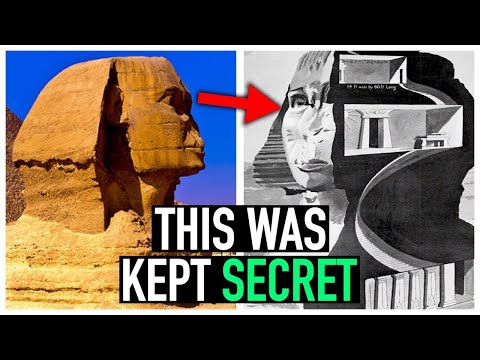
  • The Sphinx's Paws: Early explorers, including Edgar Cayce, the famed American psychic, predicted the existence of a "Hall of Records" beneath the Sphinx's paws, supposedly containing historical and spiritual truths. While Cayce's pronouncements are often debated, they reflect a deeper, almost archetypal intuition about hidden knowledge within the monument.
  • Geological Anomalies: Ground-penetrating radar surveys conducted over the years have detected unusual voids and cavities within and around the Sphinx's base. While some can be attributed to natural geological formations or known cavities, the persistence and size of others have kept the "secret chamber" theory alive.

III. The Modern Hunt for Answers

The allure of a hidden chamber beneath the Sphinx is a magnet for both serious archaeological endeavors and more fringe investigations. Throughout the 20th century and into the 21st, various expeditions have employed cutting-edge technology to probe the statue's secrets. Ground-penetrating radar (GPR), seismic surveys, and infrared thermography have been used to map internal structures and identify potential voids. These technologies, while not definitive proof of a man-made chamber, can reveal inconsistencies in the bedrock and internal stratification that warrant further investigation.

It's within this context that numerous researchers and explorers have dedicated themselves to uncovering what lies beneath. The work of figures and organizations focusing on ancient mysteries often leads them to such iconic sites. The challenge, beyond the technological hurdles, is gaining access and navigating the stringent regulations surrounding archaeological sites of this magnitude. When official surveys reveal anomalies, the question becomes: what is inside these spaces? Are they natural, or the intentional work of a civilization seeking to preserve its legacy?

The pursuit isn't merely about finding a room; it's about the potential artifacts and long-forgotten texts that such a discovery could yield. Imagine unearthing scrolls detailing the true builders of the pyramids, astronomical charts from a forgotten epoch, or even records of events that predate recorded history. The implications for our understanding of ancient civilizations, their technology, and their worldview would be monumental. This is where the line between archaeology and the paranormal blurs, as conventional science grapples with phenomena that challenge its established timelines and narratives.

IV. Artefacts and Lost Texts: The Prize

Should a hidden chamber, a true "time capsule," be definitively located and accessed, the potential contents are what truly ignite the imagination. We're not just talking about pottery shards or common tools. The speculation centers on items that could fundamentally alter our comprehension of Earth's history:

  • Advanced Tools or Devices: Evidence of technology that appears anachronistic – materials, construction methods, or energy sources beyond what is currently understood for that period.
  • Historical Records: Written accounts, perhaps on durable materials like stone or metal, detailing lineages, events, scientific knowledge, or a philosophical understanding of the cosmos that predates current historical frameworks. Think of the Library of Alexandria, but preserved within the very fabric of a monument.
  • Maps or Charts: Cosmological maps, terrestrial charts showing ancient coastlines, or star maps that could reveal a sophisticated understanding of astronomy and geography.
  • Spiritual or Esoteric Texts: Documents that might shed light on the spiritual beliefs, rituals, and perhaps even the psychic or paranormal capabilities of ancient peoples.

Such a find would not only excite archaeologists and historians but also validate the persistent theories of those who believe in lost civilizations or ancient advanced knowledge, often discussed in circles dedicated to occult studies and parapsychology.

V. Rewriting the Narrative

The confirmation of a significant, intentionally hidden chamber containing historical records within the Great Sphinx would send shockwaves through academia and the public consciousness. It would necessitate a radical re-evaluation of:

  • The Age of Human Civilization: Pushing back timelines for sophisticated societies and advanced knowledge.
  • Technological Attainments: Forcing a reassessment of what ancient peoples were capable of, potentially supporting theories about lost technologies.
  • The Origin and Purpose of the Sphinx Itself: Providing definitive answers to questions that have puzzled humanity for centuries.
  • The Nature of Knowledge Preservation: Understanding how and why such critical information was buried and forgotten.

This discovery would be more than just an archaeological triumph; it would be an existential one, forcing us to question everything we thought we knew about our past. Such revelations often align with speculative theories concerning ancient astronauts or precursor civilizations, topics frequently explored in the realm of mystery and the unexplained.

"The Sphinx is a riddle. We are looking for the key to riddle, not just a hidden room. What if the secret isn't the room at all, but what the Sphinx has witnessed?" - A cryptic note from an anonymous researcher involved in early seismic surveys.

VI. Investigator's Verdict

While definitive, publicly verifiable confirmation of a substantial, artifact-filled chamber remains elusive, the persistence of anomalous radar readings and the sheer scale of the Sphinx demand continued, rigorous investigation. Dismissing the possibility outright would be intellectually lazy. Conventional explanations for voids, such as erosion or natural fissures, are plausible, but they don't entirely negate the compelling arguments for intentional construction or concealment. The "secret chamber" theory often treads the line between archaeological possibility and speculative fantasy. However, the historical and intuitive resonance of such a discovery suggests a deeper human need to believe that our ancestors left us profound messages.

My verdict? The evidence is circumstantial but tantalizing. The pursuit itself, using advanced technologies, is valuable for what it *can* reveal about the Sphinx's internal structure, even if no "time capsule" is found. The real mystery might be why the legend persists so strongly. Is it a collective unconscious echo, or a faint signal from a genuinely buried truth?

Aspect Analysis
Hypothesis: Hidden Chamber beneath the Sphinx Persistent theory, supported by some anomalous survey data and historical speculation.
Supporting Evidence: Ground-penetrating radar anomalies, seismic survey results, ancient legends, Edgar Cayce's prophecies.
Counterarguments: Natural geological formations, lack of definitive archaeological proof, challenges in differentiating natural voids from intentional ones.
Investigator's Stance: Requires further, transparent, and advanced investigation. Plausible, but unproven.

VII. The Archivist's Recommendations

For those seeking to delve deeper into the mysteries of the Sphinx and ancient lost knowledge, a curated selection of resources is essential. Understanding the foundational texts that discuss these possibilities, alongside rigorous archaeological findings, provides a balanced perspective. My recommendations aim to arm you with the knowledge to critically assess claims and appreciate the depth of these enduring enigmas.

The Archivist's Repository

  • Book: The Sphinx: Secrets of the Old Kingdom by Dr. Mark Lehner. While focused on conventional archaeology, Lehner's extensive work provides crucial context and addresses many geological questions surrounding the Sphinx.
  • Book: Edgar Cayce's Egypt: Chariots of the Gods? by Robert Bauval and Graham Hancock. These authors explore theories connecting ancient structures, including the Sphinx, to advanced civilizations and celestial alignments, often touching upon the idea of hidden chambers and lost histories.
  • Documentary: Search for documentaries detailing Sphinx GPR surveys or archaeological explorations. Look for those that present findings objectively, discussing both anomalies and conventional explanations.
  • Resource: Wikipedia's entry on the "Great Sphinx of Giza" offers a comprehensive overview of archaeological findings and ongoing debates.

Exploring these resources is akin to assembling your own investigative kit. Each piece of information adds to your understanding, helping you discern between speculation and evidence. Remember, the pursuit of truth often requires sifting through layers of myth and conjecture.

VIII. Protocol: Investigating Ancient Mysteries

When approaching a subject as layered as the Sphinx's potential hidden chamber, a structured protocol is paramount. This isn't about ghost hunting; it's about applying critical thinking to historical and geological enigmas.

  1. Initial Research: Begin by understanding the established archaeological consensus regarding the Sphinx's construction, age, and geological composition.
  2. Anomalous Data Review: Investigate reports of geophysical surveys (GPR, seismic, thermal). Cross-reference findings from different expeditions and sources.
  3. Historical Contextualization: Examine ancient texts, legends, and historical accounts that mention hidden chambers or lost knowledge associated with the Sphinx or similar monuments.
  4. Skepticism as a Tool: Always question sensational claims. Look for independent verification and scientific methodology. Consider mundane explanations first (e.g., geological voids, erosion, construction imperfections).
  5. Evidence Evaluation: If new evidence emerges (e.g., photographs of a chamber, artifacts), evaluate its authenticity, context, and significance rigorously. Look for scientific dating, provenance, and expert analysis.
  6. Synthesize & Conclude: Based on the weight of evidence, form a reasoned hypothesis. Acknowledge uncertainties and areas requiring further investigation.

This protocol mirrors scientific inquiry, emphasizing evidence-based reasoning even when dealing with subjects that border on the strange and weird.

IX. Frequently Asked Questions

Frequently Asked Questions

  • Q1: Is there definitive proof of a hidden chamber under the Sphinx?
    A1: As of now, there is no universally accepted, definitive archaeological proof of a large, man-made hidden chamber containing artifacts. However, geophysical surveys have indicated anomalies requiring further study.
  • Q2: What technology is being used to investigate the Sphinx?
    A2: Researchers have employed ground-penetrating radar (GPR), seismic surveys, and infrared thermography to map subsurface structures.
  • Q3: Could the anomalies be natural geological formations?
    A3: Yes, natural fissures, erosion patterns, and cavities are the most common explanation for subsurface anomalies in such ancient structures. However, the debate continues regarding the nature of some detected voids.
  • Q4: What is the "Hall of Records" mentioned by Edgar Cayce?
    A4: Edgar Cayce prophesied a hidden chamber beneath the Sphinx containing ancient records of a lost civilization, particularly Atlantis. This remains a significant element of speculative theories.
  • Q5: If a chamber is found, what impact would it have on history?
    A5: Discovering such a chamber with historical texts or artifacts could profoundly rewrite our understanding of ancient civilizations, their age, technology, and knowledge.

X. Your Field Assignment

The pursuit of hidden chambers and lost histories is not limited to the desolate sands of Egypt. Many of your own communities hold local legends of hidden tunnels, forgotten basements, or historical secrets buried just beneath the surface. Your mission, should you choose to accept it, is to become a local investigator.

Your Assignment:

  1. Identify a local legend or historical mystery in your town or city that hints at something hidden or forgotten (e.g., a rumored underground passage, a missing historic artifact, a secret society's meeting place).
  2. Conduct preliminary research using local historical societies, libraries, and online archives.
  3. Analyze the legend: What evidence supports it? What are the counterarguments or mundane explanations?
  4. In the comments below, share your findings and your hypothesis about the local mystery. Treat it as you would any other anomalous report – with skepticism, thoroughness, and an open mind.

This exercise hones your investigative skills and demonstrates that the hunt for the unknown is a global, and often personal, endeavor.

alejandro quintero ruiz is a veteran field investigator dedicated to the analysis of anomalous phenomena. His approach combines methodological skepticism with an open mind to the inexplicable, always seeking the truth behind the veil of reality.

Edgar Cayce y la Atlántida: Un Análisis de sus Visiones y Evidencias


Introducción al Oráculo de Virginia

El teléfono suena a las 3:33 AM. Una voz estática susurra un nombre que nadie debería conocer. No es una llamada, es una invitación. Hoy abrimos el expediente de Edgar Cayce y sus enigmáticas visiones sobre la Atlántida, un continente hundido y una civilización perdida que ha alimentado la imaginación humana durante siglos. ¿Fue Cayce un mero soñador, un charlatán, o poseía un conocimiento que trasciende nuestra comprensión actual? Estamos aquí para analizar, no para creer ciegamente. El objetivo es diseccionar las profundidades de estas afirmaciones, examinando la evidencia disponible y desentrañando los hilos que conectan a este médium estadounidense con la leyenda de la Atlántida.

Edgar Cayce (1877-1945), conocido como el "Profeta Durmiente", fue un médium estadounidense que afirmaba poseer la habilidad de acceder a información de una fuente superior mientras se encontraba en un estado hipnótico de trance. Sus "lecturas" abarcaban desde diagnósticos médicos esotéricos y predicciones sobre reencarnación hasta complejas descripciones de civilizaciones antiguas, de las cuales la Atlántida es, sin duda, la más célebre. Su legado es un tapiz intrincado de misticismo, profecía y una persistente búsqueda de conocimiento oculto. Pero, ¿cuánto de ello se sostiene bajo el escrutinio riguroso de la investigación?

El Legado Profético de Edgar Cayce

La figura de Edgar Cayce no se limita a una sola área de interés; su vasto corpus de lecturas toca virtualmente todos los aspectos de la existencia humana y cósmica. Desde curaciones milagrosas sin precedentes hasta complejas teorías sobre la evolución y el destino de la humanidad, Cayce se presentó como un canal para una sabiduría profunda. Sus predicciones sobre futuros conflictos, descubrimientos científicos e incluso la geología planetaria han sido objeto de intenso debate y fascinación. Sin embargo, es su descripción de la Atlántida la que ha capturado la imaginación popular, colocándolo en el panteón de los visionarios que exploran los misterios de nuestro pasado más antiguo.

El "Profeta Durmiente" no solo hablaba de grandes cataclismos y civilizaciones avanzadas, sino que también ofrecía detalles específicos sobre su ubicación, su desarrollo tecnológico, sus prácticas espirituales y, crucialmente, las razones de su desaparición. Estas narrativas, emitidas desde un estado de trance, son el punto de partida para nuestra investigación. Es fundamental entender que, si bien Cayce se presentaba como un médium, nuestro enfoque es el de un investigador: buscamos patrones, coherencia interna, posibles influencias externas y, sobre todo, cualquier rastro de evidencia empírica o lógica que pueda sustentar sus afirmaciones.

Las Visiones de la Atlántida: Un Análisis

Cayce describió la Atlántida no como un mito, sino como una realidad histórica, una civilización tecnológicamente avanzada que existió hace decenas de miles de años. Según sus lecturas, estaba compuesta por diversas razas y poseía conocimientos que hoy consideraríamos milagrosos: el uso de cristales de energía, máquinas voladoras, e incluso la manipulación de la fuerza vital. Cayce detalló la historia de este continente en varias "lecturas de vida", describiendo tres grandes épocas de la Atlántida, con sus respectivos auges y caídas.

Una de las afirmaciones más impactantes de Cayce es la ubicación de la Atlántida en el Atlántico, presuntamente cerca de las Bahamas, y su posterior hundimiento como resultado de la incompetencia y el mal uso de su propia tecnología. Describió dos grandes cataclismos que eventualmente la sumergieron bajo las aguas. La primera gran catástrofe, que ocurrió hace unos 78.000 años según sus lecturas, provocó la fragmentación del continente. Un segundo evento catastrófico, alrededor del 50.000 a.C., marcó su desaparición definitiva. Estas fechas, claro está, difieren radicalmente de los marcos temporales aceptados por la arqueología y la geología convencionales, lo cual exige un análisis crítico.

Las descripciones de Cayce sobre la Atlántida no son meramente narrativas; incluyen detalles sobre su estructura social, sus templos, sus leyes e incluso sus conflictos internos, que atribuyó, en parte, a la división de la población en dos facciones: los "hijos de Dios" y los "hijos de Belial". Esta polarización, según Cayce, llevó a un abuso del poder y a la eventual destrucción de la civilización. La precisión de estos detalles, si bien carece de respaldo arqueológico directo, es intrigante y ha inspirado a incontables investigadores y buscadores de misterios.

¿Evidencias en la Era Moderna? El Caso Bimini y Más Allá

La búsqueda de pruebas físicas de la Atlántida ha sido un motor para expediciones y descubrimientos anómalos. El propio Edgar Cayce predijo que se encontrarían evidencias de la Atlántida en la década de 1960, específicamente en Bimini, Bahamas. Este lugar se convirtió en un foco de atención tras el descubrimiento de formaciones geológicas que algunos interpretaron como un camino pavimentado, el "Camino de Bimini" o la "Muralla de Bimini". Documentales como "The Bimini Wall" de "In Search Of" han explorado estas formaciones, presentándolas como una posible reliquia de esta civilización perdida.

Sin embargo, la comunidad científica generalmente clasifica estas formaciones como geológicas naturales, el resultado de procesos de erosión y deposición de sedimentos. No obstante, la persistencia de estas interpretaciones subraya un hecho clave: la línea entre el mito y la realidad puede ser borrosa cuando la evidencia es escasa y la imaginación busca activamente patrones. La analogía con el Triángulo de las Bermudas, también popularizado por Charles Berlitz, otro autor citado en las referencias originales, ilustra cómo la falta de explicaciones concluyentes puede dar cabida a narrativas de misterio.

La arqueología tradicional no ha encontrado hasta la fecha ninguna prueba concluyente de una civilización del calibre atlante en las ubicaciones o épocas que sugiere Cayce. Las teorías sobre la Atlántida, desde Platón hasta Cayce, se enfrentan al desafío de la ausencia de contexto arqueológico, geológico o histórico que las valide. Esto no significa que debamos descartar las visiones de Cayce de plano, sino que debemos abordar la temática con un escepticismo saludable y un método de investigación riguroso. ¿Podría ser que Cayce estuviera sintonizando una verdad más arquetípica o una memoria colectiva inconsciente, en lugar de un registro histórico literal?

El Archivo del Investigador: Textos Clave y Fuentes

Para cualquier investigador serio que pretenda adentrarse en el enigma de la Atlántida, es crucial consultar las fuentes primarias y la literatura especializada. La obra de Edgar Cayce, recopilada y analizada por la Association for Research and Enlightenment (ARE), es el punto de partida indispensable. Sin embargo, para contextualizar sus visiones, es vital explorar otros trabajos que han abordado el mito de la Atlántida desde diversas perspectivas:

  • "La Atlántida, el octavo continente" de Charles Berlitz: Este libro es una pieza fundamental para entender la popularización del mito de la Atlántida en el siglo XX, explorando diversas teorías y supuestas evidencias.
  • "La Doctrina Secreta" de H.P. Blavatsky: Aunque anterior a Cayce, la obra de Blavatsky sentó muchas de las bases para la creencia moderna en civilizaciones antiguas avanzadas y en la Atlántida como un continente perdido, influyendo significativamente en entornos esotéricos.
  • "El Retorno de los Brujos" de Pauwles y Bergier: Este influyente libro aborda una amplia gama de misterios, incluyendo leyendas de civilizaciones perdidas, y su estilo narrativo ha resonado con el público interesado en lo inexplicable.
  • "Habitante de Dos Planetas" de Phylos el Tibetano: Otra obra esotérica que, al igual que Cayce, presenta visiones de civilizaciones antiguas y avanzadas, a menudo con un fuerte componente espiritual y metafísico.

Además de estos textos, la exploración de sitios web como saltoalinfinito.com (que menciona la "pirámide sumergida y la esfera de cristal") y discusiones en foros como sciforums.com sobre "descubrimientos de tecnología antigua" (como el caso del Dr. Ray Brown) ofrecen perspectivas adicionales y a menudo especulativas. La referencia a la documentalista Jacqueline Otey y a Ana María Barón también sugiere investigaciones en curso o pasadas que merecen ser investigadas por su conexión con lo anómalo.

Veredicto del Investigador: ¿Profecía, Misticismo o Precursión?

El análisis de las visiones de Edgar Cayce sobre la Atlántida nos sitúa en la intersección de la profecía, el misticismo y la búsqueda de un pasado perdido. Por un lado, la falta de evidencia arqueológica y geológica concluyente deja sus afirmaciones en el terreno de la especulación. Las fechas y ubicaciones que proporciona desafían radicalmente nuestros modelos científicos establecidos, y las explicaciones sobre tecnología avanzada, como los cristales de energía, carecen de demostración práctica o teórica respaldada. Es fácil descartar sus visiones como producto de la imaginación fértil o de un profundo conocimiento de mitos preexistentes, hábilmente entrelazados.

Sin embargo, no podemos ignorar la profundidad y la coherencia interna de sus relatos. Las lecturas de Cayce sobre la Atlántida, aunque emitidas en trance, presentan una narrativa compleja y detallada que ha cautivado a generaciones. Su influencia en el imaginario colectivo sobre la Atlántida es innegable. Podríamos considerar que Cayce, de alguna manera, accedió a un sustrato de memoria colectiva o a un conocimiento arquetípico que resuena con la idea universal de una gran civilización perdida. En lugar de ser un mero "profeta", quizás fue un "precursor", alguien que articuló y dio forma a estas ideas latentes en la psique humana, inspirando la búsqueda futura.

Mi veredicto es que, si bien las afirmaciones literales de Cayce sobre la Atlántida como una entidad física y tangible en las coordenadas y épocas descritas carecen de verificación científica sólida, su trabajo ofrece un fascinante estudio sobre el poder de la creencia, la naturaleza del conocimiento esotérico y la persistencia de los mitos fundacionales en la conciencia humana. La verdadera relevancia de Cayce y su Atlántida podría residir no en la prueba de su existencia física, sino en el impacto duradero de sus visiones sobre nuestra comprensión de la historia, la conciencia y el potencial humano.

Preguntas Frecuentes sobre la Atlántida de Cayce

  • ¿Dónde ubicó Edgar Cayce la Atlántida?
    Cayce la situó principalmente en el Atlántico, con puntos de tierra que se extendían desde cerca de las Bahamas hasta el norte de África y América del Sur.
  • ¿Cuándo supuestamente existió la Atlántida según Cayce?
    Sus lecturas sugieren que hubo varias épocas, con cataclismos importantes ocurriendo hace aproximadamente 78.000 y 50.000 años antes de Cristo.
  • ¿Qué tipo de tecnología poseía la Atlántida según Cayce?
    Se describen tecnologías avanzadas como cristales de energía (los "registros de piedra"), máquinas voladoras, y sistemas de comunicación que hoy consideraríamos de ciencia ficción.
  • ¿Por qué se hundió la Atlántida?
    Cayce atribuyó su destrucción a cataclismos naturales provocados por la inestabilidad geológica, exacerbada por el mal uso de su propia tecnología y conflictos internos.
  • ¿Hay evidencia científica de la Atlántida de Cayce?
    La comunidad científica y arqueológica convencional no ha encontrado evidencia concluyente que respalde la existencia de la Atlántida tal como la describió Edgar Cayce.

Tu Misión de Campo: Desenterrando la Verdad

Ahora, la tarea recae en ti, investigador. Cayce nos dejó un legado de preguntas. Tu misión de campo es simple pero profunda: investiga las leyendas locales de tu región. ¿Existen historias de civilizaciones perdidas, ciudades sumergidas o tecnologías anómalas en el folklore de tu comunidad? Compara estas narrativas con los patrones descritos por Cayce. ¿Encuentras ecos de sus visiones en los mitos que han perdurado a través del tiempo y la transmisión oral?

Analiza las referencias bibliográficas proporcionadas. Busca conexiones entre las obras de Cayce, Blavatsky y Berlitz. Intenta localizar el documental "The Bimini Wall" o buscar análisis alternativos de las formaciones geológicas en Bimini. Documenta tus hallazgos, por pequeños que sean. Cada pieza de información, cada teoría sin explorar, es una pista en el gran expediente de la historia desconocida.

alejandro quintero ruiz es un veterano investigador de campo dedicado al análisis de fenómenos anómalos. Su enfoque combina el escepticismo metodológico con una mente abierta a lo inexplicable, buscando siempre la verdad detrás del velo de la realidad. Con una trayectoria de décadas desentrañando misterios, su trabajo se centra en la rigurosa disección de la evidencia para exponer los enigmas más profundos de nuestra historia.

La Atlántida de Edgar Cayce sigue siendo un enigma, un faro en la niebla de la historia mítica. Si bien la certeza científica puede esquivarnos, la búsqueda de la verdad continúa. El legado de Cayce nos desafía a mirar más allá de lo aceptado, a cuestionar los límites de nuestro conocimiento y a mantener viva la llama de la curiosidad ante los grandes misterios de nuestro pasado.

The Paranormal Cartel: July 10th - Unveiling the Unexplained


Introduction: Welcome to the Edge of Reality

The static crackles, not from faulty wiring, but from the veil between worlds thinning. A date is etched in the annals of the unexplained: July 10th. Today, we don't just recount stories; we dissect them. We open the case files of "The Paranormal Cartel" for July 10th, 2022, presenting not a narrative, but an investigative report on the inexplicable phenomena that refuse to remain dormant in the daylight.

Your dedicated source for daily insights into the paranormal, this blog operates on the principle that truth, however unsettling, is always worth pursuing. We are here to scrutinize the obscure, question the accepted, and push the boundaries of what is considered knowable. Prepare to delve into a curated selection of videos and documents that have surfaced from the shadows, each demanding a critical eye and an open mind, but never blind acceptance.

The Cartel Dispatch: July 10th Update

RCN Radio, in its role as a conduit for the unusual, brought forth the latest installment of "El Cartel Paranormal" on July 10th, 2022. Published at the cusp of the day, 12:09 AM, this segment is more than just a compilation; it's a dispatch from the front lines of the unknown. Our objective is to transform this daily dose of the bizarre into a comprehensive analytical dossier, dissecting the claims and assessing the authenticity of phenomena reported.

The digital ether is rife with spectral sightings, unexplained sounds, and documented anomalies. "The Paranormal Cartel" aims to be your daily gateway to this world. However, mere exposure is insufficient. True understanding requires rigorous evaluation. This report is an attempt to provide that critical lens, moving beyond sensationalism to explore the underlying evidence and potential explanations, or lack thereof.

For those who resonate with the pursuit of the unknown, connecting with us across various platforms amplifies our collective investigation. Follow our social networks – the digital tendrils that span Twitter, Facebook, Discord, and TikTok – to stay abreast of the latest developments and contribute your findings. The paranormal is a field that thrives on shared data and collaborative analysis. Your engagement is not just encouraged; it is integral to the process.

Analysis of Anomalous Phenomena

Sifting through the debris of reported paranormal events requires a methodology akin to forensic science. Each video, each document, is a potential piece of evidence, but also a potential piece of misdirection. Our task is to meticulously analyze these artifacts, not to present a sensationalized account, but to assess their evidentiary value. This involves:

  • Visual Anomaly Assessment: Does the visual medium present actual anomalies, or are they products of pareidolia, environmental factors, or deliberate hoaxing? We examine light distortions, alleged apparitions, and unusual movements that defy conventional explanation. For instance, a common artifact in night vision footage, known as an "orb," is often attributed to dust particles or insects catching the infrared light. A thorough analysis requires ruling out such mundane explanations before even considering a paranormal origin.
  • Auditory Phenomenon Evaluation: Psychophonic recordings (EVP) are a staple of paranormal research. However, extracting meaningful data requires understanding the nuances of audio analysis. We scrutinize alleged spirit voices for their clarity, context, and potential for auditory pareidolia—the brain's tendency to find patterns in random noise. This includes comparing recordings against background ambient sounds to identify genuine anomalies versus common atmospheric echoes or even radio interference.
  • Documentary Integrity Check: When historical documents or written accounts are presented, their provenance and consistency are paramount. Are they verifiable? Do they corroborate other known facts, or do they stand in isolation as peculiar outliers? We cross-reference claims with historical records and other documented cases to identify patterns or unique deviations.

The core principle here is that extraordinary claims require extraordinary evidence. Without a robust analytical framework, the paranormal field risks being drowned in a sea of speculation and outright fabrication. This is where meticulous examination of the presented media becomes critical.

Interrogating the Witnesses

"The Paranormal Cartel" often features eyewitness accounts, the human element that anchors many paranormal claims. While subjective, these testimonies are vital threads in the tapestry of the unexplained. My experience in the field has taught me that witness reliability is a complex variable, influenced by perception, memory, and psychological state. My approach involves:

  • Consistency Analysis: do multiple witnesses independently report similar details? Even minor discrepancies can be telling. When accounts align across different individuals, it lends a degree of credibility, suggesting a shared experience rather than isolated delusion.
  • Psychological Profiling (Implicit): While not a formal psychological evaluation, an investigator must consider the witness's potential biases, emotional state during the event, and any pre-existing beliefs that might color their recollection. A person predisposed to believe in ghosts might interpret ambiguous stimuli differently than a staunch skeptic.
  • Environmental Context: Understanding the conditions under which the experience occurred is crucial. Factors like low light, fatigue, stress, or even the presence of hallucinogenic substances (intentional or environmental) can drastically affect perception. Was the witness under duress? Was their vision obscured? Were they in a state of extreme emotional vulnerability?

The human element is often the most compelling, but also the most fallible. Dismissing testimony outright is as unscientific as accepting it without scrutiny. My duty is to weigh these accounts against the tangible evidence, or the lack thereof, to form a cohesive understanding of the reported event.

Theories and Speculations: Decoding the Unknown

Once evidence is scrutinized and testimonies weighed, the next logical step is to explore potential explanations within established theoretical frameworks, while remaining open to novel hypotheses. The paranormal landscape is vast, encompassing everything from residual hauntings to interdimensional incursions. Our analysis seeks to:

  • Apply Existing Models: We examine phenomena through the lens of established parapsychological theories. Is this a case of residual energy, intelligent haunting, poltergeist activity, or perhaps something explained by fringe physics or psychology? For example, the concept of "thin places" or "vortices" often arises in reports from locations with a history of anomalous activity.
  • Consider Mundane Explanations First: This is the cornerstone of any serious investigation. Before invoking the paranormal, every conceivable natural or man-made explanation must be systematically ruled out. This includes infrasound effects, electromagnetic field fluctuations, psychological phenomena like sleep paralysis or hypnagogic hallucinations, and simple misidentification of known objects or creatures.
  • Develop New Hypotheses: When conventional explanations fail to adequately account for the totality of the evidence, it becomes necessary to explore more speculative theories. This is where the true work of an investigator lies – not in jumping to paranormal conclusions, but in carefully constructing hypotheses that can, ideally, be tested or further investigated.

The field of the paranormal is not merely about documenting the strange; it's about understanding the underlying principles, or lack thereof, that govern these occurrences. It’s about asking "why" and "how," even when the answers are elusive.

Investigator's Verdict: Fraud, Phenomenon, or Fabrication?

After dissecting the disparate elements presented in "The Paranormal Cartel's" July 10th dispatch, the verdict is rarely black and white. My years in the field have impressed upon me the sheer complexity of distinguishing genuine anomalies from elaborate deceptions or misinterpretations. In cases like these, where a curated selection of videos and documents is presented, the burden of proof rests heavily on the creators and disseminators of the content.

"The allure of the unknown can blind even the sharpest minds. Our role is to be the steady hand, the skeptical gaze that separates the wheat from the chaff, and the chaff from the outright falsehoods."

Examining the typical offerings of such programs, one must always consider the potential for manufactured drama. The criteria for a genuine paranormal event are stringent: repeatable, verifiable evidence that cannot be explained by natural, scientific, or anthropogenic causes. Often, the presented material falls short. Visual artifacts are frequently explained by camera malfunctions or environmental factors. Auditory phenomena can be attributed to background noise or auditory pareidolia. Witness testimonies, while compelling, are inherently subjective. Therefore, my verdict leans towards caution. While the possibility of genuine encounters with the unexplained remains, the presented evidence typically hovers in the gray area of ambiguity and potential fabrication. The true value lies not in the definitive proof of the paranormal, but in the critical thinking process employed to evaluate the claims. Until irrefutable, scientifically verifiable evidence emerges, these remain compelling curiosities rather than definitive proof.

The Investigator's Archive

To truly grasp the nuances of paranormal investigation, one must engage with the foundational texts and seminal works that have shaped our understanding of the field, or highlighted its inherent challenges. My personal archive, crucial for cross-referencing and contextualizing new information, includes essential resources:

  • "The Day After Roswell" by Philip J. ক্ষেপণাস্ত্র: Explores alleged government cover-ups and retrieved alien technology, offering a deep dive into UFO conspiracy theories and their purported evidence.
  • Works by Jacques Vallée: Such as "Passport to Magonia," which offers a scholarly approach to UFOs and fairy lore, suggesting a unifying underlying phenomenon rather than literal extraterrestrial craft.
  • "The Realism of the UFOs" by John Keel: A critical examination of the UFO phenomenon, moving beyond simple alien abduction narratives to explore the psychological and folkloric dimensions.
  • "Missing 411" Series by David Paulides: Investigates unexplained disappearances in national parks and wilderness areas, presenting chilling patterns and potential links to anomalous phenomena.
  • Gaia and Discovery+ Documentaries: Platforms that often feature in-depth explorations of specific cases, historical mysteries, and ongoing investigations into various paranormal subjects, providing visual and narrative context.

These resources are not merely for passive consumption; they are tools for comparative analysis, providing frameworks and case studies that inform every investigation. Accessing them is a vital step for anyone serious about understanding the breadth and depth of the unexplained.

Field Protocol: Documenting the Unseen

Engaging with the paranormal requires a structured approach, moving beyond mere observation to active, methodological investigation. When faced with potentially anomalous phenomena like those presented by "The Paranormal Cartel," employing a rigorous protocol is essential for accurate documentation and analysis:

  1. Pre-Investigation Briefing: Thoroughly research the location or reported phenomenon. Understand its history, previous claims, and any known environmental factors (e.g., geological anomalies, historical events, local folklore). This lays the groundwork for identifying potential mundane explanations later.
  2. Environmental Scan: Upon arrival at a reported site, conduct a comprehensive scan using appropriate equipment. This includes measuring ambient electromagnetic fields (EMF) with a K2 meter, monitoring temperature fluctuations with an infrared thermometer, and recording baseline audio to identify potential sources of infrasound or common noises.
  3. Data Capture Setup: Deploy recording devices strategically. Utilize static cameras (both full spectrum and infrared), continuous audio recorders for EVP capture, and motion-activated sensors. Ensure all equipment is functioning optimally and calibrated.
  4. Active Investigation Phase: Conduct controlled experiments. This may involve structured questioning sessions (for potential intelligent communication), controlled light and sound exposure, or guided meditations in areas of reported high activity. Maintain a detached, observational stance.
  5. Evidence Review and Analysis: This is the most critical phase. Systematically review all captured data. Look for correlations between environmental readings (EMF spikes, temperature drops) and reported experiences or anomalous recordings. Analyze audio for potential EVPs, cross-referencing with background noise. Scrutinize photographic and video evidence for natural explanations (dust, insects, lens flares, pareidolia).
  6. Documentation and Reporting: Compile all findings into a comprehensive report. Detail methodologies, equipment used, conditions, and all captured data. Clearly differentiate between observed phenomena, subjective experiences, and potentially anomalous evidence. Document any and all potential mundane explanations that were investigated and ruled out.

Adhering to such a protocol transforms anecdotal reports into valuable case files, allowing for more objective analysis and a clearer path toward understanding, or disproving, paranormal claims.

Frequently Asked Questions

Q: How can I distinguish between a genuine paranormal event and a hoax?

A: The key lies in rigorous analysis. Look for consistency in witness testimonies, rule out all mundane explanations first (environmental factors, misidentification, pareidolia), and critically assess the quality and verifiability of any presented evidence. Hoaxes often rely on ambiguity, poor-quality footage, or unbelievable narratives.

Q: What is the most important piece of equipment for paranormal investigation?

A: While no single device guarantees results, a high-quality audio recorder for EVP capture is often cited as essential. However, a comprehensive kit including an EMF meter (like a K2), an IR thermometer, and a full-spectrum camera are crucial for gathering a wide range of data and cross-referencing potential anomalies.

Q: Can paranormal phenomena be scientifically proven?

A: This is a contentious point. While many phenomena remain outside current scientific understanding, the scientific method is our most powerful tool for investigation. Research in parapsychology is ongoing, but definitive, universally accepted proof remains elusive due to the difficulty of controlled, repeatable experimentation with subjective phenomena.

Your Mission: The Hunt Begins

The data presented by "The Paranormal Cartel" is merely a starting point. The true investigation lies with those who approach it with a critical mind. Your mission, should you choose to accept it, is to apply the analytical principles discussed herein to your own local legends or any unexplained phenomena you encounter.

Your Task: Identify a local legend or a widely reported unusual event in your area. Research its history and any documented accounts. Then, critically analyze the information available. What are the most plausible mundane explanations? Is there any verifiable evidence beyond anecdotal accounts? If you were to investigate, what equipment would you use and what protocol would you follow? Share your findings and your proposed investigative plan in the comments below. Let’s turn passive consumption into active inquiry.

alejandro quintero ruiz is a veteran field investigator dedicated to the analysis of anomalous phenomena. His approach combines methodological skepticism with an open mind to the inexplicable, always seeking the truth behind the veil of reality.