Followers

Mostrando las entradas con la etiqueta Prophecy. Mostrar todas las entradas

Impactful Prophecies for 2026: Analyzing Baba Vanga, Nostradamus, and Cayce

Image

The year 2026 looms on the horizon, a date marked by a constellation of unsettling prophecies from history's most enigmatic seers. In each era, humanity grapples with the anxiety of the unknown future, turning to figures like Baba Vanga, Nostradamus, and Edgar Cayce for guidance, or perhaps, a grim premonition. This investigation delves into their most striking predictions for the near future, dissecting these forecasts with a critical yet open mind.

Introduction: Whispers of 2026

The year 2026 is no longer a distant concept; it's a rapidly approaching frontier, shadowed by predictions that have echoed through centuries. This episode of "Más Allá" with Esteban Cruz, featuring insights from Alejandro Bernal and Jhoana Arenas, attempts to synthesize the visions of three titans of prophecy: Baba Vanga, Nostradamus, and Edgar Cayce. Are we merely masochists, drawn to tales of destruction, or is there a genuine imperative to heed these warnings? As we dissect their forecasts, we must also consider the nature of prophecy itself – are they immutable decrees, or mutable warnings contingent on our collective actions?

Baba Vanga: The Balkan Oracle's Glimpses

Baba Vanga, the Bulgarian mystic often dubbed the 'Nostradamus of the Balkans', left behind a legacy of predictions spanning political upheavals, natural disasters, and societal transformations. For 2026, her pronouncements are particularly chilling. While specific details are often debated and subject to interpretation, recurring themes include significant geopolitical shifts, potential breakthroughs in technology that could alter humanity's course, and environmental challenges that demand immediate global attention. Vanga's visions, often cryptic and delivered in a trance-like state, typically focus on events that reshape the world order, hinting at conflicts and the rise of new global powers. Her prophecies are not merely abstract pronouncements; they are often rooted in perceived historical patterns, making them compelling, if unsettling.

Recommended Gear for Investigation

ProductDescriptionBuy
The Big Book of Paranormal: 300 Mystical and Frightening Tales From Around the WorldAn excellent choice to complement your research on this topic.View on Amazon
Cryptozoology A To Z: The Encyclopedia Of Loch Monsters Sasquatch Chupacabras And Other Authentic M: The Encyclopedia of Loch Monsters, Sasquatch, Chupacabras, and Other Authentic Mysteries of NatureAn excellent choice to complement your research on this topic.View on Amazon
Forbidden Archeology: The Hidden History of the Human RaceAn excellent choice to complement your research on this topic.View on Amazon
The H. P. Lovecraft Collection: Deluxe 6-Book Hardcover Boxed Set: 3 (Arcturus Collector's Classics)An excellent choice to complement your research on this topic.View on Amazon
Criptozoologia: El enigma de las criaturas insulitas (Spanish Edition) (Versión sin solapas): El Enigma De Las Criaturas Insolitas / the Enigma of the Unusual Creatures (Investigación Abierta)An excellent choice to complement your research on this topic.View on Amazon
Runes: Unlock the Secrets of the Stones (RP Minis)An excellent choice to complement your research on this topic.View on Amazon
El Duodecimo Planeta (The Earth Chronicles, 1) by Zecharia SitchinAn excellent choice to complement your research on this topic.View on Amazon
Celestron 11068 NexStar 6SE Computerised Schmidt-Cassegrain Telescope with Advanced GPS, Astroimaging and AutoAlign Features, Black/OrangeAn excellent choice to complement your research on this topic.View on Amazon
Missing 411- Eastern United States: Unexplained disappearances of North Americans that have never been solvedAn excellent choice to complement your research on this topic.View on Amazon
Ghost-Hunting For Dummies [Idioma Inglés] An excellent choice to complement your research on this topic.View on Amazon

Nostradamus: Quatrains and Near-Future Forebodings

Michel de Nostredame, the 16th-century apothecary and seer, penned thousands of quatrains – four-line poems – that have been interpreted for centuries as predictions of future events. Deciphering Nostradamus is an art form in itself, as his cryptic verses are rich in allegory, symbolism, and historical context. For 2026, analysts pore over specific quatrains that hint at widespread unrest, technological advancements with dual-use potential (both beneficial and catastrophic), and significant climatic anomalies. The challenge with Nostradamus lies in the ambiguity; a single quatrain can be applied to numerous historical and potential future events. Yet, the sheer volume of interpretations and the uncanny accuracy attributed to past predictions keep researchers returning to his cryptic verses, searching for tangible evidence of what the future holds.

Edgar Cayce: The Sleeping Prophet's Dormant Warnings

Edgar Cayce, known as the 'Sleeping Prophet', delivered his readings while in a self-induced trance, touching upon subjects ranging from health and reincarnation to global prophecies. His insights into the future often painted a picture of profound societal and environmental change. While Cayce is less associated with specific yearly predictions compared to Vanga or Nostradamus, his readings often contain broad strokes that many believe are coming to fruition. For 2026, interpretations of his work suggest a period of intense global challenges, but also one of significant spiritual awakening and technological advancement. Cayce emphasized the role of free will, suggesting that his prophecies were not fixed destinies but potential outcomes based on humanity's collective spiritual and ethical trajectory. He spoke of shifts in global power, potential geological disturbances, and the dawning of a new spiritual age.

Investigator's Analysis: Context, Credibility, and Caution

The recurring theme across these prophetic traditions is one of significant global change. However, as an investigator, my mandate is to approach such claims with rigorous analysis and a healthy dose of skepticism. The human psyche has a remarkable capacity for pattern recognition, often leading us to find meaning in randomness. The "end of the world" narrative, as noted by some viewers of the original broadcast, is a trope that resurfaces annually, amplified by anxiety and the desire for definitive answers in uncertain times. The prophecies, especially those of Nostradamus, are notoriously open to post-hoc interpretation. Events are often shoehorned into pre-existing quatrains after they occur, creating an illusion of accuracy. Baba Vanga's pronouncements, often passed down through intermediaries, also face challenges regarding accurate translation and context. Edgar Cayce's readings, while extensive, often deal with broader spiritual and societal trends rather than precise, dated events.

It's crucial to differentiate between genuine foresight and the human tendency to predict catastrophe. The recurring mention of "end of the world" scenarios, dismissed by many as cyclical alarmism, contrasts sharply with those who interpret these prophecies as profound warnings. As one observer put it, "Las profecías NO están escritas en piedra. Muchas de ellas son advertencias si la humanidad no cambia su comportamiento." This perspective aligns with a more empowered view of the future, where our actions dictate outcomes. The focus on constructive change, as suggested by another commenter, rather than dwelling on destruction, offers a more productive path forward. While we must acknowledge the potential for significant global events in 2026, attributing them solely to ancient prophecies oversimplifies complex geopolitical, environmental, and technological factors.

Echoes from the Audience

The original broadcast generated a spectrum of reactions, reflecting the diverse ways people engage with prophecies. Some viewers expressed skepticism, noting the cyclical nature of apocalyptic predictions: "Esa vaina la dicen cada año..." and "Desde 1900 están con la joda de que el mundo se acaba." This sentiment is echoed by others who believe the "end of the world" is a personal experience tied to individual mortality, rather than a global event. Conversely, many found the program and its featured guests, such as Alejandro Bernal and Jhoana Arenas, to be highly engaging and informative, appreciating Esteban Cruz's work. Some viewers offered a more hopeful perspective, positing that December and the coming year would bring "bendiciones prosperidad protección y sanación," rejecting the notion of global demise. A particularly vivid personal vision was shared, describing a powerful figure, akin to Jesus, warning of impending judgment, earthquakes, and drowning, tied to humanity's "disastrous aberrations." This highlights how personal spiritual beliefs and interpretations heavily influence how prophecies are perceived.

The feedback also included praise for the return of the program: "Me encanta que hayan vuelto!!!!" and "Gracias chicos, finalmente de nuevo!". There were also specific compliments for the guests, with one user stating, "Felicitaciones Esteban por tan extraordinaria invitado Alejandro Bernal sus conocimientos investigaciones son súper interesantes uno de los mejores periodistas del misterio." Suggestions for program enhancement, such as background music and introductory segments reminiscent of past TV programs, were also noted. Underlying many comments is a deep interest in the future and its consequences, even among those who claim not to believe in prophecies, underscoring the universal human curiosity about what lies ahead.

Field Research Kit

To effectively investigate claims like those surrounding the 2026 prophecies, researchers require a reliable toolkit. Understanding the historical and cultural context of these predictions is paramount. This involves delving into ancient texts, cross-referencing interpretations, and examining the biographies of the prophets themselves. Tools for this kind of deep dive include comprehensive historical archives, scholarly analyses of esotericism, and reliable encyclopedic resources.

Recommended Equipment for Investigation

Frequently Asked Questions

  1. What do Baba Vanga, Nostradamus, and Edgar Cayce predict for 2026?

    Baba Vanga's prophecies suggest imminent global changes, Nostradamus's quatrains may hold clues to events in 2026, and Edgar Cayce's 'sleeping prophecies' are seen as gaining relevance for the near future.

  2. Are prophecies set in stone?

    Many believe prophecies are not fixed destinies but rather warnings. They suggest that humanity's behavior and choices can alter the course of predicted events.

  3. How often are predictions of the end of the world made?

    Predictions about the world ending or facing catastrophic events have been recurrent throughout history, with many recurring annually or across different eras, often tied to specific dates or astronomical events.

  4. What is considered a positive outlook on the future?

    A positive outlook focuses on constructive changes, planetary well-being, and transformations that benefit all living beings, rather than solely on destruction or impending doom.

Conclusion: Preparing for the Unforeseen

The prophecies of Baba Vanga, Nostradamus, and Edgar Cayce offer a stark, albeit often ambiguous, glimpse into potential futures. While the exact events of 2026 remain unknown, these ancient warnings serve as powerful reminders of humanity's vulnerability and the potential consequences of our collective actions. As investigators, our role is not to blindly accept or dismiss these visions, but to analyze them within their historical, cultural, and psychological contexts. The recurring narrative of impending doom, while captivating, often overshadows the capacity for human resilience and positive transformation. Perhaps the most potent 'prophecy' is not one of unavoidable catastrophe, but a call to action – a challenge to shape a future defined not by fear, but by wisdom, cooperation, and a commitment to a better world.

Your Mission: Reflect and Engage

Consider this an open-ended investigation. Do the prophecies resonate with your personal beliefs or experiences? What steps can humanity take collectively to avert potential negative outcomes predicted by these seers? Share your thoughts, original experiences, or analyses in the comments below. Your unique perspective is crucial to understanding the enduring power and interpretation of prophecy.

Call to Action:

  • Share this investigation with your network to spark discussion.
  • Leave a comment below with your own insights or personal experiences related to future predictions.
  • Follow us for more deep dives into the unexplained.

Investigator's Note: True paranormal research doesn't fund itself. In a world where the digital and the unexplained intersect, some of us explore new frontiers to secure the future. Do you dare to be part of the vanguard? Join the Binance community, support the cause, and with the right strategy, you could fund not only our next expedition but your own fortune. The next great discovery could be just a click away.

Parravicini's Prophecies: An Analytical Deep Dive into the Psychic Visions of Benjamin Solari Parravicini


Introduction: The Whispers of Tomorrow

The future is a siren song, beckoning from the mists of time. For centuries, humanity has sought to pierce this veil, to catch a glimpse of what lies beyond the horizon. Among those who claimed to hear these whispers most clearly was Benjamin Solari Parravicini, an Argentine physician whose prolific output of precognitive drawings has sparked debate and wonder for generations. While some dismiss his visions as mere coincidence or post-hoc rationalization, others point to their uncanny specificity as evidence of genuine psychic ability. Today, we open the file on Parravicini, not to simply recount his prophecies, but to analyze the phenomenon, examine the evidence, and question the very nature of precognition itself. This is not a story; it's an investigation into one of the most compelling datasets of psychic phenomena ever compiled.

The Man Behind the Visions: A Biographical Sketch

Born in Buenos Aires in 1898, Benjamin Solari Parravicini pursued a career in medicine, specializing in pediatrics. Yet, his life took a profound turn in 1938 when, according to his accounts, he began experiencing vivid visions. These were not fleeting impressions but detailed, often cryptic, drawings accompanied by descriptive texts. Over the next three decades, he filled an estimated hundreds of notebooks with these visions, depicting scenes ranging from technological marvels and global conflicts to social changes and potential catastrophes. His medical background lends a certain gravitas to his claims, offering a logical, scientific mind grappling with the seemingly illogical. This duality is key to understanding why Parravicini’s work continues to resonate: a doctor of science engaging with phenomena that defy conventional explanation.

"The hands that heal are the same hands that must record what the future reveals." - Adapted from researcher notes on Parravicini.

The Canvas of Precognition: Analyzing the Drawings

Parravicini's visual output is vast and varied. The drawings, often rendered in a simple, almost childlike style, are frequently accompanied by prophetic captions that are as enigmatic as they are specific. Examples cited by proponents include depictions of the discovery of penicillin, the rise of atomic power, figures resembling JFK and Charles de Gaulle, and even descriptions of the internet and mobile phones, concepts far ahead of their time. The method of their production, typically done in moments of trance or deep contemplation, is central to the narrative of psychic phenomena. From an analytical standpoint, several factors must be considered:

  • Vagueness vs. Specificity: How much of the alleged accuracy stems from the inherent ambiguity of the imagery and text, allowing for broad interpretation?
  • Confirmation Bias: Once a real-world event occurs, how readily do observers search for and find a match within Parravicini’s extensive catalog? This is a well-documented cognitive bias that plagues retrospective analysis of predictions.
  • Stylistic Consistency: The consistent style across thousands of drawings suggests a single author, but does it indicate a genuine psychic channel or a highly disciplined individual creating a vast body of work?
  • The Role of Technology: Many of his depictions, like "the man communicating from afar with a small box in his hand," eerily resemble modern communication devices. The question is whether this is precognition or an intuitive grasp of emerging technological trajectories.

Case Studies: Predictions That Echoed Future Realities

Several of Parravicini's prophecies have garnered significant attention for their supposed clairvoyant accuracy. One frequently cited drawing shows a figure resembling Pope Paul VI, with an accompanying text that hints at his struggle against "the modern world." Another depicts figures in distress, with the caption "Atomic catastrophe." Proponents link this to the development and deployment of nuclear weapons. Furthermore, depictions of figures like Kennedy, often with ominous undertones, are frequently brought up in discussions of his work. The chilling detail in some of these images, if indeed predictive, raises profound questions. However, it is imperative to approach these links with stringent scrutiny. The process of matching a drawing to an event often involves a degree of interpretation, a bridge built by hindsight. The true test of precognition lies in predictions made before an event, with no possibility of retroactive fitting. This is where the dataset of Parravicini's work presents both its greatest strength and its most significant challenge for empirical verification.

The Skeptic's Lens: Deconstructing the Phenomenon

The scientific community, by and large, remains skeptical of claims of precognition. Parravicini's prophecies, while compelling, are not immune to this critical examination. Key points of skepticism include:

  • The Barnum Effect: Many of the prophecies are broad enough to apply to a wide range of situations, making them seem accurate to many people who encounter them.
  • Selective Presentation: Often, only the 'hits' are highlighted, while the numerous 'misses' or ambiguous predictions are overlooked. The sheer volume of Parravicini's output makes it statistically probable that some would align with future events by chance.
  • Allegations of Fraud or Misinterpretation: While Parravicini was a respected physician, the possibility of self-deception or deliberate manipulation of his work after the fact cannot be entirely dismissed without rigorous posthumous investigation of the original materials.
  • Cultural Context: Parravicini lived through periods of immense global change. His drawings could reflect an astute observation of societal trends and anxieties, rather than a supernatural foreknowledge.

The challenge for parapsychology is to move beyond anecdotal evidence and establish repeatable, verifiable phenomena. For Parravicini's work, this would require access to authenticated original documents, independent analysis of the drawings and texts prior to significant world events, and a robust methodology to control for psychological biases. The documentary provided offers visual evidence, but the true investigative depth lies in the raw, unadulterated archive. For those seeking to truly understand, acquiring copies of his notebooks or visiting archives where they might be preserved becomes a primary objective.

Research Protocol: Approaching Precognitive Data

Investigating phenomena like Benjamin Solari Parravicini's prophecies demands a structured approach, akin to forensic analysis. The following protocol is essential for any serious inquiry:

  1. Source Verification: Procure original, authenticated reproductions of Parravicini’s drawings and texts. Establish their creation date independently if possible. This prevents claims of posthumous manipulation.
  2. Contextualization: Research the historical period in which each prophecy was made. What were the prevailing anxieties, scientific advancements, and political tensions? This provides a baseline for understanding potential influences.
  3. Comparative Analysis: Systematically compare the details of each drawing and caption against documented historical events. Be precise: does the event *exactly* match the description, or is there room for interpretation?
  4. Identify Ambiguities: Catalogue every element of vagueness, symbolic language, or open-ended phrasing. These are the potential 'escape hatches' for retrospective interpretation.
  5. Statistical Evaluation: If the volume of verified, specific, pre-event predictions is significant and statistically improbable by chance, it strengthens the case for precognition. This is a high bar to clear.
  6. Consider Alternative Explanations: Always explore rational explanations first: astute observation, psychological projection, collective unconscious archetypes, or even elaborate fabrication.

This methodical approach is crucial for distinguishing genuine anomalies from coincidence or misinterpretation. It’s about applying scientific rigor to the fringes of human experience.

Filmmaker's Intent: The Documentary's Approach

The provided documentary, presented in multiple languages, serves as an introduction to Parravicini's work. Its intent appears to be to showcase the breadth and perceived accuracy of his prophecies, aiming to intrigue and perhaps convince the viewer of his psychic abilities. The use of multiple language tracks (ESP, SUB, PT) suggests a desire for broad accessibility, aiming to reach an international audience fascinated by the paranormal. Documentaries of this nature often adopt a narrative that leans towards belief, presenting compelling visuals and testimonials that support the central thesis of precognition. While valuable for initial exposure, such films rarely delve into the rigorous methodological challenges or the extensive counter-arguments that a dedicated investigator would demand. They provide the 'what' but leave the 'how' and 'why' open for deeper analysis. To truly engage with Parravicini, one must go beyond the narrated story and scrutinize the primary source material – the drawings themselves.

Frequently Asked Questions

Who was Benjamin Solari Parravicini?
Benjamin Solari Parravicini (1898–1974) was an Argentine physician and psychic, known for his thousands of precognitive drawings and prophecies made between 1938 and his death in 1974. His visions often depicted future events with remarkable detail.

What is the significance of Parravicini's prophecies?
The significance lies in their alleged accuracy in predicting major world events, technological advancements, and even disasters. Skeptics often attribute this to vague language, retrospective interpretation, or coincidence, while proponents see them as evidence of genuine precognition.

How can one practically investigate psychic phenomena like Parravicini's visions?
Investigating such phenomena requires a rigorous approach: meticulous documentation of the original source material, comparative analysis with historical events, an understanding of psychological biases (like confirmation bias and pareidolia), and a critical assessment of potential fraud or misinterpretation. Engaging with documented cases and employing critical thinking are paramount.

Investigator's Verdict: Beyond Coincidence?

Benjamin Solari Parravicini’s catalog of precognitive drawings presents a tantalizing dataset. The sheer volume and the consistent thematic elements, coupled with occasional uncanny parallels to future events, make it difficult to dismiss entirely. However, the history of prophecy is littered with vague pronouncements and retrospective interpretations. While Parravicini’s artistic and textual detail surpasses many, the critical investigator must remain vigilant against confirmation bias and the Barnum effect. Without access to authenticated originals and independent verification of their creation dates predating events, concrete proof of genuine precognition remains elusive. My verdict leans towards a phenomenon of profound psychological insight and perhaps an astute read of societal trajectories, rather than definitive proof of supernatural foresight. Nevertheless, the ongoing allure of his work suggests a deep-seated human desire to believe in a connection to the future, a belief that fuels continued examination of cases like Parravicini’s. The question isn't definitively answered, but the investigation is far from over.

The Investigator's Archive

For those keen to deepen their understanding of precognition and related phenomena, the following resources are essential:

  • Books: "The Unexplained" by Jerome Clark, "Passport to Magonia" by Jacques Vallée, and any comprehensive compilations of Solari Parravicini’s works that claim reputable sourcing.
  • Documentaries: Beyond the provided film, seek documentaries that critically examine psychic phenomena, looking for those that consult with parapsychologists, skeptics, and historians. Consider series like "Unsolved Mysteries" for case studies, but always with a critical eye.
  • Academic Journals: Publications from the Rhine Research Center or the Parapsychological Association, which often feature peer-reviewed studies on precognition, though direct analysis of Parravicini might be scarce.
  • Online Archives: Reputable paranormal research websites that maintain databases of prophecies and predictive cases, cross-referencing dates and details.

Understanding the context and methodology of past research is crucial for any new investigator entering this complex field. Investing in these foundational resources is the first step in building a credible investigative skillset.

Your Field Mission: Unraveling Local Mysteries

Parravicini looked to the future, but the past and present are rife with mysteries. Your mission, should you choose to accept it, is to apply the principles of critical analysis learned today to your own local lore. Identify a local legend, a piece of folklore, or an unexplained event in your community. Is there a documented history? Are there eyewitness accounts? Apply the research protocol outlined above: verify sources, contextualize the narrative, look for specific details, and consider alternative explanations. Document your findings and share them in the comments below. Let's see if we can uncover new enigmas or shed light on old ones, one local mystery at a time. The goal is not to 'prove' the paranormal, but to understand the narratives and evidence surrounding it with clarity and rigor.

About the Author

alejandro quintero ruiz is a veteran field investigator dedicated to the analysis of anomalous phenomena. His approach combines methodological skepticism with an open mind to the inexplicable, always seeking the truth behind the veil of reality. With years of experience navigating the shadowy corners of unexplained occurrences, his work aims to foster critical thinking and informed debate.

The Antichrist Prophecy: A Historical and Esoteric Analysis


Introduction: Unveiling the Serpent's Shadow

The concept of the Antichrist has long captivated the human psyche, weaving through millennia of religious texts, philosophical discourse, and popular culture. It represents not merely a figure of religious prophecy, but an enduring archetype of opposition, deception, and ultimate evil. Today, we open the dossier on this enigmatic entity, examining its historical trajectory, its scriptural underpinnings, and the persistent questions surrounding its existence. Is the Antichrist a literal being poised to emerge, a symbolic representation of humanity's darker impulses, or something else entirely?

The Genesis of the Antichrist Narrative

The roots of the Antichrist narrative are deeply embedded in the socio-political and religious anxieties of ancient times. While the term "Antichrist" appears explicitly only in the epistles of John, the conceptual framework for a great adversary predates Christianity. Influences from Zoroastrianism, with its dualistic battle between Ahura Mazda and Angra Mainyu, and prevalent messianic expectations within Judaism during the Second Temple period, provided fertile ground for the development of such a figure. Early Christians, facing persecution and grappling with internal schisms, found in the concept of an Antichrist a potent symbol for their external oppressors and internal dissenters.

Scriptural Foundations: Daniel and Revelation

The Old Testament, particularly the Book of Daniel, offers some of the earliest canonical precursors to the Antichrist figure. Daniel prophesies a series of arrogant kings (often interpreted as Antiochus IV Epiphanes, and later, figures like Nebuchadnezzar) who would oppose God's will and desecrate the Temple. However, it is the Book of Revelation, attributed to John of Patmos, that provides the most vivid and influential imagery. Revelation introduces the "Beast" from the sea, a seven-headed, ten-horned entity empowered by a dragon (Satan), which persecutes the saints and demands worship. This powerful, apocalyptic vision has shaped Western eschatology for centuries. The number 666, famously associated with the Beast, continues to be a subject of intense speculation and numerological analysis. Understanding the historical context of Daniel and Revelation, written during periods of intense diaspora and persecution, is crucial for interpreting their symbolic language rather than taking them as literal historical predictions.

Early Christian Interpretations and the 'Spirit of Antichrist'

In the New Testament, the writings of John are pivotal. His epistles warn, "Children, it is the last hour, and as you have heard that antichrist is coming, so now many antichrists have come. By this we know that it is the last hour." (1 John 2:18). This suggests that the 'spirit of antichrist' manifests not just in a singular figure but in individuals and movements that deny Christ's divinity or mission. Early Church Fathers, such as Irenaeus and Tertullian, debated the nature of this adversary. Some posited a future, individual Antichrist, while others saw the 'spirit' as a pervasive force within human society that sought to undermine Christian teachings and institutions. Examining these early interpretations reveals a fluid understanding, often tied to contemporary political threats and theological disputes, such as the Roman Empire or heretical Gnostic movements.

"The spirit of antichrist is not necessarily a single individual, but a pervasive force that actively opposes divine truth and the work of Christ in the world. It manifests in denial, deception, and the elevation of self above all else."

Medieval and Renaissance Visions: The Embodied Threat

During the Middle Ages and the Renaissance, the Antichrist narrative took on a more concrete and often terrifying form. Prophecies proliferated, often identifying specific political figures – emperors, popes, or invaders – as potential Antichrists. The figure became intertwined with apocalyptic timelines and the imminent end of the world. Theological treatises and apocalyptic literature depicted the Antichrist as a charismatic, deceptive leader who would perform false miracles, establish a global empire, and lead humanity astray before the final judgment. The Council of Trent, for instance, solidified certain interpretations that became standard within Catholicism. The political turmoil and religious fragmentation of the Reformation era further fueled these interpretations, with both Protestants and Catholics often identifying their opponents with the Antichrist. The anxiety generated by these widespread beliefs is palpable in the art and literature of the period, reflecting a society deeply engaged with eschatological themes.

Modern Esotericism and the Antichrist Archetype

In more recent times, particularly within esoteric and occult circles, the Antichrist concept has evolved. Figures like Friedrich Nietzsche, with his proclamation "God is dead" and his concept of the Übermensch (often misinterpreted or controversially linked to an anti-religious figure), offered a philosophical perspective that resonated with some. Aleister Crowley, a prominent occultist, viewed himself as a herald of a new spiritual age (the Age of Horus), which some have metaphorically associated with an "Antichristic" shift away from traditional religious paradigms. Helena Blavatsky and Theosophy introduced concepts of a cosmic duality that could be interpreted through an Antichrist lens, representing the forces of materialism and spiritual ignorance. These modern interpretations often shift the Antichrist from a literal eschatological figure to a powerful symbol of rebellion against established dogma, a catalyst for radical change, or an embodiment of primal, untamed energy. The analysis of these esoteric traditions reveals a reinterpretation of the Antichrist archetype not as solely a force of destruction, but as a potential agent of transformation, albeit a dangerous one.

Era Primary Interpretation Associated Context
Ancient/Early Christian Future individual; 'Spirit of Antichrist' Persecution, theological disputes, gentile opposition
Medieval/Renaissance Literal, charismatic world ruler Apocalyptic timelines, political/religious upheaval, Reformation
Modern Esoteric Archetype of rebellion, catalyst for change, existential opposition Secularization, philosophy, occult traditions, psychological interpretation

Theological Debates and the Nature of Evil

The Antichrist has long been a focal point for theological debates not just about prophecy, but about the fundamental nature of evil. Is evil a privation of good, as Augustine argued, or an active, primordial force? The Antichrist figure often embodies a sophisticated, deceptive evil that mimics goodness, performing "signs and wonders" to mislead believers. This raises profound questions about free will, divine providence, and the susceptibility of humanity to falsehood. Contemporary theological discussions often grapple with whether predicting or identifying an Antichrist is a valid spiritual practice or a dangerous distraction from addressing the real-world manifestations of injustice, cruelty, and spiritual deception that plague society. The historical tendency to label political or religious opponents as the Antichrist highlights how the concept can be weaponized to demonize and delegitimize dissent. For any serious investigator, understanding these deep theological currents is essential; it explains the enduring power and often volatile nature of Antichrist beliefs.

Evidence or Archetype? Decoding the Phenomenon

The core challenge in analyzing the Antichrist phenomenon lies in distinguishing between literal prophetic fulfillment, symbolic interpretation, and sheer cultural myth-making. Throughout history, numerous individuals and movements have been identified as the Antichrist, often based on numerology, perceived opposition to religious doctrine, or political alignment. These identifications rarely stand the test of time, suggesting a powerful archetype at play rather than a consistently identified singular entity. The question for the researcher is: Are we looking for a specific historical figure, or are we analyzing a persistent cultural narrative that reflects humanity's deep-seated fears about deception, power, and the ultimate confrontation between good and evil? The consistency of certain traits across different eras – charisma, deception, claims of authority, and opposition to established divine order – points to a deep archetypal resonance. The lack of concrete, verifiable evidence for a singular prophetic Antichrist suggests that its power might lie more in its metaphorical significance, as a lens through which humanity confronts its own capacity for darkness and its hope for ultimate redemption.

"The Antichrist is perhaps less a person to be identified, and more a warning system within consciousness – a metaphor for the destructive potential that lies dormant when humanity turns away from compassion, truth, and divine connection."

Investigator's Verdict: Fraud, Phenomenon, or Metaphor?

After sifting through centuries of prophecy, theological debate, and symbolic interpretation, the verdict on the Antichrist remains complex. As a literal, prophesied individual destined to usher in the end times, the evidence is speculative and rooted in faith, not empirical data. The historical tendency to label numerous figures as the Antichrist suggests a pattern of projection and fear, rather than definitive identification. However, to dismiss the concept entirely would be to ignore its profound impact on culture, religion, and psychology. The 'spirit of antichrist' – the force of opposition, deception, and self-aggrandizement – is undeniably real and manifests in countless individuals and ideologies throughout history. Whether viewed as a genuine prophetic threat, a powerful psychological archetype, or a potent metaphor for the struggle against evil, the Antichrist narrative compels us to examine the forces that seek to divide, deceive, and dominate, and to strengthen our resolve in upholding truth and righteousness. The true investigation lies not in predicting a future figure, but in recognizing and resisting these 'antichristic' forces in our present.

The Researcher's Archive

For those who wish to delve deeper into the labyrinthine history and esoteric interpretations of the Antichrist, consult these foundational texts and resources:

  • The Book of Revelation (New Testament): The primary source for the "Beast" imagery and apocalyptic visions.
  • The Book of Daniel (Old Testament): Offers early prophecies of antagonistic figures.
  • Epistles of John (New Testament): Explicitly discusses the "Antichrist" and the "spirit of antichrist."
  • "The Antichrist" by Friedrich Nietzsche: A philosophical, albeit controversial, critique of traditional religious values.
  • Works by Medieval and Renaissance Theologians: Such as Thomas Aquinas, Joachim of Fiore, and Martin Luther, who engaged deeply with eschatological prophecies.
  • "The Holy Blood and the Holy Grail" by Michael Baigent, Richard Leigh, and Henry Lincoln: Explores alternative historical theories that sometimes intersect with Antichrist narratives.
  • "History of the Antichrist" by Vladimir Solovyov: A classic philosophical and theological exploration of the concept.
  • Gaia, Discovery+, or similar streaming platforms for documentaries on biblical prophecy and historical mysteries.

Protocol: Analyzing Eschatological Texts

When approaching texts concerning eschatology and figures like the Antichrist, a rigorous protocol is essential to avoid misinterpretation and sensationalism:

  1. Contextualize Historically: Always consider the socio-political and religious environment in which the text was written. Who were the intended audience? What immediate threats or concerns might the author have been addressing?
  2. Identify Archetypal Themes: Look for recurring patterns of opposition, deception, charisma, and usurpation that transcend specific historical periods. Compare these themes across different traditions and eras.
  3. Differentiate Literal vs. Symbolic Language: Determine whether the text employs literal prophecies or employs symbolic, metaphorical language to convey theological or philosophical truths. Apocalyptic literature is notoriously rich in symbolism.
  4. Examine Interpretive Traditions: Trace how the concept has been interpreted and reinterpreted by different religious authorities, scholars, and esoteric groups throughout history. Note points of convergence and divergence.
  5. Cross-Reference with Other Disciplines: Integrate insights from history, philosophy, psychology, and anthropology to gain a more comprehensive understanding of the phenomenon's cultural and psychological impact.
  6. Maintain Methodological Skepticism: While remaining open to phenomena that defy current scientific explanation, always seek rational explanations first. Be wary of coincidences, numerological manipulations, and confirmation bias.

Frequently Asked Questions

Q1: Is the Antichrist a real person or a symbol?
A1: From a scholarly and historical perspective, there is no empirical evidence for a literal, prophetic Antichrist figure as described in some apocalyptic texts. However, the concept serves as a powerful symbol or archetype for forces of opposition, deception, and rebellion against divine order.

Q2: What is the significance of the number 666?
A2: The number 666 in the Book of Revelation is widely interpreted as a symbolic representation of imperfection and opposition to divine completeness (often seen as represented by the number 7). Early interpretations suggest it was a coded reference to a specific historical figure, possibly Nero Caesar, through gematria.

Q3: Can there be multiple Antichrists?
A3: The Apostle John's epistles suggest that "many antichrists have come," referring to individuals or movements that deny Christ. This supports the idea that the "spirit of antichrist" can manifest in various forms throughout history, not just a single future entity.

Q4: Is the Antichrist always depicted as evil?
A4: In traditional Christian eschatology, the Antichrist is unequivocally an embodiment of evil and deception. However, in some modern esoteric or philosophical interpretations, the *idea* of an Antichrist can be reframed as a force of radical disruption or an adversary to stagnant dogma, potentially leading to transformative change.

Your Field Mission

Your Mission: Analyze a Contemporary 'Antichristic' Phenomenon

Identify a contemporary figure, movement, or ideology that exhibits characteristics commonly associated with the Antichrist archetype: claims of ultimate authority, manipulative charisma, opposition to established truths (whether divine or secular), and the potential for widespread deception or societal upheaval. Then, in the comments below, briefly outline:

  1. The identified phenomenon.
  2. The specific "antichristic" characteristics it displays.
  3. Why this analysis is relevant to understanding the persistence of the Antichrist narrative.

Remember, the goal is not to label individuals, but to apply critical analysis to understand recurring patterns of human behavior and belief systems that the Antichrist narrative has sought to encapsulate.

About the Author

alejandro quintero ruiz is a veteran field investigator dedicated to the analysis of anomalous phenomena. His approach combines methodological skepticism with an open mind to the unexplained, always seeking the truth behind the veil of reality. With years spent documenting unexplained events and delving into historical enigmas, his insights offer a unique blend of pragmatism and insight into the mysteries that lie beyond conventional understanding.

A Time Traveler's Prophecy: Analyzing the Claims of a Better Tomorrow


Introduction: The Echoes of Tomorrow

Hello and welcome to the paranormal corner. Today, we open an expediente that touches upon one of humanity's most persistent fascinations: the future. We are presented with a time traveler's claim, not of impending doom, but of a world demonstrably better. This isn't the typical doomsday prophecy; it’s a vision of potential, a whisper from the future that challenges our current trajectory. But as seasoned investigators, we know that extraordinary claims require extraordinary evidence. Our task is not to dismiss, but to dissect.

Published on August 24, 2022, at 12:04 PM, this report serves as your daily source of unexplained and unusual paranormal videos and documents.

Historical Context: The Allure of Chrononauts

The concept of time travel, the ability to traverse the temporal stream, has captivated the human imagination for centuries. From H.G. Wells' seminal "The Time Machine" to modern scientific speculation on wormholes and theoretical physics, the idea of a chrononaut – a traveler of time – persists. These narratives often serve as allegorical platforms to explore societal anxieties, hopes, and the consequences of our present actions. Whether framed as science fiction or purported testimony, claims of time travelers often emerge during periods of significant global uncertainty, acting as a psychological balm or a stark warning.

Historically, individuals claiming to be from the future have appeared intermittently, their messages ranging from dire predictions of destruction to optimistic forecasts of societal advancement. One of the most enduring archetypes is the "Cassandra," a prophet whose accurate forewarnings are met with disbelief. Conversely, the benevolent predictor offers a glimpse of a utopian future, a beacon of hope. The analysis of such claims requires us to move beyond simple credulity or outright dismissal, examining the psychological underpinnings, the potential for hoax, and, however remote, the possibility of genuine anomalous experience.

For anyone serious about understanding these phenomena, the foundational texts are indispensable. Jacques Vallée's exploration of aerial phenomena and their potential implications for our understanding of reality, particularly in works like "Passport to Magonia," offers a crucial framework for analyzing anomalous reports that defy conventional explanation. Similarly, John Keel's ethnographic approach to UFOlogy and the paranormal in "The Mothman Prophecies", highlights how persistent, localized anomalies can shape community belief systems and perceptions of the uncanny.

Analysis of the Claim: A Better World Revealed

The core assertion in this particular case is deceptively simple yet profound: a supposed time traveler has revealed that a significantly "better world" awaits humanity. This statement, devoid of specific details in its initial presentation, opens a Pandora's Box of interpretative possibilities. What constitutes a "better world"? Is it defined by technological advancement, societal harmony, environmental recovery, or a spiritual evolution? Without granular detail, the claim remains abstract, susceptible to projection and confirmation bias.

From an investigator's standpoint, the first step is to seek corroborating evidence. Were there any verifiable predictions made that have subsequently come to pass? Did the alleged time traveler provide any specific technological insights, historical foreknowledge, or evidence of originating from a different temporal epoch? Often, claims of this nature are vague, relying on broad affirmations of future improvement that are difficult to disprove and equally hard to substantiate. This vagueness, while perhaps intentional to avoid being proven wrong, also renders the claim less impactful from an evidential perspective.

Consider the psychological element: why would someone claim to be a time traveler with a message of a better future?:

  • Hoax/Deception: The simplest explanation is often a deliberate attempt to mislead, perhaps for attention, financial gain, or to promote a specific ideology.
  • Delusion/Mental Health: The individual may genuinely believe they are a time traveler, experiencing delusions or hallucinations stemming from a psychological condition.
  • Misinterpretation: The individual might have experienced an anomalous event or received information they genuinely interpret as time travel.
  • Anomalous Experience: In rarer cases, the claim might stem from genuine, albeit poorly understood, phenomena such as precognition, lucid dreaming, or even temporal displacement that defies current scientific understanding.

The methodology for evaluating such a claim must be rigorous. We observe the consistency of the narrative, the presence of any tangible evidence, the traveler's behavior, and the reactions of those who encountered them. For instance, if the traveler had provided schematics for a device that later proved functional, or detailed accurate historical events not yet known, the credibility would increase exponentially. Without such specifics, the claim remains within the realm of speculative narrative.

We must also consider the technological aspects, even if speculative. The theoretical physics behind temporal displacement is complex. Theories involving wormholes, warped spacetime, or exotic matter are subjects of intense scientific debate. If a genuine time traveler were to appear, the energy requirements and paradoxes involved (like the grandfather paradox) would be monumental barriers. A claim of a "better world" suggests a future where humanity has overcome significant challenges, potentially including the mastery of such concepts. However, articulating these advancements requires more than a simple affirmation.

Psychological and Sociological Implications

The dissemination of a time traveler's prophecy, especially one of a positive future, has significant psychological and sociological ramifications. In a world often grappling with complex problems – climate change, geopolitical instability, economic disparities – a message of hope for a "better world" can be incredibly potent. It offers a counter-narrative to the prevailing anxieties and provides a potential incentive for positive action in the present.

This hope, however, can be a double-edged sword. If the prophecy is vague, it can foster complacency, leading individuals to believe that a better future is inevitable without requiring effort or change. This passive optimism might disincentivize the very actions needed to avert current crises. Alternatively, it can inspire collective action, fueling movements dedicated to creating the future envisioned. The psychological need for certainty and hope in uncertain times makes such prophecies particularly resonant.

Sociologically, the emergence of such figures can be analyzed through the lens of cult dynamics or emerging belief systems. A charismatic individual making extraordinary claims can attract a following, especially if their message aligns with pre-existing desires or grievances within a population. The study of such phenomena often overlaps with sociology of religion and belief, exploring how new narratives gain traction and influence societal behavior.

The role of media, especially platforms dedicated to the paranormal and unexplained, is crucial in amplifying these narratives. Without critical analysis, a blog post or a viral video can elevate a questionable claim to widespread attention. This underscores the importance of responsible reporting and analytical dissection in the realm of the unexplained. For those seeking to understand the societal impact of such claims, resources like "The Day After Roswell" by Philip J. Corso, while controversial, illustrate how narratives about future technology and hidden knowledge can permeate public consciousness and influence perceptions of reality.

Investigator's Verdict: Hope or Hype?

As an investigator of anomalies, my primary directive is to differentiate between genuine unexplained phenomena and misinterpretation, hoax, or delusion. In the case of a time traveler claiming a better future, the verdict hinges entirely on the presence and quality of corroborating evidence. Without specific, verifiable details – predictive accuracy, unique knowledge, physical artifacts beyond the scope of current human capability – the claim remains speculative at best.

The narrative presented here, while intriguing, lacks the concrete data points necessary for a definitive scientific or investigative conclusion. The appeal of a positive future is undeniable; it resonates with a deep-seated human desire for progress and resolution. It is the very human element of hope that makes these stories so compelling.

However, hope, untethered from evidence, is not a reliable guide. The "better world" described is an abstraction. It is our responsibility, as seekers of truth, to approach such claims with a combination of open-minded skepticism and rigorous analytical methodology. The mere possibility of time travel, or of individuals possessing prescient knowledge, does not automatically validate every assertion made in its name.

Therefore, my current verdict leans towards the abstract nature of the claim. While the *idea* of a better future is a powerful motivator and a subject worthy of philosophical and sociological study, the *claim* of a time traveler revealing it, without substantiation, falls into the category of speculative narrative. It serves as a potent reminder of our collective aspirations but lacks the empirical foundation required for a case file. The true investigation lies in what actions we take *now* to build that better world, regardless of whether it's foretold.

The Researcher's Archive

For those who wish to delve deeper into the nature of time, prophecy, and anomalous claims, I recommend the following resources:

  • Books:
    • "The Time Machine" by H.G. Wells: The foundational fictional exploration of temporal displacement.
    • "The Day After Roswell" by Philip J. Corso: Explores alleged recovered alien technology and its impact on human advancement.
    • "When Prophecy Fails" by Leon Festinger, Henry Riecken, and Stanley Schachter: A classic study on the psychology of cults and belief systems when prophecies face failure.
  • Documentaries:
    • "Missing 411" series: Examines disappearances in national parks, often with baffling circumstances that defy conventional explanation.
    • "Hellier": A docuseries following paranormal investigators exploring alleged alien and supernatural phenomena.
  • Platforms:
    • Gaia: A streaming service featuring a wide array of content on consciousness, spirituality, and the unexplained.
    • Discovery+: Offers various documentaries exploring mysteries, unexplained phenomena, and scientific frontiers.

Field Protocol: Evaluating Prophetic Claims

When confronted with claims of time travel or prophecy, apply this protocol:

  1. Source Verification: Investigate the background of the claimant. Are there patterns of deception, mental health issues, or a history of attention-seeking behavior?
  2. Evidence Scrutiny: Demand specific, verifiable details. Vague pronouncements are easily manufactured. Look for predictive accuracy regarding future events, demonstrable knowledge of historical details not publicly known, or unique physical evidence.
  3. Paradox Analysis: Consider the logical inconsistencies. If time travel is possible, why are messages from the future so often ambiguous or rare? Explore the implications of temporal paradoxes.
  4. Psychological Assessment: Understand the claimant's motivations and the audience's receptiveness. Hope, fear, and the desire for certainty heavily influence belief.
  5. Scientific Plausibility: Research current scientific theories on time travel. While the field is speculative, understand the immense theoretical hurdles (energy requirements, causality violations).
  6. Corroboration: Seek independent verification. Are there other witnesses? Is there any external data that supports the claim?

Frequently Asked Questions

What is the scientific consensus on time travel?

Current scientific understanding, based on Einstein's theory of relativity, suggests that time travel to the future is theoretically possible (via time dilation due to high speeds or strong gravitational fields), but travel to the past is far more problematic and potentially impossible due to causality paradoxes. There is no scientific evidence to support the existence of time travelers visiting our present.

How can I distinguish a genuine prophecy from a hoax?

Genuine prophetic claims, if they exist, are exceptionally rare. Look for specificity, verifiability, and consistency. A hoax often relies on vagueness, manipulation, or appeals to emotion rather than concrete evidence. Critical thinking and a demand for proof are paramount.

Why are claims of time travelers so prevalent in paranormal blogs?

Time travelers tap into deep-seated human desires: curiosity about the future, the wish for guidance, and the fascination with the unknown. They represent a highly engaging narrative for paranormal content creators and audiences, blending science fiction intrigue with the possibility of real, unexplained phenomena.

About the Author

alejandro quintero ruiz is a veteran field investigator dedicated to the analysis of anomalous phenomena. His approach combines methodological skepticism with an open mind to the inexplicable, always seeking the truth behind the veil of reality.

The echoes of tomorrow may occasionally reach us, offering visions of improvement or cautionary tales. Whether these messages originate from genuine chrononauts, the collective subconscious, or simply fertile imaginations, they serve a purpose. They reflect our deepest hopes and fears about where we are headed. The most crucial investigation, however, remains our present actions. Building a better world is not a passive waiting game; it is an active, ongoing endeavor. What steps will you take today to shape that future?

Your Mission: Analyze Your Own Aspirations

Consider this: What does a "better world" truly mean to you? Is it a state of technological utopia, profound spiritual peace, or ecological balance? Reflect on the specific actions, both personal and societal, that would be necessary to achieve such a state. Share your vision and your proposed roadmap in the comments below. Let's turn abstract prophecy into actionable intent.

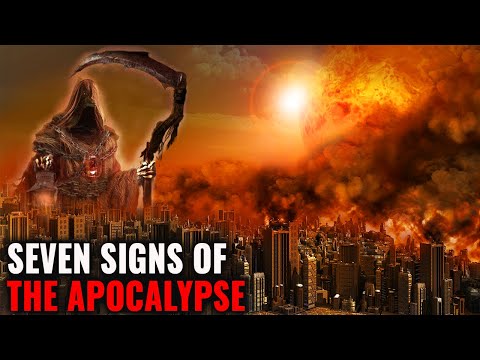
The Apocalypse Beckons: An Analytical Dossier on Foretold Cataclysms


Preface: Echoes of Foreboding

The human psyche has an enduring fascination with endings. Not merely personal conclusions, but the grand finale – the apocalypse. For millennia, cultures have grappled with prophecies, omens, and unsettling signs that portend collective demise. We are not merely cataloging fear; we are dissecting the very mechanisms of anticipation, belief, and the human response to existential dread.

This dossier is not a sensationalist gallery of horrors, but a rigorous examination. We will peel back the layers of religious dogma, folklore, and modern paranoia to ascertain what constitutes a genuine sign, what is mass delusion, and what remains irreconcilably beyond our current grasp. Prepare to engage with the unsettling intersection of faith, fear, and the unknown.

I. Apocalypse Archetypes: From Scripture to Speculation

The concept of an "apocalypse," derived from the Greek word for "unveiling" or "revelation," is not monolithic. It manifests across various civilizations and belief systems, each with its own narrative framework. Understanding these archetypes is crucial for discerning patterns and identifying the underlying psychological and societal drivers.

  • Theological Cataclysms: Rooted in religious texts, these often involve divine judgment, cosmic battles between good and evil, and the establishment of a new world order. Examples range from the Book of Revelation in Christianity, with its horsemen and tribulations, to concepts in Norse (Ragnarök) and Islamic eschatology. These narratives provide a moral framework, often attributing the end-times to human sinfulness.
  • Cosmic Events: The potential for celestial phenomena to trigger global catastrophe has been a perennial source of anxiety. Asteroid impacts, solar flares, gamma-ray bursts, or even the destabilization of planetary orbits are scenarios that science fiction and speculative thought explore with increasing detail. While less tied to moral judgment, they represent an overwhelming, impersonal force beyond human control.
  • Societal Collapse: This archetype focuses on the disintegration of human institutions. Pandemics, resource depletion, nuclear annihilation, widespread ecological collapse, or the unchecked rise of artificial intelligence are perceived as self-inflicted wounds that could lead to societal breakdown and a return to primitive conditions, if not outright extinction.
  • Metaphysical/Spiritual Transitions: Some theories posit the apocalypse not as destruction, but as a profound transformation of consciousness or reality itself. Concepts like the "Great Awakening" or shifts in planetary energetic frequencies suggest a transition to a higher plane of existence, often initiated by collective spiritual evolution or a fundamental change in the fabric of reality.

Each archetype, while distinct, frequently overlaps in popular consciousness, creating a potent cocktail of anxieties. For instance, a devastating pandemic (societal collapse) can be interpreted through a theological lens as divine punishment.

II. Eschatological Analysis: Pattern Recognition in Prophecy

The study of eschatology, the branch of theology concerned with final events, offers a rich field for analysis. Beyond mere prediction, these texts often serve as powerful cultural commentaries, reflecting the anxieties and hopes of their respective eras. When we approach them with a critical eye, we can begin to identify recurring themes and potential indicators.

Consider the consistency of certain "signs" across disparate traditions:

"A time unlike any other is coming. The stars will fall, the earth will tremble, and the hearts of men will grow cold. Beware the false prophets and the signs that deceive the eye." - A compilation of common eschatological motifs.
  • Celestial Disturbances: Unusual astronomical phenomena—comets, eclipses interpreted as portents, unexplained lights in the sky (reminiscent of modern UFO discussions)—frequently appear. The historical record shows that societal unrest often correlates with periods of unusual celestial activity.
  • Environmental Upheaval: Descriptions of widespread famine, pestilence, floods, earthquakes, and extreme weather events are remarkably prevalent. These align with our understanding of natural disaster cycles and the growing awareness of anthropogenic climate change as a potential destabilizing force.
  • Social and Political Turmoil: Prophecies often foretell periods of great conflict, the rise of tyrannical leaders, widespread deception, and a breakdown of moral order. These reflect recurring patterns of human history, from ancient wars to modern geopolitical tensions and the spread of misinformation.
  • Spiritual or Moral Decay: A common thread is the perceived decline in virtue, piety, and communal harmony, often accompanied by the emergence of deceptive spiritual movements or a general loss of faith. This speaks to the challenges of maintaining social cohesion and ethical standards in times of stress and perceived existential risk.

The challenge lies in separating genuine historical patterns or potential future threats from symbolic language designed to convey spiritual or moral lessons. The Metaphorical Interpretation of Apocalypse is a critical tool here. Are these literal events, or allegorical representations of spiritual awakenings or societal transformations?

III. Modern Interpretations: The Convergence of Signs

In our hyper-connected age, the discourse around apocalyptic signs has amplified, fueled by global events and the pervasive nature of digital media. The internet acts as a vast echo chamber, where disparate phenomena are rapidly connected, often without rigorous scrutiny.

We observe a convergence of anxieties:

  • The Digital Oracle: Social media platforms and fringe websites buzz with purported "signs." These range from interpretations of geopolitical instability and extreme weather events to the proliferation of conspiracy theories. The speed at which information—and misinformation—spreads makes discerning truth from fabrication increasingly difficult.
  • Technological Foreshadowing: Advancements in AI, biotechnology, and weapon systems are often framed as potential harbingers of doom. The "singularity," genetically engineered plagues, or autonomous warfare are no longer solely the domain of science fiction but are discussed as plausible future scenarios by experts, albeit with vastly different timelines and probabilities.
  • Geopolitical Tensions as Omens: The escalating conflicts and political polarization witnessed globally are frequently interpreted through an eschatological lens. International crises, resource scarcity, and mass migrations are seen by some as fulfilling ancient prophecies of global collapse or divine intervention.
  • The "Great Filter" Hypothesis: This scientific concept, often discussed in relation to the Fermi Paradox, proposes that some filter—either natural or self-inflicted—prevents civilizations from reaching interstellar capability. Many modern interpretations subtly weave this scientific hypothesis into apocalyptic narratives, suggesting humanity may be approaching its own filter.

The accessibility of information, while valuable for research, also facilitates the rapid propagation of unsubstantiated claims. This makes the application of critical thinking and methodical analysis paramount. We must always ask: is this a genuine anomaly, a misinterpretation, or a deliberate fabrication designed to sow discord?

IV. Scientific Perspectives: Natural Disasters and Existential Threats

While ancient prophecies often carry symbolic weight, scientific understanding offers concrete frameworks for potential large-scale destructive events. These are not necessarily "signs" of divine displeasure, but scientifically plausible risks that demand serious consideration and preparedness. Understanding these threats is not yielding to fatalism, but embracing pragmatic risk assessment.

  • Geological and Atmospheric Hazards: Supervolcano eruptions (like Yellowstone), massive earthquakes, tsunamis, and extreme climate events (superstorms, prolonged droughts leading to widespread famine) are recurring phenomena in Earth's history. Paleoclimatology and geology provide data suggesting the potential for such events, often on timescales far exceeding human civilization. For example, a supervolcano eruption could trigger a volcanic winter, disrupting global agriculture for years.
  • Astrophysical Threats: The potential for asteroid or comet impacts has been a subject of intense scientific study and public fascination since the Tunguska event in 1908 and the Shoemaker-Levy 9 impact on Jupiter in 1994. Organizations like NASA's Planetary Defense Coordination Office actively monitor near-Earth objects, but the possibility of an undetected, civilization-ending impact remains.
  • Biological Threats: The emergence of novel, highly virulent pathogens is a significant concern. While COVID-19 provided a stark, albeit contained, example, the threat of a naturally occurring or engineered pandemic far exceeding its severity is a recognized risk.
  • Technological Risks: Beyond direct conflict, the unintended consequences of advanced technologies pose potential threats. This includes risks associated with runaway artificial intelligence, accidental release of dangerous synthetic organisms, or catastrophic failures in complex global systems (e.g., power grids, financial markets).

From a scientific standpoint, these are not omens of divine judgment, but natural processes or emergent risks inherent in a complex planetary system and advanced technological development. The "apocalyptic" aspect arises from their potential scale and our species' vulnerability. A robust planetary defense strategy, sustainable environmental policies, and cautious technological advancement are the rational responses to these scientifically identified threats.

V. The Investigator's Verdict: Navigating Uncertainty

After dissecting the various facets of "apocalyptic signs"—from ancient prophecies to scientific probabilities—a conclusive verdict is one of profound uncertainty, tempered by methodological rigor. We must differentiate:

  • Symbolic Truth vs. Literal Prediction: Religious and mythological texts often convey profound truths about the human condition, societal decay, and the need for spiritual resilience. While their literal predictive power is highly questionable and reliant on interpretation, their allegorical value remains.
  • Probability vs. Certainty: Scientific scenarios of extinction-level events (impacts, supervolcanoes, pandemics) are based on probability and observable data. These are risks to be managed, mitigated, and prepared for, not predetermined destinies. Dismissing them is illogical; succumbing to fatalism is unproductive.
  • Mass Hysteria vs. Genuine Anomalies: The digital age amplifies both genuine anomalies and widespread delusion. The rapid dissemination of fear-mongering content often exploits existing anxieties, leading to interpretations of mundane events as apocalyptic signs. This phenomenon, akin to a collective psychological contagion, requires constant vigilance and critical evaluation.

Therefore, my verdict is that while the concept of a specific, prophesied "apocalypse" remains firmly in the realm of speculative belief rather than demonstrable fact, humanity faces genuine, scientifically identifiable existential risks originating from both natural and self-inflicted causes. The pursuit of knowledge, critical thinking, global cooperation, and ethical technological development are our strongest defenses. The "signs" we should heed are not divine pronouncements, but the urgent calls for responsible stewardship of our planet and our future.

VI. The Researcher's Archive: Essential Texts and Resources

For those wishing to delve deeper into the complexities of eschatology, prophecy, and existential risk, the following resources offer valuable perspectives:

  • "The Disappearance of the Universe" by Gary Renard: Explores spiritual perspectives on reality and perceived endings.
  • "Collapse: How Societies Choose to Fail or Succeed" by Jared Diamond: A seminal work examining the historical factors leading to societal collapse.
  • "The Fermi Paradox: The Answer" by Albert Harrison: Discusses the implications of intelligent life's absence and the "Great Filter."
  • "The Book of Revelation" (Biblical Text): For direct study of Christian apocalyptic literature.
  • "The Myth of the Apocalypse: A History of Western Eschatology" by Bernard McGinn: Academic exploration of eschatological thought.
  • NASA's Planetary Defense Coordination Office: For up-to-date information on asteroid monitoring and impact mitigation.
  • Intergovernmental Panel on Climate Change (IPCC) Reports: For the scientific consensus on climate-related existential risks.

VII. Research Protocol: Evaluating End-Times Claims

When confronted with claims of imminent apocalyptic signs, employing a structured research protocol is essential:

  1. Source Verification: Ascertain the origin of the claim. Is it from a reputable scientific body, a historical religious text, or an anonymous online post?
  2. Contextual Analysis: Understand the historical, cultural, and religious context of any prophecy or claim. Is it being interpreted literally or allegorically?
  3. Evidence Assessment: What evidence is presented? Is it empirical, anecdotal, or speculative? Can it be independently verified?
  4. Pattern Recognition vs. Pareidolia: Are you observing a genuine pattern of convergent evidence, or are you seeing patterns where none exist (apophenia/pareidolia)?
  5. Occam's Razor: Does the simplest explanation—natural phenomenon, misinterpretation, technological error—suffice, or is a more complex, supernatural explanation truly necessary?
  6. Scientific Plausibility: If the claim involves physical events, does it align with known scientific principles?
  7. Motivation Analysis: What is the motivation behind the claim? Is it to inform, to warn, to incite fear, or to gain followers?

By adhering to these steps, we can move beyond sensationalism and approach discussions of the apocalypse with critical discernment.

Frequently Asked Questions

Q1: Are there any scientifically proven signs that the apocalypse is imminent?

A1: Science identifies existential risks like asteroid impacts, supervolcano eruptions, pandemics, and severe climate change. These are probabilities, not certainties, and we have established protocols for monitoring and mitigation. There is no scientific consensus on a predetermined "imminent apocalypse."

Q2: Can ancient prophecies be trusted to predict future catastrophic events?

A2: Ancient prophecies are primarily symbolic and reflect the anxieties and beliefs of their time. While they may contain allegorical warnings about societal decay or natural cycles, their literal predictive power is not scientifically verifiable. Reinterpreting them often involves modern biases.

Q3: How can I protect myself from misinformation about the apocalypse?

A3: Practice critical thinking. Verify sources, cross-reference information from reputable scientific and academic institutions, be wary of sensationalist claims, and understand the difference between probability and certainty.

Q4: Is the current state of the world a sign of the apocalypse?

A4: While global challenges like climate change, geopolitical tensions, and pandemics are significant, they represent complex issues that humanity has faced in various forms throughout history. Interpreting them as definitive "signs" of a prophesied apocalypse is a matter of belief, not empirical evidence.

Your Field Mission: Discernment in the Digital Age

The constant flow of information—especially concerning existential threats—demands constant vigilance. Your mission, should you choose to accept it, is not to predict the end, but to master the art of discernment.

Today, I challenge you to take one piece of news or a commonly cited "apocalyptic sign" that you've encountered recently. Apply the Research Protocol: Evaluating End-Times Claims outlined above. Write down your findings. Is it a verifiable scientific risk, a misinterpreted ancient text, or a piece of digital fear-mongering? Share your analysis in the comments below. Let us build a repository of reasoned skepticism and informed inquiry.

About the Author

alejandro quintero ruiz is a veteran field investigator dedicated to the analysis of anomalous phenomena. His approach combines methodological skepticism with an open mind to the inexplicable, always seeking the truth behind the veil of reality. He has spent over two decades meticulously documenting and analyzing cases that defy conventional explanation, from spectral apparitions in forgotten ruins to cryptid sightings at the edge of charted territories.