Followers

Mostrando las entradas con la etiqueta Lost History. Mostrar todas las entradas

The Great Sphinx: Unraveling a Controversial Ancient Mystery

Image

For millennia, the Great Sphinx of Giza has stood as a silent sentinel, its enigmatic gaze fixed upon the shifting sands of time. While mainstream archaeology places its construction alongside the Great Pyramids, a growing body of evidence and persistent theories suggest a far more ancient and complex origin. This investigation delves into the controversial claims surrounding the Sphinx, examining the arguments of prominent researchers like Graham Hancock and the implications for our understanding of human history.

Introduction: The Enigma of the Sphinx

The Great Sphinx, a colossal limestone statue with the body of a lion and the head of a human, is one of the most iconic and mysterious structures on Earth. Carved during the Old Kingdom of Egypt, it is traditionally attributed to Pharaoh Khafre, dating back approximately 4,500 years. However, the very solidity of this assertion has been challenged by numerous researchers who point to anomalies and evidence that suggest the Sphinx, and perhaps even the Giza plateau itself, is far older than commonly believed. This investigation aims to dissect these claims, drawing upon geological data, astronomical correlations, and the ongoing debate within the academic and research communities.

Geological Clues: Water Erosion and Ancient Climates

One of the most compelling arguments for an older Sphinx comes from the field of geology. Geologists such as Robert Schoch have identified patterns of deep vertical weathering on the Sphinx enclosure, consistent with prolonged exposure to rainfall. This type of erosion, they argue, is characteristic of a much wetter climate than that of the Sahara Desert in the Dynastic period. The last time Egypt experienced such significant rainfall was between 10,000 and 5,000 BCE, a period predating the accepted construction date of the Sphinx by thousands of years. This geological anomaly suggests that the Sphinx may have been carved or at least significantly weathered during a much earlier epoch, a time when a lost civilization might have flourished.

Recommended Gear for Investigation

ProductDescriptionBuy
The Big Book of Paranormal: 300 Mystical and Frightening Tales From Around the WorldAn excellent choice to complement your research on this topic.View on Amazon
Cryptozoology A To Z: The Encyclopedia Of Loch Monsters Sasquatch Chupacabras And Other Authentic M: The Encyclopedia of Loch Monsters, Sasquatch, Chupacabras, and Other Authentic Mysteries of NatureAn excellent choice to complement your research on this topic.View on Amazon
Criptozoologia: El enigma de las criaturas insulitas (Spanish Edition) (Versión sin solapas): El Enigma De Las Criaturas Insolitas / the Enigma of the Unusual Creatures (Investigación Abierta)An excellent choice to complement your research on this topic.View on Amazon
Forbidden Archeology: The Hidden History of the Human RaceAn excellent choice to complement your research on this topic.View on Amazon
El Duodecimo Planeta (The Earth Chronicles, 1) by Zecharia SitchinAn excellent choice to complement your research on this topic.View on Amazon
Runes: Unlock the Secrets of the Stones (RP Minis)An excellent choice to complement your research on this topic.View on Amazon
The H. P. Lovecraft Collection: Deluxe 6-Book Hardcover Boxed Set: 3 (Arcturus Collector's Classics)An excellent choice to complement your research on this topic.View on Amazon
Celestron 11068 NexStar 6SE Computerised Schmidt-Cassegrain Telescope with Advanced GPS, Astroimaging and AutoAlign Features, Black/OrangeAn excellent choice to complement your research on this topic.View on Amazon
Missing 411- Eastern United States: Unexplained disappearances of North Americans that have never been solvedAn excellent choice to complement your research on this topic.View on Amazon
Ghost-Hunting For Dummies [Idioma Inglés] An excellent choice to complement your research on this topic.View on Amazon

This theory posits that the current head of the Sphinx may not be the original one. The disproportionately small head compared to the leonine body has been a point of contention for decades. Some theorize that the head was re-carved from an older, predynastic leonine head, or that the original body was carved much earlier and a pharaoh later added a head to assert his dominion. The discovery of potential water erosion on the Sphinx itself, not just its enclosure, further bolsters the argument for an origin that predates the arid conditions of Dynastic Egypt.

Celestial Connections: The Sphinx and the Stars

Beyond geological evidence, astronomical alignments offer another avenue for exploring the Sphinx's ancient origins. Proponents of an older Sphinx, most notably Graham Hancock, link its orientation to celestial events that occurred thousands of years ago. The theory suggests that the Sphinx, facing due east, aligns with the constellation Leo during the vernal equinox. Around 10,500 BCE, during the "Age of Leo," the Sphinx would have "looked at" its celestial counterpart rising on the horizon. This precise alignment, occurring at the end of the last Ice Age, is seen by many as too significant to be a mere coincidence, suggesting intentional design and an origin tied to this specific astronomical epoch.

This celestial mapping extends to the Great Pyramids as well, with theories proposing their alignment with the stars of Orion's Belt during the same period. The correlation between the Sphinx's orientation and the Age of Leo, coupled with the pyramid alignments, forms a cornerstone of the hypothesis for a sophisticated, astronomically aware civilization that predates the known Egyptian dynasties. It challenges the established timeline of advanced human knowledge and monumental construction.

The Lost Civilization Hypothesis

The convergence of geological and astronomical evidence leads many researchers, including Graham Hancock, to propose the existence of a sophisticated lost civilization that thrived during the last Ice Age, approximately 12,000 to 10,000 BCE. This advanced culture, they argue, possessed the knowledge and capability to undertake monumental construction projects like the Sphinx and the Pyramids. This civilization was allegedly destroyed by a cataclysmic event, possibly a comet impact or rapid global warming at the end of the Younger Dryas period, wiping out most traces of its existence and plunging humanity into a subsequent dark age.

Hancock's work, notably featured in his Netflix series "Ancient Apocalypse," synthesizes accounts from various ancient cultures worldwide that speak of a global cataclysm and a precursor civilization. He posits that knowledge of this lost epoch was preserved through oral traditions and encoded in megalithic sites like Giza, waiting to be rediscovered. The Sphinx, in this context, becomes a crucial artifact, a silent witness to a forgotten chapter of human history, its true age holding the key to understanding our ancient past.

Dissent in the Ranks: Mainstream Archaeology's Stance

Despite the compelling arguments presented by proponents of an older Sphinx, mainstream archaeology and Egyptology largely maintain the traditional dating of the monument. The prevailing view attributes the Sphinx to Pharaoh Khafre, based on proximity to his pyramid complex, stylistic similarities in statuary found nearby, and the presence of a causeway connecting Khafre's valley temple to his pyramid, with the Sphinx situated along this route. The geological evidence of water erosion is often attributed to natural processes over millennia, occasional ancient flooding from the Nile, or even the water used in ancient quarrying and construction processes.

Critics argue that the astronomical alignments are either coincidental or based on selective interpretation of data. They contend that the evidence for a lost Ice Age civilization is speculative and lacks the concrete, irrefutable proof required to overturn established historical timelines. While acknowledging the possibility of earlier settlements or cultures in the region, mainstream scholars maintain that the sophisticated civilization capable of building the Giza complex, as we understand it, emerged with the Dynastic period. The debate highlights a fundamental conflict between evidence-based interpretation and paradigm-shifting theories that challenge long-held assumptions.

Voices from the Field: Listener Insights

The discussion surrounding the Sphinx's age undeniably resonates with a broad audience, sparking debate and personal reflection. Many individuals echo the sentiment that as children, they noticed the apparent disproportion of the Sphinx's head to its body, a detail that Graham Hancock has consistently highlighted. This intuitive observation, often dismissed in childhood, gains new weight when presented with research suggesting a re-carving or a significantly older origin. Such comments reflect a collective intuition that something about the monument doesn't quite align with the conventional narrative.

Furthermore, the tenacity and dedication of researchers like Graham Hancock are frequently lauded. Listeners express deep appreciation for his decades-long pursuit of truth, his rigorous approach, and his ability to synthesize complex information from various ancient cultures and scientific disciplines. This admiration extends to his presentation style, with many finding him to be a captivating speaker who inspires wonder and encourages critical thinking. The sentiment that Hancock brings important, often overlooked, ancient history to the public's attention is widespread, with many stating they've learned more from him than from formal education.

The Head Always looked a Bit out of Proportion 😮. There appears to have been a lot more water in North Africa in the past. The Richat Structure and the Semsiyat Dome to the west of it seem to match the description of the Lost City of Atlantis. UPDATE: Wow! Yes, at least some of the Egyptian Pharaohs were known to overwrite earlier inscriptions to take credit for things. Later, Caligula would replace the heads of various divine statues with his own.

Online commentary also touches upon the broader implications, such as the lack of documentation for such a monumental construction project by the Egyptians themselves. This absence of a clear record fuels speculation about whether the builders belonged to a much earlier, unknown civilization. The idea that "it's easier to fool a man than convince him that he has been fooled" captures the resistance some feel towards reconsidering established historical paradigms, even when confronted with new evidence.

Investigator's Verdict: Fraud, Genuine Phenomenon, or Something Else?

From my vantage point as an investigator, the case for an older Sphinx is compelling, though not without its challenges. The geological evidence of water erosion, particularly its vertical nature, presents a significant anomaly that traditional Egyptology has struggled to adequately explain within its established timeline. Coupled with the astronomical alignments pointing to the Age of Leo (circa 10,500 BCE), these factors collectively suggest that the Sphinx may indeed predate the Fourth Dynasty. The persistent observation of the head's disproportionate size further fuels the theory of a re-carving or an earlier genesis.

However, as with all unexplained phenomena, a degree of healthy skepticism is warranted. The established archaeological record, while perhaps incomplete, is built upon a foundation of decades of meticulous fieldwork and analysis. Extraordinary claims require extraordinary evidence. While the theories surrounding a lost Ice Age civilization and an elder Sphinx are tantalizing, definitive proof—such as undisputable inscriptions, artifacts, or undisturbed archaeological layers—remains elusive. My current assessment leans towards the Sphinx being a genuine, ancient monument whose origins have either been obscured by time and re-purposing or are deliberately misunderstood. The evidence presented by Hancock and others merits serious consideration and further, unbiased investigation, rather than outright dismissal.

The Investigator's Archive

To deepen your understanding of the Sphinx and related theories, I recommend the following resources:

  • "Fingerprints of the Gods" by Graham Hancock: A foundational text exploring ancient civilizations and controversial archaeological findings. Check price on Amazon.
  • "Ancient Apocalypse" (Netflix Series): Graham Hancock's documentary exploring evidence for a lost Ice Age civilization.
  • Lex Fridman Podcast Episode with Graham Hancock: The discussion that sparked much of this renewed interest, offering in-depth dialogue on these subjects. Watch here.
  • Research by Dr. Robert Schoch: Geological analyses of the Sphinx's weathering patterns. (Various academic papers available online).

Understanding these works provides context for the ongoing debate and the evidence being scrutinized.

Equipo Recomendado para la Investigación

For those intrigued by the scientific methods employed in questioning historical narratives, having reliable tools can make a significant difference. While direct geological fieldwork on the Giza plateau is restricted, understanding the principles of observation and documentation is key. For any aspiring investigator, having a quality camera capable of capturing fine details and a reliable notebook are essential. For those interested in the astronomical aspects, specialized apps and software can help model celestial alignments from different historical periods.

Frequently Asked Questions

Is Graham Hancock's theory widely accepted by Egyptologists?
No, Graham Hancock's theories about an older Sphinx and a lost Ice Age civilization are considered controversial and are largely not accepted by mainstream Egyptology and archaeology, which adhere to a later dating based on traditional evidence.
What is the primary geological evidence for an older Sphinx?
The primary geological evidence cited is the pattern of vertical weathering on the Sphinx and its enclosure, which researchers like Dr. Robert Schoch argue is consistent with prolonged rainfall, suggesting an origin in a much wetter climate predating Dynastic Egypt.
What does the astronomical alignment theory suggest?
The astronomical alignment theory, particularly championed by Hancock, posits that the Sphinx, oriented due east, aligns with the constellation Leo during the vernal equinox around 10,500 BCE, coinciding with the supposed existence of a lost Ice Age civilization.
Why is the head of the Sphinx considered disproportionate?
Many observers note that the Sphinx's head appears small in relation to its powerful leonine body. This has led to speculation that the head may have been re-carved from an older, original head, or that the monument's construction is far older than currently accepted.

Your Mission: Document and Analyze

The investigation into the Sphinx is a testament to the power of questioning established narratives. Your mission, should you choose to accept it, is to apply this critical mindset to your own surroundings. Document anomalies, observe details others might miss, and research thoroughly. Whether it's local folklore, historical oddities in your town, or unexplained phenomena you encounter, approach them with the same rigor. Share your findings, engage in respectful debate, and remember that the pursuit of knowledge is a continuous journey.

What are your thoughts on the Sphinx's true age? Have you observed any anomalies in historical sites or local legends? Share your experiences and theories in the comments below. Your insights could be the missing piece of the puzzle. Don't forget to share this investigation with your networks to spark further discussion!

Investigator's Note: True paranormal research doesn't fund itself. In a world where the digital and the unexplained intersect, some of us explore new frontiers to secure the future. Do you dare to be part of the vanguard? Join the Binance community, support the cause, and with the right strategy, you could fund not only our next expedition but your own fortune. The next great discovery could be just a click away.

The Missing Lands: Unearthing Earth's Pre-Flood Civilizations and Their Enigmatic Architects


Introduction: Echoes from a Lost World

The human timeline we currently accept is a meticulously constructed narrative. Yet, whispers persist, not from the wind, but from the very earth itself – echoes of civilizations that predate recorded history by millennia. Indigenous accounts, often dismissed as folklore, speak of a time 12,000 years ago, a period before the cataclysms that reshaped our planet. These narratives describe a sophisticated society, existing alongside early human tribes. They were beings described as 'human-like but not quite human,' masters of navigation and astronomy, possessing an uncanny understanding of natural forces. Their legacy is etched in megalithic monuments scattered across the globe, testaments to a culture far removed from our current understanding. This deep dive into pre-flood civilizations and their mysterious architects is not merely an academic exercise; it is an essential exploration into the true origins of humanity. Today, we dissect the latest evidence, challenging conventional timelines and seeking the impact of these forgotten gods on our ancient past.

The Shining Ones and the People of the Serpent: Navigators of the Vanished Era

Within the tapestry of pre-flood lore, two prominent pantheons emerge: The Shining Ones and the People of the Serpent. Indigenous oral traditions consistently paint the Shining Ones as towering figures, often depicted with blonde hair and piercing blue eyes. Their dominion was the cosmos; they were lauded for unparalleled skill in celestial observation and long-distance navigation, capabilities that would have been crucial in a world recovering from or on the cusp of immense geological upheaval. Contrastingly, the People of the Serpent represent a more recondite aspect of this ancient hierarchy, revered for their intimate connection with serpentine wisdom – a symbol often associated with creation, destruction, and profound, cyclical knowledge. The prevailing theory suggests these two groups were instrumental in the construction of the most awe-inspiring megalithic sites we encounter today. Think Stonehenge, its colossal stones aligned with astronomical precision, or the Great Pyramid of Giza, an engineering marvel whose purpose remains debated. Are these mere coincidences, or are they the fingerprints of beings who understood physics and geometry in ways we are only beginning to approximate?

"The stones remember. They whisper tales of builders who commanded forces beyond our current grasp. To dismiss them as primitive is to misunderstand the very nature of ancient knowledge." - A.Q.R.

The recurring motif of serpent symbology worldwide – from the Naga of India to the Quetzalcoatl of Mesoamerica – hints at a shared spiritual or technological heritage. This common thread suggests a global reach for these pre-flood cultures, a unified knowledge base that transcended geographical barriers. Examining the precise engineering of these megaliths requires more than simple brute force; it implies a profound understanding of physics, acoustics, and potentially even energy manipulation. Were these 'gods' extraterrestrial visitors, an advanced terrestrial civilization lost to time, or perhaps a collective consciousness that has left its imprint on the very fabric of our reality? The consistent descriptions across disparate cultures warrant rigorous investigation. For any serious inquiry into these topics, acquiring a high-quality paranormal camera for field documentation is essential.

Followers of Horus and the Itz: Architects of Ancient Knowledge

Further deepening the enigma are the groups known as the Followers of Horus and the Itz. Their narrative places them as custodians of primordial knowledge and artistic mastery. The Followers of Horus are frequently credited with the genesis of the world's first written languages, a monumental leap in human cognitive and societal development. This suggests a level of organization, abstract thought, and archival intent far beyond what is typically attributed to early historical periods. Concurrently, the Itz are heralded for their advancements in arts and sciences, implying a harmonious integration of creative expression and empirical discovery. It is plausible that the 'technological advancements' attributed to the pre-flood era were not necessarily mechanical in nature, but rather a sophisticated manipulation of natural energies and consciousness, a path divergently explored by our current scientific paradigm.

The connection between these groups and the concept of 'gods' is a linguistic and cultural artifact. It's highly probable that these were highly evolved beings or a civilization possessing knowledge that, to nascent human societies, would have appeared god-like. The legacy of Horus, particularly in Egyptian mythology, is one of protection, kingship, and divine order. The Itz could represent a cultural archetype of the artisan-scientist, a figure essential for the development of any complex society. Understanding their role requires us to consider the possibility of a globalized, advanced culture existing prior to recognized historical epochs. Tools like a reliable EMF meter are indispensable for detecting residual energetic anomalies within ancient sites.

Urukehu, Apkallu Sages, and the Lords of Anu: Titans of the Primordial Age

The pantheon extends further with the Urukehu, the Apkallu Sages, and the Lords of Anu, figures deeply embedded in the lore of the pre-flood world. The Urukehu are characterized by their immense strength and resilience, suggesting a physical or energetic hardiness integral to surviving and thriving in a potentially volatile prehistoric environment. The Apkallu Sages, on the other hand, are venerated for their profound understanding of medicine and healing. This points to an advanced grasp of biological sciences and therapeutic practices, perhaps involving natural remedies or energetic healing modalities we have yet to rediscover. Their very existence implies a sophisticated medical infrastructure and theoretical framework.

At the apex of this hierarchy are the Lords of Anu, often described as the most powerful of all pre-flood entities, possessing abilities akin to divinity. The name 'Anu' itself resonates deeply within Mesopotamian mythology, associated with the sky god, the ultimate authority. Their supposed omnipotence suggests they were either a governing council of unparalleled influence or beings who had attained a level of consciousness and power that transcended ordinary existence. Their presence signifies a highly structured, perhaps even hierarchical, society with a clear chain of command and divine mandate. For those seeking to emulate this level of investigative rigor, studying the works of pioneers in psychic investigation is paramount.

"When we find evidence of advanced technology or complex societies in periods supposedly devoid of them, we are forced to question our historical models. These aren't mere myths; they are data points." - A.Q.R.

The implications of these ancient accounts are staggering. They challenge the linear progression of human civilization and suggest that advanced societies may have risen and fallen multiple times throughout Earth's history. The consistent nature of these myths across vastly different cultures—the "gods" being tall, knowledgeable, and technologically superior—is a compelling argument for a shared ancestral memory or a direct, undocumented contact event. The pursuit of such truths often necessitates specialized gear; consider the utility of a psychic recorder for capturing potentially anomalous audio phenomena.

Freddy Silva's Research: Unearthing New Evidence

The modern investigation into these pre-flood epochs owes a significant debt to researchers like Freddy Silva. A best-selling author and recognized authority on ancient civilizations and sacred sites, Silva has dedicated decades to meticulously studying the remnants and accounts of these enigmatic periods. In his latest research endeavors, Silva has managed to surface compelling new evidence that offers profound insights into the mysteries surrounding these ancient architects. Through a combination of extensive interviews with indigenous elders across continents and a critical analysis of ancient texts, megalithic artifacts, and geological data, Silva is piecing together a much more detailed and coherent picture of these forgotten gods and their indelible role in the broader sweep of human history. His work provides a crucial bridge between the oral traditions of the past and the empirical methods of modern inquiry, suggesting these ancient narratives hold tangible truths.

Silva’s methodology is exemplary in its commitment to cross-referencing disparate sources. He doesn't merely accept legends at face value; he seeks corroborating evidence in the physical landscape and in the subtle patterns of ancient mythologies. This rigorous approach is what elevates his work beyond mere speculation into the realm of serious archaeological and anthropological inquiry. It underscores the importance of investing in comprehensive research tools, such as those found in specialized OVNI and mystery books collections, to contextualize such findings.

Investigator's Verdict: Bridging the Gap Between Myth and Megaliths

The evidence presented regarding pre-flood civilizations and their advanced inhabitants is, by its very nature, fragmented and open to interpretation. The descriptions of the 'gods' – be they the Shining Ones, People of the Serpent, Followers of Horus, Itz, Urukehu, Apkallu Sages, or Lords of Anu – possess striking similarities across disparate cultural mythologies. While skeptics might readily dismiss these as archetypal religious narratives or simple allegories, their consistent depiction of advanced knowledge, navigation, monumental construction, and a pre-cataclysmic existence cannot be easily ignored. The astronomical alignments of sites like Stonehenge and the Giza pyramids, coupled with geological evidence of past global flooding events, lend a degree of plausibility to these ancient accounts. Freddy Silva's dedicated research provides a crucial nexus, linking oral traditions with physical evidence. While definitive proof remains elusive, as is often the case in the study of anomalies, the weight of cumulative testimony and corroborating physical data compels us to consider these narratives not merely as myths, but as distorted recollections of a forgotten chapter of human history. The question is not whether these advanced beings existed, but rather what their true nature was and how their influence continues to resonate through the silent stones of our world.

The Investigator's Archive: Essential Reading and Viewing

To truly grasp the depth of pre-flood civilizations and the mystery of their architects, one must delve into the foundational texts and visual documentation that explore these concepts. The following resources are curated for their significant contributions to the field and their ability to illuminate the path of further investigation:

  • Books:
    • "Lost Technologies of Ancient Egypt" by Christopher Dunn - Explores evidence suggesting advanced machining in ancient Egypt.
    • "Fingerprints of the Gods" by Graham Hancock - A seminal work examining evidence of a lost global civilization.
    • "The Orion Mystery" by Robert Bauval and Graham Hancock - Links the Giza pyramids to celestial alignments.
    • Any works by Freddy Silva, particularly those focused on sacred sites and pre-flood cultures.
  • Documentaries:
    • "Ancient Civilizations" series on Gaia.com - Often features episodes dedicated to pre-flood theories.
    • "Builders of the Ancient World" - Explores the engineering feats of ancient cultures.
    • "The Revelation of the Pyramids" - A French documentary offering novel perspectives on pyramid construction.

Engaging with these materials is not merely about passive consumption; it's about building a robust framework for critical analysis. For those serious about tracking potential energetic signatures, investing in a professional thermal camera can reveal anomalies invisible to the naked eye.

Frequently Asked Questions

Are the pre-flood civilizations mentioned in myths real?

While definitive archaeological proof of civilizations predating known history by 12,000 years remains elusive, numerous indigenous accounts, comparative mythology, and anomalous megalithic structures suggest that sophisticated societies may have existed and been lost to global cataclysms. The consistent nature of these narratives across cultures points to a shared historical memory or a significant, undocumented influence. The current scientific consensus does not support their existence as described, but the anomalies warrant continued investigation.

Who were the 'gods' described in these legends?

The beings referred to as 'gods' in pre-flood legends are interpreted by researchers not necessarily as divine entities, but as advanced beings or a highly evolved civilization possessing knowledge and technology far beyond that of contemporary human societies. Descriptions often portray them as physically distinct and possessing mastery over natural laws, astronomy, and engineering.

What evidence supports the existence of pre-flood civilizations?

Evidence cited includes oral traditions from indigenous peoples worldwide, similarities in megalithic construction and symbolic language across continents, geological evidence of significant global floods, and astronomical alignments in ancient sites that suggest advanced knowledge of celestial mechanics. Researchers like Freddy Silva compile and analyze these disparate data points in an attempt to reconstruct a coherent picture.

How did these civilizations disappear?

The prevailing theory, often linked to the term "pre-flood," suggests a global cataclysmic event – such as massive floods, geological shifts, or astronomical impacts – led to the destruction and submergence of these advanced societies, leaving behind only fragmented evidence and enduring legends.

Conclusion: Your Mission of Rediscovery

The narrative of our past is far from complete. The possibility of advanced pre-flood civilizations and the enigmatic beings who shaped them challenges our deepest assumptions about human history. The consistent threads weaving through global mythologies, the silent testimony of megalithic structures, and the dedicated research of individuals like Freddy Silva compel us to look beyond the established timeline. These are not mere stories; they are potential relics of a lost epoch, beckoning us to re-examine the foundations of our civilization. The pursuit of this knowledge requires open eyes, a critical mind, and the courage to question the accepted narrative. The truth, as always, lies somewhere beyond the veil, waiting to be uncovered. For serious investigators, understanding the use of an EMF detector is fundamental for assessing anomalous energy fields at ancient sites.

Your Mission: Investigate Your Own Local Legend

Every region has its own tales of ancient times, of forgotten beings, or of strange occurrences predating recorded history. Your field mission is to identify a local legend or historical anomaly in your area that hints at a more ancient past or a mysterious presence. Research its origins, look for corroborating physical evidence (even anecdotal), and analyze it through the lens of the principles discussed in this report. Is there a connection to natural phenomena, advanced knowledge, or beings unlike ordinary humans? Document your findings and be prepared to share them in the comments below, contributing to our collective understanding of Earth's hidden history.

About the Author

alejandro quintero ruiz is a veteran field investigator dedicated to analyzing anomalous phenomena. His approach combines methodological skepticism with an open mind towards the inexplicable, always seeking truth beyond the veil of reality.

Lost Worlds: The Seven Wonders - An Investigator's Analysis of Ancient Achievements


Introduction: Echoes of the Past

The phone rings at 3:33 AM. A static-laden voice whispers a name no one should know. It's not a call; it's an invitation. Today, we open the expediente on the Seven Wonders of the Ancient World, not as a tourist brochure, but as a case study in human ambition and the enduring mysteries that cling to our most ambitious constructions. The History Channel's "Lost Worlds" offers a glimpse into these titans of antiquity, but our task is to dissect the claims, probe the anomalies, and ask: what truly lies beneath the veneer of recorded history?

These were not mere buildings; they were testaments to faith, power, and an understanding of engineering that, in some aspects, still bafflingly eludes modern replication. Built before the reign of Christ, these structures represented the zenith of ancient civilizations. They were scattered, not confined to one empire, suggesting a global consciousness of monumental achievement. As an investigator, I see not just marvels, but potential anomalies, questions left unanswered by time and the selective nature of preservation.

The Great Pyramid of Giza: An Enduring Enigma

The lone survivor: the Great Pyramid of Giza. Its continued existence isn't just remarkable; it's an anomaly in itself. Constructed over 4,500 years ago, its sheer scale and precision remain a subject of intense debate. While mainstream archaeology attributes its construction to vast labor forces and rudimentary tools, the logistical, mathematical, and astronomical alignments defy easy explanation. We're talking about moving millions of massive stone blocks, some weighing upwards of 80 tons, with an accuracy that aligns to true north. The methods of cutting and lifting these stones with the technology of that era are, frankly, problematic to fully account for. The mystery isn't just how, but why such an undertaking, and to what precise purpose beyond a pharaoh's tomb?

The Hanging Gardens of Babylon: Engineering and Legend

The Hanging Gardens of Babylon, rumored to exist in present-day Iraq, present a different kind of puzzle: an apparent absence of definitive archaeological evidence. The legend speaks of King Nebuchadnezzar II constructing them for his homesick wife, a verdant paradise in an arid land. Intricate irrigation systems are described, a testament to sophisticated hydraulic engineering. Yet, where are the ruins? Unlike the Pyramid, which stands defiantly, the Gardens remain frustratingly ephemeral. Was it a historical reality, a literary embellishment embellished over centuries, or perhaps a misplaced description of a different Mesopotamian wonder? The lack of concrete findings forces us to question the very nature of historical accounts when physical evidence falters.

Temple of Artemis: Devotion and Destruction

In present-day Turkey, the Temple of Artemis was a dedication to a powerful Greek goddess, an architectural marvel that took over a century to build, commencing around 800 BC. Its grandeur, size, and beauty were recorded by ancient writers. However, its history is also marked by destruction and reconstruction, a cycle that speaks to its perceived importance but also its vulnerability. While the physical remains are fragmented, the ambition behind its creation echoes through the ages. The question that lingers is not just its construction, but the forces, both human and perhaps, as some might speculate, beyond human, that led to its eventual demise.

Statue of Zeus: Divine Artistry

The Statue of Zeus, crafted by the renowned sculptor Phidias in present-day Greece, was a fusion of divine subject matter and unparalleled artistry. Fashioned from gold and ivory, it was housed within the Temple of Zeus at Olympia. This was a work intended to inspire awe, a physical manifestation of a god's power and presence. While the statue itself is lost to time, its description signifies a pinnacle of ancient artistic achievement. The materials alone – gold and ivory – suggest immense wealth and resources dedicated to its creation. It prompts an examination of the spiritual and cultural imperatives that drove such lavish, and ultimately perishable, artistic endeavors.

Mausoleum at Halicarnassus: A Monument to Grief

Also located in present-day Turkey, the Mausoleum at Halicarnassus was a tomb, yes, but one of such extraordinary beauty and scale that it lent its name to all such structures. Built for King Mausolus and his wife Artemisia, its intricate carvings and impressive architecture were celebrated. This wasn't merely a burial site; it was a statement, a fusion of art, architecture, and personal devotion designed to immortalize its occupants. The fact that a tomb achieved status as one of the world's wonders speaks volumes about the cultural values of the time, where remembrance and legacy were monumentalized in stone.

The Colossus of Rhodes: A Bronze Titan

Standing tall in present-day Greece, the Colossus of Rhodes was a tribute to Helios, the Greek sun god. This bronze giant, over 100 feet in height, commemorated a pivotal military victory. Its erection was a symbol of defiance and triumph. The engineering required to construct such a massive bronze statue in ancient times is a significant challenge to comprehend. While historical accounts describe its immensity, the precise location and construction methods, particularly how it withstood seismic activity, are subjects of speculation. Its eventual destruction by an earthquake, less than a century after its completion, serves as a stark reminder of the impermanence of even the most colossal human achievements.

Lighthouse of Alexandria: Guiding Light or Architectural Marvel?

Egypt's contribution, the Lighthouse of Alexandria, was a beacon of practical brilliance. Designed to guide ships into the bustling harbor, it was one of the tallest structures of the ancient world, soaring over 400 feet. This was a marvel of engineering not just for its height, but for its function. Imagine the fires and mirrors required to project light visible for miles out at sea. Its construction demonstrates a sophisticated understanding of optics and structural integrity necessary for such a towering edifice. Like the Colossus, earthquakes eventually claimed it, but its legacy as a critical navigational aid and an architectural wonder endured.

Investigator's Verdict: More Than Stone and Mortar?

The common thread across these Seven Wonders is not just their scale, but the mystery that surrounds them. While historical texts provide narratives, the archaeological record is often incomplete, fragmented, or, in the case of the Hanging Gardens, seemingly absent. The engineering feats required to erect these structures, particularly with the known technological limitations of their eras, invite scrutiny. Are we merely looking at the product of advanced ancient ingenuity, or do these seemingly inexplicable achievements hint at knowledge or capabilities that have been lost or deliberately obscured? The persistence of the Great Pyramid, the elusive Gardens, the repeated destruction of the Temple of Artemis – these aren't just historical footnotes; they are anomalies that warrant continued investigation. While mainstream archaeology offers rational explanations, the sheer audacity and enduring questions surrounding these wonders leave the door ajar for considering less conventional hypotheses.

The Investigator's Archive: Essential Research

To truly delve into the mysteries of the ancient world, one must go beyond superficial accounts. The following resources are indispensable for any serious investigator:

  • Pasaporte a Magonia by Jacques Vallée: For understanding the broader context of anomalous phenomena connected to sky phenomena and ancient legends.
  • The Day After Roswell by Philip J. Corso: While focused on modern events, it touches upon retained advanced technologies and their potential origins, offering a comparative perspective on "lost" knowledge.
  • Documentaries such as "Ancient Aliens" (though often sensationalized, it raises pertinent questions about construction capabilities) and "Engineering an Empire."
  • Academic papers concerning ancient Egyptian engineering, Mesopotamian irrigation, and Hellenistic architecture, available through university libraries or online repositories like JSTOR.
  • Historical accounts from writers like Herodotus, Pliny the Elder, and Strabo, critically examined for bias and factual accuracy.

For those seeking deeper immersion, platforms like Gaia offer a wealth of documentaries and series exploring historical enigmas, often presenting perspectives that challenge conventional narratives. Subscribing to channels like the History Channel is essential for keeping abreast of new findings and examinations of these enduring mysteries.

Your Field Mission: Unearthing Local Wonders

The world is replete with wonders, both grand and subtle. For your mission this week, I challenge you to investigate a local historical site or a prominent landmark in your region. It doesn't need to be world-renowned. Research its history, its construction, and any local legends or unexplained occurrences associated with it. Are there stories of impossible construction? Unusual events? Document your findings and consider how they echo the larger mysteries of the Seven Wonders. Share your findings in the comments below, using evidence and critical analysis.

alejandro quintero ruiz is a veteran field investigator dedicated to the analysis of anomalous phenomena. His approach combines methodological skepticism with an open mind to the inexplicable, always seeking the truth behind the veil of reality. With years of experience documenting and analyzing cases ranging from spectral encounters to extraordinary constructions, his work aims to bridge the gap between the unknown and verifiable fact.

These ancient marvels continue to captivate and confound us. They stand as silent witnesses to a past brimming with ingenuity, mystery, and perhaps, knowledge that transcends our current understanding. The investigation into the Seven Wonders is far from over; it’s a continuous excavation of history, engineering, and the enduring human drive to create the extraordinary.

Michael Tellinger: Analyzing the Evidence for the Anakim Giants of South Africa


Introduction: The Unearthing of Anomalies

The earth holds secrets, not just of geological processes and past civilizations, but of possibilities that stretch the fabric of our accepted history. In the vast, often overlooked landscapes of South Africa, author and independent researcher Michael Tellinger has unearthed a series of anomalies that challenge conventional archaeological and anthropological narratives. This post delves into Tellinger's controversial theories, primarily focusing on his hypothesis of the Anakim giants, and scrutinizes the evidence he presents, applying a rigorous investigative lens to separate speculation from substantiation. We aim to dissect the claims, explore the implications, and determine the true weight of these purported revelations.

Tellinger's Thesis: The Anakim Hypothesis

Michael Tellinger's work posits that South Africa was once home to a highly advanced civilization, predating known human history, and importantly, that this civilization was comprised of or interacted with beings of immense stature – giants. He draws parallels to biblical accounts of the Anakim, a race of giants mentioned in ancient texts, and suggests that remnants of their presence are scattered across the South African terrain. His central argument is that these findings are not isolated incidents but part of a larger, coherent picture of a lost epoch. The Anakim, in his view, were not merely primitive beings but possessed sophisticated knowledge and engineering capabilities, evidenced by the monumental structures they supposedly left behind. This hypothesis, while captivating, requires a deep dive into the archaeological data and historical interpretations he champions.

Archaeological Anomalies: The Mpumalanga Ruins

Central to Tellinger's claims are the vast, ancient ruins found primarily in theMpumalanga province of South Africa. These sites, often characterized by a complex system of stone walls, circular enclosures, and what appear to be foundations for massive structures, have been the subject of intense speculation. Traditional archaeology often attributes these sites to Iron Age settlements. However, Tellinger argues that the sheer scale, the advanced megalithic construction techniques, and the sheer antiquity of these ruins far exceed the capabilities of known Iron Age cultures. He points to the precise astronomical alignments, the massive stone blocks, and the sheer volume of construction as evidence of a lost, advanced race.
"The sheer scale of these ruins, some covering hundreds of square kilometers, suggests a population and a level of organization far beyond what is typically attributed to early human settlements in the region. If not the Anakim, then who built these colossal cities?"

Stone Circles and Megaliths: More Than Meets the Eye?

Beyond the larger ruin complexes, Tellinger highlights numerous ancient stone circles and isolated megalithic structures scattered throughout South Africa. These formations, often mistaken for simple tribal markers or burial sites, are interpreted by Tellinger and his proponents as sophisticated astronomical observatories, energy generation devices, or sacred sites of profound significance to the Anakim. He meticulously details their alignment with celestial events, their precise geometric construction, and the unusual composition of some of the stone materials used. The question remains: are these truly remnants of a lost, giant civilization, or are they the result of misinterpreted geological formations and primitive human ingenuity?

Evidence and Interpretation: A Critical Analysis

Tellinger's methodology rests on interpreting geological and archaeological features through the lens of his Anakim hypothesis. He presents photographs of what he considers evidence of immense tools, impossibly large construction sites, and even potential fossilized remains. However, a critical examination reveals several points of contention. Many of the "giant tools" could be explained by natural geological processes like erosion or unique rock formations. The "impossible" construction sites might represent the cumulative effort of many generations of human activity, rather than the singular feat of a few giants. Furthermore, the lack of definitive, undisputed skeletal remains of beings of Anakim stature in South Africa remains a significant hurdle. This is where the line between interpretation and conjecture becomes particularly thin. We must ask: are these anomalies truly evidence of giants, or are they examples of pareidolia, the human tendency to perceive familiar patterns in random stimuli?

Investigator's Note: The following section discusses historical and biblical parallels. It is important to distinguish between historical accounts/mythology and empirical archaeological evidence.

Historical Context and Biblical Parallels

Tellinger's hypothesis is heavily influenced by biblical references to the Anakim, a powerful and tall people who inhabited Canaan before the Israelite conquest. These scriptural accounts describe them as formidable warriors and builders of large cities. By linking these ancient texts to his South African findings, Tellinger attempts to provide a historical and mythological framework for his claims. However, the interpretation of ancient texts and their direct correlation with physical evidence in different geographical locations is fraught with challenges. Scholars debate the literal interpretation of biblical accounts of giants, with many viewing them as symbolic or allegorical. Connecting these disparate elements requires a leap of faith that many researchers find difficult to make without more concrete, universally accepted evidence.

Skeptical Perspectives and Alternative Theories

Mainstream archaeology and geology offer conventional explanations for many of the sites and artifacts that Michael Tellinger cites. The Mpumalanga ruins are widely believed to be the remnants of sophisticated Iron Age settlements, possibly associated with gold mining activities, built by ancestors of the modern Zulu and other Nguni peoples. The stone circles might have served as cattle enclosures, ritual sites, or astronomical calendars for these communities. Alternative theories suggest that unusual geological formations, such as columnar basalt or tafoni weathering, might be misinterpreted as artificial constructions. Furthermore, the concept of "ancient aliens" or lost civilizations, while popular, often lacks falsifiable hypotheses and relies heavily on subjective interpretation of evidence that could have mundane explanations.
"The human mind is predisposed to seek patterns, especially those that hint at grand, ancient narratives. It is our duty as investigators to rigorously test these patterns against the established frameworks of science and history, and to demand extraordinary evidence for extraordinary claims."

Investigator's Verdict: Fact, Fiction, or Frontier of the Unknown?

After dissecting Michael Tellinger's work and the evidence he presents for the Anakim giants of South Africa, a clear verdict emerges from this investigator's perspective. While Tellinger highlights genuine anomalies and intriguing archaeological sites that warrant further investigation, his conclusion that these are definitive proof of giant beings like the Anakim remains largely unsubstantiated within conventional scientific and archaeological paradigms. The evidence presented is highly interpretive, and alternative explanations—rooted in geology, anthropology, and history—are often more parsimonious and better supported by cross-disciplinary consensus.

However, for the dedicated researcher, this does not close the book. It merely shifts the focus. The "anomalies" Tellinger points to are real, and their precise origins and functions are indeed matters of ongoing archaeological and historical inquiry. The question isn't necessarily whether giants built these structures, but rather, what unknown capabilities and histories do these sites represent? The value of Tellinger's work lies not in providing definitive answers, but in posing provocative questions and drawing attention to a rich, complex historical landscape that is still, in many ways, a frontier of the unknown. The scientific community may not yet accept the Anakim hypothesis, but the mystery these sites present is undeniably potent, compelling us to continue our pursuit of knowledge.

The Investigator's Archive

For those seeking to delve deeper into the study of ancient mysteries, megalithic structures, and potential lost civilizations, a curated selection of resources is indispensable. Understanding these phenomena requires a multi-disciplinary approach, blending archaeology, history, and critical analysis.
  • Books:
  • "Temples of the African Gods" by Michael Tellinger: Essential for understanding his core arguments and evidence.
  • "Chariots of the Gods?" by Erich von Däniken: A foundational text in the ancient astronaut theory, offering a broader context for unconventional historical interpretations.
  • "The Hidden History of the Earth" by Robert Bauval and Graham Hancock: Explores advanced ancient civilizations and their astronomical knowledge, with parallels to megalithic sites worldwide.
  • Documentaries:
  • "Ancient Aliens" (History Channel series): While often sensationalized, it explores a wide range of controversial theories and archaeological enigmas.
  • "The Mysterious Origins of the Great Pyramids" (National Geographic): Offers a more conventional, yet detailed, look at ancient construction capabilities.
  • Online Resources:
  • Reputable archaeological journals and university archives for peer-reviewed research on South African Iron Age settlements and megalithic structures.
  • Websites dedicated to critical analysis of pseudoscientific claims within archaeology.

Frequently Asked Questions

  • What are the Anakim giants?

    The Anakim, according to biblical texts, were a race of tall, powerful people who inhabited Canaan in ancient times. Michael Tellinger extends this concept to South African megalithic sites, proposing they were built by or for giants.
  • Are there any confirmed giant skeletons found in South Africa?

    To date, the mainstream scientific and archaeological communities have not validated any confirmed skeletal remains of giant humanoids matching the description of the Anakim in South Africa.
  • What is the conventional explanation for the Mpumalanga ruins?

    Conventional archaeology generally attributes these ruins to advanced Iron Age societies, possibly involved in extensive gold mining and complex social structures, rather than giant beings.
  • How can one critically evaluate claims about lost civilizations?

    A critical approach involves seeking corroborating evidence from multiple disciplines, scrutinizing the methodology of the researchers, and considering alternative, more conventional explanations before accepting extraordinary claims.

Your Field Mission

The evidence presented for the Anakim giants relies heavily on interpretation. Your mission, should you choose to accept it, is to engage in critical thinking regarding such claims.
  1. Investigate Local Legends: Research any local legends or folklore in your area that speak of unusually large beings or ancient, mysterious structures. Are there common themes?
  2. Analyze Visual Evidence: Find images of megalithic sites or geological formations online. Try to see them from a conventional perspective first, then consider if an alternative interpretation is truly warranted based on the evidence, not just desire.
  3. Compare and Contrast: Select one of the proposed "giant artifacts" or sites discussed by Tellinger. Search for scientific papers or articles that analyze the same site or artifact. Compare the interpretations and note the discrepancies.
The pursuit of truth requires not only an open mind but also a sharp, analytical eye. What will you uncover when you apply these principles to the mysteries surrounding us?

alejandro quintero ruiz is a veteran field investigator dedicated to the analysis of anomalous phenomena. His approach combines methodological skepticism with an open mind to the inexplicable, always seeking the truth behind the veil of reality. With years navigating the fringes of the unknown, he brings a unique perspective to deciphering enigmas that challenge our understanding of history and existence.

The line between myth and history often blurs, particularly when dealing with enigmatic sites and controversial theories. Michael Tellinger's work on the Anakim giants of South Africa certainly resides within this fascinating, often contentious, intersection. While definitive proof remains elusive, the enduring presence of these colossal ruins compels us to continue questioning, researching, and exploring the deepest strata of our planet's hidden past. The quest for understanding is perpetual; the anomalies, persistent.

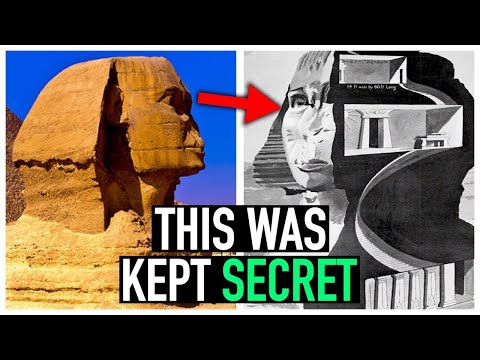
The Great Sphinx of Giza: Unearthing the Hidden Chamber and its Historical Implications


I. The Enigma Beckons

The sands of Egypt hold secrets as vast and ancient as time itself. Among them, the Great Sphinx of Giza stands as a silent sentinel, its enigmatic gaze fixed on the horizon, guarding millennia of unanswered questions. For centuries, whispers have persisted of hidden chambers, of lost knowledge concealed within its colossal stone body. This isn't mere folklore; it's an enduring hypothesis fueled by anomalous findings and the sheer audacity of its construction. Today, we delve into the persistent pursuit of these hidden passages, examining whether modern archaeology and technology are finally cracking the code of the Sphinx's most guarded secret.

II. Centuries of Speculation

The Sphinx, a limestone colossus with the body of a lion and the head of a human, predates many of the structures it overlooks, possibly by millennia. Its true age and purpose remain subjects of intense debate, a fertile ground for speculation and, of course, paranormal inquiry. Ancient texts offer fragmented clues, often shrouded in myth and allegory. Legends speak of hidden vaults containing the wisdom of the Atlanteans or records from a pre-dynastic civilization far more advanced than previously understood. The very notion of a "time capsule" or a repository of forgotten knowledge isn't a modern invention; it's an ancient fear and fascination projected onto one of humanity's most profound monuments.

The persistent theories of a secret chamber are not unfounded. Even within the limited scope of conventional archaeology, anomalies have been noted:

  • The Sphinx's Paws: Early explorers, including Edgar Cayce, the famed American psychic, predicted the existence of a "Hall of Records" beneath the Sphinx's paws, supposedly containing historical and spiritual truths. While Cayce's pronouncements are often debated, they reflect a deeper, almost archetypal intuition about hidden knowledge within the monument.
  • Geological Anomalies: Ground-penetrating radar surveys conducted over the years have detected unusual voids and cavities within and around the Sphinx's base. While some can be attributed to natural geological formations or known cavities, the persistence and size of others have kept the "secret chamber" theory alive.

III. The Modern Hunt for Answers

The allure of a hidden chamber beneath the Sphinx is a magnet for both serious archaeological endeavors and more fringe investigations. Throughout the 20th century and into the 21st, various expeditions have employed cutting-edge technology to probe the statue's secrets. Ground-penetrating radar (GPR), seismic surveys, and infrared thermography have been used to map internal structures and identify potential voids. These technologies, while not definitive proof of a man-made chamber, can reveal inconsistencies in the bedrock and internal stratification that warrant further investigation.

It's within this context that numerous researchers and explorers have dedicated themselves to uncovering what lies beneath. The work of figures and organizations focusing on ancient mysteries often leads them to such iconic sites. The challenge, beyond the technological hurdles, is gaining access and navigating the stringent regulations surrounding archaeological sites of this magnitude. When official surveys reveal anomalies, the question becomes: what is inside these spaces? Are they natural, or the intentional work of a civilization seeking to preserve its legacy?

The pursuit isn't merely about finding a room; it's about the potential artifacts and long-forgotten texts that such a discovery could yield. Imagine unearthing scrolls detailing the true builders of the pyramids, astronomical charts from a forgotten epoch, or even records of events that predate recorded history. The implications for our understanding of ancient civilizations, their technology, and their worldview would be monumental. This is where the line between archaeology and the paranormal blurs, as conventional science grapples with phenomena that challenge its established timelines and narratives.

IV. Artefacts and Lost Texts: The Prize

Should a hidden chamber, a true "time capsule," be definitively located and accessed, the potential contents are what truly ignite the imagination. We're not just talking about pottery shards or common tools. The speculation centers on items that could fundamentally alter our comprehension of Earth's history:

  • Advanced Tools or Devices: Evidence of technology that appears anachronistic – materials, construction methods, or energy sources beyond what is currently understood for that period.
  • Historical Records: Written accounts, perhaps on durable materials like stone or metal, detailing lineages, events, scientific knowledge, or a philosophical understanding of the cosmos that predates current historical frameworks. Think of the Library of Alexandria, but preserved within the very fabric of a monument.
  • Maps or Charts: Cosmological maps, terrestrial charts showing ancient coastlines, or star maps that could reveal a sophisticated understanding of astronomy and geography.
  • Spiritual or Esoteric Texts: Documents that might shed light on the spiritual beliefs, rituals, and perhaps even the psychic or paranormal capabilities of ancient peoples.

Such a find would not only excite archaeologists and historians but also validate the persistent theories of those who believe in lost civilizations or ancient advanced knowledge, often discussed in circles dedicated to occult studies and parapsychology.

V. Rewriting the Narrative

The confirmation of a significant, intentionally hidden chamber containing historical records within the Great Sphinx would send shockwaves through academia and the public consciousness. It would necessitate a radical re-evaluation of:

  • The Age of Human Civilization: Pushing back timelines for sophisticated societies and advanced knowledge.
  • Technological Attainments: Forcing a reassessment of what ancient peoples were capable of, potentially supporting theories about lost technologies.
  • The Origin and Purpose of the Sphinx Itself: Providing definitive answers to questions that have puzzled humanity for centuries.
  • The Nature of Knowledge Preservation: Understanding how and why such critical information was buried and forgotten.

This discovery would be more than just an archaeological triumph; it would be an existential one, forcing us to question everything we thought we knew about our past. Such revelations often align with speculative theories concerning ancient astronauts or precursor civilizations, topics frequently explored in the realm of mystery and the unexplained.

"The Sphinx is a riddle. We are looking for the key to riddle, not just a hidden room. What if the secret isn't the room at all, but what the Sphinx has witnessed?" - A cryptic note from an anonymous researcher involved in early seismic surveys.

VI. Investigator's Verdict

While definitive, publicly verifiable confirmation of a substantial, artifact-filled chamber remains elusive, the persistence of anomalous radar readings and the sheer scale of the Sphinx demand continued, rigorous investigation. Dismissing the possibility outright would be intellectually lazy. Conventional explanations for voids, such as erosion or natural fissures, are plausible, but they don't entirely negate the compelling arguments for intentional construction or concealment. The "secret chamber" theory often treads the line between archaeological possibility and speculative fantasy. However, the historical and intuitive resonance of such a discovery suggests a deeper human need to believe that our ancestors left us profound messages.

My verdict? The evidence is circumstantial but tantalizing. The pursuit itself, using advanced technologies, is valuable for what it *can* reveal about the Sphinx's internal structure, even if no "time capsule" is found. The real mystery might be why the legend persists so strongly. Is it a collective unconscious echo, or a faint signal from a genuinely buried truth?

Aspect Analysis
Hypothesis: Hidden Chamber beneath the Sphinx Persistent theory, supported by some anomalous survey data and historical speculation.
Supporting Evidence: Ground-penetrating radar anomalies, seismic survey results, ancient legends, Edgar Cayce's prophecies.
Counterarguments: Natural geological formations, lack of definitive archaeological proof, challenges in differentiating natural voids from intentional ones.
Investigator's Stance: Requires further, transparent, and advanced investigation. Plausible, but unproven.

VII. The Archivist's Recommendations

For those seeking to delve deeper into the mysteries of the Sphinx and ancient lost knowledge, a curated selection of resources is essential. Understanding the foundational texts that discuss these possibilities, alongside rigorous archaeological findings, provides a balanced perspective. My recommendations aim to arm you with the knowledge to critically assess claims and appreciate the depth of these enduring enigmas.

The Archivist's Repository

  • Book: The Sphinx: Secrets of the Old Kingdom by Dr. Mark Lehner. While focused on conventional archaeology, Lehner's extensive work provides crucial context and addresses many geological questions surrounding the Sphinx.
  • Book: Edgar Cayce's Egypt: Chariots of the Gods? by Robert Bauval and Graham Hancock. These authors explore theories connecting ancient structures, including the Sphinx, to advanced civilizations and celestial alignments, often touching upon the idea of hidden chambers and lost histories.
  • Documentary: Search for documentaries detailing Sphinx GPR surveys or archaeological explorations. Look for those that present findings objectively, discussing both anomalies and conventional explanations.
  • Resource: Wikipedia's entry on the "Great Sphinx of Giza" offers a comprehensive overview of archaeological findings and ongoing debates.

Exploring these resources is akin to assembling your own investigative kit. Each piece of information adds to your understanding, helping you discern between speculation and evidence. Remember, the pursuit of truth often requires sifting through layers of myth and conjecture.

VIII. Protocol: Investigating Ancient Mysteries

When approaching a subject as layered as the Sphinx's potential hidden chamber, a structured protocol is paramount. This isn't about ghost hunting; it's about applying critical thinking to historical and geological enigmas.

  1. Initial Research: Begin by understanding the established archaeological consensus regarding the Sphinx's construction, age, and geological composition.
  2. Anomalous Data Review: Investigate reports of geophysical surveys (GPR, seismic, thermal). Cross-reference findings from different expeditions and sources.
  3. Historical Contextualization: Examine ancient texts, legends, and historical accounts that mention hidden chambers or lost knowledge associated with the Sphinx or similar monuments.
  4. Skepticism as a Tool: Always question sensational claims. Look for independent verification and scientific methodology. Consider mundane explanations first (e.g., geological voids, erosion, construction imperfections).
  5. Evidence Evaluation: If new evidence emerges (e.g., photographs of a chamber, artifacts), evaluate its authenticity, context, and significance rigorously. Look for scientific dating, provenance, and expert analysis.
  6. Synthesize & Conclude: Based on the weight of evidence, form a reasoned hypothesis. Acknowledge uncertainties and areas requiring further investigation.

This protocol mirrors scientific inquiry, emphasizing evidence-based reasoning even when dealing with subjects that border on the strange and weird.

IX. Frequently Asked Questions

Frequently Asked Questions

  • Q1: Is there definitive proof of a hidden chamber under the Sphinx?
    A1: As of now, there is no universally accepted, definitive archaeological proof of a large, man-made hidden chamber containing artifacts. However, geophysical surveys have indicated anomalies requiring further study.
  • Q2: What technology is being used to investigate the Sphinx?
    A2: Researchers have employed ground-penetrating radar (GPR), seismic surveys, and infrared thermography to map subsurface structures.
  • Q3: Could the anomalies be natural geological formations?
    A3: Yes, natural fissures, erosion patterns, and cavities are the most common explanation for subsurface anomalies in such ancient structures. However, the debate continues regarding the nature of some detected voids.
  • Q4: What is the "Hall of Records" mentioned by Edgar Cayce?
    A4: Edgar Cayce prophesied a hidden chamber beneath the Sphinx containing ancient records of a lost civilization, particularly Atlantis. This remains a significant element of speculative theories.
  • Q5: If a chamber is found, what impact would it have on history?
    A5: Discovering such a chamber with historical texts or artifacts could profoundly rewrite our understanding of ancient civilizations, their age, technology, and knowledge.

X. Your Field Assignment

The pursuit of hidden chambers and lost histories is not limited to the desolate sands of Egypt. Many of your own communities hold local legends of hidden tunnels, forgotten basements, or historical secrets buried just beneath the surface. Your mission, should you choose to accept it, is to become a local investigator.

Your Assignment:

  1. Identify a local legend or historical mystery in your town or city that hints at something hidden or forgotten (e.g., a rumored underground passage, a missing historic artifact, a secret society's meeting place).
  2. Conduct preliminary research using local historical societies, libraries, and online archives.
  3. Analyze the legend: What evidence supports it? What are the counterarguments or mundane explanations?
  4. In the comments below, share your findings and your hypothesis about the local mystery. Treat it as you would any other anomalous report – with skepticism, thoroughness, and an open mind.

This exercise hones your investigative skills and demonstrates that the hunt for the unknown is a global, and often personal, endeavor.

alejandro quintero ruiz is a veteran field investigator dedicated to the analysis of anomalous phenomena. His approach combines methodological skepticism with an open mind to the inexplicable, always seeking the truth behind the veil of reality.

Ancient Civilizations: Unearthing Evidence of Pre-Flood Societies?


Introduction: The Echoes of a Lost World

The story of humanity is conventionally told as a linear progression, a steady climb from primitive beginnings. Yet, scattered across the globe, ancient sites whisper a different narrative. These are not mere ruins; they are the silent witnesses to epochs of sophisticated civilization that, according to certain myths and interpretations, predated catastrophic global events. The question is no longer about *if* such civilizations existed, but about the tangible evidence that might confirm their presence, and the implications for our understanding of history.

We are told that the recognized timeline of human civilization began with Sumer, Egypt, and the Indus Valley – around 5,000 years ago. But what if this is a convenient, sanitized version of events? What if there were advanced cultures, with architectural and astronomical knowledge far exceeding their perceived capabilities, that rose and fell long before the commonly accepted dawn of history? The concept of a global flood, a recurring motif in the mythology of cultures worldwide, from the Mesopotamian Epic of Gilgamesh to the biblical account of Noah, serves as a powerful anchor for those seeking evidence of these antediluvian societies. This isn't about faith; it's about scrutinizing the anomalies in the archaeological record and the intricate tapestry of ancient lore.

Myth and Megalith: Piecing Together Pre-Flood Clues

The most compelling argument for pre-flood civilizations comes from the confluence of two seemingly disparate fields: ancient mythology and megalithic archaeology. Legends of a great flood are remarkably consistent across disparate cultures, often describing a cataclysm that wiped out an advanced prior world. These myths are not merely fanciful tales; they are oral histories, passed down through millennia, potentially preserving fragmented memories of real events. When we overlay these narratives onto sites featuring colossal stone structures – monoliths at Stonehenge, the pyramids of Egypt, the cyclopean walls of Puma Punku, or the Easter Island Moai – a profound pattern begins to emerge.

"The myths speak of giants, of gods who walked the earth, and of knowledge lost to the water. Today, we see the remnants of their colossal works, defying primitive explanations of their construction."

Many of these structures exhibit construction techniques that are, by conventional archaeological standards, impossible for the supposed technological capabilities of the eras in which they are placed. Consider the perfectly cut, massive basalt blocks at Puma Punku, fitted together with astonishing precision without mortar, or the sheer scale and alignment of the Egyptian pyramids. These feats suggest a level of engineering and understanding of physics that we struggle to replicate even today. The hypothesis is that these megaliths are not simply monuments, but functional artifacts, perhaps even remnants of a global network of sites designed to record or harmonize with cosmic energies, built by a civilization that understood principles we are only beginning to rediscover.

The Celestial Clockwork: Astrologically Aligned Megaliths

The sophistication of ancient civilizations is often underestimated, particularly their grasp of astronomy. Many megalithic sites are not randomly placed; they are precisely aligned with celestial events. The solstices, equinoxes, and the cycles of the moon and stars were not mere curiosities but integral to the worldview and possibly the technology of these ancient peoples. For example, the chambers within Newgrange in Ireland are designed to illuminate with the winter solstice sunrise, a feat requiring meticulous astronomical observation and sophisticated surveying. Similarly, the Great Pyramid of Giza is aligned with the cardinal directions with remarkable accuracy, and theories abound regarding its connection to the Orion constellation.

This astronomical alignment isn't just about tracking time; it suggests a deep understanding of cosmic cycles and potentially their influence on terrestrial events. Could these alignments have been part of a global energy grid, or a system for predicting astronomical phenomena, or even for surviving catastrophic events? The precision seen across continents – from Göbekli Tepe in Turkey, predating Stonehenge by millennia, to the Nazca Lines in Peru – points towards a shared, advanced knowledge base. It begs the question: how could such disparate cultures, separated by vast oceans and seemingly limited means of communication, possess such synchronized astronomical and architectural understanding?

The search for pre-flood evidence often involves tracing these cosmic connections. Researchers like Graham Hancock and Robert Bauval have proposed theories linking these alignments to precession cycles and a potential "Age of Leo" around 10,500 BCE, a period that aligns uncannily with the Younger Dryas cold snap – a dramatic and rapid climate shift that could have triggered global deluges. This makes the megalithic structures more than just static monuments; they become potential time capsules, activated by celestial events, and possibly designed to survive or record information through cataclysms.

Global Patterns: A Network of Ancient Knowledge?

The interconnectedness of these sites is perhaps the most tantalizing aspect. If we view these megalithic observatories, pyramids, and geoglyphs not as isolated achievements but as nodes in a global network, the idea of an antediluvian civilization becomes more plausible. The uniformity in construction techniques, the shared mythological themes, and the synchronized astronomical alignments suggest a common origin or a widely disseminated body of knowledge. This challenges the fragmented, localized development of civilization that mainstream archaeology often posits.

Investigating these patterns requires a multidisciplinary approach, moving beyond the confines of traditional academic silos. It means engaging with alternative theories, scrutinizing historical records for overlooked clues, and exploring the cutting edge of archaeoastronomy and archaeogeology. The evidence, while often debated, is persistent. From the underwater structures off the coast of Japan and India to the vast stone circles of Africa, the echoes of forgotten epochs are undeniable.

"Conventional history paints a picture of gradual human development. But when you look at the evidence – the sheer scale of these ancient constructions, their precise alignments, and the global reach of flood myths – you are forced to question that narrative. Were we handed down knowledge by a lost civilization, or did we inherit fragmented memories of a world that was technologically and spiritually far more advanced than we admit?"

This exploration is not about rejecting established historical timelines outright, but about critically examining the inconsistencies and anomalies that persistent research brings to light. It’s about understanding that our current understanding of ancient history may be incomplete, and that the story of civilization might be far grander, and older, than we currently believe. For the dedicated researcher, the question isn't *if* there's more to the story, but *where* the most compelling evidence lies, and *how* we can best interpret it without succumbing to confirmation bias.

Investigator's Verdict: Frauds, Fables, or Forgotten History?

The evidence for pre-flood civilizations, while intriguing, is inherently difficult to verify conclusively. Many interpretations of megalithic sites and myths are speculative, open to debate, and subject to conventional explanations like natural geological formations, misidentified constructions, or symbolic storytelling rather than literal history. Fraudulent claims and misinterpretations have certainly muddied the waters, leading many to dismiss the entire field as pseudoscience. However, the sheer consistency of global flood narratives and the mind-boggling precision and scale of certain ancient structures—particularly those predating conventionally accepted periods of advanced civilization—cannot be easily dismissed.

The key lies in methodology. When we analyze these phenomena through the lens of rigorous investigation, comparing archaeological data with mythological consistency and astronomical precision, outliers begin to emerge. These outliers are not necessarily proof positive, but they are strong indicators that our current historical framework might be missing crucial chapters. The possibility of forgotten, advanced civilizations is not as outlandish as it might seem when confronted with the physical realities of sites like Puma Punku or the Sphinx's geological age debates. It is plausible that a global cataclysm did indeed erase a significant portion of human history, leaving only fragmented myths and colossal, enigmatic monuments as their testament. The work of researchers like those on Gaia seeks to connect these dots, offering a narrative that, while unconventional, is deeply compelling.

The Investigator's Archive: Essential Reading and Resources

To truly understand the scope of potential pre-flood civilizations, immersing oneself in the available research is paramount. The following are essential resources for any serious investigator:

  • Books:
    • "Fingerprints of the Gods" by Graham Hancock: A foundational text exploring ancient mysteries and lost civilizations.
    • "Revised History of the Ancient World" by David Rohl: Offers alternative timelines and interpretations of early history.
    • "The Orion Mystery: The Secrets of the Great Pyramids" by Robert Bauval and Adrian Gilbert: Focuses on the astronomical alignments of the Giza plateau.
    • "The World's Water Crisis" by Paul O'Donovan: Explores geological data and historical accounts of global floods.
  • Documentaries:
    • "Ancient Civilizations" series on Gaia: Features numerous episodes delving into specific archaeological sites and theories. (Experience Gaia in English at gaia.com)
    • "The Revelation of the Pyramids" (2010 film): Examines the construction and potential purpose of ancient pyramid complexes.
    • "Atlas of the Ancient World" series: Provides geographical and historical context for early civilizations.
  • Online Resources:
    • Reputable geological and archaeological journals for peer-reviewed research on dating methods and site analysis.
    • Online archives of mythology and folklore databases, cross-referencing flood myths globally.
    • Websites dedicated to archaeoastronomy and the study of ancient megalithic sites.

Your Field Mission: Uncovering Local Legends

While global sites are compelling, the seeds of ancient history might be closer than you think. Your mission, should you choose to accept it, is to investigate local legends.

  1. Identify Local Myths: Research old stories, folklore, and legends in your region. Are there tales of great floods, lost settlements, or unusual geological formations that defy easy explanation?
  2. Scrutinize Local History: Dig into historical records, old maps, and local archives. Look for accounts that deviate from conventional timelines or describe unexplained events.
  3. Observe the Landscape: Visit any significant geological features or historical sites in your area. Do they exhibit unusual characteristics? Are there any local theories about their origin or purpose that deviate from the norm?
  4. Document Findings: Record your findings, including any potential connections between local lore and anomalous geographical or historical evidence. Compare your findings against the patterns discussed in this report.

The past is not dead; it is not even past. It is merely hidden, waiting for the persistent investigator to bring its secrets to light.

Frequently Asked Questions

Are there any scientific proofs for civilizations before the flood?
Scientific consensus primarily relies on empirical evidence. While some geological data suggests rapid sea-level rise and environmental shifts consistent with flood events, direct, irrefutable archaeological proof of advanced civilizations predating known ones remains a subject of intense debate and interpretation. Theories involving advanced knowledge are often based on circumstantial evidence and extrapolated from myths.
What is the most compelling piece of evidence for an antediluvian civilization?
Many consider the precise astronomical alignments and sophisticated construction of megalithic sites like Puma Punku, Göbekli Tepe, and perhaps the Giza Pyramids (with some dating debates) to be among the most compelling lines of evidence challenging conventional timelines. The consistency of global flood myths also plays a significant role in supporting this hypothesis.
How did these civilizations disappear?
The prevailing theory, derived from global myths, is a cataclysmic event, most commonly a great flood. These events could have been caused by geological shifts, asteroid impacts, or dramatic climate change, leading to widespread destruction and the loss of civilization.

About the Author

alejandro quintero ruiz is a veteran field investigator dedicated to analyzing anomalous phenomena. His approach combines methodological skepticism with an open mind to the inexplicable, always seeking the truth behind the veil of reality. With years of experience dissecting cryptic evidence and exploring forgotten sites, his work aims to illuminate the darker, more mysterious corners of our world.

The tapestry of human history is far richer and more complex than standard narratives allow. The echoes of past epochs, potentially far more advanced than our own, persist in the stones and stories that remain. To deny their potential existence is to close our eyes to the evidence that challenges our preconceptions. The investigation continues.