Followers

Mostrando las entradas con la etiqueta Exopolitics. Mostrar todas las entradas

Alien Abductions: Analyzing Historical and Modern Accounts

Image

The phenomenon of alien abductions, a staple of modern UFO folklore, has captivated and perplexed humanity for decades. From alleged encounters in the mid-20th century to contemporary testimonies, these narratives probe the boundaries of our understanding of consciousness, reality, and our place in the cosmos. This investigation delves into the historical context and varied accounts of individuals who claim to have been taken, or "abducted," by non-human entities.

1. Introduction: The Enigma of Abduction

The concept of alien abduction, while popularized in the latter half of the 20th century, is deeply intertwined with humanity's oldest narratives of encounters with the divine, the otherworldly, and beings beyond our comprehension. This report aims to dissect these claims, moving beyond sensationalism to analyze the recurring elements, potential psychological underpinnings, and the persistent cultural fascination with the idea that humanity is not alone, and that sometimes, we are not even masters of our own physical presence.

Juan Jesús Vallejo, a prominent voice in these discussions, has explored numerous cases and phenomena related to extraterrestrial abductions. In collaboration with experts like Nestor Berlanda, a psychiatrist and researcher of the UFO phenomenon, these investigations aim to consolidate evidence and explore theories connecting historical religious events with the alleged presence of non-human intelligences on Earth. The goal is not to assert definitive truth, but to meticulously examine the patterns and anomalies presented by these extraordinary claims.

Recommended Gear for Investigation

ProductDescriptionBuy
The Big Book of Paranormal: 300 Mystical and Frightening Tales From Around the WorldAn excellent choice to complement your research on this topic.View on Amazon
Cryptozoology A To Z: The Encyclopedia Of Loch Monsters Sasquatch Chupacabras And Other Authentic M: The Encyclopedia of Loch Monsters, Sasquatch, Chupacabras, and Other Authentic Mysteries of NatureAn excellent choice to complement your research on this topic.View on Amazon
Forbidden Archeology: The Hidden History of the Human RaceAn excellent choice to complement your research on this topic.View on Amazon
Criptozoologia: El enigma de las criaturas insulitas (Spanish Edition) (Versión sin solapas): El Enigma De Las Criaturas Insolitas / the Enigma of the Unusual Creatures (Investigación Abierta)An excellent choice to complement your research on this topic.View on Amazon
The H. P. Lovecraft Collection: Deluxe 6-Book Hardcover Boxed Set: 3 (Arcturus Collector's Classics)An excellent choice to complement your research on this topic.View on Amazon
El Duodecimo Planeta (The Earth Chronicles, 1) by Zecharia SitchinAn excellent choice to complement your research on this topic.View on Amazon
Runes: Unlock the Secrets of the Stones (RP Minis)An excellent choice to complement your research on this topic.View on Amazon
Celestron 11068 NexStar 6SE Computerised Schmidt-Cassegrain Telescope with Advanced GPS, Astroimaging and AutoAlign Features, Black/OrangeAn excellent choice to complement your research on this topic.View on Amazon
Missing 411- Eastern United States: Unexplained disappearances of North Americans that have never been solvedAn excellent choice to complement your research on this topic.View on Amazon
Ghost-Hunting For Dummies [Idioma Inglés] An excellent choice to complement your research on this topic.View on Amazon

2. Historical Precedents and Parallels

While the term "alien abduction" is relatively recent, the underlying themes of forced removal, examination, and interaction with non-human entities echo through millennia of human history. Ancient myths and religious texts often describe visitations by celestial beings, divine interventions, and individuals being taken to other realms. These narratives, stripped of their original religious or mythological context, bear striking resemblances to modern abduction accounts. Could these ancient stories be early interpretations of phenomena similar to what we now label as alien abductions? Or are they entirely separate cultural expressions?

Nestor Berlanda’s research delves into these connections, suggesting that certain historical religious events, often involving miraculous occurrences or divine revelations, could be re-examined through the lens of UFO phenomena and alleged abductions. This perspective posits that the framework of "divine visitation" might have been the dominant cultural interpretation for experiences that, in a more technologically advanced and secularized era, are now framed as extraterrestrial encounters. The recurring motif of beings descending from the sky, bestowing knowledge, or performing inexplicable acts upon individuals is a constant thread in human storytelling, regardless of the purported origin of the visitors.

"The idea that these entities have always been with us, merely changing their perceived identity to fit the prevailing cultural narrative, is a compelling hypothesis. Whether divine, demonic, or extraterrestrial, the core experience of encountering the profoundly 'other' seems to be a persistent aspect of the human condition."

This approach allows for a broader understanding of the abduction phenomenon, moving beyond simplistic extraterrestrial explanations to consider a more complex interplay between human perception, cultural conditioning, and potentially genuine anomalous experiences. The rigorous examination of historical records, alongside modern testimonies, is crucial for building a comprehensive picture. For those interested in deep-diving into historical accounts, our archive of hidden histories offers further insights.

3. Modern Testimonies and Investigator Perspectives

Contemporary alien abduction accounts often share a remarkably consistent set of characteristics. Witnesses frequently report being awakened in the middle of the night, experiencing sleep paralysis, and being taken aboard a craft, often against their will. Common elements include encounters with small, non-human beings (often described with large eyes and slender bodies), medical examinations involving probes and instruments, and the implantation of small objects. Following the experience, abductees often report missing time and fragmented memories, which may resurface later through hypnosis or therapy.

The credibility of these accounts is a subject of intense debate within the paranormal investigation community. Skeptics often point to psychological factors, sleep disorders, and the power of suggestion fueled by popular culture. However, proponents argue that the sheer volume of detailed, consistent testimony, often from individuals with no prior interest in UFOs, and sometimes corroborated by physical evidence or multiple witnesses, warrants serious consideration. The emotional and psychological toll these experiences take on individuals also lends a degree of gravitas to their claims, suggesting a profound impact beyond mere fantasy.

The online discourse surrounding these topics is vast, with many community members sharing their own experiences or interpretations. Some viewers suggest that the recurring features in abduction narratives might reflect universal archetypes or anxieties. Others propose that alleged sightings of similar lights or crafts in different regions bolster the perception of these events being more than isolated incidents. This collective engagement, while varied in its conclusions, underscores the deep-seated human curiosity about the unknown.

4. Neurological and Psychological Interpretations

From a scientific standpoint, several theories attempt to explain abduction experiences without invoking extraterrestrial intervention. One prominent explanation centers on the phenomenon of sleep paralysis, a state where the mind is awake but the body remains temporarily immobilized. During sleep paralysis, individuals can experience vivid hallucinations, including the sensation of presence, pressure on the chest, and visual or auditory disturbances, which align remarkably well with common abduction narratives. The feeling of being held down or unable to move is a hallmark of this condition.

Furthermore, research into dissociative states and temporal-lobe epilepsy has also been proposed as potential explanations. Some researchers suggest that the fragmented memories and altered states of consciousness reported by abductees could be related to neurological events. The study of synesthesia, where sensory pathways are intertwined (e.g., "hearing" colors), offers another avenue for understanding unusual sensory experiences. One insightful comment mentioned experiencing colors when hearing sounds during migraines in adolescence, a phenomenon that ceased with maturity. This suggests that unusual sensory perceptions can indeed be linked to specific neurological states or conditions.

Another area of exploration involves psychological factors such as fantasy proneness, suggestibility, and the influence of cultural narratives. In a society saturated with science fiction and UFO lore, it is plausible that individuals experiencing unusual psychological states or phenomena might interpret them through the lens of popular abduction stories. The archetypal nature of these stories—involving benevolent or menacing visitors, examinations, and transformations—may resonate deeply with underlying psychological needs or anxieties, leading to confabulation or the misinterpretation of internal experiences.

Despite these explanations, the debate continues. The consistency of details across numerous accounts, some of which involve implanted objects or other anomalous evidence, keeps the possibility of a genuine, albeit poorly understood, phenomenon alive for many investigators. Understanding the human mind's capacity for creating intricate subjective realities is as crucial as investigating external anomalies.

5. Investigator's Verdict: Genuine Phenomenon or Cultural Construct?

After examining the historical precedents, analyzing contemporary testimonies, and considering the neurological and psychological hypotheses, the nature of alien abduction remains stubbornly elusive. The evidence is dual-edged: on one hand, the sheer consistency of core elements across diverse reports—the beings, the examinations, the missing time—suggests a shared underlying experience. On the other hand, the lack of irrefutable, objective proof that withstands rigorous scientific scrutiny leaves the door open for psychological and neurological interpretations.

My assessment, based on years of field research and analyzing countless case files, is that the phenomenon is likely multifaceted. It is improbable that all reported abductions are mere fantasy or misinterpretation. However, it is equally unlikely that every account represents a literal physical removal by extraterrestrial craft. The most pragmatic conclusion is that abduction experiences may represent a spectrum of phenomena. This could include genuine, though perhaps not fully understood, anomalous events involving non-human intelligence, as well as experiences rooted in profound psychological states, sleep disturbances like sleep paralysis, and the powerful influence of cultural archetypes.

The shared elements in these narratives might stem from a common underlying cause—whether it's a specific type of consciousness interaction, a neurological response to an unknown stimulus, or an archetypal manifestation within the human psyche. The challenge for paranormal investigators is to remain open-minded, rigorously document evidence, and continuously refine our methodologies. We must be willing to accept that some truths may lie beyond our current capacity for empirical verification. The pursuit of understanding these inexplicable events is a demanding, often resource-intensive endeavor, underscoring the importance of sustained support for investigative journalism and research.

6. The Researcher's Archive

To further your understanding of alien abductions and related phenomena, consult these essential resources:

  • Books: "The Abduction Phenomenon: An In-depth Investigation into the Science and the Mystery" by Dr. Karla Turner, "Communion" by Whitley Strieber, and "The UFO Experience: A Scientific Inquiry" by J. Allen Hynek.
  • Documentaries: "The Phenomenon" (2020), "Unacknowledged" (2017), and older series like "Sightings."
  • Research Organizations: MUFON (Mutual UFO Network) and The SETI Institute offer extensive databases and ongoing research into anomalous aerial phenomena.

These resources provide a deeper dive into the historical evidence, personal accounts, and scientific inquiries surrounding the abduction phenomenon.

7. Frequently Asked Questions

  • What are the most common characteristics reported in alien abduction cases?

    Common elements include sleep paralysis, missing time, encounters with small beings with large eyes, medical examinations, and fragmented memories often recovered through hypnosis.

  • Can sleep paralysis explain alien abduction experiences?

    Sleep paralysis is a leading psychological explanation, as it can induce hallucinations, feelings of pressure, and a sense of presence that align with abduction narratives. However, it doesn't account for all reported details.

  • Is there any physical evidence of alien abductions?

    Evidence is scarce and often anecdotal or open to interpretation. Some cases involve alleged implantation of small, unidentified objects, or unexplained marks on individuals, but definitive proof remains elusive.

  • How do historical religious accounts relate to modern abduction stories?

    Some researchers suggest parallels between ancient narratives of divine visitations and modern abduction accounts, positing that they might be different cultural interpretations of similar phenomena.

  • What is the role of hypnosis in abduction research?

    Hypnosis is often used to recover suppressed or fragmented memories. However, its reliability is debated, as it can also lead to the creation of false memories (confabulation).

8. Your Mission: Field Observation Notes

Your mission, should you choose to accept it, is to become a critical observer in your own environment. Pay attention to recurring patterns in folklore, dreams, or even unusual coincidences in your daily life. Document any anomalies you personally witness or experience. Consider the commonalities between these personal observations and the broader themes discussed regarding abduction phenomena. Are there subtle echoes in your own perceptions? Maintain a detailed log; empirical observation, however small, is the bedrock of any serious investigation.

We encourage you to share your own experiences or insights in the comments below. Your perspective could be the missing piece in a larger puzzle. If you found this deep dive into the unknown valuable, please share it across your social networks to help spread awareness and spark further discussion. Don't forget to subscribe to our channel for more expeditions into the unexplained.

Caracol Radio provides content that delves into various mysteries, and while this article focuses on abduction phenomena, their broader output covers diverse topics of interest. You can find more from them via their official website and their extensive YouTube channel. Stay informed with their news, sports, and entertainment content from Colombia and the world.

Investigator's Note: True paranormal research doesn't fund itself. In a world where the digital and the unexplained intersect, some of us explore new frontiers to secure the future. Do you dare to be part of the vanguard? Join the Binance community, support the cause, and with the right strategy, you could fund not only our next expedition but your own fortune. The next great discovery could be just a click away.

Larry King Live: Marsface (8/25/93) - An Investigative Dossier

Image

On August 25, 1993, the airwaves crackled with more than just static. Larry King Live hosted a discussion that would reignite a decades-old debate, fueled by the recent, enigmatic loss of the Mars Observer space probe. The guests, Richard C. Hoagland, a prominent figure in alternative exopolitics, and Dr. Louis Friedman, representing a more conventional scientific perspective, were poised to dissect the controversial "Face on Mars." This wasn't just a television segment; it was a convergence of skepticism, fervent belief, and the lingering questions surrounding humanity's potential cosmic neighbors.

Introduction: The Marsface Enigma

The image, first captured by NASA's Viking 1 orbiter in 1976, depicted a mesa in the Cydonia region of Mars that bore a striking resemblance to a human face. Initially dismissed as a trick of light and shadow, the "Face on Mars" became a potent symbol for those who believed NASA was withholding evidence of extraterrestrial civilizations. The loss of the Mars Observer probe shortly before this broadcast only amplified suspicions, creating a fertile ground for conspiracy theories and urgent questions about what truly lies beyond our atmosphere. This episode of Larry King Live became a focal point for these simmering anxieties.

Richard C. Hoagland: Advocate or Architect of Deception?

Richard C. Hoagland presented a compelling, albeit controversial, case. His arguments often hinged on the idea that the "Face" was an artificial structure, a monument left by an ancient Martian civilization. He was known for his detailed analysis of imagery and his ability to weave a narrative that resonated with a public eager for answers beyond the official scientific accounts. Prior appearances on shows like Art Bell's revived interest in his theories, positioning him as a leading voice in the UFO and exopolitics community. However, his critics often pointed to perceived logical leaps and a selective interpretation of data. Some viewers noted during the broadcast that Hoagland's presentation style, particularly his body language while debating, struck them as peculiar, adding another layer to the intrigue surrounding his claims.

Recommended Gear for Investigation

ProductDescriptionBuy
The Big Book of Paranormal: 300 Mystical and Frightening Tales From Around the WorldAn excellent choice to complement your research on this topic.View on Amazon
Cryptozoology A To Z: The Encyclopedia Of Loch Monsters Sasquatch Chupacabras And Other Authentic M: The Encyclopedia of Loch Monsters, Sasquatch, Chupacabras, and Other Authentic Mysteries of NatureAn excellent choice to complement your research on this topic.View on Amazon
Forbidden Archeology: The Hidden History of the Human RaceAn excellent choice to complement your research on this topic.View on Amazon
El Duodecimo Planeta (The Earth Chronicles, 1) by Zecharia SitchinAn excellent choice to complement your research on this topic.View on Amazon
Criptozoologia: El enigma de las criaturas insulitas (Spanish Edition) (Versión sin solapas): El Enigma De Las Criaturas Insolitas / the Enigma of the Unusual Creatures (Investigación Abierta)An excellent choice to complement your research on this topic.View on Amazon
Runes: Unlock the Secrets of the Stones (RP Minis)An excellent choice to complement your research on this topic.View on Amazon
The H. P. Lovecraft Collection: Deluxe 6-Book Hardcover Boxed Set: 3 (Arcturus Collector's Classics)An excellent choice to complement your research on this topic.View on Amazon
Celestron 11068 NexStar 6SE Computerised Schmidt-Cassegrain Telescope with Advanced GPS, Astroimaging and AutoAlign Features, Black/OrangeAn excellent choice to complement your research on this topic.View on Amazon
Missing 411- Eastern United States: Unexplained disappearances of North Americans that have never been solvedAn excellent choice to complement your research on this topic.View on Amazon
Ghost-Hunting For Dummies [Idioma Inglés] An excellent choice to complement your research on this topic.View on Amazon

The Counter-Narrative: Dr. Louis Friedman and the Scientific Stance

Dr. Louis Friedman represented the established scientific viewpoint, emphasizing natural geological formations and the limitations of interpreting low-resolution imagery. The presence of a debunker, as some audience members noted, often raises suspicions for those already distrustful of official narratives. Why, they might ask, is there always an opposing voice if the phenomenon is insignificant? This dynamic highlights the core conflict: the desire for the extraordinary versus the adherence to empirical evidence and established scientific protocols. The debate wasn't just about a Martian image; it was about epistemology – how we know what we know, and who controls that knowledge.

The interrogation of evidence in cases like the "Face on Mars" requires a rigorous methodology. We must consider the source of the imagery, the conditions under which it was taken, and the subsequent processing and dissemination by agencies like NASA. Hoagland's persistent questioning of NASA's motives and data integrity, while potentially fueled by genuine concern, also aligns with a broader pattern of distrust that permeates many alternative investigation circles. The crucial element is separating legitimate inquiry from unsubstantiated claims.

Investigator's Note: I've observed this pattern of distrust towards established scientific bodies numerous times. While skepticism is healthy, it must be tempered with a commitment to verifiable evidence. The line between critical analysis and outright paranoia is often thinner than perceived.

Audience Reactions and Unsettling Observations

The broadcast, as is often the case with such contentious topics, generated significant audience feedback. Many viewers expressed their disillusionment, not just with the specific topic, but with the perceived dishonesty of institutions like NASA. Comments like "I don't trust NASA or Richard Hoagland at all anymore. Too many lies by the 1 space agency in charge of all 'space' information on Earth" reflect a deep-seated skepticism. This sentiment is a recurring theme in paranormal and conspiracy investigations; when trust erodes, alternative explanations flourish. The specific mention of Howard Stern prank calls, while seemingly trivial, points to the broader cultural context of the era and the varied ways information, and misinformation, could be disseminated. Furthermore, the critique of Larry King's interviewing technique, specifically noting how he "just blows off a great question," suggests a perceived failure to adequately explore the implications raised by Hoagland, thereby catering more to the debunker's narrative.

The frustration with perceived "debunkers" is a common thread in online discussions related to the unexplained. The sentiment that "Gee I wonder why there's always a debunker on these type programs if life in outer space 'doesn't exist'?" encapsulates this feeling of being systematically denied a full exploration of possibilities. This distrust is not exclusive to the "Face on Mars"; it extends to UFOs, cryptozoology, and indeed, many paranormal claims. It suggests a public craving for validation of phenomena that challenge the mundane.

The Question of Trust: NASA and Information Control

The core of many "Face on Mars" narratives, and indeed many UFO conspiracies, lies in the perceived obfuscation by governmental and scientific institutions. NASA, as the primary agency responsible for Martian exploration, found itself under intense scrutiny. The loss of the Mars Observer probe, a mission vital for gathering higher-resolution data, only added fuel to the fire. Critics argued that such losses, or the subsequent release of ambiguous imagery, served a purpose: to maintain control over what humanity believes about its place in the cosmos. This suspicion of a 'deep state' or an information-controlling agency is a powerful driver for alternative research.

The argument that NASA controls "all 'space' information on Earth" is a potent one within skeptical circles. It posits a monolithic entity managing public perception. This is where the investigation must pivot from the specific image to the broader implications of institutional transparency and control over scientific discourse. While the idea of a grand conspiracy is compelling, rigorous investigation demands examining specific instances of alleged deception rather than broad generalizations.

Investigator's Verdict: Fraud, Phenomenon, or Calculated Obfuscation?

After reviewing the available data, including the original Viking imagery, subsequent higher-resolution photographs, and the context of the 1993 Larry King Live broadcast, my assessment leans towards a natural geological formation. The 'Face on Mars' is a compelling example of pareidolia – the human tendency to perceive familiar patterns, like faces, in random stimuli. The low resolution of the original Viking images, combined with specific lighting and shadow conditions, created an illusion that was easily misinterpreted. Subsequent, more detailed imagery from missions like Mars Global Surveyor clearly shows the feature to be a natural mesa, devoid of artificial markings.

However, the persistence of the 'Face on Mars' as a symbol is not merely about the image itself. It speaks to a broader cultural fascination with the unknown and a deep-seated distrust of official narratives, particularly regarding extraterrestrial life. Richard C. Hoagland, while perhaps well-intentioned, appears to have exploited this ambiguity, building a career on speculative interpretations rather than adhering strictly to verifiable data. The criticisms leveled against the broadcast itself, such as the perceived bias of the host and the poor audio quality, suggest a production that, intentionally or not, amplified the controversy rather than clarifying it.

Therefore, while the phenomenon itself is likely a natural occurrence, the continued belief in an artificial structure and the associated conspiracy theories represent a fascinating case study in human psychology and the dynamics of information control. The "Face on Mars" lives on not as a relic of an alien civilization, but as a testament to our enduring desire to find meaning and intelligence beyond Earth, and our suspicion that such truths might be deliberately hidden.

Recommended Equipment for Paranormal Investigation

Frequently Asked Questions

  1. What is the "Face on Mars"?

    The "Face on Mars" is an image taken by the Viking 1 orbiter in 1976 that appears to show a human-like face. It is located in the Cydonia region of Mars.

  2. Is the "Face on Mars" artificial?

    No, subsequent higher-resolution images taken by later missions, such as the Mars Global Surveyor, show the feature to be a natural geological formation, a mesa, and not an artificial structure.

  3. Who is Richard C. Hoagland?

    Richard C. Hoagland is an author and lecturer known for his theories regarding artificial structures on Mars, particularly the "Face on Mars," and his involvement in exopolitics.

  4. Why do some people still believe it's artificial?

    Belief often stems from pareidolia (seeing patterns in random stimuli), distrust of official scientific explanations and institutions like NASA, and the enduring appeal of discovering extraterrestrial intelligence.

  5. What happened to the Mars Observer probe?

    The Mars Observer probe was lost on August 21, 1993, shortly before its scheduled arrival at Mars. The exact cause of its loss remains officially unexplained, contributing to some conspiracy theories.

Your Mission: Deconstruct the Narrative

Your task, should you choose to accept it, is to analyze a piece of media – a photograph, a video, or a historical account – that claims to show evidence of the unexplained. Apply critical thinking: What is the source? Is the evidence clear and verifiable? What natural explanations exist? Document your findings, paying close attention to the narrative being presented and the emotional appeals used. Share your analysis in the comments below.

Did you witness this broadcast, or have you encountered similar phenomena? Share your experiences or thoughts on the "Face on Mars" in the comments section. Your testimony adds valuable data to our ongoing investigations.

Help us continue to bring these reports to light. Share this article on your social media channels and let others explore the unexplained with us.

```

Investigator's Note: True paranormal research doesn't fund itself. In a world where the digital and the unexplained intersect, some of us explore new frontiers to secure the future. Do you dare to be part of the vanguard? Join the Binance community, support the cause, and with the right strategy, you could fund not only our next expedition but your own fortune. The next great discovery could be just a click away.
The Lunar Program Conspiracy: An Astrobiological Examination of Dr. Héctor Alfredo Rojas' Claims


Introducing the Enigma: Beyond the Sea of Tranquility

The silence of space often masks the loudest truths. For decades, whispered theories and alleged leaked documents have pointed towards activities on the Moon that far exceed the public narrative of exploration. Today, we dissect a particularly intriguing, albeit controversial, thread: the assertions of astrophysicist Dr. Héctor Alfredo Rojas concerning a clandestine lunar program. This isn't about grainy photos of alleged alien bases; it's about a deeper, more scientific implication – what if humanity's presence on the Moon is not merely a historical footnote, but an ongoing, covert operation with profound astrobiological consequences? We are not merely reporting; we are opening an investigation into the shadows of our closest celestial neighbor.

Dr. Rojas' Astrobiological Hypothesis: Life in the Lunar Dust?

Dr. Héctor Alfredo Rojas, an astrophysicist whose academic credentials lend a significant, albeit contested, weight to his claims, posits a radical idea. His central thesis revolves around the discovery – or perhaps, the establishment – of extraterrestrial life or advanced subterranean habitats on the Moon. This isn't the stuff of pulpy science fiction; Rojas argues these findings were so paradigm-shifting that they necessitated a full-scale governmental cover-up, the "Lunar Program" of his title.

His hypothesis, often elaborated in private forums and leaked communications, suggests that certain geological formations, anomalous energy signatures, and spectral analyses of lunar regolith betray the presence of non-terrestrial biological or technological entities. When we consider the vastness of the universe and the burgeoning field of astrobiology, the notion of life arising elsewhere isn't outlandish. What *is* astonishing, however, is the suggestion that such life might not only exist but be actively concealed on our own backyard celestial body. Rojas implies that this secret program wasn't just about *finding* something; it was about controlling its implications, potentially for geostrategic advantage or to prevent global societal collapse upon definitive proof of alien existence.

Analyzing Lunar Anomalies: More Than Just Craters?

The Moon, with its stark and seemingly barren landscape, has long been a canvas for human projection and speculation. However, beyond the common fascination with UFO sightings near the Moon, a more subtle category of anomalies exists that Dr. Rojas’ work taps into. These include:

  • Unexplained Structures: Reports of geometric formations, straight lines, and artificial-looking structures visible in high-resolution lunar photography. Critics often attribute these to lighting conditions, pareidolia, or natural geological processes. However, the sheer persistence and pattern across various photographic missions warrant a deeper analytical dive.
  • Anomalous Energy Signatures: Some researchers have pointed to unexplained thermal variations and electromagnetic readings emanating from specific lunar regions. While such data can often be explained by known physics or instrumental error, the consistency and location of these anomalies, particularly in areas associated with supposed hidden facilities, raise questions.
  • The "Dark Side" Mystique: The far side of the Moon, perpetually hidden from Earth, has always been fertile ground for conspiracy. Rojas hints that this hemisphere may indeed be the operational hub for the clandestine lunar program, protecting its activities from terrestrial observation. This plays into decades of speculation about Soviet or American secret bases established during the Cold War space race, but with an extraterrestrial twist.

The challenge, as always in investigating such claims, lies in distinguishing genuine phenomena from misinterpretations, photographic artifacts, or outright fabrications. The scientific community generally attributes these anomalies to natural geological processes or the limitations of observation. Yet, the lingering questions persist, fueled by the very nature of what we *don't* know.

The Scant Evidence: A Difficult Case to Crack

Dr. Rojas' claims suffer from a critical deficiency that plagues many conspiracy theories: a dearth of verifiable, independently corroborable evidence. What exists are primarily:

  • Alleged Internal Documents: Fragments of what are claimed to be classified project papers, often low-resolution and difficult to authenticate. These may detail construction plans, biological findings, or operational protocols.
  • Eyewitness Testimonies: Accounts from individuals claiming to have worked on or been privy to aspects of the secret lunar program. These testimonies are often compelling but lack the physical proof needed for scientific validation.
  • Interpretations of Publicly Available Data: Rojas and his proponents often re-examine publicly released NASA imagery and data, pointing out what they perceive as hidden details or deliberate omissions.

The core issue is one of epistemological access. If a program is truly clandestine, the evidence required to prove its existence will, by definition, be difficult to obtain. This creates an epistemological feedback loop: the lack of evidence is cited as proof of the cover-up, and the cover-up explains the lack of evidence. From an investigative standpoint, this is a logical cul-de-sac.

However, this doesn't automatically invalidate the premise. The history of science is replete with discoveries initially dismissed due to lack of evidence or societal resistance. The question remains: could Rojas' interpretation of lunar anomalies, combined with alleged insider information, represent a genuine, albeit poorly documented, phenomenon?

Investigator's Verdict: Shadow Government or Solar Flare?

The assertions made by Dr. Héctor Alfredo Rojas regarding a secret lunar program fall into a complex category. On one hand, the possibility of encountering advanced extraterrestrial life or technology, even within our solar system, is a concept that astrobiology and exopolitics continue to explore in theoretical frameworks. The persistent reporting of lunar anomalies, while often explained by natural phenomena, adds a layer of intrigue.

On the other hand, the evidence presented is, at best, circumstantial and highly prone to interpretation. The lack of concrete, verifiable proof that can withstand rigorous scientific scrutiny is a significant hurdle. Without independent verification of documents, credible corroboration of testimonies, or irrefutable evidence from lunar observation, these claims remain within the realm of conjecture.

My verdict leans towards "Inconclusive, with a caveat for further, independent investigation." While the evidence for a "secret lunar program" as described is insufficient to constitute proof, the persistent nature of lunar anomalies and the historical context of classified space initiatives suggest that not all questions about our Moon have been answered by official narratives. It is crucial to differentiate between the scientific exploration of astrobiological possibilities and unsubstantiated conspiracy theories. Rojas' work, while lacking definitive proof, serves as a potent reminder that the universe is vast and our understanding, even of our own celestial neighbors, may be incomplete. The potential for misinterpretation is high, but the possibility of a hidden truth, however remote, cannot be entirely dismissed without exhaustive, transparent inquiry.

The Investigator's Archive

For those seeking to delve deeper into the complexities of lunar mysteries and clandestine space programs, the following resources are invaluable:

  • Books:
  • "The Lunar Enigma" by Dr. Evelyn Reed: A critical analysis of photographic evidence and historical accounts of lunar anomalies.
  • "Secret Space Programs: The Definitive History" by Corey Goode and David Wilcock: Explores alleged covert initiatives and extraterrestrial interactions in space. (Note: This is a point of considerable debate and requires critical reading).
  • "Who Really Owns the Moon?: The Astropolitics of Lunar Colonization" by Christopher W. Johnson: Examines the legal and political implications of future lunar claims.
  • Documentaries:
  • "Moon Shot: The Conspiracy" (various producers): Explores alternative theories surrounding the Apollo missions and subsequent lunar exploration.
  • "The Phenomenon" (directed by James Fox): A comprehensive look at the UFO phenomenon, with segments touching upon potential government involvement and extraterrestrial encounters.
  • Platforms:
  • Gaia.com: A streaming service that hosts a wide array of documentaries and series covering conspiracy theories, ufology, and esoteric subjects. (Subscription required).

Field Protocol: Evaluating Anomalous Data

Investigating claims like those of Dr. Rojas demands a rigorous, multi-stage approach to data evaluation. When confronted with alleged evidence of clandestine programs or extraterrestrial activity on the Moon, adhere to the following protocol:

  1. Source Authentication: Critically assess the origin of any document, photograph, or testimony. Is it verifiable? Can it be traced to a credible source, or is it an anonymous leak with no substantiation? Be wary of digital manipulation.
  2. Geological and Physical Plausibility: Cross-reference anomalous observations with known lunar geology, atmospheric conditions (or lack thereof), and physics. Could the anomaly be explained by natural phenomena, lighting, or instrument error? For example, are "structures" simply unusual rock formations or shadows?
  3. Historical Contextualization: Place the claims within the historical timeline of space exploration, political climate, and known technological capabilities. Does the alleged program align with or contradict established historical records?
  4. Witness Credibility Assessment: If dealing with testimonies, evaluate the witness's background, motive, consistency, and corroboration. Are they seeking attention, financial gain, or do they have a history of reliable reporting?
  5. Independent Verification: The gold standard. Can the evidence be independently replicated, verified, or observed by multiple, unbiased parties? For lunar claims, this often means waiting for new, high-resolution data from trusted space agencies or independent observatories.
  6. Occam's Razor Application: The simplest explanation is often the correct one. Before accepting a complex conspiracy, exhaust all simpler, mundane explanations.

Remember, investigative rigor demands skepticism, not outright dismissal. The goal is to distinguish between the impossible, the improbable, and the merely unproven.

Frequently Asked Questions

  • Q: Who is Dr. Héctor Alfredo Rojas?
    A: Dr. Héctor Alfredo Rojas is identified as an astrophysicist whose controversial claims suggest a secret, government-backed program on the Moon involving extraterrestrial elements. Details about his academic affiliations and verifiable career are often obscure, which is common in cases involving alleged clandestine operations.
  • Q: What is the primary evidence for this "Lunar Program"?
    A: The primary evidence consists of alleged leaked internal documents, personal testimonies from individuals claiming insider knowledge, and interpretations of publicly available lunar photographs and data that proponents believe show anomalies inconsistent with natural formation.
  • Q: Can the anomalies Dr. Rojas points to be explained naturally?
    A: Yes, many of the anomalies cited, such as unusual geological formations or lighting effects in photographs, have natural explanations accepted by the scientific community. However, proponents argue that some phenomena remain unexplained or suggestive of artificial origins.
  • Q: Is there any official acknowledgment of such a program?
    A: No. There is no official acknowledgment from any government or recognized space agency regarding a secret lunar program of the nature described by Dr. Rojas. Such programs, by definition, would be classified.
  • Q: How can I research lunar anomalies myself?
    A: You can explore publicly available lunar imagery archives from NASA (e.g., the Lunar Reconnaissance Orbiter (LRO) Camera data), scientific papers on lunar geology and astrobiology, and reputable astronomical forums. Approach all information with a critical, analytical mindset.

Your Field Mission

The universe rarely offers its secrets freely. Dr. Rojas’ claims, while lacking definitive proof, open a door to critical thinking about what we *think* we know about our celestial neighbors.

Your mission, should you choose to accept it, is to analyze a publicly accessible, high-resolution image of the lunar surface from a reputable source (e.g., NASA's LRO archive). Search for intriguing geological features. Then, apply the principles of the "Field Protocol: Evaluating Anomalous Data" outlined above.

  • What do you see?
  • What are the most obvious natural explanations for these features?
  • Can you identify any potential ambiguities or elements that *could* be misinterpreted if viewed through a conspiratorial lens?

Document your findings and share your analysis in the comments below. Let's practice the art of critical observation, distinguishing between the extraordinary and the easily explained.

About the Author
alejandro quintero ruiz is a veteran field investigator dedicated to dissecting anomalous phenomena. His methodology blends strict skepticism with an open mind to the inexplicable, relentlessly pursuing truth beyond the veil of reality. With years of hands-on experience in diverse, often challenging environments, he brings a pragmatic yet inquisitive perspective to the world's most enduring mysteries.

The cosmos remains our greatest unknown, a vast theater where known physics meets the tantalizing possibility of the unknown. Whether Dr. Rojas’ claims hold a kernel of truth or are merely a symptom of our collective yearning for something beyond the mundane is a question that demands both critical scrutiny and an unwavering commitment to the pursuit of knowledge. The shadows on the Moon still hold their secrets; our task is to shine the light of analysis upon them.

Published: July 27, 2022, 10:55 PM

The GALACTIC Confederation: Genesis, Purpose, and Humanity's Role in Cosmic Consciousness


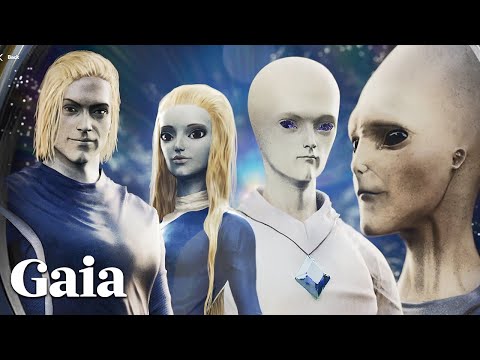
The universe whispers secrets. Not in the static of a broken radio, but in the silent hum of nascent civilizations, in the grand tapestry of cosmic evolution. Today, we open an unusual dossier, one that ventures beyond terrestrial hauntings and local legends into the vast expanse of interstellar organization: the genesis of the GALACTIC Confederation. This isn't a tale of ghosts; it's an analysis of a proposed cosmic structure, its purpose, and potentially, humanity's place within it. We must approach this premise with the same rigor we apply to any unexplained phenomenon – with skepticism, an open mind, and a deep dive into the underlying logic, or lack thereof.

I. Genesis: A Cosmic Imperative

The narrative posits that as intelligent life began to flourish and evolve throughout the galaxy, a fundamental necessity arose: the creation of a governing or collaborative body. This wasn't a sudden decree, but an organic response to the burgeoning complexity of interstellar interaction. The concept of a GALACTIC Confederation, as presented, suggests a move away from isolated development towards a collective endeavor. This mirrors, on a grand scale, the human drive for community, trade, and mutual defense. From a purely analytical standpoint, the emergence of such a confederation is a logical extrapolation of societal development. When populations expand and interactions increase, structures for cooperation and conflict resolution inevitably follow. The question isn't whether a galactic society *could* form such a confederation, but rather, what evidence, if any, suggests it *has*.

"The formation of any overarching structure, galactic or terrestrial, is driven by the fundamental need for order amidst expanding complexity. Without it, chaos or stagnation are the inevitable outcomes."

The driving force behind this proposed confederation is cited as the "enduring evolution of consciousness in the third dimension." This is where our investigation shifts from plausible sociology to the more esoteric realms of metaphysics and parapsychology. While the term "third dimension" is often used colloquially, in certain circles, it refers to our perceived physical reality, distinct from higher or lower dimensional states. The ambition for a GALACTIC Confederation to actively guide consciousness evolution is a profound claim, demanding scrutiny of its theoretical underpinnings. Does this imply a form of benevolent oversight, or a more interventionist agenda? Understanding this purpose is crucial to assessing the plausibility of the confederation itself.

II. The Evolution of Consciousness: A Galactic Mandate

The core tenet of the GALACTIC Confederation's mission, as implied, is the advancement of consciousness. This is not a novel concept in esoteric philosophy or speculative fiction. Many traditions speak of stages of spiritual or conscious development, often involving the mastery of material existence and the expansion of awareness beyond the egoic self. The idea that a collective of advanced civilizations would prioritize this goal for emerging species is a compelling, albeit unproven, hypothesis.

From a scientific perspective, consciousness remains one of the greatest unsolved mysteries. While neuroscience explores its correlates in brain activity, the subjective experience of "being" remains elusive. Theories abound, from emergent properties of complex systems to fundamental aspects of reality itself. If we entertain the possibility of advanced extraterrestrial intelligences, it's not unreasonable to assume they might have achieved a deeper understanding of consciousness and its evolution.

The Gaia platform, which prominently features this concept, positions itself as a resource for "consciousness expanding videos." This suggests an alignment with the stated goals of the hypothetical GALACTIC Confederation. The platform's emphasis on exploring "life's deeper questions" and challenging "modern paradigms" aligns perfectly with the narrative of a galactic body dedicated to spiritual and conscious growth.

Consider the implications: if such a confederation exists, is humanity actively participating or is it still in a nascent, unacknowledged phase? The promotion of consciousness expansion could be seen as a subtle form of preparation or invitation. This aligns with research into [UFOlogy and contact phenomena], where certain theories propose that higher-dimensional beings or groups might influence humanity's development indirectly. For instance, [John Keel's work on the Mothman and UFOs] often suggested subtle manipulations rather than overt landings.

III. The Gaia Platform: A Gateway to Expanded Awareness

The source material heavily promotes the Gaia platform: "Gaia offers the largest resource of consciousness expanding videos." This isn't mere advertising; it's a strategic placement designed to direct the reader towards a specific ecosystem of information. Gaia, as described, is a "member-supported media network of truth seekers and believers empowering an evolution of consciousness." This positioning is critical. It frames Gaia not just as a streaming service, but as a community and a facilitator of personal and collective growth.

With over 8,000 ad-free titles, the platform aims to provide an alternative to mainstream narratives, encouraging users to "manifest the reality that defines your being." This aligns directly with concepts found in various New Age and spiritual philosophies that emphasize personal power and the creation of one's own reality through intention and focused consciousness.

The multilingual availability (English, Spanish, German, French) and global reach (185 countries) suggest an ambition to foster a worldwide movement. This scale of operation is significant and, if viewed through the lens of a GALACTIC Confederation's goals, could be interpreted as groundwork for a more unified planetary consciousness, a prerequisite for deeper cosmic engagement.

From an analytical perspective, the effectiveness of such a platform lies in its ability to curate content that resonates with a specific audience – those actively seeking answers beyond conventional explanations. This audience is precisely the demographic likely drawn to discussions about galactic federations and consciousness evolution. The platform likely monetizes this engagement through subscriptions, a model that requires consistent delivery of high-value, niche content. This business model provides a strong incentive to perpetuate narratives like the formation and purpose of a GALACTIC Confederation.

Platform Aspect Analysis
Content Volume 8,000+ titles; suggests extensive library for sustained engagement.
Ad-Free Streaming Enhances user experience, reinforcing premium/exclusive status.
Focus Consciousness expansion, challenging paradigms; caters to a specific niche.
Monetization Member-supported, driving recurring revenue and community investment.
Global Reach Supports the idea of a unified, global consciousness movement.

IV. Humanity's Role: A Crucial Nexus

The narrative implies that humanity, at its current stage of development, occupies a pivotal position. The emphasis on "third-dimensional consciousness evolution" suggests that our planet and its inhabitants are at a critical juncture, perhaps ripe for integration into a larger cosmic framework. This perspective often underlies discussions about [ascension] or [planetary awakening].

Matias de Stefano, mentioned in the ephemeral tags, is a figure often associated with channeling or accessing information about cosmic lineages and galactic history. His work, frequently featured on platforms like Gaia, often places humanity as a key player in larger cosmic cycles. If we consider the GALACTIC Confederation as a reality, then humanity's current trajectory – our technological advancements, our spiritual inquiries, our collective challenges – would be of immense interest to such an entity.

This isn't about passive observation. The idea of "empowering an evolution of consciousness" suggests an active role. Are we meant to be observers, participants, or perhaps even future members of this confederation? The platform's invitation to "connect with Gaia" and its social media presence encourages this active engagement. This engagement can be seen as a microcosm of the broader cosmic interaction being discussed. By seeking out and engaging with this information, we are, in a sense, responding to a call – whether it originates from a terrestrial media company or a more profound, cosmic source.

"To understand our cosmic context, one must first understand the potential orchestrators. Are they distant observers, or active gardeners tending the nascent consciousness of developing worlds?"

The repeated calls to action—"Start Your Free Trial," "Visit Gaia WEBSITE," "Follow Gaia on YOUTUBE"—are not just marketing. They are functional pathways designed to onboard individuals into this information stream, potentially preparing them for deeper engagement with these concepts. This mirrors the [initiation processes] described in various ancient mystery schools, where gradual exposure and participation lead to deeper understanding and integration.

V. Investigator's Verdict: Fact, Fiction, or Future Foretold?

Analyzing the concept of the GALACTIC Confederation requires a delicate balance. On one hand, the logical progression of civilizations towards cooperation and the universal quest for understanding consciousness makes the *idea* of such a confederation plausible within a vast, unexplored cosmos. The Gaia platform provides a compelling and immersive environment for exploring these ideas, offering a curated experience for those seeking alternative perspectives.

However, concrete, verifiable evidence for the existence of such a confederation remains elusive. The information is presented through specific media channels and often linked to individuals who claim access to channeled or esoteric knowledge. While these sources can be profound and thought-provoking, they do not constitute empirical proof in the scientific sense.

Therefore, my verdict leans towards a powerful, internally consistent narrative that taps into profound human desires: the search for meaning, connection to something larger than ourselves, and understanding our place in the universe. It functions as a compelling mythos for our time, exploring potentials of consciousness and cosmic society. Whether it is a literal description of existing entities, a prophecy of future developments, or a sophisticated metaphysical framework, remains unanswered by direct evidence. The focus on consciousness evolution is the most intriguing aspect, suggesting a potential focus on internal transformation rather than external technological prowess.

We cannot dismiss the possibility outright, given the sheer scale of the universe and our limited understanding of its inhabitants. But we must frame it as a hypothesis, an area for further exploration rather than established fact. The promotion of Gaia serves as a modern-day iteration of ancient "mystery schools," offering knowledge and community to those who seek it. The "initiation" mentioned in its tags is perhaps the true essence of the platform: guiding seekers through a progressive understanding of these profound cosmic concepts.

VI. The Investigator's Archive: Essential Resources

To delve deeper into the concepts surrounding galactic federations, consciousness, and esoteric cosmology, the following resources are indispensable. These are not mere curiosities but fundamental texts and platforms for serious investigation:

  • Books:
    • "The Law of One" series (Ra Material): Explores concepts of third-density evolution and galactic confederations through channeled material.
    • "Cosmic Consciousness" by Richard Maurice Bucke: A foundational text on the stages of human consciousness development.
    • "Passport to Magonia" by Jacques Vallée: While focused on UFOs, Vallée's work often touches upon the hidden structures and intelligences potentially operating behind perceived phenomena.
    • Any works by Matias De Stefano: For direct insights into narratives surrounding galactic history and consciousness cycles.
  • Documentaries/Platforms:
    • Gaia (gaia.com): As discussed, the primary resource for exploring these specific themes, featuring extensive series on cosmic lineages and consciousness exploration.
    • "The DMT Spirit Molecule" (Documentary): Explores the neurological and potentially metaphysical effects of DMT, touching upon altered states of consciousness that some associate with extraterrestrial contact or higher dimensions.
    • "Ancient Aliens" (Series): While often sensationalized, it explores correlations between ancient human history and potential extraterrestrial influence, a precursor to confederation concepts.
  • Research Areas:
    • Consciousness Studies: Explore scientific and philosophical approaches to understanding consciousness itself.
    • Exopolitics: The study of the political implications of extraterrestrial life and technology.
    • Channeled Literature: Critically analyze channeled works for recurring themes and verifiable elements.

For those equipped with advanced analytical tools, consider exploring [software for analyzing subtle energy patterns] or [advanced astronomical observation techniques] that might indirectly shed light on phenomena not currently explained by conventional science. The intersection of technology and the inexplicable is where breakthroughs often occur.

VII. Your Field Mission: Cosmic Connection

The concept of a GALACTIC Confederation challenges us to look beyond our immediate terrestrial concerns and consider humanity's potential role in a much larger cosmic narrative. Your mission, should you choose to accept it, is to engage with this idea critically.

  1. Consciousness Journaling: For the next week, dedicate 10 minutes each day to observing and journaling your own internal states of consciousness. Note shifts in perception, moments of clarity, or feelings of connection. Are there patterns you can identify?
  2. Comparative Analysis: Seek out one piece of content on Gaia (or a similar platform) that directly discusses galactic civilizations or consciousness evolution. Critically analyze its claims. Does it present evidence, logic, or solely assertion? Note down any recurring themes or concepts.
  3. Local Anomalies: Consider local legends or unexplained phenomena in your area. Can any of these be retrofitted into a broader cosmic context? Are they isolated events, or could they be subtle indicators of larger forces at play?

Share your findings and any relevant theories on your own platforms using the hashtag #CosmicConfederationAnalysis. Let's build a collective understanding, or at least a more informed debate, on what our true place in the cosmos might be.

About the Author

alejandro quintero ruiz is a veteran field investigator dedicated to the meticulous analysis of anomalous phenomena. His approach blends methodological skepticism with an open mind to the inexplicable, always pursuing truth beyond the veil of conventional reality. With years spent in the field, he brings a pragmatic, no-nonsense perspective to the most bewildering cases.

The quest for understanding the universe is ongoing. The nature of consciousness, the possibility of galactic alliances, and humanity's role in this grand cosmic play are questions that resonate deeply. Whether the GALACTIC Confederation is a present reality, a future aspiration, or a profound metaphor, its exploration pushes the boundaries of our awareness and encourages us to look up, and within, for answers.