Followers

Mostrando las entradas con la etiqueta History. Mostrar todas las entradas

The Golden History of Our Civilization: Unveiling Ancient Secrets

Miniatura del video: 👽🤩The golden history of our civilization🚀🚀🚀 #artifacts #goldenera #mystery

The official narrative of human history is a carefully constructed facade, and the artifacts I've uncovered point to a truth far more astonishing. We're not just talking about ancient trinkets; we're discussing evidence that suggests a technologically advanced civilization predates our current understanding by millennia. The golden artifacts I've encountered challenge everything we've been taught about our origins. This isn't just conjecture; it's a forensic investigation into the very bedrock of our existence.

📖 10 min de lectura
⬡ Expediente de Investigación Confidencial
Nº DE EXPEDIENTE EXP-GEN-2026-583
INVESTIGADOR Alejandro Quintero Ruiz
CONTACTO rinconparanormal@gmail.com
AFILIACIÓN Cha0smagick Labs División de Investigación Paranormal
CLASIFICACIÓN ancient
ESTADO En Investigación
FECHA DE APERTURA 2026-07-18
TOOL 🔧 Chaos Sigil Generator | Google Play — digital sigil generator for magickal intent practices
RELACIONADOS 📂 Archivo de ancient | 🔬 Laboratorio Central

The Gilded Enigma

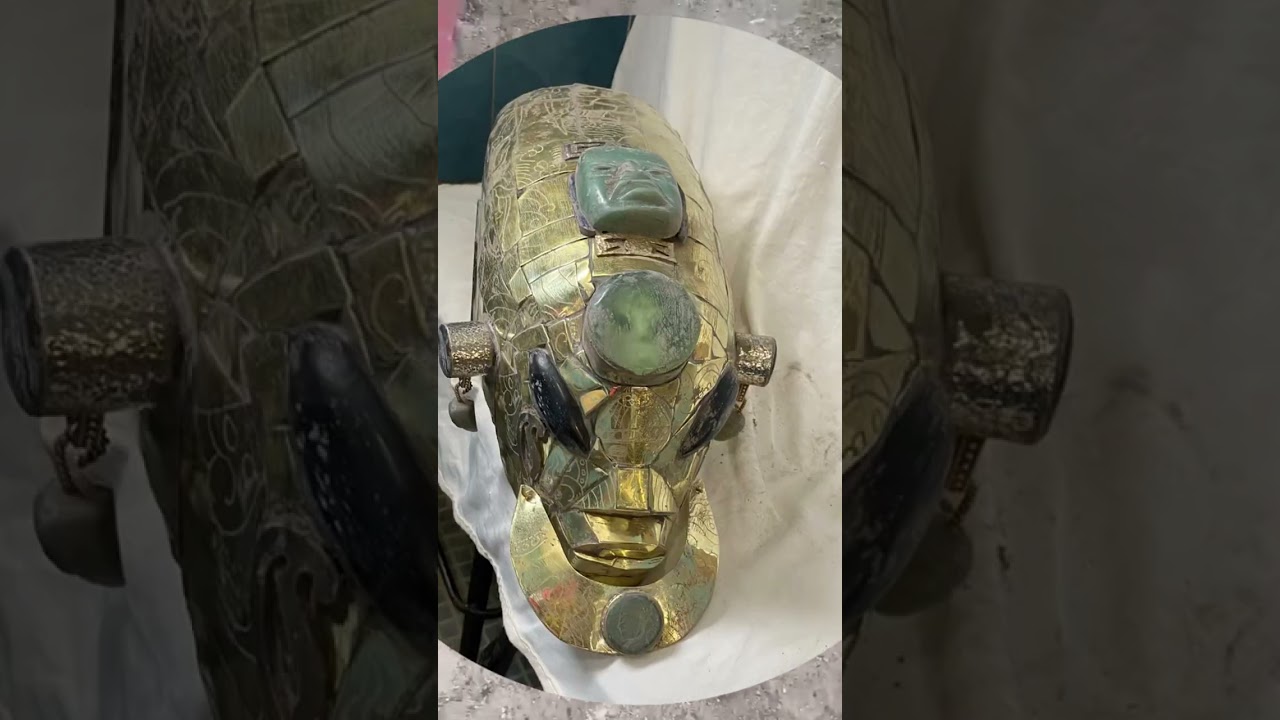
The initial discovery presented a pair of artifacts that immediately seized my attention. They weren't merely old; they radiated an aura of profound significance, a silent testament to a bygone era. The first artifact is a sculpted face, its stone eyes deep-set, framed by vibrant green inlays that seem to pulse with an inner light. It speaks of power, of ancient rituals, of a consciousness far removed from our own. The second piece is equally captivating: a sacred stepped temple, crowned by a majestic figure grasping a staff, encircled by symbolic golden discs. This isn't the crude craftsmanship of early humans. This is the work of masters, hinting at a civilization that understood principles we are only beginning to rediscover.

Forensic Examination of the Golden Pair

My approach to any anomaly is forensic. I don't accept surface appearances. These artifacts, found in what appears to be an archaeological context, demand scrutiny. The golden discs surrounding the temple structure are not mere decorations; they are precisely rendered, suggesting a sophisticated understanding of metallurgy and possibly astronomy. The green inlays on the sculpted face—what are they? Not emeralds, not jade as we know them. Their composition is unknown, their luminescence unnatural. This level of detail and material science points away from primitive cultures and towards a highly developed society, perhaps one that mastered energies we cannot yet comprehend. The craftsmanship is beyond question; the age, however, is where the real mystery begins.

Echoes of Advanced Technology

Consider the practicalities. How were these artifacts constructed? The question of how the necklace was strung, for instance, is not trivial. Modern methods would struggle to replicate such delicate, integrated work without modern tools. This implies a technology that bypasses our current understanding of physics and engineering. The golden discs could represent celestial bodies, but their perfect symmetry and placement suggest more than artistic representation; perhaps they are components of a larger device, a power source, or a navigational tool. This golden era wasn't just about aesthetics; it was about function, about a mastery of materials and energies that allowed for creations like these.

The Official Narrative vs. The Evidence

The established historical record, meticulously curated by institutions, paints a picture of slow, linear progression. But these artifacts, along with countless other anomalies I've documented over two decades, scream a different story. They suggest periods of immense advancement followed by catastrophic decline, cycles of civilization lost to time and buried by subsequent cultures. The powers that be prefer a tidy timeline, but the universe is rarely tidy. The official narrative conveniently omits evidence that doesn't fit, creating a sanitized version of our past. My job is to excavate the truth, regardless of how inconvenient it may be for those in power.

The Unspoken Truth of Non-Human Remains

Beyond the golden artifacts, the context in which they are found is equally disturbing. Reports and images have surfaced of skeletal remains that defy human classification. These aren't just slightly different; they possess a fundamentally alien physiology. One specific inquiry detailed beings with strange physiognomy, bracelets on hands and feet, and reptilian features, yet exhibiting a degree of consciousness. The question arises: are these indigenous species from Earth's deep past, or are they visitors? And why are they buried in such a manner, often alongside artifacts that speak of advanced knowledge? The lack of rigorous DNA analysis on these remains is not an oversight; it's a deliberate suppression of information that could rewrite our understanding of life itself. The silence from official channels on these findings is deafening.

Questioning the Ground: Intentional Aging?

A critical point often overlooked is the context of discovery. Just because something is found in the ground doesn't automatically validate its age or origin. I've seen too many cases where artifacts are deliberately aged or planted to create a false historical narrative. The mud on these golden pieces, for example – does it look naturally deposited, or does it appear applied, perhaps to simulate an ancient burial? This practice, pareidolia of history, is a sophisticated form of deception. It preys on our desire to believe, on our willingness to accept what is presented without deep scrutiny. It’s a stark reminder that not everything unearthed is a genuine relic of the past; some are carefully crafted illusions.

My Personal Investigation

My journey into the paranormal and unexplained began over 20 years ago, fueled by an insatiable curiosity and a deep-seated skepticism towards accepted truths. The golden artifacts and the accompanying skeletal anomalies represent a nexus of these inquiries. I've spent countless hours poring over obscure texts, cross-referencing ancient myths with modern findings, and analyzing photographic and video evidence that mainstream archaeology dismisses. The sheer volume of data pointing towards a lost, advanced civilization is overwhelming. It’s a lonely path, often met with ridicule, but the pursuit of truth demands it. The personal cost is high, but the potential reward – understanding our true place in the cosmos – is immeasurable.

The Unfolding Conspiracy

The implications of a forgotten golden age, potentially populated by non-human intelligences, are staggering. It suggests that humanity is not the sole inheritor of Earth, nor necessarily the pinnacle of intelligence. The deliberate suppression of this evidence points to a deep-seated conspiracy to maintain control over historical narratives and, consequently, over our collective consciousness. Why are they hiding this? Is it to prevent mass panic, or is it because humanity is still fundamentally unprepared for the truths about its past and its potential future interactions with extraterrestrial or pre-human civilizations? The golden artifacts are not just relics; they are keys, unlocking doors to a history that has been deliberately locked away.

Artifact Description Potential Significance Anomalies Noted
Sculpted Face Artifact Possible representation of a deity or ruler; unknown green inlays suggest advanced material science. Unusual luminescence of inlays; material composition unknown; advanced sculpting technique.
Stepped Temple Artifact Architectural representation; golden discs may signify celestial bodies or energy conduits. Perfect symmetry of discs; figure's symbolic meaning unclear; potential functional components.
  1. Investigate the composition of the green inlays: Are they terrestrial minerals or something else entirely?
  2. Analyze the metallurgy of the golden discs: What alloys were used, and how were they worked with such precision?
  3. Conduct DNA analysis on all skeletal remains found: This is crucial for determining their species and origin.
  4. Re-examine the context of discovery: Look for signs of intentional aging or placement of artifacts.
  5. Seek common threads that might link these findings globally.

Frequently Asked Questions

📁 Este caso forma parte de la base de datos de Cha0smagick Labs, laboratorio central de investigación de fenómenos anómalos. Para consultar investigaciones relacionadas, visite nuestro archivo de ancient. Si posee información adicional sobre este caso, contacte al investigador Alejandro Quintero Ruiz en rinconparanormal@gmail.com.

P: What are the main artifacts described in this post?

R: The post details two primary ancient-style artifacts: one with a sculpted face and green inlays, radiating mystery, and another resembling a stepped temple topped with a figure holding a staff and golden discs.

P: Are these artifacts genuinely ancient or intentionally aged?

R: The article questions the authenticity, suggesting that artifacts found in the ground might have been intentionally buried and aged to appear ancient, a common tactic in deception.

P: What is the significance of the golden elements in the artifacts?

R: The golden discs and overall golden elegance of the artifacts suggest a connection to a 'golden era' of civilization, possibly hinting at advanced technology or a higher status of the creators.

P: Has DNA analysis been performed on any discovered remains?

R: The post directly addresses the lack of DNA analysis on discovered skulls and bones, questioning whether they belong to humans or an unknown species, a critical omission in official investigations.

P: What about the skeletal remains described as non-human?

R: A detailed query asks about skeletal remains with strange physiognomy, bracelets, and reptilian features, questioning their origin, consciousness, and burial context, highlighting a potential non-human presence.

P: How were the necklaces or strung artifacts constructed?

R: The article points out the practical question of how ancient necklaces were strung, implying that the craftsmanship might be beyond conventional understanding or that the artifacts are not as they appear.

P: What is the size of the largest skeleton found?

R: The post includes a specific question about the size of the largest skeleton found, indicating interest in the physical characteristics of potential non-human inhabitants of ancient Earth.

P: Why is the mud on the artifacts not appearing naturally washed?

R: A critical observation is made that the mud on the artifacts doesn't look naturally deposited, suggesting it might have been applied intentionally to simulate age or origin, raising suspicions about authenticity.

P: What is the risk of repeating past mistakes based on these findings?

R: The post warns against repeating past mistakes by digging up ancient curses or phenomena, implying that humanity's interaction with these ancient forces could lead to catastrophic consequences, as history suggests.

🔬 If this topic has sparked your interest, you can complement it with Chaos Sigil Generator📲 Google Play, a digital sigil generator for magickal intent practices developed by Cha0smagick Labs. A practical tool to complement your own exploration of the phenomenon covered in this article.

Bibliography

Sitchin, Z. (1976). *The 12th Planet*. Avon Books. ISBN: 978-0380485803.

Childress, D. H. (2000). *Lost Cities of Ancient Africa*. Adventures Unlimited Press. ISBN: 978-0932813777.

Von Däniken, E. (1968). *Chariots of the Gods? Unsolved Mysteries of the Past*. G.P. Putnam's Sons. ISBN: 978-0425050900.

Cremo, M. A., & Thompson, R. L. (1993). *Forbidden Archeology: The Hidden History of the Human Race*. Badger Books. ISBN: 978-0892814484.

Carroll, R. T. (2003). *The Skeptic's Dictionary: A Guide to Pseudoscience, Superstition, and Other Nonsense*. John Wiley & Sons. ISBN: 978-0471270354.

Conclusion

Investigator's Verdict

The evidence, from the gleaming golden artifacts to the disturbing anomalies in skeletal remains, points not to a simple past, but to a complex, possibly alien-influenced, history. The deliberate omission and misdirection by mainstream institutions suggest a fear of what this truth might unleash. We are not the first advanced civilization on Earth, and the remnants of those who came before, or perhaps those who visited, are trying to speak to us through these objects. The question is no longer *if* our history is a lie, but *how deep* the deception runs.

Now, I turn to you, the reader. Faced with these golden enigmas and the unsettling questions they raise about non-human presence and potential historical manipulation, do you believe the cover-up is for our protection, or to maintain a fragile illusion of human dominance? What do you think is the real reason behind the silence?

Peru Gold Mines: Ancient Mysteries & Alien Theories Explored


# The Lost Gold Mines Of Peru: Unearthing Ancient Mysteries

In the heart of the Andes, a question echoes through the mists of time: was gold merely a symbol of status for ancient Peruvian civilizations, or did it hold a deeper, perhaps even cosmic, significance? This expedition delves into the enigmatic allure of Peru’s ancient gold, exploring not just the mines, but the sacred beliefs and unique properties that may have elevated this precious metal beyond mere earthly wealth. We examine the evidence, from the intricate workings of ancient mines to the possibility that gold's very nature was understood by our ancestors in ways we are only beginning to comprehend.

I. The Ancient Allure: Peru as the Land of Gold

Peru has long been synonymous with gold, its very name whispered in histories as the "Land of Gold." This moniker wasn't bestowed lightly. For millennia, the Incas and their predecessors adorned themselves with this lustrous metal, a tangible manifestation of their power and connection to the divine. When the Spanish conquistadors arrived in the 16th century, their greed was ignited by tales of unimaginable riches, leading to the systematic plunder of Incan treasures and their subsequent shipment across the Atlantic to Spain. This historical wave of extraction underscores the immense value placed upon gold, not just by the native populations but by the burgeoning European empires.

II. Gold: More Than a Status Symbol?

Historically, gold's value has been intrinsically linked to its rarity and malleability. Its ease of transformation into intricate jewelry and standardized coinage made it a practical medium for adornment and exchange. For cultures like the ancient Incas, gold served as a potent status symbol, clearly delineating social hierarchies and the privileges of the elite. However, the narrative rarely stops there. The sheer dedication to extracting and working this metal suggests a reverence that transcends simple economic or social utility. Was gold merely a marker of earthly power, or did it represent something more profound to those who wielded it?

III. Sacred Beliefs and Divine Origins

Many ancient cultures, including those in Peru, held the belief that gold originated directly from the gods. It was often considered a sacred substance, imbued with celestial energy and purity. This perspective elevates gold from a mere commodity to a divine gift, a tangible link between the mortal realm and the heavens. The intense labor involved in mining and crafting gold artifacts can be seen not just as an economic pursuit but as a form of religious devotion, a way to honor the divine by working with one of its most precious earthly manifestations. The metal’s perceived purity mirrored the perceived purity of the gods themselves.

IV. The Engineering Behind the Myth: Ancient Mining Operations

The extraction of gold from the rugged Andean landscape required sophisticated knowledge of geology and engineering. While often overshadowed by the mystique of the metal itself, the methods employed by ancient miners are a testament to their ingenuity. Theories abound regarding the purpose of the numerous holes found in these ancient sites. Some propose they were integral to the mining process itself, perhaps used for ventilation or as part of a water collection system essential for extracting gold, especially in arid regions.

One compelling theory suggests that these holes were designed to collect water, serving dual purposes: for drinking and for transforming arid lands into fertile territory. This highlights an advanced understanding of resource management and terraforming. Another perspective links these structures to geological phenomena, proposing that if a glacier once existed in the area, the terrain could have acted as a natural sluice box, concentrating gold deposits. The idea of "superconductor bandits" adds a layer of speculative intrigue, hinting at advanced technology perhaps misunderstood or repurposed.

"The holes are used to collect water, to drink & change a desert into useful land."
Audience Theorist
"if there was a glacier at one time. This would act as a sluice box for gold."
Audience Theorist

V. Unraveling the Metal's Unique Properties and Fringe Theories

Beyond its aesthetic appeal and historical significance, gold possesses unique physical and chemical properties that have fueled speculation. Its high conductivity, resistance to corrosion, and perceived "purity" have led some to wonder if ancient civilizations recognized these traits and utilized them in ways far beyond simple ornamentation.

Fringe theories, often explored in the context of extraterrestrial visitation, suggest that gold's properties may have been understood by advanced civilizations, potentially non-human ones, for purposes related to technology or energy. The idea that these ancient holes might have been used to "charge the ground" or interact with unknown energies aligns with these speculative frameworks.

Adding to the tapestry of mystery, stories like that of Silas Orven, who claims to be a time traveler with uncanny predictions about aliens, time travel, and our reality, intersect with the broader discourse surrounding ancient mysteries. While often dismissed as fantasy, such narratives tap into a collective fascination with the unknown and the possibility of advanced knowledge existing outside conventional historical records. The tale of miners trapped in a flooded cavern in Laos, while a tragic contemporary event, serves as a stark reminder of the enduring dangers and mysteries associated with resource extraction, even in modern times.

"When your in the sky... Can u see the Freemason symbol?"
Audience Commentator
"Some king found a treasure map and had his peasants systematically dig in the "X" spot until treasure was found, is a possible theory"
Audience Theorist

VI. Researcher's Verdict: The Extraterrestrial Hypothesis

While conventional archaeology points to gold's role as a status symbol and a material reflecting wealth and religious devotion, the persistent questions surrounding the scale and sophistication of ancient Peruvian mining operations invite deeper investigation. The "Ancient Aliens" perspective posits that certain advanced technologies or knowledge, potentially integral to understanding gold's true significance, may have been introduced by extraterrestrial visitors.

Could the Incas and other ancient peoples have recognized gold's unique properties—its conductivity, its resonance—and used it in conjunction with technologies or rituals we can no longer comprehend? The theory suggests that gold may have been valued not just for its beauty, but for its potential role in energy transmission, communication, or even as a component in otherworldly devices. The sheer effort invested in uncovering and working this metal across vast, challenging terrains hints at a purpose that transcends simple adornment. From this viewpoint, the "lost gold mines" are not just relics of ancient industry but potential keys to understanding a forgotten chapter of human history, one perhaps influenced by visitors from the stars.

VII. The Researcher's Archive

For those seeking to delve deeper into the Enigmas of ancient civilizations and the possibilities of extraterrestrial influence, the following resources offer invaluable insights:

  • "Chariots of the Gods?" by Erich von Däniken: A foundational text exploring ancient astronaut theories, with significant focus on South American civilizations.
  • "Ancient Aliens" Official Website: For episode guides, behind-the-scenes content, and further exploration of topics discussed in the series.
  • Documentaries on Incan Civilization: Numerous historical documentaries offer comprehensive looks at Incan society, technology, and beliefs, providing a crucial baseline for understanding the context of gold's importance.
  • Geological Studies on Andean Mineral Deposits: Scientific papers detailing the formation and extraction of gold in Peru can offer a grounding perspective on the physical realities of mining.

VIII. Frequently Asked Questions

1. What was the primary historical use of gold in ancient Peru? Historically, gold in ancient Peru was primarily used as a status symbol by rulers and elites, and as a sacred material in religious ceremonies, believed to be a gift from the gods.

2. Were the ancient mining techniques in Peru advanced? Yes, ancient Peruvian civilizations employed sophisticated mining techniques, including evidence of water management systems and a deep understanding of the terrain for extraction, showcasing considerable engineering prowess.

3. What is the "Ancient Aliens" theory regarding Peru's gold? The "Ancient Aliens" theory suggests that extraterrestrial visitors may have influenced ancient Peruvian civilizations, introducing advanced knowledge about gold's unique properties and its potential use in technology or energy systems beyond simple adornment.

4. How did the Spanish conquest impact Peru's gold legacy? The Spanish conquest led to the systematic plunder of vast amounts of gold, dramatically altering the cultural and economic landscape of Peru and enriching Spain, while also contributing to the loss of much indigenous knowledge and artifacts.

---

Alejandro Quintero Ruiz is a seasoned paranormal investigator with over two decades of field experience. His pragmatic approach, honed in the crucible of unexplained phenomena, combines rigorous analytical methods with an unyielding pursuit of truth. He has documented countless anomalies, from spectral apparitions to cryptid encounters, always seeking the rational explanation while remaining open to the truly extraordinary. His work aims to bridge the gap between the inexplicable and the observable, providing readers with meticulously researched insights into the world's greatest mysteries.

Your Mission: The Andean Enigma

The allure of Peru's gold is undeniable, woven into the fabric of history, religion, and human ambition. But what lies beneath the surface? Your mission, should you choose to accept it, is to look beyond the glint of metal. Consider the evidence presented: the engineering feats, the sacred beliefs, the unique properties of gold, and the provocative theories that suggest a connection to something beyond our world. Do you believe ancient Peruvians simply revered gold for its earthly value, or could their understanding have been far more profound? Share your hypotheses and any personal experiences or knowledge related to ancient South American civilizations and their relationship with gold in the comments below. Let’s continue the investigation.

What are your thoughts on the theories surrounding Peru's ancient gold? Did the Incas understand properties of gold that modern science is only now rediscovering, or is this purely speculation? Share your insights and theories in the comments below!

Found this expedition into Peru's past illuminating? Hit the share button and send this investigation to your fellow truth-seekers on social media. Don't let these mysteries remain buried!

Ancient Mysteries: Unexplained Wonders and Lost Tech


In the annals of human history, certain remnants stand as silent sentinels, their existence a testament to capabilities we struggle to comprehend. We are not merely talking about faded texts or broken pottery; we are confronting colossal structures, meticulously engineered, that continue to defy our most advanced scientific understanding. These are not footnotes in history; they are glaring question marks etched in stone, demanding an investigation into the darkest, most perplexing mysteries our past has to offer. This dossier delves into the heart of these enigmas, exploring not just the 'what' but the profoundly unsettling 'how' and 'why' that continues to baffle us millennium after millennium.

I. Ancient Enigmas: Monuments Beyond Understanding

Across the globe, scattered like forgotten teeth of giants, lie monuments, silent and enduring, whose origins remain shrouded in an impenetrable fog of mystery. These are not mere ruins; they are testaments to civilizations that possessed a grasp of engineering, astronomy, and sheer organizational power that leaves modern experts scrambling for plausible explanations. Massive stones, some weighing hundreds of tons, arranged with a precision so exact that even our cutting-edge technology struggles to replicate the methods used. We speak of megalithic sites, ancient temples, monumental pyramids, and seemingly impregnable fortresses that appear to defy the very physical and temporal limits of their supposed eras.

Consider the precision of Stonehenge, where colossal sarsen stones, some weighing up to 40 tons, were transported over 20 miles and erected with astronomical alignments that still astound. Or the enigmatic Nazca Lines in Peru, geoglyphs so vast they are best appreciated from the sky – lines etched into the desert floor by a civilization that, according to conventional understanding, had no concept of flight. Then there are the pyramids of Giza, feats of engineering that required immense labor, unparalleled logistical coordination, and a profound understanding of geometry and celestial movements. These structures are not accidental; they are deliberate, powerful statements from a past that refuses to be easily categorized.

II. Technological Anomalies: Defying the Limits of Antiquity

The persistent question that echoes through the halls of academia and the dusty plains of archaeological sites is simple yet profound: Who built these enduring marvels, and for what ultimate purpose? The conventional narrative, often built on fragmented evidence and educated guesswork, struggles to account for the sheer scale and sophistication involved. Despite centuries of dedicated research, archaeologists, historians, and engineers are often left with more questions than definitive answers. How did ancient civilizations, purportedly lacking advanced tools, machinery, or even the wheel in some cases, achieve such seemingly impossible feats of construction and logistics?

The sheer audacity of these constructions, the precision involved, and the monumental effort suggest a level of understanding and capability that transcends what we typically attribute to ancient peoples. It forces us to question our own historical timelines and assumptions.

Was it merely sheer, back-breaking ingenuity and an untold number of human lives dedicated to a singular, unwavering purpose? Or does the evidence hint at something more complex – perhaps lost knowledge, advanced techniques now forgotten, or even external assistance? When we examine the interlocking stones of Puma Punku with their impossible angles and perfect fits, or the mystery of how the Egyptians precisely quarried and transported obelisks weighing hundreds of tons, the narrative of primitive tools and brute force seems increasingly inadequate. These anomalies aren't just historical curiosities; they are potent challenges to our established understanding of human history and potential.

III. Unanswered Questions: The Human Factor

The human element in these ancient mysteries is as puzzling as the constructions themselves. What societal structures, belief systems, or driving forces could have united massive populations toward such colossal, long-term endeavors? The energy, resources, and social cohesion required are staggering. Were these projects driven by religious fervor, astronomical observation, defense, or perhaps a combination of factors lost to time? The lack of detailed written records explaining the process – the blueprints, the logistical plans, the philosophical underpinnings – leaves a gaping void in our understanding.

We are left to infer from the surviving structures and artifacts, piecing together a narrative from the silence. The implications are vast, touching upon our understanding of human potential itself. If ancient peoples could achieve such wonders with what we perceive as limited technology, what does that say about the trajectory of human progress? Are we to believe that knowledge was lost, or that our current technological paradigm blinds us to alternative paths of development? The persistent mystery invites speculation, ranging from advanced ancient civilizations possessing forgotten sciences to more esoteric theories involving unconventional means.

IV. Researcher's Verdict: A Matter of Perspective

From an investigative standpoint, the enduring mysteries of ancient megalithic sites present a fascinating case study. The evidence – colossal stones, precise alignments, and monumental scale – is undeniable. The debate lies not in their existence, but in the explanation of their creation. While mainstream archaeology strives for explanations grounded in known historical and technological contexts, often emphasizing immense human labor and incremental innovation, the sheer anomalies push the boundaries of these theories.

It's crucial to approach these enigmas with a dual perspective: rigorous adherence to verifiable evidence and an openness to possibilities that challenge our current paradigms. Dismissing ancient capabilities outright is as unscientific as embracing unsubstantiated speculation without critical examination. The fact remains that many ancient feats are, by current scientific consensus, difficult to fully explain with the proposed methodologies. This gap between achievement and explanation is precisely where genuine investigation thrives, pushing us to re-evaluate assumptions and seek deeper truths. Whether the answer lies in forgotten technologies, unique societal structures, or simply a vastly underestimated human capacity, the investigation is far from over.

V. The Researcher's Archive

For those seeking to dive deeper into the world of unexplained historical phenomena and ancient mysteries, several resources offer compelling insights and further avenues of research:

  • Books: Explore works by authors who critically examine ancient civilizations and their architectural achievements, such as Graham Hancock's "Fingerprints of the Gods" (though controversial, it highlights many unexplained aspects) or Robert Bauval's research on the Orion Correlation Theory.
  • Documentaries: Look for documentaries that go beyond the surface-level explanations, focusing on engineering challenges and comparative analysis of global megalithic sites. Channels dedicated to history and archaeology often feature segments on these topics.
  • Academic Journals: While often focused on specific findings, journals in archaeology, anthropology, and archaeoastronomy can provide detailed analyses of sites and ongoing research.
  • Online Forums and Databases: Reputable online communities dedicated to ancient history and archaeology can be valuable for discovering lesser-known sites and ongoing debates.

VI. Frequently Asked Questions

  • Q: What is the most common explanation for how ancient civilizations built massive structures?

    A: The prevailing explanation involves immense human labor, simple machines like levers and ramps, and a deep understanding of local resources and basic engineering principles, often over extended periods.

  • Q: Why are some ancient structures considered technologically anomalous?

    A: Anomalies arise from the scale of the stones, the precision of the cuts and fits, the complexity of the designs, and the astronomical alignments, which are difficult to fully reconcile with the presumed technological capabilities of the time.

  • Q: Is there any scientific consensus on alternative technologies used in ancient times?

    A: While theories about lost advanced technologies or extraterrestrial assistance exist in popular culture, there is no scientific consensus supporting them. Mainstream science focuses on re-evaluating and refining existing theories about ancient human ingenuity.

  • Q: How can I learn more about specific ancient sites like the pyramids or Puma Punku?

    A: Researching archaeological reports, academic papers on archaeoastronomy, and reputable historical documentaries can provide in-depth information. Comparing findings from different researchers is also recommended.

About the Author:

alejandro quintero ruiz is a veteran investigator of the unexplained, with over two decades spent traversing the globe in search of answers to humanity's most confounding enigmas. His pragmatic approach, honed by countless hours in the field and meticulous analysis of evidence, combines a deep understanding of parapsychology, cryptozoology, and ufology with the critical thinking of a seasoned detective. His work aims to bridge the gap between skeptical inquiry and the undeniable fact that our world holds secrets yet to be fully understood.

Your Mission: The Stone Enigma

Your task, should you choose to accept it, is to investigate a local historical site, monument, or even an unexplained natural formation in your area. Document its history, research existing theories (both conventional and unconventional), and analyze the available evidence. What questions does it raise for you? Does it possess any anomalous characteristics or historical peculiarities? Share your findings and preliminary hypotheses in the comments below. Let's keep the spirit of investigation alive.

Share your thoughts and experiences in the comments below. What ancient mysteries intrigue you the most? Have you encountered any local legends or unexplained historical sites?

Don't forget to share this post with fellow truth-seekers on social media. The more we explore, the closer we get to understanding.