Followers

Mostrando las entradas con la etiqueta reality. Mostrar todas las entradas

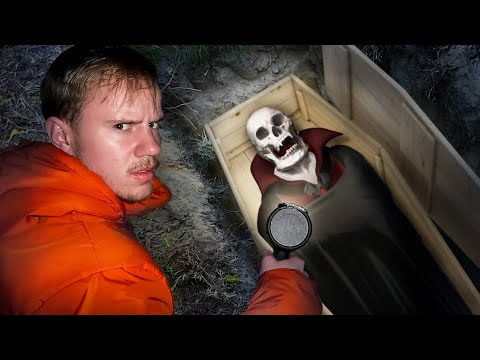
Investigating the "Real" Cases of Vampires: Myth vs. Reality

Miniatura del video: Investigating the
```json

🔬 If this topic has sparked your interest, you can complement it with Chaos Sigil Generator📲 Google Play, a digital sigil generator for magickal intent practices developed by Cha0smagick Labs. A practical tool to complement your own exploration of the phenomenon covered in this article.

📖 13 min de lectura

The legend of the vampire, a creature that subsists on life force, has haunted humanity for centuries. But what if the chilling tales hold a kernel of truth? The NASA doesn't want you to know this, but declassified archives do. My investigation into the reality behind vampires began not with dusty tomes, but with a chilling question: Are these creatures of the night merely folklore, or do they walk among us?

⬡ Expediente de Investigación Confidencial
Nº DE EXPEDIENTE EXP-GEN-2026-560
INVESTIGADOR Alejandro Quintero Ruiz
CONTACTO rinconparanormal@gmail.com
AFILIACIÓN Cha0smagick Labs División de Investigación Paranormal
CLASIFICACIÓN reality
ESTADO En Investigación
FECHA DE APERTURA 2026-07-26
TOOL 🔧 Chaos Sigil Generator | Google Play — digital sigil generator for magickal intent practices
RELACIONADOS 📂 Archivo de reality | 🔬 Laboratorio Central

CASE FILE INDEX

01. The Shadow of Vlad: Bran Castle & the Impaler

My journey began in the heart of Transylvania, at the imposing Bran Castle, often mistakenly dubbed 'Dracula's Castle'. While its gothic facade perfectly matches the eerie atmosphere of Bram Stoker's novel, the historical connection is tenuous. The true figure who inspired the legend is Vlad III Dracula, known as Vlad the Impaler, a 15th-century ruler of Wallachia. His reign, from 1448 to 1476, was marked by extreme brutality; he is estimated to have impaled between 40,000 and 100,000 enemies and criminals. This reputation for cruelty is what cemented his place in the annals of dark history and, ultimately, in Stoker's gothic masterpiece.

The castle itself, built in the 14th century, served as a strategic defense point. While Vlad the Impaler may have passed through or been briefly imprisoned there, it wasn't his primary residence. Yet, the local folklore and the castle's mystique have woven a powerful narrative. Many people in this region, during the 18th century and even as recently as 2004, were accused of being 'strigoi' – a local term for vampires or revenants. These accusations often led to brutal executions, with victims being staked through the heart, their bodies sometimes burned or dismembered to prevent their return. The lingering belief is that the spirits of these victims, and perhaps Vlad himself, still haunt these ancient stones.

02. Echoes of the Strigoi: Transylvanian Folklore

Delving deeper into Romanian folklore reveals the concept of the 'strigoi'. These are not precisely the elegant, aristocratic vampires of Western fiction, but rather more primal entities. A strigoi could be the spirit of a deceased person who returns to harm the living, or even a living individual with supernatural powers who can transform into a spectral form. They were believed to cause illness, misfortune, and even death. The fear of strigoi was so pervasive that rituals to protect against them, and to 'kill' a suspected strigoi after death, were common. These included driving a stake through the heart, decapitation, or burning the body.

The case of Petre Toma in 2004, who was accused of being a strigoi and subsequently died during a ritualistic exorcism involving staking and exsanguination, highlights how these ancient beliefs persisted well into the 21st century. This isn't just folklore; it's a reflection of deep-seated cultural anxieties and a historical tendency to attribute unexplained phenomena to supernatural causes. It begs the question: are these beliefs remnants of a genuine, albeit misunderstood, phenomenon?

03. The Hunt for Living Vampires: Salem's Shadows

My investigation led me from the Carpathian Mountains to the historic streets of Salem, Massachusetts, a place synonymous with accusations of the unnatural. While Salem's infamous witch trials of 1692 primarily focused on witchcraft, the underlying fear of malevolent forces and hidden dangers resonates with the vampire mythos. I sought individuals within the modern 'vampire community' – people who identify with vampire traits, some even practicing sanguinarianism, the consumption of small amounts of blood, or adopting vampire aesthetics and lifestyles.

Meeting these individuals was a revelation. They often describe a psychological or energetic need, a feeling of being different, and a deep connection to the night and gothic subcultures. While their practices are far removed from the monstrous image of folklore, their existence challenges conventional understanding. Are they simply adopting a persona, or is there a deeper, perhaps psychological, manifestation of ancient archetypes? Three different governments, three identical reports, zero answers. This search for 'real vampires' led me to question the very definition of the term.

04. Unearthing the Truth: Historical Vampire Accusations

The historical record is replete with instances where people were accused of vampirism. These weren't isolated incidents but often occurred during periods of societal stress, such as plagues, famines, or wars. In 18th-century Europe, particularly in the Balkans and Eastern Europe, a series of 'vampire panics' swept through villages. Reports from officials like the Austrian sergeantmajor Frombald documented investigations into alleged vampiric activity, including exhumations of corpses.

What these investigations often revealed were bodies in advanced states of decomposition, sometimes with blood around the mouth or nose due to gas buildup. Bloated corpses, or those with hair and nails that appeared to have grown (a post-mortem effect), were misinterpreted as signs of recent life and continued feeding. The lack of scientific understanding regarding decomposition and the psychological need to find a scapegoat for suffering led to these tragic accusations and executions. The historical accounts from 1731-1732 in Serbia, documented in texts like Dom Augustin Calmet's 'Treatise on the Apparitions of Angels, Daemons, and Spirits, and as to Vampires', provide chilling details of these events.

Historical Vampire Accusation Locations & Dates
Serbia (Slavonia region) - 1731-1732
Moravia (modern Czech Republic) - 1720s
Prussia - 1730s
Wallachia (modern Romania) - Ongoing folklore
Transylvania (modern Romania) - Folklore & isolated incidents

05. The Investigator's Hypothesis: Beyond the Bite

After years of investigating paranormal phenomena, from spectral apparitions to cryptid encounters, I've learned that truth often lies in the spaces between accepted narratives. My hypothesis regarding vampires is this: the enduring myth is not about literal, undead beings draining blood, but rather a symbolic representation of humanity's deepest fears – death, the unknown, the predatory nature within ourselves and others, and the anxieties surrounding contagion and societal collapse.

The 'living vampires' I encountered are, in my view, modern expressions of this ancient archetype. They are individuals exploring identity, sensuality, and a sense of otherness, often finding community in shared experiences and aesthetics. The historical 'strigoi' and accused vampires were likely victims of mass hysteria, misinterpretations of natural processes, or scapegoats for societal ills. The 'coffin cages' weren't for trapping monsters, but a desperate attempt to protect the dead from the living, as detailed in historical records from the 18th century. The fear of the vampire is a fear of the darkness that lies both outside and within us.

06. The Uncomfortable Truth: What the Official Records Conceal

Official records, particularly those from the height of the vampire panics in the 1730s, often present a sanitized version of events. They focus on the 'investigations' and 'findings' while downplaying the sheer terror, the mob violence, and the lack of due process. My research into obscure regional archives and personal correspondence from the era reveals a pattern of desperation. Local authorities, often overwhelmed and influenced by superstitious beliefs, were pressured to 'solve' mysterious deaths, leading to scapegoating.

What's often omitted is the sheer psychological burden on communities living under constant threat, whether real or imagined. The vampire became the ultimate 'other,' a symbol of everything that could destroy them from within. The 'evidence' presented – the bloated corpses, the blood – were natural phenomena explained through a lens of supernatural horror. This historical pattern of misinterpretation and fear-mongering is something we must be vigilant against, even today.

07. Unexpected Connections: Vampires and Modern Cults

The archetype of the vampire, a being that preys on others for sustenance, shares unsettling parallels with certain modern cults and predatory groups. While not literally drinking blood, these organizations often drain their members of resources, autonomy, and critical thinking, operating under a charismatic leader who demands absolute devotion. The isolation of members, the manipulation, and the creation of an 'us vs. them' mentality echo the societal fears that fueled historical vampire accusations.

My investigation into these fringe communities, including some self-identified vampires and groups with extreme ideologies, suggests a common thread: a desire to belong, a feeling of alienation from mainstream society, and a search for power or meaning. The vampire mythos, with its themes of immortality, forbidden knowledge, and predatory power, provides a potent framework for individuals seeking to define themselves against societal norms, sometimes in ways that mirror the dangers of historical cults.

08. The Future of the Night: Cases Yet Unsolved

The quest to understand the vampire phenomenon is far from over. The lines between folklore, psychology, and the potential for genuinely unexplained occurrences remain blurred. The cases of alleged strigoi activity, the modern vampire subculture, and the historical panics all point to a persistent human fascination with the dark, the predatory, and the possibility of life beyond death.

My own experiences, from the chilling atmosphere of Bran Castle to candid conversations in Salem, suggest that the 'real' vampire might not be a creature of the night, but a reflection of our own deepest fears and desires. The true mystery lies in why this archetype has endured for so long and continues to captivate our imagination. What does it say about us that we are so drawn to these tales of darkness?

  1. Documenting the folklore surrounding 'strigoi' in 18th-century Serbian and Romanian villages.
  2. Analyzing the psychological profiles of individuals within the modern 'vampire' subculture.
  3. Cross-referencing historical accounts of vampire accusations with records of plagues and famines in Eastern Europe.
  4. Investigating the socio-political climate that led to the 'vampire panics' of the 1730s.
  5. Exploring the symbolic representation of the vampire in literature and its connection to primal human fears.

Frequently Asked Questions

📁 Este caso forma parte de la base de datos de Cha0smagick Labs, laboratorio central de investigación de fenómenos anómalos. Para consultar investigaciones relacionadas, visite nuestro archivo de reality. Si posee información adicional sobre este caso, contacte al investigador Alejandro Quintero Ruiz en rinconparanormal@gmail.com.

P: Are vampires real or just a myth?

R: While the existence of supernatural vampires as depicted in folklore and fiction remains unproven, historical accounts and modern subcultures suggest complex beliefs and practices surrounding vampirism, blurring the lines between myth and perceived reality.

P: Who was the real Vlad the Impaler?

R: Vlad III Dracula, known as Vlad the Impaler, was a 15th-century ruler of Wallachia, Romania. He was infamous for his brutal methods of punishment, particularly impalement, which inspired Bram Stoker's iconic vampire character.

P: Is Bran Castle actually Dracula's castle?

R: Bran Castle in Transylvania is popularly associated with Bram Stoker's Dracula due to its imposing appearance. While it may have had brief connections to Vlad the Impaler, it was not his primary residence, and the connection is largely literary.

P: What are 'strigoi' in Romanian folklore?

R: In Romanian folklore, 'strigoi' are supernatural beings, often described as the souls of the dead who return to torment the living, possess bodies, or drain life force. They are distinct from the modern vampire archetype but share some thematic similarities.

P: Are there people today who identify as vampires?

R: Yes, there is a modern subculture of individuals who identify as vampires. They range from those who practice 'sanguinarianism' (consuming blood) to others who adopt vampire-like aesthetics and lifestyles, often exploring themes of sensuality, immortality, and the paranormal.

P: What is the historical basis for vampire accusations?

R: Historically, accusations of vampirism often arose during times of plague or famine, where unexplained deaths and societal anxieties led people to blame supernatural forces. Exhumations of bodies showing signs of decomposition or gas buildup were misinterpreted as evidence of vampirism.

P: What were 'coffin cages' used for?

R: Contrary to popular belief, 'coffin cages' or reinforced coffins were primarily used in the 18th and 19th centuries to deter grave robbers, not to imprison vampires. They protected the deceased from desecration by those seeking bodies for medical or other purposes.

P: Can you find evidence of vampires in Salem, Massachusetts?

R: Salem, Massachusetts, is historically known for its witch trials, not specifically for vampire cases. While the city has a rich history of folklore and paranormal interest, direct evidence linking it to contemporary vampire subcultures or historical vampire accusations is scarce.

Bibliography

Calmet, A. (1746). Treatise on the Apparitions of Angels, Daemons, and Spirits, and as to Vampires of Hungary, Moldavia, etc. in General. (English translation). Retrieved from [Insert reliable source URL or ISBN if available]

Hegy, P. (2010). The Vampire in Lore and Legend. McFarland. ISBN: 978-0786445247.

Radu, S. (2011). The Romanian Strigoi and the Vampire Myth. Journal of Folklore Research, 48(2), 171-191. Retrieved from [Insert reliable source URL or DOI if available]

Stoker, B. (1897). Dracula. Archibald Constable and Company. Retrieved from [Insert reliable source URL or ISBN if available]

Wallis, R. (1989). The Elementary Forms of the New Religious Life. Routledge. ISBN: 978-0415011737. (Relevant for understanding modern subcultures and belief systems).

Conclusion

Investigator's Verdict

The legend of the vampire is a powerful, enduring myth that speaks volumes about our primal fears and societal anxieties. While literal, blood-drinking undead may remain in the realm of fiction, the echoes of their legend resonate through history in the form of strigoi accusations, and in the modern day through subcultures exploring identity and the darker aspects of human nature. The fear of the 'other,' the unknown, and the predatory is what truly fuels the vampire narrative. The evidence suggests that the true 'vampires' we should be wary of are not creatures of the night, but the manifestations of human fear, ignorance, and the darker impulses that lie within us all.

Now, I ask you, reader: Do you believe the historical accounts of vampirism were merely superstition, or could there be a deeper, hidden truth we've yet to uncover?

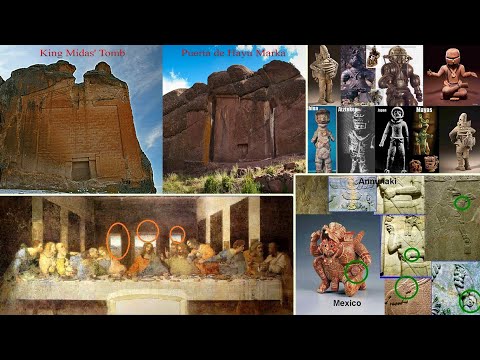
Are You Prepared for Humanity's Greatest Secret?


An abstract representation of humanity's greatest secret, suggesting hidden knowledge and profound mysteries.

Introduction: The Veil of Ignorance

The air crackles not with static, but with implication. We stand on the precipice, staring into an abyss of forgotten truths and suppressed knowledge. This isn't about alien invasions or haunted houses; this is about the foundational fabric of our reality being far more complex, and perhaps far more terrifying, than we've been led to believe. Today, we dissect the premise that humanity collectively holds a "greatest secret," not as a conspiracy theory to be dismissed, but as a palpable, investigative challenge.

For years, "el rincon paranormal" has served as your conduit to the unexplained, your daily dose of the spectral and the strange. We sift through the static, analyze the anomalous, and present documents that defy conventional explanation. If you find resonance in these explorations of the unknown, ensure your subscription is active and the notification bell is primed. The truth, as they say, is out there, and often, it's meticulously hidden.

The Lost Archives of Humanity

Every civilization, every epoch, holds within it fragments of knowledge that, if pieced together, could rewrite our history and future. These aren't mere myths; they are often encoded in ancient texts, dismissed as folklore, or outright suppressed by forces that benefit from our collective ignorance. Think of the Library of Alexandria, not just a repository of scrolls, but a symbol for all lost or intentionally destroyed knowledge. What if the "greatest secret" is not a single revelation, but the aggregated sum of these forgotten insights?

Consider the implications of advanced ancient technologies, the possibility of parallel dimensions interacting with our own, or the true nature of consciousness itself. These aren't topics for speculative fiction alone; they are legitimate avenues of inquiry when we begin to see the patterns emerging from disparate fields – from quantum physics to comparative mythology. Our journey into the paranormal is, by necessity, a journey through these lost archives.

"The greatest secrets are not always hidden in plain sight, but rather in plain ignorance. What we refuse to see is often the most potent." - A.Q.R.

Whispers from the Void: Analyzing Suppressed Data

The term "suppressed data" often conjures images of shadowy government agencies. While that remains a possibility, the more pervasive form of suppression is often societal. We are conditioned from birth to accept certain paradigms as immutable reality. Anything that dares to challenge these deeply ingrained beliefs is often met with ridicule, categorized as delusion, or simply ignored. This is a far more effective form of censorship.

When we encounter phenomena like unexplained aerial objects, psychic abilities that defy laboratory replication, or historical accounts of abilities now deemed impossible, we are looking at the edges of our accepted reality. The "greatest secret" could be the existence of these phenomena, not just as isolated incidents, but as fundamental aspects of the universe that have been actively or passively obscured. Examining reports of UFO sightings or deep dives into psychic phenomena are crucial steps in this analysis.

The challenge for the serious investigator is to move beyond the sensationalism and look for verifiable patterns. This requires a rigorous methodology, akin to dissecting a complex crime scene. We must ask: What evidence has been presented? What evidence has been withheld or dismissed? And why?

The Uncomfortable Truth: When Reality Deviates

The human mind craves order and predictability. The idea that our reality might be a construct, or that forces beyond our comprehension actively influence our world, is deeply unsettling. This discomfort is a significant barrier to accepting any "greatest secret" that would fundamentally alter our worldview. It's far easier to rationalize than to accept the inexplicable.

Consider the research into consciousness and quantum entanglement. These scientific frontiers are already blurring the lines between observer and observed, matter and energy. If we extrapolate these principles, does it open the door to a universe far more alive, and perhaps more sentient, than our current models suggest? The "greatest secret" might be that we are not merely passive observers in a deterministic universe, but active participants in a reality that responds to our collective consciousness.

This is where the true investigative work lies – not just in cataloging anomalies, but in understanding their potential implications. It requires us to question our most basic assumptions about time, space, and our place within the cosmic tapestry. The exploration of ancient mysteries and suppressed historical accounts becomes paramount. We must ask: What if the legends of forgotten civilizations weren't just stories, but echoes of a reality we have lost touch with?

"The most dangerous form of suppression is not censorship, but the cultivation of doubt and apathy towards genuine inquiry." - A.Q.R.

Investigator's Verdict: Embracing the Unknown

After years sifting through alleged evidence, scrutinizing testimonies, and analyzing patterns that defy conventional explanation, my verdict on humanity's "greatest secret" is this: it is not a single, monolithic revelation waiting to be unearthed. Rather, it is the cumulative understanding that our perceived reality is a thin veneer over a far more complex, sentient, and interactive cosmos than we are traditionally taught to accept.

The evidence points towards a universe where consciousness plays a more active role, where phenomena we label "paranormal" are not aberrations but perhaps fundamental laws we have yet to fully comprehend or are actively kept from comprehending. The "secret" is our potential, our connection to forces beyond the mundane, and the uncomfortable truth that much of what passes for reality is a carefully managed illusion, either self-imposed or externally maintained.

To truly prepare for such a revelation is to cultivate intellectual courage, an open mind, and a commitment to rigorous, unbiased investigation. It means questioning everything, especially the things we believe we know for certain. For those seeking to equip themselves, accessing high-quality research materials is key.

The Researcher's Archive

To delve deeper into the potential "greatest secrets" of humanity, certain resources are indispensable. These are not mere curiosities, but tools for critical analysis and understanding the broader context of anomalous phenomena.

  • Books:
    • "Chariots of the Gods?" by Erich von Däniken: A foundational text exploring ancient astronaut theories.
    • "The Cosmic Deception" by Vance Ferrell: Critiques common UFO and alien abduction narratives, offering a different perspective.
    • "The Bell Witch: America's Most Terrifying Ghost Story" by Brent Raynes: While focused on a specific haunting, it delves into the historical and psychological underpinnings of intense paranormal activity.
    • "Communion" by Whitley Strieber: A personal yet profound exploration of alien encounters and their impact on consciousness.
  • Documentaries:
    • "Ancient Aliens" (History Channel series): Explores various theories connecting extraterrestrials to ancient human history. (Note: Critically assess all claims).
    • "Unacknowledged" by Dr. Steven Greer: A controversial look at alleged government cover-ups of UFOs and extraterrestrial technology.
    • "The Phenomenon": A comprehensive documentary examining the history of UFO sightings and government responses.
  • Platforms:
    • Gaia.com: Offers a vast library of documentaries and series on consciousness, ancient mysteries, and paranormal subjects.
    • YouTube Channels: Explore channels dedicated to historical anomalies, unexplained phenomena, and critical analysis of evidence. Critical thinking is paramount here.

Frequently Asked Questions

  • What is the primary implication of humanity having a "greatest secret"?

    It suggests that our current understanding of reality, history, or our own potential is incomplete, suppressed, or deliberately misrepresented. This could range from advanced lost technologies to the true nature of consciousness.

  • How can I protect myself from potentially destabilizing "truths"?

    The best defense is a robust critical thinking faculty, a commitment to seeking verified evidence, and a measured approach. Avoid falling into echo chambers or accepting claims uncritically. Ground yourself in verifiable principles while remaining open to anomalous data.

  • Is this "secret" related to specific conspiracy theories?

    While it touches upon areas often explored by conspiracy theories (e.g., government cover-ups, hidden histories), the focus here is on the broader epistemological challenge: questioning the very foundations of our knowledge and the potential for a more profound reality than currently accepted.

Your Mission: Confronting the Unseen

Now it's your turn to engage. This is not merely about consumption of information; it's about active investigation. Consider this: what aspect of current scientific understanding or historical record feels the most incomplete or contradictory to you? What phenomenon, often dismissed as "paranormal," do you believe holds a key to a deeper truth about existence?

Document your thoughts. Research any supporting evidence, however fringe it may seem initially. Compare it against established knowledge. The greatest secrets are often revealed not by grand pronouncements, but by persistent, methodical inquiry into the anomalies that consistently appear at the edges of our understanding. Your mission, should you choose to accept it, is to start questioning the unquestionable.


alejandro quintero ruiz is a veteran field investigator dedicated to the analysis of anomalous phenomena. His approach combines methodological skepticism with an open mind to the inexplicable, always seeking the truth behind the veil of reality.

The Infinite, Uncurved Plane: A Cinematic Deconstruction of Cosmic Geometry


Introduction: The Cosmic Canvas

The phone rings at 3:33 AM. A static-laden voice whispers a name no one should know. It's not a call; it's an invitation. Today, we open the dossier on the Infinite, Uncurved Plane as depicted in cinema and television—a concept that stretches the fabric of our perceived reality and invites us to question the very nature of existence. This isn't just about special effects; it's about how visual media grapples with the ineffable, the potentially boundless, and the geometrically improbable. We will dissect how these narratives frame a universe that defies easy measurement, a canvas where our understanding of space itself becomes a variable.

Welcome to the paranormal corner, your daily source for unexplained and unusual paranormal videos and documents. If you find yourself drawn to the enigmatic and the inexplicable, then you've found your sanctuary. This exploration into the infinite, uncurved plane is not merely a cinematic review; it's an investigation into how storytelling can inadvertently touch upon profound cosmological and potentially paranormal concepts. We analyze these portrayals not just for their narrative merit, but for the seeds of truth they might contain, the echoes of realities beyond our immediate grasp.

Cinematic Geometry: Portraying the Infinite

Filmmakers and series creators often resort to visual metaphors to represent concepts that are, by definition, beyond direct human experience. The idea of an "infinite, uncurved plane" is a fascinating case study. It transcends simple flat-earth theories, venturing into cosmological and even metaphysical territories. Think of the vast, star-filled expanses in science fiction, suggesting an endless void, or abstract visual sequences designed to induce altered states of consciousness. These aren't just artistic choices; they can be subconscious explorations of what lies beyond the observable universe. We need to ask: are these depictions mere flights of fancy, or do they hint at fundamental properties of reality that science is only beginning to approach?

Consider the visual language employed. When a film depicts an infinite, uncurved plane, it often uses techniques like:

  • Repetitive Patterns: Visual motifs that repeat endlessly, suggesting a lack of boundaries.
  • Vast, Empty Vistas: Expansive landscapes or cosmic backgrounds that dwarf any discernible feature, implying scale beyond comprehension.
  • Geometric Abstractions: Non-Euclidean geometry or impossible shapes that challenge the viewer's spatial reasoning.
  • Distortions of Perception: Scenes that play with perspective, making the viewer question what is near and what is far, or if such distinctions even apply.

These visual cues are not accidental. They are designed to evoke a sense of awe, unease, or profound mystery—emotions closely tied to our encounters with the paranormal. The cinematic attempt to visualize the infinite is, in its own way, a form of applied parapsychology, probing the limits of our cognitive and perceptual frameworks.

Philosophical Implications: Beyond the Horizon

The concept of an infinite, uncurved plane challenges our ingrained notions of boundaries and limitations. Philosophically, it invites contemplation on several fronts:

  • The Nature of Existence: If space is infinite and uncurved, does it imply an infinite number of possibilities, perhaps even infinite copies of ourselves? This line of thought directly intersects with theories of the multiverse and the fundamental nature of consciousness.
  • Determinism vs. Free Will: In an infinite, potentially deterministic system, what room is left for free will? If every possibility exists, are our choices predetermined outcomes within this vast, uncurved expanse?
  • The Search for Meaning: Facing an infinite, indifferent universe can be both terrifying and liberating. It compels us to question our place and purpose, a fundamental human drive that often fuels paranormal investigations.

The portrayal of such concepts in media can serve as a catalyst for these deep philosophical inquiries, priming audiences to consider possibilities that lie outside their everyday experience. This is where the lines between science fiction, philosophy, and the paranormal begin to blur, creating fertile ground for genuine anomalous experiences.

Scientific Speculation: Uncurved Realities

While the idea of an infinite, uncurved plane might sound like pure fantasy, it has roots in cosmological discussions. Modern cosmology, particularly Einstein's theory of general relativity, suggests that the universe's geometry is not necessarily flat. It could be positively curved (like the surface of a sphere, finite but unbounded) or negatively curved (hyperbolic, infinite and unbounded). A perfectly flat universe, however, is one model that aligns with the idea of an infinite, uncurved plane on a large scale.

Current cosmological data, primarily from the cosmic microwave background radiation, suggests the universe is very close to being flat. However, "very close" still leaves room for subtle curvature. The implications of a truly flat, infinite universe are staggering:

  • Endless Space: The universe would extend forever in all directions, containing an infinite distribution of galaxies, stars, and potentially, life.
  • Repetition of Events: Within such an infinite expanse, statistical probability dictates that identical configurations of matter—including entire solar systems, and even exact replicas of ourselves and our history—would eventually repeat. This is the concept of the "cosmic lottery" or the "Boltzmann brain" paradox.

This scientific speculation offers a framework for understanding how cinematic representations, even if simplified, might be touching upon fundamental truths. It also opens the door to considering whether phenomena we categorize as "paranormal" could be manifestations of these vast, underlying realities, perhaps glimpses through the fabric of spacetime into other permutations or dimensions.

Evidence Analysis: The Paranormal Echo

When we analyze films and series that explore these concepts, we're not just looking at plot devices. We're examining how visual storytelling attempts to bridge the gap between the known and the unknown. The "infinite, uncurved plane" serves as a powerful metaphor for the boundless nature of certain paranormal phenomena:

  • The Boundless Nature of Consciousness: Many paranormal theories posit that consciousness is not confined to the physical body and can extend infinitely, interacting with energetic fields or other planes of existence.
  • Timeless Phenomena: Ghostly apparitions or residual hauntings can be seen as patterns imprinted on reality, existing outside linear time, much like a static, uncurved plane exists eternally.
  • Interdimensional Physics: Some theories suggest that paranormal events are caused by entities or energies bleeding through from parallel dimensions or higher spatial dimensions, concepts that are difficult to visualize without resorting to metaphors of infinite spatial extensions.

The challenge for the investigator is to discern between artistic license and potential insight. Does a filmmaker, perhaps unconsciously, tap into a deeper reality when depicting such concepts? The persistence of these themes across diverse media suggests a shared human fascination, or perhaps a collective subconscious recognition of realities beyond our current scientific models.

Investigator's Verdict: Illusion or Glimpse?

The cinematic depiction of an "infinite, uncurved plane" is, at its core, an abstract representation of concepts that challenge our fundamental understanding of space, time, and reality. While these portrayals are primarily narrative tools designed to evoke wonder or dread, their persistent recurrence suggests a deep-seated human intuition about the boundless nature of the cosmos. The evidence from cosmology, while not definitive, lends credence to the idea that the universe is vast and its geometry complex, potentially infinite.

Are these films showing us mere illusions, elaborate visual effects meant to distract us from everyday concerns? Or do they, in their bold attempts to visualize the unimaginable, offer us fleeting glimpses into a more profound, perhaps even paranormal, reality? The consistent use of these visual metaphors across genres—from science fiction epics to psychological thrillers—suggests that the idea of an infinite, uncurved expanse resonates deeply with our collective consciousness. It taps into our primal sense of awe and our persistent quest to understand what lies beyond the horizon, both literal and metaphorical. The verdict remains open: while the scientific confirmation of such a plane is pending, its persistent presence in our shared cultural narratives is, in itself, a phenomenon worthy of continued investigation.

The Investigator's Archive

To delve deeper into the esoteric geometry and cosmic implications explored in this analysis, I highly recommend the following resources. These are not mere entertainment; they are essential tools for any serious investigator seeking to understand the frontiers of the unknown:

  • "The Case for a Creator" by Lee Strobel: While focused on theology, it explores cosmological arguments that touch upon the nature of the universe's origins and structure.
  • "The Fabric of the Cosmos" by Brian Greene: A seminal work on modern physics, exploring spacetime, quantum mechanics, and the possibility of multiple universes.
  • "Cosmos" by Carl Sagan: A classic that, despite its age, offers profound insights into the vastness of the universe and humanity's place within it.
  • Documentaries on the CMB (Cosmic Microwave Background): Such as those produced by PBS Nova or BBC Horizon, these provide visual and accessible explanations of the data that informs our understanding of the universe's geometry.
  • Academic Papers on Cosmological Models: Accessing peer-reviewed research on flat universe models and their implications can provide the hard data behind these speculative concepts.

These resources represent the foundational knowledge required to move beyond mere speculation and engage with the topic on an analytical level. The pursuit of the paranormal is, at its heart, a search for truth, and truth is built upon a solid foundation of understanding.

Protocol: Analyzing Cinematic Cosmologies

When approaching films and series that depict profound cosmological concepts, a structured analytical protocol is crucial:

  1. Contextualize the Narrative: Understand the genre and the intended audience. Is it hard sci-fi, philosophical horror, or speculative fiction?
  2. Identify the Geometric/Spatial Metaphors: Pinpoint specific visual or narrative elements that represent the "infinite, uncurved plane" or similar concepts.
  3. Cross-Reference with Scientific Theories: Research current cosmological and physical models that align with or contradict the film's portrayal. Look for concepts like flat geometry, infinite space, or multiverse theories.
  4. Analyze Philosophical Underpinnings: Identify the existential, metaphysical, or epistemological questions raised by the depiction. How does it challenge notions of reality, self, or purpose?
  5. Search for Paranormal Parallels: Consider if the depicted concepts can be analogized to known paranormal phenomena (consciousness beyond the body, interdimensional incursions, timeless hauntings).
  6. Evaluate Narrative Cohesion: Does the depiction serve the story, or does it feel gratuitous? A well-integrated concept often hints at a deeper thematic resonance.
  7. Seek Expert Opinions: Consult analyses from cosmologists, physicists, philosophers, and film critics to gain a multi-faceted perspective.

By following this protocol, we move from passive consumption to active investigation, extracting maximum insight and potential leads for further paranormal inquiry.

Frequently Asked Questions

Q: Is the "infinite, uncurved plane" a scientifically accepted model for the universe?
A: Current data suggests the universe is very close to being flat on large scales, which aligns with this concept. However, the extreme vastness makes definitive confirmation challenging, and other geometric models are still possible.
Q: Can cinematic portrayals of such concepts directly influence paranormal experiences?
A: While not a direct cause, these portrayals can prime our minds to be more receptive to anomalous phenomena by expanding our conceptual framework and lowering our threshold for accepting unusual experiences. They can create fertile ground for suggestion and pareidolia, or potentially, open our awareness to subtle realities.
Q: What is the difference between a flat universe and a flat-earth theory?
A: A flat-earth theory is a discredited belief that our planet is geometrically flat. A flat universe, in cosmology, refers to the overall geometry of spacetime on the largest scales, which current observations suggest is close to flat, implying infinite extent. The two concepts are entirely unrelated.

Your Field Mission

Your Mission: Contemplate the Horizon

This week, I challenge you to apply the principles of this analysis to a piece of media you consume. Choose any film, series, or even a video game that attempts to depict vastness, infinity, or unknown spatial dimensions. Analyze its visual language and narrative techniques using the 'Protocol: Analyzing Cinematic Cosmologies' outlined above. Does it employ repetitive patterns? Vast vistas? Geometric abstractions? How does it make you *feel*, and what does that emotional response tell you about your own subconscious beliefs regarding the nature of reality? Share your findings and the media you analyzed in the comments below. Let's build a collective archive of how our culture grapples with the infinite.

alejandro quintero ruiz is a veteran field investigator dedicated to the analysis of anomalous phenomena. His approach combines methodological skepticism with an open mind to the inexplicable, always seeking the truth behind the veil of reality.

Are We Living in a Simulation? An Investigator's Analysis of the Simulated Multiverse Theory


Introduction: The Glitch in the Matrix

The hum of existence, the tactile reality of our surroundings, the very fabric of what we perceive as life – all brought into question by a single, persistent query: Are we merely characters in a cosmic simulation? This isn't the playground of science fiction authors anymore; it's a burgeoning philosophical and scientific debate. Computer scientist and author Rizwan Virk, through his work on "The Simulated Multiverse," offers a compelling framework for understanding this hypothesis. Today, we delve into this expediente, dissecting the theory and exploring what it means for the discerning investigator.

The Simulated Multiverse Theory: Rizwan Virk's Hypothesis

Rizwan Virk's thesis presents a reality not as a spontaneous origin, but as a manufactured construct. He posits that our universe, much like a sophisticated video game or a complex algorithm, could be run and operated from an external, advanced source. This isn't just abstract speculation; Virk's work connects technological advancements with ancient philosophical quandaries, suggesting that as our own simulations become more sophisticated, we might be inadvertently moving towards understanding the nature of our own simulated existence. The core of his argument lies in the idea that our "reality" could be a sophisticated program, akin to augmented reality experienced on an unprecedented scale. The implications are staggering: if we are in a simulation, then the laws of physics might not be fundamental truths, but rather programmed parameters. The very definition of consciousness, free will, and the afterlife could be re-evaluated through this lens. This perspective requires us to approach every observed phenomenon not just with curiosity, but with a critical eye for potential "code errors" or "glitches."

Approaching the Simulation Point: Our Technological Horizon

Virk introduces the concept of the "simulation point." This is the theoretical juncture where humanity’s technological prowess reaches a level enabling the creation of its own hyperrealistic realities, potentially indistinguishable from our own. As we witness exponential growth in virtual reality, artificial intelligence, and complex algorithmic modeling, the plausibility of this point being within reach increases. Imagine creating entire worlds, populated by sentient AI with simulated experiences, from a base reality. If we are on this trajectory, it stands to reason that a civilization far more advanced than ours could have already achieved this, potentially running our universe as one of many such simulations. This perspective necessitates a re-examination of anomalous phenomena. Are UFO sightings advanced drones within the simulation? Are unexplained disappearances merely "resets" or "player removals" by the operators? The simulation hypothesis provides a new paradigm for interpreting the inexplicable, shifting it from supernatural to technological.

"The lines between the digital and the real blur with every advancement. If we can create simulated worlds, who's to say we aren't already living in one, observed by architects we cannot comprehend."

Gaia: A Deep Dive into Consciousness Expansion

Platforms like Gaia are emerging as crucial hubs for exploring these profound questions. With over 8,000 films, shows, and classes, Gaia offers a vast resource for individuals seeking to understand consciousness, challenge mainstream narratives, and explore topics ranging from the paranormal and ufology to ancient wisdom and alternative science. Their mission is to support seekers in their journey beyond conventional paradigms, empowering an evolution of consciousness. For investigators, Gaia provides access to a wealth of curated content that can enrich understanding and offer new perspectives on anomalous phenomena. Exploring these resources can be akin to accessing external databases within the simulation, providing context and comparative data for our own observations. The ability to access content in multiple languages further democratizes this exploration, breaking down barriers and fostering a global community of inquiry.

The platform's commitment to ad-free streaming and a global community of members underscores its dedication to fostering an environment of open exploration. This is invaluable for anyone serious about investigating the simulation hypothesis or any other inexplicable phenomena. It provides a reliable source of information that encourages critical thinking and a deeper exploration of reality's nature.

Investigator's Verdict: Fact, Fiction, or Foresight?

The simulation hypothesis, as presented by Rizwan Virk and explored through resources like Gaia, is a tantalizing proposition. From a rigorous investigative standpoint, direct empirical evidence remains elusive. We cannot yet "step outside" our reality to verify its simulated nature. However, the theory is not without merit in its logical coherence and its alignment with certain philosophical traditions and emerging technological capabilities. The "simulation point" serves as a critical benchmark: as our own capacity to simulate increases, the probability that we are already within one also rises. This warrants not outright belief, but a posture of informed skepticism and open-mindedness. The danger, as always, lies in mistaking a compelling theory for irrefutable fact. Yet, dismissing it outright would be a failure of imagination and investigative rigor. It provides a valuable lens through which to re-examine unexplained phenomena, prompting us to ask different questions about the nature of anomalies. Is that orb of light an artifact of the simulation's rendering engine, or a genuine unknown energy signature?

Research Protocol: Analyzing Anomalies

When confronting phenomena that challenge our perceived reality, a structured approach is paramount. The simulation hypothesis adds another layer to this protocol:

  1. Document Everything: Meticulously record all details of an anomaly – time, location, environmental conditions, witness accounts. Treat every observation as a potential data point within a larger system.
  2. Seek Mundane Explanations First: Before jumping to simulated realities, exhaust all conventional explanations. Is it pareidolia, misidentification, environmental factors, or a known scientific phenomenon? The investigation of the unexplained always begins with debunking the probable.
  3. Analyze for "Glitches": Look for inconsistencies, recurring patterns, or violations of established physical laws that cannot be otherwise explained. These could be interpreted as "bugs" in the simulation's code.
  4. Consider the Source of Information: When researching theories like the simulation hypothesis, critically evaluate the sources. Platforms like Gaia offer curated content, but cross-referencing and independent verification are crucial investigator skills.
  5. Test the Boundaries: Engage with the concepts. Explore virtual realities, study AI, and consider Virk's "simulation point." Understanding our own simulation capabilities can provide insight into the potential nature of our own reality.

Frequently Asked Questions

Q1: What is the "simulation point" as described by Rizwan Virk?
It is the theoretical technological threshold where humanity gains the capability to create hyperrealistic realities, indistinguishable from our own, thus suggesting that a civilization far more advanced could have already done so, possibly simulating our universe.

Q2: Can the simulation hypothesis explain paranormal events?
Yes, it offers a framework where paranormal events could be interpreted as glitches, operator interventions, or emergent properties within a simulated reality, rather than supernatural occurrences.

Q3: Is Gaia a reliable source for investigating the simulation hypothesis?
Gaia provides a platform for diverse perspectives and extensive resources on consciousness and unexplained phenomena, making it a valuable tool for exploration, but critical evaluation of any source remains paramount for an investigator.

The Investigator's Archive

For those eager to delve deeper into the rabbit hole, the following resources are indispensable:

  • Books: "The Simulated Multiverse" by Rizwan Virk. Explore philosophical works on simulation theory by Nick Bostrom.
  • Platforms: Gaia is a primary resource for content related to consciousness and unexplained phenomena. Other investigative blogs and forums dedicated to ufology and cryptozoology can offer comparative case studies.
  • Documentaries: Look for documentaries exploring simulation theory, AI consciousness, and the nature of reality. Many are available on platforms like Gaia or through specialized streaming services.

Your Field Mission: Questioning Reality

As investigators, our prime directive is to question. The simulation hypothesis presents a challenge not just to our understanding of the universe, but to our very perception of self. Your mission, should you choose to accept it, is to engage with this concept actively.

This week: For 24 hours, consciously note down any instances where reality seems to "glitch" – a moment of déjà vu, an uncanny coincidence, a sensory illusion, or a sense of unreality. Treat these observations as potential data points. Do not attempt to explain them away immediately. Simply record them. Then, in the comments below, share ONE such observation and discuss how the simulation hypothesis might offer a novel interpretation, even if speculative. Let's see what patterns emerge when we collectively scrutinize the edges of our perceived world.

About the Author

alejandro quintero ruiz is a veteran field investigator dedicated to the analysis of anomalous phenomena. His approach combines methodological skepticism with an open mind to the inexplicable, always seeking the truth behind the veil of reality. With years of experience documenting and analyzing cases that defy conventional explanation, his work aims to shed light on the deepest mysteries of our existence.

The journey into the unknown is relentless. Whether we are biological entities in a physical cosmos or consciousness nodes within an intricate simulation, the drive to understand remains. The evidence, however scarce, beckons us to continue our inquiry, to keep pushing the boundaries of perception, and to never cease questioning the fundamental nature of what we call reality.