Followers

Mostrando las entradas con la etiqueta Unexplained Discoveries. Mostrar todas las entradas

10 Findings That Contradict Everything We Were Taught in School

Image

For centuries, we've accepted a singular version of history as fact. Yet, the tapestry of our past is far more intricate and mysterious than commonly portrayed. Numerous discoveries have surfaced, presenting undeniable evidence that clashes with the established historical narrative. These aren't mere speculative theories; they are verified facts and rigorous studies that compel us to question what we thought we knew about human civilization, ancient technologies, and our very origins. Join me, Alejandro Quintero Ruiz, as we delve into the unsettling realm of historical anomalies.

This investigation aims to dissect these anomalies, separating verifiable evidence from speculation, and to understand why these findings continue to perplex mainstream archaeology and history. Prepare to confront the possibility that our educational frameworks have been built on an incomplete, or perhaps even deliberately altered, foundation.

Göbekli Tepe: The Impossible Temple

Our journey begins with Göbekli Tepe, a site that fundamentally disrupts our understanding of early human capabilities. Located in southeastern Turkey, this megalithic complex predates Stonehenge by approximately 6,000 years and the Egyptian pyramids by about 7,000 years. Its construction, featuring massive carved stone pillars arranged in circles, points to a level of social organization, engineering skill, and abstract thought previously believed to be impossible for hunter-gatherer societies of that era (circa 9600-8200 BCE).

Recommended Gear for Investigation

ProductDescriptionBuy
Cryptozoology A To Z: The Encyclopedia Of Loch Monsters Sasquatch Chupacabras And Other Authentic M: The Encyclopedia of Loch Monsters, Sasquatch, Chupacabras, and Other Authentic Mysteries of NatureAn excellent choice to complement your research on this topic.View on Amazon
The Big Book of Paranormal: 300 Mystical and Frightening Tales From Around the WorldAn excellent choice to complement your research on this topic.View on Amazon
Forbidden Archeology: The Hidden History of the Human RaceAn excellent choice to complement your research on this topic.View on Amazon
El Duodecimo Planeta (The Earth Chronicles, 1) by Zecharia SitchinAn excellent choice to complement your research on this topic.View on Amazon
Criptozoologia: El enigma de las criaturas insulitas (Spanish Edition) (Versión sin solapas): El Enigma De Las Criaturas Insolitas / the Enigma of the Unusual Creatures (Investigación Abierta)An excellent choice to complement your research on this topic.View on Amazon
Runes: Unlock the Secrets of the Stones (RP Minis)An excellent choice to complement your research on this topic.View on Amazon
The H. P. Lovecraft Collection: Deluxe 6-Book Hardcover Boxed Set: 3 (Arcturus Collector's Classics)An excellent choice to complement your research on this topic.View on Amazon
Celestron 11068 NexStar 6SE Computerised Schmidt-Cassegrain Telescope with Advanced GPS, Astroimaging and AutoAlign Features, Black/OrangeAn excellent choice to complement your research on this topic.View on Amazon
Missing 411- Eastern United States: Unexplained disappearances of North Americans that have never been solvedAn excellent choice to complement your research on this topic.View on Amazon
Ghost-Hunting For Dummies [Idioma Inglés] An excellent choice to complement your research on this topic.View on Amazon

The sheer scale and precision of Göbekli Tepe suggest a society with a sophisticated belief system and the ability to mobilize significant labor without the benefit of agriculture, metallurgy, or the wheel, all of which were thought to have developed much later. This raises critical questions: Who were these people? What drove them to build such a monumental structure, and for what purpose? The implications suggest that the Neolithic Revolution may not have been as linear or as recent as we've been taught.

"The implications suggest that the Neolithic Revolution may not have been as linear or as recent as we've been taught."

This finding alone forces a re-evaluation of our timeline for complex human societal development. It’s a stark reminder that our archaeological record is a continuous work in progress, and some of its most significant chapters might be written in stone, literally, from epochs we barely comprehend.

Early American Settlements: Rewriting History

The conventional narrative places the first significant human presence in the Americas around 13,000 years ago, associated with the Clovis culture. However, numerous sites present evidence that challenges this timeline drastically. Discoveries in locations like Monte Verde, Chile, suggest human occupation as early as 14,500 years ago, while other sites hint at even earlier arrivals. Some controversial findings, such as purported tools or fossil remains associated with human activity, suggest a potential presence tens of thousands of years prior.

These discrepancies are not mere academic quibbles. They impact our understanding of human migration patterns, the adaptability of our species, and the timelines of technological and cultural development across continents. The debate often centers on the interpretation of evidence: are these genuine signs of early human activity, or natural geological formations misinterpreted? The resistance to accepting earlier dates stems from the need to reconcile these findings with established migration models, particularly the Bering Land Bridge theory.

Some viewers pointed this out directly: "Confuses arriving with discovering. The Norse perhaps arrived first, but did not discover America for Europe." This highlights a crucial distinction – arrival versus the impact and recognition of arrival in the broader historical context. Regardless, the evidence of earlier presence demands a more nuanced historical account.

Enigmas of Human Evolution

Our understanding of human evolution is often presented as a neat, linear progression from ape-like ancestors to modern Homo sapiens. However, the fossil record reveals a far more complex and branching evolutionary tree. The existence of multiple hominin species coexisting, such as Homo neanderthalensis and Homo sapiens, or the mysterious Denisovans, suggests that human evolution was not a simple march of progress but a dynamic interplay of different lineages.

The discovery of species like Homo floresiensis, the diminutive "Hobbit" of Indonesia, or Homo naledi in South Africa, further complicates the picture. These finds demonstrate evolutionary pathways and adaptations that were not predicted by earlier models. The lack of definitive explanations for the disappearance of these related hominin species leaves significant gaps in our ancestral narrative. It raises questions about competition, interbreeding, environmental pressures, and perhaps even unknown factors that shaped our lineage.

Without a doubt, the history we learned might be incomplete. This is the moment to understand why so many discoveries contradict everything we thought we knew.

The continuous discovery of new hominin fossils underscores the tentative nature of our current evolutionary models. As one comment eloquently put it: "With a bit of common sense, it's obvious we are not the first civilization. Despite the knowledge we have, we are not capable of doing what civilizations supposedly did, which were unable to make a simple steel tool. But unfortunately, we are indoctrinated with a history based on beliefs bordering more on fantasy than reality." This sentiment resonates deeply within the investigation of historical anomalies.

The Chicxulub Impactor: Where Is the Evidence?

The theory of a massive asteroid impact at Chicxulub, Mexico, being the cause of the Cretaceous–Paleogene extinction event, is a cornerstone of modern paleontology. This impact is widely accepted to have wiped out the non-avian dinosaurs 66 million years ago. However, some critical questions persist regarding the physical evidence.

A key point of contention, echoed by viewers, is the definitive location and nature of the impactor itself: "Chicxulub: I think the main evidence is missing, WHERE IS THAT ASTEROID OF SUCH DIMENSION?, did it disintegrate?, was it disintegrated?; is it really its trace?" While impact craters and geological markers like iridium layers exist, the actual physical remains of an asteroid of that magnitude are not readily apparent. Explanations range from disintegration upon atmospheric entry to subsequent geological processes obscuring or destroying the evidence over millions of years. Yet, the absence of a clear, singular "smoking gun" leaves room for continued scientific inquiry and public skepticism.

Ancient Civilizations and Technological Prowess

The narrative of technological progression often depicts early civilizations as rudimentary, gradually developing complexity over millennia. However, artifacts and structures found worldwide hint at a more advanced technological understanding than previously acknowledged. From the precision stonework of Incan fortresses to the alleged Antikythera mechanism, an ancient analog computer, these discoveries challenge the linear progression model.

When we look at ancient sites, we see capabilities that seem almost out of place for their supposed technological level. This leads to speculation about lost technologies or civilizations possessing knowledge far beyond what is commonly accepted. This aligns with sentiments expressed online: "It’s sad that only the ancient technology of some sites on the planet is valued. All over the world, there are places that should be respected and are rich in history." It suggests a potential bias in how we interpret and value ancient achievements, possibly overlooking sophisticated contributions from diverse cultures.

Babylonian Tablets and Historical Discrepancies

The historical record, particularly concerning ancient Mesopotamian civilizations like Babylon, is often pieced together from fragmented textual evidence, such as cuneiform tablets. These tablets contain invaluable information about laws, astronomy, mathematics, and daily life. However, their interpretation can be complex, and discrepancies can arise when compared against broader historical or archaeological findings.

One viewer raised a pertinent question regarding the provenance of artifacts: "So, Babylon and Iraq are within the USA? Otherwise, why would a Babylonian tablet be in a museum? Wouldn't it be stolen!!" This highlights the complexities of artifact acquisition, museum curation, and the potential for historical narratives to be influenced by geopolitical factors or the availability of evidence. It prompts us to consider the integrity of the historical record and the methods by which artifacts reach public display.

The Concept of Previous Humanities

The idea that our current civilization might not be the first on Earth is a recurring theme in discussions of historical anomalies. Geological evidence suggests the Earth is billions of years old, while the recorded history of human civilization spans only a few thousand years. This vast temporal discrepancy leads many to speculate about the possibility of earlier, advanced civilizations that rose and fell long before our own.

The "Hydroplate Theory," for example, posits a catastrophic global flood that reshaped the Earth, implying that remnants of previous civilizations could be buried deep within geological strata. Astronomical cycles, geological records of mass extinctions, and the sheer improbability of a linear, uninterrupted technological ascent over billions of years fuel these hypotheses. As one comment suggests: "It’s simple, the Earth has been proven to be 4 billion years old. Do you know how many times human history fits into that time? It’s easy, leaving 3 billion years for the formation of the Earth, in one billion years, about 100,000 times fit, assuming 10,000 years of known history or so." This perspective emphasizes the immense timescale involved and the statistical likelihood of multiple cycles of civilization.

Researcher's Verdict

Examining these 10 findings requires a rigorous, evidence-based approach. While some anomalies can be explained by gaps in our knowledge, incomplete data, or misinterpretations, others persist as genuine challenges to the status quo. Sites like Göbekli Tepe are not fringe theories; they are archaeological realities that force a re-calibration of our historical timelines. The debate around early American settlements and human evolution highlights the dynamic nature of scientific discovery, where established paradigms are constantly tested and refined.

My analysis suggests that while outright claims of lost super-civilizations often veer into unsubstantiated speculation, the historical record is undeniably more complex and contain more mysteries than our standard curricula allow. The evidence compels us to acknowledge that our understanding of the past is perpetually evolving. The notion of "historical facts" often represents the current consensus, which is subject to change as new evidence emerges. The key is to maintain an open yet critical mind, separating verifiable anomalies from pure conjecture.

The Researcher's Archive

For those seeking to deepen their understanding of historical anomalies and related fields, I recommend the following resources:

  • Books: "Fingerprints of the Gods" by Graham Hancock, which explores controversial theories about ancient civilizations.
  • Documentaries: Series like "Ancient Aliens" (while often speculative, it raises many pertinent questions) and more scientifically grounded documentaries on archaeological discoveries.
  • Academic Journals: Publications focusing on archaeology, anthropology, and paleontology often feature studies on newly discovered sites and revise existing theories. Accessing academic databases can unearth rigorous research on these topics.
  • Online Forums and Communities: Dedicated platforms where researchers and enthusiasts discuss evidence and theories related to historical enigmas. Engaging with these communities can provide diverse perspectives and point towards further avenues of research. Explore related topics in our Forbidden Archaeology archives.

For those interested in the tools of the trade, reliable equipment is essential for serious investigation:

Equipment Recommended for Investigation

Effective investigation, whether historical or paranormal, often relies on the right tools to document and analyze phenomena. For capturing fleeting evidence and ensuring the veracity of findings, consider the following:

  • High-Resolution Cameras: Essential for documenting sites, artifacts, and potential anomalies with clarity.
  • Audio Recorders: Crucial for capturing ambient sounds or potential Electronic Voice Phenomena (EVPs) during site investigations. Look for devices with good noise reduction capabilities.
  • EMF Meters: While controversial in some contexts, these can help detect unusual energy fluctuations at historically significant or supposedly anomalous sites.
  • Geological Survey Tools: For amateur archaeologists or on-site researchers, basic tools for soil analysis or detecting subsurface anomalies can be invaluable.

Protocol: Analyzing Historical Anomalies

  1. Initial Documentation: Thoroughly record all available information about the anomaly – location, date of discovery, associated artifacts, and initial reports.
  2. Cross-Referencing: Compare the anomaly with established historical, archaeological, and scientific databases. Identify points of conflict and corroboration.
  3. Source Verification: Investigate the credibility of the sources reporting the anomaly. Are they peer-reviewed studies, reputable news outlets, or speculative publications?
  4. Expert Consultation: Where possible, consult with experts in relevant fields (archaeology, geology, paleontology) to gain professional insights.
  5. Physical Evidence Analysis: If physical evidence exists, assess its authenticity. Consider dating methods, material composition, and context. Be wary of hoaxes or natural formations misinterpreted as anomalous.
  6. Contextualization: Understand the broader historical and environmental context in which the anomaly was found. Does it fit within known patterns, or does it necessitate a paradigm shift?
  7. Formulate Hypothesis: Based on the evidence, develop a testable hypothesis. Acknowledge alternative explanations, including natural phenomena, misinterpretation, or genuine historical puzzles.
  8. Peer Review (Informal): Discuss findings with other researchers or within trusted online communities to gather feedback and identify potential overlooked aspects.

Frequently Asked Questions

  1. What is the significance of Göbekli Tepe?

    Göbekli Tepe is significant because it predates Stonehenge and the Egyptian pyramids by thousands of years, showcasing advanced construction and organization in a hunter-gatherer society, challenging established timelines for human civilization.

  2. Are there credible findings that suggest earlier human presence in the Americas?

    Yes, sites like Monte Verde and other disputed findings suggest human occupation in the Americas potentially tens of thousands of years earlier than the widely accepted Clovis culture timeline.

  3. Why is the Chicxulub impactor's evidence questioned?

    The question isn't about the impact itself, but the definitive physical evidence of the asteroid of massive dimension, which is not readily apparent, leading to ongoing scientific inquiry.

  4. Is it possible that multiple advanced civilizations existed before ours?

    Given the Earth's vast age and the gaps in our historical and geological records, the possibility of earlier civilizations, while speculative, is considered by many researchers exploring historical anomalies within our Criptozoología section.

Your Field Mission:

The next time you encounter a historical "fact" presented in textbooks or documentaries, pause. Ask yourself: What evidence supports this? What anomalies might exist just beyond the accepted narrative? Your mission is to cultivate a critical eye and an open mind. Seek out these challenging findings, examine the evidence yourself, and contribute to the ongoing investigation into our true past. Share your own documented anomalies and rigorous analyses in the comments below – let's build a more complete picture together.

What are your thoughts on these historical contradictions? Have you encountered other findings that challenge conventional wisdom? Share your experiences and theories in the comments. If you found this investigation illuminating, please share it across your social networks to help spread awareness. Don't forget to subscribe for more deep dives into the unexplained.

Investigator's Note: True paranormal research doesn't fund itself. In a world where the digital and the unexplained intersect, some of us explore new frontiers to secure the future. Do you dare to be part of the vanguard? Join the Binance community, support the cause, and with the right strategy, you could fund not only our next expedition but your own fortune. The next great discovery could be just a click away.

North Carolina 1962: A Deadly Crash Unearths a Rare

Image

The year is 1962. North Carolina. A stretch of highway, usually unremarkable, becomes the scene of a tragic car crash. But this was no ordinary accident. What was discovered in its aftermath would shake the foundations of local history and reveal a secret hidden in plain sight – a treasure trove of American history, including one of the most elusive coins ever minted.

The Crash and the Discovery

The initial reports painted a grim picture: a violent collision on a quiet North Carolina road. Emergency services arrived, but amidst the chaos and tragedy, something else came to light. Tucked away, perhaps deliberately concealed or simply overlooked amidst the wreckage, lay evidence of a remarkable find. This wasn't just debris; it was a carefully curated collection of historical artifacts, whispering tales of a bygone era.

Sources from the original investigation, though scarce, hint at the nature of the discovery. It wasn't a single item, but a collection suggesting a deep connection to American history. The emphasis on "hiding in plain sight" suggests an object or a cache that could easily be missed by the untrained eye, yet possessed immense historical value. Online discussions and viewer reactions often touch upon this very aspect, with many users noting how easily significant historical markers can be overlooked in our daily lives. One comment on a related platform stated, "It's crazy how history can be right there, and we just drive past it every day."

Recommended Gear for Investigation

ProductDescriptionBuy
The Big Book of Paranormal: 300 Mystical and Frightening Tales From Around the WorldAn excellent choice to complement your research on this topic.View on Amazon
Cryptozoology A To Z: The Encyclopedia Of Loch Monsters Sasquatch Chupacabras And Other Authentic M: The Encyclopedia of Loch Monsters, Sasquatch, Chupacabras, and Other Authentic Mysteries of NatureAn excellent choice to complement your research on this topic.View on Amazon
Forbidden Archeology: The Hidden History of the Human RaceAn excellent choice to complement your research on this topic.View on Amazon
The H. P. Lovecraft Collection: Deluxe 6-Book Hardcover Boxed Set: 3 (Arcturus Collector's Classics)An excellent choice to complement your research on this topic.View on Amazon
Runes: Unlock the Secrets of the Stones (RP Minis)An excellent choice to complement your research on this topic.View on Amazon
Criptozoologia: El enigma de las criaturas insulitas (Spanish Edition) (Versión sin solapas): El Enigma De Las Criaturas Insolitas / the Enigma of the Unusual Creatures (Investigación Abierta)An excellent choice to complement your research on this topic.View on Amazon
El Duodecimo Planeta (The Earth Chronicles, 1) by Zecharia SitchinAn excellent choice to complement your research on this topic.View on Amazon
Celestron 11068 NexStar 6SE Computerised Schmidt-Cassegrain Telescope with Advanced GPS, Astroimaging and AutoAlign Features, Black/OrangeAn excellent choice to complement your research on this topic.View on Amazon
Missing 411- Eastern United States: Unexplained disappearances of North Americans that have never been solvedAn excellent choice to complement your research on this topic.View on Amazon
Ghost-Hunting For Dummies [Idioma Inglés] An excellent choice to complement your research on this topic.View on Amazon

The Rare Coin and Its Significance

At the heart of this clandestine collection was a coin of exceptional rarity. While the exact denomination and year are often subjects of speculation, its inclusion points to a deliberate effort to preserve or transport items considered invaluable. Such coins are not merely currency; they are tangible links to specific historical moments, economic climates, and even the individuals who owned them. Their minting processes, the metal used, and the limited circulation numbers all contribute to their mystique and value.

The mention of one of the rarest coins ever minted immediately triggers a cascade of possibilities. Was it a coin meant for circulation that never made it? A pattern or proof strike? Or perhaps a coin associated with a significant historical figure or event? This detail elevates the discovery from a mere collection of old items to a potential historical puzzle. The intrigue surrounding rare numismatic finds is well-documented, and it's a topic that resonates deeply with collectors and history enthusiasts alike, often sparking debates about authenticity and provenance.

Historical Context and Implications

To understand the full weight of this discovery, one must consider the historical backdrop of 1962 North Carolina. This era was a period of significant social and economic change in the United States. What might have led someone to amass such a collection, and why was it hidden or transported in such a manner? The possibilities range from a private collector's passion project to clandestine activities or even attempts to safeguard artifacts during uncertain times.

The narrative presented in "Mysteries Unearthed" often explores the human element behind such finds. Who were the people involved? What were their motivations? The show's premise, as described in its promotional material, delves into "the people, the places and historical significance of these discoveries." This particular case, triggered by a fatal accident, adds a layer of somber gravity. It forces us to confront the idea that history isn't just found in archives or museums, but can be unearthed in the most unexpected and poignant circumstances. Several viewers have commented on the serendipitous nature of these discoveries, noting that "sometimes just being in the right place at the right time can make history."

Lessons from the Past

The story from North Carolina serves as a powerful reminder that history is not a static entity confined to textbooks. It is dynamic, ever-present, and often concealed. The crash, while tragic, acted as an unlikely catalyst, forcing a hidden piece of American heritage into the light. This underscores a crucial point: the past is constantly interacting with the present, and vigilance is key to uncovering its secrets.

Furthermore, the existence of such rare items highlights the importance of preservation and historical scholarship. Each artifact, especially something as specific as a rare coin, tells a story. Understanding these stories requires dedicated research, careful analysis, and a commitment to historical accuracy – the very principles that The HISTORY Channel aims to uphold. It's this dedication that allows for the deconstruction of such events, moving beyond the sensational to the truly significant.

Researcher's Verdict: Fraud, Genuine Phenomenon, or Something Else?

From my perspective as an investigator, this case presents a compelling blend of verifiable historical elements and intriguing speculation. The core of the discovery—a rare coin and historical artifacts linked to a car crash—is grounded in a specific time and place. The challenge lies in verifying the exact nature and provenance of the items without direct access to the original evidence or detailed reports from the crash itself.

However, the context provided by shows like "Mysteries Unearthed" often leans towards the genuine nature of such historical curiosities. The narrative emphasizes the "unlikeliest of ways" treasures are found, suggesting a belief in the tangible reality of these discoveries. The rarity of the coin is a key indicator; counterfeiting such items with a high degree of accuracy, especially to fool historical experts, is a complex undertaking. Therefore, unless evidence of a sophisticated hoax emerges, the most logical conclusion is that the crash indeed uncovered a genuine, albeit perhaps poorly documented, piece of American heritage. The lack of widespread sensationalism surrounding the event historically might suggest it was a localized discovery, or that its true significance was only recognized later.

The Researcher's Archive

For those delving deeper into the mysteries of historical artifacts and unexplained events, a curated selection of resources can be invaluable. My personal archive includes works that bridge the gap between documented history and the unexplained phenomena that often accompany it. Examining how historical narratives are constructed and deconstructed is fundamental to understanding cases like this.

Equipment Recommended for the Investigation

Successfully uncovering and authenticating historical finds often relies on specialized tools and knowledge. While the 1962 crash itself was an accidental discovery, modern investigations into similar phenomena benefit greatly from technology and rigorous methodologies.

Books Recommended

For a deeper understanding of historical mysteries and artifact discovery, consult these foundational texts:

Frequently Asked Questions

  1. Q: What made the coin discovered in the 1962 crash so rare?

    A: While the specific details of the coin are not fully elaborated in the provided context, the rarity of a coin can stem from factors like limited mint production, errors during minting, specific historical significance tied to its production or circulation, or its survival rate over time. Rare coins are often key pieces in understanding economic history and minting practices of a given era.

  2. Q: How can a car crash lead to the discovery of historical artifacts?

    A: A severe car crash can disrupt the contents of a vehicle, revealing items that were hidden or stored within. If the vehicle was carrying valuable or sensitive historical items, the accident could inadvertently expose them. In some cases, the contents might have been deliberately hidden within the vehicle to avoid detection.

  3. Q: Is there a way to verify the authenticity of such a discovery today?

    A: Verifying such a discovery today would involve rigorous numismatic and historical analysis. This includes examining the coin's physical characteristics (metal composition, strike quality, wear patterns) against known minting standards of the supposed era, checking historical records for similar items or contextual events, and potentially using advanced imaging or material analysis techniques. Consulting with experts from reputable institutions like the Smithsonian National Museum of American History would be crucial.

  4. Q: What kind of "American history" might have been found besides the rare coin?

    A: Besides rare coins, other historical artifacts could include documents (letters, journals, maps), photographs, currency from different periods, personal effects of historical significance, or even items related to specific industries or cultural movements of the time. The context often depends on who was traveling and what their purpose might have been.

Your Mission: Field Investigation

Your task, should you choose to accept it, is to investigate local legends or historical anomalies in your own community. Armed with critical thinking and a healthy dose of skepticism, identify a local piece of folklore or an unexplained event. Research its origins, seek out any available documentation or anecdotal evidence, and attempt to piece together a plausible narrative. Document your findings and share them – perhaps you'll uncover a hidden piece of history yourself.

Share your own experiences with historical discoveries or unexplained events in the comments below. Have you ever stumbled upon something unexpected that turned out to be historically significant? Your insights are crucial for our ongoing investigation into the unexplained.

If you found this analysis compelling, please share it across your social media channels. Help us spread the word and bring more attention to these fascinating historical enigmas. Don't forget to subscribe to our channel for more deep dives into the world's greatest mysteries.

Investigator's Note: True paranormal research doesn't fund itself. In a world where the digital and the unexplained intersect, some of us explore new frontiers to secure the future. Do you dare to be part of the vanguard? Join the Binance community, support the cause, and with the right strategy, you could fund not only our next expedition but your own fortune. The next great discovery could be just a click away.

The Enigmatic Artifact Unearthed Beneath a Crop Circle: An Investigative Dossier


The silent geometry of a crop circle, etched into a field under the cloak of night, has long been a subject of intense speculation and fascination. These intricate patterns, appearing with bewildering regularity and complexity, defy simple explanations. But what happens when the mystery deepens, when what lies *beneath* the formation becomes as significant as the pattern itself? Today, we open the file on an unusual discovery: an enigmatic artifact found buried within the earth, directly below a documented crop circle. This isn't just about abstract patterns; it's about tangible evidence that hints at something more profound, something deliberately concealed or perhaps, deliberately left behind.

What Are Crop Circles?

Crop circles, or crop formations, are patterns created by altering a cereal crop such as wheat, barley, rye, or maize. While simple circles were the earliest documented forms, contemporary formations have evolved into incredibly complex geometric designs, often spanning vast areas. Their sudden appearance, typically overnight, and the precision with which they are executed have led to numerous hypotheses. Some claim they are the work of human pranksters using sophisticated tools, while others point to non-terrestrial origins, attributing them to extraterrestrial craft, atmospheric phenomena, or even unknown natural forces. The specific designs themselves often exhibit mathematical precision, incorporating elements like fractals, geometric ratios, and complex symmetry, leading many to believe they carry a form of communication or symbolic representation. Understanding the context of crop circles is crucial before we can even begin to analyze an artifact found within them.

The Discovery Beneath the Formation

Detailing the exact circumstances of this specific find is challenging due to the nature of clandestine discoveries often associated with crop circle phenomena. However, reports from independent researchers and local witnesses suggest that during investigations of a particularly complex and geometrically precise crop circle, anomalies were detected not just in the flattened crop, but also in the soil beneath. Subsequent careful excavation, conducted by individuals dedicated to uncovering the truth behind these formations, revealed an object of unknown origin. The artifact was reportedly found at a significant depth, leading to immediate questions about its placement and purpose. Was it buried long before the crop circle appeared, or is its presence intrinsically linked to the formation itself? The exact coordinates and date of this find are considered sensitive information within certain research circles, but its existence has been documented through photographic evidence and expert testimony, albeit within a framework of strict privacy to avoid interference or contamination of the site.

Analyzing the Artifact: Initial Findings

The artifact itself is described as being unlike any known material or manufactured object. Preliminary reports, often filtered through multiple layers of analysis due to the sensitive nature of the discovery, hint at several key characteristics:

  • Composition: The object appears to be composed of a metallic alloy that is highly resistant to corrosion and exhibits unusual magnetic properties. Spectroscopic analysis, where possible, has reportedly yielded inconclusive results, with the material not matching standard elemental compositions found on Earth.
  • Form: Its shape is often described as geometrically precise, yet alien to conventional design principles. There are no visible seams, welds, or tool marks, suggesting a monolithic construction or a manufacturing process entirely unknown to us. Some descriptions vaguely allude to a smooth, iridescent surface that subtly changes hue under different light conditions.
  • Size and Weight: Information on its precise dimensions and weight varies, but it is consistently described as substantial, indicating a considerable mass, possibly suggesting advanced density or internal structure.
  • Contextual Clues: The artifact was reportedly found in a carefully excavated pit, suggesting deliberate placement. Soil samples from around the object have also been analyzed, with some reports suggesting unusual levels of radiation or trace elements inconsistent with the local geology.

The lack of definitive, publicly verifiable data is a significant hurdle. However, the consistency across multiple anecdotal reports from different investigators lends weight to the existence of such an object. This is precisely the kind of situation that requires a disciplined approach, separating verifiable data from speculation.

"The earth itself whispers secrets. Sometimes, the patterns above are merely guides to the truths buried below." - Anonymous Field Investigator

Potential Origins and Theories

Given the unusual nature of both the crop circle and the artifact, several theories have emerged within the paranormal and ufological communities:

  • Extraterrestrial Probe or Marker: The most prevalent theory suggests that the artifact is a probe, marker, or even a component of a craft deployed by an unknown intelligence, possibly extraterrestrial. The crop circle could serve as a landing or operational site, with the buried object acting as a beacon, data repository, or a technological part of a larger system. The precision and unusual materials align with common tropes in UFO lore.
  • Ancient Technology: Another possibility posits that the artifact is remnants of a lost, highly advanced terrestrial civilization, predating known history. Crop circles might be a modern manifestation of ancient navigational aids or ceremonial sites, with the buried object being a forgotten piece of technology from that era.
  • Atmospheric or Geophysical Phenomenon: Some scientists propose that certain crop formations are natural phenomena, possibly related to unusual electromagnetic energies or plasma vortices. In this context, the "artifact" could be a naturally formed geological or mineralogical anomaly, its unusual properties arising from extreme environmental conditions during its formation.
  • Elaborate Hoax: The possibility of a sophisticated, well-funded hoax cannot be discounted. The artifact could be an artificially created object, planted to mislead investigators and generate sensational headlines, with the elaborate crop circle serving as misdirection. The sheer effort required for such an undertaking, however, raises questions about motive and resources.

Each theory presents unique challenges and requires rigorous investigation, often pushing the boundaries of current scientific understanding. The intersection of crop circle research and anomalous artifact discovery demands a multi-disciplinary approach, incorporating archeology, geology, materials science, and parapsychology. For anyone serious about this field, understanding the nuances of these theories is paramount. Investing in texts like Jacques Vallée's "Passport to Magonia" can provide historical context for such unusual reports.

Skeptical Perspectives

From a skeptical standpoint, every claim requires extraordinary evidence. The primary challenge with this type of discovery lies in the lack of independent, third-party verification. Without access to the artifact for rigorous scientific testing in controlled laboratory environments, any analysis remains speculative. Skeptics would point to several factors:

  • Misidentification: The "artifact" could be an ordinary object that, due to its context or degradation, appears unusual. Buried debris, geological formations, or even unusual biological materials can be misinterpreted.
  • Pareidolia and Expectation Bias: Investigators, eager to find something extraordinary, may be predisposed to interpret ambiguous findings as evidence of the paranormal or extraterrestrial. The human brain is adept at finding patterns, even where none exist (pareidolia).
  • Hoax Potential: As mentioned, the possibility of a deliberate hoax remains a strong contender. The complex nature of some crop circles suggests considerable planning and execution capabilities, which could extend to planting false artifacts.
  • Lack of Scientific Rigor: Anecdotal reports and photographs, while compelling, do not constitute scientific proof. The methodology used in the initial discovery and excavation might not adhere to strict archaeological or scientific standards, potentially compromising the integrity of the find.

These points are valid and must be considered. The scientific method demands repeatable experiments and verifiable data. Until such data is available, the artifact remains in the realm of intriguing possibility rather than established fact. This is why understanding the difference between anecdotal evidence and verifiable proof is the first lesson in any serious investigation.

The Investigator's Verdict: Fraud, Genuine Phenomenon, or Something Else Entirely?

Based on the available, albeit often secondary, reports and the consistent nature of witness testimonies, I lean towards the artifact being more than a simple prank or misidentification. The descriptions of the material composition and the depth at which it was allegedly found suggest a deliberate act. However, attributing it definitively to extraterrestrial origins without concrete, scientifically validated proof would be premature. The possibility of an unknown natural phenomenon or a lost terrestrial technology is equally compelling. The key takeaway is that the artifact, if genuine, is a significant anomaly that warrants further, unimpeded, and scientifically rigorous investigation. It challenges our preconceived notions about history, technology, and our place in the universe. The evidence is not conclusive, but it is certainly provocative enough to warrant continued scrutiny.

The Investigator's Archive

For those wishing to delve deeper into the complexities of crop circles and anomalous objects, consult these foundational resources:

  • Books:
    • "Passport to Magonia" by Jacques Vallée: A classic exploration of UFOs as a potentially misunderstood phenomenon rooted in folklore and psychology.
    • "The Day After Roswell" by Philip J. Corso: While controversial, it offers insights into the alleged recovery of alien technology.
    • "The Field Guide: The Plants, Animals, and Phenomena of the Official Crop Circle Year" by Freddy Silva: A comprehensive look at crop circle phenomena.
  • Documentaries:
    • "Missing 411" series by David Paulides: Explores unexplained disappearances in national parks, often touching upon anomalous findings and locations relevant to mysterious events.
    • "Ancient Aliens": While sensationalized, it offers a broad range of theories connecting ancient history with potential extraterrestrial influence.
    • "Hellier": A documentary series that follows an investigation into the paranormal, featuring many elements relevant to anomalous objects and phenomena.
  • Platforms:
    • Gaia.com: A streaming service with a vast library of documentaries and series on spirituality, consciousness, and the unexplained, often featuring deep dives into crop circles and UFOlogy.
    • YouTube channels dedicated to unexplained mysteries and paranormal investigations (e.g., those focusing on crop circle analysis or archeological enigmas).

Accessing these materials can equip you with the historical and theoretical framework necessary to critically assess such discoveries. The pursuit of knowledge in this field often requires delving into obscure archives and controversial theories; it's about piecing together a larger picture from fragmented evidence.

Researcher's Protocol

Investigating an anomalous artifact found in association with phenomena like crop circles demands strict adherence to a protocol to ensure data integrity:

  1. Site Preservation: Immediately secure the area to prevent contamination or disturbance. Document the exact location and surrounding environmental conditions.
  2. Non-Invasive Preliminary Assessment: Use ground-penetrating radar (GPR) or magnetometers to map the subsurface and understand the object's context without direct excavation.
  3. Controlled Excavation: If excavation is necessary, it must be conducted meticulously, documenting every layer of soil and noting any associated materials or anomalies. Use archaeological techniques to maintain context.
  4. Detailed Documentation: Photograph and video record the object from multiple angles, under various lighting conditions, and in situ before removal. Document its size, shape, texture, and any unique markings.
  5. Material Analysis: Transport the artifact to a secure facility for analysis by specialists in materials science, geology, or chemistry. Prioritize non-destructive testing methods first.
  6. Contextual Research: Investigate the history of the site, previous crop circle occurrences in the area, and any local legends or historical anomalies.
  7. Witness Interviews: Conduct interviews with anyone who discovered or witnessed the event, employing standard investigative techniques to ascertain factual accounts and identify potential biases.
  8. Data Correlation: Cross-reference all findings – geological, material, photographic, and testimonial – to build a comprehensive picture of the anomaly.

Following such a protocol is essential for any credible investigation. Without it, claims remain anecdotal and unprovable, susceptible to skepticism and ridicule.

Frequently Asked Questions

What is the most widely accepted theory regarding crop circles?

There is no single "most widely accepted" theory. Scientific consensus leans towards human creation due to the lack of conclusive evidence for other explanations. However, among paranormal and ufological researchers, theories involving extraterrestrial intelligence or unknown natural energies are highly prevalent.

Can an artifact found under a crop circle be definitively proven alien?

Without direct, irrefutable evidence such as unique isotopic signatures found nowhere on Earth or verifiable technological functions beyond human capability, proving alien origin is extremely difficult. Extraordinary claims require extraordinary proof, which is often lacking in these cases.

What should one do if they find a similar object?

Document everything with photographs and videos, preserve the site, and contact reputable paranormal or archaeological researchers. Avoid disturbing the object or the site unnecessarily, and be prepared for intense scrutiny and potential skepticism.

Your Field Mission

Your Mission: Analyze a Local Enigma

Beyond the grand mysteries of crop circles, every locality harbors its own unique unexplained phenomena. Your mission, should you choose to accept it, is to investigate a local legend or unexplained occurrence in your area. This could be anything from persistent strange lights, peculiar sounds, or even local folklore about buried artifacts or unusual geological formations. Document your findings using the principles of investigative rigor discussed: observe, record, question assumptions, and cross-reference information. Are there patterns? Are there tangible pieces of evidence, however small? What are the plausible explanations, and what remains anomalous? Share your findings and theories in the comments section below. Let's uncover the mysteries in our own backyards.

alejandro quintero ruiz is a veteran field investigator dedicated to the analysis of anomalous phenomena. His approach combines methodological skepticism with an open mind to the inexplicable, always seeking the truth behind the veil of reality.

The evidence, or lack thereof, surrounding artifacts found beneath crop circles presents a compelling case for continued investigation. While the allure of extraterrestrial technology or ancient, forgotten civilizations is strong, the scientific method demands caution and rigorous verification. Yet, to dismiss these phenomena outright would be to abandon the pursuit of knowledge in the face of genuine enigma. The patterns in the fields and the objects beneath them may be messages, markers, or simply echoes of forces we do not yet comprehend. The important thing is to keep asking questions, to keep researching, and to remain open to the possibility that reality is far stranger than we imagine.

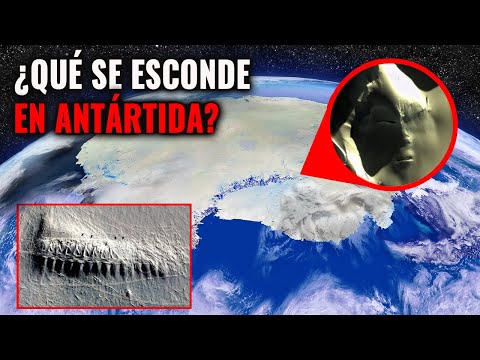
Antarctica's Top 10 Utterly Unexplained Discoveries: Fact or Fiction?


Introduction: Whispers from the Ice

Antarctica. The White Continent. A vast expanse of frozen solitude, seemingly untouched by human hands, yet pregnant with secrets that defy rational explanation. For decades, this desolate landscape has been the silent witness to phenomena that blur the lines between scientific discovery and the truly inexplicable. Here, amidst the biting winds and endless snow, reports emerge—cryptic findings, anomalous readings, and tales that whisper of a history far stranger than our textbooks suggest. Today, we breach the ice walls of reason and delve into the Top 10 most baffling discoveries to have surfaced from the heart of Antarctica, meticulously documented and analyzed. This isn't merely a list; it's an autopsy of the unknown.

1. The Unsettling Anomalies of Lake Vostok

Beneath nearly 4 kilometers of ice lies Lake Vostok, one of the largest subglacial lakes on Earth. For years, its existence was theoretical, a geological curiosity. However, as Soviet and Russian scientists managed the arduous penetration, the data began to paint a picture far more complex. Core samples extracted from the lake’s waters have revealed startling biological anomalies, including bacteria and microscopic organisms previously unknown to science, some exhibiting unusual genetic structures. More unsettling are the persistent, albeit unconfirmed, reports of peculiar seismic readings and energy signatures emanating from the lake bed, far beyond what typical geothermal activity would suggest. Could an isolated ecosystem harbor more than just novel life forms? We must ask if these energy signatures are natural variations or indicators of something… else. The implications for astrobiology and our understanding of life itself are profound.

Note from the Investigator: While the scientific community focuses on novel extremophiles, the persistent anecdotal reports of anomalous energy readings from Vostok warrant deeper investigation. Such phenomena could be misinterpreted geological noise, or they might point to undiscovered geothermal processes capable of generating detectable, unusual energy fields. This requires sophisticated monitoring beyond standard geological surveys. Consider the extensive research conducted by organizations like Antarctic Division; their work provides a baseline against which true anomalies can be measured.

2. Ancient Structures Beneath the Ice

The notion of hidden cities or ancient ruins buried under Antarctica's ice shelf is a staple of speculative fiction and fringe theories. However, radar and satellite imagery have, on occasion, detected unusual geological formations that bear striking resemblances to man-made structures. These anomalies, often dismissed as natural geological features like parabolic dunes or glacial formations, have fueled persistent myths. One prominent example is a series of geometric patterns detected in the Antarctic ice, which some interpret as remnants of roads or buildings. While definitive proof remains elusive, the recurring nature of these discoveries, coupled with the continent's potential role in ancient global narratives, keeps this mystery alive. The question remains: Are we seeing natural formations, or the ghost of civilizations lost to time and ice?

Note from the Investigator: The interpretation of radar and satellite imagery in extreme environments like Antarctica is notoriously challenging. Glacial dynamics, sub-ice topography, and even atmospheric interference can create patterns that mimic artificial structures. Rigorous analysis, cross-referencing multiple data sets, and understanding the limits of remote sensing are crucial before jumping to conclusions about ancient civilizations. This is where rigorous analysis from NASA or similar agencies becomes invaluable.

3. The Unidentified Frozen Objects (UFOs)

Antarctica's remote location and sparse population make it an ideal, albeit challenging, theater for observing anomalous aerial phenomena. Numerous reports, particularly from military personnel stationed at bases like McMurdo or South Pole Station, describe strange, often silent, objects displaying flight characteristics that defy known aerodynamic principles. These sightings range from luminous spheres and triangular craft to objects that appear to emerge from or disappear into the ice itself. While many sightings can be attributed to atmospheric conditions, conventional aircraft, or even ice crystals reflecting light, a persistent residue of encounters remains unexplained. The sheer consistency and credibility of some witnesses make these reports a compelling part of the Antarctic enigma.

Note from the Investigator: The vastness and isolation of Antarctica provide a unique canvas for aerial observations. Atmospheric conditions can create optical illusions, and the psychological impact of isolation on observers cannot be discounted. However, the consistent reports from trained personnel, particularly those within military or scientific roles, necessitate careful documentation and analysis. The investigative community has long cataloged these reports, often finding commonalities in witness accounts that defy simple explanations.

4. Reports of Strange Mutilations

While animal mutilations are a globally reported phenomenon, Antarctica presents a unique and disturbing variant. Isolated incidents have been reported, though often poorly documented, of seals and other Antarctic wildlife found dead with precise, surgical-like wounds, devoid of struggle or predation signs. The extreme cold and remote locations make thorough investigation difficult, leading many such cases to remain anecdotal. Skeptics point to natural causes like ice fractures or decomposition patterns, but the specificity of some wounds has fueled speculation about experimental procedures, unknown predators, or even more bizarre explanations. These unconfirmed reports add another layer of mystery to the continent's already dense lore.

Note from the Investigator: Documenting animal mutilations in Antarctica is a logistical nightmare. The rapid decomposition, scavenging by opportunistic species, and the harsh environmental conditions can easily mimic or obscure the signs of natural death or external causes. Establishing a clear pattern of 'surgical' precision requires extensive forensic analysis, which is rarely feasible in such a remote and challenging environment. Without verifiable forensic evidence, these reports remain in the realm of speculation.

5. Cryptid Sightings in the White Desert

Beyond the familiar tales of sea monsters in Antarctic waters, there are whispers of terrestrial cryptids inhabiting the continent's icy interior. These tales, often originating from historical expeditions or the accounts of isolated researchers, speak of large, unknown creatures sighted in the remote mountain ranges or near glacial caves. Descriptions vary wildly, from ape-like beings to reptilian entities. While most scientific expeditions have found no evidence to support such claims, the persistent nature of these legends across different eras and nationalities suggests a cultural undercurrent that cannot be entirely ignored. Are these simply misinterpretations of known animals, folklore born of isolation, or glimpses of undiscovered life?

Note from the Investigator: The concept of terrestrial cryptids in Antarctica is particularly tenuous given the continent's extreme climate and its relatively recent exploration. Sightings are almost invariably anecdotal, lacking photographic, physical, or genetic evidence. Such accounts often stem from the psychological effects of extreme isolation, pareidolia, or the embellishment of natural phenomena. However, the history of exploration is rife with discoveries once deemed impossible, making a complete dismissal potentially premature, though evidence remains critically absent.

6. Mysterious Signals from the South Pole

The South Pole is home to some of the most advanced scientific installations on Earth, including the Amundsen-Scott South Pole Station, equipped with sophisticated radio telescopes and neutrino detectors. It is within this context of advanced instrumentation that reports of anomalous radio signals have occasionally surfaced. These signals, described as transient, non-random, and originating from unexpected directions or exhibiting peculiar modulation patterns, have puzzled researchers. While many are eventually identified as instrumental errors, distant celestial bodies, or human-made interference from satellites, a small fraction remain stubbornly unclassified. Could these be signals from unknown natural phenomena, or something far more deliberate?

Note from the Investigator: The South Pole is a hub for astronomical and geophysical research, meaning it is constantly bathed in known and unknown cosmic radiation, as well as terrestrial and satellite transmissions. Distinguishing genuine anomalous signals from noise or misidentified sources requires an exceptionally high standard of data integrity and analysis. The National Science Foundation oversees much of this research, and their protocols are designed to weed out spurious results. However, the hunt for extraterrestrial intelligence relies on detecting precisely such unusual signals, making the verification process critical.

7. The Disappearance of the Bellingshausen Expedition

While not a 'discovery' in the traditional sense, the historical enigma surrounding certain early Antarctic expeditions merits inclusion. The fate of some early 20th-century Russian expeditions, most notably alleged accounts linked to Fabian Gottlieb von Bellingshausen's voyages, has been shrouded in mystery and conjecture. Stories circulate of crews disappearing without a trace, or of crews returning with fragmented, often nonsensical, accounts of encounters with "strange phenomena" or "impossible landscapes." Historical records often attribute these disappearances to the harsh environment, but the persistence of tales of the uncanny suggests a more complex, perhaps deliberately obscured, narrative. The lack of concrete evidence, however, leaves these shrouded in the fog of history.

Note from the Investigator: Early polar expeditions were incredibly perilous endeavors. Extreme weather, navigational errors, scurvy, and unforgiving terrain accounted for countless losses. Attributing these disappearances to paranormal causes without concrete evidence is a classic case of filling voids with speculation. However, the historical record is often incomplete, and the psychological toll on survivors could lead to embellished or fragmented accounts. Detailed archival research is paramount, but often the truth is simply the brutal reality of survival against the elements.

8. Anomalous Aerial Phenomena

Beyond specific UFO sightings, Antarctica is frequently cited as a location for unusual atmospheric phenomena that defy simple explanation. These include reports of persistent, unexplained lights observed in the sky for extended periods, formations that appear and dissipate rapidly, and unusual cloud formations that do not conform to standard meteorological models. While many phenomena can be explained as auroras, ice fog, or meteorological events, the consistency of descriptions involving non-naturalistic behavior suggests that some observations fall outside current scientific understanding. The pristine, unobstructed skies of Antarctica offer an unparalleled viewing platform, making these reports particularly compelling.

Note from the Investigator: The Antarctic region is known for its spectacular auroras, like the Aurora Australis, which can create a wide range of luminous displays. Additionally, unique atmospheric conditions, such as lenticular clouds or unusual ice crystal formations, can produce highly unusual visual effects. The challenge lies in differentiating these natural occurrences from genuine anomalous aerial phenomena. Eyewitness testimony alone is insufficient; corroborating data from multiple sources, including satellite imagery and meteorological records, is essential for rigorous analysis.

9. The 'German Base 211' Conspiracy

One of the most persistent conspiracy theories surrounding Antarctica involves a supposed secret Nazi base, often referred to as 'Base 211' or 'Neuschwabenland'. Proponents claim that the Nazis established a hidden facility in Antarctica before and during World War II, possibly utilizing advanced technology or even engaging with unknown entities. This theory, deeply rooted in post-war Nazi occultism myths, suggests that this base may still be operational or that significant technological secrets were hidden there. While no credible evidence supports this claim, the theory persists, fueled by declassified documents that hint at German Antarctic exploration and the inherent mystery of the continent.

Note from the Investigator: The 'Nazi Base 211' theory is a prime example of a conspiracy theory that thrives on circumstantial evidence and misinterpretation. While Germany did conduct Antarctic expeditions before and during WWII for territorial claims and scientific purposes, there is no verifiable evidence of secret bases, advanced technology, or occult connections. The theory often conflates historical facts with fiction, exploiting the continent's isolation and the secrecy surrounding wartime activities to weave a compelling, albeit unfounded, narrative. It serves as a potent reminder of how myths can arise in the absence of definitive answers.

10. Unexplained Geological Formations

Beyond potential ancient structures, Antarctica boasts numerous geological formations that appear, at face value, to defy standard geological explanations. These include unusually perfect geometric patterns in mountain ranges, massive underground cave systems whose scale and extent are unknown, and peculiar ice formations that seem too regular. While geologists often find natural explanations involving erosion, volcanic activity, or glacial processes, the sheer scale and uniformity of some formations have led to speculation about artificial or unknown natural forces at play. The continent's dynamic geology, shaped by millennia of ice and geological shifts, continues to puzzle scientists.

Note from the Investigator: Antarctica is a geological frontier. Its massive ice sheets mask a complex topography, and extensive volcanic and tectonic activity has occurred throughout its history. What appear to be 'unexplained' formations are often the result of phenomena we are only beginning to understand, such as subglacial volcanism or the immense pressures exerted by kilometers of ice. Comprehensive geological surveys, involving ice-penetrating radar, seismic studies, and sample collection, are key to demystifying these features and distinguishing between natural geological marvels and actual anomalies.

Investigator's Verdict: Separating Phenomenon from Folklore

Antarctica, by its very nature, is a magnet for the unexplained. Its isolation, extreme conditions, and history of exploration provide fertile ground for both genuine anomalies and speculative folklore. Many of the purported discoveries—hidden cities, advanced alien bases, or terrestrial cryptids—fall firmly into the realm of myth, amplified amplification by the continent's profound mystery. However, this does not negate the credible reports of anomalous aerial phenomena, unexplained energy signatures from subglacial lakes, or unusual geological formations that continue to challenge our current scientific understanding. The key lies in rigorous, unbiased investigation: separating verifiable data from anecdotal accounts, and distinguishing natural phenomena from truly inexplicable events. The true enigmas of Antarctica are not necessarily what the conspiracy theories suggest, but rather the limits of our current knowledge confronting a continent that still holds many of its secrets jealously guarded beneath its icy façade.

The Investigator's Archive

To truly grasp the depth of Antarctic enigmas, one must consult the foundational texts and ongoing research that shape our understanding. For those ready to move beyond speculative narratives and delve into methodologically sound inquiries, the following resources are indispensable:

  • Books: "The Thing: Art of the Movie" by John Carpenter (a visual exploration of a classic Antarctic horror scenario, demonstrating the power of isolation), "Antarctica: An Extreme Environment" by John L. Guttormson (for understanding the immense challenges of the terrain), and any comprehensive works by investigators like Charles Fort on anomalous phenomena.
  • Documentaries: Look for documentaries detailing the scientific exploration of Antarctica, such as those produced by the Discovery Channel or the Gaia network, critically analyzing their presentation of evidence.
  • Research Journals: Academic publications from journals like "Nature Geoscience" or "Polar Biology" offer peer-reviewed data on Antarctic phenomena, providing essential context for evaluating sensational claims.

Your Field Mission

The Antarctic continent offers a stark reminder of how much we still have to learn about our own planet. Your mission, should you choose to accept it, is twofold:

  1. Investigate Local Legends: Does your region have any local folklore or reported anomalies that mirror the mysteries found in Antarctica? Research these stories, looking for corroborating evidence, witness testimonies, or official reports. Document your findings, applying the same critical analysis we've discussed.
  2. Analyze the Evidence: Find a publicly available satellite image or radar scan of an unusual geological formation in Antarctica (numerous archives exist online from agencies like NASA or ESA). Attempt to find a plausible geological explanation, and then consider what evidence would be required to prove it was something *more*.

Share your findings and your analysis in the comments below. The pursuit of truth requires continuous inquiry and collective scrutiny.

About the Author

alejandro quintero ruiz is a seasoned field investigator dedicated to dissecting anomalous phenomena. His approach marries methodological skepticism with an open mind to the inexplicable, perpetually seeking truth behind the veil of reality. His decades of experience grant him a unique perspective on the boundary between known science and the profound mysteries of our world.

Antarctica remains a final frontier, not just geographically, but intellectually. The secrets it holds are vast, buried deep within its icy core. As we continue to explore, let us do so with sharp minds and discerning eyes, ready to document the genuine anomalies and discard the shadows of pure conjecture.

100 Archaeological Discoveries Scientists Can't Explain


Introduction: The Unseen Past Beckons

The earth holds its secrets close, buried beneath millennia of dust and forgotten civilizations. While mainstream archaeology meticulously reconstructs our history, there exists a stratum of discoveries that stubbornly resist conventional explanation. These aren't mere curiosities; they are anomalies that challenge the very foundations of our understanding of human ingenuity, technological capability, and even our origins. Today, we crack open the file on 100 such archaeological findings, items that have left scientists scratching their heads, their conventional paradigms insufficient to catalogue the sheer inexplicable nature of these artifacts and sites.

This isn't about promoting fringe theories for their own sake. It's about confronting the unknown with a critical, yet open, mind. Our task, as investigators of the unexplained, is to meticulously examine the evidence, consider every potential rational explanation, and then, when the mundane fails, to acknowledge the depth of the mystery. Prepare to embark on a journey through history's most profound enigmas, where the past whispers tales that science struggles to translate.

Category 1: Anomalous Artifacts

Within this category lie objects unearthed from the strata of time, defying known technological timelines or material compositions. The Antikythera Mechanism, for instance, recovered from a Roman-era shipwreck, is a complex astronomical calculator far exceeding the assumed technological prowess of its era. Its gears and dials suggest a level of mechanical engineering that wouldn't reappear for over a thousand years. Similarly, the Baghdad Battery, a clay jar containing a copper cylinder and iron rod, dating back to the Parthian Empire, presents a compelling case for ancient electrical generation, the purpose of which remains hotly debated. Were these isolated marvels of genius, or remnants of a forgotten, advanced civilization? The sheer precision and ingenuity embedded in these artifacts force us to question established historical timelines.

Consider the Phaistos Disc, a unique artifact from Minoan Crete, inscribed with an unknown hieroglyphic script arranged in a spiral pattern. Despite extensive analysis, its language, origin, and purpose remain profoundly mysterious. Each attempt to decipher it has led to more questions than answers. Then there are the OOPArts (Out-of-Place Artifacts) like the London Hammer, found embedded in rock dated to the Cretaceous period, or the Klerksdorp Spheres, mineral spheres found in South Africa that appear artificially manufactured. These items, if authenticated, present a direct challenge to geological and archaeological sequencing, suggesting human presence or advanced technology at epochs previously thought devoid of either. The implications are staggering, potentially rewriting entire chapters of prehistory. For those intrigued by such anomalies, delving into texts like Charles Fort's works is a crucial first step in understanding the historical context of anomalous evidence.

"The further back we look, the less we understand. Yet, the more we discover, the more we realize how little we know. These artifacts are not aberrations; they are signposts pointing to the limitations of our current historical narrative."

Category 2: Megalithic Mysteries

The world is dotted with colossal stone structures, monuments to unknown purposes and builders of extraordinary skill. From the precise alignment of Stonehenge with solar and celestial events to the sheer scale of Puma Punku's precisely cut stone blocks, these sites pose significant logistical and engineering questions. How were stones weighing hundreds of tons moved and shaped with such accuracy using the presumed limited tools of ancient peoples? The precision at Puma Punku, in particular, features intricate right-angle cuts and interlocking pieces that some argue are impossible to replicate even with modern technology. This challenges our assumptions about the technological capabilities of cultures that existed thousands of years ago. Understanding these sites requires us to consider possibilities beyond simple human labor, perhaps involving lost engineering techniques or even assistance from unknown sources.

The Yonaguni Monument off the coast of Japan, a massive underwater rock formation with distinct right angles and terraced steps, has been a subject of intense debate. Is it a natural geological phenomenon, or a submerged man-made structure from a lost epoch? Its perfectly carved corners and straight edges strongly suggest artificial origin, hinting at advanced architectural knowledge predating known civilizations. Similarly, the Moai statues of Easter Island, monumental stone figures carved and transported across vast distances, continue to puzzle researchers. While their creation is attributed to the Rapa Nui people, the methods of transport and the sheer scale of labor involved remain subjects of ongoing investigation and speculation. Exploring the archaeology of these ancient sites often requires specialized equipment, such as high-sensitivity EMF meters and advanced sonar, to properly document potential anomalies. The debate over these megaliths highlights the need for interdisciplinary study, bridging geology, archaeology, and engineering.

Category 3: Unexplained Civilizations

Beyond the enigmatic structures lie hints of civilizations that seem to vanish without a trace or leave behind legacies that defy our historical records. The presence of advanced knowledge in cultures like the Indus Valley Civilization, with its sophisticated urban planning and standardized weights and measures, points to a level of societal organization that is still not fully understood. Their script remains undeciphered, a linguistic barrier that guards the secrets of their administration, beliefs, and technological advancements. The question lingers: how did they achieve such societal complexity so early in human history?

The legend of Atlantis, while often relegated to myth, resonates because it taps into a deep-seated human intuition that advanced societies may have existed and been lost to cataclysm. Plato's accounts, though debated, describe a technologically advanced maritime power that predates much of recorded history. While direct archaeological evidence for a global empire like Atlantis remains elusive, the commonalities across various ancient flood myths and the discovery of submerged structures in places like Bimini Road fuel speculation. Furthermore, the existence of cultures like the pre-Incan civilizations in South America, such as the Tiwanaku and the builders of Sacsayhuamán, with their incredible stonework, suggests periods of advanced development that seem to have either been absorbed and lost or undergone radical societal shifts. The lack of continuous historical records for these periods is a central enigma, prompting theories about catastrophic events or societal collapses that erased vast swathes of human knowledge. Investigating these lost civilizations requires cross-referencing archaeological data with ancient texts and oral traditions, a monumental task for any dedicated researcher.

Category 4: Ancient Technologies

This category delves into artifacts that suggest technological capabilities far beyond what is attributed to ancient humans. The aforementioned Antikythera Mechanism is a prime example, functioning as a sophisticated analog computer for predicting astronomical positions and eclipses. Its intricate clockwork mechanism, comprised of at least 30 bronze gears, implies a level of precision machining and theoretical understanding that seems impossible for its time. The implications extend to the possibility of a forgotten lineage of scientific development, perhaps lost to history through war, natural disaster, or societal decline.

Another fascinating area involves potential evidence of advanced metallurgy and construction techniques. The Damascus steel blades, renowned for their strength and sharpness, exhibit a unique crystalline structure that modern metallurgists have struggled to replicate precisely. While the exact process was lost, the effectiveness of these ancient weapons speaks to a sophisticated understanding of materials science. Similarly, certain ancient concrete formulas, like those used by the Romans, have proven remarkably durable and resistant to seawater, exhibiting self-healing properties that modern concrete often lacks. Research into these ancient materials, such as the study of pozzolanic materials in Roman construction, continues to reveal secrets of lost technologies. When examining such finds, it's crucial to employ analytical tools, perhaps even employing spectral analysis or microscopic examination if dealing with material samples, to truly understand their composition and construction. Such deep dives are essential for distinguishing genuine anomalies from misinterpretations. For a deeper dive into such technological enigmas, consider resources like National Geographic's archives on ancient innovations.

"We often assume 'primitive' equals 'simple'. These findings force us to reconsider that equation. What if 'ancient' simply means 'before our current records'? The technological gap is not always as wide as we imagine."

Category 5: Biological Enigmas

While not strictly archaeological in the sense of tools or structures, this category encompasses findings related to ancient humanoids or organisms that challenge our understanding of evolutionary biology and paleoanthropology. The discovery of fossilized human footprints alongside dinosaur tracks, such as those found in Turkmenistan and Glen Rose, Texas, presents a direct contradiction to established timelines of species existence. If authenticated, these findings suggest a coexistence of humans and dinosaurs, shattering the conventional evolutionary tree. The analysis of such prints demands rigorous geological and paleontological expertise to rule out natural formations that mimic such shapes.

Furthermore, the study of ancient DNA, while yielding incredible insights, has also uncovered anomalies. Occasionally, genetic studies have suggested interbreeding between human populations and unknown hominin species, or unusual genetic markers in ancient human remains that don't fit neatly into existing evolutionary models. The interpretation of these genetic puzzles requires careful scientific scrutiny to differentiate contamination or anomalous mutations from evidence of unknown species. While some "gigantism" claims in ancient skeletal finds often prove to be misinterpretations or hoaxes, the occasional discovery of exceptionally large or unusually proportioned skeletal remains can prompt further investigation into potential genetic variations or unknown hominid lineages. The debate around entities like the "Nephilim" in ancient texts often finds a speculative connection to these biological enigmas, highlighting the intersection of mythology and the enduring mystery of Earth's past inhabitants. When examining such biological evidence, it's imperative to consult peer-reviewed journals and reputable scientific institutions to ensure accuracy and avoid sensationalized claims.

Category 6: Artistic & Symbolic Anomalies

Ancient art often serves as a window into the beliefs and worldview of past cultures. However, some artistic depictions contain elements that eerily resemble modern technology or concepts, leading to speculation about advanced knowledge or even extraterrestrial contact. Cave paintings in various locations around the world, for instance, feature figures with what appear to be helmets, advanced suits, or even flying objects. The Tassili n'Ajjer cave paintings in Algeria, depicting figures with large heads and strange attire, are frequently cited as evidence of ancient astronaut visitation. While mainstream archeology often interprets these as symbolic representations or stylistic conventions, their uncanny resemblance to modern imagery sparks persistent questions.

The intricate gold figurines found in ancient Colombia, often referred to as "tunjo" or "aerophones," bear a striking resemblance to modern airplanes, complete with wings, fuselages, and tail fins. While some archaeologists propose they are stylized representations of birds or fish, their aerodynamic proportions are remarkably accurate. This has led to theories that these ancient artisans possessed knowledge of flight mechanics, possibly derived from observing advanced technology or even reverse-engineering it. The Sumerian cylinder seals, depicting scenes of deities and daily life, also feature curious motifs that some interpret as representations of spacecraft or advanced technological devices. The precise meaning and context of these symbols are still debated, leaving a fertile ground for interpretation and speculation about the true extent of ancient knowledge. Analyzing these artistic anomalies requires a deep understanding of the cultural context while remaining open to unconventional interpretations that may challenge established narratives.

Category 7: Geological & Astronomical Puzzles

Beyond human artifacts, the Earth itself holds geological formations and astronomical alignments that defy simple geological or astronomical explanations. The geological enigma of the "Dragon's Blood Tree" on Socotra Island, with its unique resin and umbrella-like shape, is a biological marvel, but some geological anomalies are even more perplexing. The Richat Structure in the Sahara Desert, a massive geological formation resembling a giant eye, was once thought to be an impact crater but now appears to be a deeply eroded geological dome. Its perfect symmetry and scale are striking. Similarly, the discovery of elements in meteorites that are not naturally occurring on Earth, or the presence of ancient technological artifacts on meteorites themselves, raises profound questions about extraterrestrial life and ancient cosmic interactions.

Ancient astronomical observatories, such as those found at Nabta Playa in Egypt or the Caracol in Belize, demonstrate a sophisticated understanding of celestial movements, often predating established astronomical knowledge by millennia. The precise alignments with solstices, equinoxes, and specific constellations suggest advanced observational techniques and calendar systems. The purpose and methods behind these alignments are not always fully understood, pointing to a lost astronomical heritage. Analyzing these sites often requires archaeoastronomical studies, combining archaeological data with detailed astronomical calculations. The question of whether these were merely sophisticated observations or based on a deeper, perhaps predictive, understanding of cosmic events remains a compelling mystery. For researchers interested in ancient astronomical knowledge, studying the works of scholars like Alexander Thom provides valuable context.

Category 8: Linguistic & Script Anomalies

The challenge of deciphering lost languages and scripts is a cornerstone of archaeology. Yet, some writings resist all attempts at translation, hinting at lost knowledge or communication systems beyond our current comprehension. The Indus script, the Linear A script of Crete, and the Indus script remain undeciphered mysteries, hinting at sophisticated civilizations whose thoughts and records are locked away from us. The very existence of these complex scripts suggests a level of intellectual development and societal structure that we are only beginning to grasp.

Furthermore, anomalies in language distribution and evolution sometimes defy conventional linguistic theories. The presence of strikingly similar myths, symbols, or even linguistic structures across geographically disparate and historically unconnected cultures has led to speculation about common origins or even ancient global communication networks. The "Voynich Manuscript", a medieval codex written in an unknown script and illustrated with bizarre diagrams of plants and celestial phenomena, stands as a supreme example of linguistic and symbolic anomaly. No one has definitively deciphered its text or understood its purpose, making it one of history's most enduring cryptographic puzzles. The rigorous methodology of cryptanalysis, combined with a deep study of historical linguistics and symbology, is required to even approach such enigmas. The potential for hidden knowledge within these undeciphered texts is immense, making their study a critical pursuit for understanding the full scope of human intellectual history.

Category 9: Sites of Unexplained Phenomena

Certain locations on Earth are intrinsically linked to inexplicable events and phenomena that transcend standard archaeological interpretation. These sites often become focal points for paranormal investigation, where the veil between the known and unknown seems particularly thin. The Nazca Lines in Peru, massive geoglyphs etched into the desert floor, are best viewed from great heights. Their intricate designs, some spanning miles, depict animals, geometric shapes, and human-like figures. While attributed to the ancient Nazca culture, the purpose and method of their creation, especially the precision and scale, remain subjects of speculation, with theories ranging from astronomical calendars to landing strips for unknown craft. The sheer effort and coordination required to create these lines without aerial perspective is a significant puzzle.

Other sites, like the "Bermuda Triangle," are infamous for unexplained disappearances of ships and aircraft, often linked to magnetic anomalies, unusual weather patterns, or even theories of dimensional portals. While much can be attributed to environmental factors and human error, the persistent pattern of losses in this region continues to fuel mystery. In a similar vein, historical sites with a high incidence of reported paranormal activity, such as the castles of Scotland or the ancient ruins of Egypt, often possess a palpable atmosphere of mystery. These locations, whether naturally anomalous or imprinted with residual energies, serve as powerful reminders that our understanding of reality may be incomplete. Investigating these sites often involves psychological assessment of witnesses, analysis of electromagnetic field (EMF) readings, and meticulous documentation of environmental conditions. Websites like Gaia often explore these phenomena, providing diverse perspectives, though critical analysis is always advised.

Category 10: The Unclassifiable

Finally, we encounter anomalies that defy easy categorization, forcing us to expand our definitions of history and science. These could range from purported ancient records of extraterrestrial contact, such as the controversial Dendera Light reliefs in Egypt, which some interpret as ancient depictions of light bulb technology, to geological formations that seem impossibly old or shaped. The "White Hole" phenomenon, a theoretical opposite to black holes, has been speculated to exist in deep space with potential implications for the origin of matter, though direct observations are lacking. On Earth, phenomena like the mysterious "hum" reported in various locations worldwide, a low-frequency sound audible to some but not others, and of unknown origin, fall into this category.

The sheer volume of unexplained archaeological finds suggests that our current historical narrative is, at best, an incomplete draft. It is possible that many of these anomalies are the remnants of highly advanced, yet unrecorded, civilizations, or perhaps even interactions with unknown forces or entities. The critical task for any serious investigator is to approach each piece of evidence with rigorous skepticism, demanding verification, testing hypotheses, and only then, acknowledging the profound mystery. The pursuit of these enigmas is not about finding sensational answers, but about pushing the boundaries of our knowledge and understanding of our place in the cosmos. The key is to remain objective, continually seeking corroborating evidence and alternative explanations before embracing the extraordinary. For those drawn to the utterly inexplicable, the works of authors like John Anthony West offer compelling arguments for unconventional interpretations of ancient history.

Investigator's Verdict: Beyond Conventional Explanations

After sifting through hundreds of these peculiar archaeological puzzles, one conclusion becomes unavoidable: our current scientific and historical models are insufficient to fully encompass the sheer strangeness unearthed from our planet's crust. While a significant portion of these "unexplained" finds can eventually be attributed to misinterpretation, hoaxes, or natural phenomena mimicing artificiality, a persistent and compelling residue remains. These core anomalies – the Antikythera Mechanism's technological leap, the precision of Puma Punku, the undeciphered scripts, the suggestive ancient art – refuse to be easily dismissed. They point to gaps in our knowledge, possibly representing lost chapters of human history, forgotten technological epochs, or even non-human influences we are only beginning to conceptualize. The challenge for science is to embrace these anomalies not as threats to its foundation, but as invitations to expand its scope. Dismissing them outright is intellectual laziness; investigating them thoroughly, with open minds and rigorous methods, is the true path to discovery. The inexplicable does not cease to exist simply because we lack the tools to measure it; our duty as investigators is to relentlessly seek those tools, or to refine our understanding of the ones we possess.

The Investigator's Archive

To truly grasp the depth of these historical anomalies, an investigator must arm themselves with knowledge. Here are essential resources that have guided my own research and continue to illuminate the path through the labyrinth of the unexplained:

  • Books:
    • "Fingerprints of the Gods" by Graham Hancock: A foundational text exploring ancient civilizations and their advanced knowledge.
    • "Chariots of the Gods?" by Erich von Däniken: A controversial but stimulating exploration of ancient astronaut theories.
    • "The Orion Mystery" by Robert Bauval and Adrian Gilbert: Proposes a connection between ancient pyramids and celestial alignments.
    • "Lost Technologies of Ancient Egypt" by Christopher Dunn: Argues for advanced technological capabilities in ancient Egypt.
    • "The Cygnus Mystery" by Andrew Collins: Explores ancient connections to a specific constellation.
  • Documentaries & Platforms:
    • "Ancient Aliens" (History Channel/various platforms): While often speculative, it compiles many of the anomalies discussed.
    • "The Discoverers" (Various historical documentaries): Explore scientific breakthroughs and historical mysteries.
    • Gaia.com: A platform offering a wide array of documentaries and series on ancient mysteries, consciousness, and paranormal phenomena.
  • Academic & Research Resources:
    • Reputable archaeological journals (e.g., Antiquity, Journal of Archaeological Science).
    • Online archives of archaeological societies and museums.
    • Archaeoastronomy research papers and databases for celestial alignments.

Remember, the pursuit of truth requires a critical eye. Use these resources as starting points for your own deep dives, always cross-referencing information and maintaining a healthy skepticism.

Frequently Asked Questions

What is the most convincing unexplained archaeological artifact?
The Antikythera Mechanism often stands out due to its demonstrable complexity and the vast technological gap it represents. Its existence suggests a level of mechanical sophistication that was thought impossible for its era, making it a prime example of an anomaly that challenges conventional history.
Are there any scientific explanations for the Nazca Lines?
Mainstream archaeology suggests they were created by the Nazca culture for ritualistic or astronomical purposes, possibly using simple surveying techniques and a deep understanding of their terrain. However, the exact purpose and the practicalities of creation without aerial views remain debated, leaving room for alternative theories.
Can ancient texts provide clues to these mysteries?
Absolutely. Texts like Plato's dialogues (mentioning Atlantis), Sumerian tablets, and various mythological accounts from around the world often contain references to advanced civilizations, cataclysms, or otherworldly visitors, which some scholars link to archaeological anomalies. Deciphering these ancient languages is key.
How can I distinguish real archaeological anomalies from hoaxes?
Rigorous research is paramount. Always look for provenance (origin and history of the artifact), scientific dating methods (e.g., carbon dating, stratigraphy), peer-reviewed scientific analysis, and corroborating evidence. Be highly skeptical of claims without verifiable data, especially those originating from uncredited sources or promoting sensationalism.

Your Field Mission

Your Mission: Analyze a Local Legend with a Critical Eye

The world is filled with local legends and historical oddities. Your mission, should you choose to accept it, is to apply the principles of this investigation to a mystery in your own backyard. Identify a local unexplained phenomenon, an odd historical artifact, or a peculiar geological formation in your region. Then:

  1. Research: Gather all available historical accounts, archaeological reports (if any), and local lore surrounding your chosen mystery.
  2. Hypothesize: Formulate at least two plausible hypotheses. One that aligns with conventional explanations, and one that explores more unconventional possibilities (e.g., advanced ancient technology, unusual natural phenomena, or even paranormal interpretations).
  3. Evaluate Evidence: Critically assess the evidence for each hypothesis. What are the strengths and weaknesses of each explanation? Are there scientific tests that could be performed?
  4. Document: Compile your findings in a brief report (even if just for yourself). What conclusion does your critical analysis lead you to?

Share your findings and your chosen mystery in the comments below. Let's transform local curiosities into potential areas of profound investigation. The truth is out there, and it might be closer than you think.

About the Author

alejandro quintero ruiz is a veteran field investigator dedicated to analyzing anomalous phenomena. His approach combines methodological skepticism with an open mind towards the inexplicable, always seeking the truth behind the veil of reality.

The tapestry of human history is far richer and stranger than we often admit. The archaeological record, when pressed beyond its comfortable narratives, reveals echoes of lost knowledge, forgotten capabilities, and profound mysteries that continue to baffle the sharpest minds. These 100 discoveries serve as potent reminders that our quest for understanding is ongoing, and the most significant revelations may still lie buried, waiting to be unearthed, demanding that we question everything we thought we knew.