Followers

Mostrando las entradas con la etiqueta Prehistory. Mostrar todas las entradas

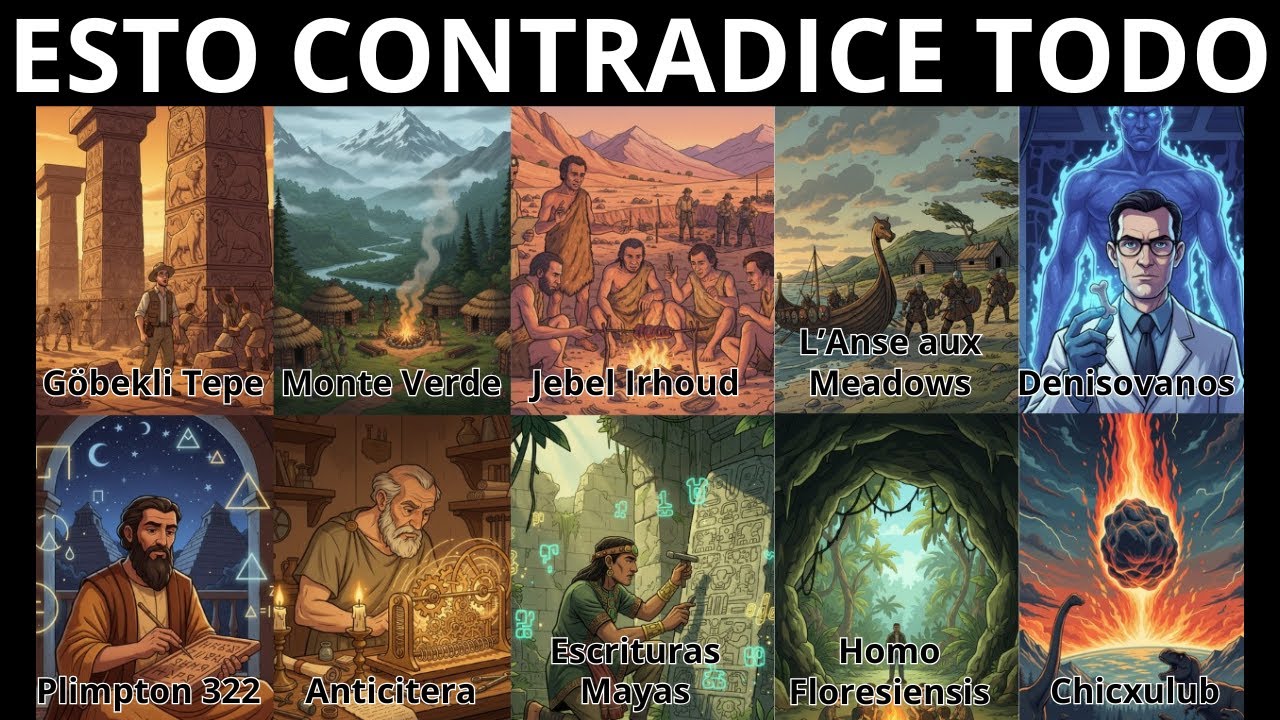
10 Findings That Contradict Everything We Were Taught in School

Image

For centuries, we've accepted a singular version of history as fact. Yet, the tapestry of our past is far more intricate and mysterious than commonly portrayed. Numerous discoveries have surfaced, presenting undeniable evidence that clashes with the established historical narrative. These aren't mere speculative theories; they are verified facts and rigorous studies that compel us to question what we thought we knew about human civilization, ancient technologies, and our very origins. Join me, Alejandro Quintero Ruiz, as we delve into the unsettling realm of historical anomalies.

This investigation aims to dissect these anomalies, separating verifiable evidence from speculation, and to understand why these findings continue to perplex mainstream archaeology and history. Prepare to confront the possibility that our educational frameworks have been built on an incomplete, or perhaps even deliberately altered, foundation.

Göbekli Tepe: The Impossible Temple

Our journey begins with Göbekli Tepe, a site that fundamentally disrupts our understanding of early human capabilities. Located in southeastern Turkey, this megalithic complex predates Stonehenge by approximately 6,000 years and the Egyptian pyramids by about 7,000 years. Its construction, featuring massive carved stone pillars arranged in circles, points to a level of social organization, engineering skill, and abstract thought previously believed to be impossible for hunter-gatherer societies of that era (circa 9600-8200 BCE).

Recommended Gear for Investigation

ProductDescriptionBuy
Cryptozoology A To Z: The Encyclopedia Of Loch Monsters Sasquatch Chupacabras And Other Authentic M: The Encyclopedia of Loch Monsters, Sasquatch, Chupacabras, and Other Authentic Mysteries of NatureAn excellent choice to complement your research on this topic.View on Amazon
The Big Book of Paranormal: 300 Mystical and Frightening Tales From Around the WorldAn excellent choice to complement your research on this topic.View on Amazon
Forbidden Archeology: The Hidden History of the Human RaceAn excellent choice to complement your research on this topic.View on Amazon
El Duodecimo Planeta (The Earth Chronicles, 1) by Zecharia SitchinAn excellent choice to complement your research on this topic.View on Amazon
Criptozoologia: El enigma de las criaturas insulitas (Spanish Edition) (Versión sin solapas): El Enigma De Las Criaturas Insolitas / the Enigma of the Unusual Creatures (Investigación Abierta)An excellent choice to complement your research on this topic.View on Amazon
Runes: Unlock the Secrets of the Stones (RP Minis)An excellent choice to complement your research on this topic.View on Amazon
The H. P. Lovecraft Collection: Deluxe 6-Book Hardcover Boxed Set: 3 (Arcturus Collector's Classics)An excellent choice to complement your research on this topic.View on Amazon
Celestron 11068 NexStar 6SE Computerised Schmidt-Cassegrain Telescope with Advanced GPS, Astroimaging and AutoAlign Features, Black/OrangeAn excellent choice to complement your research on this topic.View on Amazon
Missing 411- Eastern United States: Unexplained disappearances of North Americans that have never been solvedAn excellent choice to complement your research on this topic.View on Amazon
Ghost-Hunting For Dummies [Idioma Inglés] An excellent choice to complement your research on this topic.View on Amazon

The sheer scale and precision of Göbekli Tepe suggest a society with a sophisticated belief system and the ability to mobilize significant labor without the benefit of agriculture, metallurgy, or the wheel, all of which were thought to have developed much later. This raises critical questions: Who were these people? What drove them to build such a monumental structure, and for what purpose? The implications suggest that the Neolithic Revolution may not have been as linear or as recent as we've been taught.

"The implications suggest that the Neolithic Revolution may not have been as linear or as recent as we've been taught."

This finding alone forces a re-evaluation of our timeline for complex human societal development. It’s a stark reminder that our archaeological record is a continuous work in progress, and some of its most significant chapters might be written in stone, literally, from epochs we barely comprehend.

Early American Settlements: Rewriting History

The conventional narrative places the first significant human presence in the Americas around 13,000 years ago, associated with the Clovis culture. However, numerous sites present evidence that challenges this timeline drastically. Discoveries in locations like Monte Verde, Chile, suggest human occupation as early as 14,500 years ago, while other sites hint at even earlier arrivals. Some controversial findings, such as purported tools or fossil remains associated with human activity, suggest a potential presence tens of thousands of years prior.

These discrepancies are not mere academic quibbles. They impact our understanding of human migration patterns, the adaptability of our species, and the timelines of technological and cultural development across continents. The debate often centers on the interpretation of evidence: are these genuine signs of early human activity, or natural geological formations misinterpreted? The resistance to accepting earlier dates stems from the need to reconcile these findings with established migration models, particularly the Bering Land Bridge theory.

Some viewers pointed this out directly: "Confuses arriving with discovering. The Norse perhaps arrived first, but did not discover America for Europe." This highlights a crucial distinction – arrival versus the impact and recognition of arrival in the broader historical context. Regardless, the evidence of earlier presence demands a more nuanced historical account.

Enigmas of Human Evolution

Our understanding of human evolution is often presented as a neat, linear progression from ape-like ancestors to modern Homo sapiens. However, the fossil record reveals a far more complex and branching evolutionary tree. The existence of multiple hominin species coexisting, such as Homo neanderthalensis and Homo sapiens, or the mysterious Denisovans, suggests that human evolution was not a simple march of progress but a dynamic interplay of different lineages.

The discovery of species like Homo floresiensis, the diminutive "Hobbit" of Indonesia, or Homo naledi in South Africa, further complicates the picture. These finds demonstrate evolutionary pathways and adaptations that were not predicted by earlier models. The lack of definitive explanations for the disappearance of these related hominin species leaves significant gaps in our ancestral narrative. It raises questions about competition, interbreeding, environmental pressures, and perhaps even unknown factors that shaped our lineage.

Without a doubt, the history we learned might be incomplete. This is the moment to understand why so many discoveries contradict everything we thought we knew.

The continuous discovery of new hominin fossils underscores the tentative nature of our current evolutionary models. As one comment eloquently put it: "With a bit of common sense, it's obvious we are not the first civilization. Despite the knowledge we have, we are not capable of doing what civilizations supposedly did, which were unable to make a simple steel tool. But unfortunately, we are indoctrinated with a history based on beliefs bordering more on fantasy than reality." This sentiment resonates deeply within the investigation of historical anomalies.

The Chicxulub Impactor: Where Is the Evidence?

The theory of a massive asteroid impact at Chicxulub, Mexico, being the cause of the Cretaceous–Paleogene extinction event, is a cornerstone of modern paleontology. This impact is widely accepted to have wiped out the non-avian dinosaurs 66 million years ago. However, some critical questions persist regarding the physical evidence.

A key point of contention, echoed by viewers, is the definitive location and nature of the impactor itself: "Chicxulub: I think the main evidence is missing, WHERE IS THAT ASTEROID OF SUCH DIMENSION?, did it disintegrate?, was it disintegrated?; is it really its trace?" While impact craters and geological markers like iridium layers exist, the actual physical remains of an asteroid of that magnitude are not readily apparent. Explanations range from disintegration upon atmospheric entry to subsequent geological processes obscuring or destroying the evidence over millions of years. Yet, the absence of a clear, singular "smoking gun" leaves room for continued scientific inquiry and public skepticism.

Ancient Civilizations and Technological Prowess

The narrative of technological progression often depicts early civilizations as rudimentary, gradually developing complexity over millennia. However, artifacts and structures found worldwide hint at a more advanced technological understanding than previously acknowledged. From the precision stonework of Incan fortresses to the alleged Antikythera mechanism, an ancient analog computer, these discoveries challenge the linear progression model.

When we look at ancient sites, we see capabilities that seem almost out of place for their supposed technological level. This leads to speculation about lost technologies or civilizations possessing knowledge far beyond what is commonly accepted. This aligns with sentiments expressed online: "It’s sad that only the ancient technology of some sites on the planet is valued. All over the world, there are places that should be respected and are rich in history." It suggests a potential bias in how we interpret and value ancient achievements, possibly overlooking sophisticated contributions from diverse cultures.

Babylonian Tablets and Historical Discrepancies

The historical record, particularly concerning ancient Mesopotamian civilizations like Babylon, is often pieced together from fragmented textual evidence, such as cuneiform tablets. These tablets contain invaluable information about laws, astronomy, mathematics, and daily life. However, their interpretation can be complex, and discrepancies can arise when compared against broader historical or archaeological findings.

One viewer raised a pertinent question regarding the provenance of artifacts: "So, Babylon and Iraq are within the USA? Otherwise, why would a Babylonian tablet be in a museum? Wouldn't it be stolen!!" This highlights the complexities of artifact acquisition, museum curation, and the potential for historical narratives to be influenced by geopolitical factors or the availability of evidence. It prompts us to consider the integrity of the historical record and the methods by which artifacts reach public display.

The Concept of Previous Humanities

The idea that our current civilization might not be the first on Earth is a recurring theme in discussions of historical anomalies. Geological evidence suggests the Earth is billions of years old, while the recorded history of human civilization spans only a few thousand years. This vast temporal discrepancy leads many to speculate about the possibility of earlier, advanced civilizations that rose and fell long before our own.

The "Hydroplate Theory," for example, posits a catastrophic global flood that reshaped the Earth, implying that remnants of previous civilizations could be buried deep within geological strata. Astronomical cycles, geological records of mass extinctions, and the sheer improbability of a linear, uninterrupted technological ascent over billions of years fuel these hypotheses. As one comment suggests: "It’s simple, the Earth has been proven to be 4 billion years old. Do you know how many times human history fits into that time? It’s easy, leaving 3 billion years for the formation of the Earth, in one billion years, about 100,000 times fit, assuming 10,000 years of known history or so." This perspective emphasizes the immense timescale involved and the statistical likelihood of multiple cycles of civilization.

Researcher's Verdict

Examining these 10 findings requires a rigorous, evidence-based approach. While some anomalies can be explained by gaps in our knowledge, incomplete data, or misinterpretations, others persist as genuine challenges to the status quo. Sites like Göbekli Tepe are not fringe theories; they are archaeological realities that force a re-calibration of our historical timelines. The debate around early American settlements and human evolution highlights the dynamic nature of scientific discovery, where established paradigms are constantly tested and refined.

My analysis suggests that while outright claims of lost super-civilizations often veer into unsubstantiated speculation, the historical record is undeniably more complex and contain more mysteries than our standard curricula allow. The evidence compels us to acknowledge that our understanding of the past is perpetually evolving. The notion of "historical facts" often represents the current consensus, which is subject to change as new evidence emerges. The key is to maintain an open yet critical mind, separating verifiable anomalies from pure conjecture.

The Researcher's Archive

For those seeking to deepen their understanding of historical anomalies and related fields, I recommend the following resources:

  • Books: "Fingerprints of the Gods" by Graham Hancock, which explores controversial theories about ancient civilizations.
  • Documentaries: Series like "Ancient Aliens" (while often speculative, it raises many pertinent questions) and more scientifically grounded documentaries on archaeological discoveries.
  • Academic Journals: Publications focusing on archaeology, anthropology, and paleontology often feature studies on newly discovered sites and revise existing theories. Accessing academic databases can unearth rigorous research on these topics.
  • Online Forums and Communities: Dedicated platforms where researchers and enthusiasts discuss evidence and theories related to historical enigmas. Engaging with these communities can provide diverse perspectives and point towards further avenues of research. Explore related topics in our Forbidden Archaeology archives.

For those interested in the tools of the trade, reliable equipment is essential for serious investigation:

Equipment Recommended for Investigation

Effective investigation, whether historical or paranormal, often relies on the right tools to document and analyze phenomena. For capturing fleeting evidence and ensuring the veracity of findings, consider the following:

  • High-Resolution Cameras: Essential for documenting sites, artifacts, and potential anomalies with clarity.
  • Audio Recorders: Crucial for capturing ambient sounds or potential Electronic Voice Phenomena (EVPs) during site investigations. Look for devices with good noise reduction capabilities.
  • EMF Meters: While controversial in some contexts, these can help detect unusual energy fluctuations at historically significant or supposedly anomalous sites.
  • Geological Survey Tools: For amateur archaeologists or on-site researchers, basic tools for soil analysis or detecting subsurface anomalies can be invaluable.

Protocol: Analyzing Historical Anomalies

  1. Initial Documentation: Thoroughly record all available information about the anomaly – location, date of discovery, associated artifacts, and initial reports.
  2. Cross-Referencing: Compare the anomaly with established historical, archaeological, and scientific databases. Identify points of conflict and corroboration.
  3. Source Verification: Investigate the credibility of the sources reporting the anomaly. Are they peer-reviewed studies, reputable news outlets, or speculative publications?
  4. Expert Consultation: Where possible, consult with experts in relevant fields (archaeology, geology, paleontology) to gain professional insights.
  5. Physical Evidence Analysis: If physical evidence exists, assess its authenticity. Consider dating methods, material composition, and context. Be wary of hoaxes or natural formations misinterpreted as anomalous.
  6. Contextualization: Understand the broader historical and environmental context in which the anomaly was found. Does it fit within known patterns, or does it necessitate a paradigm shift?
  7. Formulate Hypothesis: Based on the evidence, develop a testable hypothesis. Acknowledge alternative explanations, including natural phenomena, misinterpretation, or genuine historical puzzles.
  8. Peer Review (Informal): Discuss findings with other researchers or within trusted online communities to gather feedback and identify potential overlooked aspects.

Frequently Asked Questions

  1. What is the significance of Göbekli Tepe?

    Göbekli Tepe is significant because it predates Stonehenge and the Egyptian pyramids by thousands of years, showcasing advanced construction and organization in a hunter-gatherer society, challenging established timelines for human civilization.

  2. Are there credible findings that suggest earlier human presence in the Americas?

    Yes, sites like Monte Verde and other disputed findings suggest human occupation in the Americas potentially tens of thousands of years earlier than the widely accepted Clovis culture timeline.

  3. Why is the Chicxulub impactor's evidence questioned?

    The question isn't about the impact itself, but the definitive physical evidence of the asteroid of massive dimension, which is not readily apparent, leading to ongoing scientific inquiry.

  4. Is it possible that multiple advanced civilizations existed before ours?

    Given the Earth's vast age and the gaps in our historical and geological records, the possibility of earlier civilizations, while speculative, is considered by many researchers exploring historical anomalies within our Criptozoología section.

Your Field Mission:

The next time you encounter a historical "fact" presented in textbooks or documentaries, pause. Ask yourself: What evidence supports this? What anomalies might exist just beyond the accepted narrative? Your mission is to cultivate a critical eye and an open mind. Seek out these challenging findings, examine the evidence yourself, and contribute to the ongoing investigation into our true past. Share your own documented anomalies and rigorous analyses in the comments below – let's build a more complete picture together.

What are your thoughts on these historical contradictions? Have you encountered other findings that challenge conventional wisdom? Share your experiences and theories in the comments. If you found this investigation illuminating, please share it across your social networks to help spread awareness. Don't forget to subscribe for more deep dives into the unexplained.

Investigator's Note: True paranormal research doesn't fund itself. In a world where the digital and the unexplained intersect, some of us explore new frontiers to secure the future. Do you dare to be part of the vanguard? Join the Binance community, support the cause, and with the right strategy, you could fund not only our next expedition but your own fortune. The next great discovery could be just a click away.

Unexplained Subterranean Ancient Civilizations: An Investigator's Dossier

Image

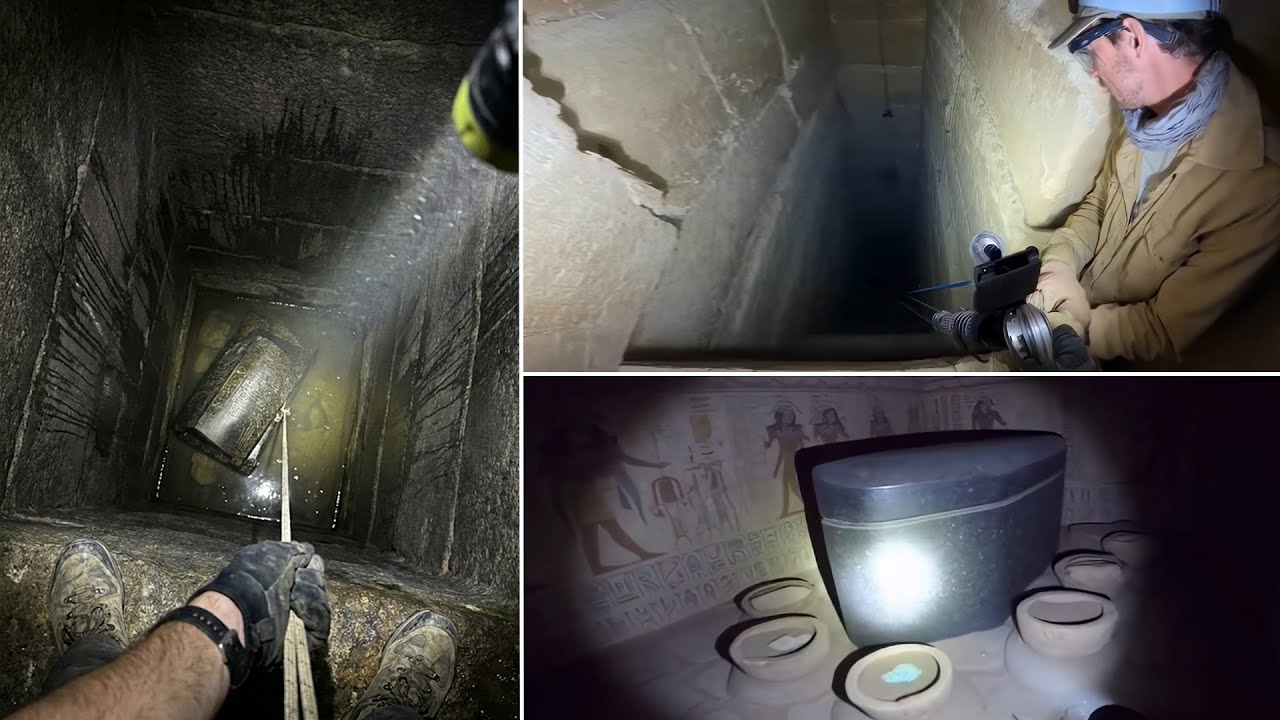
The earth beneath our feet holds a silent testament to forgotten epochs. Countless subterranean chambers, tombs, wells, and structures, meticulously crafted by advanced prehistoric civilizations, stand as irrefutable evidence that challenges conventional historical narratives. These are not mere geological formations; they are megalithic sites buried deep within the subsoil, constructed with technologies that contemporary archaeology struggles to reconcile with established timelines. From the enigmatic Egyptian chambers beneath the pyramids to the intricate Maya and Inca tunnel systems, and the lost subterranean cities of Turkey, a pattern emerges – a global network of hidden, ancient engineering marvels.

Introduction: Echoes from Below

The sheer scale and sophistication of ancient underground structures across the globe demand a re-evaluation of prehistory. These are not simple caves; they are complex, engineered environments suggesting sophisticated planning, advanced tools, and a profound understanding of geology and engineering. My own field investigations have consistently encountered anomalies that defy easy categorization. The question isn't whether these structures exist, but who built them, why, and with what capabilities?

Consider the archaeological record itself: it's littered with gaps and unanswered questions. When evidence of advanced capabilities emerges from periods designated as primitive, it forces us to confront uncomfortable possibilities. This dossier delves into some of the most compelling examples, piecing together a mosaic of a forgotten world.

Recommended Gear for Investigation

ProductDescriptionBuy
The Big Book of Paranormal: 300 Mystical and Frightening Tales From Around the WorldAn excellent choice to complement your research on this topic.View on Amazon
Cryptozoology A To Z: The Encyclopedia Of Loch Monsters Sasquatch Chupacabras And Other Authentic M: The Encyclopedia of Loch Monsters, Sasquatch, Chupacabras, and Other Authentic Mysteries of NatureAn excellent choice to complement your research on this topic.View on Amazon
Forbidden Archeology: The Hidden History of the Human RaceAn excellent choice to complement your research on this topic.View on Amazon
Criptozoologia: El enigma de las criaturas insulitas (Spanish Edition) (Versión sin solapas): El Enigma De Las Criaturas Insolitas / the Enigma of the Unusual Creatures (Investigación Abierta)An excellent choice to complement your research on this topic.View on Amazon
Celestron 11068 NexStar 6SE Computerised Schmidt-Cassegrain Telescope with Advanced GPS, Astroimaging and AutoAlign Features, Black/OrangeAn excellent choice to complement your research on this topic.View on Amazon
The H. P. Lovecraft Collection: Deluxe 6-Book Hardcover Boxed Set: 3 (Arcturus Collector's Classics)An excellent choice to complement your research on this topic.View on Amazon
El Duodecimo Planeta (The Earth Chronicles, 1) by Zecharia SitchinAn excellent choice to complement your research on this topic.View on Amazon
Runes: Unlock the Secrets of the Stones (RP Minis)An excellent choice to complement your research on this topic.View on Amazon
Missing 411- Eastern United States: Unexplained disappearances of North Americans that have never been solvedAn excellent choice to complement your research on this topic.View on Amazon
Ghost-Hunting For Dummies [Idioma Inglés] An excellent choice to complement your research on this topic.View on Amazon

Egyptian Enigmas: Beyond the Pyramids

Beneath the iconic pyramids of Egypt lies a labyrinth of chambers and passages that continue to baffle researchers. While often dismissed as mere burial sites, the precision of their construction, the sheer depth, and the presence of sarcophagi weighing many tons suggest a purpose far beyond simple interment. The ventilation systems, the alignment with celestial bodies, and the anomalous finds within sealed chambers hint at a sophisticated understanding of engineering and astronomy.

The discovery of extensive tunnel networks beneath various dynastic sites, some leading deep into the bedrock, raises questions about their function. Were they for defense, ritual, resource extraction, or perhaps something else entirely? Conventional explanations often fall short when faced with the empirical data.

The Maya and Inca Underworlds

Central and South America boast their own network of subterranean wonders. The Maya, known for their advanced calendar and astronomical knowledge, also constructed vast underground systems, often integrated into their ceremonial centers. These tunnels and chambers, sometimes adorned with intricate carvings, are believed to have served ritualistic purposes, connecting the surface world to the underworld in their cosmology. However, the scale and complexity suggest more than just symbolic meaning.

Similarly, the Inca empire, famed for its stone masonry, engineered extensive subterranean networks. While some served practical purposes like water management and storage, others possess an enigmatic quality, their entrances hidden and their depths unexplored. The precision stonework within these underground structures mirrors that of their surface temples, implying a consistent level of advanced engineering across their civilization.

Lost Cities of Turkey: Underground Civilizations

Perhaps among the most astounding examples are the ancient underground cities of Turkey, such as Derinkuyu and Kaymakli. These multi-level metropolises, capable of housing tens of thousands of people along with livestock and supplies, were carved directly into the soft volcanic rock. They feature intricate ventilation shafts, wells, chapels, stables, and even wineries, demonstrating a complete, self-sufficient ecosystem built entirely underground.

The technology required to excavate and shape these vast complexes is staggering. While dating these cities is challenging, estimates place their origins thousands of years ago, predating many civilizations we consider foundational. Their purpose, widely believed to be for defense against invasions or harsh climates, speaks volumes about the ingenuity and foresight of their creators.

The sheer scale is hard to comprehend. Derinkuyu, for instance, descends up to 18 stories and could shelter inhabitants for months. This wasn't a crude shelter; it was a testament to advanced architectural and engineering prowess, a hidden world beneath the surface.

Megalithic Technology: A Debate

The common thread linking these diverse subterranean marvels is the implication of advanced technology. How were massive stones quarried, transported, and precisely fitted? How were vast subterranean spaces excavated with such uniformity and stability? Conventional tools and methods often seem insufficient to explain the scale and precision observed.

Theories range from lost sophisticated mechanical devices to the manipulation of sound frequencies or even hitherto unknown energy sources. The absence of clear evidence for such technologies in the mainstream archaeological record fuels speculation and leads many to consider alternative explanations, including the possibility of extraterrestrial influence or knowledge transfer from a pre-diluvian global civilization. The mystery deepens when we consider the possibility that many more such structures remain undiscovered, buried by millennia of geological change and human activity.

For those seeking to delve deeper into the evidence and technological implications, comprehensive resources are invaluable. My work often involves cross-referencing findings with detailed analyses published in specialized texts. The eBook "Prehistoric Megaliths" offers a substantial collection of documented megastructures, many of which defy conventional explanations and point towards advanced technological capabilities.

Listener Perspectives: Voices from the Abyss

The feedback received on related documentaries and discussions provides a fascinating cross-section of public interpretation. Many viewers express awe at the magnitude and antiquity of these civilizations, recognizing that our understanding of history is far from complete. Comments like, "It is really admirable the magnitude of all these civilizations that we have no idea about for the most part of their antiquity and that it is on a global scale," highlight this sense of wonder and the vastness of the unknown.

"This channel is of impressive quality. The topics they present always catch me."

There's a palpable hunger for more information that broadens cultural perspectives, as echoed by one commenter: "Excellent documentary... Very well described and informed. INTERESTING information and evidence.. 👌👌👏👏." This desire to expand understanding is a driving force behind continued investigation.

However, not all perspectives lean towards the inexplicable or extraterrestrial. Some propose more grounded, albeit still remarkable, explanations for certain features. Regarding extensive tunnel systems, a common viewpoint suggests muscle power was the primary means of construction, like the catacombs of Rome or Paris. "Everything is always 'inexplicable', but the catacombs of Rome or Paris or Odessa, which have hundreds of kilometers (up to 1000 km or more !!) were made by muscle power." This pragmatic view, while acknowledging the feat of engineering, seeks explanations within human capability, even if that capability was far greater than commonly assumed.

Intriguing hypotheses regarding specific structures, like the 'fogou' in Cornwall, suggest functional purposes related to defense against larger entities: "the fogou were for hiding from giants while the corridors get smaller the giants cannot enter." This points to a more localized, yet equally mysterious, historical context.

A recurring theme is the questioning of conventional narrative frameworks. Is it possible that "all pyramids were built around 36,000 to 35,000 years ago, and were built by the Galactic Federation, but they prefer to use hypotheses from this narrative..."? This reflects a broader skepticism towards established historical timelines and accepted explanations, opening the door to more speculative theories.

The mention of books like Daniel Cyler's "Hidden Rulers Exposed" in some comments suggests a parallel interest in uncovering hidden structures of power and control that resonate with the theme of hidden, ancient civilizations. Phrases like "It doesn't just say the system is rigged - it shows you HOW... They use fear to make us beg for our own chains" indicate a search for overarching narratives that explain perceived manipulation, a sentiment that often accompanies investigations into ancient mysteries.

"I never comment but had to for this. Hidden Rulers Exposed by Daniel Cyler is the most important book I've read in years... If you feel like you're living in a managed reality - you are. This book proves it."

This sentiment illustrates how investigations into ancient anomalies can intertwine with contemporary concerns about societal control and hidden knowledge.

Researcher's Verdict: Unraveling the Subterranean

From my vantage point, the evidence for advanced, ancient subterranean construction is undeniable. While the exact nature of the technology and the specific purposes of many sites remain subjects of intense debate, the sheer scale and sophistication rule out primitive tool use for many of these structures. The consistent presence of megalithic stonework, complex ventilation, and vast excavated spaces across disparate cultures points towards a shared legacy, perhaps a global network of a highly advanced civilization predating recorded history.

The assertion that "Everything is always 'inexplicable'" holds a kernel of truth, but not in the sense of being impossible. Rather, it's inexplicable within our current, limited understanding of ancient capabilities. The idea that these were not tombs but repurposed structures, as suggested regarding the Great Pyramid, aligns with a pattern of ancient sites being built upon or adapted by later cultures. The absence of soot in some tunnels, despite apparent torch use, is a classic piece of evidence that challenges simple explanations, hinting at alternative lighting or ventilation methods.

The Investigator's Archive

To further your own investigation into these subterranean mysteries, I recommend the following resources:

  • Documentaries: Search for titles covering "Ancient Underground Cities," "Megalithic Mysteries," and "Lost Civilizations." The channel mentioned in listener feedback, @UniverseInsideYou, often covers relevant topics
  • Books: Explore works on archaeoastronomy, ancient engineering, and alternative history. Books detailing specific sites like Derinkuyu or Göbekli Tepe are essential.
  • Online Forums and Communities: Engage with researchers and enthusiasts. Websites dedicated to ancient mysteries and conspiracy theories often host valuable discussions and evidence compilations.

Protocol: Analyzing Subterranean Anomalies

When investigating or analyzing reports of subterranean structures, follow this protocol:

  1. Location Verification: Confirm the precise geographical coordinates and assess geological stability.
  2. Structural Integrity Assessment: Analyze construction methods, materials, and evidence of advanced engineering (e.g., precision cuts, ventilation shafts, load-bearing capacity).
  3. Dating Evidence: Examine any available dating methods (radiocarbon, thermoluminescence, stratigraphic analysis) or contextual clues that suggest age.
  4. Purpose Hypothesis: Evaluate potential functions (defense, ritual, habitation, resource management) based on architectural features and cultural context. Consider anomalous findings that contradict simpler explanations.
  5. Technological Implication: Assess the tools, techniques, and knowledge required for construction. Compare this with established historical timelines and technological capabilities.
  6. Cross-Cultural Comparison: Identify similarities and differences with other known ancient subterranean sites globally to discern potential connections or a common origin.
  7. Source Credibility: Critically evaluate all information, distinguishing between firsthand accounts, historical records, speculative theories, and outright fabrications.

Equipment Recommended for Investigation

For field research or analysis of anecdotal evidence, certain tools can be invaluable:

  • High-resolution cameras for detailed documentation.
  • Geophysical survey equipment (ground-penetrating radar) for non-invasive subsurface exploration.
  • Audio recording devices for capturing ambient sounds and potential EVPs (Electronic Voice Phenomena) in these environments.
  • Drones for aerial and difficult-to-access site surveys.
  • Comprehensive reference libraries on geology, archaeology, and ancient history.

Books Recommended

To deepen your understanding of ancient mysteries and advanced technologies:

  • "Fingerprints of the Gods" by Graham Hancock
  • "The Orion Mystery" by Robert Bauval and Adrian Gilbert
  • "Forbidden Archaeology" by Michael Cremo and Richard L. Thompson

Frequently Asked Questions

What is the oldest known underground structure?

While definitive dating is challenging, sites like the Göbekli Tepe complex in Turkey, though not entirely subterranean, exhibit megalithic construction predating known agricultural societies, suggesting very ancient, sophisticated capabilities. Some debated findings suggest even older subterranean constructions.

Were these structures built by aliens?

The "ancient alien" hypothesis is popular due to the advanced technology implied. However, many researchers propose that a lost, highly advanced terrestrial civilization is a more probable explanation, supported by geological and archaeological evidence.

Why are these structures often found buried or hidden?

Reasons vary: natural geological processes like sedimentation and erosion can bury sites over millennia. In some cases, later civilizations may have built over or repurposed older structures, or they were deliberately concealed for protection or ritualistic reasons.

How could ancient civilizations build such massive underground cities?

This is a key question. It suggests knowledge of advanced engineering, possibly involving sophisticated tools, understanding of acoustics, leverage, and potentially methods we haven't yet rediscovered or accepted, such as sonic resonance or unique excavation techniques.

Conclusion: Your Field Mission

The evidence for advanced ancient subterranean civilizations is compelling, spanning continents and millennia. These aren't fringe theories based on scant evidence; they are interpretations derived from confronting the physical reality of megalithic sites that challenge our accepted historical paradigms. The "inexplicable" nature of these sites is a call to action—a directive to push the boundaries of our understanding.

Your Mission: Investigate the Unseen

Next time you hear about an ancient ruin or a mysterious underground find, look beyond the surface narrative. Consider the engineering, the scale, and the historical context. Does the explanation truly fit the evidence? Your critical eye is the most potent tool in uncovering these hidden truths. Share your findings, your questions, and your own experiences with these ancient enigmas in the comments below. The truth is buried deep, and it's up to us to unearth it.

What are your thoughts on these ancient underground wonders? Have you encountered similar structures or heard local legends? Share your experiences and theories in the comments below. Your insights are crucial to our ongoing investigation.

If you found this dossier illuminating, please share it across your social networks. Help us expand the reach of this critical research and awaken more minds to the mysteries that lie beneath our feet.

Don't just read about the unexplained – join the investigation. Follow us for more deep dives into the world's most compelling paranormal and historical enigmas.

Investigator's Note: True paranormal research doesn't fund itself. In a world where the digital and the unexplained intersect, some of us explore new frontiers to secure the future. Do you dare to be part of the vanguard? Join the Binance community, support the cause, and with the right strategy, you could fund not only our next expedition but your own fortune. The next great discovery could be just a click away.

Oregon Discovery Rewrites Timeline of First Americans

Image

For centuries, the established narrative held that the first humans set foot in North America roughly 13,000 years ago, their arrival marked by the sophisticated Clovis culture. This timeline, though widely accepted, has always been a subject of intense debate and speculation within archaeological circles. However, a groundbreaking discovery in the high-desert plains of Oregon is poised to shatter this long-held belief, pushing back the known human presence on the continent by nearly 5,000 years. The site, known as Rimrock Draw rock shelter, has yielded evidence suggesting a human population thrived during the Last Glacial Maximum, a period previously thought to be devoid of such organized settlements.

Introduction: The Chronological Conundrum

The question of when humanity first traversed the vast expanse to populate the Americas has been a persistent enigma. For generations, the archaeological community has operated under the assumption that the earliest evidence of a significant human presence dates back approximately 13,000 years, intrinsically linked to the widespread recognition of the Clovis culture. This timeline created a specific paradigm, suggesting a relatively late arrival after the retreat of the massive glacial ice sheets that once covered much of the continent. However, the relentless pursuit of knowledge in fields like Paleoindian studies and archaeology constantly challenges established norms. The discovery at Rimrock Draw in Oregon is not merely an incremental update; it represents a potential paradigm shift, forcing a re-evaluation of migration routes, timing, and the capabilities of early human populations.

Rimrock Draw Unveiled: Evidence from the Ice Age

Nestled within the stark beauty of Oregon's high desert, the Rimrock Draw rock shelter has become a focal point for a radical rethinking of American prehistory. The deposits within this shelter are not mere sediment; they are a geological time capsule. Researchers have unearthed meticulously preserved evidence of human activity that significantly predates previous benchmarks. Among the most compelling finds are the remains of camel species, identified as extinct North American camels (Camelops), bearing clear marks of butchery. This indicates not only the presence of humans but their successful adaptation to hunting large game in a challenging environment. Alongside these faunal remains, archaeologists recovered lithic artifacts – stone tools fabricated from materials not indigenous to the immediate vicinity, hinting at trade networks or extensive travel. Furthermore, microscopic analysis revealed traces of bison blood, painting a picture of a diverse and dynamic prehistoric ecosystem that sustained human life.

Recommended Gear for Investigation

ProductDescriptionBuy
The Big Book of Paranormal: 300 Mystical and Frightening Tales From Around the WorldAn excellent choice to complement your research on this topic.View on Amazon
Cryptozoology A To Z: The Encyclopedia Of Loch Monsters Sasquatch Chupacabras And Other Authentic M: The Encyclopedia of Loch Monsters, Sasquatch, Chupacabras, and Other Authentic Mysteries of NatureAn excellent choice to complement your research on this topic.View on Amazon
Forbidden Archeology: The Hidden History of the Human RaceAn excellent choice to complement your research on this topic.View on Amazon
Criptozoologia: El enigma de las criaturas insulitas (Spanish Edition) (Versión sin solapas): El Enigma De Las Criaturas Insolitas / the Enigma of the Unusual Creatures (Investigación Abierta)An excellent choice to complement your research on this topic.View on Amazon
The H. P. Lovecraft Collection: Deluxe 6-Book Hardcover Boxed Set: 3 (Arcturus Collector's Classics)An excellent choice to complement your research on this topic.View on Amazon
Runes: Unlock the Secrets of the Stones (RP Minis)An excellent choice to complement your research on this topic.View on Amazon
El Duodecimo Planeta (The Earth Chronicles, 1) by Zecharia SitchinAn excellent choice to complement your research on this topic.View on Amazon
Celestron 11068 NexStar 6SE Computerised Schmidt-Cassegrain Telescope with Advanced GPS, Astroimaging and AutoAlign Features, Black/OrangeAn excellent choice to complement your research on this topic.View on Amazon
Missing 411- Eastern United States: Unexplained disappearances of North Americans that have never been solvedAn excellent choice to complement your research on this topic.View on Amazon
Ghost-Hunting For Dummies [Idioma Inglés] An excellent choice to complement your research on this topic.View on Amazon

Geological Context: Ash and Ancient Blood

The chronological framework for the Rimrock Draw findings is largely established through meticulous geological analysis, particularly the presence of volcanic ash layers. Tephrochronology, the study of volcanic ash layers as time markers, plays a crucial role here. These ash deposits act as precise chronological markers, dating the human artifacts found beneath them. The sheer depth of the sediment layers, combined with the volcanic ash, points to an occupation period stretching back to the Last Glacial Maximum. This period, roughly 18,000 to 20,000 years ago, was a time of intense cold and vast continental glaciers. Ice Age America presented formidable challenges, including drastically altered coastlines and the presence of megafauna like the aforementioned camels. The discovery of butchered camel remains and bison blood traces within these ancient layers provides concrete proof of human adaptation and survival during this extreme climatic episode. The implications are profound, suggesting that humans were not only present but actively exploiting the resources of this environment far earlier than previously accepted models allowed.

Archaeological Implications: Beyond the Clovis Horizon

The Rimrock Draw discovery challenges the long-standing "Clovis-first" model, which posits that the Clovis culture represents the earliest widespread human presence in the Americas. If the dating holds firm – and initial findings suggest it will – it implies that humans arrived on the continent thousands of years before the Clovis people. This opens up several critical questions regarding migration routes. Could humans have bypassed the massive ice sheets through coastal routes, such as the hypothesized "Kelp Highway," or is there evidence for earlier land bridge crossings? The presence of exotic materials used in stone tools also suggests sophisticated knowledge of geography and resource distribution. The people who occupied Rimrock Draw were not isolated survivors; they were part of a complex society capable of long-distance planning and resource management. This discovery necessitates a re-examination of numerous other potential early sites and a deeper investigation into the genetic and archaeological records that may have been overlooked due to the prevailing Clovis-first bias.

Listener Perspectives: Debating the Dawn of Humanity

The implications of this discovery have resonated deeply with our audience, sparking a vibrant discussion across our platforms. Several viewers highlighted the importance of precise language, advocating for terms like "oldest known" settlement rather than definitively stating "the oldest," acknowledging that further discoveries are inevitable. One commenter, who has spent fifteen summers at the site, described it as "an amazing place," lending a personal touch to the scientific endeavor. Another deeply appreciated the "Real person narration 👍" and "Excellent narration," contrasting it favorably with artificial voices, a sentiment echoed by multiple subscribers. The mention of the "ice free corridor" prompted astute observations about outdated coastline graphics in historical presentations, with one user pointing out that sea levels were significantly lower during glacial periods, altering perceptions of coastal geography. The sheer "mind boggling" scale of time involved in these finds was a recurring theme, underscoring the profound human capacity for adaptation and migration across vast epochs.

Comparative Sites: White Sands and Bluefish Caves

The Rimrock Draw findings align with and are bolstered by other controversial yet significant discoveries. Most notably, the human footprints discovered at White Sands National Park in New Mexico have been independently dated by multiple studies to between 21,000 and 23,000 years ago. This places humans in North America squarely within the Last Glacial Maximum, corroborating the potential timeline suggested by the Oregon site. Further north, the Bluefish Caves in the Yukon Territory have yielded artifacts proposed to date back between 24,000 and 30,000 years ago, suggesting an even earlier human presence in the subarctic regions. These sites, when considered together, paint a compelling picture of a much earlier and more widespread human occupation of the Americas than previously imagined. Each discovery reinforces the idea that human migration to the continent was not a single, late event but likely a series of movements over tens of thousands of years.

Geological and Evolutionary Notes

The presence of butchered camel remains at Rimrock Draw is particularly fascinating given the evolutionary history of these animals. Camels, in fact, originated in North America millions of years ago before migrating to other continents. Their presence in the Ice Age landscape of Oregon is a testament to the continent's dynamic fauna during that era. One viewer poetically referenced dating an "old camel" using "enamel," a nod to scientific methods of dating fossilized remains. Another commenter pointed out the geological significance of higher elevations like Rimrock Draw (nearly 5,000 ft), suggesting these locations may have served as refugia, avoiding obliteration by cataclysmic events like the Missoula Floods 15,000 years ago, which wiped out evidence in lower elevations. The implications for understanding human settlement patterns south of the ice sheets, in Central and South America, are vast, potentially indicating near-simultaneous arrival with Europe. The narrative of earliest Americans is now intertwined with the ancient history of North American fauna.

Researcher's Verdict: A Shifting Paradigm

From my perspective as an investigator of the unexplained and the historically uncertain, the evidence emerging from Rimrock Draw, supported by findings at White Sands and Bluefish Caves, constitutes a significant, perhaps definitive, challenge to the established timeline of human settlement in the Americas. The rigorous application of techniques like tephrochronology, combined with direct evidence of tool use and hunting, moves these findings beyond mere speculation. While the scientific community rightfully demands robust peer review and further corroboration, the current data points toward a compelling narrative: humans were not latecomers to the Americas, but rather early pioneers who navigated and survived the extreme conditions of the Last Glacial Maximum. This transforms our understanding of early human ingenuity, migratory capabilities, and the deep history of our species on this continent. The "Clovis-first" model appears increasingly outdated, a relic of incomplete data that is now being supplanted by a far older and more complex story.

The Investigator's Archive

For those fascinated by the deep past and the ongoing quest to understand human origins, I recommend delving into further resources. Documentaries that explore the peopling of the Americas often provide visual context and expert interviews. Books by leading archaeologists and paleoanthropologists, such as those detailing the Clovis culture and its challengers, offer in-depth analysis. Platforms dedicated to archaeological news and discoveries are invaluable for staying abreast of the latest findings. Understanding these complex historical narratives requires access to the right materials, much like any serious investigation.

Protocol: Field Investigation Best Practices

When investigating potential historical sites, strict adherence to protocol is paramount. This ensures both the integrity of the site and the accuracy of the findings:

  1. Site Identification and Protection: Before any excavation, potential sites must be identified through survey, remote sensing, or historical accounts. Strict measures must be in place to prevent unauthorized access and looting.
  2. Systematic Excavation: Excavation should proceed in meticulously documented stratigraphic layers. Grid systems are used to precisely map the location of artifacts in three dimensions.
  3. Artifact Recovery and Documentation: Every artifact, feature, and deposit must be recorded photographically, graphically, and in written logs. Context is everything in archaeology.
  4. Dating Techniques: Employ multiple dating methods – radiocarbon dating, thermoluminescence, tephrochronology, and optically stimulated luminescence (OSL) – to establish a reliable chronological framework.
  5. Material Analysis: Analyze stone tools for sourcing and manufacturing techniques, study faunal remains for evidence of butchery or diet, and conduct soil analysis for microscopic evidence (like blood residues).
  6. Data Synthesis and Peer Review: Compile all findings into comprehensive reports and submit them for peer review in reputable scientific journals. This is critical for validating the discoveries.

Frequently Asked Questions

What is the significance of the Rimrock Draw discovery?
It suggests human presence in North America dates back to at least 18,000-20,000 years ago, significantly earlier than the previously accepted 13,000 years associated with the Clovis culture.
How was the age of the findings determined?
The age was primarily determined through tephrochronology, using volcanic ash layers to date the sediment deposits containing the artifacts and butchered animal remains.
Does this discovery disprove the Clovis culture?
Not entirely, but it demonstrates that humans were present in the Americas thousands of years before the Clovis culture emerged, necessitating a revised understanding of migratory timelines and routes.
Are there other sites that support this earlier timeline?
Yes, the human footprints at White Sands National Park (dated 21,000-23,000 years ago) and potential artifacts from Bluefish Caves (dated 24,000-30,000 years ago) provide corroborating evidence for an earlier human presence.
What are the implications for understanding human migration?
It suggests that human migration to the Americas may have occurred in multiple waves over tens of thousands of years, possibly utilizing routes like the Pacific coastal margin ("Kelp Highway") or earlier land crossings.

Field Mission: Your Assignment

The scientific process thrives on contributions from all corners. While direct fieldwork is reserved for trained professionals, your role as an informed observer is crucial. Engage with verified archaeological news, support institutions involved in research, and critically evaluate information presented. The quest for human origins is a continuous expedition. Consider this: How might the discovery of widespread, early human settlements impact our understanding of subsequent cultural development and inter-group relations across the ancient Americas? Share your hypotheses and any personal experiences with historical sites or puzzling discoveries in the comments below. Your insights fuel the collective investigation.

If you found this analysis of ancient mysteries compelling, please consider sharing this post on your social networks. Your engagement is vital for continuing these deep dives into the forgotten corners of history. Don't forget to subscribe for more explorations into the unexplained and the archaeological.

Investigator's Note: True paranormal research doesn't fund itself. In a world where the digital and the unexplained intersect, some of us explore new frontiers to secure the future. Do you dare to be part of the vanguard? Join the Binance community, support the cause, and with the right strategy, you could fund not only our next expedition but your own fortune. The next great discovery could be just a click away.

Prehistoric Megastructures of Japan: Unearthing Colossal

Image

The landscapes of Japan whisper tales of a forgotten past, punctuated by colossal structures that defy conventional understanding. These are not mere ruins; they are testaments to an advanced prehistoric society, hinted at by immense stone walls, incredibly precise carvings, and granite blocks of impossible scale. This investigation delves into the heart of Japan's forgotten megaliths, exploring sites that challenge our history and suggest a technology far beyond what is typically attributed to our ancient ancestors.

Introduction: Echoes of an Advanced Past

For centuries, the narrative of human civilization has been etched in stone, metal, and parchment. Yet, scattered across the globe are enigmas that refuse to fit neatly into this established timeline. Japan, often celebrated for its modern innovations, harbors remnants of a prehistoric era that present a stark contrast: megalithic structures of such monumental scale and precision that they force us to question everything we thought we knew about our ancestors. This report is not about myth; it's an analytical deep dive into the physical evidence that suggests a sophisticated, technologically adept society predated our commonly accepted historical accounts.

The Megalithic Enigma of Japan

The island nation of Japan is a treasure trove for those seeking evidence of forgotten capabilities. Beyond the well-trodden paths of its samurai lore and imperial history lie colossal stone formations that predate recorded time. These are not simple arrangements of rocks; they are complex constructions involving massive blocks, intricate quarrying, and architectural feats that remain baffling. The sheer weight and placement of these stones, some weighing hundreds, if not thousands, of tons, pose an immediate logistical question: how were they moved? More importantly, why were they built?

Recommended Gear for Investigation

ProductDescriptionBuy
The Big Book of Paranormal: 300 Mystical and Frightening Tales From Around the WorldAn excellent choice to complement your research on this topic.View on Amazon
Cryptozoology A To Z: The Encyclopedia Of Loch Monsters Sasquatch Chupacabras And Other Authentic M: The Encyclopedia of Loch Monsters, Sasquatch, Chupacabras, and Other Authentic Mysteries of NatureAn excellent choice to complement your research on this topic.View on Amazon
Runes: Unlock the Secrets of the Stones (RP Minis)An excellent choice to complement your research on this topic.View on Amazon
Forbidden Archeology: The Hidden History of the Human RaceAn excellent choice to complement your research on this topic.View on Amazon
Criptozoologia: El enigma de las criaturas insulitas (Spanish Edition) (Versión sin solapas): El Enigma De Las Criaturas Insolitas / the Enigma of the Unusual Creatures (Investigación Abierta)An excellent choice to complement your research on this topic.View on Amazon
The H. P. Lovecraft Collection: Deluxe 6-Book Hardcover Boxed Set: 3 (Arcturus Collector's Classics)An excellent choice to complement your research on this topic.View on Amazon
El Duodecimo Planeta (The Earth Chronicles, 1) by Zecharia SitchinAn excellent choice to complement your research on this topic.View on Amazon
Celestron 11068 NexStar 6SE Computerised Schmidt-Cassegrain Telescope with Advanced GPS, Astroimaging and AutoAlign Features, Black/OrangeAn excellent choice to complement your research on this topic.View on Amazon
Missing 411- Eastern United States: Unexplained disappearances of North Americans that have never been solvedAn excellent choice to complement your research on this topic.View on Amazon
Ghost-Hunting For Dummies [Idioma Inglés] An excellent choice to complement your research on this topic.View on Amazon
"The scale of some of these Japanese megaliths is simply staggering. We're talking about blocks that would challenge modern construction crews, let alone societies believed to have rudimentary tools."

The prevailing archaeological consensus often attributes such structures to sheer manpower and simple tools, a narrative that grows increasingly untenable with each discovery. This investigation aims to dissect the available evidence, from the colossal blocks found in various sites to the precise engineering evident in ancient quarries, painting a picture of a civilization with an understanding of physics and engineering that we are only beginning to replicate.

Unrivaled Stone Craftsmanship

Precision is a recurring theme when examining Japan's prehistoric megaliths. Quarry sites reveal astonishingly clean cuts and shaped blocks, suggesting methods far removed from primitive stone-chipping techniques. Some surfaces exhibit a smoothness and regularity that imply advanced cutting or polishing tools, potentially utilizing technologies we have yet to fully comprehend. The sheer uniformity of certain blocks, combined with their immense size, points towards a systematic, organized approach to construction that speaks of a highly developed society.

Consider the famous Jomon period, a time often characterized as primitive. Yet, evidence suggests a complexity that belies this label. The ability to quarry, transport, and shape such colossal stones implies sophisticated planning, strong social organization, and, crucially, advanced knowledge of engineering and possibly even rudimentary mechanics or hydraulics.

The Mystery of Unexcavated Giants

Perhaps one of the most compelling aspects of Japan's prehistoric landscape is the presence of colossal, unexcavated tombs and structures. These sites, often gargantuan in scale, remain largely untouched, their interiors a mystery waiting to be unveiled. The potential knowledge locked within these silent sentinels is immense. Early hypotheses often point to burial sites for significant figures or leaders of these ancient societies, but their true purpose could be far more complex.

The reluctance or inability to excavate these sites further fuels speculation. Are they protected by natural phenomena? Or is there a deliberate preservation—or concealment—at play? The sheer size suggests that whatever lies within required significant resources and a profound understanding of construction, hinting at a societal structure capable of mobilizing vast labor forces for monumental, perhaps ritualistic or technological, purposes. The possibility of finding records, tools, or even biological evidence that could rewrite history is tantalizing, yet the secrets remain locked away, demanding further inquiry.

Evidence of Ancient Technology

The primary argument for an advanced prehistoric society in Japan hinges on the evidence of technology. How were stones weighing hundreds of tons quarried with such precision? How were they transported across potentially difficult terrain? While conventional explanations often involve ramps, levers, and immense manpower, the scale of the effort required for many of these sites strains credulity. The clean, sharp cuts, the perfectly fitted joints, and the sheer volume of material moved suggest processes that are not easily explained by simple mechanical advantage alone.

Some researchers propose the use of sonic resonance, advanced understanding of material properties, or even technologies utilizing water or atmospheric pressure. While these theories may sound speculative, they arise from a direct confrontation with the physical evidence. The alternative—that ancient peoples possessed an organizational and logistical capability far exceeding our current understanding, using only brute force and simple tools—is itself a significant historical anomaly. This report does not claim definitive answers but seeks to present the compelling questions raised by the raw data.

Investigator's Kit: Essential Equipment

To undertake an investigation of this magnitude, both in the field and in analysis, requires a specific set of tools. Understanding the underlying principles of geology, engineering, and archaeology is paramount. For those seeking to document anomalies or study similar sites, the following equipment proves invaluable:

  • High-Resolution Cameras: For capturing intricate details of stonework and scale.
  • Geological Survey Tools: To analyze stone composition and potential quarrying methods.
  • Laser Scanners/3D Photogrammetry: To create precise digital models of structures and analyze their geometry.
  • Drones: For aerial surveys, providing context and overview of vast sites.
  • Electromagnetic Field (EMF) Meters: To detect anomalies, though their scientific validity in paranormal contexts is debated.
  • Audio Recorders: For capturing environmental sounds that might offer clues, or for potential EVP analysis (Electronic Voice Phenomena).

Further Reading and Resources

The study of prehistoric anomalies is a vast field, and understanding Japan's megalithic sites benefits from exploring the broader context of ancient technologies and unsupported histories. For those seeking to deepen their knowledge, the following resources are recommended:

  • Books on Megalithic Cultures: Works exploring similar sites worldwide provide comparative data.
  • Academic Papers on Japanese Prehistory: Contrasting conventional theories with emerging evidence is crucial.
  • Documentaries on Ancient Civilizations: Visual explorations of sites and theories can offer new perspectives.

This investigation builds upon the work of many researchers, and acknowledging their contributions is vital. The journey into the past is collaborative. For those interested in the more esoteric aspects of lost histories, consider exploring resources on ancient astronaut theories and alternative archaeology. The original research that inspired this report can be found in an extensive eBook, providing a comprehensive overview of global megalithic wonders.

Investigator's Verdict

The megalithic structures of Japan present a compelling case for a pre-historic society possessing capabilities far beyond what mainstream history acknowledges. The precision in quarrying, the monumental scale of construction, and the enduring mystery of unexcavated tombs all point towards a sophisticated understanding of engineering and logistics. While definitive proof of advanced technology remains elusive, the physical evidence strongly suggests that these were not the works of simple, primitive peoples. The narrative needs re-evaluation. The question is not *if* our ancestors were more advanced, but *how* and *why* this knowledge was lost.

Frequently Asked Questions

What are the most significant prehistoric megalithic sites in Japan?
Sites like the Yonaguni Monument (though its natural origin is debated), various large stone circles, and ancient quarry locations with massive, shaped blocks are key examples. The sheer number of large burial mounds (kofun) also points to significant construction capabilities.
How old are these megalithic structures?
Dating is complex and often debated. Some sites are tentatively linked to periods like the Jomon or Yayoi eras, potentially over 3,000 years old, while others remain undated due to lack of conclusive evidence or ongoing controversy.
Are there any scientific explanations for the construction methods?
Conventional explanations involve enormous labor forces, ramps, levers, and potentially water-based transport. However, for the largest blocks and most precise cuts, these explanations are often stretched thin, leading to alternative theories.
What is the significance of the unexcavated tombs?
These colossal structures, known as kofun, are believed to be burial sites of ancient rulers or elites. Their unexcavated state preserves potential archaeological evidence but also fuels speculation about what secrets they hold regarding the technology and social structure of the time.

Your Mission: Documenting the Unknown

The world is full of unanswered questions, and the evidence of advanced prehistoric capabilities is scattered across the globe. Your mission, should you choose to accept it, is to approach these mysteries with an open yet critical mind. Seek out local legends, explore lesser-known historical sites, and analyze the evidence with a pragmatic eye. Document your findings, share your research, and contribute to the growing body of knowledge that challenges the established historical paradigms.

What unexplained structures have you encountered in your travels or research? Share your experiences and findings in the comments below. Your firsthand accounts are invaluable pieces of the puzzle.

If you found this investigation enlightening, help us continue uncovering the world's hidden histories. Share this post on your social media channels to spread awareness and spark conversation among your networks. Your support amplifies our reach and fuels our ongoing research.

Investigator's Note: True paranormal research doesn't fund itself. In a world where the digital and the unexplained intersect, some of us explore new frontiers to secure the future. Do you dare to be part of the vanguard? Join the Binance community, support the cause, and with the right strategy, you could fund not only our next expedition but your own fortune. The next great discovery could be just a click away.