Followers

Mostrando las entradas con la etiqueta anomalous artifacts. Mostrar todas las entradas

The Roswell Rock: Decoding an Alien Enigma | In Search of Aliens (S1, E4)

Image

In 2004, a discovery in the heart of Roswell, New Mexico, sent ripples through the ufological community. A smooth, unusually dense stone, now famously known as "The Roswell Rock," was unearthed, bearing markings that defied conventional explanation. This artifact, central to Season 1, Episode 4 of HISTORY's "In Search of Aliens," presents a compelling case for further investigation into potential extraterrestrial contact.

The Mystery of the Roswell Rock

The narrative of the Roswell Rock begins with its discovery in 2004. Unlike typical geological finds in the region, this specimen is described as exceptionally smooth and exhibiting peculiar magnetic properties. These characteristics alone warrant a closer look, especially when considering the historical context of Roswell, New Mexico, a location synonymous with alleged extraterrestrial encounters and crash sites.

Testimonies from those who have interacted with the rock are particularly striking. One viewer, who claims to live in Roswell, stated, "I've held that rock. The energy that travels up your arm is amazing." This firsthand account, shared by multiple users in online discussions, suggests a palpable energetic field emanating from the artifact, a phenomenon often associated with anomalous materials.

Recommended Gear for Investigation

ProductDescriptionBuy
Cryptozoology A To Z: The Encyclopedia Of Loch Monsters Sasquatch Chupacabras And Other Authentic M: The Encyclopedia of Loch Monsters, Sasquatch, Chupacabras, and Other Authentic Mysteries of NatureAn excellent choice to complement your research on this topic.View on Amazon
The Big Book of Paranormal: 300 Mystical and Frightening Tales From Around the WorldAn excellent choice to complement your research on this topic.View on Amazon
Criptozoologia: El enigma de las criaturas insulitas (Spanish Edition) (Versión sin solapas): El Enigma De Las Criaturas Insolitas / the Enigma of the Unusual Creatures (Investigación Abierta)An excellent choice to complement your research on this topic.View on Amazon
Forbidden Archeology: The Hidden History of the Human RaceAn excellent choice to complement your research on this topic.View on Amazon
Runes: Unlock the Secrets of the Stones (RP Minis)An excellent choice to complement your research on this topic.View on Amazon
The H. P. Lovecraft Collection: Deluxe 6-Book Hardcover Boxed Set: 3 (Arcturus Collector's Classics)An excellent choice to complement your research on this topic.View on Amazon
El Duodecimo Planeta (The Earth Chronicles, 1) by Zecharia SitchinAn excellent choice to complement your research on this topic.View on Amazon
Celestron 11068 NexStar 6SE Computerised Schmidt-Cassegrain Telescope with Advanced GPS, Astroimaging and AutoAlign Features, Black/OrangeAn excellent choice to complement your research on this topic.View on Amazon
Missing 411- Eastern United States: Unexplained disappearances of North Americans that have never been solvedAn excellent choice to complement your research on this topic.View on Amazon
Ghost-Hunting For Dummies [Idioma Inglés] An excellent choice to complement your research on this topic.View on Amazon

Another sentiment echoed by many is gratitude for the accessibility of such content. "Dear History Channel, thank you for making these programs available on YouTube," reads one comment, with others expressing excitement about finding current discussions on these topics. This indicates a strong audience engagement with the mystery, eager to explore the possibilities presented.

Examining the Artifact

The initial examination focused on the rock's physical attributes. Its unusual smoothness and density are not easily replicable through natural erosion or common geological processes. The "In Search of Aliens" team, led by Giorgio A. Tsoukalos and featuring insights from experts like Linda Moulton Howe, embarked on a series of tests to understand its composition and potential origins.

The owner, Robert Ridge, has been a key figure, sharing his experiences and allowing rigorous scientific scrutiny despite the sentimental value of the discovery. His emotional reaction during destructive testing, such as grinding and CT scans, was noted by viewers. "He was truly emotional when they did the grinding test, that’s a genuine bond with this significant thing… it’s not 'just a rock'," observed one commenter. This deep connection suggests the rock holds profound personal significance, beyond mere curiosity.

The Crop Circle Connection

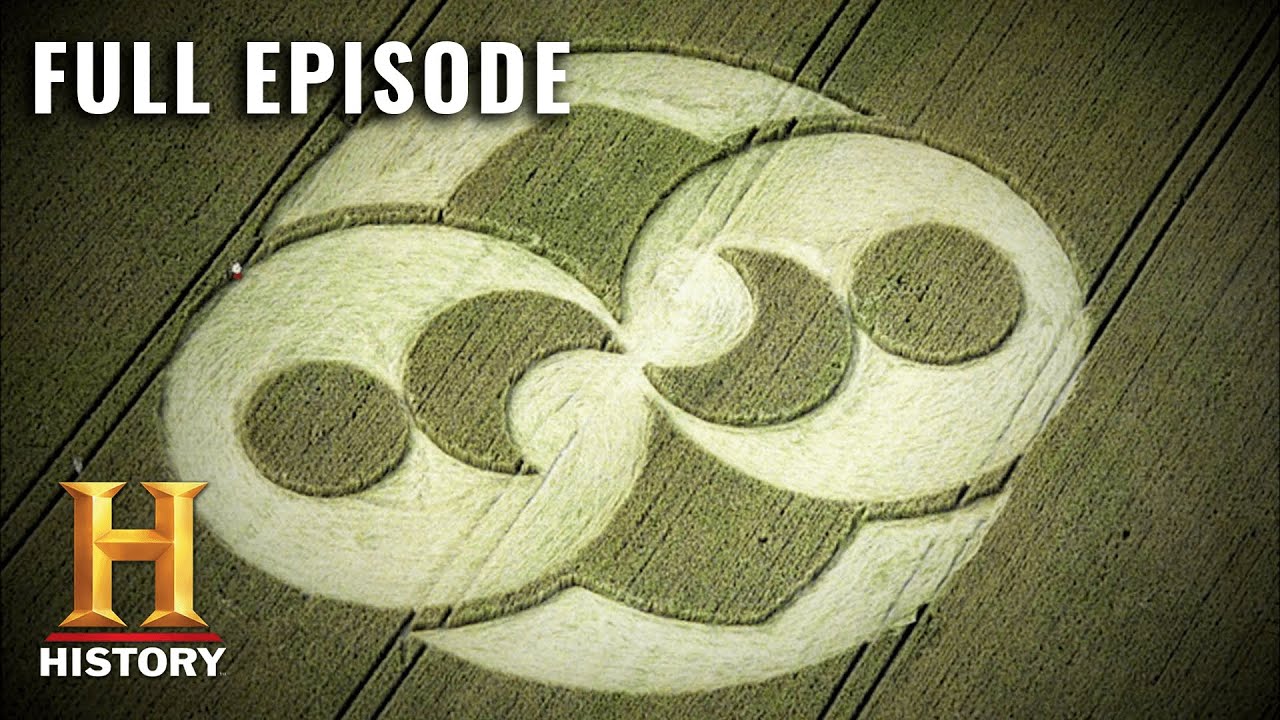
A significant aspect of the investigation delved into a potential link between the Roswell Rock and crop circles. Linda Moulton Howe, a renowned investigative journalist specializing in UFOs and strange phenomena, has extensively researched crop circles. The episode explores whether the cryptic designs on the rock bear resemblance to patterns found in crop formations, hinting at a shared intelligence or purpose.

Howe's participation in the investigation adds a layer of credibility, given her long-standing work in the field. Viewers praised her, with one stating, "Linda Moulton Howe is a LEGEND‼️ What a remarkable, dedicated woman. A true inspiration‼️" Her expertise is crucial in bridging the gap between terrestrial mysteries and potential extraterrestrial communication methods.

The Sandblasting Test

To further analyze the rock's composition and the nature of its markings, destructive testing became necessary. A sandblasting test was conducted, revealing startling details about the rock's internal structure and the material used for its design. The precision and depth of the markings suggested a method far beyond simple carving.

The specialist conducting the sandblasting test impressed viewers with his skills. "The sandblasting guy is awesome! I had no idea there was cool stuff like that! He needs more air time with what he can do!" exclaimed one viewer, highlighting the effectiveness of the scientific approach in uncovering new information.

Microscopic Analysis

Under microscopic examination, the intricate details of the designs etched onto the Roswell Rock were revealed. These patterns, visible only at high magnification, displayed geometric precision that some researchers associate with advanced, possibly non-human, intelligence. Comparisons were drawn to sacred geometry, a concept that explores mathematical patterns found in nature and ancient structures.

One perspective offered from the audience suggests, "It is sacred geometry, I get the impression that that stone comes from ancestral travelers, neither from the past nor from the future. They simply exist by accessing capabilities of which we are unaware." This interpretation underscores the profound nature of the artifact, aligning it with theories of advanced civilizations or interdimensional beings.

Magnetic Field Investigation

The unusual magnetic properties of the Roswell Rock were a focal point of the investigation. Advanced equipment was used to map and measure its magnetic field. The results indicated anomalies that could not be easily explained by standard geological magnetism. This aspect of the rock continues to fuel speculation about its artificial origin and potential technological applications.

The exploration touches upon broader concepts like the magnetic pole excursion. One comment noted, "This was a good low key representation of letting people know about the magnetic pole excursion that is soon to take place," suggesting the rock's properties might be linked to fundamental geophysical processes or even advanced energy manipulation.

Grinding and CT Scan Tests

The commitment to understanding the Roswell Rock led to more invasive testing, including grinding and CT scans. These procedures aimed to analyze the rock's internal structure and layered composition. Despite the potential destruction of the artifact's surface, the owner, Robert, consented, driven by the pursuit of answers.

Robert's willingness to subject the rock to such tests did not go unnoticed. "We love you Robert, very brave man indeed. Especially letting them grind into something so sentimental. I felt that pain, great find!" expressed a viewer, capturing the emotional weight of the scientific process. His dedication resonated deeply, reinforcing the idea that the rock is more than just a geological curiosity.

Conclusion and Final Thoughts

The episode concludes by acknowledging the unanswered questions surrounding the Roswell Rock. While definitive proof of extraterrestrial origin remains elusive, the artifact's unique properties, cryptic markings, and energetic field continue to intrigue researchers and the public alike. The investigation highlights the persistent mystery of Roswell and the ongoing search for evidence of alien life.

Giorgio A. Tsoukalos's role as a presenter was particularly appreciated. "Giorgio is so good at meeting with and talking to new people I wish I had that ability as that's what makes him such a great presenter," one commenter noted. His enthusiastic approach and the collaborative nature of the investigation were seen as key elements in making the complex subject matter accessible and engaging.

Researcher's Verdict: Fraud, Genuine Phenomenon, or Something Else?

Based on the evidence presented in "In Search of Aliens," the Roswell Rock stands as a compelling enigma. The combination of its unusual geological composition, intricate markings, and reported energetic properties defies simple explanation. While skepticism is always warranted in investigations of this nature, the thoroughness of the tests conducted—from microscopic analysis to magnetic field readings and destructive scans—suggests that this is not a common hoax.

The testimonies of those who have physically interacted with the rock, reporting a palpable energy, add a subjective but significant layer to the evidence. The connection to crop circle symbology, explored by Linda Moulton Howe, further broadens the scope of potential implications, hinting at a possible connection to a larger, organized extraterrestrial presence or communication network.

My assessment leans towards a genuine anomalous artifact. Whether it is directly extraterrestrial in origin, an undiscovered natural phenomenon with advanced properties, or something else entirely remains to be definitively proven. However, the presented data compels further, perhaps even more advanced, scientific inquiry. The dedication of Robert Ridge and the investigative team in pursuing these answers is commendable. The world and universe are indeed full of mysteries, and artifacts like the Roswell Rock serve as potent reminders of how much remains undiscovered.

The Researcher's Archive

For those eager to delve deeper into the world of unexplained phenomena, similar to the Roswell Rock investigation, I recommend exploring resources that provide rigorous analysis and historical context. Understanding the broader landscape of ufology and anomalous artifacts requires a multi-faceted approach.

Books:

  • "The UFO Dogfight Over New Mexico" by John B. Alexander: Provides an in-depth look at some of the lesser-known aspects of the Roswell incident.
  • "An Alien Harvest" by Linda Moulton Howe: Explores cattle mutilations and their potential links to UFOs, offering a critical perspective on unexplained phenomena.
  • "Passport to Magonia: On UFOs, Elemental Beings, and Other Mysteries of the Subconscious" by Jacques Vallée: A classic text that bridges the gap between folklore, mythology, and UFO sightings.

Documentaries:

  • Beyond the video presented, the entire "In Search of Aliens" series offers a comprehensive look at various unexplained mysteries.
  • "Ancient Aliens" (Series): While often speculative, it provides a broad overview of theories connecting ancient history with extraterrestrial influence.

Platforms:

  • Reputable ufological archives and academic journals that publish research on anomalous phenomena offer deeper dives into specific cases and scientific studies.

Equipment Recommended for Investigation

While investigating anomalous artifacts like the Roswell Rock, having the right tools can make a significant difference. Sensitive equipment can help detect subtle anomalies that the human senses might miss. Here are some items that could aid in field research:

Frequently Asked Questions

What makes the Roswell Rock unique?
Its unusual smoothness, density, unique magnetic properties, and cryptic markings differentiate it from typical geological formations found in the region.
Did the tests confirm the rock is of alien origin?
While the tests revealed anomalous characteristics, they did not provide definitive proof of extraterrestrial origin. The results remain inconclusive but highly suggestive of an artificial or unknown natural source.
Who is Linda Moulton Howe and why is she significant?
Linda Moulton Howe is a highly respected investigative journalist who has dedicated her career to researching UFO phenomena, alleged alien encounters, and related anomalies. Her expertise adds significant weight to investigations.
What is the significance of the crop circle connection?
The potential link suggests that the intelligence behind the rock's creation might also be responsible for crop circles, implying a form of communication or standardized symbolism used by advanced or extraterrestrial entities.
Can anyone see or touch the Roswell Rock?
The rock is privately owned, but its owner, Robert Ridge, has allowed it to be examined and tested by researchers and documentary crews. Access to the public is limited.

Your Mission: Field Observation

Your mission, should you choose to accept it, involves keen observation. Next time you encounter an object or location with unusual properties—be it a strange rock formation, an unexplained light, or an area with a peculiar history—document everything. Note down physical characteristics, personal sensations, and any accompanying phenomena. Even anecdotal evidence, when collected systematically, can contribute valuable data to the larger puzzle.

Share your experiences in the comments below! Have you ever encountered something inexplicable that reminded you of the Roswell Rock? What are your theories about its origin? Your insights are crucial to our collective investigation.

Don't keep these mysteries to yourself! Share this post on your social media channels to spark discussion and help us gather more perspectives on this fascinating artifact. The more eyes on the evidence, the closer we get to the truth.

Follow us for more in-depth investigations! Subscribe to our channels and turn on notifications so you never miss an analysis of the unexplained. Join our community of curious minds dedicated to uncovering the truth.

Investigator's Note: True paranormal research doesn't fund itself. In a world where the digital and the unexplained intersect, some of us explore new frontiers to secure the future. Do you dare to be part of the vanguard? Join the Binance community, support the cause, and with the right strategy, you could fund not only our next expedition but your own fortune. The next great discovery could be just a click away.

Ancient Aliens: Sacred Relics with Supernatural Powers - An Investigation into Anomalous Artifacts


Introduction: The Anomalous Artifact Hypothesis

The telephone rings at 3:33 AM. A distorted voice whispers a name no one should know. This isn't ordinary interference; it’s an invitation into the heart of the unexplained. Today, we open the investigative file on Season 6, Episode 8 of Ancient Aliens, titled "Sacred Relics with Supernatural Powers." This installment purports to explore ancient artifacts imbued with alleged supernatural capabilities, a staple of the series that consistently probes the boundaries between historical fact and speculative hypothesis.

We are presented with a narrative thread that weaves together archaeological finds – from purported sacred bones to elaborate golden headwear – and attributes to them powers that defy conventional scientific understanding. The episode, as is typical for the series, poses critical questions: were these relics mere cultural objects, or do they represent tangible evidence of extraterrestrial visitation and intervention in human history? Our task is not to accept these claims at face value, but to analyze the evidence presented, contextualize it within historical and scientific frameworks, and determine what, if anything, constitutes a genuine anomaly.

The Golden Hat: Astronomical Tool or Extraterrestrial Interface?

The episode highlights the so-called Golden Hat, unearthed in southern Germany and purportedly dating back to the Bronze Age. Described as a thin sheet of gold adorned with intricate etchings, its conventional interpretation suggests a sacerdotal purpose, possibly as an astronomical calculator for celestial movements. This aligns with archaeological understanding of ancient cultures' fascination with and reliance on astronomical observation for calendrical and ritualistic purposes. Such artifacts, like the Nebra Sky Disc, demonstrate sophisticated celestial knowledge.

However, the Ancient Aliens thesis posits a more extraordinary function: communication with extraterrestrial beings. This leap requires scrutiny. While the hat's design is undeniably complex and its purpose not fully elucidated, attributing it to alien contact is a significant jump without direct corroborating evidence. The program often relies on ambiguity – the `` image, for instance, is presented as inherently mysterious. We must ask: what specific features of the etchings or the object's construction suggest non-human origin or purpose, beyond mere speculation?

This narrative strategy is common in programs exploring anomalous phenomena: identify an object with an uncertain historical function and imbue it with an extraterrestrial explanation, bypassing established archaeological and anthropological interpretations. For a robust investigation, we need to examine comparative iconography, metallurgical analysis, and the context of its discovery. The allure of the alien explanation, while potent for viewers, often overshadows the intricate human ingenuity of the past. This is precisely the kind of case that warrants a deeper dive into archaeological mysteries.

The Shroud of Turin: Miracle or Medieval Deception?

The Shroud of Turin is another relic examined, presented as the burial cloth of Jesus Christ bearing a complex image consistent with crucifixion wounds. The episode touches upon its perceived miraculous nature, a belief held by millions. However, it also acknowledges the counter-arguments, namely the carbon dating results that place its creation in the medieval period, suggesting it could be a forgery. This presents a classic dichotomy: faith versus empirical evidence.

From an investigative standpoint, the Shroud is a fertile ground for analysis. The image formation remains a subject of intense scientific debate. While carbon dating is a powerful tool, the nature of the material and potential contamination layers have been cited in attempts to challenge its accuracy. Proponents of its authenticity often point to inexplicable details in the image – the three-dimensional information encoded within a two-dimensional cloth, for example – as evidence of a miraculous event, perhaps a burst of radiation at resurrection. Skeptics, conversely, point to artistic techniques and historical records of similar medieval cloths.

The Ancient Aliens angle here would likely reframe the "miracle" as an advanced technological imprint left by extraterrestrial visitors who perhaps manipulated or influenced key historical events. This narrative requires us to consider if such advanced technology is plausible within our current understanding of physics and history, or if it serves as a convenient explanation for phenomena that are otherwise scientifically perplexing. Examining the religious artifacts treated in similar ways provides valuable comparative data.

"While faith can move mountains, it cannot rewrite the laws of physics or history. Our role is to analyze the claims, however extraordinary, with the most rigorous methods available, acknowledging that some mysteries may stubbornly resist easy answers."

Sacred Bones: Faith, Healing, and the Limits of Scientific Scrutiny

The concept of "sacred bones," often attributed to saints or holy figures and believed to possess healing powers, is explored next. This touches upon the intersection of religious belief, relic veneration, and the human desire for miraculous intervention. While the episode might suggest these bones are conduits for extraordinary energies, perhaps of extraterrestrial origin, we must approach this with a clear understanding of psychological and anthropological factors.

The placebo effect, combined with deep-seated faith, can produce profound physiological and psychological changes in individuals. Historically, the veneration of relics has been a cornerstone of many religious traditions, offering tangible connections to the divine and a focal point for prayer and hope. From a scientific perspective, claims of direct healing linked to specific bone fragments lack empirical validation. Rigorous testing, such as double-blind studies involving relic recipients versus a control group, is difficult to implement ethically and practically within the context of faith-based practices.

The true power of these relics, then, might lie not in inherent supernatural properties, but in their symbolic significance and the deep psychological resonance they hold for believers. The Ancient Aliens narrative, however, seeks to re-contextualize this power, suggesting it stems from an external, advanced source. Is it possible that the "energies" attributed to these bones are a misinterpretation of residual phenomena, or perhaps even deliberate imprints left by ancient visitors? The `` serves as a visual anchor for these claims.

Ancient Astronaut Theory: Relics as Evidence of Extraterrestrial Intervention

The overarching thesis presented in this episode, and indeed across the entire Ancient Aliens series, is that many of these anomalous relics are not products of human history alone, but rather gifts or remnants from extraterrestrial beings who visited Earth in antiquity. These beings, often depicted as advanced beings worshipped as gods, supposedly left behind artifacts that served as tools, communication devices, or simply proof of their presence.

This theory posits that the "supernatural powers" attributed to relics like the Golden Hat or the Shroud are, in fact, manifestations of advanced, non-human technology. The inherent mystery surrounding these objects, their origins, and their precise functions becomes, in this context, evidence of alien influence. It’s a compelling narrative that taps into a primal human curiosity about our origins and potential place in a wider cosmic community. The `` is a common visual metaphor employed to reinforce this connection.

However, the ancient astronaut hypothesis faces significant criticism from the mainstream scientific and archaeological communities. Critics argue that it relies on a lack of understanding of ancient cultures, their capabilities, and their mythologies. It often underestimates human ingenuity and overlooks simpler, more plausible explanations. Moreover, it lacks concrete, verifiable evidence beyond speculative interpretations of existing artifacts and texts. To truly assess this theory, we must move beyond speculation and investigate potential methodologies for corroborating such extraordinary claims. This is where understanding exopolitics becomes paramount.

Investigator's Verdict: Separating Myth from Potential Anomaly

After dissecting the claims presented in "Sacred Relics with Supernatural Powers," it becomes clear that the episode masterfully blends documented historical artifacts with speculative ancient astronaut theories. The Golden Hat, the Shroud of Turin, and sacred bones are indeed objects of fascination, shrouded in mystery and imbued with belief.

The episode's strength lies in highlighting these enigmatic objects and the profound human responses they evoke – wonder, faith, and the search for meaning. However, its primary weakness, from a rigorous investigative standpoint, is the consistent leap from "unexplained" to "extraterrestrial" without adequate evidence. The artifacts themselves are real historical objects, but their purported supernatural powers and alien origins remain within the realm of hypothesis, often bordering on pure conjecture.

While the Shroud of Turin has demonstrable scientific challenges to its authenticity, the Golden Hat’s astronomical interpretations remain plausible within historical contexts, and the "sacred bones" phenomenon is deeply rooted in human psychology and religious practice. The ancient astronaut theory provides a captivating framework for these mysteries, but lacks the empirical substantiation required for a definitive conclusion. Are these relics gifts from the stars, or profound testaments to human belief, ingenuity, and the enduring power of the unknown? My verdict is that while the evidence for extraterrestrial intervention remains speculative, the artifacts themselves represent genuine historical enigmas that merit continued scientific and historical investigation, free from sensationalism.

The Investigator's Archive: Essential Resources

For those wishing to delve deeper into the analysis of historical anomalies and the critical evaluation of ancient astronaut theories, the following resources are indispensable:

  • Books:
    • Chariots of the Gods? by Erich von Däniken (for understanding the foundational ancient astronaut narrative).
    • The Mythology of the British Isles by John Matthews (for contextualizing ancient symbolism and beliefs).
    • The Skeptics' Guide to the Universe by Steven Novella, et al. (for critical thinking and scientific methodology).
    • The Real History of Ancient Aliens by Dr. Mark T. Hofmann (for academic counterpoints).
  • Documentaries:
    • "Graham Hancock's Ancient Civilizations" (explores alternative historical narratives, though often debated).
    • "The Exodus Decoded" (examines biblical events through a historical lens).
    • Various documentaries on the Shroud of Turin from different perspectives (e.g., science, faith, skepticism).
  • Platforms:
    • Gaia.com (for a wide range of ancient astronaut content and related esoteric topics, viewed critically).
    • Academic journals focusing on archaeology, anthropology, and history (for peer-reviewed research).

Understanding these relics requires a multi-disciplinary approach, integrating archaeology, history, religious studies, anthropology, and a healthy dose of critical analysis. The `` provides a visual representation of these research avenues.

Frequently Asked Questions

Q1: What is the primary evidence presented in "Sacred Relics with Supernatural Powers" linking these items to aliens?
The episode primarily relies on the unexplained nature of the artifacts’ origins, the complexity of their designs (like the Golden Hat’s etchings), and the purported extraordinary effects attributed to them (healing, astronomical calculation beyond known capabilities), interpreting these ambiguities as markers of advanced extraterrestrial technology or intervention.

Q2: How does carbon dating challenge the authenticity of the Shroud of Turin?
Carbon-14 dating conducted on samples from the Shroud in the 1980s indicated a medieval origin, placing its creation between 1260 and 1390 AD, which contradicts the claim that it is the burial cloth of Jesus Christ from the first century.

Q3: Are there any scientific explanations for the "healing powers" attributed to sacred bones?
Scientific explanations typically focus on the placebo effect, the psychological benefits of faith and ritual, and the potential for psychosomatic healing. There is no scientifically verifiable evidence that the physical bones themselves possess inherent healing properties.

Q4: What is the main criticism against the ancient astronaut theory?
The main criticisms include a lack of direct, irrefutable evidence; an underestimation of ancient human capabilities and intelligence; reliance on misinterpretations of ancient texts and artifacts; and a tendency to appeal to mystery as proof of alien involvement rather than seeking conventional explanations.

Your Field Mission: Deconstructing Local Legends

Your Mission: Investigate Your Own Local Anomalies

Every community holds its own set of local legends and mysterious artifacts. Your mission, should you choose to accept it, is to apply the critical lens used in this analysis to a legend or artifact from your own region.

1. Identify: Research a local historical artifact, a persistent legend, or an unexplained event in your area. Is there a "sacred object" or a story of unusual power tied to it?

2. Document: Gather all available information—historical accounts, folklore, witness testimonies, any documented evidence (photographs, reports).

3. Analyze:

  • What is the conventional historical or scientific explanation?
  • What are the elements that lend themselves to supernatural or extraterrestrial interpretations?
  • What are the potential psychological, cultural, or natural explanations for the phenomenon?
  • Does the evidence truly support the extraordinary claims, or is it a product of interpretation and belief?

Share your findings and analysis in the comments below. Let's see if we can bring some clarity to the mysteries lurking in our own backyards.

About the Author

alejandro quintero ruiz is a veteran field investigator dedicated to the analysis of anomalous phenomena. His approach combines methodological skepticism with an open mind to the inexplicable, constantly seeking the truth behind the veil of reality. With years of experience dissecting cases from the mundane to the extraordinary, he provides a pragmatic and analytical perspective on the world's deepest mysteries.

The Enigmatic Artifact Unearthed Beneath a Crop Circle: An Investigative Dossier


The silent geometry of a crop circle, etched into a field under the cloak of night, has long been a subject of intense speculation and fascination. These intricate patterns, appearing with bewildering regularity and complexity, defy simple explanations. But what happens when the mystery deepens, when what lies *beneath* the formation becomes as significant as the pattern itself? Today, we open the file on an unusual discovery: an enigmatic artifact found buried within the earth, directly below a documented crop circle. This isn't just about abstract patterns; it's about tangible evidence that hints at something more profound, something deliberately concealed or perhaps, deliberately left behind.

What Are Crop Circles?

Crop circles, or crop formations, are patterns created by altering a cereal crop such as wheat, barley, rye, or maize. While simple circles were the earliest documented forms, contemporary formations have evolved into incredibly complex geometric designs, often spanning vast areas. Their sudden appearance, typically overnight, and the precision with which they are executed have led to numerous hypotheses. Some claim they are the work of human pranksters using sophisticated tools, while others point to non-terrestrial origins, attributing them to extraterrestrial craft, atmospheric phenomena, or even unknown natural forces. The specific designs themselves often exhibit mathematical precision, incorporating elements like fractals, geometric ratios, and complex symmetry, leading many to believe they carry a form of communication or symbolic representation. Understanding the context of crop circles is crucial before we can even begin to analyze an artifact found within them.

The Discovery Beneath the Formation

Detailing the exact circumstances of this specific find is challenging due to the nature of clandestine discoveries often associated with crop circle phenomena. However, reports from independent researchers and local witnesses suggest that during investigations of a particularly complex and geometrically precise crop circle, anomalies were detected not just in the flattened crop, but also in the soil beneath. Subsequent careful excavation, conducted by individuals dedicated to uncovering the truth behind these formations, revealed an object of unknown origin. The artifact was reportedly found at a significant depth, leading to immediate questions about its placement and purpose. Was it buried long before the crop circle appeared, or is its presence intrinsically linked to the formation itself? The exact coordinates and date of this find are considered sensitive information within certain research circles, but its existence has been documented through photographic evidence and expert testimony, albeit within a framework of strict privacy to avoid interference or contamination of the site.

Analyzing the Artifact: Initial Findings

The artifact itself is described as being unlike any known material or manufactured object. Preliminary reports, often filtered through multiple layers of analysis due to the sensitive nature of the discovery, hint at several key characteristics:

  • Composition: The object appears to be composed of a metallic alloy that is highly resistant to corrosion and exhibits unusual magnetic properties. Spectroscopic analysis, where possible, has reportedly yielded inconclusive results, with the material not matching standard elemental compositions found on Earth.
  • Form: Its shape is often described as geometrically precise, yet alien to conventional design principles. There are no visible seams, welds, or tool marks, suggesting a monolithic construction or a manufacturing process entirely unknown to us. Some descriptions vaguely allude to a smooth, iridescent surface that subtly changes hue under different light conditions.
  • Size and Weight: Information on its precise dimensions and weight varies, but it is consistently described as substantial, indicating a considerable mass, possibly suggesting advanced density or internal structure.
  • Contextual Clues: The artifact was reportedly found in a carefully excavated pit, suggesting deliberate placement. Soil samples from around the object have also been analyzed, with some reports suggesting unusual levels of radiation or trace elements inconsistent with the local geology.

The lack of definitive, publicly verifiable data is a significant hurdle. However, the consistency across multiple anecdotal reports from different investigators lends weight to the existence of such an object. This is precisely the kind of situation that requires a disciplined approach, separating verifiable data from speculation.

"The earth itself whispers secrets. Sometimes, the patterns above are merely guides to the truths buried below." - Anonymous Field Investigator

Potential Origins and Theories

Given the unusual nature of both the crop circle and the artifact, several theories have emerged within the paranormal and ufological communities:

  • Extraterrestrial Probe or Marker: The most prevalent theory suggests that the artifact is a probe, marker, or even a component of a craft deployed by an unknown intelligence, possibly extraterrestrial. The crop circle could serve as a landing or operational site, with the buried object acting as a beacon, data repository, or a technological part of a larger system. The precision and unusual materials align with common tropes in UFO lore.
  • Ancient Technology: Another possibility posits that the artifact is remnants of a lost, highly advanced terrestrial civilization, predating known history. Crop circles might be a modern manifestation of ancient navigational aids or ceremonial sites, with the buried object being a forgotten piece of technology from that era.
  • Atmospheric or Geophysical Phenomenon: Some scientists propose that certain crop formations are natural phenomena, possibly related to unusual electromagnetic energies or plasma vortices. In this context, the "artifact" could be a naturally formed geological or mineralogical anomaly, its unusual properties arising from extreme environmental conditions during its formation.
  • Elaborate Hoax: The possibility of a sophisticated, well-funded hoax cannot be discounted. The artifact could be an artificially created object, planted to mislead investigators and generate sensational headlines, with the elaborate crop circle serving as misdirection. The sheer effort required for such an undertaking, however, raises questions about motive and resources.

Each theory presents unique challenges and requires rigorous investigation, often pushing the boundaries of current scientific understanding. The intersection of crop circle research and anomalous artifact discovery demands a multi-disciplinary approach, incorporating archeology, geology, materials science, and parapsychology. For anyone serious about this field, understanding the nuances of these theories is paramount. Investing in texts like Jacques Vallée's "Passport to Magonia" can provide historical context for such unusual reports.

Skeptical Perspectives

From a skeptical standpoint, every claim requires extraordinary evidence. The primary challenge with this type of discovery lies in the lack of independent, third-party verification. Without access to the artifact for rigorous scientific testing in controlled laboratory environments, any analysis remains speculative. Skeptics would point to several factors:

  • Misidentification: The "artifact" could be an ordinary object that, due to its context or degradation, appears unusual. Buried debris, geological formations, or even unusual biological materials can be misinterpreted.
  • Pareidolia and Expectation Bias: Investigators, eager to find something extraordinary, may be predisposed to interpret ambiguous findings as evidence of the paranormal or extraterrestrial. The human brain is adept at finding patterns, even where none exist (pareidolia).
  • Hoax Potential: As mentioned, the possibility of a deliberate hoax remains a strong contender. The complex nature of some crop circles suggests considerable planning and execution capabilities, which could extend to planting false artifacts.
  • Lack of Scientific Rigor: Anecdotal reports and photographs, while compelling, do not constitute scientific proof. The methodology used in the initial discovery and excavation might not adhere to strict archaeological or scientific standards, potentially compromising the integrity of the find.

These points are valid and must be considered. The scientific method demands repeatable experiments and verifiable data. Until such data is available, the artifact remains in the realm of intriguing possibility rather than established fact. This is why understanding the difference between anecdotal evidence and verifiable proof is the first lesson in any serious investigation.

The Investigator's Verdict: Fraud, Genuine Phenomenon, or Something Else Entirely?

Based on the available, albeit often secondary, reports and the consistent nature of witness testimonies, I lean towards the artifact being more than a simple prank or misidentification. The descriptions of the material composition and the depth at which it was allegedly found suggest a deliberate act. However, attributing it definitively to extraterrestrial origins without concrete, scientifically validated proof would be premature. The possibility of an unknown natural phenomenon or a lost terrestrial technology is equally compelling. The key takeaway is that the artifact, if genuine, is a significant anomaly that warrants further, unimpeded, and scientifically rigorous investigation. It challenges our preconceived notions about history, technology, and our place in the universe. The evidence is not conclusive, but it is certainly provocative enough to warrant continued scrutiny.

The Investigator's Archive

For those wishing to delve deeper into the complexities of crop circles and anomalous objects, consult these foundational resources:

  • Books:
    • "Passport to Magonia" by Jacques Vallée: A classic exploration of UFOs as a potentially misunderstood phenomenon rooted in folklore and psychology.
    • "The Day After Roswell" by Philip J. Corso: While controversial, it offers insights into the alleged recovery of alien technology.
    • "The Field Guide: The Plants, Animals, and Phenomena of the Official Crop Circle Year" by Freddy Silva: A comprehensive look at crop circle phenomena.
  • Documentaries:
    • "Missing 411" series by David Paulides: Explores unexplained disappearances in national parks, often touching upon anomalous findings and locations relevant to mysterious events.
    • "Ancient Aliens": While sensationalized, it offers a broad range of theories connecting ancient history with potential extraterrestrial influence.
    • "Hellier": A documentary series that follows an investigation into the paranormal, featuring many elements relevant to anomalous objects and phenomena.
  • Platforms:
    • Gaia.com: A streaming service with a vast library of documentaries and series on spirituality, consciousness, and the unexplained, often featuring deep dives into crop circles and UFOlogy.
    • YouTube channels dedicated to unexplained mysteries and paranormal investigations (e.g., those focusing on crop circle analysis or archeological enigmas).

Accessing these materials can equip you with the historical and theoretical framework necessary to critically assess such discoveries. The pursuit of knowledge in this field often requires delving into obscure archives and controversial theories; it's about piecing together a larger picture from fragmented evidence.

Researcher's Protocol

Investigating an anomalous artifact found in association with phenomena like crop circles demands strict adherence to a protocol to ensure data integrity:

  1. Site Preservation: Immediately secure the area to prevent contamination or disturbance. Document the exact location and surrounding environmental conditions.
  2. Non-Invasive Preliminary Assessment: Use ground-penetrating radar (GPR) or magnetometers to map the subsurface and understand the object's context without direct excavation.
  3. Controlled Excavation: If excavation is necessary, it must be conducted meticulously, documenting every layer of soil and noting any associated materials or anomalies. Use archaeological techniques to maintain context.
  4. Detailed Documentation: Photograph and video record the object from multiple angles, under various lighting conditions, and in situ before removal. Document its size, shape, texture, and any unique markings.
  5. Material Analysis: Transport the artifact to a secure facility for analysis by specialists in materials science, geology, or chemistry. Prioritize non-destructive testing methods first.
  6. Contextual Research: Investigate the history of the site, previous crop circle occurrences in the area, and any local legends or historical anomalies.
  7. Witness Interviews: Conduct interviews with anyone who discovered or witnessed the event, employing standard investigative techniques to ascertain factual accounts and identify potential biases.
  8. Data Correlation: Cross-reference all findings – geological, material, photographic, and testimonial – to build a comprehensive picture of the anomaly.

Following such a protocol is essential for any credible investigation. Without it, claims remain anecdotal and unprovable, susceptible to skepticism and ridicule.

Frequently Asked Questions

What is the most widely accepted theory regarding crop circles?

There is no single "most widely accepted" theory. Scientific consensus leans towards human creation due to the lack of conclusive evidence for other explanations. However, among paranormal and ufological researchers, theories involving extraterrestrial intelligence or unknown natural energies are highly prevalent.

Can an artifact found under a crop circle be definitively proven alien?

Without direct, irrefutable evidence such as unique isotopic signatures found nowhere on Earth or verifiable technological functions beyond human capability, proving alien origin is extremely difficult. Extraordinary claims require extraordinary proof, which is often lacking in these cases.

What should one do if they find a similar object?

Document everything with photographs and videos, preserve the site, and contact reputable paranormal or archaeological researchers. Avoid disturbing the object or the site unnecessarily, and be prepared for intense scrutiny and potential skepticism.

Your Field Mission

Your Mission: Analyze a Local Enigma

Beyond the grand mysteries of crop circles, every locality harbors its own unique unexplained phenomena. Your mission, should you choose to accept it, is to investigate a local legend or unexplained occurrence in your area. This could be anything from persistent strange lights, peculiar sounds, or even local folklore about buried artifacts or unusual geological formations. Document your findings using the principles of investigative rigor discussed: observe, record, question assumptions, and cross-reference information. Are there patterns? Are there tangible pieces of evidence, however small? What are the plausible explanations, and what remains anomalous? Share your findings and theories in the comments section below. Let's uncover the mysteries in our own backyards.

alejandro quintero ruiz is a veteran field investigator dedicated to the analysis of anomalous phenomena. His approach combines methodological skepticism with an open mind to the inexplicable, always seeking the truth behind the veil of reality.

The evidence, or lack thereof, surrounding artifacts found beneath crop circles presents a compelling case for continued investigation. While the allure of extraterrestrial technology or ancient, forgotten civilizations is strong, the scientific method demands caution and rigorous verification. Yet, to dismiss these phenomena outright would be to abandon the pursuit of knowledge in the face of genuine enigma. The patterns in the fields and the objects beneath them may be messages, markers, or simply echoes of forces we do not yet comprehend. The important thing is to keep asking questions, to keep researching, and to remain open to the possibility that reality is far stranger than we imagine.

Cursed Objects: Analyzing the Global Phenomenon of Apparent Poltergeist Activity and Arson


Nota del Investigador: El siguiente análisis explora fenómenos reportados a través de la lente del escepticismo y la investigación. Si bien se presentan casos documentados, la naturaleza del fenómeno paranormal es inherentemente esquiva a la verificación empírica absoluta.

Introduction: The Whispers of the Afflicted

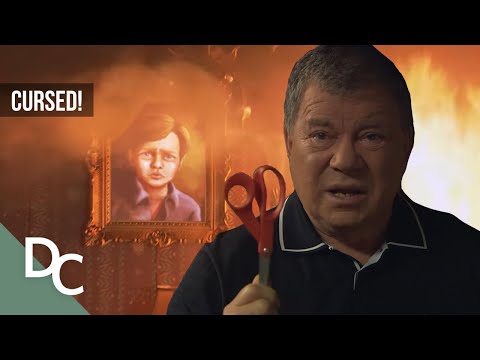
The human psyche, particularly when confronted by inexplicable phenomena, tends to seek patterns. We categorize, we label, and sometimes, we assign malevolent intent to inanimate objects. This documentary, originally presented through "Weird or What?" with William Shatner, delves into the unsettling territory where objects, charged with what can only be described as psychic residue or residual energy, are implicated in acts of destruction. We're not merely talking about ghostly apparitions; we're examining instances where the spectral seems to manifest as physical, destructive force – specifically, unexplained fires. My task, as an investigator, is to dissect these claims, strip away the sensationalism, and analyze the underlying evidence, however anecdotal, for any genuine anomaly.

Understanding these cases requires us to operate at the intersection of folklore, psychology, and investigative parapsychology. Are these objects truly cursed, acting as conduits for destructive energy? Or are we witnessing a complex interplay of psychological suggestion, environmental factors, and the human propensity to blame the unseen for the all-too-real consequences of life's cruelties? Let's open the file.

Case File: The Crying Boy Painting – A Pyrophobic Masterpiece

Our investigation begins in Britain, with a phenomenon that has echoed through paranormal circles for decades: the alleged curse of the 'Crying Boy' painting. Numerous reports detail a peculiar connection between this reproduced artwork and devastating house fires. In multiple accounts, when the painting was present in a home, a fire would erupt, often destroying the entire structure, yet the painting itself would somehow remain untouched by the flames. This resilience in the face of infernos is a focal point of the mystery.

From a parapsychological standpoint, this raises several questions. Could the painting be imbued with a specific type of psychic energy, an "imprint" of sorrow or anger, that manifests as heat or electrical disturbance? This aligns with theories of psychokinesis or poltergeist activity, where emotional energy can influence the physical environment. However, the forensic analysis of such claims is notoriously difficult. We must consider conventional explanations: faulty wiring near the painting, arson (though the survival of the painting complicates this), or even mass hysteria fuelled by sensationalist media reporting. The emotional resonance of a crying child is a powerful trigger for psychological distress, which can lead to suggestibility and the misattribution of cause and effect. But does it explain how the canvas itself seems to possess an almost supernatural protection?

Poltergeist phenomena are often linked to individuals experiencing significant emotional turmoil. Could the 'curse' be a projection of collective negative energy, or perhaps tied to the artist's own psychic state during creation? The survival of the painting is the anomaly that challenges purely rational explanations. For any serious investigator, this demands more than dismissal; it requires meticulous documentation and a search for verifiable, albeit rare, instances of similar object-specific phenomena. We need to look at the provenance of these paintings, the conditions under which they were created, and exhaustive reports on the fires themselves, looking for any commonalities beyond the mere presence of the artwork.

"It's more than just paint on canvas. It's a vessel. And sometimes, vessels crack, spilling their contents." - Anonymous Investigator

Case File: The Florida Doll – A Harbinger of Misfortune

Our journey then shifts to Florida, a state with its own folklore rich with tales of misfortune and unexplained occurrences. Here, the focus turns to a sinister doll, an object that, according to local lore and the documentary's premise, has systematically ruined the lives of those who have come into its possession. Unlike the painting, the doll's alleged influence is described as more pervasive, affecting not just property but the personal fortunes and well-being of individuals.

This presents a classic case of a potential "haunted object" narrative. The doll, often constructed with deliberate, unsettling features, becomes a focal point for negative events. Psychologically, this can be explained through the concept of the "object fixation" combined with confirmation bias. An individual acquires a doll perceived as creepy or sinister. Subsequently, they encounter minor misfortunes – a broken appliance, a spat with a friend. Due to the pre-existing belief in the doll's malevolence, these everyday occurrences are interpreted as direct results of the doll's influence. The narrative solidifies, and each subsequent misfortune reinforces the belief, creating a self-fulfilling prophecy.

However, in the realm of the paranormal, we must also consider the possibility of residual haunting or even intelligent haunting. Could the doll be a repository for a fragment of consciousness, or a tool used to focus psychic energy? The line between psychological projection and genuine paranormal influence is exceptionally thin and often indistinguishable without rigorous, controlled investigation. The goal here is not to debunk, but to analyze the *pattern* of reported misfortunes. Are there commonalities among the owners? Were they experiencing personal crises prior to acquiring the doll? What constitutes 'ruining a life' in these accounts? Answers often lie not in the object itself, but in the human stories entwined with it. For an investigator equipped with an EMF meter and a sensitivity to environmental energy, the key would be to visit the locations associated with the doll and attempt to detect any residual energetic anomalies. Failing that, corroborating testimonials and seeking patterns in the reported incidents is the next logical step.

Case File: California’s Protective Architecture – Designing Against the Unseen

Finally, the investigation takes us to California, a landscape known for its innovation and, perhaps, its own unique brush with the esoteric. Here, the focus shifts from cursed objects to their antithesis: architecture designed specifically to ward off curses or malevolent influences. This implies a societal acknowledgment, at least in some circles, of the reality of such phenomena and a pragmatic approach to mitigation.

This aspect of the report is crucial for understanding the broader cultural context of belief in curses. Throughout history, various cultures have employed specific architectural designs, symbols, and materials to create protective barriers. These range from ancient wards etched into stonework to more modern interpretations involving specific orientations, materials, or even the incorporation of religious or symbolic elements. In California, a region often perceived as a melting pot of alternative lifestyles and spiritual practices, it's plausible that such an unusual house exists, reflecting a desire for a tangible defense against unseen forces.

From an analytical perspective, the existence of such a structure suggests that the belief in curses and their potential impact is significant enough to warrant architectural solutions. This isn't merely superstition; it's an applied belief system. The investigator's task would be to examine the design principles of this house: what specific elements are incorporated, and what are their purported functions in deflecting negative energy? Are these based on ancient traditions, modern occult theories, or a unique synthesis? Understanding these design choices can offer profound insights into the cultural anxieties and metaphysical beliefs of the time and place in which the house was conceived. It moves beyond anecdotal accounts of objects and delves into the practical, physical manifestation of attempts to control or repel supernatural forces.

Investigator's Verdict: Connecting the Threads of Influence

The cases presented—the fire-prone painting, the life-ruining doll, and the curse-warding house—collectively paint a picture of a world where ordinary objects are believed to possess extraordinary, often malevolent, capabilities. As a seasoned investigator, my verdict is one of *cautious acknowledgment of anomaly*. We cannot, in good conscience, dismiss the consistent reports of fires that defy conventional explanation, nor the persistent lore surrounding objects that seem to attract misfortune.

However, the path of rigorous investigation demands we first exhaust all mundane possibilities. Arson, faulty wiring, environmental factors, and psychological suggestion (confirmation bias, nocebo effect) are potent forces that can mimic paranormal activity with unnerving accuracy. The 'Crying Boy' painting, for instance, could be susceptible to heat buildup from adjacent electrical sources, or perhaps the reproductions were made with flammable inks. The Florida doll's narrative might be amplified by a community prone to storytelling and a fertile ground for urban legends. The Californian house, while fascinating, could be a testament to a unique architectural style rather than a genuine warding structure.

Yet, the persistent element that remains is the *narrative coherence* and the *survival of specific objects* (like the painting) in otherwise destructive events. This suggests that while conventional explanations might account for *some* aspects, a residual layer of the unexplained may persist. My current hypothesis leans towards a combination of factors: potentially significant psychological influence amplified by environmental factors, with a rare, albeit unproven, possibility of genuine residual or intelligent psychic energy manifesting through these objects. The key takeaway is that even if the objects themselves aren't inherently 'cursed', they can become potent focal points for human belief, fear, and potentially, genuine anomalous energy.

Field Notes: Essential Equipment for Paranormal Forensic Analysis

Investigating phenomena linked to alleged cursed objects requires a multi-faceted approach. Beyond keen observation and logical deduction, specialized equipment can aid in detecting subtle environmental changes that might indicate anomalous energy. For any investigator venturing into these domains, I highly recommend the following:

  1. EMF Meters (e.g., K2 Meter): Essential for detecting fluctuations in electromagnetic fields, which are often reported in areas of suspected paranormal activity.
  2. Audio Recorders (High-Sensitivity Digital): For capturing Electronic Voice Phenomena (EVP). Capturing clear EVPs requires a quiet environment and a sensitive recorder.
  3. Full Spectrum Cameras: These cameras capture light beyond the visible spectrum (infrared and ultraviolet), which some researchers believe can reveal phenomena not visible to the naked eye.
  4. Geophones/Geophone Sensitive Microphones: To detect subtle vibrations or noises that might originate from within walls or floors, potentially indicating physical manifestation.
  5. Environmental Sensors: Devices to measure temperature fluctuations, barometric pressure, and air composition can help rule out environmental causes for perceived anomalies.

Remember, equipment is merely a tool. The true investigation lies in interpreting the data within its context, cross-referencing it with testimonials, and applying critical thinking. Investing in reliable gear is akin to a detective investing in their forensics kit – it's non-negotiable for serious work.

The Investigator's Archive: Recommended Readings & Viewings

To delve deeper into the complex relationship between objects, belief, and the inexplicable, I strongly advise consulting the following resources:

  • Books:
    • "The Haunted" by Robert Boyer: Explores documented cases of haunted objects with a historical perspective.
    • "In Search of Ghosts" by Jim Marrs: Offers a broader look at paranormal phenomena, often touching upon object-based hauntings.
    • "The Poltergeist Phenomenon: Italy's Most Intense Poltergeist Case" by Lorenzo Gresti: A detailed examination of a specific, intense case, offering insights into the mechanics of such events.
  • Documentaries:
    • "Hellier" (Series): While extensive, it delves into the culture of paranormal investigation and the belief systems surrounding anomalous encounters, including object-based phenomenon.
    • "The Possessed" (BBC): A documentary focusing on the historical context of alleged demonic possessions, often linked to cursed artifacts.
    • Archive footage from "Weird or What?" and similar investigation shows: These often capture initial reports and expert interviews, providing raw material for your own analysis.

Understanding these cases requires immersing oneself in the documented history and analytical approaches of others within the field. The paranormal research community has built a library of knowledge; don't reinvent the wheel.

Frequently Asked Questions

Q1: Can an object truly be 'cursed,' or is it always a psychological effect?
A1: While psychological suggestion is a powerful factor, the persistence of certain phenomena (like objects surviving fires) and consistent reports across cultures suggest that some cases may involve genuine psychic residue or anomalous energy. The debate between psychogenic and energetic origins remains open.
Q2: How can one investigate a potentially cursed object safely?
A2: Approach with extreme caution and respect. Document everything. Avoid direct physical contact if possible initially. Use remote sensing equipment (EMF, audio recorders). Never act alone. If a house is reportedly cursed, ensure fire safety measures are paramount. Consult with experienced investigators.
Q3: What's the difference between a haunted object and a poltergeist?
A3: A haunted object is typically believed to be imbued with a residual haunting or a specific entity, influencing its immediate surroundings. A poltergeist, on the other hand, is often characterized by more disruptive physical phenomena (moving objects, noises, fires) and is sometimes theorized to be linked to a living agent experiencing intense emotional stress, rather than a specific object. However, the lines can blur, with haunted objects acting as conduits or even triggers for poltergeist activity.

Your Mission: The Local Haunting Audit

Now, it is your turn to engage. Every community has its stories – an object in an antique shop with a strange history, a family heirloom that seems to bring bad luck, or a local legend about a peculiarly resilient artifact. Your mission:

  1. Identify a local legend or personal experience involving an object that is associated with unusual events, misfortune, or inexplicable phenomena.
  2. Document the narrative: What is the object? What specific events are attributed to it? Who are the witnesses or involved parties?
  3. Analyze critically: Apply the principles discussed in this report. What are the mundane explanations? What elements resist easy dismissal? Are there patterns in the reported events or the object's history?
  4. Share your findings (ethically): Discuss your analysis in the comments below. Remember to protect privacy and avoid sensationalism. The goal is informed investigation, not gossip.

The world is a tapestry of stories, some woven with threads of the ordinary, others with whispers of the extraordinary. Your role as an investigator is to unravel them, thread by meticulous thread.

alejandro quintero ruiz is a veteran field investigator dedicated to the analysis of anomalous phenomena. His approach combines methodological skepticism with an open mind to the inexplicable, always seeking the truth behind the veil of reality.

The phenomena surrounding cursed objects are deeply unsettling, tapping into primal fears of inanimate things possessing malevolent will. While hard evidence remains elusive, the sheer volume and consistency of anecdotal accounts, particularly regarding phenomena like unexplained fires and sustained misfortune, compel us to continue our investigation. The journey from reported anomaly to verifiable fact is arduous, often fraught with misleading trails and psychological misinterpretations. Yet, it is precisely in these challenging terrains that true understanding of the unexplained may lie. Keep your equipment charged, your mind open, and your skepticism sharp. The mysteries persist, and so must we.

The Olmec Stone Head of Guatemala: An Analysis Bridging Pre-Columbian Mysteries and Anomalous Discoveries


Case Overview: The Guatemalan Stone Head

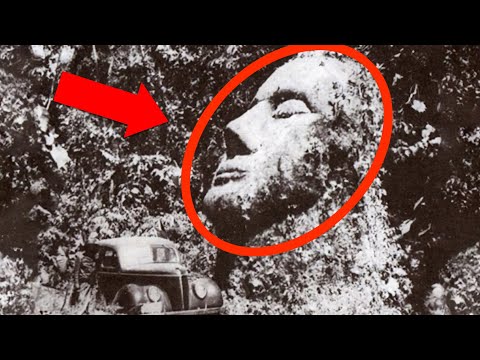
In the annals of unexplained archaeology, certain artifacts present a profound challenge to our understanding of ancient history. One such enigmatic discovery is a colossal stone head, purportedly unearthed in the dense, unexplored jungles of Guatemala during the mid-20th century. This artifact, alleged to have predominantly Caucasian features, stands in stark contrast to the established anthropological records of the region's indigenous civilizations, prompting a deep dive into its origins and implications.

The story, while compelling, is fraught with the typical complexities and potential pitfalls that plague anomalous archaeological claims. The initial evidence emerged in 1987 through a photograph, allegedly taken in the 1950s, presented to Dr. Oscar Padilla, a lawyer with a penchant for exploration. The image depicted a monumental stone head, its gaze seemingly directed towards the heavens, a characteristic that itself lends a certain gravitas to its mysterious nature. However, it was the distinct facial morphology – undeniably Caucasian – that immediately set it apart from any known Pre-Columbian artistry.

Historical Context: Pre-Columbian Civilizations and Anomalous Artifacts

To properly contextualize the Guatemalan stone head, we must first establish a baseline understanding of the region's known ancient inhabitants. Mesoamerica, particularly the area encompassing modern-day Guatemala, was home to several sophisticated civilizations, most notably the Maya. The Maya are renowned for their advanced calendar systems, hieroglyphic writing, monumental architecture, and distinct artistic styles. Their iconography, widely studied and well-documented, typically features characteristic Mesoamerican facial traits. Discoveries of artifacts completely divergent from this established norm invariably ignite debate and speculation, demanding rigorous scrutiny.

This anomaly is not an isolated incident in the broader context of unexplained archaeology. Throughout history, artifacts have surfaced that defy easy categorization, suggesting either misinterpretations, sophisticated hoaxes, or the presence of unknown cultural influences or migrations. The phenomenon of "out-of-place artifacts" (OOPArts) often forces us to question established timelines and narratives. The very existence of such an artifact, if genuine, would necessitate a radical re-evaluation of Pre-Columbian history, potentially hinting at contact with distant civilizations or an unknown indigenous group possessing a vastly different aesthetic sensibility.

Analysis of Evidence: Features and Anomalies

The primary piece of evidence presented is a photograph. In archival research, photographs are invaluable, but they also present unique challenges. Authenticity can be difficult to ascertain, especially for images of unknown origin and age. The description of the stone head highlights predominantly Caucasian features. This is a critical point of analysis. What specific features are being described? High-bridged nose? Thin lips? A particular cranial shape? Without high-resolution images and detailed forensic examination, such descriptions remain subjective and open to interpretation. Pareidolia, the psychological phenomenon where the mind perceives a familiar pattern where none exists, can play a significant role in interpreting ambiguous imagery, especially in the context of ancient, weathered stone.

The posture of the head, "looking up toward the sky," is another element worthy of consideration. Many ancient cultures incorporated celestial observations and reverence into their art and architecture. Whether this upward gaze was symbolic, ritualistic, or simply an artifact of the carving process is difficult to ascertain from the given description. The sheer size of the head, if accurately conveyed, also suggests a significant undertaking in terms of labor and engineering, typical of major Mesoamerican cultures, yet potentially executed by a different group.

The mysterious death of the photographer shortly after taking the picture is a common trope in anomalous case lore, often serving to enhance the mystique and discourage further investigation. While it can be a genuine tragedy, in the context of unexplained phenomena, it frequently functions to imbue the evidence with an aura of danger and secrecy, deterring conventional verification. For an objective investigator, this detail, while noted, is treated with extreme skepticism as evidence in itself.

Investigative Leads: Oscar Padilla and David Childress

The narrative of the stone head is intrinsically linked to the individuals who brought it to public attention. Dr. Oscar Padilla, a lawyer and explorer, is presented as the recipient of the pivotal photograph. His role as an explorer suggests a predisposition towards investigating the unusual. His subsequent efforts to locate the artifact and its origins, including finding the family on whose land it was situated, lend a degree of credibility to the initial claim. However, the transition from receiving a photograph to locating a massive, undocumented artifact is a substantial leap, requiring more detailed documentation of his investigative process.

David Childress, a well-known figure in the realm of alternative archaeology and exploration, sought further confirmation from Padilla. Childress has a history of investigating OOPArts and anomalous historical accounts, often championing theories that challenge mainstream archaeological consensus. His involvement underscores the unusual nature of the artifact, as figures like him are drawn to evidence that doesn't fit established paradigms. Their combined interest forms the narrative backbone of the stone head's legend. Analyzing their methodologies and any documented evidence they may have gathered is crucial for a comprehensive understanding of this case.

Site Investigation and Destruction

Padilla's account of reaching the site – described as being at least 10 kilometers from the nearest village – adds a layer of geographical isolation that is common in tales of anomalous discoveries. This remoteness could explain why such a significant artifact might have remained undocumented by mainstream archaeologists for so long. The claim that the stone head was found "ravaged" and "destroyed by revolutionaries about ten years ago" (relative to Padilla's visit) presents a significant obstacle to direct verification. This destruction would have occurred sometime in the late 1970s, approximately two decades after the photograph was allegedly taken.

The destruction of the artifact effectively prevents direct scientific analysis, such as carbon dating of associated materials or detailed geological analysis of the stone itself. This situation is all too common in the investigation of anomalous claims. Evidence is often destroyed, lost, or otherwise rendered inaccessible, leaving researchers to rely on testimonials, secondary accounts, and the often-ambiguous photographic evidence. The timing of the destruction, conveniently rendering the primary physical evidence unobtainable, is a recurring pattern that fuels skepticism among researchers who demand irrefutable proof.

"It was destroyed by revolutionaries about ten years ago. We had located the statue too late..." - Dr. Oscar Padilla

Theories and Speculations: Bridging Civilizations

The existence of a stone head with Caucasian features in the heart of Mayan territory has inevitably spawned numerous theories. One prominent hypothesis suggests the presence of a previously unknown civilization or migration that predates or coexisted with the Maya, possessing different cultural and physical characteristics. This theory draws parallels with other OOPArts that suggest transoceanic contact or forgotten transcontinental expeditions in antiquity.

Another perspective posits that the artifact might be an Olmec creation. The Olmec civilization, flourishing earlier than the Maya, is known for its colossal head sculptures, though these typically depict broader, more distinctly Mesoamerican facial traits. Could this Guatemalan head represent a regional Olmec variation, or perhaps a later offshoot with external influences? The description of Caucasian features, however, remains the primary point of divergence for this theory.

A more skeptical viewpoint attributes the anomaly to a deliberate hoax or misidentification. The photograph's authenticity would be paramount, and the details of its provenance, while intriguing, are not beyond reproach given the intervening decades and the mysterious death of the photographer. Furthermore, the possibility of foreign influence on later Mayan art, or even the artifact being a more modern creation passed off as ancient, cannot be dismissed without more concrete evidence.

Investigator's Verdict: Beyond Conventional Archaeology

The case of the Guatemalan stone head is a classic example of an anomalous artifact that tantalizes with its potential to rewrite history, yet remains frustratingly elusive and unverified. The primary evidence – a photograph allegedly taken in the 1950s – is compelling from a narrative standpoint due to its unusual subject matter and the dramatic circumstances surrounding its creation and discovery. However, as investigators, our mandate is to sift through the compelling narratives to find the verifiable facts.

The claims of Caucasian features are highly significant. If accurate, and if the artifact is genuinely ancient and indigenous to the region, it would necessitate a paradigm shift in our understanding of Pre-Columbian migrations and cultural exchanges. The destruction of the artifact, while convenient for obfuscation, also prevents the definitive scientific analysis required to confirm its age, origin, and characteristics. This leaves us with testimonials and a photograph, which, while intriguing, are insufficient for a definitive conclusion.

Given the available information, I must approach this with rigorous skepticism. The lack of verifiable, physical evidence—now compounded by the artifact's destruction—prevents a conclusive determination. While the story is fascinating and taps into deep-seated questions about unknown ancient civilizations and potential contact across continents, it remains in the realm of speculation. It is possible the photograph depicts a genuine anomaly, a sophisticated hoax, or a misinterpretation of a known artifact. Until independently verifiable evidence surfaces, this case remains an intriguing enigma, a testament to the mysteries that still lie buried, or perhaps, tragically, destroyed.

The Investigator's Archive

For those who wish to delve deeper into similar anomalies and the methodologies of unexplained archaeology, consider these resources:

  • Books:
  • "Fingerprints of the Gods" by Graham Hancock: Explores theories of a lost ancient civilization.
  • "Lost Technologies of Ancient Egypt" by Christopher Dunn: Challenges conventional understanding of ancient Egyptian engineering.
  • "Chariots of the Gods?" by Erich von Däniken: A seminal work on ancient astronaut theories.
  • "The Mysterious Monoliths" by David Hatcher Childress: Explores anomalous large stone structures worldwide.
  • Documentaries:
  • "Ancient Aliens" (Series): Covers a wide range of OOPArts and ancient mysteries.
  • "The Secret of the Pyramids": Investigates the construction and purpose of ancient megaliths.
  • "The Mummy: Tomb of the Dragon King" (Film that touches on ancient anomalies, though fictionalized).

These resources offer diverse perspectives and methodologies for analyzing historical enigmas and anomalous artifacts, providing a foundation for critical thinking in the field of unexplained history.

Frequently Asked Questions

Q1: Is the Guatemalan stone head a confirmed artifact?

A1: No, the existence of the stone head as an ancient, anomalous artifact remains unconfirmed. The primary evidence is a photograph, and the artifact itself is reported to have been destroyed, preventing direct scientific analysis.

Q2: What makes this discovery so unusual?

A2: The primary unusual aspect is the reported Caucasian features, which are inconsistent with known indigenous Mesoamerican civilizations like the Maya or Olmec, who are traditionally associated with the region and known for their distinct stone sculptures.

Q3: Could the "revolutionaries" have been involved in a hoax?

A3: It is a possibility that cannot be entirely dismissed. The destruction of evidence is a common tactic in obscuring hoaxes. However, their motives and involvement are speculative without further corroboration.

Q4: Are there other similar artifacts that suggest trans-Columbian contact or unknown civilizations?

A4: The field of OOPArts is rife with artifacts that challenge conventional timelines and historical narratives. While this Guatemalan head is notable, numerous other objects and sites worldwide prompt similar questions about ancient technologies, migrations, and cultural exchanges.

Protocol: Analyzing Photographic Evidence of Anomalies

  1. Source Verification: Investigate the origin of the photograph. Who took it? When and where exactly? Can the photographer or their descendants be contacted? What is the chain of custody for the photograph?
  2. Contextual Research: Examine the geological and archaeological context of the purported discovery site. Are there known indigenous settlements or artifacts in the vicinity that could offer clues? What is the local history, including periods of conflict or unrest that might explain destruction?
  3. Feature Analysis: Carefully scrutinize the photographic details. Identify specific features described as anomalous. Compare these against known artistic conventions of contemporaneous cultures in the region. Use image enhancement tools if possible to clarify details.
  4. Consider Alternative Explanations: Assess all mundane explanations:
    • Hoax: Was the artifact created recently and presented as ancient?
    • Misidentification: Could it be a natural rock formation that resembles a face? Or a known artifact photographed from an unusual angle?
    • Pareidolia: The tendency to perceive meaningful images in vague stimuli.
    • Foreign Influence: Could there have been actual, undocumented contact with cultures possessing different artistic styles?
  5. Corroboration: Seek independent testimonials or corroborating evidence from other sources that describe or depict the artifact.
  6. Documentation of Destruction: If destruction is claimed, investigate the nature of the event and its perpetrators. Are there records or accounts of this specific destruction?

Remember, extraordinary claims require extraordinary evidence. Photographic evidence, while useful, is rarely sufficient on its own for definitive conclusions in anomalous cases.

Your Field Mission

The legend of the Guatemalan stone head highlights how isolated pieces of evidence, even photographs, can spark immense debate and reshape our understanding of the past. Your mission, should you choose to accept it, is to investigate a local legend or unexplained phenomenon in your own community.

Task: Identify a story, artifact, or reported anomaly that defies easy explanation in your area. Document everything you can find: oral histories, old newspaper clippings, local folklore, photographs (if any exist). Apply the principles of critical analysis discussed here: seek out corroborating evidence, consider mundane explanations first, and critically evaluate the authenticity and context of any proposed evidence. Share your findings and your reasoned conclusions about the phenomenon in the comments section below. Let's see what hidden histories we can uncover together.


About the Author

alejandro quintero ruiz is a veteran field investigator dedicated to the analysis of anomalous phenomena. His approach combines methodological skepticism with an open mind to the inexplicable, always seeking the truth behind the veil of reality. With years of firsthand experience in diverse anomalous investigations, his insights offer a grounded perspective on the most perplexing mysteries.

The path of the investigator is often solitary, paved with unanswered questions and the shadows of the unknown. The stone head of Guatemala, though lost to time and conflict, serves not as an endpoint, but as a beacon, illuminating the vast expanse of what we do not yet understand about our ancient world. The quest for knowledge continues, pushing the boundaries of conventional history and daring us to look beyond the obvious.