Followers

Mostrando las entradas con la etiqueta debunked. Mostrar todas las entradas

Larry King Live: Deconstructing the Roswell UFO Crash - A Critical Analysis

Image

The Roswell incident of 1947 remains one of the most debated events in modern ufology. On July 1, 1991, CNN’s "Larry King Live" hosted a panel that included key figures and researchers in the Roswell saga, featuring Kevin Randle, Philip Klass, Walter Haut, and Dr. Jesse Marcel Jr. This broadcast, while intended to shed light on the alleged UFO crash, quickly devolved into a contentious debate, highlighting the deep divisions and opposing viewpoints within the UFO research community. As an investigator, my mandate is to dissect such events, separating conjecture from evidence, and this broadcast offers a fascinating, albeit frustrating, case study.

Introduction: The Broadcast and Its Players

The recording from July 1, 1991, captured for CNN's "Larry King Live," plunged into the heart of the Roswell mystery. With guests like Kevin Randle, a prominent researcher, and Philip Klass, a notorious debunker, the stage was set for a clash of interpretations. Walter Haut, a public information officer at Roswell Army Air Field in 1947, and Dr. Jesse Marcel Jr., son of the intelligence officer involved in the initial recovery, provided firsthand perspectives, or at least, perspectives informed by those who were there. From the outset, the dynamic was strained. Some viewers noted immediate mispronunciations of "Roswell" by King himself, setting a tone of potential oversight. The comments from the audience indicate a strong polarization, with some viewers defending Klass and others condemning his methods.

The Klass-Randle Dynamic: Debunker vs. Researcher

A significant portion of the commentary revolves around the interactions between Philip Klass and Kevin Randle. Klass, often referred to as a "debunker" and "paid stooge" by critics within the comments, consistently challenged Randle's research. One notable exchange, highlighted by viewers, occurred around the 13:42 mark. Klass claimed Randle hadn't quoted a specific witness in his book, only for Randle to directly contradict him by citing the exact page. This exchange, as pointed out by multiple comments, severely undermined Klass's credibility on the spot. His insistence on discrediting Randle, even when presented with direct evidence, fueled perceptions of bias. The sentiment from some viewers is clear: Klass was not an objective researcher but an adversary determined to uphold a specific narrative, labeling him as a "debunker" rather than a "researcher."

Recommended Gear for Investigation

ProductDescriptionBuy
Cryptozoology A To Z: The Encyclopedia Of Loch Monsters Sasquatch Chupacabras And Other Authentic M: The Encyclopedia of Loch Monsters, Sasquatch, Chupacabras, and Other Authentic Mysteries of NatureAn excellent choice to complement your research on this topic.View on Amazon
The Big Book of Paranormal: 300 Mystical and Frightening Tales From Around the WorldAn excellent choice to complement your research on this topic.View on Amazon
The H. P. Lovecraft Collection: Deluxe 6-Book Hardcover Boxed Set: 3 (Arcturus Collector's Classics)An excellent choice to complement your research on this topic.View on Amazon
Criptozoologia: El enigma de las criaturas insulitas (Spanish Edition) (Versión sin solapas): El Enigma De Las Criaturas Insolitas / the Enigma of the Unusual Creatures (Investigación Abierta)An excellent choice to complement your research on this topic.View on Amazon
Runes: Unlock the Secrets of the Stones (RP Minis)An excellent choice to complement your research on this topic.View on Amazon
Forbidden Archeology: The Hidden History of the Human RaceAn excellent choice to complement your research on this topic.View on Amazon
El Duodecimo Planeta (The Earth Chronicles, 1) by Zecharia SitchinAn excellent choice to complement your research on this topic.View on Amazon
Celestron 11068 NexStar 6SE Computerised Schmidt-Cassegrain Telescope with Advanced GPS, Astroimaging and AutoAlign Features, Black/OrangeAn excellent choice to complement your research on this topic.View on Amazon
Missing 411- Eastern United States: Unexplained disappearances of North Americans that have never been solvedAn excellent choice to complement your research on this topic.View on Amazon
Ghost-Hunting For Dummies [Idioma Inglés] An excellent choice to complement your research on this topic.View on Amazon

"5:06 'Philip Klass UFO Debunker' There you have it. Not researcher. Not scientist. Debunker"

This label reflects a critical distinction for any investigator: the intent behind the inquiry. Is it to uncover truth, or to disprove a phenomenon regardless of evidence? The audience's reaction suggests they perceived Klass as the latter.

Analyzing Witness Testimony: Authenticity and Doubt

The credibility of witnesses is paramount in any investigation, and the Roswell case is no exception. Dr. Jesse Marcel Jr., despite being present, was a child at the time of the incident. As noted in the comments, his perspective is largely based on what his father, Jesse Marcel Sr., recounted. This raises questions about his direct qualification to "judge anything at that age," as one commenter pointed out. His opinion, while emotionally resonant, requires corroboration through independent sources and contemporary evidence. Similarly, Walter Haut's testimony is questioned, with one commenter suggesting he was a "liar who gave us Frank Kaufmann & Glenn Dennis, another two liars." This highlights a crucial investigative challenge: how to reconcile conflicting accounts and determine the reliability of individuals involved, especially when their testimonies have been passed down or potentially influenced over decades. The sheer passage of time and the potential for embellished recollections or deliberate deception are significant hurdles.

Debris, Radar Targets, and the Cover-Up Theory

Central to the Roswell narrative is the nature of the recovered debris. Philip Klass's assertion at 9:46 that "What was recovered was a radar target" is particularly telling. From a modern perspective, this statement is viewed by some commenters as definitive proof of a pre-orchestrated cover story. The USAF's later admission in 1997 that the debris was from a top-secret Project Mogul balloon lends credence to the radar target theory. However, the critical question remains: why the elaborate deception? The comments section raises this point directly: "it’s dead easy.. just ask yourself why the army would fly weather balloon debris to Fort Worth, and on to Washington?? THAT FACT does not make sense." This logistical question underpins the continued belief in a cover-up. If it were merely a weather balloon, why the extreme measures to transport and conceal it, leading to the widespread belief in alien technology? The lack of any medical professionals coming forward who handled alien bodies, as raised by one commenter, also presents a significant gap in the narrative, suggesting that perhaps the "alien" aspect is the part that doesn't hold up to scrutiny, even if an unidentified object did crash.

Larry King's Role: An Unbiased Inquiry?

An interviewer's ability to facilitate a balanced discussion is key. Several comments suggest Larry King's performance was less than ideal. "Larry King would ask Kevin a question, then interrupt him before he could answer his question. 'How long have you been interested in Ufo?'. Terrible and annoying interviewer!😆" This criticism points to King's potential failure to allow the guests adequate time to elaborate on their points, potentially hindering a thorough exploration of the evidence. For an investigation to be effective, the moderator must ensure all sides are heard and given space to present their arguments without undue interruption. The observation that the broadcast predates figures like Alex Jones, and the comparison to a Travis Walton interview, further contextualizes King's approach within the landscape of UFO-related media at the time.

Skepticism and Alternative Explanations

Not all participants and viewers were convinced by the extraordinary claims. Philip Klass, as noted, represented the skeptical viewpoint, consistently attempting to debunk the alien hypothesis. His skepticism is echoed by other commenters. One states, "I simply don't think advanced alien races crash their crafts, let alone leave them lying around for us to study them." This perspective suggests a pragmatic disbelief in the core premise of alien visitation. Another comment posits that "all this stuff happened around the time that all the UFO movies came out," implying that the cultural milieu of popular sci-fi films might have influenced interpretations or even fueled fabricated stories. The mention of "Sasquatch, ghosts, and aliens....ok.....yawn....." reflects a general weariness with phenomena lacking concrete proof, categorizing Roswell alongside other popular, yet unverified, mysteries.

Investigator's Verdict: Fraud, Genuine Phenomenon, or Something Else?

After reviewing the broadcast and the audience's reactions, the Roswell incident, as presented here, remains a complex tapestry of conflicting evidence, alleged cover-ups, and deeply entrenched skepticism. Philip Klass's role as a debunker is undeniable, and his tactics, as perceived by many viewers, were more adversarial than investigative. Kevin Randle and Dr. Marcel Jr. presented arguments for an extraordinary event, yet faced significant challenges in corroborating their claims beyond anecdotal evidence and generational accounts. Walter Haut's alleged deception further muddies the waters. The USAF's later explanation regarding Project Mogul offers a plausible, albeit prosaic, alternative explanation for some of the physical evidence. However, the persistent questions surrounding the military's actions and the sheer volume of anecdotal accounts suggest that the incident's true nature is still elusive. It's unlikely that advanced alien races were casually crashing vehicles and leaving them for study, as one commenter rightly points out. The evidence presented here supports the hypothesis that a significant event occurred, but whether it involved extraterrestrial visitation or a highly classified terrestrial project shrouded in deliberate misinformation remains a subject of ongoing debate. The lack of concrete, verifiable physical evidence directly linked to extraterrestrial technology, despite decades of claims, forces a cautious conclusion.

The Investigator's Archive

For those seeking to delve deeper into unexplained phenomena, the right resources are critical. Understanding the historical context and the methodologies employed by both proponents and skeptics is essential. I recommend exploring foundational texts that offer diverse perspectives on the Roswell incident and other UFO cases. Examining the work of both researchers and debunkers allows for a more nuanced understanding.

Frequently Asked Questions

Q1: Was Philip Klass a credible UFO investigator?
A1: Philip Klass was widely known as a UFO debunker. While he presented arguments against many UFO sightings, his methods were often criticized for being dismissive and adversarial, as evidenced by the reactions on this broadcast.
Q2: What was the USAF's official explanation for the Roswell incident?
A2: In 1997, the USAF released reports concluding that the debris recovered was from Project Mogul, a classified high-altitude balloon project designed to detect Soviet nuclear tests. They also suggested that witness testimonies were likely influenced by memories of recovered alien crash test dummies from later incidents.
Q3: Why do some commenters believe Walter Haut was a liar?
A3: Some commenters suggest that Walter Haut's testimony, and his association with individuals like Frank Kaufmann and Glenn Dennis, were part of a fabricated narrative. This is, however, a contested viewpoint within the Roswell research community.
Q4: Is Dr. Jesse Marcel Jr.'s testimony considered reliable?
A4: Dr. Jesse Marcel Jr.'s testimony is considered by many to be largely based on his father's accounts, as he was a child at the time of the event. While impactful emotionally, its reliability as direct evidence is debated among researchers.
Q5: Did Larry King pronounce "Roswell" correctly during the broadcast?
A5: Several comments indicate that Larry King mispronounced "Roswell" multiple times during the broadcast, which some viewers found indicative of a lack of thorough preparation.

Your Field Mission

This broadcast underscores the importance of critical thinking in the face of extraordinary claims. Your mission, should you choose to accept it, is to apply this same rigor to information you encounter. Next time you witness a compelling piece of evidence, whether it’s a photograph, a video, or a firsthand account, ask yourself: What are the verifiable facts? Who is presenting the information, and what are their potential biases? What alternative explanations exist? Documenting your findings and cross-referencing sources is paramount. True investigation lies in the details, not just the sensational headlines.

What are your thoughts on this broadcast? Did Philip Klass present a valid skeptical viewpoint, or was he simply a paid operative? Share your experiences and theories in the comments below. Let's build a collective understanding based on evidence, not just belief. Don't forget to share this analysis with your fellow truth-seekers on social media!

Investigator's Note: True paranormal research doesn't fund itself. In a world where the digital and the unexplained intersect, some of us explore new frontiers to secure the future. Do you dare to be part of the vanguard? Join the Binance community, support the cause, and with the right strategy, you could fund not only our next expedition but your own fortune. The next great discovery could be just a click away.

The Metepec Being: Analyzing the Claims and Controversy

Image

The infamous "Metepec Being" surfaced in the esoteric community, presented by Jaime Maussan, a figure long embroiled in debates surrounding alleged extraterrestrial phenomena and ancient artifacts. This particular case, however, sparked immediate skepticism and rigorous scrutiny, drawing comparisons to past controversies involving Maussan and his exhibits. Our investigation delves into the claims, the counter-arguments, and the persistent questions that surround this enigmatic exhibit.

The presentation of the Metepec Being was met with a polarized reception. On one hand, proponents, often swayed by the mystique of the unknown and the reputation of the presenter, expressed awe and curiosity. On the other, a significant segment of the public and independent researchers immediately voiced strong doubts, often citing a history of questionable exhibits presented by Maussan. The narrative presented suggested an artifact of profound significance, purportedly unearthed under mysterious circumstances, and linked to advanced extraterrestrial origins.

1.0 Initial Presentation and Claims

The "Metepec Being," as presented, purported to be an ancient, non-human entity, discovered in Metepec. Jaime Maussan, a well-known Mexican journalist and ufologist, has a long history of presenting controversial artifacts and alleged extraterrestrial evidence to the public. The initial narrative surrounding the Metepec Being suggested it was a genuine relic, possibly extraterrestrial, that would revolutionize our understanding of life beyond Earth. The object itself, often described as grotesque or alien in appearance, was showcased in a manner that amplified its mysterious aura.

Recommended Gear for Investigation

ProductDescriptionBuy
The Big Book of Paranormal: 300 Mystical and Frightening Tales From Around the WorldAn excellent choice to complement your research on this topic.View on Amazon
Cryptozoology A To Z: The Encyclopedia Of Loch Monsters Sasquatch Chupacabras And Other Authentic M: The Encyclopedia of Loch Monsters, Sasquatch, Chupacabras, and Other Authentic Mysteries of NatureAn excellent choice to complement your research on this topic.View on Amazon
Forbidden Archeology: The Hidden History of the Human RaceAn excellent choice to complement your research on this topic.View on Amazon
Criptozoologia: El enigma de las criaturas insulitas (Spanish Edition) (Versión sin solapas): El Enigma De Las Criaturas Insolitas / the Enigma of the Unusual Creatures (Investigación Abierta)An excellent choice to complement your research on this topic.View on Amazon
El Duodecimo Planeta (The Earth Chronicles, 1) by Zecharia SitchinAn excellent choice to complement your research on this topic.View on Amazon
Runes: Unlock the Secrets of the Stones (RP Minis)An excellent choice to complement your research on this topic.View on Amazon
The H. P. Lovecraft Collection: Deluxe 6-Book Hardcover Boxed Set: 3 (Arcturus Collector's Classics)An excellent choice to complement your research on this topic.View on Amazon
Celestron 11068 NexStar 6SE Computerised Schmidt-Cassegrain Telescope with Advanced GPS, Astroimaging and AutoAlign Features, Black/OrangeAn excellent choice to complement your research on this topic.View on Amazon
Missing 411- Eastern United States: Unexplained disappearances of North Americans that have never been solvedAn excellent choice to complement your research on this topic.View on Amazon
Ghost-Hunting For Dummies [Idioma Inglés] An excellent choice to complement your research on this topic.View on Amazon

2.0 Skeptical Scrutiny and Counter-Evidence

Almost immediately after its presentation, the Metepec Being faced intense skepticism. The claims made by Maussan were challenged by various independent researchers and observers. Notably, a significant counter-narrative emerged, suggesting the object was, in fact, a fabricated artifact, possibly a composite of animal remains or even a deliberate hoax. Online discussions quickly became a battleground between believers and debunkers, with many pointing to the alleged resemblance to known terrestrial animals, specifically primates.

The core of the skepticism revolved around the lack of verifiable scientific data and the history of similar questionable exhibits presented by Maussan. Critics pointed out that such claims require extraordinary evidence, which, they argued, was conspicuously absent. The presentation often relied on anecdotal accounts and evocative imagery rather than concrete, peer-reviewed scientific analysis. The inherent conflict between the presentation and empirically verifiable facts became the central theme of the debate.

3.0 A Pattern of Controversy: Maussan's Exhibit History

The controversy surrounding the Metepec Being is not an isolated incident in Jaime Maussan's career. For decades, he has been a central figure in presenting alleged evidence of UFOs and ancient extraterrestrial encounters, including the infamous "Nazca mummies." These presentations have repeatedly drawn criticism from the scientific community for lacking rigorous proof and often being based on questionable interpretations or outright fabrications. The pattern has led many to view his exhibits with a predetermined bias towards skepticism, waiting for irrefutable evidence that, for many observers, has yet to materialize. Online communities often dissect his past claims, looking for parallels and attempting to predict the outcome of new revelations, such as the Metepec Being.

"Maussan estafando desde tiempos inmemoriales," one commenter succinctly put it, echoing a sentiment shared by many who have followed his career. This persistent doubt is a critical factor in how new exhibits are received.

4.0 Expert Forensic Analysis: The Verdict

Independent analyses, often conducted by researchers operating outside the mainstream scientific institutions, have consistently pointed towards a non-extraterrestrial origin for the Metepec Being. Reports and expert opinions, often shared across online forums and specialized media, frequently identified the subject as a "mono tití," a common name for certain types of monkeys, such as the titi monkey native to South America. The idea that the object was a meticulously crafted hoax, possibly involving the manipulation of animal remains and synthetic materials, gained significant traction. Some even proposed that the creation could have originated in scientific laboratories, a darker speculation suggesting an attempt by scientists to play God by merging different genetic materials.

The assertion that the object was a "new" animal, or something artificially created, gained prominence. This perspective suggested a deliberate attempt to deceive, rather than a genuine discovery of an unknown species or entity.

5.0 Public and Online Discourse

The discourse surrounding the Metepec Being, particularly on social media and specialized forums, was intense and often satirical. A significant portion of the online commentary revolved around the perceived gullibility of Maussan and his followers. Comparisons were drawn to other controversial exhibits, such as the Nazca mummies, with many questioning the validity of the presented evidence. The humor and ridicule directed at Maussan were palpable, with many users expressing amusement at his persistent belief in seemingly debunked claims.

"jajaja pobre mausan, en su afán y fanatismo se cree todo lo que le dicen," one user remarked, capturing the common sentiment of mockery. This online reaction highlights a critical aspect of modern information dissemination: the rapid spread of skepticism and humor in response to extraordinary claims.

The visual aspect of the "creature" also became a point of discussion and morbid fascination. Its unusual appearance led to darkly humorous comparisons, with one individual suggesting it would be "good for the cover of Death Metal." This reaction, while flippant, underlines how such exhibits, even if fraudulent, can capture public imagination through their sheer strangeness.

6.0 Investigator's Verdict: Fraud, Genuine Phenomenon, or Something Else?

Based on the available evidence and the persistent historical pattern of controversy surrounding Jaime Maussan's exhibits, the Metepec Being is overwhelmingly likely to be a deliberate fabrication. The claims of extraterrestrial or unknown biological origin lack any credible scientific support. The identification by multiple sources as a modified primate, specifically a titi monkey, aligns with the visual evidence and the historical context of similar hoaxes. The motive appears to be a combination of financial gain and the pursuit of sensationalism, preying on public fascination with the unknown.

While the possibility of truly anomalous phenomena always exists in the fringes of our understanding, cases like the Metepec Being serve as stark reminders of the importance of critical thinking and empirical verification. The "Metepec Being" does not represent a genuine extraterrestrial entity or a new species; it stands as a testament to the enduring nature of hoaxes within the ufology and unexplained phenomena communities.

7.0 The Investigator's Archive

For those seeking to deepen their understanding of paranormal investigation and skepticism, several resources are invaluable:

  • Books: Carl Sagan's "The Demon-Haunted World: Science as a Candle in the Dark" provides a foundational understanding of critical thinking and skepticism. Authors like Joe Nickell offer practical guides on debunking paranormal claims.
  • Documentaries: Look for documentaries that critically examine UFO phenomena and alleged alien encounters, focusing on evidence-based analysis rather than sensationalism.
  • Online Resources: Reputable skeptical organizations and investigative journalism sites often publish detailed analyses of such cases. Websites dedicated to debunking hoaxes can be particularly insightful.

8.0 Frequently Asked Questions

Q1: What exactly is the "Metepec Being"?
The "Metepec Being" is an artifact presented by Jaime Maussan as a possible extraterrestrial or unknown biological entity. Critics widely believe it to be a hoax, likely a manipulated primate.
Q2: Who is Jaime Maussan and why is he controversial?
Jaime Maussan is a Mexican journalist and ufologist known for presenting controversial evidence of UFOs and ancient alien artifacts. He is controversial due to a history of claims that have been widely disputed or debunked by the scientific community.
Q3: What evidence suggests the Metepec Being is a hoax?
Evidence includes its alleged resemblance to known primates (specifically titi monkeys), the lack of verifiable scientific data, and Maussan's track record of presenting questionable exhibits.
Q4: Why do people continue to believe Maussan's claims?
Belief often stems from a deep-seated interest in the unknown, a distrust of mainstream scientific explanations, and the persuasive nature of the curated narratives presented by figures like Maussan.
Q5: Are there any credible scientific studies on the Metepec Being?
To date, there are no credible, peer-reviewed scientific studies that validate the extraordinary claims made about the Metepec Being. The consensus among skeptics and many independent investigators points to it being a fabrication.

9.0 Investigator's Verdict: Your Field Mission

The case of the Metepec Being is a textbook example of how sensationalism can overshadow critical inquiry. It highlights the importance of approaching extraordinary claims with a healthy dose of skepticism and demanding rigorous proof. Your mission, should you choose to accept it, is to apply these principles to every piece of alleged paranormal evidence you encounter.

Your Mission: Become a critical consumer of information. When presented with claims of the unexplained, ask: What is the evidence? Who is presenting it? What is their track record? Is there an alternative, more rational explanation? Share your findings and your own critical analyses with our community.

Join the investigation. Share your thoughts, experiences, and evidence in the comments below. Did you witness any unusual phenomena related to this case or similar ones? Let us know, and help us piece together the truth.

If you found this analysis insightful, please share it on your social networks to help spread awareness and critical thinking across the unexplained phenomena community.

Investigator's Note: True paranormal research doesn't fund itself. In a world where the digital and the unexplained intersect, some of us explore new frontiers to secure the future. Do you dare to be part of the vanguard? Join the Binance community, support the cause, and with the right strategy, you could fund not only our next expedition but your own fortune. The next great discovery could be just a click away.

Videos of EXTREME TERROR That Will Not Let You Sleep: An Investigative Analysis


Introduction: The Allure of the Unsettling

The digital landscape is saturated with content designed to evoke a visceral reaction, and few genres succeed as effectively as "extreme terror videos." These compilations, often surfacing annually, promise to deliver the most disturbing, frightening, and unexplainable footage. They tap into a primal human curiosity—the desire to witness the abyss, to stare into the darkness and see what stares back. But what separates genuine anomalies from meticulously crafted hoaxes? Today, we don't just watch these videos; we dissect them, applying the rigor of a forensic investigator to the spectral evidence presented.

Analysis of Content Archetypes: Staging vs. Anomaly

The core of any investigation into alleged paranormal phenomena lies in differentiating the mundane from the extraordinary. Extreme terror video compilations typically fall into one of several categories, each requiring a distinct analytical approach:

  • Documentary Evidence (Alleged): This category purports to present actual recordings of real-life events – ghostly apparitions, cryptid sightings, or inexplicable occurrences. The challenge here is authentication. Are the timestamps genuine? Were digital manipulations employed? We must ask: is this a raw capture, or a manufactured piece of lore designed for mass consumption?
  • Found Footage Films: A significant portion of these videos are derived from horror films employing the "found footage" style. These are, by definition, fictional narratives designed to mimic documentary reality for maximum impact. Identifying stylistic tropes, common horror film editing techniques, and narrative arcs can often reveal their staged nature.
  • Urban Legends and Internet Folklore: Many segments are visual representations of popular urban legends or creepypastas. These stories evolve and are often adapted into visual medium, circulating as "real" accounts. Their origins are typically traceable to online forums and communities dedicated to speculative fiction and folklore.

The common thread throughout these compilations is the intent to provoke fear. However, the *source* of that fear is critical. Is it the fear of the unknown, the supernatural, or simply the fear born from a well-executed cinematic illusion? My experience in field investigations has taught me that the most compelling cases often arise from the mundane, the overlooked details that don't fit the narrative. Conversely, the most terrifying images are frequently the product of elaborate set design and special effects.

"The difference between a ghost story and a genuine paranormal event is not the fear it evokes, but the evidence it leaves behind. Fear is an emotion; evidence is a fact. And facts, unlike shadows, can be measured, analyzed, and, hopefully, understood." - Alejandro Quintero Ruiz

The sheer velocity with which these videos are produced and consumed suggests a market demand for heightened fear. This demand incentivizes both genuine documentation of anomalies and the creation of increasingly sophisticated fakes. Our task is to sift through the digital debris, separating what might be a window into the truly unexplained from what is merely a well-crafted scare tactic.

Psychological Impact and Viewer Response

Why do we seek out experiences that terrify us? The psychological mechanisms are complex. Exposure to frightening content can trigger the release of adrenaline and cortisol, creating a state of hyper-arousal that, paradoxically, can be exhilarating in a controlled environment. This is the "safe fear" phenomenon, commonly exploited in horror films and haunted attractions. Viewing these compilations often involves a form of vicarious experience; we feel the terror through the eyes of the alleged subject.

Furthermore, the internet has democratized the creation and distribution of such content. Anyone with a smartphone and editing software can craft a narrative of fear. This accessibility blurs the lines between amateur documentation and professional filmmaking. The "found footage" aesthetic, popularized by films like The Blair Witch Project, deliberately leverages low-fidelity visuals and shaky camerawork to simulate authenticity. This technique is now a staple in many online terror compilations, making critical analysis even more essential.

The psychological effect is also amplified by the context in which these videos are often presented. Late-night viewing, solitary experiences, and the accompanying music or sound design all contribute to an immersive atmosphere. The question then becomes: are we truly confronting something paranormal, or are we simply responding to expertly crafted psychological manipulation?

Investigator's Verdict: Genuine Fear or Elaborate Hoax?

From an investigative standpoint, the vast majority of "extreme terror videos" available online lean heavily towards elaborate hoaxes or exceptionally well-executed fictional pieces. The prevalence of predictable jump scares, convenient camera angles that perfectly capture the "entity," and narrative arcs that mirror common horror film structures are all red flags.

However, to dismiss the entire genre outright would be intellectually lazy. Throughout history, photographic and video evidence, however flawed, has often been the starting point for serious paranormal investigation. Cases like the Enfield Poltergeist, while debated, involved tangible phenomena that were documented. The critical difference is that such cases were subjected to rigorous scrutiny, often over extended periods, involving multiple witnesses and investigators. Online compilations rarely, if ever, offer that level of depth or verifiable context.

The true anomaly lies not necessarily in the videos themselves, but in our persistent fascination with them. It speaks to a fundamental human drive to explore the boundaries of reality and confront our deepest fears. While most online terror content serves as entertainment, the possibility, however remote, that even one frame captures a genuine anomaly is what compels researchers like myself to continue observing and analyzing.

The Investigator's Archive

For those seeking to delve deeper into the nature of fear, evidence, and the unexplained, several resources are invaluable. Understanding the techniques used to create and analyze paranormal content is key:

  • Books:
    • "The Anomaly" by Jacques Vallée: Explores the phenomenon of UFOs and related anomalies through a scientific and anthropological lens, often highlighting unexplained aerial phenomena that share characteristics with "sightings" in terror videos.
    • "The Ghost Hunter's Survival Guide" by Adam Rees: A practical guide to investigating haunted locations, offering insights into debunking common phenomena and identifying genuine evidence.
    • "Making Movies" by Sidney Lumet: While not paranormal, this book offers profound insights into the craft of filmmaking, enabling a critical eye for staged content. Understanding how movies are made is crucial for identifying fakes.
  • Documentaries:
    • "Searching for the Truth" (various episodes): While often sensationalized, these documentaries can provide examples of alleged paranormal events that have been investigated, offering contrasting approaches to evidence gathering.
    • "The Phenomenon" (2020): A comprehensive look at the modern UFO debate, featuring interviews with credible witnesses and government officials. This provides a baseline for what constitutes serious investigation versus popular myth.
  • Platforms:
    • Gaia.com: A streaming service focusing on alternative spirituality, consciousness, and unexplained phenomena. While content quality varies, it hosts many documentaries and series on paranormal investigations.
    • Our Paranormal Investigation Archives: Explore detailed case studies and methodologies previously documented here.

Frequently Asked Questions

Are all extreme terror videos fake?

No, not all of them are necessarily fake. However, the vast majority presented in popular compilations are either fictional narratives, elaborate hoaxes, or misinterpretations of natural phenomena. Genuine anomalous footage is exceedingly rare and often requires extensive verification.

How can I tell if a terror video is real?

Look for consistency in witness testimony, verifiable timestamps and locations, lack of obvious digital manipulation (editing artifacts, improbable physics), and repeatable phenomena. Also, consider the source and the typical tropes of horror filmmaking. If it seems too convenient or too much like a movie scene, it likely is.

What is the psychological effect of watching these videos?

Watching extreme terror videos can trigger fear responses, adrenaline rushes, and a sense of catharsis. For some, it's an exhilarating controlled confrontation with fear. For others, it can lead to anxiety, sleep disturbances, and a heightened sense of paranoia, especially if consumed habitually.

Where can I find credible paranormal investigations?

Seek out investigative bodies that emphasize rigorous methodology, skepticism, and transparency. Researchers like Jacques Vallée and organizations that publish peer-reviewed findings (though rare in this field) are good starting points. Focus on analysis rather than sensationalism.

Your Field Mission

Analyze Your Own Encounters with Fear

The next time you encounter a video claiming to be "extreme terror," pause before succumbing to the fear. Apply the principles discussed here:

  1. Identify the source: Is it presented as a documentary, a film, or a legend?
  2. Look for context: Is a location, date, and credible witness account provided?
  3. Examine the evidence: Are there signs of digital manipulation? Does the physics or behavior depicted seem plausible within a natural or paranormal framework?
  4. Consider the intent: Is the primary goal to scare, or is it to inform and investigate?

By actively engaging your critical faculties, you transform from a passive consumer of fear into an active investigator. Share your findings and analyses in the comments below. Let's build a collective understanding of what constitutes genuine mystery.

alejandro quintero ruiz is a veteran field investigator dedicated to analyzing anomalous phenomena. His approach combines methodological skepticism with an open mind to the inexplicable, always seeking the truth behind the veil of reality.

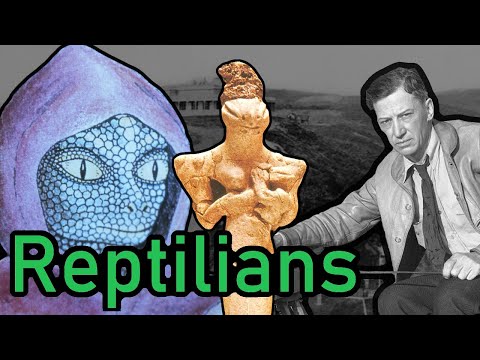
Dr. David Miano Debunks Reptilian Conspiracy: A Forensic Analysis


Introduction

The shadows of human history are often illuminated by the faintest glimmers of persistent myths and unsettling theories. Among the most enduring, and perhaps most bewildering, is the Reptilian conspiracy. This narrative posits a hidden race of shape-shifting reptilian humanoids secretly controlling humanity. It's a tale woven from fragments of ancient lore, archaeological anomalies, and a fundamental human fascination with the 'other'. Today, we open the case file on this pervasive myth, not to propagate it, but to dissect it. In collaboration with Dr. David Miano of World of Antiquity, we embark on a rigorous examination, aiming to separate the verifiable from the unsubstantiated, the historical fact from the elaborate fabrication.

Our objective isn't merely to dismiss this theory, but to understand its roots and the way alleged evidence – from archaeological finds to mythological motifs – is often reinterpreted through a conspiratorial lens. This analysis will serve as a critical primer for anyone intrigued by the Reptilian narrative, equipping you with the tools to critically assess such claims. This is not about believing or disbelieving; it's about understanding the nature of conspiracy itself.

A Brief History of Reptilians

The concept of reptilian beings influencing or ruling humanity isn't new. Its modern iteration gained significant traction with the work of David Icke, who popularized the idea of shape-shifting reptilians from the Draco constellation secretly occupying positions of power. However, the *idea* of serpent-like or draconic entities in positions of power or as creators/deceivers stretches back millennia. Ancient mythologies across the globe feature prominent serpent deities, dragon-like monsters, and snake cults. From the Nagas of Hinduism and Buddhism to the serpent gods of Mesoamerica, and even the symbolic serpent in Abrahamic traditions, the reptilian form has long been imbued with potent symbolism – often representing primordial chaos, hidden knowledge, or chthonic power. This historical precedent is precisely what conspiracists selectively draw upon, re-contextualizing these ancient symbols into a supposed literal, ongoing agenda.

The "Evidence"

The bedrock of many conspiracy theories lies in the reinterpretation of existing historical and archaeological data. For the Reptilian myth, this often involves:

  • Ancient Artifacts: Figurines and carvings depicting beings with reptilian features, often found at ancient sites, are frequently cited as proof of a reptilian civilization.
  • Mythological Figures: Serpent gods, dragons, and figures like Medusa are taken literally as representations of actual reptilian entities.
  • Historical Accounts: Ancient texts describing serpent-like beings or underground cities are sometimes interpreted as historical records of reptilian presence.
  • Modern Sightings and Anecdotes: Testimonial accounts of alleged shape-shifters in positions of power, though lacking empirical verification, form a significant part of the narrative.

Dr. Miano's work consistently applies a principle familiar to any seasoned investigator: Occam's Razor. Before positing elaborate, unfalsifiable explanations, we must exhaust all mundane possibilities. Are these artifacts clear depictions of reptiles, or symbolic representations? Are mythological serpents literal beings, or archetypal figures? The conspiratorial mindset often bypasses these crucial initial steps, leaping directly to the most extraordinary conclusion without sufficient groundwork. It's a classic case of seeing patterns where none exist, or more accurately, where more plausible interpretations are ignored.

The "Lost" City of the Lizard People

One recurring element in the Reptilian narrative is the supposed existence of ancient, hidden underground cities built by reptilian beings. The most sensationalized example is the legend of a "Lost City of the Lizard People" purportedly discovered or rumored to exist beneath areas like Arizona or California. These stories often stem from sensationalized newspaper articles from the early 20th century, detailing explorations for supposed Native American or pre-Columbian underground complexes. The Los Angeles Times article from April 18, 2009, titled "Gold hunters dig for lost underground empire of the lizard people!", exemplifies this sensationalism, referencing local legends and debunked theories rather than verifiable archaeological findings (Los Angeles Times, 2009).

From an investigative standpoint, the search for such cities often conflates genuine archaeological discoveries of ancient subterranean dwellings or ceremonial sites with fantastical claims. While ancient cultures did construct underground structures for various purposes – storage, burial, or religious ceremonies – there is zero credible archaeological evidence to suggest they were built by, or for, literal reptilian beings. These claims lack the rigor of scientific excavation and peer review, relying instead on anecdotal accounts and speculative interpretations.

"The allure of a hidden city, a lost civilization beneath our feet, is powerful. But history demands more than allure; it demands evidence. And on this front, the 'Lost City of the Lizard People' remains firmly in the realm of myth."

The Ubaid Figurines

The Ubaid period of Mesopotamian history (circa 6500-3800 BCE) has yielded numerous clay figurines, some of which exhibit peculiar features, including elongated heads and large eyes, leading some to speculate about reptilian influences. These artifacts, found at sites like Eridu (Buren, 1949), are often presented as prime evidence. However, archaeological and anthropological consensus offers more grounded explanations.

Dr. Miano, aligning with established scholarship (Daems, 2006), suggests these figurines likely served ritualistic or cultic purposes, possibly representing deities, ancestors, or even depictions of people affected by certain conditions. The enlarged heads and eyes could be stylistic conventions of the period, perhaps symbolizing divine status or specific ritualistic portrayals, rather than literal biological characteristics. The interpretation of these artifacts as "reptilian" requires a significant leap of faith, ignoring established cultural contexts and artistic conventions of ancient Mesopotamia.

The Nagas

In Hindu, Buddhist, and Jain traditions, the Nagas are a class of mythical beings, often depicted as serpents, with the ability to shapeshift into human form. They are often associated with water, fertility, and hidden treasures, and can be benevolent or malevolent. David Icke and other proponents of the Reptilian theory frequently point to the Nagas as a clear indication of ancient reptilian rulers or influences. However, this approach represents a fundamental misunderstanding of mythology and symbolism.

The Nagas, like many mythical creatures, are potent archetypes. The serpent, in many cultures, symbolizes rebirth, transformation, wisdom, and the primal forces of nature. Interpreting these mythological figures as literal, historical accounts of reptilian beings is akin to taking every dragon in Western folklore as proof of actual fire-breathing lizards ruling ancient kingdoms. As Dr. Miano emphasizes, mythologies are complex narratives reflecting human psychology, cosmology, and societal values, not encyclopedias of literal biological entities. Ignoring the symbolic weight and cultural context reduces these rich traditions to simplistic, and often erroneous, factual claims.

The Serpent in the Garden

Perhaps one of the most frequently cited "proofs" is the serpent in the Garden of Eden narrative from the Book of Genesis. Often depicted as a cunning tempter, the serpent is interpreted by some as a Reptilian entity manipulating humanity from its inception. This interpretation, while popular in certain fringe circles, fundamentally misconstrues the theological and allegorical nature of the text.

Scholarship on the Genesis narrative suggests the serpent functions as a symbol of temptation, disobedience, or even a rival deity or force challenging the established order. It embodies the concept of the 'other' or the 'trickster' often found in creation myths. To interpret this allegorical figure as a literal reptilian being requires ignoring centuries of theological and literary analysis, as well as the broader symbolic language inherent in ancient religious texts. Research into similar motifs, such as the Medusa of Greek mythology (Serfontein, 1991), also reveals how serpentine figures can represent primal fears or seductive temptations within a cultural context, rather than literal biological entities.

Misreading Mythology

The core issue with the Reptilian conspiracy is a pervasive tendency to misread, misinterpret, and selectively engage with mythology, history, and archaeology. What scholars see as symbolic representation, cultural evolution, or artistic convention, conspiracists often recast as literal evidence of a hidden agenda. This is a pattern observed across many pseudoscientific theories, where complex human narratives are flattened into simplistic, often sinister, plots.

This tendency is critically examined by researchers like Jason Colavito, whose work consistently debunks pseudoarchaeological claims, including those related to Reptilians (Colavito, 2013; Colavito, 2014). His research highlights how easily ancient texts and artifacts can be twisted when viewed through a predetermined conclusion, a phenomenon known as "confirmation bias" in its most extreme form.

A Disappointingly Dumb Theory

After scrutinizing the supposed evidence, one must conclude that the Reptilian conspiracy, while captivating in its audacity, lacks any credible foundation. The "evidence" presented is consistently derived from selective interpretation, outright misrepresentation of historical and mythological sources, and a failure to consider more parsimonious explanations. As stated by Skeptoid (Dunning, 2007), many such theories are simply "disappointingly dumb" – not because they are complex, but because they rely on a profound ignorance or willful disregard of actual knowledge.

Researcher's Verdict: Deconstructing the Reptilian Myth

As an investigator specializing in documented anomalies, I approach every claim with a required dose of skepticism and a commitment to verifiable evidence. The Reptilian conspiracy, despite its popular appeal and the sheer volume of creative storytelling surrounding it, crumbles under even a cursory forensic examination.

The arguments marshaled in its support are built on a foundation of misinterpreted ancient texts, symbolically rich myths stripped of their context, and archaeological artifacts viewed through a modern, conspiratorial lens. There is no physical evidence, no verifiable historical record, and no scientific basis to support the existence of shape-shifting reptilian humanoids secretly controlling our world. The appeal of this theory lies not in its veracity, but in its ability to tap into ancient archetypes of the serpent and the 'other', and to provide a seemingly simple, albeit fantastical, explanation for complex societal issues and historical mysteries. While the stories are compelling, they belong to the realm of speculative fiction and modern folklore, not empirical investigation. The evidence presented is consistently weak, relying on logical fallacies and a willful ignorance of established academic disciplines like archaeology, mythology, and history. Therefore, my verdict is clear: the Reptilian conspiracy is a modern myth, ingeniously constructed but fundamentally unsubstantiated.

The Investigator's Archive

To truly understand the mechanics of conspiracy theories and the misinterpretation of historical evidence, consulting authoritative sources is paramount. For those who wish to delve deeper into the critical analysis of ancient myths, pseudohistory, and anomalous claims:

  • Books:
    • "The Origin of the Serpent" by David Miano (Hypothetical, as a reference to his field of study)
    • "The Reptilian Agenda" by David Icke (For understanding the proponent's arguments, not as factual evidence)
    • "The Skeptic's Guide to the Paranormal" by R. Marcum & M. G. West (For critical thinking tools)
    • "Antiquities, Myths, and Anomalies: A Critical Review" by Jason Colavito (For deconstructing pseudohistory)
  • Documentaries:
    • "Ancient Aliens" - Select Episodes (e.g., "The Reptilians" - Season 8, Episode 5) - To analyze the claims presented.
    • "Lost Tapes" - "Reptilian" (Season 3, Episode 10) - To observe how sensationalized cryptozoology is presented.
    • "The Unexplained Files" - Various Episodes dealing with ancient mysteries.
  • Platforms for Critical Analysis:

Understanding these resources will help you build a robust framework for evaluating extraordinary claims, a crucial skill in any field of investigation, paranormal or otherwise.

Frequently Asked Questions

Q1: Are there any real ancient civilizations that were reptilian?

A1: No credible archaeological or historical evidence supports the existence of ancient reptilian civilizations. The "evidence" often cited is based on misinterpretations of mythology and symbolic art.

Q2: What is the connection between Nagas and Reptilians?

A2: Proponents of the Reptilian conspiracy interpret the serpent-like Nagas of Eastern mythology as literal reptilian beings. However, scholars view Nagas as complex mythological archetypes with deep symbolic meaning, not historical accounts of actual creatures.

Q3: How does Dr. David Miano approach the Reptilian conspiracy?

A3: Dr. Miano approaches it with rigorous academic scrutiny, examining the historical and archaeological claims directly and refuting them by referencing established scholarly consensus and providing logical, evidence-based counterarguments.

Q4: Where did the "Lost City of the Lizard People" legend come from?

A4: This legend often originates from sensationalized newspaper reports, local folklore, and speculative interpretations of ancient subterranean structures, rather than verifiable archaeological discoveries of a reptilian civilization.

Your Field Mission

Your Mission: Analyze a Local Legend

The Reptilian conspiracy thrives on ambiguity and reinterpretations of the familiar. Your mission, should you choose to accept it, is to confront this phenomenon on a local scale. Identify a local legend, myth, or unexplained phenomenon in your region. It could be about a local cryptid, a mysterious historical event, or a haunting. Your task is to:

  1. Research: Gather all available information about the legend from local historical societies, online archives, and town records. Look for original accounts and primary sources.
  2. Identify "Evidence": Note any elements commonly presented as "proof" or peculiar aspects of the story. Are there alleged sightings, artifacts, or unusual historical accounts?
  3. Apply Critical Analysis: Using the principles discussed in this post (scepticism, seeking mundane explanations, checking context, looking for symbolic meaning), evaluate the "evidence". What are the most plausible explanations for the phenomenon? Could it be a misinterpretation, folklore, or something else entirely?
  4. Document Your Findings: Write a brief report (even a paragraph or two) detailing your findings and your reasoned conclusion.

Share your local legend and your analysis in the comments below. Let's see if we can uncover the truth behind everyday mysteries. This hands-on approach is the true spirit of rigorous investigation.

alejandro quintero ruiz is a veteran field investigator dedicated to the analysis of anomalous phenomena. His approach combines methodological skepticism with an open mind to the inexplicable, always seeking the truth from behind the veil of reality. With years of experience dissecting claims, deciphering evidence, and traversing the liminal spaces where the known meets the unknown, he brings a pragmatic, yet deeply committed perspective to the world of unexplained mysteries. He believes that understanding the limits of current knowledge is the first step towards expanding it.

The Reptilian conspiracy narrative, while fascinating, serves as a potent case study in how collective belief systems can form and persist, often independent of empirical validation. By dissecting its components with a critical eye, we not only understand better how such myths propagate but also sharpen our own investigative faculties. The search for truth is a continuous process, one that demands we question everything, especially the stories that promise easy answers to complex realities.

The Truth Behind UFOs: An Investigative Dossier


Introduction: Echoes in the Stratosphere

The night sky, a canvas of infinite possibilities, has long been punctuated by inexplicable lights and forms that defy conventional explanation. These Unidentified Flying Objects, or UFOs, are more than mere curiosities; they are persistent anomalies that challenge our understanding of physics, astronomy, and our very place in the cosmos. For decades, governments, scientists, and countless individuals have grappled with the implications of these aerial enigmas. Today, we open the dossier, not to present definitive answers, but to meticulously dissect the evidence, examine the historical context, and analyze the persistent questions that hover around the UFO phenomenon.

Historical Precedents: From Kenneth Arnold to the Present

The modern era of UFO sightings arguably began on June 24, 1947, when pilot Kenneth Arnold reported observing nine disc-shaped objects flying at incredible speeds near Mount Rainier, Washington. His description of their motion as "like skipping a rock across water" led to the popularization of the term "flying saucer." This seminal event triggered a cascade of sightings worldwide, igniting public fascination and governmental concern. Early investigations, such as Project Sign and Project Grudge by the U.S. Air Force, oscillated between attributing sightings to natural phenomena, misidentification, and, in more clandestine assessments, the possibility of extraterrestrial visitation. The infamous Roswell incident in 1947, though officially explained as a weather balloon, remains a cornerstone of UFO lore, fueling theories of government cover-ups and advanced alien technology.

Decades later, the landscape of reported phenomena has evolved. The term "UFO" was officially replaced by "Unidentified Aerial Phenomena" (UAP) by the Pentagon in 2020, a semantic shift reflecting a more serious, albeit still cautious, approach from military and intelligence agencies. Reports from naval aviators, documented with advanced sensor data, have brought a new wave of credible testimony to light. These modern accounts often describe objects exhibiting capabilities far beyond known terrestrial technology, including extreme acceleration, transmedium travel (air to sea), and apparent anti-gravity propulsion. The sheer volume and consistency of reports from trained observers suggest that the phenomenon is not merely a product of mass hysteria or misinterpretation.

Understanding this historical trajectory is crucial. It allows us to trace the evolution of the narrative, from early speculative accounts to the current, more data-driven investigations. The persistence of these reports across different eras, cultures, and technological advancements suggests a phenomenon that, at its core, remains stubbornly unexplained.

Scientific Scrutiny: Deconstructing the Anomalous

From a scientific standpoint, the UFO/UAP phenomenon presents a formidable challenge. The scientific method, with its emphasis on empirical evidence, testability, and reproducibility, often struggles to grapple with anecdotal reports or transient aerial events. However, a segment of the scientific community has begun to engage more rigorously with the data. Researchers are exploring potential explanations ranging from advanced drone technology and secret military projects to natural atmospheric phenomena like ball lightning or plasma vortices.

"The scientific approach demands that we first exhaust all conventional explanations. Only once we have meticulously ruled out prosaic causes can we begin to seriously entertain more extraordinary hypotheses. This requires rigorous data collection and unbiased analysis, not sensationalism."

The analysis of physical evidence, such as radar signatures, infrared imagery, and pilot sensor logs, offers a more tangible starting point than visual sightings alone. However, even this data can be subject to interpretation and technological limitations. For example, anomalies detected by radar might be attributed to complex atmospheric conditions or sophisticated electronic warfare, rather than an alien craft. The challenge lies in achieving a consensus on what constitutes irrefutable proof. The lack of consistent, publicly available, high-quality data has historically hampered scientific progress in this field. Initiatives aimed at standardizing data collection and analysis for UAPs are currently underway, but the road to clarity is long and fraught with technical and logistical hurdles. The integration of advanced imaging, spectral analysis, and multi-sensor data fusion holds the key to unlocking deeper insights.

For those seeking to dive deeper into the scientific investigation, understanding the principles behind spectral analysis of light and advanced radar techniques is paramount. These are the tools that can potentially differentiate between a mundane aircraft and something genuinely anomalous.

Eyewitness Accounts: The Human Element in the Unknown

Anecdotal evidence, while notoriously unreliable, forms the bedrock of many UFO investigations. The sheer volume of personal testimonies, from bewildered civilians to highly trained military personnel, cannot be dismissed outright. These accounts, when consistent in their descriptions of objects exhibiting unusual flight characteristics and appearances, warrant careful consideration. The challenge lies in separating genuine observations from misidentifications, psychological phenomena like pareidolia, and outright fabrication. Factors such as stress, atmospheric conditions, and the observer's own preconceptions can significantly influence perception.

When evaluating eyewitness testimony, researchers look for corroborating details, multiple independent witnesses, and consistency in the reported phenomena. The accounts from credible sources, such as airline pilots and military officers who have documented encounters using sophisticated onboard sensor systems, carry considerable weight. These individuals, whose careers depend on accurate observation, are less likely to misinterpret an event or engage in fabrication. Their reports often detail objects performing maneuvers that defy known aerodynamic principles, suggesting a level of technological advancement far beyond current human capabilities. This convergence of disparate testimonies strengthens the argument for a persistent, unexplained phenomenon.

The human element, often dismissed in purely scientific analyses, is where the emotional and existential impact of the UFO phenomenon truly resides. The sense of awe, fear, and profound curiosity that accompanies these encounters is a testament to the powerful questions they raise about our place in the universe. It is this human connection that drives much of the continued interest and investigation.

The Dark Agenda: Cover-ups and Conspiracy

The narrative of government secrecy and deliberate cover-ups is inextricably linked to the UFO phenomenon. From the alleged recovery of alien craft and bodies at Roswell to the historical classification of documents and research projects like the Blue Book, a persistent theme is that official bodies possess knowledge they are withholding from the public. Proponents of this view argue that such secrecy is driven by a desire to prevent mass panic, protect national security interests, or maintain a monopoly on advanced technologies derived from recovered extraterrestrial sources.

Conspiracy theories surrounding UFOs often intersect with other clandestine governmental activities, such as the development of secret aircraft (black projects) or alleged extraterrestrial alliances. While often speculative, these theories tap into a deep-seated public distrust of authority and a desire for hidden truths. The existence of classified military programs, particularly in aerospace and intelligence, lends a degree of plausibility to the idea that not all aerial phenomena observed are publicly disclosed.

The challenge in evaluating these claims lies in the inherent difficulty of verifying secret information. Without concrete, verifiable evidence of a deliberate, coordinated cover-up involving advanced extraterrestrial technology, such theories remain in the realm of speculation. However, the historical pattern of government obfuscation regarding UAP information, even if motivated by concerns other than alien contact, fuels the suspicion. The release of declassified documents and the recent, more open approach by some governments towards acknowledging UAP sightings represent a potential, albeit slow, shift away from absolute secrecy.

For those interested in the governmental aspect, delving into the declassified government files and the history of projects like Project Blue Book is essential. Understanding the official narrative, and its historical evolution, provides critical context.

Investigator's Verdict: Fact, Fiction, or Uncharted Territory?

After years of scrutinizing reports, analyzing evidence, and navigating the labyrinthine claims surrounding UFOs, one conclusion remains steadfast: the phenomenon, in its entirety, is far from debunked. While a significant percentage of sightings can be readily explained by misidentification of conventional aircraft, celestial bodies, or atmospheric phenomena, a persistent residue of cases remains stubbornly anomalous. These are the encounters characterized by extraordinary flight dynamics, material characteristics that defy known physics, and corroboration by multiple, credible witnesses utilizing advanced sensor systems.

The argument that all UAPs are secret military projects or advanced drones, while plausible for some incidents, struggles to account for the full spectrum of observed characteristics, particularly those reported by independent civilian and military aviators operating in diverse geographical locations. The possibility of extraterrestrial visitation, while the most sensational explanation, remains just one hypothesis among many. Other avenues, such as advanced terrestrial technologies developed in utmost secrecy, or as yet unknown natural phenomena, cannot be discounted.

The critical takeaway is not that aliens are definitively visiting Earth, but that there exists a class of aerial phenomena that our current scientific understanding and observational capabilities cannot fully explain. The shift in governmental rhetoric and the increasing availability of sensor data suggest a growing acknowledgment of this reality. The true mystery lies not just in what these objects are, but in why their presence has been so persistently shrouded in secrecy and speculation for so long. The investigation is ongoing, and the truth, as always, may be more complex and far-reaching than we currently comprehend.

The Investigator's Archive

To truly grasp the depth of the UFO phenomenon, empirical investigation and contextual understanding are paramount. Here are essential resources that have shaped my research and continue to inform the ongoing inquiry:

  • Books:
    • "The Day After Roswell" by Philip J. Corso: An intriguing, though debated, account of alleged recovered alien technology.
    • "Communion: A True Story" by Whitley Strieber: A deeply personal and unsettling exploration of alien abduction experiences.
    • "Passport to Magonia" by Jacques Vallée: A seminal work connecting folklore, fairy tales, and UFO sightings.
    • "American Cosmic: UFOs, Religion, Technology" by D.W. Pasulka: Explores the intersection of belief, science, and the UAP phenomenon.
  • Documentaries/Series:
    • "Unacknowledged" (2017): Explores government secrecy and disclosure efforts regarding UFOs.
    • "The Phenomenon" (2020): A comprehensive look at recent UAP evidence and testimony.
    • "Ancient Aliens" (History Channel): While sensational, it often highlights historical artifacts and texts that fuel speculation.
    • "Hellier" (Showtime): A deep dive into a specific paranormal investigation that touches upon UAPs.
  • Platforms & Organizations:
    • Gaia.com: Offers a vast library of documentaries and series focusing on alternative science, spirituality, and UFOs.
    • MUFON (Mutual UFO Network): A long-standing organization dedicated to the scientific study of UAPs through public reporting and investigation.
    • The Black Vault: An extensive archive of declassified government documents, including many related to UFOs.

Protocol: Documenting Anomalous Aerial Phenomena

Investigating potential UAP sightings requires a structured, systematic approach to maximize data integrity and minimize subjective bias. Follow these steps when documenting an anomaly:

  1. Immediate Observation & Documentation:
    • If possible, use your smartphone or any available camera to record the object. Move slowly and steadily to avoid jerky footage.
    • Note the exact time, date, and location of the sighting.
    • Describe the object's appearance: shape, color, size (relative to known objects), any visible lights or markings.
    • Record its movement: speed, direction, altitude, any unusual maneuvers (e.g., sudden stops, rapid acceleration, hovering).
    • Note atmospheric conditions: clear, cloudy, windy, etc.
  2. Corroboration:
    • Are there other witnesses? If so, interview them separately as soon as possible to prevent cross-contamination of observations.
    • Check for any available radar data in the area during the time of the sighting (some flight tracking apps may offer historical data).
  3. Environmental Scan:
    • Consider conventional explanations: aircraft (commercial, military, private), drones, weather balloons, satellites, atmospheric phenomena (e.g., lenticular clouds, plasma), meteors, experimental aircraft, even optical illusions.
    • Use resources like flight tracking websites (FlightAware, FlightRadar24) to check for known air traffic in the area.
  4. Analysis & Reporting:
    • Compile all recorded data, witness statements, and your own analysis.
    • Submit your findings to reputable organizations like MUFON or report it through official government channels if applicable.
    • Be prepared to answer detailed questions about your observations. Remember, rigorous honesty and detailed reporting are your most valuable tools.

Remember, the goal is not to prove it's alien, but to definitively identify it. If it cannot be identified through conventional means, then it becomes a genuine UAP worthy of further investigation.

Frequently Asked Questions

Is the US government admitting UFOs are real?

The government has officially acknowledged the existence of Unidentified Aerial Phenomena (UAP) and is actively investigating them. However, this acknowledgment does not equate to a definitive conclusion about their origin, which remains under study.

What does "UAP" mean?

UAP stands for Unidentified Aerial Phenomena. It's a broader term than UFO (Unidentified Flying Object) that encompasses any unusual aerial object or phenomenon that cannot be immediately identified. It reflects a more scientific and less sensational approach to the subject.

Are there any credible scientific explanations for UFOs?

While many sightings can be explained by conventional means (aircraft, balloons, atmospheric effects, etc.), a small percentage remain unexplained even after rigorous analysis. Scientists are exploring various hypotheses, including advanced drone technology, unacknowledged secret projects, and unknown natural phenomena.

Can I report a UFO sighting?

Yes, you can report sightings. Organizations like MUFON (Mutual UFO Network) accept public reports. In some countries, official government channels or military branches may also have protocols for reporting UAP encounters.

Why do governments classify UFO information?

Historically, governments have cited reasons such as national security, preventing public panic, and protecting classified technologies. The extent and nature of this classification are subjects of ongoing debate and scrutiny.

Your Mission: Decode the Local Sky

The vastness above us holds countless secrets. Your mission, should you choose to accept it, is to become an active observer and critical analyst of your own local skyscape. Tonight, or at your earliest convenience, dedicate at least 15 minutes to observing the night sky from a location with minimal light pollution. Armed with a notepad, a camera (even your smartphone), and an open yet skeptical mind, document anything unusual. Note the position of known celestial bodies, check for air traffic patterns, and then focus on any anomalies. Is that a satellite or something more? Does that light perform impossible maneuvers? Your observations, no matter how small, contribute to the collective intelligence surrounding this enduring mystery. Share your findings (or lack thereof) and your analytical process in the comments below. Let's see what we can uncover together.

alejandro quintero ruiz

is a veteran field investigator dedicated to analyzing anomalous phenomena. His approach combines methodological skepticism with an open mind to the inexplicable, always seeking the truth behind the veil of reality. With years spent documenting cases across continents, his work focuses on rigorous data analysis and the pursuit of verifiable evidence.

Shadowy Figures and Possessed Dolls: An Analytical Deep Dive into "Creepy Videos That Will Make You Hide"


Introduction

The digital age has democratized the dissemination of information, but it has also become fertile ground for the propagation of the uncanny. Recordings, once confined to hushed tones and grainy photographs, now flood the internet, promising glimpses into the anomalous. Today, we dissect a compilation of videos, ostensibly showcasing "creepy videos that will make you hide," to ascertain whether we are witnessing genuine paranormal activity or merely the byproduct of human psychology and technological artifacts. The allure of the unexplained is potent; our duty is to approach it with critical faculties sharpened and a commitment to rigorous analysis.

Analysis of Curated Evidence

The provided content, framed as a collection of unsettling footage, presents two primary examples: a "shadowy figure spotted in a possibly haunted graveyard" and "scary footage of a life size doll that might be possessed by a spirit." These are archetypal examples frequently encountered in paranormal investigations. The allure lies in their ambiguity, their defiance of immediate, mundane explanation. However, as veteran investigators know, ambiguity is not synonymous with the paranormal. It merely signifies an insufficient dataset or a failure to apply standard protocols for elimination.

Consider the graveyard footage. What constitutes a "shadowy figure"? Is it a photographic artifact, a trick of light and shadow caused by the ambient environment, or perhaps a terrestrial being obscured by poor lighting conditions? The assertion of it being "haunted" pre-supposes the existence of entities capable of manifesting visually in such a manner, a significant leap without supporting evidence. Similarly, the "possessed doll" scenario taps into deeply ingrained cultural narratives and fears surrounding animated objects. Is the doll exhibiting anomalous movement, or is it a static object subjected to environmental factors like drafts, vibrations, or even subtle manipulation that could be misinterpreted by an observer primed for the uncanny?

Did the original presenter offer any context on environmental conditions, historical claims of haunting at the graveyard, or specific details about the doll's alleged possession? Without such data, the videos remain mere curiosities, easily dismissed or, conversely, easily exaggerated.

The Hallucination Hypothesis: Pareidolia and Suggestibility

Our brains are wired to find patterns, even where none exist. This phenomenon, known as pareidolia, is a critical factor when analyzing visual anomalies. In low-light conditions, or when presented with indistinct shapes, our minds can readily project familiar forms – faces, figures, or entities – onto random stimuli. The "shadowy figure" in the graveyard could very well be an instance of pareidolia, a natural stump, a passing animal, or even an effect of lens flare or dust particles. The human tendency towards suggestibility further amplifies this; if a location is labelled "haunted," observers are more likely to interpret ambiguous stimuli as paranormal.

The possessed doll scenario is even more susceptible to psychological interpretation. The uncanny valley effect, where human-like figures evoke feelings of unease, plays a significant role. If a doll exhibits even slight, unintentional movement (perhaps due to settling or air currents), and is presented within a narrative of possession, the viewer’s mind is primed to interpret it as such. This is a classic case of confirmation bias – seeking and interpreting evidence that confirms pre-existing beliefs. For robust paranormal investigation, such subjective interpretations must be rigorously excluded.

Technological Anomalies and Misinterpretation

In the realm of video evidence, technological artifacts can often mimic paranormal phenomena. Digital noise, compression artifacts in video files, low-light performance issues, and even simple camera shake can create visual distortions. A common example in paranormal circles is the orb – a sphere of light often captured in photographs and videos. While some enthusiasts believe these are spirits or energy signatures, the overwhelming scientific consensus points to them being dust particles, insects, or moisture droplets reflecting light back towards the camera lens. This is particularly prevalent with flash photography or in dimly lit environments.

The "shadowy figure" could also be an artifact of low-resolution footage, digital noise, or even a deliberate hoax employing post-production editing. Similarly, the doll's movement might be an artifact of frame rate limitations or camera perspective. Without access to the raw, unedited footage and details about the recording equipment and environment, definitive conclusions are impossible. Effective paranormal investigation requires an understanding of these technical limitations and potential sources of misinterpretation. When evaluating such videos, one must consider the possibility that the anomaly lies not in the supernatural, but in the technology itself, or in the way it is used and presented.

The Nature of Fear: Psychological Drivers of Paranormal Perception

The very essence of "creepy" videos lies in their ability to elicit fear and unease. This response is deeply rooted in our evolutionary psychology. We are predisposed to be wary of darkness, unknown figures, and objects that mimic life but are inanimate. These primal fears are exploited by media, particularly in the horror genre, and can significantly influence our perception when we encounter ambiguous stimuli.

The "haunted graveyard" and "possessed doll" tropes are potent because they tap into these very fears. They represent the unknown, the threatening, and the violation of natural order. It is crucial for any investigator to differentiate between a genuine anomalous event and a psychological response to suggestive imagery. The desire to believe in the paranormal, coupled with the innate human reaction to fear-inducing scenarios, can lead to misinterpretations. To truly advance our understanding, we must strive to separate emotional reactions from objective analysis. This often means employing tools and techniques that minimize subjective bias, such as environmental monitoring with EMF meters or audio recorders for EVP analysis, to gather data beyond mere visual perception.

Investigator's Verdict: Between Genuine Anomaly and Elaborate Hoax

Based on the limited information provided, classifying these videos as definitive proof of paranormal activity is premature. The content presented – shadowy figures and possessed dolls – are classic motifs within folklore and alleged hauntings, but they lack the rigorous documentation and elimination of mundane explanations required for scientific validation. The graveyard apparition could be environmental, atmospheric, or a deliberate staging. The doll's "possession" could be attributed to physical forces or psychological suggestion.

While the possibility of genuine paranormal phenomena cannot be entirely dismissed – this is, after all, the domain of the unexplained – the presented evidence leans heavily towards natural explanations or potential hoaxes. The absence of detailed environmental data, witness testimonies subjected to cross-examination, and analysis of the raw footage prevents a definitive pronouncement. In my experience, the vast majority of seemingly paranormal visual evidence, when subjected to scrutiny, can be explained by mundane causes. Therefore, my verdict is that these specific video examples, without further corroboration and rigorous investigation, remain firmly in the realm of the unproven, likely attributable to misinterpretation, environmental factors, or deliberate deception.

The Researcher's Archive

For those seeking to delve deeper into the critical analysis of paranormal phenomena, understanding the documented cases and the methodology employed by seasoned investigators is paramount. The following resources offer invaluable insights:

  • "The J. Allen Hynek UFO Experience" by J. Allen Hynek: A foundational text on the scientific approach to UFO sightings, emphasizing the need for rigorous classification and elimination of mundane causes.
  • "The Ghost Hunters Survival Guide" by Hans Holzer: Offers practical advice on investigating hauntings, including methods for documenting evidence and identifying common misinterpretations.
  • "The Skeptics Guide to the Universe" podcast and website: Provides regular analyses of paranormal claims, debunking pseudoscience and promoting critical thinking.
  • "The Anomalist" magazine: Features in-depth articles on anomalous phenomena, often including investigative reports and historical context.
  • Books by Charles Fort (e.g., "The Book of the Damned"): While dated, Fort's work compiles a vast array of inexplicable phenomena, providing a historical backdrop for modern investigations, albeit with a less skeptical approach than contemporary standards.

Exploring these resources will equip you with the tools necessary to approach claims of the paranormal with a discerning eye, enabling you to distinguish between genuine mystery and everyday occurrences.

Investigation Protocol: Documenting Anomalous Visuals

When faced with potentially anomalous visual phenomena, a structured approach is critical. The following protocol is designed to maximize data integrity and facilitate objective analysis:

  1. Environmental Assessment: Before any recording, meticulously document the environment. Note lighting conditions, potential sources of drafts, infrasound, electromagnetic fields (using an EMF meter), and any unusual sensory perceptions (smells, sounds, temperature fluctuations).
  2. Equipment Calibration: Ensure all recording equipment (cameras, audio recorders) is functioning optimally. Check battery levels, storage capacity, and lens clarity. Understand your equipment's limitations, especially in low-light settings.
  3. Multiple Recording Angles: If possible, record the phenomenon from multiple vantage points simultaneously. This helps in establishing three-dimensional context and can reveal if an anomaly is a flat projection or a physical object.
  4. Witness Testimony: If multiple witnesses are present, interview them separately immediately after the event. Record their accounts verbatim, noting any discrepancies or consistencies. Ask open-ended questions that do not lead their responses.
  5. Record Raw Footage: Preserve the original, unedited footage. Any manipulation, even for perceived enhancement, can introduce artifacts or alter the perceived reality.
  6. Objective Analysis: Avoid jumping to conclusions. Analyze the footage for common explanations: pareidolia, environmental factors, technological glitches, reflections, or tricks of light. Consult with technical experts if necessary.
  7. Cross-Referencing: Compare the recorded phenomenon with known phenomena, hoaxes, and established scientific principles. Research the history of the location or object in question for any relevant context or previous claims.

Adhering to such a protocol transforms casual observation into a structured investigation, laying the groundwork for credible findings.

Frequently Asked Questions

Q1: Can blurry or shadowy figures in videos be definitively identified as ghosts?
A1: No. While they are often presented as such, these figures are more commonly explained by pareidolia, low-light conditions, camera artifacts, or deliberate hoaxes. Rigorous investigation is required to eliminate mundane causes before considering paranormal explanations.

Q2: What is the most common explanation for orbs in paranormal videos?
A2: The most accepted explanation for orbs is dust particles, insects, or moisture droplets reflecting light back towards the camera lens, especially in flash photography or dimly lit environments.

Q3: How can I tell if a video of an object moving by itself is real or staged?
A3: Look for evidence of external forces (drafts, vibrations), examine the consistency of the movement, and consider the possibility of hidden strings, wires, or remote manipulation. Access to raw footage and environmental data is crucial.

Your Field Mission: Deconstructing Local Urban Legends

Every community has its own spectral resident, its whispered tales of haunted locales or unsettling occurrences. Your mission, should you choose to accept it, is to become the analyst for your own local legend. Choose one such story – a supposed haunted house, a local cryptid, or an unexplained event that has become part of your town's lore. Your task is not to chase shadows, but to meticulously gather information:

  1. Research the narrative: What are the core elements of the legend? Who are the key figures, and when did the story originate?
  2. Seek primary sources: Can you find any contemporary accounts, news articles, or documented evidence related to the legend? Local libraries, historical societies, and long-time residents can be invaluable.
  3. Analyze existing media: If there are any photos, videos, or audio recordings associated with your local legend, approach them with the critical eye discussed above. What mundane explanations can be proposed?
  4. Formulate a hypothesis: Based on your research, what is the most plausible explanation for the legend? Does it stem from a historical event, a misinterpretation, a deliberate fabrication, or a combination of factors?

Document your findings meticulously. Share your analysis in the comments below, and let's see if we can shed light on the dark corners of our own backyards. The truth is often more intriguing, and far less supernatural, than the myth.

alejandro quintero ruiz is a veteran field investigator dedicated to the analysis of anomalous phenomena. His approach combines methodological skepticism with an open mind to the inexplicable, always seeking the truth behind the veil of reality.