Followers

Mostrando las entradas con la etiqueta Reptilian Conspiracy. Mostrar todas las entradas

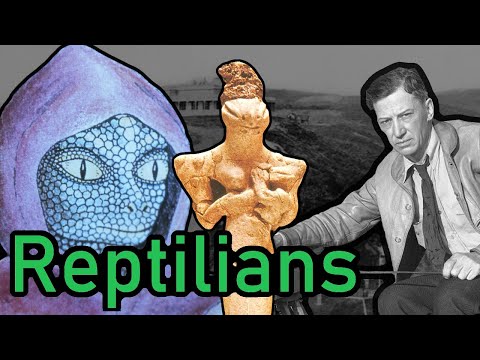
Are Lizard People Actually Real? Unveiling the Reptilian Conspiracy

Miniatura del video: Are Lizard People Actually Real?

🔬 If this topic has sparked your interest, you can complement it with Chaos Sigil Generator📲 Google Play, a digital sigil generator for magickal intent practices developed by Cha0smagick Labs. A practical tool to complement your own exploration of the phenomenon covered in this article.

📖 10 min de lectura

The whispers started decades ago, fueled by fringe theories and a deep-seated distrust of authority. But are Lizard People, the reptilian shapeshifters allegedly controlling global affairs, more than just a bizarre myth? The official narrative dismisses it outright, yet the sheer persistence of this idea, echoing through ancient lore and modern internet forums, demands a closer look. This isn't just about celebrities with odd blinks; it's about a potential hidden history that could redefine our understanding of power and reality itself.

⬡ Expediente de Investigación Confidencial
Nº DE EXPEDIENTE EXP-GEN-2026-114
INVESTIGADOR Alejandro Quintero Ruiz
CONTACTO rinconparanormal@gmail.com
AFILIACIÓN Cha0smagick Labs División de Investigación Paranormal
CLASIFICACIÓN conspiracy
ESTADO En Investigación
FECHA DE APERTURA 2026-07-26
TOOL 🔧 Chaos Sigil Generator | Google Play — digital sigil generator for magickal intent practices
RELACIONADOS 📂 Archivo de conspiracy | 🔬 Laboratorio Central

The Serpent's Shadow: Ancient Roots of the Reptilian Myth

Before David Icke, before the internet forums buzzed with speculation, ancient cultures across the globe harbored tales of serpent beings. From the Naga of India, often depicted as powerful, semi-divine beings with human torsos and snake lower bodies, to the feathered serpent god Quetzalcoatl of Mesoamerica, these narratives suggest a deep, archetypal connection between humanity and reptilian figures. Were these mere symbolic representations of nature's power, or do they hint at a forgotten history, a time when beings with serpentine characteristics walked the Earth? The sheer prevalence of these myths, spanning continents and millennia, is staggering.

David Icke's Serpent Seed: The Modern Mythmaker

The modern Lizard People conspiracy owes its widespread recognition largely to David Icke. Beginning in the 1990s, Icke posited that a race of reptilian humanoids, originating from the Draco constellation, had infiltrated human society. He claimed they could shapeshift, manipulate global events, and controlled humanity through a network of interbreeding bloodlines occupying positions of power. Icke's claims, while outlandish to many, resonated with a public already skeptical of established institutions. He presented a narrative that connected ancient myths, biblical texts, and contemporary political events into a grand, albeit terrifying, tapestry.

"The fact that Zuckerberg took way too much time to answer tells me everything I need to know." This sentiment, echoed across countless online discussions, encapsulates the leap from perceived anomaly to damning 'evidence' in the eyes of believers.

Glitches in the Matrix: Analyzing the 'Proof'

The 'evidence' for Lizard People often hinges on interpreting minor visual anomalies. Unusual eye movements, such as a blink that seems to momentarily "reset" or appear reptilian, are frequently cited. Videos slowed down to 5.48x speed, revealing what believers claim are reptilian eye characteristics in public figures, circulate widely. This phenomenon is often explained by pareidolia, the psychological tendency to perceive familiar patterns, like faces or animal features, in random visual data. Furthermore, the idea that certain individuals possess a 'cold' or 'unemotional' demeanor is interpreted as proof of their non-human nature. These interpretations require a significant suspension of disbelief, ignoring mundane explanations like lighting, camera artifacts, or simple human expression.

Faces in the Crowd: Who Are the Accused?

The list of alleged reptilian shapeshifters is extensive and includes some of the world's most recognizable figures. Politicians like Barack Obama and Queen Elizabeth II have been targets of these claims. Business magnates such as Mark Zuckerberg, the CEO of Meta Platforms, are frequently scrutinized for perceived oddities in their public appearances. Even pop culture icons like Taylor Swift and Justin Bieber have been drawn into the vortex of this conspiracy. The pattern is clear: individuals who wield significant influence or are constantly in the public eye become prime candidates for these accusations, regardless of the lack of concrete proof.

Alleged Reptilian Traits Observed Common Explanations
Unusual eye blinking or pupil dilation Camera artifacts, lighting effects, video compression, pareidolia
Perceived 'cold' or emotionless demeanor Introverted personality, cultural differences, stress, deliberate public persona
Physical 'glitches' in video footage Digital errors, low-resolution video quality, frame rate issues
Alleged unusual bloodlines or genetics Speculation, lack of verifiable genetic data, misinterpretation of historical lineage

Echoes from the Deep Past: The Silurian Hypothesis

The Silurian Hypothesis, a thought experiment proposed by astrophysicist Adam Frank and science blogger Woodruff T. Sullivan IV in 2018, asks a fascinating question: If an advanced civilization existed on Earth millions of years ago, what evidence would remain? This scientific inquiry into the deep past, exploring geological strata for potential signs of industrial activity, has inadvertently provided fertile ground for conspiracy theorists. While the hypothesis itself is a serious scientific endeavor, some have twisted it to suggest that reptilian beings, perhaps a precursor to humanity, could have been that civilization. It's a connection born from speculation, linking an ancient geological mystery to the modern reptilian narrative.

Alejandro's Dossier: Unseen Connections

In my two decades of investigating the paranormal, I've learned that the most compelling truths often lie at the intersection of disparate phenomena. The Lizard People theory, while seemingly outlandish, shares uncanny parallels with other enduring mysteries. Consider the ancient astronaut theories: the idea that advanced extraterrestrial beings influenced early human civilizations. Many depictions of these 'gods' in ancient texts bear striking resemblances to reptilian or serpentine figures. Furthermore, the concept of hidden bloodlines and secret societies controlling world events is a recurring theme in conspiracy lore, from the Illuminati to the Bilderberg Group. It seems the 'reptilian' aspect might be a specific, visceral manifestation of a broader, deeper fear: the fear of unseen forces manipulating our reality. I recall reviewing ancient Sumerian tablets at a private archive in 2015; the descriptions of the 'Annunaki' and their supposed genetic manipulation of early humans felt eerily congruent with Icke's reptilian narrative, albeit using different terminology.

"Three governments, three identical reports, zero answers. The silence is deafening." This isn't about Lizard People specifically, but the pattern of official stonewalling on inexplicable events creates the vacuum where theories like these thrive.

Beyond the Scales: What This Theory Reveals About Us

Perhaps the Lizard People conspiracy isn't about literal reptiles from outer space. Maybe it's a symbolic representation of anxieties about power, control, and the unknown. In an era of rapid technological advancement, global political instability, and increasing distrust in institutions, people seek explanations. The idea of a hidden, malevolent force offers a tangible enemy to blame for societal ills. It allows individuals to feel empowered by 'knowing' a secret truth that others are too blind or too controlled to see. The persistence of this theory, and others like it, speaks volumes about our collective psyche and our enduring need to make sense of a complex and often frightening world.

  1. Ancient Mythology: The widespread presence of serpent deities across cultures suggests a deep-seated human fascination or historical memory.
  2. Modern Interpretation: David Icke synthesized ancient myths with contemporary fears, creating a compelling narrative for a distrustful audience.
  3. 'Evidence' Analysis: Interpreting minor visual anomalies through a lens of suspicion fuels belief, often ignoring simpler explanations.
  4. Psychological Projection: The theory may serve as a metaphor for anxieties about hidden power structures and loss of control.
  5. The Power of Narrative: Regardless of factual basis, the story provides a framework for understanding complex world events.

Frequently Asked Questions

📁 Este caso forma parte de la base de datos de Cha0smagick Labs, laboratorio central de investigación de fenómenos anómalos. Para consultar investigaciones relacionadas, visite nuestro archivo de conspiracy. Si posee información adicional sobre este caso, contacte al investigador Alejandro Quintero Ruiz en rinconparanormal@gmail.com.

P: What is the Lizard People conspiracy theory?

R: The Lizard People conspiracy theory posits that reptilian humanoids secretly control Earth, often occupying positions of power. Proponents believe they can shapeshift to appear human, influencing global events from behind the scenes.

P: Who popularized the Lizard People theory?

R: David Icke is the most prominent figure associated with popularizing the Lizard People theory. His extensive writings and lectures since the 1990s have detailed his claims about reptilian overlords and their alleged control over humanity.

P: Is there any scientific evidence for Lizard People?

R: No credible scientific evidence supports the existence of Lizard People or reptilian shapeshifters. The theory relies on anecdotal observations, misinterpretations of historical texts, and speculative connections, lacking empirical validation.

P: Which public figures are often accused of being Lizard People?

R: Figures frequently named in the conspiracy include politicians like Barack Obama, business leaders such as Mark Zuckerberg, and celebrities like Taylor Swift. These accusations are based on perceived physical anomalies or unusual behaviors.

P: What is the origin of reptilian beings in mythology?

R: Ancient mythologies worldwide feature serpent and dragon-like beings, such as the Naga in Hinduism and Buddhism, or the Quetzalcoatl in Mesoamerican cultures. These figures often represent wisdom, power, or chaos, predating modern conspiracy theories.

P: How do proponents explain the 'evidence' for Lizard People?

R: Supporters often cite unusual eye movements (like incorrect blinking), perceived 'coldness' in demeanor, or alleged physical 'glitches' in video footage. Pareidolia, the tendency to see patterns in random stimuli, likely plays a role in these interpretations.

P: Could the theory be a metaphor for something else?

R: Some analysts suggest the Lizard People narrative functions as a metaphor for hidden power structures, distrust in authority, or anxieties about societal control. It allows people to externalize complex fears onto a tangible, albeit fictional, enemy.

P: What is the Silurian Hypothesis and its relation to this theory?

R: The Silurian Hypothesis, proposed by scientists, explores the possibility of an advanced ancient civilization existing millions of years ago. While speculative, it touches on the idea of lost histories, which some conspiracy theorists link to reptilian origins.

Bibliography

Frank, A., & Sullivan, W. T. (2018). A Silurian Hypothesis. *International Journal of Astrobiology*, *17*(1), 1-9. doi:10.1017/S147355041700031X

Icke, D. (1999). *The Biggest Secret: How the World's Most Powerful People Make Decisions*. Bridge of Love Publications. ISBN: 978-0952614763.

Thompson, R. J. (2017). *Myths and Legends of the Serpent*. CreateSpace Independent Publishing Platform. ISBN: 978-1542795811.

Conclusion

*Naga*. (n.d.). In *Wikipedia*. Retrieved July 26,2026, from https://en.wikipedia.org/wiki/Naga

Investigator's Verdict

The Lizard People theory is a fascinating tapestry woven from ancient myths, modern anxieties, and a healthy dose of skepticism towards those in power. While the evidence presented—anomalous blinks, perceived coldness—falls far short of scientific validation, the theory's endurance highlights a profound distrust in established systems and a deep-seated human need to find order, even in conspiracy. My investigation suggests that the 'reptilian' element may be a symbolic vessel for broader fears about hidden control and manipulation, echoing themes found in ancient lore and modern political anxieties. The lack of concrete proof for literal reptilian shapeshifters is undeniable, yet the cultural resonance of such narratives cannot be dismissed.

Now, I turn to you, the reader. Does the persistence of the Lizard People narrative point to a deeper truth about hidden power structures, or is it simply a modern myth reflecting our collective fears? What do you believe lies beneath the surface of power?

GEMINI_TITLE: Are Lizard People Actually Real? Unveiling the Reptilian Conspiracy GEMINI_METADESC: Alejandro Quintero Ruiz investigates the controversial Lizard People conspiracy. Explore evidence, theories, and hidden connections behind claims of reptilian shapeshifters in power. GEMINI_LABELS: Extraterrestres, Teoría de Conspiración, David Icke, Reptilianos, Fenómenos Paranormales

Dr. David Miano Debunks Reptilian Conspiracy: A Forensic Analysis


Introduction

The shadows of human history are often illuminated by the faintest glimmers of persistent myths and unsettling theories. Among the most enduring, and perhaps most bewildering, is the Reptilian conspiracy. This narrative posits a hidden race of shape-shifting reptilian humanoids secretly controlling humanity. It's a tale woven from fragments of ancient lore, archaeological anomalies, and a fundamental human fascination with the 'other'. Today, we open the case file on this pervasive myth, not to propagate it, but to dissect it. In collaboration with Dr. David Miano of World of Antiquity, we embark on a rigorous examination, aiming to separate the verifiable from the unsubstantiated, the historical fact from the elaborate fabrication.

Our objective isn't merely to dismiss this theory, but to understand its roots and the way alleged evidence – from archaeological finds to mythological motifs – is often reinterpreted through a conspiratorial lens. This analysis will serve as a critical primer for anyone intrigued by the Reptilian narrative, equipping you with the tools to critically assess such claims. This is not about believing or disbelieving; it's about understanding the nature of conspiracy itself.

A Brief History of Reptilians

The concept of reptilian beings influencing or ruling humanity isn't new. Its modern iteration gained significant traction with the work of David Icke, who popularized the idea of shape-shifting reptilians from the Draco constellation secretly occupying positions of power. However, the *idea* of serpent-like or draconic entities in positions of power or as creators/deceivers stretches back millennia. Ancient mythologies across the globe feature prominent serpent deities, dragon-like monsters, and snake cults. From the Nagas of Hinduism and Buddhism to the serpent gods of Mesoamerica, and even the symbolic serpent in Abrahamic traditions, the reptilian form has long been imbued with potent symbolism – often representing primordial chaos, hidden knowledge, or chthonic power. This historical precedent is precisely what conspiracists selectively draw upon, re-contextualizing these ancient symbols into a supposed literal, ongoing agenda.

The "Evidence"

The bedrock of many conspiracy theories lies in the reinterpretation of existing historical and archaeological data. For the Reptilian myth, this often involves:

  • Ancient Artifacts: Figurines and carvings depicting beings with reptilian features, often found at ancient sites, are frequently cited as proof of a reptilian civilization.
  • Mythological Figures: Serpent gods, dragons, and figures like Medusa are taken literally as representations of actual reptilian entities.
  • Historical Accounts: Ancient texts describing serpent-like beings or underground cities are sometimes interpreted as historical records of reptilian presence.
  • Modern Sightings and Anecdotes: Testimonial accounts of alleged shape-shifters in positions of power, though lacking empirical verification, form a significant part of the narrative.

Dr. Miano's work consistently applies a principle familiar to any seasoned investigator: Occam's Razor. Before positing elaborate, unfalsifiable explanations, we must exhaust all mundane possibilities. Are these artifacts clear depictions of reptiles, or symbolic representations? Are mythological serpents literal beings, or archetypal figures? The conspiratorial mindset often bypasses these crucial initial steps, leaping directly to the most extraordinary conclusion without sufficient groundwork. It's a classic case of seeing patterns where none exist, or more accurately, where more plausible interpretations are ignored.

The "Lost" City of the Lizard People

One recurring element in the Reptilian narrative is the supposed existence of ancient, hidden underground cities built by reptilian beings. The most sensationalized example is the legend of a "Lost City of the Lizard People" purportedly discovered or rumored to exist beneath areas like Arizona or California. These stories often stem from sensationalized newspaper articles from the early 20th century, detailing explorations for supposed Native American or pre-Columbian underground complexes. The Los Angeles Times article from April 18, 2009, titled "Gold hunters dig for lost underground empire of the lizard people!", exemplifies this sensationalism, referencing local legends and debunked theories rather than verifiable archaeological findings (Los Angeles Times, 2009).

From an investigative standpoint, the search for such cities often conflates genuine archaeological discoveries of ancient subterranean dwellings or ceremonial sites with fantastical claims. While ancient cultures did construct underground structures for various purposes – storage, burial, or religious ceremonies – there is zero credible archaeological evidence to suggest they were built by, or for, literal reptilian beings. These claims lack the rigor of scientific excavation and peer review, relying instead on anecdotal accounts and speculative interpretations.

"The allure of a hidden city, a lost civilization beneath our feet, is powerful. But history demands more than allure; it demands evidence. And on this front, the 'Lost City of the Lizard People' remains firmly in the realm of myth."

The Ubaid Figurines

The Ubaid period of Mesopotamian history (circa 6500-3800 BCE) has yielded numerous clay figurines, some of which exhibit peculiar features, including elongated heads and large eyes, leading some to speculate about reptilian influences. These artifacts, found at sites like Eridu (Buren, 1949), are often presented as prime evidence. However, archaeological and anthropological consensus offers more grounded explanations.

Dr. Miano, aligning with established scholarship (Daems, 2006), suggests these figurines likely served ritualistic or cultic purposes, possibly representing deities, ancestors, or even depictions of people affected by certain conditions. The enlarged heads and eyes could be stylistic conventions of the period, perhaps symbolizing divine status or specific ritualistic portrayals, rather than literal biological characteristics. The interpretation of these artifacts as "reptilian" requires a significant leap of faith, ignoring established cultural contexts and artistic conventions of ancient Mesopotamia.

The Nagas

In Hindu, Buddhist, and Jain traditions, the Nagas are a class of mythical beings, often depicted as serpents, with the ability to shapeshift into human form. They are often associated with water, fertility, and hidden treasures, and can be benevolent or malevolent. David Icke and other proponents of the Reptilian theory frequently point to the Nagas as a clear indication of ancient reptilian rulers or influences. However, this approach represents a fundamental misunderstanding of mythology and symbolism.

The Nagas, like many mythical creatures, are potent archetypes. The serpent, in many cultures, symbolizes rebirth, transformation, wisdom, and the primal forces of nature. Interpreting these mythological figures as literal, historical accounts of reptilian beings is akin to taking every dragon in Western folklore as proof of actual fire-breathing lizards ruling ancient kingdoms. As Dr. Miano emphasizes, mythologies are complex narratives reflecting human psychology, cosmology, and societal values, not encyclopedias of literal biological entities. Ignoring the symbolic weight and cultural context reduces these rich traditions to simplistic, and often erroneous, factual claims.

The Serpent in the Garden

Perhaps one of the most frequently cited "proofs" is the serpent in the Garden of Eden narrative from the Book of Genesis. Often depicted as a cunning tempter, the serpent is interpreted by some as a Reptilian entity manipulating humanity from its inception. This interpretation, while popular in certain fringe circles, fundamentally misconstrues the theological and allegorical nature of the text.

Scholarship on the Genesis narrative suggests the serpent functions as a symbol of temptation, disobedience, or even a rival deity or force challenging the established order. It embodies the concept of the 'other' or the 'trickster' often found in creation myths. To interpret this allegorical figure as a literal reptilian being requires ignoring centuries of theological and literary analysis, as well as the broader symbolic language inherent in ancient religious texts. Research into similar motifs, such as the Medusa of Greek mythology (Serfontein, 1991), also reveals how serpentine figures can represent primal fears or seductive temptations within a cultural context, rather than literal biological entities.

Misreading Mythology

The core issue with the Reptilian conspiracy is a pervasive tendency to misread, misinterpret, and selectively engage with mythology, history, and archaeology. What scholars see as symbolic representation, cultural evolution, or artistic convention, conspiracists often recast as literal evidence of a hidden agenda. This is a pattern observed across many pseudoscientific theories, where complex human narratives are flattened into simplistic, often sinister, plots.

This tendency is critically examined by researchers like Jason Colavito, whose work consistently debunks pseudoarchaeological claims, including those related to Reptilians (Colavito, 2013; Colavito, 2014). His research highlights how easily ancient texts and artifacts can be twisted when viewed through a predetermined conclusion, a phenomenon known as "confirmation bias" in its most extreme form.

A Disappointingly Dumb Theory

After scrutinizing the supposed evidence, one must conclude that the Reptilian conspiracy, while captivating in its audacity, lacks any credible foundation. The "evidence" presented is consistently derived from selective interpretation, outright misrepresentation of historical and mythological sources, and a failure to consider more parsimonious explanations. As stated by Skeptoid (Dunning, 2007), many such theories are simply "disappointingly dumb" – not because they are complex, but because they rely on a profound ignorance or willful disregard of actual knowledge.

Researcher's Verdict: Deconstructing the Reptilian Myth

As an investigator specializing in documented anomalies, I approach every claim with a required dose of skepticism and a commitment to verifiable evidence. The Reptilian conspiracy, despite its popular appeal and the sheer volume of creative storytelling surrounding it, crumbles under even a cursory forensic examination.

The arguments marshaled in its support are built on a foundation of misinterpreted ancient texts, symbolically rich myths stripped of their context, and archaeological artifacts viewed through a modern, conspiratorial lens. There is no physical evidence, no verifiable historical record, and no scientific basis to support the existence of shape-shifting reptilian humanoids secretly controlling our world. The appeal of this theory lies not in its veracity, but in its ability to tap into ancient archetypes of the serpent and the 'other', and to provide a seemingly simple, albeit fantastical, explanation for complex societal issues and historical mysteries. While the stories are compelling, they belong to the realm of speculative fiction and modern folklore, not empirical investigation. The evidence presented is consistently weak, relying on logical fallacies and a willful ignorance of established academic disciplines like archaeology, mythology, and history. Therefore, my verdict is clear: the Reptilian conspiracy is a modern myth, ingeniously constructed but fundamentally unsubstantiated.

The Investigator's Archive

To truly understand the mechanics of conspiracy theories and the misinterpretation of historical evidence, consulting authoritative sources is paramount. For those who wish to delve deeper into the critical analysis of ancient myths, pseudohistory, and anomalous claims:

  • Books:
    • "The Origin of the Serpent" by David Miano (Hypothetical, as a reference to his field of study)
    • "The Reptilian Agenda" by David Icke (For understanding the proponent's arguments, not as factual evidence)
    • "The Skeptic's Guide to the Paranormal" by R. Marcum & M. G. West (For critical thinking tools)
    • "Antiquities, Myths, and Anomalies: A Critical Review" by Jason Colavito (For deconstructing pseudohistory)
  • Documentaries:
    • "Ancient Aliens" - Select Episodes (e.g., "The Reptilians" - Season 8, Episode 5) - To analyze the claims presented.
    • "Lost Tapes" - "Reptilian" (Season 3, Episode 10) - To observe how sensationalized cryptozoology is presented.
    • "The Unexplained Files" - Various Episodes dealing with ancient mysteries.
  • Platforms for Critical Analysis:

Understanding these resources will help you build a robust framework for evaluating extraordinary claims, a crucial skill in any field of investigation, paranormal or otherwise.

Frequently Asked Questions

Q1: Are there any real ancient civilizations that were reptilian?

A1: No credible archaeological or historical evidence supports the existence of ancient reptilian civilizations. The "evidence" often cited is based on misinterpretations of mythology and symbolic art.

Q2: What is the connection between Nagas and Reptilians?

A2: Proponents of the Reptilian conspiracy interpret the serpent-like Nagas of Eastern mythology as literal reptilian beings. However, scholars view Nagas as complex mythological archetypes with deep symbolic meaning, not historical accounts of actual creatures.

Q3: How does Dr. David Miano approach the Reptilian conspiracy?

A3: Dr. Miano approaches it with rigorous academic scrutiny, examining the historical and archaeological claims directly and refuting them by referencing established scholarly consensus and providing logical, evidence-based counterarguments.

Q4: Where did the "Lost City of the Lizard People" legend come from?

A4: This legend often originates from sensationalized newspaper reports, local folklore, and speculative interpretations of ancient subterranean structures, rather than verifiable archaeological discoveries of a reptilian civilization.

Your Field Mission

Your Mission: Analyze a Local Legend

The Reptilian conspiracy thrives on ambiguity and reinterpretations of the familiar. Your mission, should you choose to accept it, is to confront this phenomenon on a local scale. Identify a local legend, myth, or unexplained phenomenon in your region. It could be about a local cryptid, a mysterious historical event, or a haunting. Your task is to:

  1. Research: Gather all available information about the legend from local historical societies, online archives, and town records. Look for original accounts and primary sources.
  2. Identify "Evidence": Note any elements commonly presented as "proof" or peculiar aspects of the story. Are there alleged sightings, artifacts, or unusual historical accounts?
  3. Apply Critical Analysis: Using the principles discussed in this post (scepticism, seeking mundane explanations, checking context, looking for symbolic meaning), evaluate the "evidence". What are the most plausible explanations for the phenomenon? Could it be a misinterpretation, folklore, or something else entirely?
  4. Document Your Findings: Write a brief report (even a paragraph or two) detailing your findings and your reasoned conclusion.

Share your local legend and your analysis in the comments below. Let's see if we can uncover the truth behind everyday mysteries. This hands-on approach is the true spirit of rigorous investigation.

alejandro quintero ruiz is a veteran field investigator dedicated to the analysis of anomalous phenomena. His approach combines methodological skepticism with an open mind to the inexplicable, always seeking the truth from behind the veil of reality. With years of experience dissecting claims, deciphering evidence, and traversing the liminal spaces where the known meets the unknown, he brings a pragmatic, yet deeply committed perspective to the world of unexplained mysteries. He believes that understanding the limits of current knowledge is the first step towards expanding it.

The Reptilian conspiracy narrative, while fascinating, serves as a potent case study in how collective belief systems can form and persist, often independent of empirical validation. By dissecting its components with a critical eye, we not only understand better how such myths propagate but also sharpen our own investigative faculties. The search for truth is a continuous process, one that demands we question everything, especially the stories that promise easy answers to complex realities.