Followers

Mostrando las entradas con la etiqueta Hidden History. Mostrar todas las entradas

The Giants They Erased From History: Guardians of Tartaria Analyzed

Image

The historical record, as presented to the public, often feels like a curated narrative, a story meticulously shaped by unseen hands. But what if key chapters were not merely omitted, but actively suppressed? Consider the photographic evidence from the late 19th and early 20th centuries: images from across America, Europe, Russia, and Asia, featuring individuals of truly astonishing scale. We're talking about humanoids standing eight, nine, even ten feet tall, often depicted in formal portraits alongside buildings whose architectural proportions—particularly their doorways—perfectly match their immense frames. This isn't just anecdotal; it's a recurring motif in archival photographs, museum collections, and newspaper reports of the era.

As an investigator, I've trained myself to look beyond the surface, to question the accepted narrative. The sheer volume of these documented individuals, casually integrated into societal scenes—standing before administrative buildings, government halls, and construction sites—suggests they were not mere anomalies or circus attractions. The pattern is too consistent, too widespread, to be dismissed. This leads to a disquieting hypothesis: a documented population of giants, seemingly commonplace, followed by a systematic, global erasure from historical consciousness sometime after 1900.

This investigation delves into the provocative "guardian class" theory, exploring the possibility that these towering figures oversaw the construction of Tartaria's supposedly impossible architecture. We'll examine the evidence for a coordinated, global effort to expunge their existence from our collective memory and scrutinize the physical remnants—thousands of photographs and structures—that persist as silent witnesses. The more this evidence is examined, the less likely it becomes that these individuals were random occurrences, and the more plausible it seems that they were integral members of a previous, vastly different civilization.

Recommended Gear for Investigation

ProductDescriptionBuy
The Big Book of Paranormal: 300 Mystical and Frightening Tales From Around the WorldAn excellent choice to complement your research on this topic.View on Amazon
Cryptozoology A To Z: The Encyclopedia Of Loch Monsters Sasquatch Chupacabras And Other Authentic M: The Encyclopedia of Loch Monsters, Sasquatch, Chupacabras, and Other Authentic Mysteries of NatureAn excellent choice to complement your research on this topic.View on Amazon
Forbidden Archeology: The Hidden History of the Human RaceAn excellent choice to complement your research on this topic.View on Amazon
The H. P. Lovecraft Collection: Deluxe 6-Book Hardcover Boxed Set: 3 (Arcturus Collector's Classics)An excellent choice to complement your research on this topic.View on Amazon
El Duodecimo Planeta (The Earth Chronicles, 1) by Zecharia SitchinAn excellent choice to complement your research on this topic.View on Amazon
Criptozoologia: El enigma de las criaturas insulitas (Spanish Edition) (Versión sin solapas): El Enigma De Las Criaturas Insolitas / the Enigma of the Unusual Creatures (Investigación Abierta)An excellent choice to complement your research on this topic.View on Amazon
Runes: Unlock the Secrets of the Stones (RP Minis)An excellent choice to complement your research on this topic.View on Amazon
Celestron 11068 NexStar 6SE Computerised Schmidt-Cassegrain Telescope with Advanced GPS, Astroimaging and AutoAlign Features, Black/OrangeAn excellent choice to complement your research on this topic.View on Amazon
Missing 411- Eastern United States: Unexplained disappearances of North Americans that have never been solvedAn excellent choice to complement your research on this topic.View on Amazon
Ghost-Hunting For Dummies [Idioma Inglés] An excellent choice to complement your research on this topic.View on Amazon

Note from the Investigator: The following content includes interpretations and speculative theories based on historical imagery and anecdotal accounts. While many images appear authentic, it's crucial to acknowledge that some visual elements may be enhanced or generated by AI tools to support narrative exploration. The inclusion of such elements is for illustrative purposes and does not detract from the core investigation into historical anomalies. Treat all presented visual material with a discerning eye.

Introduction: The Photographic Anomaly

The late 19th and early 20th centuries were a golden age for photography, a period where new technology captured the world with unprecedented detail. Yet, within these archives lie anomalies that defy our modern understanding of human history. Hundreds of photographs depict individuals of impossible scale—men and women towering eight, nine, ten feet tall—standing alongside structures seemingly built to their specifications. Doorways that dwarf modern humans, public buildings whose entrances are scaled for giants, construction sites where the laborers themselves are monumental.

This phenomenon isn't confined to a single region. Archival images from America, Europe, Russia, and Asia consistently feature these colossal figures. They appear in formal portraits, often positioned in front of administrative buildings, government halls, and bustling construction sites. The juxtaposition is stark: ordinary members of society, as defined by the era's clothing and social customs, standing next to architectural marvels that suggest a different scale of inhabitation. As one viewer noted,

"I grew up in a house built in 1862 that had 12' doorways through out."
This personal testimony resonates with the broader visual evidence, suggesting that the scale of human existence may have been far more varied than commonly taught.

The question then becomes: were these giants simply rare genetic outliers, or were they an integral part of a forgotten epoch?

The Tartarian Hypothesis and the Guardian Class

Central to this investigation is the concept of Tartaria, a historical term often associated with a vast, advanced civilization that predates many modern nations. Proponents of this theory suggest that Tartaria possessed unparalleled architectural and technological capabilities, often manifested in colossal structures that seem beyond the scope of known historical engineering. Within this framework, the "giants" become more than just curiosities; they are hypothesized as the "guardian class"—the architects, engineers, and overseers responsible for Tartaria's monumental constructions.

The theory posits that these giants weren't just physically larger; they were intrinsically linked to the very fabric of this ancient civilization, perhaps possessing a unique understanding of engineering, physics, or even esoteric knowledge that enabled the creation of such awe-inspiring edifices. Their scale would have been functional, allowing them to work with massive materials and manipulate structures that would be impossible for modern humans.

"Makes a lot of sense that they exist. The mystery is how they all disappeared so suddenly."
This sentiment echoes the core enigma: understanding their role is key to understanding their disappearance.

The visual evidence—the precise scaling of doorways and buildings to match the depicted giants—lends weight to the idea that their size was not incidental but essential to their societal function within this hypothesized Tartarian civilization. They weren't just living among us; they were potentially the enablers of a lost world's greatest achievements.

Evidence of Systematic Erasure

The most compelling aspect of this historical puzzle is not just the evidence of giants, but the evidence of their subsequent disappearance from historical narratives. The transition from documented coexistence in the 1800s to near-total absence after 1900 suggests a deliberate and coordinated effort to rewrite history. Several factors point to an active suppression of this information.

One frequently cited area of concern is the role of institutions like the Smithsonian.

"I've heard a lot of instances where the Smithsonian loses or suppresses knowledge of artifacts."
and
"The Smithsonian has the proof. They hide it from the public. Skeletons, photographs, Clothing, mummified remains."
are common sentiments online. This suspicion extends to other institutions and historical societies worldwide, suggesting a potential global conspiracy to erase evidence of giants.

Furthermore, the very nature of historical record-keeping may have aided this erasure. Private collections of books, some reportedly too heavy for modern individuals to easily lift, could have contained crucial information now lost.

"There are whole libraries in private hands with books so heavy modern man can't even lift."
This implies that evidence existed, perhaps in plain sight, but was deliberately removed from public access or destroyed.

The motivation behind such an erasure is often linked to religious texts.

"They destroyed all evidence of giants because it validates the giants mentioned in the Bible, the book of Genesis, chapter 6."
The explicit mention of giants in Genesis 6:5 and their presence in various global mythologies makes their existence a potentially foundational challenge to established historical and religious paradigms. Erasing them would, in turn, protect the prevailing narrative by removing corroborating evidence for these ancient accounts.

Physical Remnants: Architecture and Artifacts

Despite the alleged suppression, tangible evidence of giants persists, primarily in the form of architecture and artifacts. The most direct evidence comes from the photographs themselves. The consistent scaling of doorways, windows, and even furniture in historical images points to inhabitants of a different stature. One commenter shared,

"no one need to say it is fake pictures when we have Old Buildings with doors that Match sizes of Giants from these pictures simple as day ..."
This pragmatic observation highlights that the architectural evidence stands independently, even if the photographs themselves are questioned.

Beyond doorways, large-scale artifacts are cited as proof.

"In old castles in my city, there are swords that are incredibly large, ones that we as ordinary people could never wield. They're in the museum."
These oversized weapons, often displayed in historical museums, are presented as relics of a time when humans were physically larger.

Traditions and folklore also support the existence of giant figures associated with historical power structures.

"There's a tradition in England that kings had giant doorkeepers. Elizabeth I had a giant doorkeeper called Daniel..."
Such accounts, recorded in historical texts like Brewer's 'Phrase and Fable', suggest that giants were not merely mythical figures but were integrated into the courts and societies of the past, serving in roles that required their imposing presence.

Field Research Notes: Essential Tools for Investigation

The pursuit of historical truths, especially those intentionally obscured, requires a methodical approach. While photographic and architectural evidence forms the backbone of this investigation, corroborating accounts and physical findings are crucial. Several key areas emerge:

  • Photographic Authenticity: A common critique revolves around the authenticity of historical photos. While many appear genuine, discerning AI-generated images from real historical ones is paramount. As one user pointed out,
    "It appears several are AI-generated because the signs and lettering in the store windows and canopies are jibberish."
    This highlights the need for rigorous analysis of image details.
  • Skeletal Evidence: Reports of discovered giant skeletons are widespread, though often accompanied by claims of subsequent disappearance or suppression. Accounts from Sardinia, Italy, mention giant skeletons being found and then lost.
    "Skelatans have been found, smithonion keeps covering it all up."
    Verifying these claims requires access to institutional records or credible eyewitness testimony.
  • Oxygen Levels and Environment: Some theories propose that a higher oxygen content in the atmosphere during ancient times could have facilitated the growth of larger organisms.
    "Analysis of air trapped in Amber shows a 50% higher oxygen presence. Necessary for bigger organisms."
    This scientific angle suggests that environmental factors played a role in the existence of giants.
  • Personal Accounts and Local History: Eyewitness testimonies, while often anecdotal, can provide valuable leads. The story of the Dunfermline Giant, complete with his furniture, clothes, and photographs featured in a local museum, serves as an example of localized, tangible evidence. Similarly, the mention of Martin Van Buren Bates, a documented giant of 7'11", and his marriage to Anna Swan (8'), provides concrete historical figures.

The core questions remain: Who or what was responsible for the disappearance of this giant race, and why? Understanding the potential motivations—religious, scientific, or societal control—is as critical as uncovering the evidence itself. The loss of ancient libraries and the potential suppression of knowledge by powerful entities like the Smithsonian or governmental arms suggest a deliberate effort to maintain a specific historical narrative.

Alleged Giant Skeletal Discoveries

The narrative of giants is deeply intertwined with claims of unearthed skeletal remains of colossal proportions. Numerous accounts, often circulating in fringe historical and paranormal communities, describe the discovery of giant skeletons across the globe. These stories frequently allege that such findings were systematically suppressed or "lost" by institutions tasked with preserving history, most notably the Smithsonian Institution in the United States.

Testimonies include:

  • "Skeletons of Giants have been discovered all over the world."
  • "In the 1960s our elementary school library had old collections of Encyclopedia Britannicas. They were filled with images of living giants (and skeletons of really gigantic giants)."
  • "Same happened in Sardinia in Italy, giant skeletons founded and than lost😮😢"

These claims suggest not only the existence of a progenitor giant race but also an active, ongoing effort to conceal this evidence. The alleged motive often cited is the desire to protect established historical and religious doctrines, as the existence of giants, particularly as described in biblical texts like Genesis, could fundamentally alter our understanding of human origins and history. The question of "who killed off the giant race of people and why" remains a central mystery, fueling speculation about ancient wars, cataclysms, or deliberate extermination.

Biblical and Religious Context

The discussion of giants is rarely complete without acknowledging their prominent place in religious texts, most notably the Bible. The Book of Genesis, often cited in these discussions, provides a foundational reference point.

"Even the Bible says that there was Giants. Every single religion also says there was Giants. And if you go back in history they all say there was Giants."
This sentiment reflects a broad pattern: many ancient cultures and religions worldwide include narratives of giant beings.

Specifically, Genesis 6:4 states:

"There were giants in the earth in those days; and also after that, when the sons of God came in unto the daughters of men, and they bare children to them, the same became mighty men which were of old, men of renown."
(KJV). The Hebrew word often translated as "giants" in this context is "Nephilim," a term that has sparked centuries of debate and interpretation regarding their nature and origins.

The existence of such widespread, ancient accounts of giants across diverse cultures—from Mesopotamian epics to Greek mythology (Titans, Cyclopes) and Norse sagas (Jotnar)—lends a degree of cross-cultural validation to the idea that giants were a significant part of early human consciousness or history. The challenge for investigators is to disentangle myth and folklore from potential historical reality, especially when photographic and archaeological claims suggest a more literal interpretation might be warranted, albeit one that has been subject to suppression.

Investigator's Verdict: Fact, Fiction, or Cover-Up?

After sifting through photographic evidence, architectural anomalies, anecdotal accounts, and historical claims, the verdict on "The Giants They Erased From History" is complex. The sheer consistency of the visual data—photographs showing individuals of improbable size alongside perfectly scaled architecture—is undeniably compelling. It's difficult to dismiss thousands of images as mere fabrications or coincidences, especially when personal accounts of homes with oversized doorways, like the 1862 house mentioned, corroborate the scale.

However, the investigator in me must remain grounded. Skepticism is paramount. The proliferation of AI-generated imagery, as noted by several commenters, significantly muddies the waters. Distinguishing genuine historical photographs from sophisticated artificial creations is a critical, often challenging, step. The absence of easily accessible, verifiable skeletal remains—despite persistent claims of their discovery and subsequent disappearance—leaves a crucial gap in the physical evidence chain.

The narrative of a systematic cover-up, particularly involving institutions like the Smithsonian, is a recurring theme. While such institutions are responsible for historical preservation, they are also subject to biases and evolving scientific understanding. The possibility of lost or misinterpreted artifacts cannot be entirely discounted, but extraordinary claims require extraordinary evidence. A simple "loss" or suppression is easier to allege than to prove.

Therefore, my current assessment leans towards a fascinating convergence of factors: genuine historical anomalies (photographs and architecture suggestive of larger humanoids), pervasive folklore and religious texts referencing giants, and a modern tendency towards speculative interpretation, potentially amplified by digital manipulation. The possibility of a deliberate, global erasure remains a potent theory, but one that requires more concrete, irrefutable evidence than currently available to be declared fact. For now, the existence of giants as described is highly plausible, supported by suggestive evidence, but definitively proven only by the potential suppression of conclusive proof.

Field Research Notes: Essential Tools for Investigation

The pursuit of historical truths, especially those intentionally obscured, requires a methodical approach. While photographic and architectural evidence forms the backbone of this investigation, corroborating accounts and physical findings are crucial. Several key areas emerge:

  • Photographic Authenticity: A common critique revolves around the authenticity of historical photos. While many appear genuine, discerning AI-generated images from real historical ones is paramount. As one user pointed out,
    "It appears several are AI-generated because the signs and lettering in the store windows and canopies are jibberish."
    This highlights the need for rigorous analysis of image details.
  • Skeletal Evidence: Reports of discovered giant skeletons are widespread, though often accompanied by claims of subsequent disappearance or suppression. Accounts from Sardinia, Italy, mention giant skeletons being found and then lost.
    "Skelatans have been found, smithonion keeps covering it all up."
    Verifying these claims requires access to institutional records or credible eyewitness testimony.
  • Oxygen Levels and Environment: Some theories propose that a higher oxygen content in the atmosphere during ancient times could have facilitated the growth of larger organisms.
    "Analysis of air trapped in Amber shows a 50% higher oxygen presence. Necessary for bigger organisms."
    This scientific angle suggests that environmental factors played a role in the existence of giants.
  • Personal Accounts and Local History: Eyewitness testimonies, while often anecdotal, can provide valuable leads. The story of the Dunfermline Giant, complete with his furniture, clothes, and photographs featured in a local museum, serves as an example of localized, tangible evidence. Similarly, the mention of Martin Van Buren Bates, a documented giant of 7'11", and his marriage to Anna Swan (8'), provides concrete historical figures.

Frequently Asked Questions

  1. Are the photographs of giants real or AI-generated?

    This is a significant challenge. While many historical photographs appear authentic and align with other evidence like scaled architecture, the increasing sophistication of AI image generation means caution is necessary. Some images likely contain digitally altered elements or are entirely fabricated. Rigorous analysis is required to differentiate.

  2. What is Tartaria and its connection to giants?

    Tartaria is a historical term referring to a vast region of Asia. In alternative history theories, it's often depicted as a lost, advanced civilization. The "guardian class" theory suggests giants were integral to Tartaria, perhaps overseeing its monumental construction projects and forming its ruling elite.

  3. Why would evidence of giants be suppressed?

    The primary proposed motive is to protect established historical and religious narratives. The existence of giants, particularly as described in the Bible (Genesis 6) and various global mythologies, could challenge conventional understandings of human origins, history, and religious doctrine.

  4. Where is the physical evidence, like skeletons?

    Claims persist of giant skeletons being discovered worldwide, but these findings are often reported as subsequently lost, suppressed, or unverified by mainstream institutions. Direct, verifiable access to such remains is scarce, making this a key area of ongoing debate and investigation.

  5. Could environmental factors explain the existence of giants?

    Some theories suggest that higher atmospheric oxygen levels in Earth's past could have supported larger biological life forms, including giants. While plausible from a biological perspective, concrete evidence linking specific past environments to a giant human race requires more research.

Your Mission: Field Agent Observation

The evidence is fragmented, the narratives contentious. Your task is to become a field agent in this ongoing investigation. Next time you visit a historical site, a museum, or even an old building in your own town, pay close attention to the scale. Look for unusually large doorways, oversized artifacts, or any architectural features that seem out of place for modern human proportions. Document your findings discreetly. Are there local legends or historical records in your area that might hint at giants or a lost civilization? Share your observations and potential leads with the community below.

This investigation into the erased giants of history opens a Pandora's Box of possibilities. The persistence of these images and tales suggests something significant occurred. Whether it was a civilization of literal giants, a misunderstanding of historical scale, or a deliberate fabrication, the questions linger. What do you believe?

Share your thoughts and any personal experiences in the comments below. Did you grow up near unusually scaled architecture? Have you encountered stories of local giants?

If you found this analysis compelling, help us uncover more truths by sharing this post on your social media channels. Don't let history be forgotten.

Investigator's Note: True paranormal research doesn't fund itself. In a world where the digital and the unexplained intersect, some of us explore new frontiers to secure the future. Do you dare to be part of the vanguard? Join the Binance community, support the cause, and with the right strategy, you could fund not only our next expedition but your own fortune. The next great discovery could be just a click away.

The Vatican's Forbidden Exorcism Ritual: Unearthing a Hidden History

Image

For centuries, whispers have circulated within hushed monastic circles and echoed from the brittle pages of forgotten texts – tales of a Catholic exorcism ritual so potent, so controversial, that the Vatican itself allegedly sought to erase it from history. This isn't mere folklore; it's a historical enigma that challenges our understanding of religious doctrine and the lengths to which powerful institutions might go to maintain control.

This investigation delves into the origins of a ceremony the Church has long refused to acknowledge, piecing together fragmented evidence of its hidden symbols, the cryptic code that links ancient faith to forbidden knowledge, and the potential reasons for its suppression. We aim to lift the veil on a practice that, according to persistent rumors, still holds power in the silent stones of ancient architecture.

I. Origins of the Suppressed Ritual

The official narrative surrounding Catholic exorcism has evolved significantly over centuries, largely codified in texts like the Rituale Romanum. However, the existence of a "forbidden" rite suggests a divergence from this known history, a path possibly deemed too dangerous or theologically unsound for mainstream practice. Historical accounts, often relegated to apocryphal texts or whispered legends, hint at a period where the Church grappled with entities and spiritual influences that required more extreme measures than those currently sanctioned.

Recommended Gear for Investigation

ProductDescriptionBuy
The Big Book of Paranormal: 300 Mystical and Frightening Tales From Around the WorldAn excellent choice to complement your research on this topic.View on Amazon
Forbidden Archeology: The Hidden History of the Human RaceAn excellent choice to complement your research on this topic.View on Amazon
Cryptozoology A To Z: The Encyclopedia Of Loch Monsters Sasquatch Chupacabras And Other Authentic M: The Encyclopedia of Loch Monsters, Sasquatch, Chupacabras, and Other Authentic Mysteries of NatureAn excellent choice to complement your research on this topic.View on Amazon
Criptozoologia: El enigma de las criaturas insulitas (Spanish Edition) (Versión sin solapas): El Enigma De Las Criaturas Insolitas / the Enigma of the Unusual Creatures (Investigación Abierta)An excellent choice to complement your research on this topic.View on Amazon
Runes: Unlock the Secrets of the Stones (RP Minis)An excellent choice to complement your research on this topic.View on Amazon
The H. P. Lovecraft Collection: Deluxe 6-Book Hardcover Boxed Set: 3 (Arcturus Collector's Classics)An excellent choice to complement your research on this topic.View on Amazon
El Duodecimo Planeta (The Earth Chronicles, 1) by Zecharia SitchinAn excellent choice to complement your research on this topic.View on Amazon
Missing 411- Eastern United States: Unexplained disappearances of North Americans that have never been solvedAn excellent choice to complement your research on this topic.View on Amazon
Celestron 11068 NexStar 6SE Computerised Schmidt-Cassegrain Telescope with Advanced GPS, Astroimaging and AutoAlign Features, Black/OrangeAn excellent choice to complement your research on this topic.View on Amazon
Ghost-Hunting For Dummies [Idioma Inglés] An excellent choice to complement your research on this topic.View on Amazon

The suppression of such a ritual would likely stem from several factors. Firstly, the potential for misuse or misinterpretation could lead to mass hysteria or the victimization of vulnerable individuals. Secondly, the rite might have involved theological concepts or practices that conflicted with evolving Church doctrine, or perhaps drew upon Gnostic or pre-Christian esoteric traditions that were deemed heretical. Uncovering the precise historical context involves sifting through centuries of ecclesiastical politics, theological debates, and the inherent secrecy surrounding sensitive religious practices. Early Christian communities often blended indigenous rituals with newfound faith, and the exorcism practices of that nascent period might have been far more varied and potent than what survived institutionalization.

Some theories posit that the original rites were far more intricate, involving complex astrological alignments, specific sonic frequencies, or the use of sacred geometry that went beyond simple prayers and blessings. The gradual homogenization of religious practice, while ensuring doctrinal purity, may have inadvertently stripped away effective, albeit potentially dangerous, tools for spiritual warfare.

II. Deciphering the Hidden Symbols

The mention of "hidden symbols" tied to this forbidden exorcism is particularly compelling. Esoteric traditions across cultures have long employed symbols as conduits of power, meant to invoke specific forces or erect spiritual barriers. In the context of a suppressed ritual, these symbols might have represented concepts the Church wished to distance itself from, or perhaps they were keys to unlocking energies considered too volatile.

Analyzing potential symbols requires cross-referencing with known occult and religious iconography. Are we talking about altered versions of traditional Christian symbols, forgotten pagan sigils, or entirely unique glyphs? Consider symbols like the seven-pointed star, often linked to esoteric Christianity, or more obscure alchemical or elemental symbols that might have been incorporated into early Christian mysticism before being purged. The very act of hiding these symbols suggests they held significant efficacy, acting not just as representations but as active components of the ritual itself. For instance, specific arrangements of ancient runes or forgotten angelic scripts could have been integral to the 'binding' or 'banishing' aspects of the rite. Even seemingly mundane architectural features within ancient churches or monasteries might bear these symbols, integrated as a form of protective warding or a testament to the 'true' nature of the rite.

The challenge lies in distinguishing genuine esoteric markers from decorative elements or later interpretations. However, patterns that appear repeatedly in contexts associated with liminal spaces or accounts of spiritual disturbance warrant closer examination. These could include specific knotwork patterns, stylized animal forms traditionally associated with shamanic journeys, or even unique arrangements of liturgical objects whose original purpose has been obscured by time.

III. The Ancient Faith-Forbidden Knowledge Connection

The alleged "code" connecting ancient faith to forbidden knowledge is perhaps the most intriguing aspect. This transcends simple symbolism, suggesting a structured system – perhaps a lost language, a specific numerological key, or a method of interpreting sacred texts that yields hidden instructions. This "forbidden knowledge" could relate to understanding the true nature of adversarial spiritual entities, methods of spiritual manipulation, or even forgotten aspects of divine power.

Ancient faiths often possessed a holistic understanding of the cosmos, where the spiritual and the material were intrinsically linked. Practices like shamanism, Druidism, or ancient Egyptian mysticism often involved direct interaction with spiritual forces, a concept that may have been integrated into early Christianity before being heavily regulated. The "forbidden knowledge" might represent remnants of these earlier traditions, which offered a more direct, and potentially less mediated, form of spiritual engagement.

Investigating this connection requires a multidisciplinary approach, drawing from comparative religion, archaeology, linguistics, and even fringe physics concerning consciousness and energy. Did early Christian mystics utilize techniques akin to Tantra or Kabbalah, focusing on sonic manipulation (mantras) or specific meditative states to achieve spiritual results? The Vatican's desire to suppress such knowledge could stem from a fear of losing its intermediary role, or a genuine concern that such power, if wielded improperly, could have catastrophic consequences. The very structure of certain monastic orders, with their emphasis on contemplative practices and hidden libraries, suggests a knowledge base that might extend far beyond public dogma.

IV. Echoes in Stone and Silence: Is the Secret Still Alive?

The concluding statement, "the secret is still alive in stone and silence," evokes a powerful image. It suggests that the knowledge isn't entirely lost but preserved in physical locations or through oral traditions that have evaded systematic eradication. This could mean ancient churches, forgotten crypts, or even specific lineages of practitioners who continue the rite in secret.

Architectural historians and symbologists often note unusual features in old religious structures – hidden chambers, anomalous acoustics, or bas-reliefs that defy conventional interpretation. Could these be silent testaments to the forbidden exorcism? The "silence" might refer not just to a lack of overt acknowledgment but to a deliberate obfuscation, where the true purpose of certain sites or artifacts has been buried beneath layers of accepted history. Furthermore, certain remote monastic communities or esoteric societies might have preserved fragments of this knowledge. Their continued existence, often shrouded in secrecy, could be the last bastion of this suppressed tradition.

Modern-day investigations into alleged hauntings or demonic possessions sometimes uncover elements that echo these suppressed rites – unusual vocalizations, unexplained physical phenomena, or resistance to standard exorcism protocols. While skepticism is warranted, the persistence of such reports across different cultures and time periods cannot be entirely dismissed. It raises the question: are current exorcism rites sufficient for all phenomena, or are there specific, potent entities or spiritual conditions that require the very techniques the Church sought to bury?

V. Investigator's Verdict: Heresy or Historical Truth?

After examining the available fragments – the historical context of religious suppression, the prevalence of esoteric symbolism, and the enduring nature of forbidden knowledge – it's clear that the concept of a Vatican-suppressed exorcism ritual, while speculative, is not without basis in historical patterns. The Church has a documented history of reinterpreting or purging practices that deviated from its evolving dogma.

Whether this specific rite constitutes "heresy" or represents a genuine, albeit dangerous, form of spiritual power is the core question. From an investigative standpoint, the evidence points towards a ritualistic practice that was likely deemed too potent, theologically problematic, or perhaps even directly influenced by non-sanctioned spiritual traditions. Its suppression aligns with the Church's historical efforts to centralize authority and standardize doctrine. The persistence of rumors suggests that the knowledge, or at least the *idea* of it, held significant weight and potential efficacy, enough to warrant clandestine preservation. The "secret" likely lies not in a single, complete text, but in a mosaic of scattered knowledge, preserved in the most unlikely of places and through the most tenacious of traditions.

VI. Frequently Asked Questions

  • What makes an exorcism "forbidden"?
    A "forbidden" exorcism would typically refer to a rite that deviates significantly from official Church doctrine, potentially involving practices deemed heretical, dangerous, or theologically incompatible with mainstream Catholic teachings.
  • Why would the Vatican suppress a ritual?
    Suppression could occur due to theological conflicts, fears of misuse, the ritual's association with non-sanctioned spiritual traditions, or a desire to maintain doctrinal uniformity and centralized control.
  • Are there any documented cases of this specific forbidden ritual?
    Documented proof is elusive, as the ritual is by definition suppressed. Evidence exists primarily in anecdotal accounts, obscure historical texts, and persistent folklore, rather than official Church records.
  • Could modern exorcisms be ineffective because of this suppression?
    It's a possibility explored in occult circles. Some believe that suppressing potent historical rites may have left the Church without adequate tools to combat certain extreme spiritual manifestations currently acknowledged.
  • Where might the "stone and silence" secrets be found today?
    Theories suggest hidden archives within the Vatican, remote monastic orders, ancient architectural sites with anomalous features, or within esoteric societies that have preserved older traditions.

The pursuit of such hidden knowledge highlights the ongoing tension between institutional control and the deeply human quest for spiritual understanding and power. The echoes of this forbidden rite serve as a stark reminder that history is often written by victors, and much may lie buried beneath the veneer of accepted narratives.

Your Mission: Document the Unseen

The world is brimming with mysteries that defy easy explanation. Your experiences, observations, and insights are crucial pieces of the puzzle. Have you encountered phenomena that seem to exceed conventional understanding? Do you possess knowledge or personal accounts related to suppressed spiritual practices or historical anomalies?

Share your findings: Leave your insights, experiences, or related historical tidbits in the comments below. Let's piece together the fragments and expand our collective understanding of the inexplicable.

Spread the word: If this investigation has sparked your curiosity or resonated with your own experiences, share this exposé on your social networks. Help us bring these hidden histories into the light.

Stay vigilant: Follow our channel and subscribe to ensure you don't miss future deep dives into the world's most compelling mysteries. The truth is out there, waiting to be uncovered.

Investigator's Note: True paranormal research doesn't fund itself. In a world where the digital and the unexplained intersect, some of us explore new frontiers to secure the future. Do you dare to be part of the vanguard? Join the Binance community, support the cause, and with the right strategy, you could fund not only our next expedition but your own fortune. The next great discovery could be just a click away.
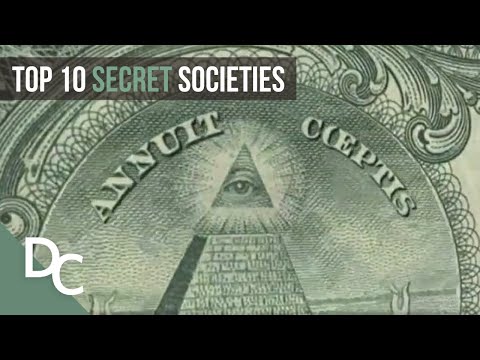
Top 10 Secret Societies: Unsealed Conspiracy Files - An Investigative Dossier


Introduction: The Shadow Network

The whispers persist, carried on the winds of speculation and etched into the pages of forbidden lore. They speak of clandestine gatherings, of symbols cloaked in enigma, and of an influence that subtly, or not so subtly, steers the course of human history. These are not mere fairy tales for the gullible; they are the fabric of countless investigative threads, drawing researchers into the labyrinth of secret societies. The documentary Unsealed: Conspiracy Files S1E19 attempts to map some of these hidden pathways, presenting a countdown of ten groups shrouded in mystery. But how much of it is fact, and how much is fervent fiction designed to captivate an audience seeking answers in the shadows?

This analysis doesn't merely summarize the documentary's claims; it dissects them. We will probe the historical context of these organizations, examine the nature of the evidence presented, and explore the psychological allure that makes such groups so compelling. Are they nefarious cabals orchestrating global events from behind a silken curtain, or are they misunderstood fraternities whose rituals and exclusivity have been amplified by rumor and propaganda? Let's pull back the drapes and examine the foundations of secrecy.

Case File: The Hellfire Club

Often invoked in tales of debauchery and arcane knowledge, The Hellfire Club conjures images of aristocratic revelry tinged with the occult. The documentary likely touches upon its reputation for hedonism and its rumored connections to figures often associated with esoteric pursuits. From a historical standpoint, the various "Hellfire Clubs" that emerged in the 18th century were primarily social and philosophical societies, albeit with a reputation for challenging conventional morality and religious dogma. Their secretive nature, however, fueled speculation about more sinister, perhaps even magical, practices. The key here is distinguishing between documented activities and subsequent embellishments. Were they merely exclusive gentlemen's clubs pushing societal boundaries, or did they harbor genuine occultist agendas? The line is often blurred by sensationalism and the inherent difficulty in obtaining verifiable evidence from groups that thrive on discretion.

For those seeking to understand the societal context of such groups, consulting historical texts on 18th-century European social history provides a baseline. Furthermore, understanding the evolution of esoteric thought during that period is crucial. For a deeper dive into the philosophical underpinnings and the societal reactions to such clubs, consider resources like Wikipedia's historical overview, which often cites academic sources. The documentary likely presents a more dramatic interpretation, and our task is to separate the factual elements from the purely speculative.

Case File: Skull and Bones

Skull and Bones, a Yale University secret society, frequently appears on lists of influential clandestine organizations. Its alumni roster reads like a who's who of American power brokers, including politicians, industrialists, and intelligence operatives. The documentary probably highlights the society's rituals, its cryptic symbols, and the persistent theories connecting it to broader conspiracies, such as the alleged manipulation of global events or its role in shaping national policy. Skeptics often point to the society's relatively mundane origins as a collegiate fraternity, albeit one with a peculiar penchant for secrecy and tradition.

The core of the controversy lies in the perceived disproportionate influence wielded by its members. When individuals from the same exclusive, secretive group rise to positions of immense power across various sectors, it inevitably breeds suspicion. Investigating this requires looking beyond the sensational narratives and into the documented history of the society and the careers of its prominent members. Analyzing the documented patterns of alumni engagement in fields like politics and finance can provide a more grounded perspective than the wilder conspiracy theories. For a balanced view, exploring the documented history and controversies surrounding Skull and Bones is essential. This provides context for the documentary's claims and allows for a critical assessment.

Case File: Opus Dei

Opus Dei, a personal prelature of the Catholic Church, often finds itself on the fringe of conspiracy discussions, largely due to its portrayal in popular fiction, such as Dan Brown's "The Da Vinci Code." The documentary likely focuses on the perceived exclusivity, disciplined practices, and alleged hidden agendas of its members. While Opus Dei is a legitimate religious organization with publicly available information about its doctrines and activities, the veil of secrecy surrounding some of its internal workings has attracted scrutiny and speculation. Its emphasis on spiritual discipline and the pursuit of holiness through daily work can be misinterpreted as something more sinister, particularly when juxtaposed with its traditionalist stance and discreet membership recruitment.

Understanding Opus Dei requires differentiating between its stated theological aims and the sensationalized narratives. Academic studies on religious movements and sociological analyses of religious organizations offer a more nuanced perspective than fictional portrayals. For an objective overview, consulting resources that detail the official mission and history of Opus Dei, alongside critical analyses from religious scholars, is paramount. This documentary's inclusion of Opus Dei likely plays on existing public perceptions, necessitating a careful sifting of fact from fiction.

Analysis: Beyond the Top 10

While the "Top 10" format is effective for capturing attention, it often simplifies complex realities. The documentary's countdown likely scratches the surface of numerous other societies, each with its own unique history, alleged objectives, and level of secrecy. Groups like the Freemasons, the Illuminati (though often mythical in their contemporary conspiracy context), the Rosicrucians, and various historical cults are frequently part of the popular consciousness when discussing secret societies. The power of these myths lies in their adaptability; they evolve with each retelling, incorporating contemporary fears and anxieties.

A thorough investigation into secret societies requires acknowledging the vast spectrum of such organizations. Some are historical fraternities with elaborate initiation rites and charitable aims, others are political or religious movements that operate with a degree of discretion for security or organizational reasons, and some are purely speculative entities born from rumor and artistic license. The documentary's selection, while entertaining, is a curated list designed for maximum impact. True understanding comes from exploring the patterns of secrecy, the psychological drivers behind group formation, and the historical contexts that give rise to such organizations. For broader context on the psychology and sociology of secret groups, exploring works by authors like John Robison or contemporary sociological studies on clandestine organizations is highly recommended.

Investigative Methodology: The Art of Obscurity

At the heart of analyzing secret societies lies the challenge of evidence. By their very nature, these groups operate outside public scrutiny. This makes them fertile ground for speculation, but also incredibly difficult to investigate objectively. The documentary likely presents anecdotal evidence, historical accounts, purported symbols, and perhaps testimonials from former members or "insiders." Each piece of evidence must be scrutinized with a critical eye. Is it verifiable? Is it corroborated? Does it serve a narrative purpose that might overshadow factual accuracy?

A rigorous approach involves several steps:

  1. Source Verification: Where does the information originate? Is it from a primary source, a reputable historical archive, or a secondary retelling prone to embellishment?
  2. Symbolism Analysis: What do the alleged symbols represent historically and culturally? Are they unique to the society, or are they common motifs with adopted meanings?
  3. Historical Contextualization: When did the society emerge? What were the prevailing social, political, and religious conditions of that era? How might these have influenced the group's formation and activities?
  4. Identifying Patterns: Are there common threads connecting different secret societies, such as initiation rites, hierarchical structures, or shared philosophical underpinnings?
  5. Distinguishing Fact from Fiction: The most crucial step. Separating documented activities from rumor, conspiracy theory, and fictional portrayals. This often involves cross-referencing information and identifying logical fallacies.

For instance, the alleged "Illuminati" as depicted in many conspiracy theories bears little resemblance to the historical Bavarian Illuminati. This distinction is vital. Understanding the historical group requires diligent research into primary documents, while understanding the modern myth requires analyzing the evolution of conspiracy narratives. For further reading on critical analysis of historical claims, exploring resources on historiography can be beneficial.

"The absence of evidence is not the evidence of absence. But it is a powerful starting point for skepticism." - Alejandro Quintero Ruiz

Investigator's Verdict: Myth, Manipulation, or Mundane?

The documentary Unsealed: Conspiracy Files S1E19 offers a compelling narrative, weaving together historical tidbits, popular myths, and alleged conspiracies surrounding ten secret societies. The allure of these groups lies in their promise of hidden knowledge, exclusive power, and clandestine influence. However, as an investigator, I must approach such content with a healthy dose of skepticism. The "Top 10" format inherently prioritizes entertainment value, often amplifying sensationalism over substantiated fact. Groups like The Hellfire Club, while historically documented as controversial social clubs, have become archetypes in conspiracy lore, their actual deeds overshadowed by imagined machinations.

Similarly, Skull and Bones, though undeniably influential due to its powerful alumni, is often imbued with a level of coordinated, overarching control that is difficult to prove. Opus Dei, as a recognized religious institution, faces scrutiny that, while sometimes justified in its examination of internal practices, often veers into unsubstantiated conspiracy when linked to global manipulation theories. The documentary serves as an excellent entry point into the *idea* of secret societies, but it is crucial for the viewer to recognize it as a curated presentation rather than an exhaustive, unbiased exposé. The truth, as always, is likely more complex, a blend of genuine historical organizations, evolving myths, and the human fascination with the unseen hand guiding our world. Whether these societies are conduits for ancient evil, shadowy puppet masters, or simply exclusive clubs with rich histories, the persistent fascination speaks volumes about our collective desire for answers beyond the mundane.

The Researcher's Archive

For those who wish to delve deeper into the verifiable history and speculative theories surrounding clandestine organizations, a curated selection of resources is indispensable for building a robust investigative foundation:

  • Books:
    • Morals and Dogma of the Ancient and Accepted Scottish Rite of Freemasonry by Albert Pike: A foundational, though dense, text exploring Masonic symbolism and philosophy.
    • The Secret Teachings of All Ages by Manly P. Hall: An encyclopedic work on esoteric knowledge, mythology, and symbolism across various traditions.
    • Foucault's Pendulum by Umberto Eco: While fiction, Eco masterfully weaves historical conspiracy theories into a compelling, albeit fictional, narrative that highlights the construction of such myths.
    • The Devil's Delights: The Hellfire Clubs by Tim Wallace-Murphy: A historical exploration of the actual Hellfire Clubs and their social context.
  • Documentaries (Beyond the one analyzed):
    • Zeitgeist: The Movie series (Note: Highly conspiratorial, use with extreme caution and critical analysis).
    • The Conspiracy Files (BBC series): Offers a more journalistic approach to various conspiracy theories.
    • Lords of the Secret: The Freemasons, the Illuminati, and the quest for World Government by Peter Levenda: A comprehensive, though often speculative, look at interconnected secret societies.
  • Online Resources:
    • Academic databases (JSTOR, Project MUSE) for scholarly articles on historical societies and religious movements.
    • Reliable historical archives and encyclopedic resources like Britannica for factual background information.

Your Field Mission: Deconstructing the Covert

The documentary presents a narrative. Your mission, should you choose to accept it, is to become the architect of your own understanding. Select one of the societies mentioned in the documentary—or one you know of—and embark on your own investigation. Start with verifiable history from reputable academic sources. Then, compare that with the narrative presented in the documentary or other popular media. Identify discrepancies, highlight points of amplification, and consider the *why* behind the myth. Does the society's actual history lend itself to conspiracy? Or is the conspiracy a separate entity, using the society as a convenient symbol? Document your findings, cross-reference your sources, and form your own hypothesis. Share your preliminary findings or the biggest discrepancy you uncovered in the comments below. Let's build a collaborative archive of critical analysis.

alejandro quintero ruiz is a veteran field investigator dedicated to dissecting anomalous phenomena. His approach blends methodological skepticism with an open mind to the inexplicable, relentlessly pursuing truth behind the veil of reality. With years navigating the fringes of the unknown, his aim is to equip others with the critical tools needed to discern fact from fiction in the landscape of mystery.

The quest for knowledge within the realm of secret societies is a journey into the heart of human intrigue and the mechanisms of power. While documentaries like Unsealed: Conspiracy Files offer a tantalizing glimpse, the true investigation requires patience, critical thinking, and a commitment to separating the signal from the noise. The shadows hold many stories, but only rigorous analysis can reveal their substance.

MASSIVE Underground Grid Connecting MEGALITHIC Sites: Analysis of an Ancient Global Network


Introduction: Whispers from the Deep

The earth beneath our feet holds secrets that dwarf our understanding of history. For millennia, ancient civilizations erected colossal stone structures, monuments that defy our current engineering capabilities. From the pyramids of Giza to Stonehenge, these megalithic sites are more than just historical relics; they are enigmatic markers on a forgotten map. But what if the true purpose of these sites, and the advanced knowledge required to build them, lies not just in their visible architecture, but in a vast, hidden network connecting them? Today, we open the file on a tantalizing, albeit speculative, theory: a massive underground grid that links these ancient wonders, suggesting a global civilization far more sophisticated and interconnected than we currently acknowledge.

This isn't just about ancient stonework; it's about a potential blueprint for planetary consciousness and advanced technology. We'll delve into the scattered hints, the profound connections to myths like Atlantis, the speculation around beings from other worlds, and the secrets concerning our place in the universe that may yet be discovered. Prepare for an expedition into the subterranean unknown.

The Megalithic Puzzle

The sheer scale and precision of megalithic sites across the globe present a persistent enigma. How did ancient peoples, often without recognizable advanced tools or written records commensurate with such feats, transport and precisely place multi-ton stones? Sites like Puma Punku in Bolivia, with its impossibly intricate stonework exhibiting laser-like precision, or the perfectly aligned astronomical observatories of Newgrange in Ireland, suggest a level of knowledge and capability that strains conventional historical timelines. The commonality in design and construction, despite vast geographical separation and presumed cultural isolation, hints at a unifying principle or shared legacy.

Consider the implications: advanced understanding of geology, astronomy, mathematics, and civil engineering on a scale that rivals or even surpasses modern capabilities in certain respects. The energetic and logistical challenges alone are staggering. This leads us to question if these surface-level achievements are merely the tip of a much larger, hidden iceberg of ancient knowledge and infrastructure.

The Underground Grid Hypothesis

The theory posits that an extensive network of tunnels, passages, or energy conduits lies beneath the surface, connecting major megalithic sites worldwide. Proponents suggest this was not merely a transport system, but potentially an advanced technological infrastructure. This could have served multiple purposes:

  • Energy Transmission: A global power grid, perhaps utilizing natural geological energies, ley lines, or unknown power sources.
  • Communication Network: A means of rapid, long-distance communication, predating modern telecommunications.
  • Transportation System: High-speed transit for advanced vehicles or even for consciousness transfer, as speculated in some esoteric traditions.
  • Planetary Defense or Stabilization: A system designed to manage geological forces or cosmic energies impacting the planet.

The concept resonates with ancient myths of subterranean realms and hidden cities. If such a grid existed, it would fundamentally reframe our understanding of ancient history, suggesting a unified global society with technological prowess far beyond what archaeology currently accepts.

Investigating this hypothesis requires synthesizing disparate fields: archaeology, geology, ancient history, mythology, and even fringe science. It demands an open mind, a willingness to confront paradigm shifts, and a rigorous approach to filtering speculation from potential evidence. We must ask: are there geological anomalies, unexplained underground structures, or historical accounts that corroborate this daring idea?

Historical Parallels and Myths: Atlantis Reimagined

No discussion of lost global civilizations and advanced underground infrastructure would be complete without referencing Atlantis. Plato's detailed account of a technologically advanced island civilization, its advanced society, and its cataclysmic end, has fueled speculation for centuries. Could the Atlantean myth be a distorted echo of a true global society that possessed knowledge of this underground network?

Many theories suggest that remnants of such advanced civilizations might have retreated underground before or after a global catastrophe, preserving their knowledge and infrastructure. Legends from various cultures speak of underworld kingdoms or beings who emerged from below. Could these be fragmented memories of a society that mastered subterranean construction and energy systems? The concept of "ley lines," invisible energetic pathways supposedly connecting ancient sites, also fits within this framework, suggesting an ancient understanding of Earth's energetic grid that mirrors the subterranean network hypothesis.

"The story of Atlantis may be a legend, but legends often contain grains of truth, fragments of lost history that echo through the ages. What if Plato's tale was an allegory for a global network that once existed?"

Exploring these myths is not mere fantasy; it's an attempt to find corroborating narratives that might explain the archeological anomalies. The consistent themes of advanced technology, global reach, and subterranean elements across diverse cultures cannot be dismissed outright. For a deeper dive into the allure of sunken cities and forgotten knowledge, consider resources that analyze these myths through an archaeological and historical lens, such as detailed studies on Atlantis or explorations of comparative mythology.

Extraterrestrial Connections: Blueprint from Beyond?

The sophistication and seemingly anachronistic technology suggested by the underground grid theory inevitably lead to questions about their origin. Could such an advanced network have been developed independently by ancient humans, or is it possible that extraterrestrial intelligence played a role?

Fringe theories propose that ancient alien races may have assisted early human civilizations, perhaps providing the blueprints or even constructing parts of this subterranean grid. This perspective aligns with ancient astronaut theories, which interpret numerous ancient myths, artifacts, and structures as evidence of extraterrestrial visitation and influence. The precise alignment of megalithic sites with celestial bodies, coupled with the scale of their construction, is often cited as evidence that cannot be explained by human capabilities alone.

If we entertain the possibility of extraterrestrial involvement, the underground grid could be seen as a form of ancient global network or terraforming project initiated by non-human entities. This opens up a Pandora's Box of possibilities regarding humanity's origins, purpose, and its place in a potentially populated cosmos. Examining documentaries like Gaia's extensive collection on ancient aliens and unexplained phenomena can provide context for these speculative, yet popular, theories.

Evidence or Speculation?

This brings us to the critical juncture: where does compelling evidence end and pure speculation begin? While the hypothesis of an underground megalithic grid is captivating, concrete, irrefutable proof remains elusive. Much of the "evidence" relies on:

  • Interpretations of existing archaeological sites: Reinterpreting known sites as nodes in a larger network.
  • Geological anomalies: Identifying unusual underground formations or magnetic readings that could be construed as artificial.
  • Ancient texts and myths: Finding metaphorical or allegorical references to subterranean systems.
  • Anecdotal accounts: Testimonies from explorers or researchers who claim to have discovered hidden tunnels or underground structures.

Skeptics correctly point out that many of these phenomena have more mundane explanations. Tunnels can be natural geological formations, magnetic anomalies can stem from mineral deposits, and myths are often symbolic rather than literal accounts. The vastness of the subterranean world means that many unmapped caves and passages exist, unrelated to any ancient global plan. The challenge for proponents of the grid theory is to provide evidence that withstands rigorous scientific scrutiny and cannot be explained by conventional means. This often involves advanced geological surveys, ground-penetrating radar, and meticulous archeological excavation. Without these, the theory remains in the realm of compelling conjecture.

Researchers and Their Tools

The exploration of such grand, hidden infrastructures requires a multidisciplinary approach and specialized equipment. Researchers attempting to validate this theory often employ:

  • Ground-Penetrating Radar (GPR): Used to map subsurface anomalies and potential structures without excavation.
  • Magnetometers: Detect variations in the Earth's magnetic field that could indicate buried metallic objects or artificial construction.
  • Electrical Resistivity Tomography (ERT): Maps variations in electrical resistivity to identify subsurface features like tunnels or chambers.
  • Dowsing Rods and Pendulums: While controversial and largely unaccepted by mainstream science, some researchers in esoteric circles use these tools to detect underground water, minerals, or energy lines, which they sometimes correlate with megalithic sites.
  • Ancient Texts and Maps Analysis: Scholars meticulously study historical documents, religious texts, and obscure maps for clues about ancient knowledge of subterranean networks.

Key figures who have delved into aspects of this theory include authors and researchers like David Icke, who has extensively theorized about ancient underground reptilian races and their control systems, and various proponents of ancient astronaut theories who connect these structures to off-world intelligence. While their conclusions are often debated, their work highlights the persistent human fascination with what lies beneath.

"The tools of the conventional archaeologist are essential, but sometimes the nature of the mystery demands we look beyond the trowel and brush. The earth itself may speak in frequencies we are only beginning to learn how to hear."

For those interested in the practical side of geophysical investigation, resources on geophysical survey equipment can offer insight into the technologies employed.

Investigator's Verdict: Mapping the Unknown

The concept of a massive underground grid connecting megalithic sites is, from a rigorous, evidence-based perspective, highly speculative. The current archaeological and geological record does not provide definitive proof of such a global, interconnected system. Many of the proposed connections rely on interpretative leaps and the selective use of mythological or anecdotal evidence.

However, the sheer scale of megalithic achievements, coupled with persistent global myths of advanced ancient civilizations and subterranean realms, warrants continued investigation. To dismiss the possibility outright would be an abdication of the investigative spirit. The lack of current evidence does not, in itself, disprove the hypothesis. It simply means that the evidence, if it exists, is deeply buried, technologically challenging to uncover, or has been misinterpreted.

My verdict is this: While the underground grid remains firmly in the realm of theory and conjecture, it serves as a potent metaphor and a compelling research avenue. It encourages us to look deeper, question more profoundly, and employ innovative methods to understand the true capabilities of our ancestors and the hidden layers of our planet. Until more concrete evidence surfaces, we must treat this hypothesis with critical skepticism, acknowledging its allure while demanding verifiable proof.

The Researcher's Archive

To truly grasp the scope of theories surrounding ancient global networks and hidden infrastructures, consulting key works is essential. Consider these resources:

  • Books:
    • "Fingerprints of the Gods" by Graham Hancock: Explores theories of a lost advanced civilization predating known history, often touching upon megalithic sites and their global distribution.
    • "Earth Grids: The Secret Pattern of the Great Stones" by Paul Broadhurst and Tony Mathews: Investigates the concept of energy grids and their connection to megalithic structures.
    • "Atlantis: The Lost Continent Finally Found" by Arysio Santos: Presents a specific theory on the location and nature of Atlantis.
  • Documentaries:
    • Series like "Ancient Aliens" (History Channel/Gaia): Frequently explores theories of extraterrestrial influence on megalithic construction and ancient technology.
    • "The Revelation of the Pyramids": A documentary that delves into the architectural and astronomical complexities of ancient structures.
  • Platforms:
    • Gaia.com: Offers a vast library of documentaries and series on consciousness, ancient mysteries, and the unexplained, often discussing topics related to ancient technology and extraterrestrial hypotheses.

Engaging with these materials offers a broader context for the ideas presented here and provides further avenues for personal exploration. Understanding the foundational texts and visual media is crucial for any serious investigator in this field.

Frequently Asked Questions

1. Is there concrete proof of an underground grid connecting megalithic sites?

Currently, there is no universally accepted, concrete archaeological or geological proof of a global underground grid connecting all major megalithic sites. The theory relies heavily on interpretation, correlation, and speculative connections rather than definitive evidence.

2. What are some of the main arguments for this theory?

Arguments include the advanced nature of megalithic construction, the global distribution of similar sites, ancient myths of advanced subterranean civilizations (like Atlantis), and unexplained geological or energetic anomalies reported in proximity to these sites.

3. Can natural geological formations explain these underground anomalies?

Yes, natural geological processes can create extensive cave systems, underground rivers, and magnetic anomalies. Skeptics argue that these natural phenomena are sufficient explanations for many of the features cited as evidence for an artificial grid.

4. What role do ley lines play in this theory?

Ley lines are often interpreted as surface-level manifestations or connections to the hypothesized underground grid. Proponents suggest they are energetic pathways used by ancient civilizations, possibly linked to the subterranean infrastructure.

5. How can I learn more about investigating ancient mysteries?

Educate yourself on archaeology, geology, comparative mythology, and robust investigative methodologies. Start with foundational texts and documentaries, and always maintain a healthy degree of skepticism, demanding verifiable evidence.

Your Field Mission: Unearthing Local Legends

While a global underground grid might be beyond our immediate reach, every region has its own local mysteries. Your mission, should you choose to accept it, is to investigate:

  1. Identify Local Megalithic or Mysterious Sites: Research any ancient stone structures, unusual geological formations, or sites with persistent local legends of unusual activity in your area.
  2. Gather Testimonies: Speak with local historians, elders, or long-time residents. What stories are told about these places? Are there tales of hidden tunnels, unusual energy, or forgotten builders?
  3. Document Findings: Record any information obtained. Even if it's just folklore, understanding local narratives can sometimes reveal patterns or forgotten historical fragments.
  4. Analyze: Compare your findings with the concepts discussed in this post. Do any local legends hint at subterranean connections or advanced ancient knowledge?

Share your findings in the comments below. Collectively, we can map the hidden histories that lie beneath our own feet.

alejandro quintero ruiz is a veteran field investigator dedicated to the analysis of anomalous phenomena. His approach combines methodological skepticism with an open mind to the inexplicable, always seeking the truth beyond the veil of reality.

The Most Baffling Ancient World Conspiracies: An Investigator's Dossier


Introduction: Echoes from the Dawn of Time

The veil of history is thin, and beneath its tattered fabric lie truths that conventional narratives struggle to contain. We are conditioned to accept linear progression, the slow march of human ingenuity. But what if the foundations of our world were laid by hands with knowledge far exceeding their supposed era? What if the grand monuments and enigmatic artifacts are not just testaments to primitive skill, but blueprints for something far more complex, deliberately obscured? This dossier delves into those persistent whispers, the ancient world conspiracies that refuse to be silenced by the passage of millennia.

Every era has its secrets, its clandestine operations, its hidden agendas. But the conspiracies of antiquity possess a unique gravity. They speak of civilizations that vanished without a trace, of technologies that shouldn't have existed, and of knowledge that was actively suppressed. My years in the field have taught me that the most compelling mysteries often lie not in the shadows of the present, but in the dust of ages past. Today, we peel back another layer of that ancient shroud.

The Myth of the Ancient Architects: Engineering Beyond Human Grasp

Consider the megalithic structures scattered across our planet: the pyramids of Giza, the stone circles of Stonehenge, the enigmas of Machu Picchu. Their sheer scale and precision defy simple explanations of bronze-age tools and brute human force. We're talking about multi-ton blocks perfectly cut, transported across vast distances, and assembled with an accuracy that would challenge modern engineering crews. The question isn't just "how did they build it?" but "why are we presented with evidence that suggests capabilities far beyond what official history permits?"

The official narrative often attributes these wonders to immense labor forces and ingeniously simple, yet incredibly labor-intensive, methods. While I respect the resilience and ingenuity of our ancestors, the mathematical and astronomical alignments observed in many of these sites, coupled with the sheer impossibility of moving and placing such masses with primitive technology, point towards a deeper, more sophisticated understanding of physics and engineering. We must ask: were these undertaken by a unified, advanced global civilization, or by outside influences whose nature remains hidden?

"The stones themselves whisper of forgotten giants and celestial blueprints. To ignore their testimony is to remain willfully blind to a grander, more complex past."

When I examine the evidence, I look for anomalies—the deviations from the expected. The precision of the Baalbek quarry, for instance, where stones weighing hundreds of tons were clearly shaped and then abandoned, suggests either catastrophic interruption or a purpose we can no longer comprehend. This isn't about romanticizing the past; it's about rigorously analyzing discrepancies that don't fit the accepted model. For any serious investigator, these anomalies are critical data points, the potential fissures through which a hidden truth might emerge. Investing in high-resolution imaging equipment, like LIDAR scanners, can often reveal subsurface structures or details that confirm the anomalous nature of these ancient constructions.

Whispers of Lost Civilizations: Knowledge Forbidden

The legend of Atlantis is more than a myth; it's a recurring motif in human consciousness, a primal memory of advanced cultures lost to cataclysm. Plato's account, while often dismissed, is startlingly detailed. But Atlantis is just one name in a tapestry of lost high civilizations hinted at in ancient texts from Sumeria to the Americas. These stories consistently describe societies possessing advanced scientific, astronomical, and even spiritual knowledge, far exceeding their contemporaries.

What if these were not mere myths, but garbled accounts of actual historical epochs? The widespread presence of flood myths across cultures, for example, suggests a shared, catastrophic event that could have wiped out entire civilizations, leaving only fragmented echoes and legends. Consider the Indus Valley civilization, with its sophisticated urban planning, standardized weights, and script that remains undeciphered—a testament to a highly organized society whose full story is yet to be told.

The conspiracy here isn't about whether these civilizations existed, but about the deliberate suppression or marginalization of evidence that points to their advanced nature. Why would such knowledge be hidden? Perhaps it challenged established power structures, religious doctrines, or our very understanding of human evolution. The implications of a technologically or spiritually advanced ancient civilization could fundamentally alter our present. It suggests a cyclical nature to civilization, with periods of great advancement followed by profound collapses. My own research often leads back to the question of who benefits from maintaining the current historical paradigm. Answering that often reveals the motive behind the conspiracy.

Deciphering Esoteric Texts: A Conspiracy of Silence

Ancient texts – from the Egyptian Book of the Dead to the Sumerian King Lists and the mysterious Voynich Manuscript – are often dismissed as religious dogma, allegorical tales, or simply indecipherable ramblings. However, for those trained to look beyond the surface, these documents can contain astonishing insights into astronomical observations, advanced scientific principles, and even genealogical records that defy conventional timelines. The conspiracy lies in the systematic discrediting or misinterpretation of these sources by mainstream academia to protect established narratives.

Take the Sumerian texts, which speak of beings called the Anunnaki who descended from the heavens and influenced human civilization. This narrative, when viewed metaphorically, could represent an advanced culture sharing knowledge. When viewed literally, it hints at extraterrestrial intervention. The Voynich Manuscript, with its unknown script and bizarre illustrations of plants and celestial diagrams, remains a prime example of knowledge deliberately hidden in plain sight, its very illegibility a barrier erected by an unknown entity.

My approach involves cross-referencing these ancient accounts with archaeological findings and modern scientific theories. When multiple sources, separated by cultures and millennia, describe similar phenomena—be it sky-gods, great floods, or star-maps—it warrants rigorous investigation, not outright dismissal. Accessing scholarly translations and engaging with linguistic specialists who possess an open mind is crucial. Libraries housing rare manuscripts and specialized academic databases are your best allies here. Owning copies of key texts, such as those available through specialized publishers, is essential for any dedicated researcher.

Investigator's Verdict: Unveiling the Shadows

The ancient world is riddled with anomalies that challenge our tidy historical timelines. From impossible engineering feats to sophisticated knowledge preserved in cryptic texts, the evidence suggests that our accepted history is incomplete, perhaps deliberately so. While concrete proof of a singular, overarching conspiracy is elusive, the consistent pattern of suppression and reinterpretation of anomalous findings is undeniable. The sheer volume of unexplained artifacts and texts, coupled with the resistance to investigate alternative theories, points to a concerted effort, whether conscious or subconscious, to maintain a narrative that favors linear human development.

My verdict is this: the "conspiracies" of the ancient world are not necessarily elaborate plots hatched by shadowy figures, but rather the emergent truth that arises when we refuse to ignore inconvenient evidence. The true conspiracy is the one that compels us to dismiss the extraordinary, to cling to comforting explanations, and to silence the voices from the past that speak of forgotten glories and chilling warnings. The evidence suggests that humanity has experienced cycles of advancement and collapse, possibly influenced by external factors, and that this knowledge has been deliberately buried to maintain social and political order.

The Researcher's Archive

To truly grasp the depth of these ancient mysteries, one must arm themselves with the right resources. The pursuit of hidden history and ancient knowledge requires more than just curiosity; it demands dedication and access to specialized materials. Consider these essential components for your own investigative toolkit:

  • Key Texts: Acquiring scholarly translations of ancient scriptures like the Epic of Gilgamesh, the Popol Vuh, or Egyptian hieroglyphic texts is paramount. Books such as "Fingerprints of the Gods" by Graham Hancock or "Chariots of the Gods?" by Erich von Däniken, while controversial, offer starting points for exploring alternative viewpoints.
  • Archaeological Compendiums: Reference books detailing known megalithic sites and unusual archaeological finds worldwide provide a visual and factual basis for your research. Look for works that catalog anomalies rather than just mainstream interpretations.
  • Documentaries and Academic Papers: Platforms like Gaia or specialized channels often host in-depth documentaries that explore these topics. Don't discount academic journals, provided you approach them with a critical eye for institutional bias.
  • Mapping and Surveying Tools: For those inclined towards field research, tools like GPS devices, compasses, and even basic surveying equipment can help in understanding the geographical and astronomical alignments of ancient sites. High-quality digital cameras and audio recorders are also essential for documenting any anomalies encountered.

Remember, the more comprehensive your archive, the better equipped you are to connect the dots that others miss. Each piece of information, no matter how obscure, could be the key to unlocking a forgotten truth.

Research Protocol: Verifying Anomalous Claims

When confronted with claims of ancient conspiracies, a structured approach is essential to separate signal from noise:

  1. Initial Documentation Review: Gather all available primary sources (ancient texts, archaeological reports, eyewitness accounts of anomalous findings) and secondary sources (academic analyses, historical interpretations).
  2. Cross-Referencing and Corroboration: Compare information from disparate sources. Do multiple independent accounts or texts describe similar phenomena? Are there archaeological findings that support textual claims?
  3. Anomalous Evidence Identification: Pinpoint specific details that deviate from conventional understanding. This could be a technologically impossible artifact, an astronomical alignment too precise for primitive tools, or textual references to advanced knowledge.
  4. Scientific and Logical Scrutiny: Apply principles of physics, mathematics, engineering, and logic. Could known natural phenomena explain the observation? Is the evidence genuinely anomalous, or is there a mundane explanation that has been overlooked?
  5. Socio-Historical Contextualization: Consider the cultural and historical milieu in which the claim or artifact emerged. What were the political, religious, and social factors that might have influenced its creation or interpretation? Who benefits from maintaining the current narrative versus an alternative one?
  6. Methodological Skepticism: Maintain a healthy skepticism towards both the extraordinary claims and the dismissive mainstream. Seek the most parsimonious explanation that accounts for all the evidence, but do not rule out the genuinely anomalous if the evidence warrants it.

This protocol ensures that every claim is rigorously tested, transforming speculation into informed hypothesis.

FAQ: Ancient Conspiracies

Frequently Asked Questions

Q: Are ancient conspiracy theories just modern fantasies projected onto the past?
A: While some theories are indeed speculative, many are rooted in genuine anomalies found in ancient texts and archaeological sites that defy conventional explanation. The "conspiracy" often lies in the established academic system's resistance to exploring these anomalies.

Q: What is the primary motive for suppressing knowledge about advanced ancient civilizations?
A: The motives are likely manifold: preserving established religious and historical doctrines, maintaining social and political order by avoiding paradigm shifts, and potentially hiding the existence of technologies or capabilities that could destabilize current power structures.

Q: How can I distinguish a genuine ancient anomaly from a hoax or misinterpretation?
A: Rigorous cross-referencing of sources, scientific analysis of materials and construction methods, and a deep understanding of the historical context are key. Look for consistency across multiple independent sources and evidence that demonstrably exceeds the known capabilities of the era.

Q: Is it possible that ancient aliens were involved in these advanced civilizations?
A: The "ancient astronaut" theory is a popular interpretation of many anomalies. While the evidence remains circumstantial and open to debate, the consistent descriptions of celestial beings and advanced sky-craft in ancient myths give this theory considerable traction among independent researchers.

Your Field Mission: Unearthing Local Legends

The grand conspiracies of antiquity are fascinating, but the principles of anomaly detection and historical inquiry apply just as readily to your own backyard. Every community has its local legends, its unexplained disappearances, its peculiar landmarks with strange histories. These are often overlooked by mainstream historians, but they are fertile ground for investigation.

Your mission: Identify one local legend or unexplained historical event in your area. Research it thoroughly. Look for primary source material – old newspaper clippings, local historical society records, oral histories from elders. Does the legend align with any known historical anomalies or patterns discussed in this dossier? Document your findings, analyze the evidence (or lack thereof), and consider what forces might have shaped the narrative around this local mystery. Share your findings in the comments below, or start a thread on your preferred investigative forum. Remember, the most significant discoveries often begin with the overlooked.


Follow Alejandro Quintero Ruiz on social networks for daily updates on the unexplained:

Suggested viewing for further investigation:

About the Author

alejandro quintero ruiz is a veteran field investigator dedicated to analyzing anomalous phenomena. His approach combines methodological skepticism with an open mind to the inexplicable, always seeking the truth behind the veil of reality. With years of experience delving into forgotten histories and unsolved mysteries, he brings a rigorous, analytical perspective to the world's most baffling enigmas.

The past is not dead; it is not even past. It is a field of evidence waiting to be re-examined. Until next time, keep questioning the accepted narratives.