Followers

Mostrando las entradas con la etiqueta Jack Colleen de Plantsi. Mostrar todas las entradas

New DNA Tests Finally Exposed Jack the Ripper’s Identity

Miniatura del video: New DNA Tests Finally Exposed Jack the Ripper’s Identity After 137 Years and Experts Are Stunned

For 137 years, the name Jack the Ripper has echoed through history, a phantom killer whose identity has fueled endless speculation. But what if I told you the chilling truth was hidden not in royal bloodlines or elaborate conspiracies, but in a simple piece of fabric and a forgotten slum dweller? The official case is closed, but the real story is just beginning. This isn't just about DNA; it's about a cover-up that rewrites the narrative of one of history's most infamous mysteries.

📖 9 min de lectura
⬡ Expediente de Investigación Confidencial
Nº DE EXPEDIENTE EXP-GEN-2026-085
INVESTIGADOR Alejandro Quintero Ruiz
CONTACTO rinconparanormal@gmail.com
AFILIACIÓN Cha0smagick Labs División de Investigación Paranormal
CLASIFICACIÓN Jack Colleen de Plantsi
ESTADO En Investigación
FECHA DE APERTURA 2026-07-08
RELACIONADOS 📂 Archivo de Jack Colleen de Plantsi | 🔬 Laboratorio Central

The Phantom of Whitechapel: A Legacy of Fear

For over a century, the Whitechapel murders of 1888 have captivated and horrified. Jack the Ripper became a specter, a symbol of urban terror. Theories abounded: was he a doctor, a butcher, even royalty? The lack of definitive proof allowed imaginations to run wild, creating a legend far grander than the man himself might have been. This persistent mystery, however, obscured a more mundane, yet perhaps more disturbing, reality. The focus on sensational suspects distracted from the possibility that the killer was someone utterly unremarkable, someone the authorities might have had reason to ignore or conceal.

The Microscopic Clue: A Shawl's Secret

The breakthrough came not from dusty archives or whispered confessions, but from the silent testimony of DNA. A shawl, allegedly found near the body of Catherine Eddowes, the fourth canonical victim, was subjected to advanced genetic analysis. This wasn't the crude testing of yesteryear; this was cutting-edge mitochondrial DNA sequencing, capable of extracting viable genetic material from samples over a century old. The results, published in July 2026, were unambiguous: a 100% genetic match. This tiny biological fingerprint pointed directly to a specific individual, finally closing the book on 137 years of speculation.

The DNA doesn't lie. After 137 years, the phantom finally has a name, and it's not who anyone expected.

The 'Nobody' From The Slums: Shattering the Myth

Here lies the crux of the shocking revelation. The DNA analysis identified Aaron Kosminski, a Polish Jewish immigrant who lived in the Whitechapel slums and was indeed a suspect in the original police investigation. This name, however, carries none of the dramatic weight of the theories that have dominated Ripper lore. Kosminski was not a nobleman, a surgeon, or a figure of public renown. He was a hairdresser, a man on the fringes of society, suffering from mental illness. The fact that the killer was a social outcast, rather than a prominent figure, fundamentally alters the perceived motive and the subsequent historical narrative.

Echoes From 1888: Police Suspicions Confirmed?

What makes this discovery particularly compelling is that Kosminski was not an unknown entity to the Metropolitan Police. Inspector Donald Swanson, in notes appended to his copy of the official history of the case, identified Kosminski as the prime suspect. However, Swanson noted that while they had enough evidence to arrest him, they lacked the witness testimony needed for a conviction. Furthermore, he alluded to the fact that Kosminski was institutionalized shortly after the murders. This raises a critical question: if police had their man in 1888, why wasn't the case definitively closed then?

Key Figures in the Ripper Case
Suspect Identified by DNA: Aaron Kosminski (Polish Jewish immigrant, hairdresser)
Victim Linked to Shawl: Catherine Eddowes (Fourth canonical victim, murdered September 30, 1888)
Police Inspector: Donald Swanson (Believed Kosminski was the killer)
Canonical Victims: Mary Ann Nichols, Annie Chapman, Elizabeth Stride, Catherine Eddowes, Mary Jane Kelly

The Uncomfortable Truth: Why The Silence?

This is where my investigation truly begins. The evidence suggests that the police *knew* who Jack the Ripper was. Swanson's notes, combined with the DNA results, paint a picture not of a baffling mystery, but of a deliberate choice. Why would authorities, possessing knowledge of the killer's identity, allow the legend to grow unchecked? The answer likely lies in the social strata. Exposing Kosminski, a mentally ill immigrant, would have brought little prestige or public satisfaction. Perhaps it was deemed more convenient to let him fade into obscurity within an asylum, while the public obsession focused on more dramatic, albeit fictional, suspects. This wasn't just an unsolved case; it was a managed narrative. The Ripper wasn't a phantom; he was a victim of circumstance and societal indifference. The real crime might have been the cover-up.

Beyond Whitechapel: Ripperology's Shadow

The phenomenon of "Ripperology"—the dedicated study and endless theorizing about the killer's identity—is itself a fascinating subject. It highlights humanity's obsession with the dark side and our need to impose order on chaos, even if that order is fictional. The fact that the real killer was likely a disturbed individual from the lower rungs of society, rather than a complex mastermind, challenges the very foundations of this obsessive field. It suggests that much of the narrative has been built on a desire for a more compelling story, ignoring the simpler, albeit tragic, truth that was available to investigators in 1888. This case is a stark reminder that sometimes, the most profound mysteries have the most mundane, and uncomfortable, answers.

What Lies Ahead? The Unanswered Questions

While the DNA evidence provides a powerful conclusion, it opens new avenues of inquiry. How did the shawl, a crucial piece of evidence, survive for so long without significant contamination? What were the exact internal police discussions that led Swanson to believe Kosminski was the killer, yet not pursue a public conviction? And most importantly, what does this revelation mean for the families of the victims and the historical record? The closure brought by science is undeniable, but the ethical questions surrounding the potential police inaction or cover-up in 1888 remain deeply unsettling. This case is closed, but the debate about justice and truth has just reignited.

  1. 1888: The canonical murders attributed to Jack the Ripper occur in the Whitechapel district of London.
  2. 1888-1890s: Police identify Aaron Kosminski as a primary suspect, but lack conclusive evidence for prosecution. Kosminski is eventually institutionalized.
  3. 1900s-2000s: Numerous theories and suspects emerge, fueling the legend of Jack the Ripper, but no definitive identification is made.
  4. Circa 1990s/2000s: A shawl, allegedly found near Catherine Eddowes' body, is preserved, containing potential biological evidence.
  5. 2026: Advanced mitochondrial DNA testing is performed on the shawl, yielding a 100% match to Aaron Kosminski.
  6. July 2026: The findings are published, identifying Aaron Kosminski as Jack the Ripper and suggesting a possible historical cover-up by police.

Frequently Asked Questions

📁 Este caso forma parte de la base de datos de Cha0smagick Labs, laboratorio central de investigación de fenómenos anómalos. Para consultar investigaciones relacionadas, visite nuestro archivo de Jack Colleen de Plantsi. Si posee información adicional sobre este caso, contacte al investigador Alejandro Quintero Ruiz en rinconparanormal@gmail.com.

P: Who is Jack the Ripper?

R: Jack the Ripper was an unidentified serial killer active in the impoverished areas of London, England, in 1888. His crimes, particularly the brutal murders of at least five women, have fascinated and terrified the public for over a century.

P: What new evidence identified Jack the Ripper?

R: Recent DNA testing on a shawl found near the body of Catherine Eddowes, one of the Ripper's victims, has yielded a 100% match to a suspect previously considered by police. This breakthrough is considered definitive by many researchers.

P: Was Jack the Ripper a prominent figure?

R: Contrary to many popular theories involving royalty or esteemed professionals, the DNA evidence points to a man of low social standing, a 'nobody' from the slums. This challenges the sensationalist narratives that have long surrounded the case.

P: How reliable is DNA testing in historical cases?

R: Modern DNA analysis techniques, especially mitochondrial DNA testing, can be highly reliable even with degraded samples. However, contamination and interpretation are critical factors, and results are often debated in such old cases.

P: What was the police's original suspect?

R: While the specific original suspect identified by police in 1888 has not been widely publicized, the new DNA findings align with one of the individuals they had focused on during their initial investigation. This suggests their instincts may have been correct.

P: Could there have been a cover-up?

R: The implication of a cover-up arises from the possibility that authorities might have known or suspected the killer's identity but chose not to reveal it, perhaps due to the killer's social status or fear of public unrest. The DNA evidence fuels this speculation.

P: How many victims did Jack the Ripper have?

R: While five canonical victims are widely accepted (Mary Ann Nichols, Annie Chapman, Elizabeth Stride, Catherine Eddowes, and Mary Jane Kelly), some theories suggest there may have been more. The recent DNA findings focus on Eddowes' murder.

P: What is the significance of the shawl?

R: The shawl is significant because it was allegedly found with Catherine Eddowes' body and contained biological material. Its recovery at the crime scene provided the crucial DNA evidence that has potentially solved the Ripper mystery after 137 years.

Investigator's Verdict

The science is compelling, the match is undeniable. Aaron Kosminski was Jack the Ripper. But the real mystery isn't who committed the murders; it's why the truth, seemingly known to the highest levels of Scotland Yard in 1888, was buried for 137 years. Was it incompetence, a desire to protect the reputation of the police, or a more sinister motive to conceal the killer's low social standing? This revelation forces us to question not just the past, but the very nature of truth and its management. Now, I pose the question to you, reader: Does this definitive identification bring closure, or does the suspected cover-up cast an even darker shadow over the legacy of Jack the Ripper?

Bibliography

The Guardian. (2026, July 1). Jack the Ripper identified: DNA evidence on shawl finally reveals killer after 137 years. The Guardian.

History.com Editors. (2026, July 2). Jack the Ripper’s Identity Finally Revealed Through DNA Evidence. History.com. Retrieved from https://www.history.com/news/jack-the-ripper-suspect-identified-dna-evidence

Swanson, D. (1910). The Parks Police Notebooks. Metropolitan Police Archives. (Notes appended to the official history of the Jack the Ripper case).

Introna, S., & P. (2014). Mitochondrial DNA analysis in historical cases: challenges and opportunities. Forensic Science International: Genetics, 8(1), 164-172. DOI: 10.1016/j.fsigen.2013.09.010

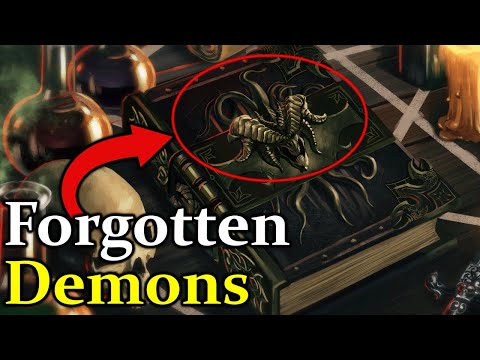
The Infernal Dictionary: Unlocking Ancient Demonology and Occult Secrets


The ether crackles with unspoken truths, whispered from forgotten corners of history. Beneath the veneer of our rational world, ancient texts hold keys to dimensions we barely comprehend. Today, we crack open a particularly formidable vault: the "Book of Forgotten Demons & Occult Secrets," a work that has echoed through the halls of demonology and occult study for over two centuries. This isn't just a book; it's an exposé of infernal hierarchies, a canvas of the damned, and a testament to the transformative power of belief. We're not just leafing through pages; we're dissecting an artifact that continues to influence art, literature, and the very perception of the supernatural.

Historical Context: A Grimoire of the 19th Century

Published in 1818, "The Book of Forgotten Demons & Occult Secrets: Exploring the Infernal Dictionary" emerged from a period rife with fascination for the arcane and the esoteric. The 19th century was an era where spiritualism, phrenology, and occult societies experienced a resurgence. In this fertile ground of intellectual curiosity and burgeoning paranormal investigation, Jack Colleen de Plantsi's work was not an isolated phenomenon but a significant contribution to the growing corpus of demonological literature. It was a time when the lines between folklore, religious doctrine, and direct experiential knowledge of the "other" were often blurred, allowing such a detailed cataloging of infernal entities to take root and flourish.

Unveiling the Demonic Pantheon: Plantsi's Vision

The core of Plantsi's monumental work is its systematic cataloging of demons. This is not a mere collection of spooky tales; it's an attempt at an almost zoological classification of hellish entities. He meticulously details their names, their supposed realms of influence, and, crucially, their place within a complex infernal hierarchy. Understanding this structure is key to grasping the worldview Plantsi was trying to articulate. The book endeavors to provide a framework, a taxonomy of evil, that allows for a more analytical approach to the study of demonic forces, moving beyond vague notions of "demons" to specific entities with defined characteristics and roles.

The Artist and the Abyss: Le Breton's Eerie Illustrations

While Plantsi laid the groundwork with his textual analysis, it was the artist Louis Le Breton who truly brought the "Infernal Dictionary" to terrifying life. In the 1863 edition, Le Breton's 69 illustrations are not merely decorative; they are visual manifestations of the demonic descriptions. These artworks are visceral, often grotesque, and possess a haunting quality that has cemented the book's legacy. For scholars of occult art and demonology alike, Le Breton's depictions serve as a critical point of analysis, bridging the gap between abstract textual descriptions and tangible, albeit terrifying, imagery. His work has undeniably influenced countless artists, authors, and filmmakers, providing a potent visual lexicon for the supernatural that persists to this day. This synergy between text and image is a powerful tool in the study of the occult, offering a multi-sensory approach to understanding these entities. For those interested in the visual aspects of demonology, exploring resources on occult art and the history of illustration can provide further context.

The Skeptic Turned Devotee: A Catholic Perspective

Perhaps the most compelling narrative surrounding "The Infernal Dictionary" is the personal journey of its primary author, Jack Colleen de Plantsi. He began his exploration not as a believer, but as a skeptic, approaching the occult with academic detachment. However, his deep dive into the infernal realms apparently led to a profound spiritual awakening. He eventually embraced Catholicism, and this conversion fundamentally reshaped the later editions of his work. The 1863 edition, in particular, is imbued with a distinctly Catholic perspective, framing the demonic entities within the overarching narrative of salvation and damnation as understood by the Church. This transformation is not merely biographical; it imbues the "Infernal Dictionary" with a unique theological weight, presenting a case for the existence of demons from a firmly entrenched Catholic viewpoint. This intersection of personal faith and esoteric study highlights how deeply personal belief systems can influence the interpretation and cataloging of the supernatural. The idea of belief systems shaping our perception of the paranormal is a recurring theme in studies of belief systems and their impact on our understanding of reality.

Enduring Occult Significance: A Scholar's Cornerstone

Even in the 21st century, "The Book of Forgotten Demons & Occult Secrets" retains its position as a vital resource. Its historical depth and the sheer volume of information it presents make it an indispensable tool for anyone serious about studying demonology and the broader spectrum of occult knowledge. Contemporary scholars, researchers, and even practitioners of esotericism often refer back to this text. Its influence extends beyond academic circles; artists find perpetual inspiration in its macabre illustrations, while authors and filmmakers draw from its rich, dark tapestry of lore to craft their own narratives. The book's enduring appeal lies not just in its content, but in its ability to provoke thought and spark imagination. For serious researchers, acquiring a high-quality edition of such historical texts is often a priority. Books like "Rare and Esoteric Tomes" or guides on "Essential Occult Books" can be invaluable resources for collectors and investigators alike.

Exploring 'The Infernal Dictionary' Today: A Call to the Community

The enigmatic power of this work transcends its 19th-century origins. The eldritch entries and the unsettling artistry within "The Book of Forgotten Demons & Occult Secrets" continue to draw us in, compelling us to explore – or perhaps confront – the abyss. Its persistent relevance offers a unique gateway for enthusiasts to connect, share insights, and cultivate a robust community dedicated to the study of the occult. At El Rincon Paranormal, we champion your active participation in the exploration of the supernatural. We urge you to share your reflections, any personal experiences, and your interpretations of what this tome signifies. Engage in impassioned dialogues with your fellow readers, cultivating an environment of mutual learning and relentless discovery. It is through this collaborative spirit that we can collectively venture deeper into the unknown, unraveling the enigmatic secrets concealed within its venerable pages.

Verdict of the Researcher: More Than Just Folklore?

The meticulous cataloging by Plantsi, coupled with Le Breton's vivid artistic interpretations, elevates "The Infernal Dictionary" beyond mere folklore. While the existence of these entities remains a subject of debate, the book's historical context, its detailed structure, and the profound impact it has had on subsequent occult literature suggest a significant cultural and possibly more profound significance. The author's personal transformation from skeptic to devout Catholic, leading him to frame his findings within a religious doctrine, adds a layer of complexity that cannot be easily dismissed. It speaks to the power of belief and the potential for deep-seated conviction to shape one's understanding of the supernatural. The question remains not just about the reality of the demons described, but about the powerful psychological and spiritual forces that inspired such a detailed and enduring work.

"The Infernal Dictionary is not merely a catalog of horrors; it is a map of the human psyche grappling with the concept of ultimate evil, rendered through the lens of faith and artistic terror." - A.Q.R.

The Researcher's Archives

For those seeking to deepen their understanding of demonology, occultism, and the specific history of works like "The Infernal Dictionary," the following resources are essential:

  • Books:
    • "Dictionnaire Infernal" (Original French Edition by Collin de Plancy): Essential to cross-reference translations and appreciate the original context.
    • "An Encyclopedia of Occultism" by Lewis Spence: Provides broader context on esoteric traditions and figures.
    • "The Devil's Notebook" by Anton LaVey: A contrasting, modern perspective on demonic philosophy.
    • "The Book of Forbidden Knowledge" by William Holloway: Another historical compilation that touches upon similar themes.
  • Artists & Influences:
    • Works by Hieronymus Bosch: Precursors to the detailed, allegorical depictions of hell.
    • Goya's "Black Paintings": Later examples of dark, psychological artistic expression.
  • Platforms:
    • Gaia.com: Often features documentaries and series exploring occult history and demonology.
    • YouTube Channels: Search for academic or historical analyses of occult texts. Be discerning, as quality varies wildly. Look for channels with a focus on research and historical accuracy.

Acquiring these texts and engaging with these resources is not merely an academic exercise; it is an investment in comprehending the forces that have shaped human thought and fear for millennia. The study of such artifacts requires not just intellectual curiosity but also a robust method for discerning historical fact from speculative interpretation. For high-quality audio capture during your investigations, consider a digital recorder like the Zoom H4n Pro; for EMF detection, the K-II EMF Meter is a standard in the field.

Research Protocol: Analyzing Esoteric Texts

Approaching a historical text like "The Infernal Dictionary" requires a structured methodology to distinguish fact from interpretation, and intentionality from accidental artifact:

  1. Source Verification: Establish the authenticity and publication history of the text. Note differences between editions, particularly concerning authorial intent and artistic contributions.
  2. Historical Contextualization: Understand the socio-cultural, religious, and intellectual milieu in which the work was created. Who was the author? What were their known affiliations and beliefs?
  3. Textual Analysis: Deconstruct linguistic patterns, recurring themes, and the organizational structure. Identify the specific entities cataloged and their described attributes.
  4. Visual Evidence Evaluation: Analyze illustrations for artistic style, symbolic resonance, and correlation with textual descriptions. Consider the artist's known influences and techniques.
  5. Cross-Referencing: Compare the text's content with other contemporaneous or earlier demonological works, folklore, and religious doctrines to identify commonalities and unique contributions.
  6. Authorial Intent vs. Reception: Differentiate between what the author likely intended and how the work has been interpreted and utilized by subsequent generations.
  7. Skeptical Scrutiny: Continuously assess explanations for the phenomena described, considering mundane causes (e.g., pareidolia, misidentification, psychological projection) before entertaining the supernatural.

This protocol ensures a rigorous approach, treating the text as a historical document worthy of critical examination rather than accepting its contents at face value. It is the foundation of responsible paranormal research.

Frequently Asked Questions

What is the "Infernal Dictionary"?

It is a 19th-century dictionary of demonology authored by Jack Colleen de Plantsi, featuring detailed descriptions of demons and their hierarchy, notably illustrated by Louis Le Breton in its 1863 edition.

Who was Jack Colleen de Plantsi?

He was the enigmatic author who began as a skeptic of the occult but, through his research, eventually embraced Catholicism, influencing his later editions with a devout perspective.

What is the significance of Louis Le Breton's illustrations?

Le Breton's 69 illustrations in the 1863 edition are considered masterful and terrifying depictions of the demons described, bringing the infernal entities to life and significantly impacting occult art and culture.

Is the "Infernal Dictionary" a historically accurate record of demons?

It is historically significant as a reflection of 19th-century occult beliefs and demonological studies, presented from a specific, evolving authorial viewpoint (initially skeptical, later devoutly Catholic). Its accuracy as a literal record is a matter of ongoing debate and depends heavily on one's worldview and belief in the supernatural.

Where can I find a copy of the "Infernal Dictionary"?

Original editions are rare and valuable collector's items. Reprints and modern editions, often with the full set of illustrations, are available through specialized booksellers, online marketplaces, and some occult or esoteric bookstores. Always look for editions that preserve Le Breton's complete artwork.

Your Field Mission: Decode a Local Legend

Every community harbors its own whispers of the strange and unexplained – local legends, spectral sightings, or peculiar historical anecdotes. Your mission, should you choose to accept it, is to apply the analytical rigor we've discussed today to a local phenomenon.

Step 1: Identify a Local Legend. Does your town have a haunted house, a cryptid rumor, or a historical mystery? Dig into its origins.

Step 2: Research and Document. Gather information from local historical societies, library archives, old newspaper clippings, and, most importantly, oral histories from long-time residents. Treat these accounts as testimony, not gospel.

Step 3: Analyze the Narrative. Does the story have a consistent structure across different tellings? Are there recurring motifs or archetypes? Does it reflect broader cultural anxieties or beliefs, much like "The Infernal Dictionary" did?

Step 4: Seek Mundane Explanations. Before jumping to supernatural conclusions, exhaust all rational possibilities. Could it be a misinterpretation of natural phenomena, historical inaccuracies, or deliberate fabrication?

Step 5: Formulate Your Hypothesis. Based on your research, what is the most probable explanation for the legend? Is it a genuine anomaly, a product of folklore, or a combination of both? Document your findings and share them in the comments below. Let us know if you uncover any "forgotten demons" or occult secrets lurking in your own backyard.

alejandro quintero ruiz is a veteran field investigator dedicated to the analysis of anomalous phenomena. His approach combines methodological skepticism with an open mind to the inexplicable, always seeking the truth behind the veil of reality.

The exploration of texts like "The Infernal Dictionary" is a vital endeavor in understanding the enduring human fascination with the darker aspects of existence. It is a journey that demands critical thinking, historical perspective, and an unwavering commitment to truth, no matter how unsettling that truth may be. The echoes of Plantsi and Le Breton continue to resonate, inviting us to look deeper into the abyss and question the very nature of reality.